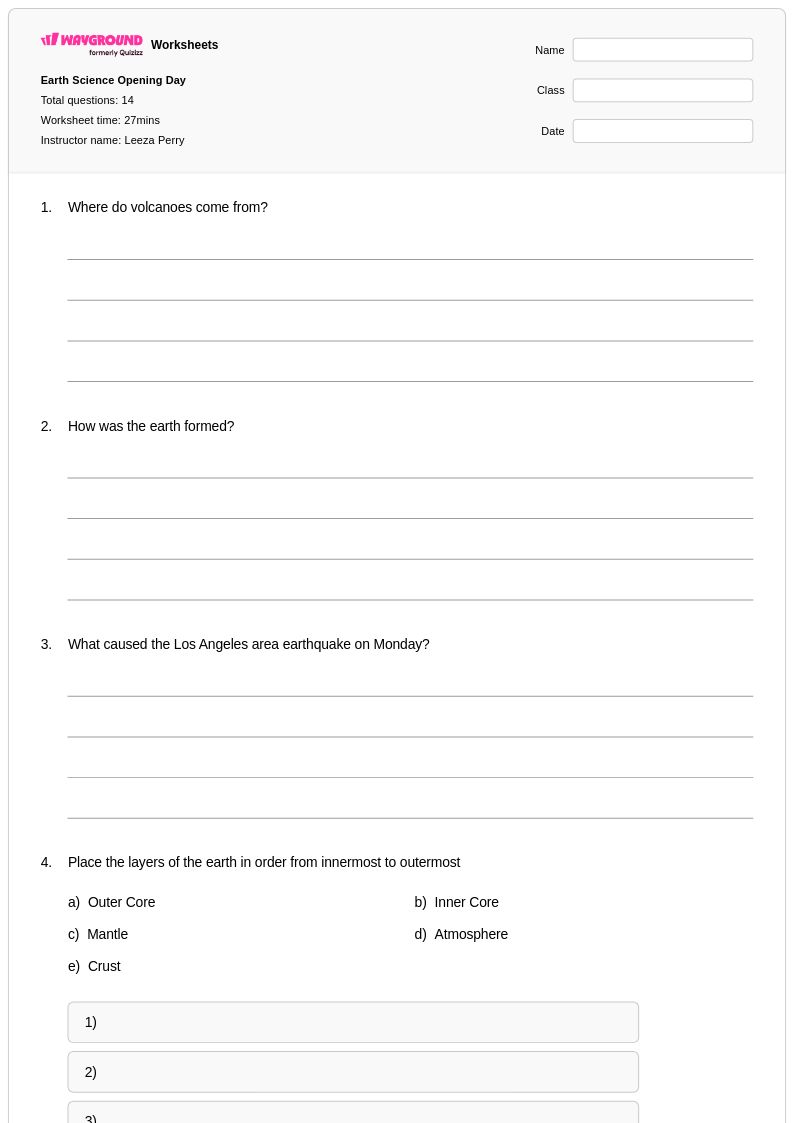
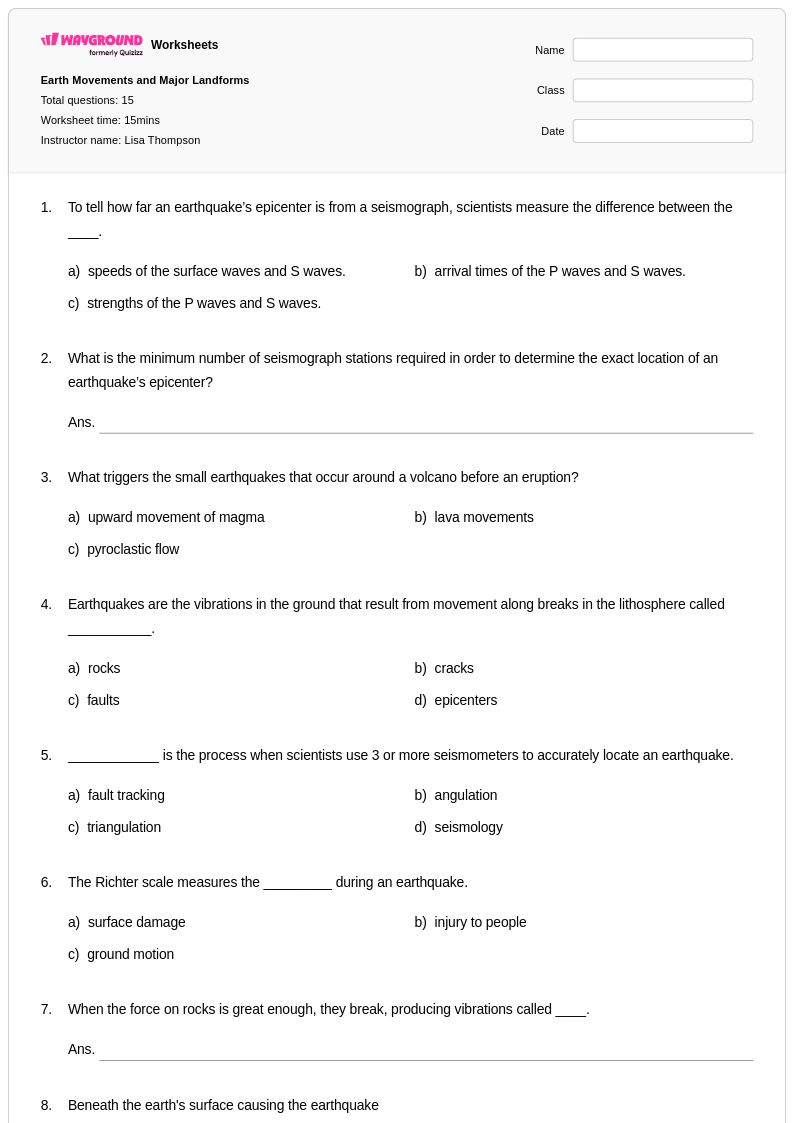
Class 9 earthquake worksheets and printables from Wayground help students explore seismic activity, plate tectonics, and geological processes through engaging practice problems and comprehensive answer keys.
Explore printable Earthquake worksheets for Class 9
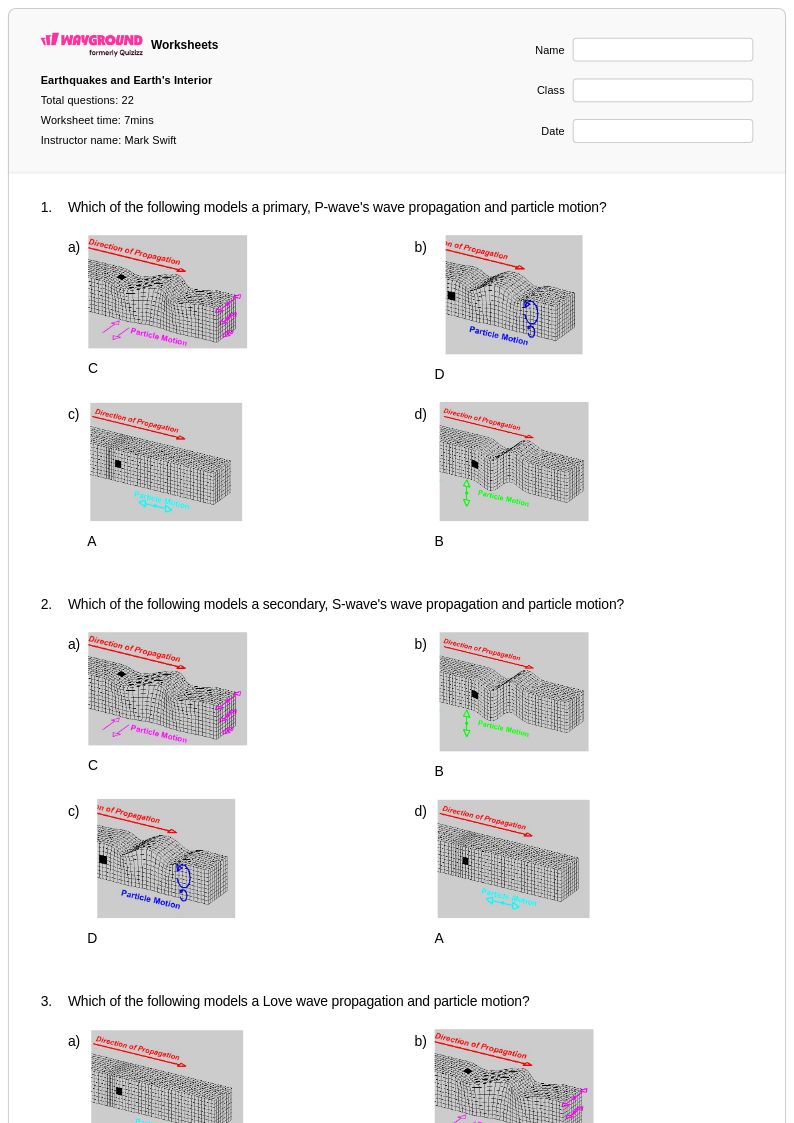
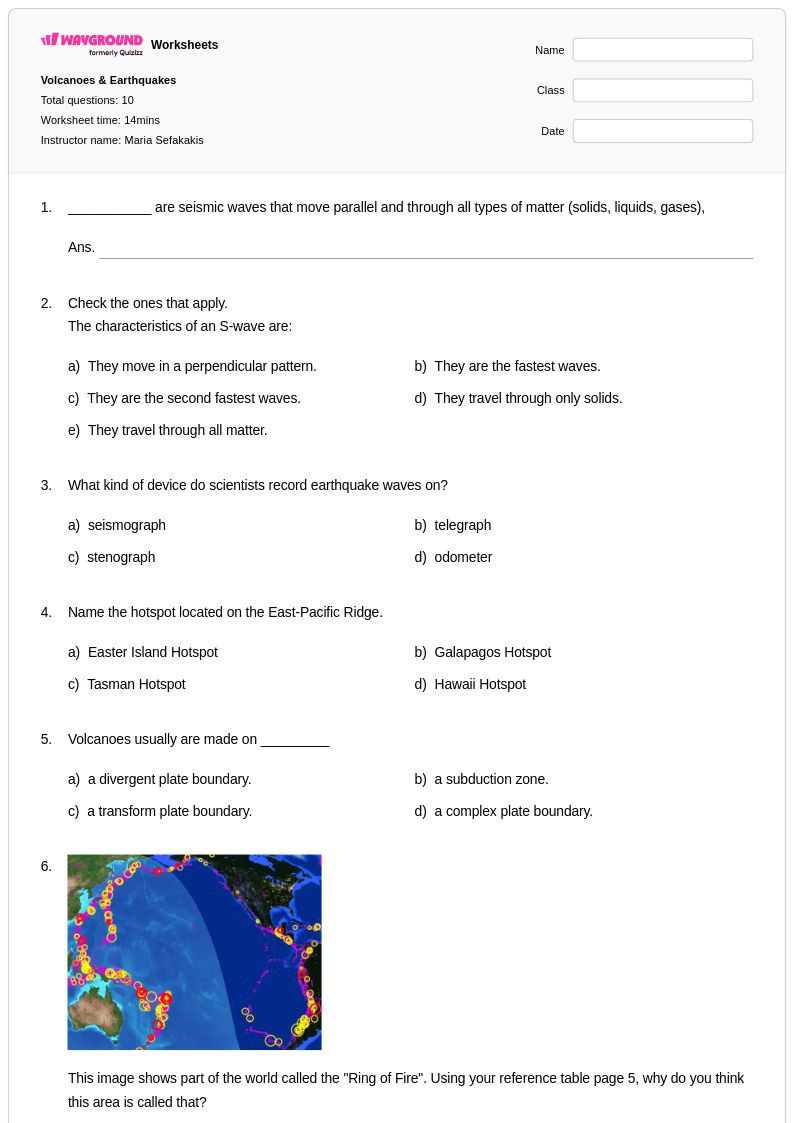
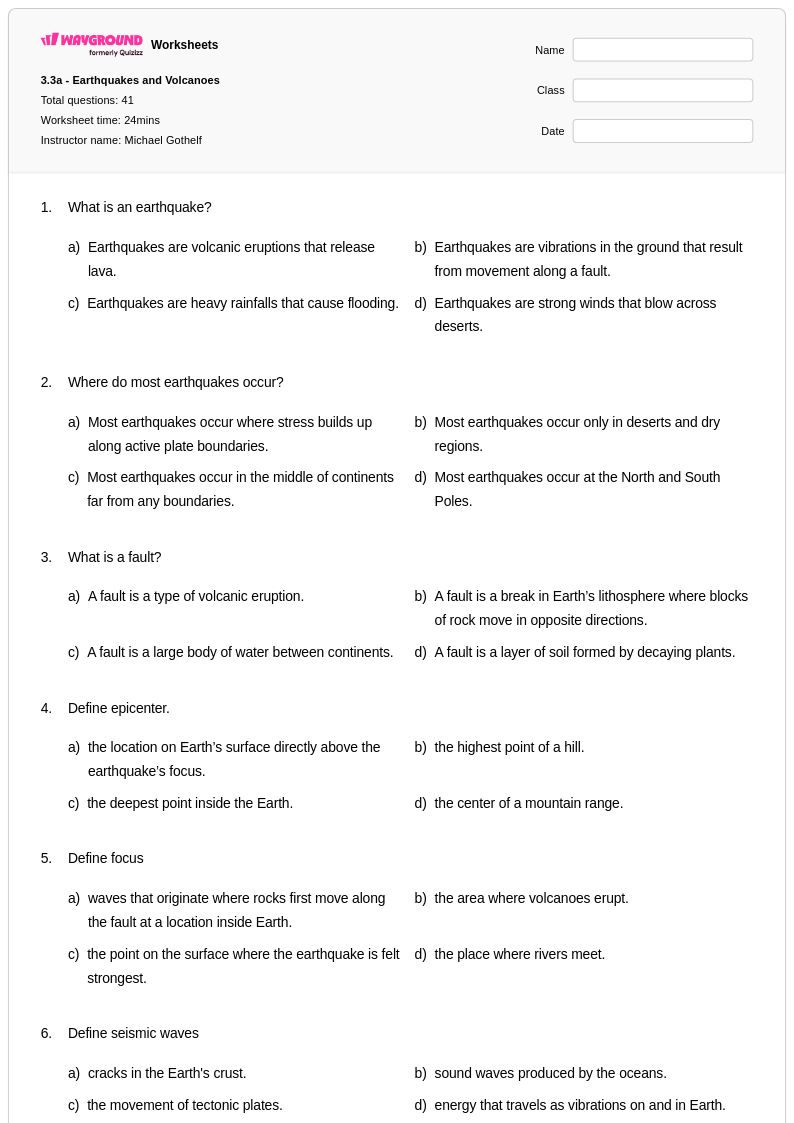
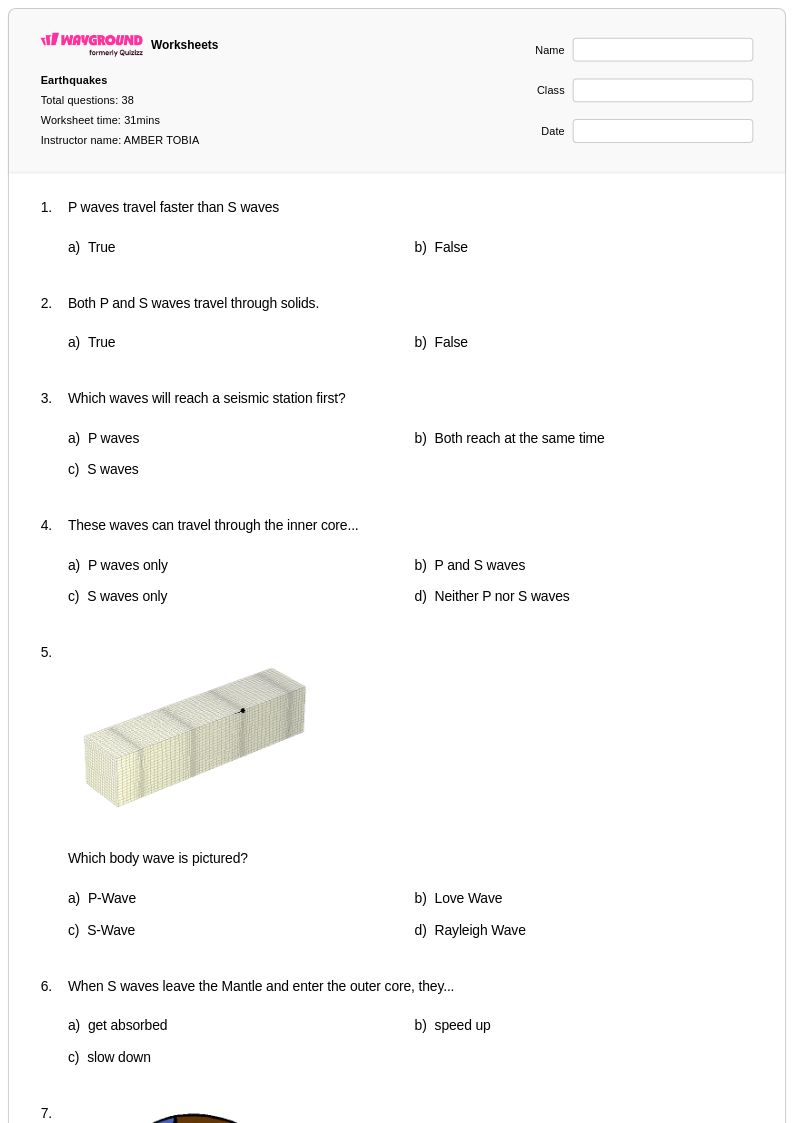
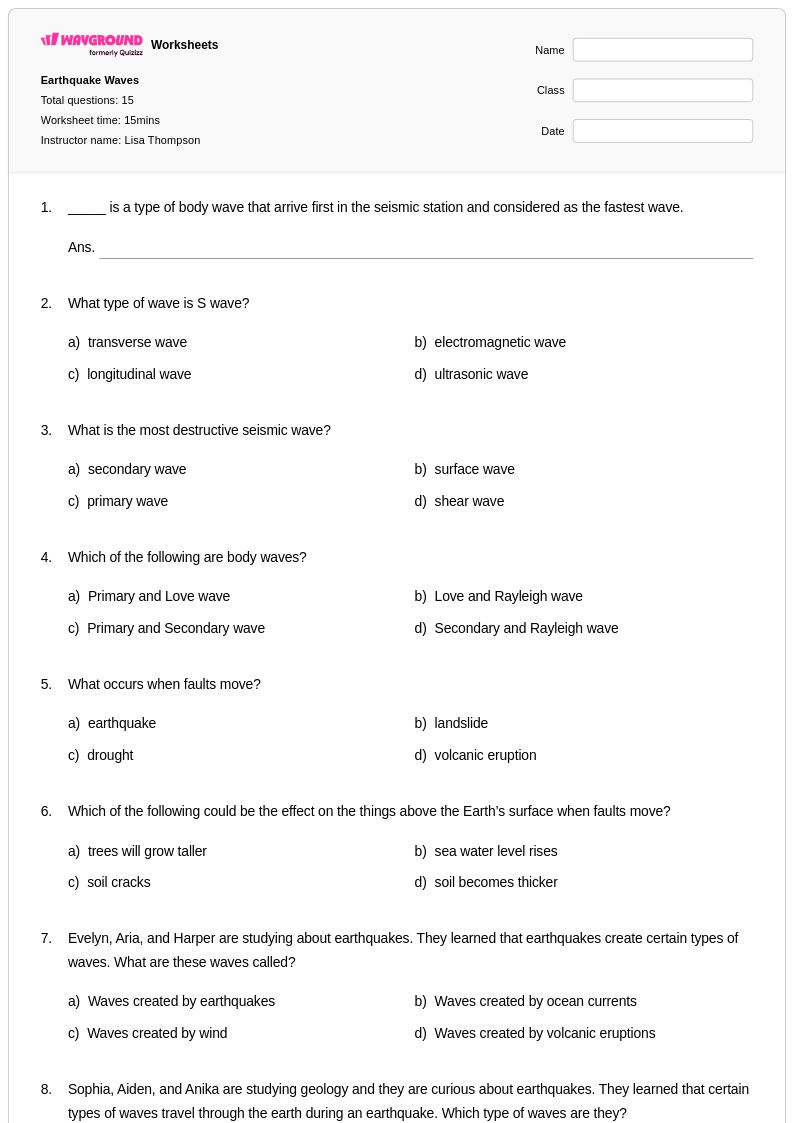
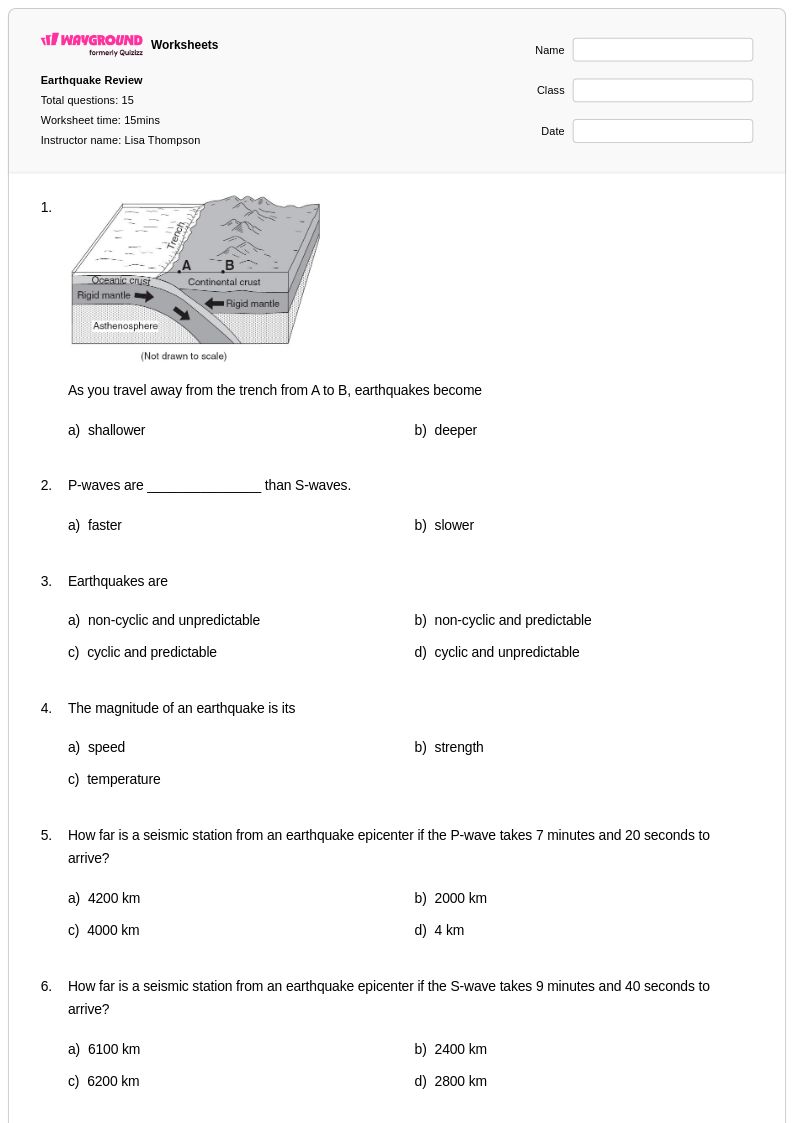
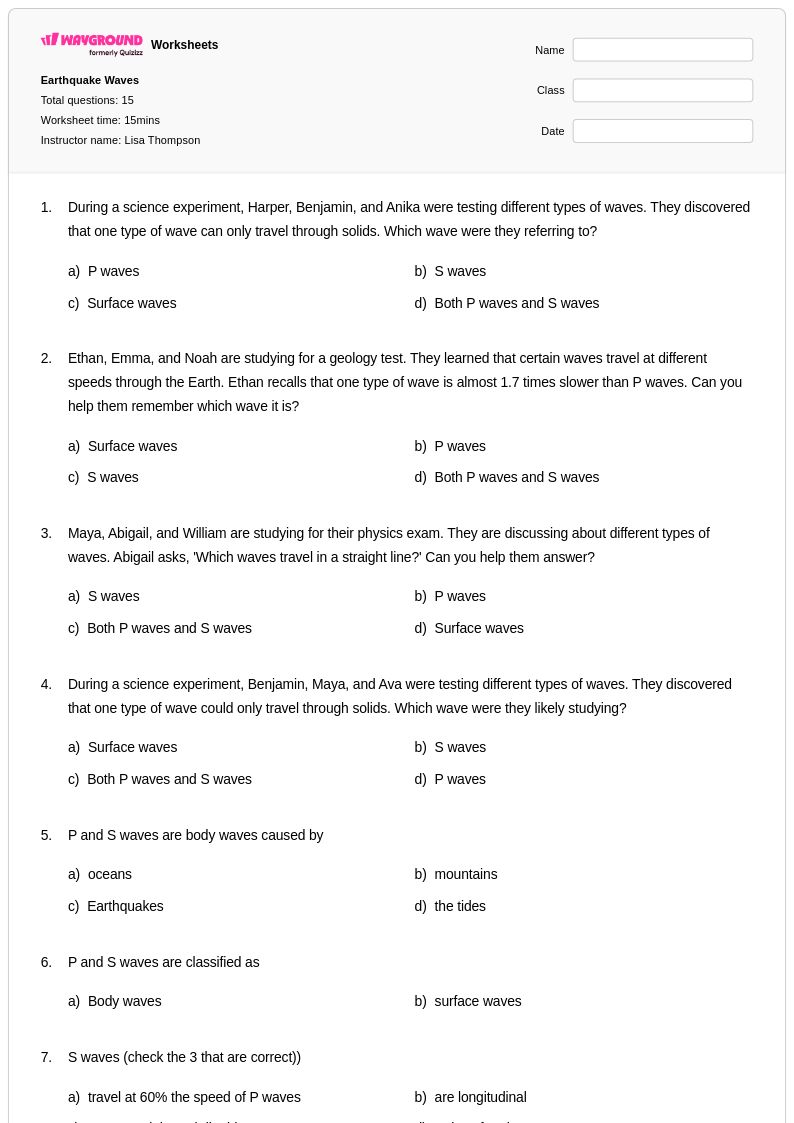
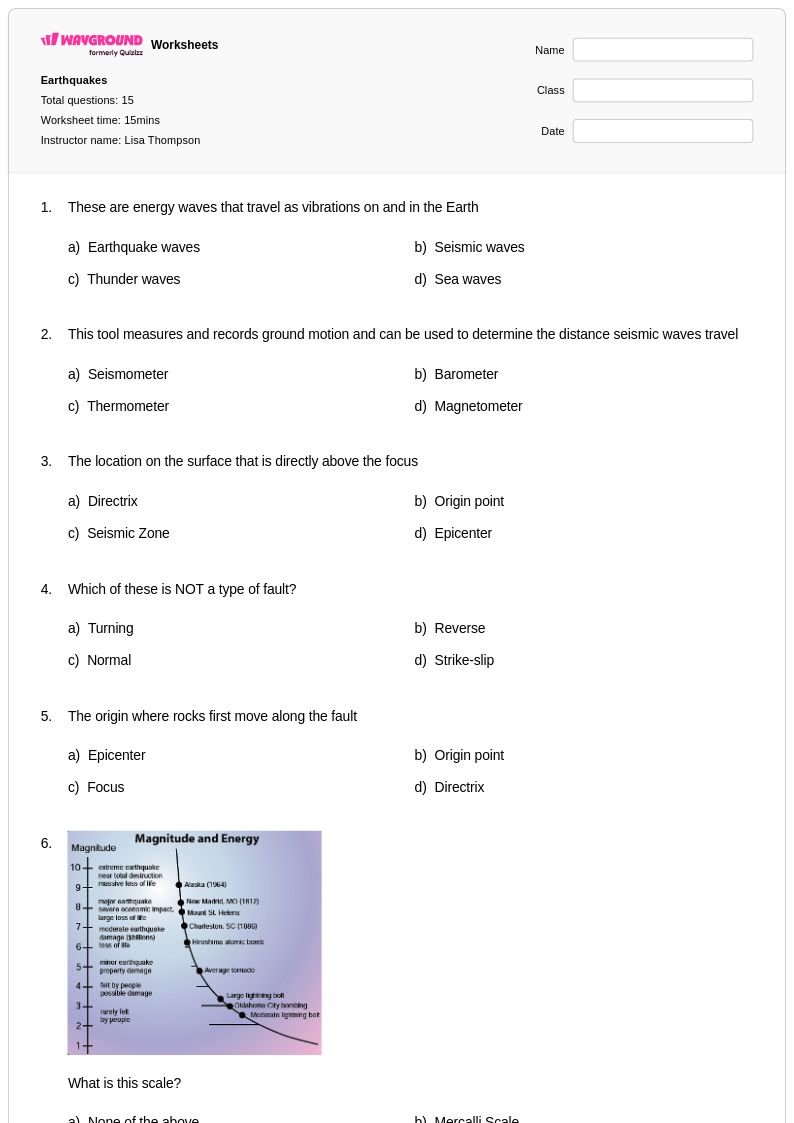
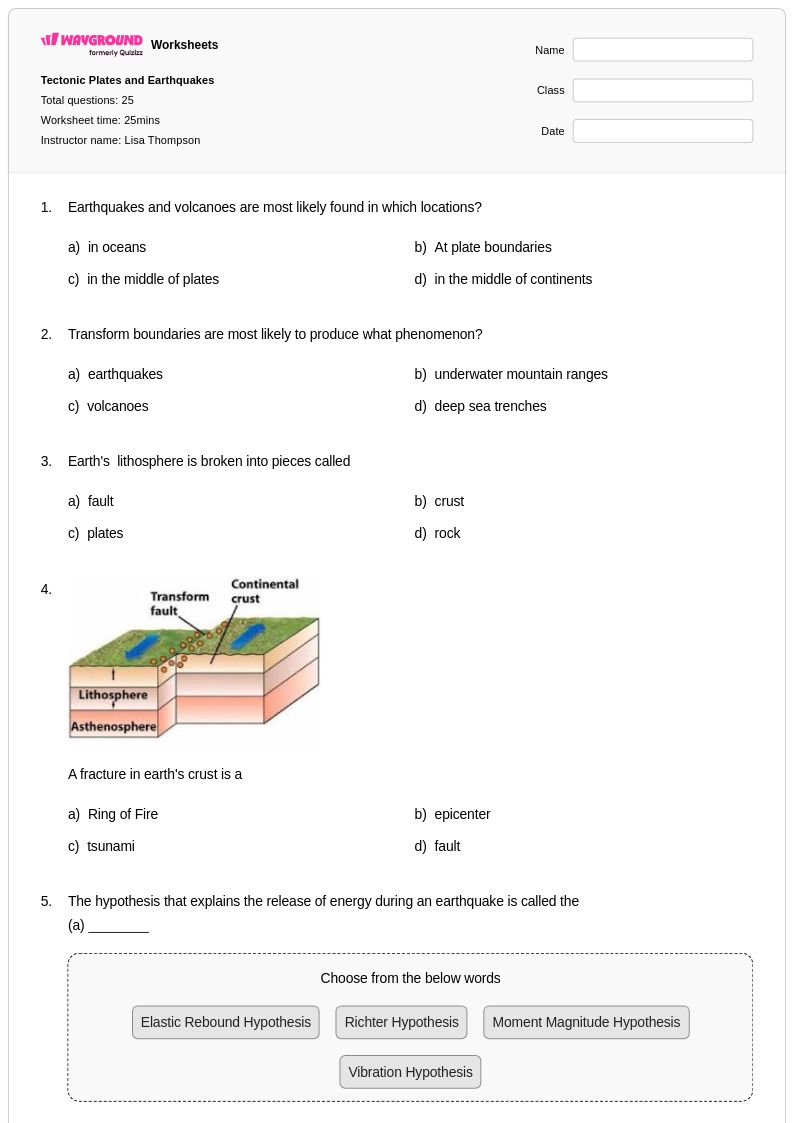
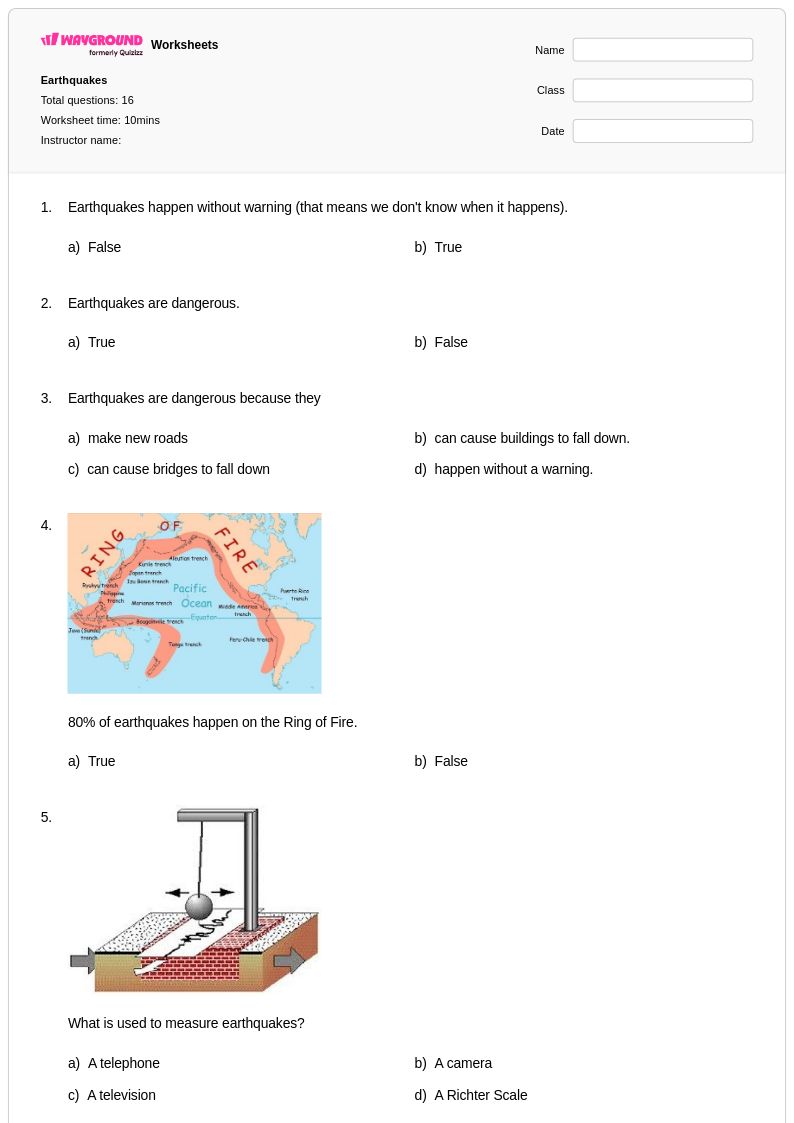
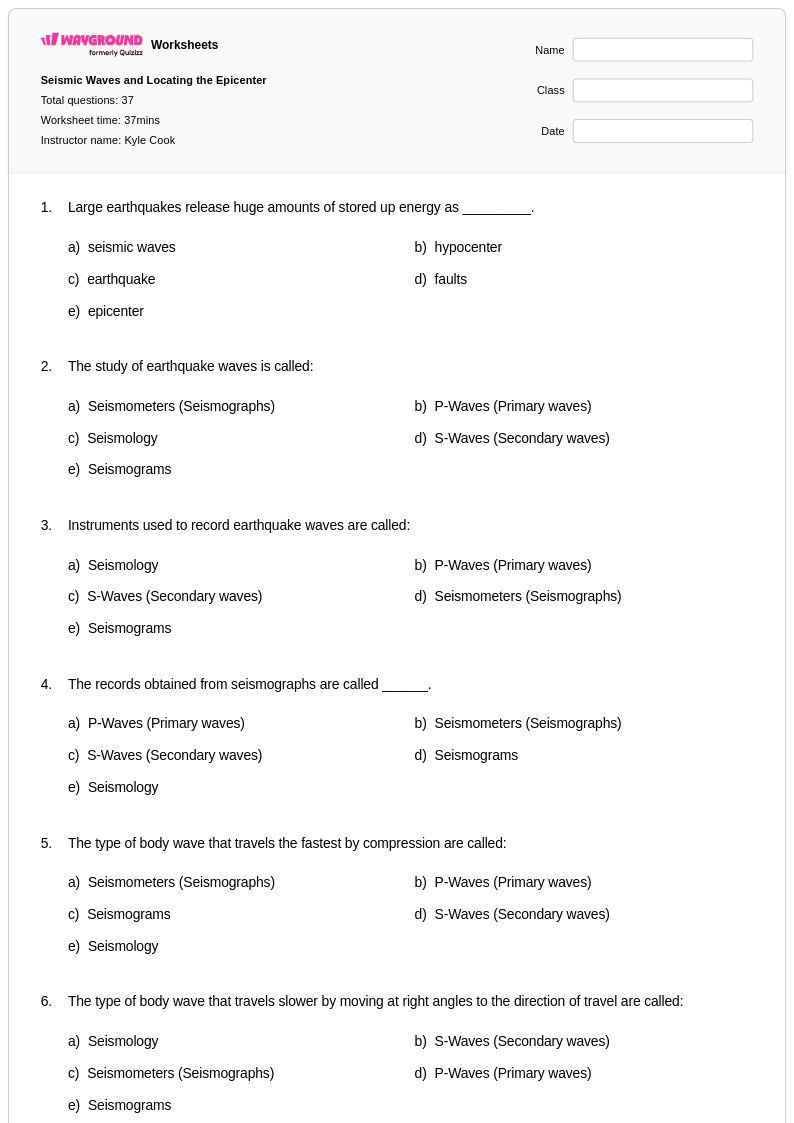
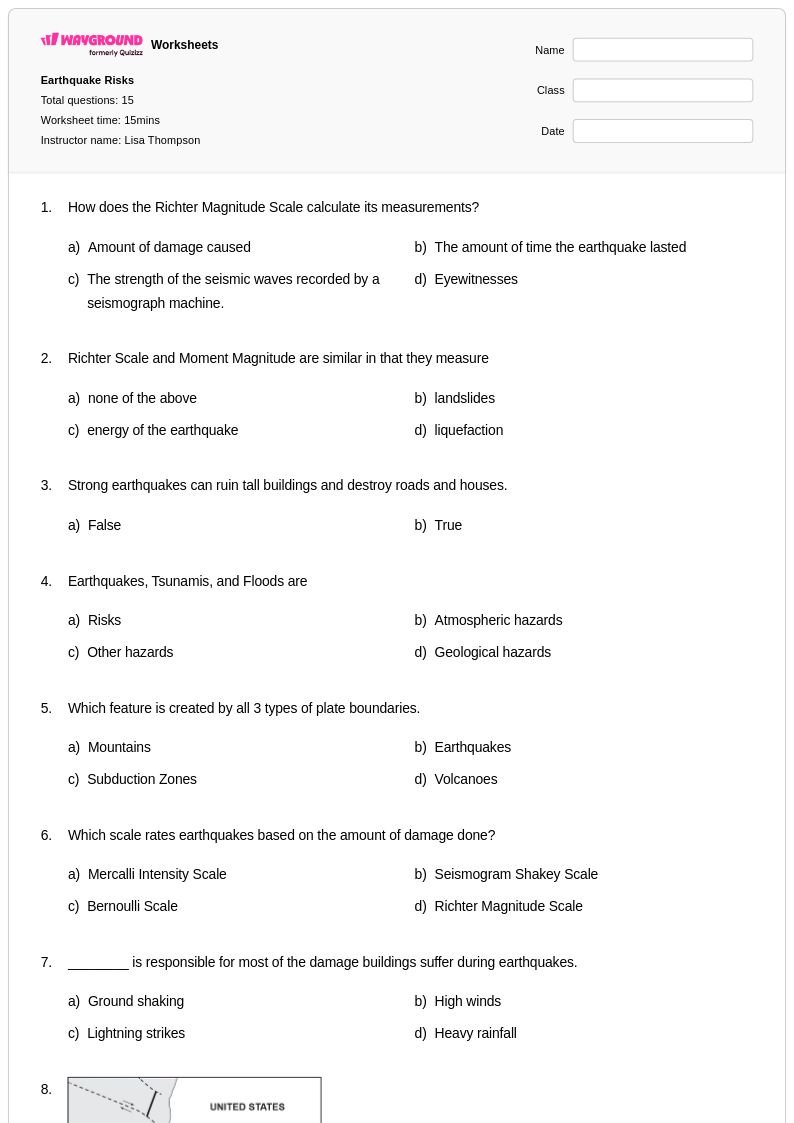
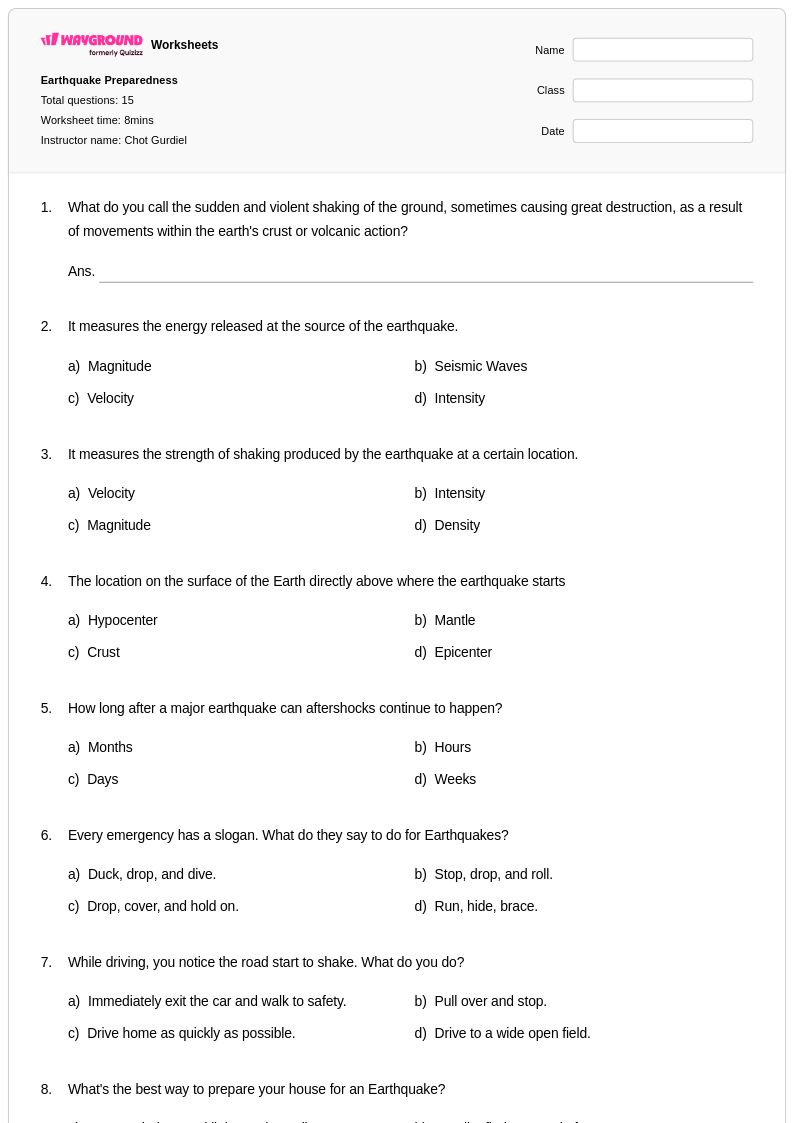
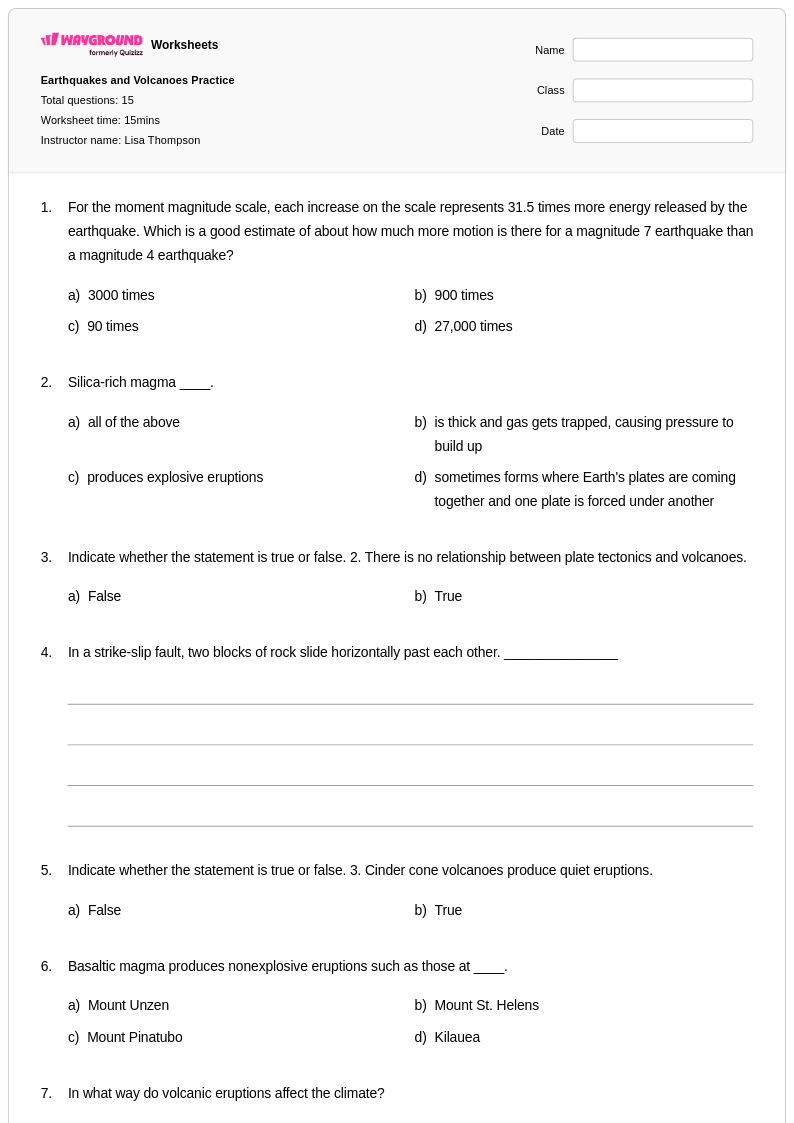
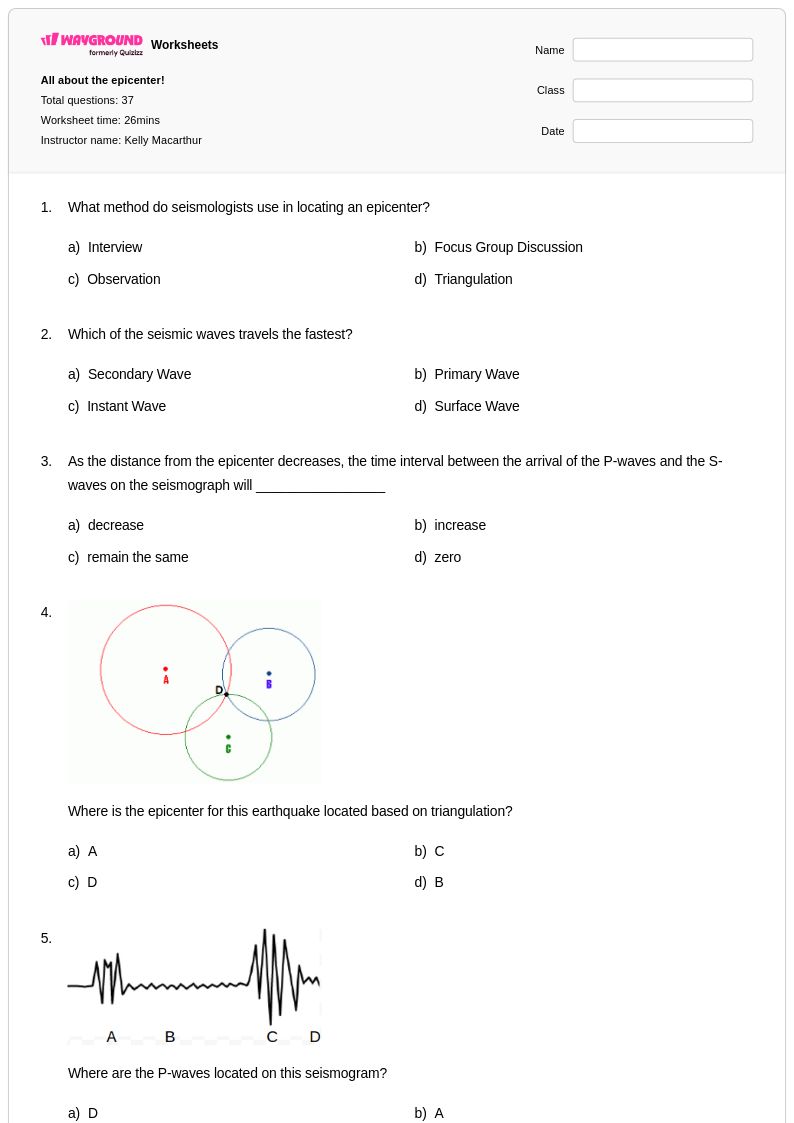
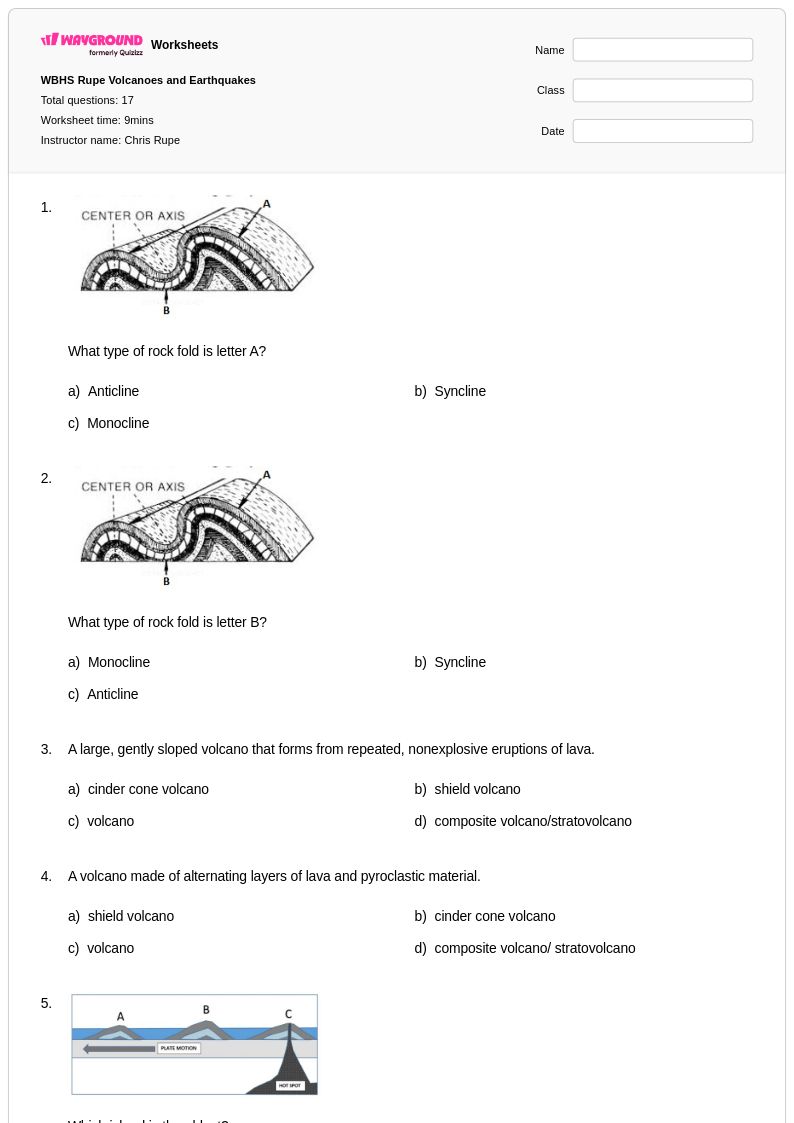
Class 9 earthquake worksheets available through Wayground (formerly Quizizz) provide comprehensive resources for students to explore seismic phenomena, tectonic plate movements, and the geological processes that generate earthquakes. These carefully designed materials strengthen critical thinking skills as students analyze seismograph data, calculate earthquake magnitude and intensity, and examine the relationship between fault lines and seismic activity. The worksheet collections include detailed practice problems that guide students through concepts such as P-waves and S-waves, epicenter triangulation, and the social and environmental impacts of major earthquakes throughout history. Each resource comes with a complete answer key to support both independent study and classroom instruction, with free printables available in convenient PDF format for immediate classroom use.
Wayground (formerly Quizizz) empowers educators with access to millions of teacher-created earthquake resources that can be seamlessly integrated into Class 9 Earth and Space Science curricula. The platform's robust search and filtering capabilities allow teachers to quickly locate materials aligned with specific educational standards, while differentiation tools enable customization for diverse learning needs and skill levels. These flexible worksheet collections are available in both printable and digital formats, including downloadable PDFs, making them ideal for traditional classroom instruction, homework assignments, or remote learning environments. Teachers can utilize these resources for initial skill-building exercises, targeted remediation for struggling students, or enrichment activities for advanced learners, ensuring that every student develops a solid understanding of earthquake science and seismological principles.
FAQs
How do I teach earthquakes to middle or high school students?
Teaching earthquakes effectively starts with grounding students in plate tectonics before introducing seismic concepts. Use real seismograph data to show how P-waves and S-waves behave differently, then connect fault mechanisms to real-world events students recognize. Cause-and-effect analysis is a strong anchor for this topic because it helps students move from memorizing vocabulary to explaining why earthquakes happen where they do.
What exercises help students practice understanding seismic waves and earthquake magnitude?
Practice exercises that ask students to interpret seismograph readings and apply the Richter or moment magnitude scale are particularly effective for building fluency with this topic. Map analysis activities that plot epicenter locations relative to tectonic plate boundaries reinforce spatial reasoning alongside content knowledge. Worksheets that pair these tasks with structured answer keys allow students to self-correct and identify gaps without waiting for teacher feedback.
What mistakes do students commonly make when learning about earthquakes?
One of the most common misconceptions is that earthquakes only occur along the edges of tectonic plates, when in fact intraplate earthquakes are also significant. Students frequently confuse the epicenter with the focus, or hypocenter, and mix up the roles of P-waves and S-waves in seismic data. Another persistent error is treating magnitude and intensity as the same measurement, when they describe fundamentally different things: energy released versus ground shaking experienced at a location.
How can I use earthquake worksheets to connect science content to real-world events?
Real-world case studies, such as analyzing the 1906 San Francisco earthquake or the 2011 Tohoku event, give students a concrete frame for applying concepts like fault type, magnitude, and tsunami generation. Incorporating actual USGS seismograph data or shake-map imagery into worksheet tasks makes the science feel immediate and observable rather than abstract. This approach also supports scientific literacy by asking students to read and interpret the same kinds of data that professional geologists use.
How do I use Wayground's earthquake worksheets in my classroom?
Wayground's earthquake worksheets are available as printable PDFs for traditional classroom use and in digital formats for technology-integrated instruction, including the option to host them as a quiz directly on Wayground. This flexibility means the same resource can be assigned as a paper assessment, a digital homework task, or an in-class activity without requiring separate preparation. Answer keys are included with each worksheet, supporting independent student practice and efficient teacher review.
How can I differentiate earthquake instruction for students at different skill levels?
For students who need additional support, Wayground offers built-in accommodation tools including read-aloud functionality, reduced answer choices to lower cognitive load, and extended time settings that can be applied to individual students without alerting the rest of the class. Advanced learners can be directed toward more complex tasks such as multi-step seismograph analysis or earthquake prediction methodology. These settings are saved and reusable across future sessions, so differentiation does not require rebuilding configurations each time.