Free Printable Ecosystem Services Worksheets for Class 4
Explore Class 4 ecosystem services with Wayground's free biology worksheets and printables that help students understand how nature provides essential resources, featuring practice problems and answer keys in convenient PDF format.
Explore printable Ecosystem Services worksheets for Class 4
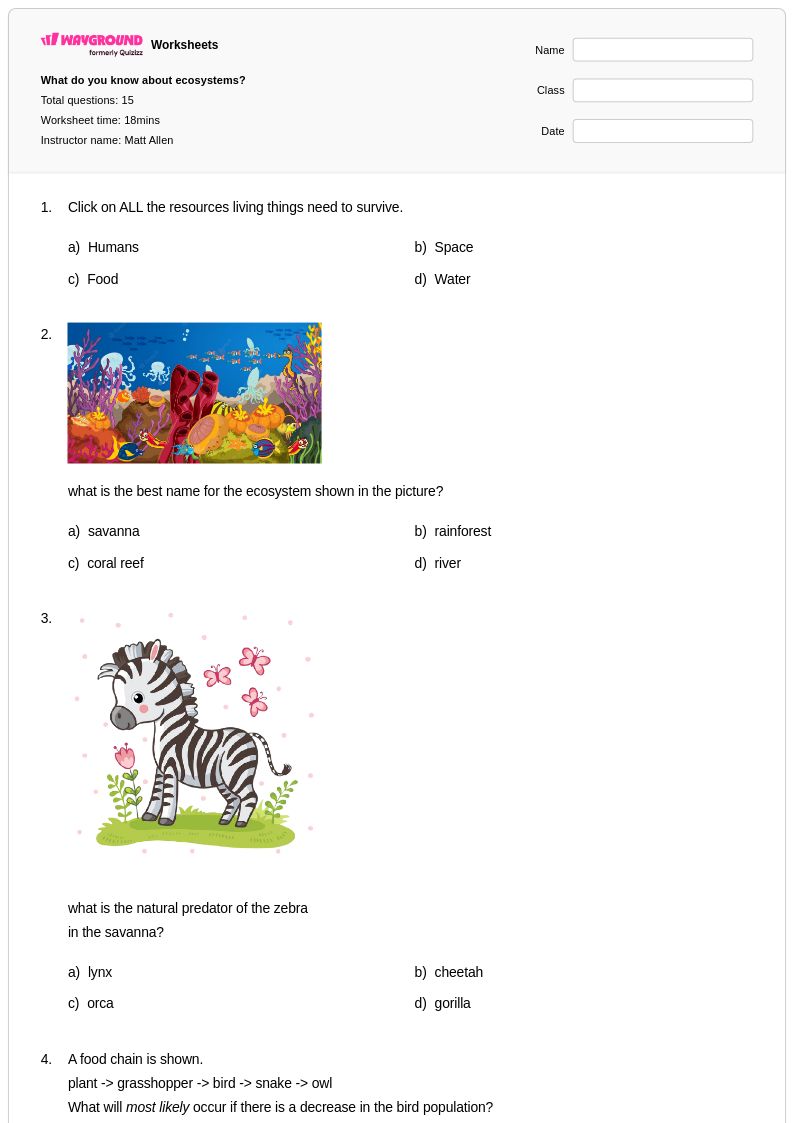
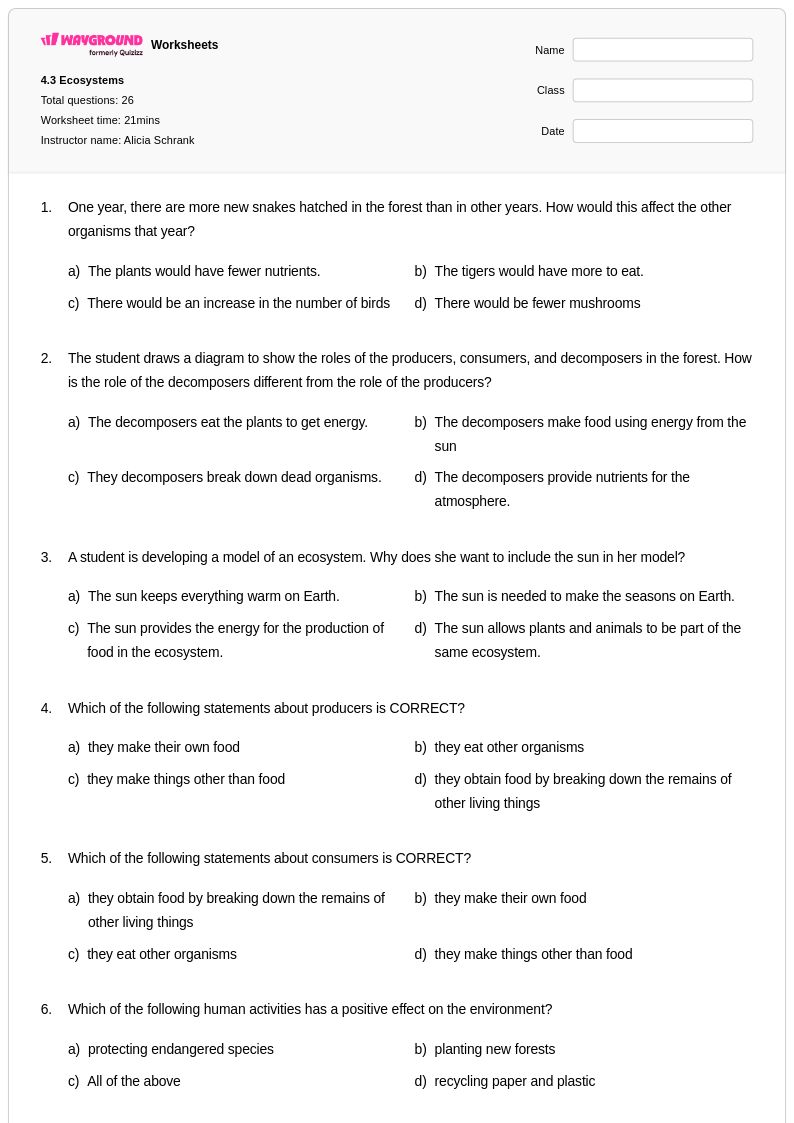
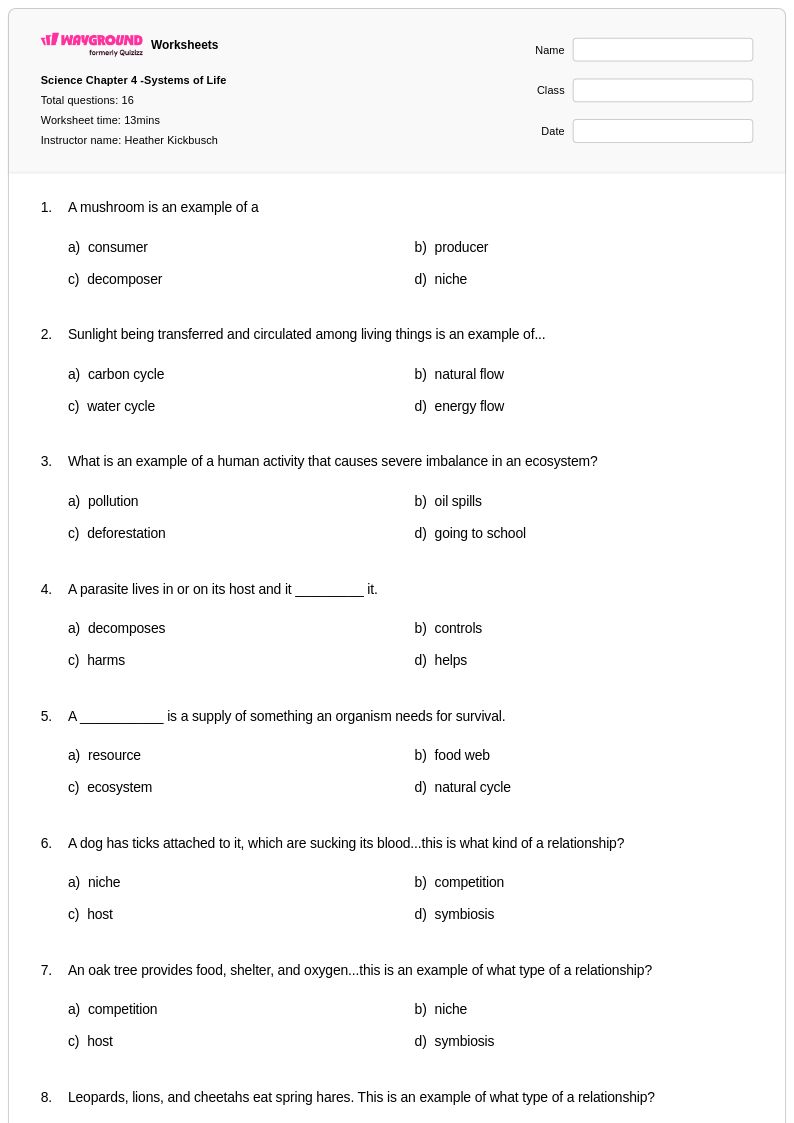
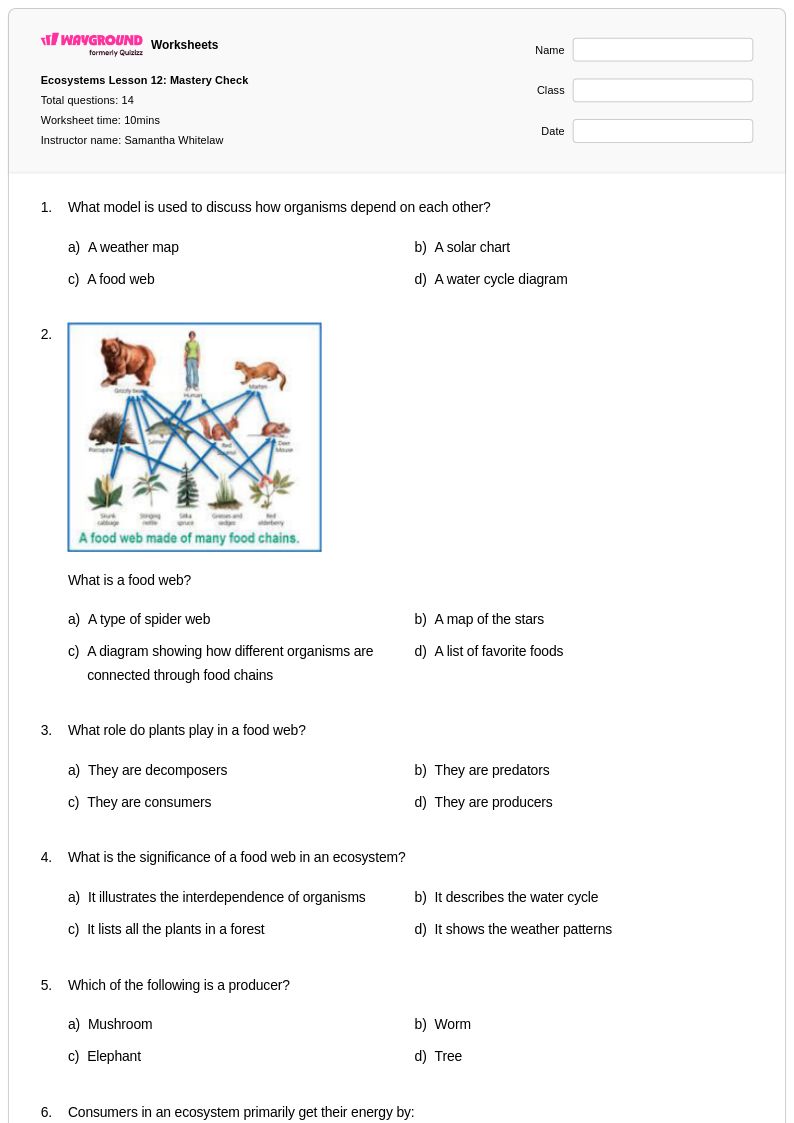
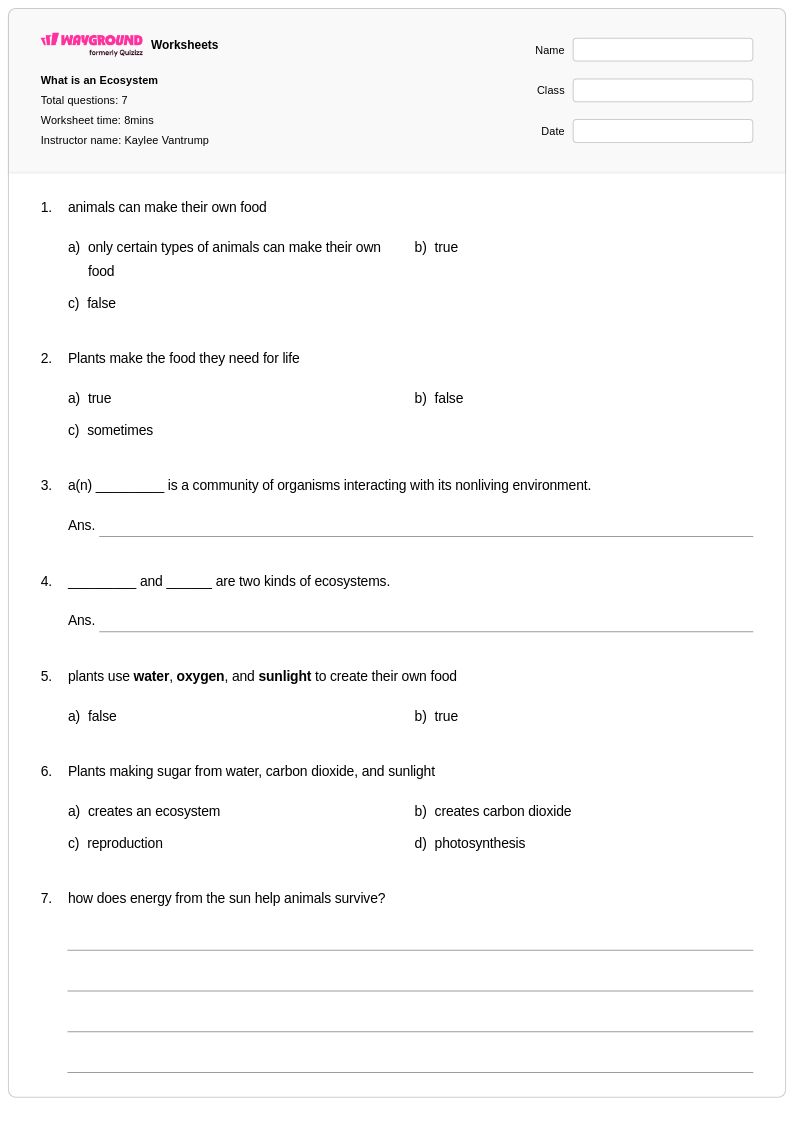
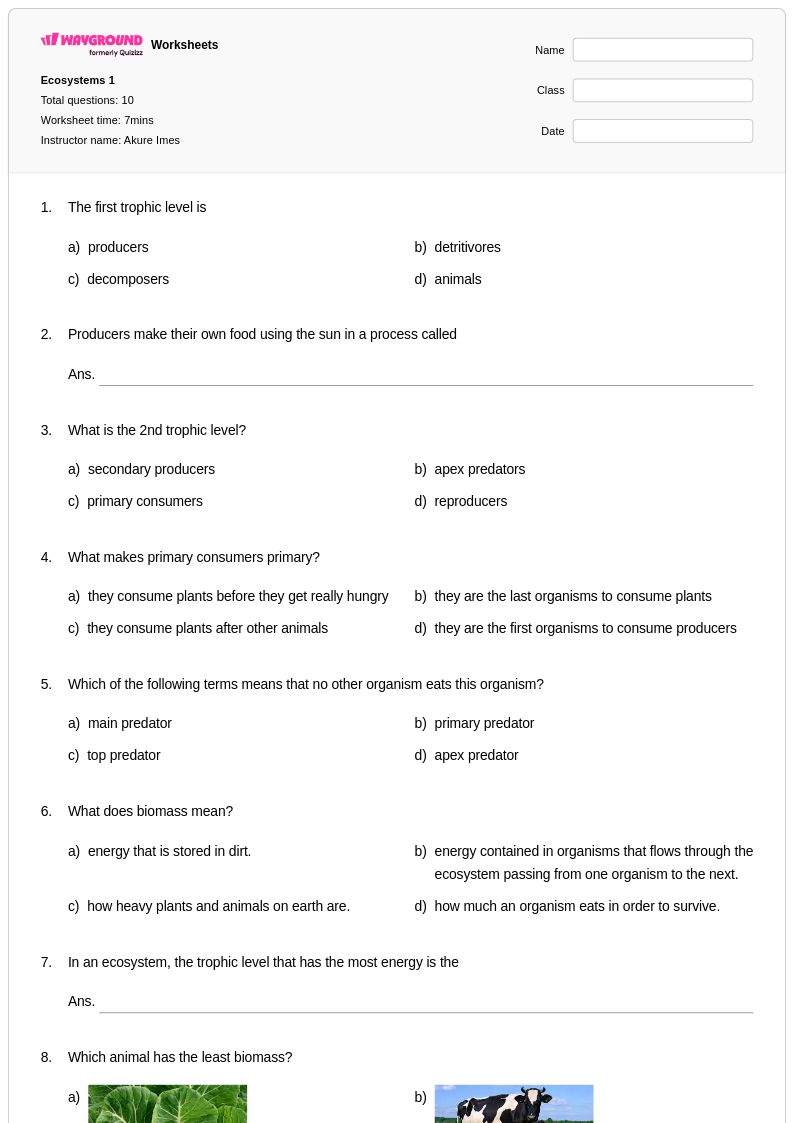
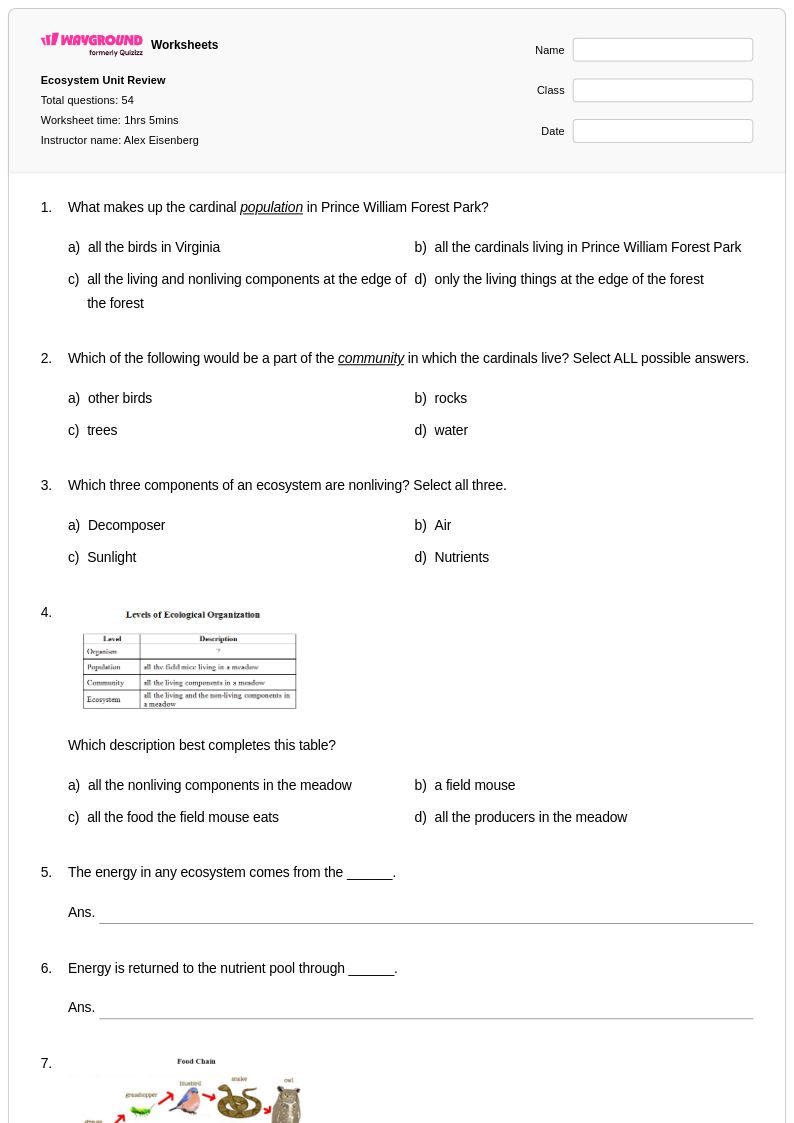
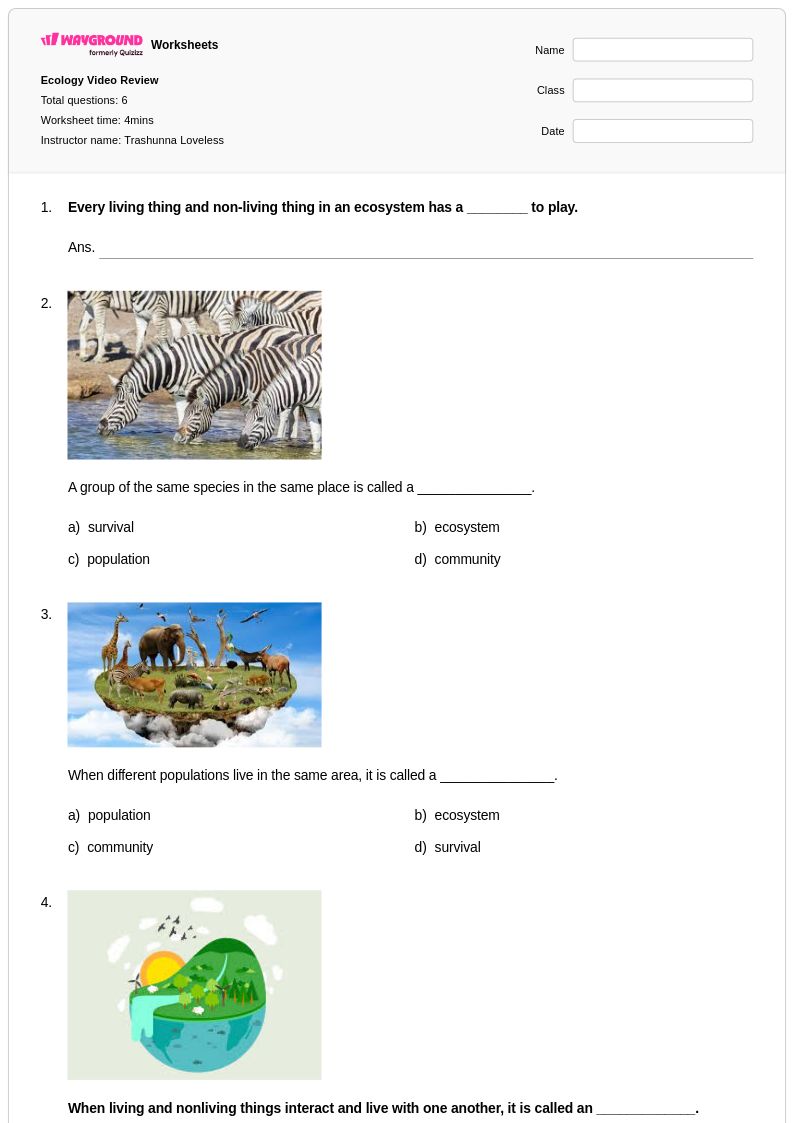
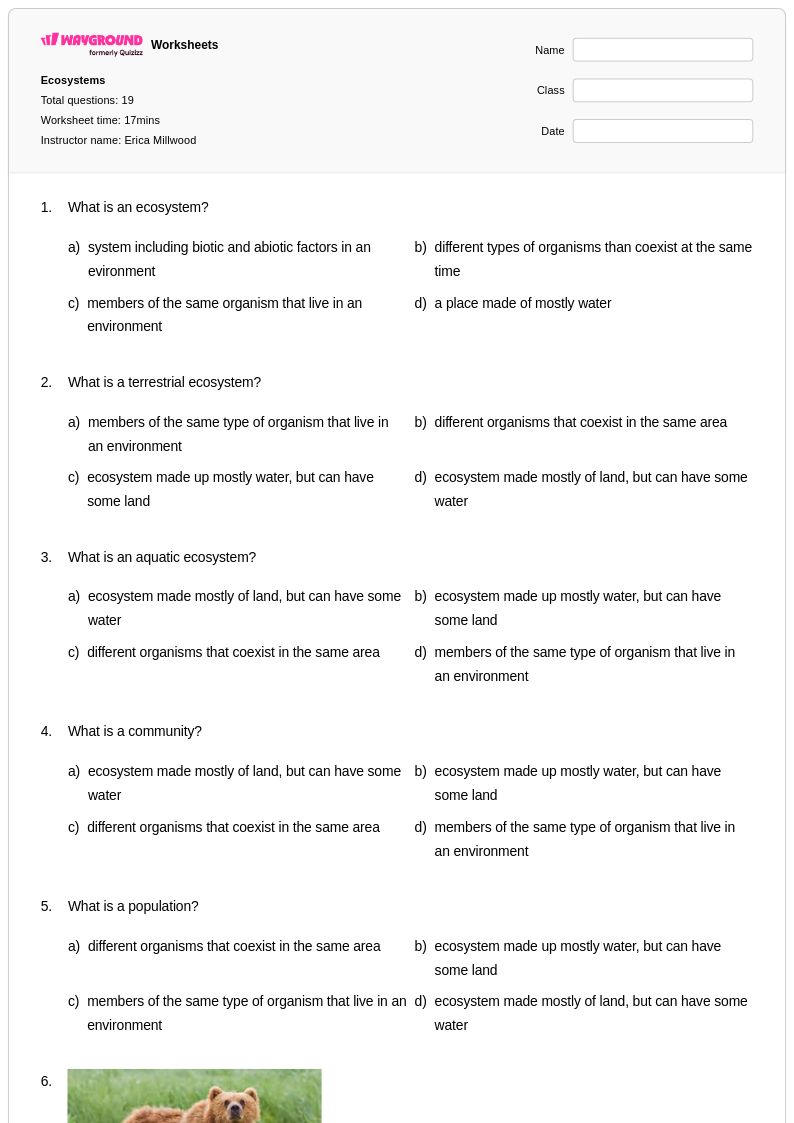
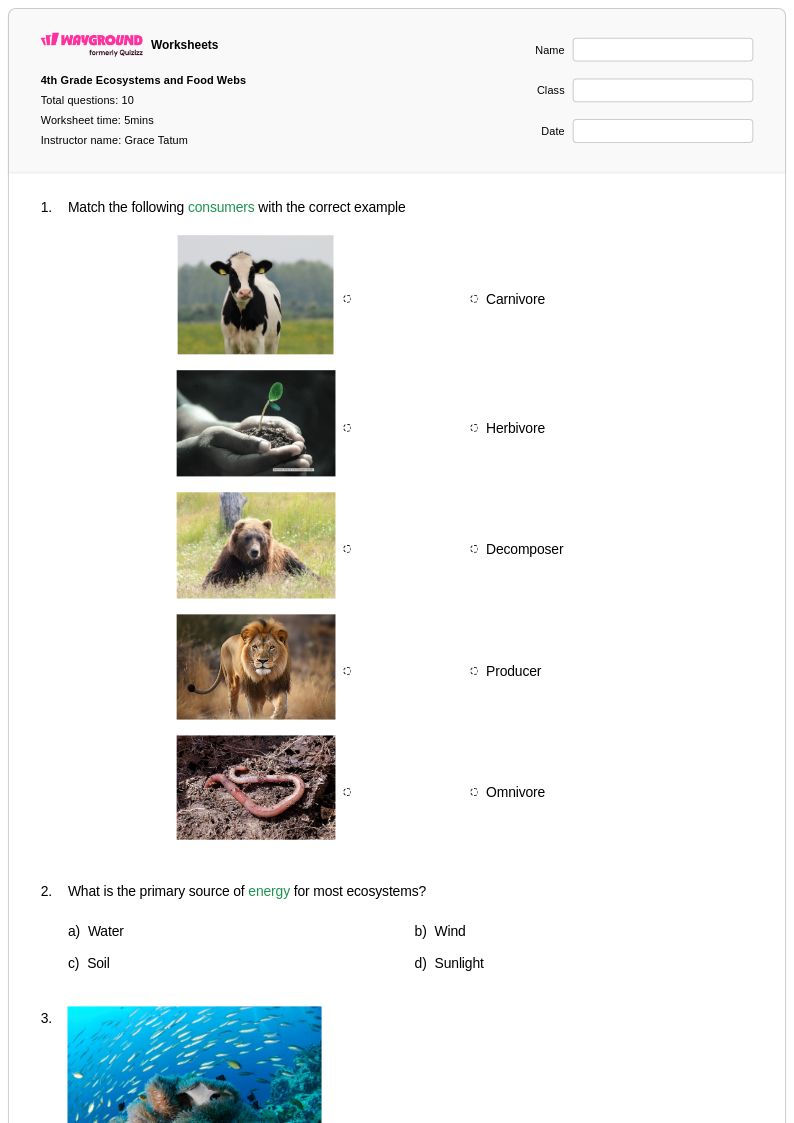
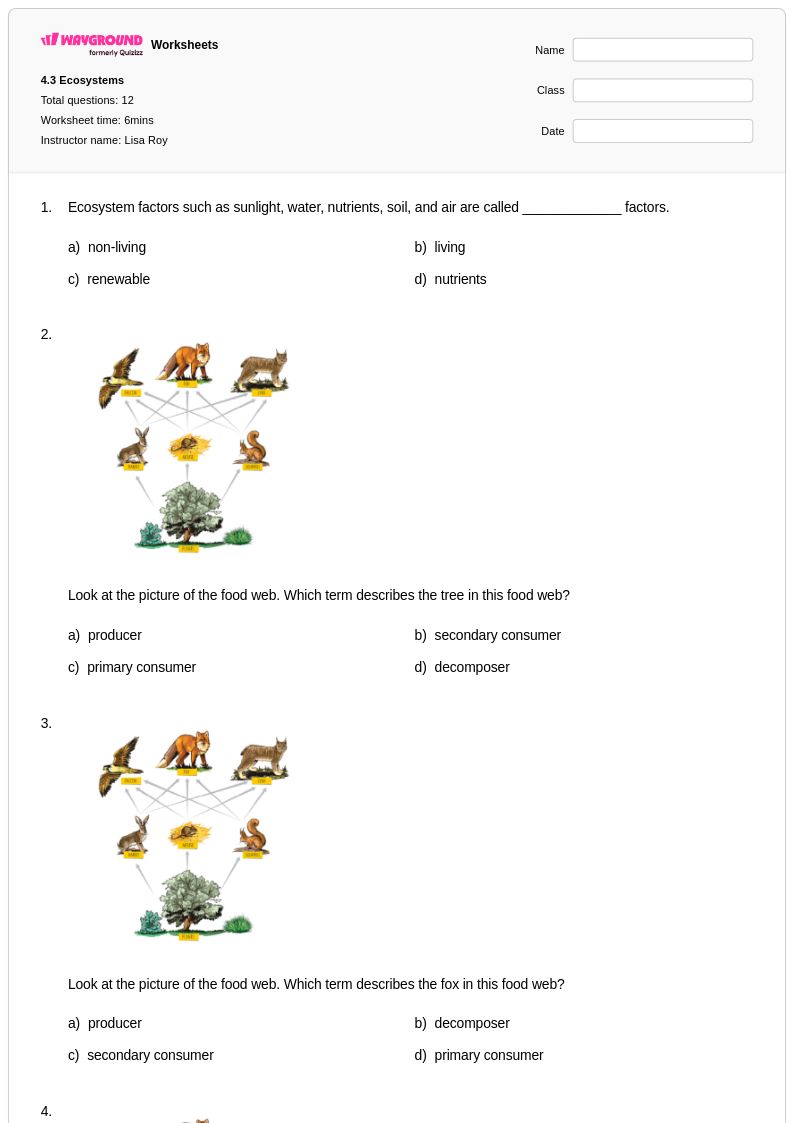
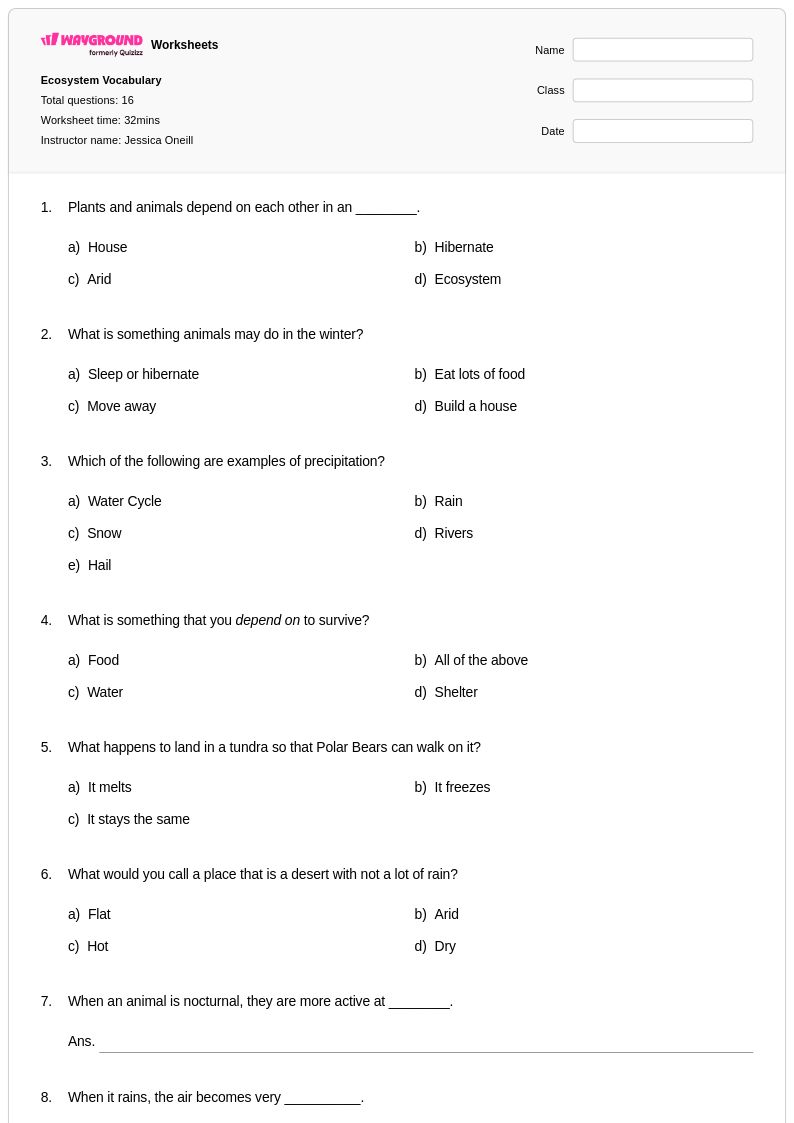
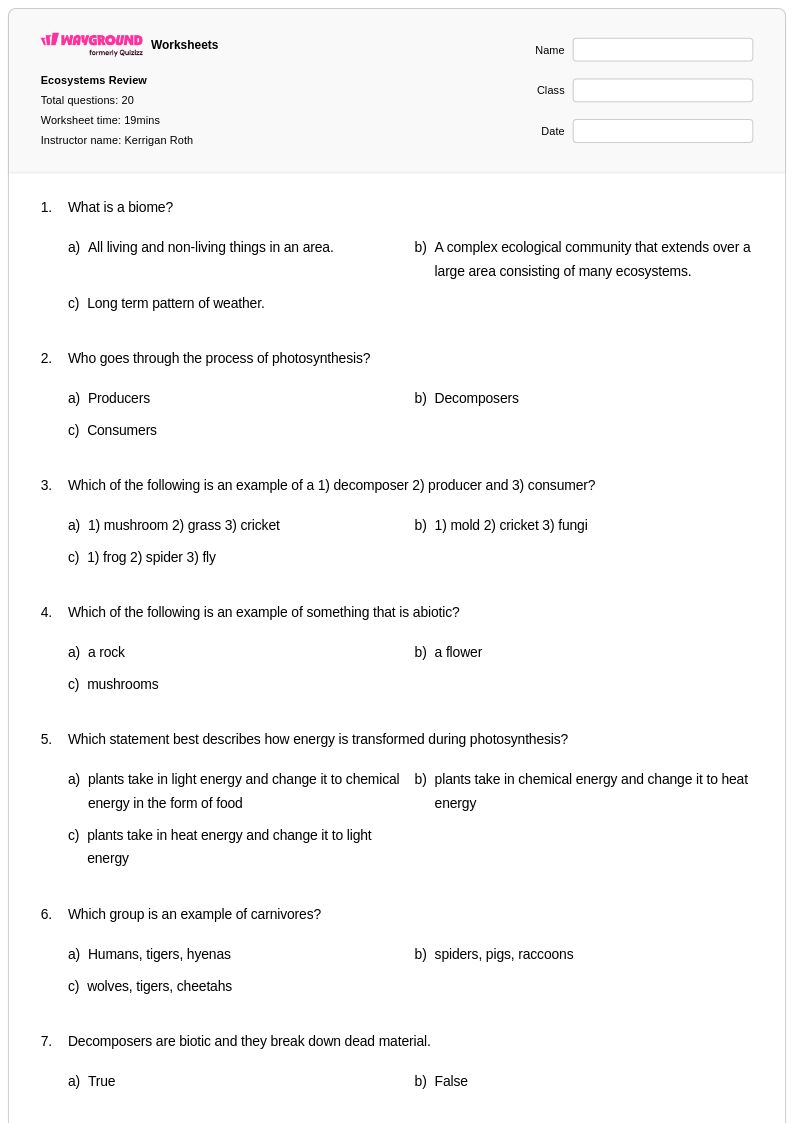
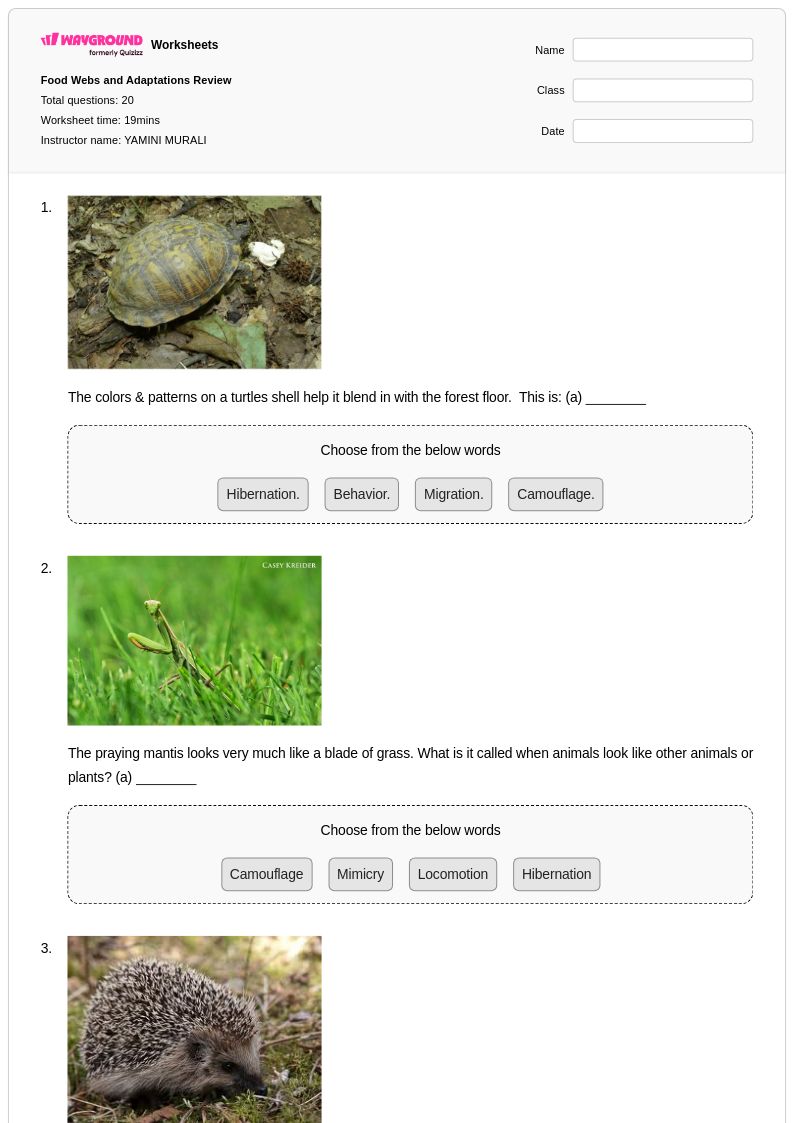
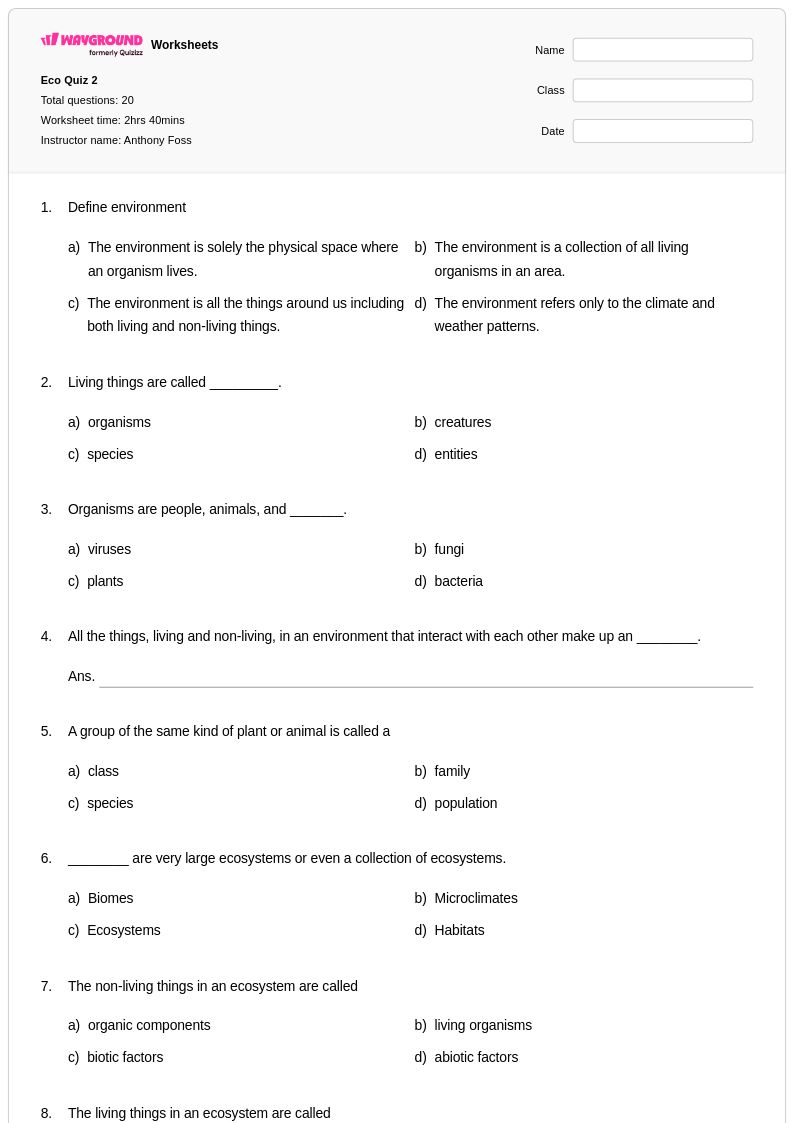
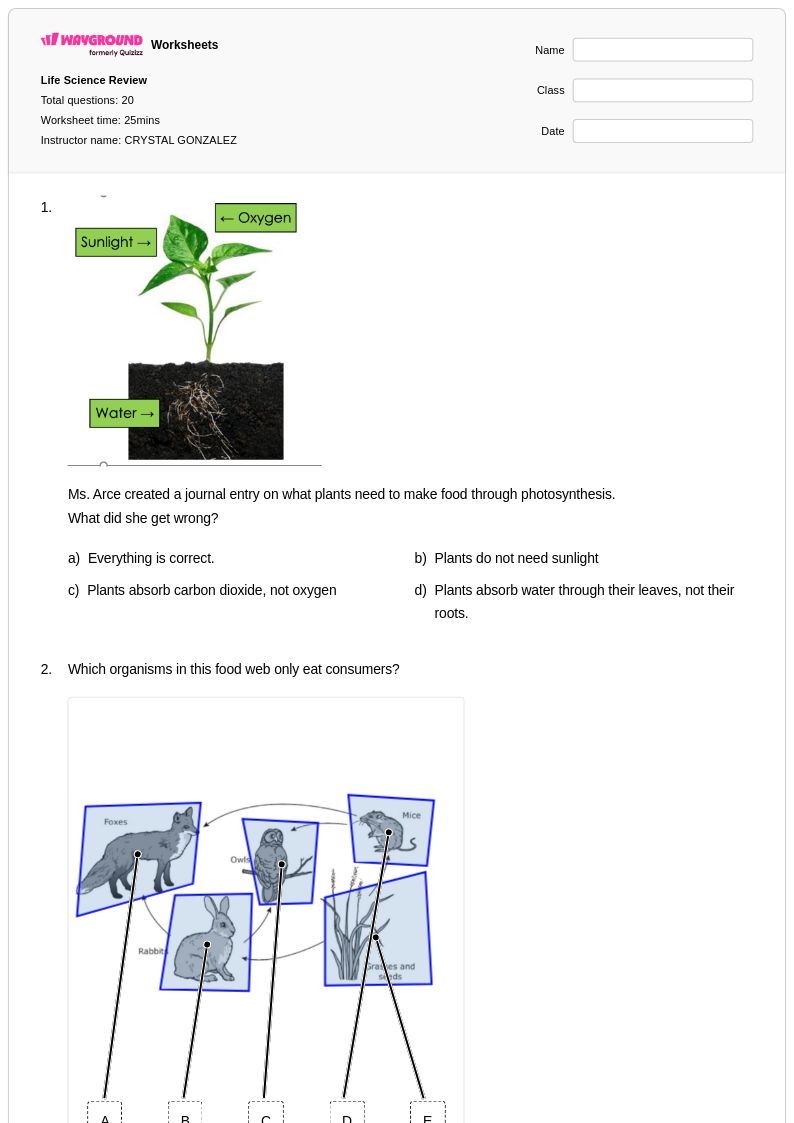
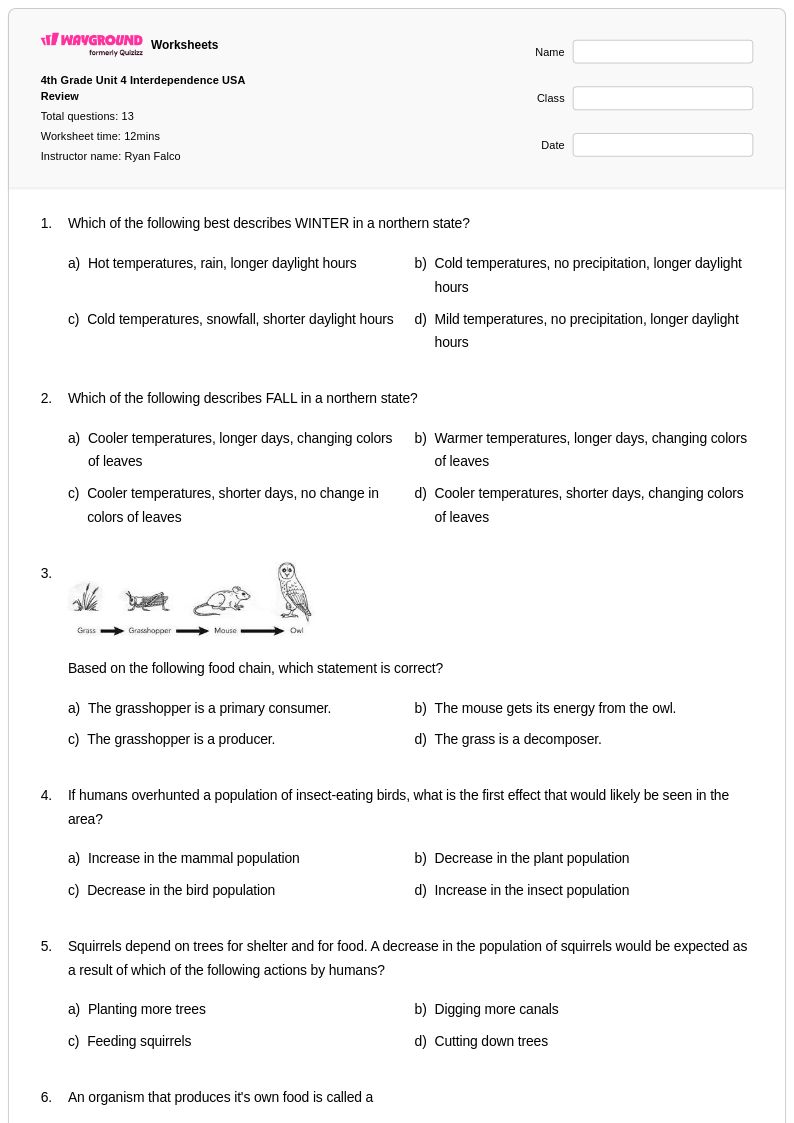
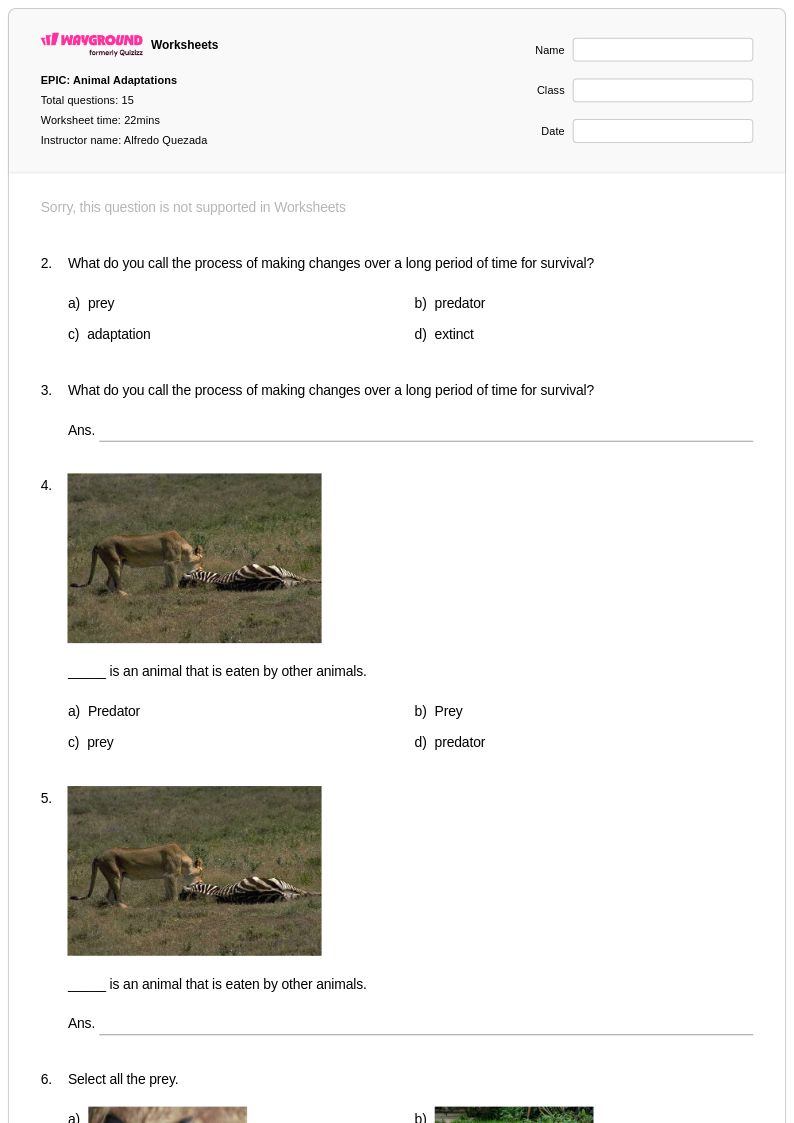
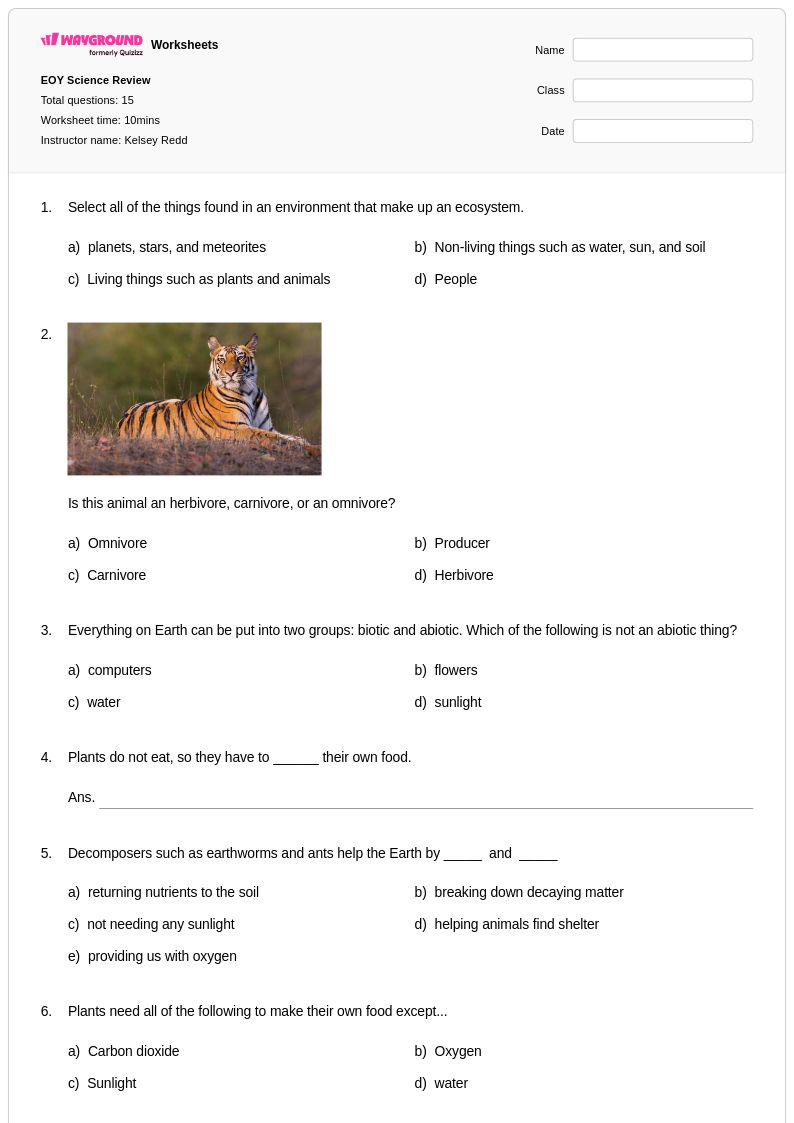
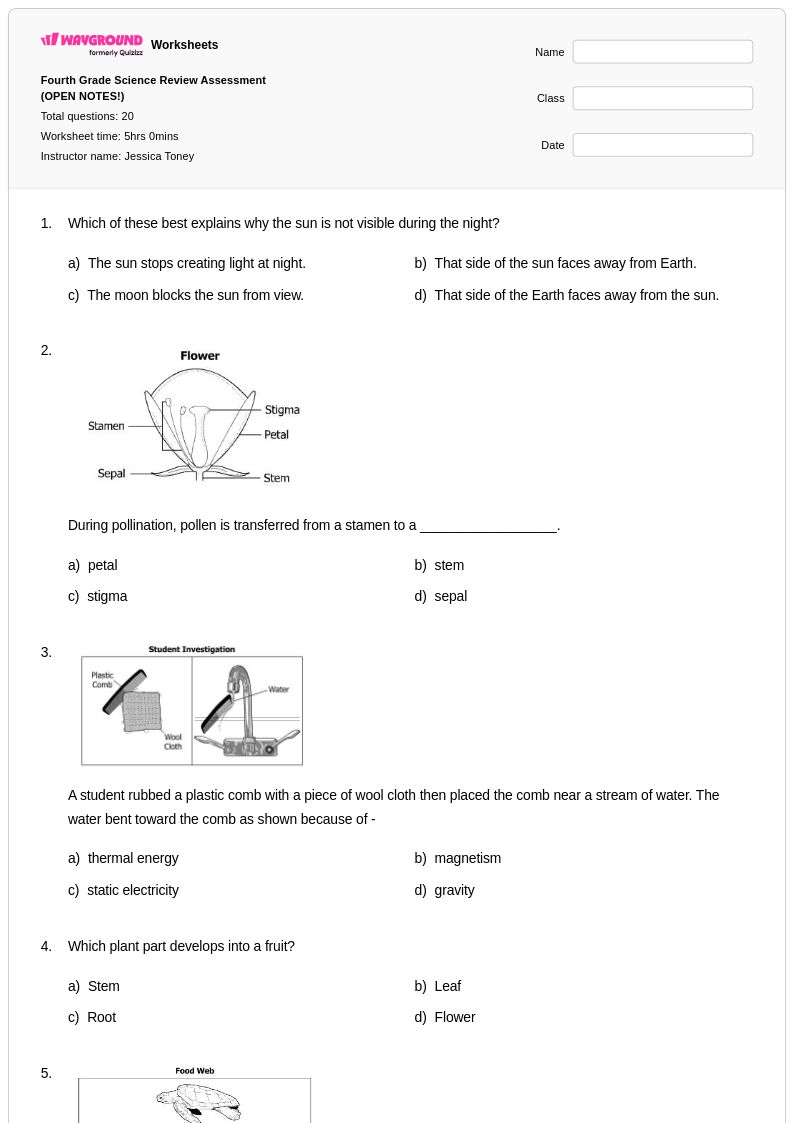
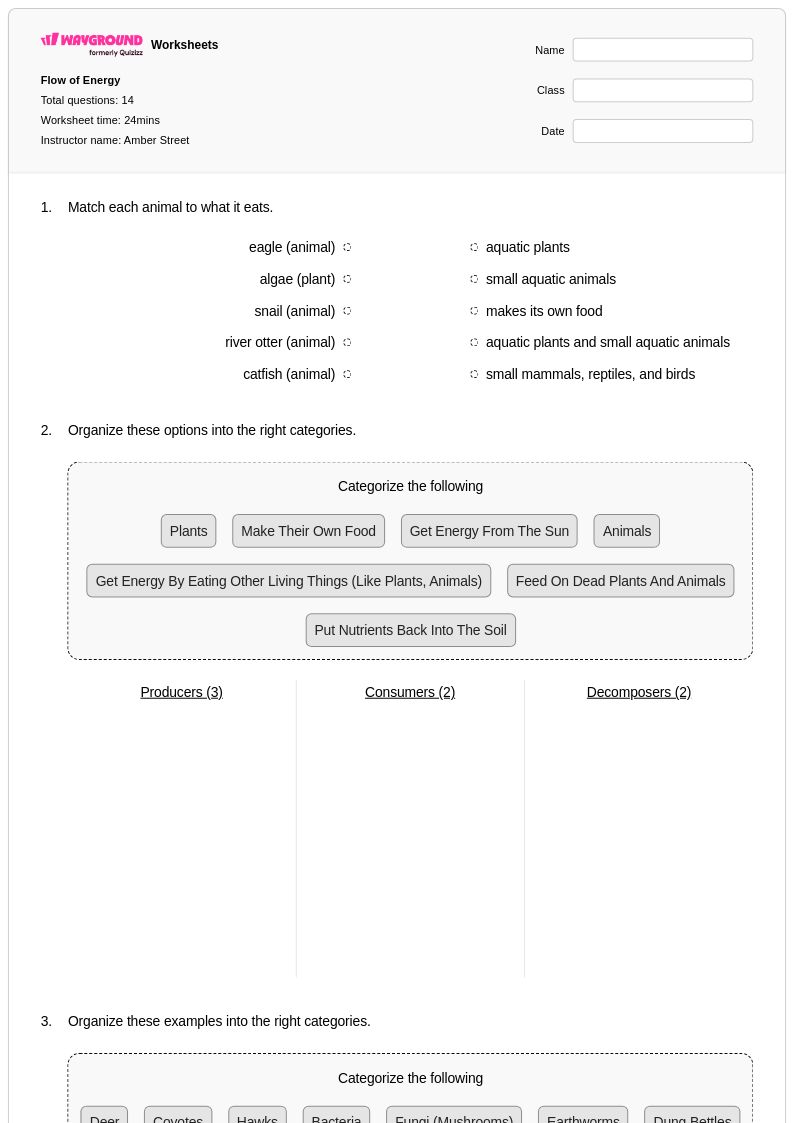
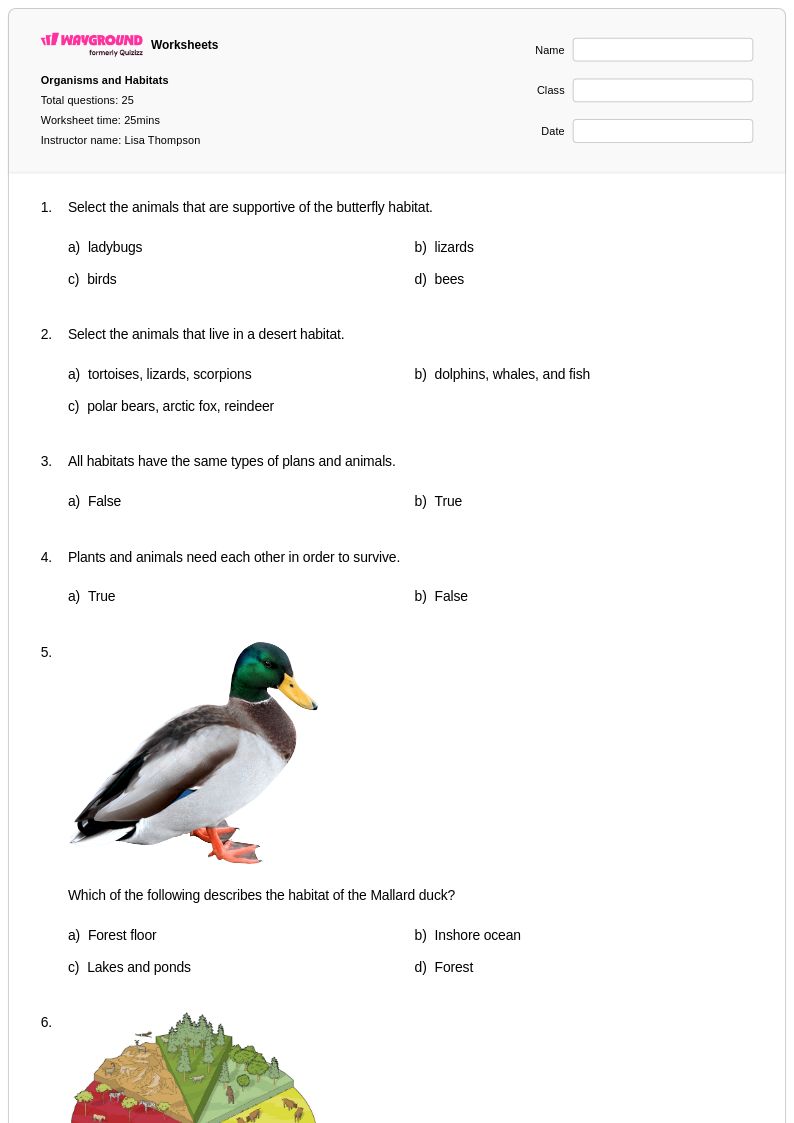
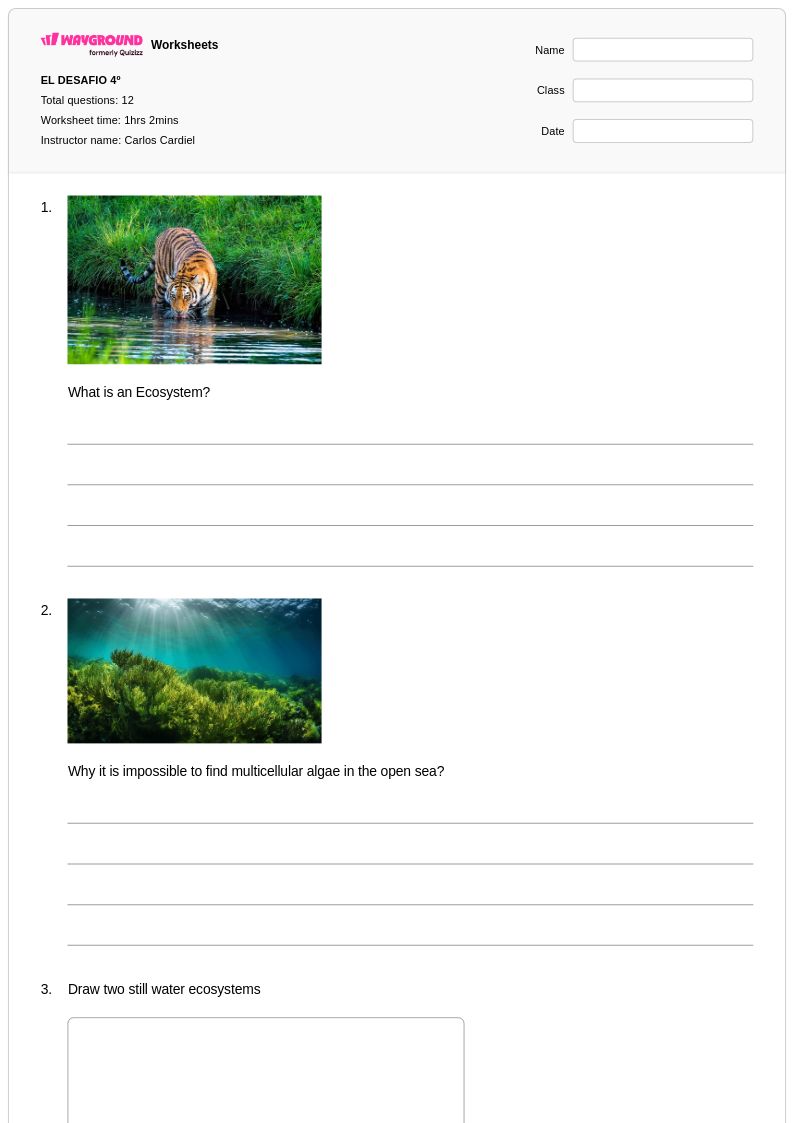
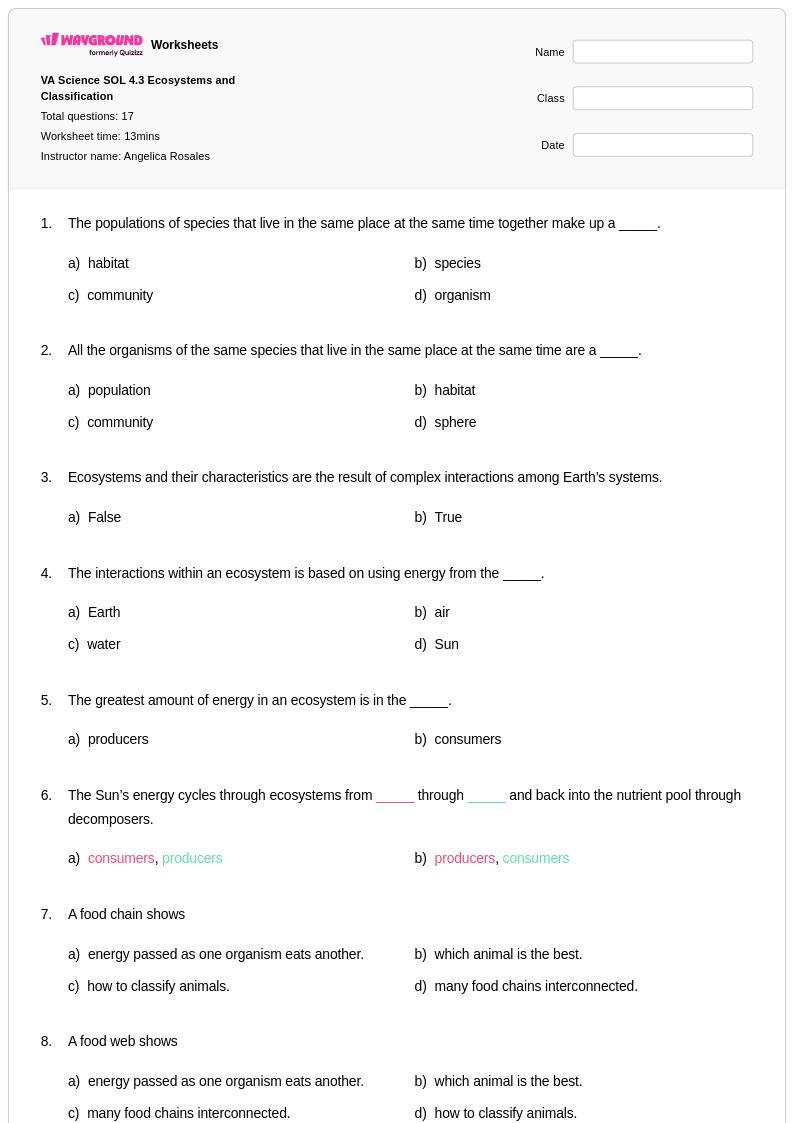
Ecosystem services worksheets for Class 4 students available through Wayground (formerly Quizizz) provide comprehensive resources that introduce young learners to the vital benefits that natural environments provide to humans and other living organisms. These educational materials focus on helping fourth-grade students understand fundamental concepts such as how forests clean our air, how wetlands filter water, how bees pollinate plants that produce our food, and how natural areas provide materials for shelter and medicine. The worksheets strengthen critical thinking skills by engaging students in identifying different types of ecosystem services, categorizing provisioning services like food and water, regulating services such as climate control, and cultural services including recreation and spiritual value. Each worksheet comes with a detailed answer key and is available as a free printable pdf, making it easy for educators to incorporate these practice problems into their science curriculum while building students' environmental awareness and scientific vocabulary.
Wayground (formerly Quizizz) supports educators with an extensive collection of teacher-created ecosystem services resources, drawing from millions of worksheets developed by experienced science instructors who understand Class 4 learning objectives. The platform's robust search and filtering capabilities allow teachers to quickly locate materials that align with state science standards and match their students' specific learning needs. Advanced differentiation tools enable educators to modify worksheet content for various skill levels, while flexible customization options support both remediation for struggling learners and enrichment activities for advanced students. These ecosystem services worksheets are available in both printable and digital formats, including downloadable pdf versions, giving teachers the versatility to plan engaging lessons whether students are learning in the classroom or at home, while ensuring consistent skill practice in this essential area of environmental science.
FAQs
How do I teach ecosystem services to students?
Start by introducing the four categories of ecosystem services: provisioning (food, fresh water), regulating (climate control, pollution filtration), cultural (recreation, spiritual values), and supporting (nutrient cycling, habitat provision). Use real-world case studies of ecosystem degradation and restoration to help students connect abstract categories to tangible outcomes. Anchoring the lesson in local ecosystems tends to increase engagement and deepen conceptual understanding.
What types of practice problems help students understand ecosystem services?
Effective practice problems ask students to classify specific examples into the four ecosystem service categories, analyze scenarios involving ecosystem loss or restoration, and evaluate the economic and ecological value of natural systems. Case-study-based questions are particularly useful because they push students beyond memorization toward applying ecological reasoning to real situations.
What common mistakes do students make when learning about ecosystem services?
Students frequently conflate provisioning and supporting services, misidentifying nutrient cycling or habitat provision as direct human benefits rather than foundational processes. Another common error is undervaluing cultural services because they are perceived as less concrete than provisioning services like food or water. Explicitly comparing service categories side by side and requiring students to justify their classifications can correct both patterns.
How can I use ecosystem services worksheets to support different learning levels?
Differentiate by adjusting the complexity of case studies — beginner-level tasks might ask students to match examples to categories, while advanced tasks require evaluating trade-offs between ecosystem exploitation and conservation. On Wayground, teachers can apply accommodations such as reduced answer choices for students who need lower cognitive load, or enable Read Aloud for students who benefit from audio support, without other students being aware of these adjustments.
How do I use Wayground's ecosystem services worksheets in my classroom?
Wayground's ecosystem services worksheets are available as printable PDFs for traditional classroom use and in digital formats for technology-integrated or remote learning environments. Teachers can also host them as a live or asynchronous quiz directly on Wayground. Each worksheet includes a complete answer key, reducing prep time and making it straightforward to provide immediate feedback to students.
How do I connect ecosystem services to broader environmental topics like conservation and biodiversity?
Ecosystem services provide a practical framework for explaining why biodiversity and conservation matter in human terms. When ecosystems are degraded, specific services decline first — for example, wetland loss reduces water filtration and flood regulation before it visibly affects species counts. Framing conservation discussions around service loss rather than species loss alone tends to resonate with students who struggle to see the relevance of biodiversity.