
132 Q
10th
12 Q
7th - Uni
10 Q
9th - 12th
9 Q
9th - 12th
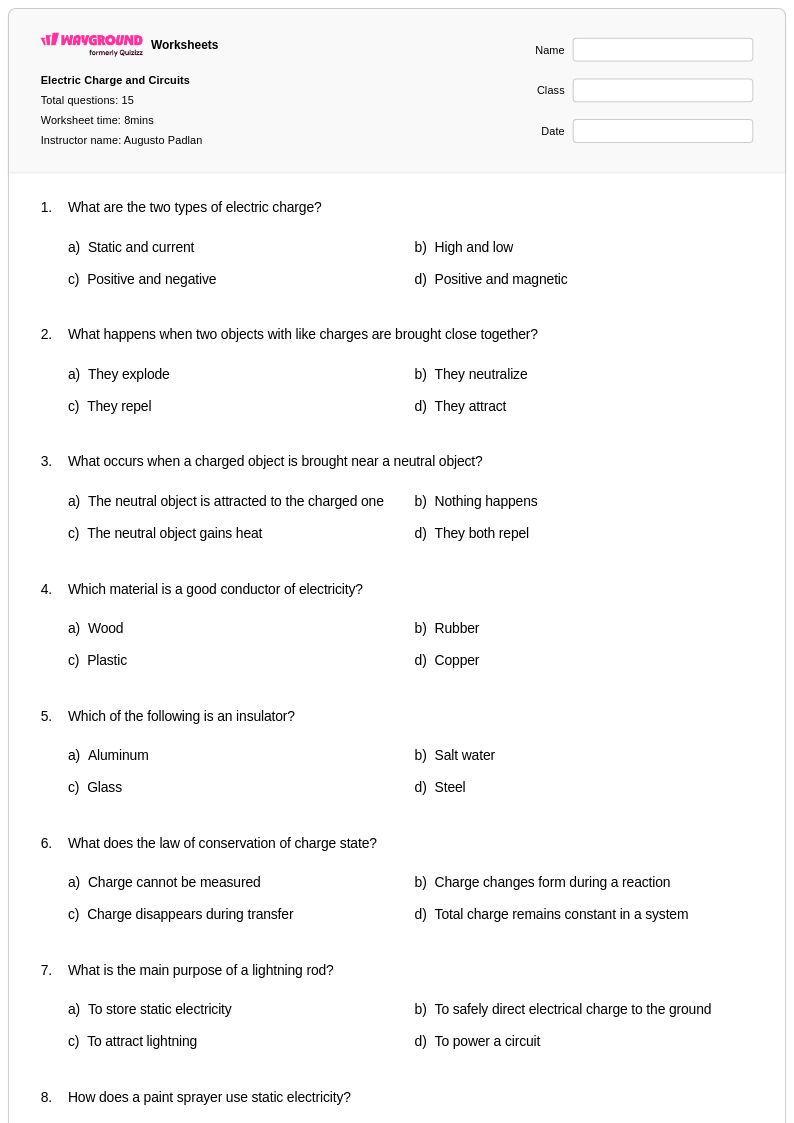
15 Q
9th - Uni
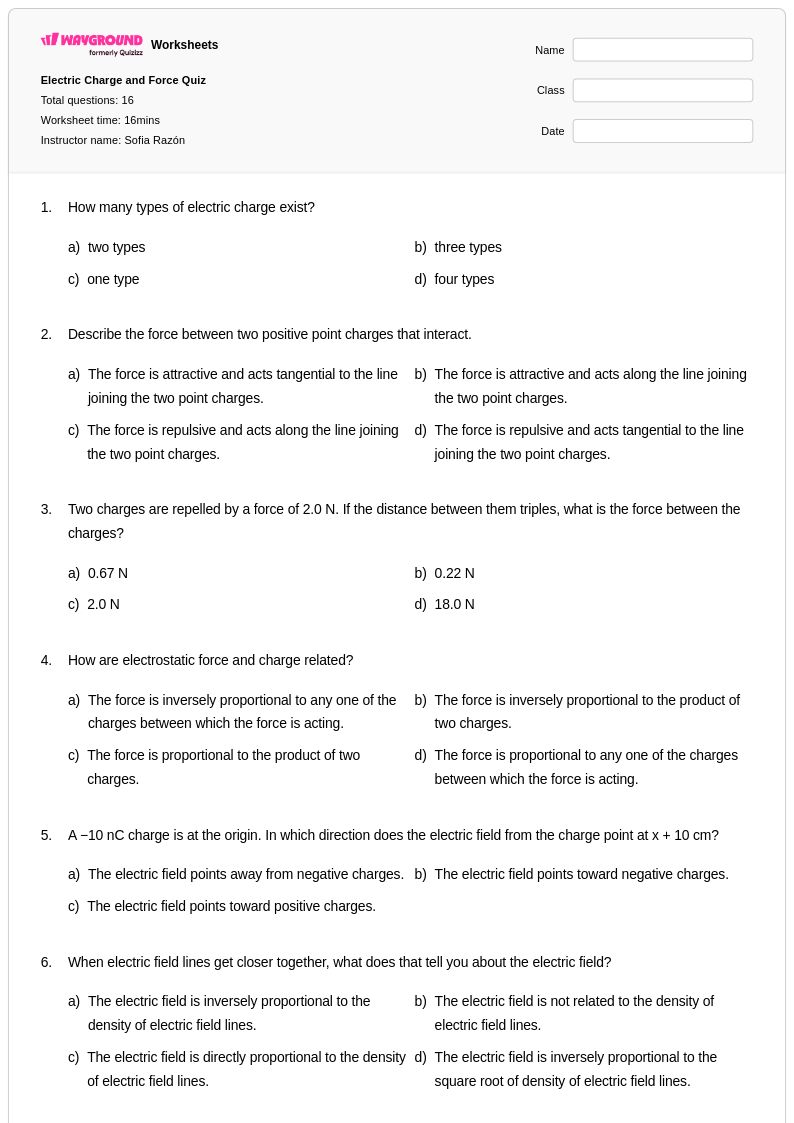
16 Q
9th - 12th
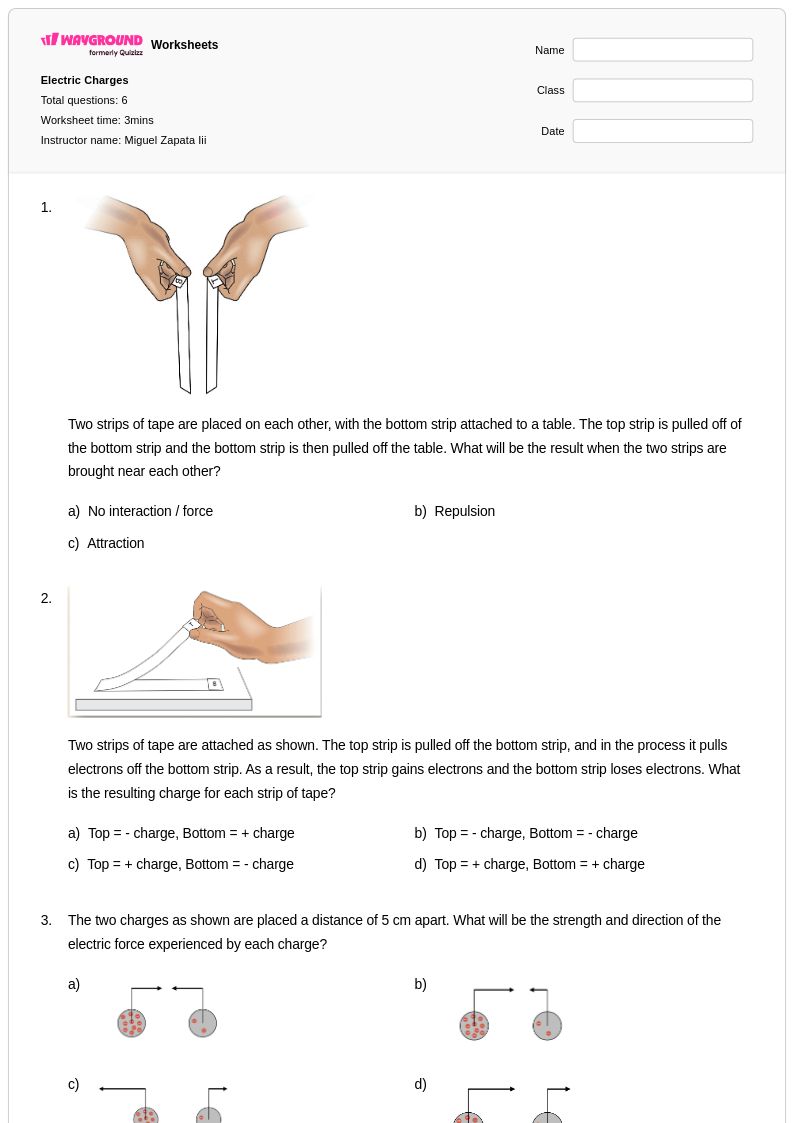
6 Q
10th
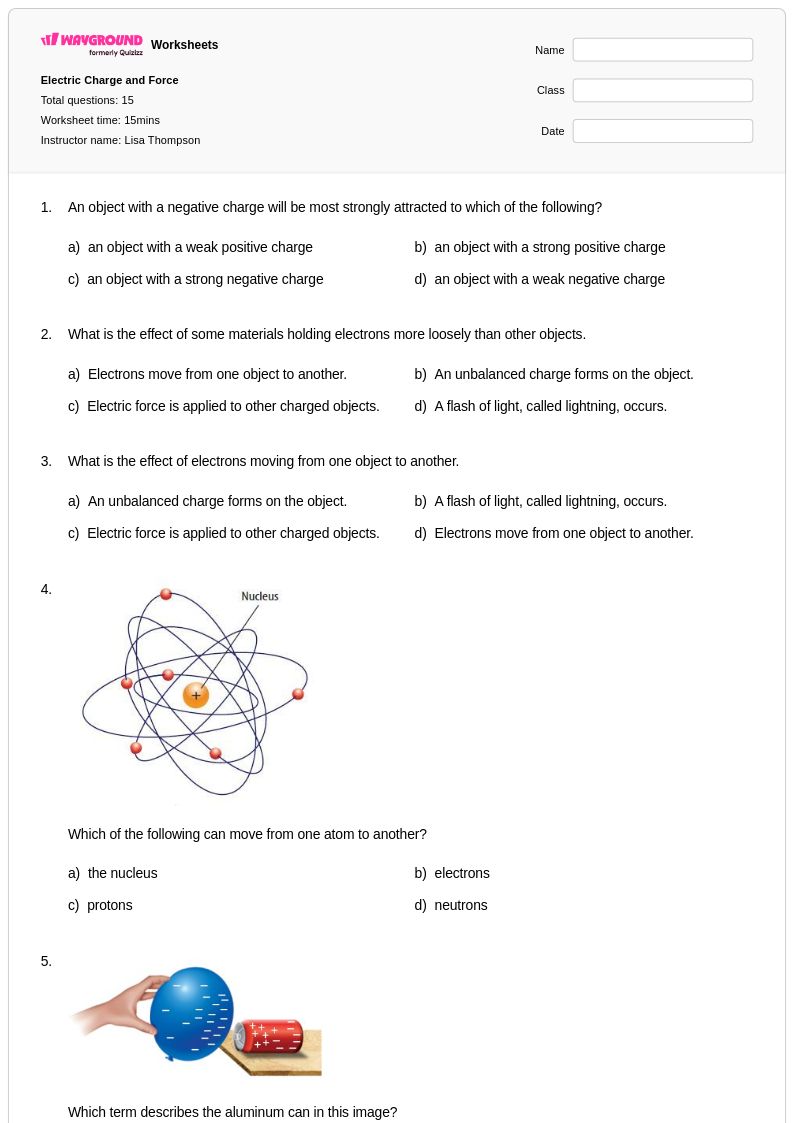
15 Q
6th - Uni
15 Q
8th - Uni
57 Q
9th - 12th
30 Q
8th - 10th
25 Q
8th - Uni
25 Q
8th - Uni
25 Q
8th - Uni
25 Q
8th - Uni
25 Q
8th - Uni
25 Q
8th - Uni
25 Q
5th - Uni
15 Q
8th - Uni
15 Q
8th - Uni
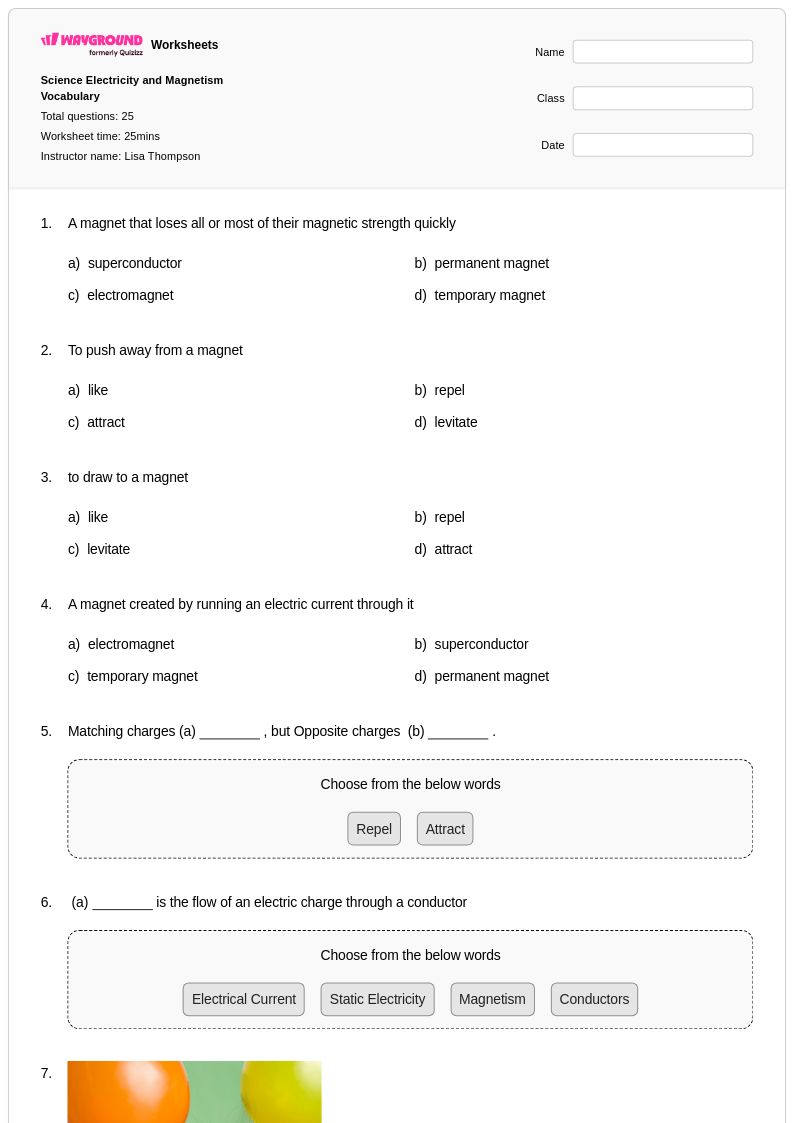
25 Q
5th - Uni
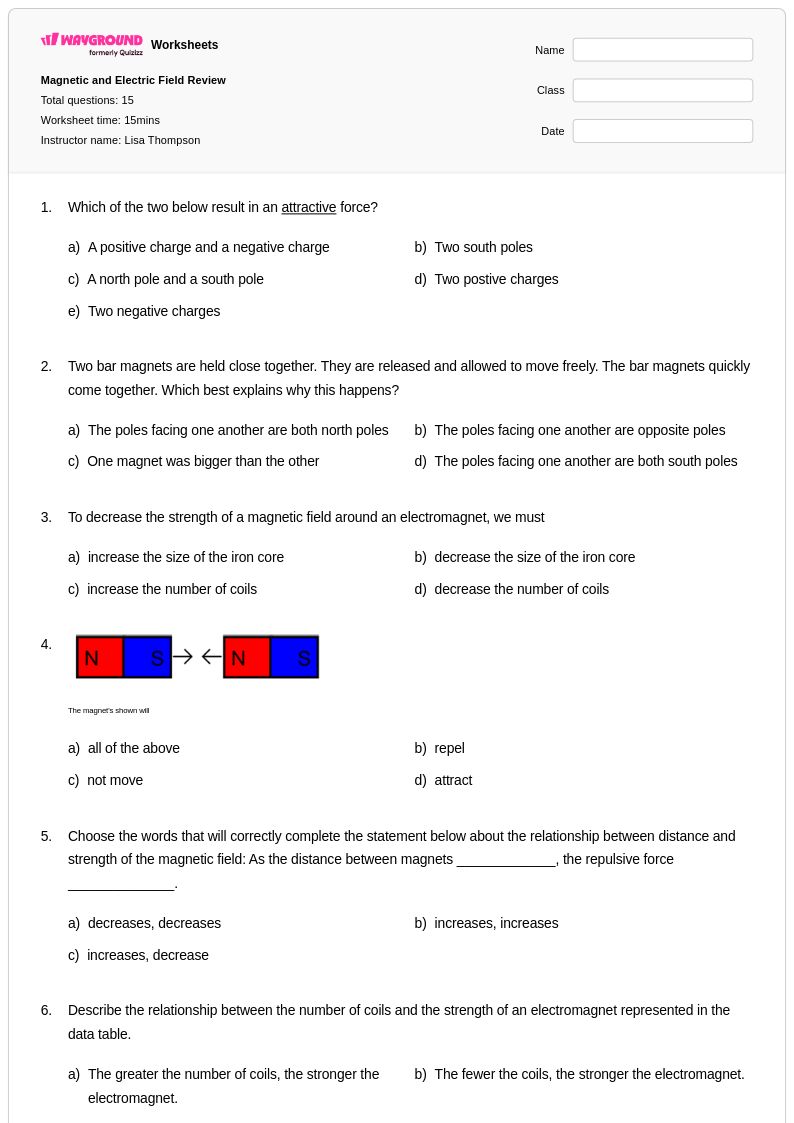
15 Q
8th - Uni
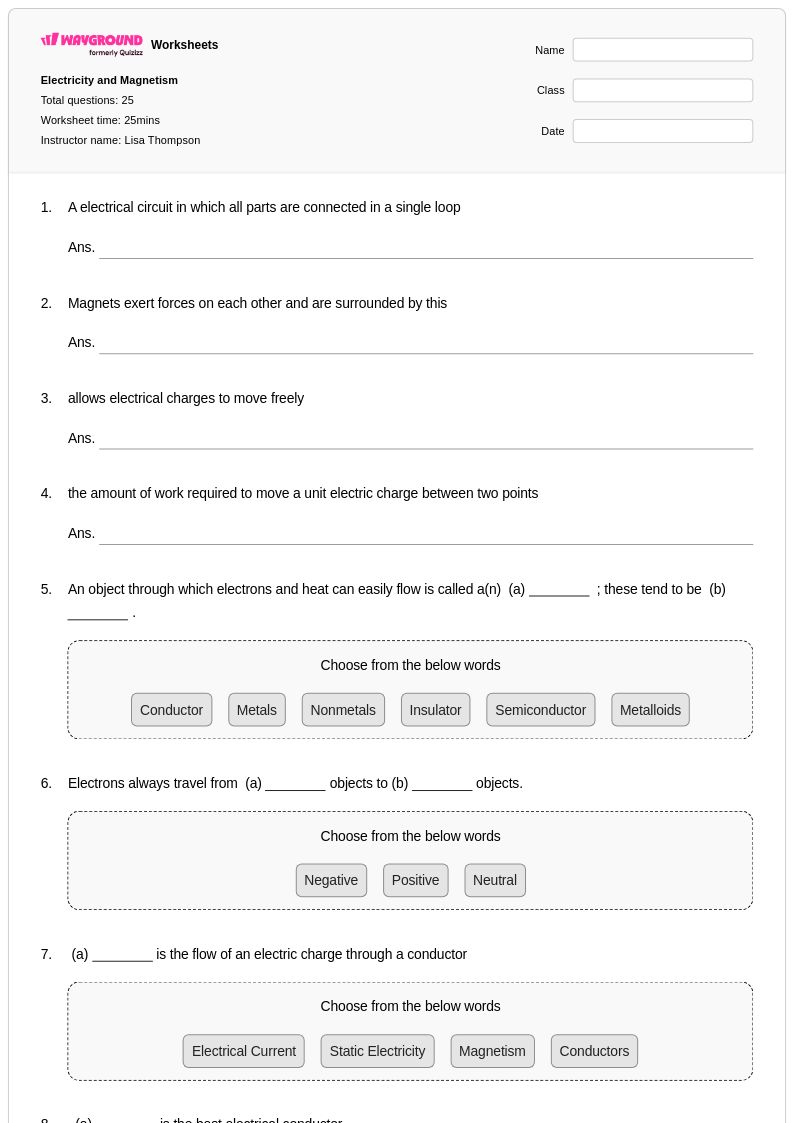
25 Q
8th - Uni
Explore Other Subject Worksheets for class 10
Explore printable Electric Charge worksheets for Class 10
Electric charge worksheets for Class 10 students available through Wayground (formerly Quizizz) provide comprehensive coverage of fundamental electrostatic principles that form the foundation of advanced physics understanding. These expertly designed resources guide students through essential concepts including the nature of positive and negative charges, charge conservation, Coulomb's law, and electric field interactions. The worksheets strengthen critical analytical skills through carefully structured practice problems that progress from basic charge identification to complex calculations involving multiple charged objects and their interactions. Each worksheet collection includes detailed answer keys and is available as free printables in convenient pdf format, enabling students to develop mastery of electric charge principles through systematic practice and self-assessment.
Wayground (formerly Quizizz) supports educators with millions of teacher-created electric charge worksheet resources that feature robust search and filtering capabilities aligned with physics curriculum standards. Teachers can easily differentiate instruction by accessing worksheets that range from introductory charge concepts to advanced electrostatic problem-solving, with flexible customization options that allow modification of difficulty levels and problem types to meet diverse learning needs. The platform's extensive collection is available in both printable and digital formats, including downloadable pdf versions, making it seamless for instructors to integrate these materials into lesson planning, targeted remediation sessions, enrichment activities, and regular skill practice. This comprehensive approach ensures that Class 10 students receive consistent, standards-based exposure to electric charge concepts across multiple learning contexts and assessment formats.
FAQs
How do I teach electric charge to high school physics students?
What kinds of practice problems help students master electric charge and Coulomb's law?
What mistakes do students commonly make when learning about electric charge?
How can I differentiate electric charge instruction for students at different skill levels?
How do I use Wayground's electric charge worksheets in my classroom?