Free Printable Equal Shares Worksheets for Class 3
Explore Wayground's free Class 3 equal shares worksheets and printables that help students master dividing shapes and objects into equal parts through engaging practice problems with answer keys.
Explore printable Equal Shares worksheets for Class 3
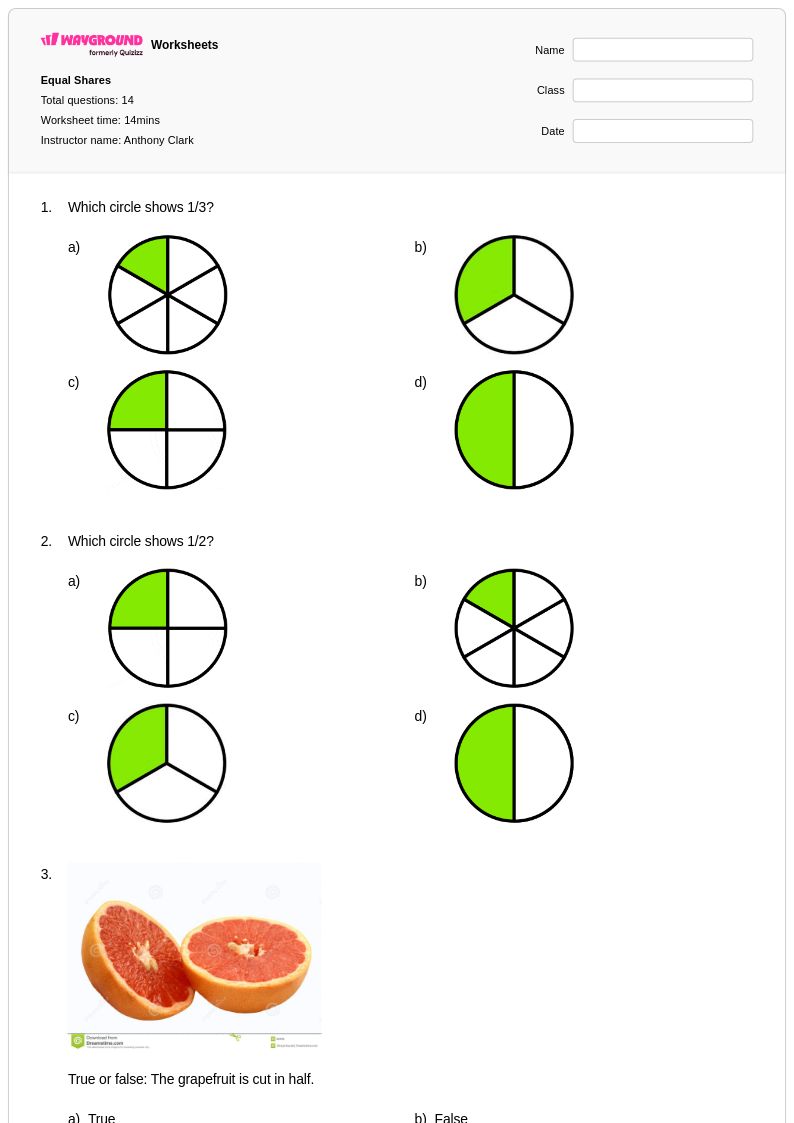
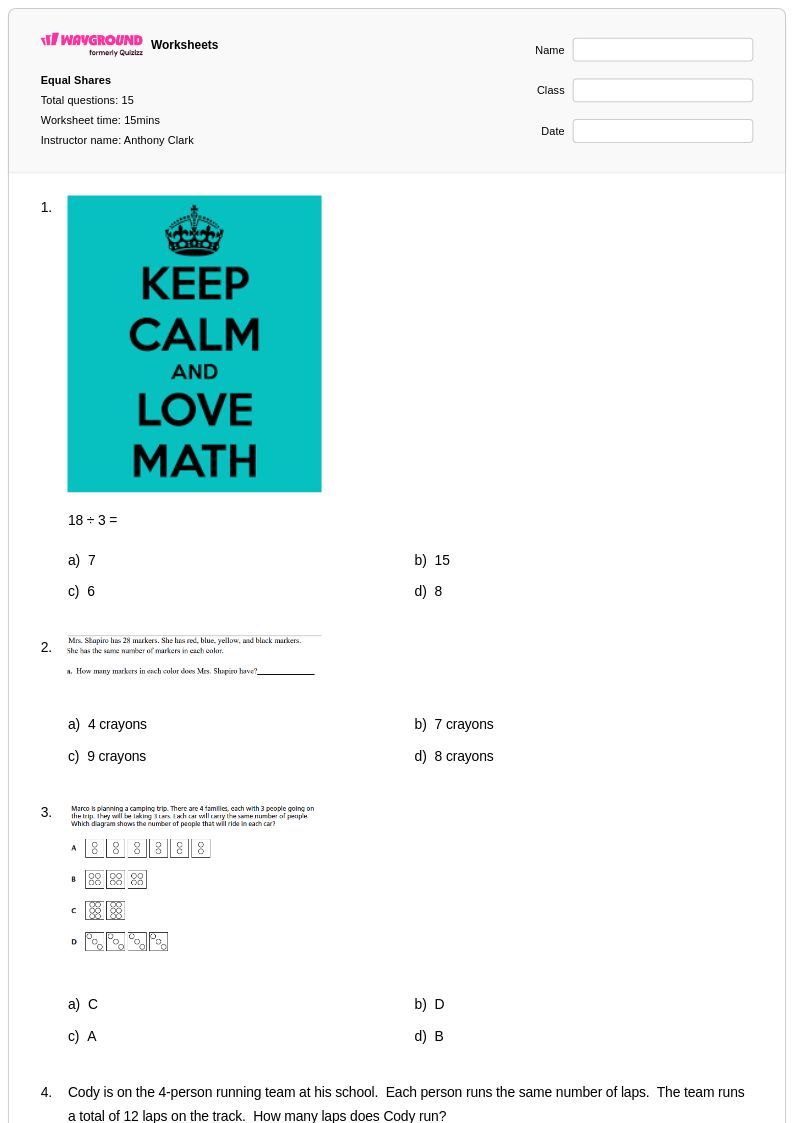
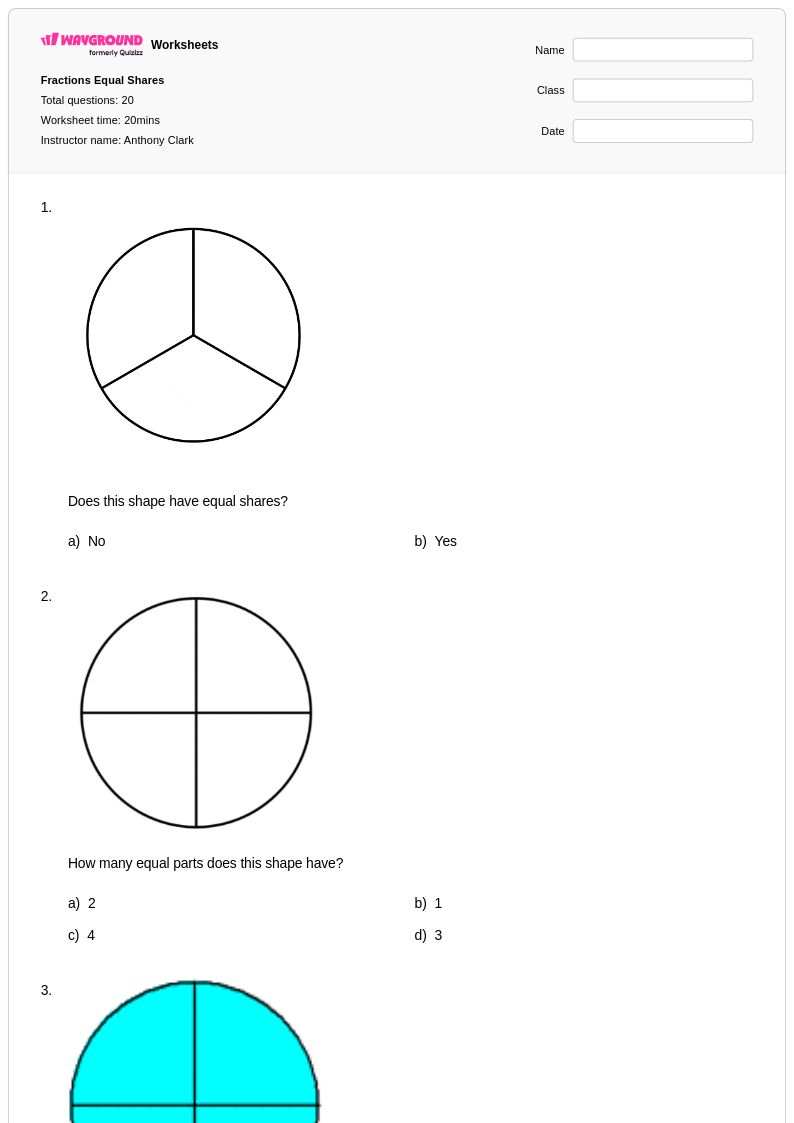
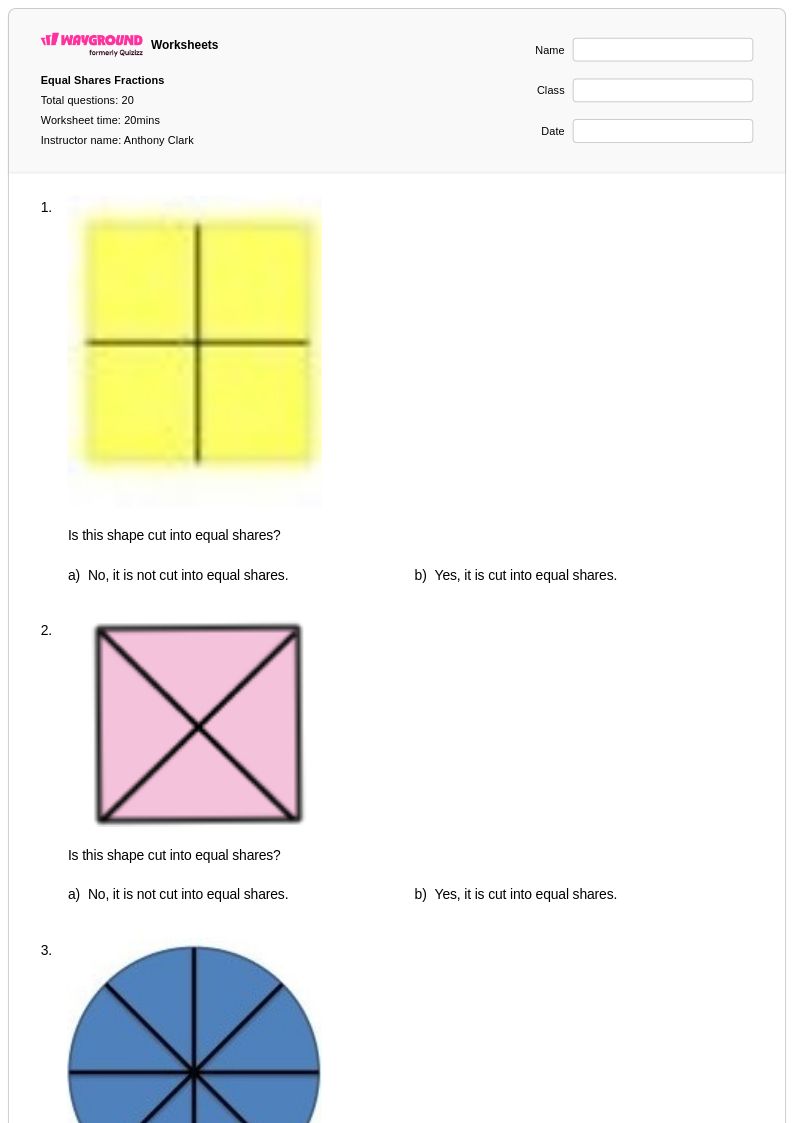
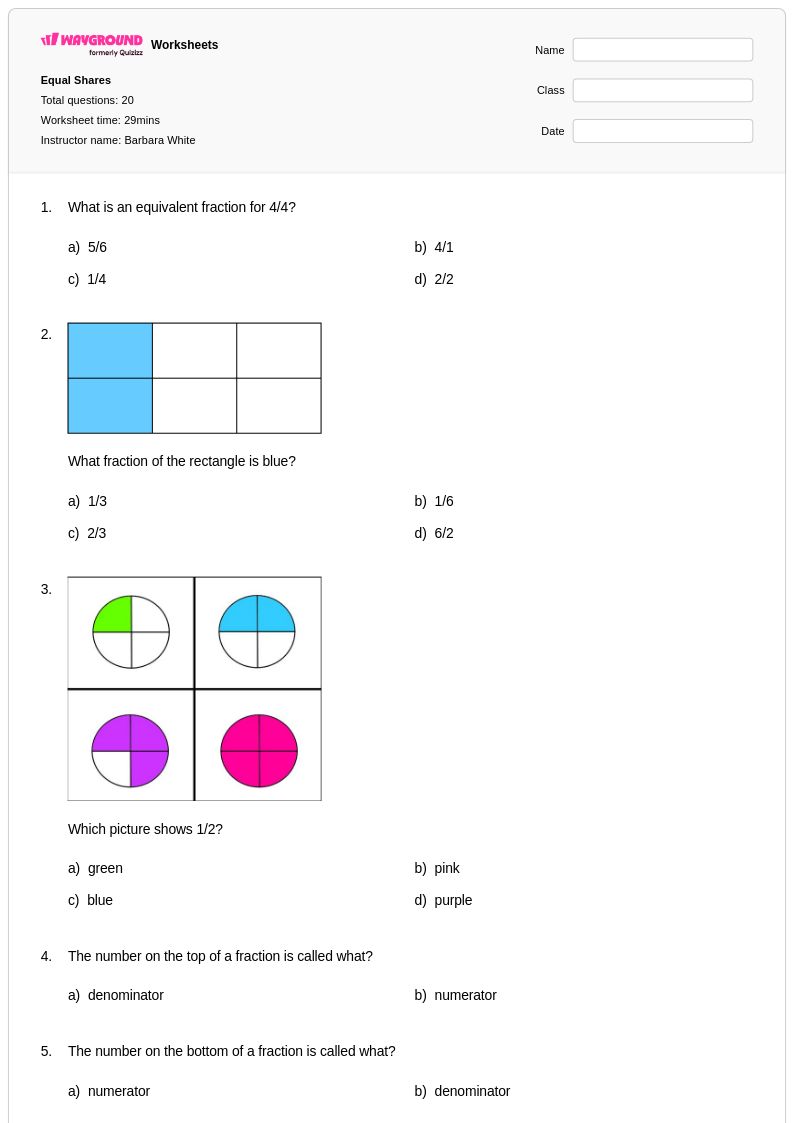
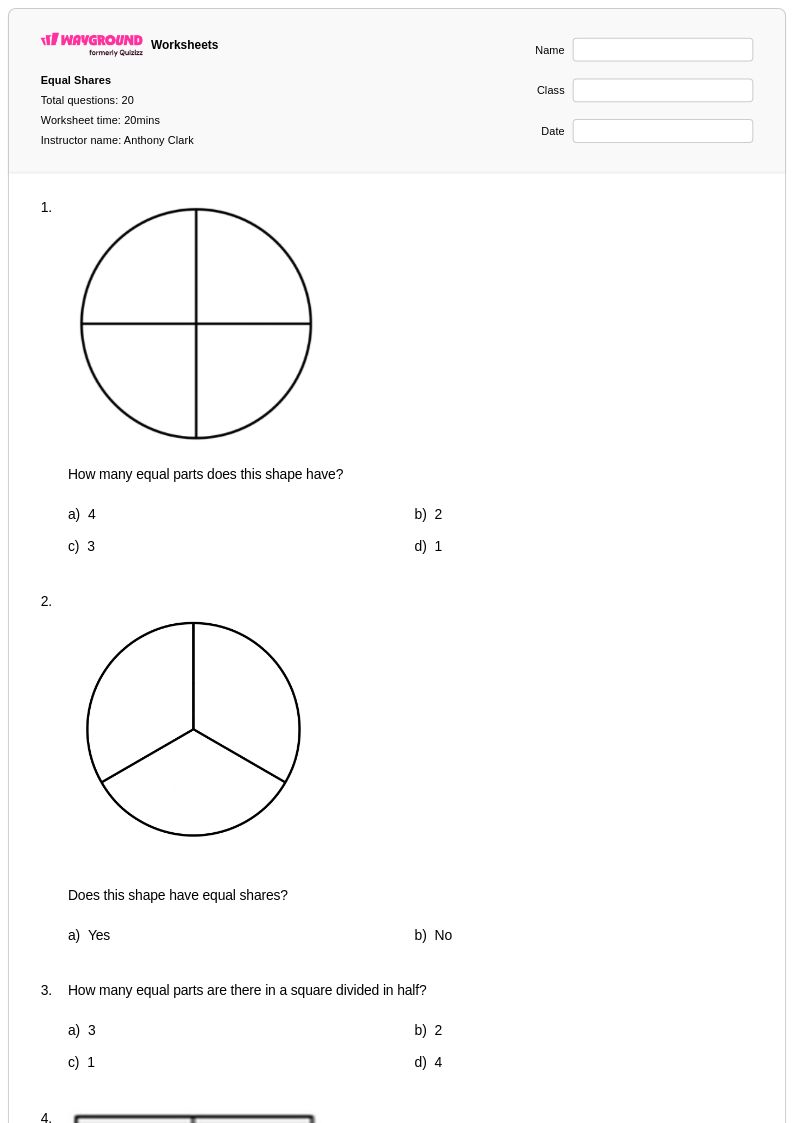
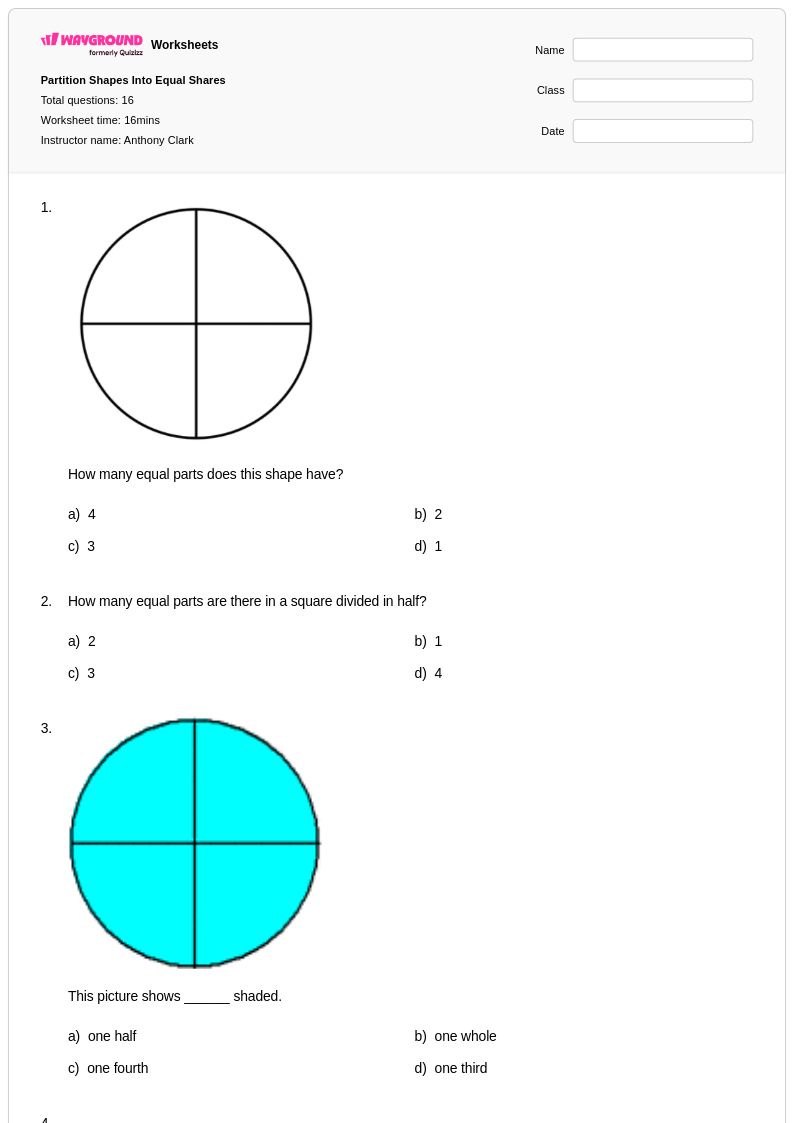
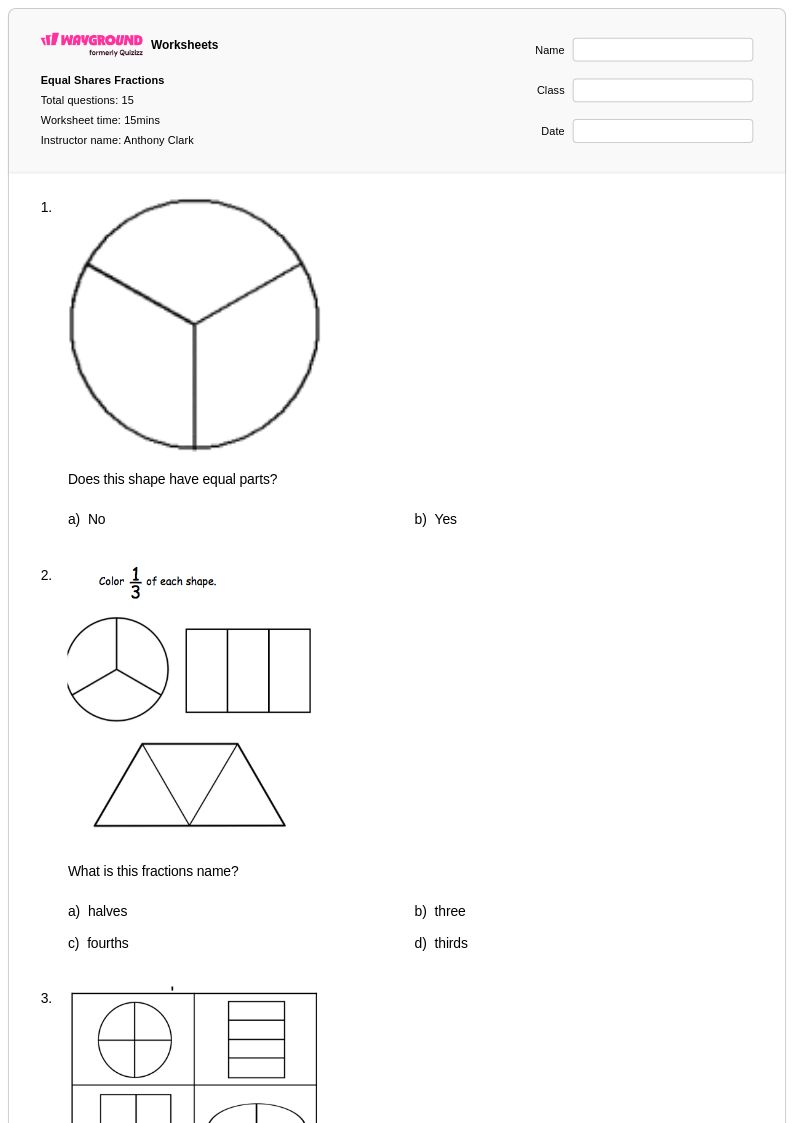
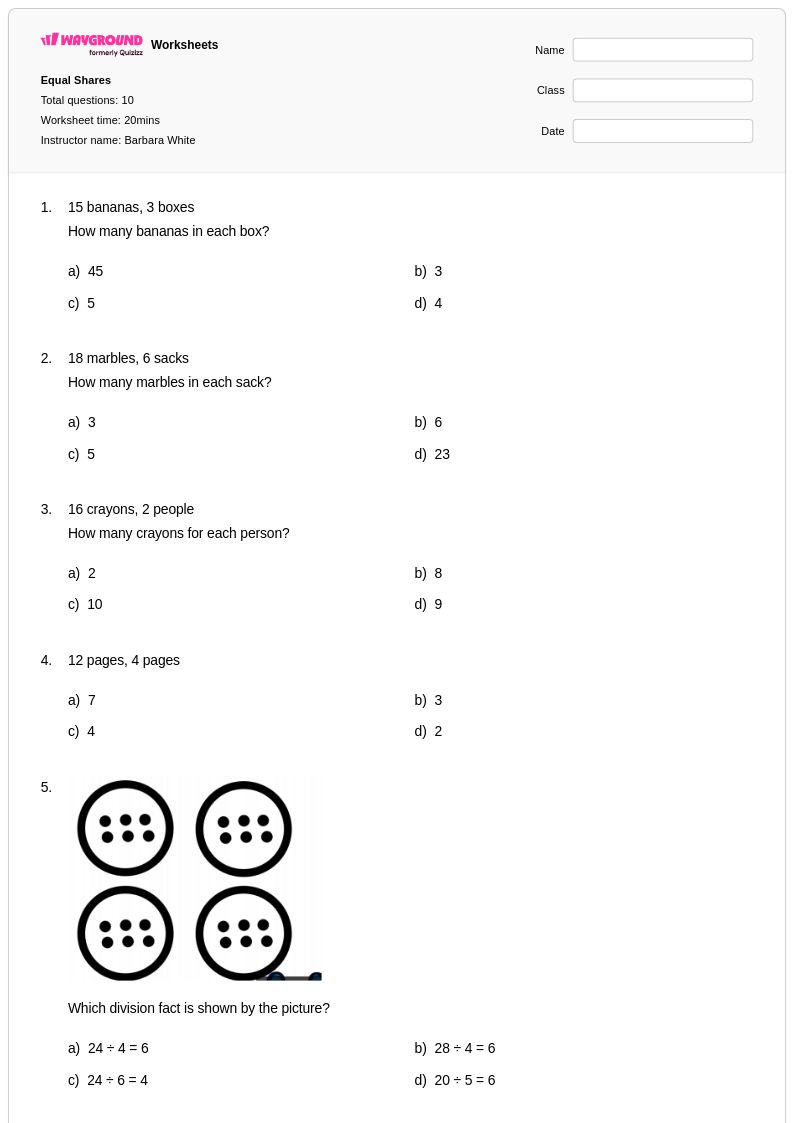
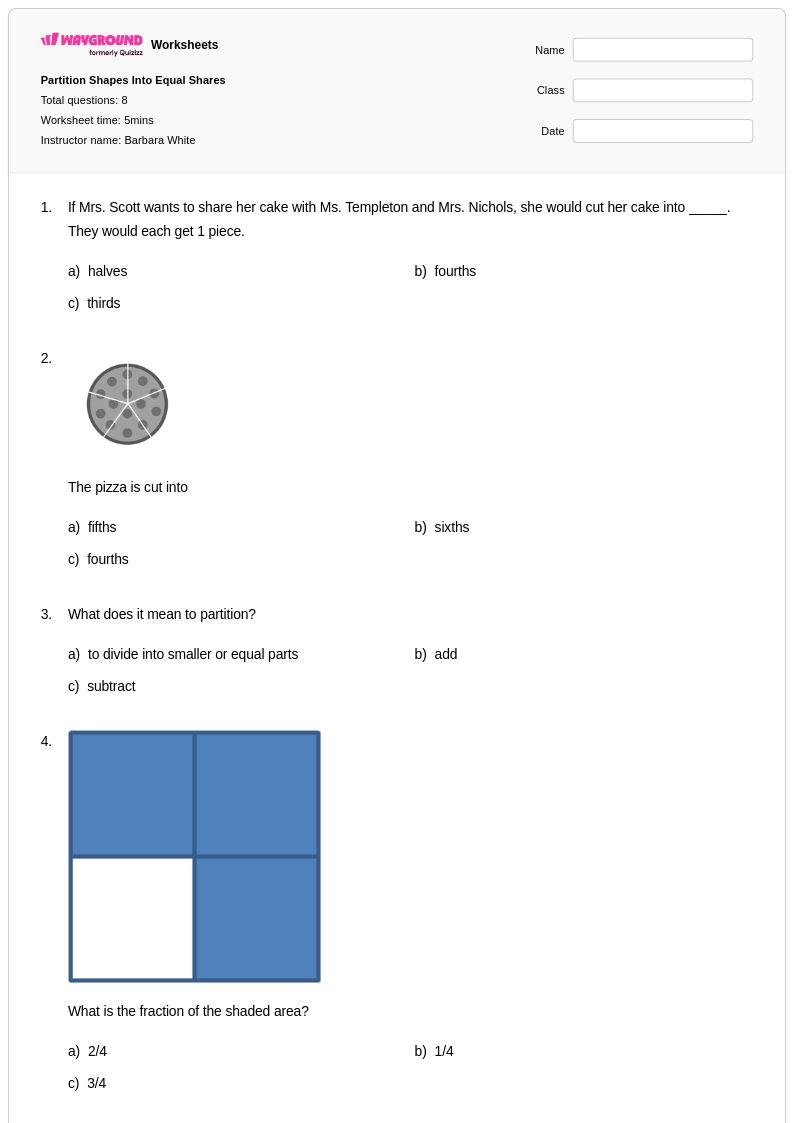
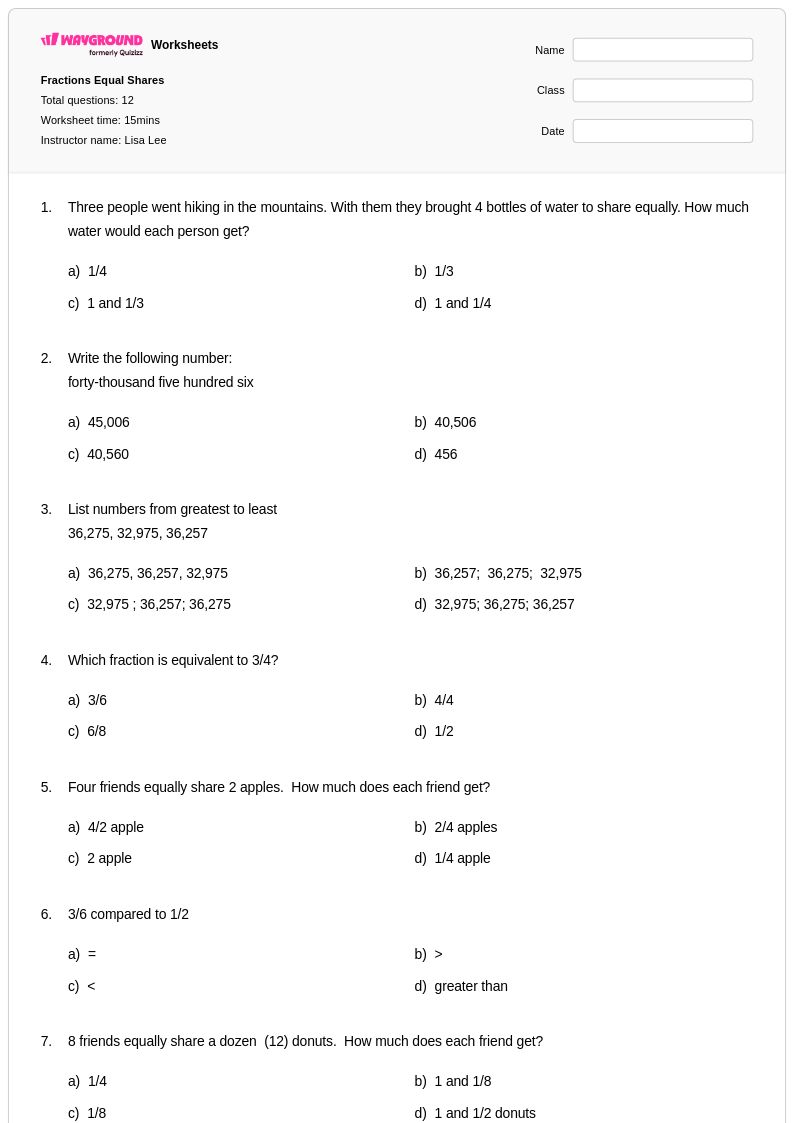
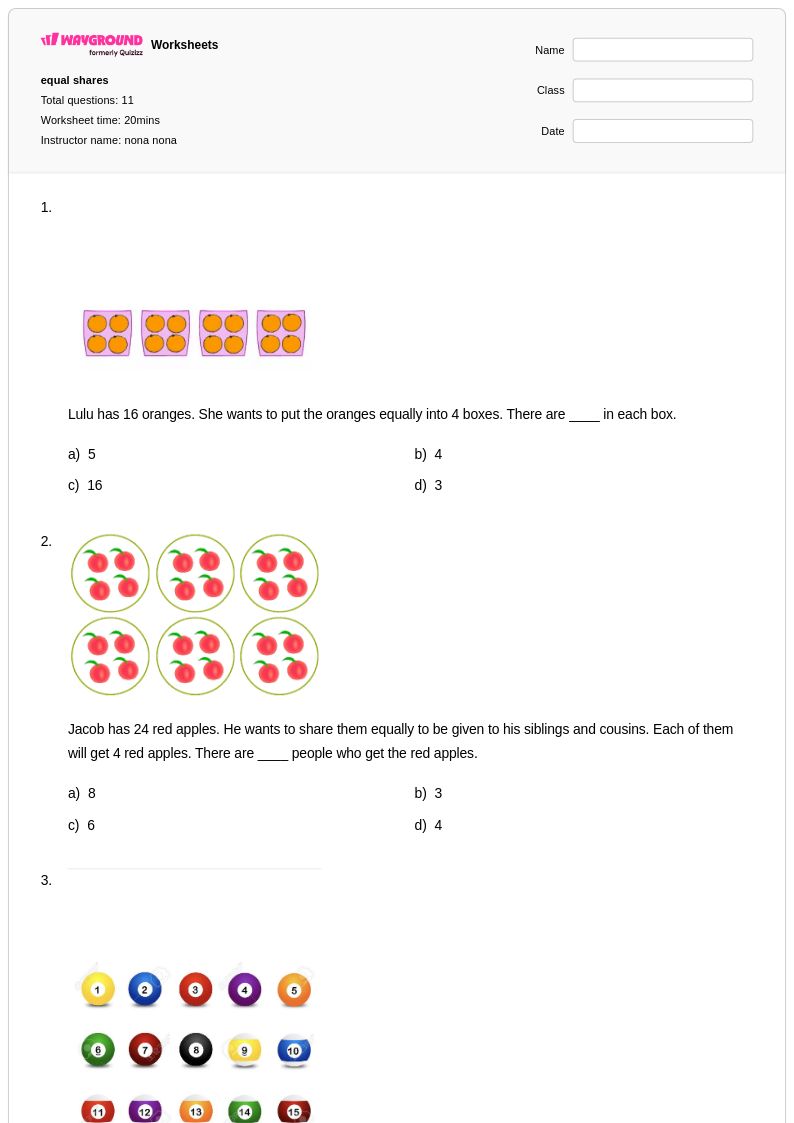
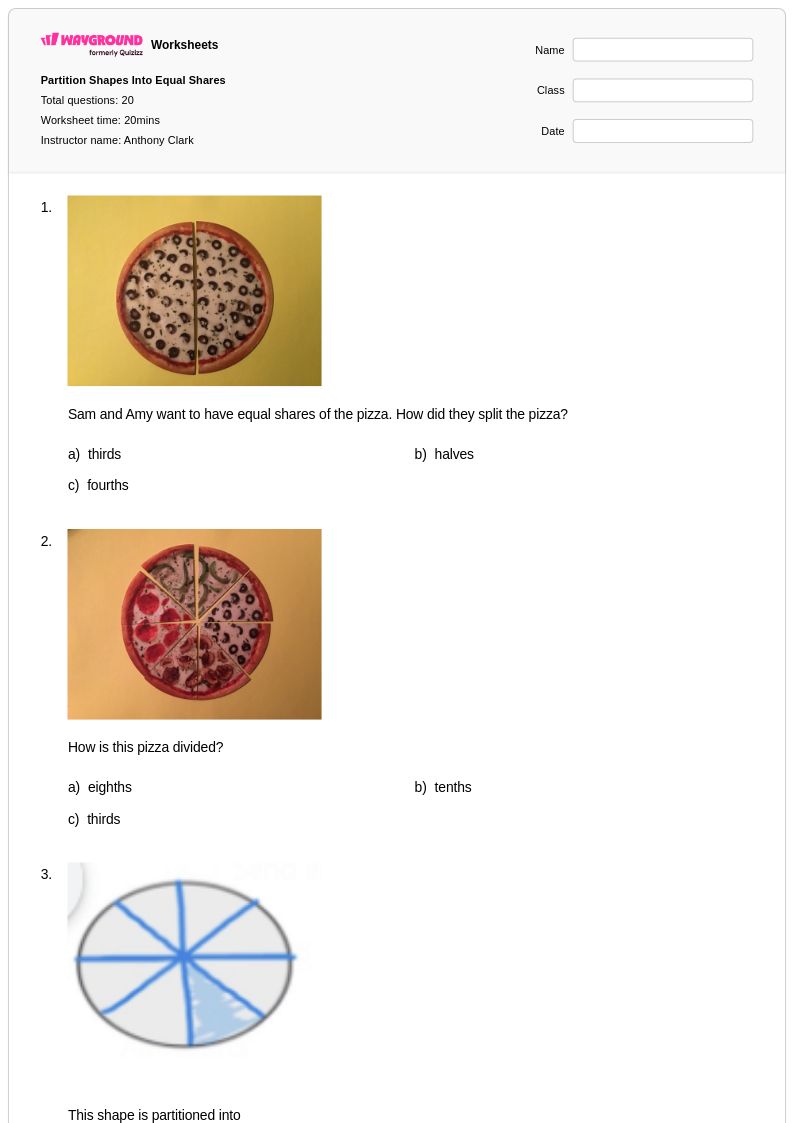
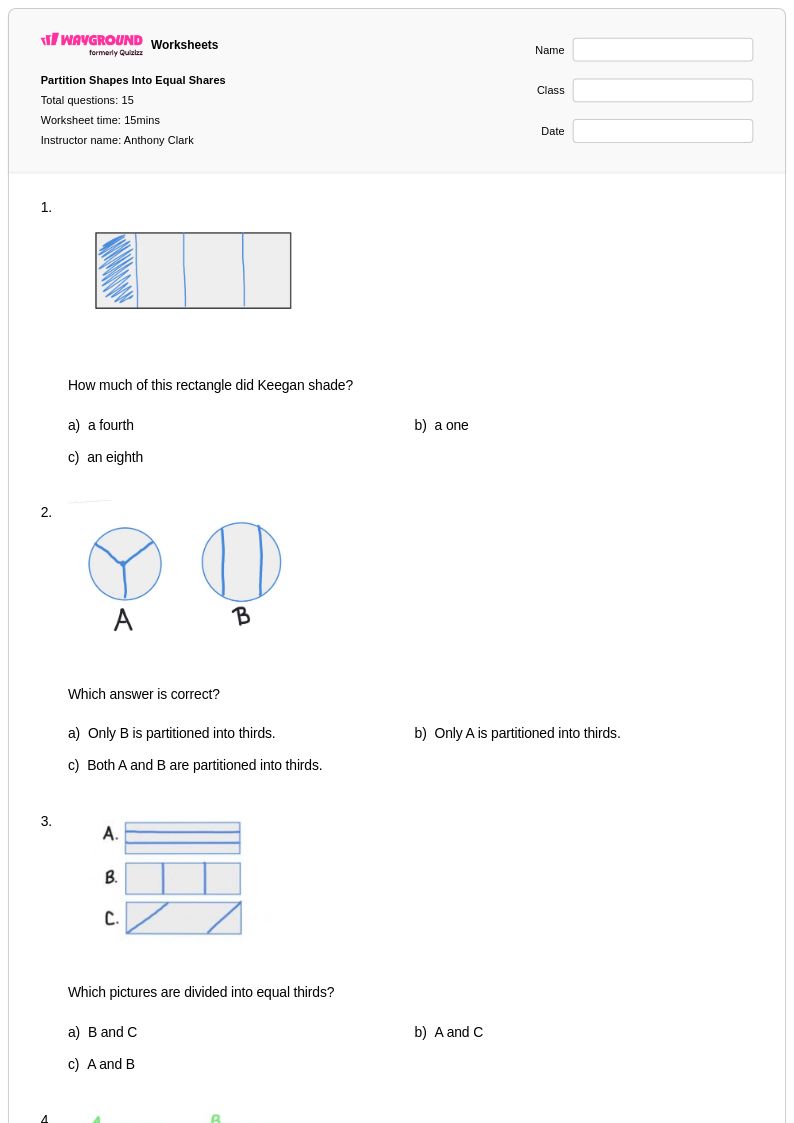
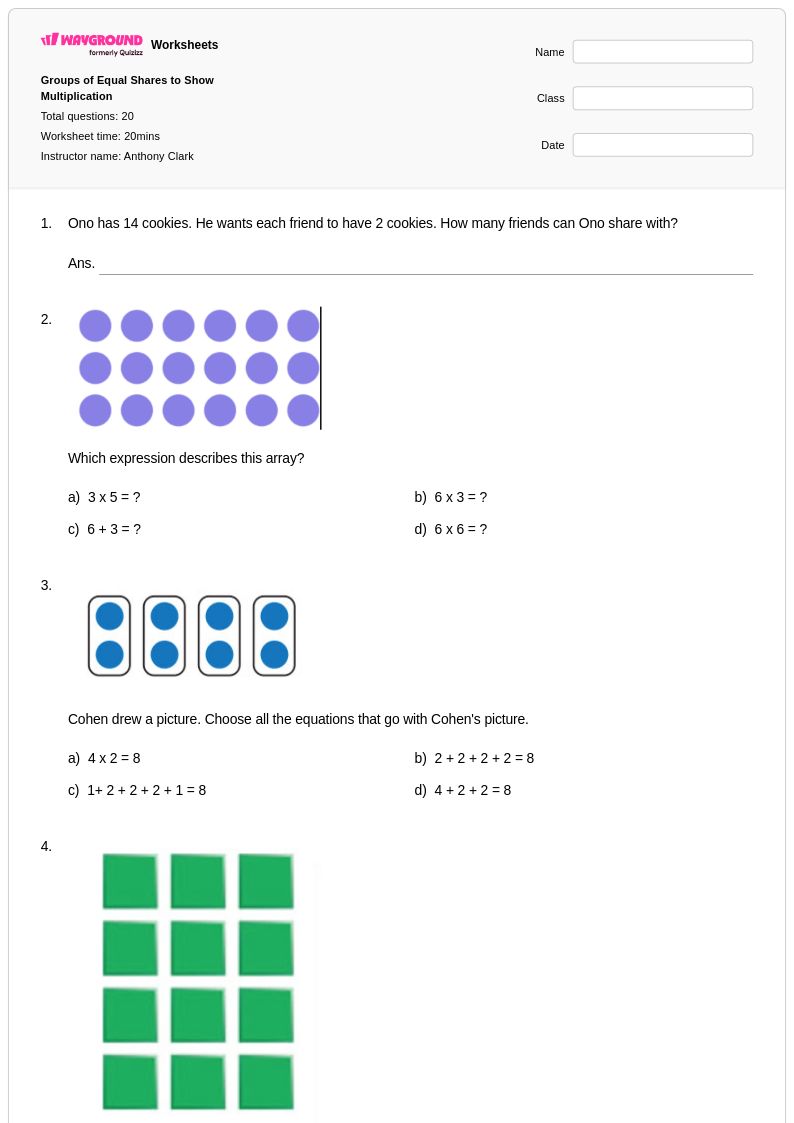
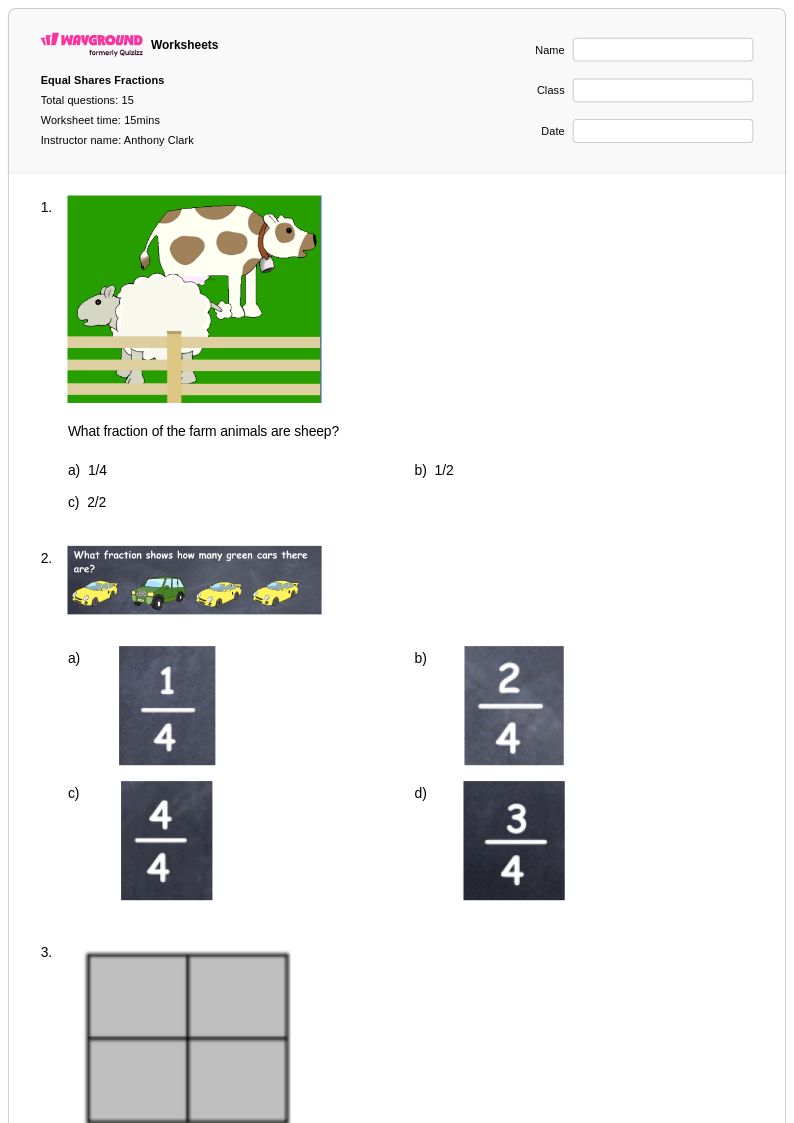
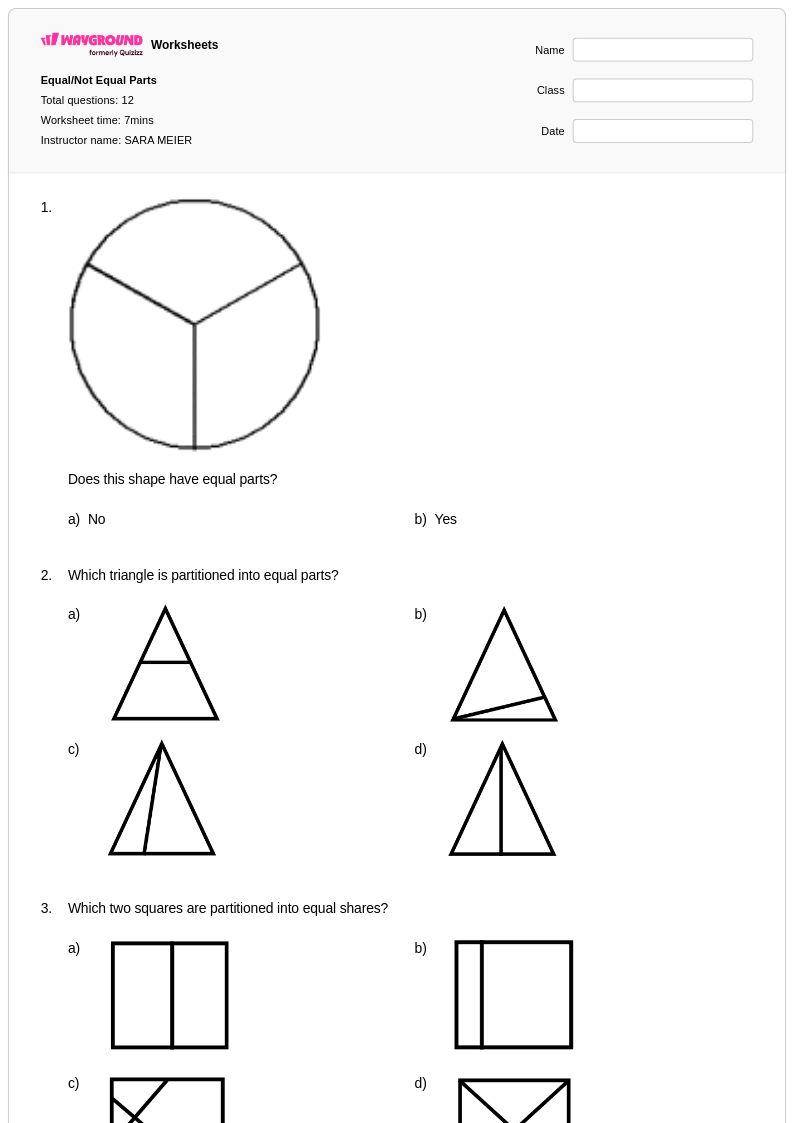
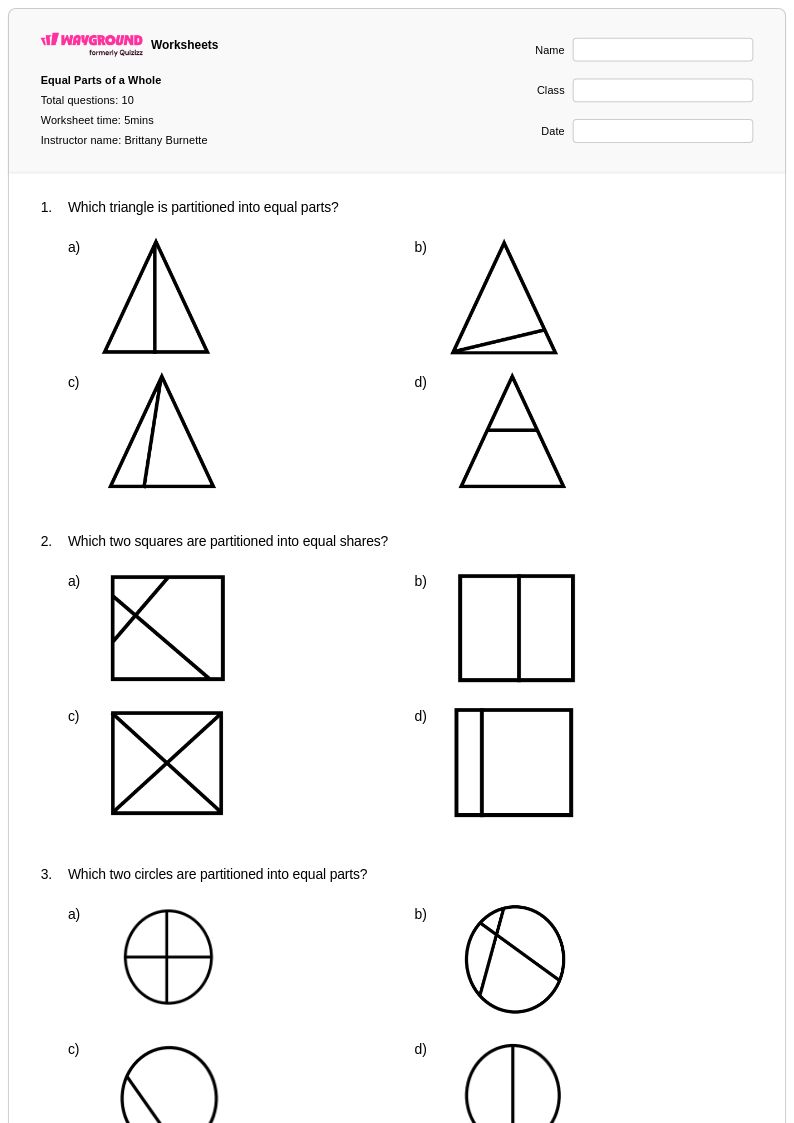
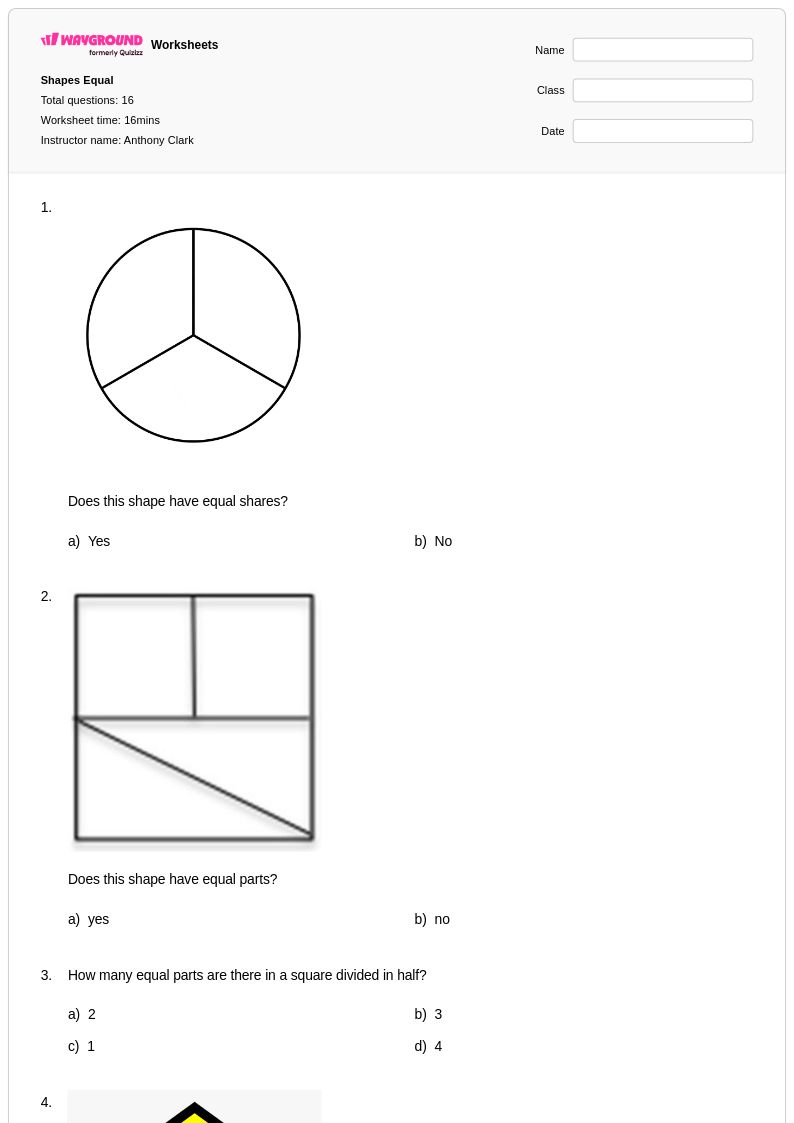
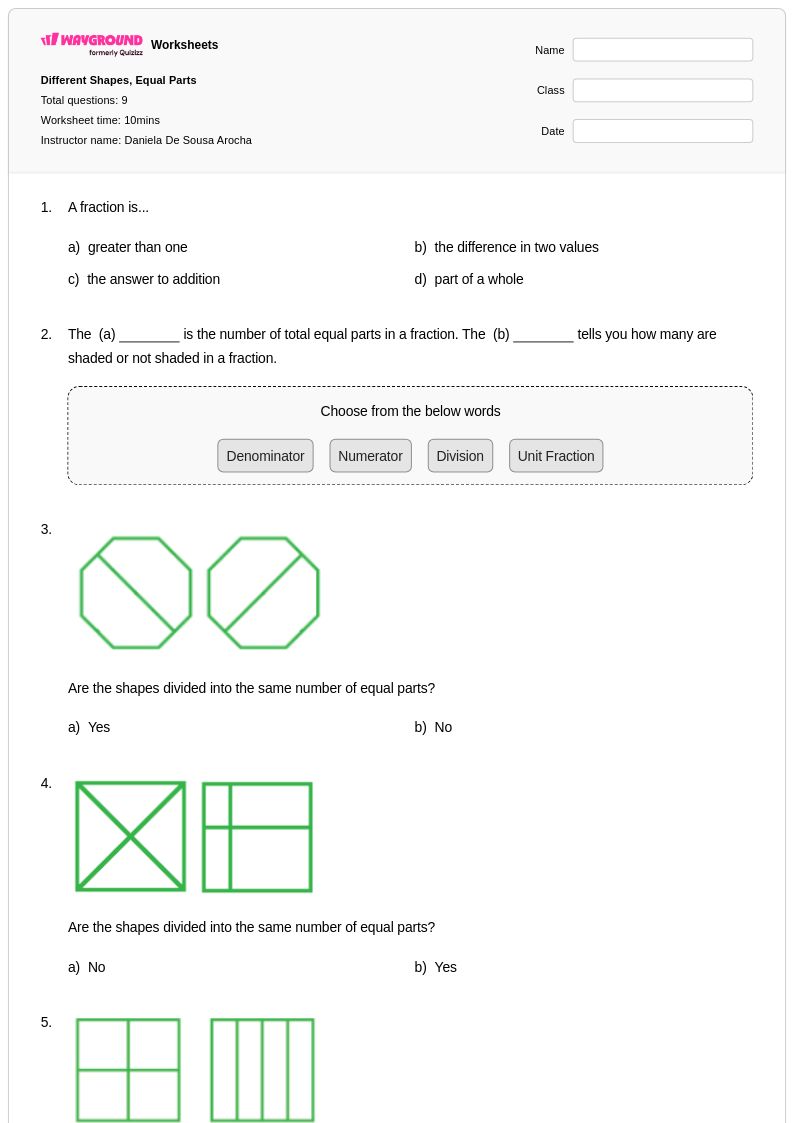
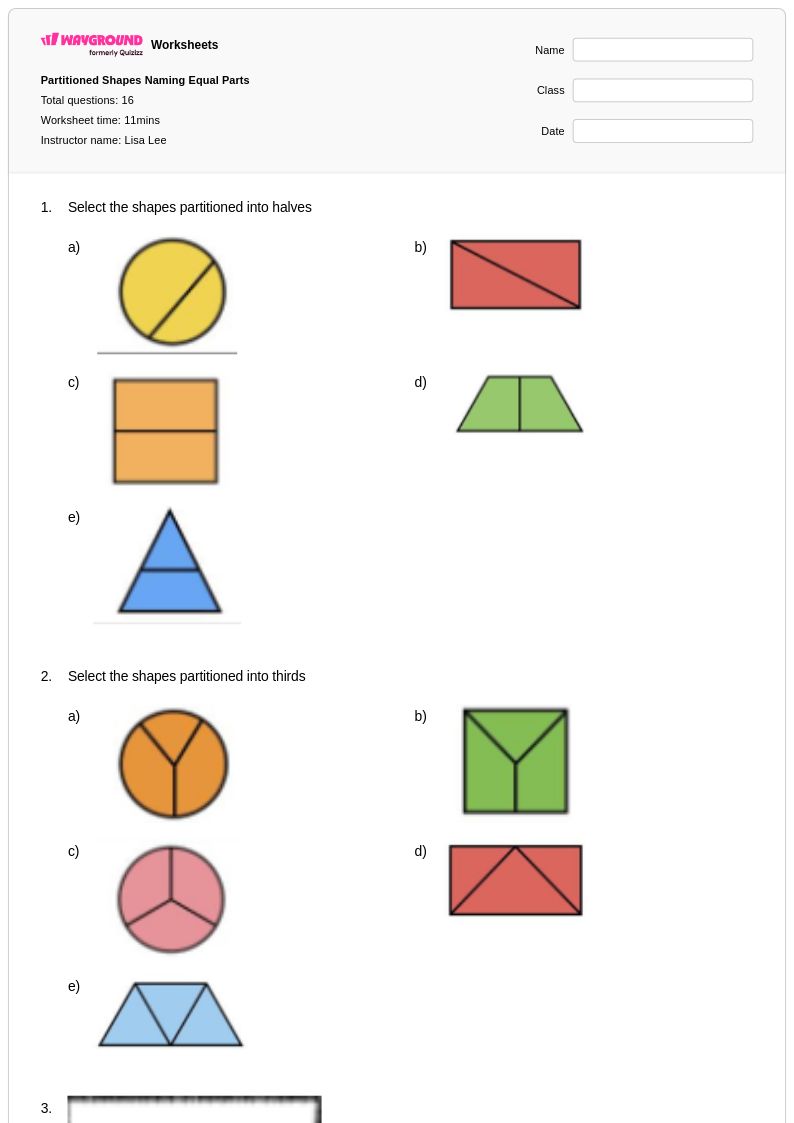
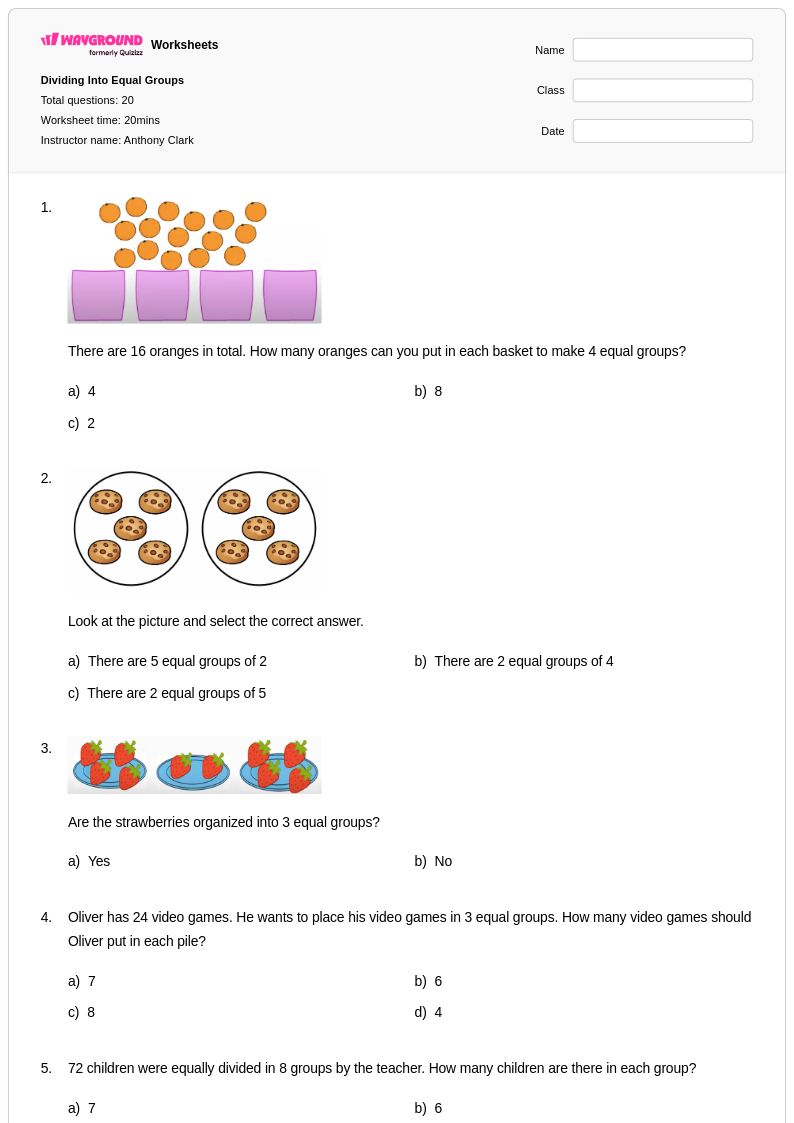
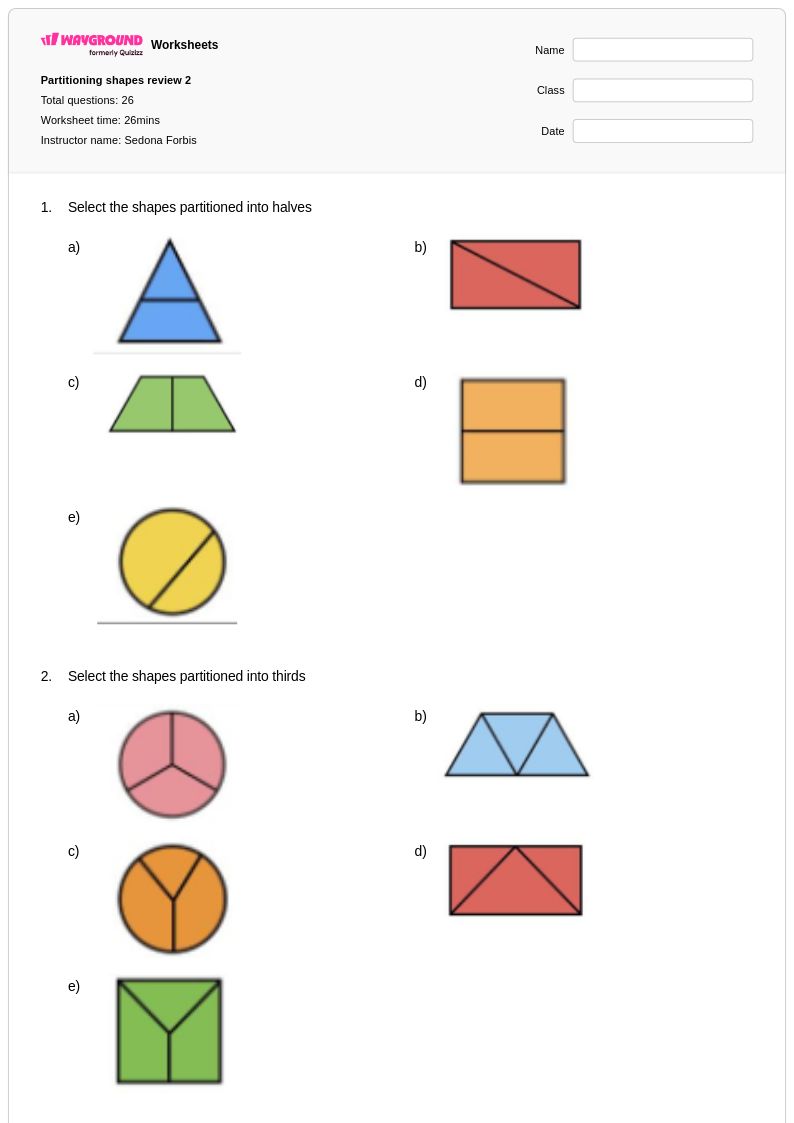
Equal shares worksheets for Class 3 students available through Wayground (formerly Quizizz) provide essential foundational practice for understanding how fractions represent parts of a whole. These comprehensive printables guide young learners through the critical process of dividing shapes, objects, and sets into equal parts, helping them visualize fraction concepts before introducing formal fraction notation. Students work through carefully designed practice problems that strengthen their ability to recognize when parts are truly equal versus unequal, partition various geometric shapes into halves, thirds, and fourths, and identify equal shares in real-world contexts. Each worksheet includes a detailed answer key and is available as a free pdf download, making it simple for educators to incorporate systematic fraction modeling practice into their mathematics instruction.
Wayground (formerly Quizizz) empowers teachers with access to millions of educator-created resources specifically designed for Class 3 equal shares instruction, featuring robust search and filtering capabilities that align with mathematical standards for fraction foundations. The platform's differentiation tools allow instructors to customize worksheets based on individual student needs, whether providing additional scaffolding for struggling learners or enrichment activities for advanced students ready to explore more complex partitioning challenges. These flexible resources are available in both printable and digital formats, including convenient pdf options, enabling seamless integration into lesson planning, targeted remediation sessions, and independent skill practice. Teachers can efficiently locate materials that progress from basic equal sharing concepts to more sophisticated applications, supporting comprehensive fraction readiness development across diverse classroom environments.
FAQs
How do I teach equal shares to third graders?
In Grade 3, equal shares becomes the bridge to formal fractions. Students need to see that partitioning a shape into 4 equal parts and writing 1/4 are describing the same thing — the worksheet model and the fraction notation are two representations of one idea. A useful teaching move: have students partition a shape, then write the fraction for one part, then shade a different number of parts and write that fraction. This connects the visual work they've done since kindergarten to the symbolic notation they're now expected to use.
What exercises help third graders practice equal shares?
At Grade 3, practice should push beyond identification into reasoning: Can a shape be partitioned into equal shares in more than one way? If you have 8 equal shares and shade 3, what fraction is shaded? Wayground's Grade 3 worksheets move from basic partitioning of circles and rectangles into halves, thirds, and fourths toward problems that ask students to connect visual models to fraction language — building the conceptual readiness for fraction comparison and equivalence work later in the year.
What mistakes do third graders make with equal shares?
The most persistent error at this grade: students think a fraction like 1/4 is larger than 1/2 because 4 is larger than 2. This is a direct consequence of shaky equal-shares understanding — if students haven't internalized that more equal parts means smaller parts, fraction comparison makes no sense. A second common error is treating any partition into the right number of pieces as valid, regardless of whether the pieces are equal. Worksheets that include deliberately unequal partitions and ask students to identify the error are more diagnostic than those that only show correct examples.
How do I use Wayground's Grade 3 equal shares worksheets?
You can host these as a digital quiz on Wayground — useful for a quick formative check before moving into formal fraction notation — or print the PDF for independent practice or small-group work. The answer key is included with every worksheet. If you print and collect student work, the Wayground for Teachers app lets you scan submissions for grading rather than working through them by hand.
How does equal shares connect to the Common Core fraction standards in Grade 3?
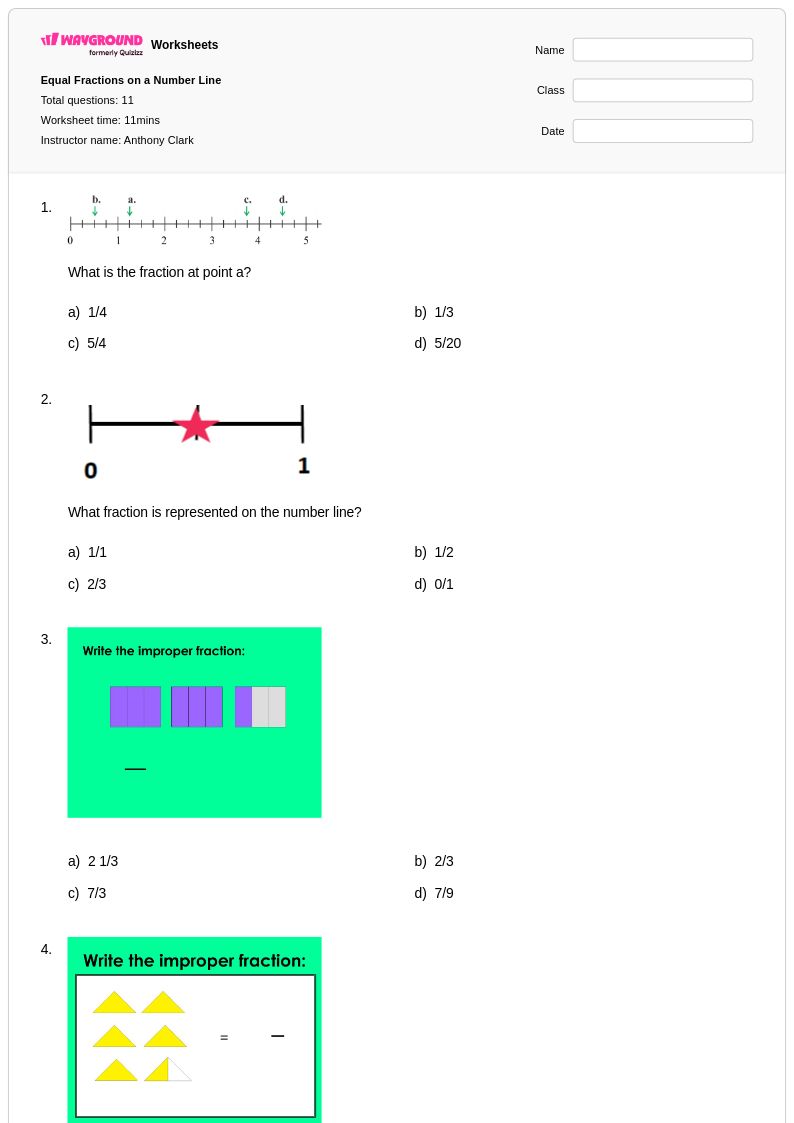
Common Core treats Grade 3 as the entry point for fractions as numbers, and equal shares is the conceptual prerequisite. Students who can reliably partition a shape into equal parts and describe one part as "one of three equal shares" are ready to write that as 1/3 and place it on a number line. The Grade 3 standards then build toward comparing fractions with the same denominator and recognizing simple equivalents like 2/4 = 1/2 — both of which depend on understanding that the parts must be equal in the first place. Equal shares work at this grade isn't review; it's the foundation the rest of the fraction unit stands on.
How can I differentiate equal shares practice for my Grade 3 class?
For students who are still building the concept, Wayground's reduced answer choices accommodation helps by limiting the number of partitions to compare at once — useful when a student gets lost evaluating four options rather than two. For students who are ready to go further, the same worksheets support extension: ask them to find a second valid way to partition the same shape, or to explain in writing why an unequal partition doesn't work. That kind of open-ended reasoning doesn't require a different worksheet, just a different prompt.