Free Printable Essay Writing Worksheets for Class 10
Class 10 essay writing worksheets from Wayground help students master nonfiction composition through structured practice problems, free printables with answer keys, and comprehensive PDF resources.
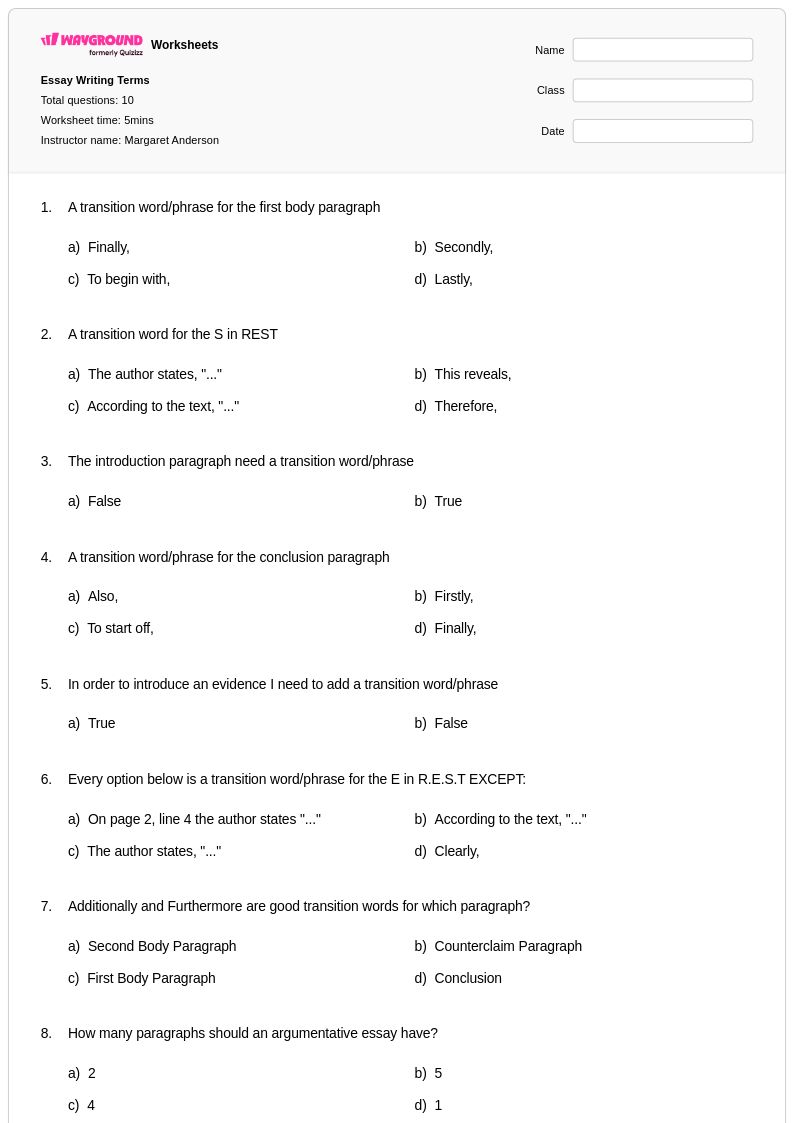
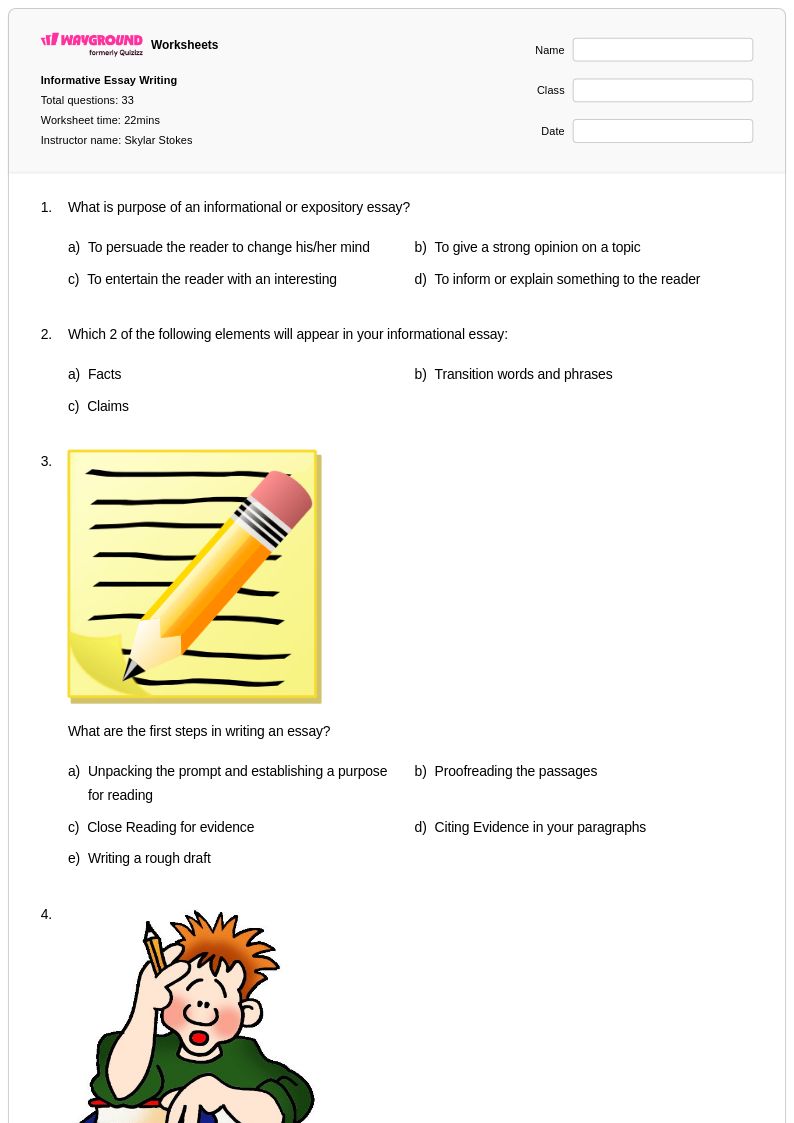
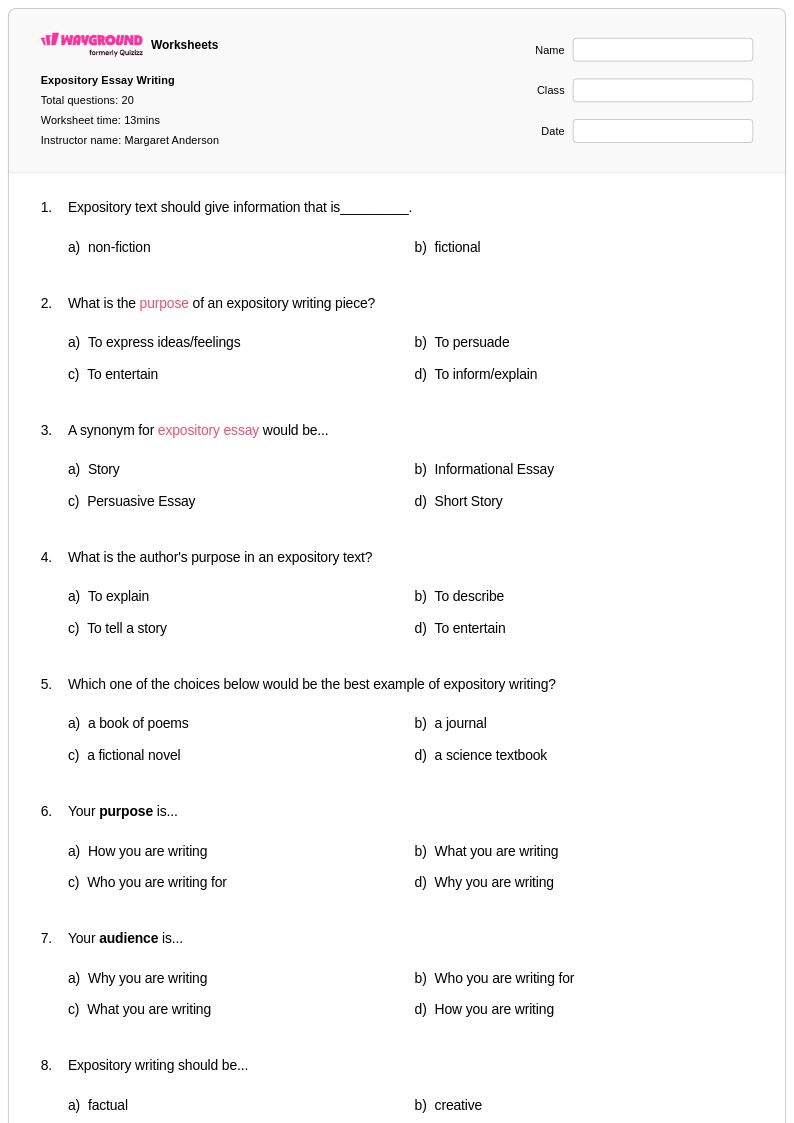
Explore printable Essay Writing worksheets for Class 10
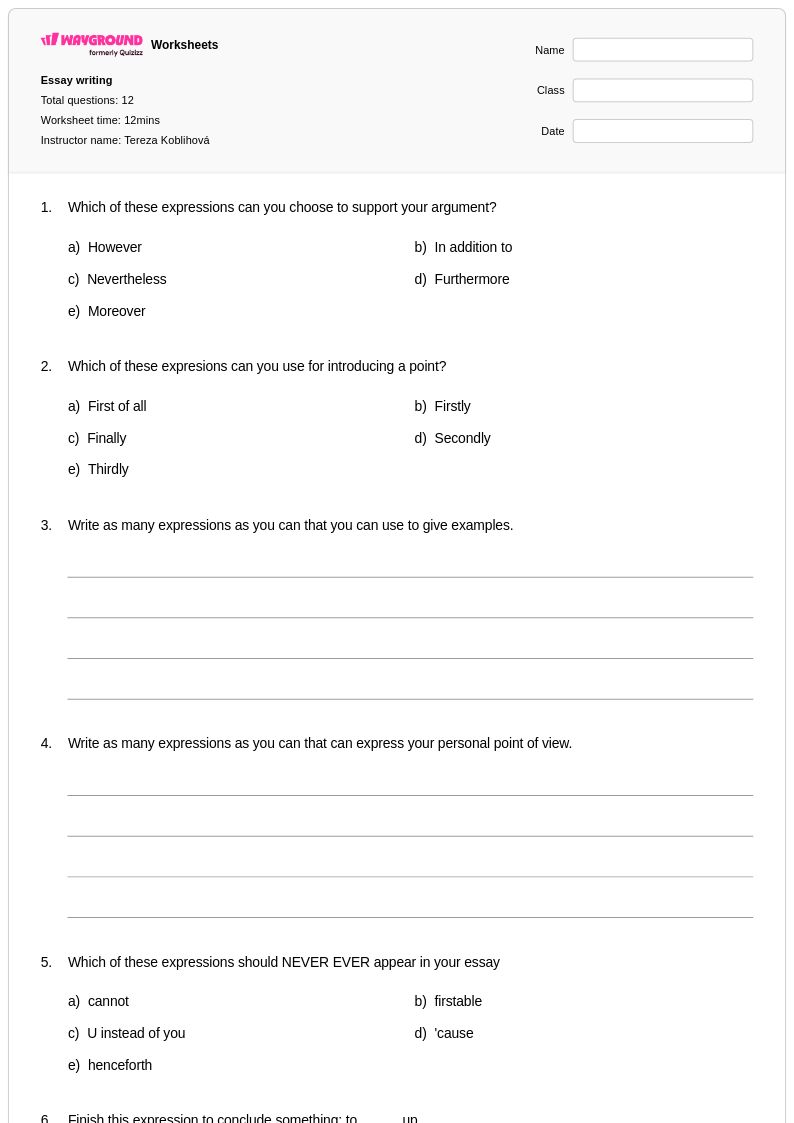
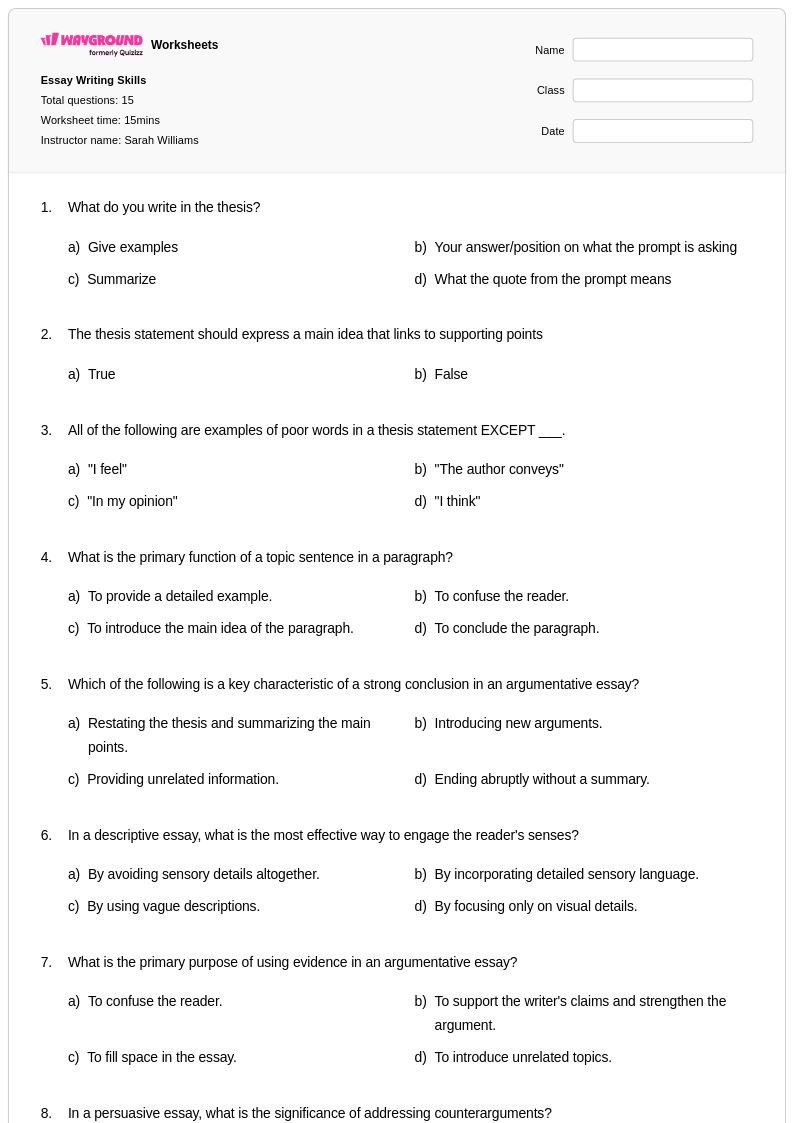
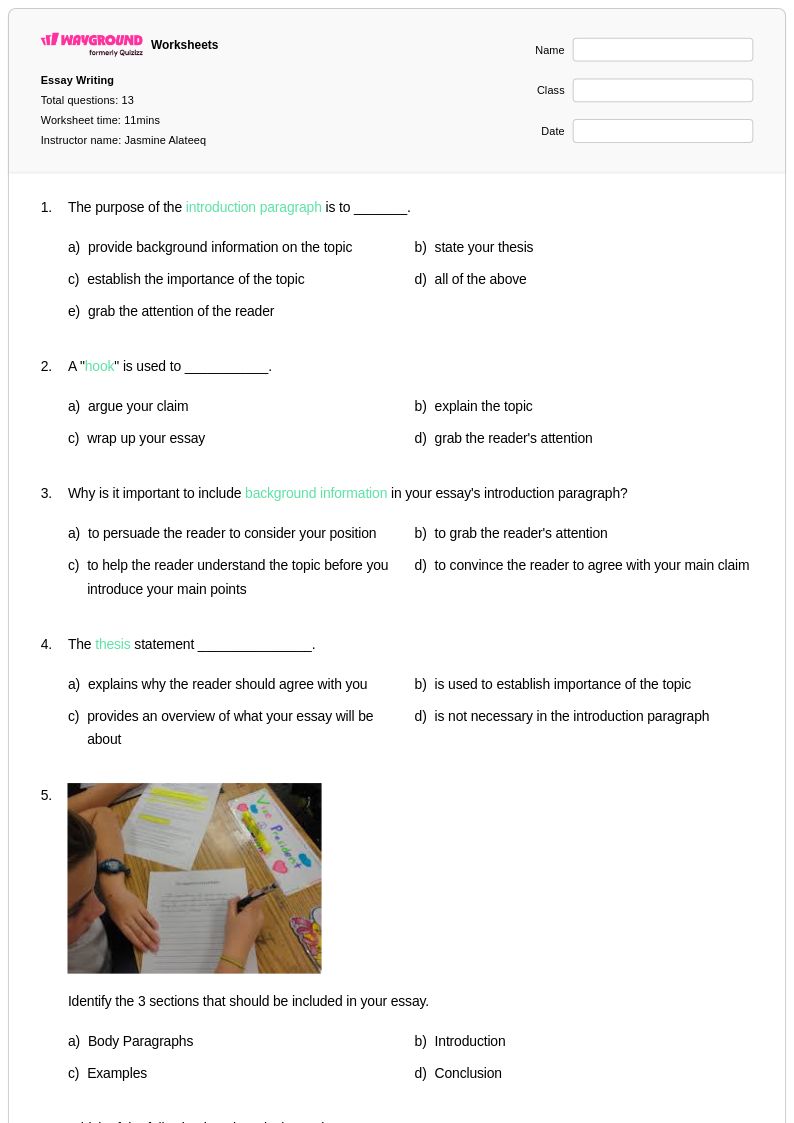
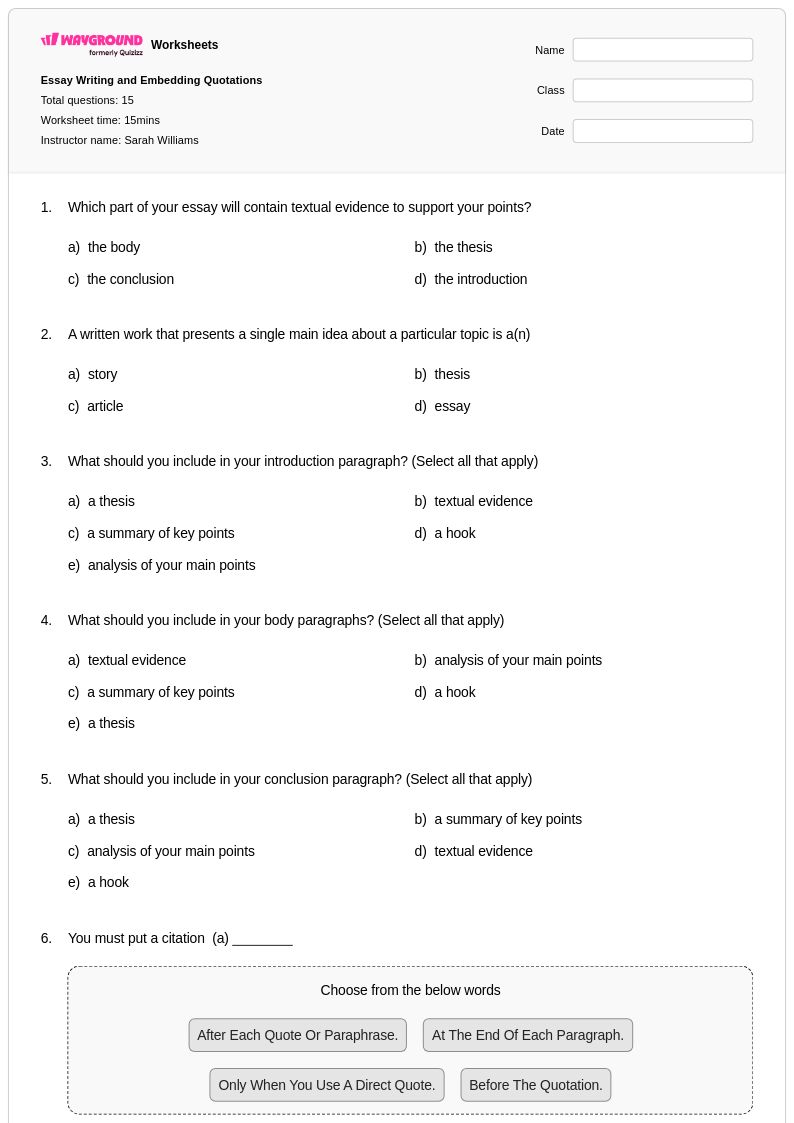
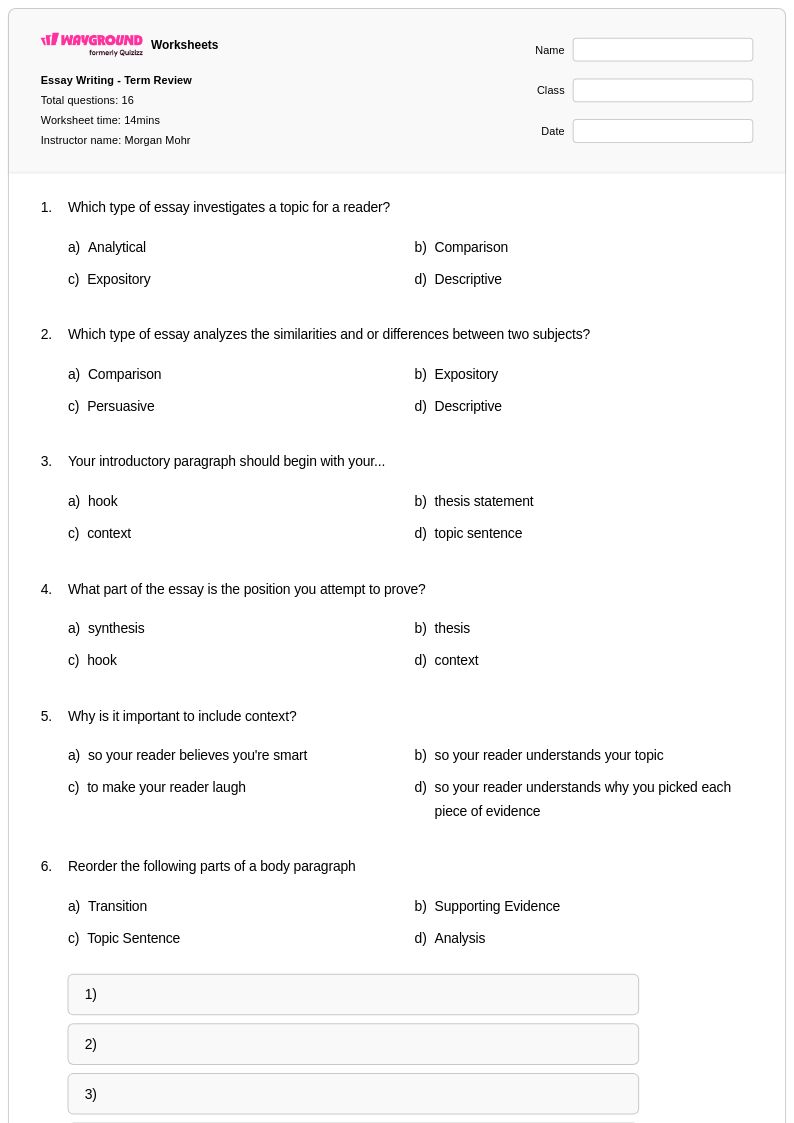
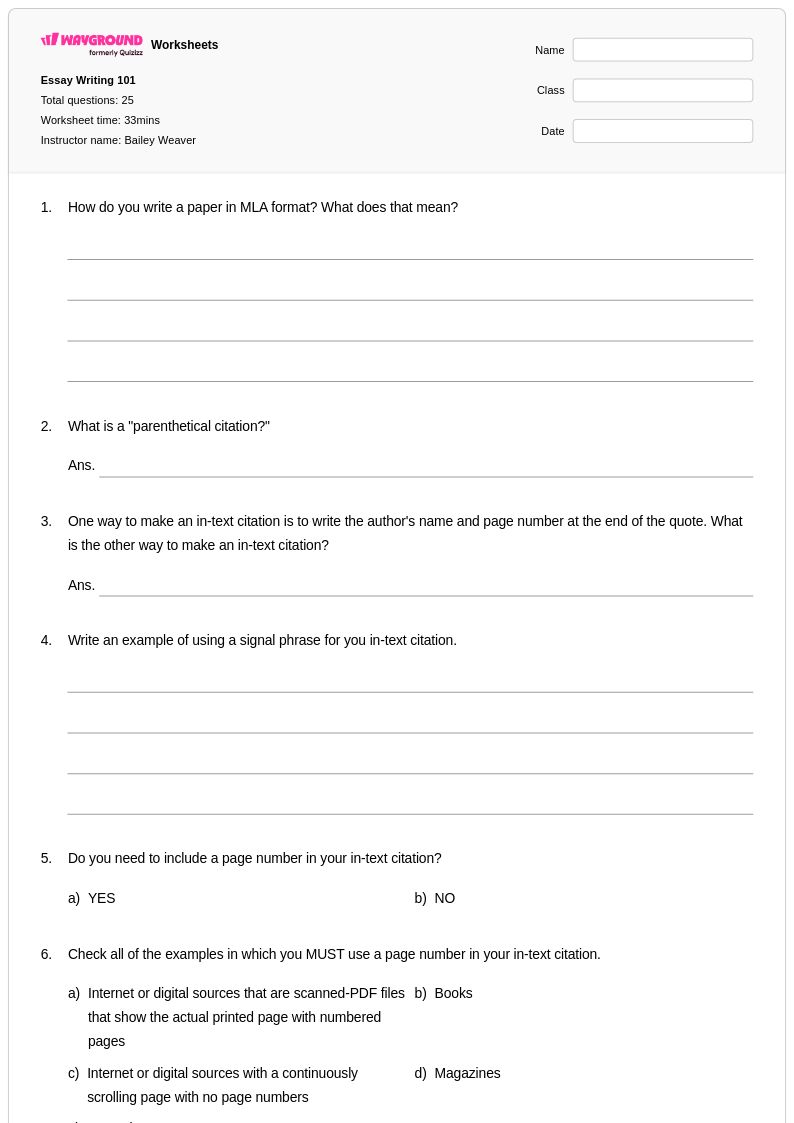
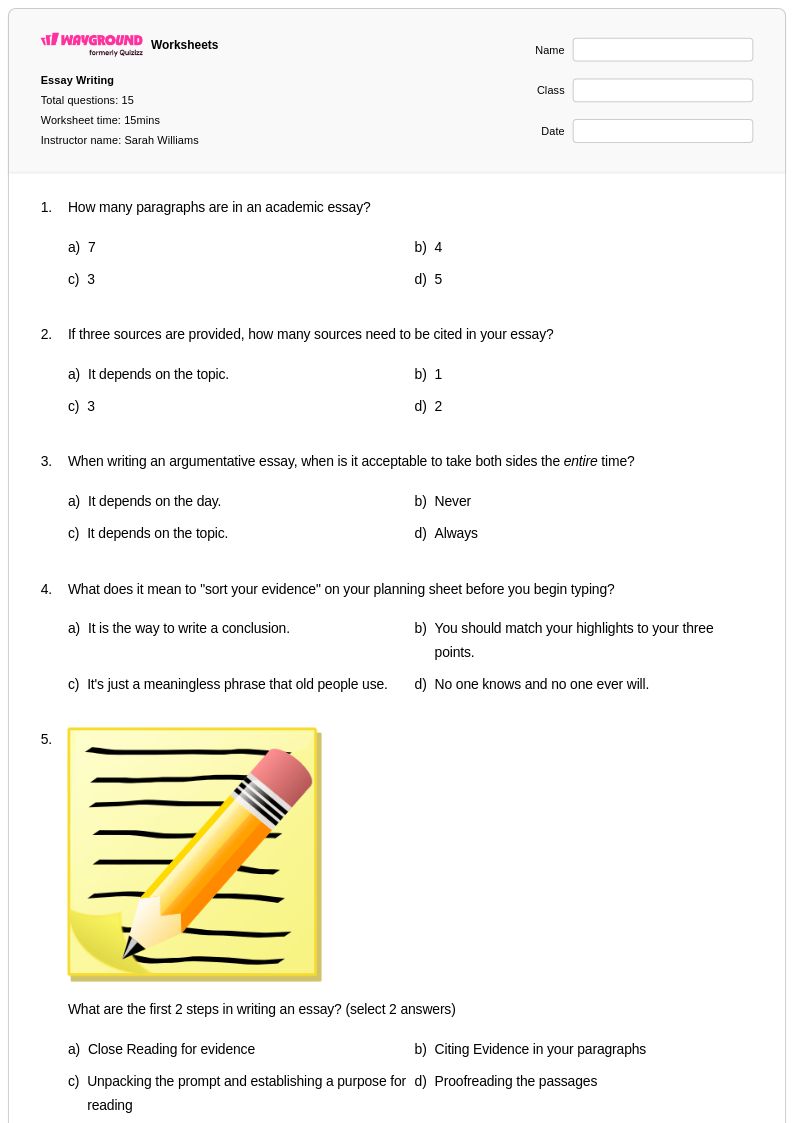
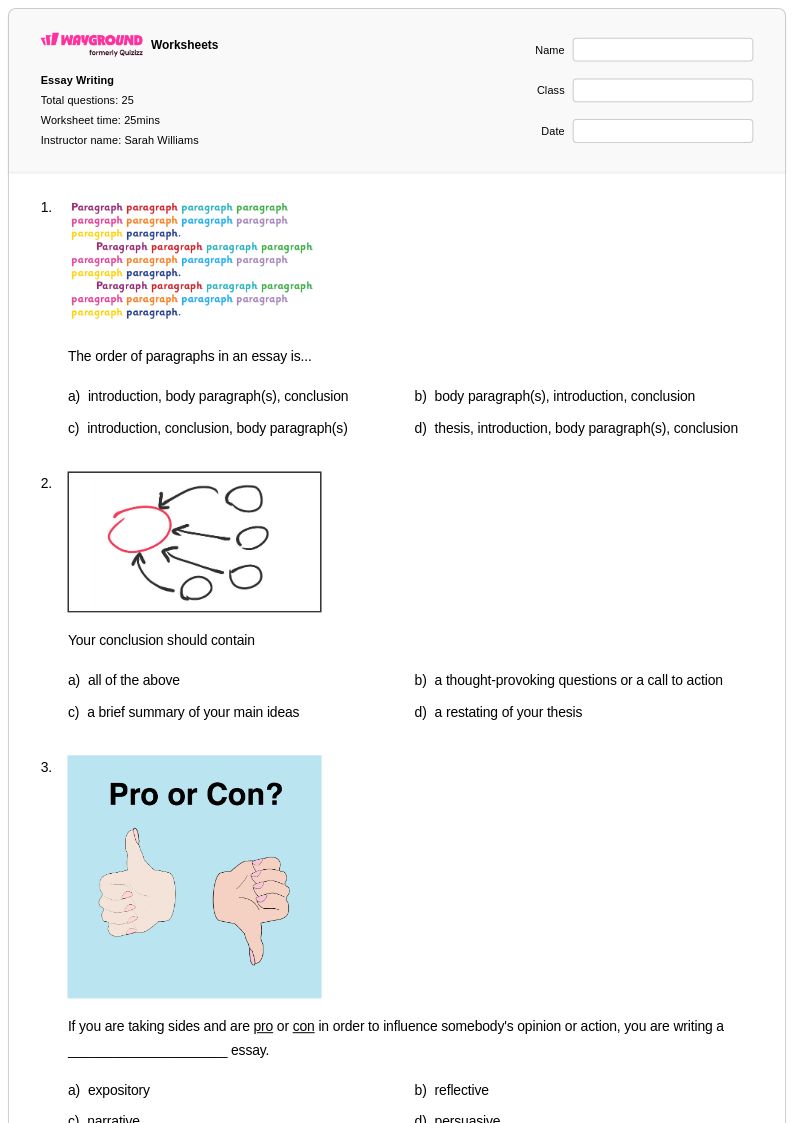
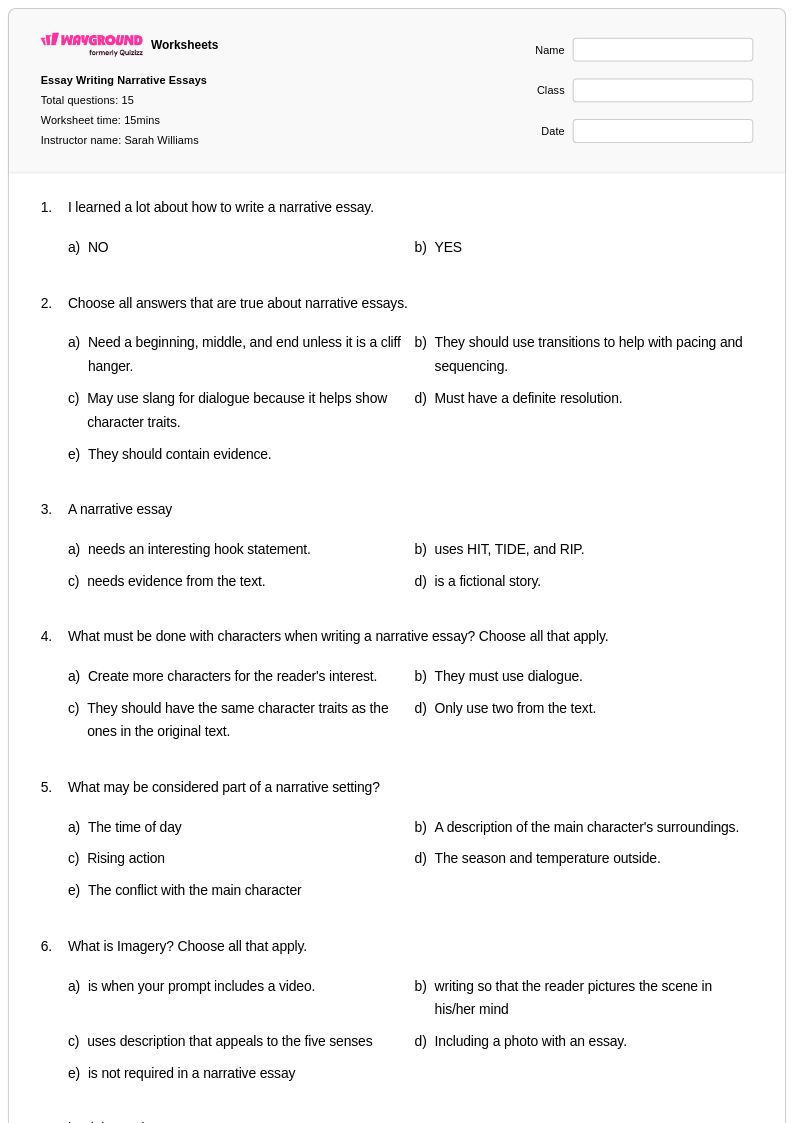
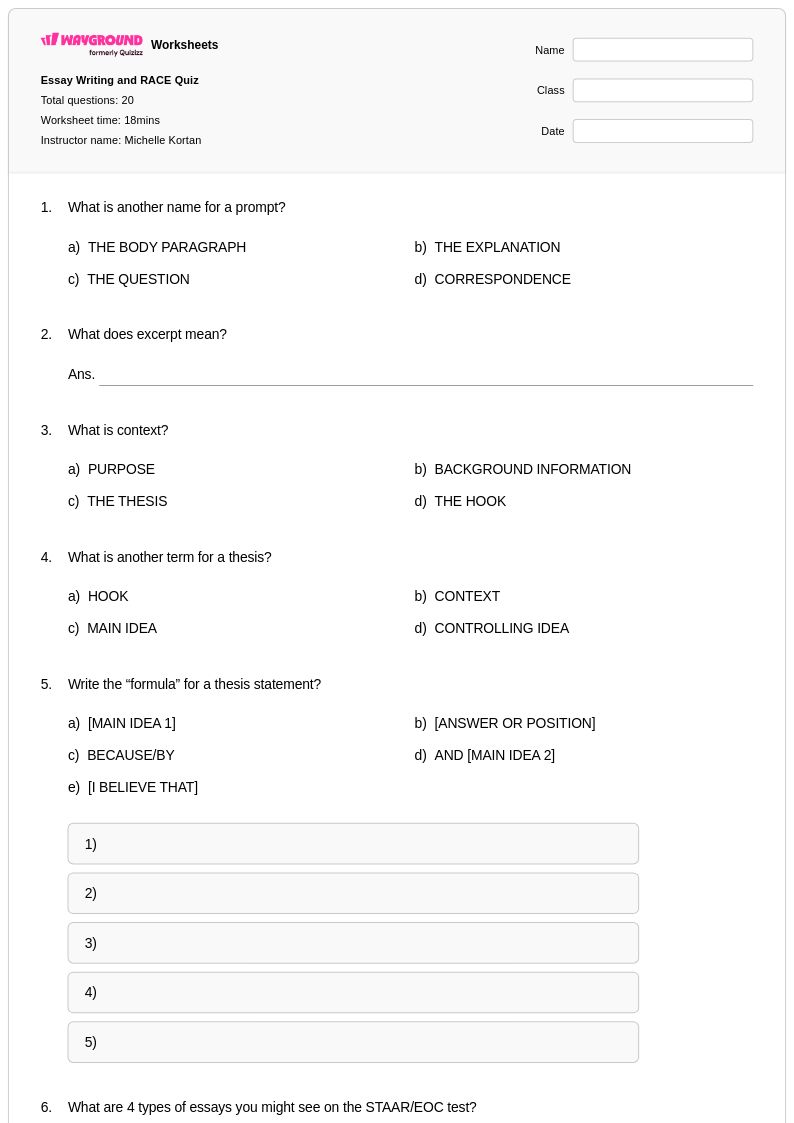
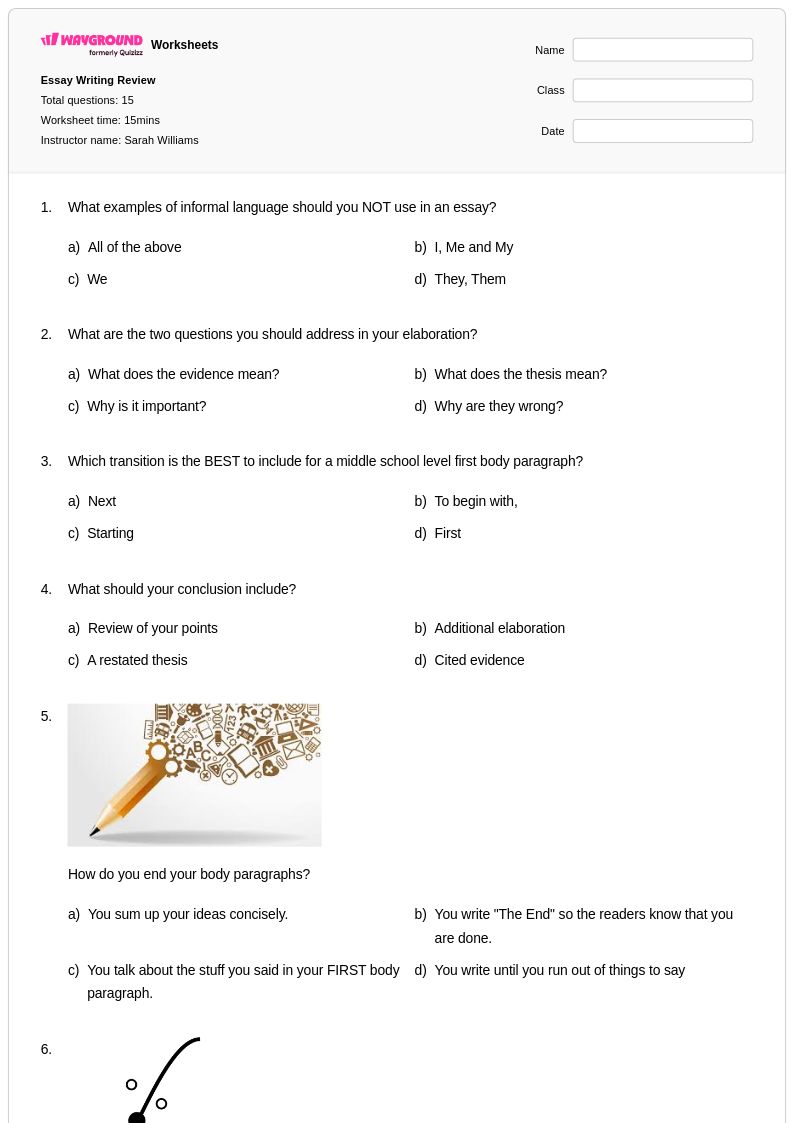
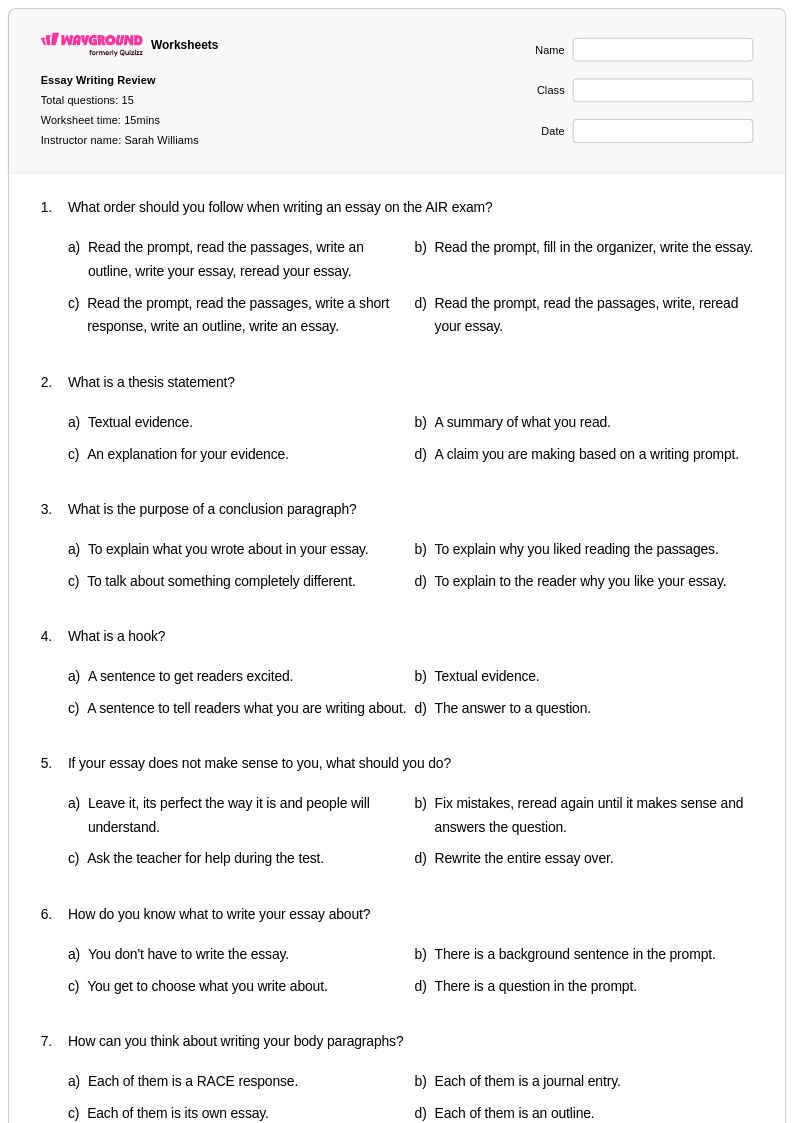
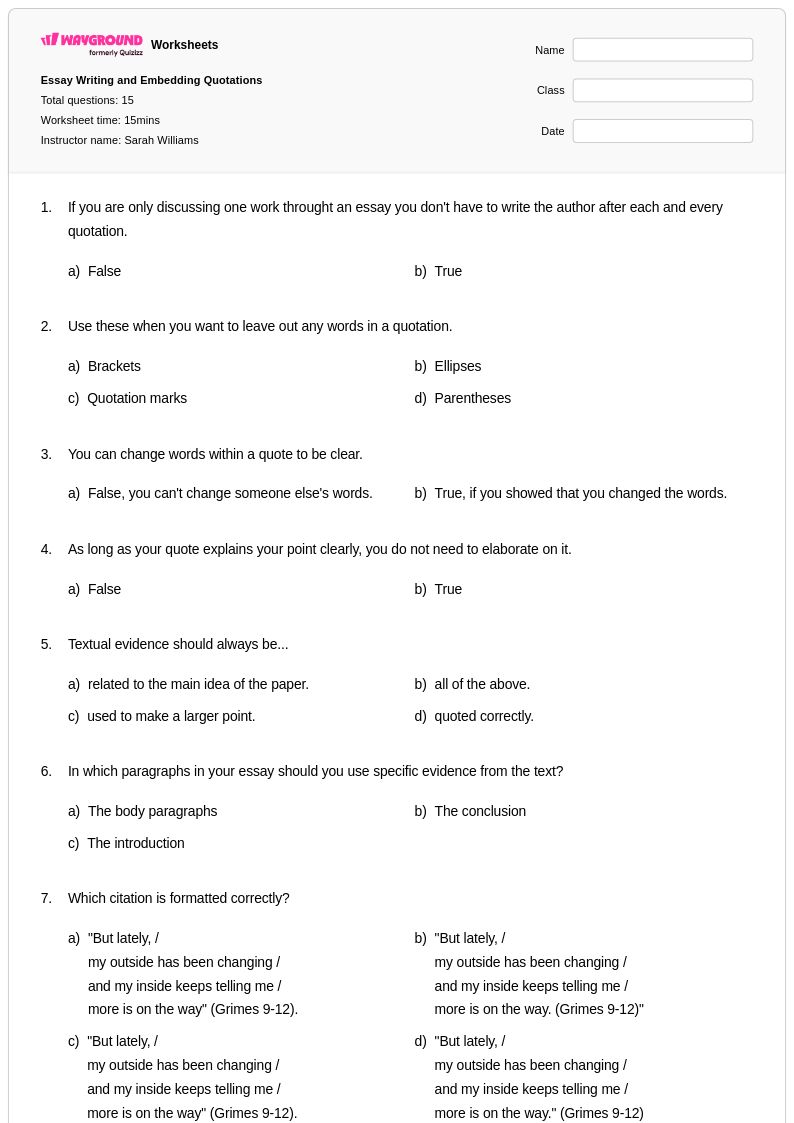
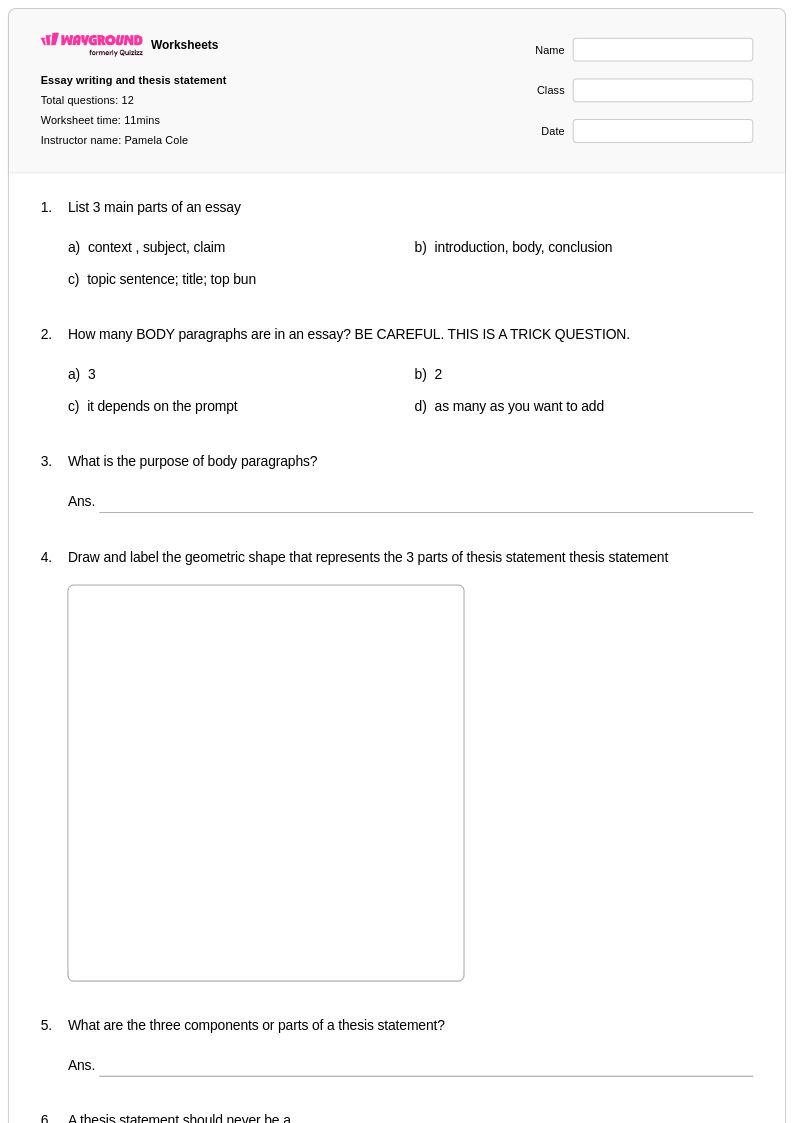
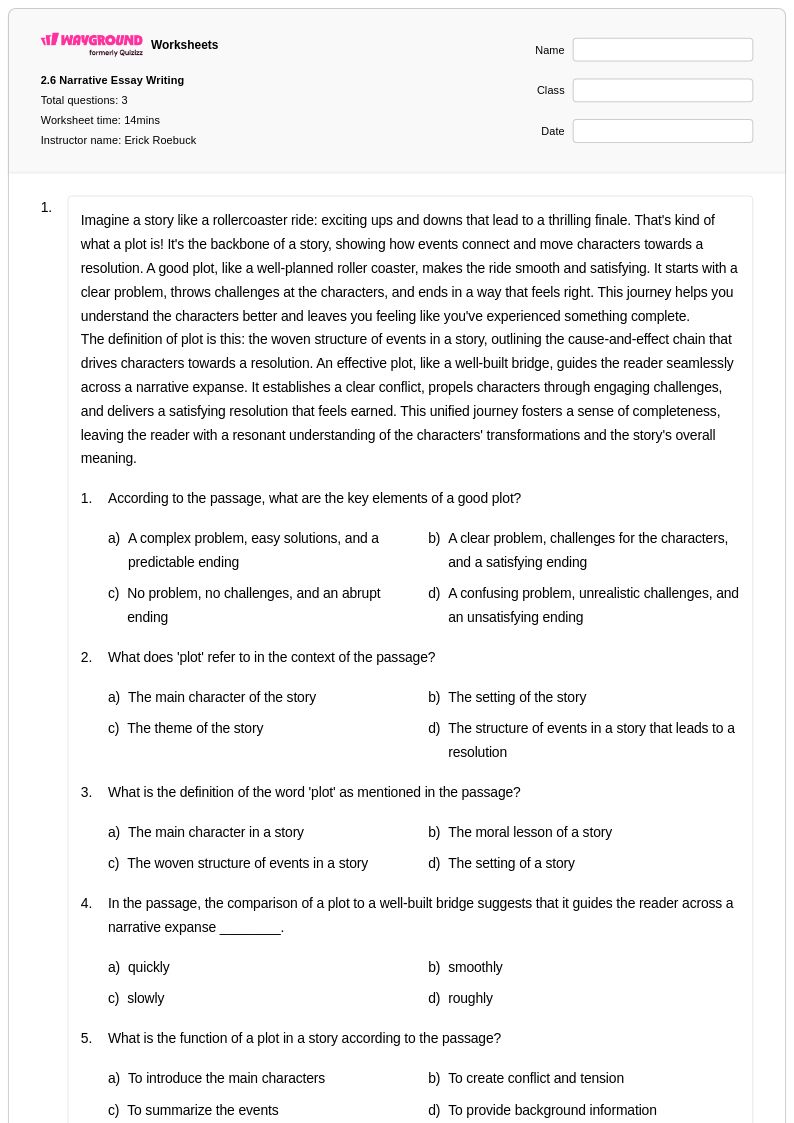
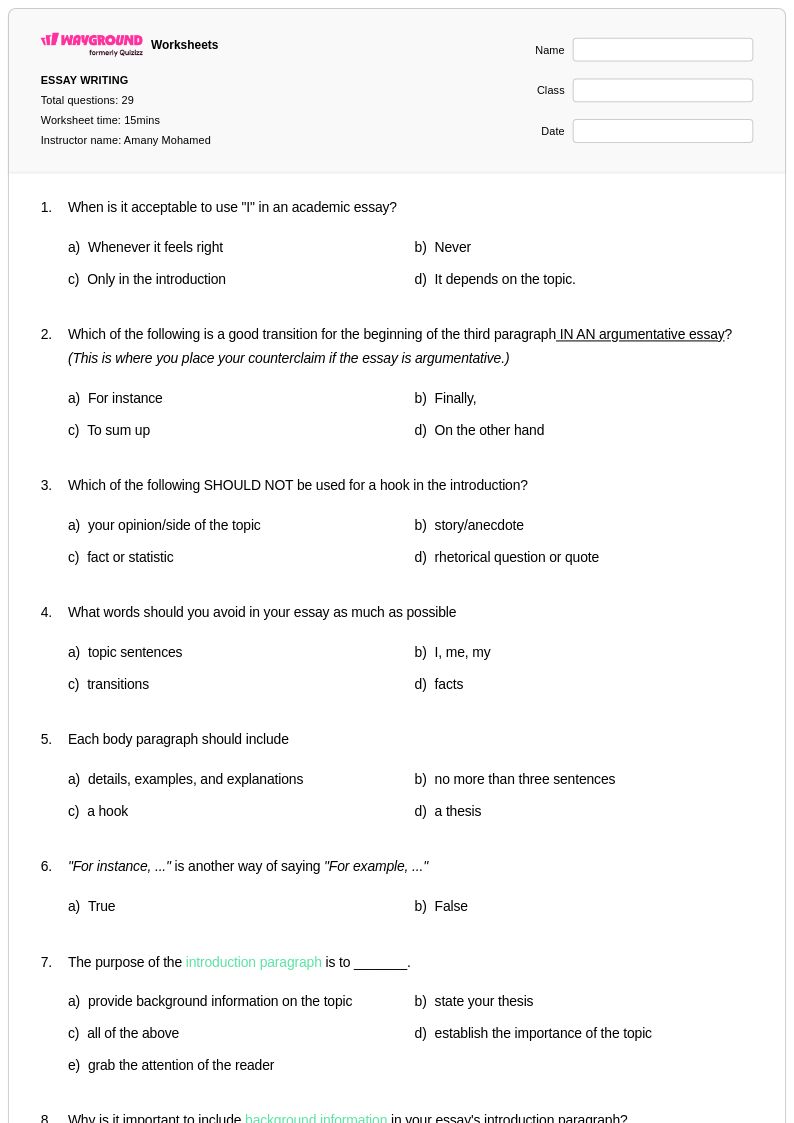
Essay writing worksheets for Class 10 students available through Wayground (formerly Quizizz) provide comprehensive practice in developing sophisticated nonfiction writing skills essential for academic success. These expertly designed resources guide students through the fundamental components of effective essay construction, including thesis development, evidence selection, argumentative reasoning, and coherent paragraph structure. Students engage with practice problems that challenge them to analyze complex texts, synthesize multiple sources, and craft compelling arguments across various essay formats including argumentative, expository, and analytical pieces. Each worksheet comes with detailed answer keys that help students understand the reasoning behind strong essay elements, while the free printable pdf format ensures accessibility for both classroom instruction and independent study.
Wayground's extensive collection draws from millions of teacher-created resources specifically focused on Class 10 essay writing instruction, offering educators unparalleled access to high-quality materials that align with rigorous academic standards. The platform's advanced search and filtering capabilities allow teachers to quickly locate worksheets targeting specific essay writing skills, whether for initial instruction, targeted remediation, or advanced enrichment activities. Differentiation tools enable educators to customize assignments based on individual student needs, while the flexible format options support both traditional printable worksheets and interactive digital activities. These comprehensive resources streamline lesson planning by providing ready-to-use materials that systematically build students' analytical thinking, textual evidence usage, and persuasive writing techniques essential for college-level composition courses.
FAQs
How do I teach essay writing step by step in middle or high school?
Effective essay writing instruction follows a staged process: begin with thesis construction, move through paragraph organization and evidence integration, then address drafting and revision as distinct phases. Breaking the process into explicit, teachable steps prevents students from treating writing as a single undifferentiated task. Modeling each stage with mentor texts and annotated examples helps students internalize the structural logic before applying it independently.
What are the most common mistakes students make when writing essays?
The most frequent errors include thesis statements that are too broad or merely restate the prompt, body paragraphs that lack a clear topic sentence or supporting evidence, and conclusions that simply repeat the introduction rather than synthesizing the argument. Students also commonly struggle with integrating quotations smoothly and distinguishing between summary and analysis. Targeted practice on each of these components individually is more effective than addressing them all in a single draft-and-revise cycle.
What exercises help students practice thesis writing and paragraph structure?
Isolated thesis-writing exercises, where students are given a topic and must produce three or four candidate thesis statements, build the skill of arguable claim construction before students face a full essay. Paragraph frames, which scaffold the topic sentence, evidence, and commentary structure, give students a concrete model to internalize. Progressively removing the scaffolding over several practice rounds helps students transition to independent paragraph writing with confidence.
How do I teach the difference between argumentative, expository, and analytical essays?
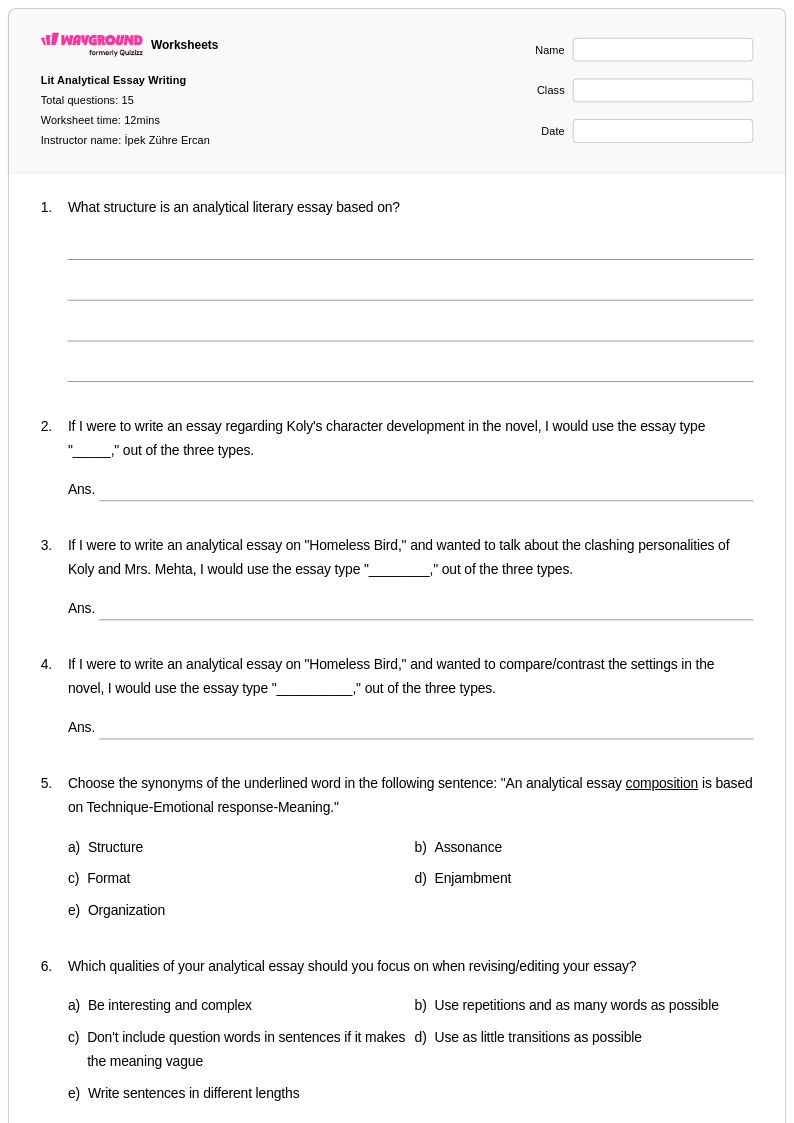
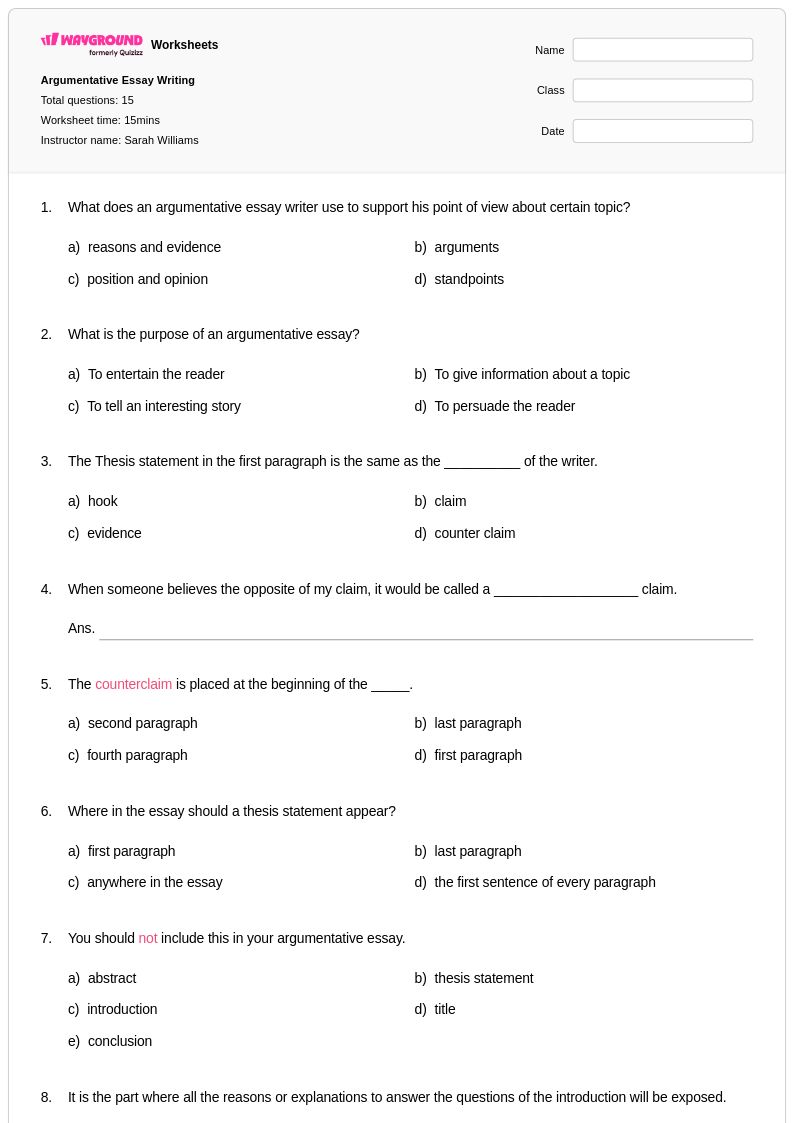
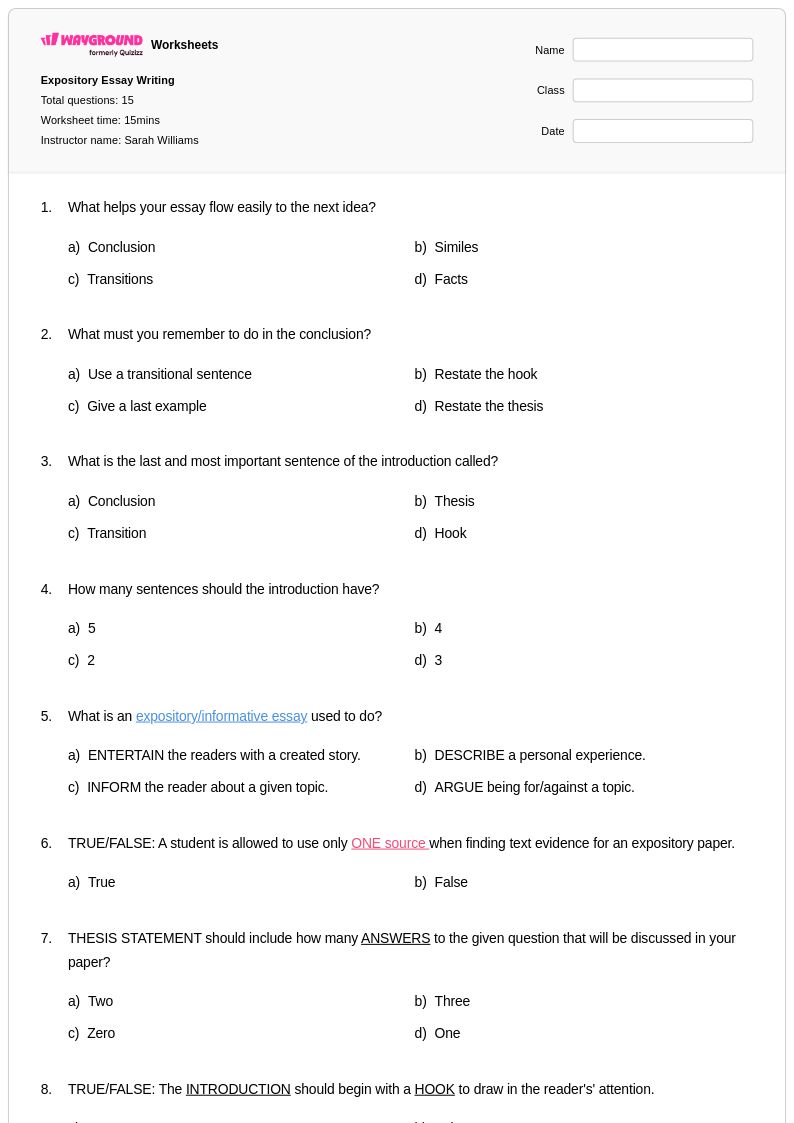
Argumentative essays require a defensible claim and counterargument acknowledgment; expository essays prioritize clear explanation of a topic without advocating a position; analytical essays demand close interpretation of a text or data set with evidence-based reasoning. Presenting all three types side by side using the same topic helps students see the structural and purpose-driven differences clearly. Comparing annotated mentor texts for each type is a highly effective classroom activity before students attempt writing in each mode.
How do I use Wayground's essay writing worksheets in my classroom?
Wayground's essay writing worksheets are available as printable PDFs for traditional classroom use and in digital formats for technology-integrated instruction, making them suitable for in-class work, homework, or targeted remediation. Teachers can also host worksheets as a quiz directly on Wayground, enabling interactive practice with built-in answer keys that give students immediate feedback on their understanding of essay structure and technique. The collection covers argumentative, expository, compare and contrast, and analytical essay types, so teachers can assign materials that match their current unit focus.
How can I differentiate essay writing practice for students at different skill levels?
Students who are still developing foundational skills benefit from scaffolded worksheets that walk through brainstorming, outlining, and drafting as sequential steps, while more advanced writers can engage with complex argumentative and analytical prompts that require independent structuring. On Wayground, teachers can apply student-level accommodations such as Read Aloud, extended time, and reduced answer choices to support learners with diverse needs without disrupting the rest of the class. These settings can be configured per student and reused across future sessions, making differentiation manageable at scale.