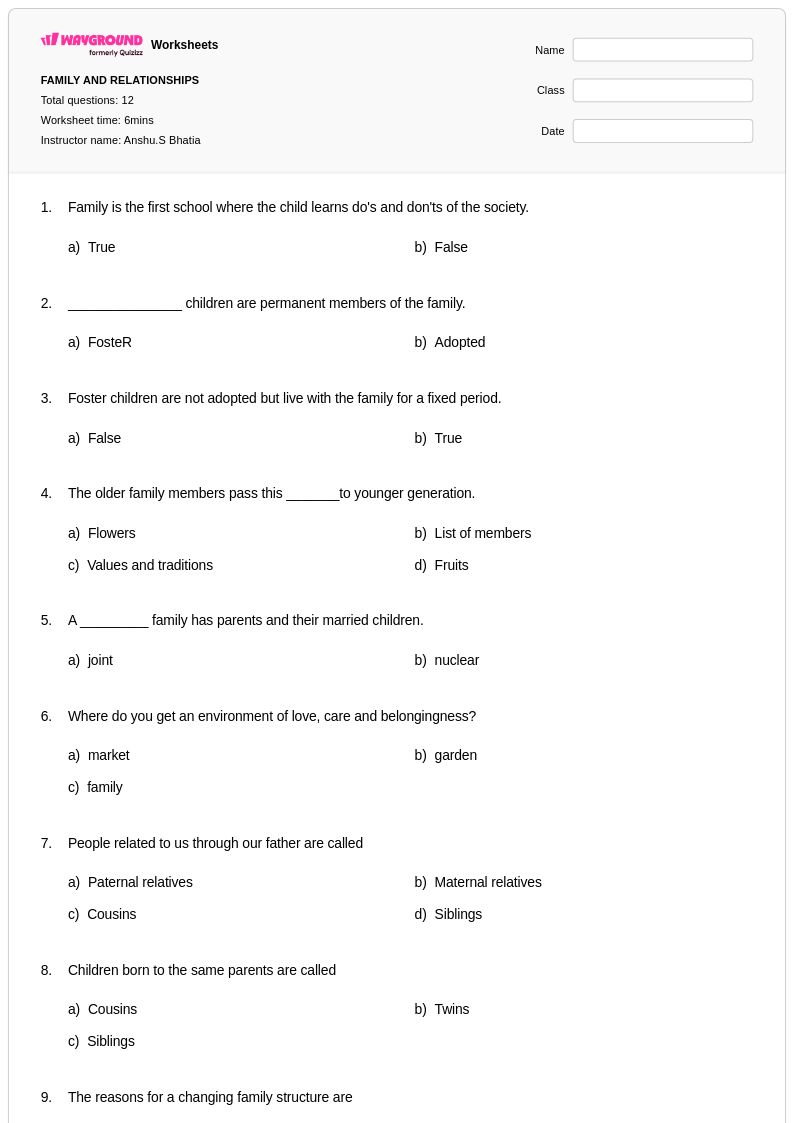
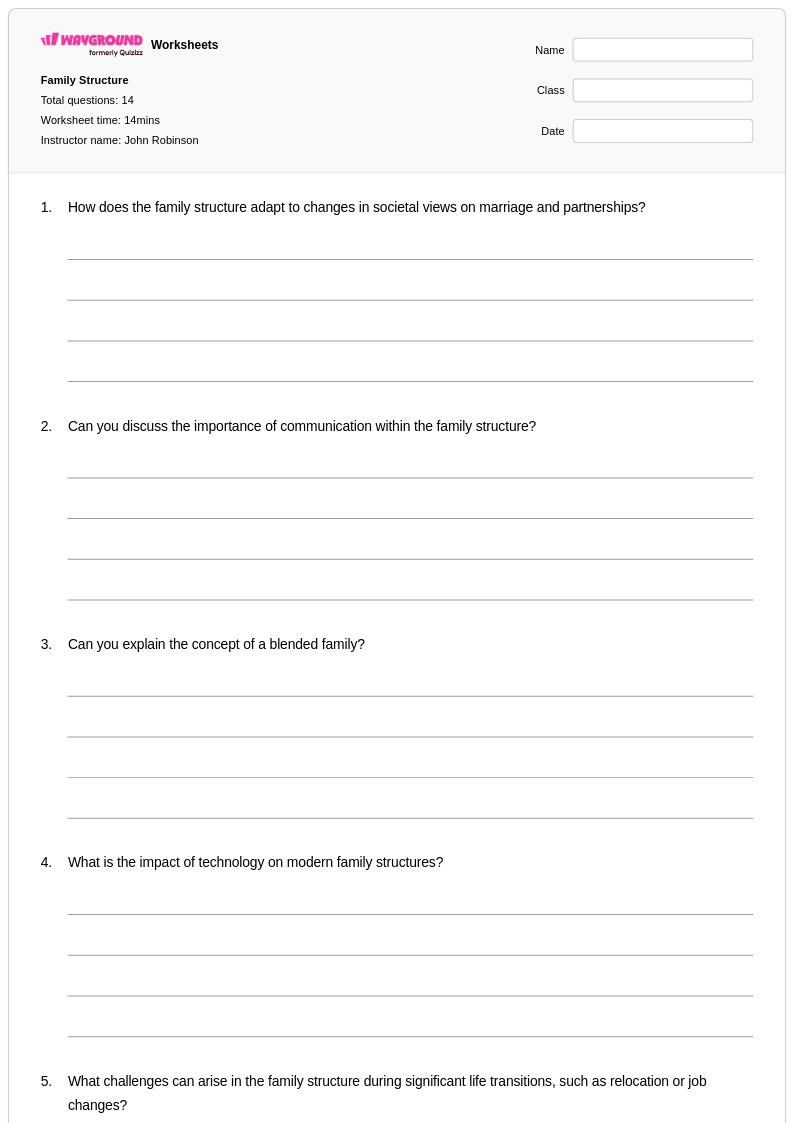
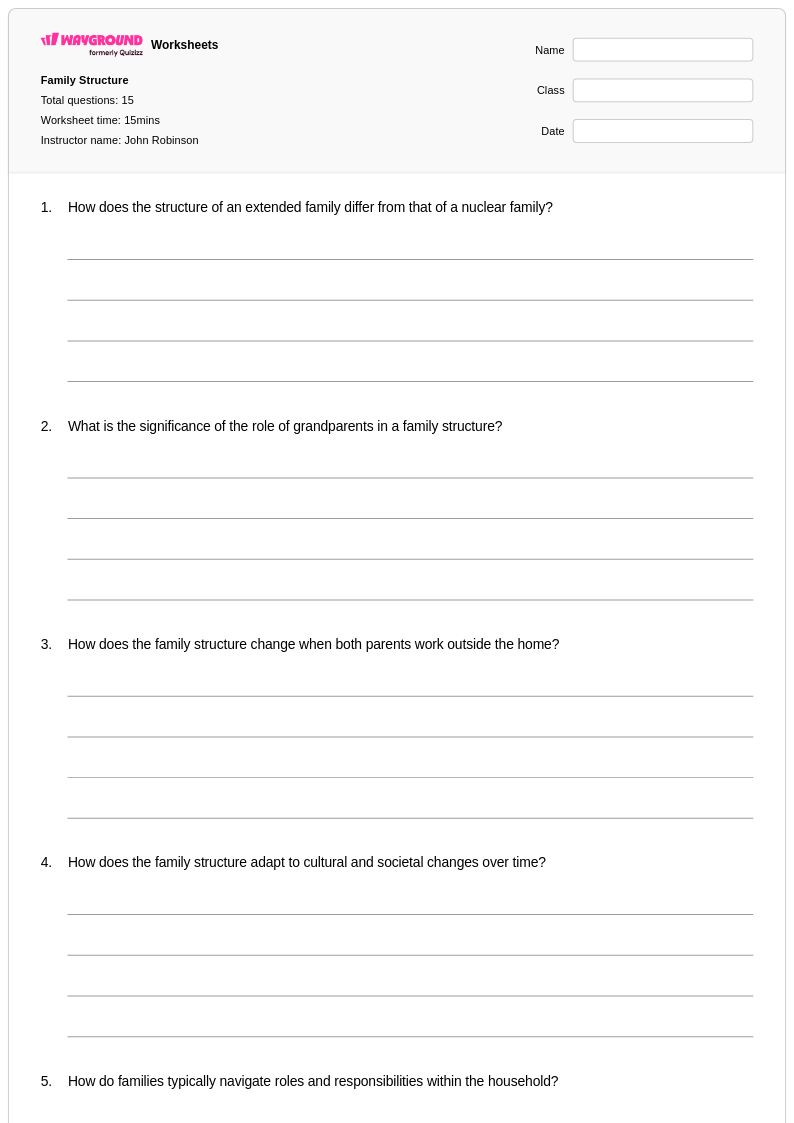
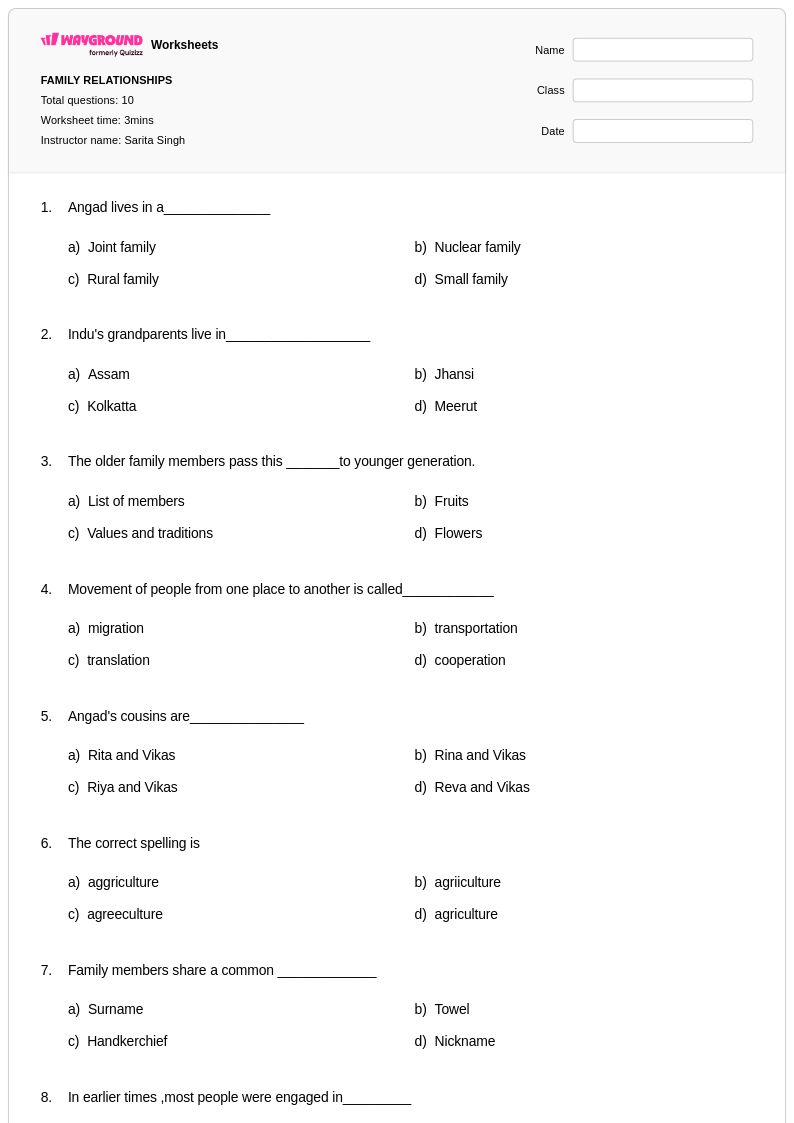
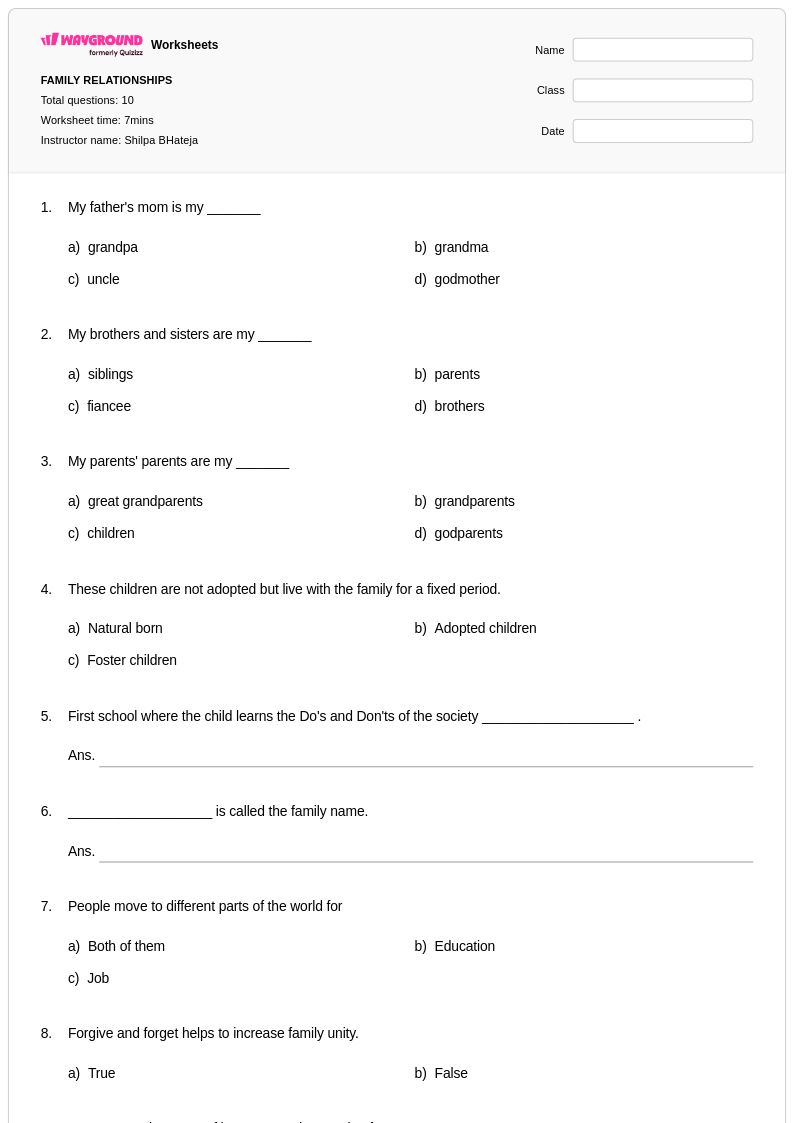
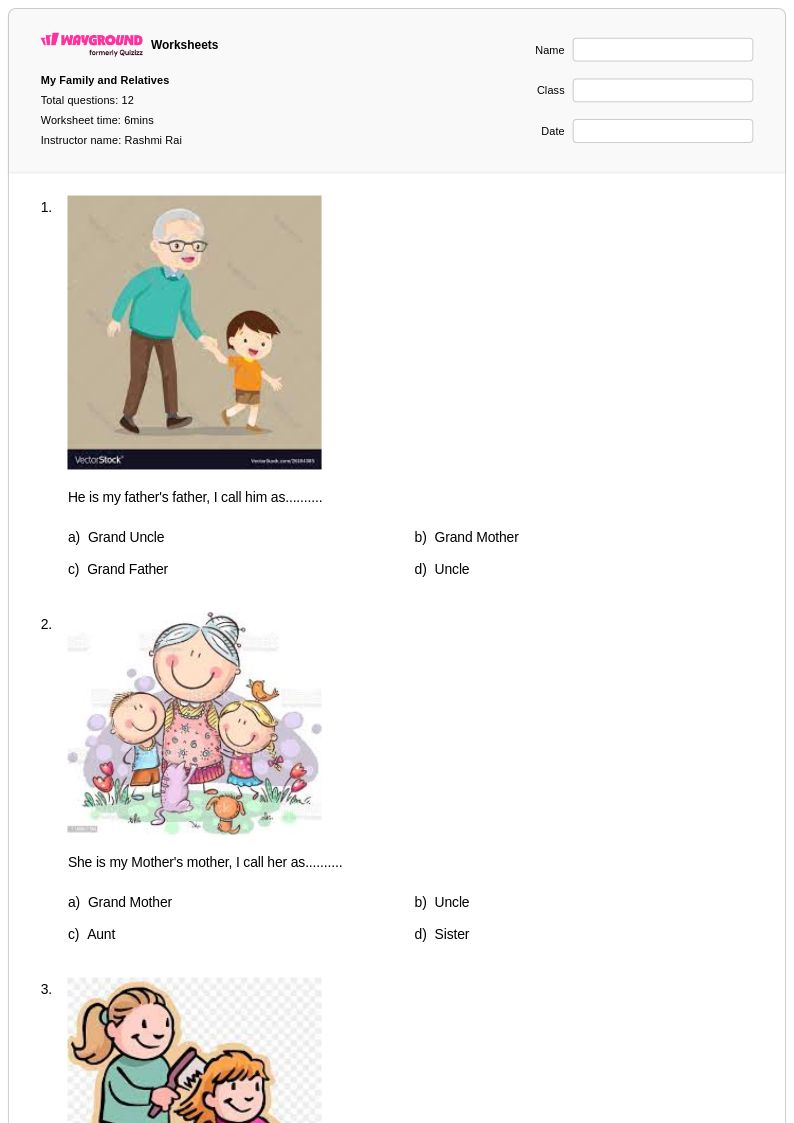
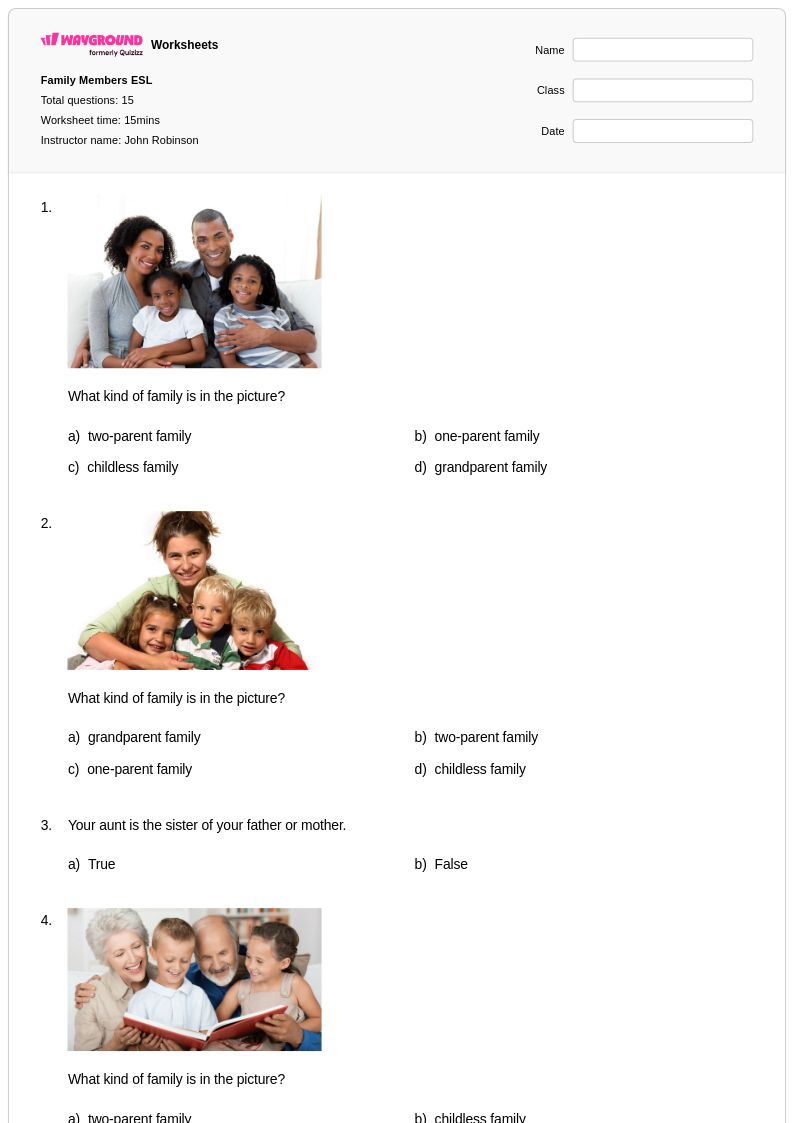
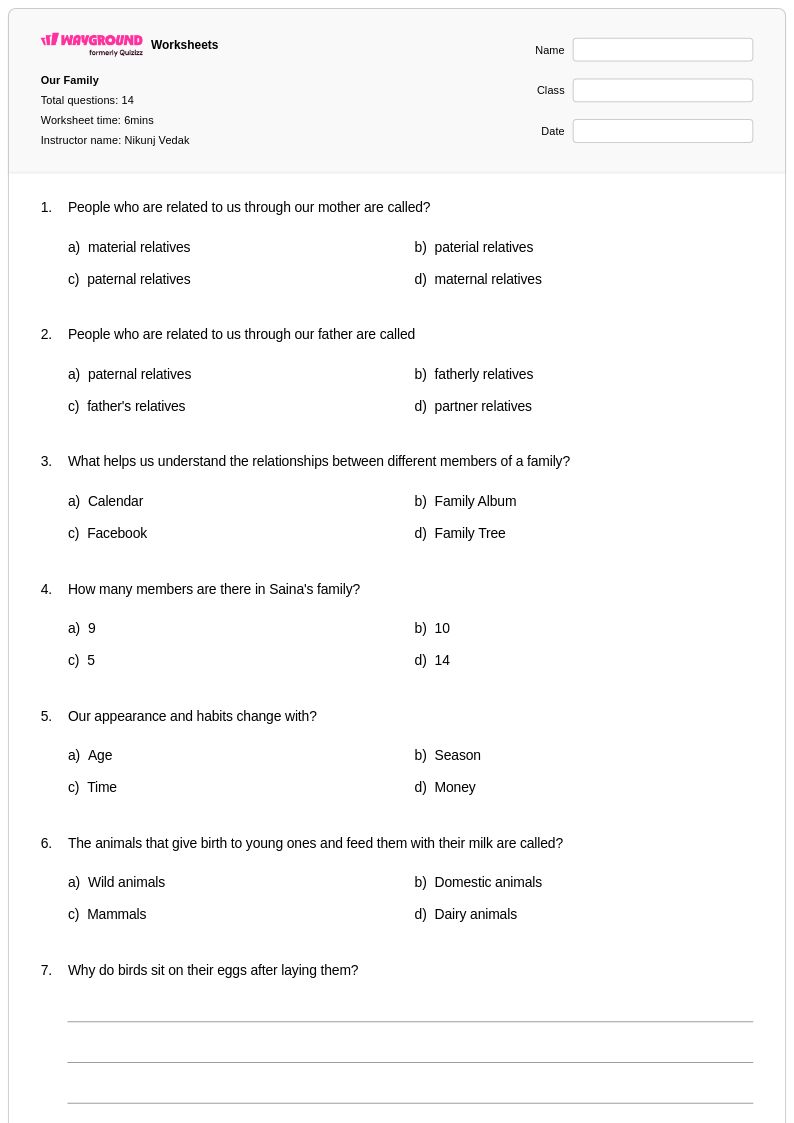
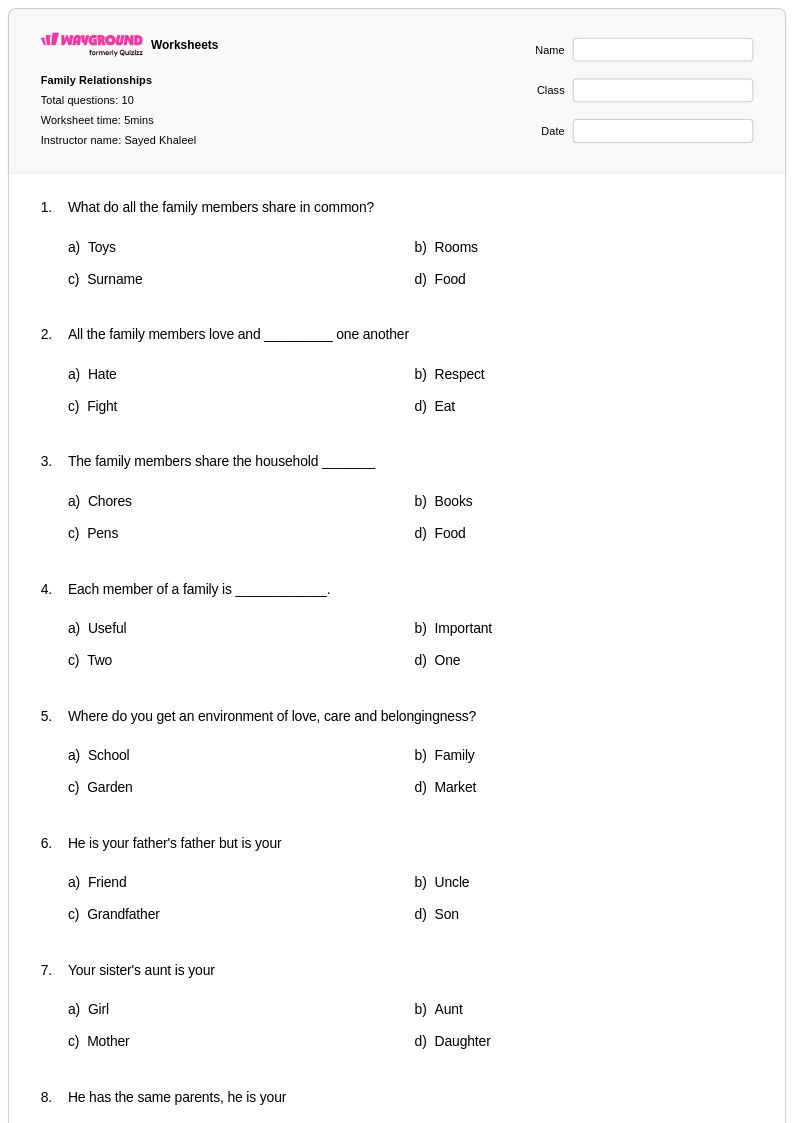
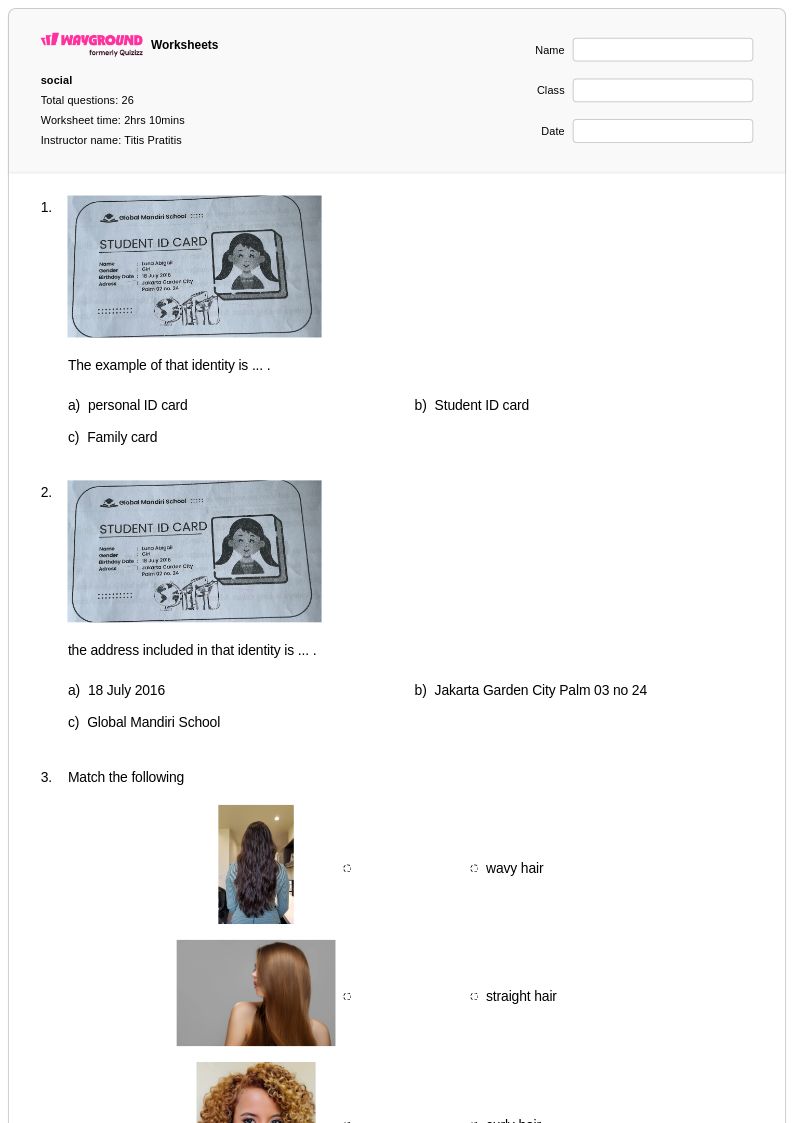
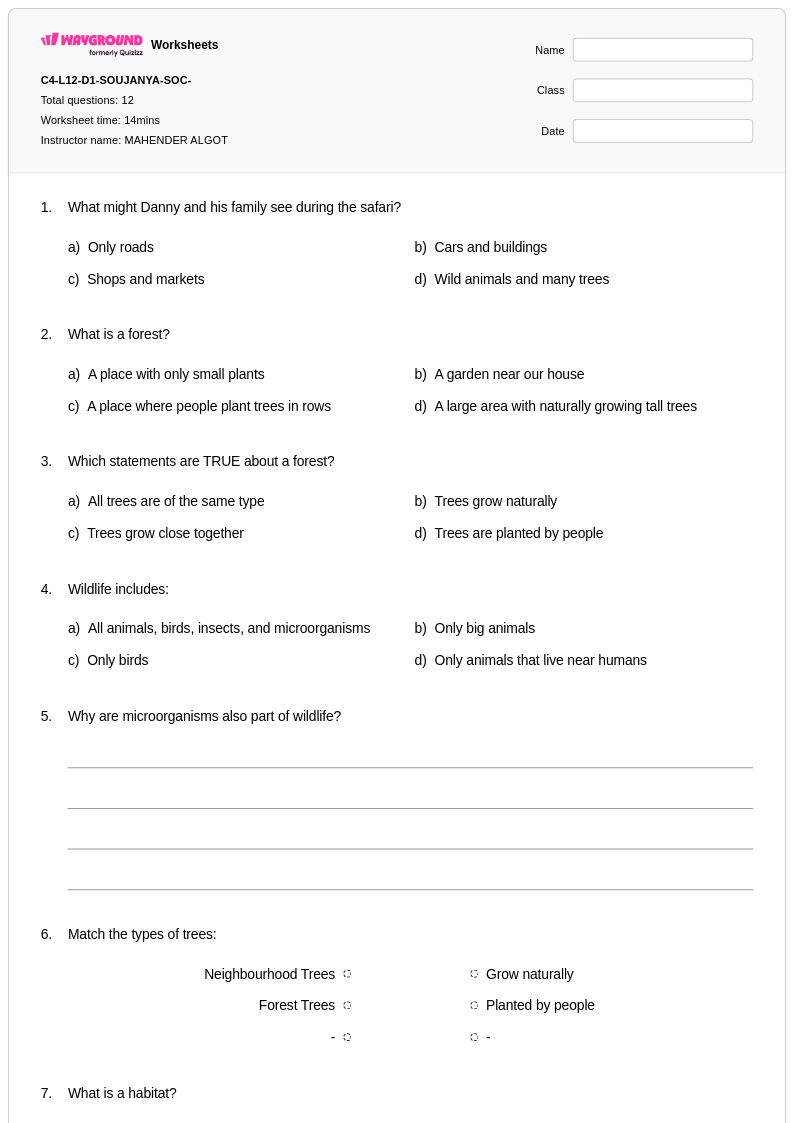
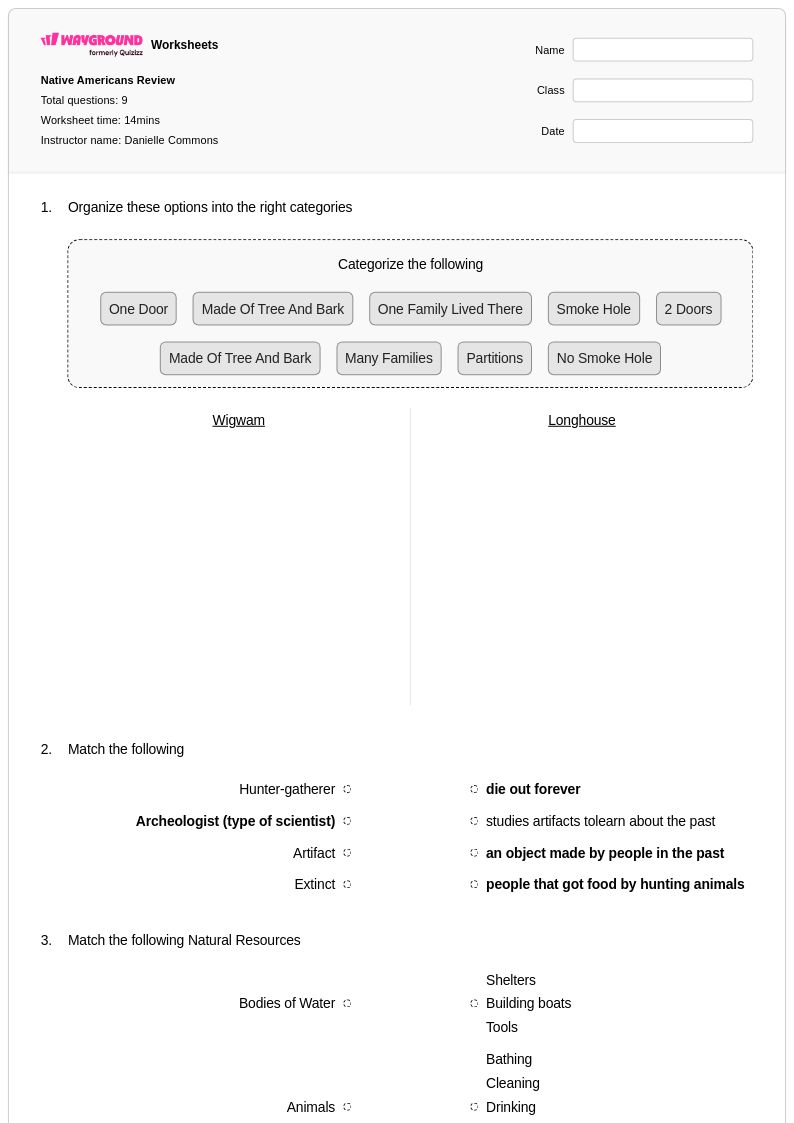
Explore our free Class 4 family tree worksheets and printables that help students discover their heritage, understand family relationships, and practice organizing genealogical information with comprehensive answer keys included.
Explore printable Family Tree worksheets for Class 4
Family tree worksheets for Class 4 students available through Wayground (formerly Quizizz) provide an engaging foundation for exploring personal heritage and understanding family relationships within the broader context of community and cultures. These educational resources help fourth-grade students develop critical thinking skills as they organize information about their ancestors, identify generational patterns, and recognize how family structures vary across different cultures and time periods. The comprehensive collection includes practice problems that guide students through creating detailed family trees, analyzing family traditions, and connecting their personal histories to larger cultural narratives. Teachers can access printable pdf versions alongside digital formats, with each worksheet featuring a complete answer key to support effective instruction and assessment of student understanding.
Wayground's extensive library draws from millions of teacher-created resources specifically designed to support Class 4 social studies instruction focused on family heritage and cultural exploration. The platform's advanced search and filtering capabilities enable educators to quickly locate family tree worksheets that align with state social studies standards while offering differentiation tools to accommodate diverse learning needs within the classroom. Teachers benefit from flexible customization options that allow them to modify worksheets for remediation or enrichment purposes, ensuring that all students can successfully engage with family tree concepts regardless of their individual family circumstances or cultural backgrounds. The seamless integration of printable and digital pdf formats supports both traditional classroom instruction and modern learning environments, making family tree exploration accessible for comprehensive skill practice and meaningful cultural connection.
FAQs
How do I teach family trees in a social studies class?
Teaching family trees works best when you connect genealogy to broader social studies concepts like cultural heritage, community, and identity. Start by having students identify immediate family members before expanding outward to grandparents, aunts, uncles, and cousins across multiple generations. Pairing the visual mapping activity with guided questions about family traditions and cultural backgrounds helps students understand how personal history connects to larger historical and social narratives.
What activities help students practice genealogy and family history skills?
Structured activities like interviewing family members, documenting important milestones, and creating visual representations of family lineages give students hands-on practice with research and organizational skills. Worksheets that prompt students to record generational connections and trace cultural traditions are especially effective because they scaffold the research process while keeping the content personally meaningful. Moving from simple family member identification tasks to multi-generational research projects builds complexity in a manageable sequence.
How do I handle different family structures sensitively when teaching family trees?
Family tree activities should be framed around the concept of 'people who are important to you' rather than defaulting to a traditional two-parent household model, which ensures all students can participate without feeling excluded. Using flexible worksheet formats that accommodate single-parent families, blended families, adoptive families, and guardianship arrangements makes the activity inclusive. Reviewing materials in advance to customize language and visual templates for your specific classroom population is a practical first step.
What common mistakes do students make when building a family tree?
Students frequently confuse generational levels, placing cousins or siblings in the same row as parents rather than correctly positioning them by generation. Another common error is conflating the maternal and paternal sides of a family tree, especially when both sides share similar family structures. Providing a clearly labeled template and modeling how to place at least two generations before students work independently helps reduce these organizational errors.
How can I use Wayground's family tree worksheets in my classroom?
Wayground's family tree worksheets are available as both printable PDFs and in digital formats, making them practical for traditional classroom instruction, homework assignments, and remote or hybrid learning environments. Teachers can also host them as a quiz directly on Wayground, allowing students to complete activities interactively. Each worksheet includes a complete answer key, so educators can quickly assess student work without additional preparation.
How do I differentiate family tree activities for students with different learning needs?
Differentiation for family tree activities can range from simplifying the scope to immediate family only for younger or struggling learners, to assigning multi-generational research projects for advanced students. On Wayground, teachers can apply individual accommodations such as read aloud support for students who need questions and content read to them, reduced answer choices to lower cognitive load, and extended time settings that persist across future sessions. These accommodations can be applied to individual students while the rest of the class receives default settings, with no disruption to the overall lesson flow.