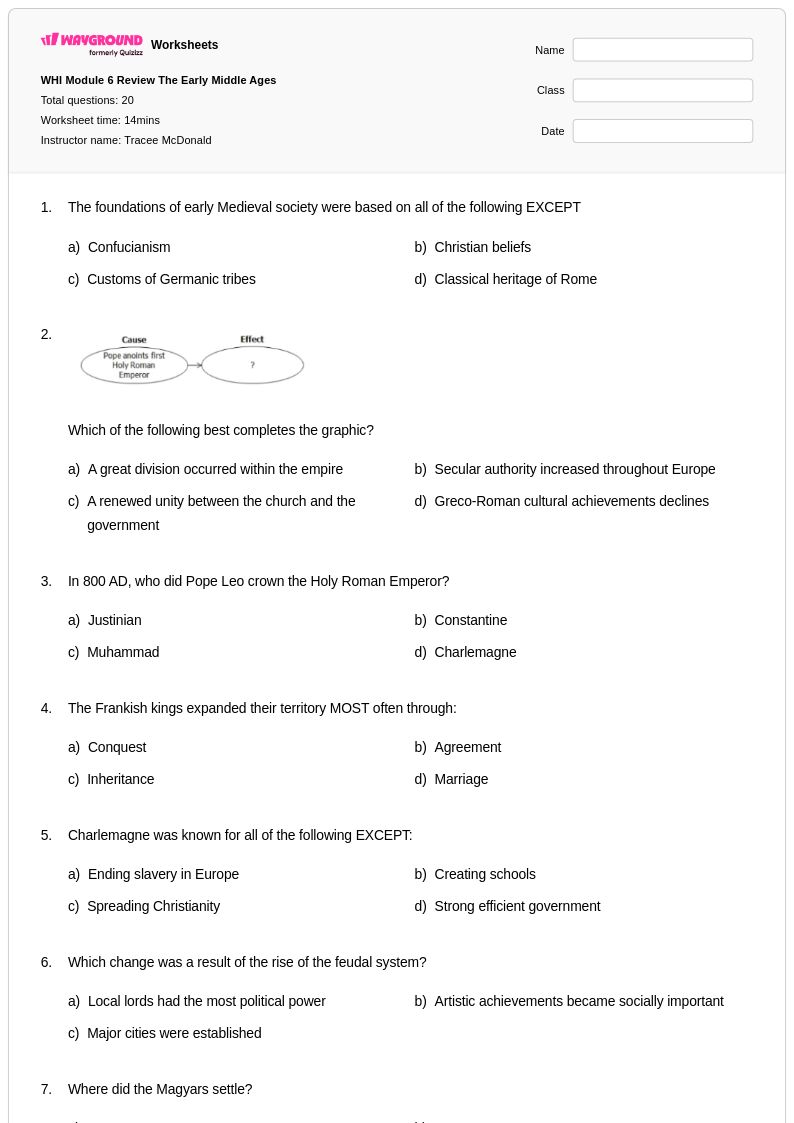
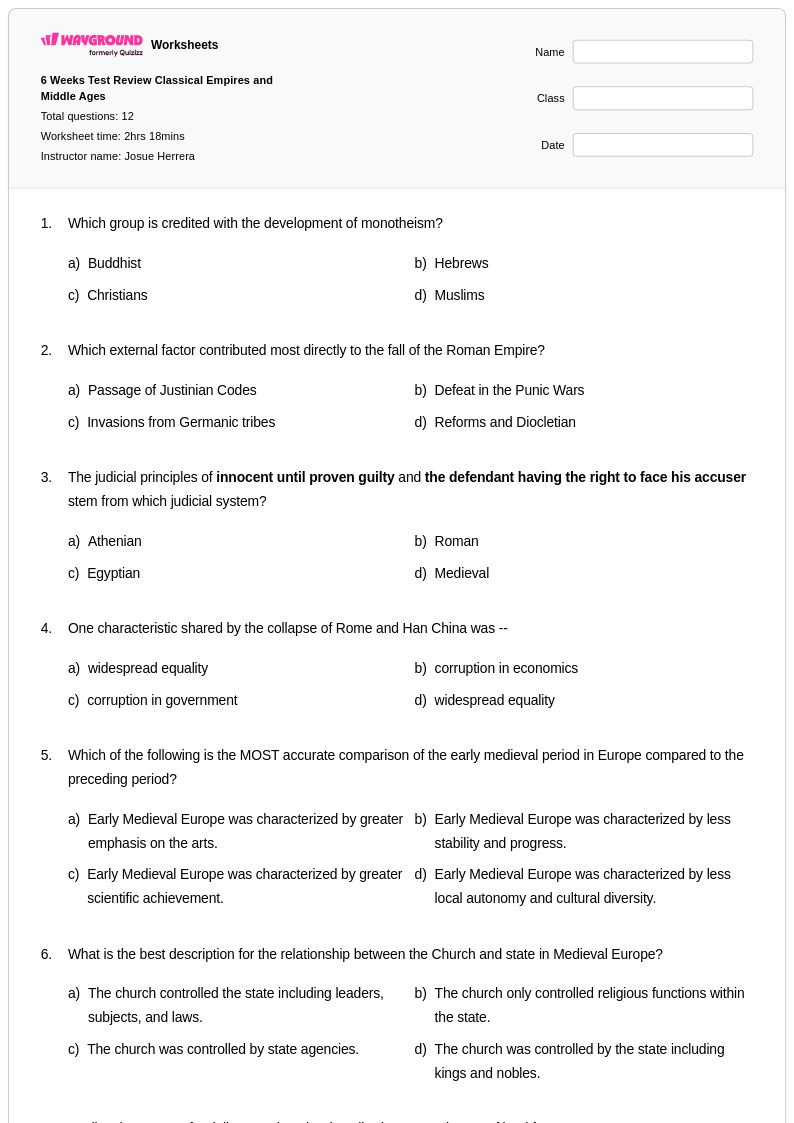
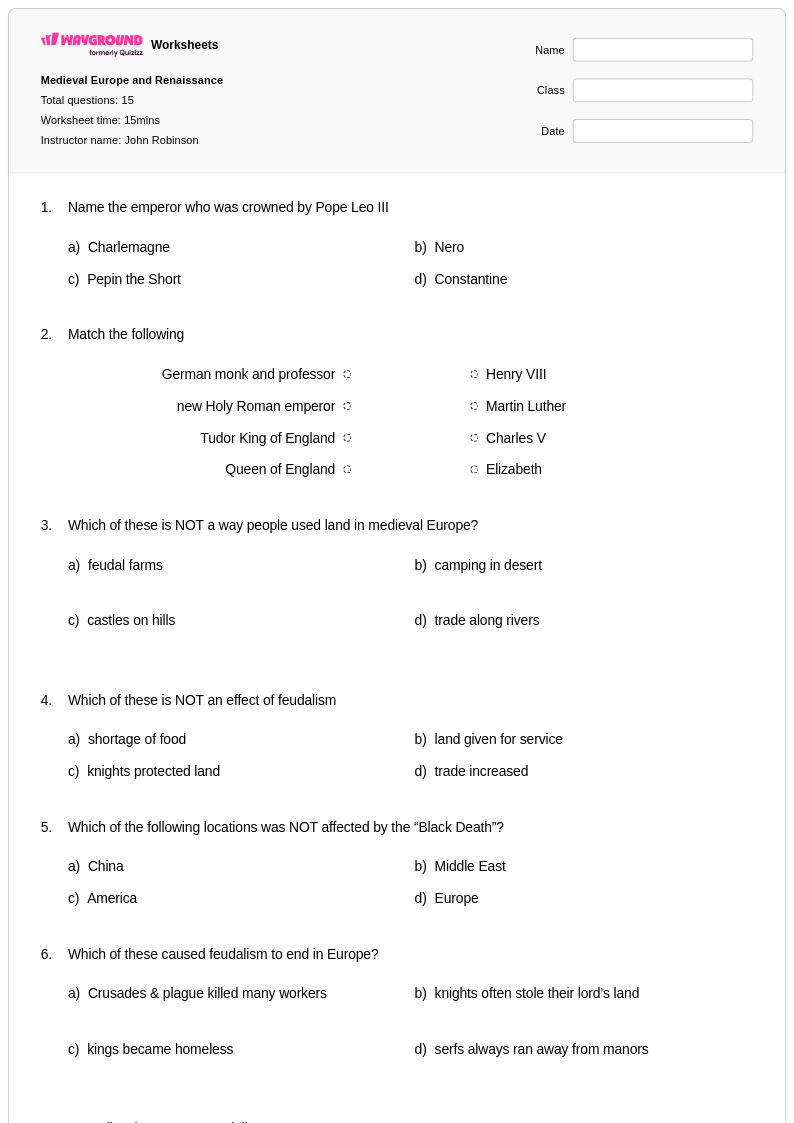
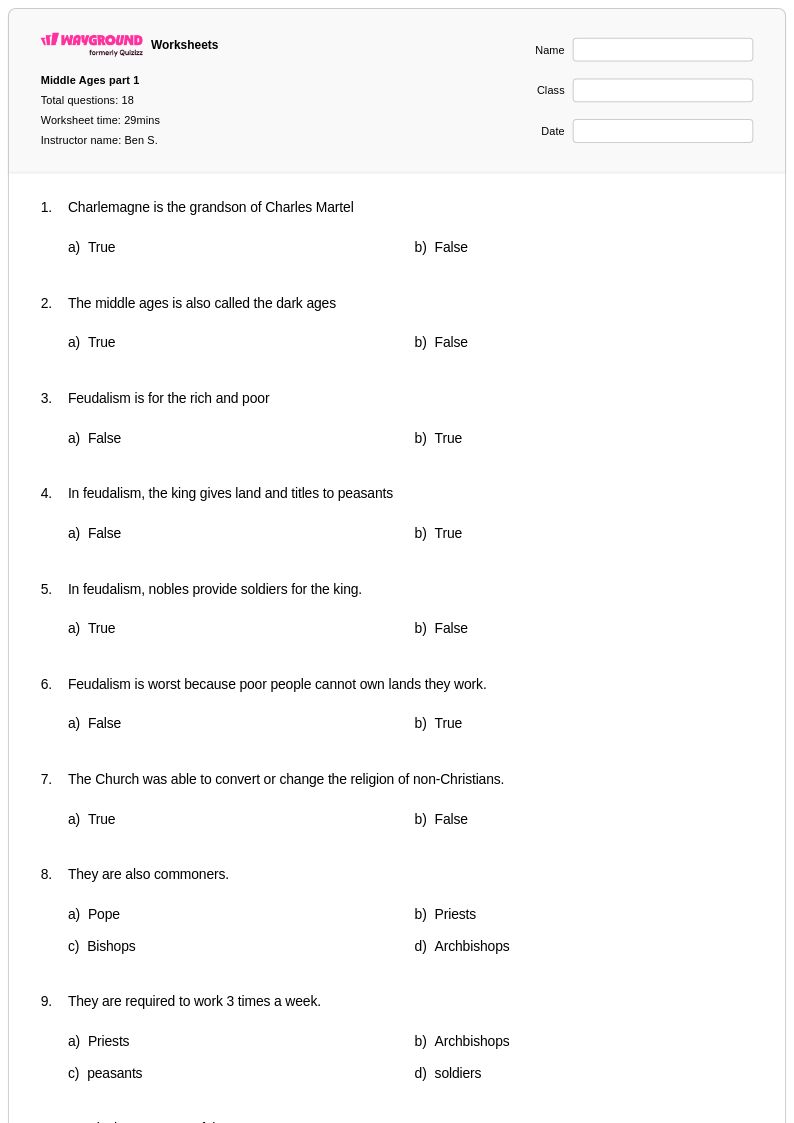
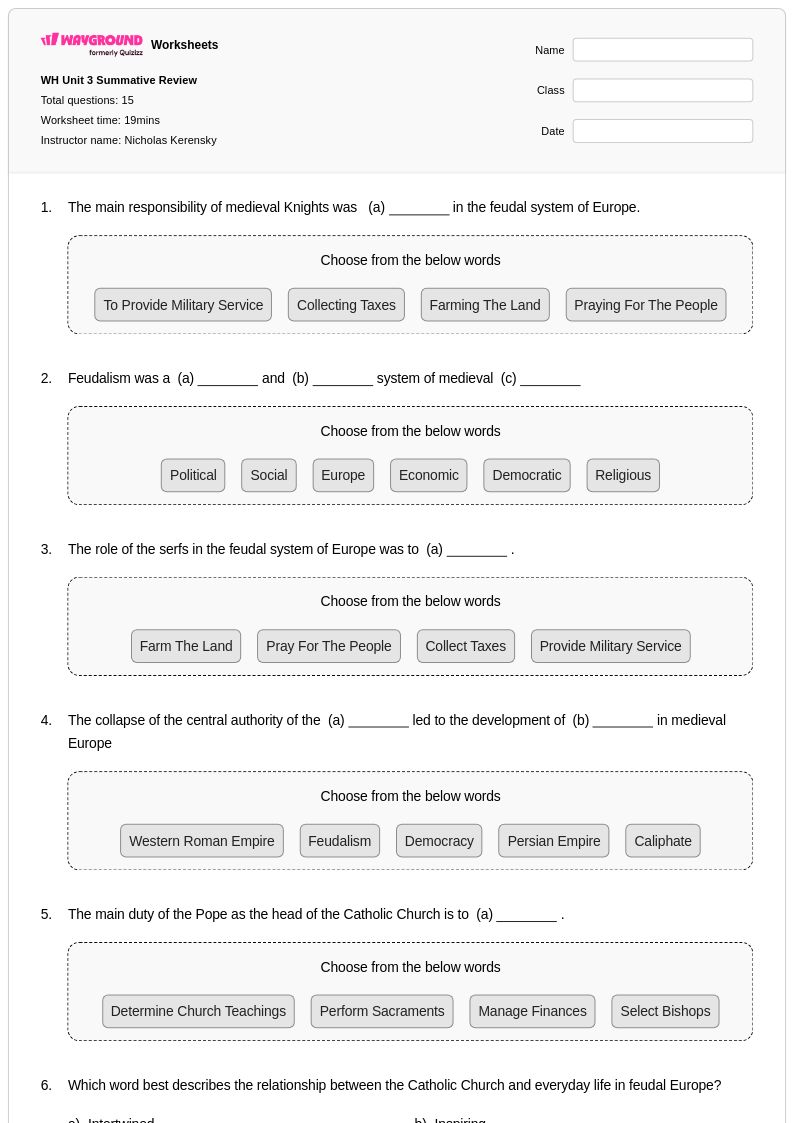
Explore our comprehensive Class 10 feudalism worksheets and printables that help students master medieval social structures, manor systems, and hierarchical relationships through engaging practice problems, free PDF downloads, and complete answer keys.
Explore printable Feudalism worksheets for Class 10
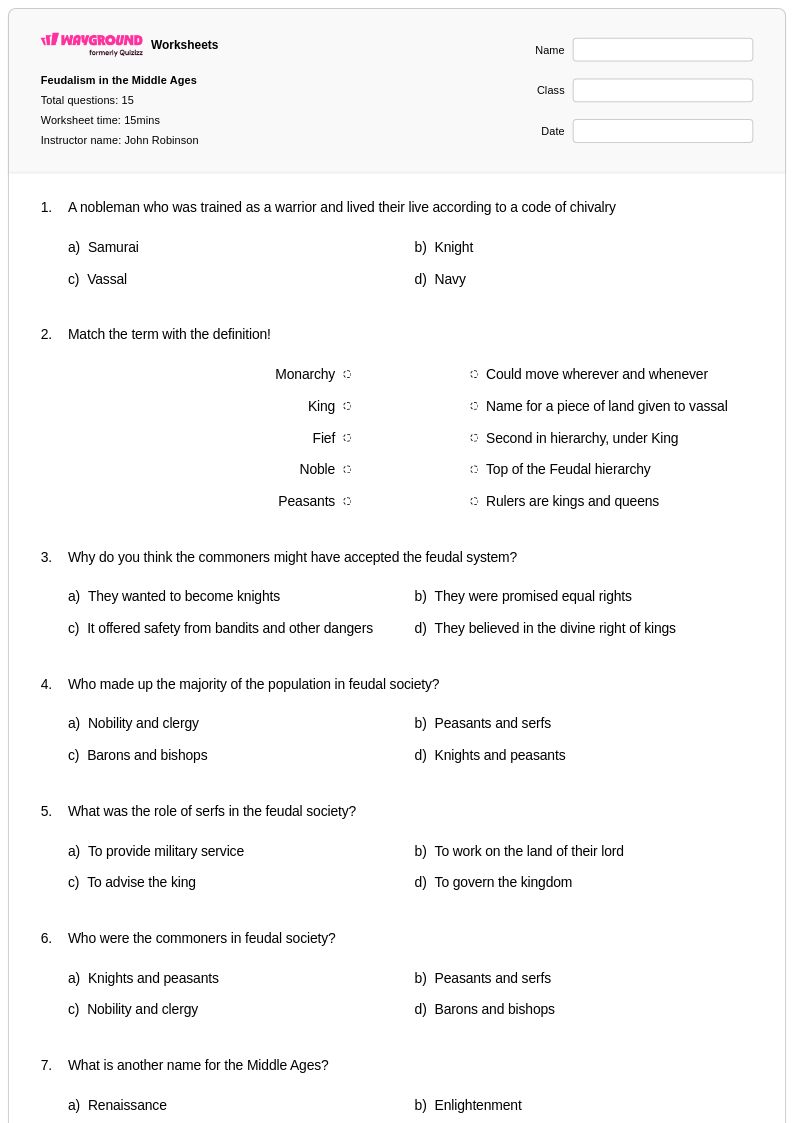
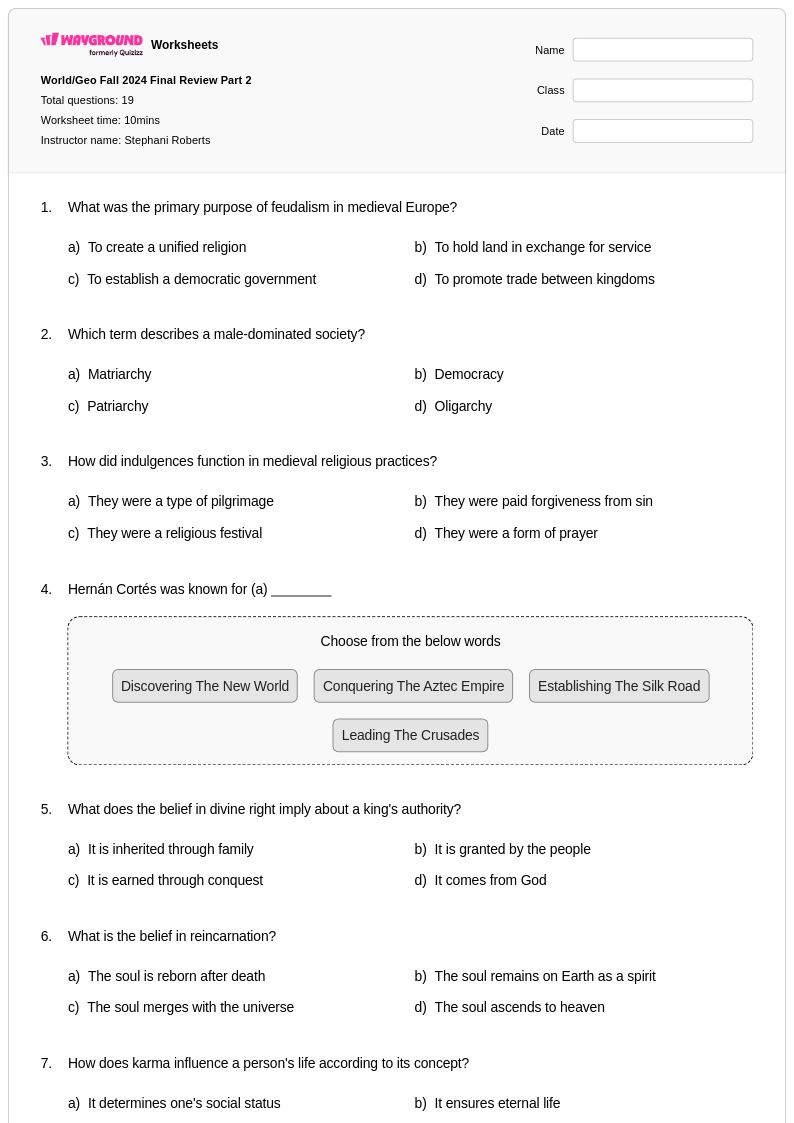
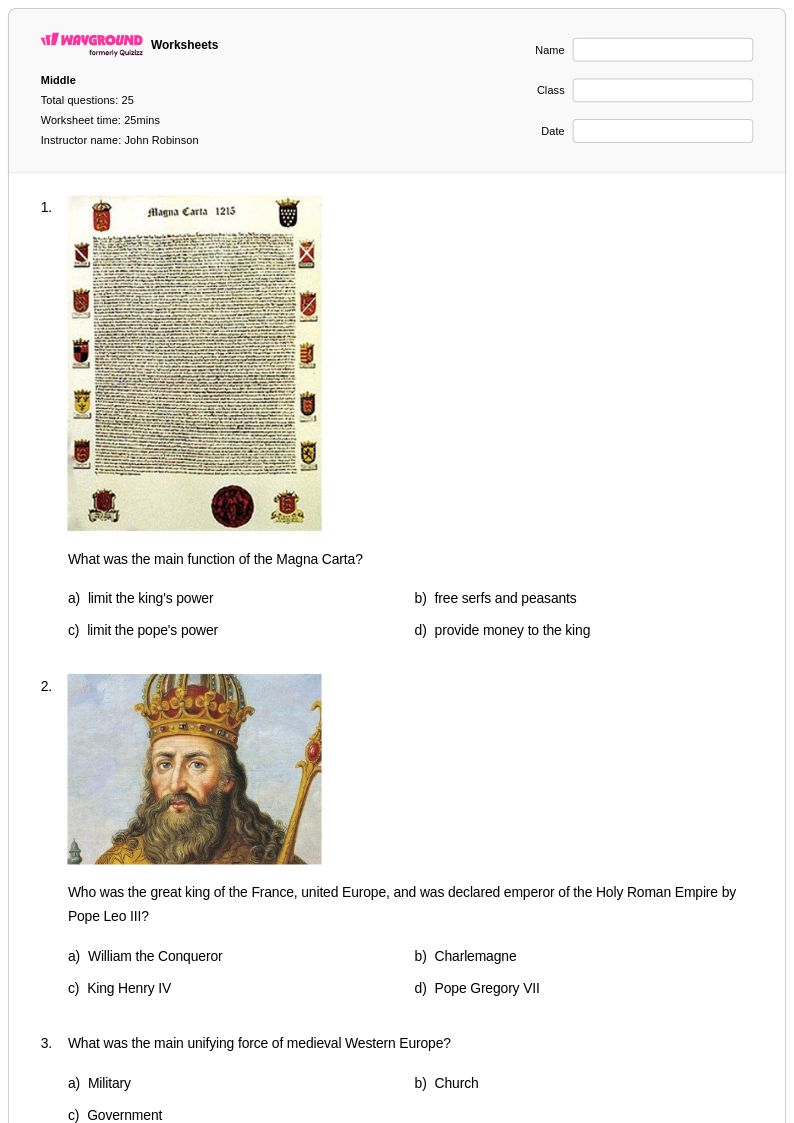
Class 10 feudalism worksheets available through Wayground (formerly Quizizz) provide comprehensive coverage of medieval Europe's complex social, economic, and political hierarchy that dominated the continent from approximately 800 to 1500 CE. These educational resources strengthen students' analytical skills by examining the intricate relationships between lords, vassals, and serfs, while developing critical thinking abilities through the exploration of manorialism, chivalry, and the feudal contract system. The practice problems within these worksheets challenge tenth-grade students to evaluate primary source documents, analyze the causes and effects of feudal obligations, and compare feudal systems across different European regions. Each worksheet includes a detailed answer key to support both independent study and classroom instruction, with free printables available in convenient pdf format that teachers can easily distribute and customize for various learning objectives.
Wayground (formerly Quizizz) empowers educators with millions of teacher-created feudalism resources that undergo rigorous content review and standards alignment to ensure academic excellence for Class 10 social studies curricula. The platform's advanced search and filtering capabilities allow teachers to quickly locate materials targeting specific aspects of feudal society, from the rise of medieval kingdoms to the decline of serfdom, while differentiation tools enable seamless adaptation for diverse learning needs and ability levels. These comprehensive worksheet collections support flexible lesson planning through both printable and digital formats, including interactive pdf versions that facilitate remote learning and hybrid classroom environments. Teachers utilize these resources for targeted skill practice, remediation of complex historical concepts, and enrichment activities that deepen students' understanding of how feudalism shaped medieval European civilization and influenced modern governmental and social structures.
FAQs
How do I teach feudalism to middle or high school students?
Start by grounding students in the feudal pyramid, establishing the relationships between monarchs, lords, vassals, knights, and serfs before moving into the obligations each tier owed the others. Visual hierarchies and primary source excerpts from feudal contracts or manorial records help make abstract social structures concrete. Once students understand the basic structure, comparative exercises that contrast feudalism across medieval Europe and Japan deepen comprehension and prevent rote memorization.
What exercises help students practice understanding feudal relationships and the manorial system?
Cause-and-effect analysis is one of the most effective practice formats for feudalism, as it pushes students to connect land tenure, military obligations, and economic dependency rather than treat them as isolated facts. Worksheet tasks that ask students to trace why feudalism emerged from the collapse of centralized authority, and why it declined as trade and towns grew, build the analytical fluency historians expect. Comparative exercises between feudal societies in different regions add an additional layer of critical thinking.
What are the most common misconceptions students have about feudalism?
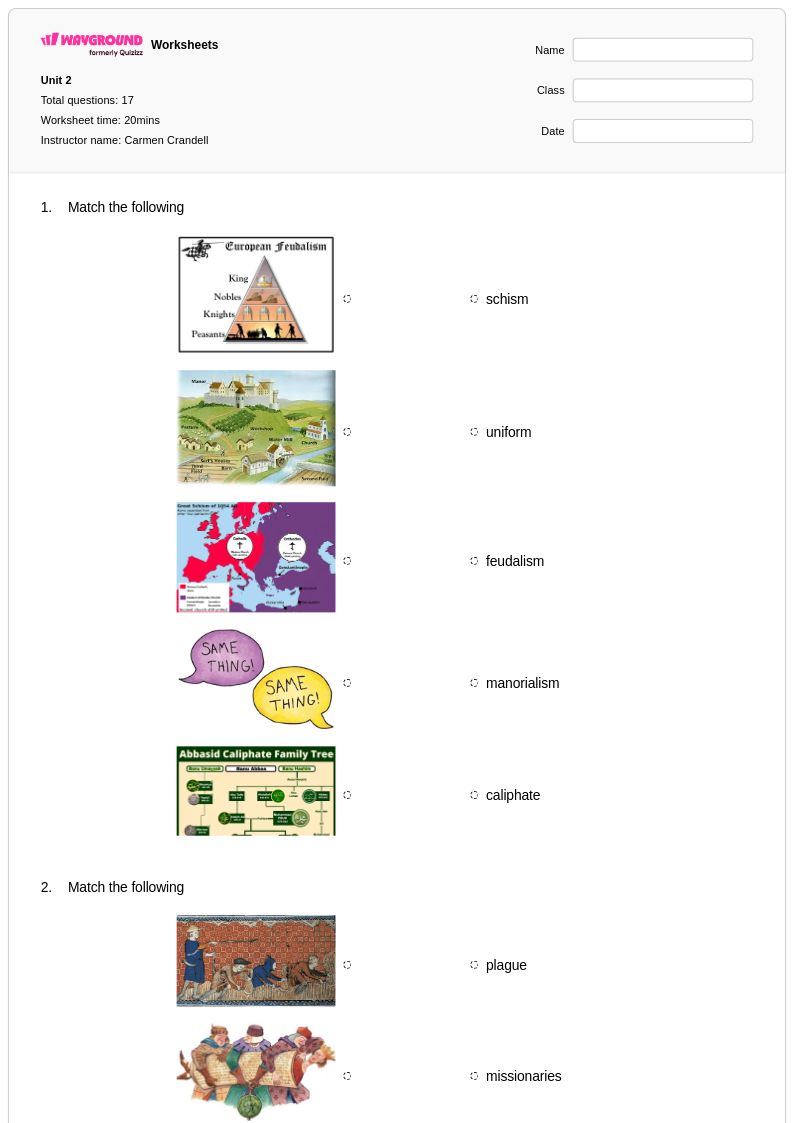
A frequent misconception is that feudalism was a rigid, uniform system applied identically across medieval Europe, when in reality it varied significantly by region and time period. Students also tend to conflate feudalism with the manorial system, treating them as the same thing rather than understanding that feudalism describes political and military relationships while the manor describes the economic unit. Another common error is viewing serfs as slaves rather than as bound laborers with limited but real legal protections and customary rights.
How do I use primary sources to teach feudalism effectively?
Primary sources such as excerpts from the Domesday Book, feudal oaths of homage, or manorial court records allow students to engage with feudalism as a lived system rather than an abstraction. Ask students to identify the specific obligations described, the parties involved, and the power dynamics implied by the language. Pairing primary source analysis with guided questions helps students practice historical thinking skills, including sourcing, contextualization, and corroboration, while deepening their understanding of feudal structures.
How do I differentiate feudalism instruction for students at different skill levels?
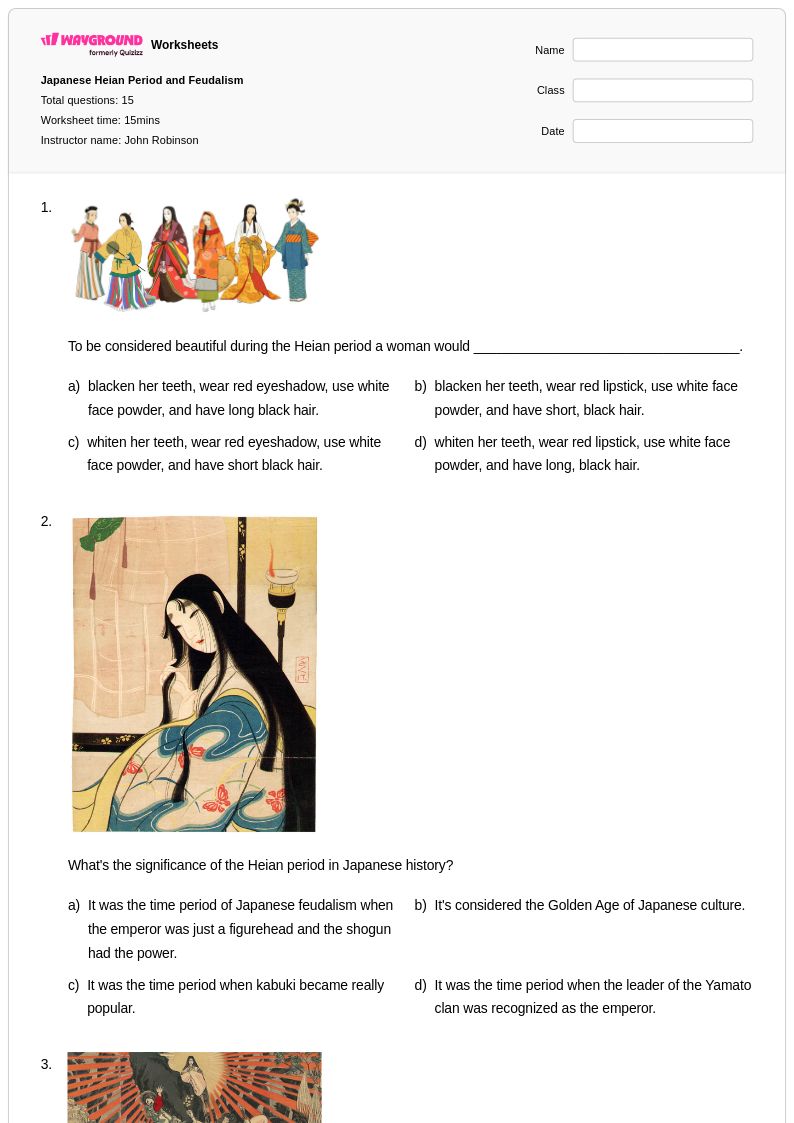
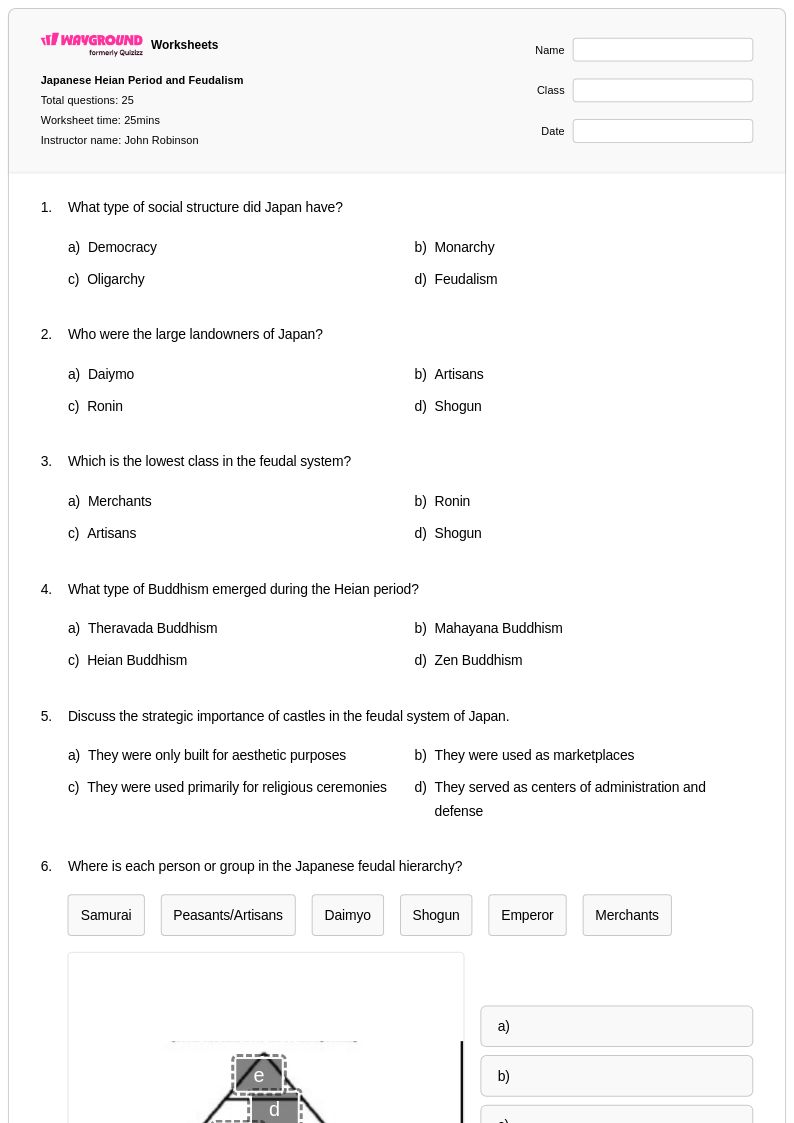
For students who need foundational support, start with labeled feudal pyramid diagrams and vocabulary-focused exercises that establish the key terms before moving to analysis. Advanced students benefit from comparative tasks, such as analyzing similarities and differences between European and Japanese feudalism, or examining the economic implications of feudal contracts. On Wayground, teachers can apply accommodations such as read aloud support, reduced answer choices, and extended time to individual students without disrupting the experience for the rest of the class.
How do I use Wayground's feudalism worksheets in my classroom?
Wayground's feudalism worksheets are available as printable PDFs for traditional classroom use and in digital formats for technology-integrated environments, including the option to host them as an interactive quiz on the platform. Each worksheet includes a detailed answer key, making them practical for independent practice, guided instruction, or assessment. Teachers can use these resources for initial concept introduction, targeted review, or enrichment depending on where students are in their understanding of medieval social structures.