

20 Q
3rd - 5th
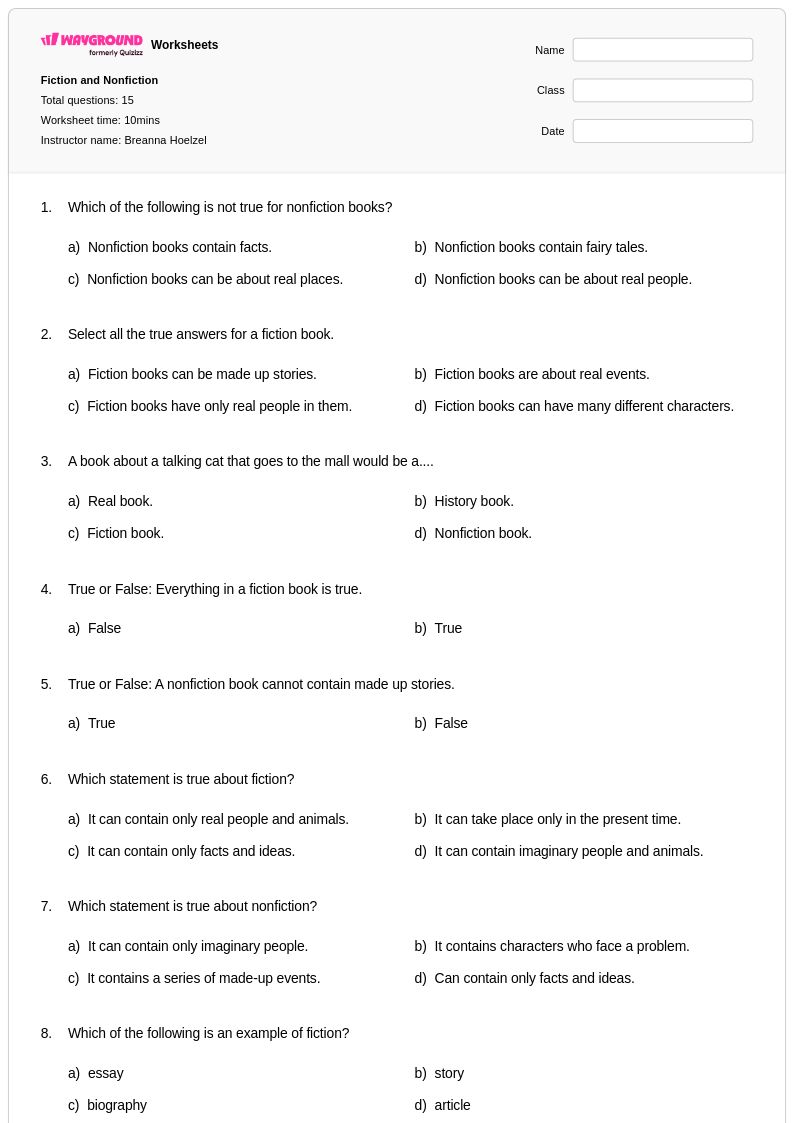
15 Q
3rd - 5th
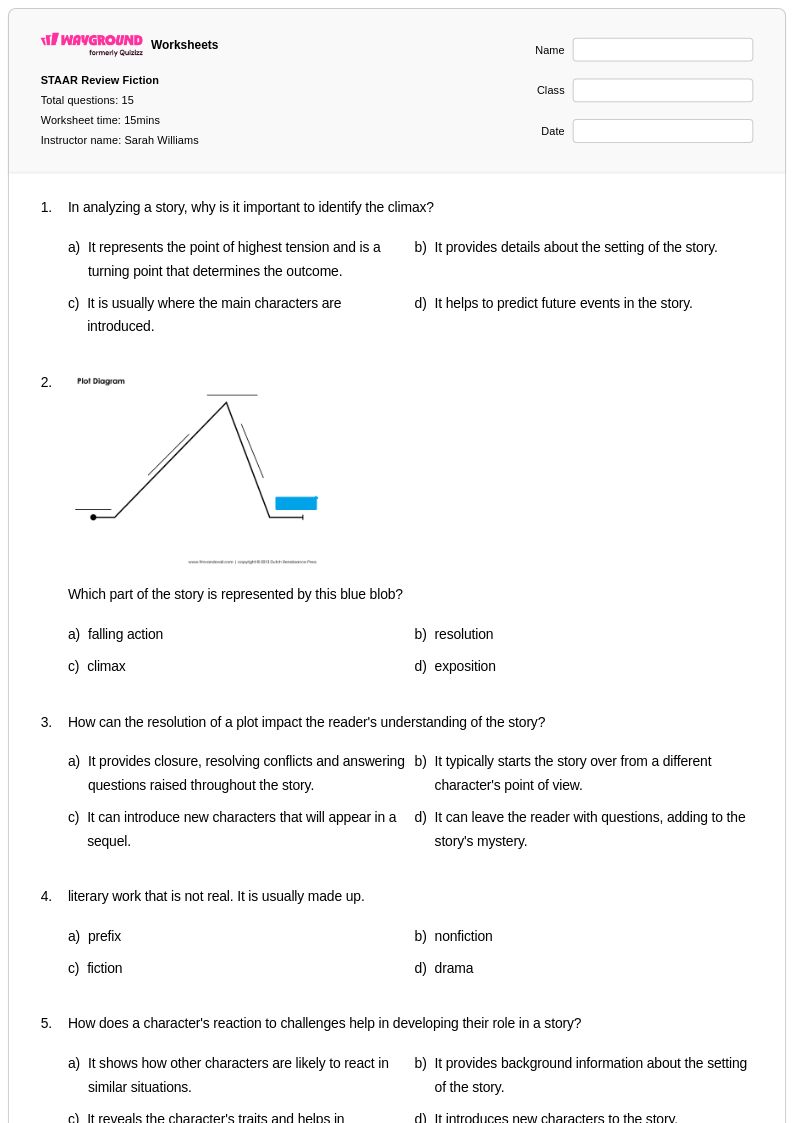
15 Q
4th - Uni
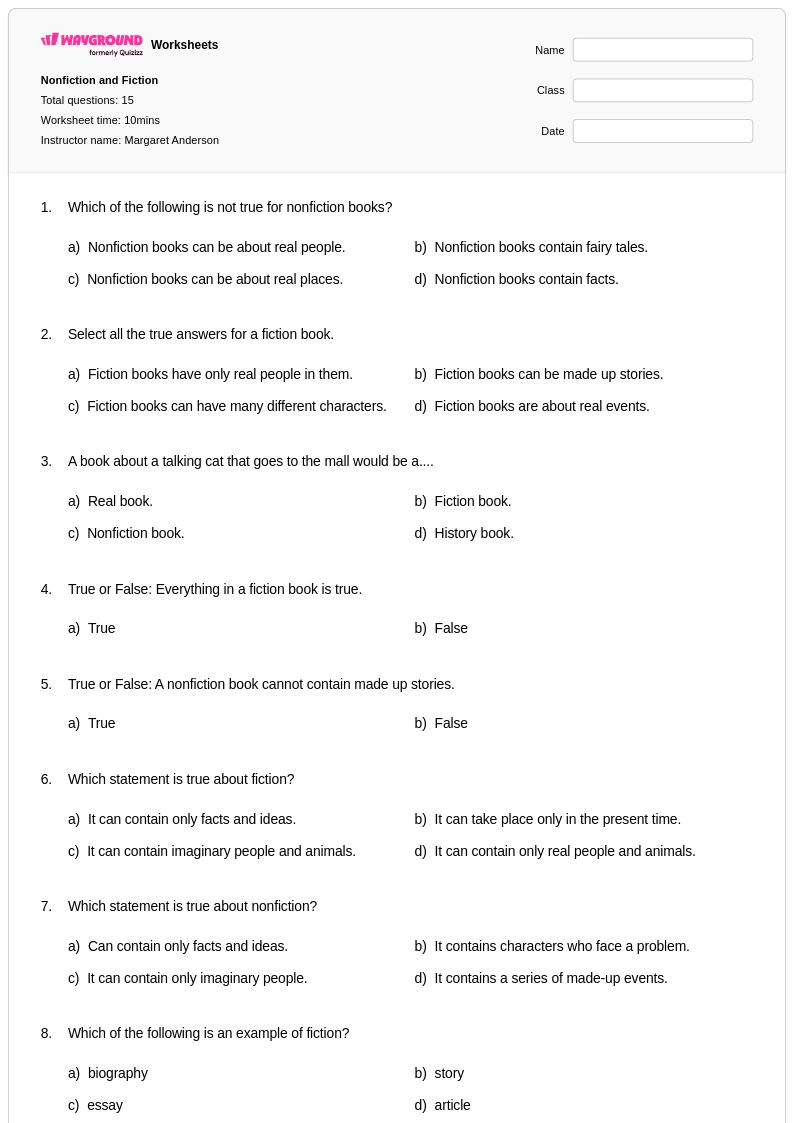
15 Q
3rd - 5th
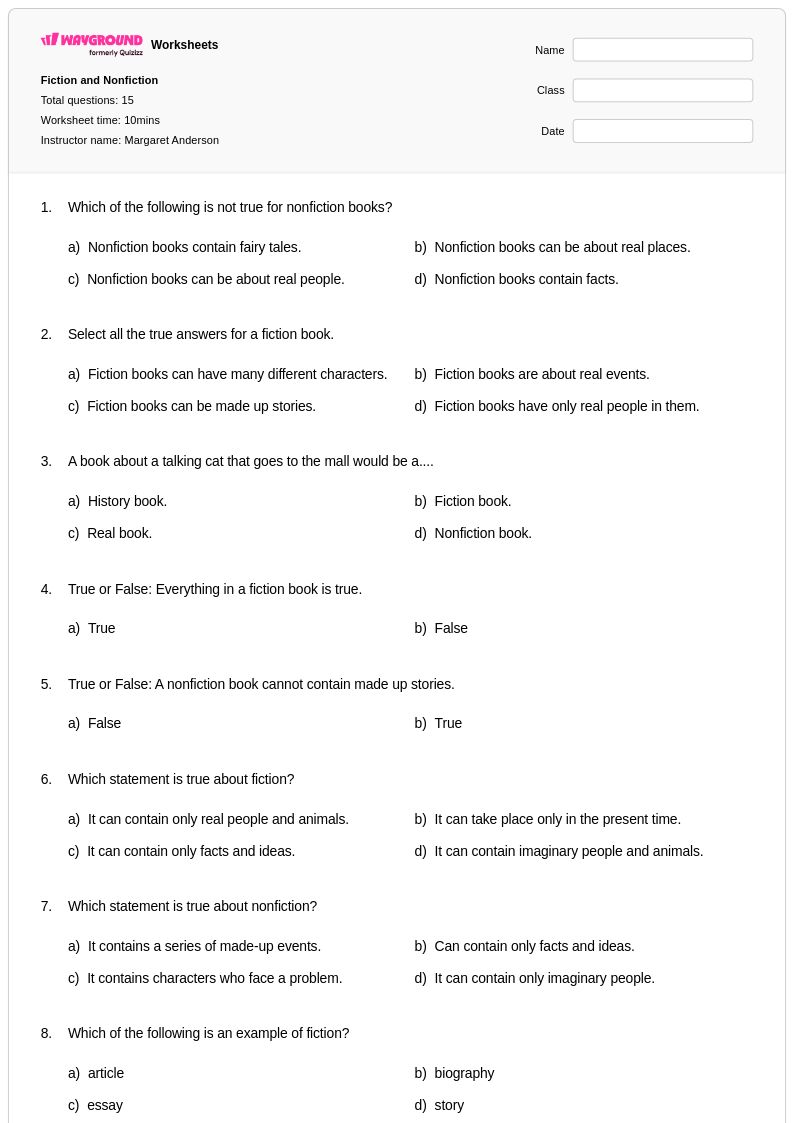
15 Q
3rd - 5th
10 Q
1st - 5th
15 Q
3rd - 5th

8 Q
4th
15 Q
4th - 8th
8 Q
4th
8 Q
4th
15 Q
4th - 8th
10 Q
4th
15 Q
3rd - Uni
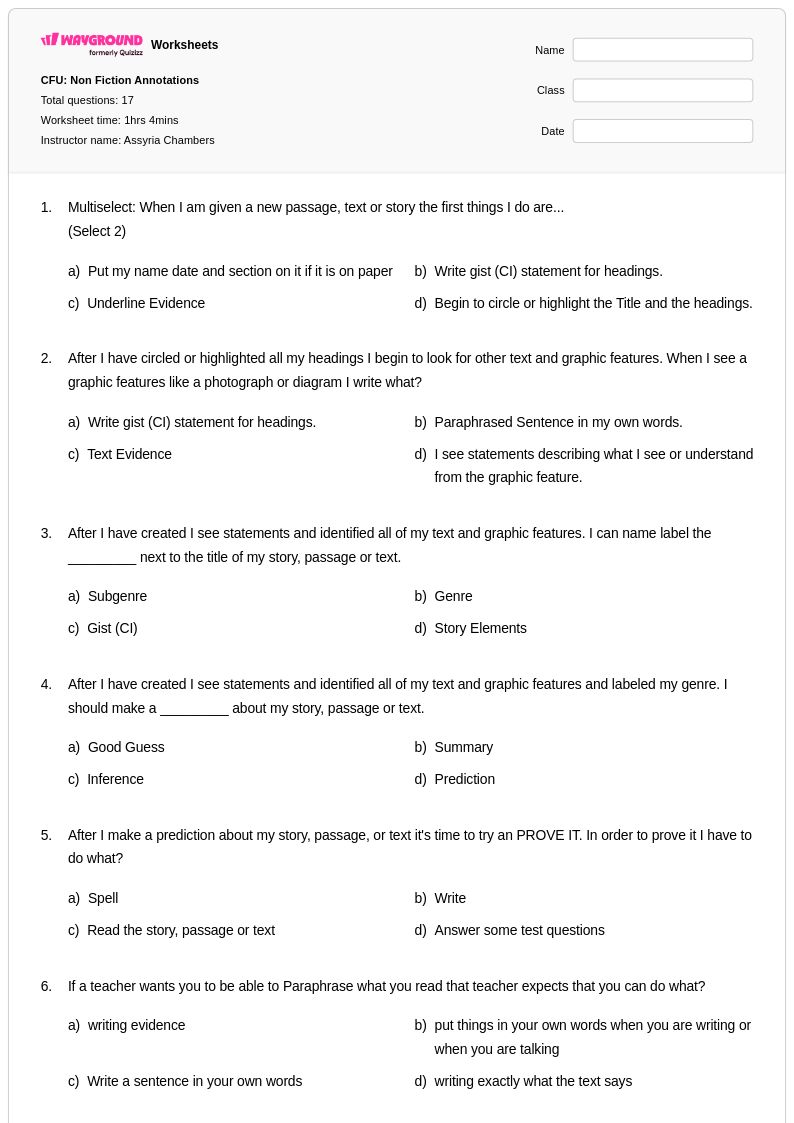
17 Q
4th
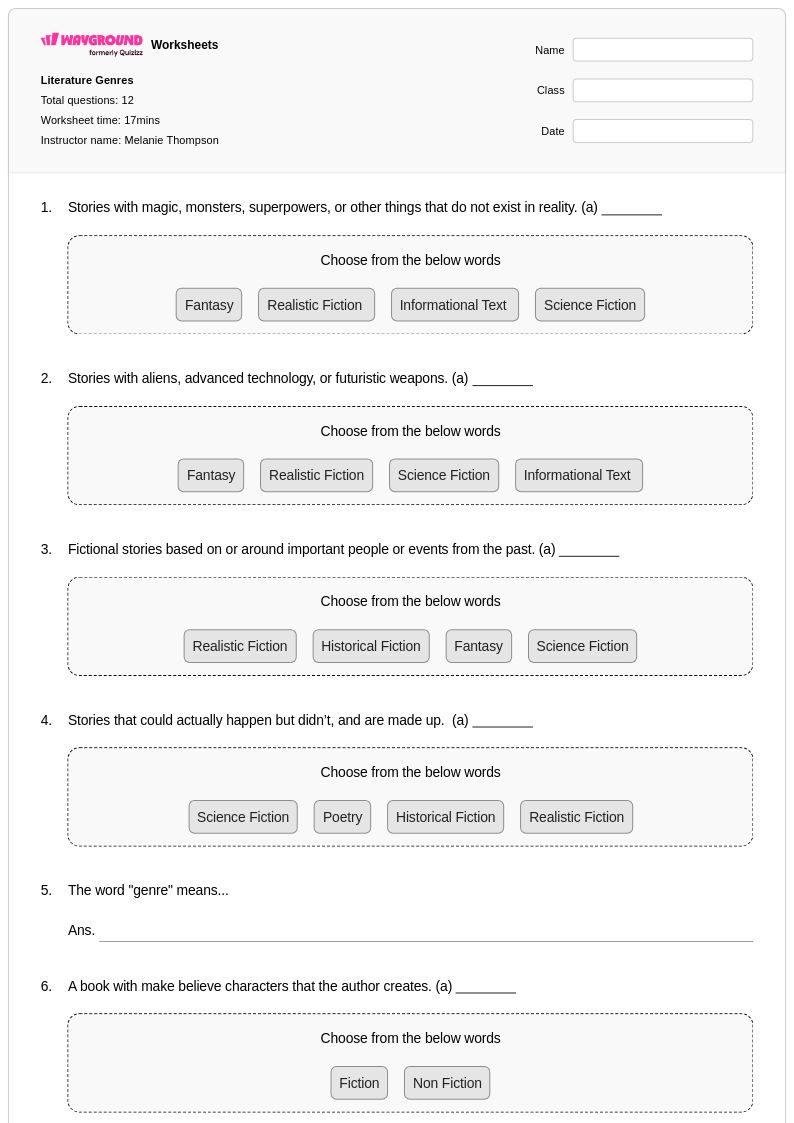
12 Q
3rd - 5th
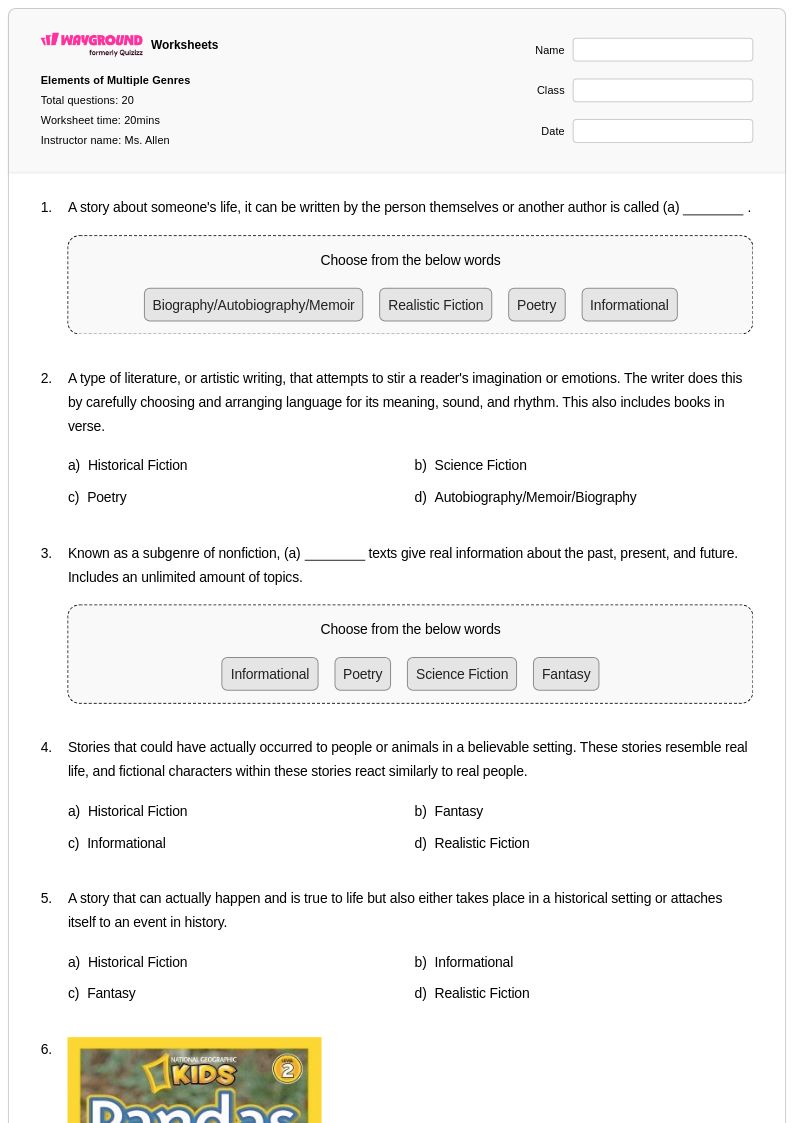
20 Q
4th
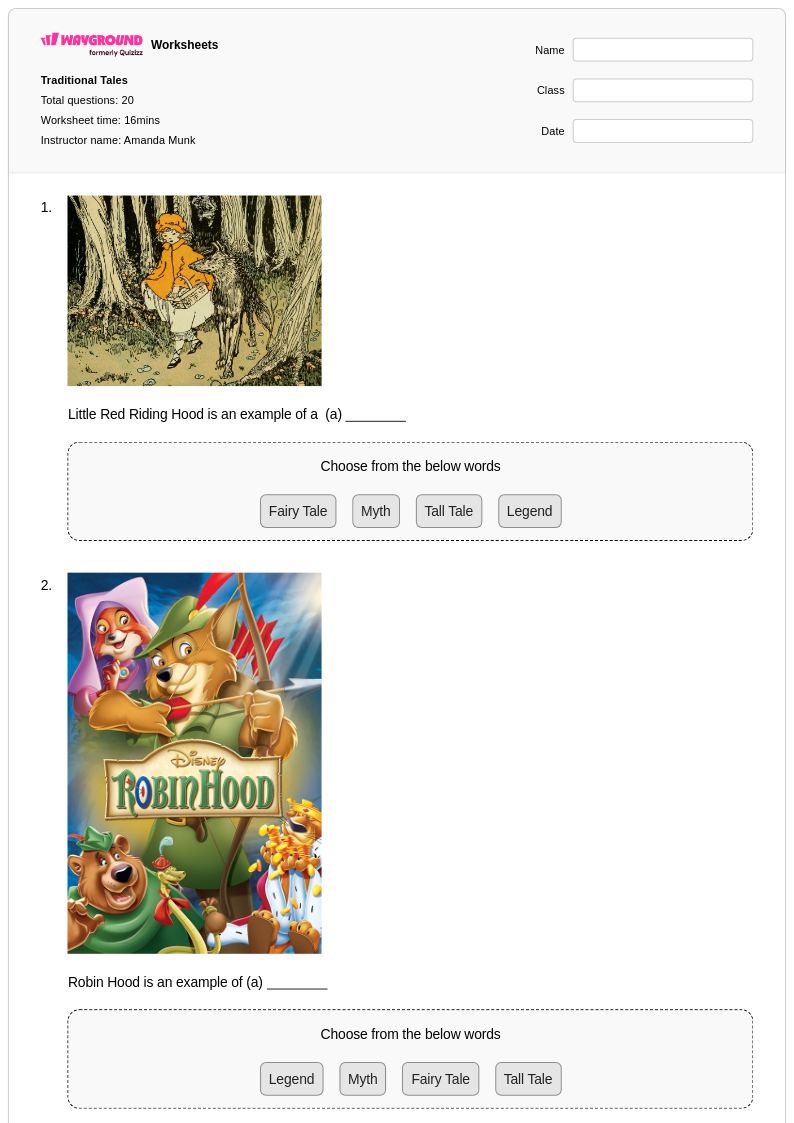
20 Q
4th
15 Q
4th - Uni
15 Q
4th
10 Q
1st - 5th
15 Q
4th - Uni
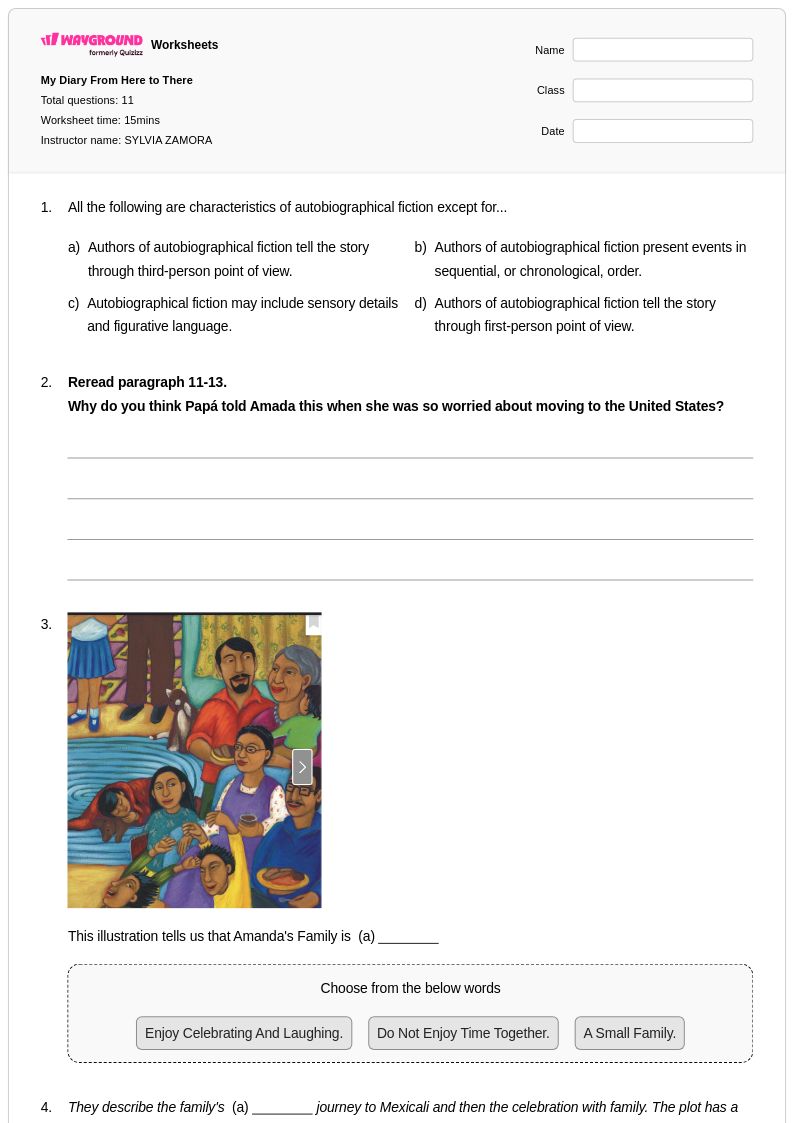
11 Q
4th
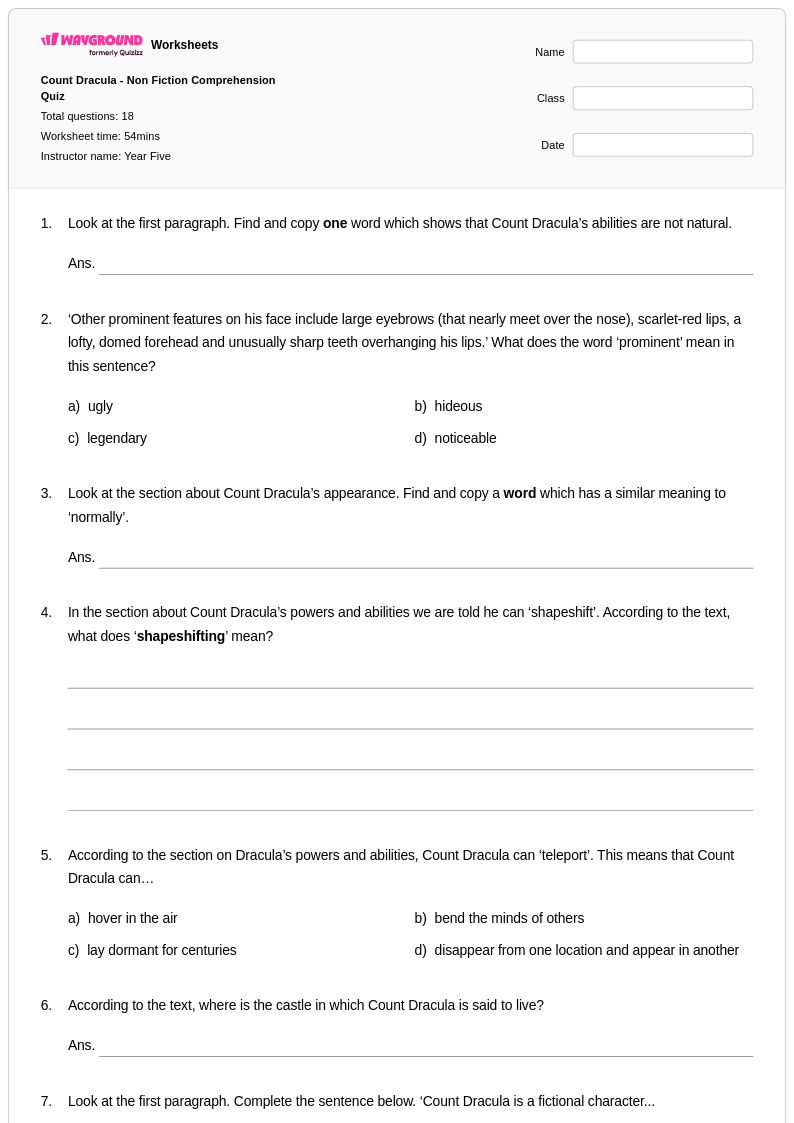
18 Q
4th
Explore Fiction Worksheets by Grades
Explore Other Subject Worksheets for class 4
Explore printable Fiction worksheets for Class 4
Fiction worksheets for Class 4 students available through Wayground (formerly Quizizz) provide comprehensive practice in understanding and analyzing fictional texts, helping young readers develop critical thinking skills essential for literary comprehension. These carefully designed printable resources strengthen students' abilities to identify story elements such as character development, plot structure, setting details, and theme recognition while building vocabulary and reading fluency. The worksheet collections include diverse practice problems that challenge fourth graders to make predictions, draw inferences, compare and contrast characters, and analyze author's purpose within fictional narratives. Each worksheet comes with a complete answer key, allowing teachers and parents to efficiently assess student progress and understanding. Available as free pdf downloads, these printables offer structured opportunities for students to engage with various fiction subgenres including realistic fiction, fantasy, mystery, and adventure stories.
Wayground (formerly Quizizz) supports educators with an extensive library of millions of teacher-created fiction worksheets specifically curated for Class 4 reading instruction. The platform's robust search and filtering capabilities enable teachers to quickly locate resources aligned with specific reading standards and learning objectives, while differentiation tools allow for seamless customization to meet diverse student needs. These fiction worksheet collections are available in both printable pdf format and interactive digital versions, providing flexibility for classroom instruction, homework assignments, and independent practice sessions. Teachers can efficiently plan comprehensive reading units, design targeted remediation activities for struggling readers, and create enrichment opportunities for advanced students by accessing worksheets that cover everything from basic story element identification to complex character motivation analysis, ensuring all fourth-grade learners receive appropriate challenge and support in their fiction reading journey.
FAQs
How do I teach fiction elements to students who struggle with literary analysis?
What exercises help students practice identifying narrative elements in fiction?
What mistakes do students commonly make when analyzing fiction?
How can I differentiate fiction worksheets for students at different reading levels?
How do I use Wayground's fiction worksheets in my classroom?
How do I help students understand theme in fiction versus just plot?