Free Printable Fine Motor Skills Worksheets for Kindergarten
Enhance kindergarten students' fine motor skills with Wayground's comprehensive collection of free worksheets and printables, featuring engaging practice problems and complete answer keys to develop precise hand movements and coordination.
Explore printable Fine Motor Skills worksheets for Kindergarten
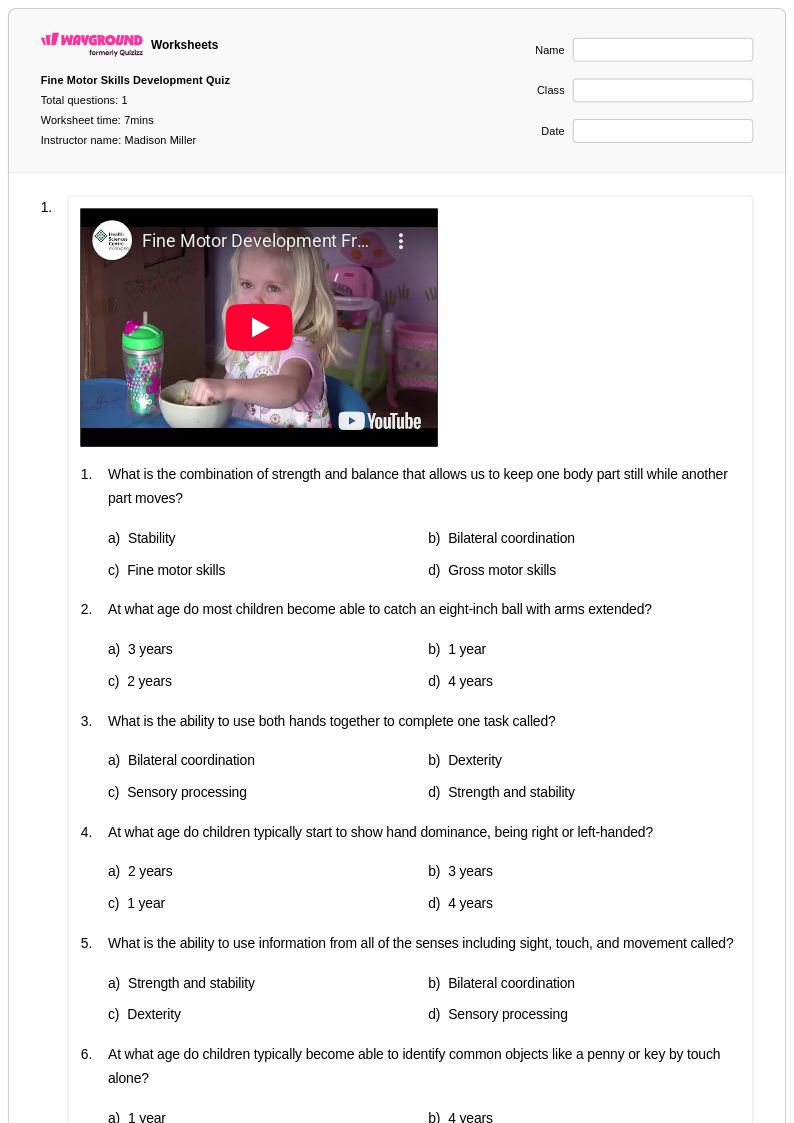
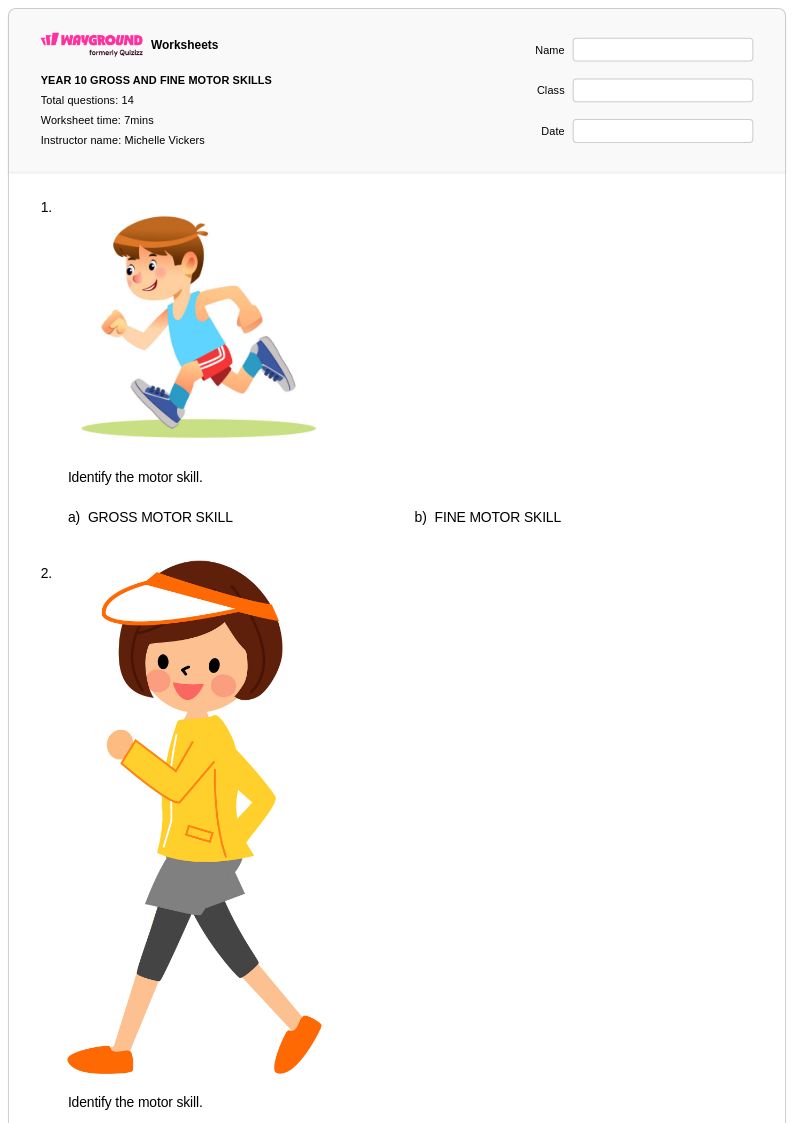
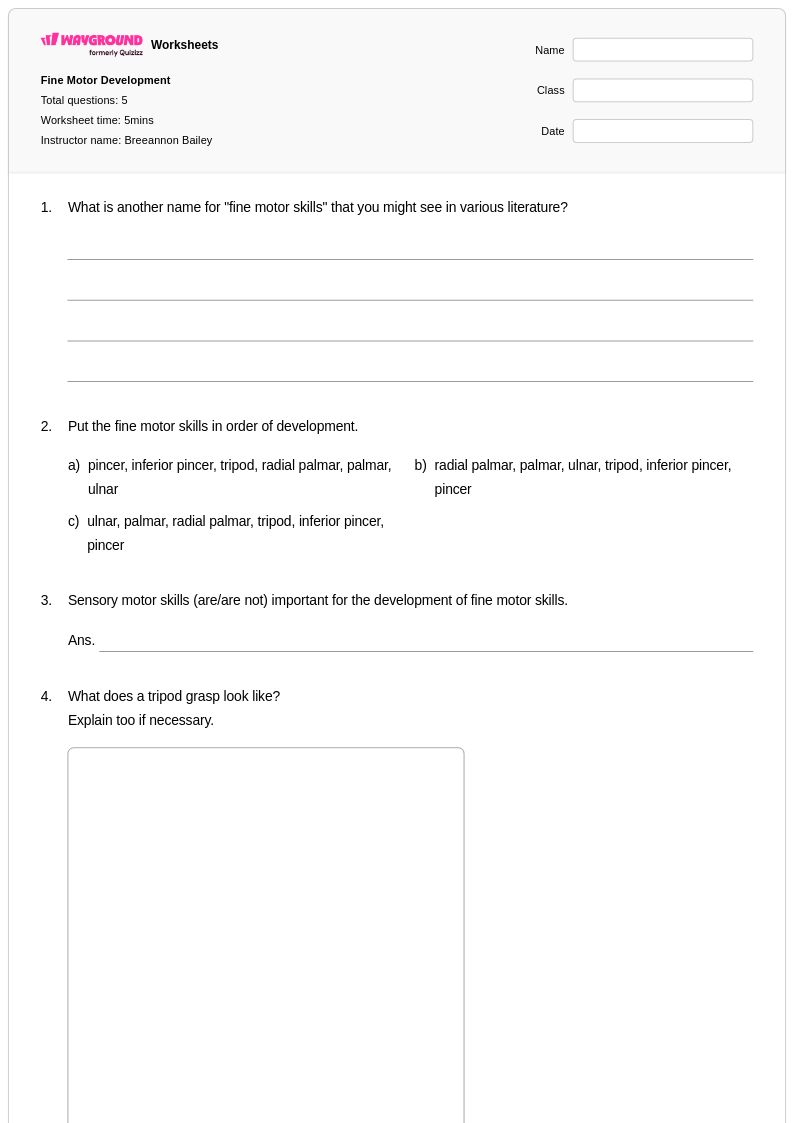
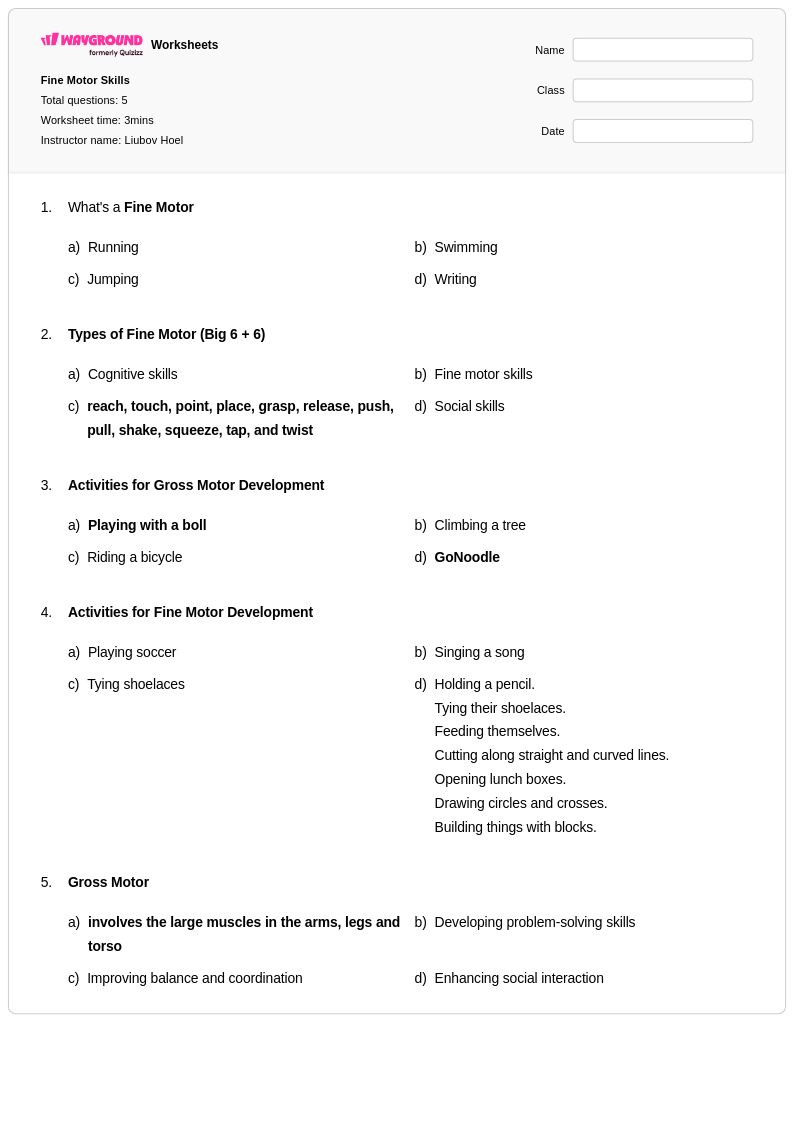
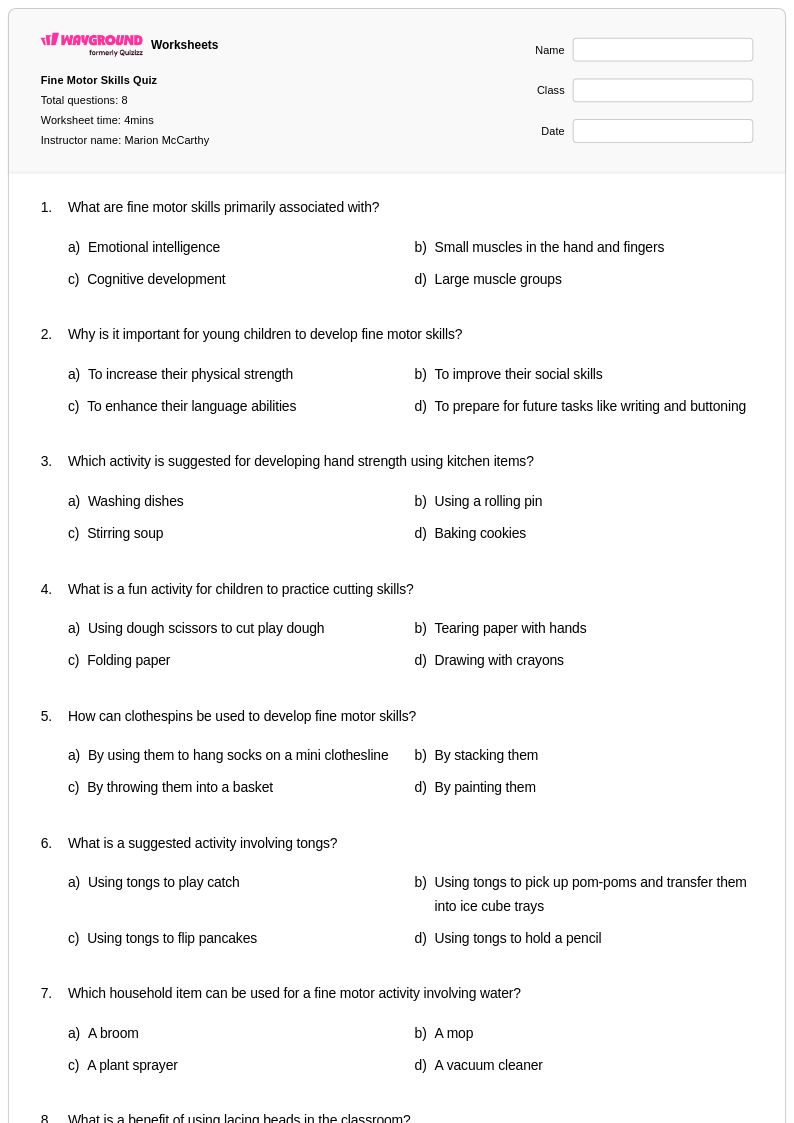
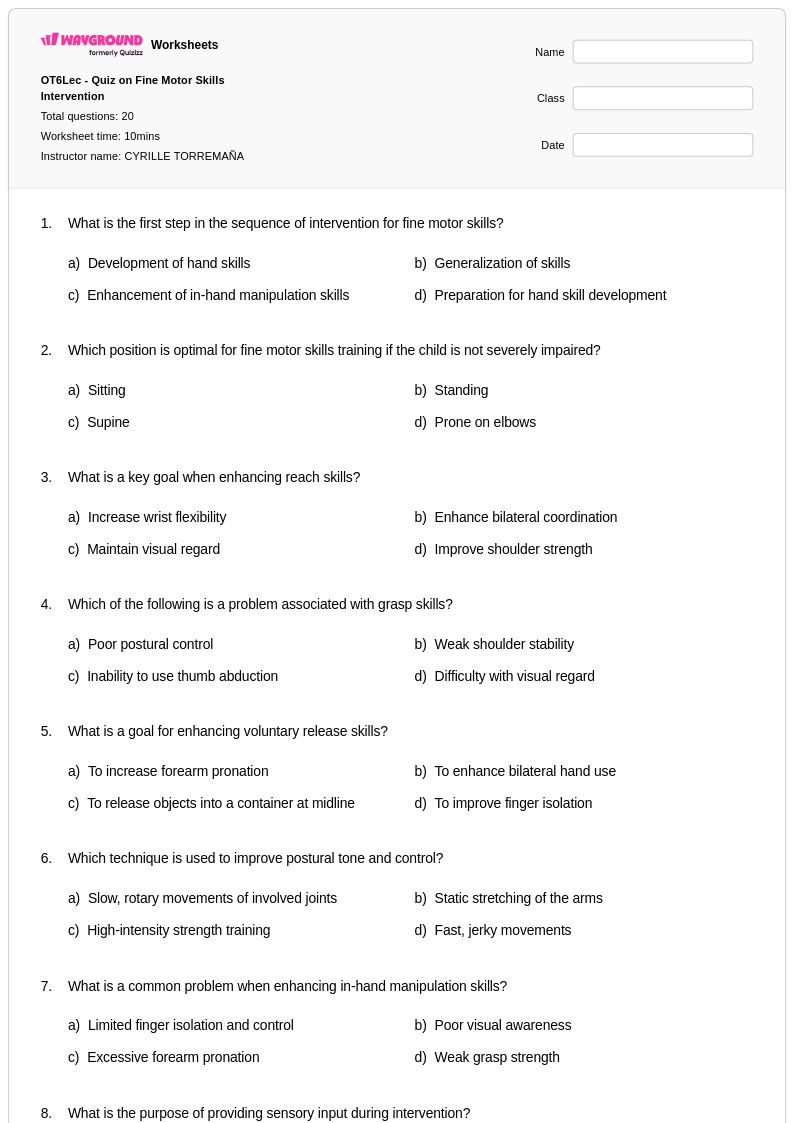
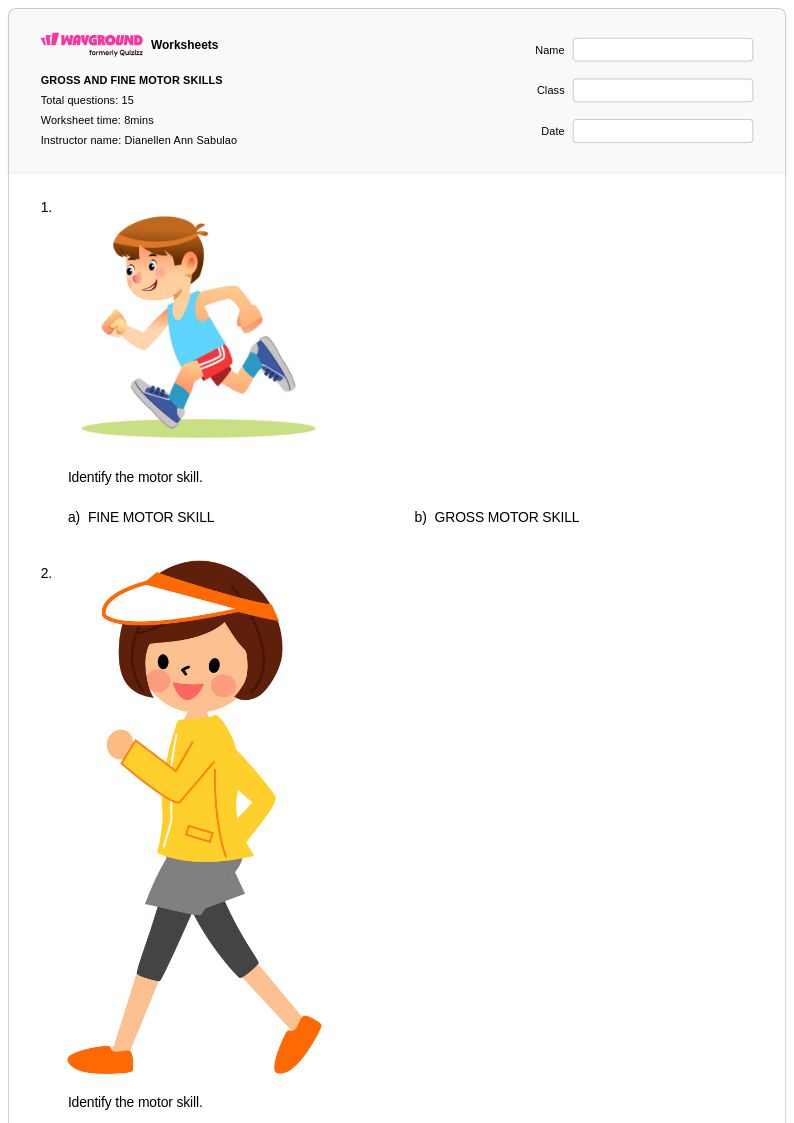
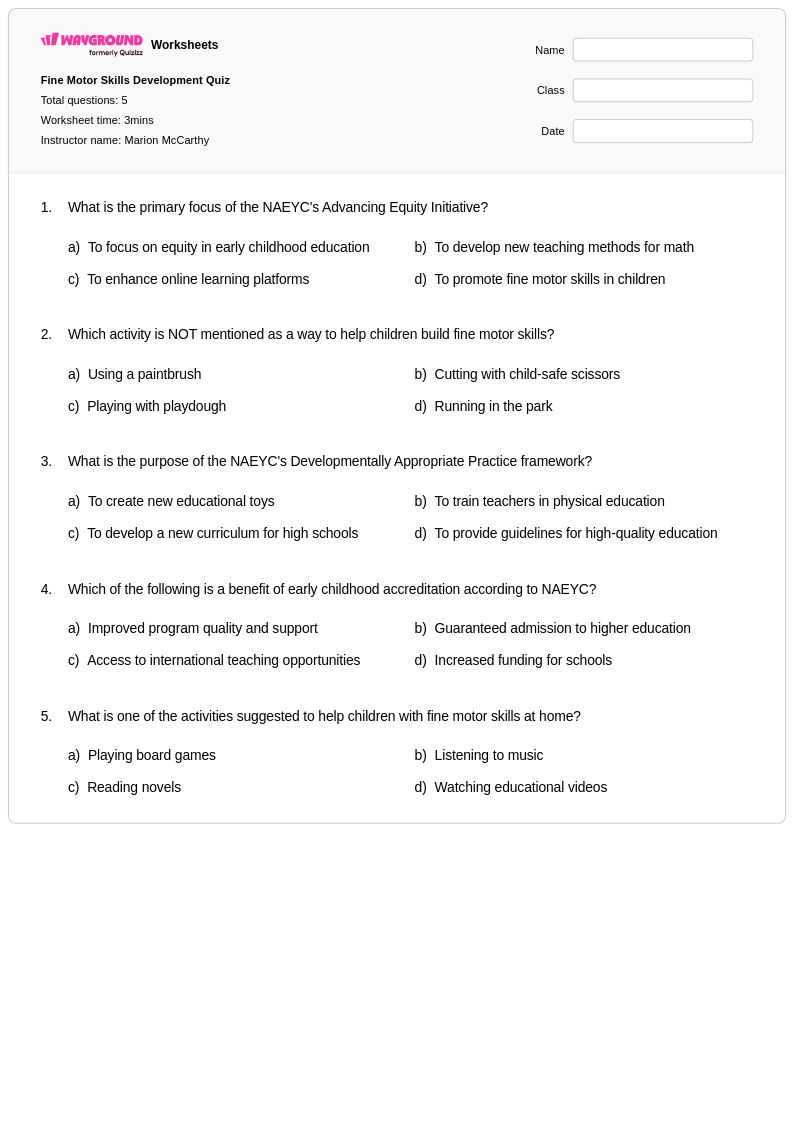
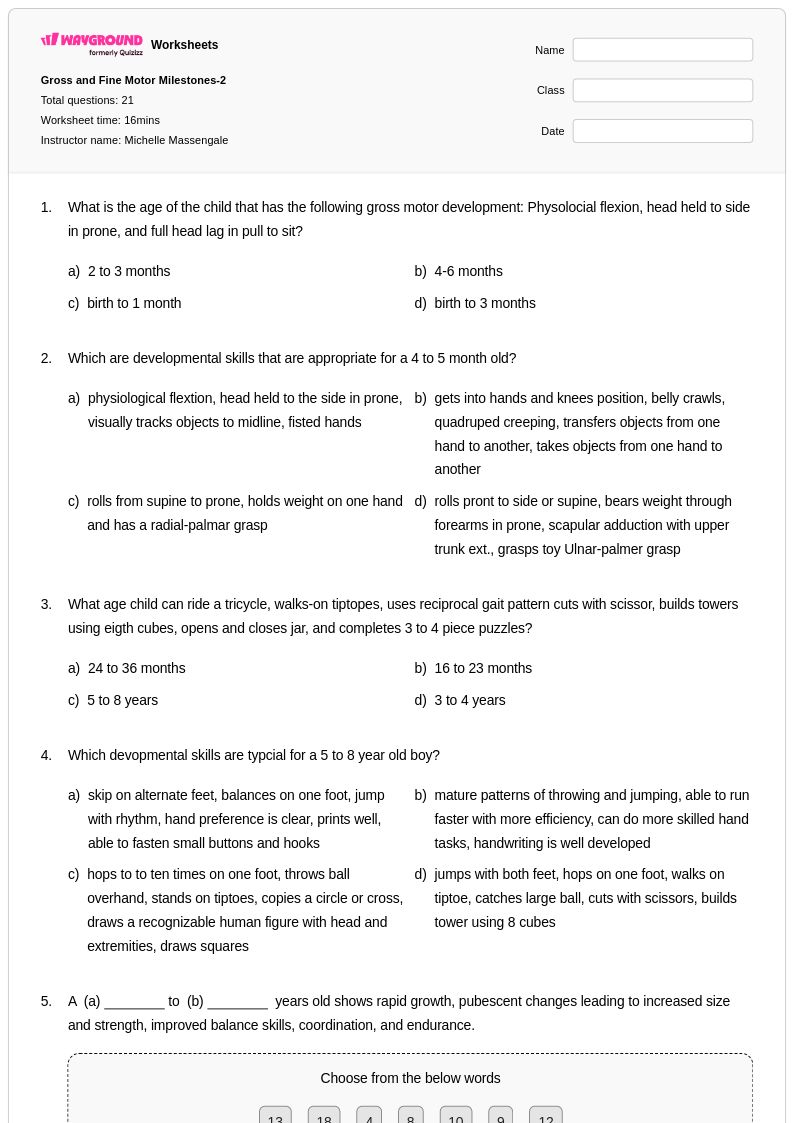
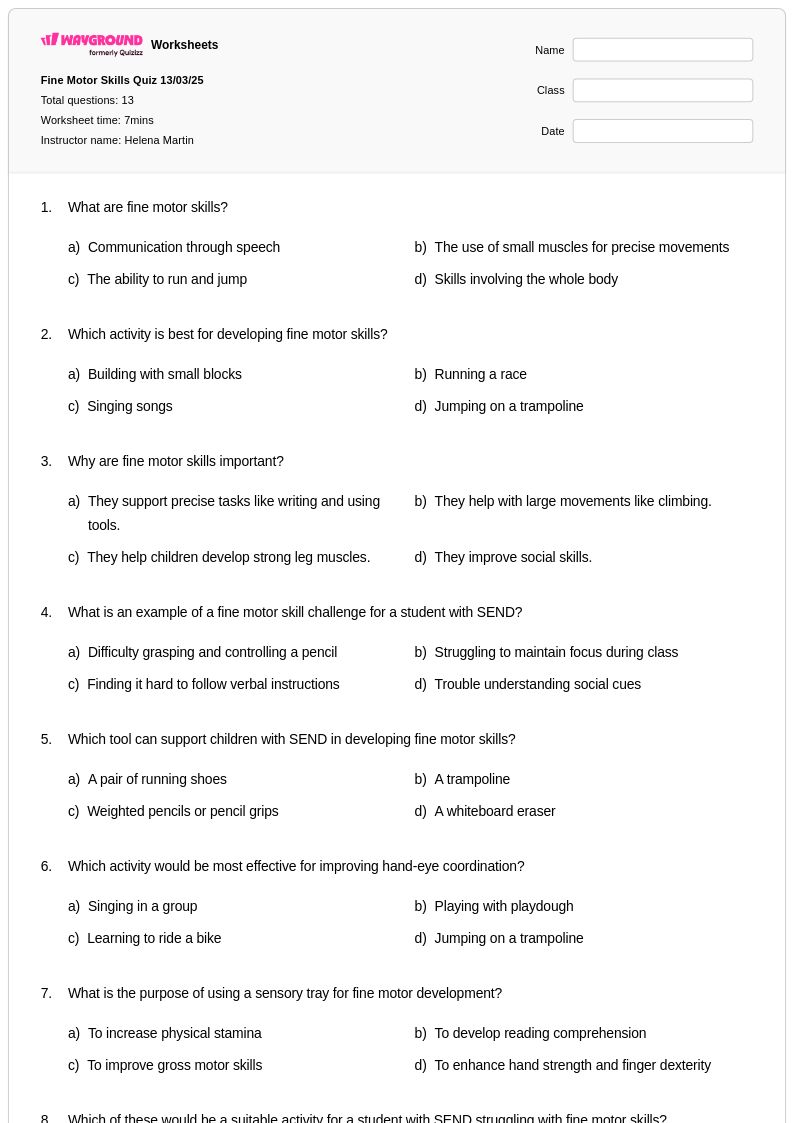
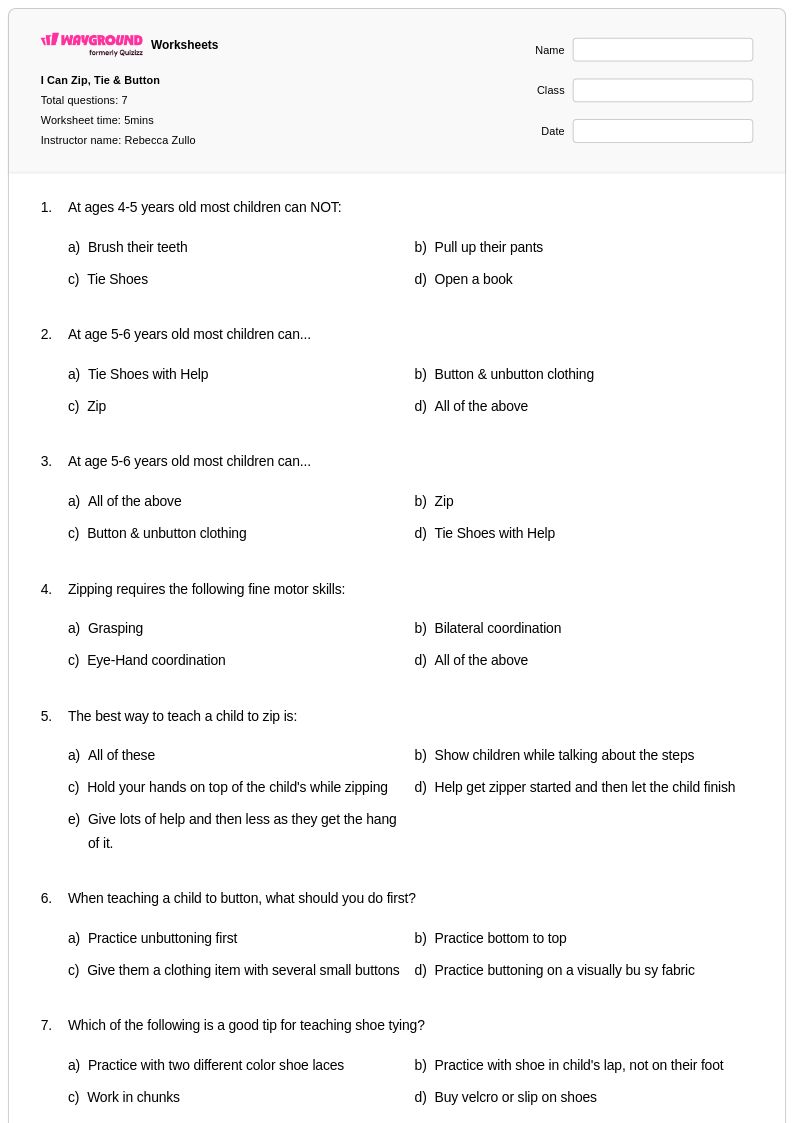
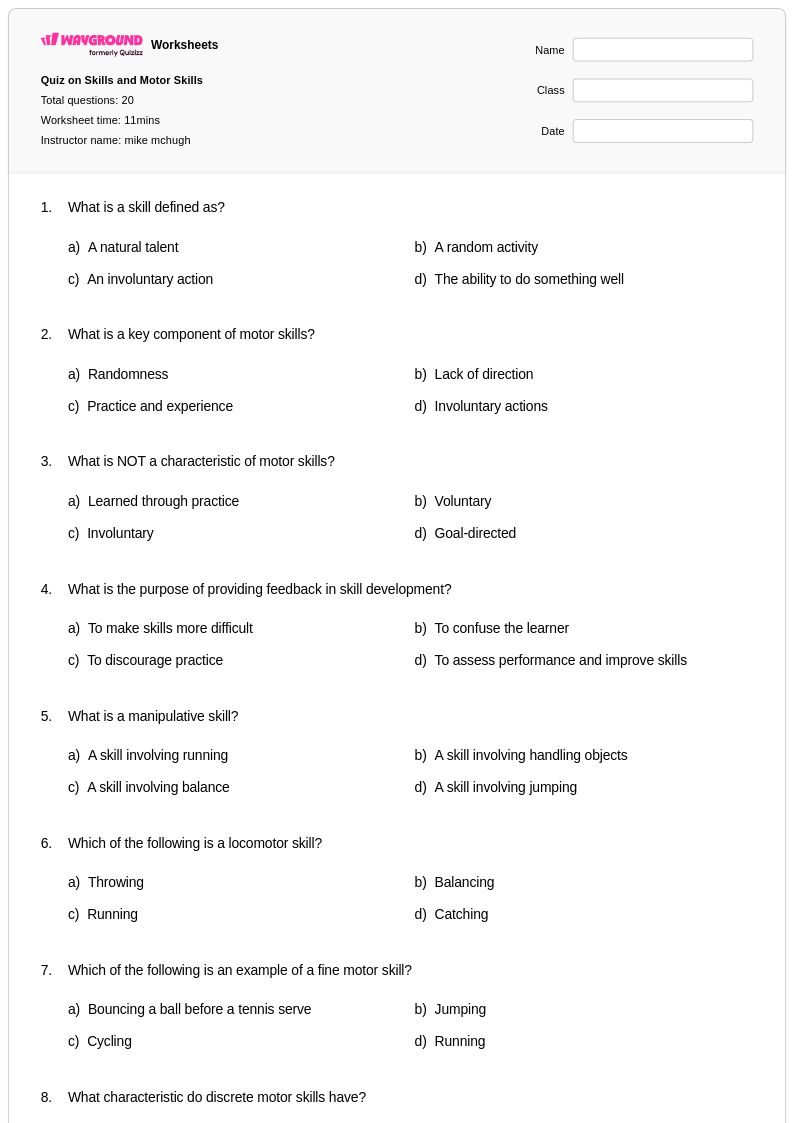
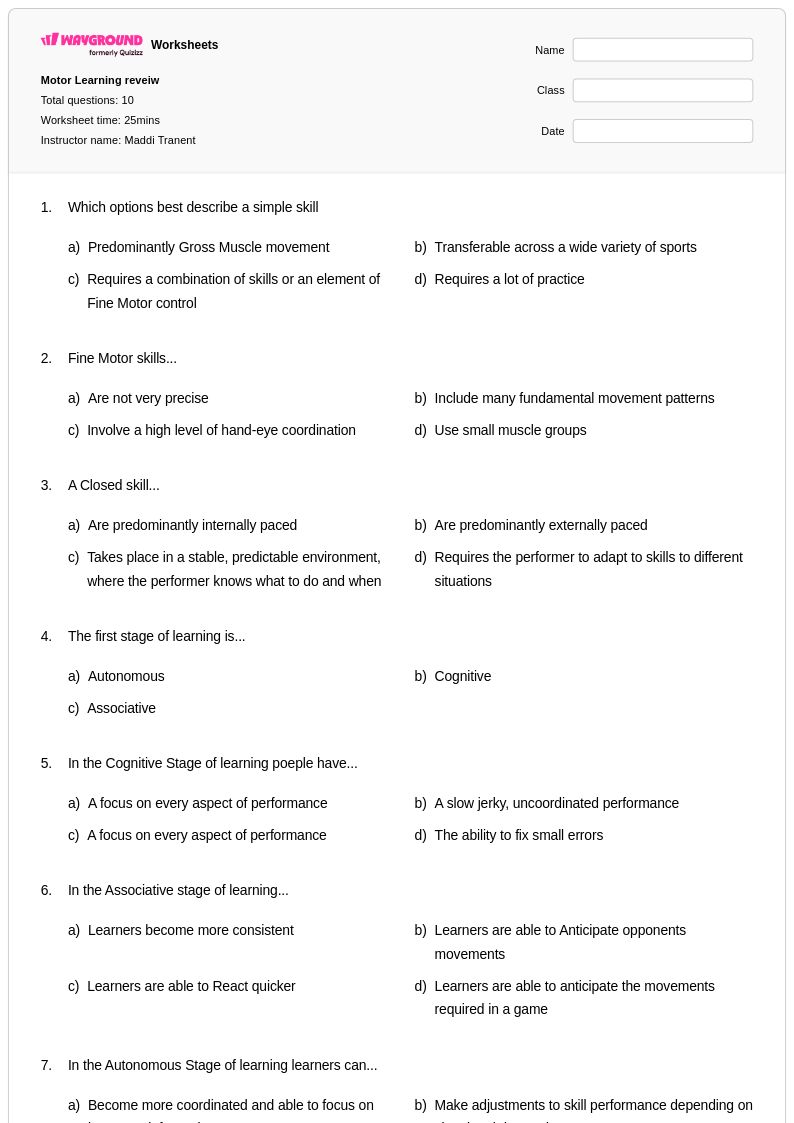
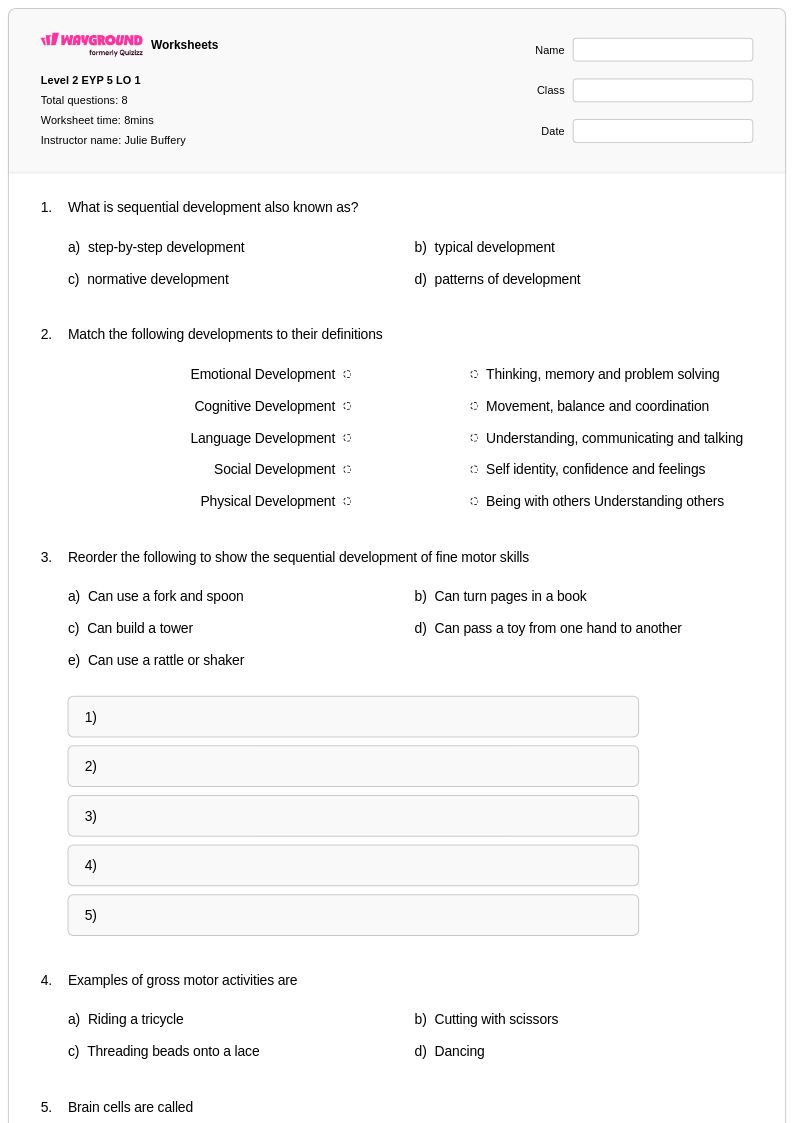
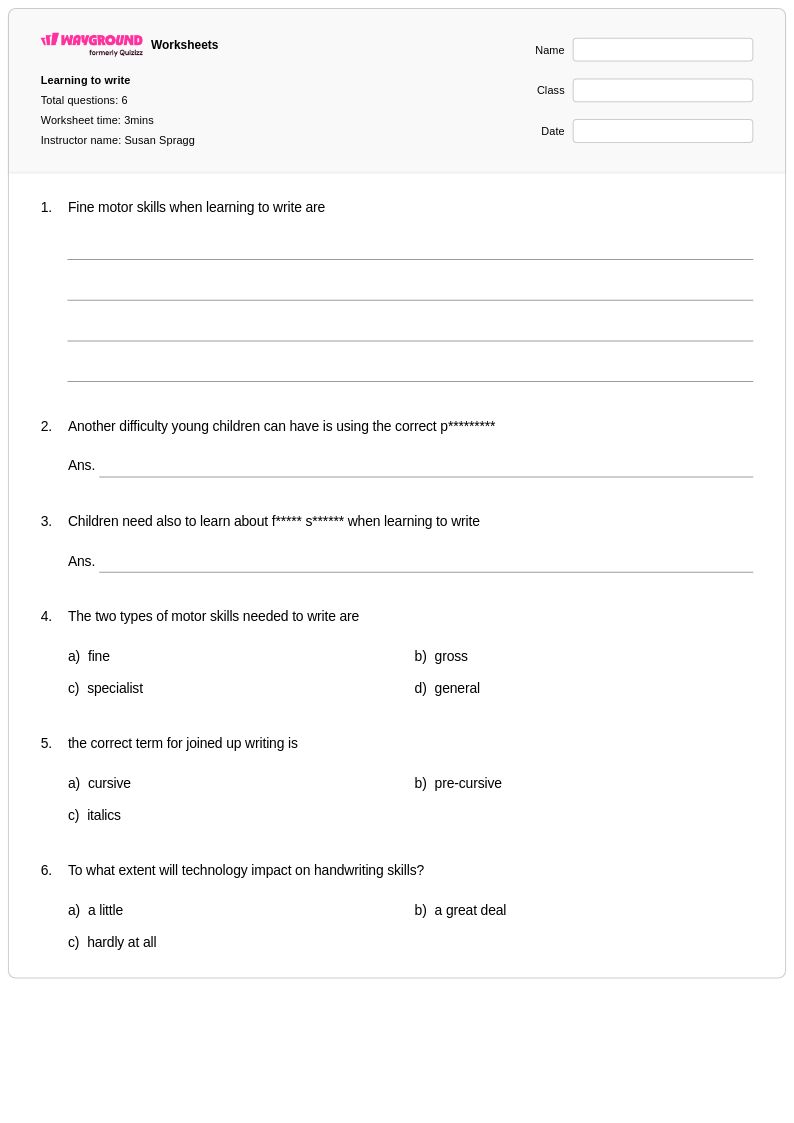
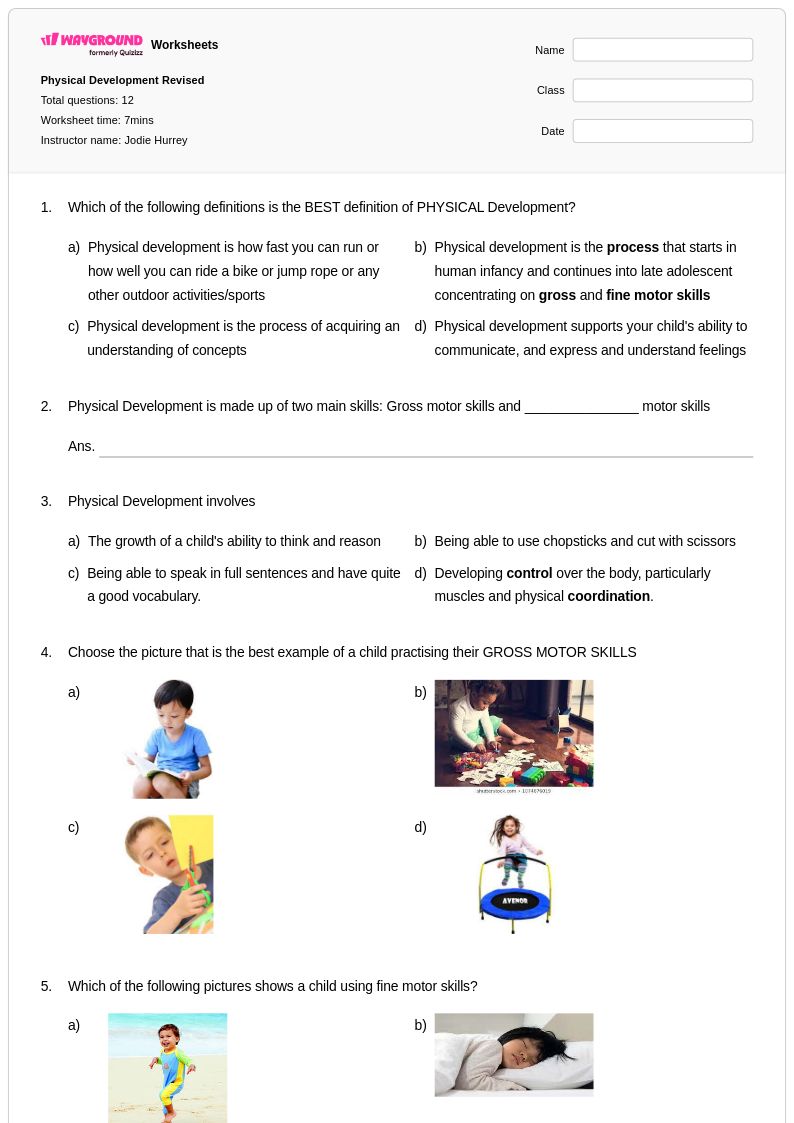
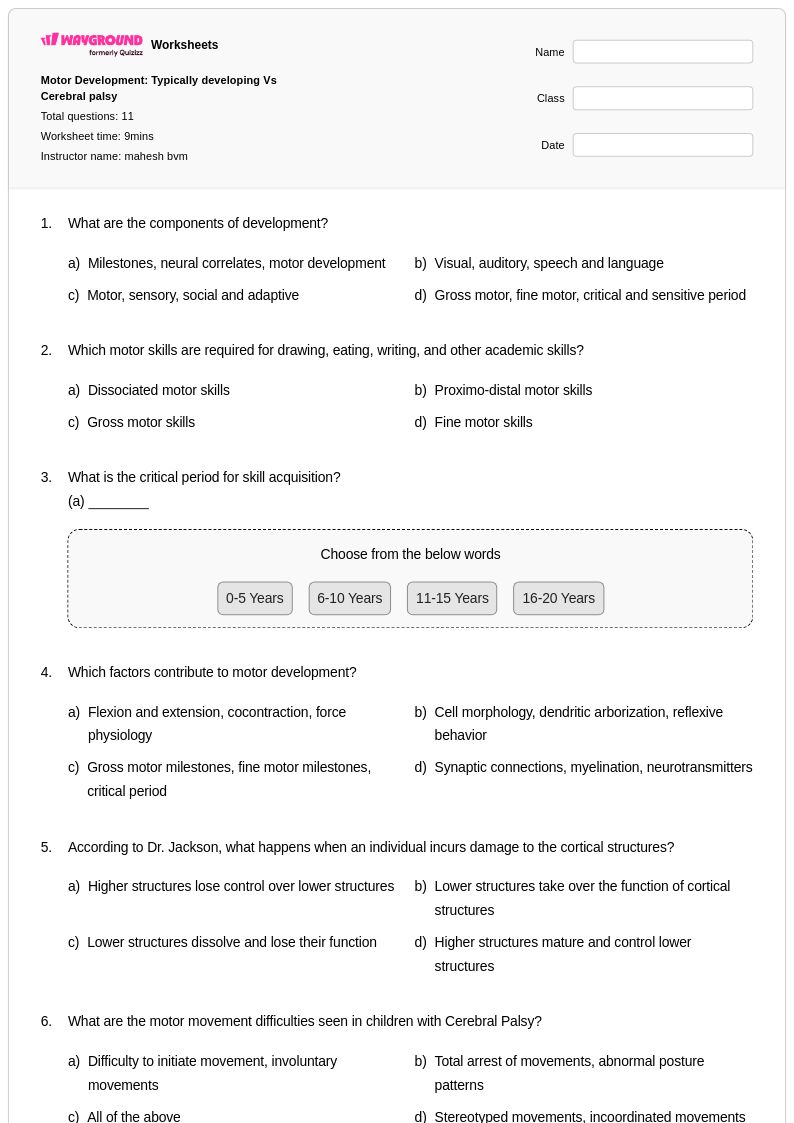
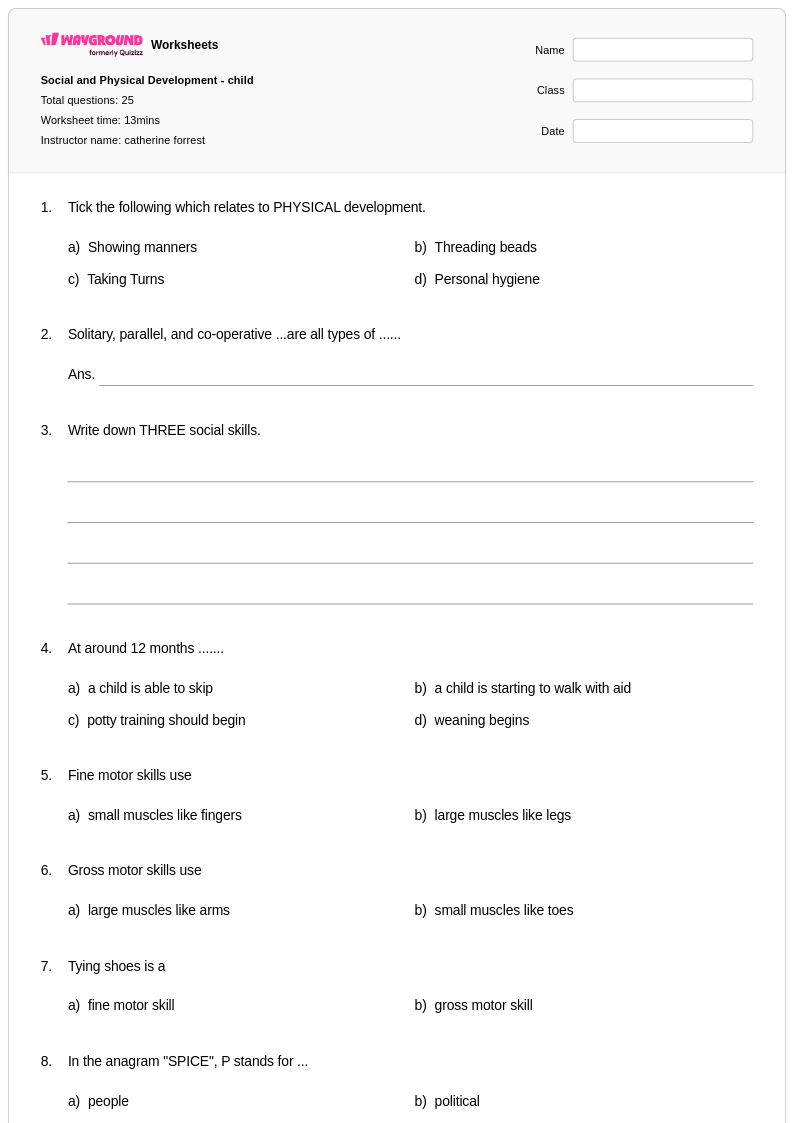
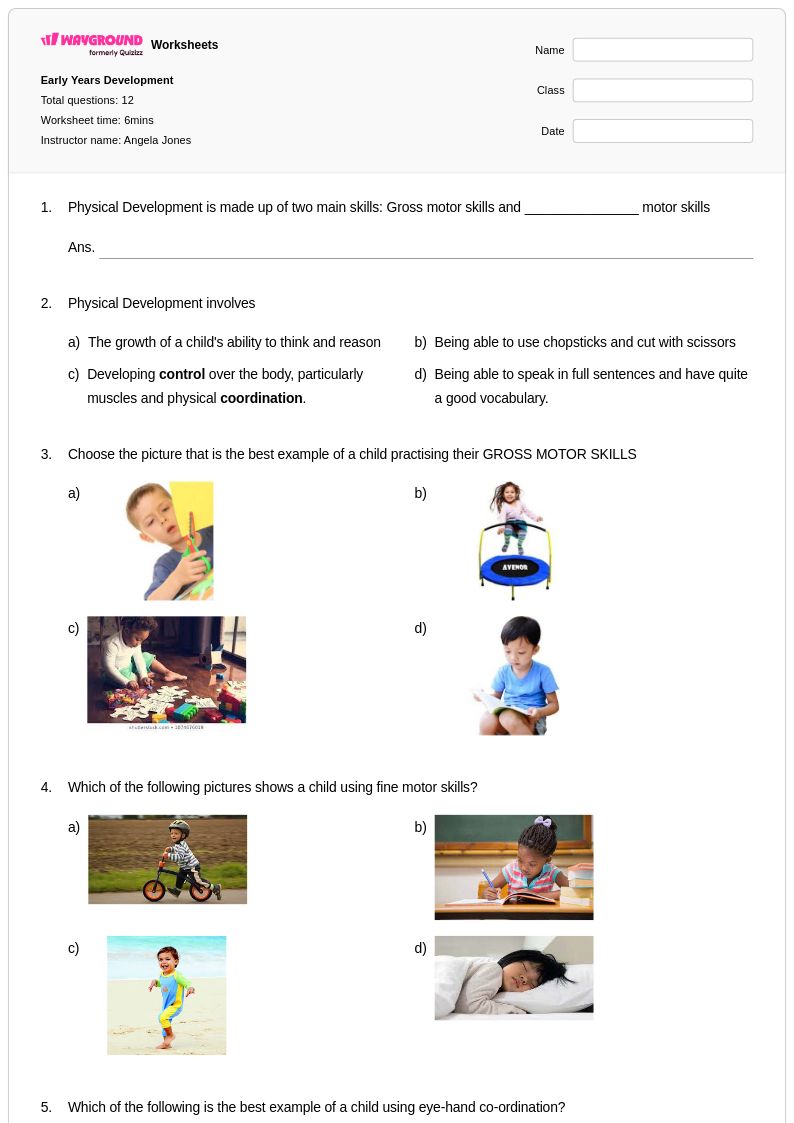
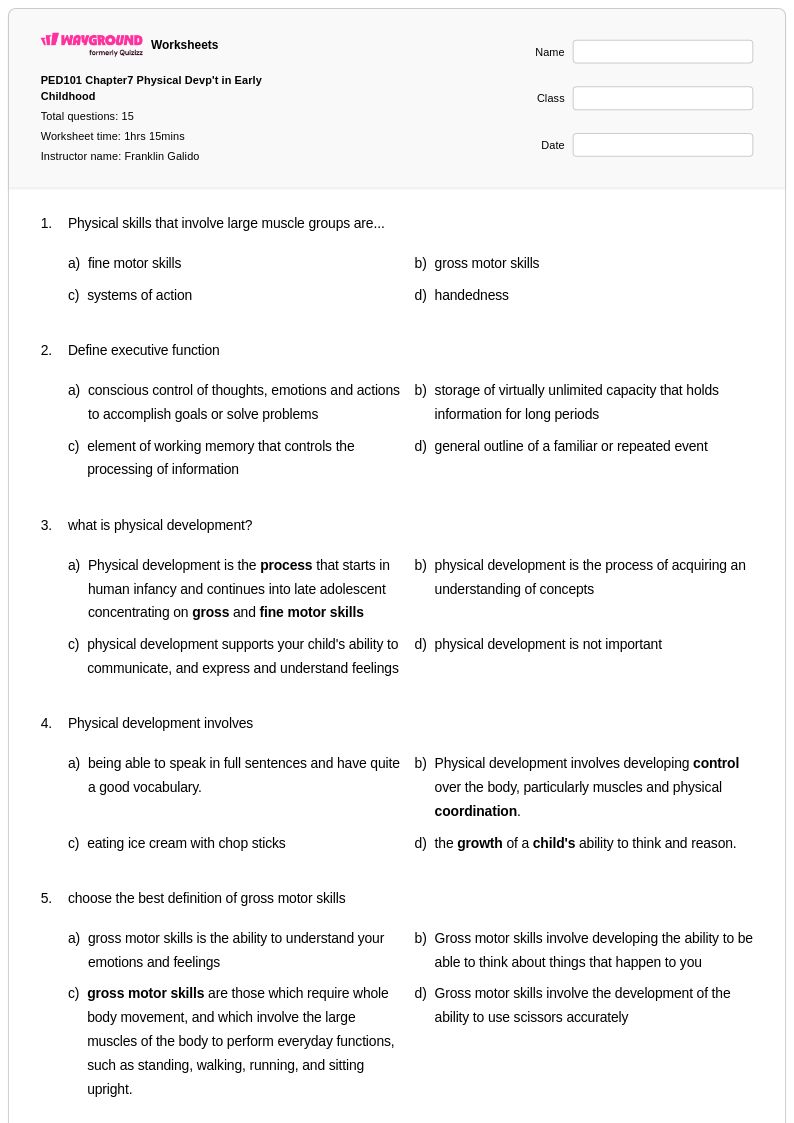
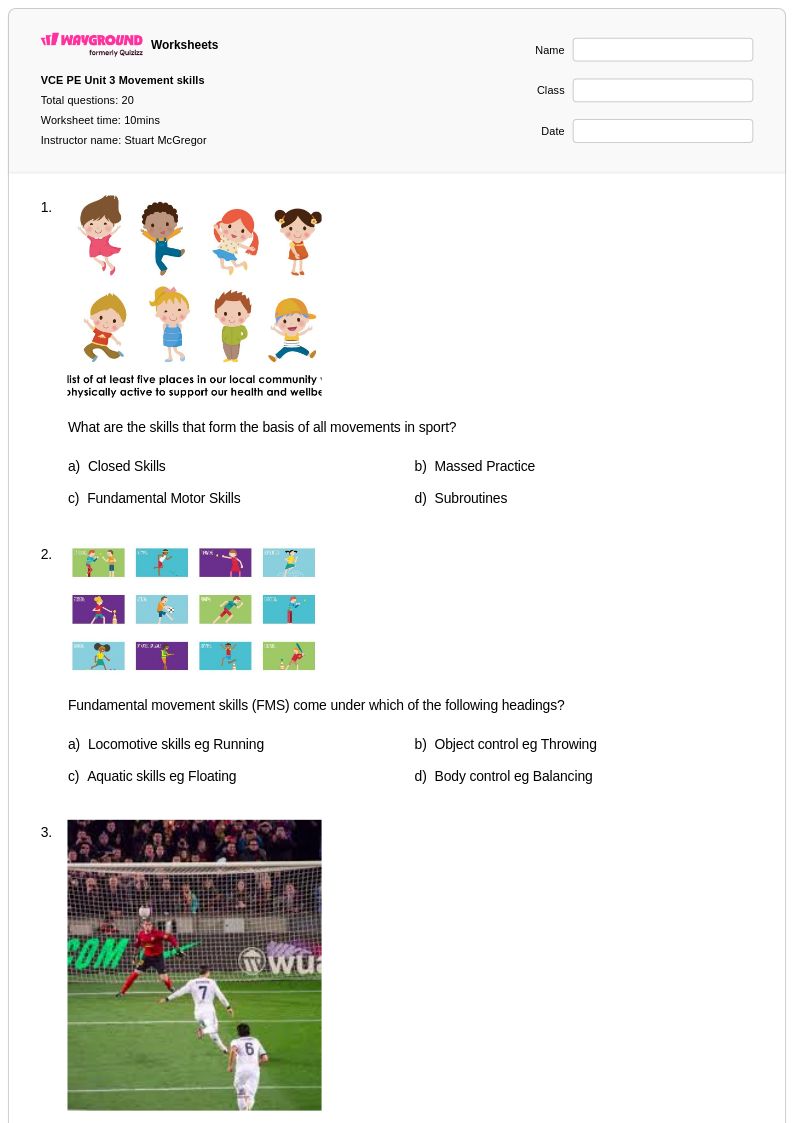
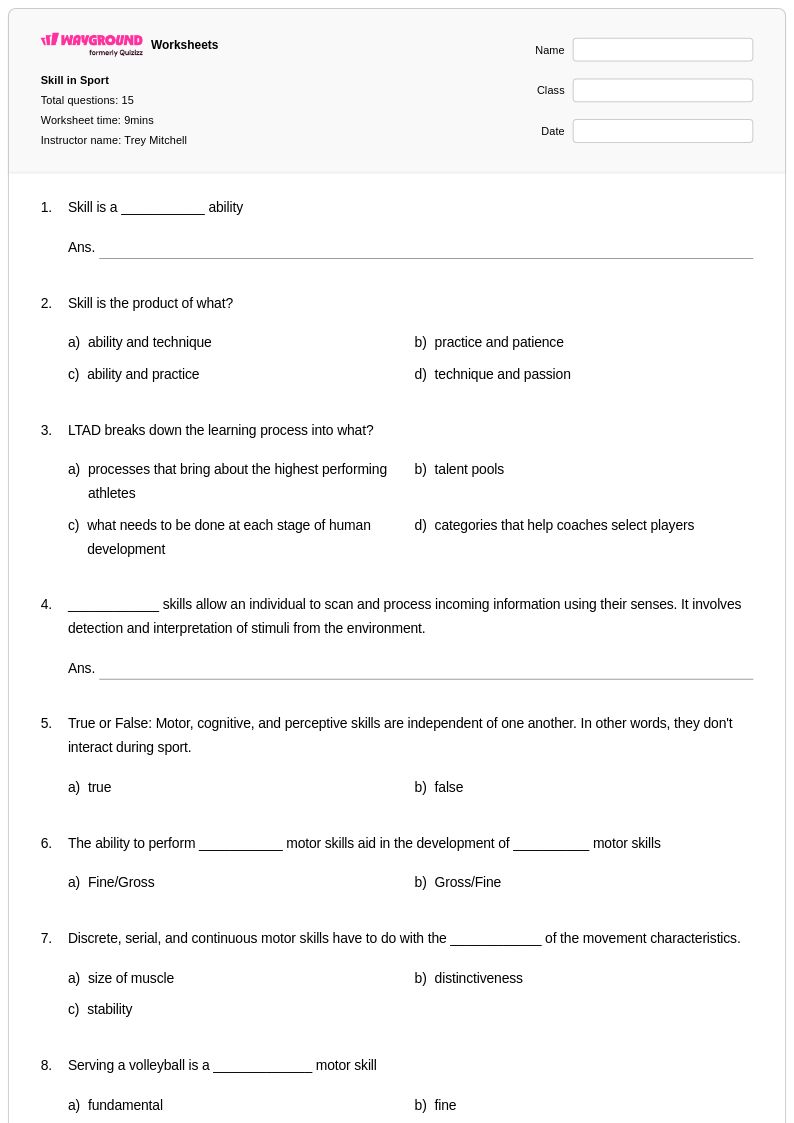
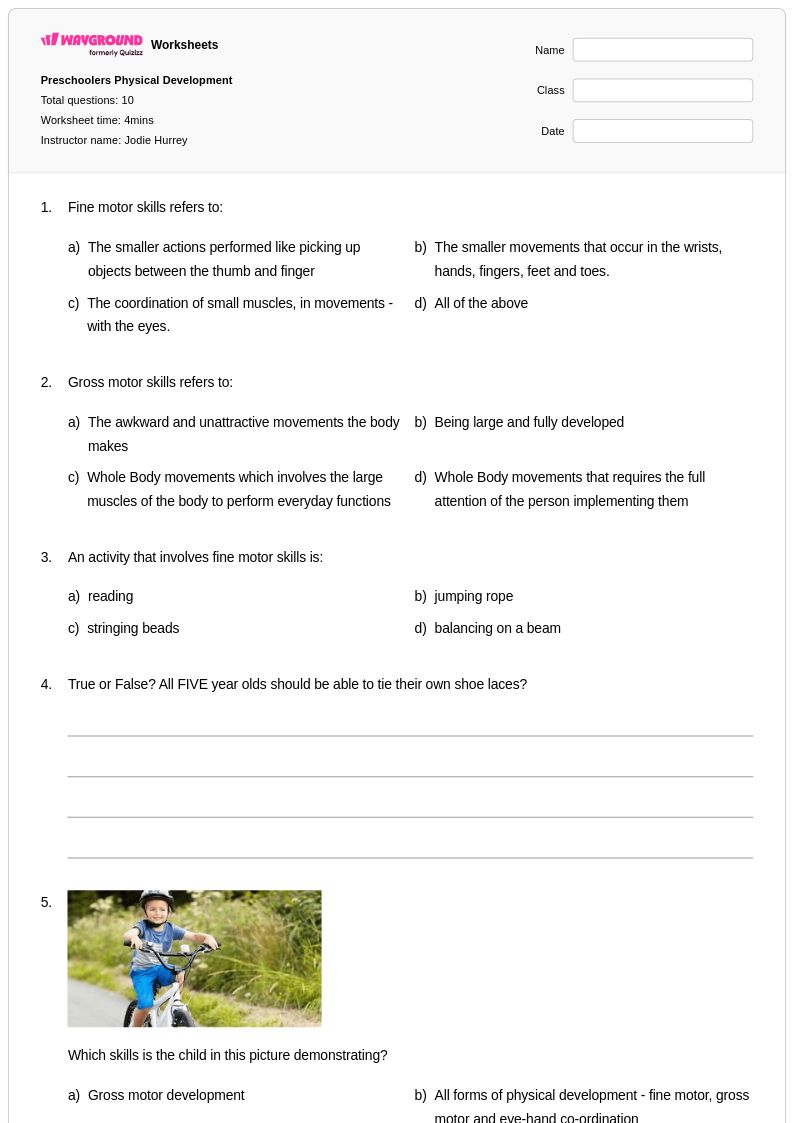
Fine motor skills development forms a crucial foundation for kindergarten students as they begin their formal education journey, and Wayground's comprehensive collection of physical education worksheets provides targeted practice opportunities to strengthen these essential abilities. These expertly designed printables focus on hand-eye coordination, finger dexterity, and precise movement control through engaging activities that capture young learners' attention while building fundamental motor competencies. Each worksheet incorporates age-appropriate exercises such as tracing patterns, cutting along dotted lines, and manipulating small objects, with accompanying answer keys that enable teachers to quickly assess student progress and identify areas requiring additional support. The free pdf resources emphasize bilateral coordination and grip strength development through structured practice problems that seamlessly integrate fine motor skill enhancement with enjoyable learning experiences.
Wayground's platform empowers kindergarten teachers with access to millions of teacher-created fine motor skills worksheets that can be easily located through robust search and filtering capabilities designed specifically for educational professionals. The extensive resource library aligns with developmental standards and offers differentiation tools that allow educators to customize activities based on individual student needs, ensuring appropriate challenge levels for diverse learners within the same classroom. Teachers can access these materials in both printable and digital formats, including downloadable pdf versions that facilitate flexible lesson planning and accommodate various instructional settings. This comprehensive approach supports targeted remediation for students requiring additional fine motor practice, enrichment opportunities for advanced learners, and consistent skill reinforcement that bridges physical education concepts with broader academic readiness goals essential for kindergarten success.
FAQs
How do I teach fine motor skills in the classroom?
Fine motor skills are best taught through repeated, purposeful practice with hands-on activities that isolate small muscle groups in the fingers, hands, and wrists. Effective classroom strategies include tracing patterns, cutting along lines, lacing, and manipulative tasks that gradually increase in complexity as students build control and coordination. Embedding these activities into daily routines rather than treating them as isolated lessons helps students develop dexterity over time. Consistent short practice sessions are more effective than infrequent longer ones.
What exercises help students practice fine motor skills?
Targeted exercises for fine motor skill development include tracing curved and straight lines, cutting activities that require directional control, dot-to-dot tasks, bead threading, and handwriting readiness patterns. These activities strengthen the intrinsic hand muscles and improve hand-eye coordination by requiring students to coordinate visual input with precise finger and wrist movements. Worksheets that progress from wide, simple paths to narrow, complex patterns allow students to build control incrementally without frustration.
What mistakes do students commonly make when developing fine motor skills?
A common error is whole-hand gripping instead of using the precise pincer grip needed for controlled writing and cutting tasks. Students also frequently apply inconsistent pressure, which results in shaky or broken lines when tracing. Rushing through pattern-tracing activities without maintaining control is another widespread issue that reinforces poor habits. Teachers should watch for students who compensate for weak hand strength by stabilizing their arm on the table, as this can mask underlying grip deficits that need direct intervention.
How can I differentiate fine motor skills activities for students at different developmental levels?
Differentiation for fine motor skills should account for both physical development and task complexity. Students who need additional support can work with wider tracing paths, softer materials, or tools with adapted grips, while more advanced students can progress to narrower precision tasks, smaller cutting patterns, or multi-step coordination challenges. On Wayground, teachers can apply individual accommodations such as extended time and read-aloud support for students who need it, while the rest of the class works under standard settings without disruption.
How do I use Wayground's fine motor skills worksheets in my classroom?
Wayground's fine motor skills worksheets are available as printable PDFs for traditional classroom use and in digital formats for technology-integrated or distance learning environments. Teachers can also host worksheets as a quiz directly on Wayground, making it easy to assign practice digitally and track student engagement. The platform's filtering tools allow you to search by skill type or developmental focus, so you can quickly locate activities aligned to your students' current needs and pull them into lesson plans or intervention sessions without significant prep time.
At what age or grade level should students be working on fine motor skills?
Fine motor skill development is most intensive in early childhood, typically spanning prekindergarten through second grade, but targeted practice remains relevant for students with developmental delays or learning differences at any grade level. Skills like pencil grip, scissor control, and hand-eye coordination directly support handwriting readiness and academic participation, making them foundational across the early elementary years. Occupational therapists and classroom teachers often collaborate on fine motor interventions for students who continue to show deficits beyond the typical developmental window.