Free Printable Flowers for Algernon Worksheets for Class 7
Class 7 Flowers for Algernon worksheets and printables help students analyze character development, themes, and literary elements through engaging practice problems with complete answer keys available as free PDFs.
Explore printable Flowers for Algernon worksheets for Class 7
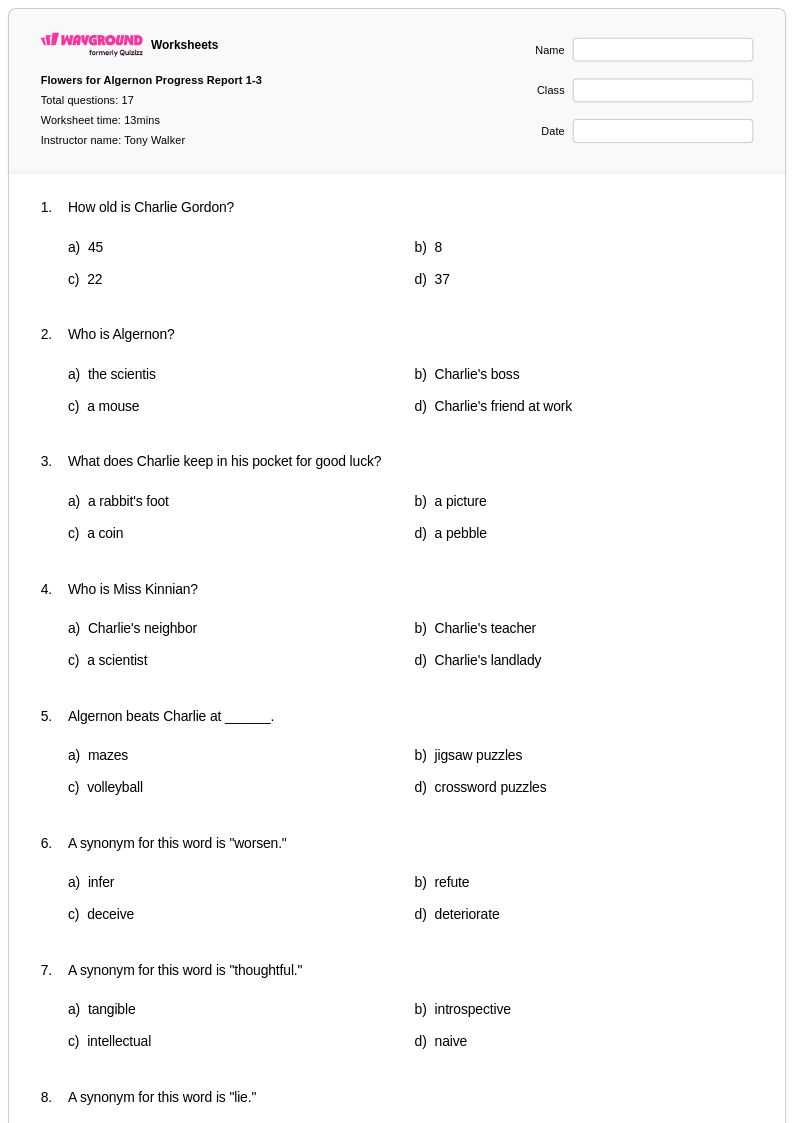
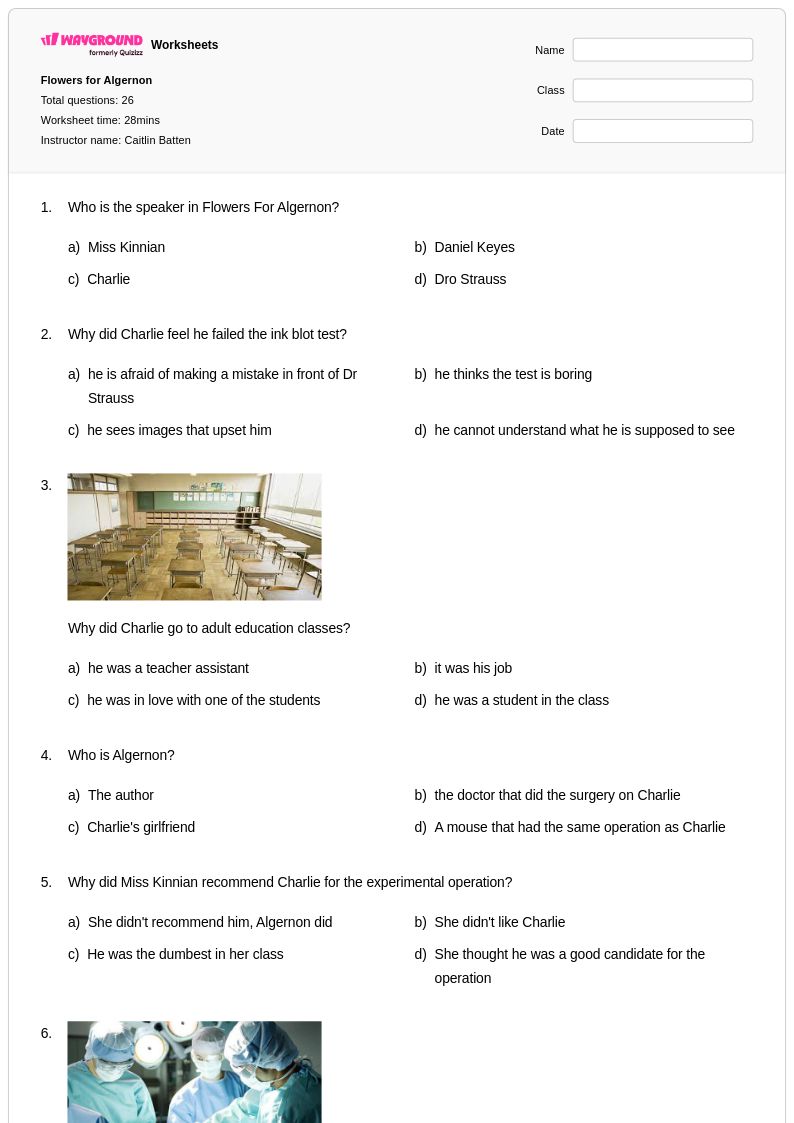
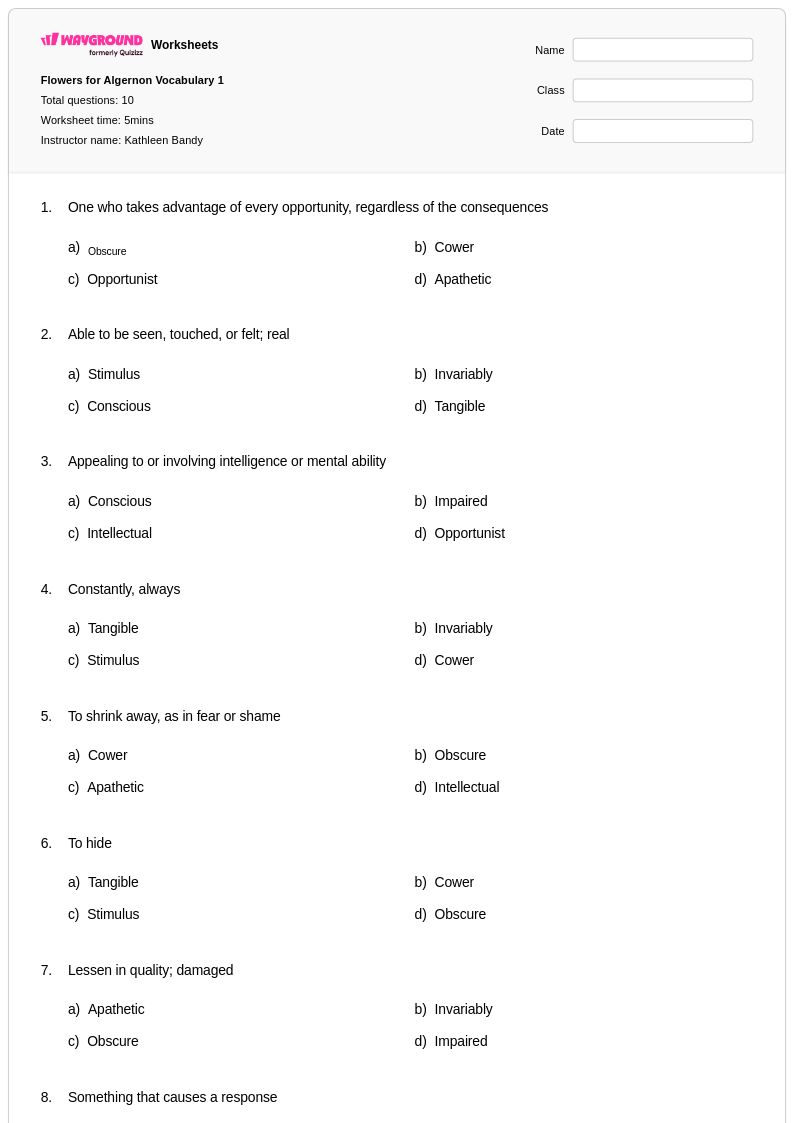
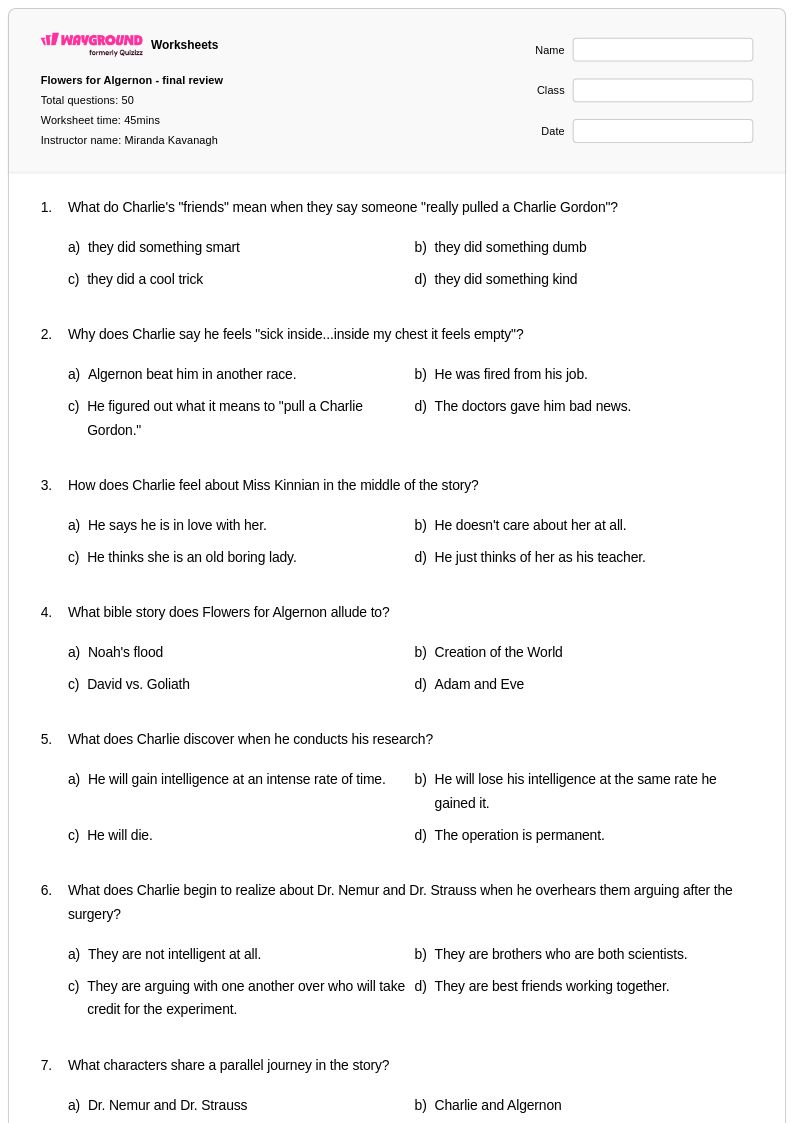
Flowers for Algernon worksheets for Class 7 students provide comprehensive support for analyzing Daniel Keyes' powerful science fiction novel through structured literary activities and critical thinking exercises. These educational resources help seventh-grade students explore complex themes including intelligence, human dignity, and ethical scientific experimentation while developing essential reading comprehension and analytical writing skills. The worksheet collection includes character development trackers, plot analysis guides, vocabulary building exercises, and thematic discussion prompts that encourage students to examine Charlie Gordon's transformation and its implications. Teachers can access printable pdf versions with complete answer keys, making it simple to implement these free resources for independent practice problems, homework assignments, or collaborative classroom discussions that deepen students' understanding of this thought-provoking literary work.
Wayground, formerly Quizizz, empowers educators with millions of teacher-created Flowers for Algernon resources specifically designed for Class 7 novel study instruction. The platform's robust search and filtering capabilities allow teachers to quickly locate worksheets aligned with curriculum standards while accessing differentiation tools that support diverse learning needs within the classroom. These flexible resources are available in both printable and digital formats, including downloadable pdf versions that facilitate seamless lesson planning and implementation. Teachers can customize existing worksheets or create original materials using the platform's comprehensive tools, enabling targeted skill practice, remediation for struggling readers, and enrichment activities for advanced students who need additional challenges while studying this classic work of literature.
FAQs
How do I teach Flowers for Algernon in a way that keeps students engaged?
Teaching Flowers for Algernon effectively means anchoring instruction in Charlie Gordon's diary entries, which serve as the novel's primary narrative device. Ask students to track shifts in Charlie's writing style, vocabulary, and emotional tone across the entries as a way to make his intellectual transformation visible and concrete. Pairing close reading of key diary entries with structured discussion questions about ethics and human dignity keeps students personally invested in the text rather than passively reading it.
What are the most important themes to cover when teaching Flowers for Algernon?
The central themes in Flowers for Algernon include the relationship between intelligence and human worth, the ethics of scientific experimentation, the nature of friendship and belonging, and the experience of social prejudice. Charlie's journey forces students to confront whether intelligence determines a person's value, making it a powerful entry point for discussions about dignity and empathy. Teachers should also address the theme of isolation, since Charlie becomes increasingly alienated both before and after his operation, which complicates students' assumptions about what intelligence brings.
What exercises help students practice literary analysis with Flowers for Algernon?
Effective practice activities for Flowers for Algernon include character development tracking charts that map Charlie's emotional and intellectual changes across the novel, symbolism analysis focusing on Algernon as a mirror for Charlie's fate, and comparative writing prompts that ask students to evaluate early versus late diary entries. Worksheets that ask students to identify narrative structure and analyze how the diary format shapes the reader's perspective strengthen close reading skills specific to this novel's unique construction.
What mistakes do students commonly make when analyzing Flowers for Algernon?
A common misconception is that Charlie's life before the operation was simply inferior and that the surgery represents pure progress — students often miss that Charlie was happy, socially connected, and morally grounded before the procedure. Another frequent error is treating the diary format as stylistically neutral rather than recognizing it as a deliberate literary device that controls how much the reader knows and when. Students also tend to overlook the supporting characters, like Alice and the bakery workers, whose treatment of Charlie across the novel reveals just as much about the themes of prejudice and empathy as Charlie's internal monologue does.
How do I use Flowers for Algernon worksheets effectively in my classroom?
Flowers for Algernon worksheets on Wayground are available as printable PDFs for traditional classroom use and in digital formats for technology-integrated environments, including the option to host them as a quiz directly on Wayground. Printable versions work well for annotation-heavy tasks like tracking diary entry changes or identifying literary devices, while digital formats suit formative checks and independent reading comprehension tasks. Using both formats across a unit gives students varied practice modes and allows teachers to collect data on comprehension without adding grading overhead.
How do I differentiate Flowers for Algernon instruction for students with varying reading levels?
For students who struggle with the novel's shifting register and complexity, focus instruction on a curated set of diary entries rather than expecting independent full-text reading. Wayground supports student-level accommodations including Read Aloud, which narrates questions and content for students who need it, and reduced answer choices to lower cognitive load on comprehension assessments. These accommodations can be applied individually so that advanced students receive grade-level challenge while struggling readers get the support they need, without singling anyone out in the classroom.