Free Class 7 The Giver worksheets and printables help students analyze Lois Lowry's dystopian novel through comprehensive practice problems, reading comprehension activities, and detailed answer keys in convenient PDF format.
Explore printable The Giver worksheets for Class 7
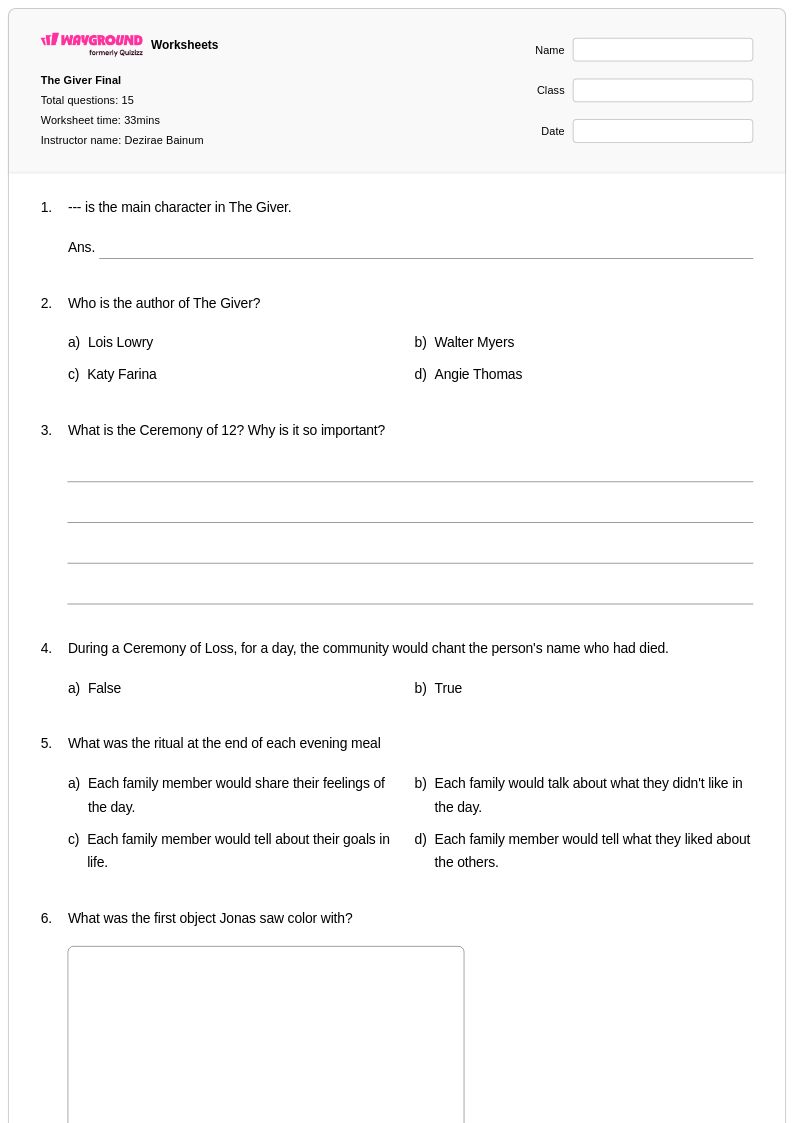
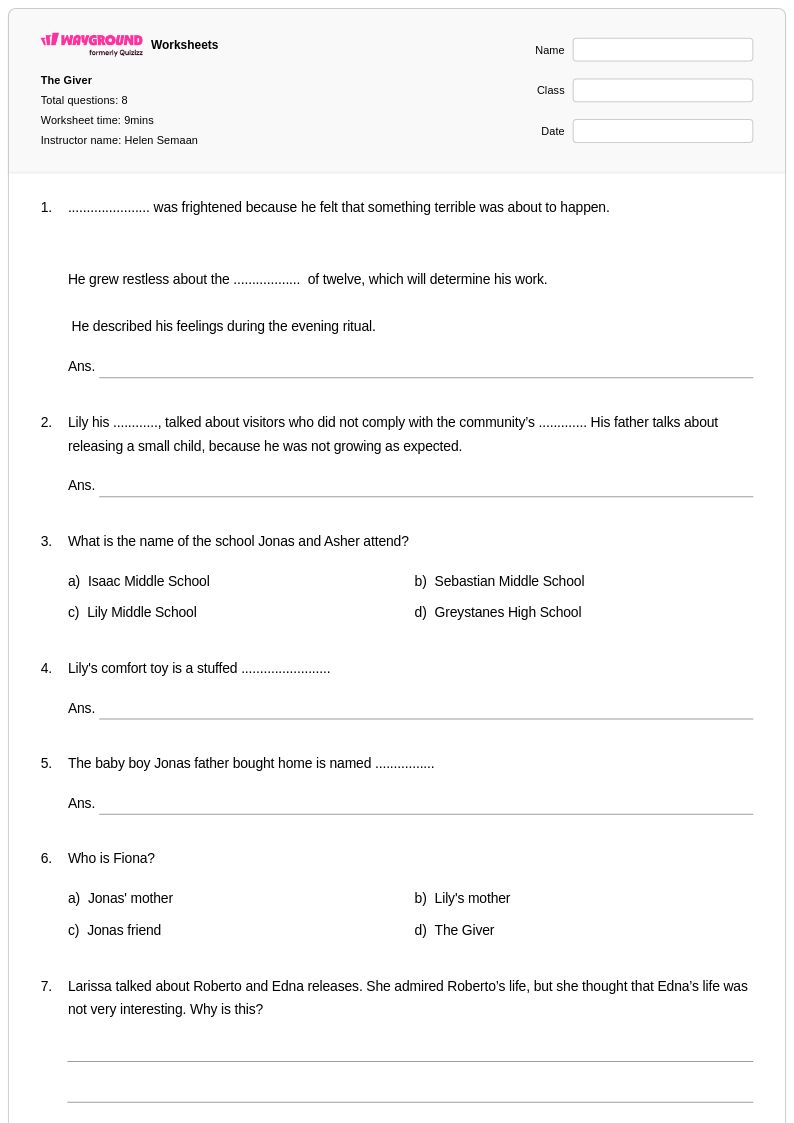
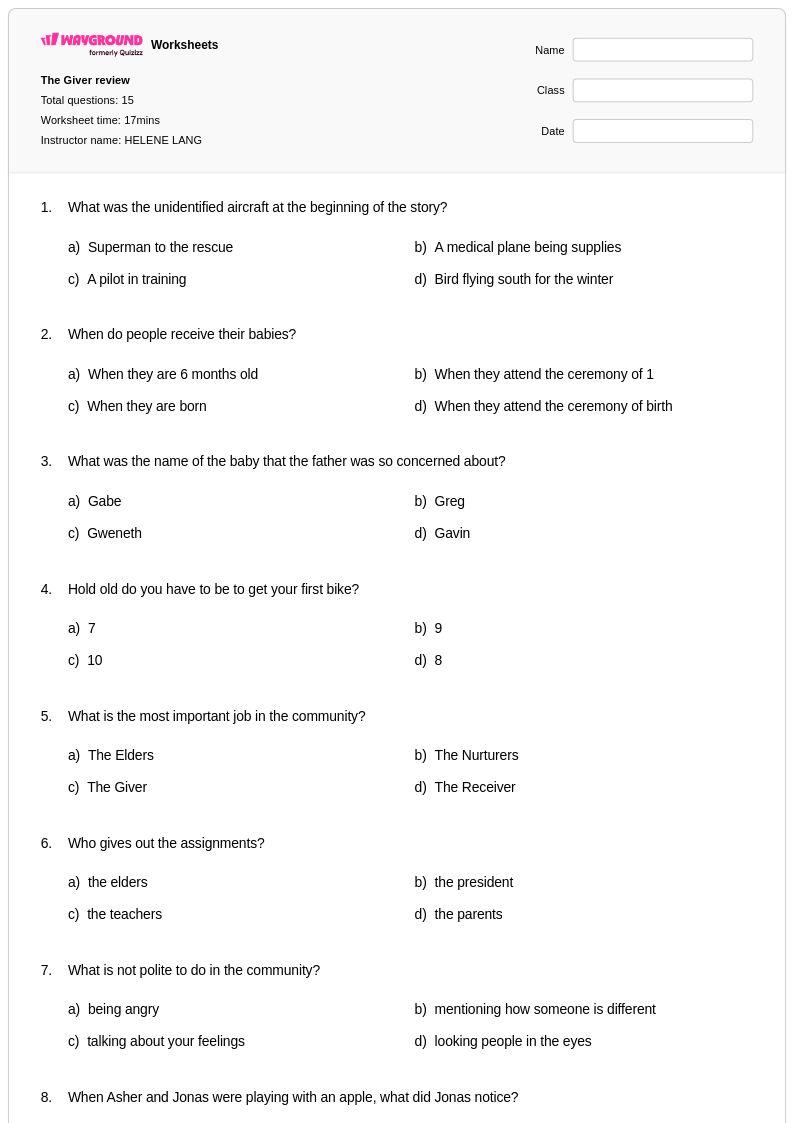
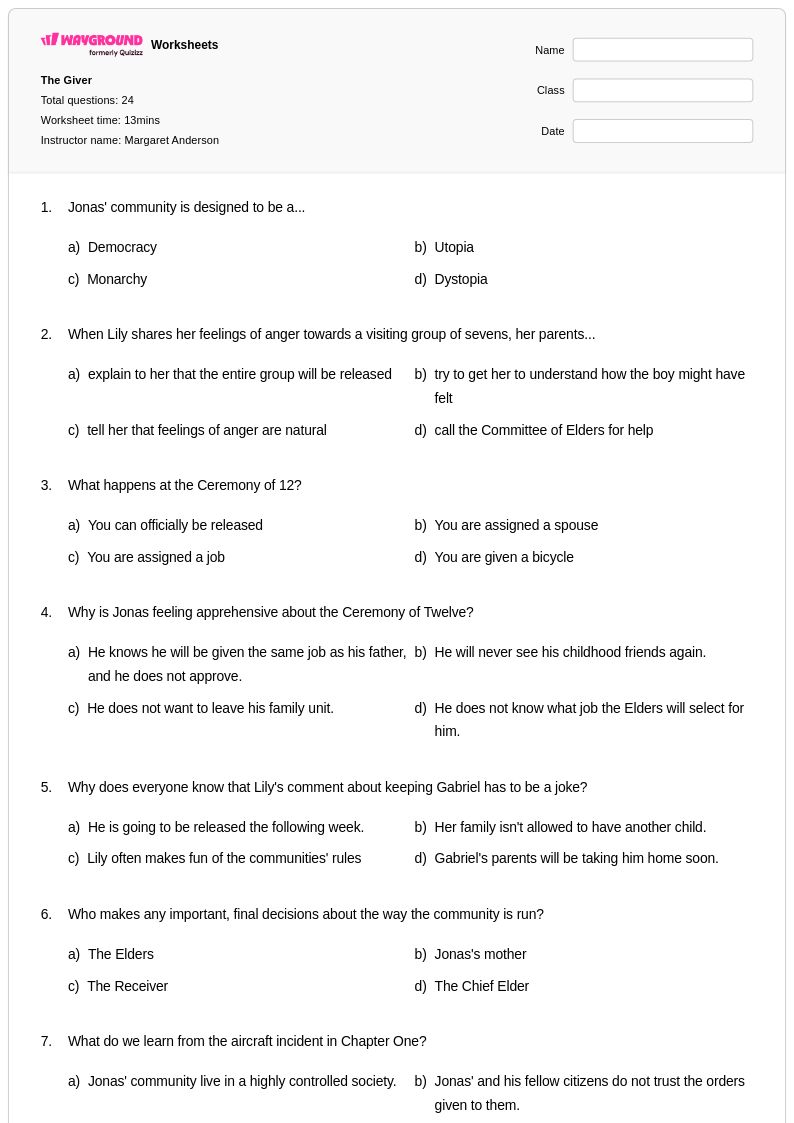
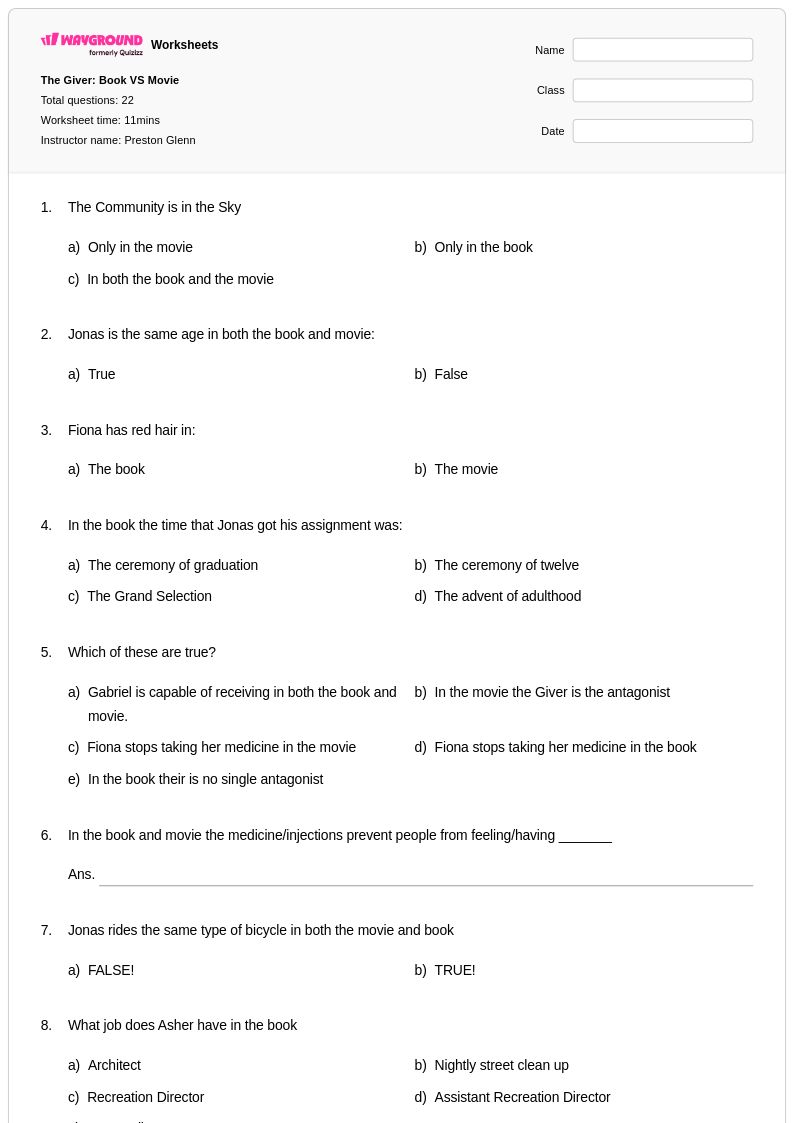
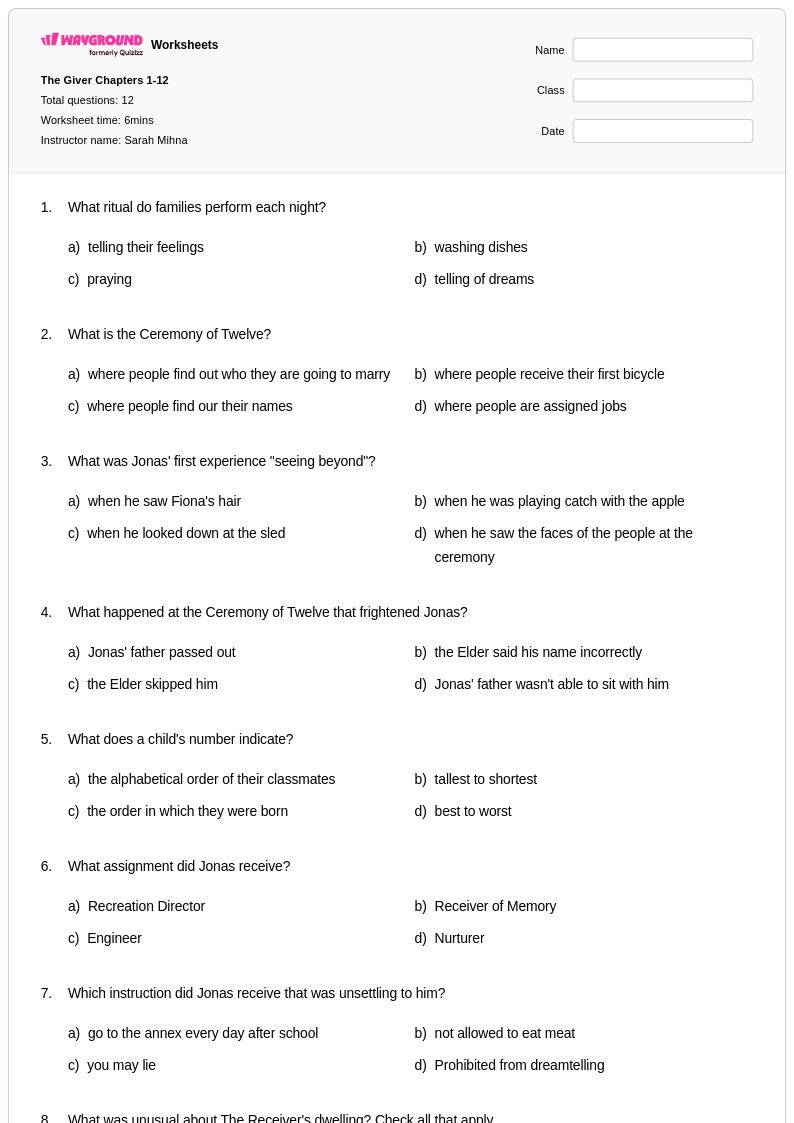
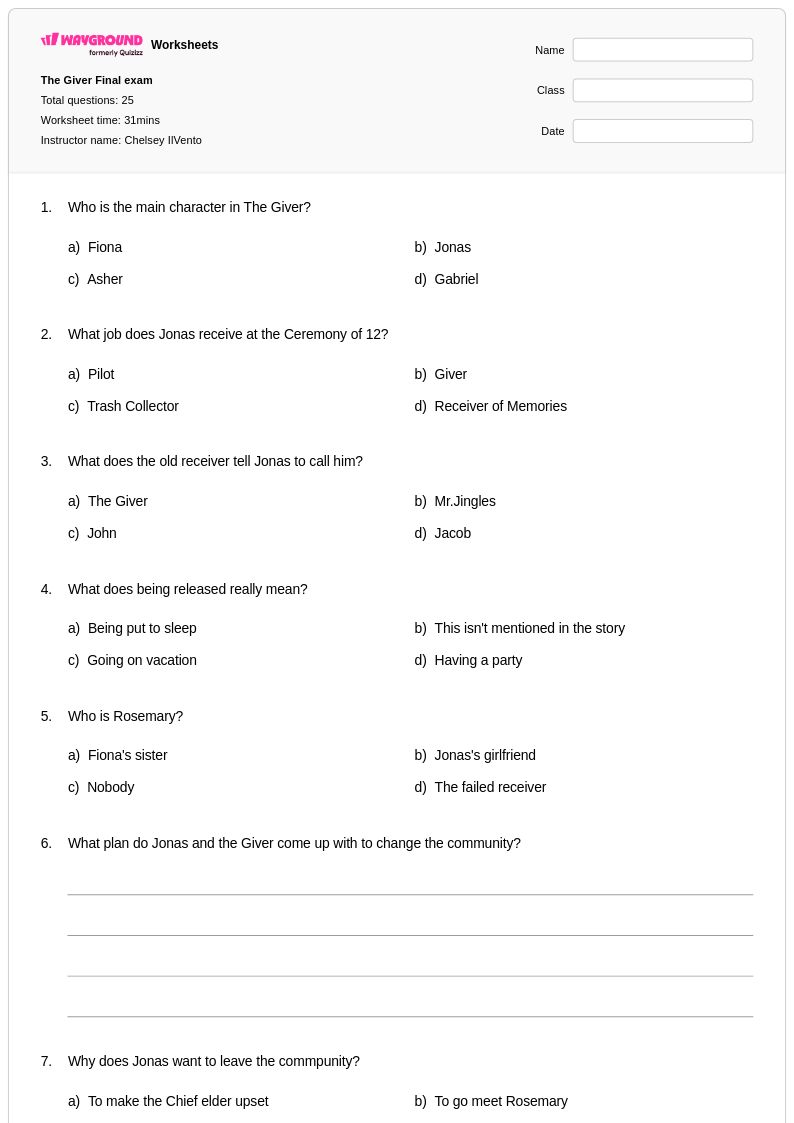
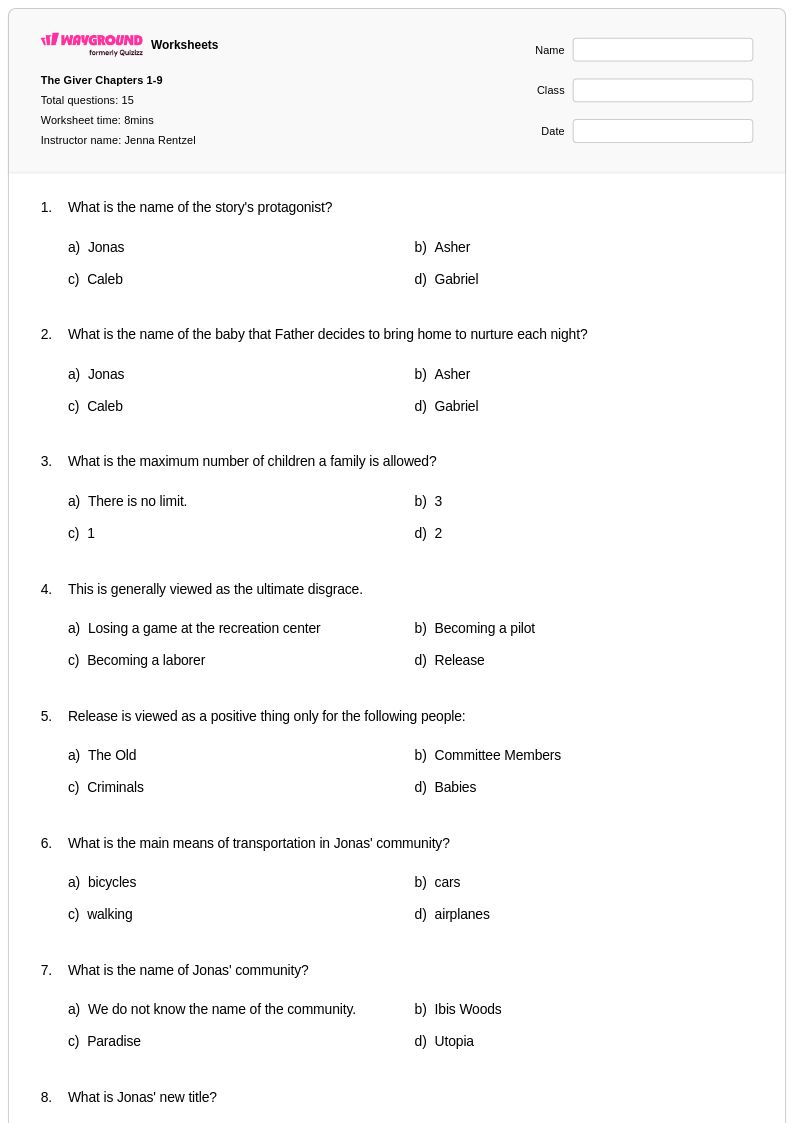
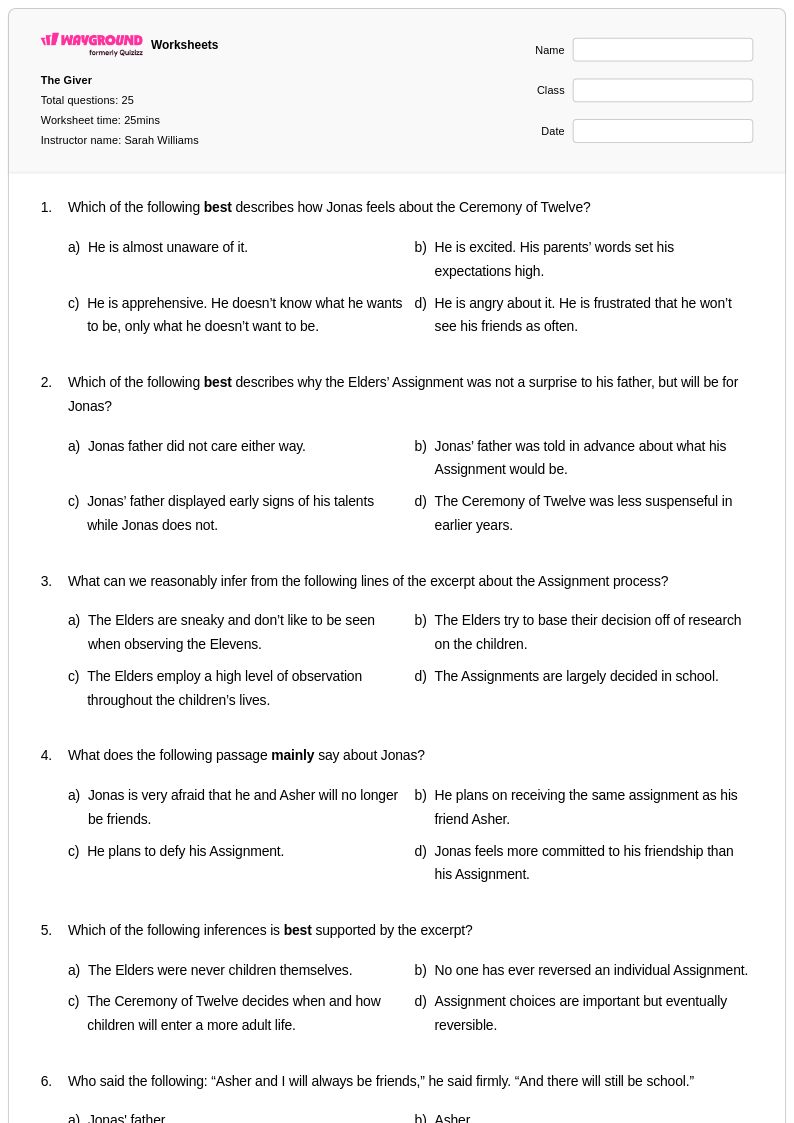
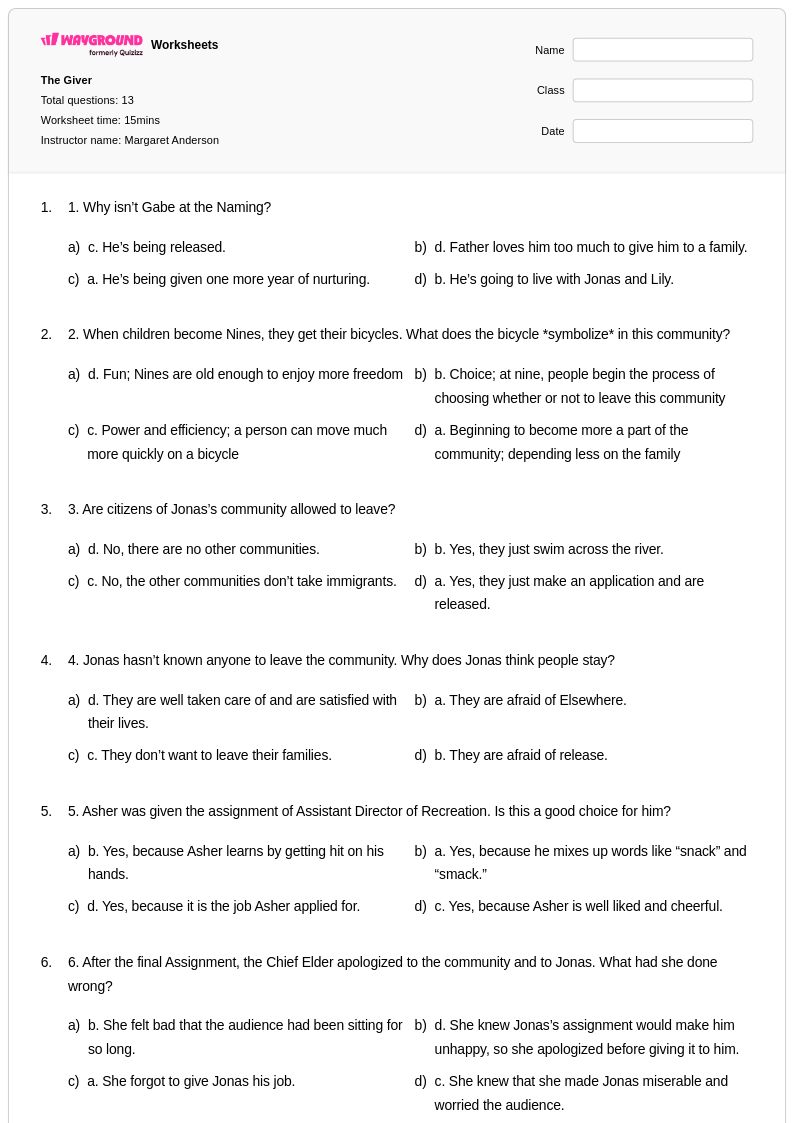
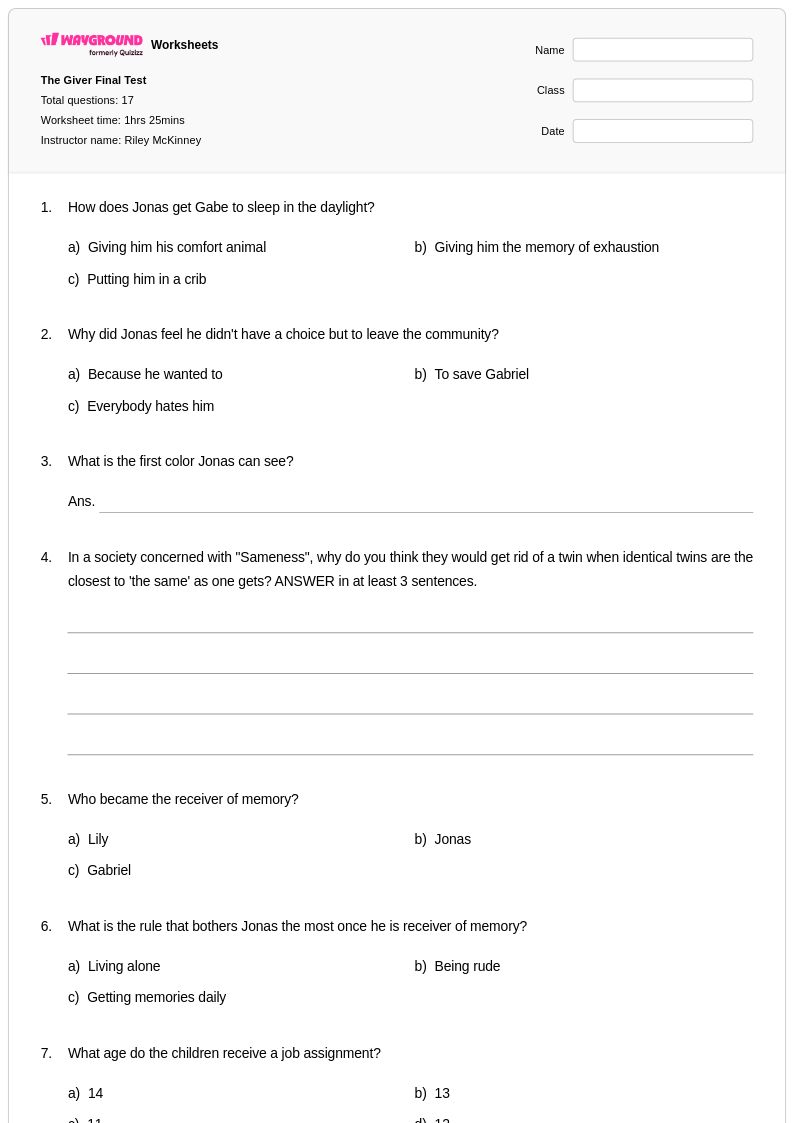
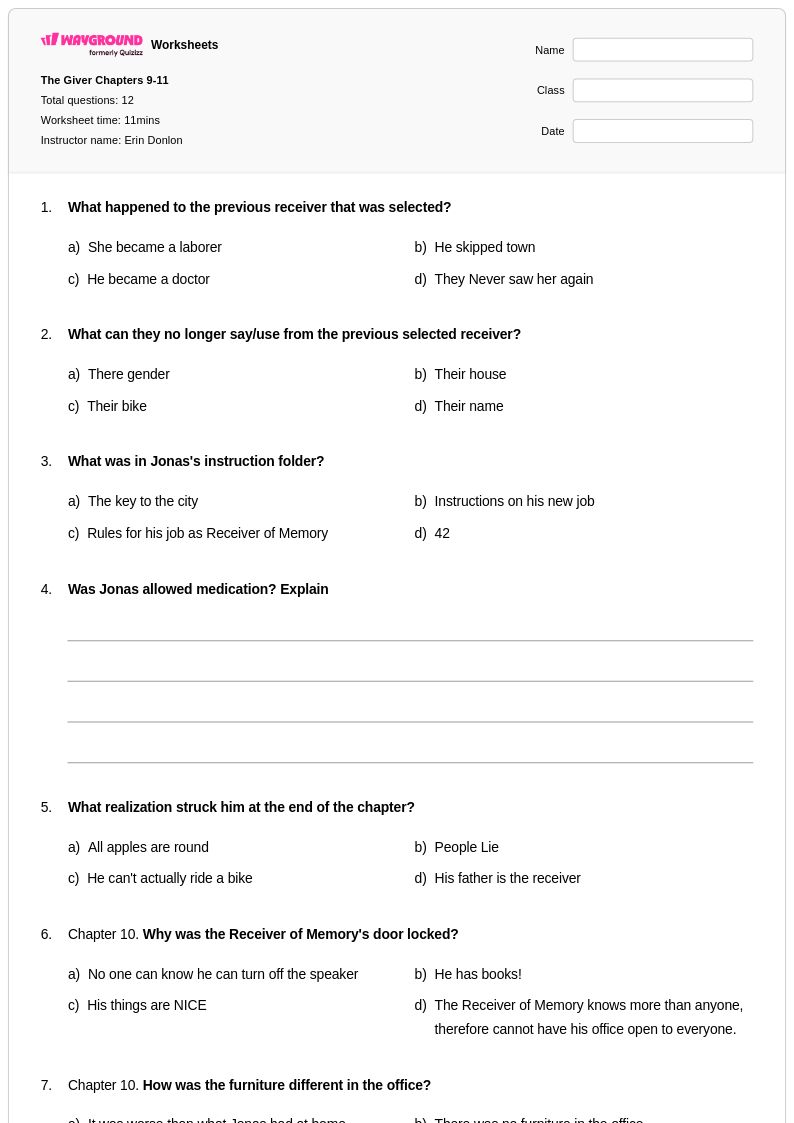
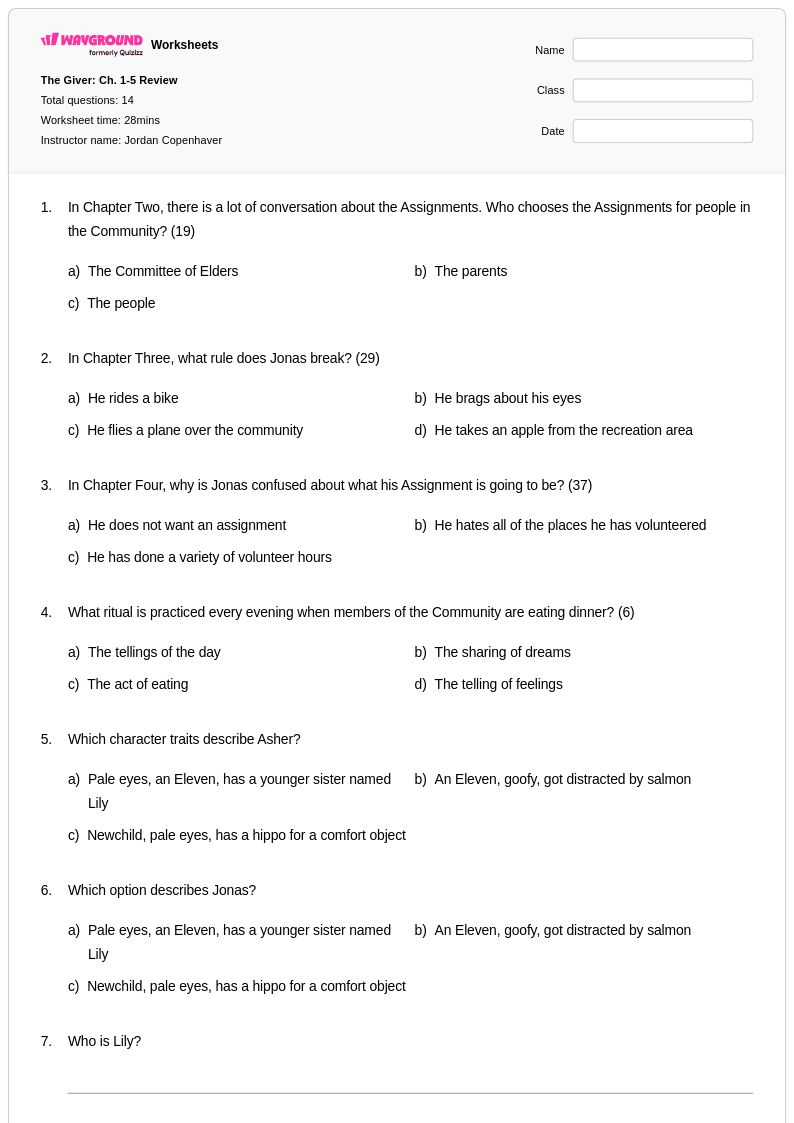
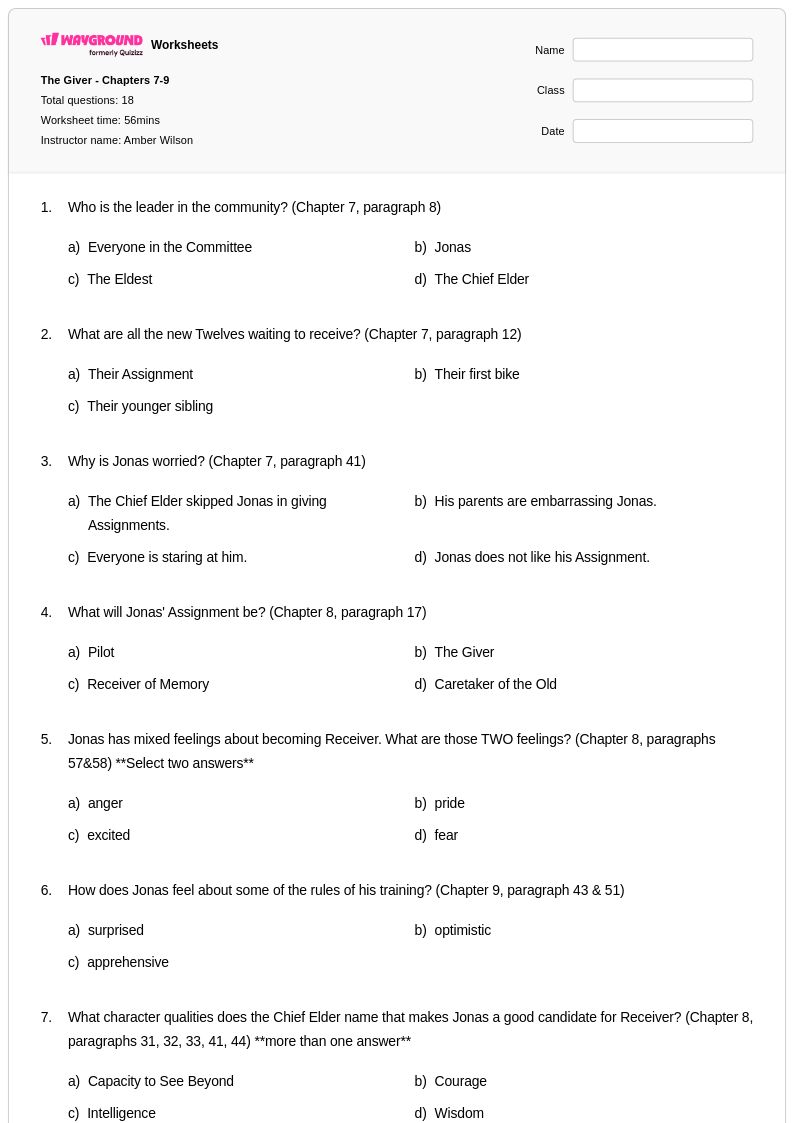
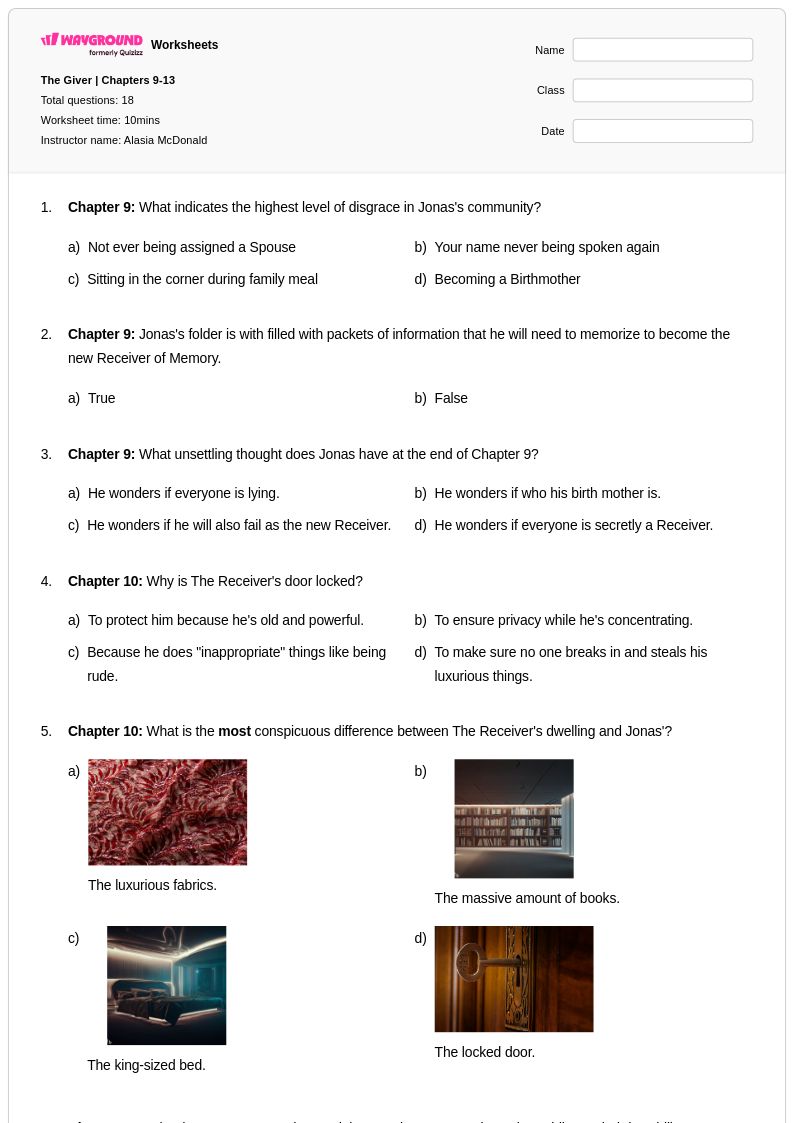
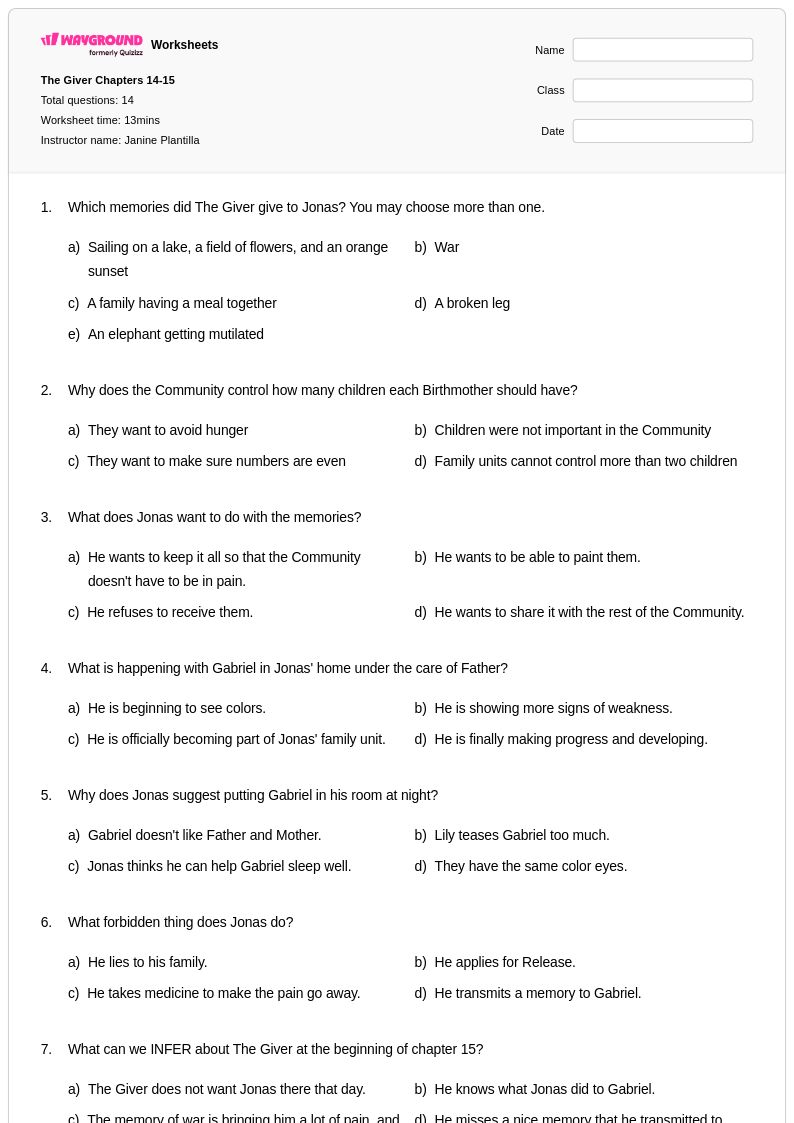
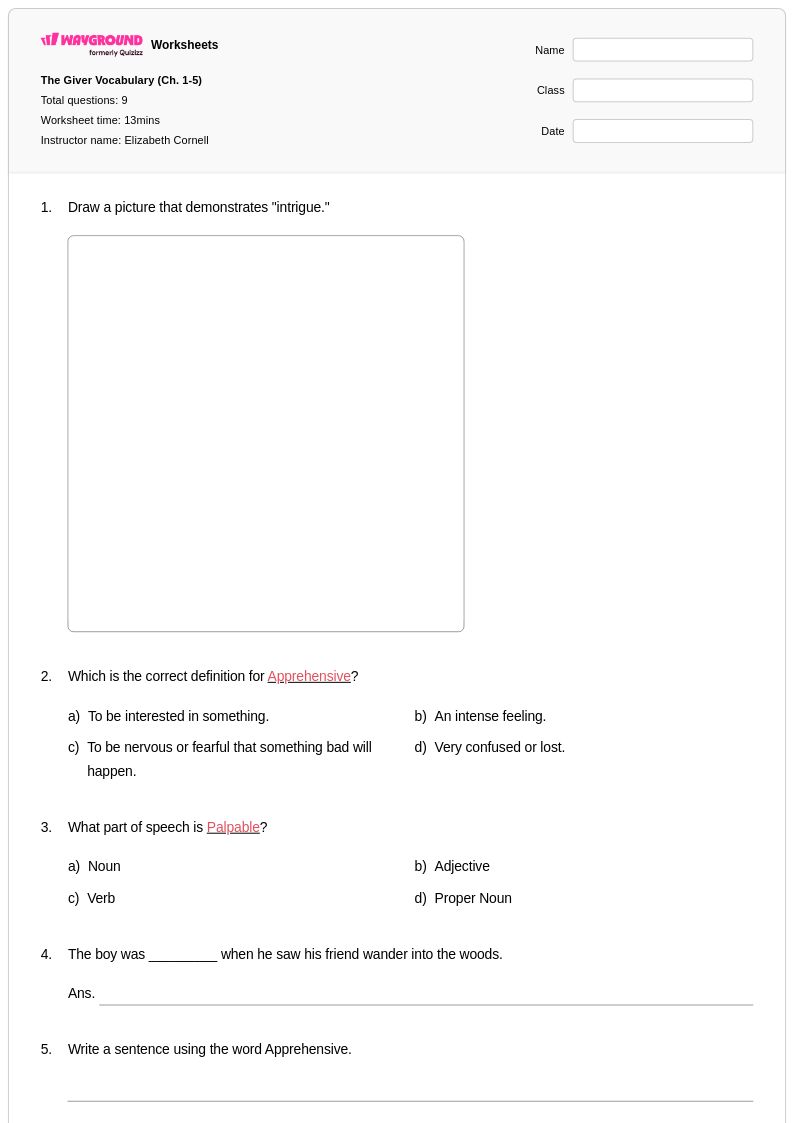
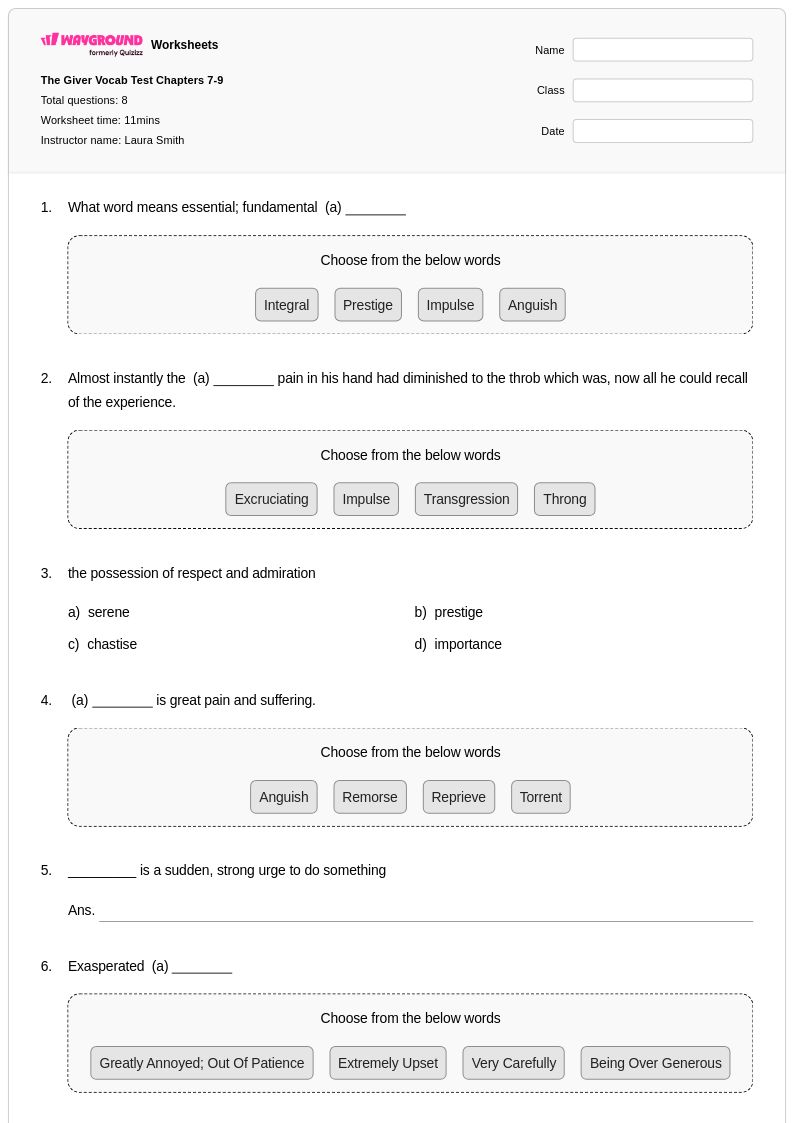
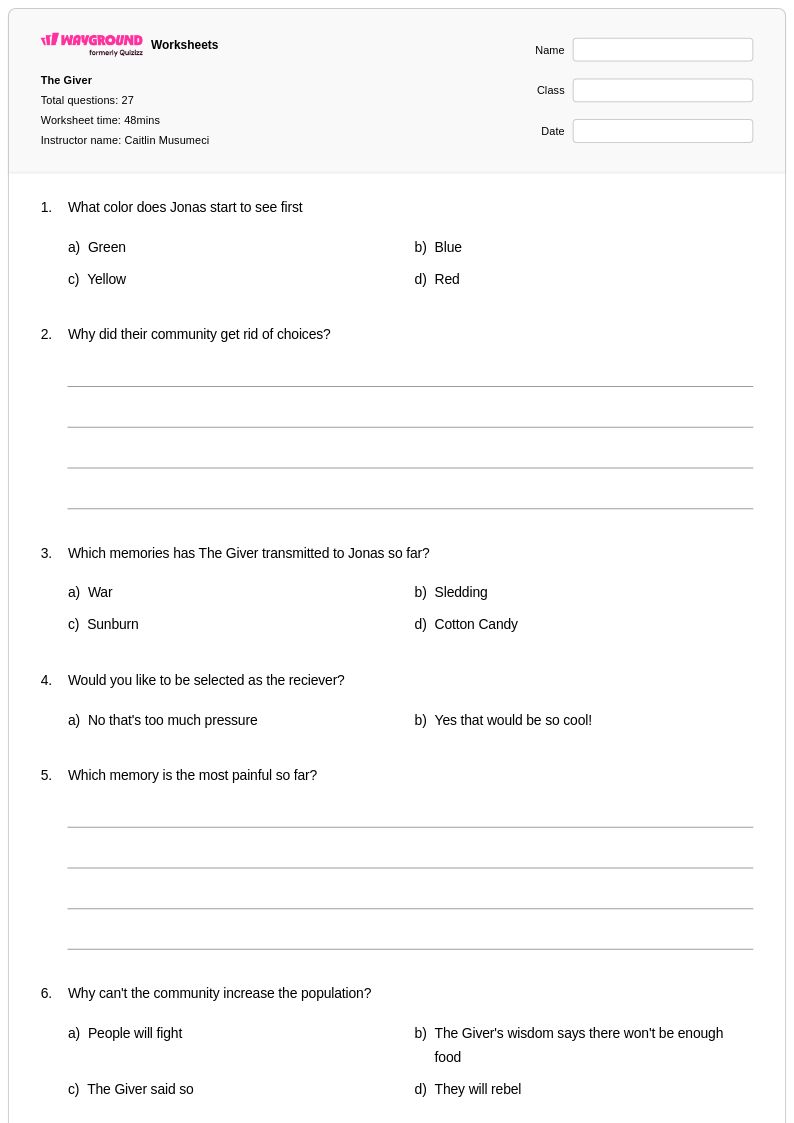
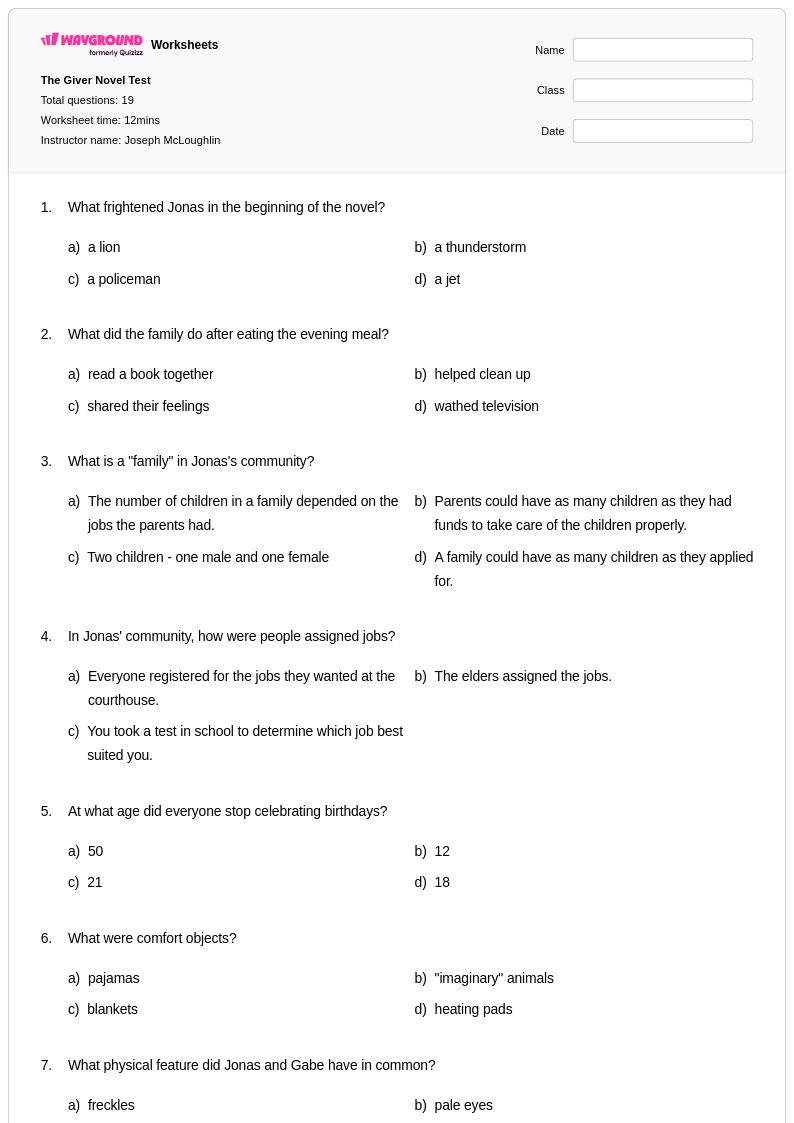
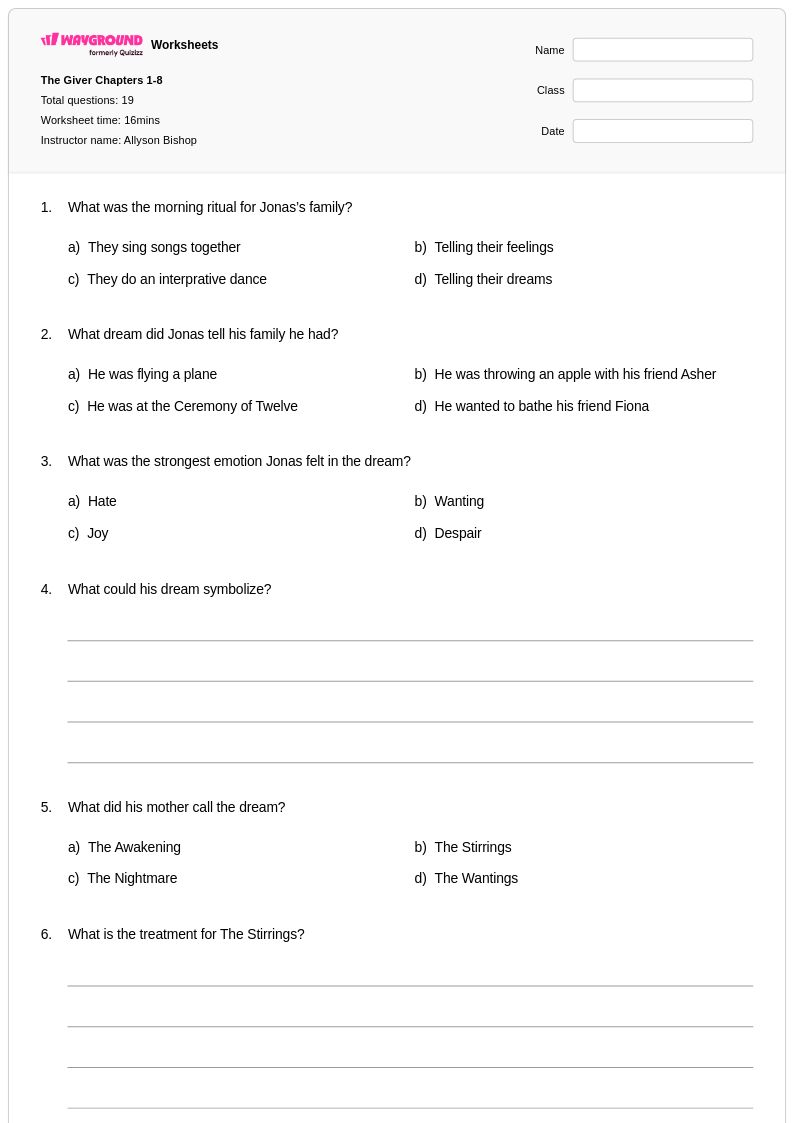
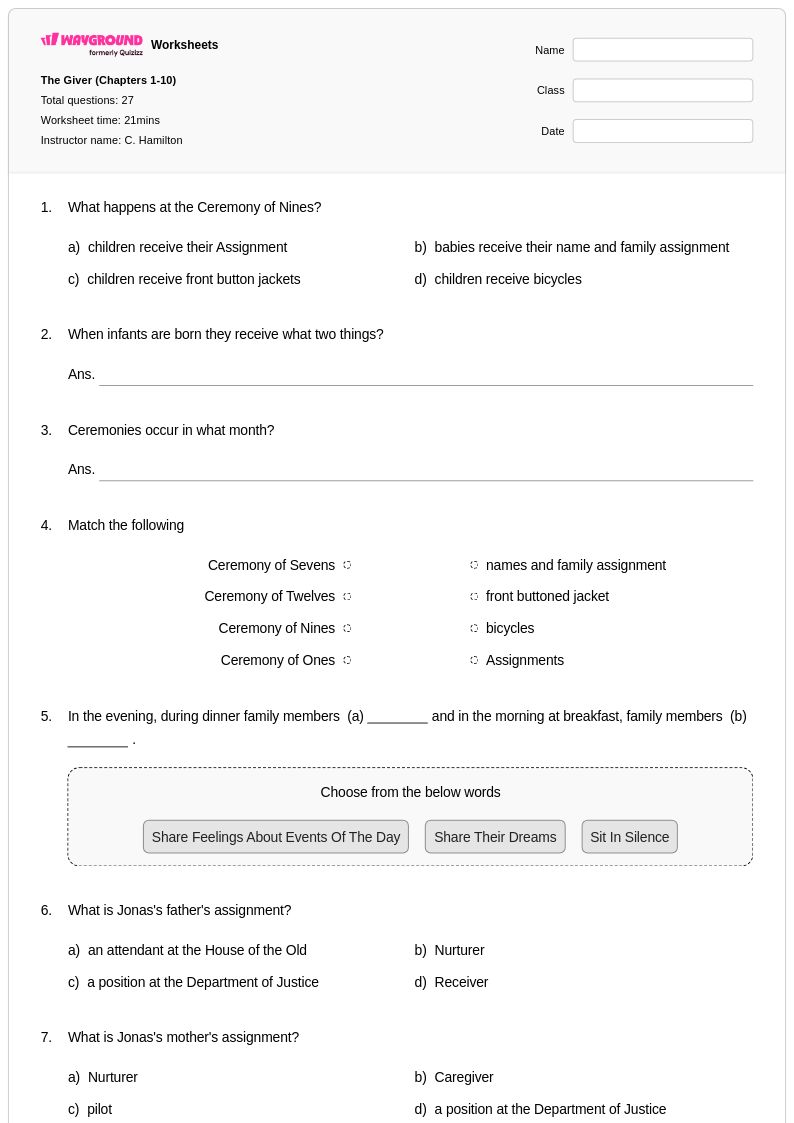
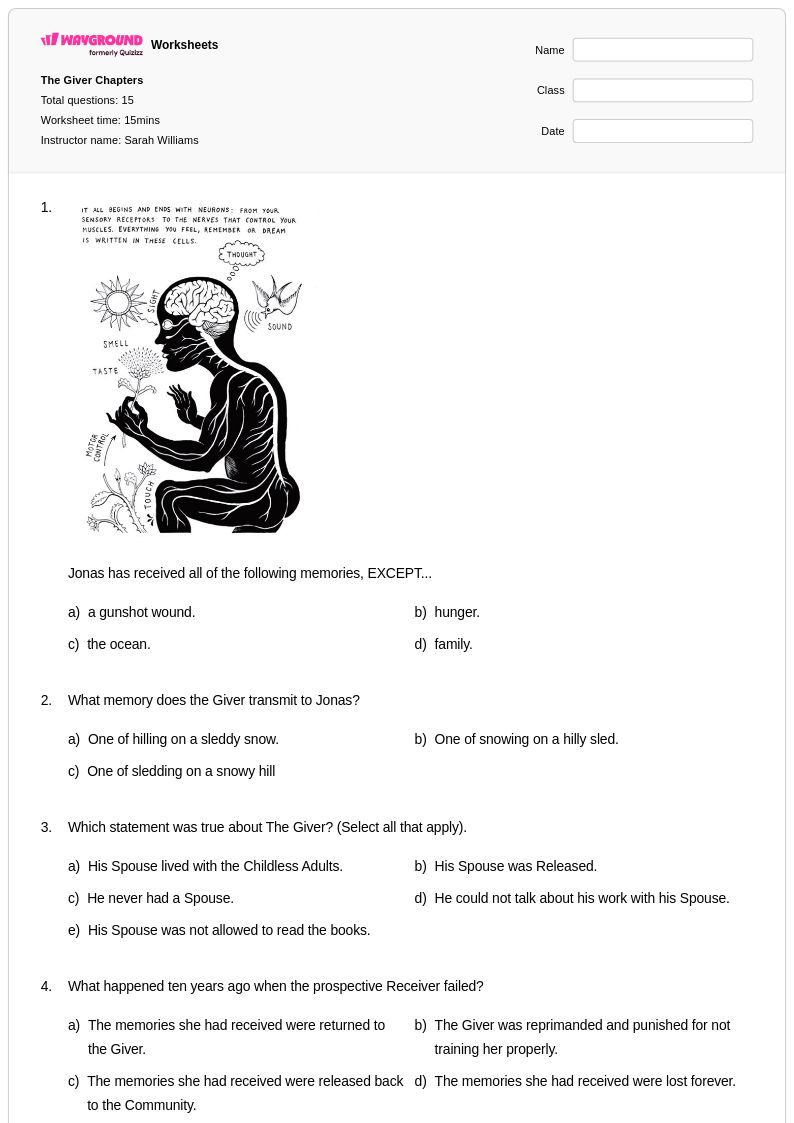
The Giver novel study worksheets for Class 7 students available through Wayground (formerly Quizizz) provide comprehensive resources for exploring Lois Lowry's acclaimed dystopian masterpiece. These expertly crafted worksheets strengthen critical reading comprehension skills by guiding students through complex themes such as conformity, memory, and the value of human emotion within Jonas's carefully controlled society. Students engage with character analysis activities that examine Jonas's transformation from compliant citizen to questioning individual, while vocabulary exercises reinforce understanding of specialized terminology from the novel's unique world. The collection includes chapter-by-chapter comprehension questions, thematic analysis prompts, and creative writing extensions that encourage deeper literary interpretation. Each worksheet comes with a detailed answer key to support both independent study and classroom instruction, and all materials are available as free printables in convenient pdf format for seamless distribution and practice problems that reinforce essential reading skills.
Wayground (formerly Quizizz) empowers educators with access to millions of teacher-created resources specifically designed for Class 7 novel studies, featuring robust search and filtering capabilities that allow instructors to quickly locate materials aligned with their curriculum standards and learning objectives. The platform's differentiation tools enable teachers to customize worksheet difficulty levels, ensuring that advanced readers can tackle more challenging analytical tasks while struggling students receive additional scaffolding through guided comprehension activities. These flexible resources support diverse instructional needs, from whole-class novel discussions to individualized remediation and enrichment opportunities that extend beyond basic plot comprehension. Available in both printable and digital formats, including downloadable pdf versions, these worksheets seamlessly integrate into any classroom environment while providing teachers with the planning efficiency needed to deliver meaningful literary instruction that develops students' analytical thinking and written communication skills.
FAQs
How do I teach themes in The Giver effectively?
The Giver is rich with interconnected themes including conformity versus individuality, the cost of a painless society, and the importance of memory and emotion. Effective teaching strategies include Socratic seminars around Jonas's growing awareness of his community's sacrifices, close reading activities that trace how Lowry builds the dystopian world through selective detail, and compare-and-contrast tasks that ask students to evaluate the Community's values against their own. Anchoring each theme to specific chapters and character decisions helps students move beyond surface-level summaries into genuine literary analysis.
What character analysis exercises work well for The Giver?
Strong character analysis for The Giver focuses on Jonas's transformation from a compliant citizen to a moral agent, as well as the role characters like The Giver, Fiona, and Gabriel play in that arc. Useful exercises include tracking Jonas's emotional development across chapters, analyzing how the Chief Elder and other figures enforce conformity, and examining what the Receiver of Memory role reveals about how the Community controls knowledge. Character motivation charts and evidence-based response prompts push students to support their interpretations with textual evidence rather than personal reaction.
What literary elements should students focus on when studying The Giver?
Key literary elements in The Giver include symbolism, such as the significance of color, the river, and the apple Jonas first notices changing; conflict, both internal and societal; and point of view, since the limited third-person narration mirrors Jonas's restricted understanding of his world. Foreshadowing is also central to Lowry's craft, making it a productive focus for close reading exercises. Teaching these elements together helps students see how Lowry's stylistic choices reinforce the novel's thematic concerns about truth, freedom, and controlled perception.
What mistakes do students commonly make when analyzing The Giver?
One of the most common errors is treating the Community as straightforwardly villainous rather than exploring the novel's more unsettling question of whether a painless, orderly society could be genuinely appealing to some. Students also frequently misread the ambiguous ending, either insisting it is happy or tragic without engaging with Lowry's deliberate openness. Another recurring issue is conflating Jonas's evolving perspective with Lowry's authorial stance, which can flatten the novel's complexity. Guiding students back to textual evidence and asking them to hold competing interpretations simultaneously addresses most of these patterns.
How can I use The Giver worksheets to assess reading comprehension throughout the novel?
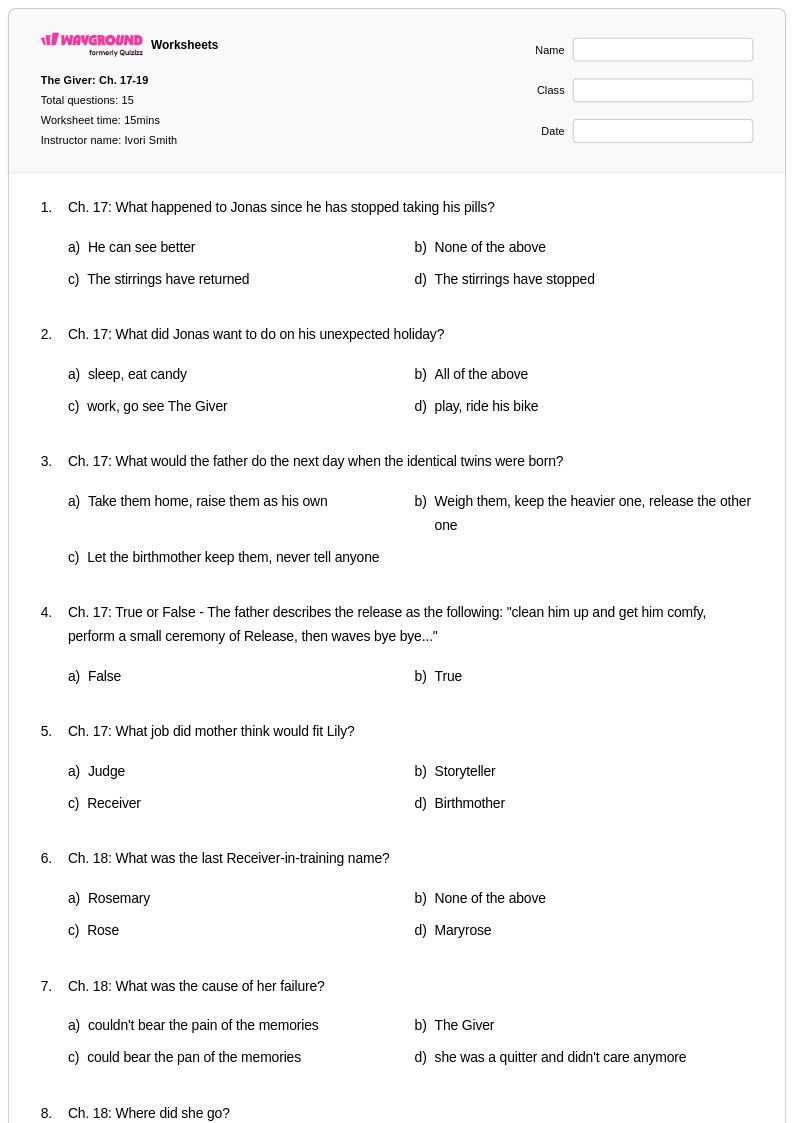
Comprehension checks work best when distributed chapter-by-chapter during a novel study rather than saved for the end, since The Giver builds dramatic irony gradually and students benefit from processing each revelation as it occurs. Worksheets that combine factual recall questions with short analytical prompts allow teachers to distinguish between students who are following the plot and those who are developing interpretive skills. Using these materials at key turning points, such as after the Ceremony of Twelve, the memory transmission scenes, and the final chapters, gives teachers actionable data on where individual students need additional support.
How do I use The Giver worksheets from Wayground in my classroom?
The Giver worksheets on Wayground are available as printable PDFs, making them easy to distribute in traditional classroom settings, and in digital formats that integrate smoothly into technology-based or hybrid instruction. Teachers can host worksheets as quizzes directly on Wayground, enabling real-time progress tracking. All worksheets include complete answer keys, reducing preparation time and supporting consistent grading. Wayground also allows teachers to apply individual accommodations, such as extended time, read-aloud support, or reduced answer choices, so the same worksheet can meet the needs of diverse learners simultaneously.