Free Printable Formatting Titles Worksheets for Class 12
Class 12 students can master proper title formatting techniques with these free English worksheets and printables, featuring comprehensive practice problems and answer keys to develop essential writing process skills.
Explore printable Formatting Titles worksheets for Class 12
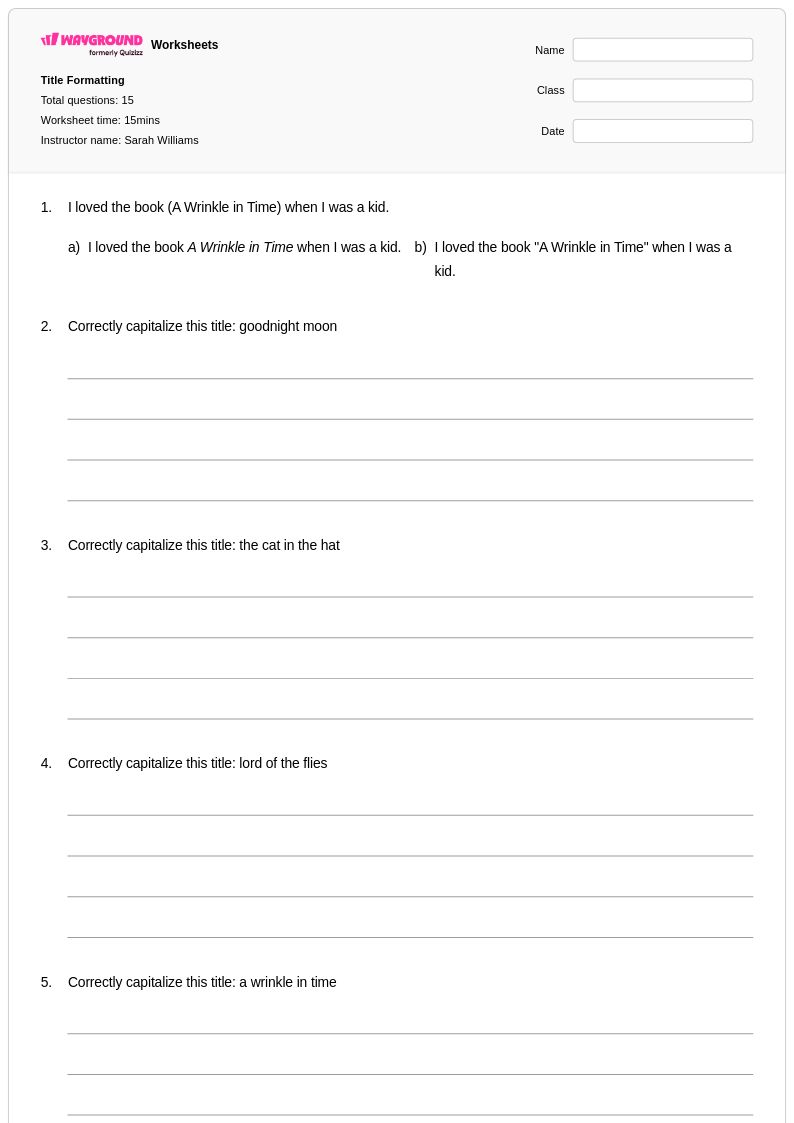
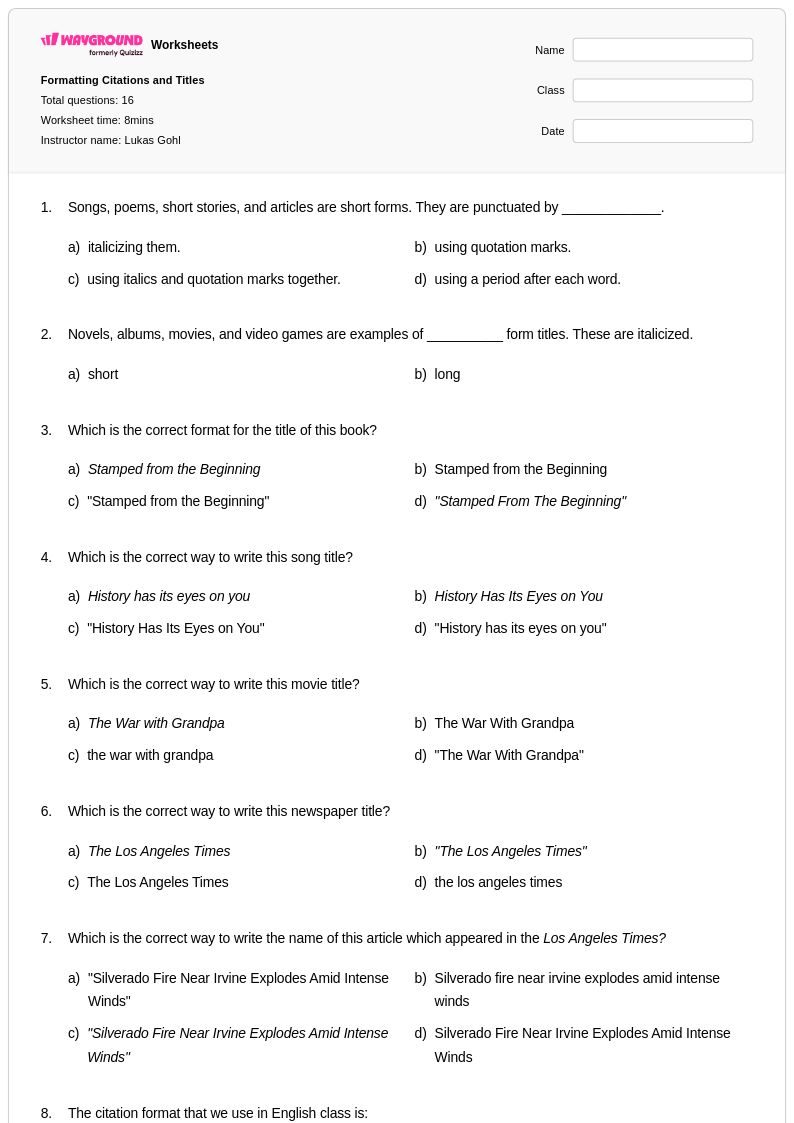
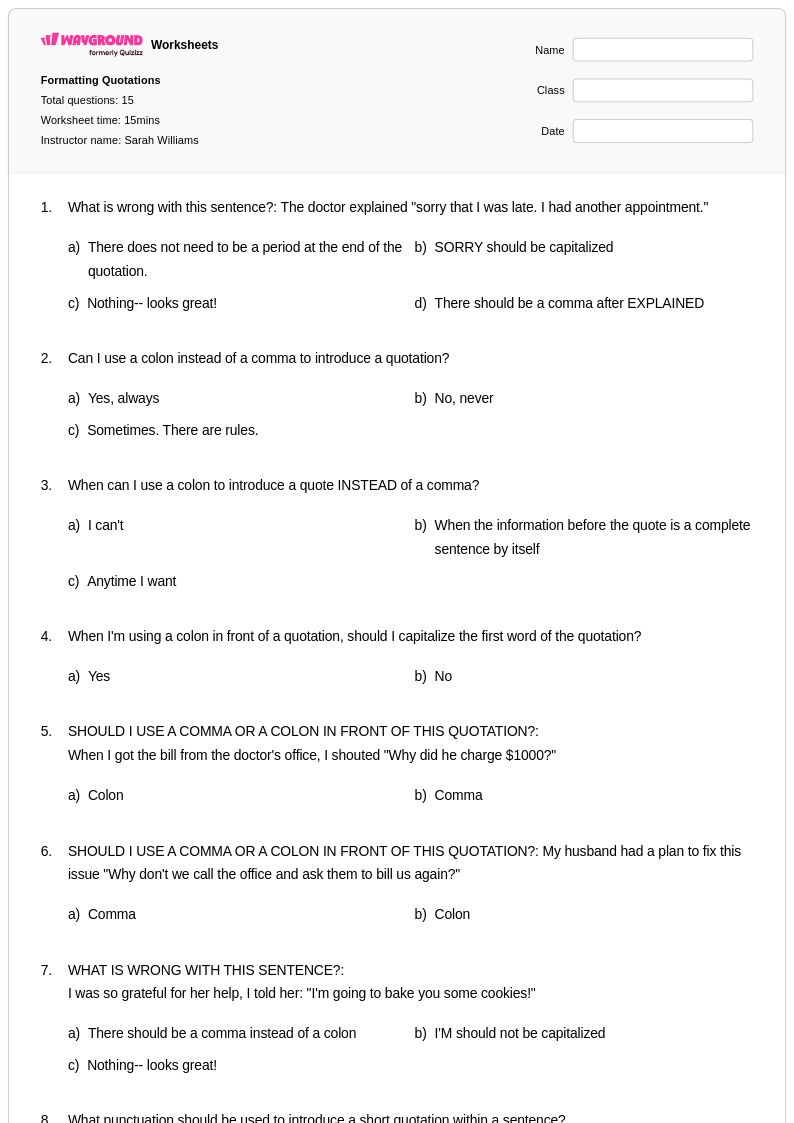
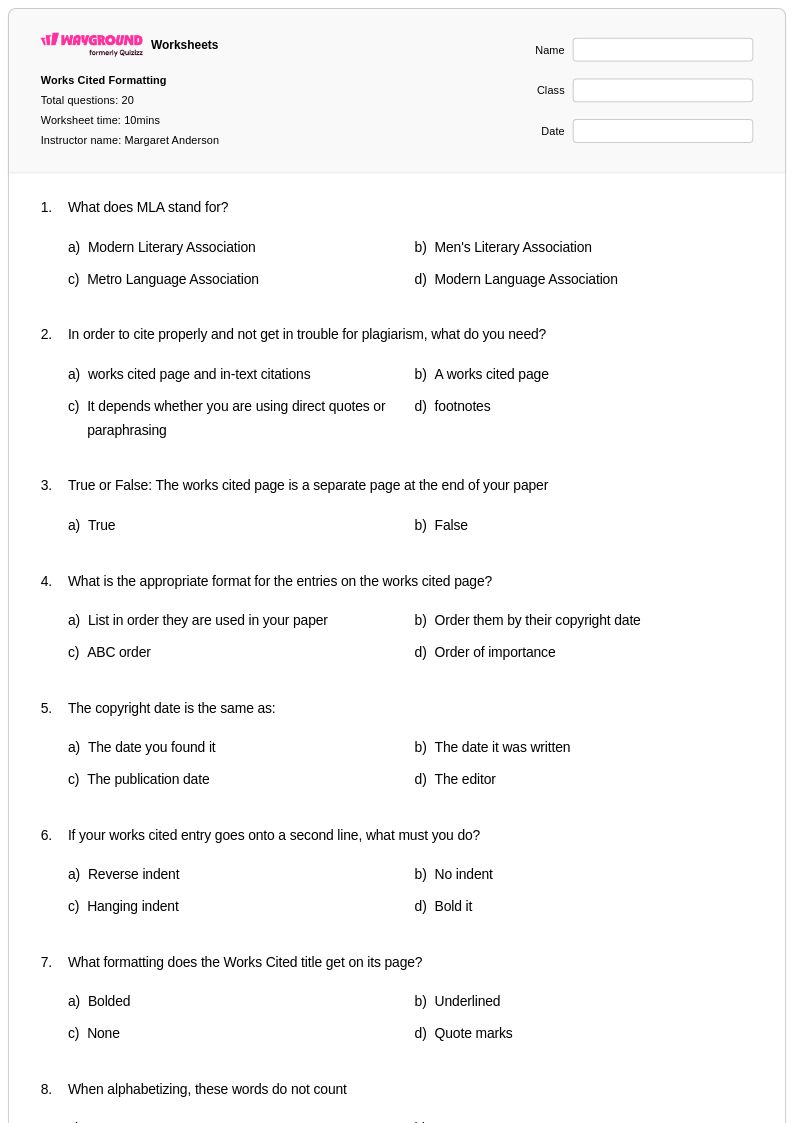
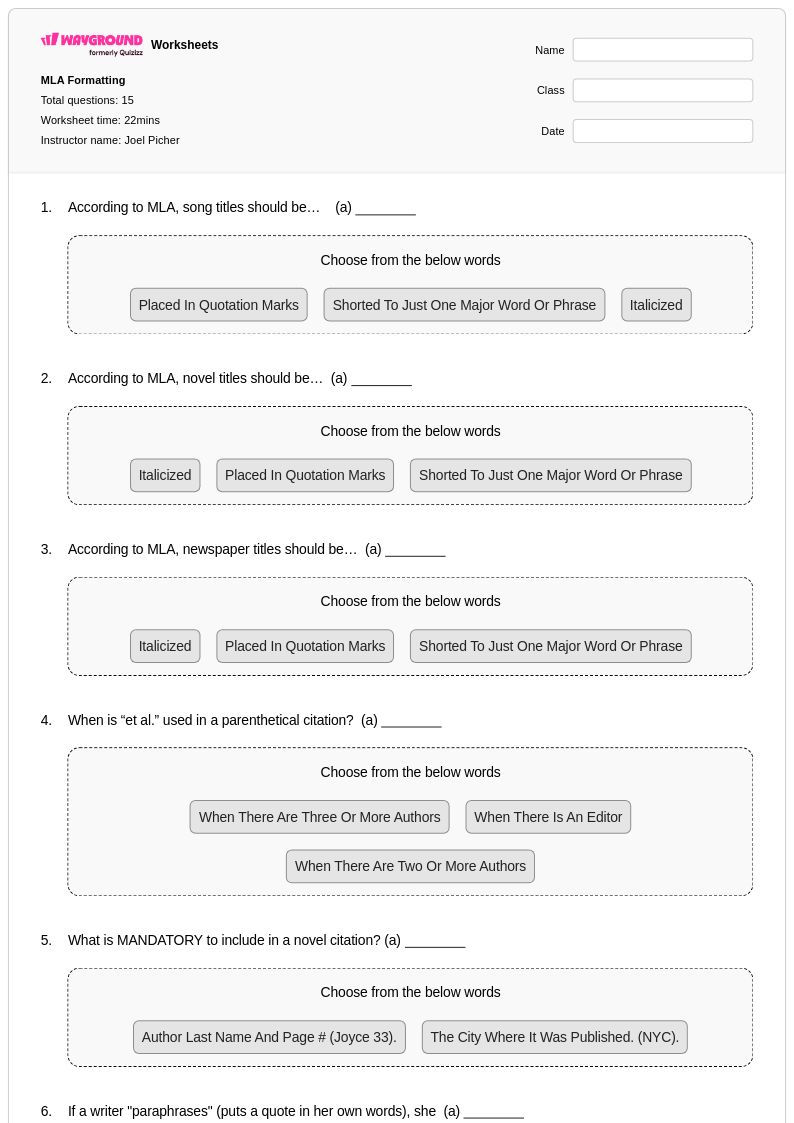
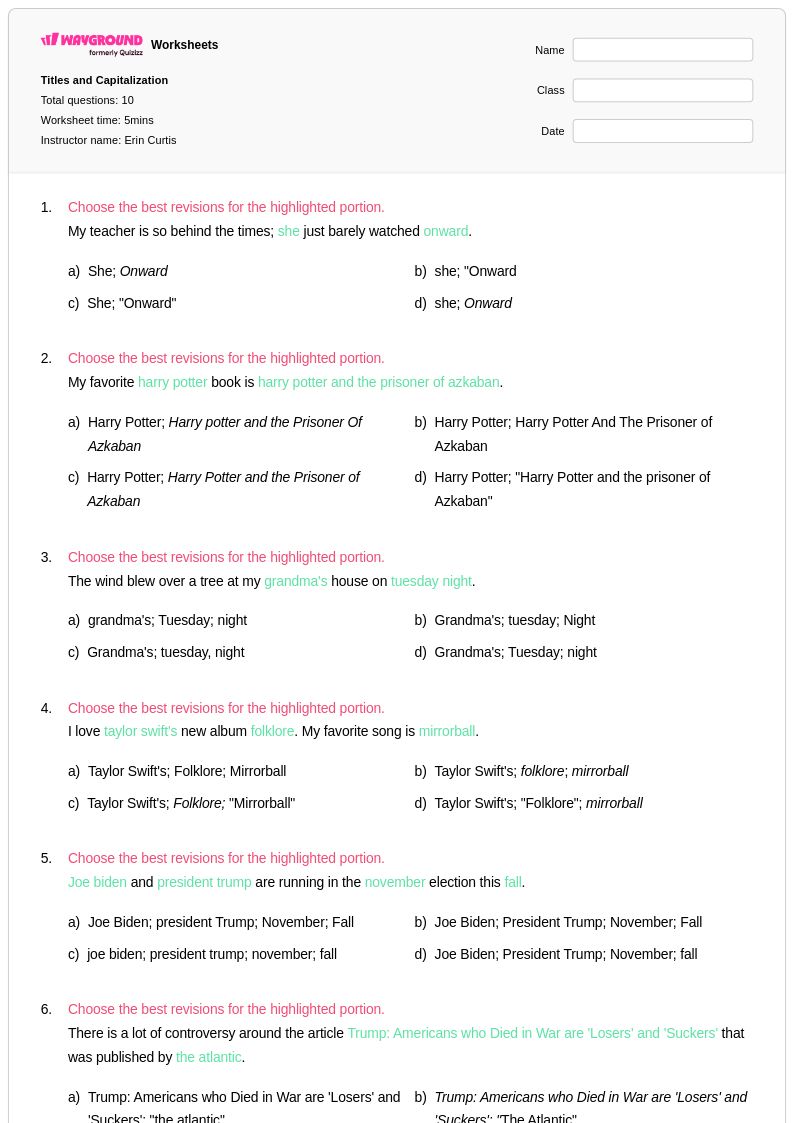
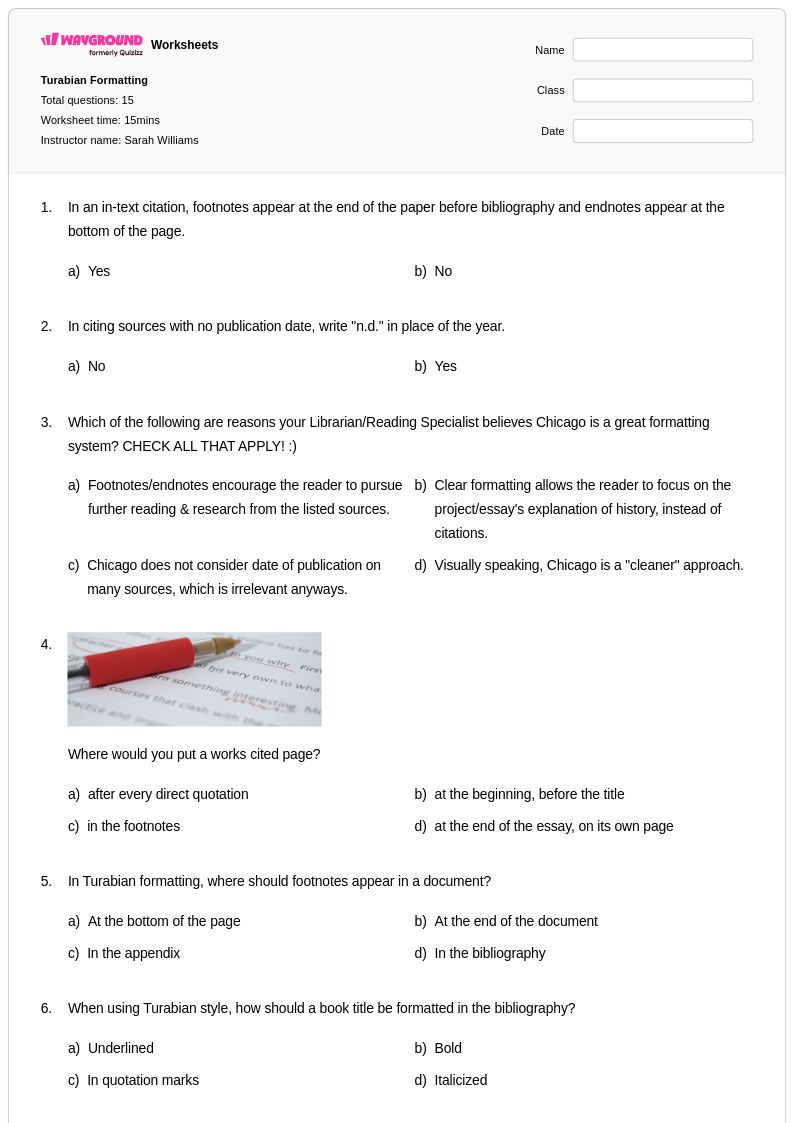
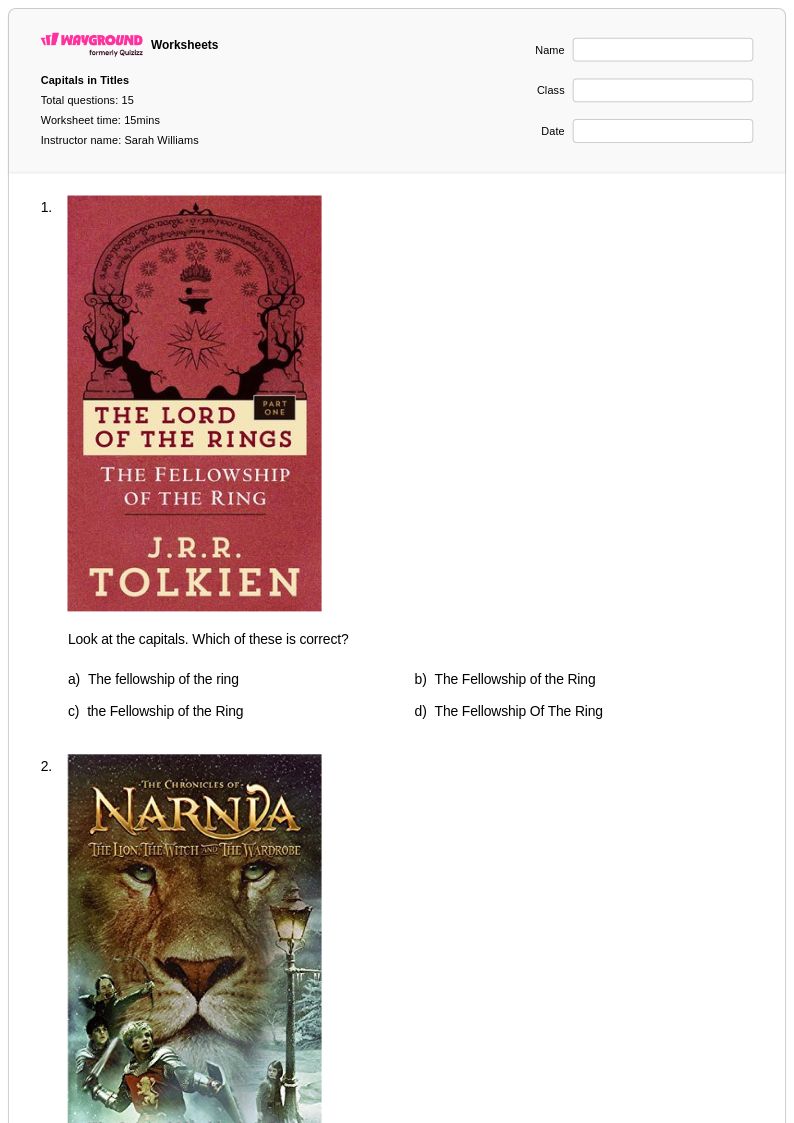
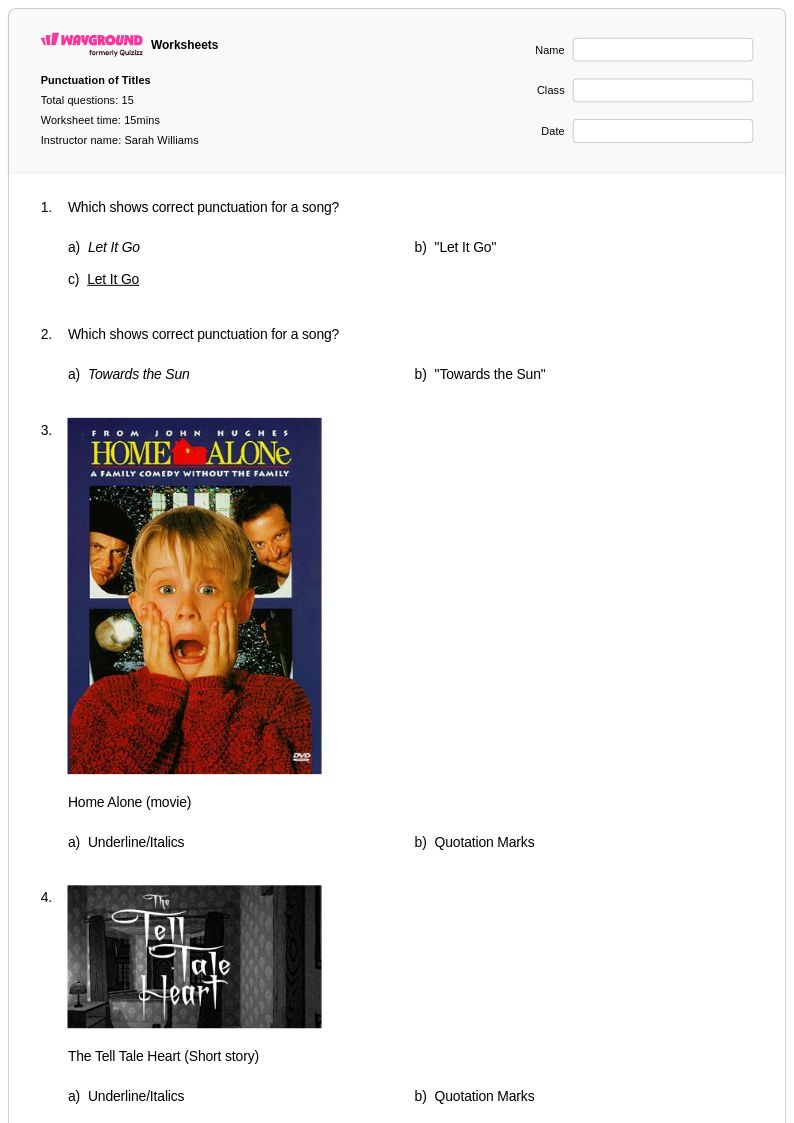
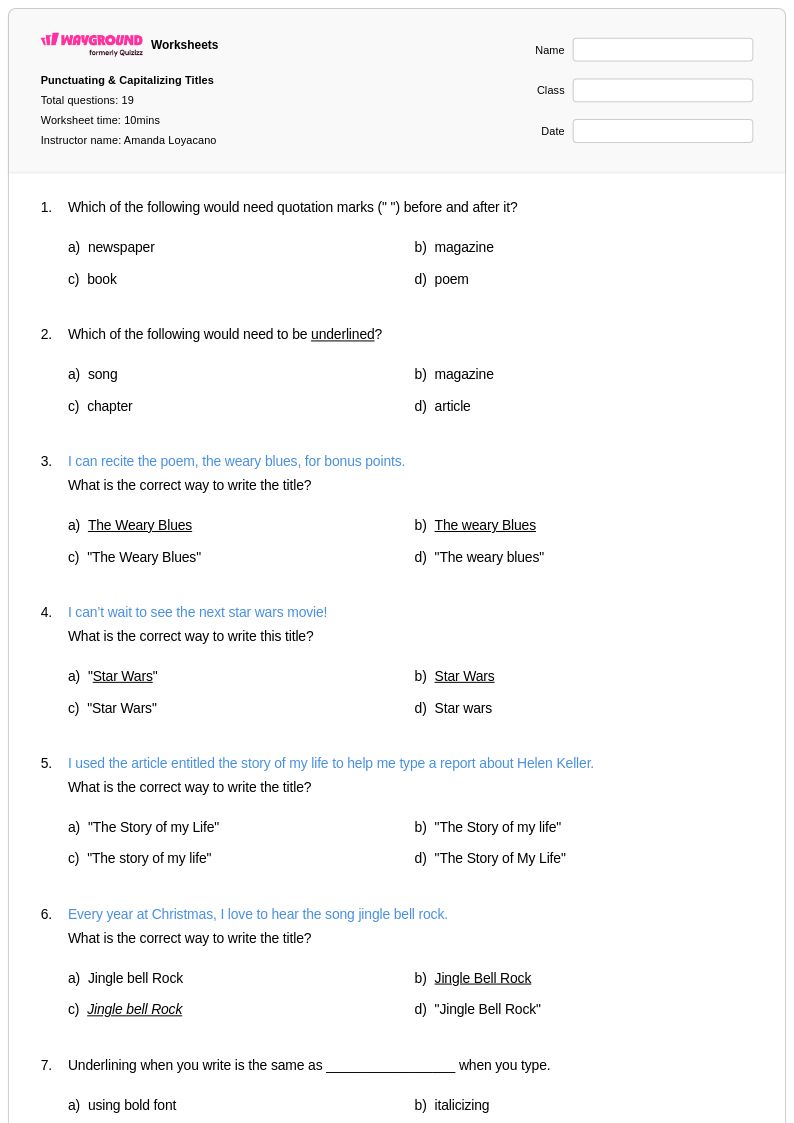
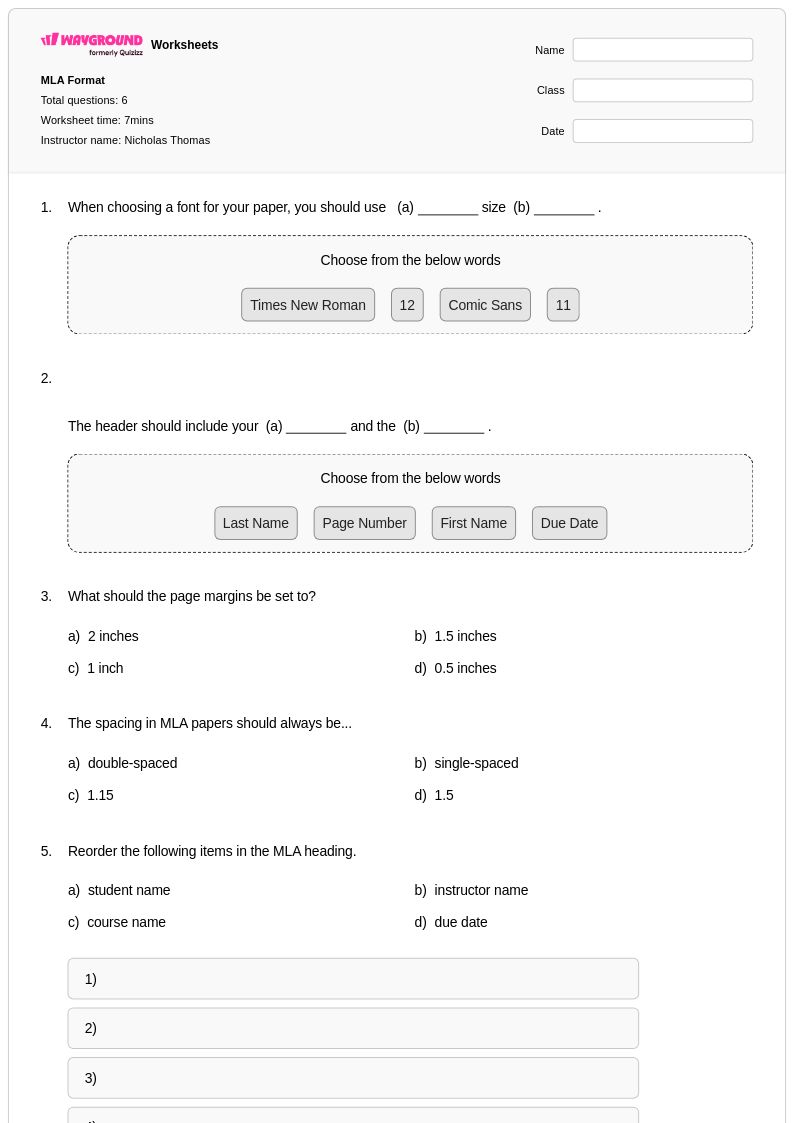
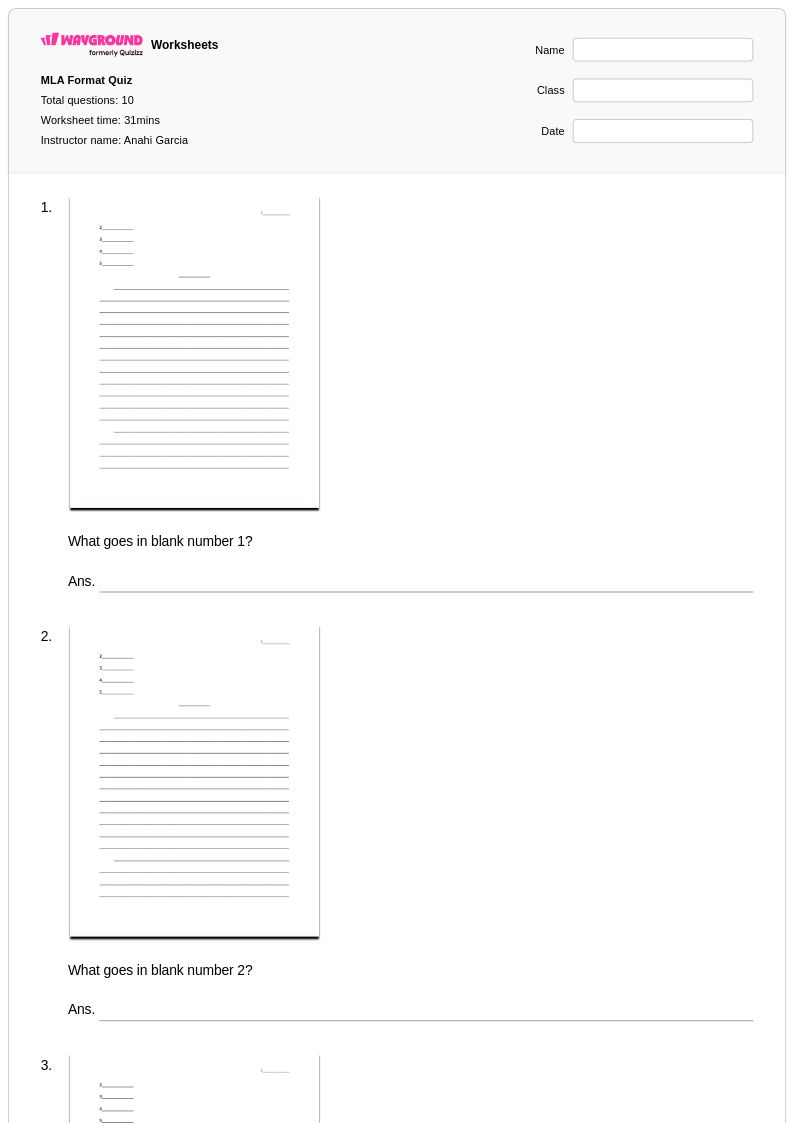
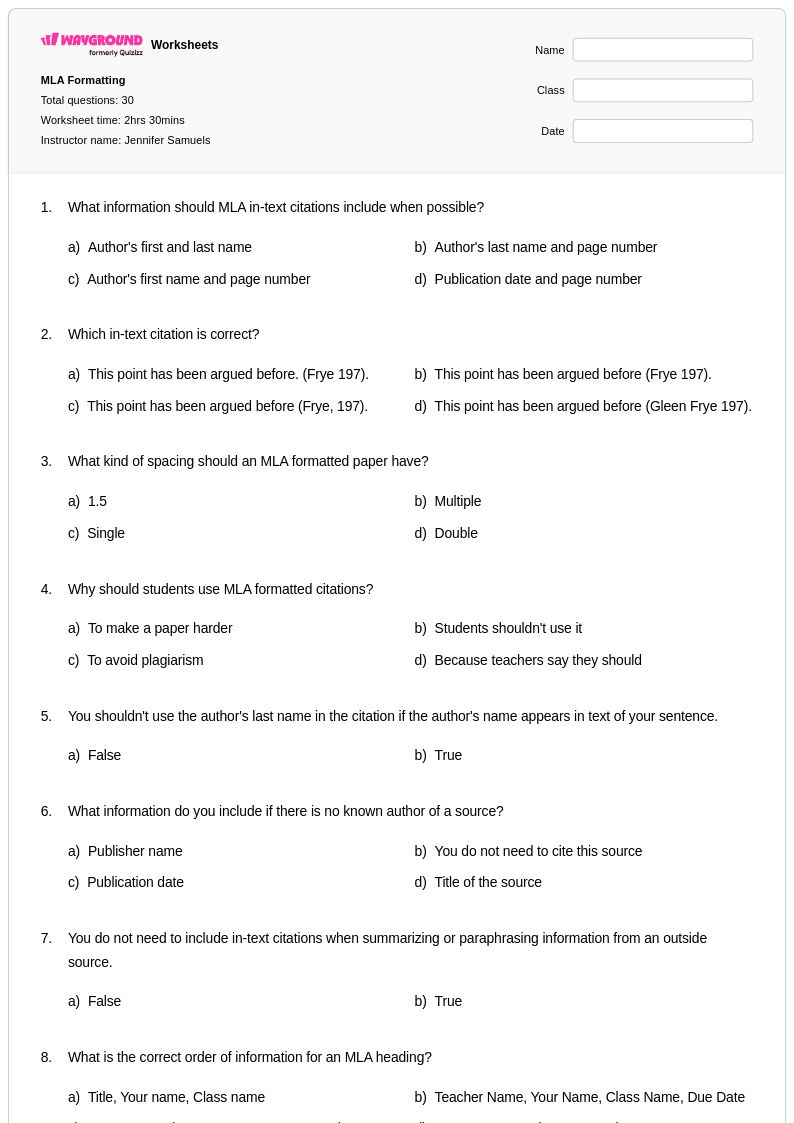
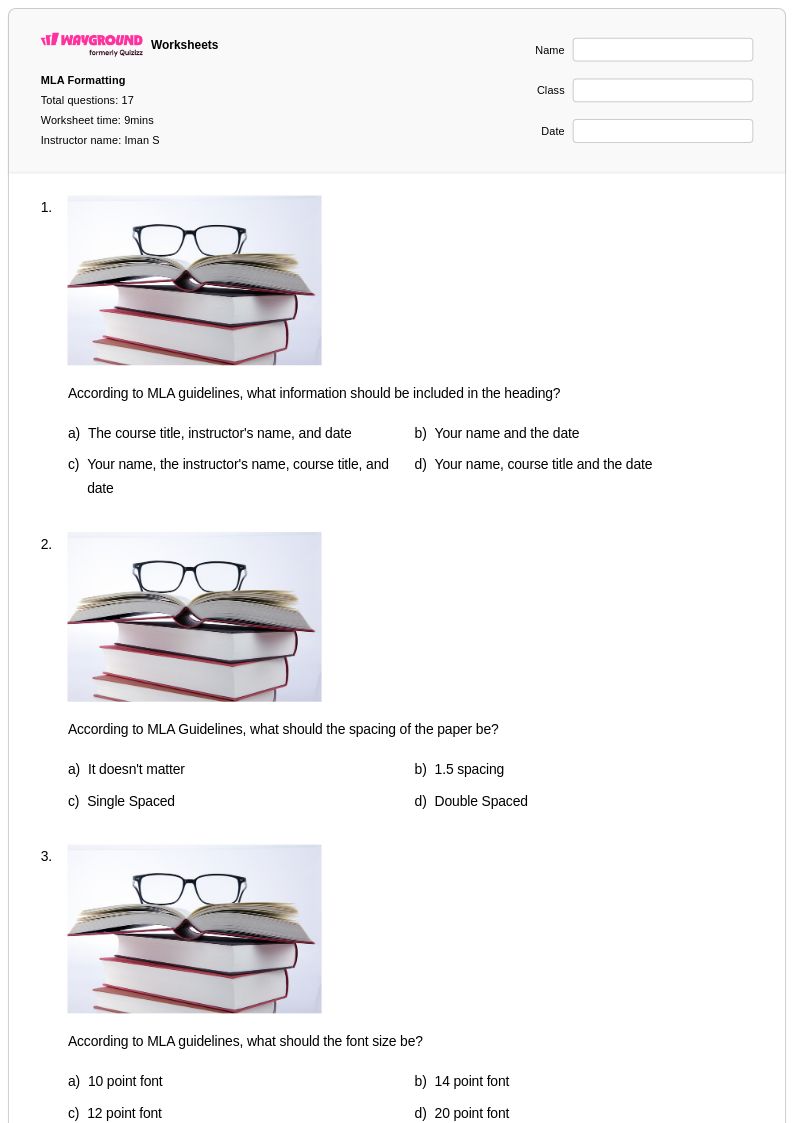
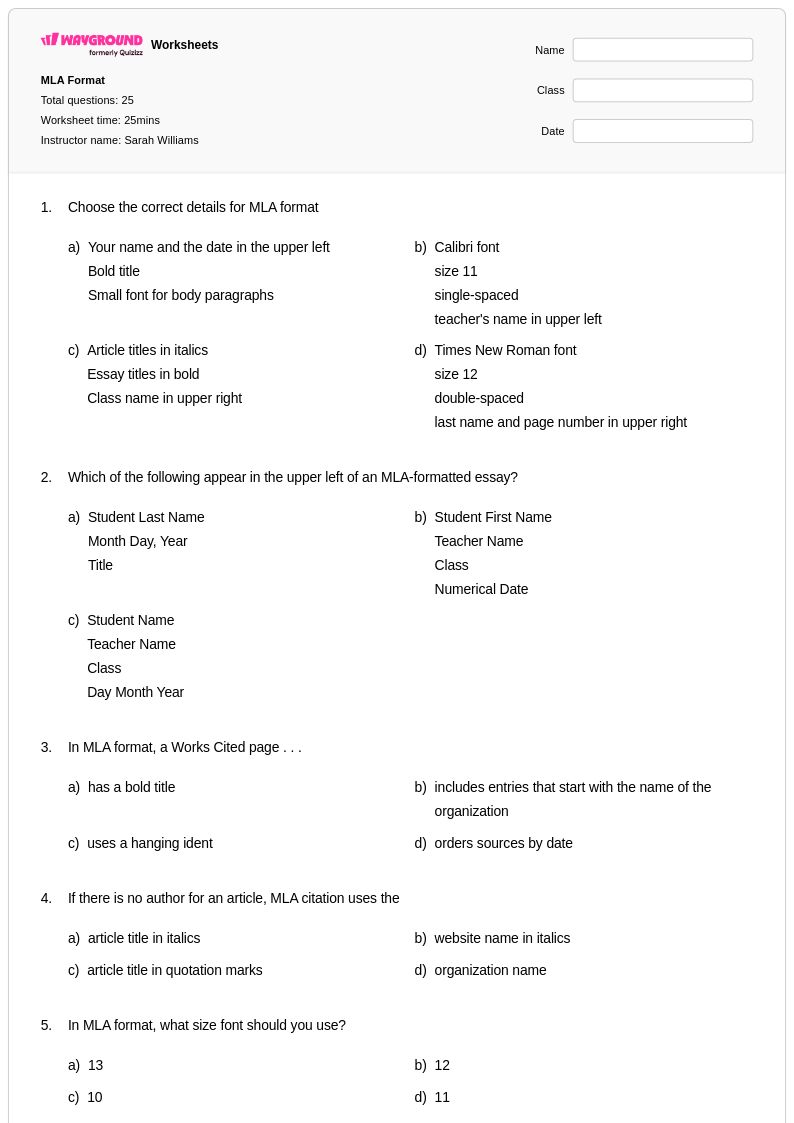
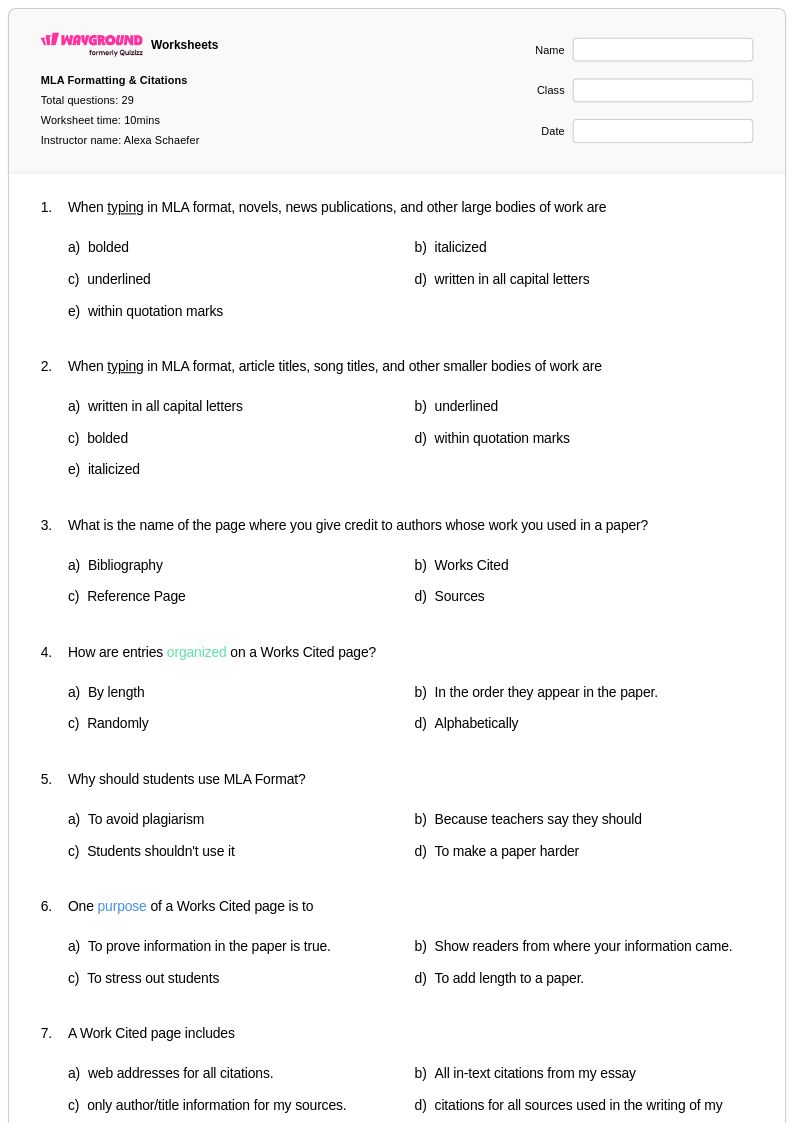
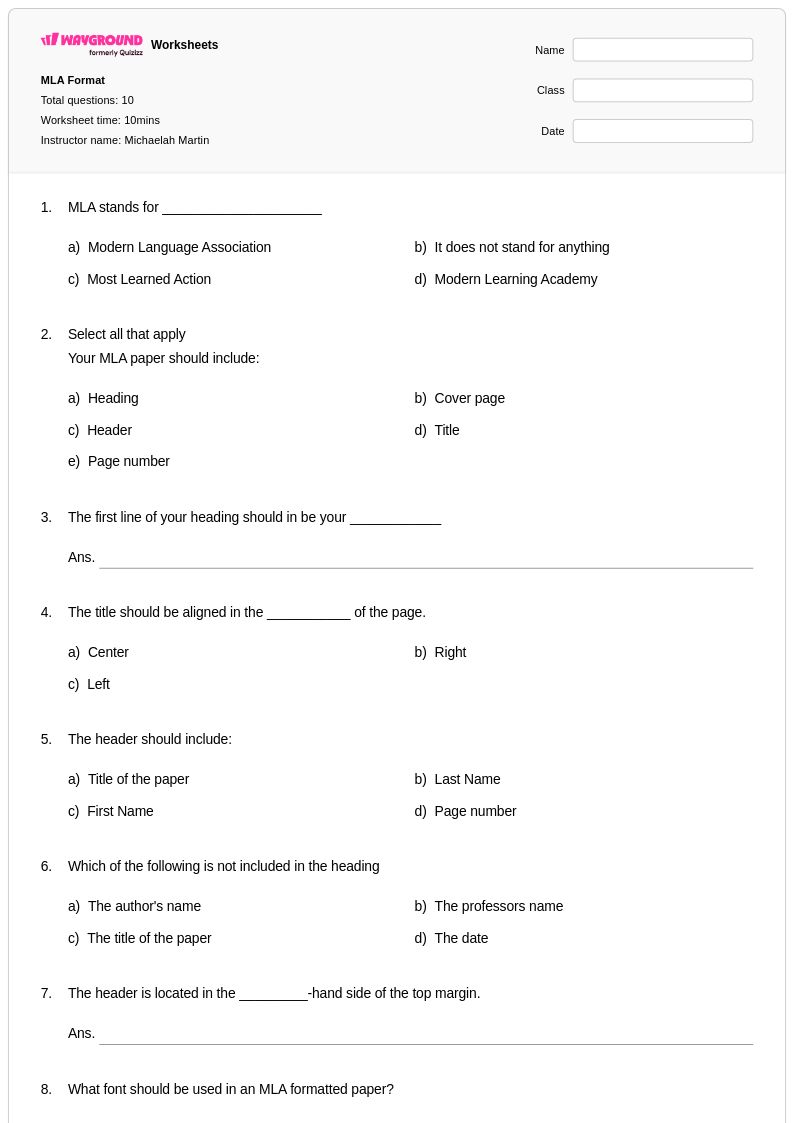
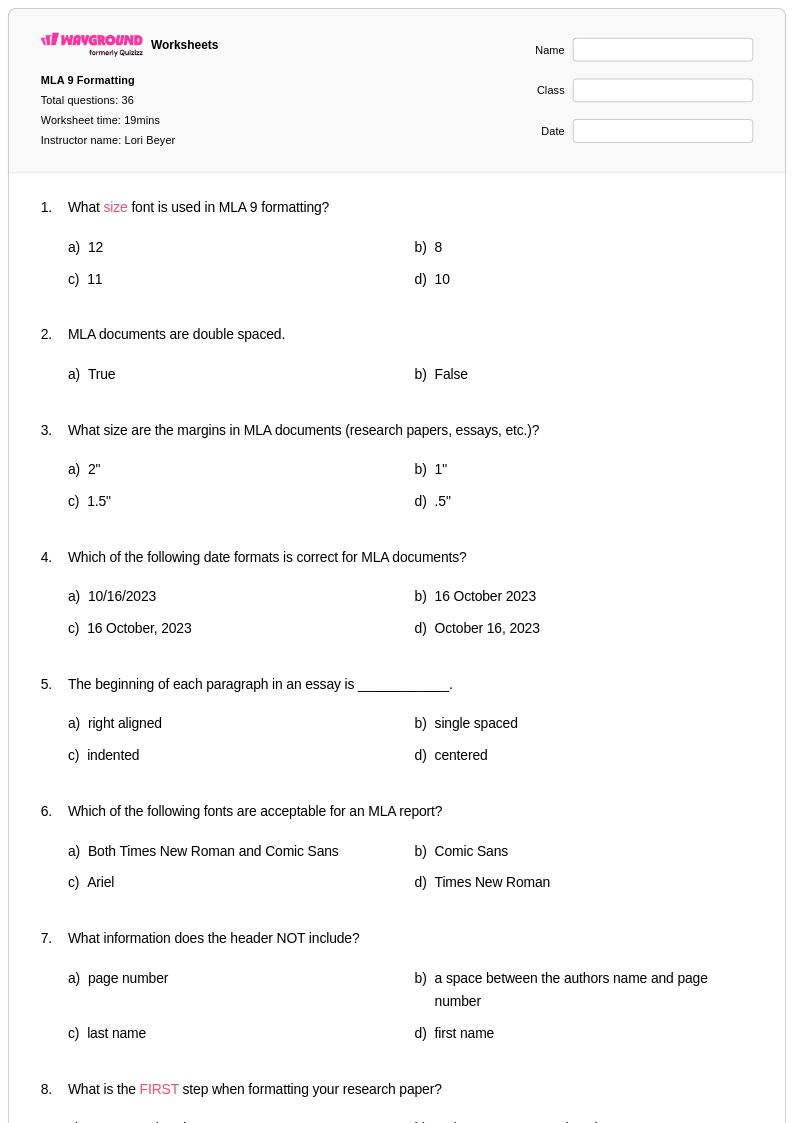
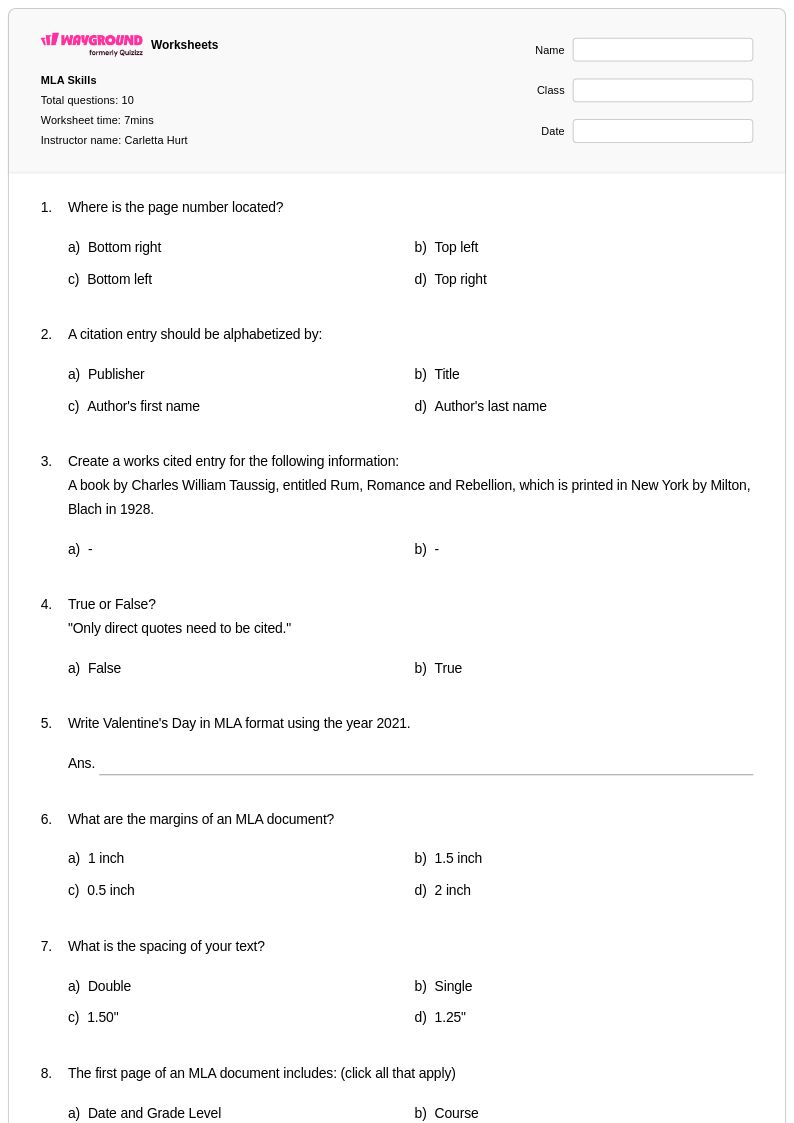
Formatting titles represents a critical component of the writing process for Class 12 students as they prepare for college-level academic writing and professional communication. Wayground's comprehensive collection of formatting titles worksheets provides students with essential practice in applying proper conventions for various types of written works, including essays, research papers, creative pieces, and multimedia projects. These worksheets strengthen students' understanding of capitalization rules, punctuation placement, font requirements, and citation formatting across different style guides such as MLA, APA, and Chicago. Through targeted practice problems and detailed answer key materials, students develop the precision and consistency needed for polished academic writing. The free printable resources offer systematic skill-building opportunities that help students master the nuanced rules governing title formatting in both traditional and digital media contexts.
Wayground supports educators with millions of teacher-created resources specifically designed to enhance Class 12 writing instruction, including extensive formatting titles worksheet collections that align with state and national English language arts standards. Teachers can efficiently locate appropriate materials through robust search and filtering capabilities, allowing them to quickly identify worksheets that match their students' specific skill levels and curricular requirements. The platform's differentiation tools enable educators to customize pdf worksheets and digital activities for diverse learning needs, supporting both remediation for struggling writers and enrichment for advanced students. These flexible formatting resources are available in both printable and interactive digital formats, making them ideal for traditional classroom instruction, homework assignments, writing centers, and independent practice sessions that reinforce proper title formatting conventions across all genres of academic and creative writing.
FAQs
How do I teach students when to italicize versus use quotation marks for titles?
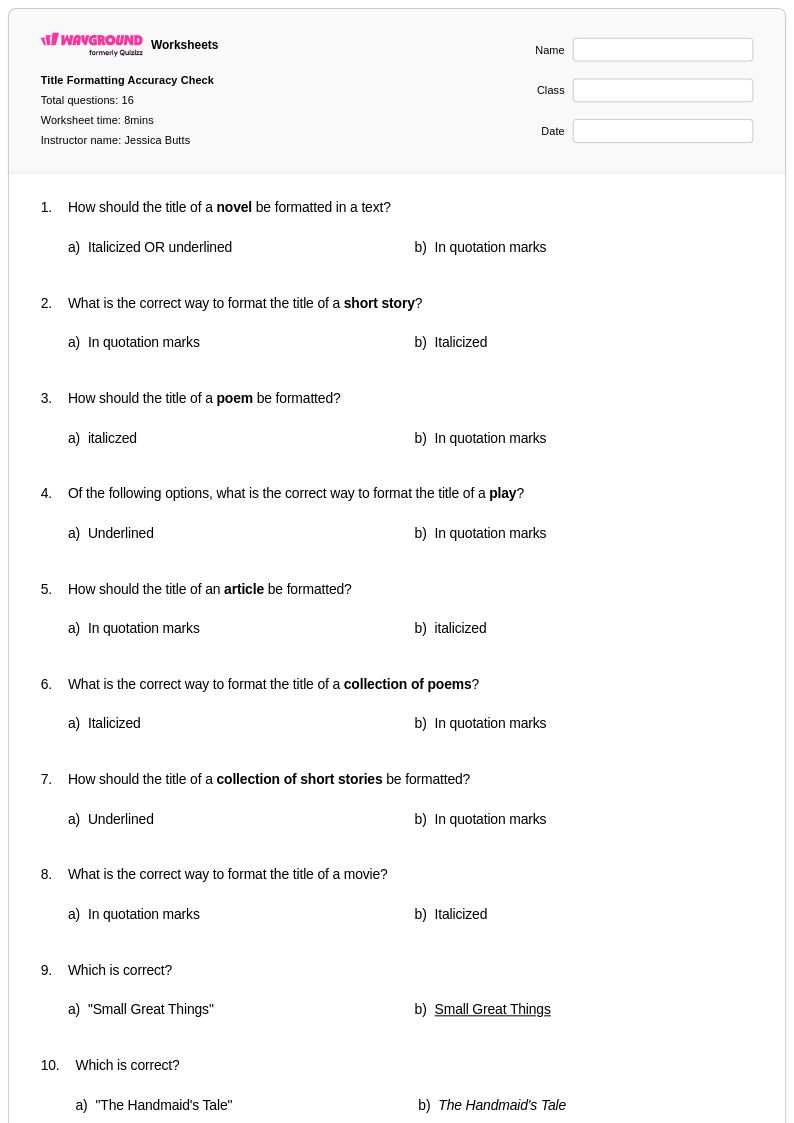
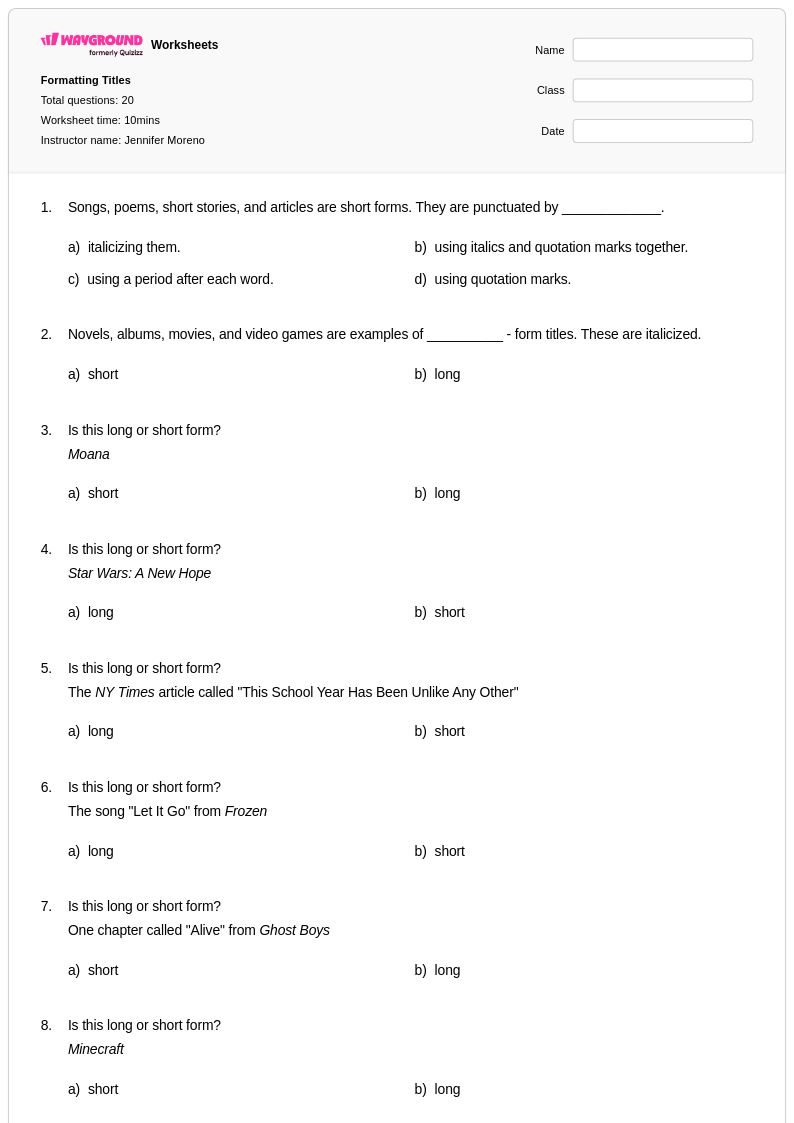
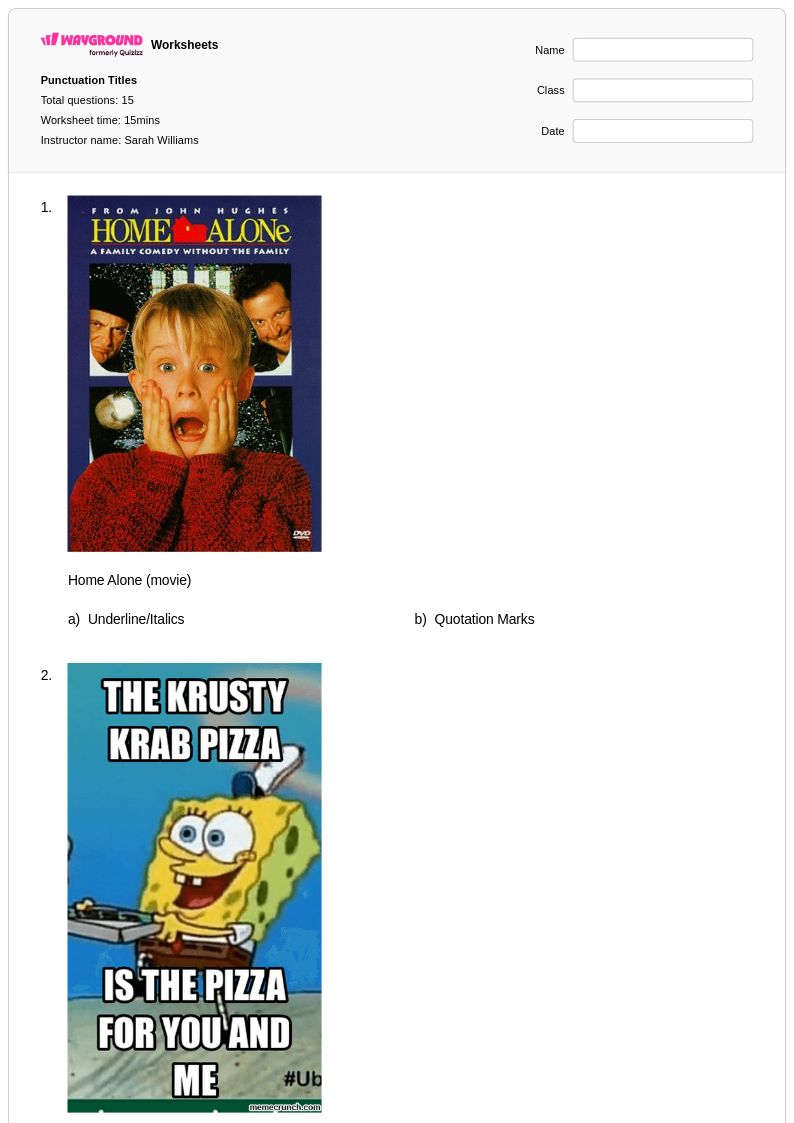
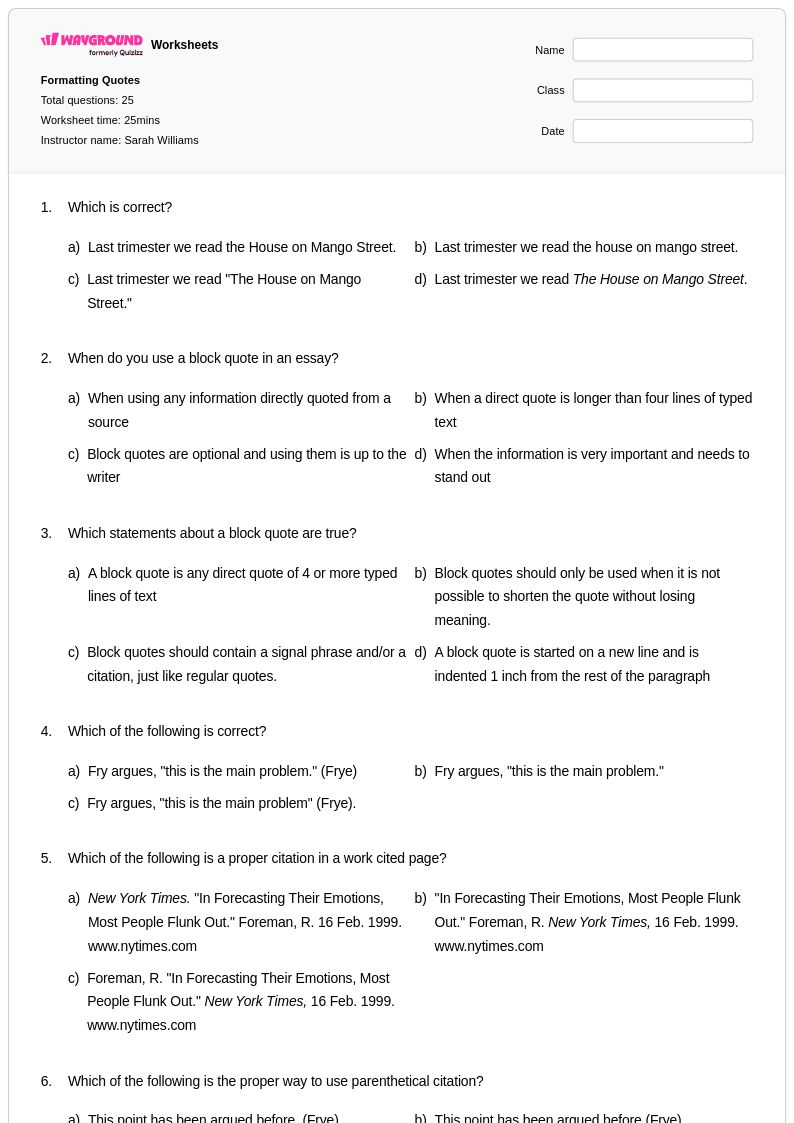
The core rule is that longer, standalone works such as books, films, albums, and newspapers are italicized, while shorter works contained within a larger collection, such as short stories, poems, songs, and articles, are placed in quotation marks. A useful classroom anchor is to ask students whether the work 'stands alone' or 'lives inside something else.' Consistent exposure to both categories through categorization exercises helps students internalize the distinction before applying it in their own writing.
What exercises help students practice title capitalization rules?
Effective practice exercises include rewriting incorrectly formatted titles, identifying which words in a title should and should not be capitalized, and sorting word types such as nouns, verbs, adjectives, prepositions, and articles into 'capitalize' and 'lowercase' columns. Sentence-level editing tasks, where students correct a passage containing multiple title errors, build transferable proofreading skills. Progressing from simple book titles to multi-word academic paper titles ensures students encounter the full range of capitalization decisions they will face in real writing.
What mistakes do students commonly make when formatting titles?
The most frequent errors include capitalizing every word in a title regardless of word class, forgetting to capitalize the first and last word regardless of their type, and confusing when to use italics versus quotation marks. Students also commonly overgeneralize one style guide's rules, applying MLA conventions in an APA context or vice versa. Another persistent mistake is failing to format titles consistently within a single document, alternating between underlining and italics without a clear rationale.
How do I explain the difference between MLA, APA, and Chicago title formatting to middle or high school students?
The clearest approach is to anchor each style guide to a discipline: MLA is used in English and humanities, APA in psychology and social sciences, and Chicago in history and some professional writing. All three capitalize major words but differ in how they handle source lists, in-text citations, and specific punctuation conventions. Teaching students to identify which style guide a class or assignment requires before they format any titles prevents the most common cross-style errors.
How can I use formatting titles worksheets in my classroom?
Formatting titles worksheets on Wayground are available as printable PDFs for traditional classroom distribution and in digital formats for technology-integrated or remote learning environments, and can also be hosted as a quiz directly on Wayground. Teachers can use them for targeted skill practice during writing units, as remediation for students who struggle with capitalization and punctuation conventions, or as enrichment activities that challenge advanced learners to apply formatting rules across multiple genres and style guides. Each worksheet includes a complete answer key, enabling immediate feedback whether used as a guided lesson, independent practice, or self-assessment activity.
How do I support students who struggle with formatting titles while keeping the rest of the class moving forward?
On Wayground, teachers can apply individual accommodations such as reduced answer choices to lower cognitive load for struggling students, or enable Read Aloud so that question text is read to students who need additional support processing written instructions. These settings can be assigned to specific students while the rest of the class completes the default version, and they carry over to future sessions without requiring setup each time. This allows teachers to differentiate formatting titles practice without creating separate lesson plans or singling students out in front of their peers.