
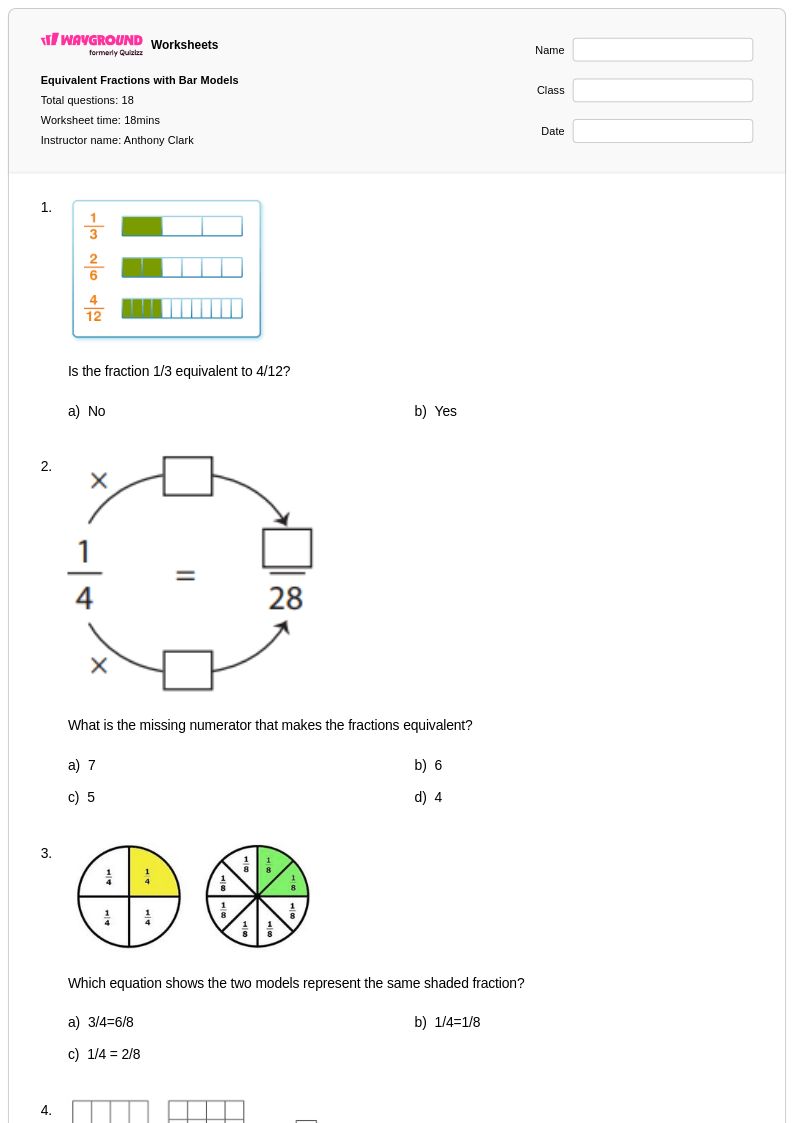
18 Q
4th - Uni
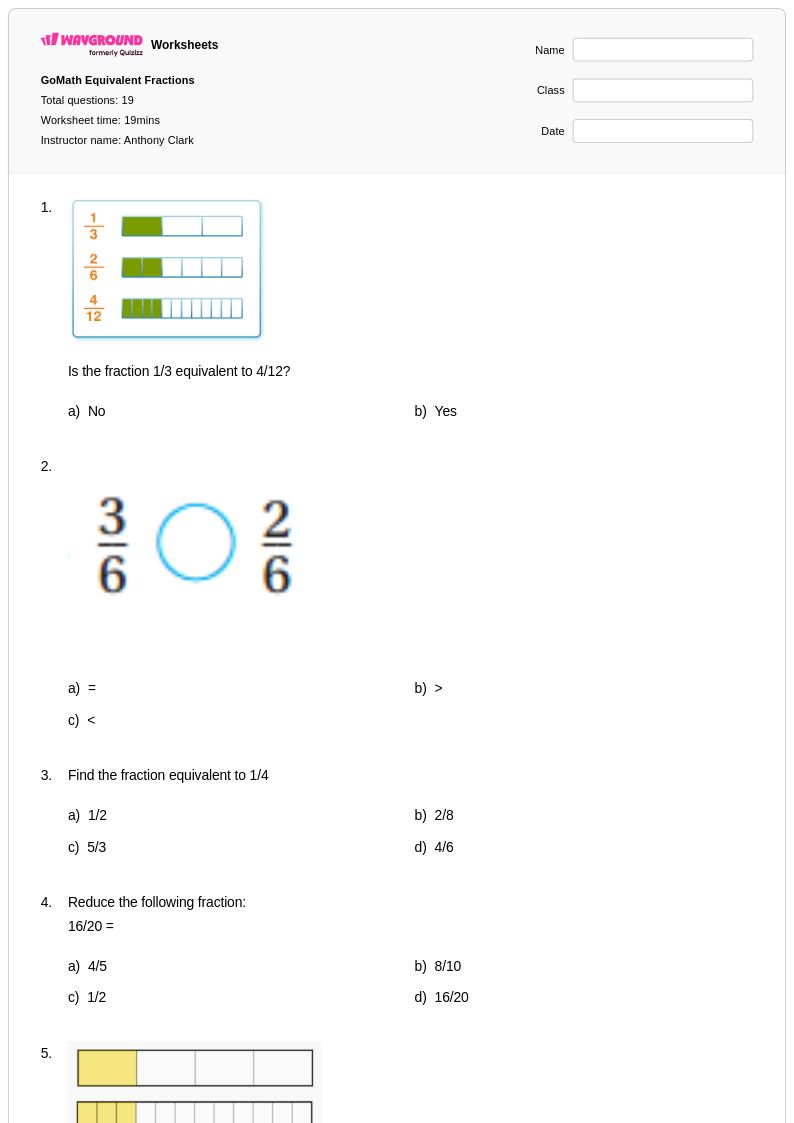
19 Q
4th - Uni
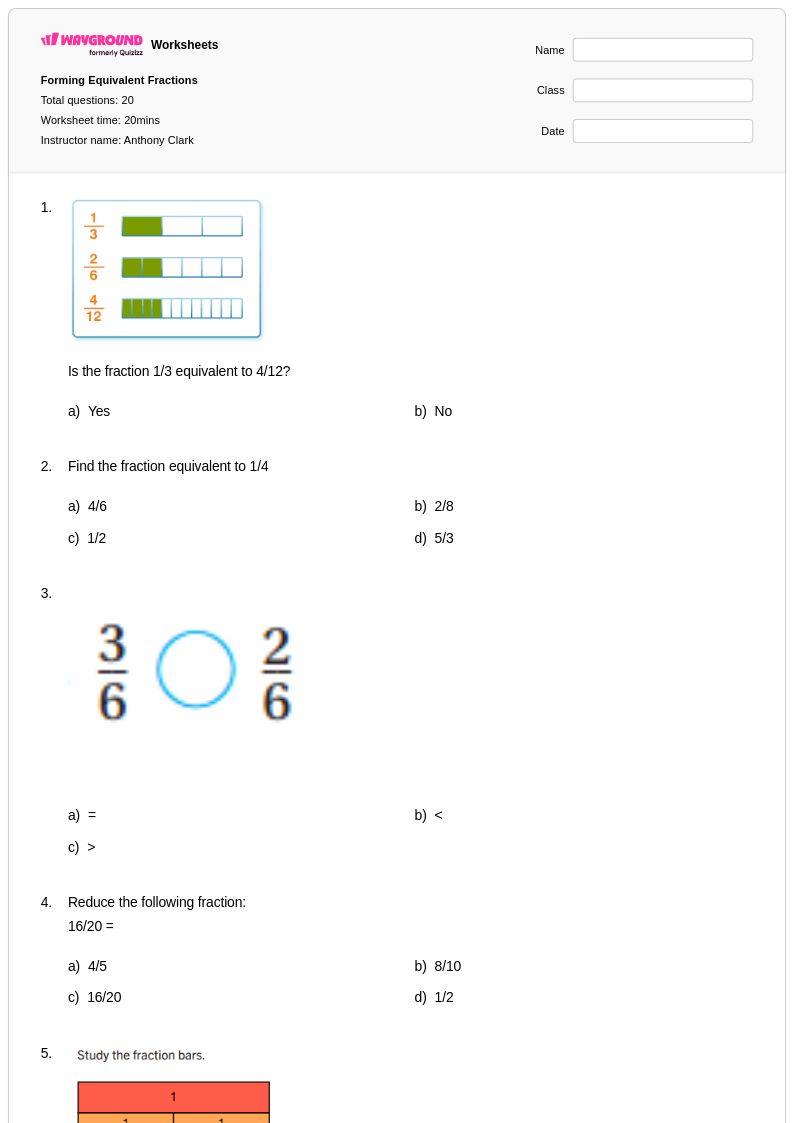
20 Q
4th - Uni
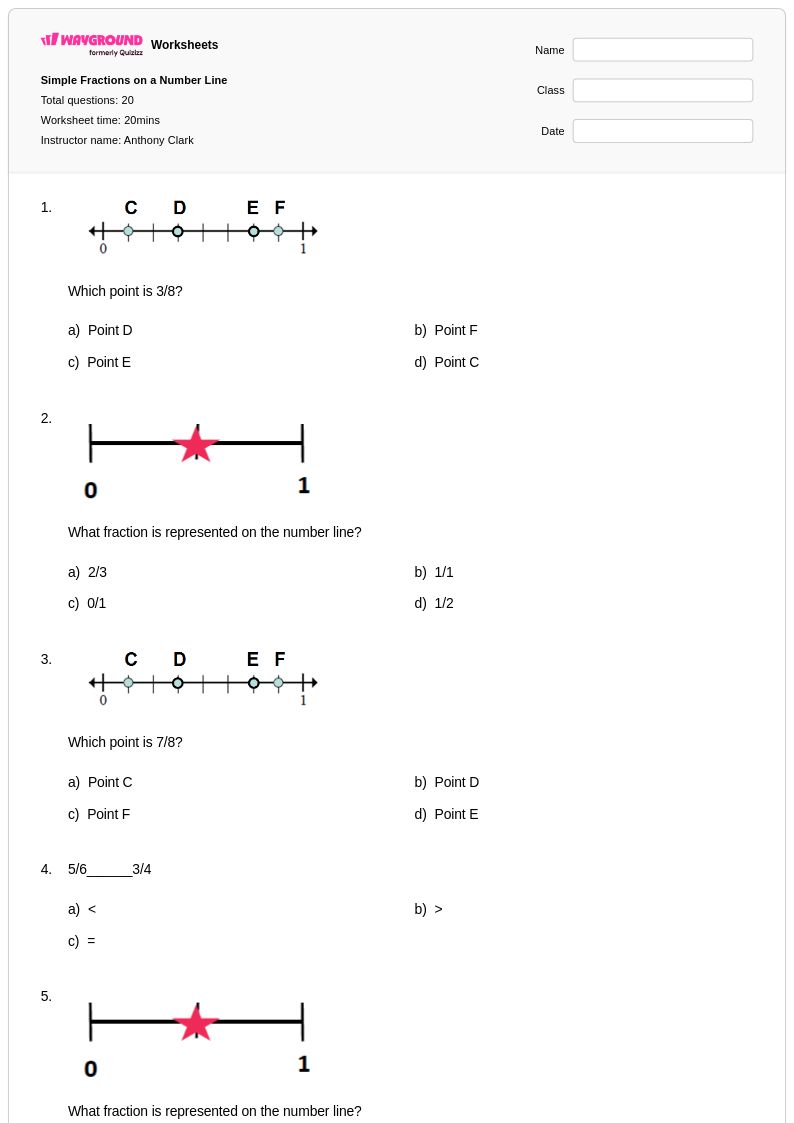
20 Q
3rd - Uni
20 Q
5th - Uni
18 Q
4th - Uni
20 Q
5th - Uni
20 Q
4th - Uni
20 Q
4th - Uni
20 Q
5th - Uni
20 Q
4th - Uni
20 Q
4th - Uni
20 Q
4th - Uni
11 Q
4th - Uni
20 Q
4th - Uni
20 Q
4th - Uni
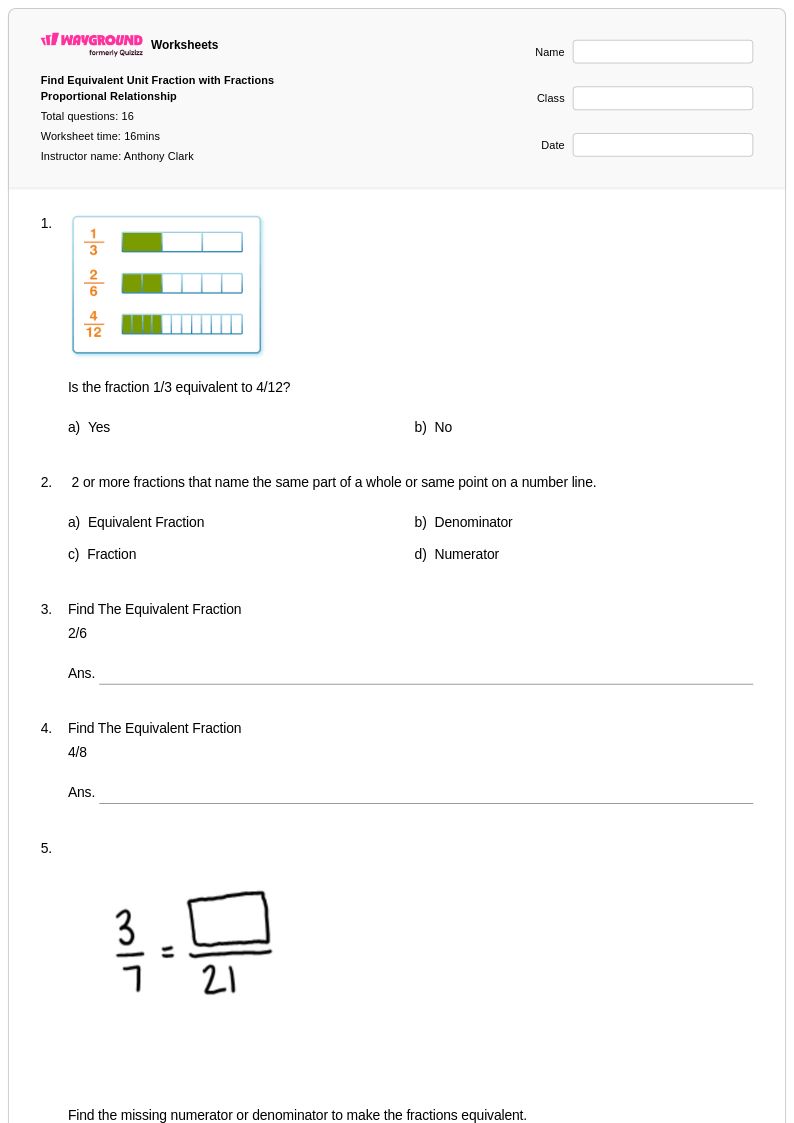
16 Q
4th - Uni
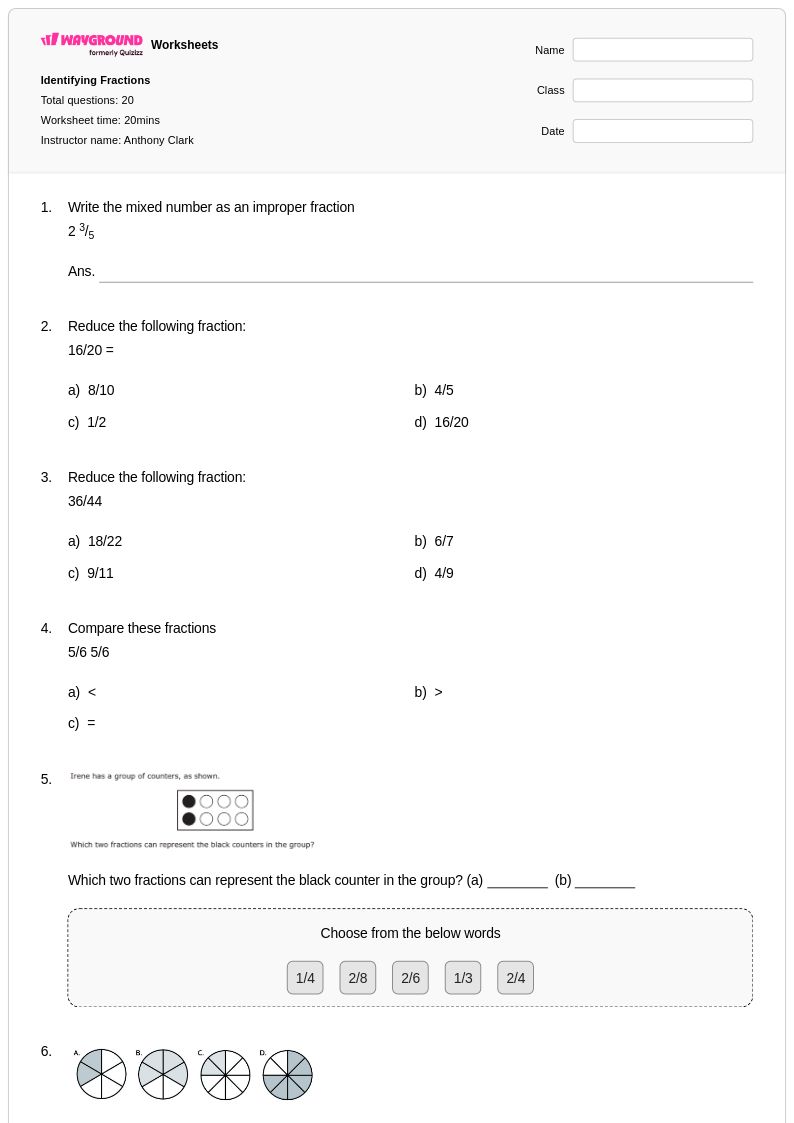
20 Q
4th - Uni
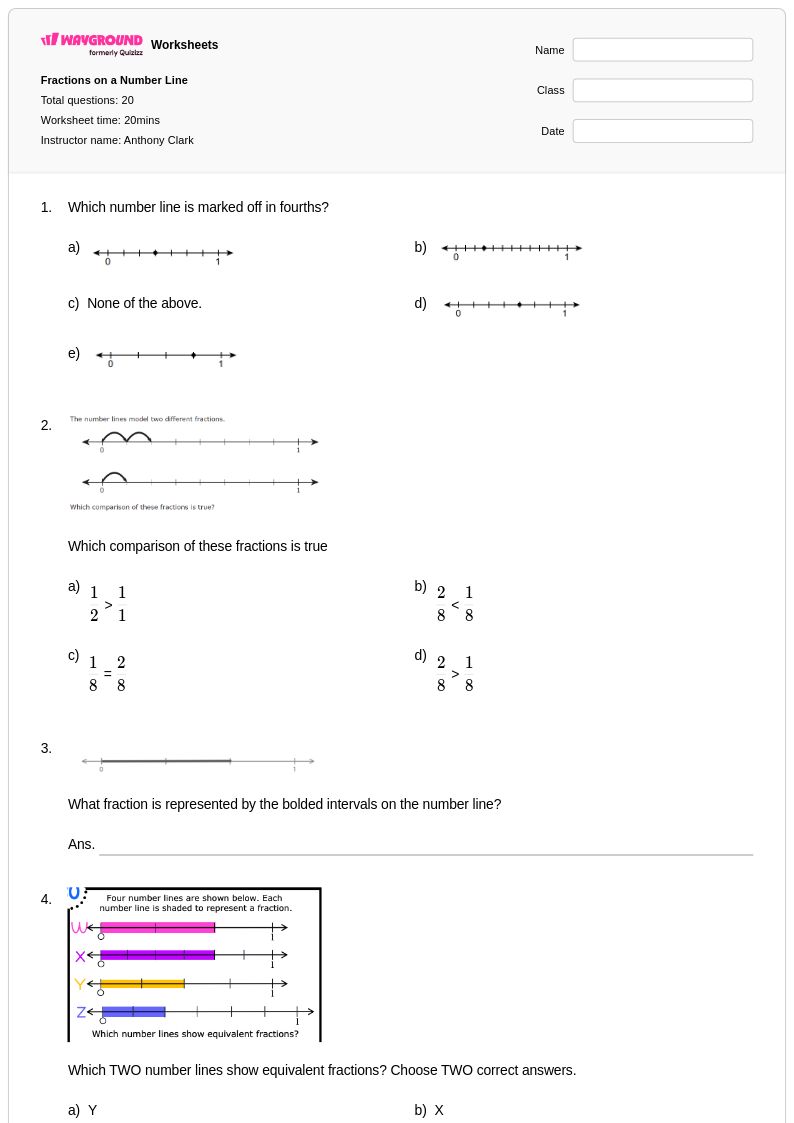
20 Q
3rd - Uni
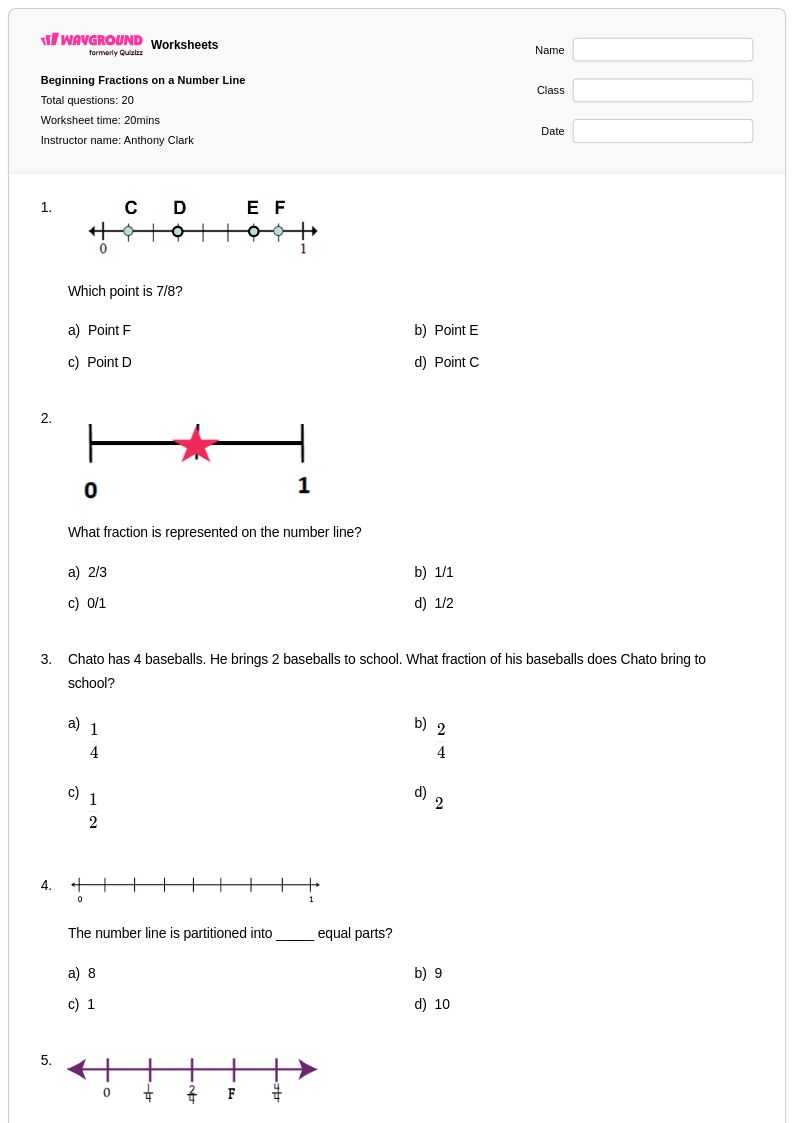
20 Q
3rd - Uni

19 Q
5th - Uni
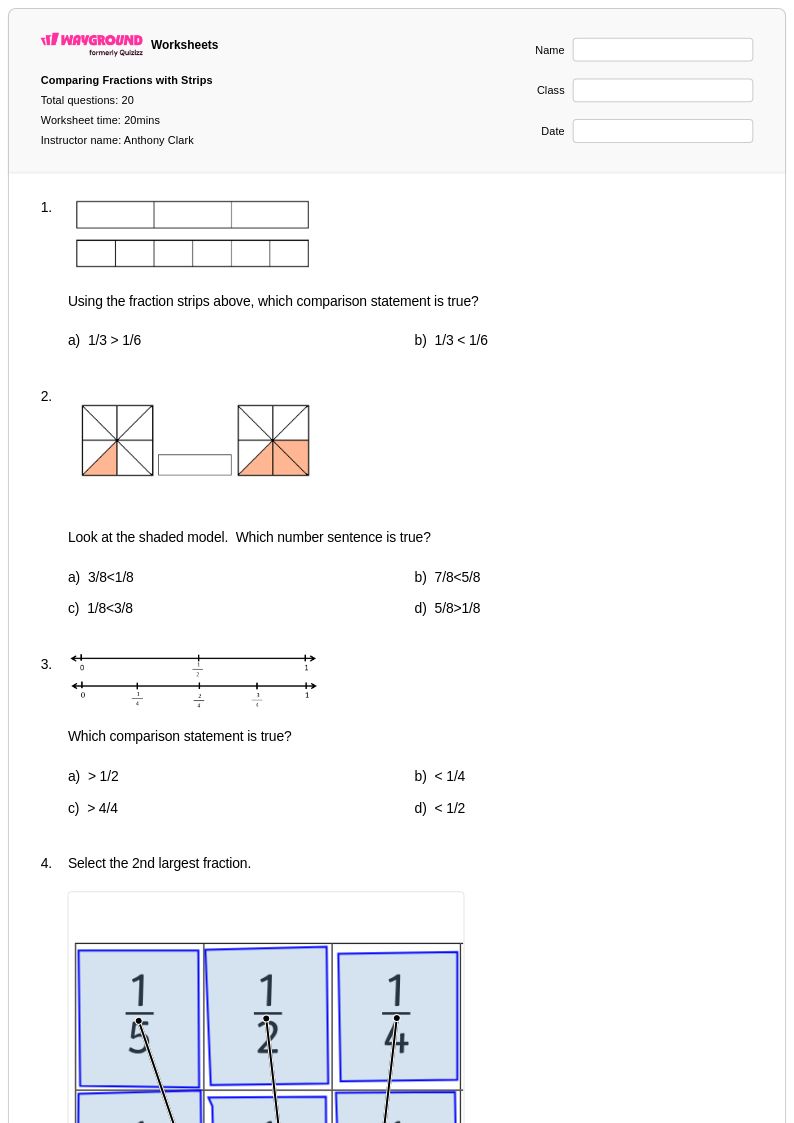
20 Q
3rd - Uni
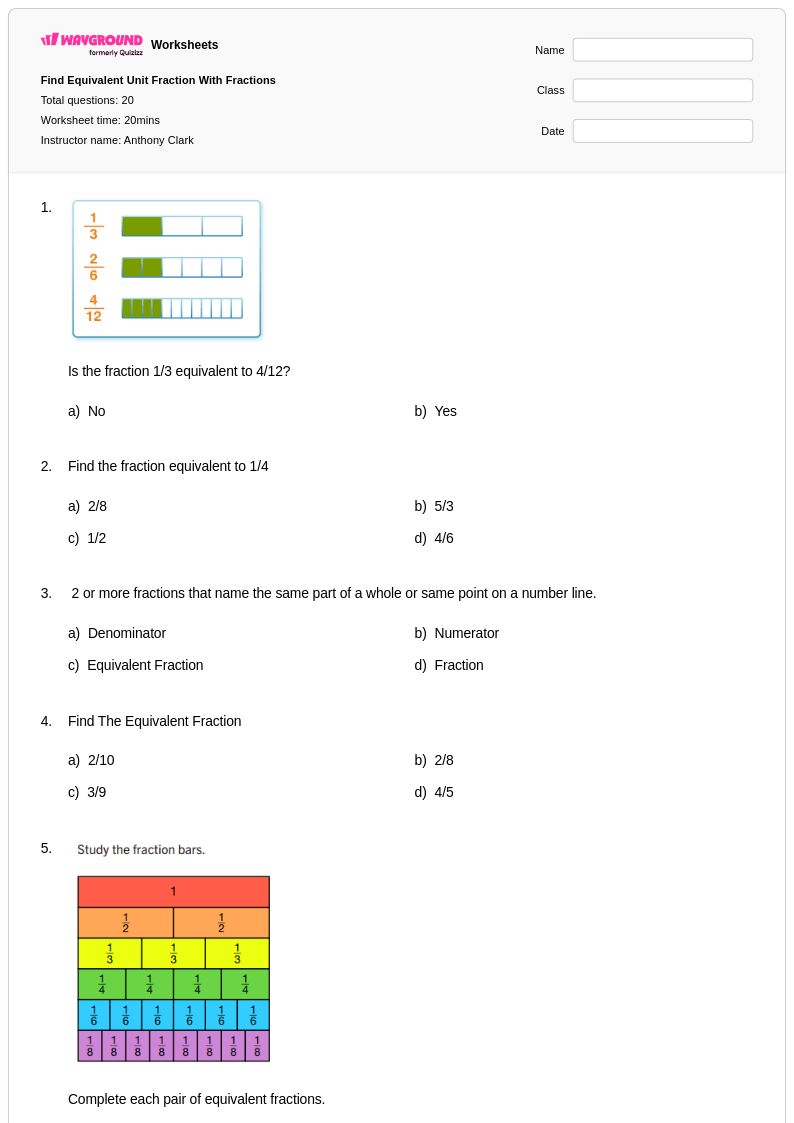
20 Q
4th - Uni
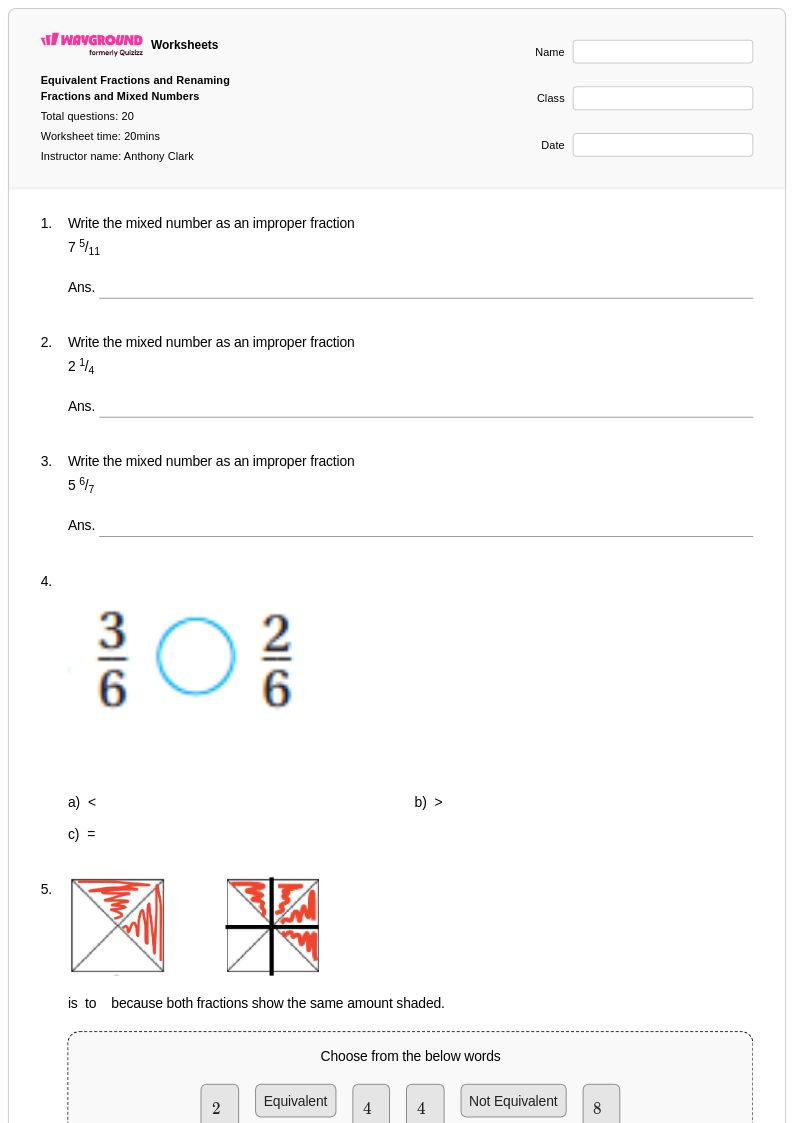
20 Q
5th - Uni
Explore Other Subject Worksheets for class 6
Explore printable Fraction Models worksheets for Class 6
Fraction Models for Class 6 students represent a crucial bridge between concrete mathematical understanding and abstract numerical concepts, and Wayground's extensive collection of worksheets provides comprehensive practice in this essential area. These carefully designed printables help students visualize fractions through various representational methods including area models, number lines, set models, and linear models, strengthening their ability to conceptualize fractional relationships beyond mere computational skills. Each worksheet collection includes detailed answer keys and offers free access to practice problems that systematically build students' confidence in interpreting and creating visual fraction representations, while developing the foundational skills necessary for advanced fraction operations and algebraic thinking.
Wayground's platform empowers teachers with millions of educator-created resources specifically focused on fraction models and visual mathematics instruction, featuring robust search and filtering capabilities that allow instructors to quickly locate materials aligned with specific learning standards and student needs. The comprehensive differentiation tools enable teachers to customize worksheets for varying ability levels within their Class 6 classrooms, while the flexible format options including printable pdf versions and interactive digital activities support diverse learning environments and instructional approaches. These features streamline lesson planning and provide targeted resources for remediation, enrichment, and ongoing skill practice, ensuring that educators can effectively address the varied learning needs of students as they develop crucial visual fraction literacy skills.
FAQs
How do I teach fraction models in Grade 6 without making them feel too elementary?
What exercises help sixth graders practice fraction models?
What mistakes do Grade 6 students make with fraction models?
How should I use this Grade 6 fraction models worksheet?
How do fraction models fit the Grade 6 Common Core progression?
How can I support mixed-ability learners with Grade 6 fraction models?
Why are fraction models still taught in Grade 6?
What grade do students use fraction models?