
15 Q
12th - Uni
15 Q
11th - Uni
9 Q
12th - Uni
10 Q
9th - 12th
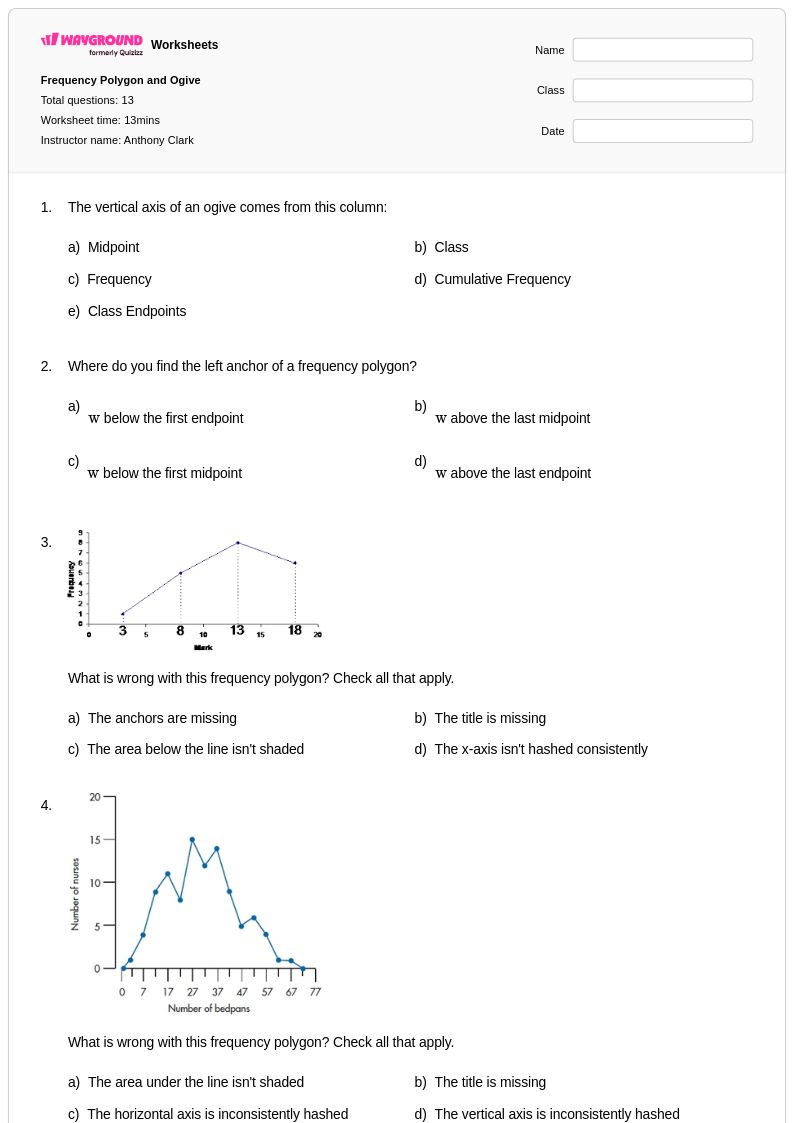
13 Q
11th - Uni
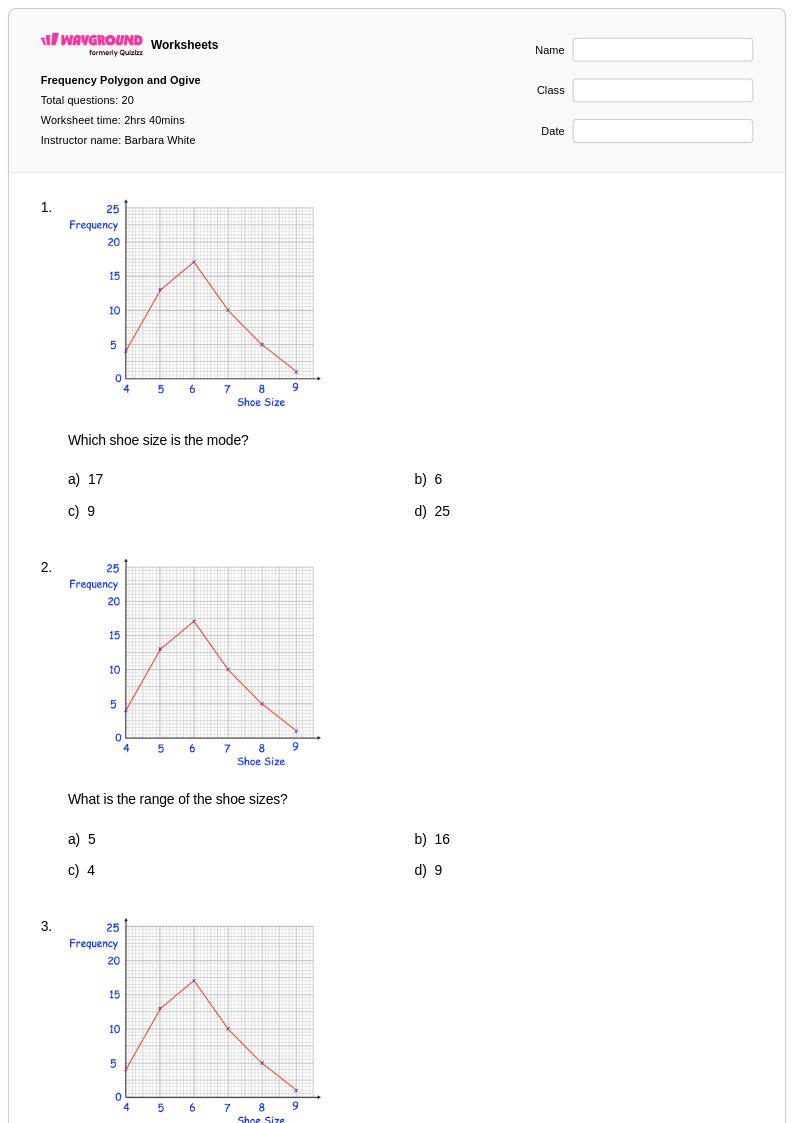
20 Q
12th
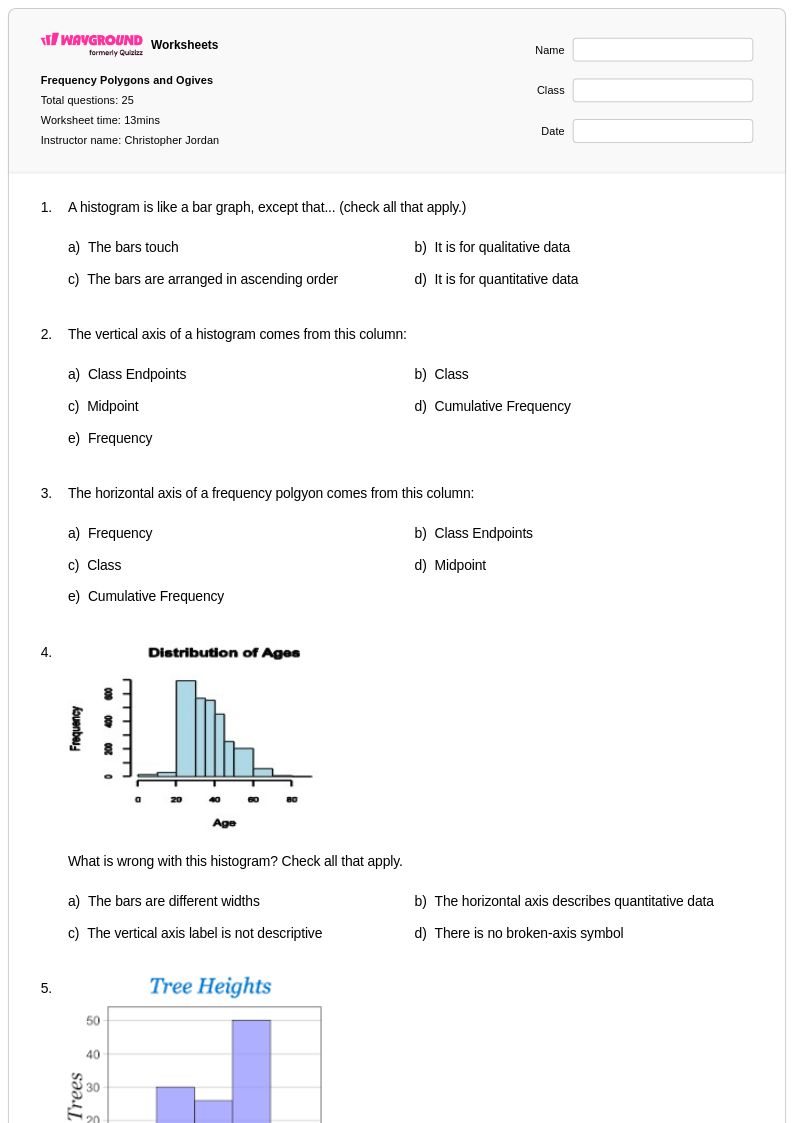
25 Q
10th - 12th
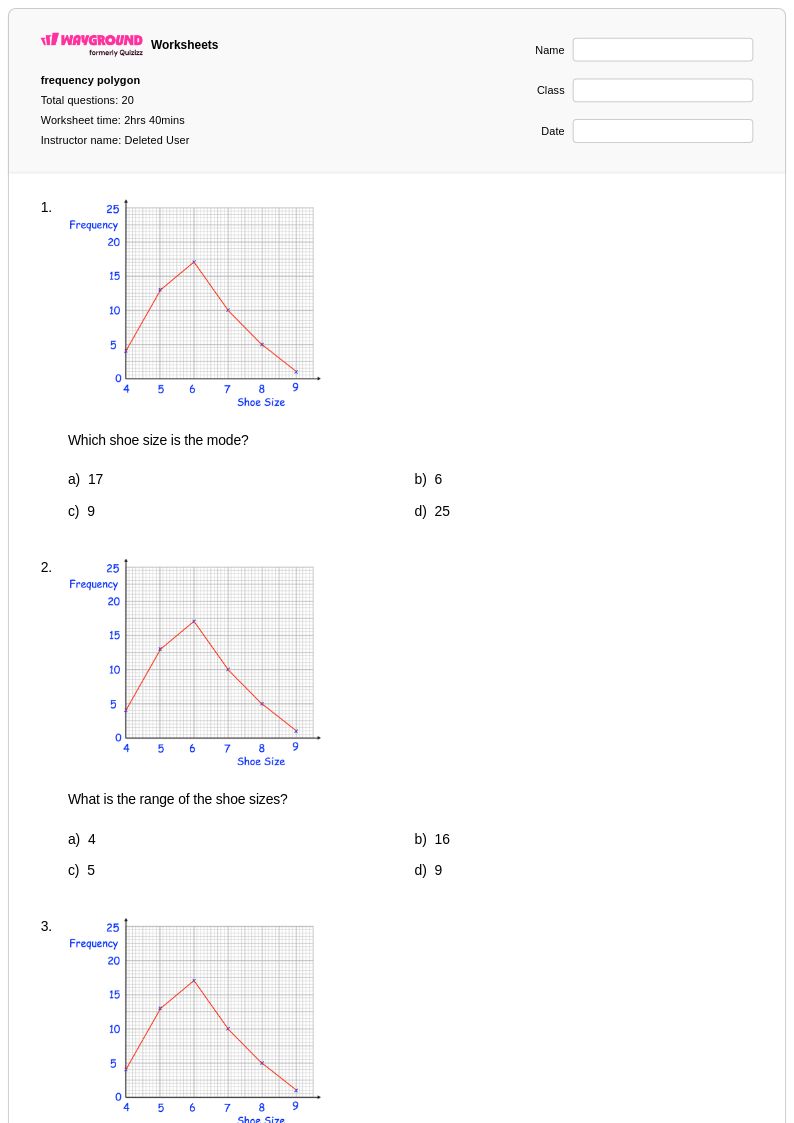
20 Q
12th
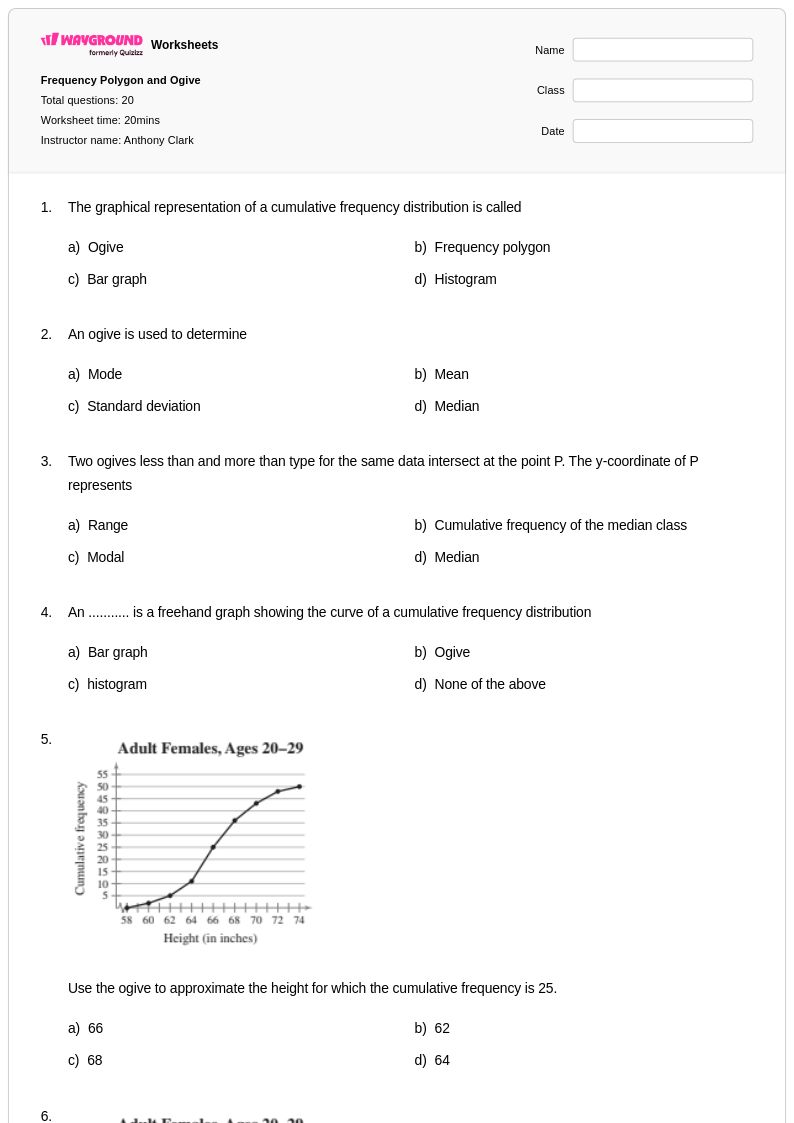
20 Q
11th - Uni
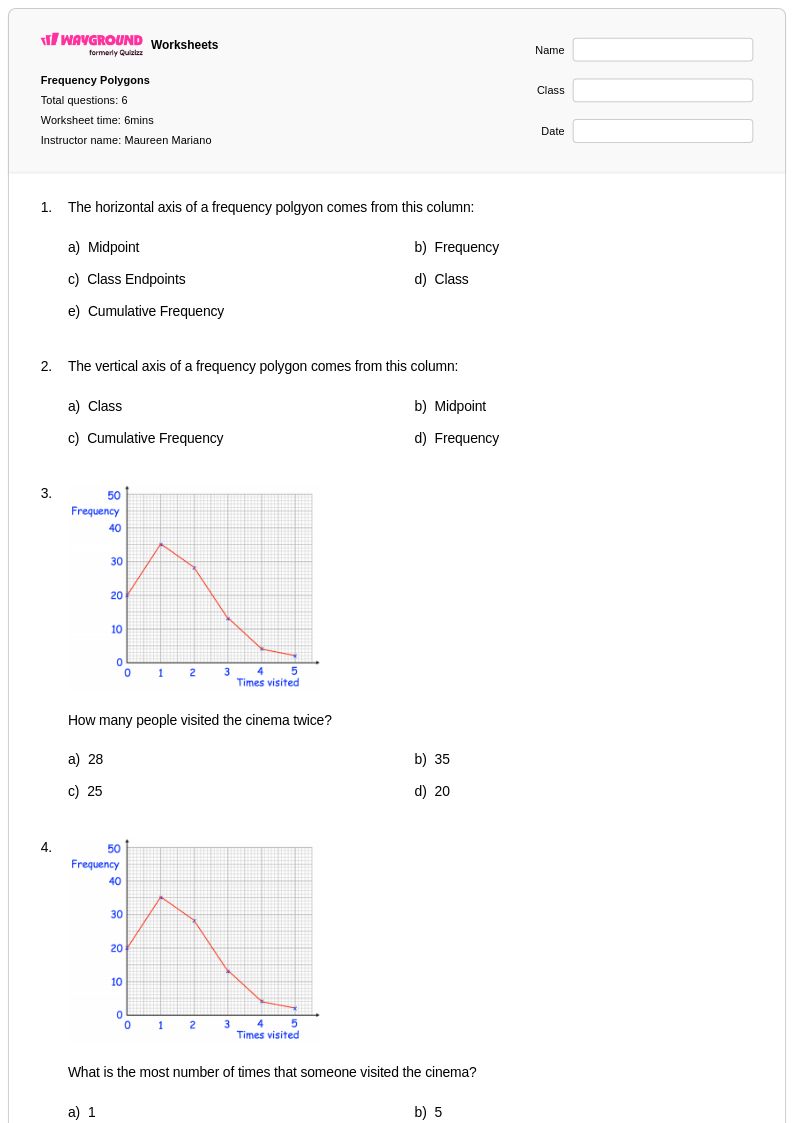
6 Q
12th
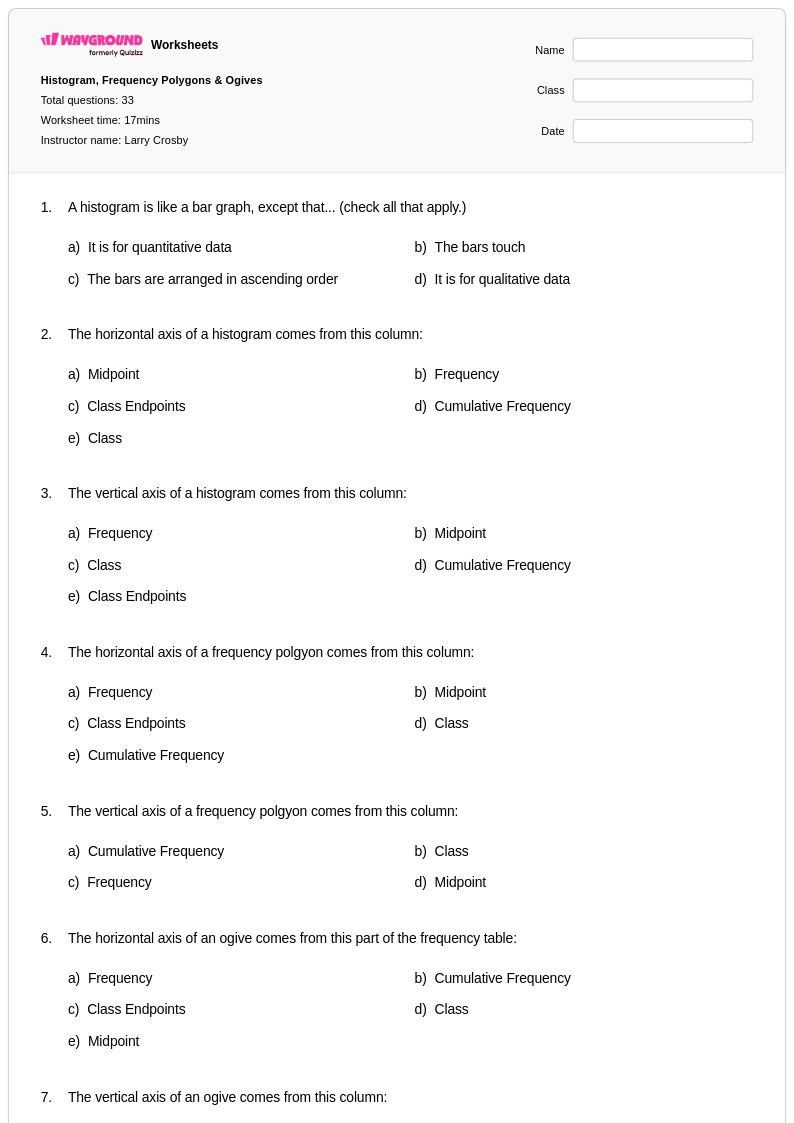
33 Q
11th - 12th
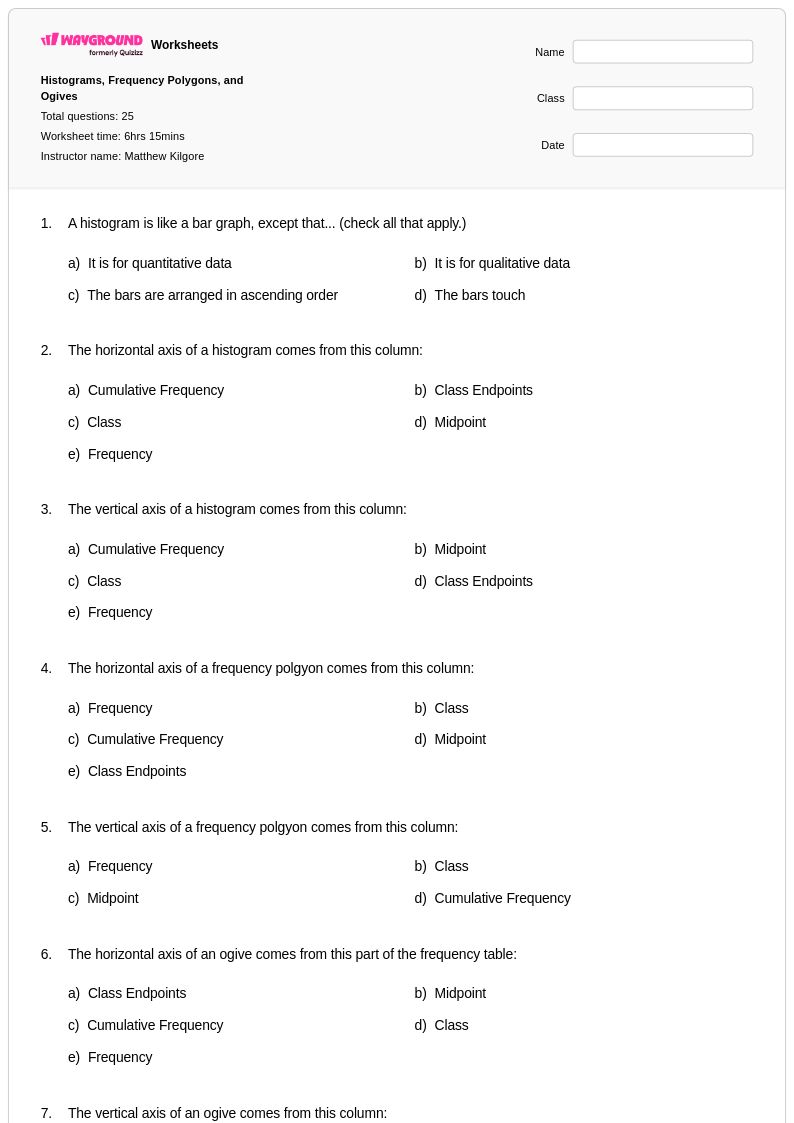
25 Q
11th - Uni
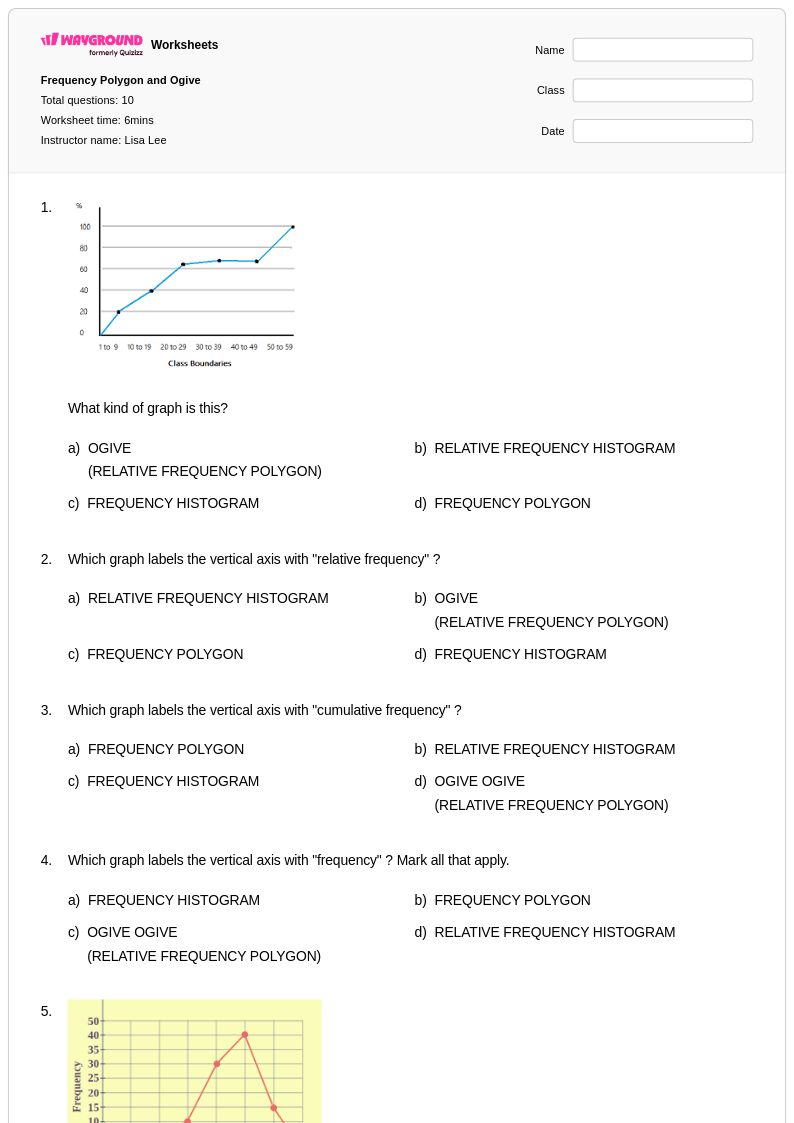
10 Q
9th - 12th
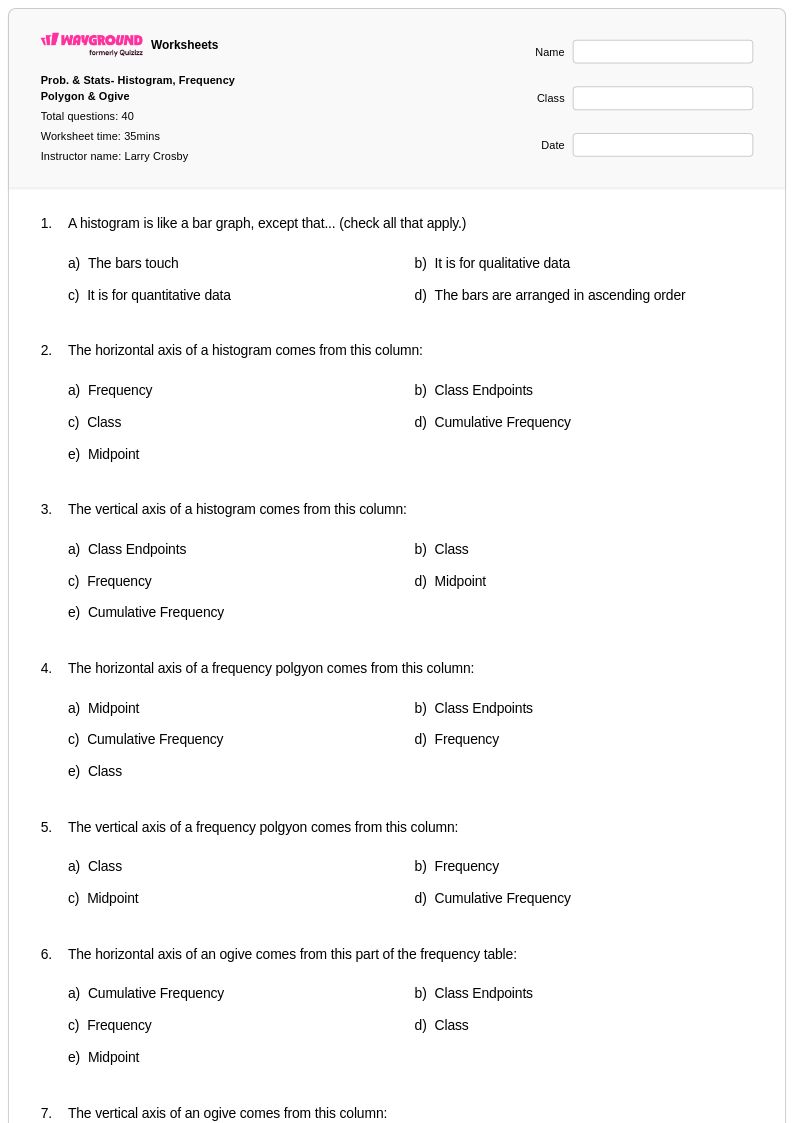
40 Q
11th - 12th
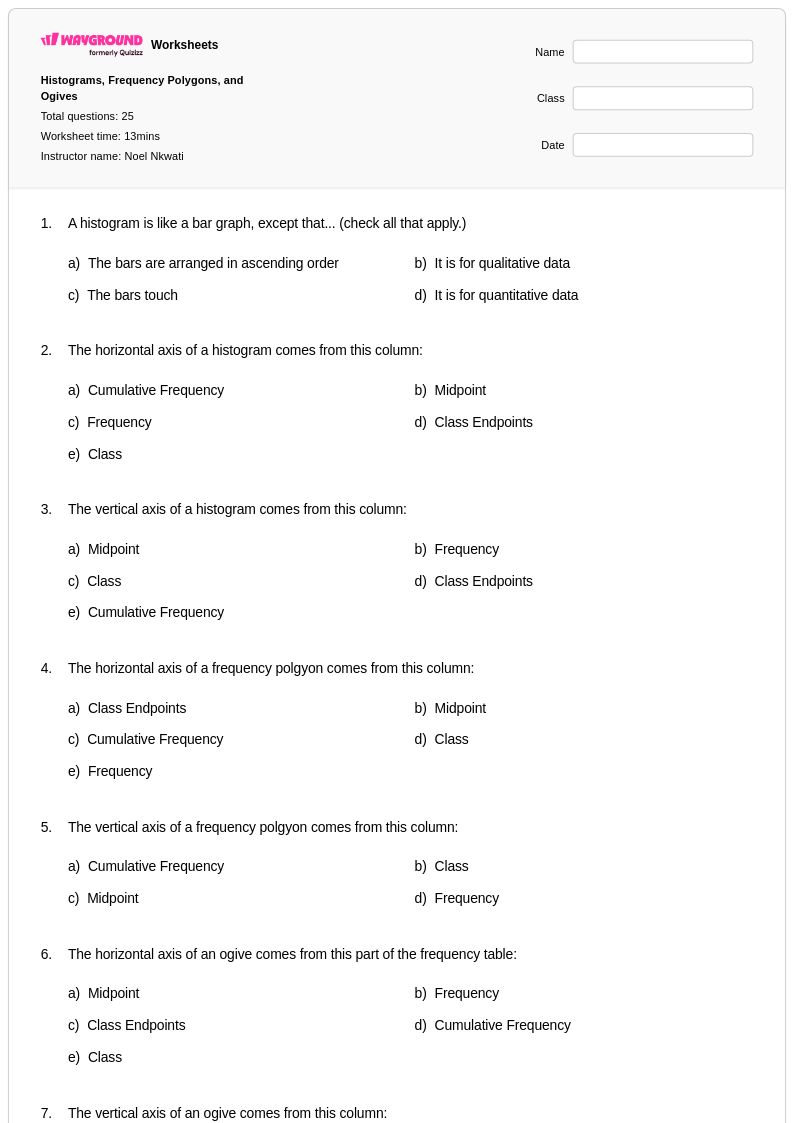
25 Q
9th - 12th
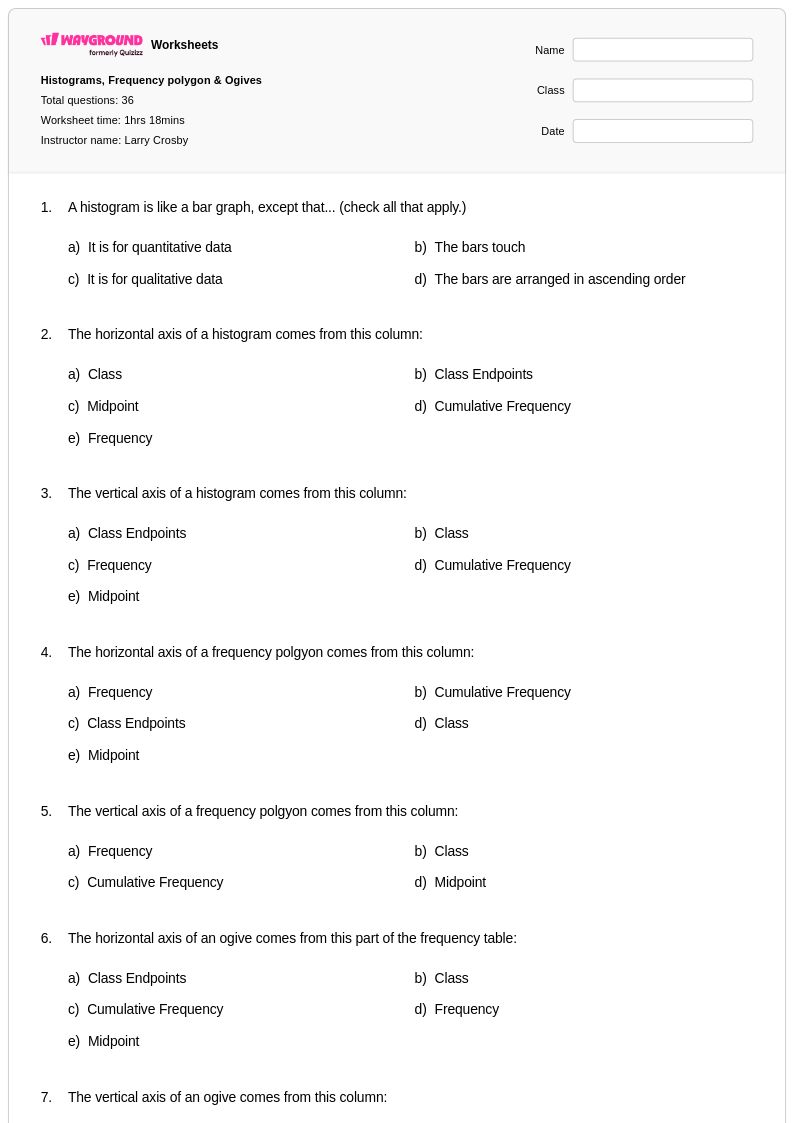
36 Q
10th - 12th
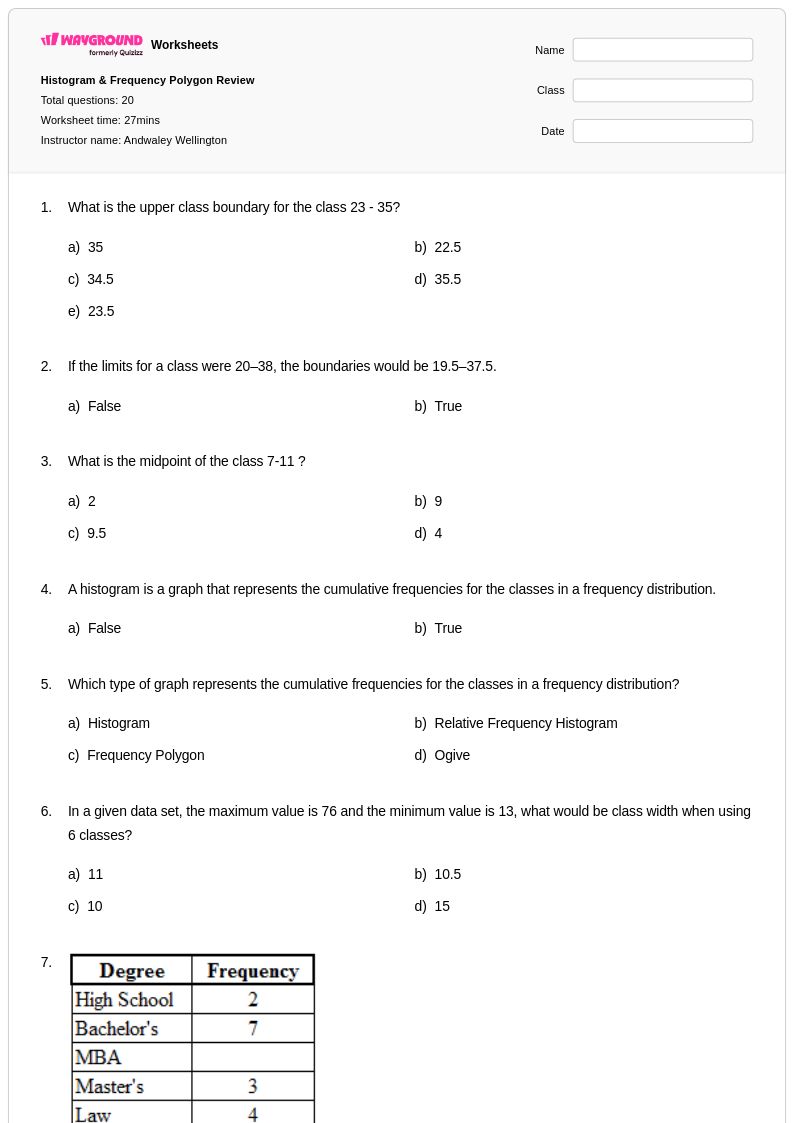
20 Q
12th
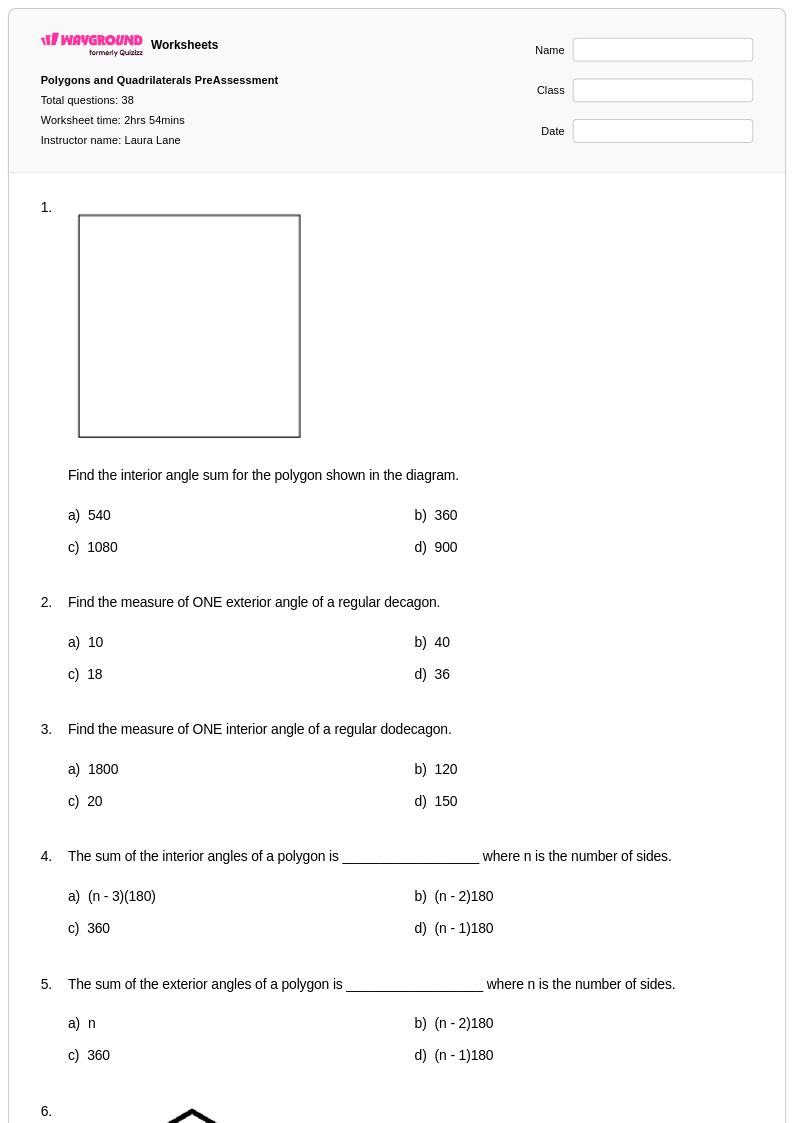
38 Q
9th - 12th
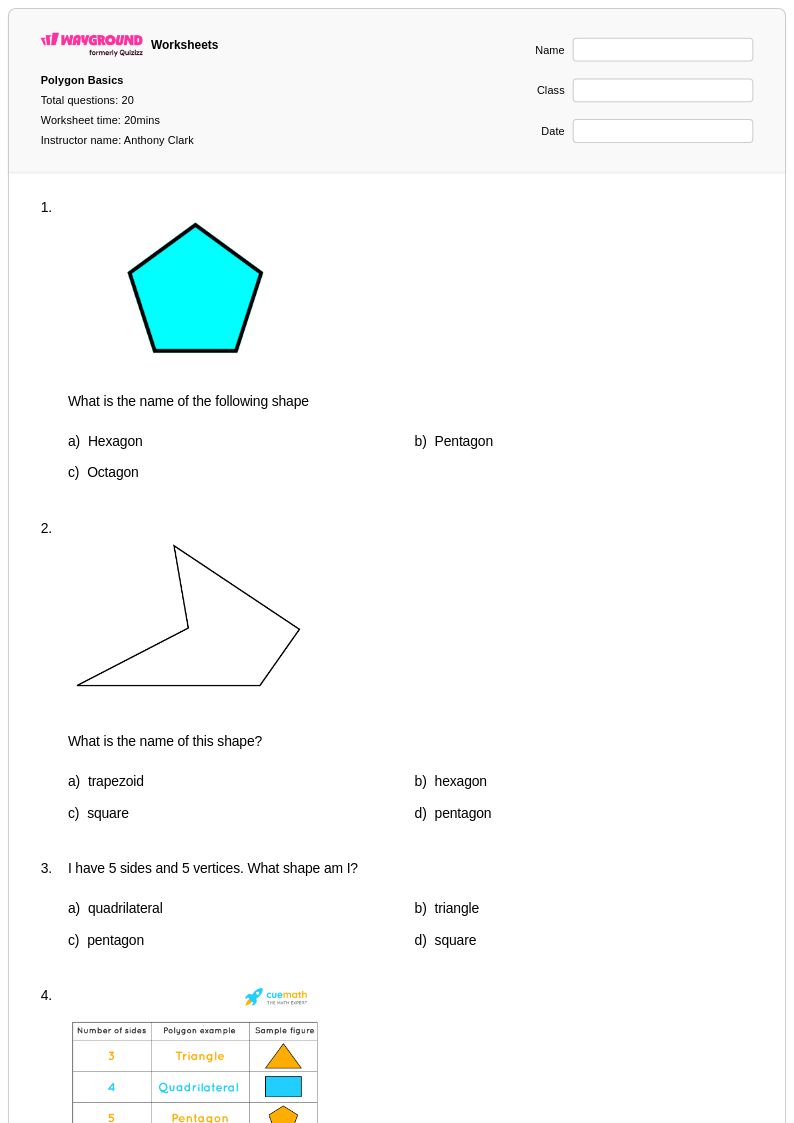
20 Q
3rd - Uni
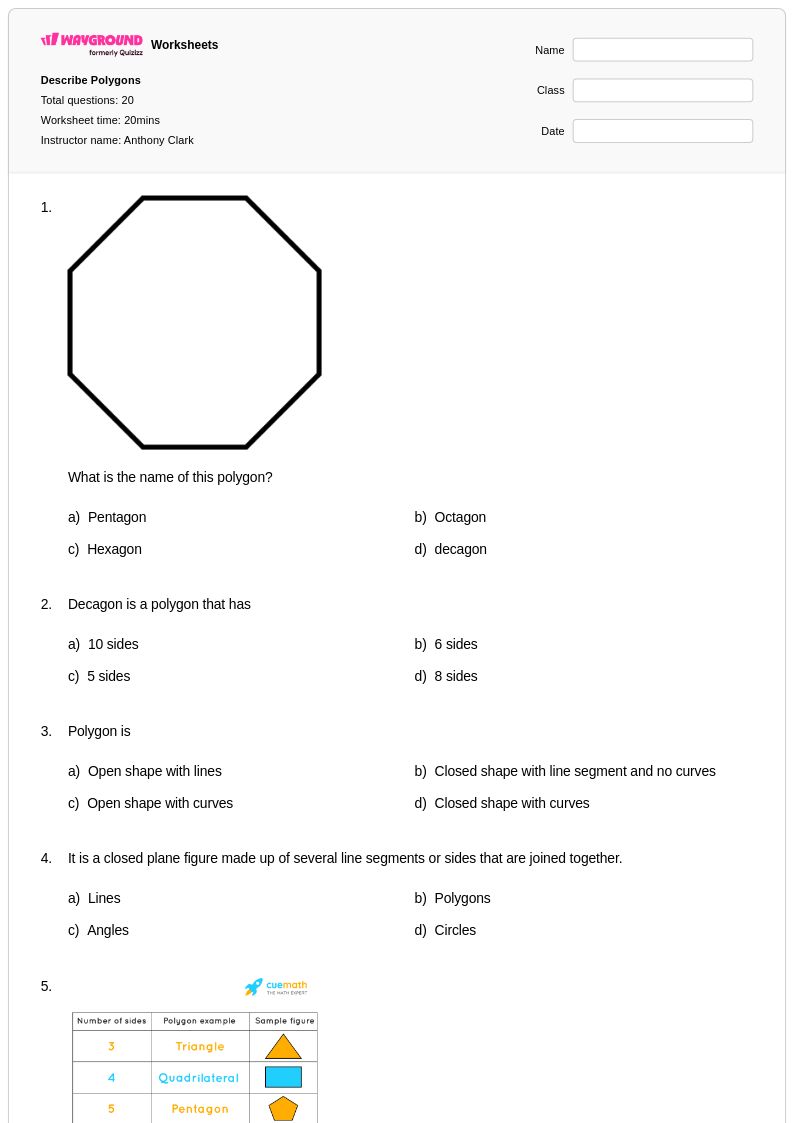
20 Q
5th - Uni
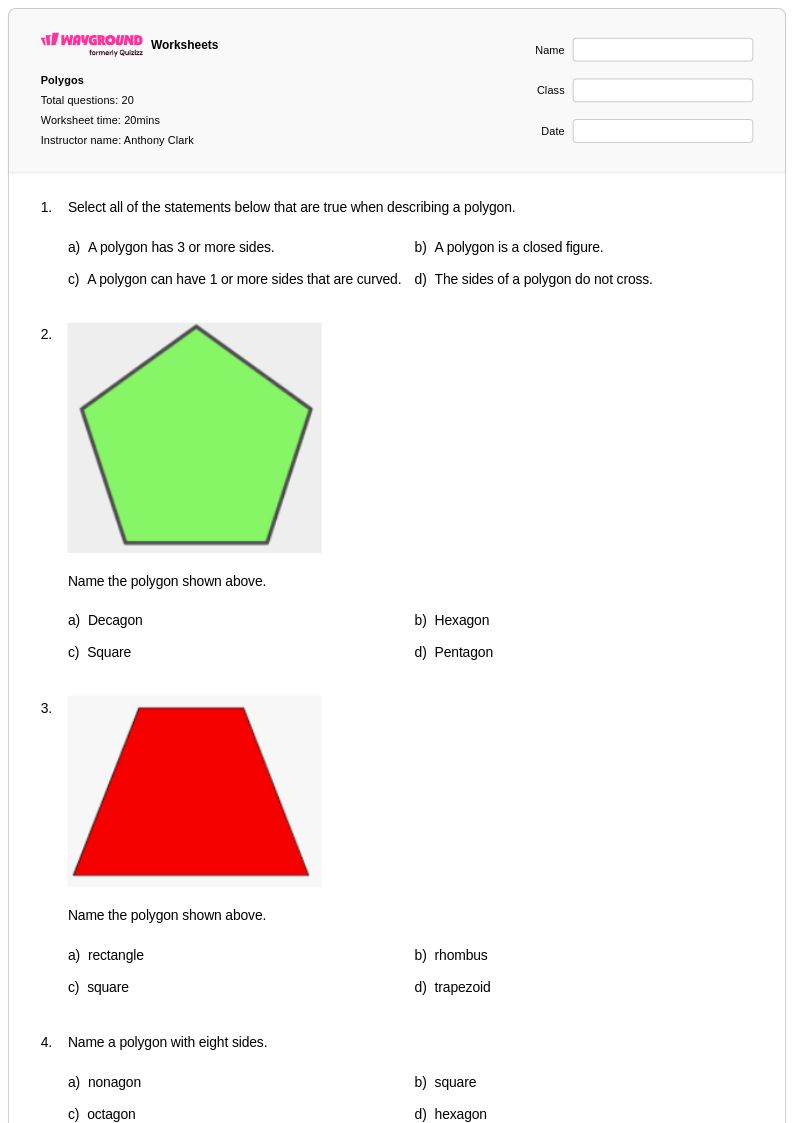
20 Q
3rd - Uni
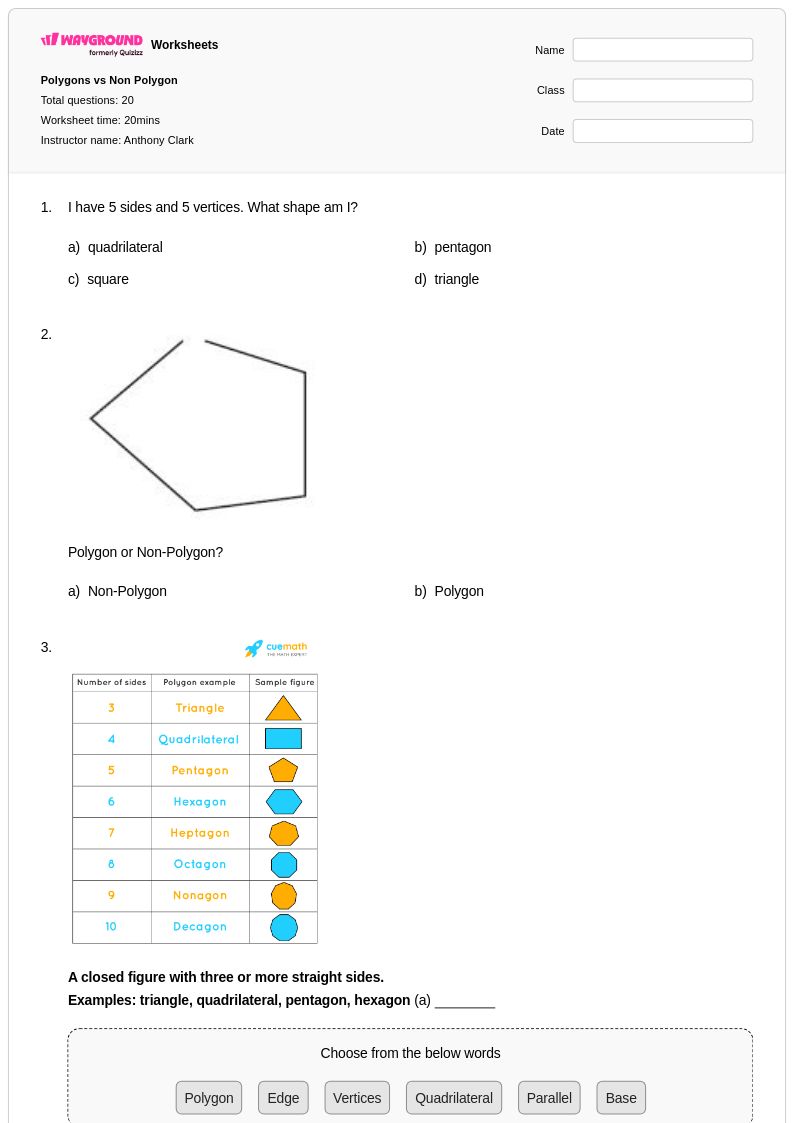
20 Q
3rd - Uni
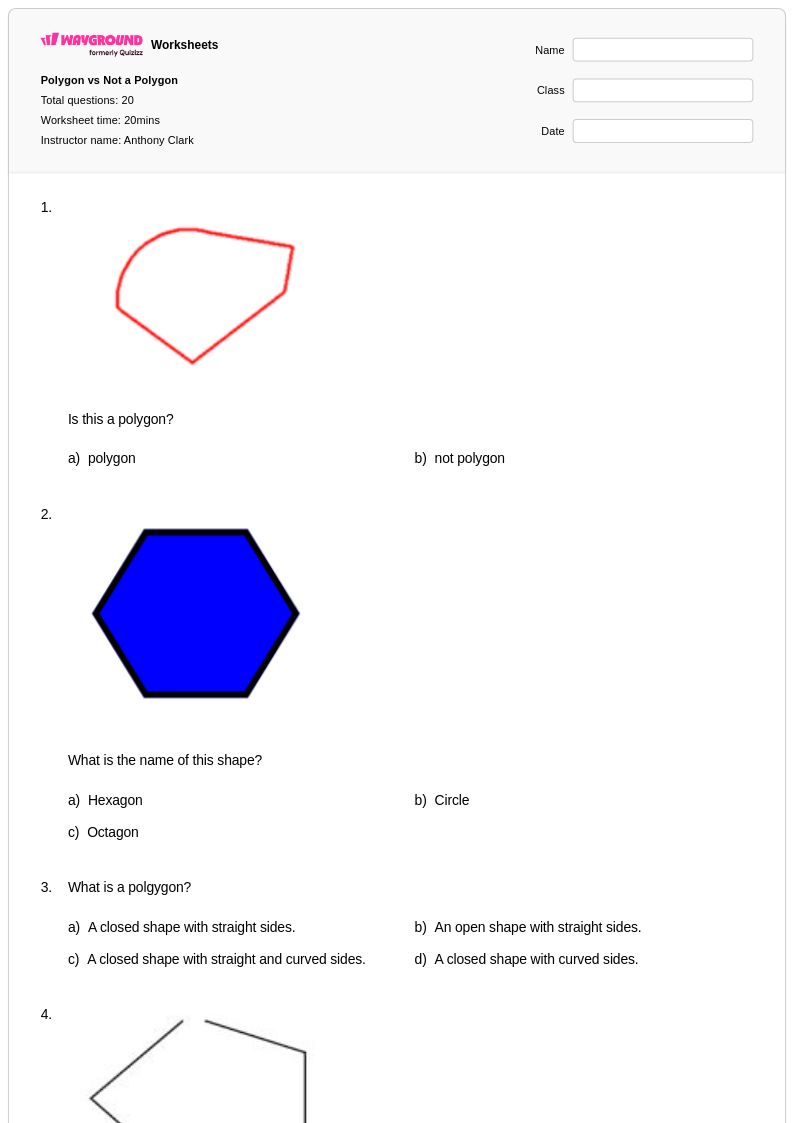
20 Q
3rd - Uni
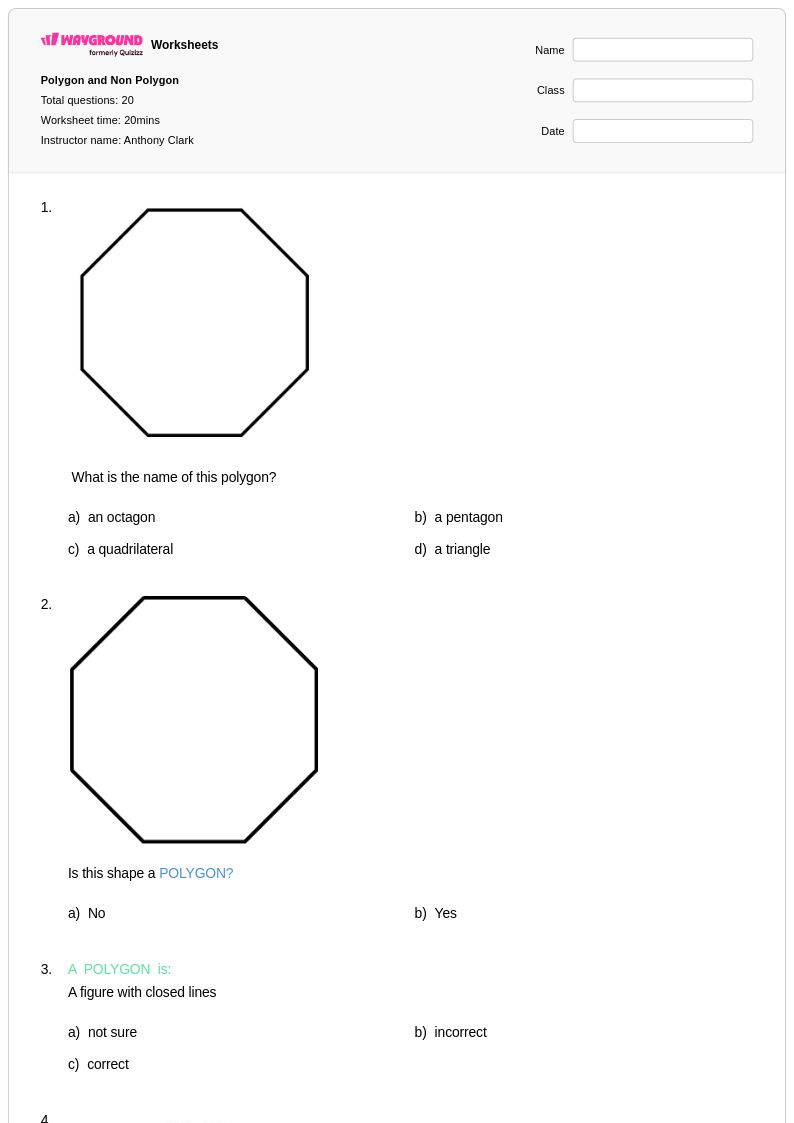
20 Q
3rd - Uni
Explore Other Subject Worksheets for class 12
Explore printable Frequency Polygon worksheets for Class 12
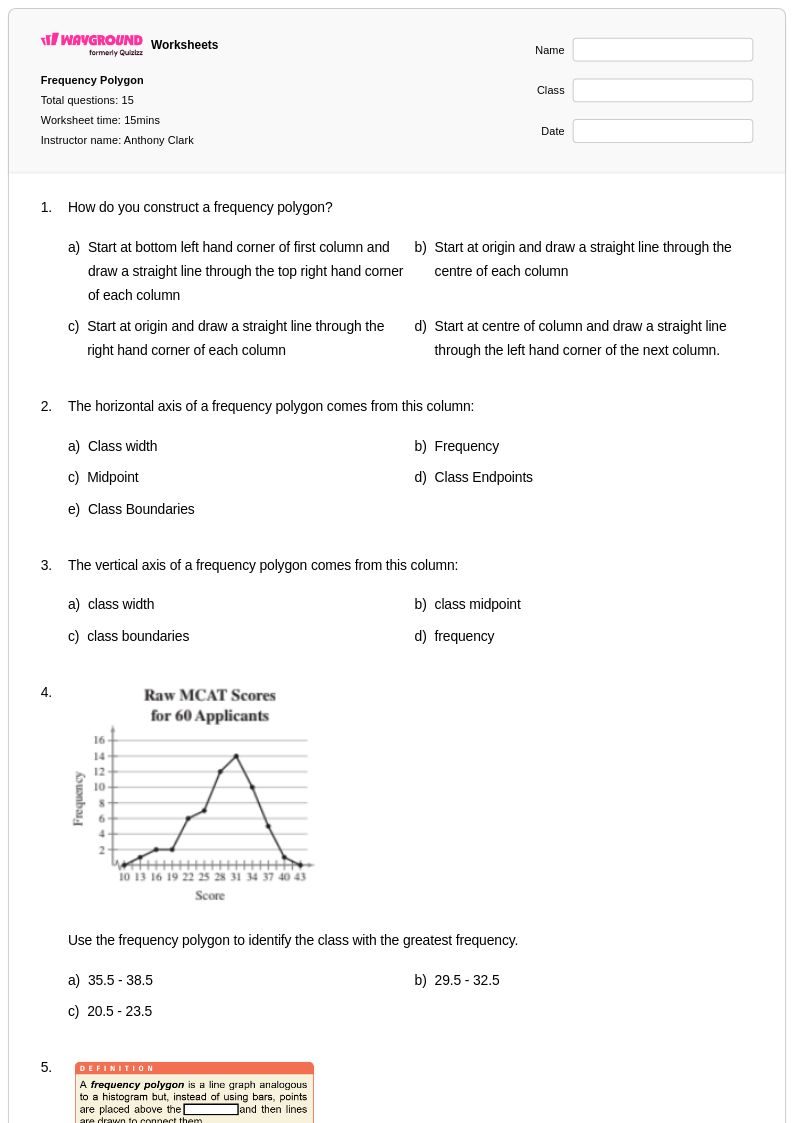
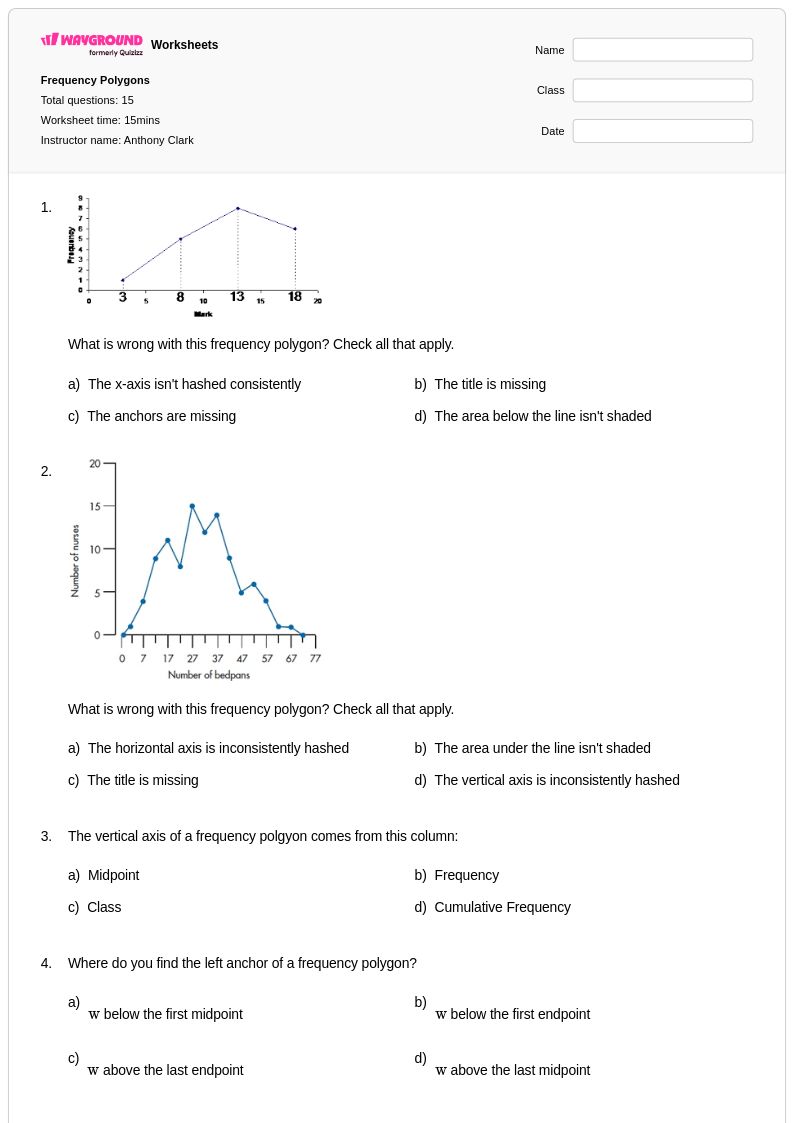
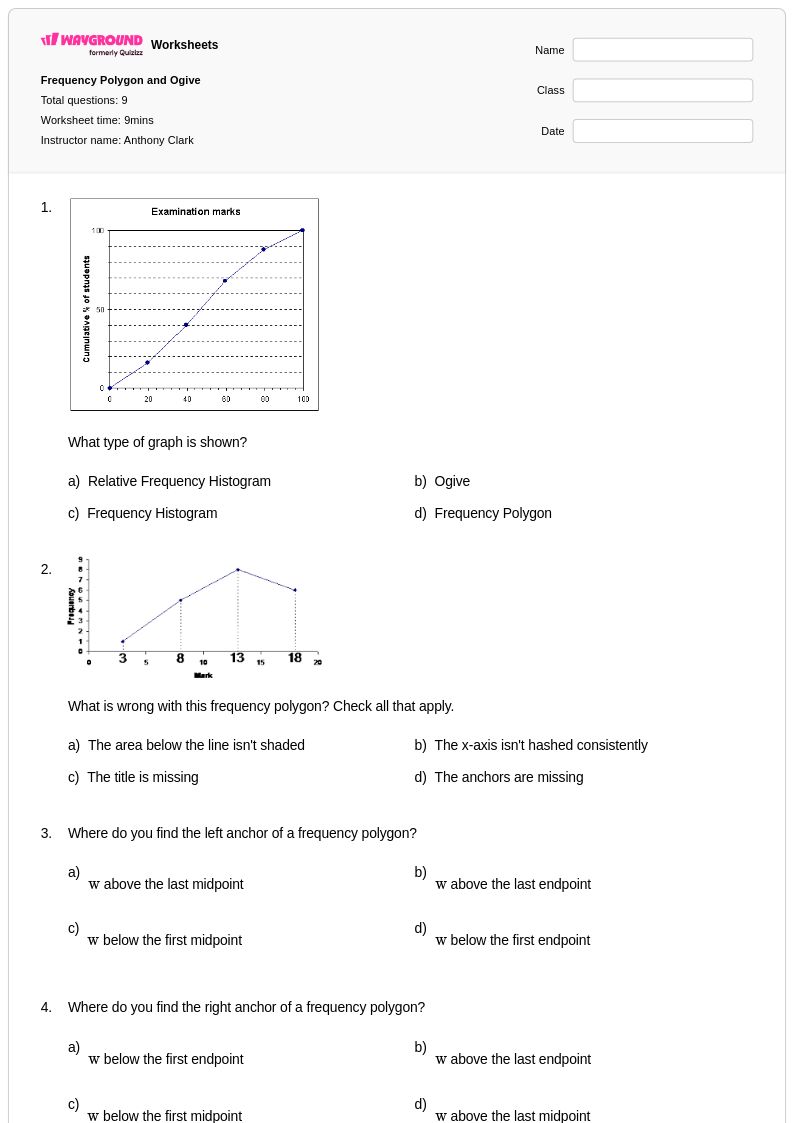
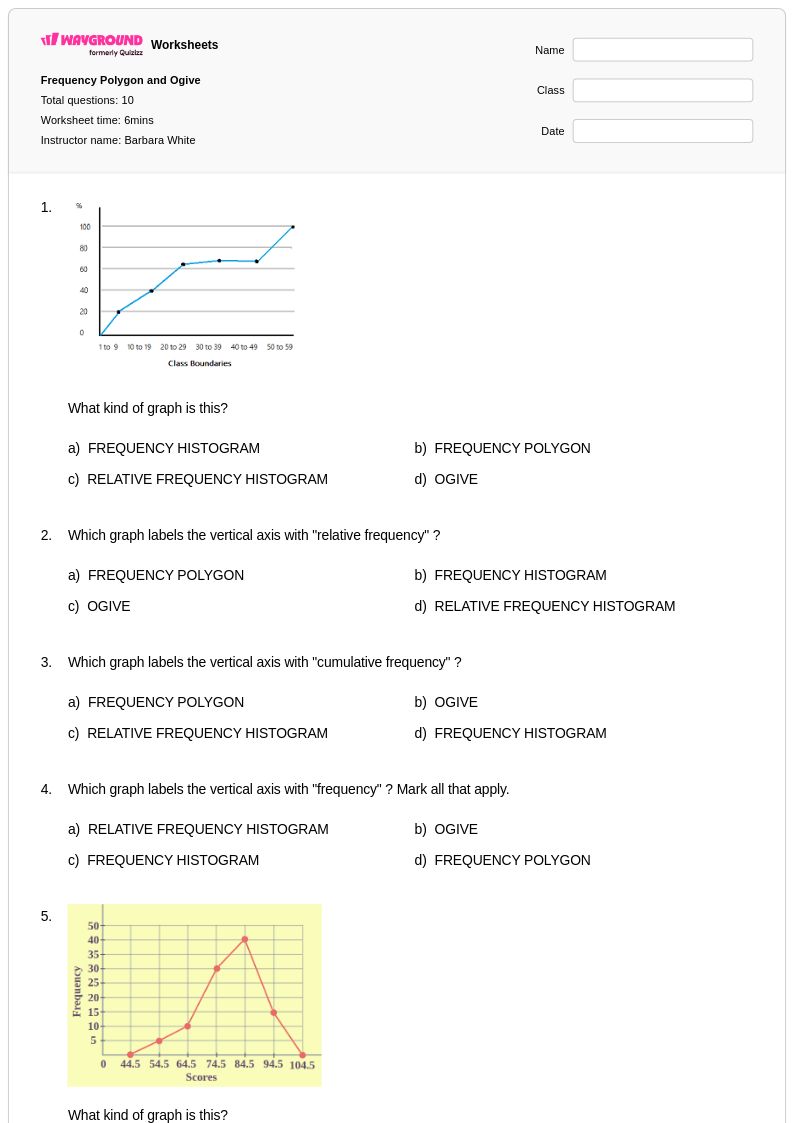
Frequency polygon worksheets for Class 12 mathematics provide students with essential practice in creating and interpreting these powerful statistical visualization tools. These comprehensive worksheet collections from Wayground (formerly Quizizz) focus on developing students' ability to construct frequency polygons from grouped data, analyze trends and patterns within datasets, and make informed statistical inferences. Students work through carefully designed practice problems that reinforce key concepts including plotting cumulative frequencies, connecting midpoints of class intervals, and comparing multiple data distributions using overlapping polygons. Each worksheet includes detailed answer keys and step-by-step solutions, making them valuable resources for both independent study and classroom instruction. These free printable materials strengthen critical analytical skills while preparing students for advanced statistical concepts they'll encounter in higher education and professional settings.
Wayground (formerly Quizizz) empowers educators with millions of teacher-created frequency polygon worksheets specifically designed for Class 12 probability and statistics instruction. The platform's robust search and filtering capabilities allow teachers to quickly locate materials that align with specific curriculum standards and learning objectives, while differentiation tools enable customization based on individual student needs and skill levels. Teachers can access these resources in both printable pdf format for traditional classroom use and digital formats for technology-enhanced learning environments. This flexibility supports diverse instructional approaches, from remediation activities for students struggling with graphical representation concepts to enrichment exercises that challenge advanced learners to analyze complex real-world datasets. The comprehensive collection facilitates effective lesson planning while providing teachers with reliable assessment tools to monitor student progress in mastering frequency polygon construction and interpretation skills.
FAQs
How should I teach frequency polygons in Grade 12?
What frequency polygon exercises are appropriate for Grade 12?
What misconceptions should I look for when assessing frequency polygons?
How can I assign these Grade 12 frequency polygon worksheets?
How do frequency polygons support Common Core high school statistics?
How can I differentiate frequency polygon work for Grade 12 students?
What grade are these frequency polygon worksheets for?