
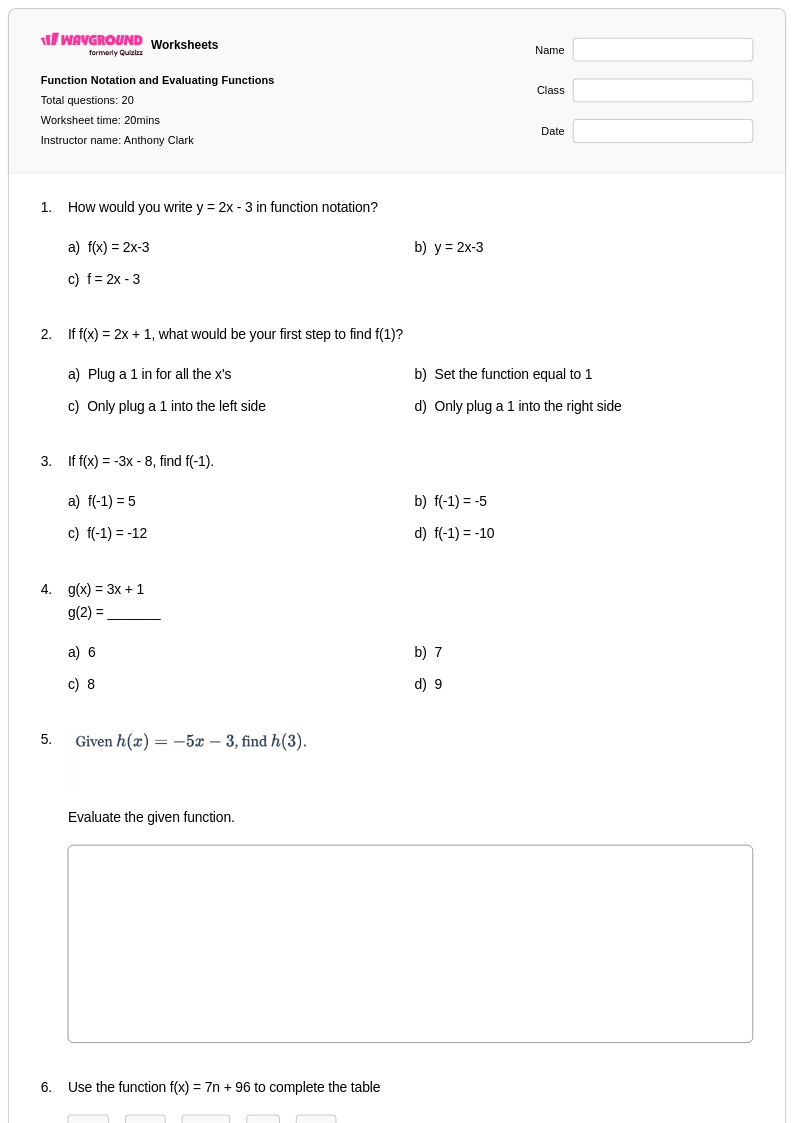
20 Q
9th - Uni
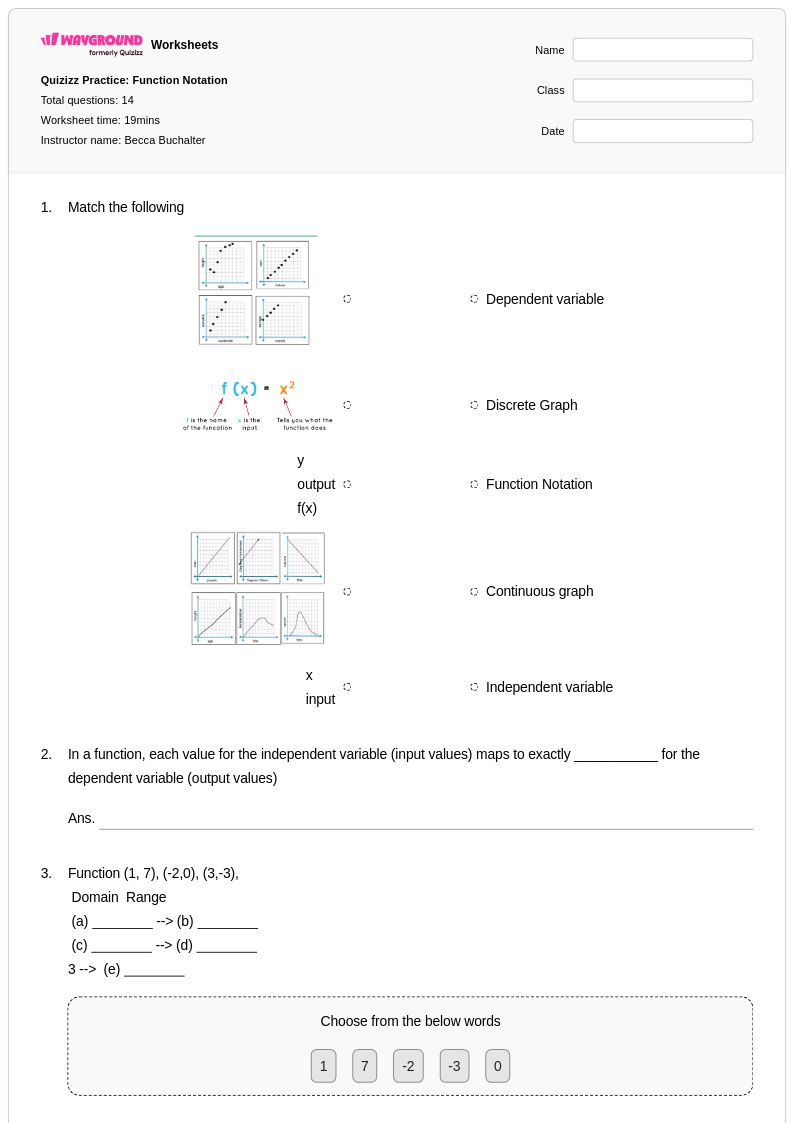
14 Q
9th - 12th
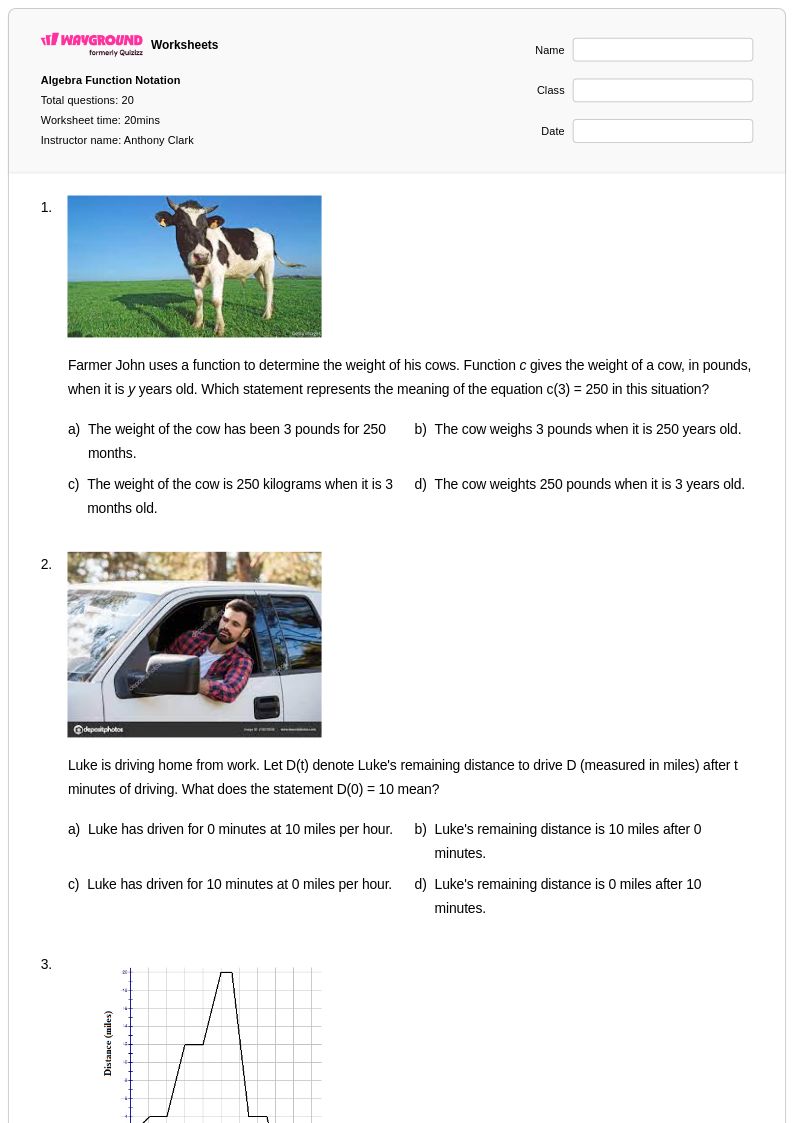
20 Q
9th - Uni
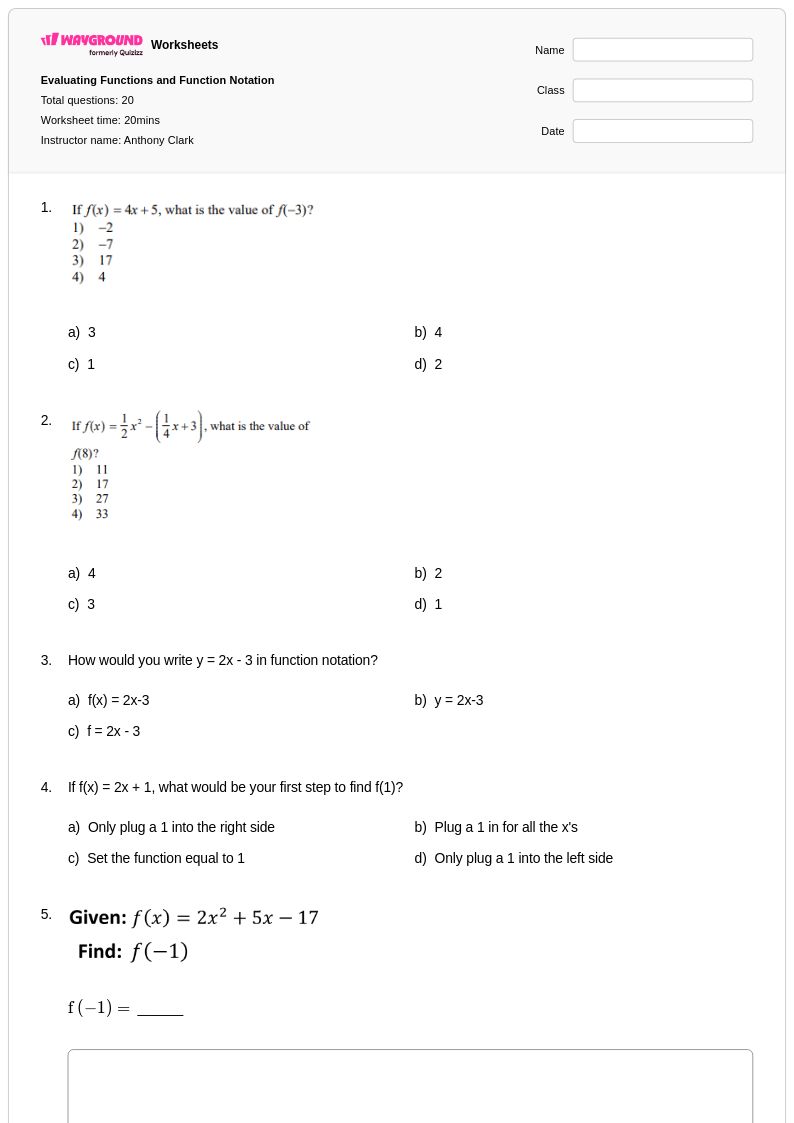
20 Q
9th - Uni
20 Q
9th - 12th
20 Q
9th - Uni
20 Q
9th - Uni
16 Q
9th - Uni
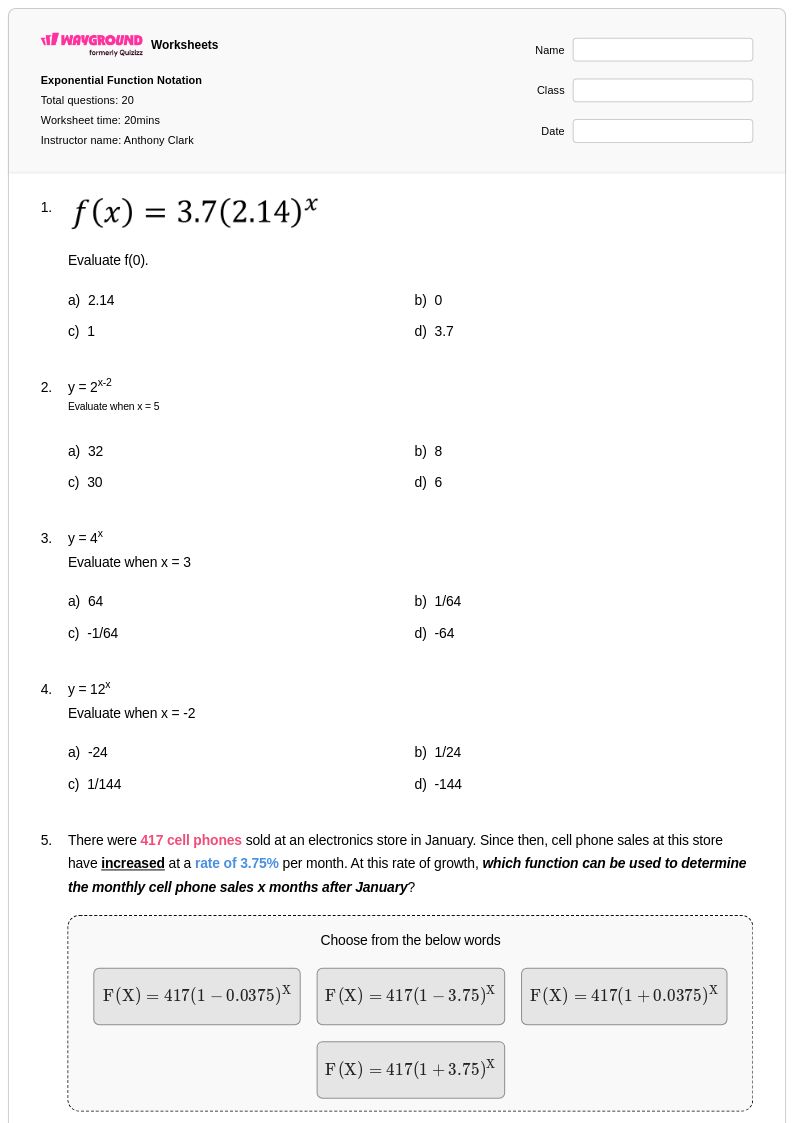
20 Q
9th - Uni
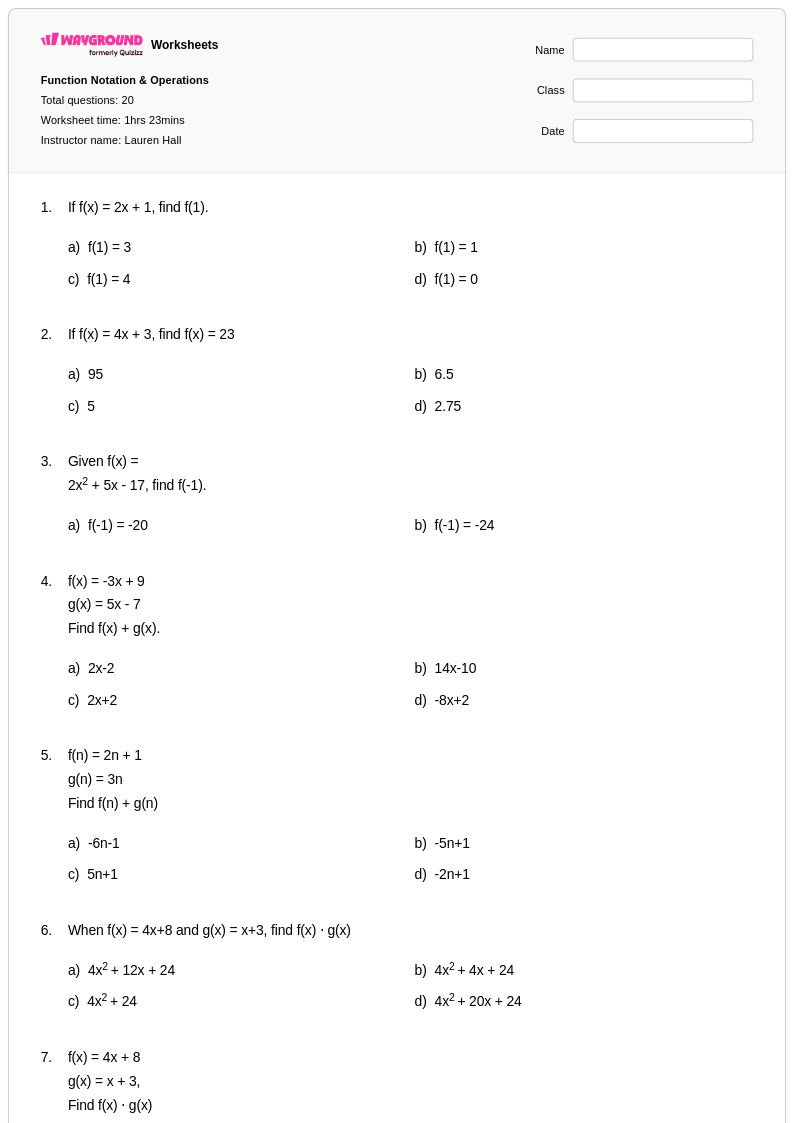
20 Q
11th
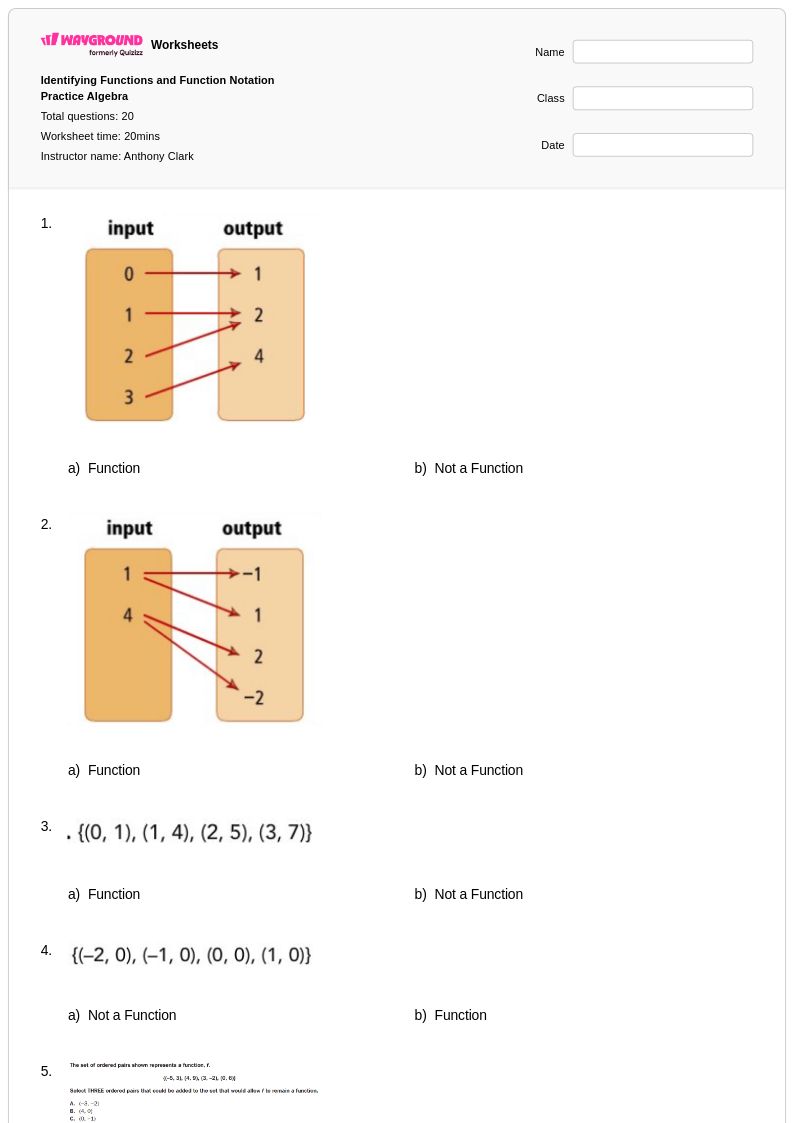
20 Q
9th - Uni
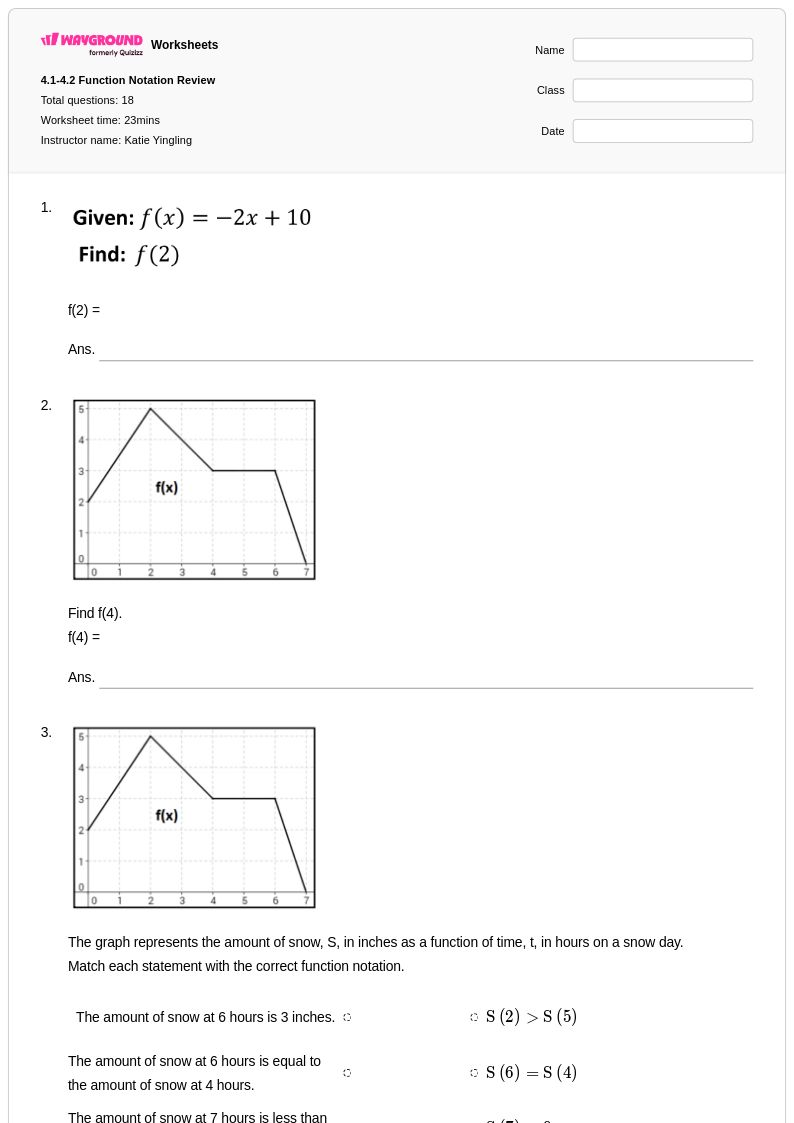
18 Q
9th - 12th
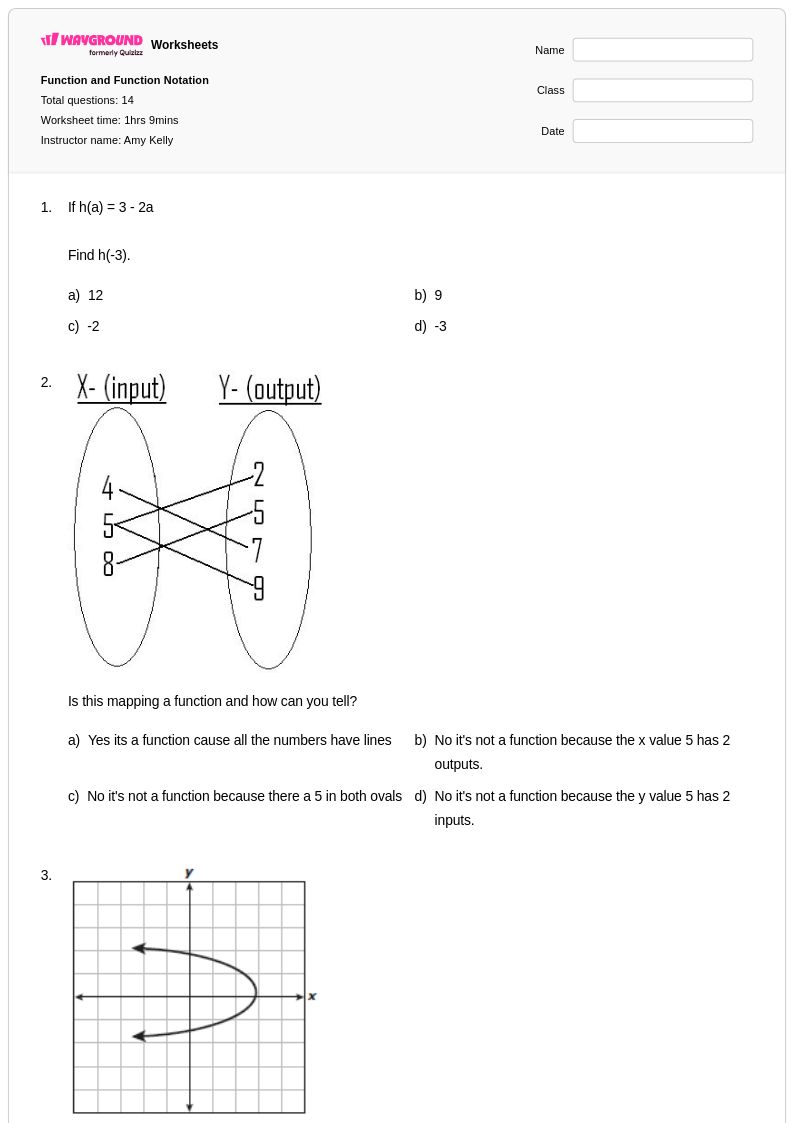
14 Q
9th - 12th
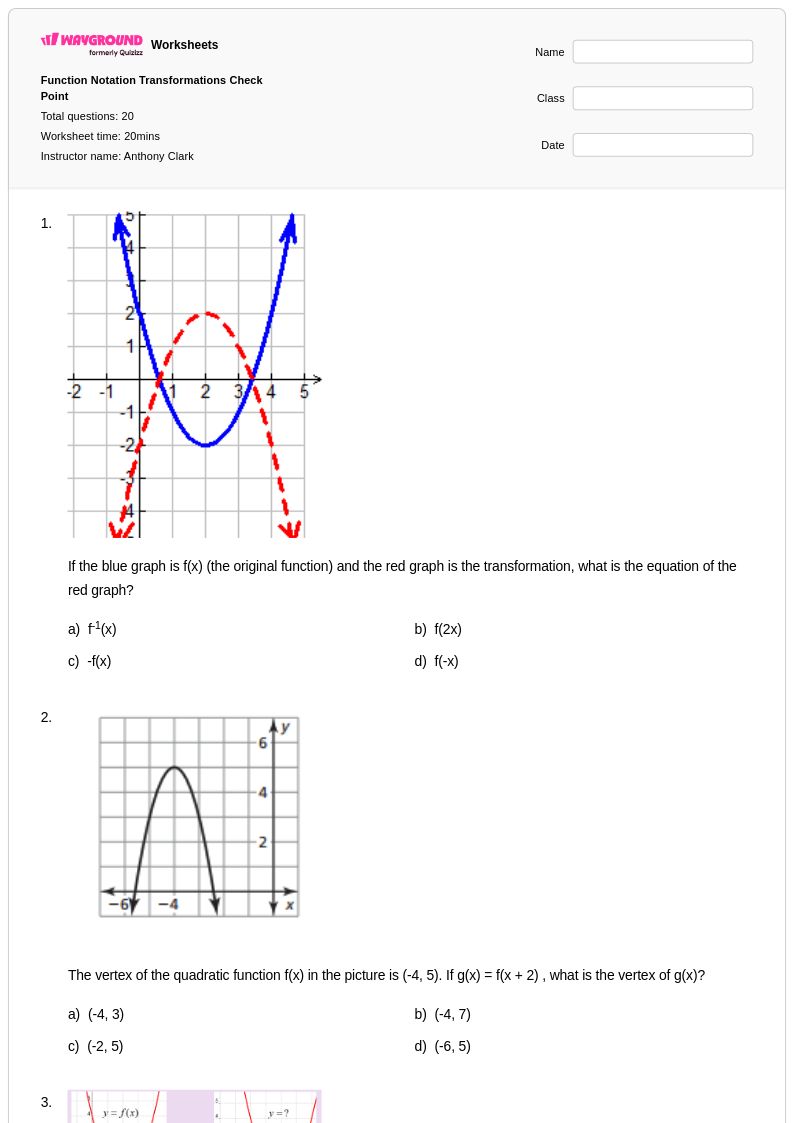
20 Q
9th - Uni
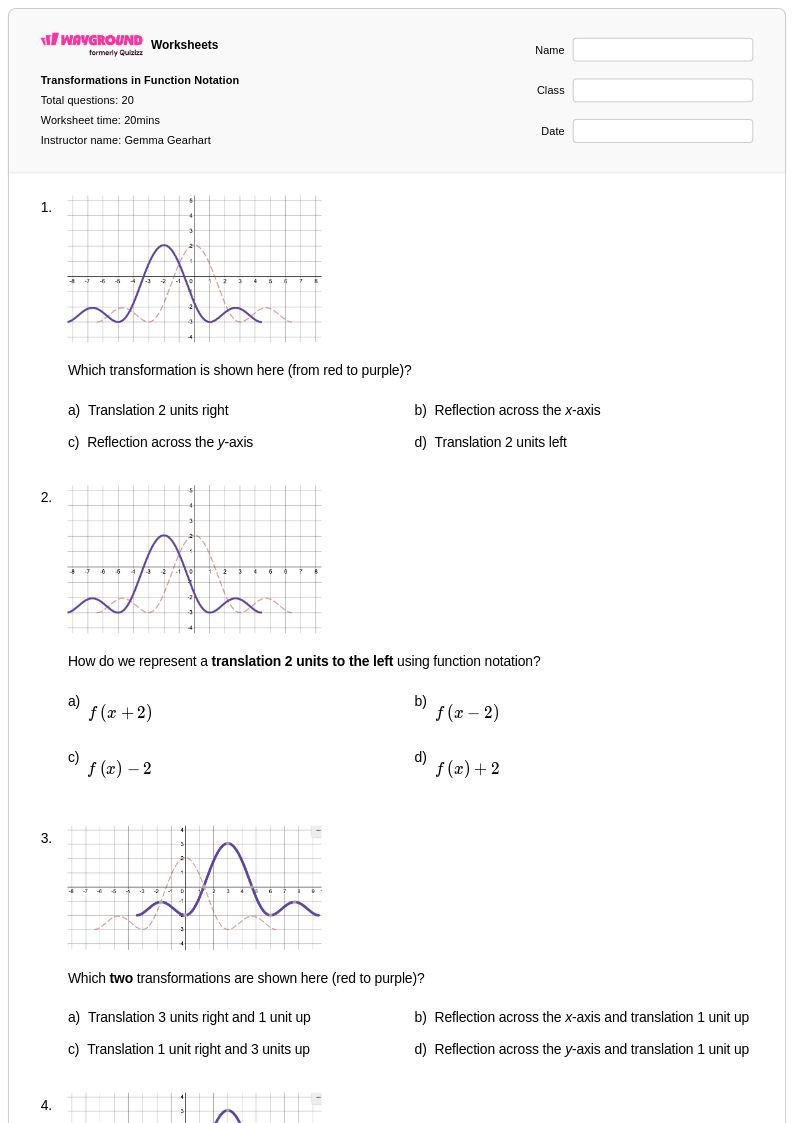
20 Q
11th
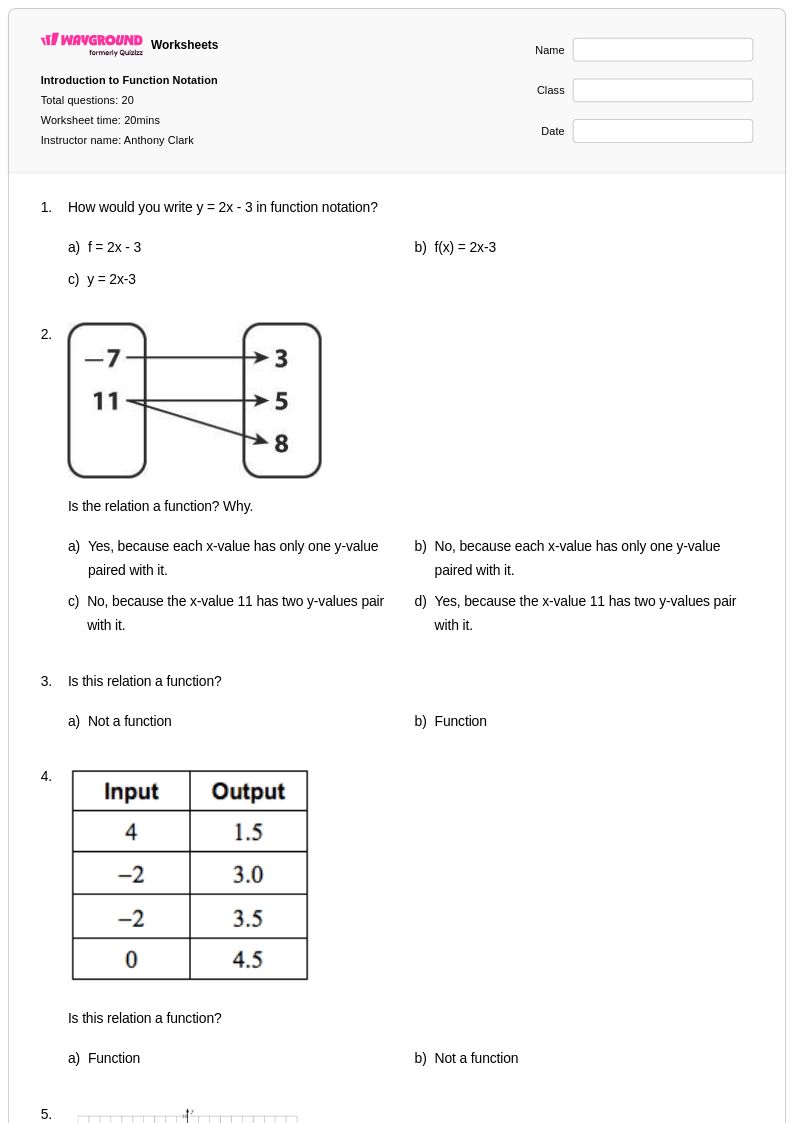
20 Q
9th - Uni
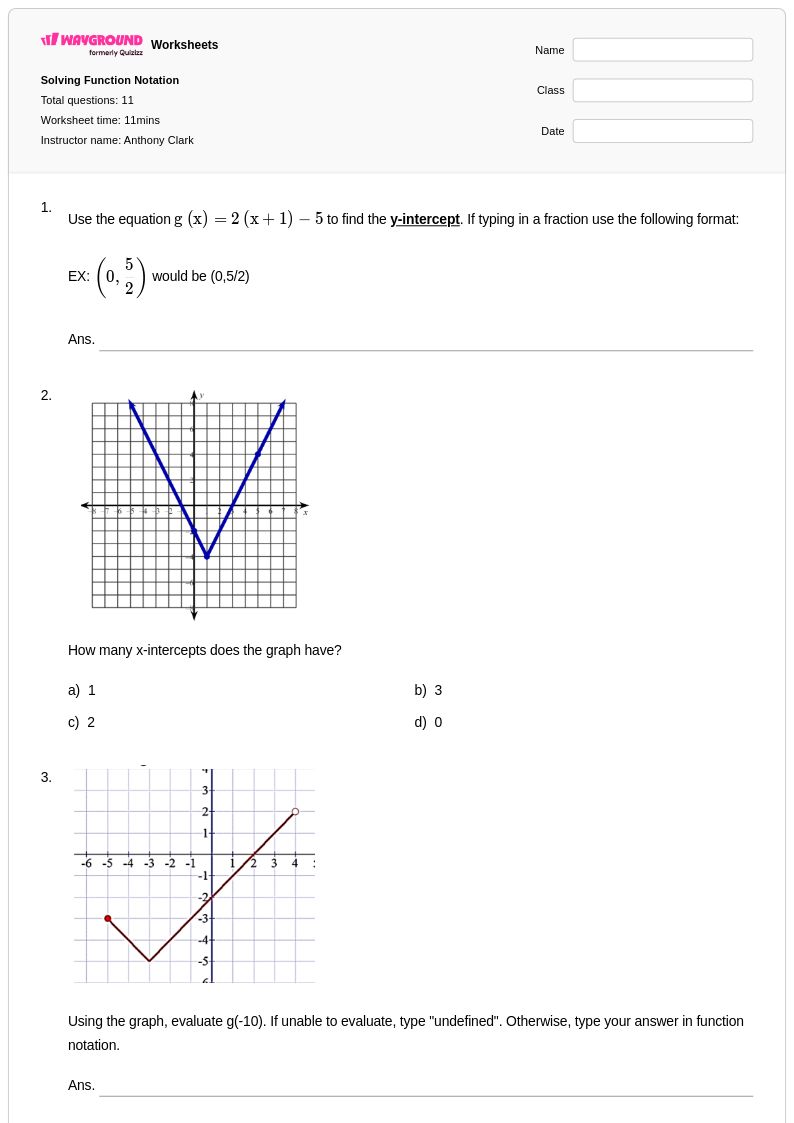
11 Q
9th - Uni
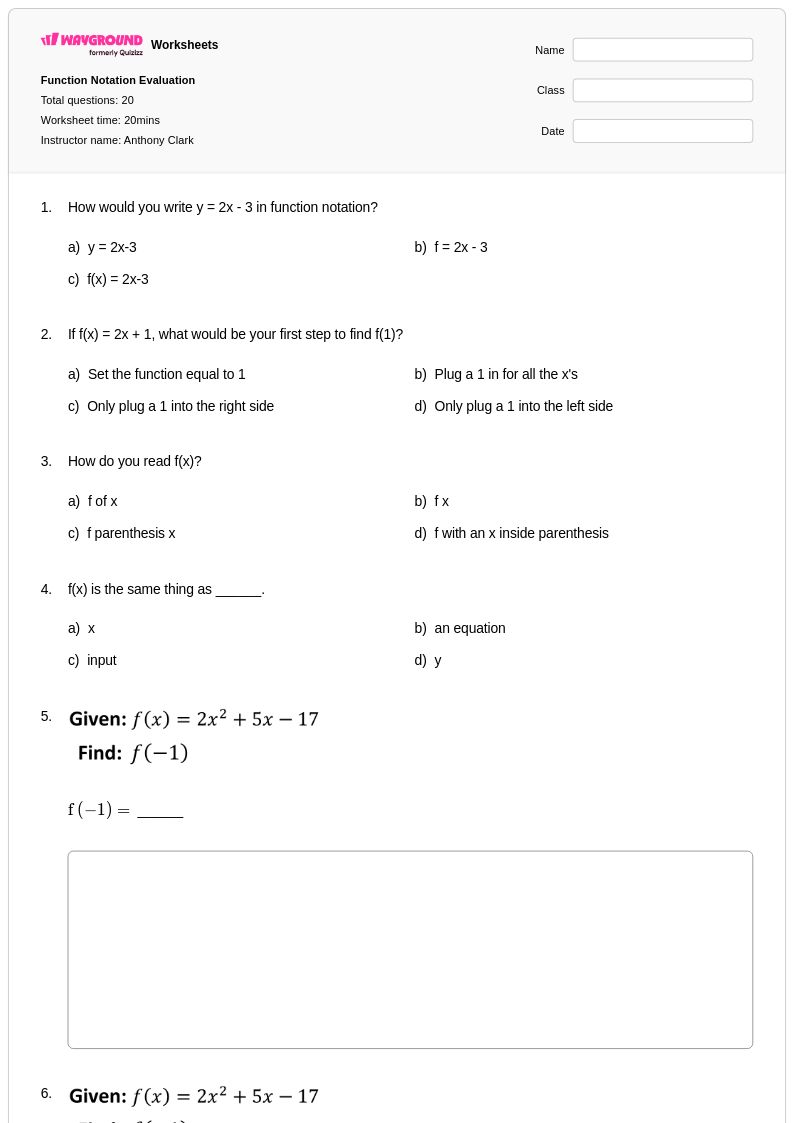
20 Q
9th - Uni
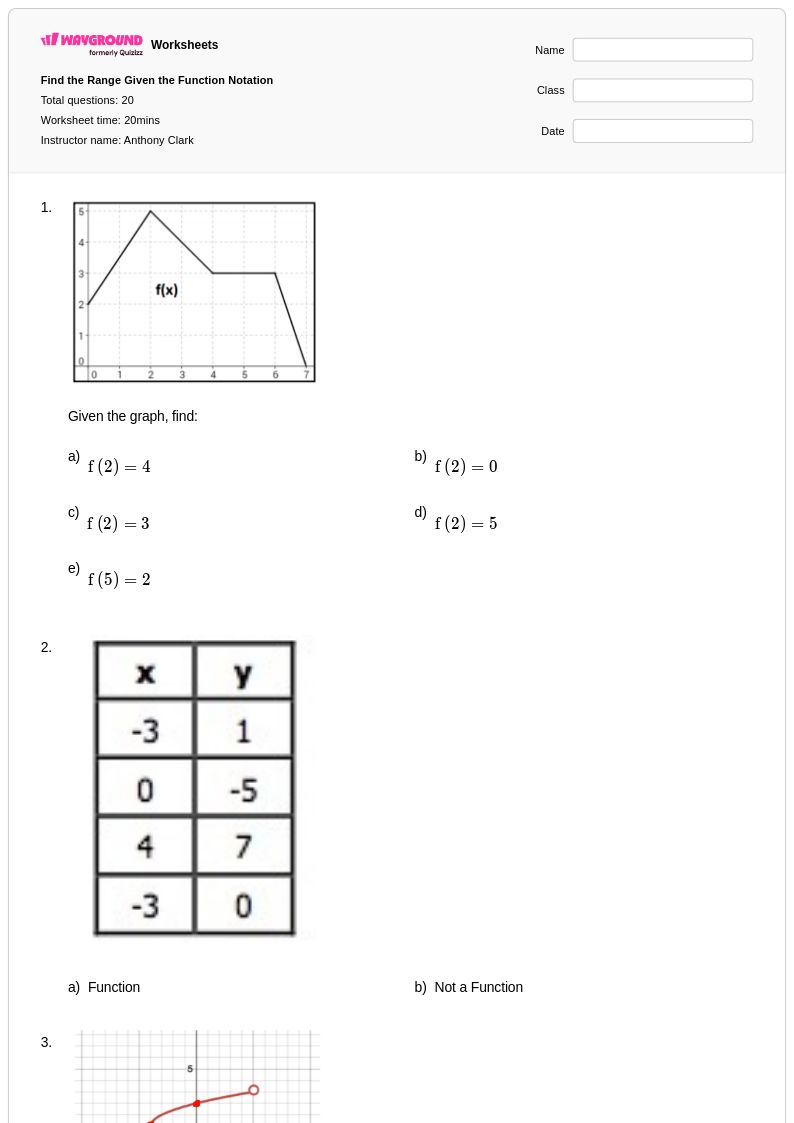
20 Q
9th - Uni
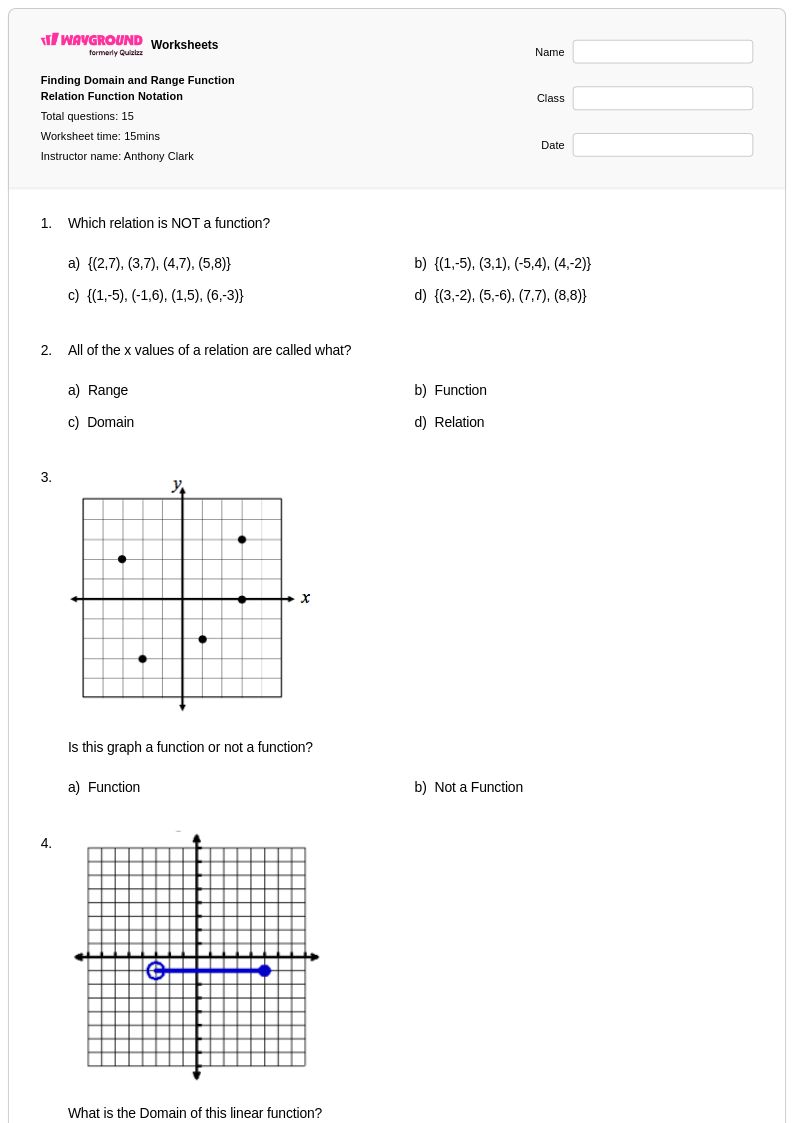
15 Q
9th - Uni
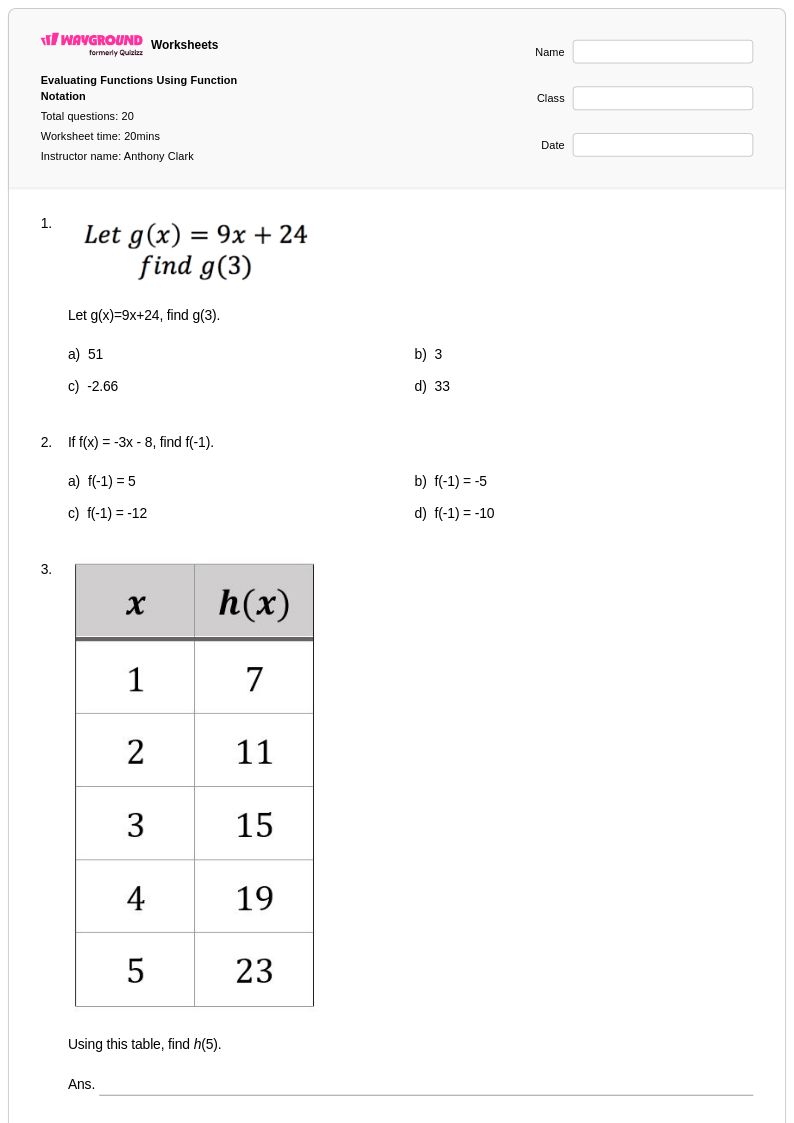
20 Q
9th - Uni
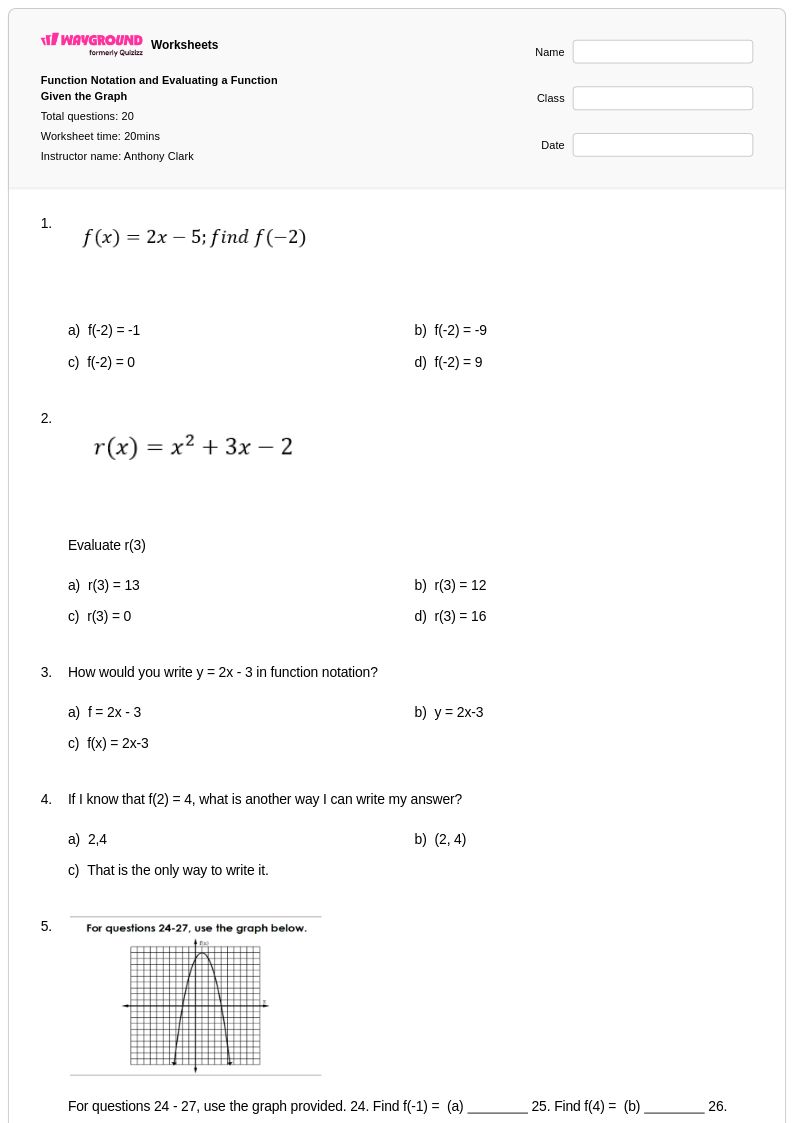
20 Q
9th - Uni
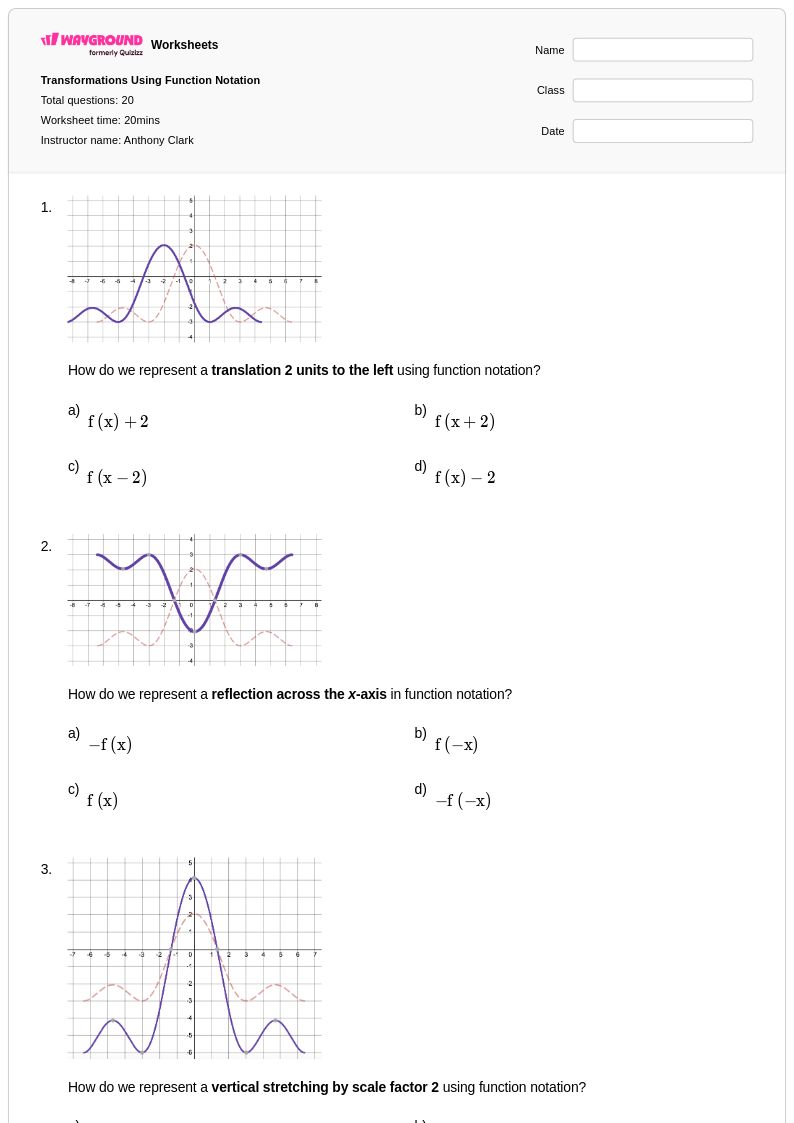
20 Q
11th - Uni
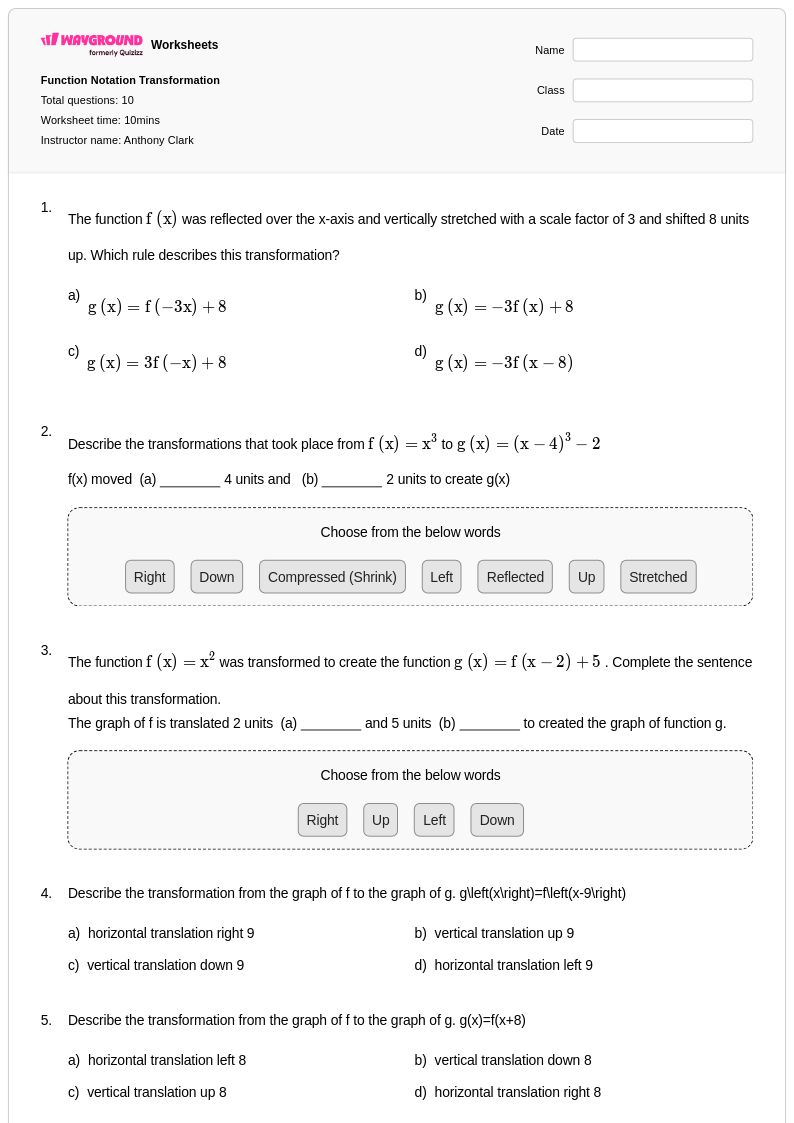
10 Q
9th - Uni
Explore Other Subject Worksheets for class 11
Explore printable Function Notation worksheets for Class 11
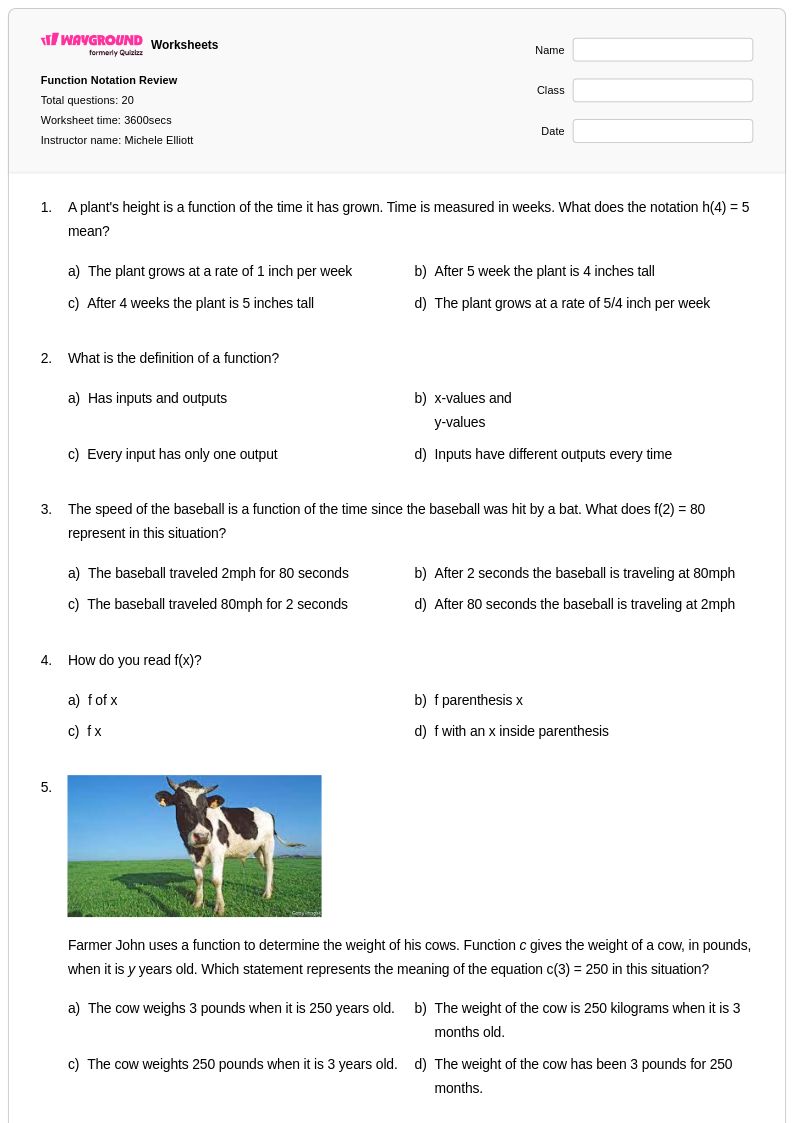
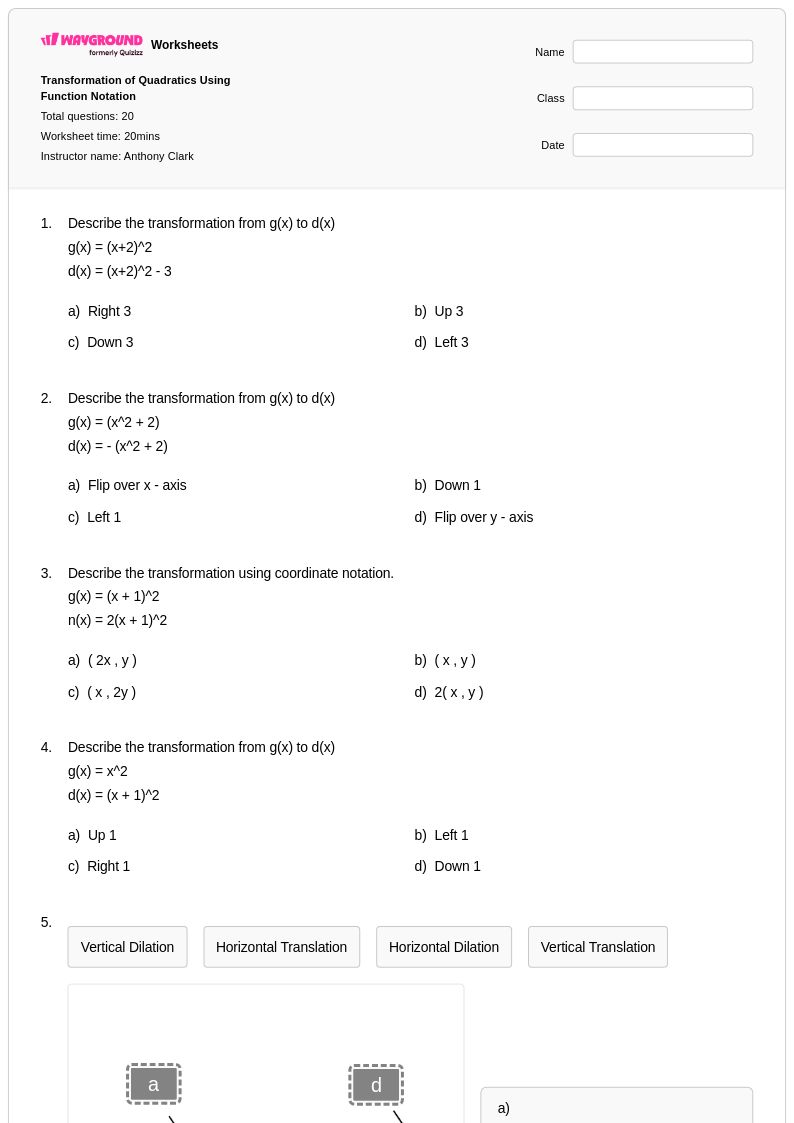
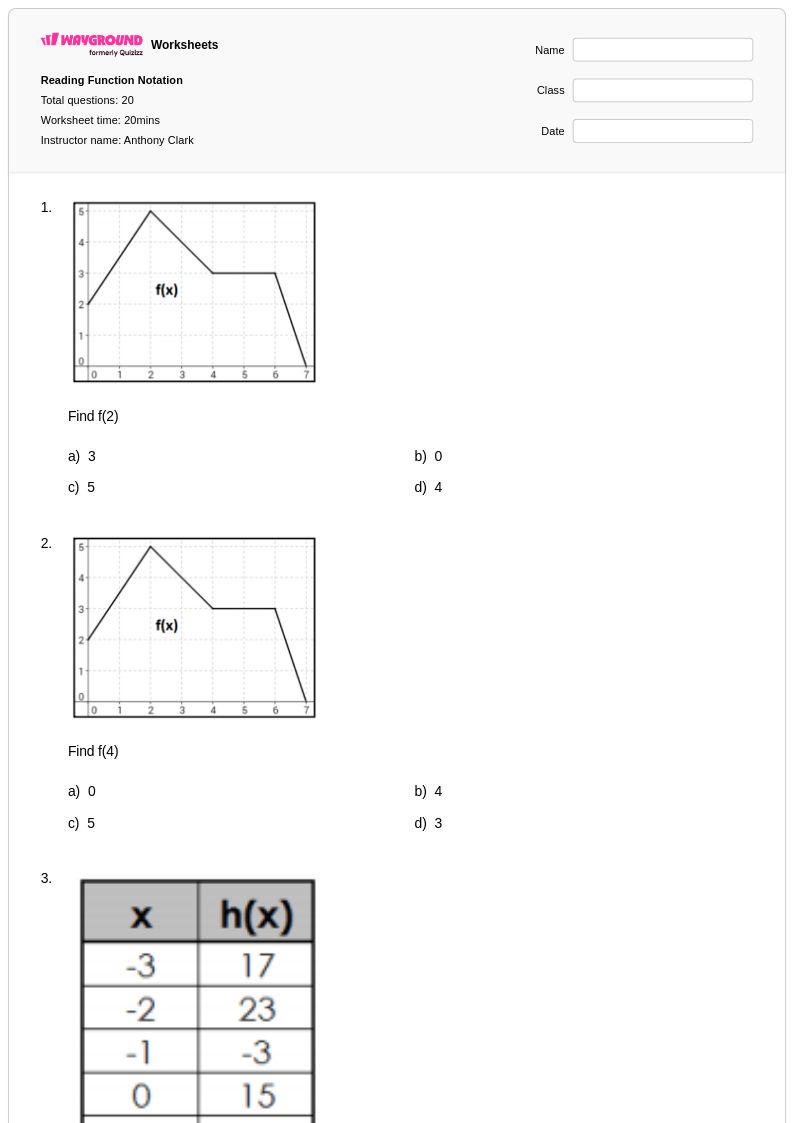
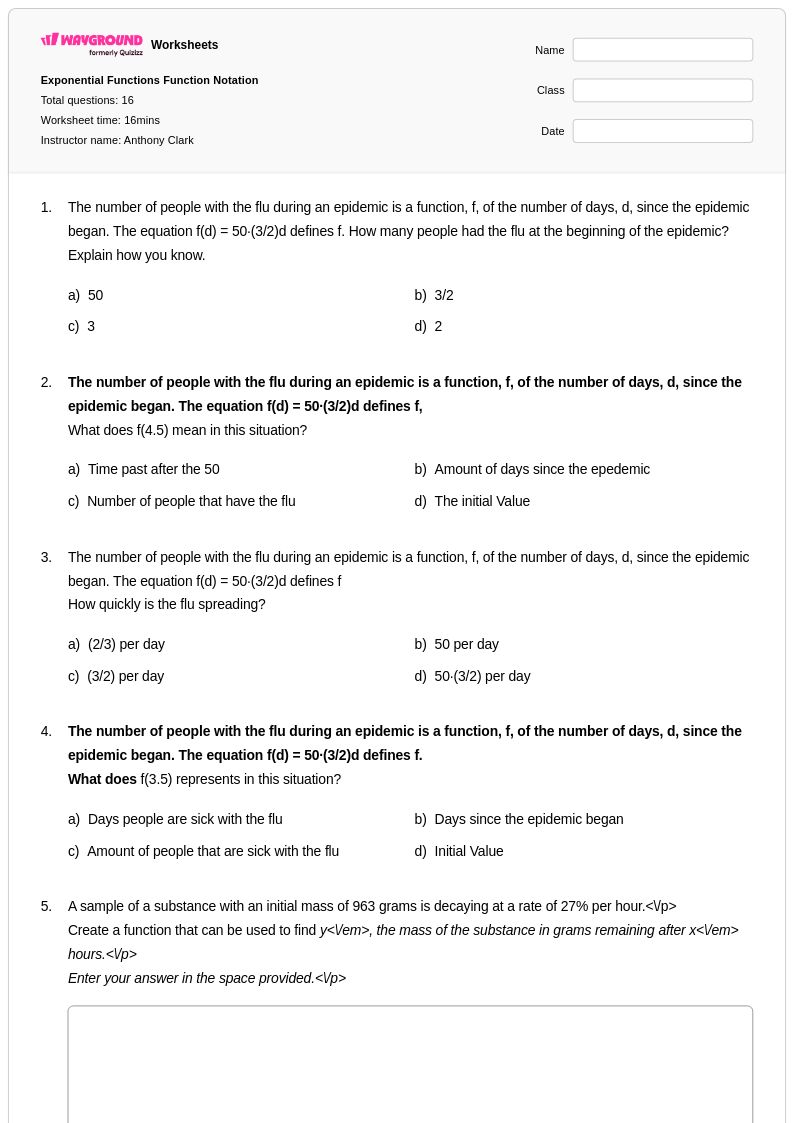
Function notation worksheets for Class 11 mathematics provide essential practice for students developing proficiency in mathematical communication and symbolic representation. These comprehensive printables available through Wayground (formerly Quizizz) focus on helping students master the standard f(x) notation system, interpret function values, and evaluate functions at specific input values. The worksheets strengthen critical skills including reading and writing function notation, understanding domain and range within notation contexts, and translating between verbal descriptions and symbolic representations. Each practice problem set includes detailed answer keys that guide students through proper notation conventions, while the free pdf format ensures accessibility for both classroom instruction and independent study sessions.
Wayground (formerly Quizizz) supports mathematics educators with millions of teacher-created function notation resources that streamline lesson planning and differentiated instruction for Class 11 students. The platform's robust search and filtering capabilities allow teachers to locate worksheets aligned with specific curriculum standards and learning objectives, while customization tools enable educators to modify existing materials or create targeted practice sets for remediation and enrichment. These function notation collections are available in both printable pdf formats for traditional paper-based assignments and digital formats for interactive online practice, providing flexible options that accommodate diverse classroom environments and individual student needs. Teachers can efficiently identify skill gaps, provide focused practice opportunities, and track student progress through systematic function notation exercises that build mathematical fluency and conceptual understanding.
FAQs
How should I teach function notation in Grade 11?
What exercises build fluency with function notation in Grade 11?
What function notation errors should I watch for?
How do I assign this Grade 11 function notation worksheet?
How does Grade 11 function notation connect to the Common Core curriculum?
How can I support students who find function notation difficult?
What grade level is this function notation worksheet for?