Free Printable Goal Setting Worksheets for Kindergarten
Help kindergarten students develop essential goal-setting skills with Wayground's free printable social studies worksheets, featuring engaging practice problems and answer keys to build foundational planning abilities.
Explore printable Goal Setting worksheets for Kindergarten
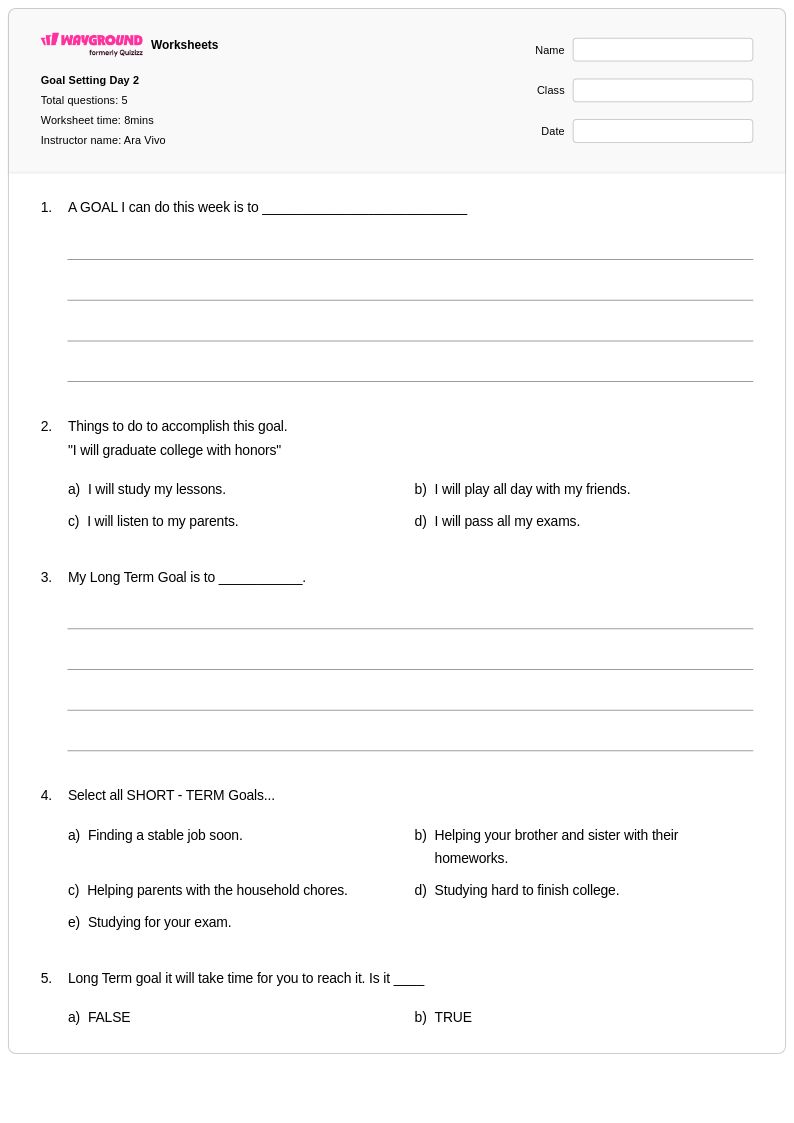
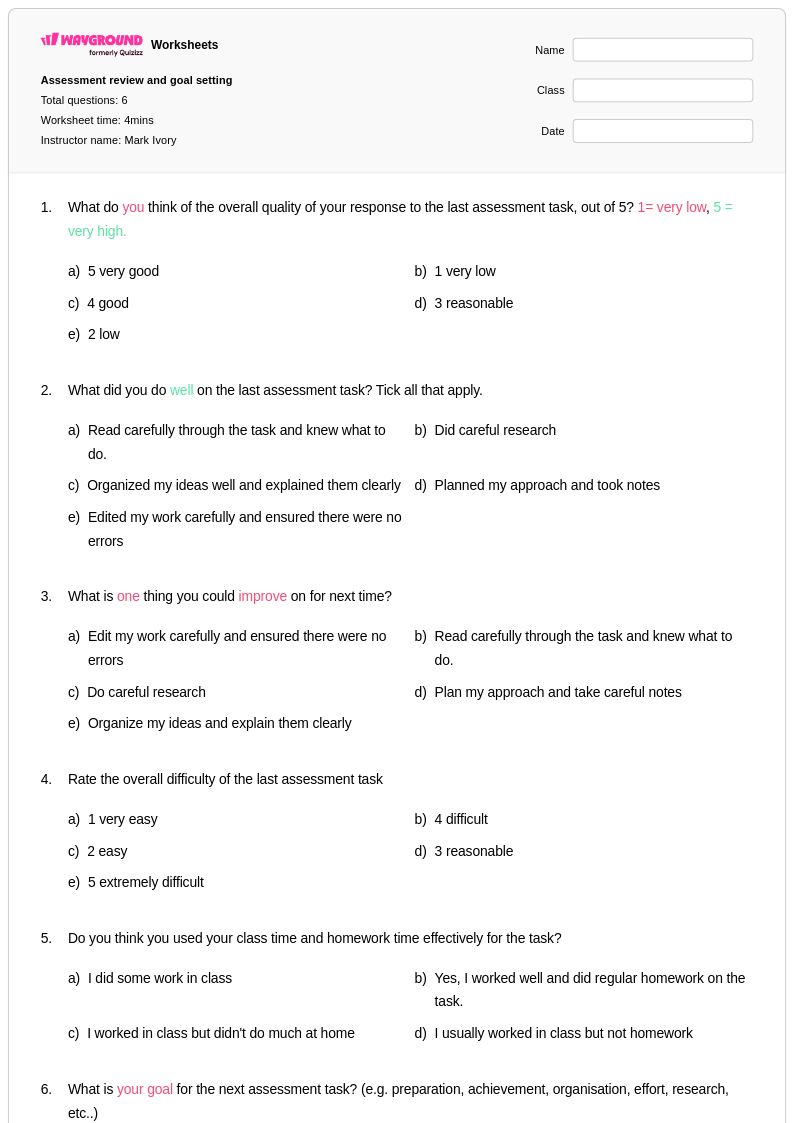
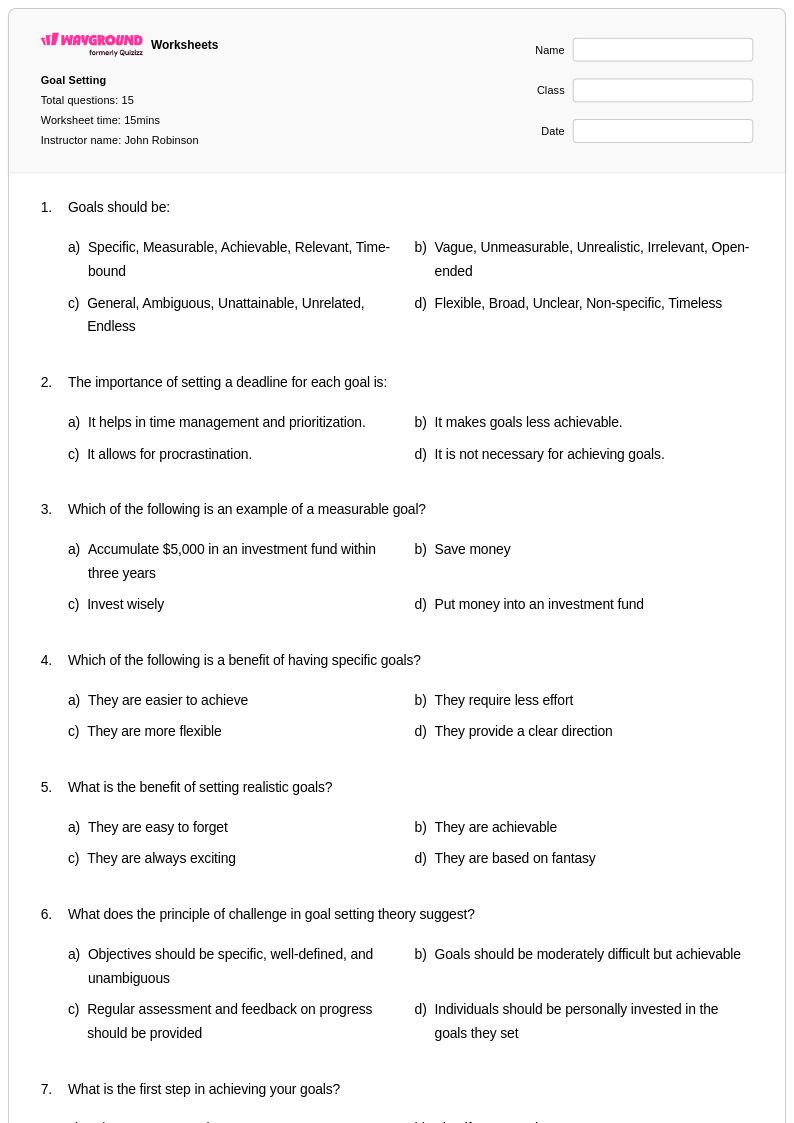
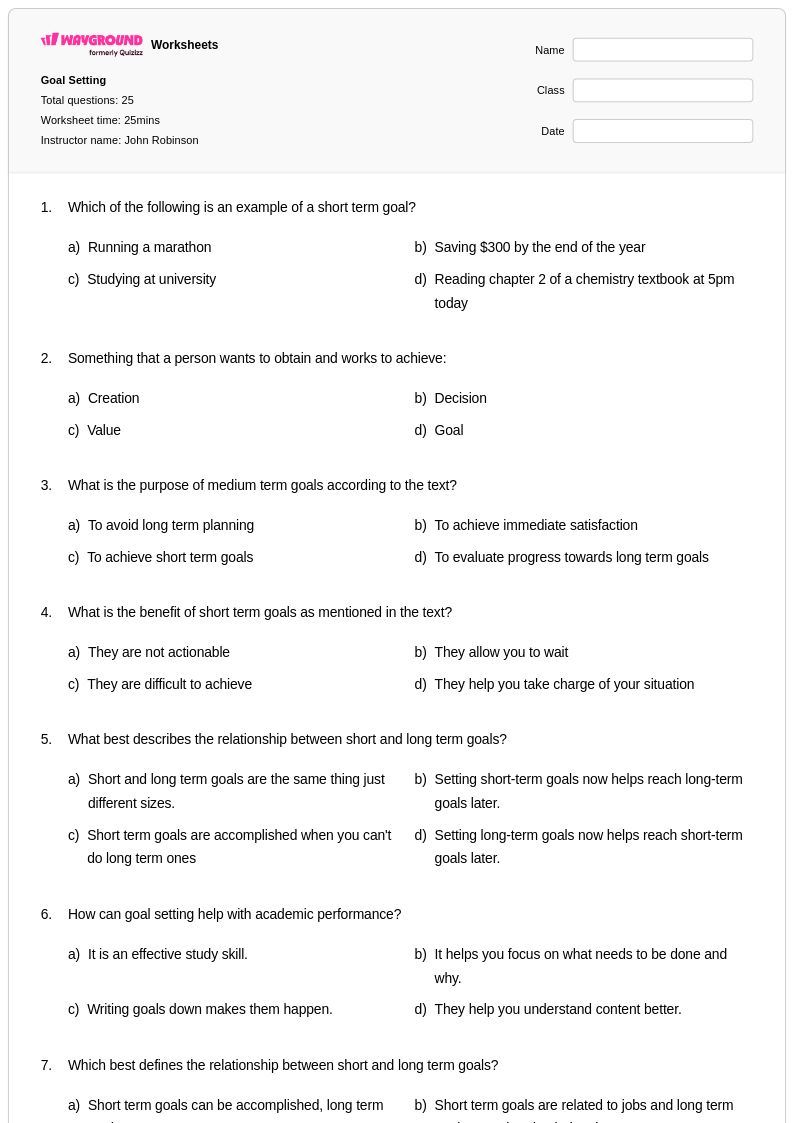
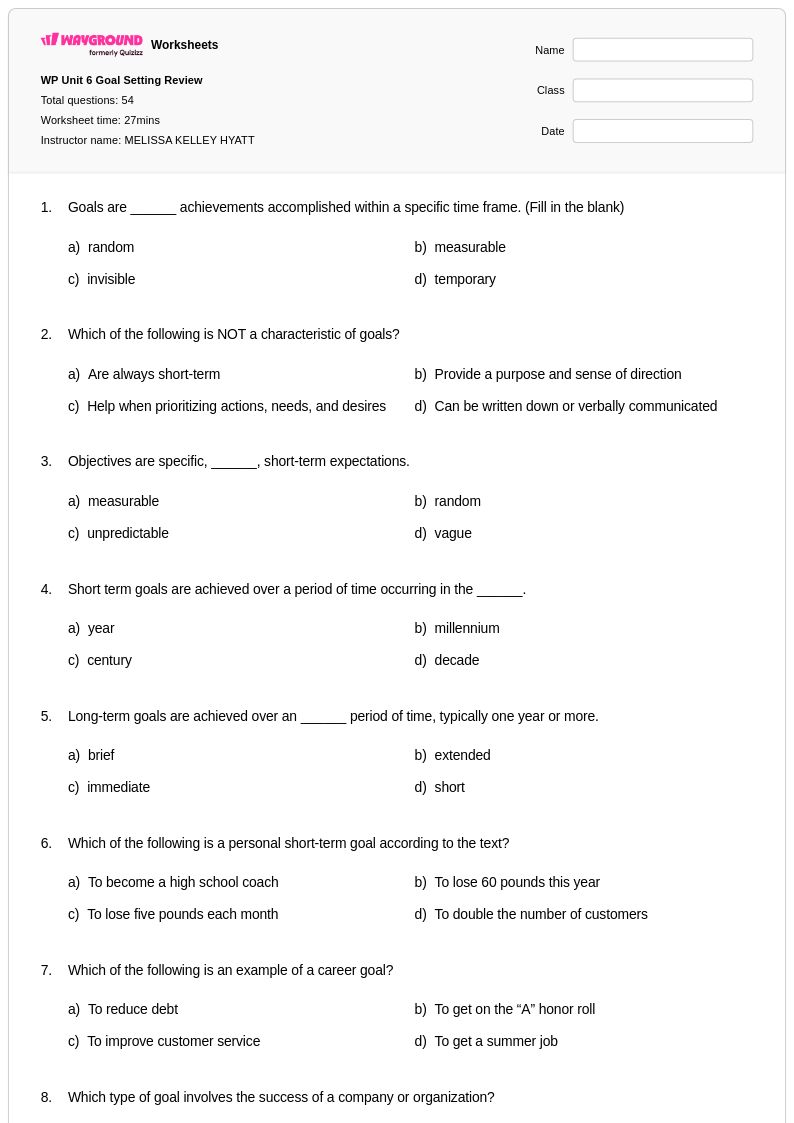
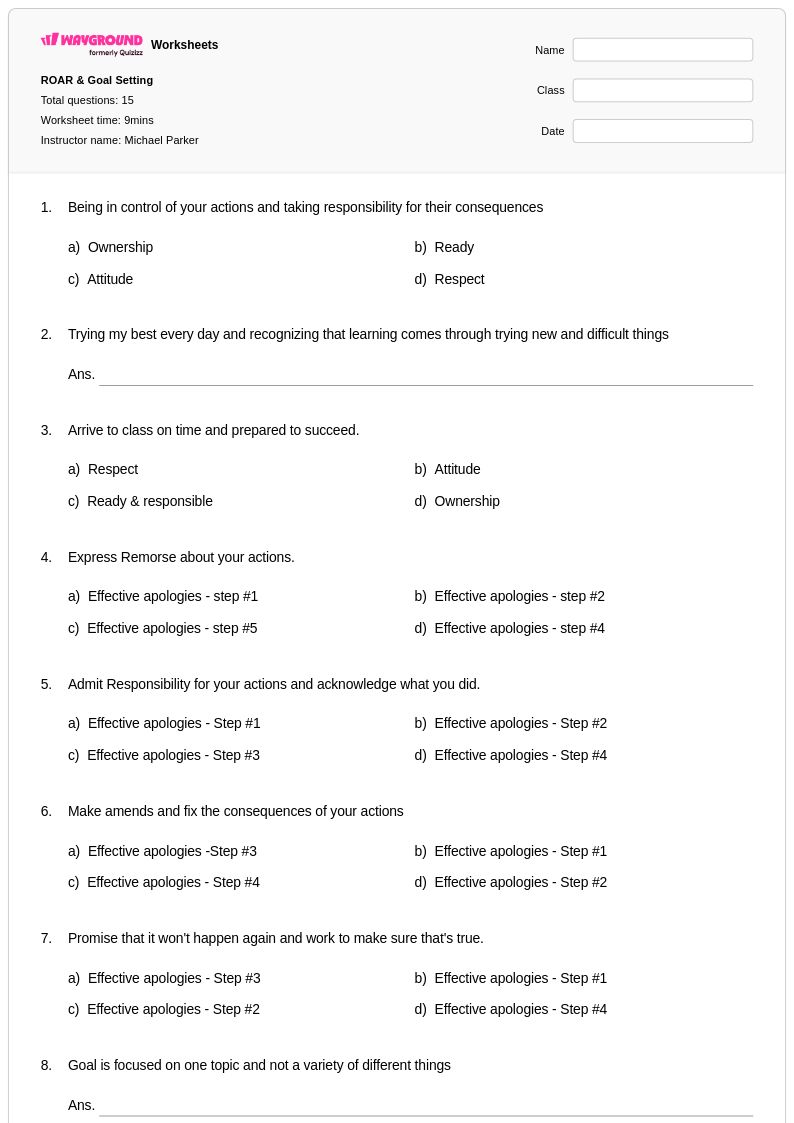
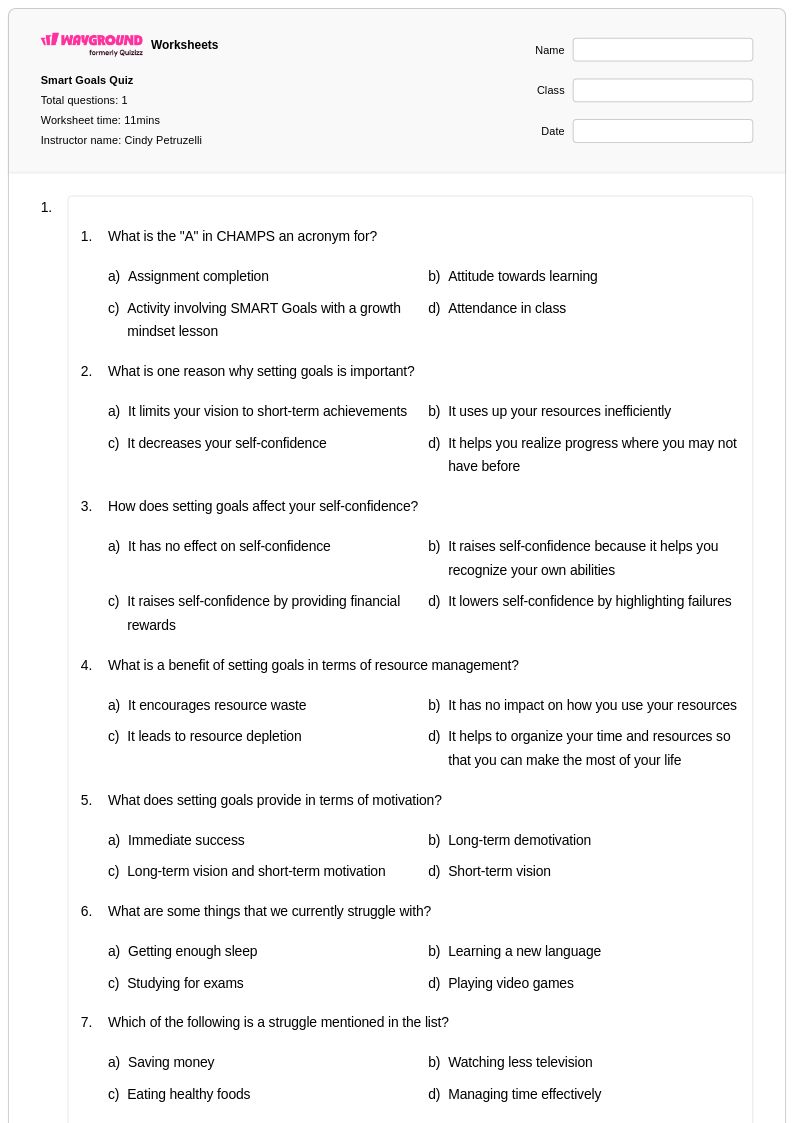
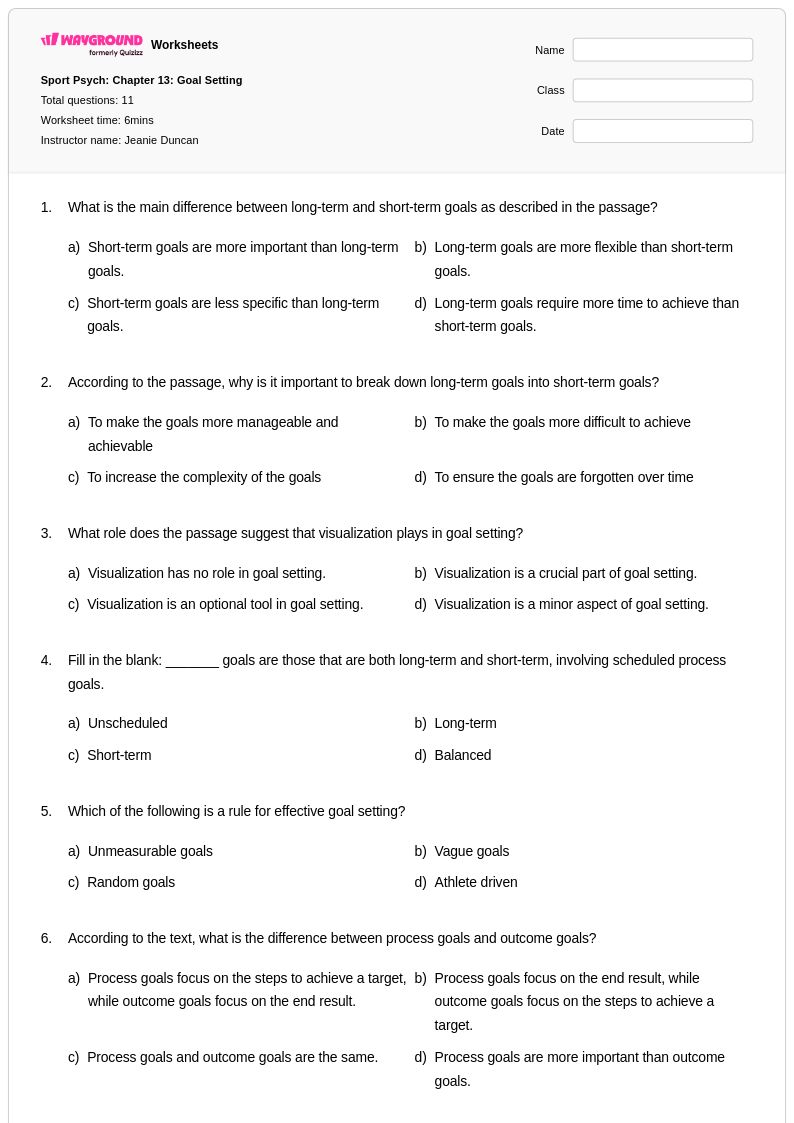
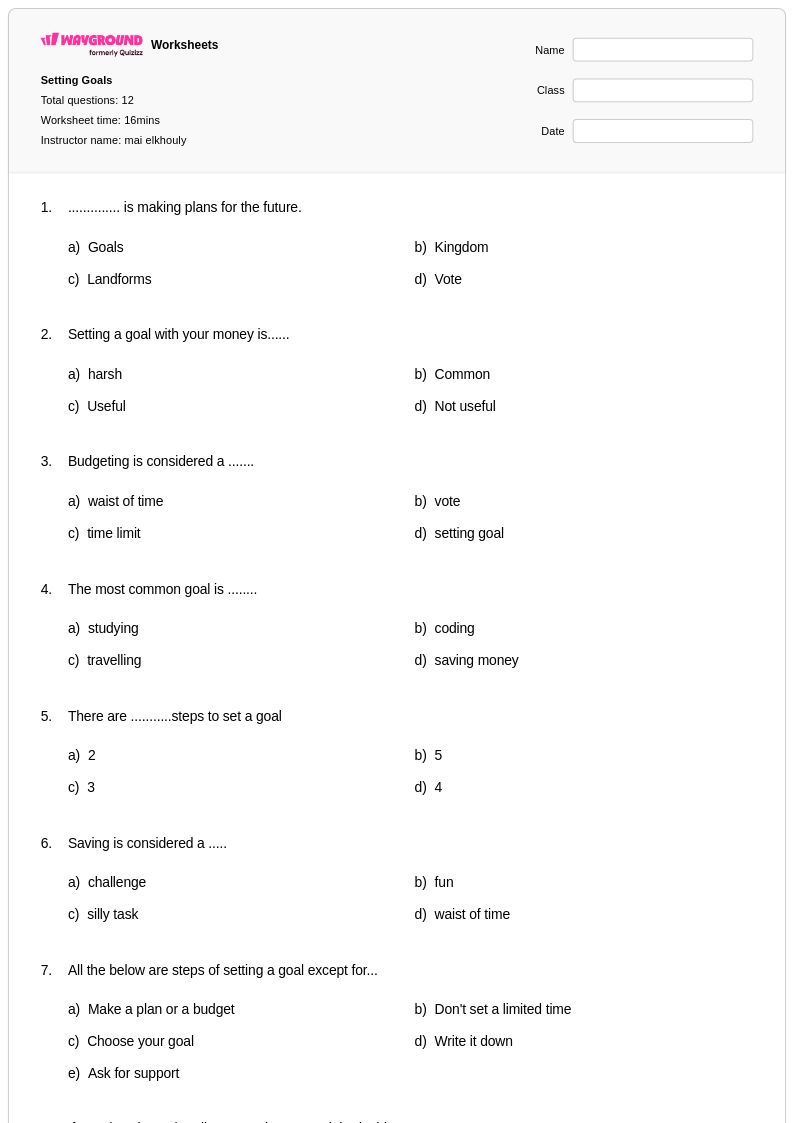
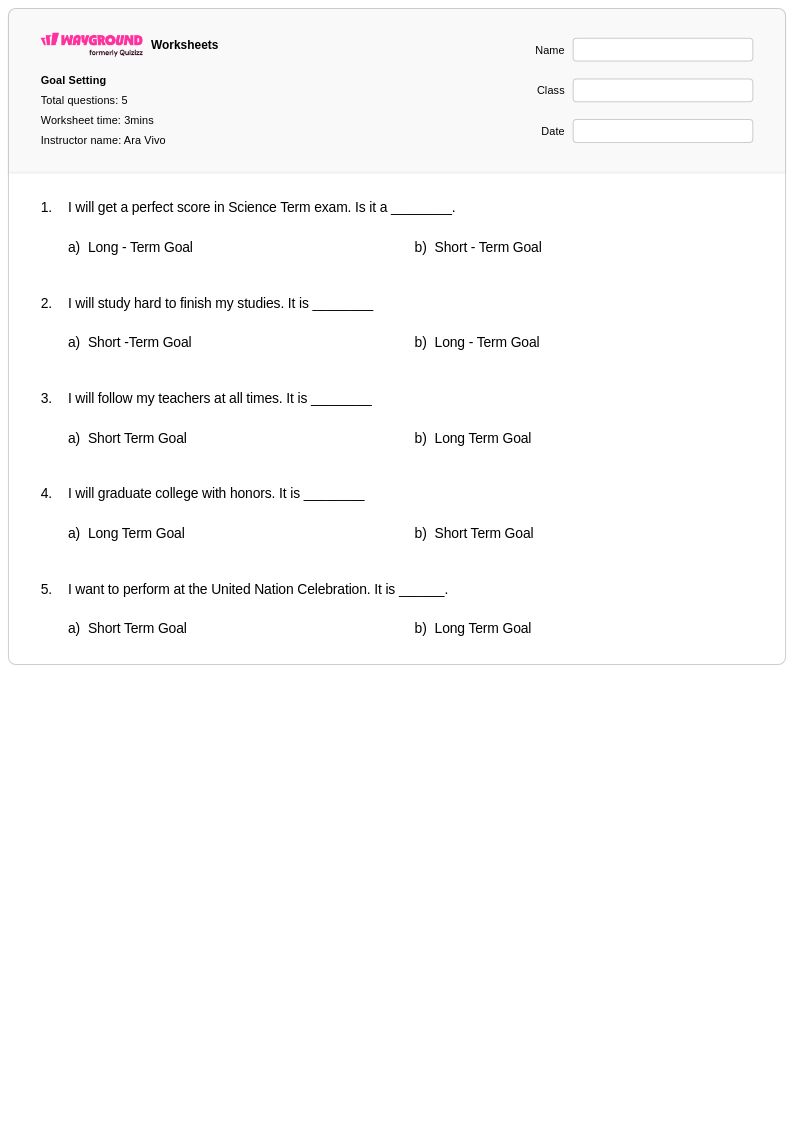
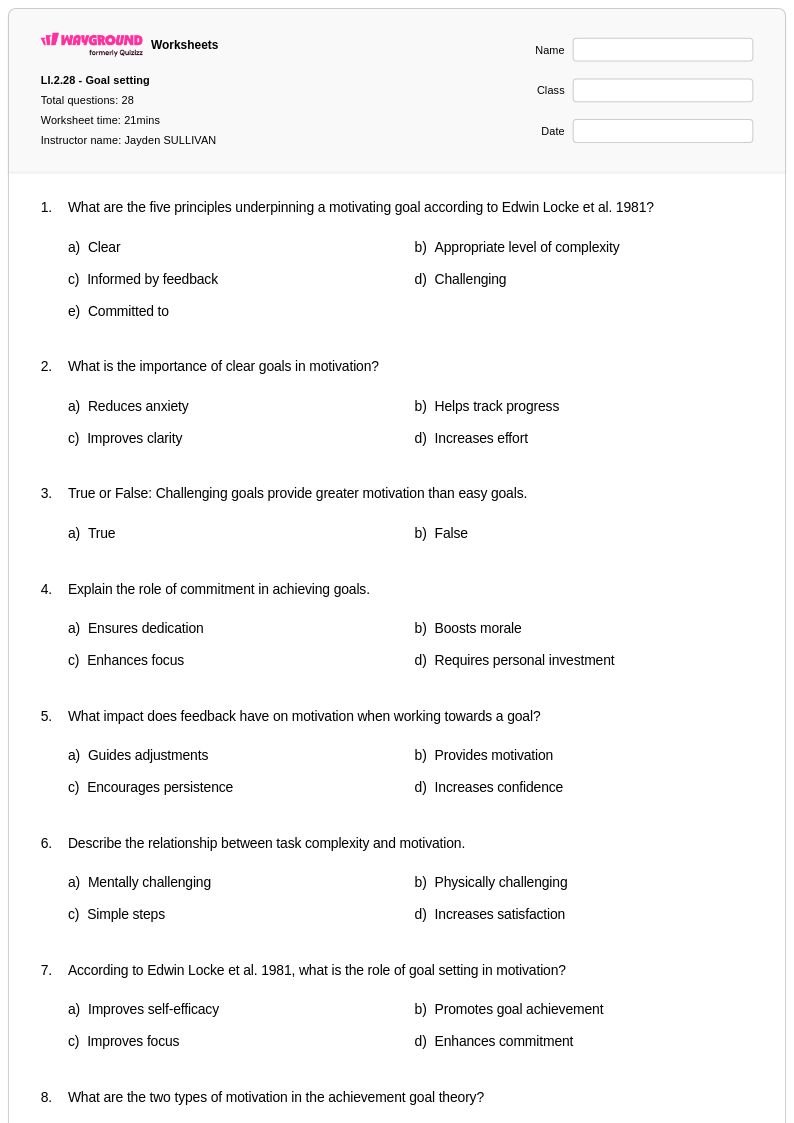
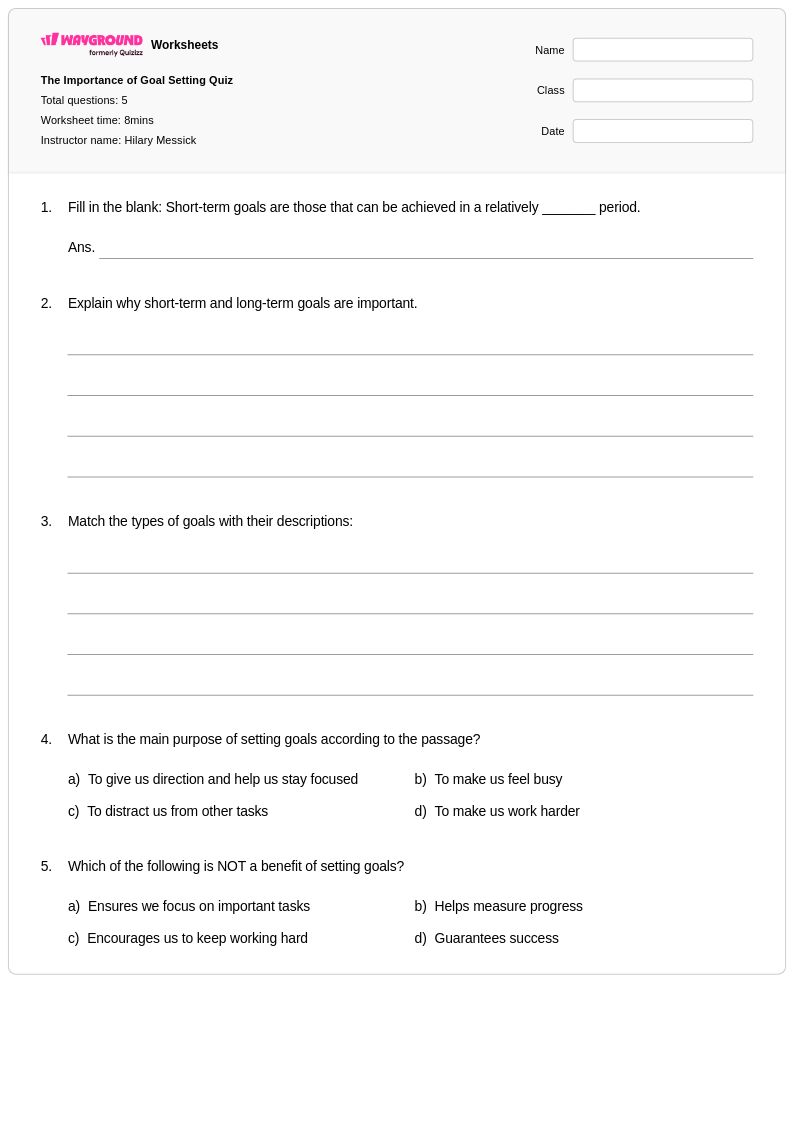
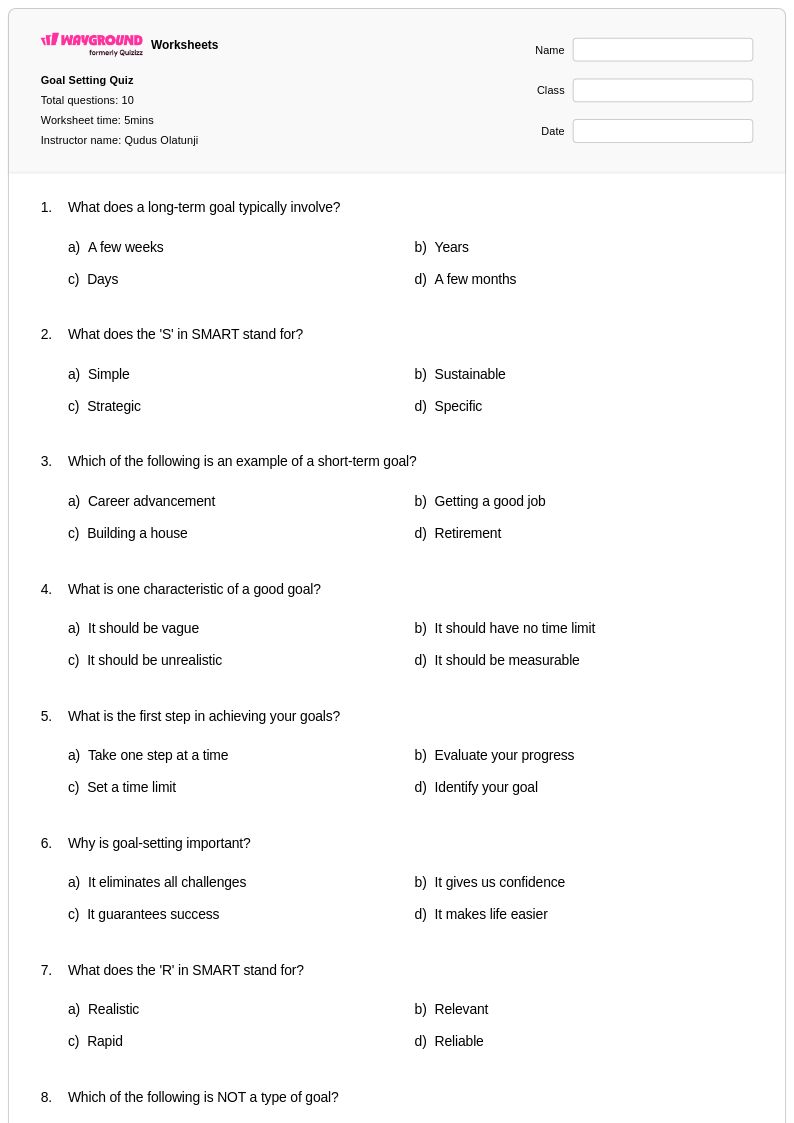
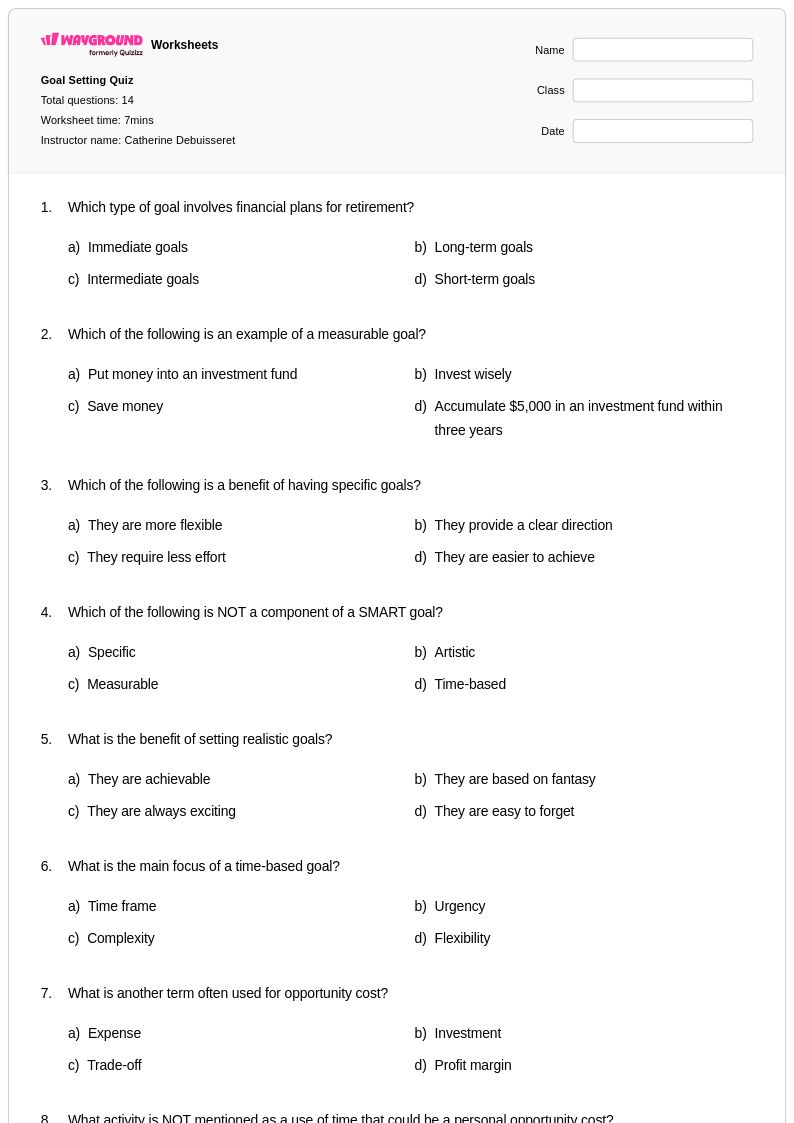
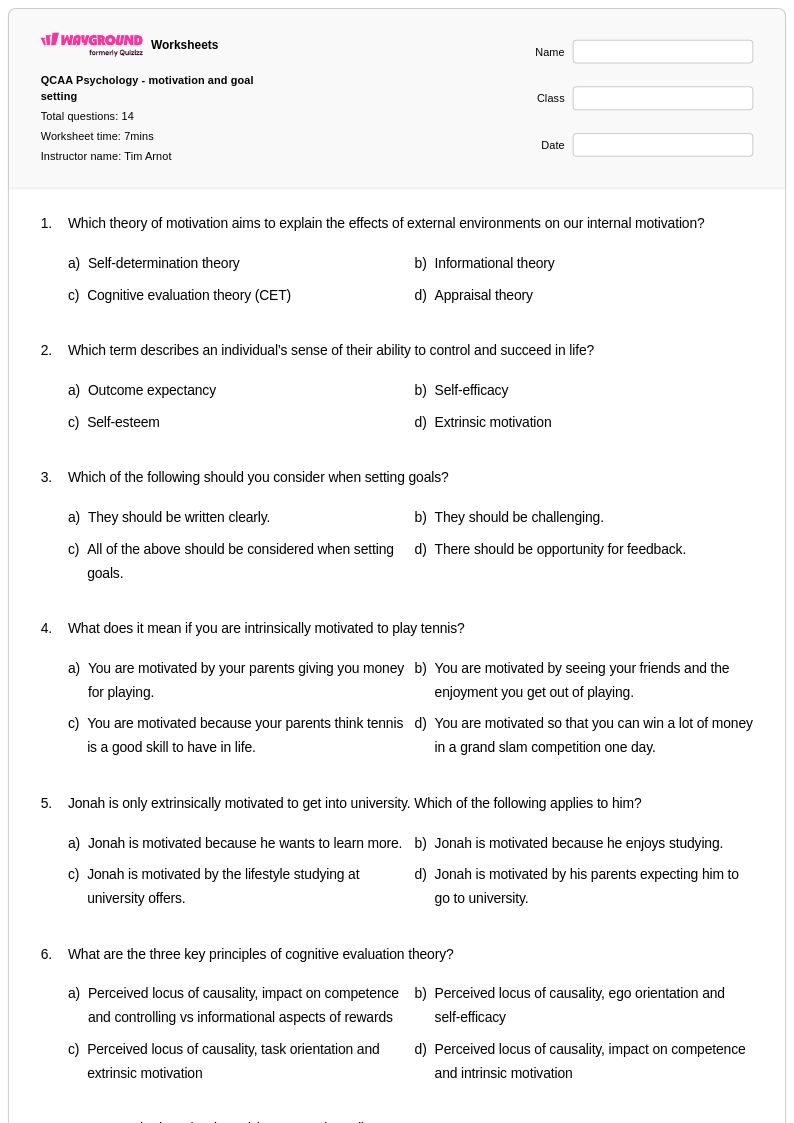
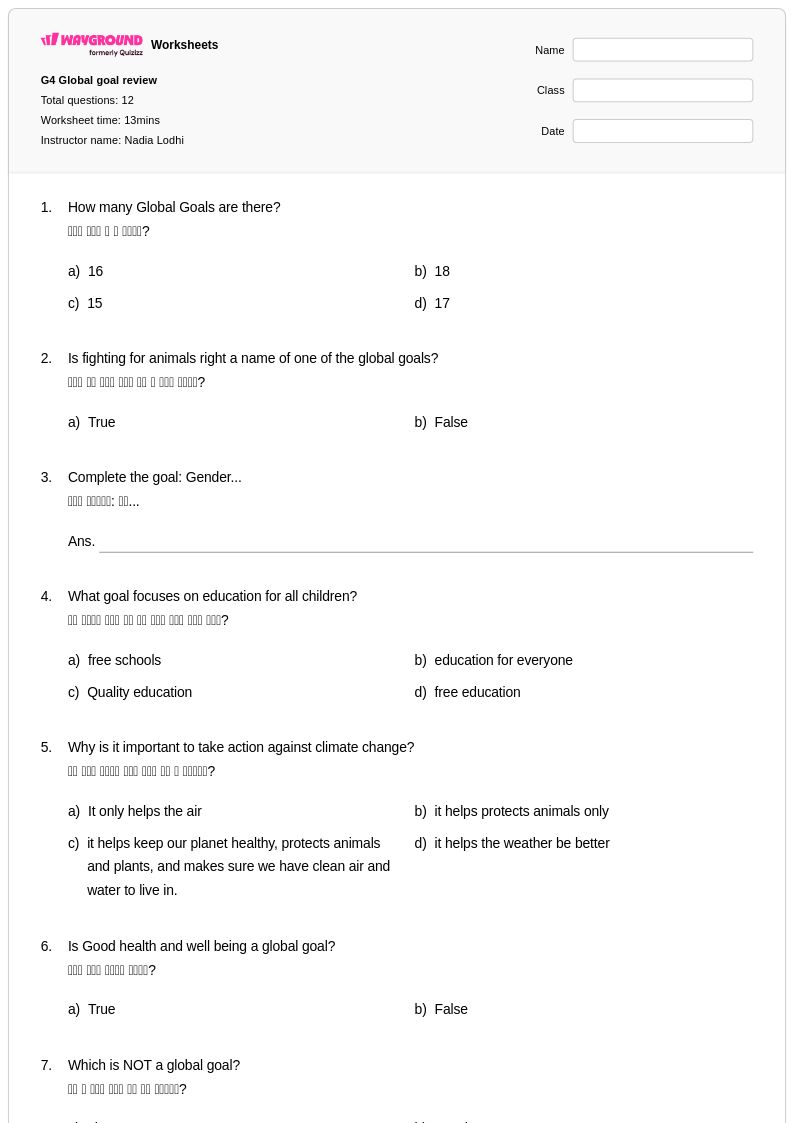
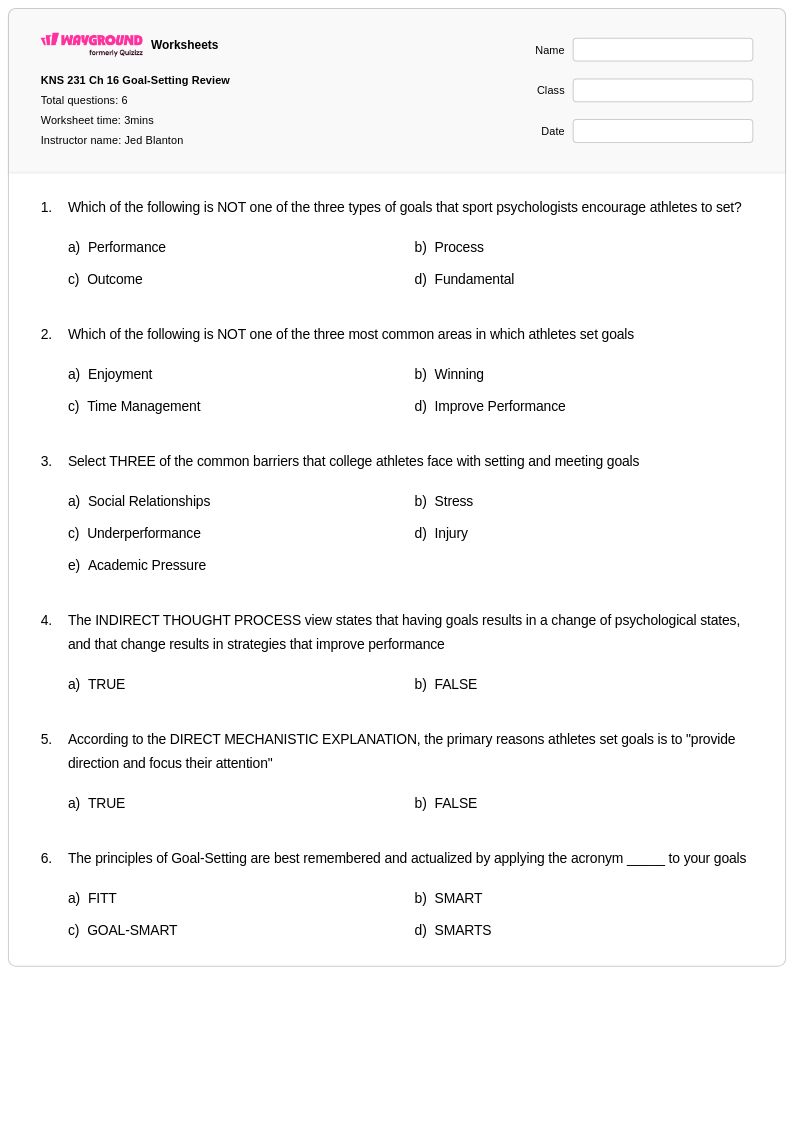
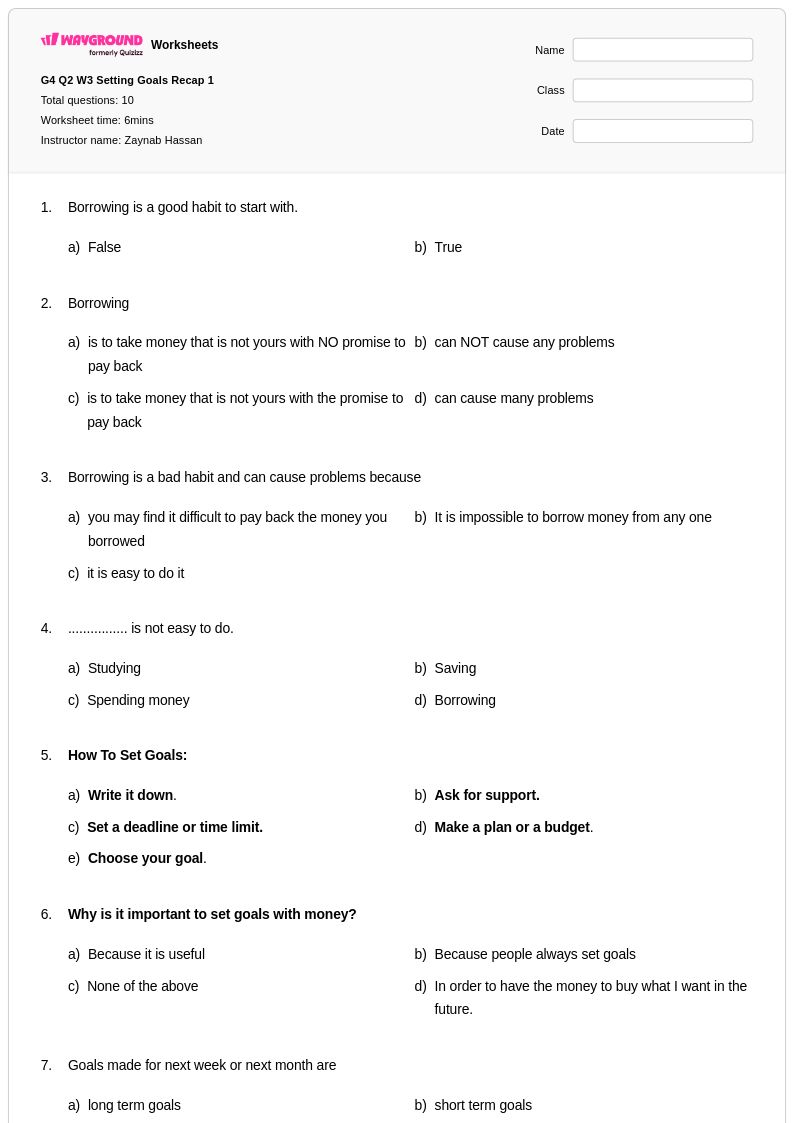
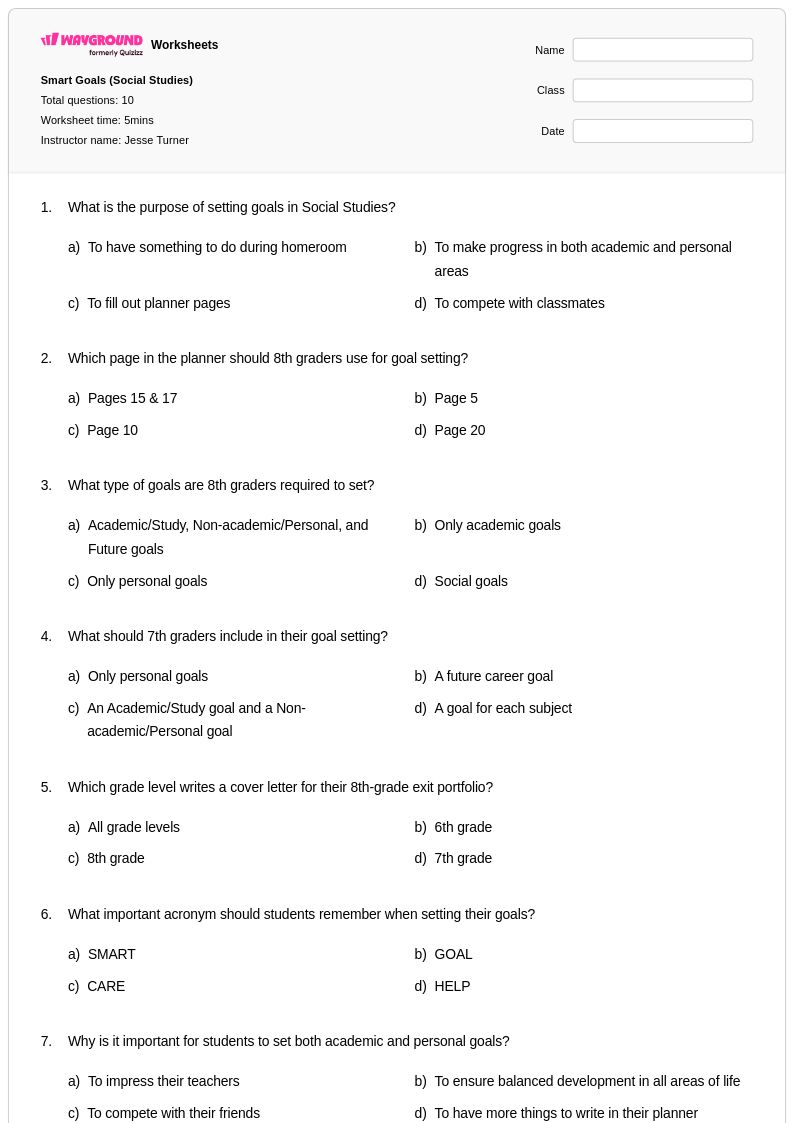
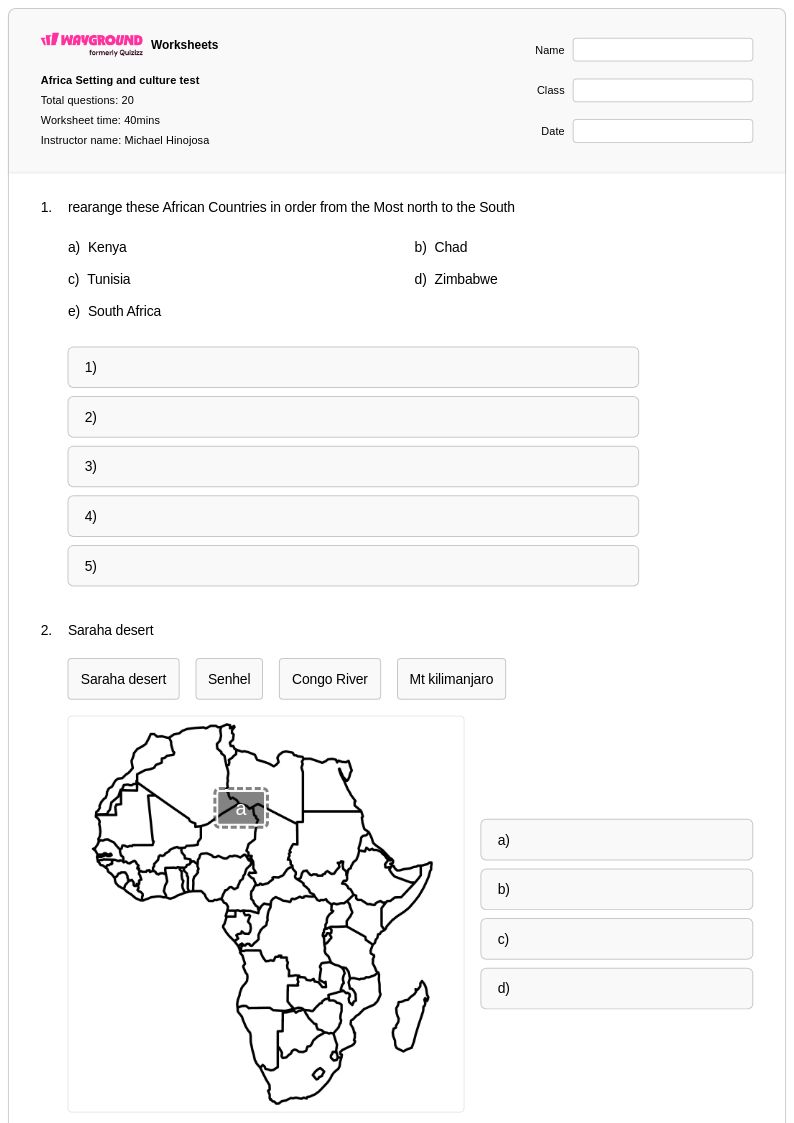
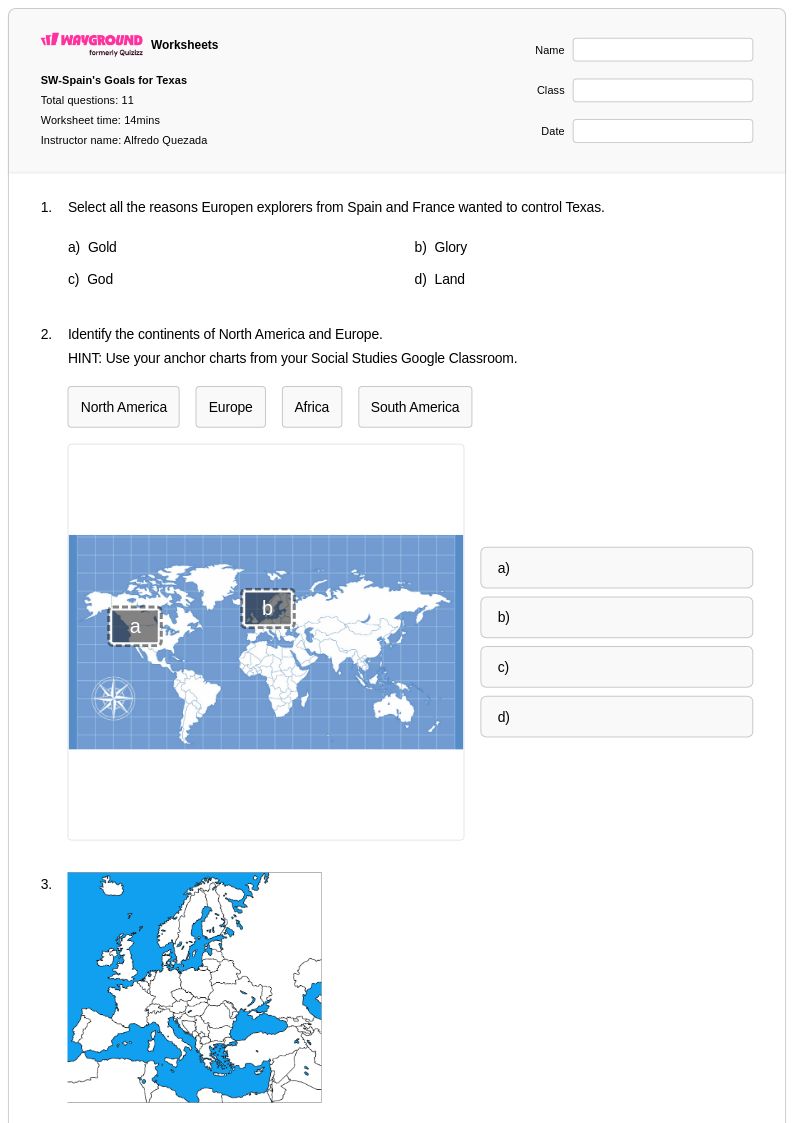
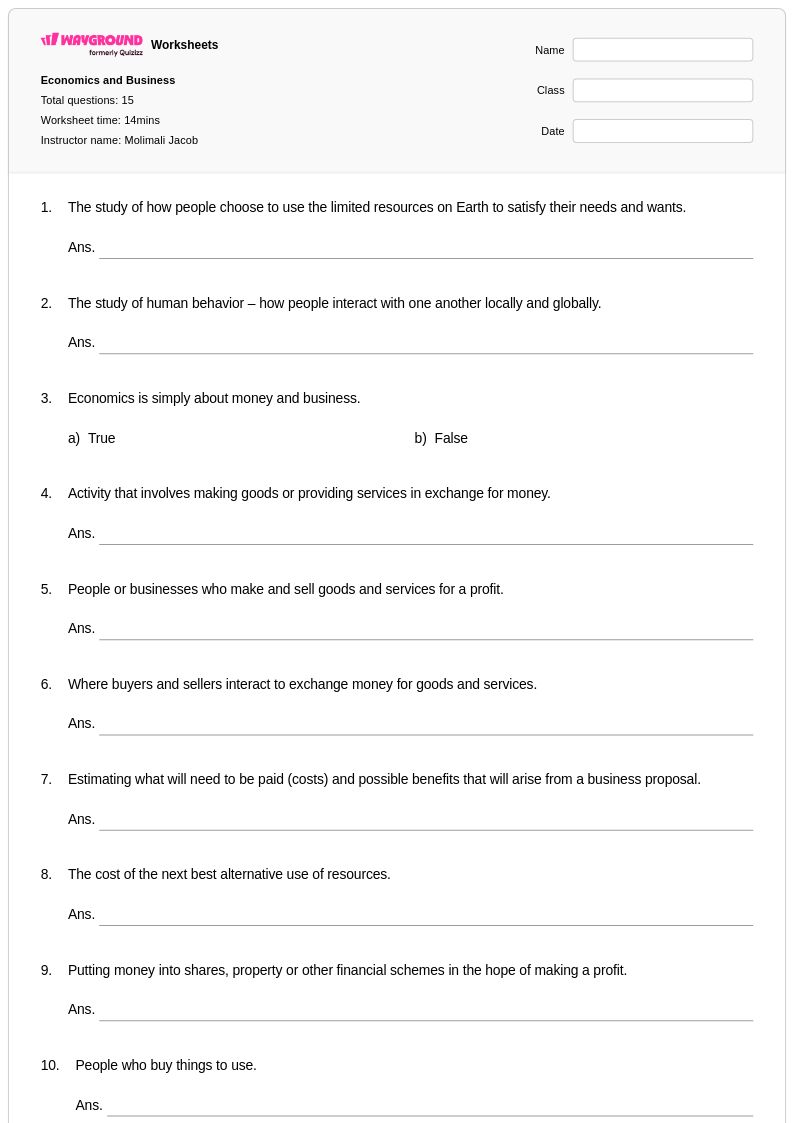
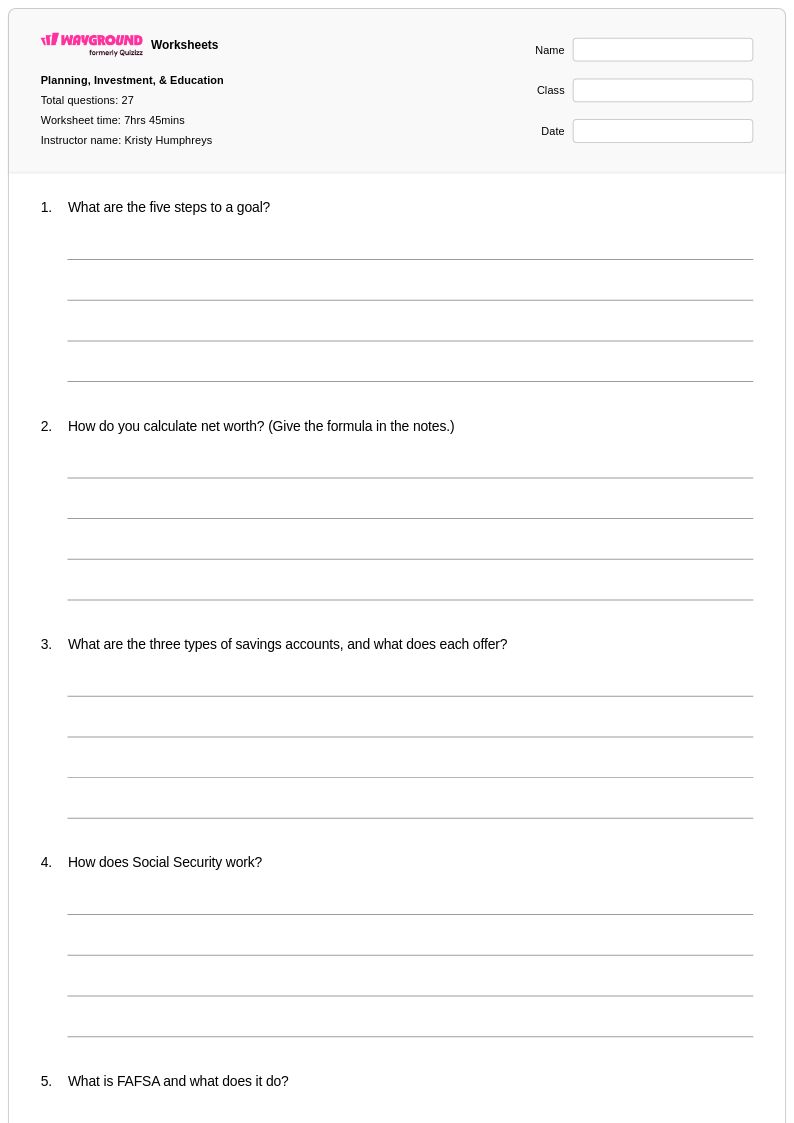
Goal setting worksheets for kindergarten students provide an essential foundation for developing self-awareness and planning skills through age-appropriate activities that help young learners identify and work toward simple, achievable objectives. These educational resources focus on building fundamental social skills by teaching children how to think about what they want to accomplish, whether in academic tasks, personal behavior, or social interactions with classmates. The printable worksheets incorporate visual elements, guided prompts, and structured practice problems that allow kindergarteners to explore concepts like making choices, following steps, and celebrating achievements. Each worksheet includes clear instructions and an answer key to support both independent work and teacher-guided activities, with free pdf formats making these valuable resources easily accessible for classroom and home use.
Wayground (formerly Quizizz) empowers educators with an extensive collection of goal setting worksheets specifically designed for kindergarten learners, drawing from millions of teacher-created resources that have been tested in real classroom environments. The platform's advanced search and filtering capabilities enable teachers to quickly locate materials that align with developmental standards and learning objectives, while differentiation tools allow for seamless customization to meet individual student needs and varying skill levels. These versatile resources are available in both printable pdf format and interactive digital versions, providing flexibility for lesson planning, targeted remediation, and enrichment activities that support each child's social-emotional development. Teachers can easily modify content, track student progress, and create meaningful practice opportunities that help kindergarteners develop confidence in setting and achieving personal goals.
FAQs
How do I teach goal setting to students?
Effective goal-setting instruction begins by helping students distinguish between short-term and long-term goals, then guiding them through frameworks like SMART goals (Specific, Measurable, Achievable, Relevant, Time-bound). Teachers should model the process by thinking aloud as they break a large goal into smaller, actionable steps. Connecting goal setting to students' personal values and real-world contexts increases engagement and helps them see the relevance of the skill beyond the classroom.
What exercises help students practice goal setting?
Structured worksheets that walk students through identifying a goal, listing potential obstacles, and creating a step-by-step action plan are among the most effective practice tools. Reflection prompts that ask students to evaluate their progress and adjust their approach build metacognitive habits alongside the planning skill itself. Scenarios rooted in real-world situations, such as academic improvement or community involvement, help students apply goal-setting strategies to contexts they genuinely care about.
What mistakes do students commonly make when learning goal setting?
The most common error is setting goals that are too vague or overly ambitious without a concrete plan, which leads to frustration and early abandonment. Students often skip the obstacle-identification step, leaving them unprepared when challenges arise. Another frequent misconception is treating goal setting as a one-time activity rather than an ongoing process of reflection and adjustment, so teachers should build in regular check-ins to reinforce this iterative mindset.
How do I use Wayground's goal-setting worksheets in my classroom?
Wayground's goal-setting worksheets are available as printable PDFs for traditional classroom use and in digital formats for technology-integrated learning environments, so they fit seamlessly into both paper-based and online lessons. Teachers can also host them as a quiz directly on Wayground, enabling real-time student responses and progress monitoring. Each worksheet includes a complete answer key, supporting both independent student practice and teacher-led guided instruction.
How can I differentiate goal-setting instruction for students at different ability levels?
For struggling learners, scaffolded worksheets that provide sentence starters, visual organizers, and simplified prompts reduce cognitive load while still building the core skill. Advanced students benefit from more open-ended tasks that require strategic thinking about competing priorities or long-term planning across multiple domains. On Wayground, teachers can apply individual accommodations such as reduced answer choices or read-aloud support to specific students, ensuring every learner accesses the material at an appropriate level of challenge.
How does goal setting connect to social-emotional learning and broader life skills?
Goal setting is a foundational SEL competency because it develops self-awareness, self-management, and responsible decision-making, all of which transfer across academic and personal contexts. When students practice identifying their values, evaluating their current circumstances, and planning for obstacles, they build the same critical thinking and resilience skills that support success beyond school. Worksheets that prompt reflection on how individual goals connect to community impact extend this learning into civic and social responsibility.