Free Printable Government Principles Worksheets for Class 4
Explore Wayground's free Class 4 Government Principles worksheets and printables that help students understand fundamental concepts like democracy, rule of law, and civic responsibility through engaging practice problems with complete answer keys.
Explore printable Government Principles worksheets for Class 4
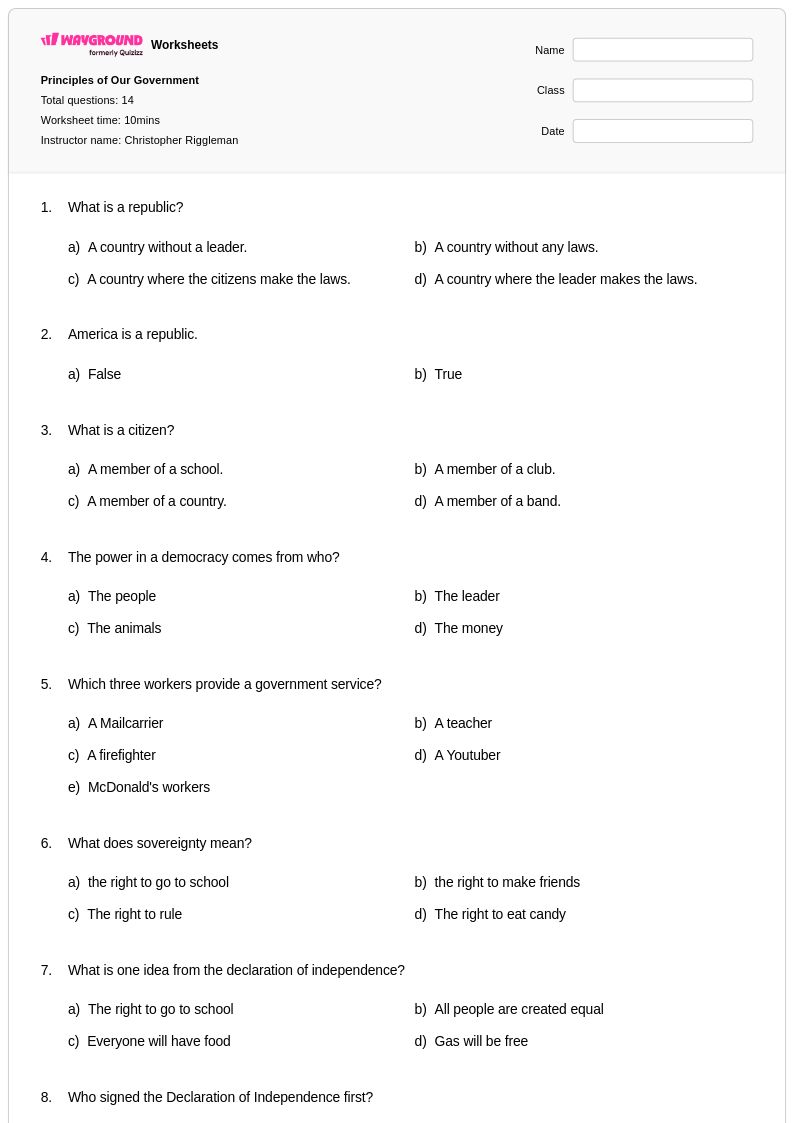
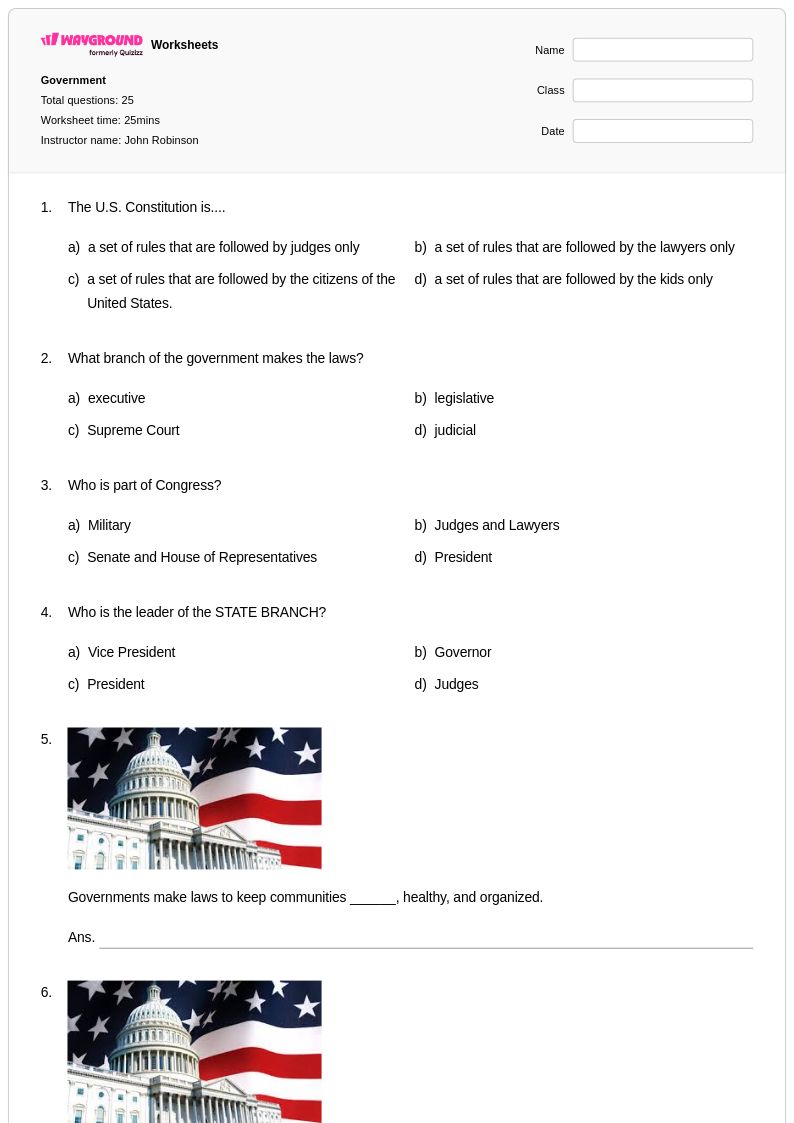
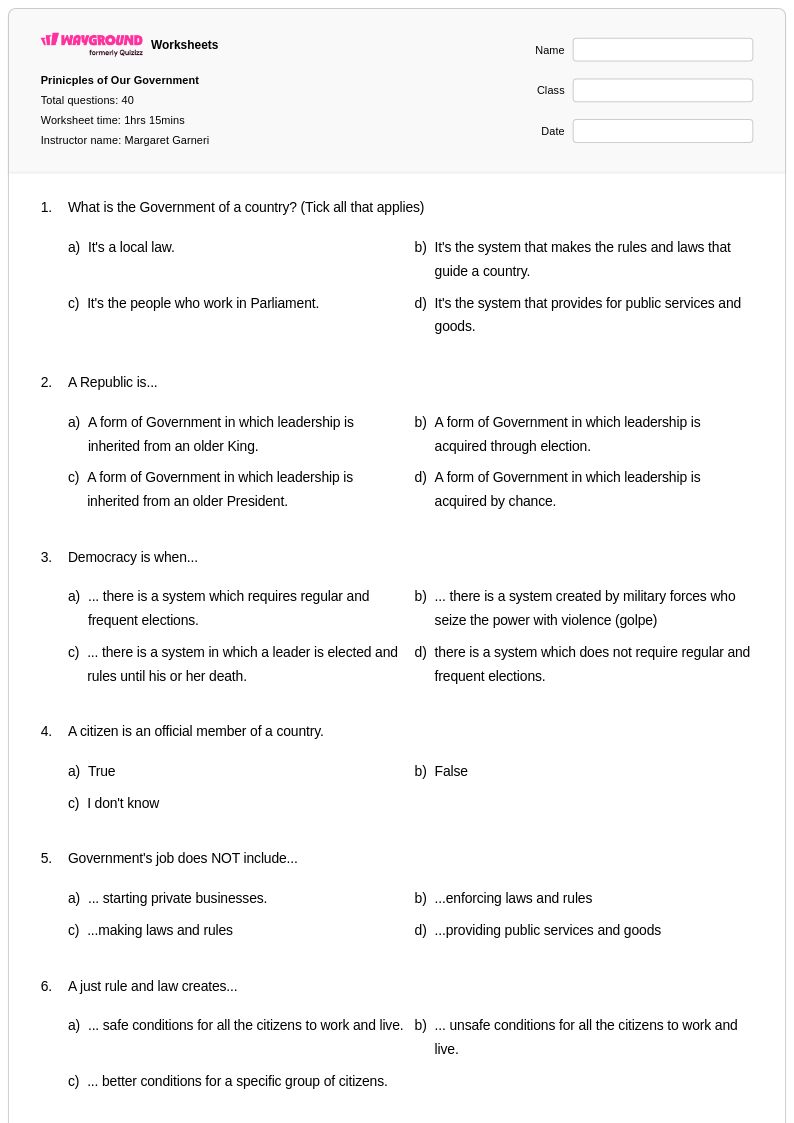
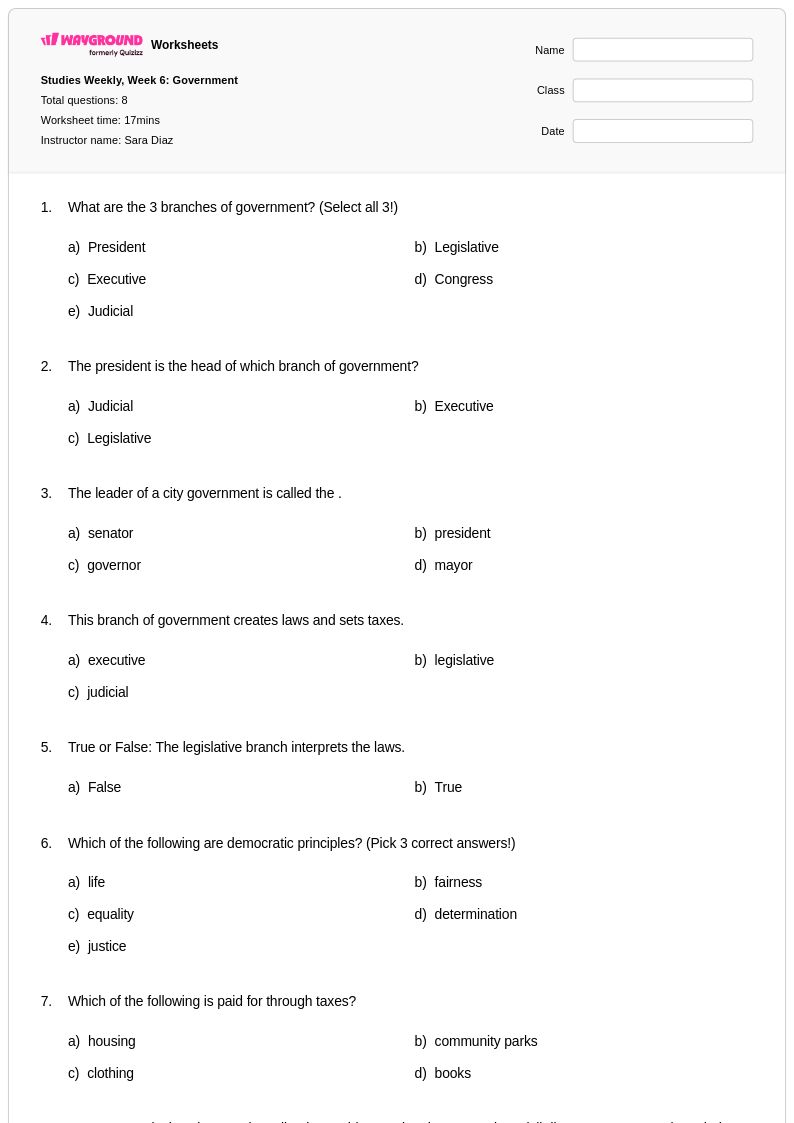
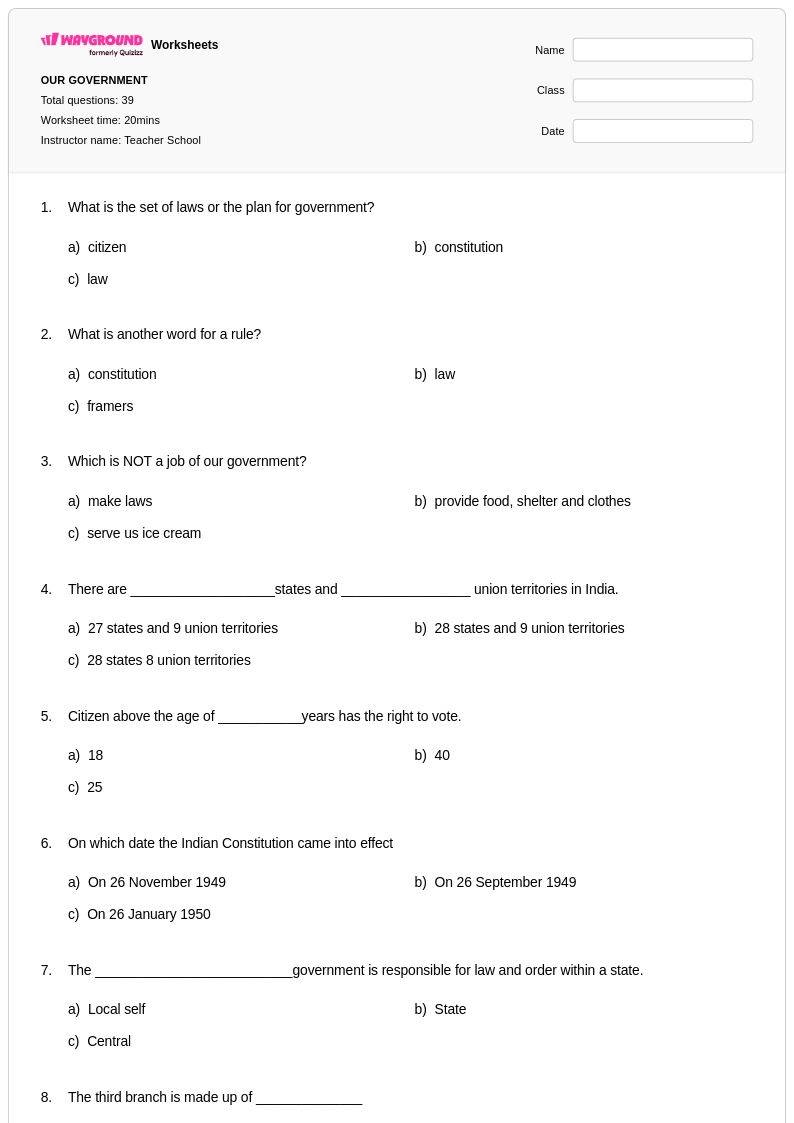
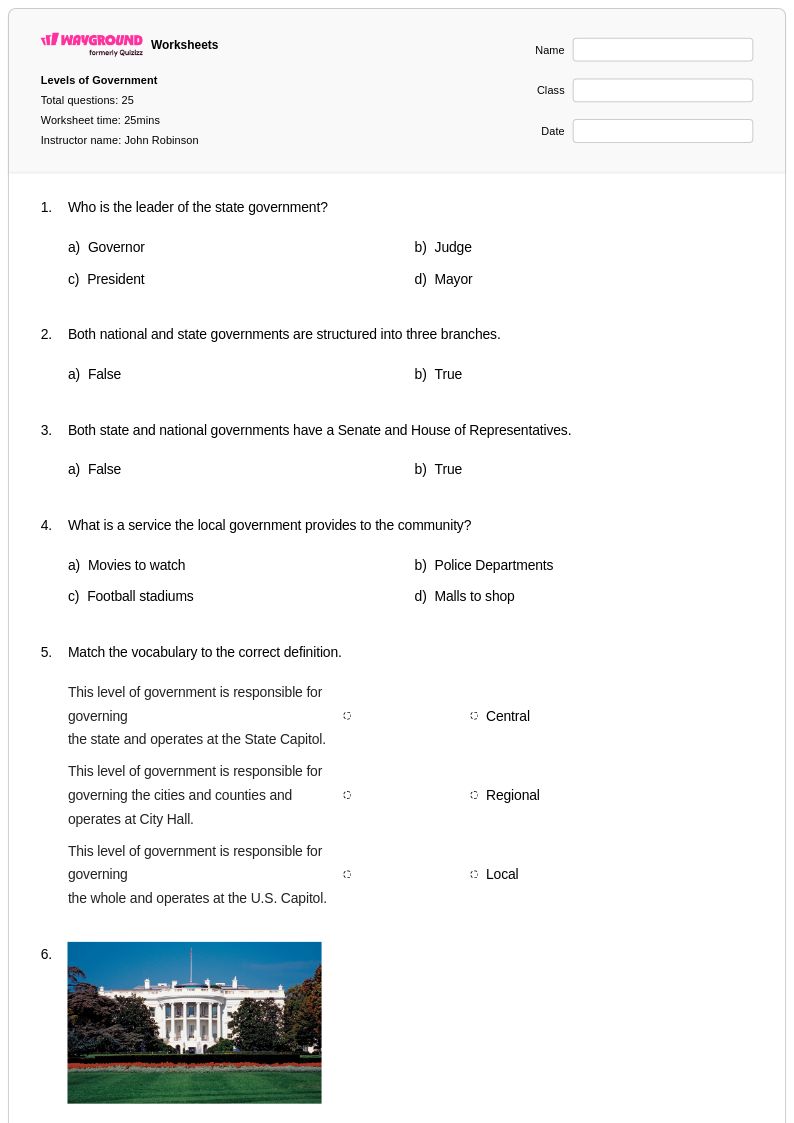
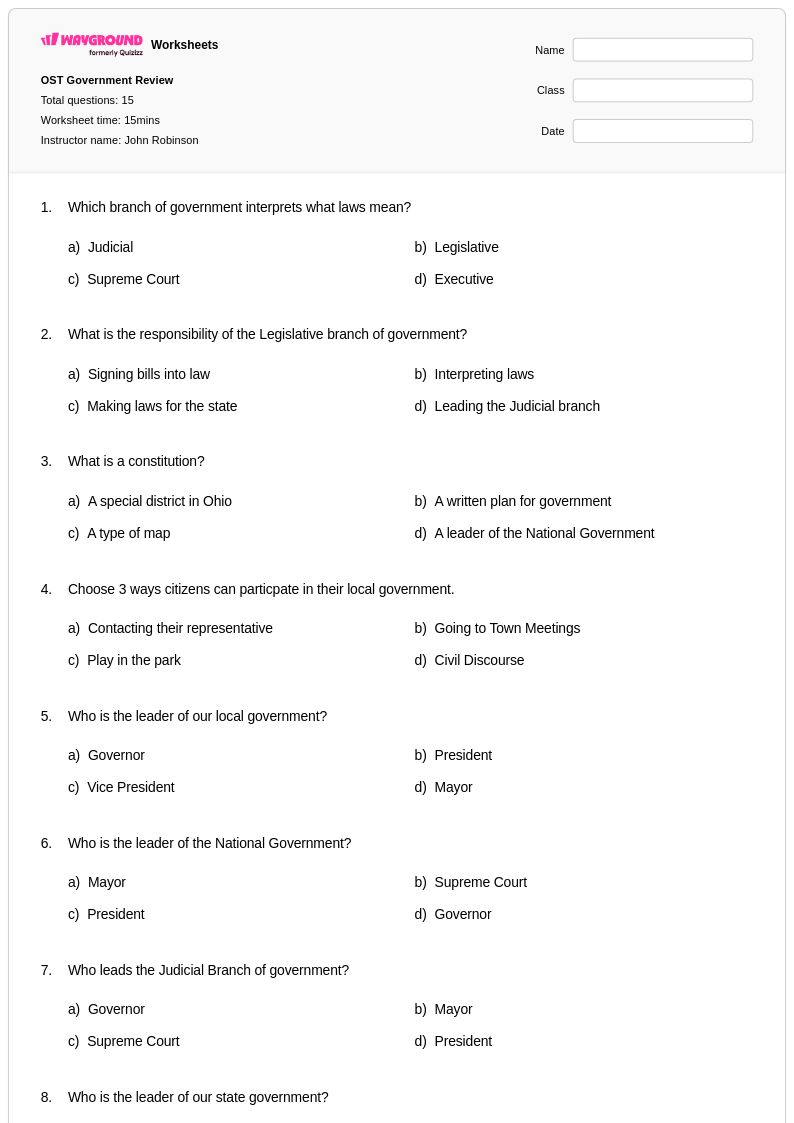
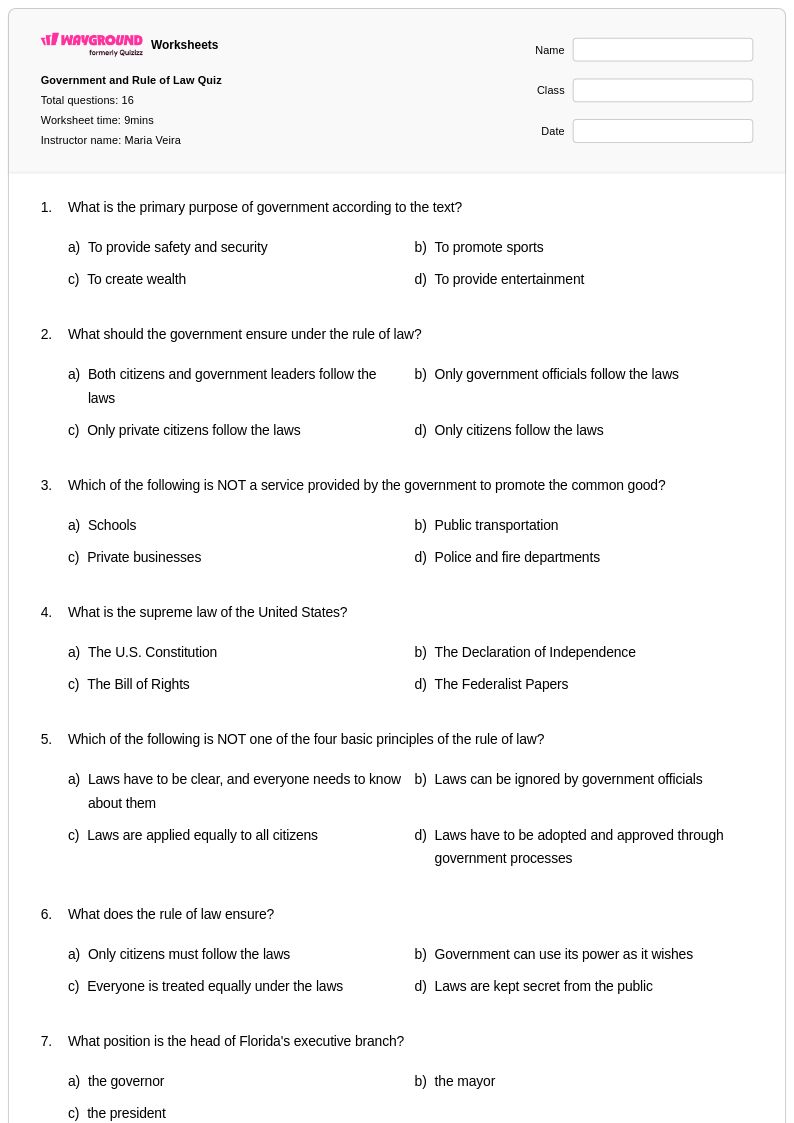
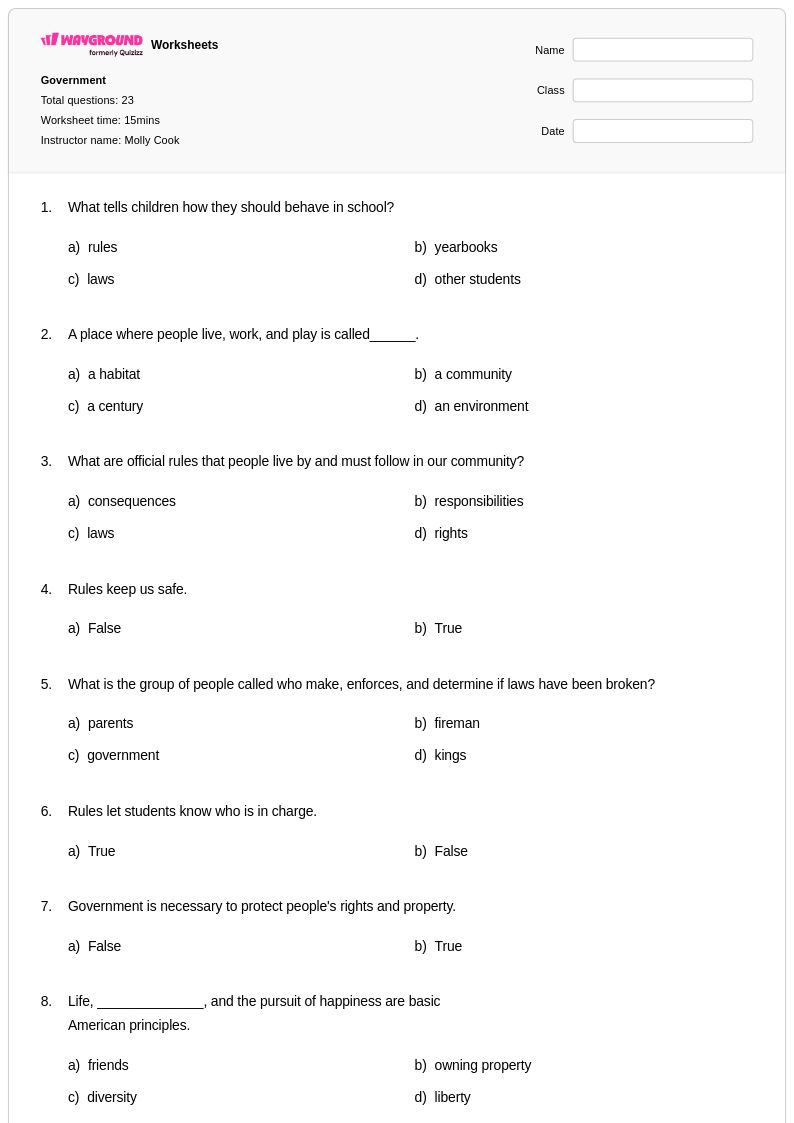
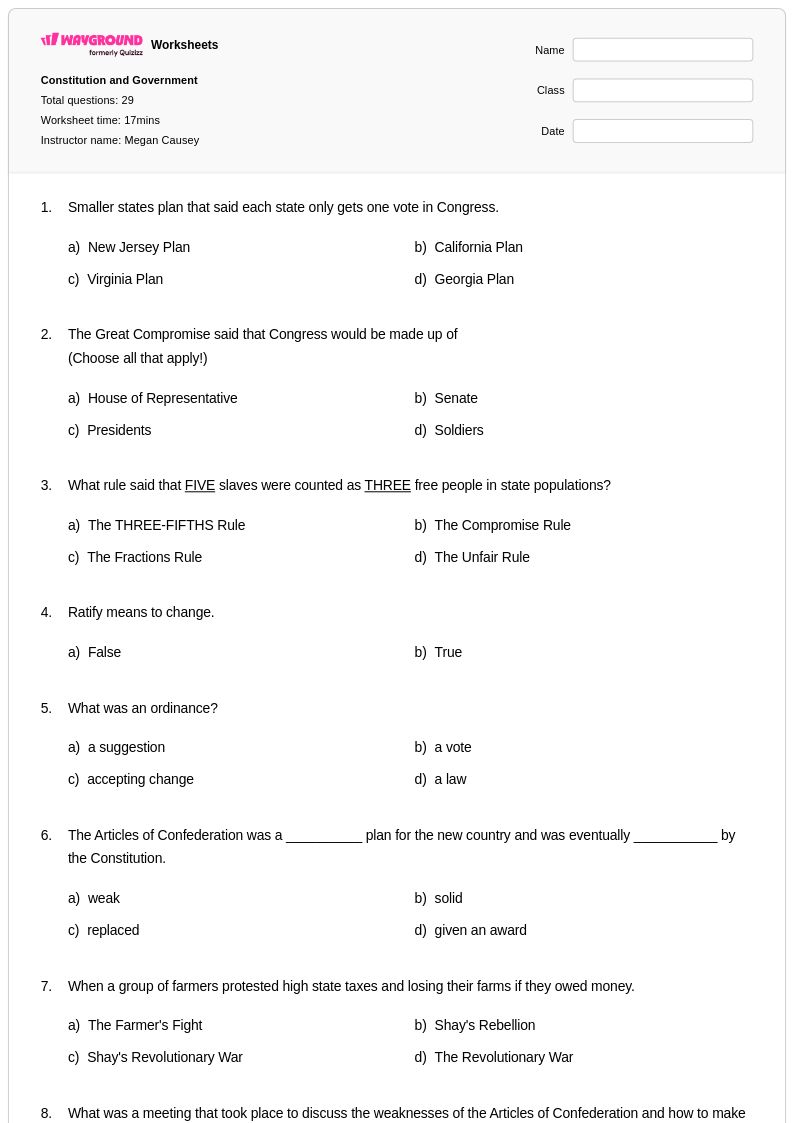
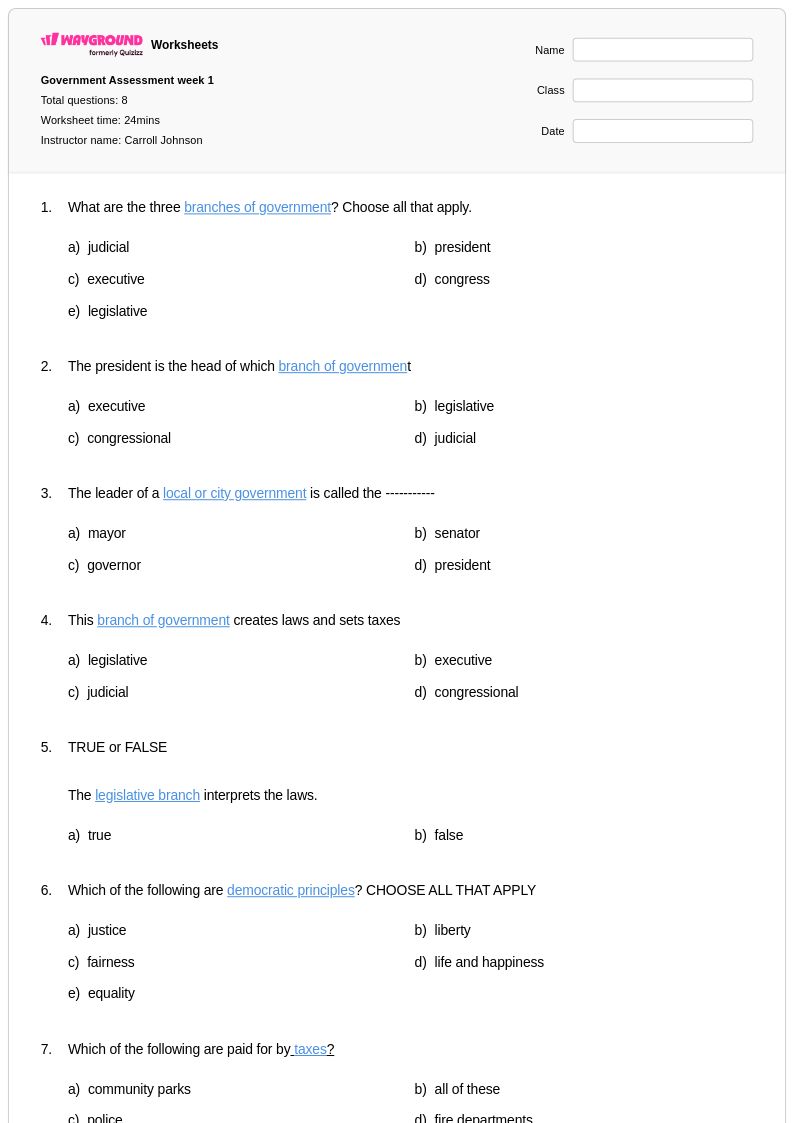
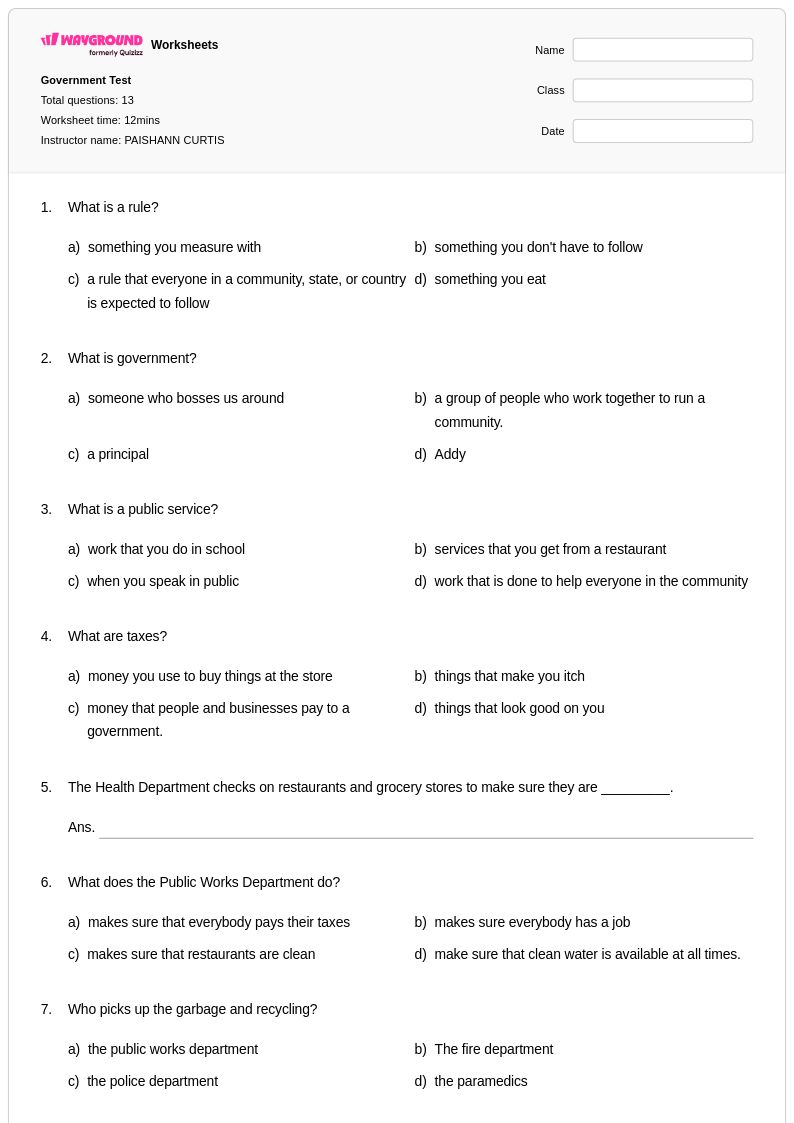
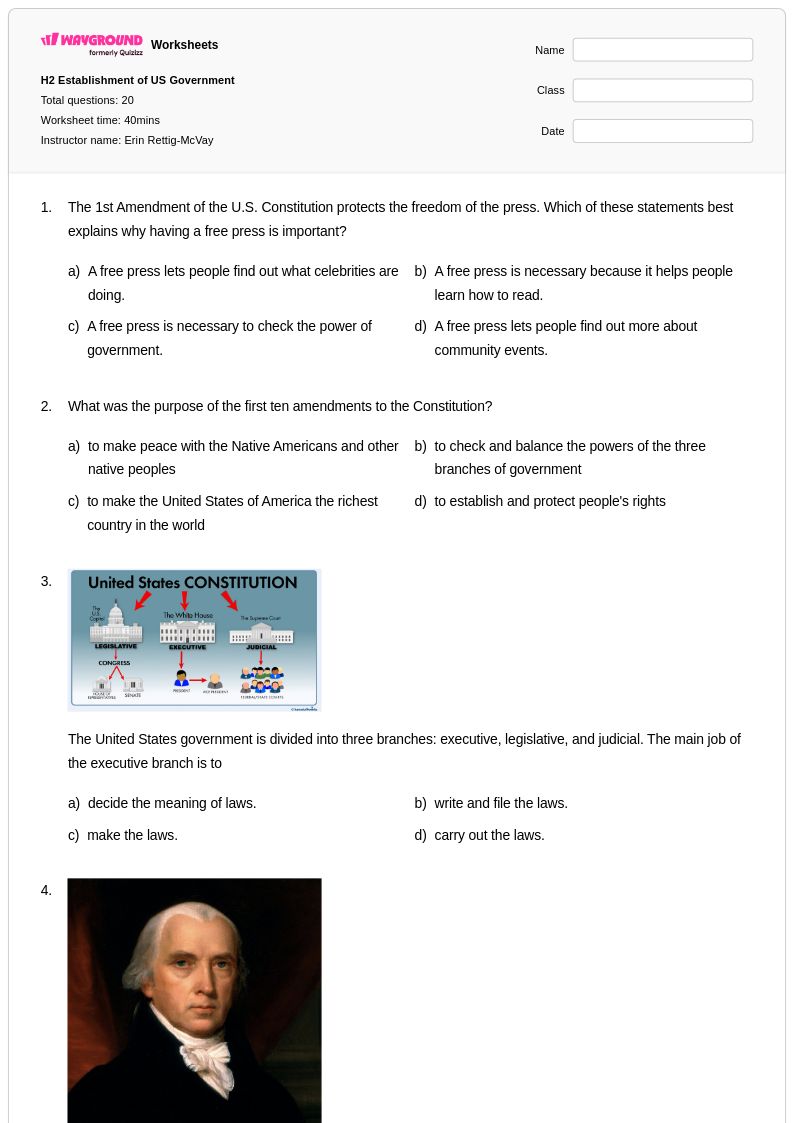
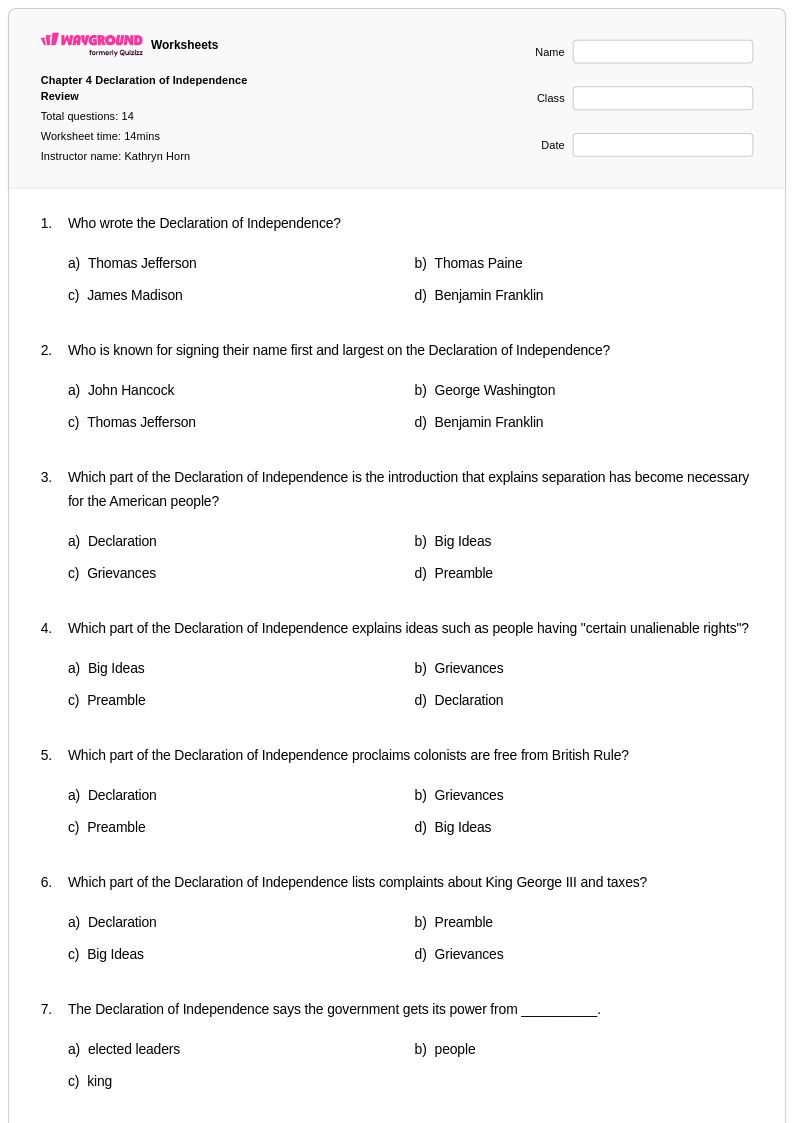
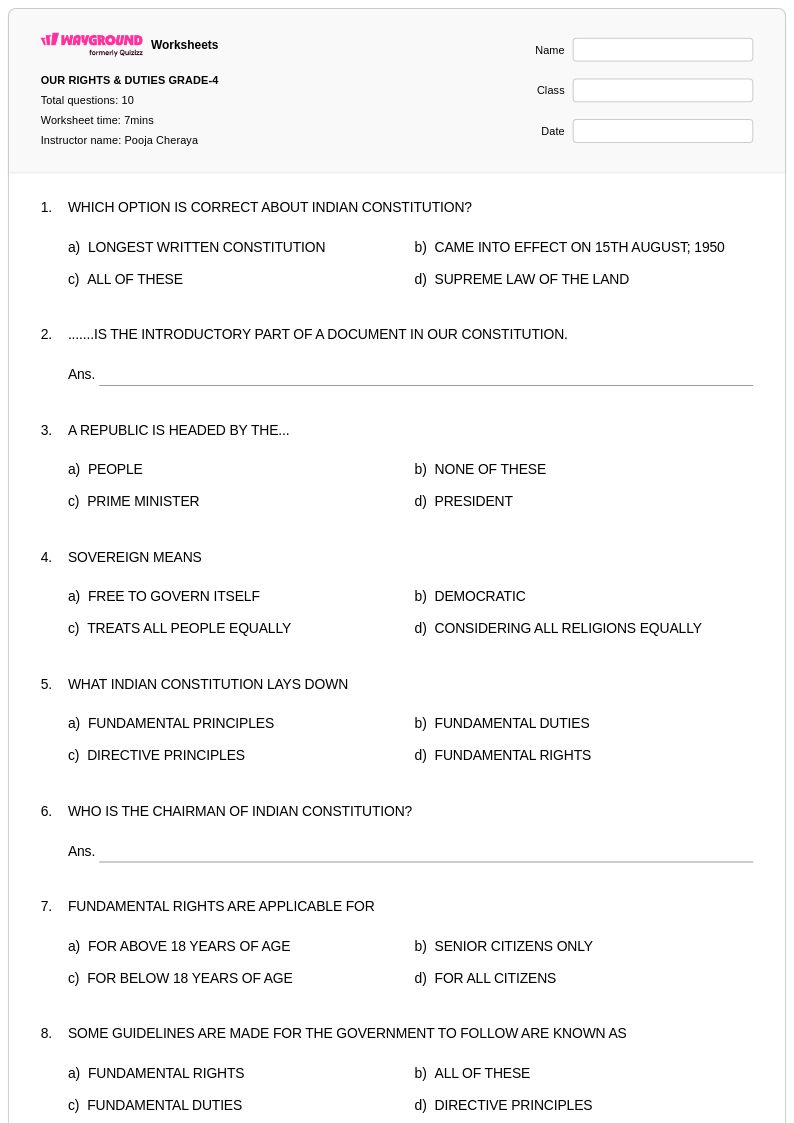
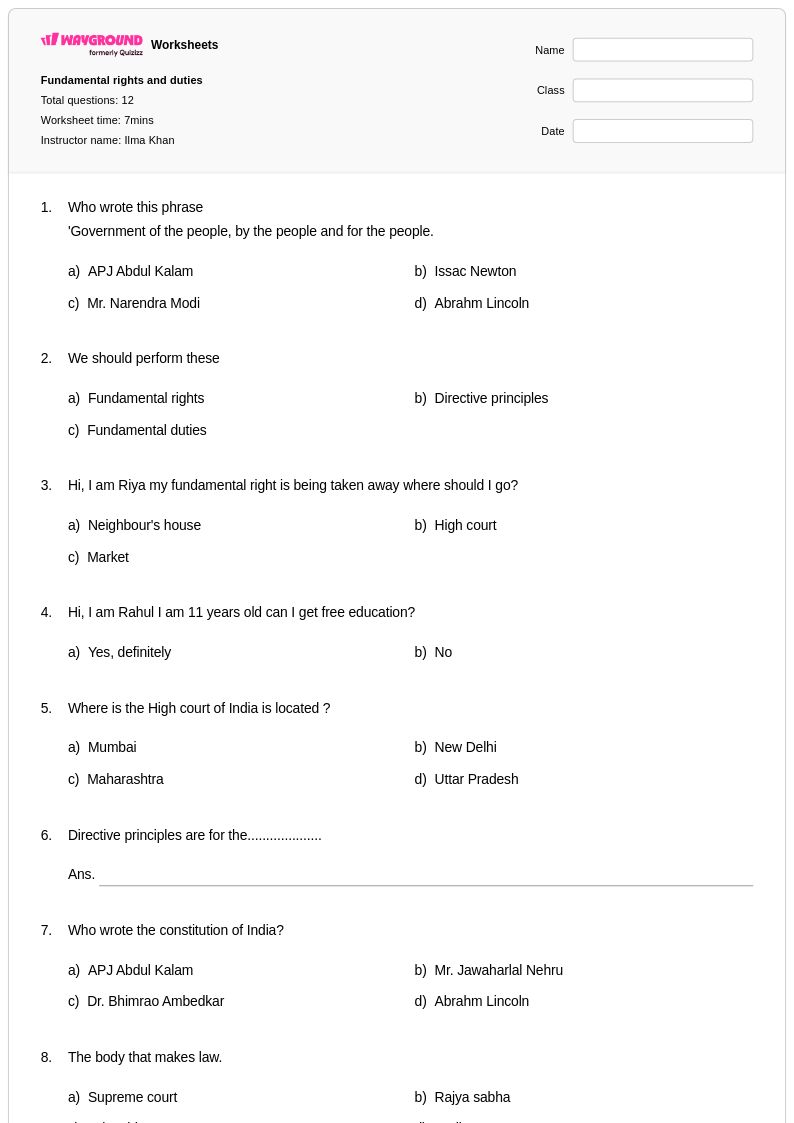
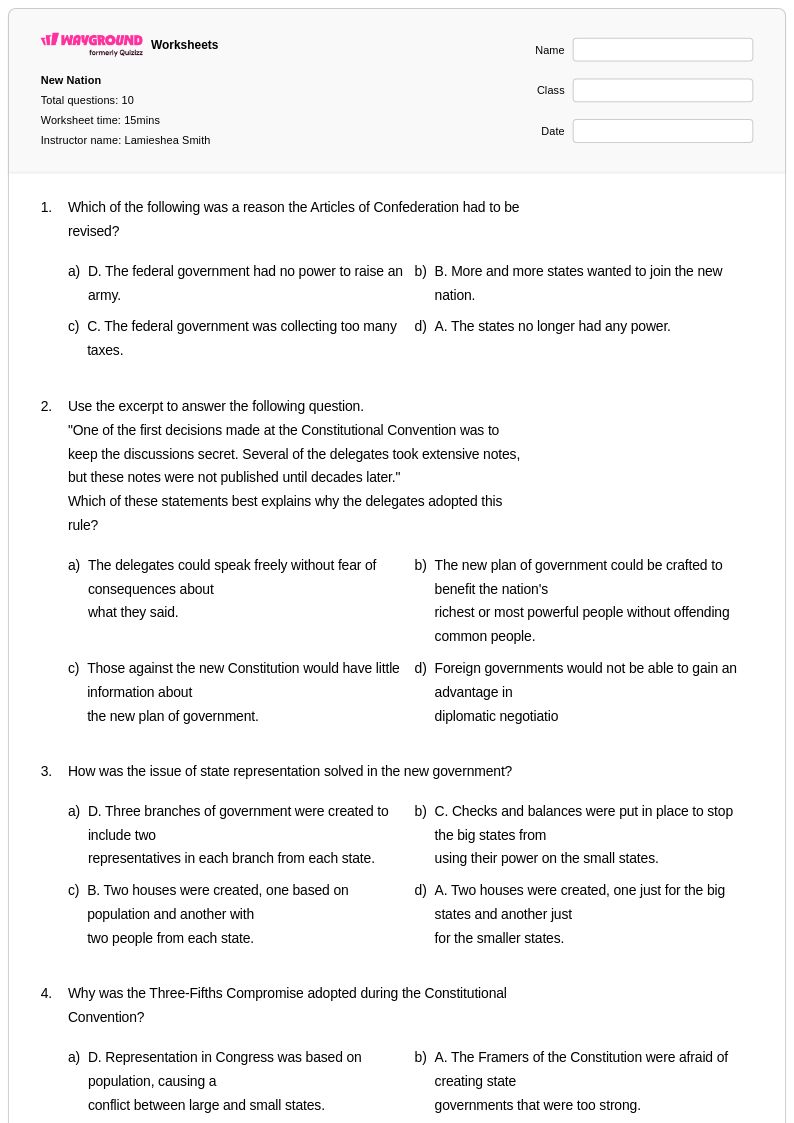
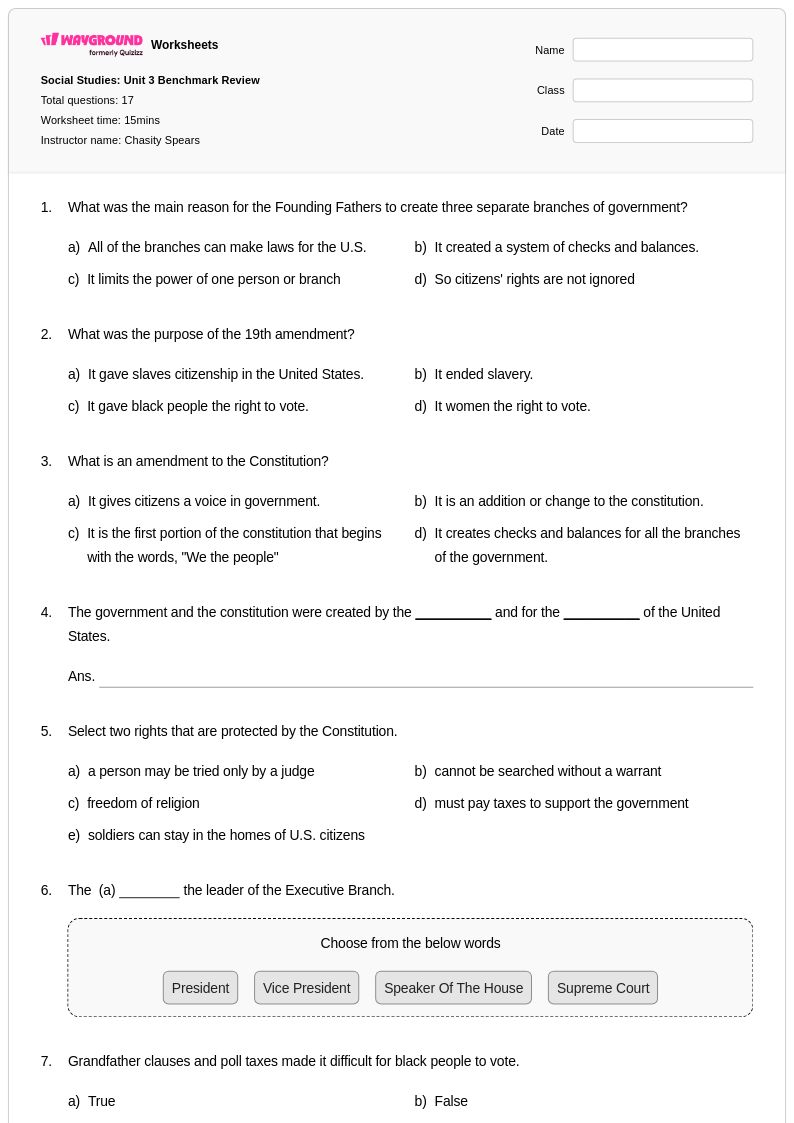
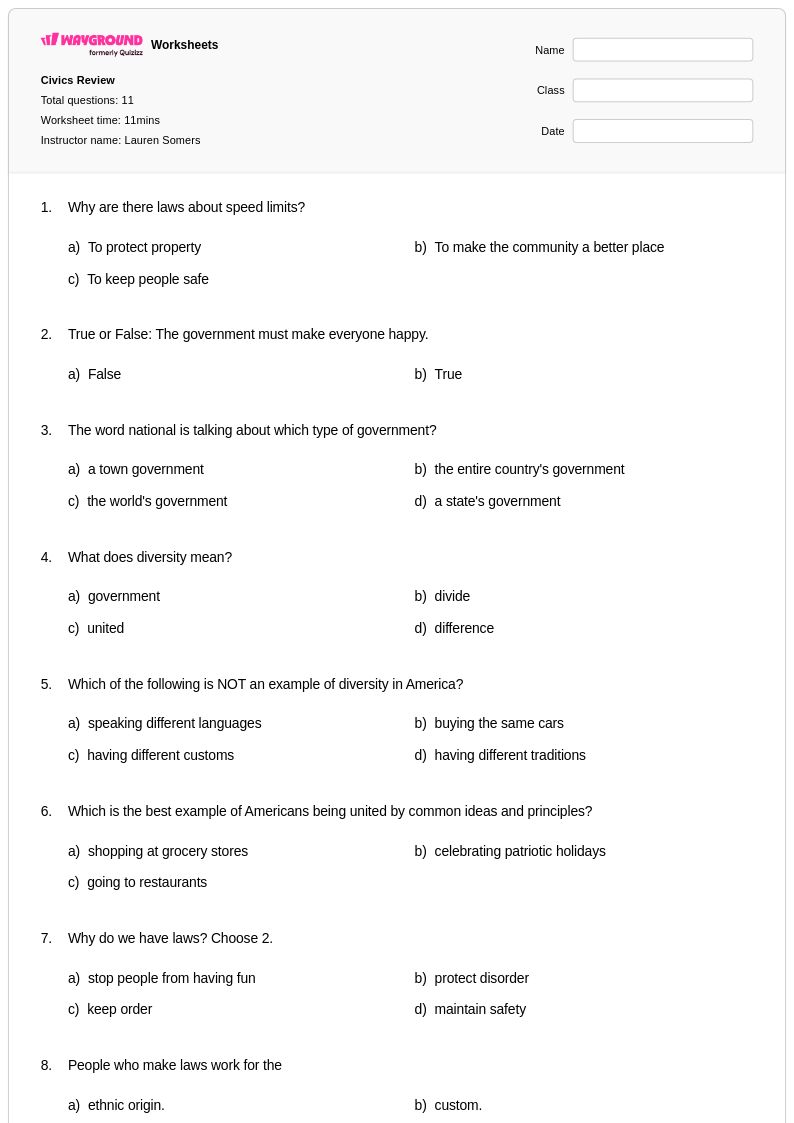
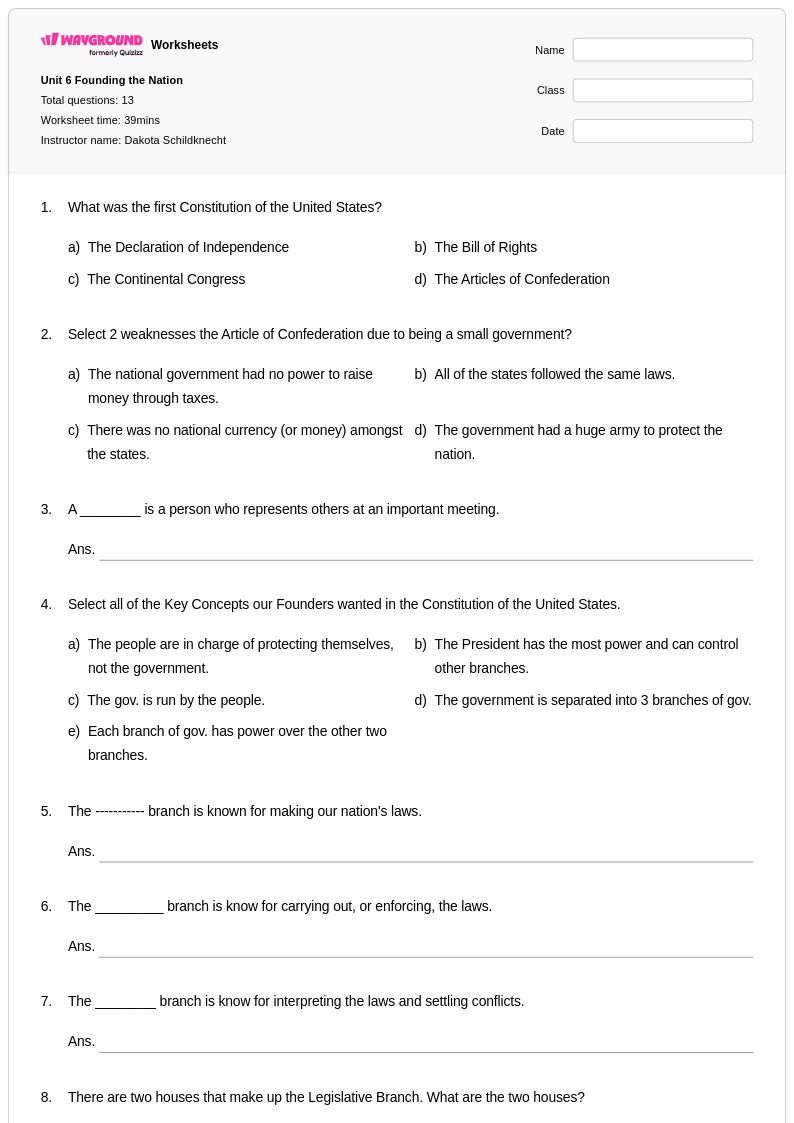
Government Principles worksheets for Class 4 students available through Wayground (formerly Quizizz) provide comprehensive coverage of fundamental democratic concepts and civic foundations that fourth graders need to understand. These educational resources strengthen students' grasp of essential principles such as the rule of law, separation of powers, checks and balances, and individual rights and responsibilities within our democratic system. The practice problems guide young learners through age-appropriate explorations of how government operates at local, state, and federal levels, while free printables offer structured activities that reinforce key vocabulary and concepts. Each worksheet includes an answer key to support both independent learning and teacher-guided instruction, with pdf formats ensuring easy access and distribution for classroom or home use.
Wayground (formerly Quizizz) supports educators with an extensive collection of teacher-created Government Principles resources specifically designed for Class 4 social studies instruction. The platform's millions of worksheets benefit from robust search and filtering capabilities that allow teachers to quickly locate materials aligned with specific learning standards and curriculum requirements. These differentiation tools enable educators to customize content for diverse learning needs, whether providing remediation for struggling students or enrichment opportunities for advanced learners. The flexible format options, including both printable and digital versions with pdf accessibility, streamline lesson planning while supporting various instructional approaches from whole-group discussions to individual skill practice, making it easier for teachers to integrate civic education seamlessly into their social studies curriculum.
FAQs
How do I teach government principles like separation of powers and checks and balances?
Start by grounding students in the reasoning behind each principle — why the framers feared concentrated power and how structural solutions like separation of powers and checks and balances were designed to prevent it. Use primary source excerpts from the Constitution alongside scenario-based exercises where students identify which branch holds authority in a given situation. Building from the 'why' before the 'what' helps students retain and apply these concepts rather than simply memorize them.
What worksheets help students practice constitutional frameworks and civic foundations?
Effective practice for constitutional frameworks includes exercises that ask students to match powers to branches, analyze real legislative or judicial scenarios, and compare federal versus state authority under federalism. Analytical exercises that require students to evaluate democratic principles in context — rather than just define them — build the deeper civics skills aligned to most state standards. Government Principles worksheets on Wayground include practice problems covering constitutional interpretation, separation of powers, checks and balances, federalism, and the rule of law.
What common mistakes do students make when learning about checks and balances?
Students frequently conflate separation of powers with checks and balances, treating them as the same concept rather than understanding that separation of powers divides authority while checks and balances create mechanisms for each branch to limit the others. Another common error is assuming checks and balances apply only between the legislative and executive branches, overlooking the judiciary's role in constitutional review. Targeted practice that asks students to identify specific checks — not just name the system — helps close this gap.
How can I use Government Principles worksheets to support students with different learning needs?
Wayground allows teachers to apply individual student accommodations directly within the platform, including Read Aloud for students who benefit from audio support on complex civics text, reduced answer choices to lower cognitive load on multiple-choice items, and extended time per question for students who need it. These settings can be assigned per student without affecting the experience of other students, and they carry over to future sessions automatically. This makes differentiation for government and civics content manageable without requiring separate material preparation.
How do I use Wayground's Government Principles worksheets in my classroom?
Wayground's Government Principles worksheets are available as printable PDFs for traditional classroom use and in digital formats for technology-integrated environments, giving teachers flexibility to deploy them however their classroom is set up. You can also host any worksheet as a live quiz directly on Wayground, complete with answer keys for efficient grading. The platform's search and filtering tools help Social Studies teachers quickly locate materials aligned to specific government principles topics and curriculum standards.
How do I assess whether students understand federalism versus unitary government systems?
A strong assessment of federalism asks students to do more than define it — look for tasks that require comparing how power is distributed in federal versus unitary systems, or analyzing a real policy scenario to determine whether it falls under federal or state jurisdiction. Common misconceptions include assuming federalism means states have equal power to the federal government, or that all countries use the same model. Short-answer and scenario analysis items tend to surface these misunderstandings more reliably than multiple-choice alone.