
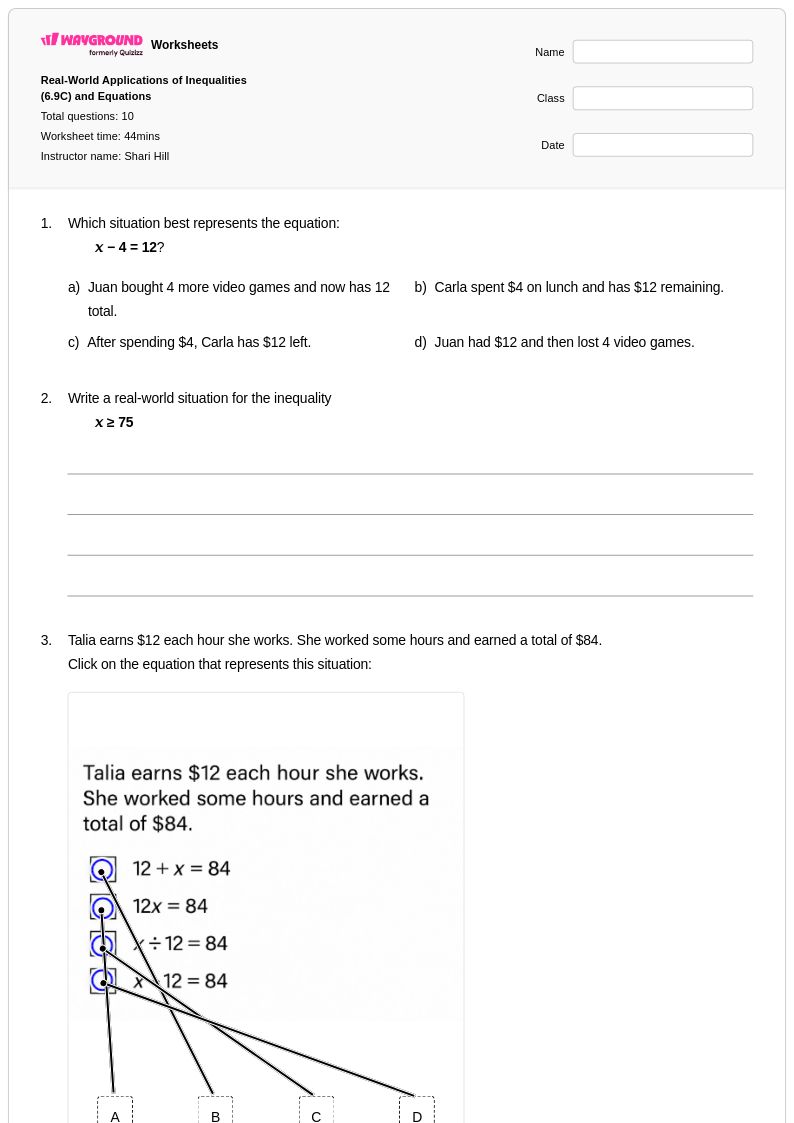
10 Q
6th
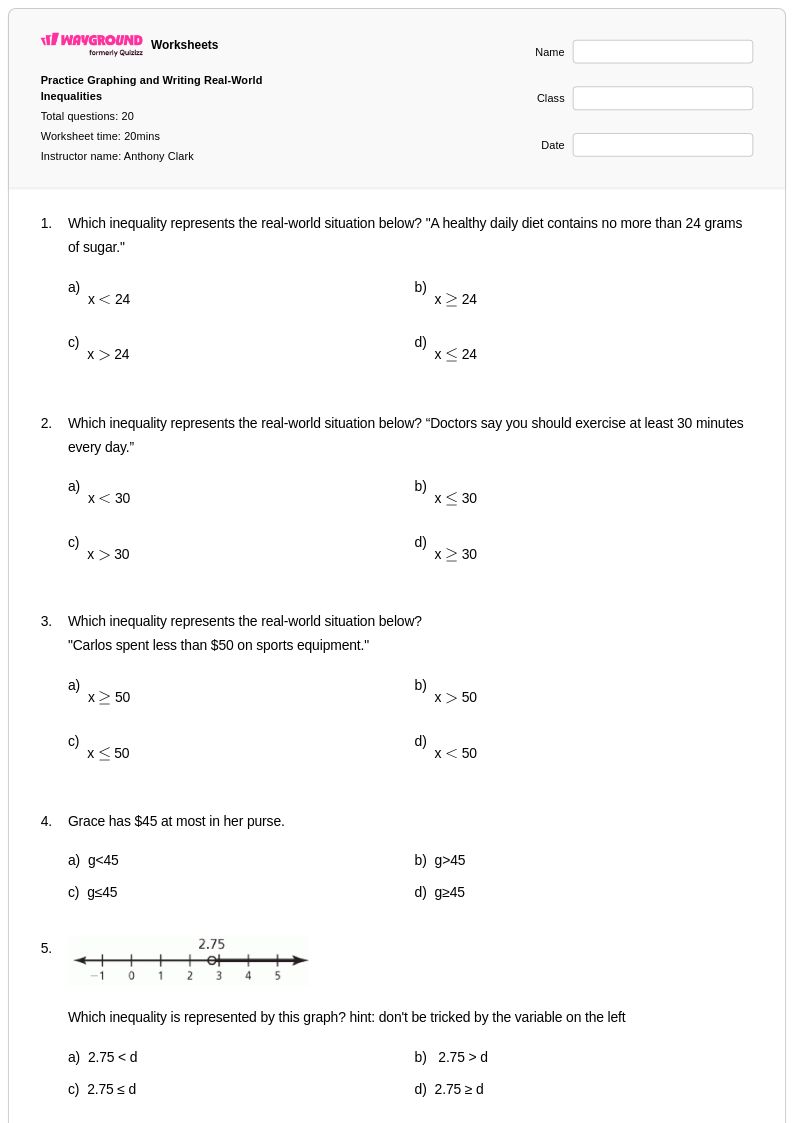
20 Q
6th - Uni
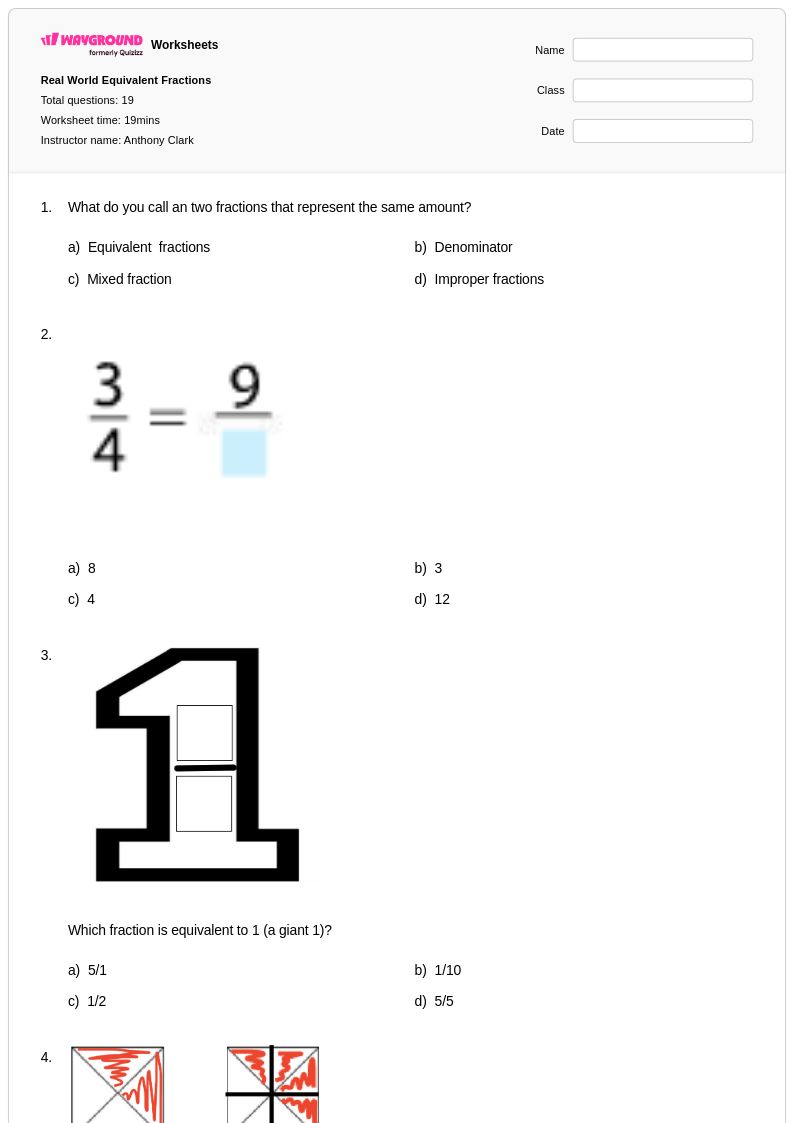
19 Q
4th - Uni
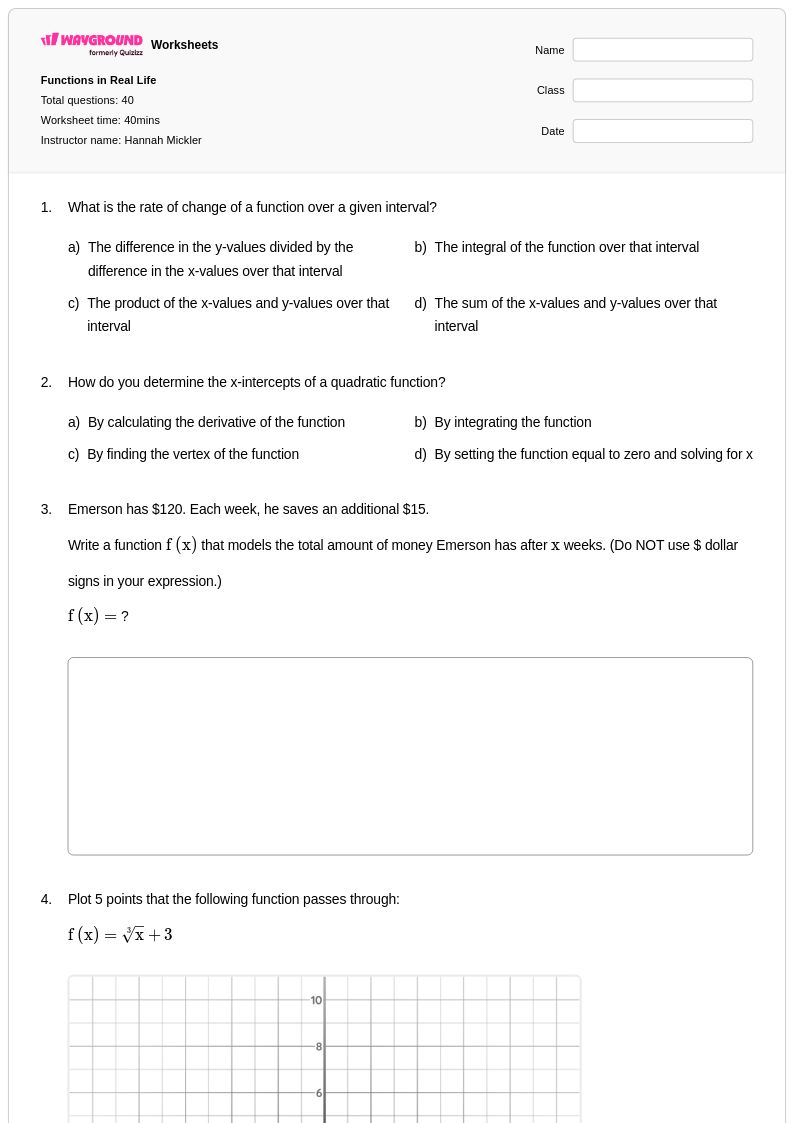
40 Q
6th - 8th
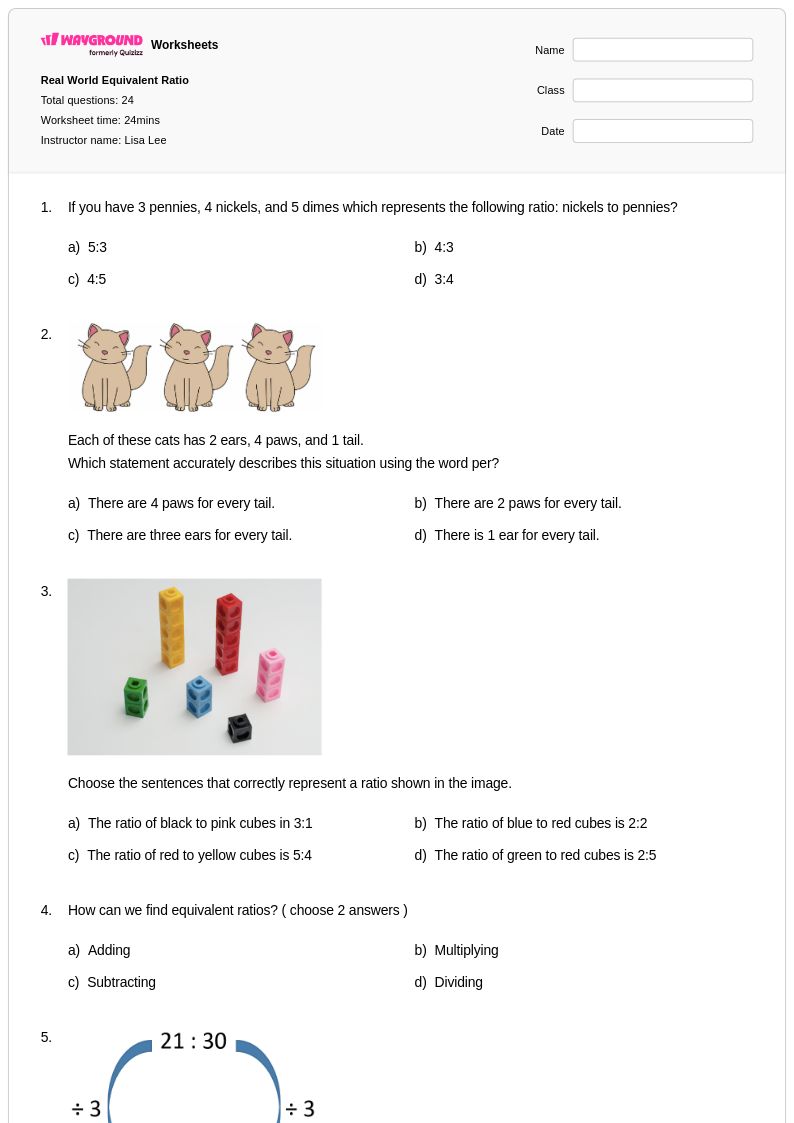
24 Q
6th
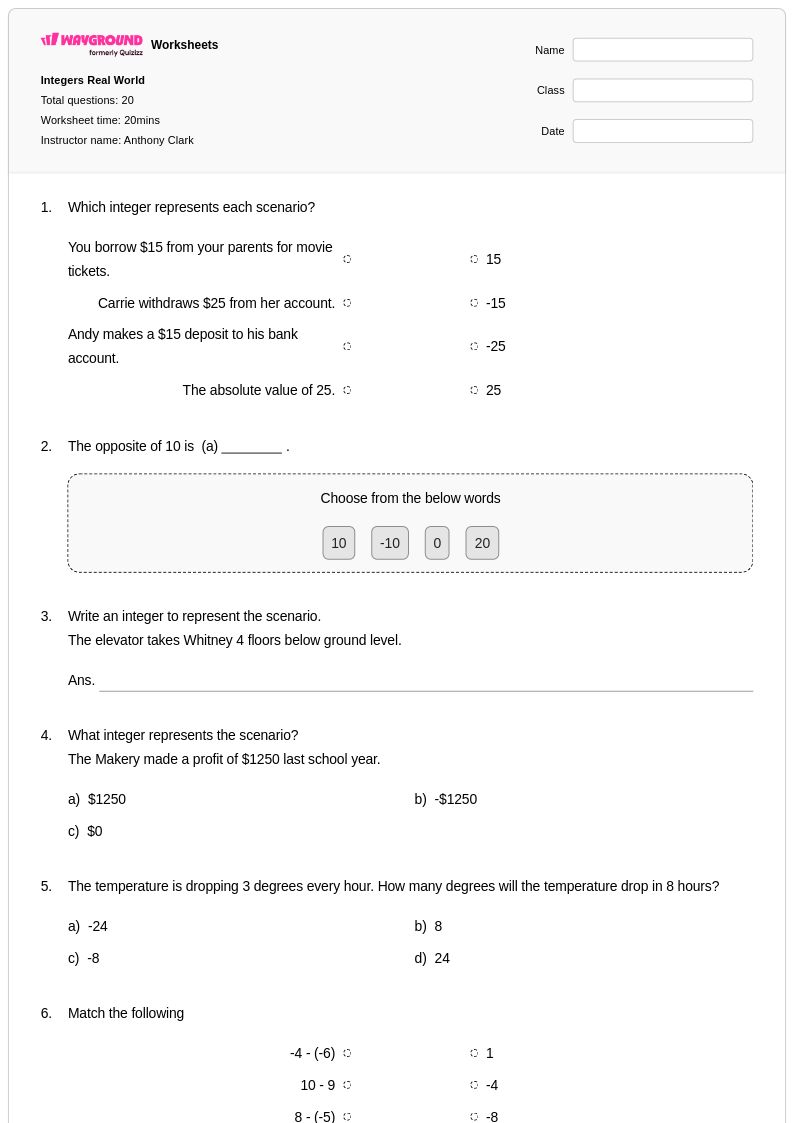
20 Q
6th - Uni
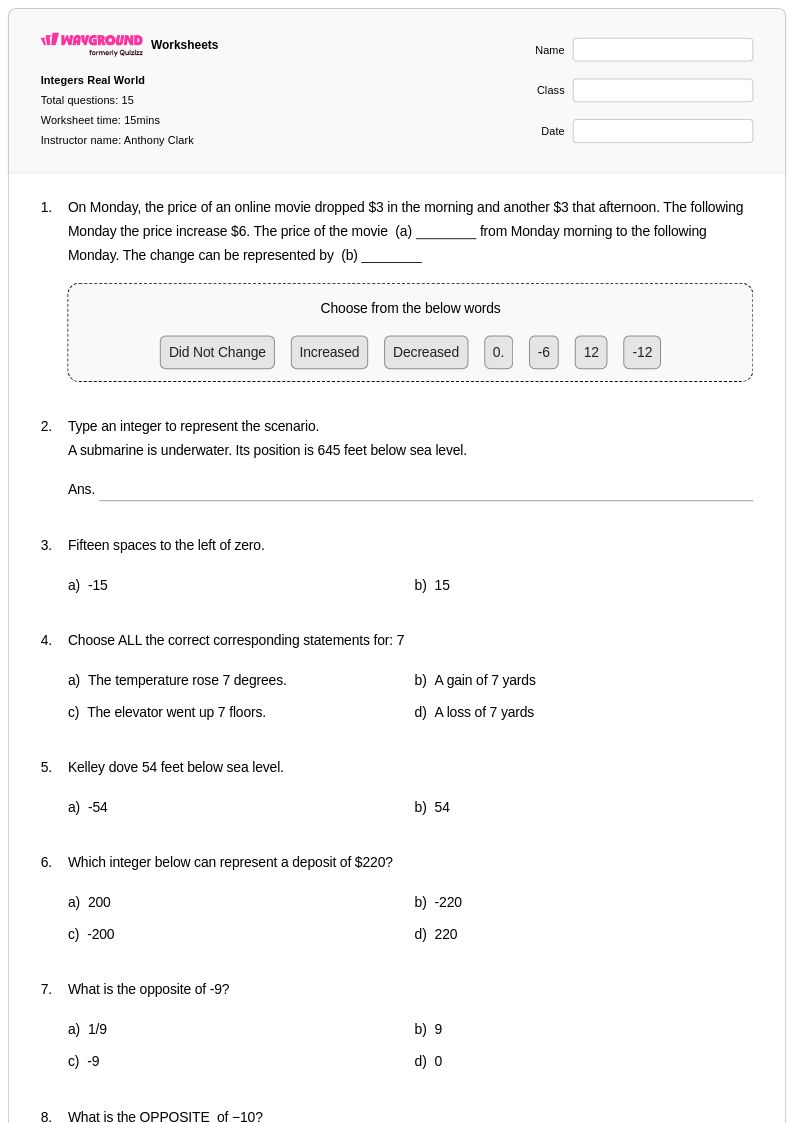
15 Q
6th - Uni
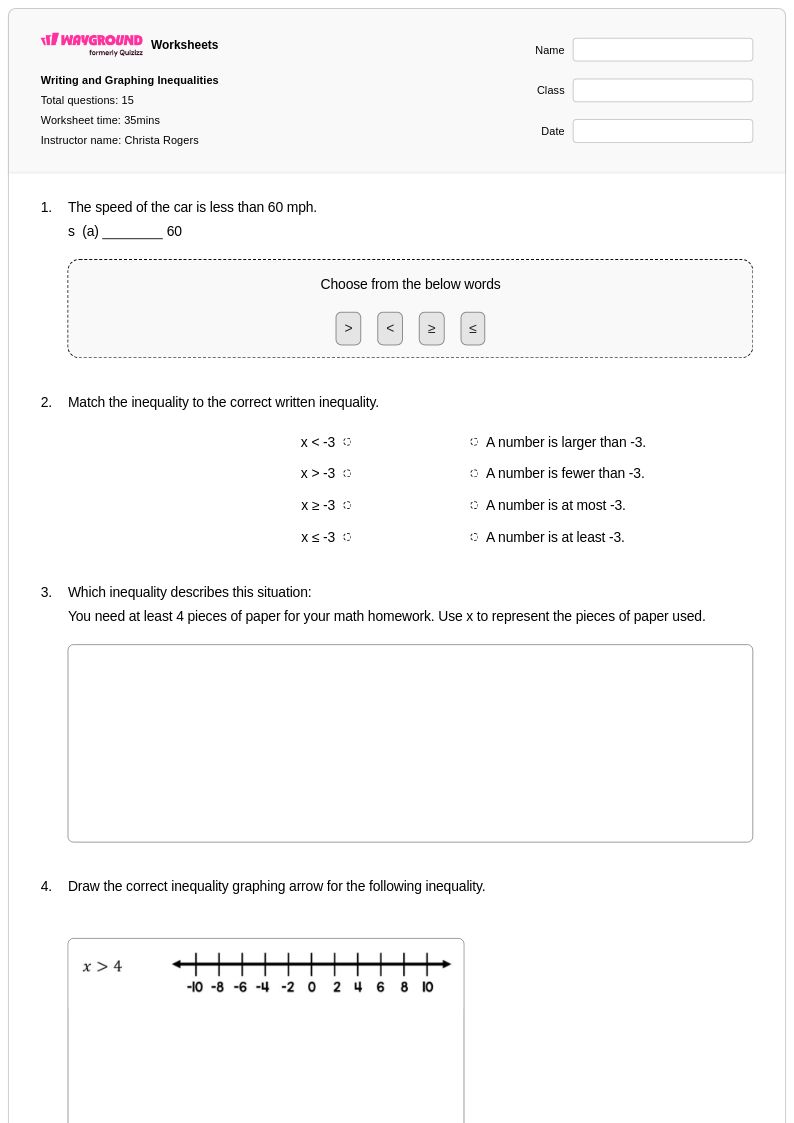
15 Q
6th
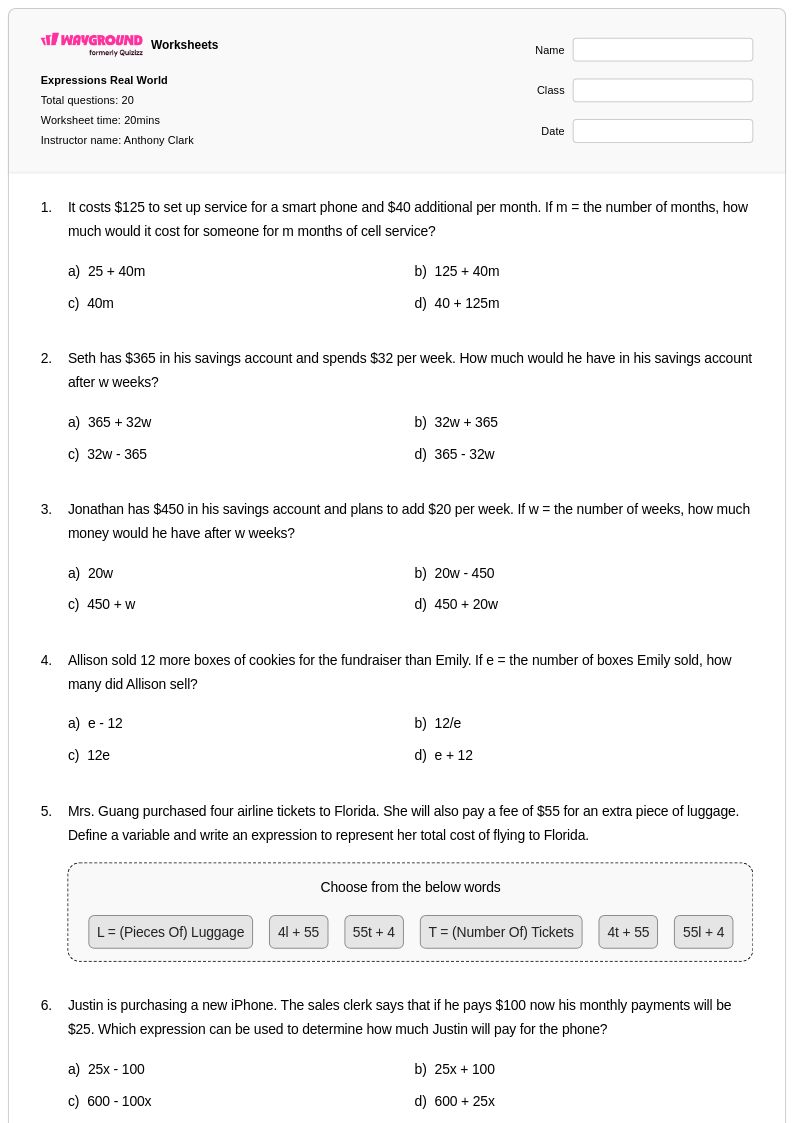
20 Q
6th - Uni
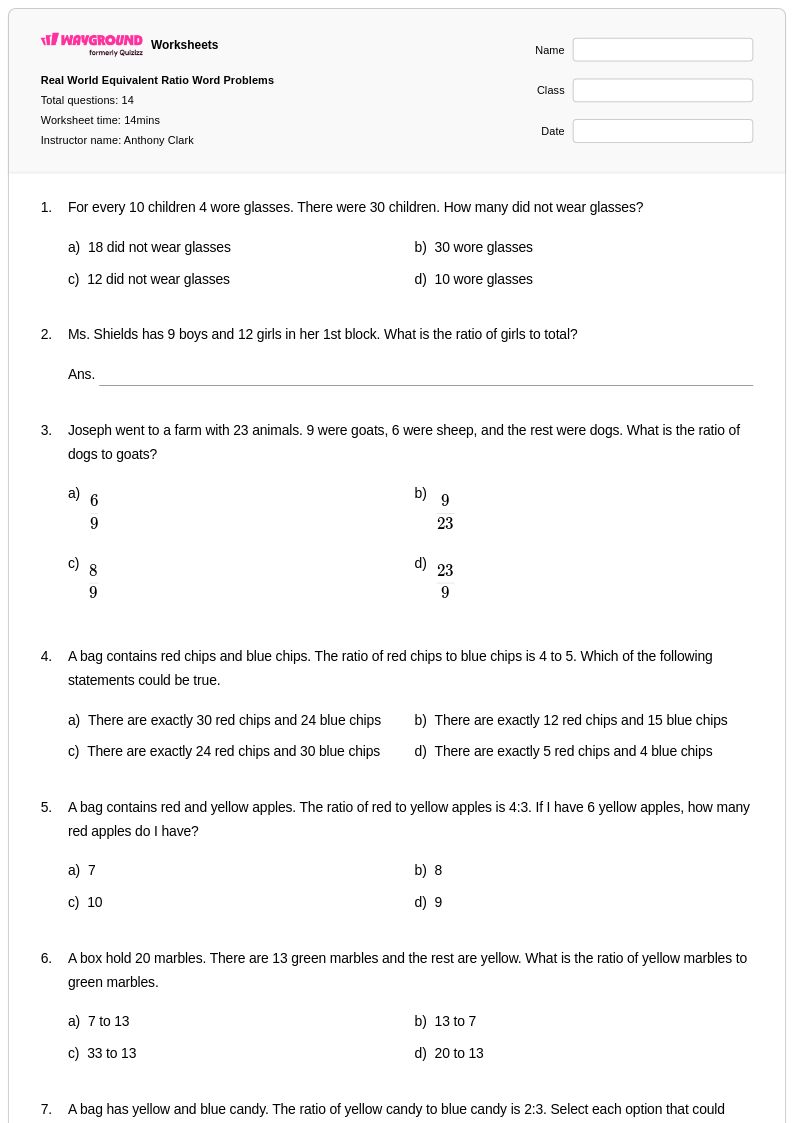
14 Q
6th - Uni
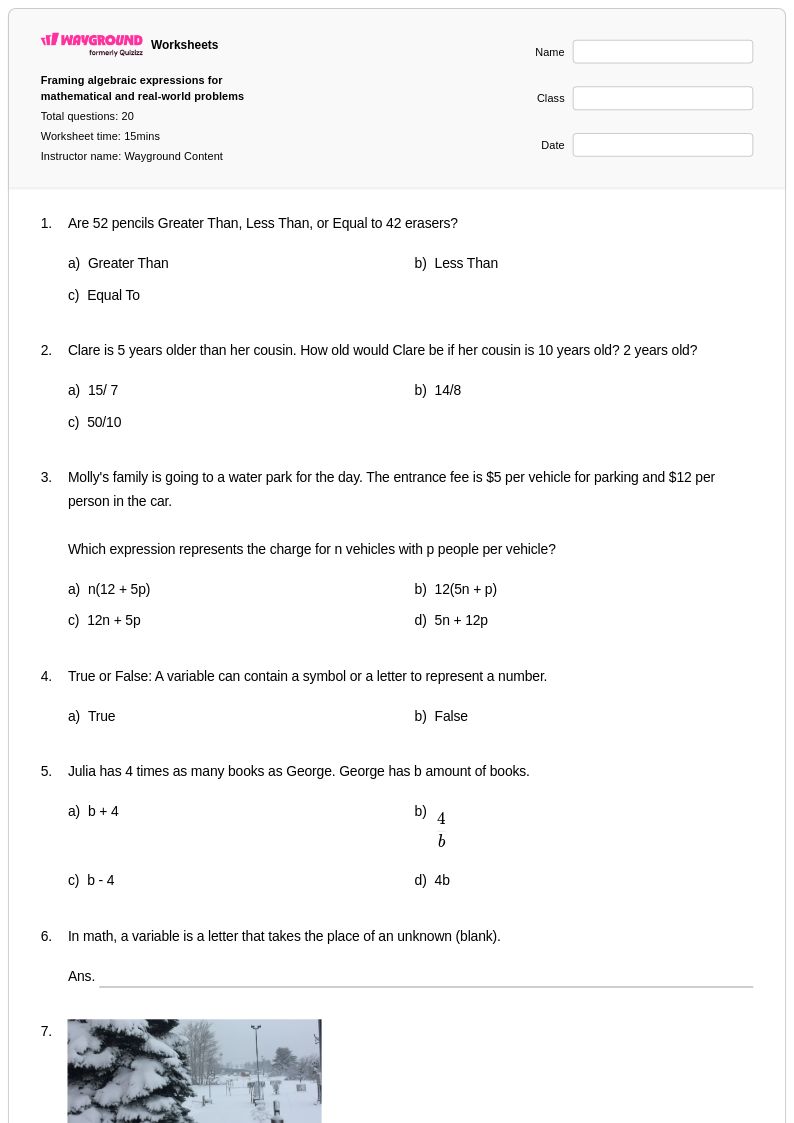
20 Q
6th
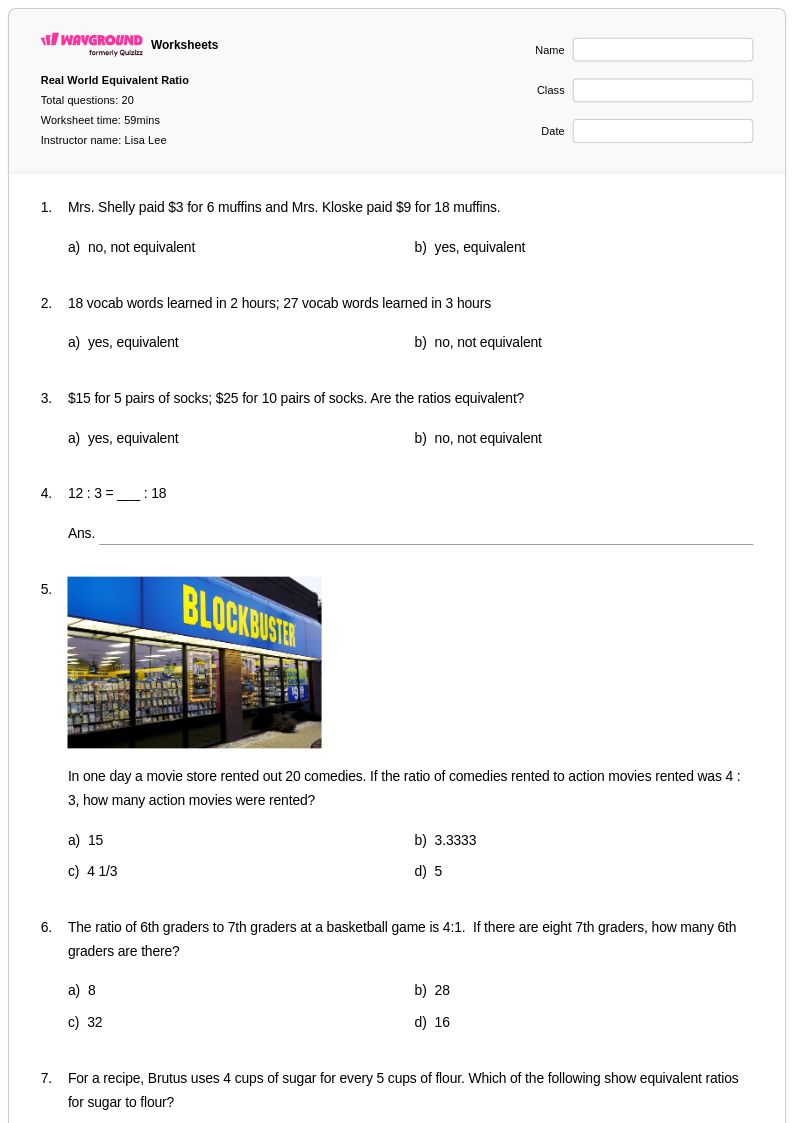
20 Q
6th
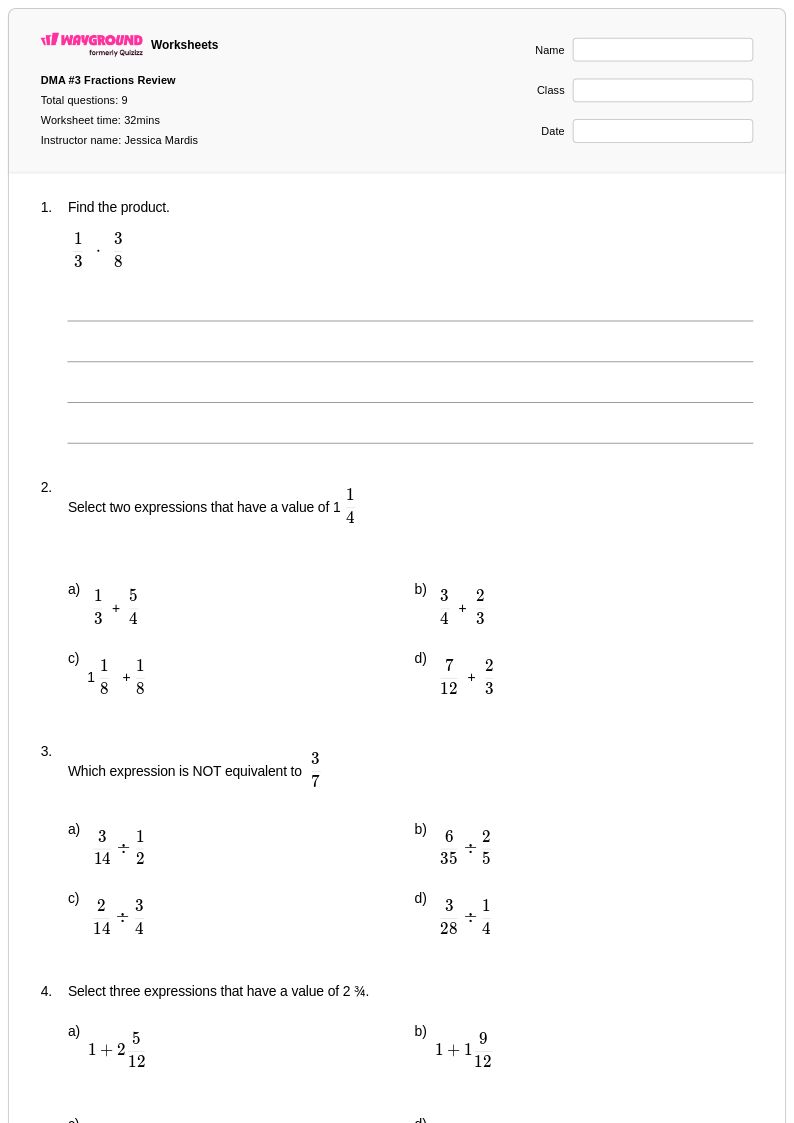
9 Q
6th
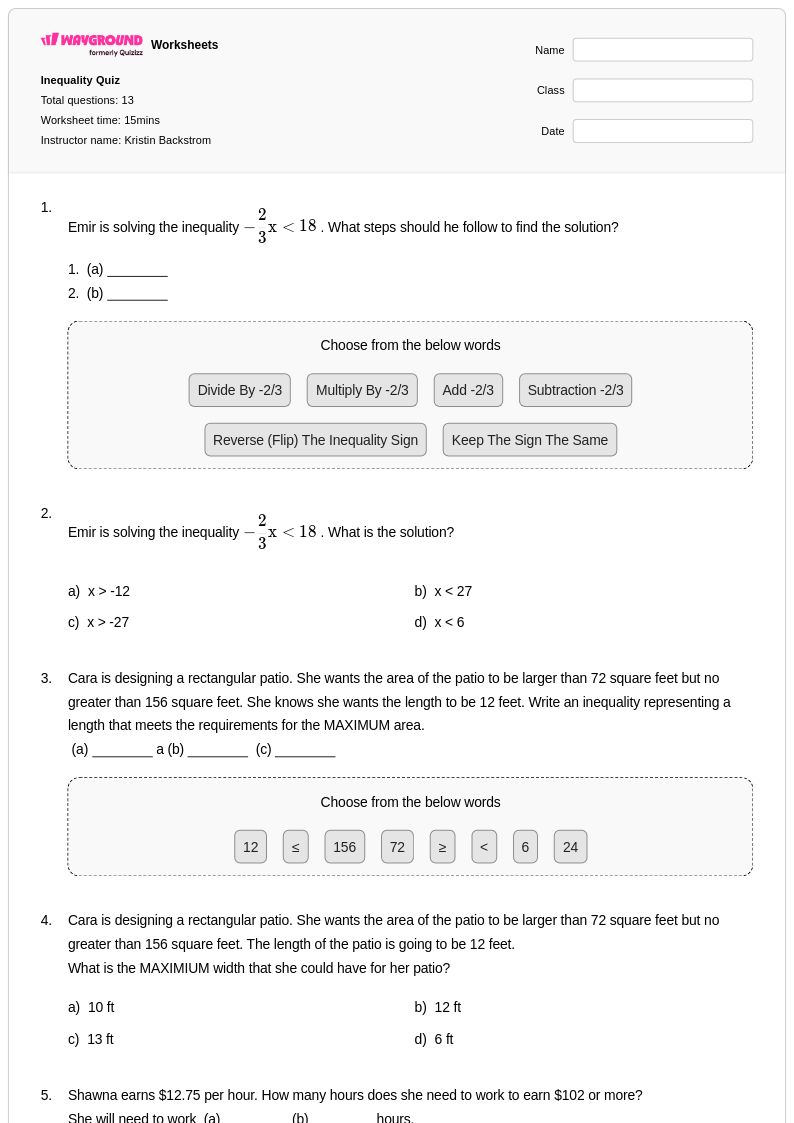
20 Q
6th - 8th
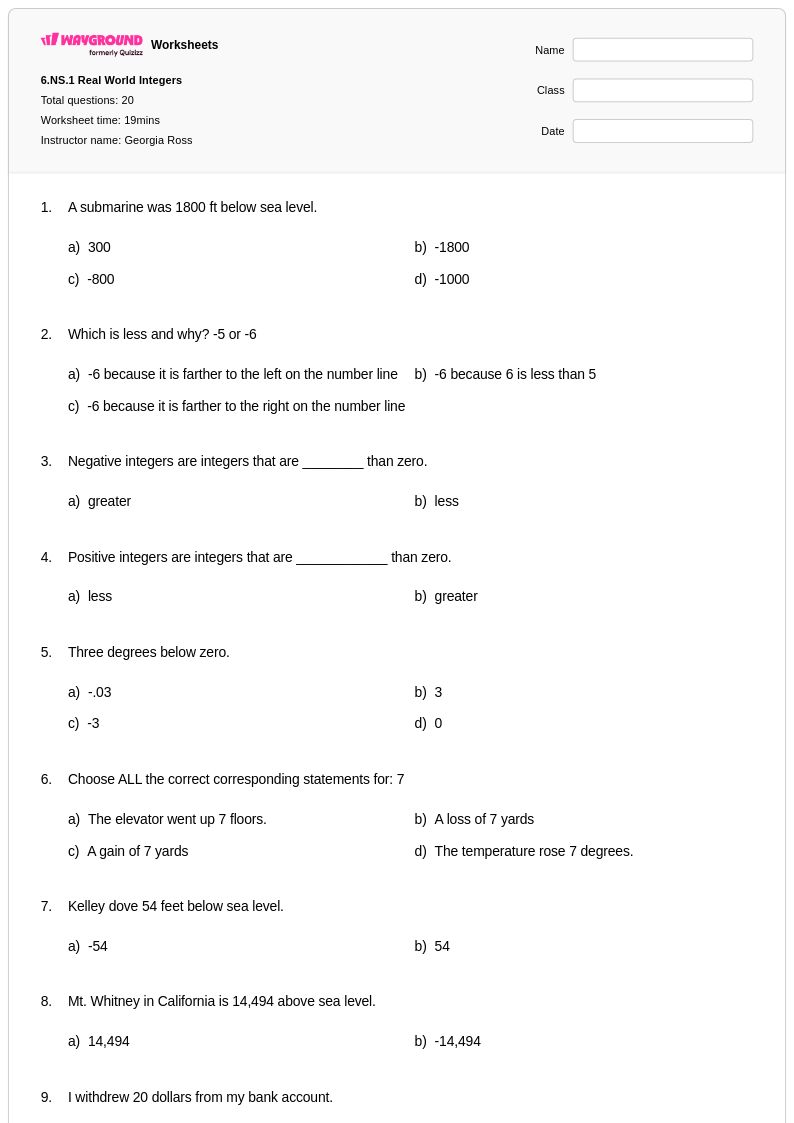
20 Q
6th
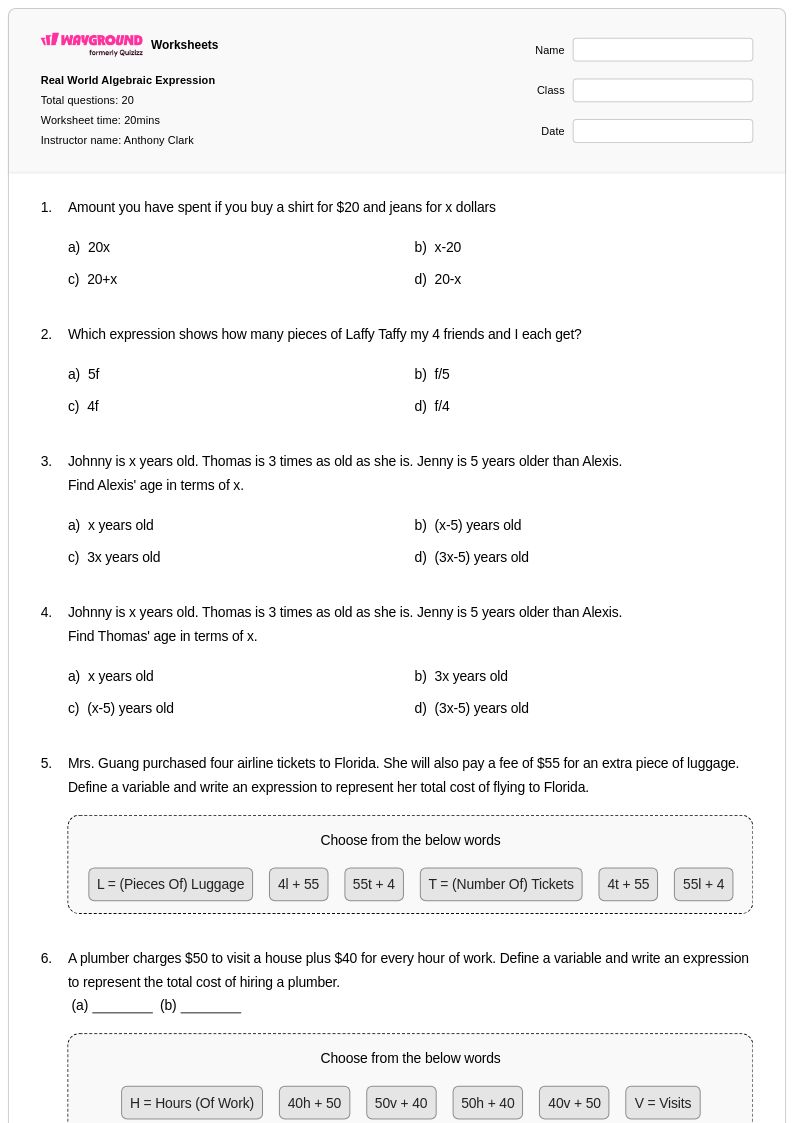
20 Q
6th - Uni
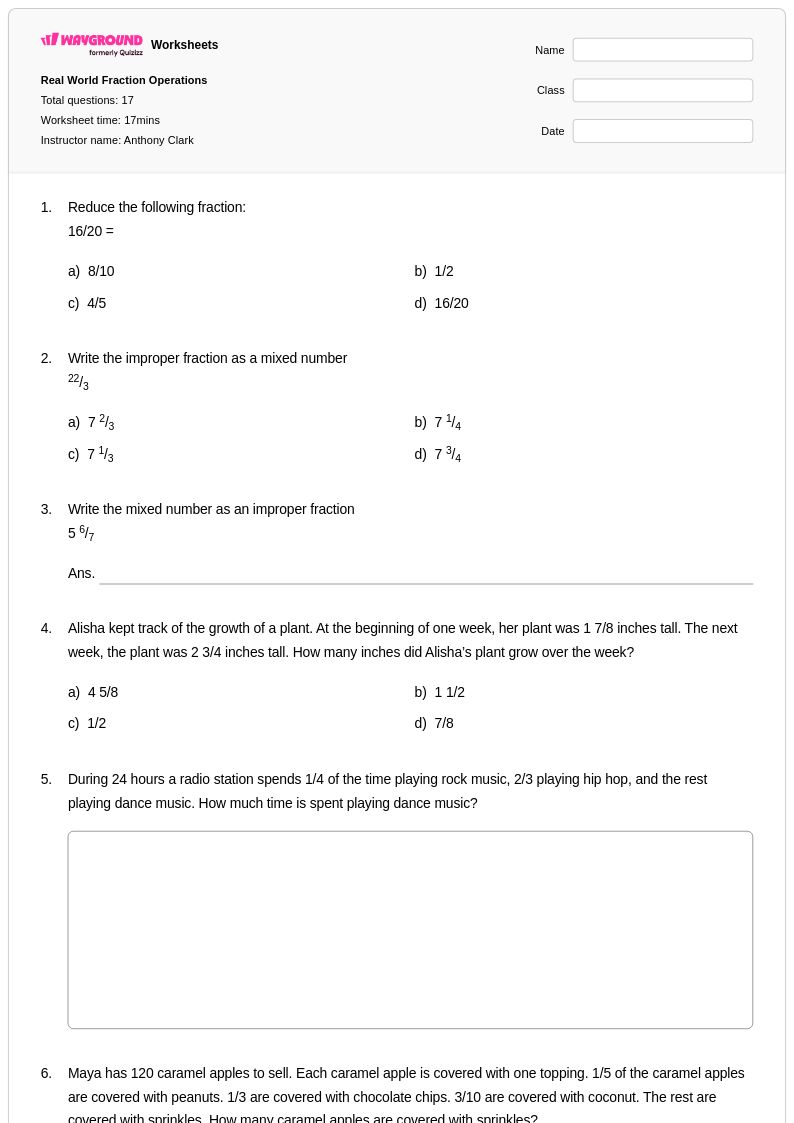
17 Q
6th - Uni
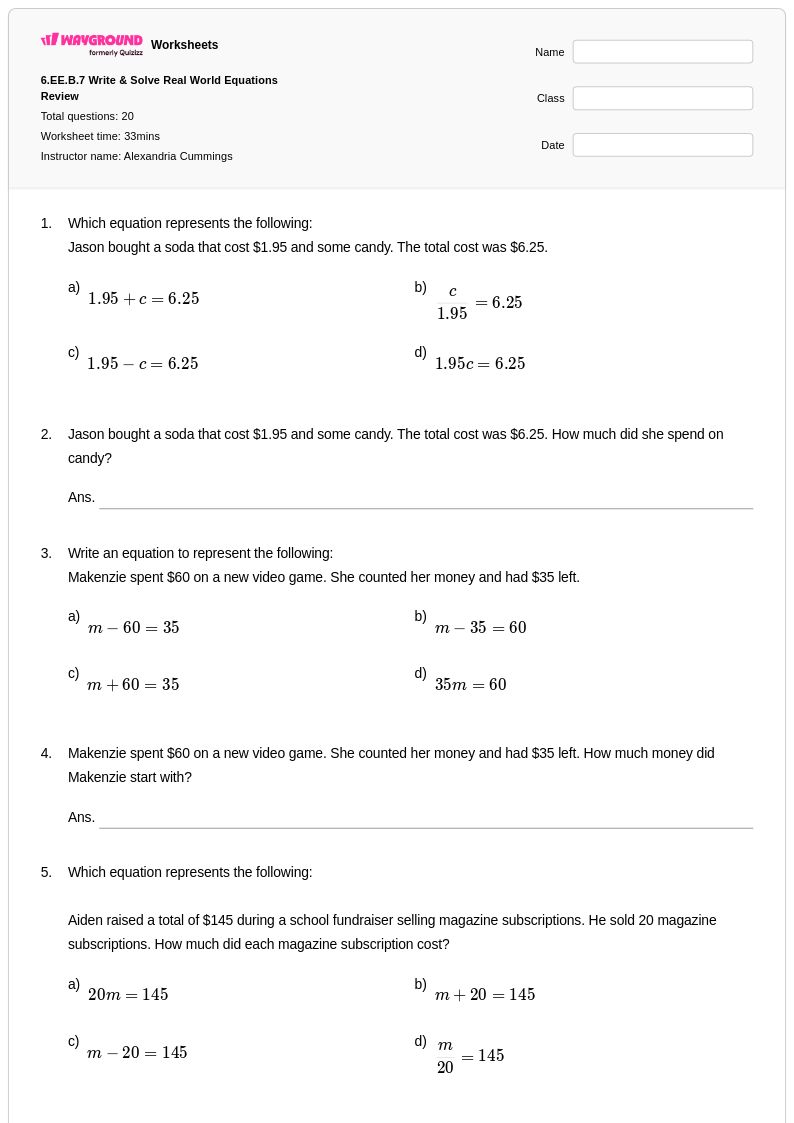
20 Q
6th
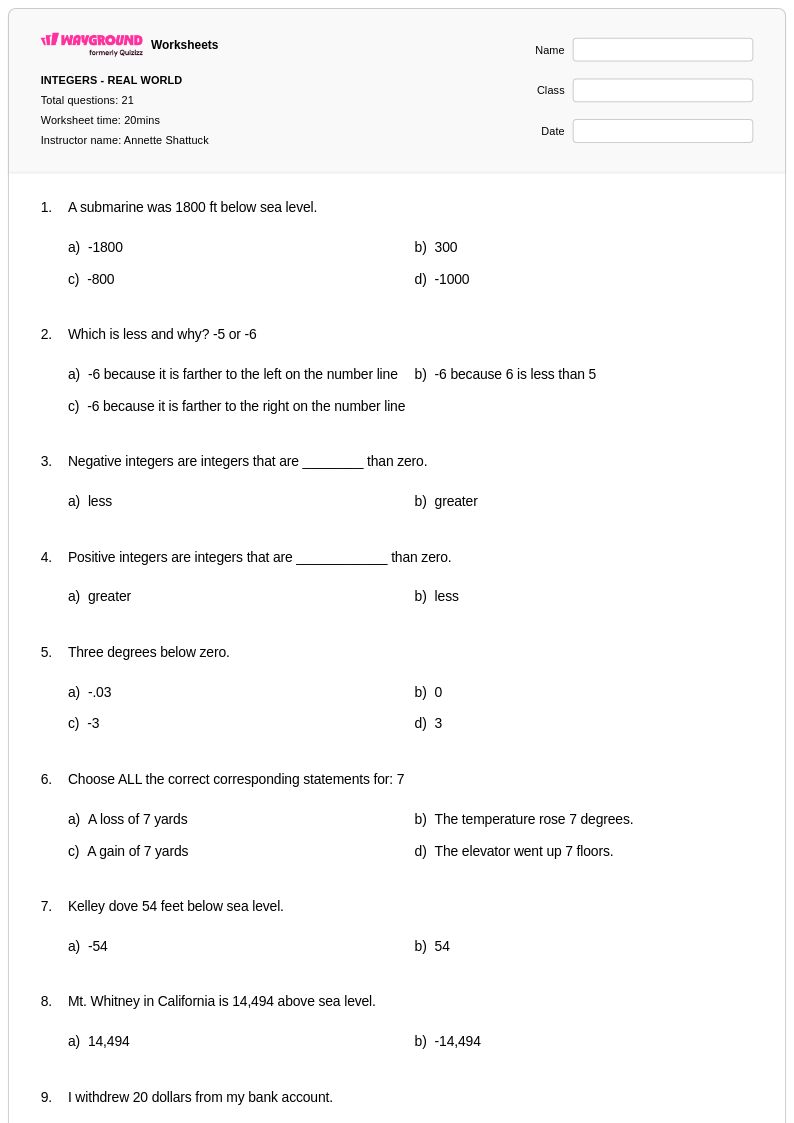
21 Q
6th
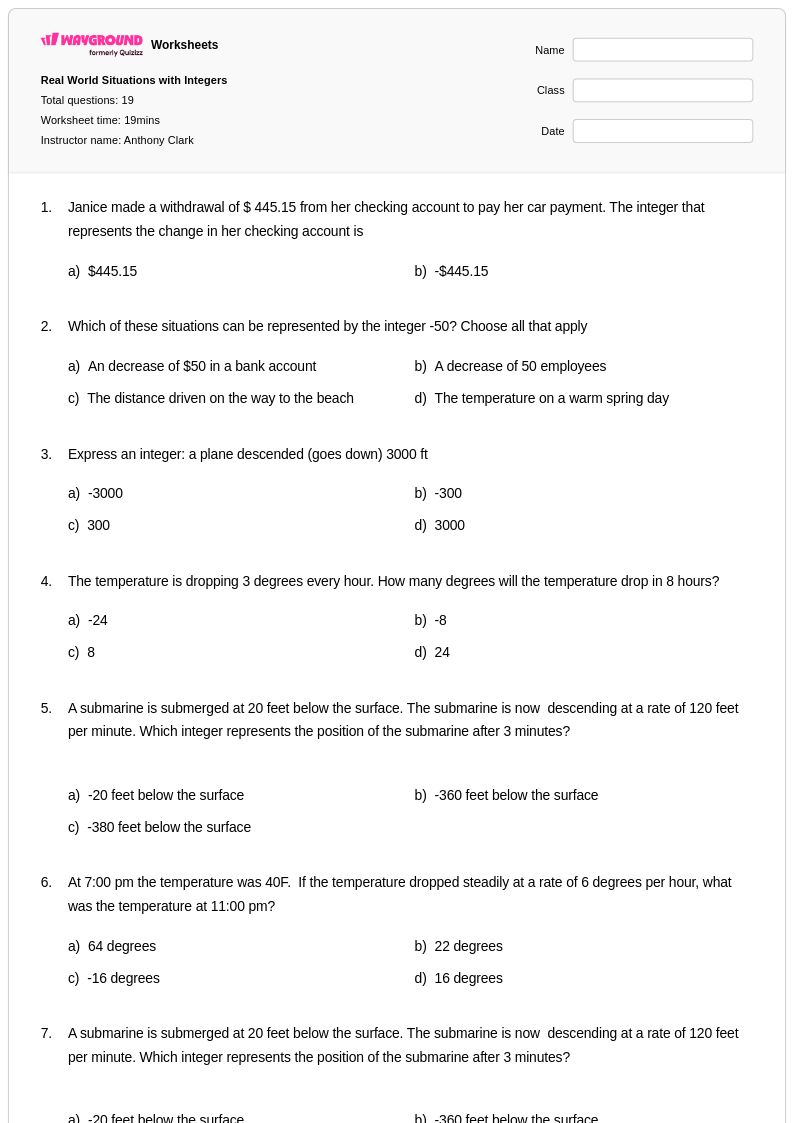
19 Q
6th - Uni
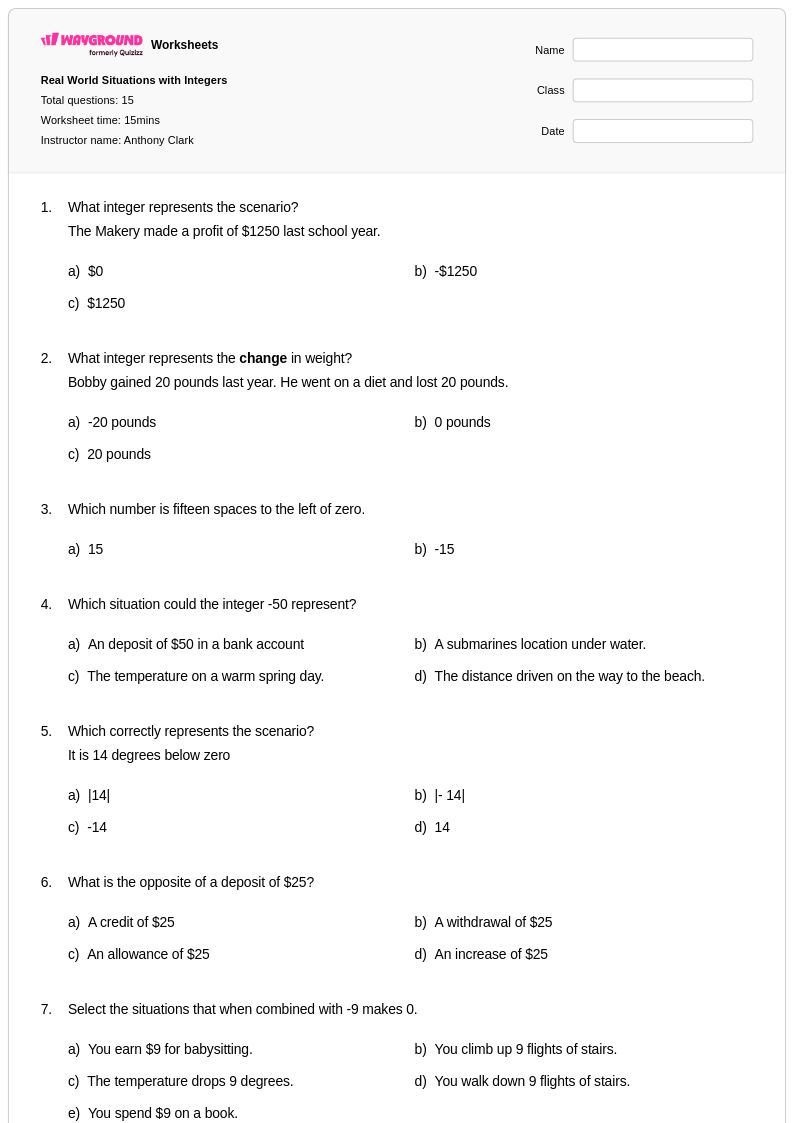
15 Q
6th - Uni
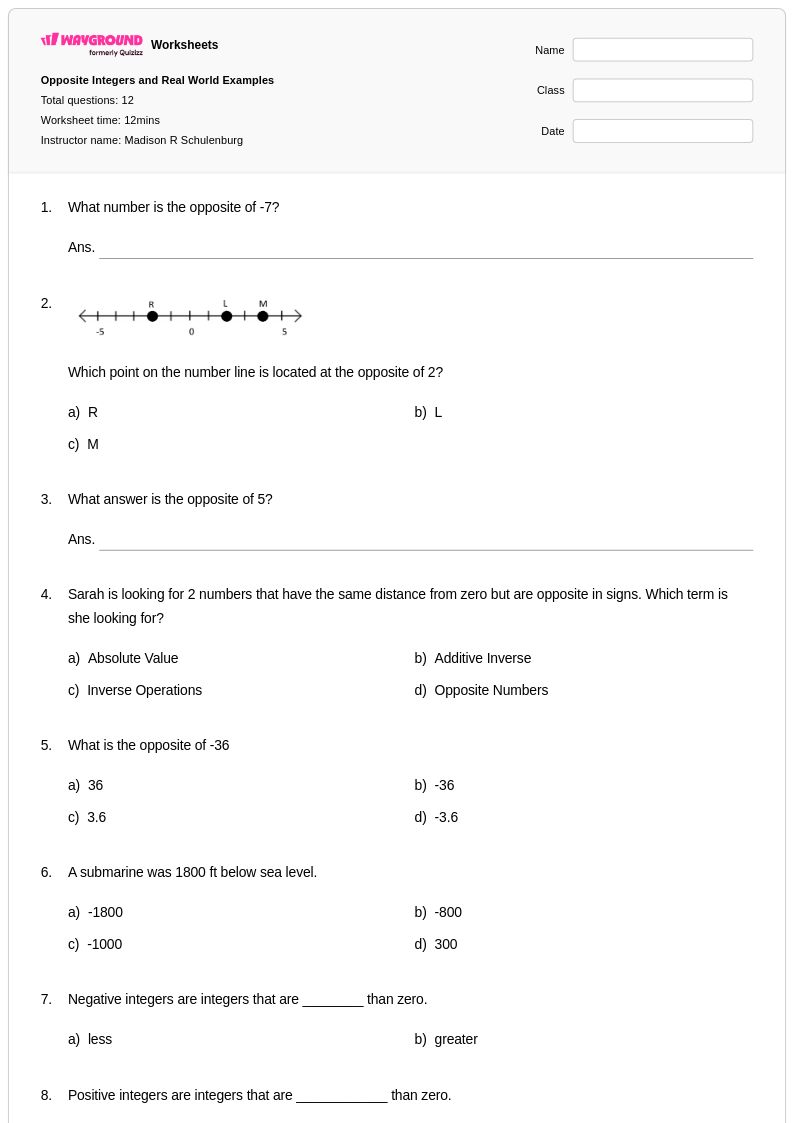
12 Q
6th
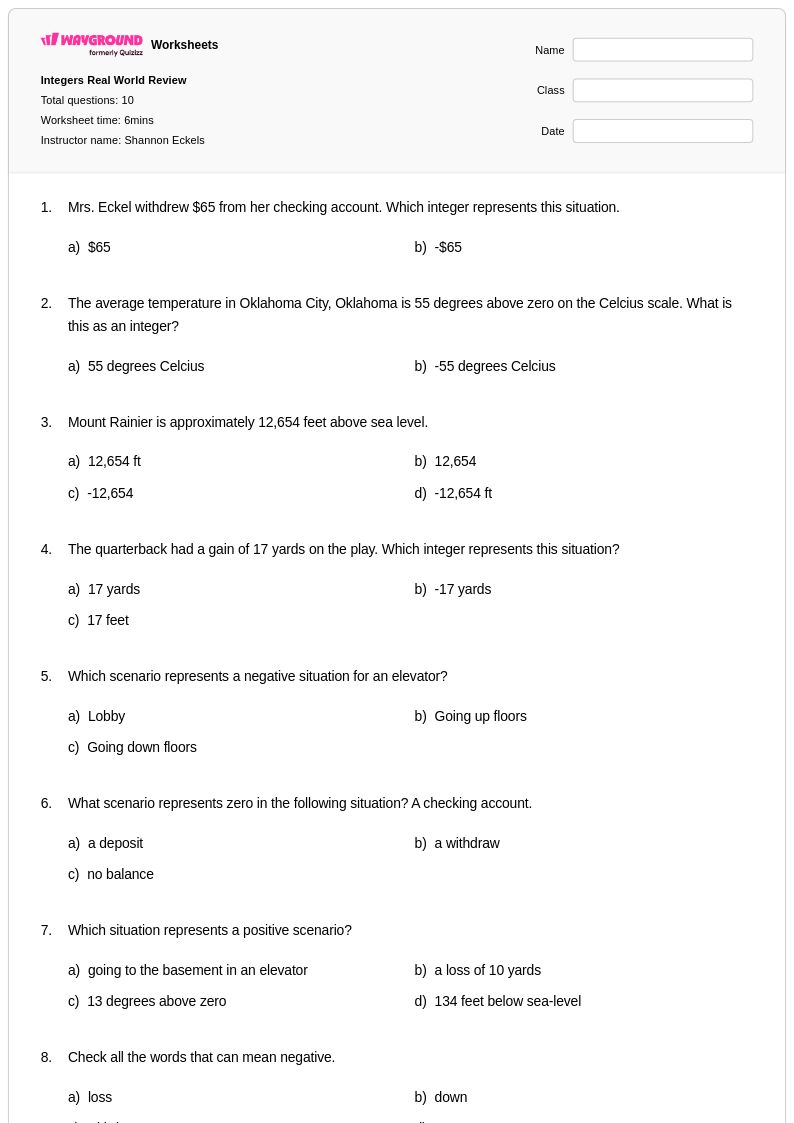
10 Q
6th
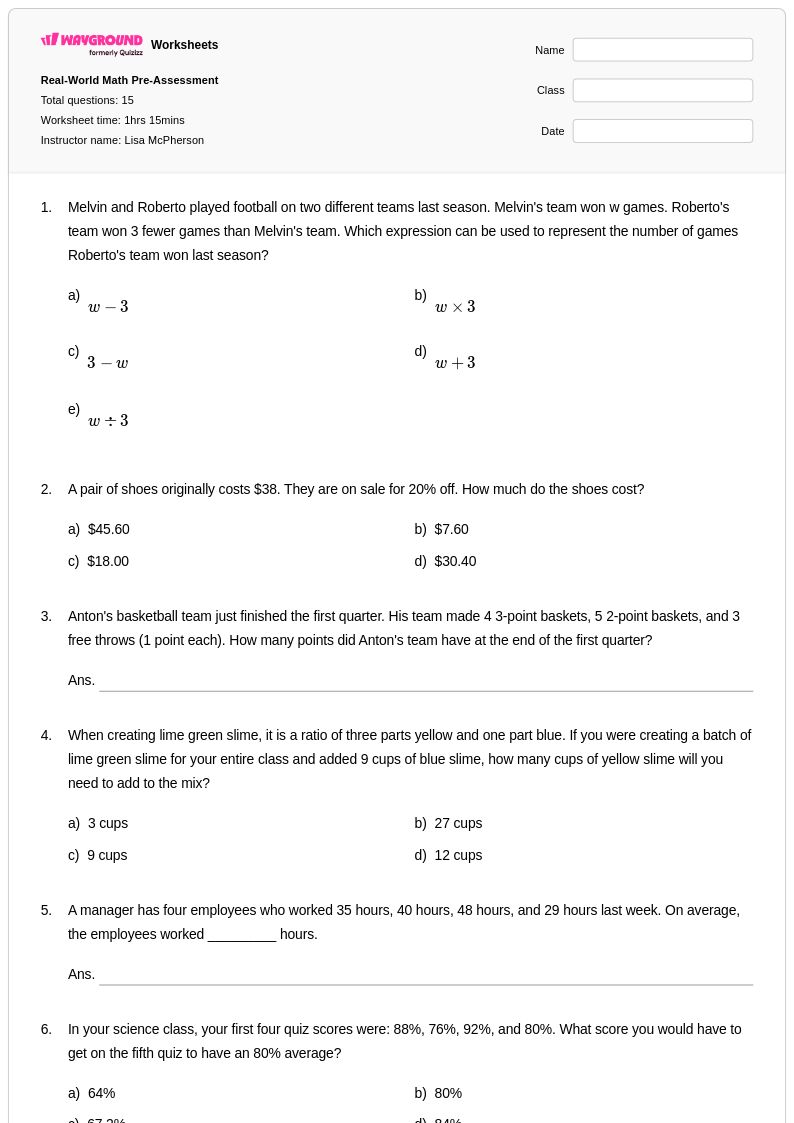
15 Q
6th - 8th
Explore Graphing Real World Applications Worksheets by Grades
Explore Other Subject Worksheets for class 6
Explore printable Graphing Real World Applications worksheets for Class 6
Class 6 students develop essential mathematical literacy through graphing real world applications worksheets that transform abstract concepts into meaningful, practical scenarios. These comprehensive worksheets guide sixth graders through creating and interpreting various graph types including bar graphs, line graphs, circle graphs, and scatter plots using authentic data from sports statistics, weather patterns, population trends, and consumer spending. Students strengthen critical analytical skills by examining real-world datasets, identifying trends and patterns, making predictions based on graphical information, and drawing logical conclusions from visual data representations. Each worksheet collection includes detailed answer keys and step-by-step solutions, with free printable resources featuring practice problems that range from basic graph reading to complex data interpretation tasks that mirror situations students encounter in daily life.
Wayground (formerly Quizizz) empowers educators with millions of teacher-created resources specifically designed for Class 6 graphing real world applications instruction, featuring robust search and filtering capabilities that allow teachers to locate materials perfectly aligned with curriculum standards and individual student needs. The platform's differentiation tools enable instructors to customize worksheets for various skill levels within the same classroom, while flexible formatting options provide both printable pdf versions for traditional instruction and digital formats for technology-integrated learning environments. Teachers utilize these comprehensive collections for lesson planning, targeted remediation for struggling learners, enrichment activities for advanced students, and ongoing skill practice that reinforces the connection between mathematical concepts and real-world problem solving, ensuring students develop both computational proficiency and practical application abilities essential for mathematical success.
FAQs
What do 6th graders learn about graphing real-world data?
How should I introduce real-world graphing to my 6th grade class?
What are common challenges for 6th graders with real-world graphs?
How can my students practice graphing with these Grade 6 worksheets?
How does this topic align with 6th grade math standards?
How can I use these worksheets in my classroom?