Free Printable Grieving Process Worksheets for Class 8
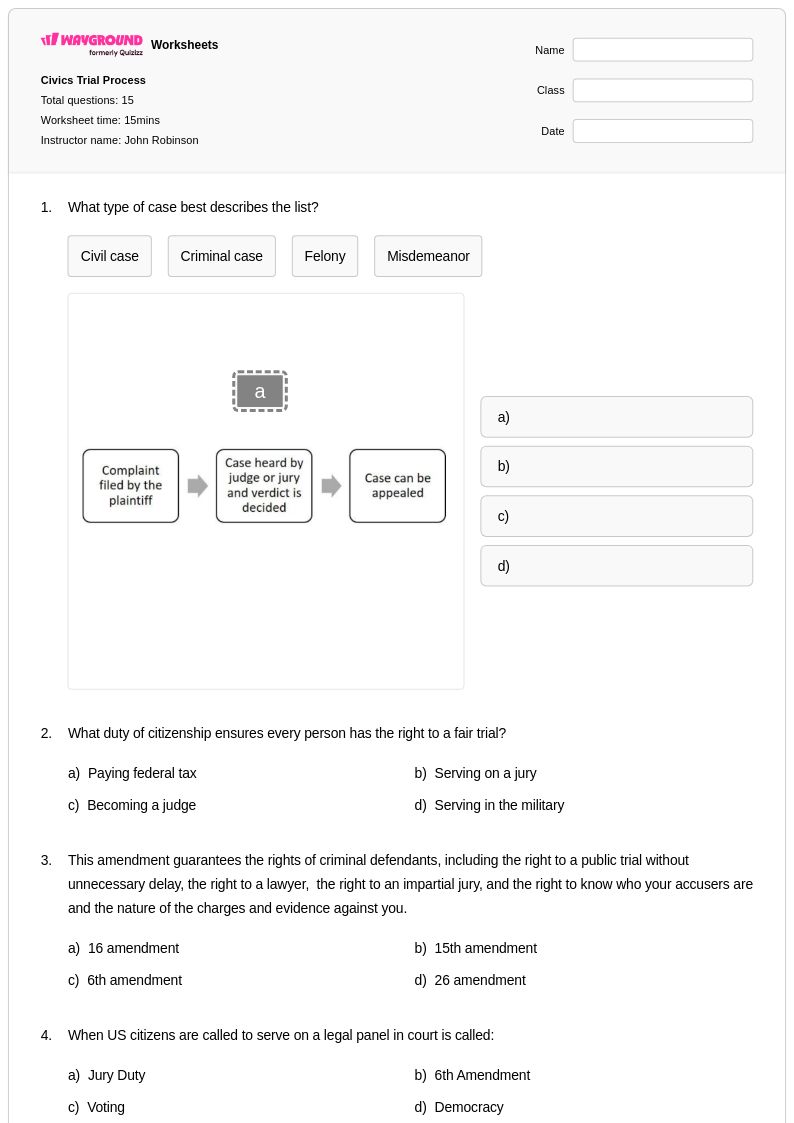
Class 8 social studies worksheets help students understand the grieving process through comprehensive printables and practice problems, featuring free PDF resources with answer keys to develop essential emotional awareness and coping skills.
Explore printable Grieving Process worksheets for Class 8
Class 8 grieving process worksheets available through Wayground (formerly Quizizz) provide essential social studies resources that help middle school students develop crucial emotional intelligence and coping skills during adolescence. These comprehensive worksheets guide students through understanding the stages of grief, recognizing healthy versus unhealthy grieving responses, and developing empathy for others experiencing loss. The academic materials strengthen critical thinking abilities as students analyze different cultural approaches to mourning, examine historical examples of collective grief, and practice identifying support systems within their communities. Each worksheet collection includes detailed answer keys that enable both self-assessment and teacher evaluation, while the free printable format ensures accessibility for diverse classroom environments and practice problems that reinforce key concepts about emotional processing and resilience building.
Wayground (formerly Quizizz) supports educators with millions of teacher-created resources specifically designed for Class 8 social skills instruction, featuring robust search and filtering capabilities that allow teachers to quickly locate grieving process materials aligned with their curriculum standards. The platform's differentiation tools enable instructors to modify worksheet difficulty levels to meet individual student needs, while flexible customization options allow teachers to adapt content for specific classroom discussions or cultural contexts. These comprehensive collections are available in both printable and digital formats, including downloadable pdf versions that facilitate seamless lesson planning and accommodate various learning environments. Teachers utilize these resources for targeted skill practice, remediation support for students struggling with emotional concepts, and enrichment activities that deepen understanding of grief counseling principles and community support structures.
FAQs
How do I teach the grieving process to students in a classroom setting?
Teaching the grieving process works best when students first build a shared vocabulary around grief before engaging with personal or emotionally charged content. Introduce psychological frameworks like the five stages of grief (denial, anger, bargaining, depression, and acceptance) using scenario-based examples that feel relatable but not intrusive. Structured reflection activities, such as journaling prompts and guided discussion, help students process concepts safely. Establishing clear emotional boundaries and a supportive classroom environment before beginning the unit is essential.
What exercises help students practice understanding the stages of grief?
Scenario analysis exercises are among the most effective tools for helping students identify and apply the stages of grief, as they allow students to recognize emotional responses in realistic situations without requiring personal disclosure. Journaling prompts that ask students to describe how a character might feel at different stages encourage perspective-taking and deeper comprehension. Guided discussion activities around different types of loss, including non-death losses like friendship or moving, broaden students' understanding of grief as a universal experience.
What misconceptions do students commonly have about the grieving process?
One of the most common misconceptions is that grief follows a strict, linear sequence through the five stages, when in reality people may move between stages in any order, revisit stages multiple times, or skip stages entirely. Students also frequently assume that grief is only triggered by death, when loss of relationships, major life changes, and other experiences can produce genuine grief responses. Addressing these misconceptions early helps students develop more accurate empathy for themselves and others.
How can I support students who may be personally experiencing grief while teaching this topic?
Before introducing grief content, communicate privately with school counselors or support staff so resources are available if students become distressed. Frame all classroom activities as optional for personal sharing, and offer alternative reflection formats such as writing privately rather than sharing aloud. On Wayground, individual students can be assigned accommodations such as Read Aloud support and extended time, which can reduce cognitive and emotional pressure without drawing attention to any single student.
How do I use Wayground's grieving process worksheets in my classroom?
Wayground's grieving process worksheets are available as printable PDFs for traditional classroom use and in digital formats for remote or hybrid learning environments, making them flexible for a range of instructional settings. Each worksheet includes a complete answer key, which supports both self-paced student review and efficient teacher grading. Teachers can also host worksheets as a quiz directly on Wayground, enabling interactive digital delivery while tracking student responses in real time.
How do I differentiate grieving process instruction for students with different emotional readiness levels?
Differentiation for this topic is less about academic ability and more about emotional readiness and personal experience with loss. Offering tiered reflection prompts, with some focusing on fictional scenarios and others inviting personal connection, allows students to engage at a depth that feels safe for them. For students who need additional support, Wayground's accommodation tools allow teachers to enable Read Aloud for written content and reduce answer choices on assessment items, lowering cognitive load without singling any student out.