Free Printable Healthy Boundaries Worksheets for Class 8
Class 8 students can explore healthy boundaries through our free printable social studies worksheets, featuring practice problems and answer keys that help develop essential interpersonal skills and personal safety awareness.
Explore printable Healthy Boundaries worksheets for Class 8
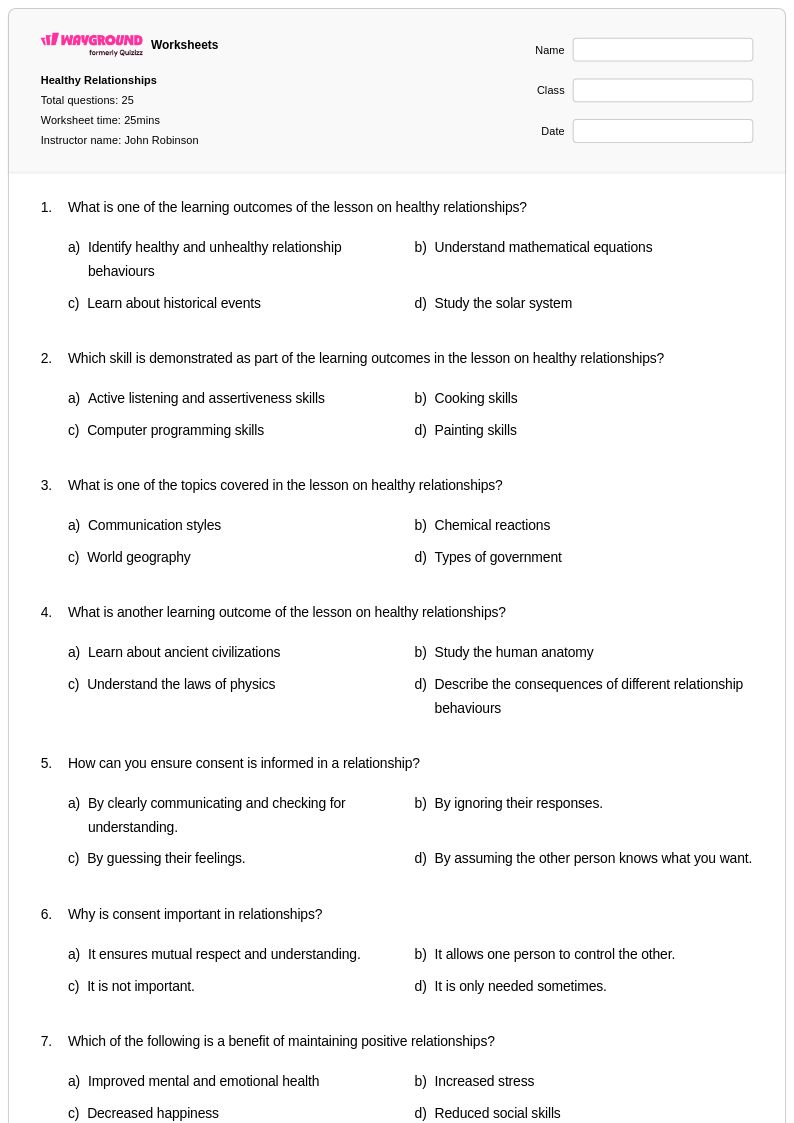
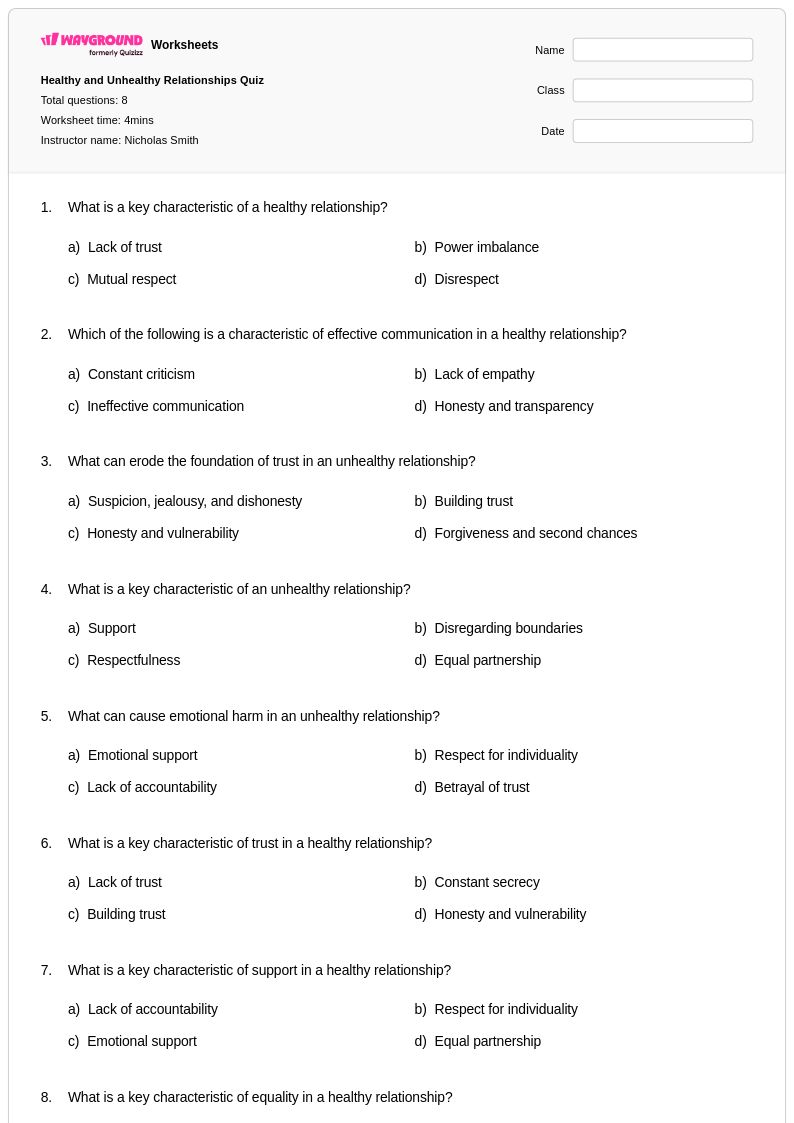
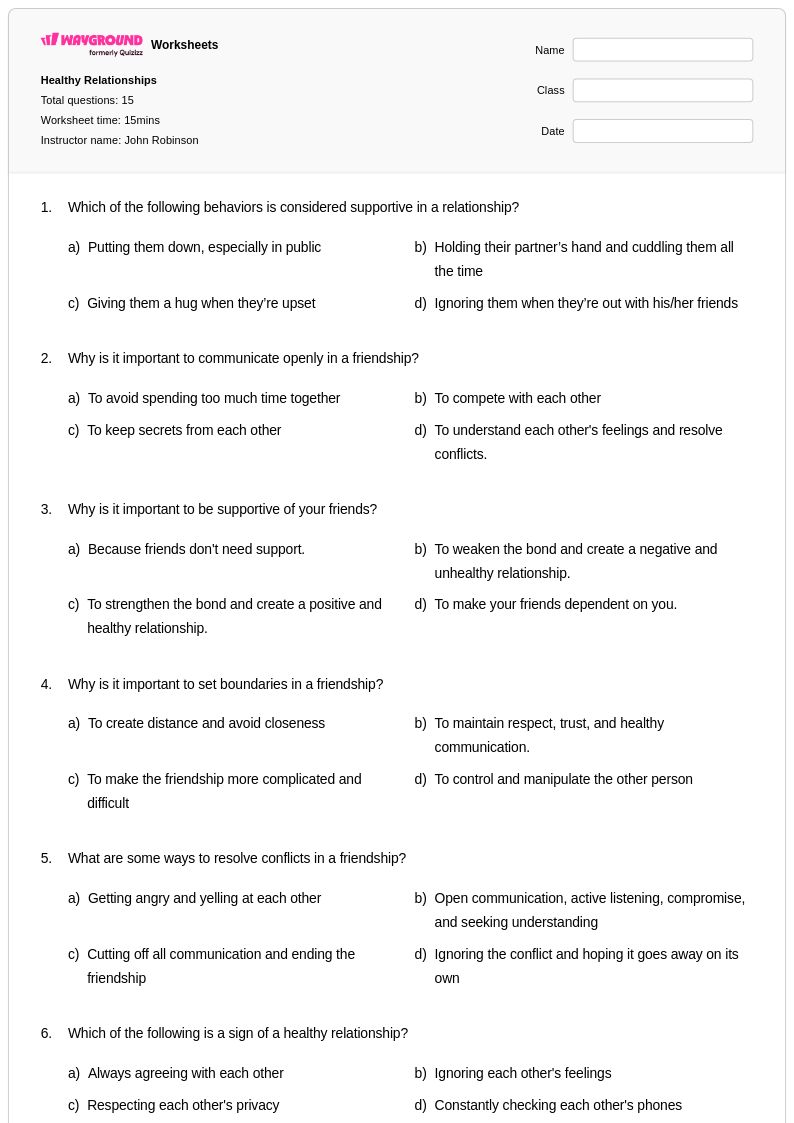
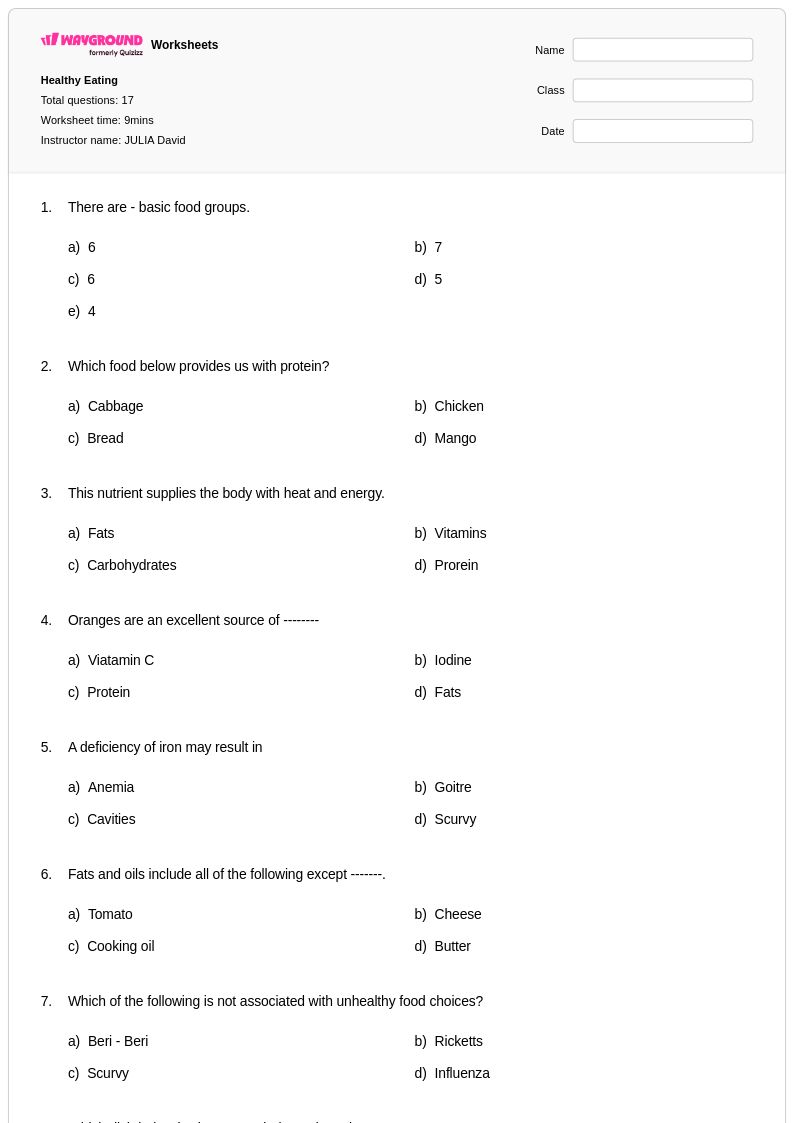
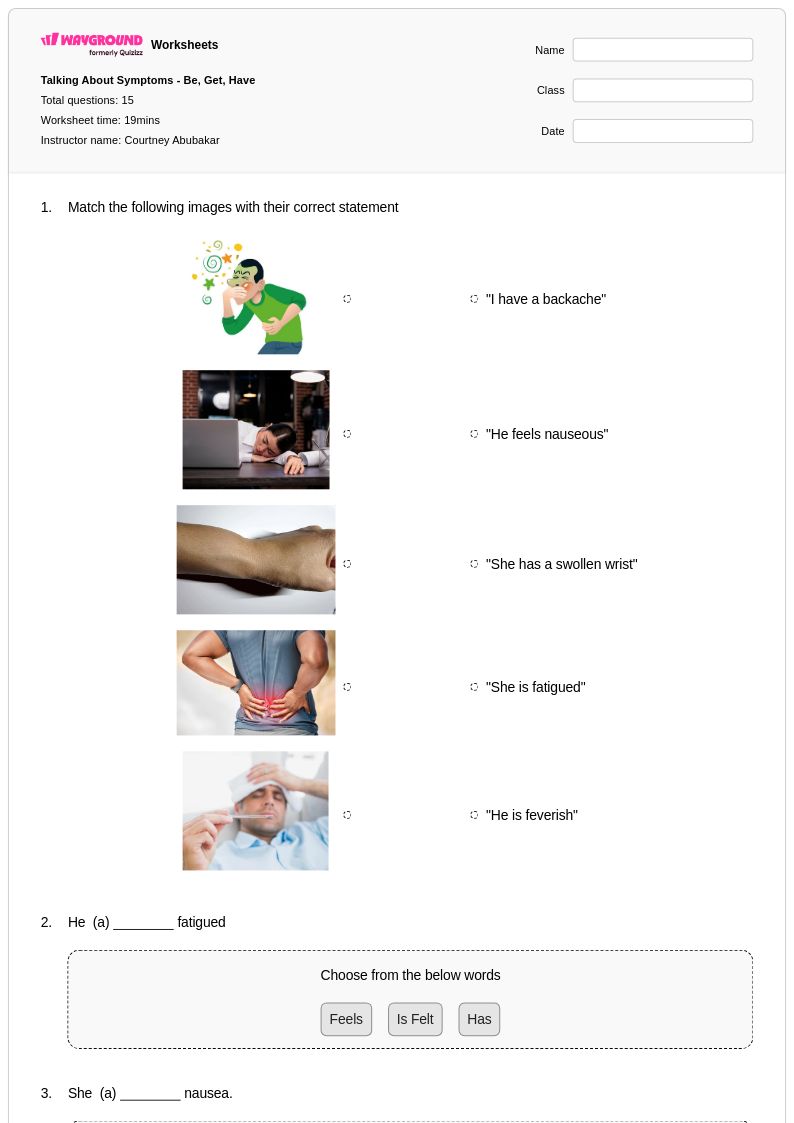
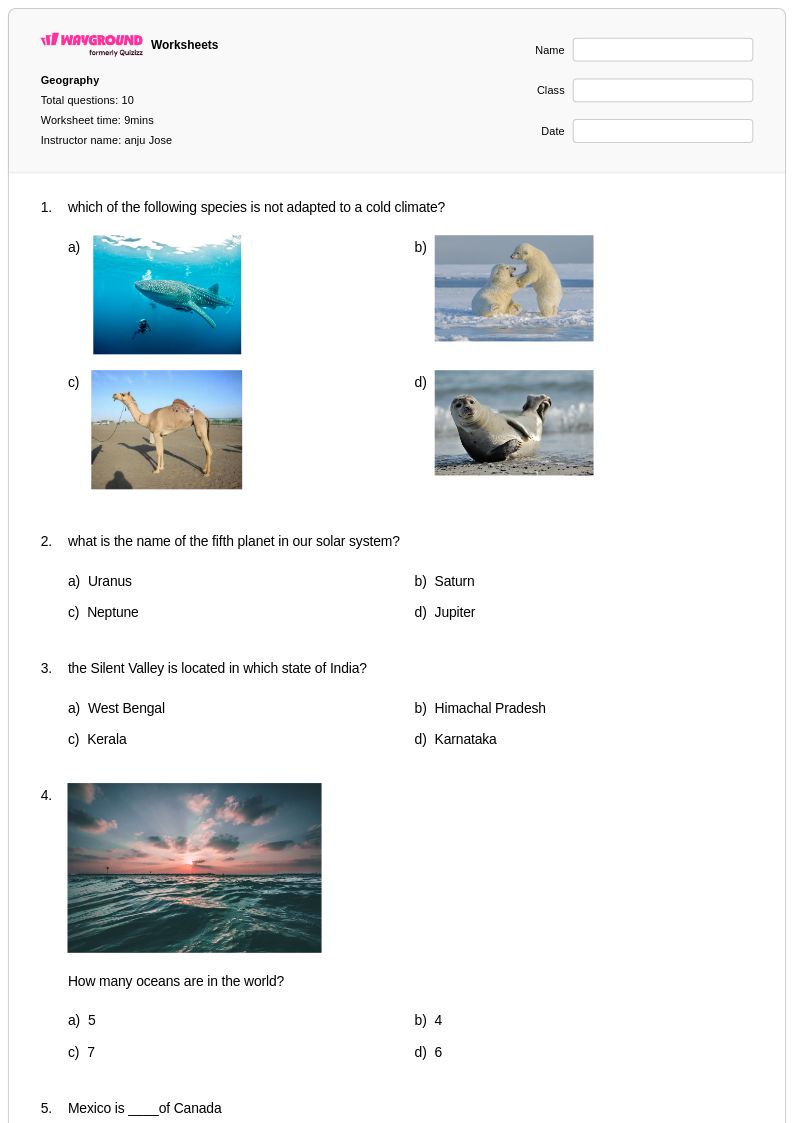
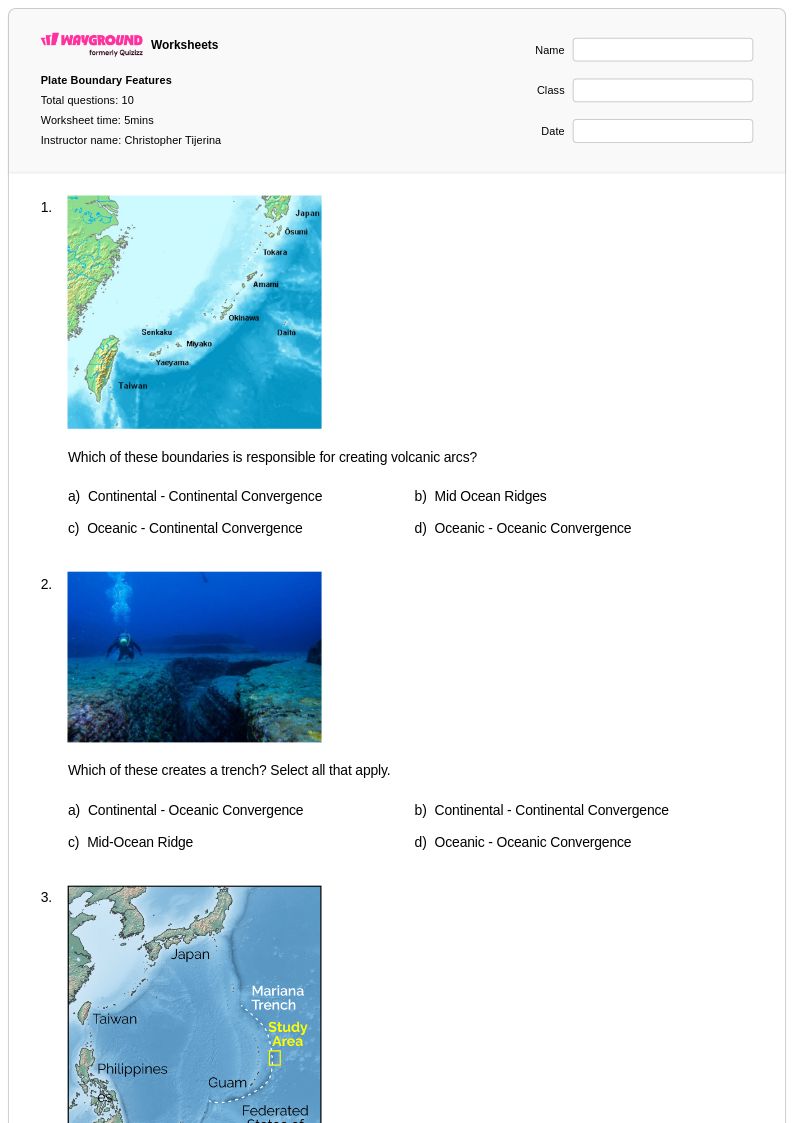
Healthy boundaries worksheets for Class 8 students available through Wayground provide essential practice in understanding and establishing appropriate personal limits in social relationships. These comprehensive resources help eighth graders develop critical social awareness skills by exploring concepts such as recognizing emotional boundaries, communicating personal limits effectively, and respecting others' boundaries in various social contexts. Students engage with realistic scenarios that challenge them to identify boundary violations, practice assertive communication techniques, and understand the connection between healthy boundaries and positive relationships. Each worksheet collection includes detailed answer keys that support both independent study and guided instruction, while the free printable format ensures accessibility for diverse classroom environments and homework assignments.
Wayground's extensive collection of teacher-created healthy boundaries worksheets offers educators powerful tools for addressing this crucial social skills component in Class 8 curriculum. With millions of resources created by experienced educators, teachers can easily search and filter materials to find age-appropriate content that aligns with social studies standards and meets specific classroom needs. The platform's differentiation tools enable instructors to customize worksheets for varying ability levels, ensuring that all students can engage meaningfully with boundary-setting concepts whether for initial skill building, remediation, or enrichment activities. Available in both printable pdf formats and digital versions, these resources provide flexible options for lesson planning, individual practice sessions, small group discussions, and assessment preparation, supporting comprehensive social skills development that prepares students for healthy interpersonal relationships throughout their academic and personal lives.
FAQs
How do I teach healthy boundaries to students in a classroom setting?
Teaching healthy boundaries works best through scenario-based instruction where students analyze real-world social situations involving peer pressure, friendship conflicts, and family dynamics. Start by helping students identify their personal values and what makes them feel safe or uncomfortable, then build toward recognizing boundary violations and practicing assertive communication. Role-playing boundary-setting conversations is particularly effective because it gives students low-stakes practice before they face these situations in real life.
What activities help students practice setting healthy boundaries?
Worksheets that present relationship scenarios are among the most effective tools for practicing healthy boundaries, as they require students to distinguish between healthy and unhealthy patterns and decide how they would respond. Practice problems that range from identifying personal values to scripting boundary-setting conversations build both conceptual understanding and practical communication skills. Repeated exposure to varied social contexts, including peer pressure situations and family dynamics, helps students generalize boundary-setting skills beyond the classroom.
What common mistakes do students make when learning about healthy boundaries?
A frequent misconception is that setting a boundary is the same as being rude or rejecting someone, which can make students reluctant to advocate for themselves. Students also commonly struggle to distinguish between a boundary violation and a normal social disagreement, particularly in peer and family contexts. Targeted worksheet practice that includes clear examples of both healthy and unhealthy relationship patterns helps students sharpen this distinction over time.
How can I differentiate healthy boundaries instruction for students at different developmental levels?
Differentiation for healthy boundaries instruction typically involves adjusting the complexity of the social scenarios presented and the depth of reflection expected. For students who need additional support, reducing the number of answer choices on scenario-based questions can lower cognitive load and build confidence. On Wayground, teachers can apply individual accommodations such as reduced answer choices, read aloud support, and extended time to specific students, while the rest of the class works under default settings without disruption.
How do I use Wayground's healthy boundaries worksheets in my classroom?
Wayground's healthy boundaries worksheets are available as printable PDFs for traditional classroom use and in digital formats for technology-integrated or remote learning environments. Teachers can also host these worksheets as a live quiz directly on Wayground, making them suitable for whole-class instruction, independent practice, or homework assignments. Each worksheet includes a complete answer key, so teachers can use them for both formative practice and quick assessment of student understanding.
How does teaching healthy boundaries connect to social-emotional learning standards?
Healthy boundaries instruction directly supports core SEL competencies including self-awareness, relationship skills, and responsible decision-making. When students learn to identify their personal limits, recognize boundary violations, and communicate their needs effectively, they are building the emotional intelligence that underpins positive peer and family relationships. This makes healthy boundaries content a natural fit within SEL frameworks and advisory or counseling curricula.