Free Printable Growth and Repair Worksheets for Class 8
Explore Wayground's free Class 8 growth and repair worksheets with printable PDFs, practice problems, and answer keys to help students master cellular processes, tissue regeneration, and organism development in life science.
Explore printable Growth and Repair worksheets for Class 8
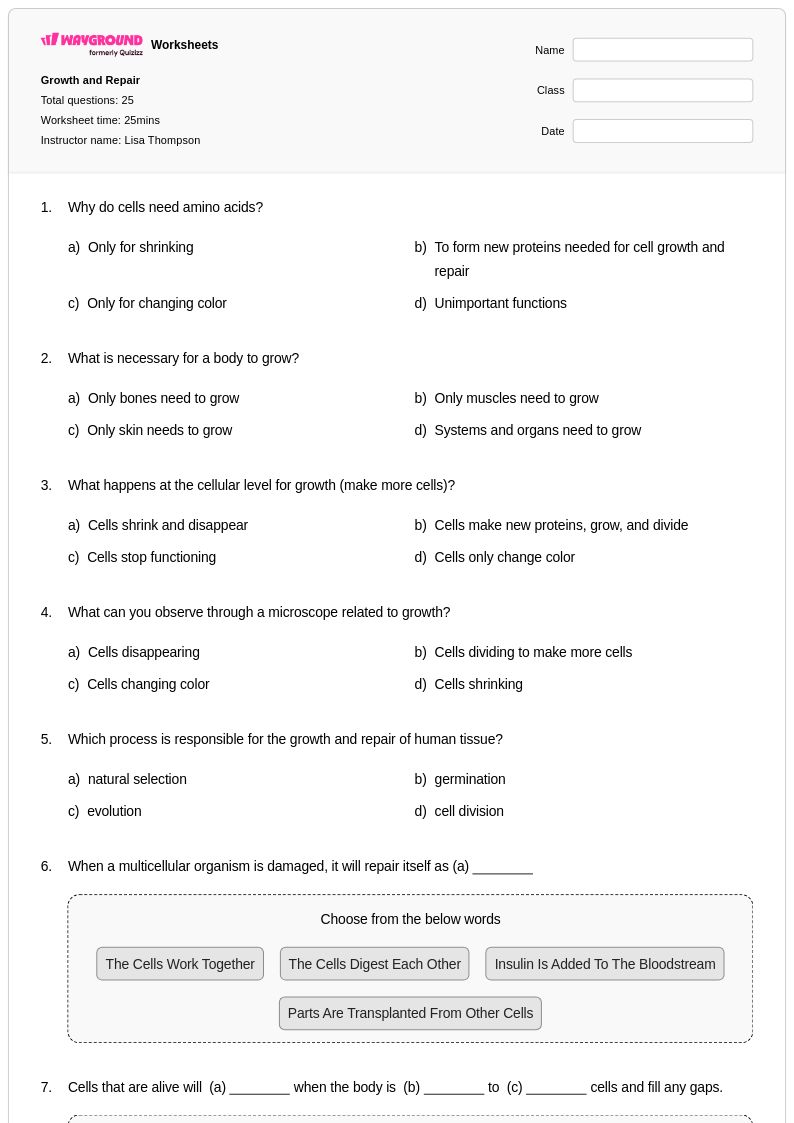
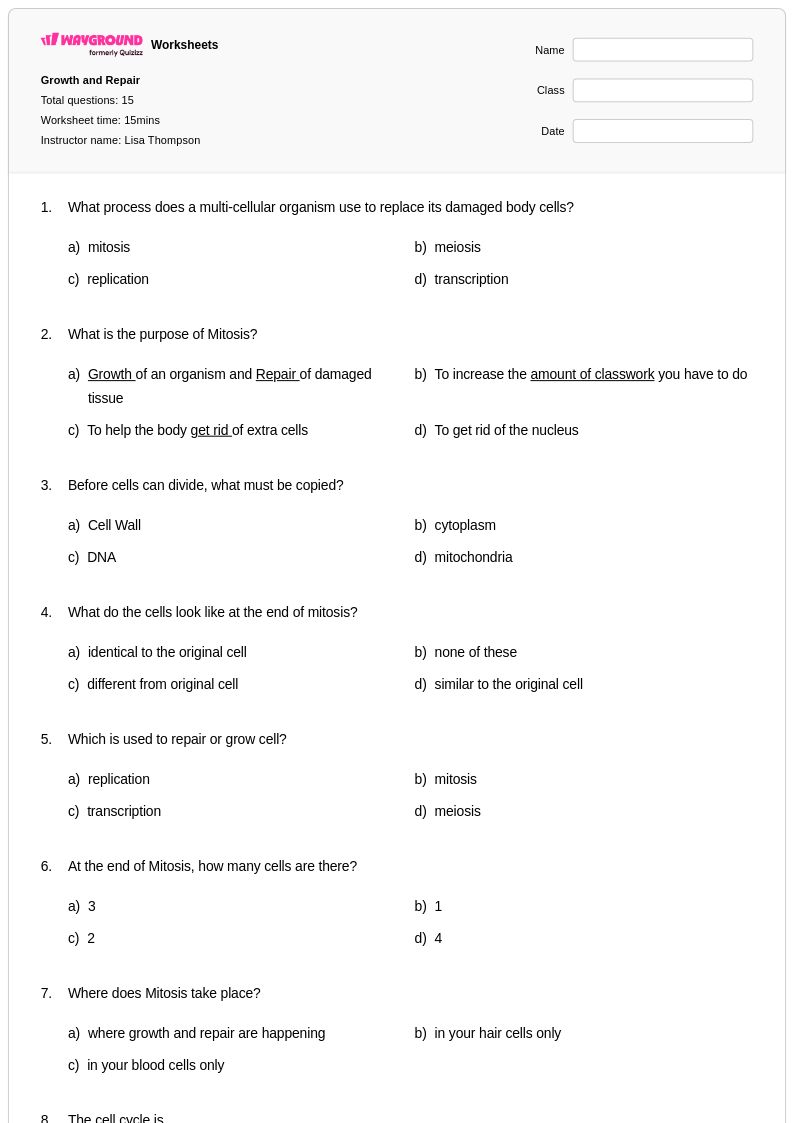
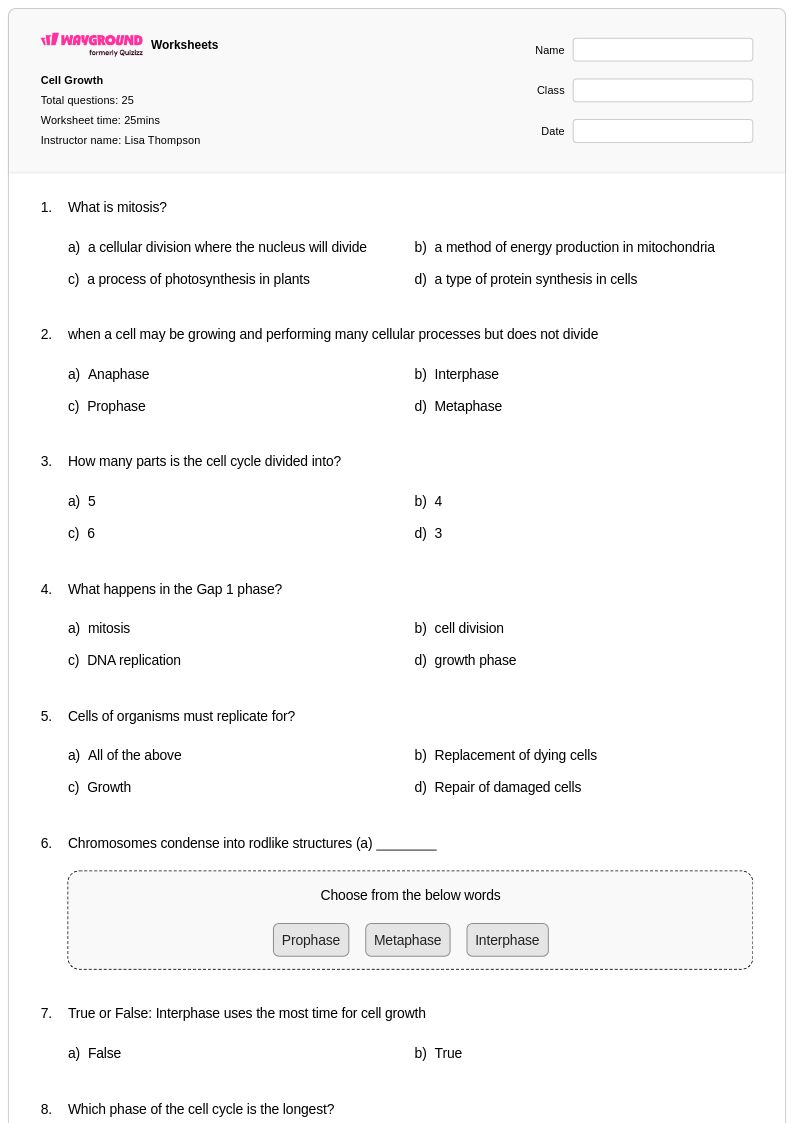
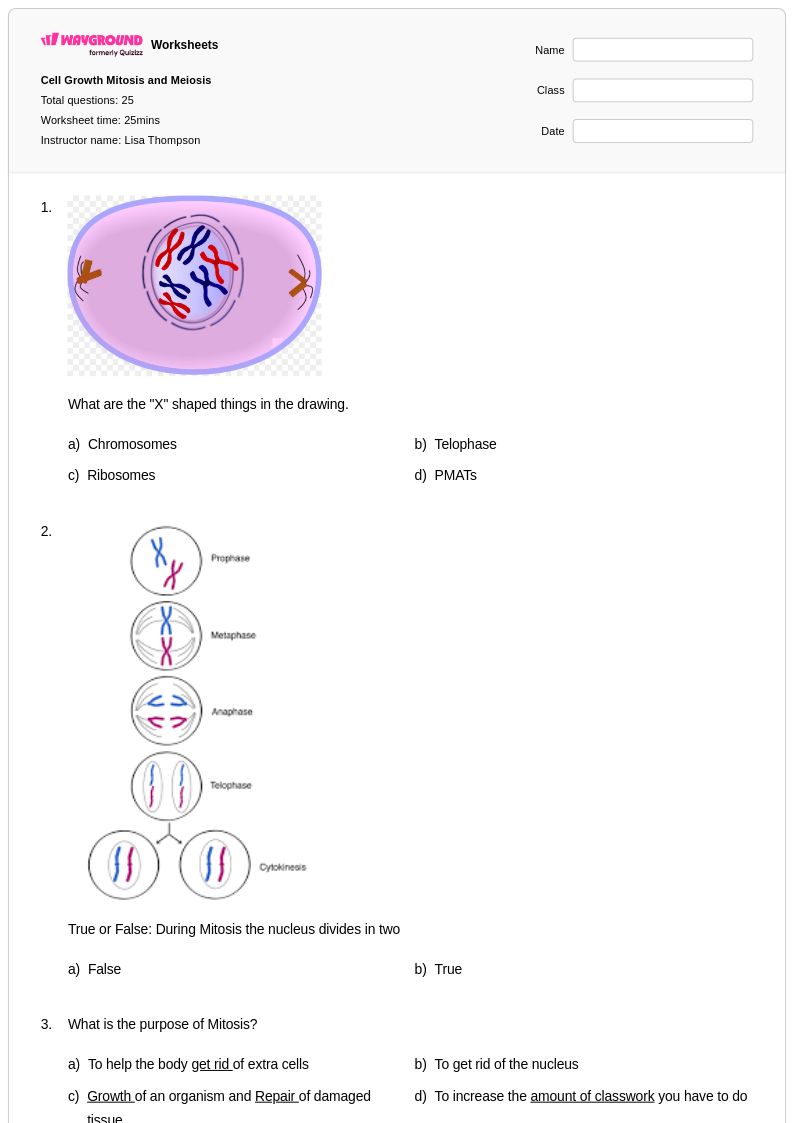
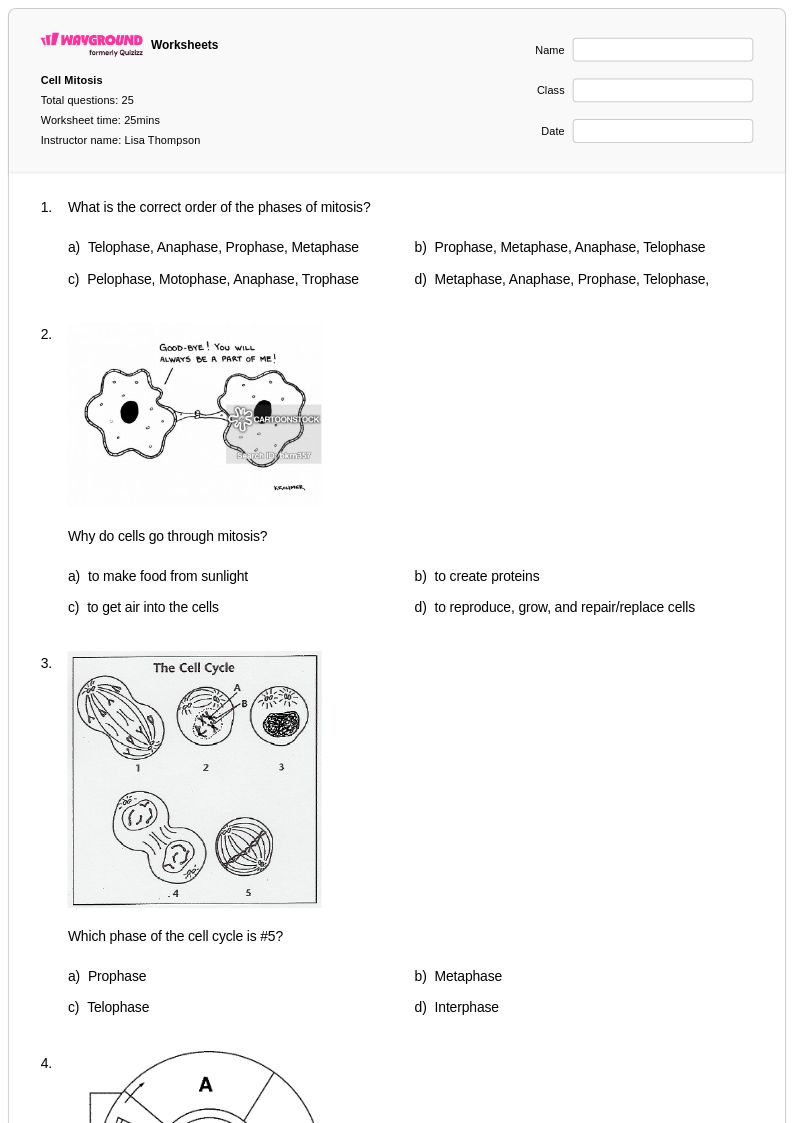
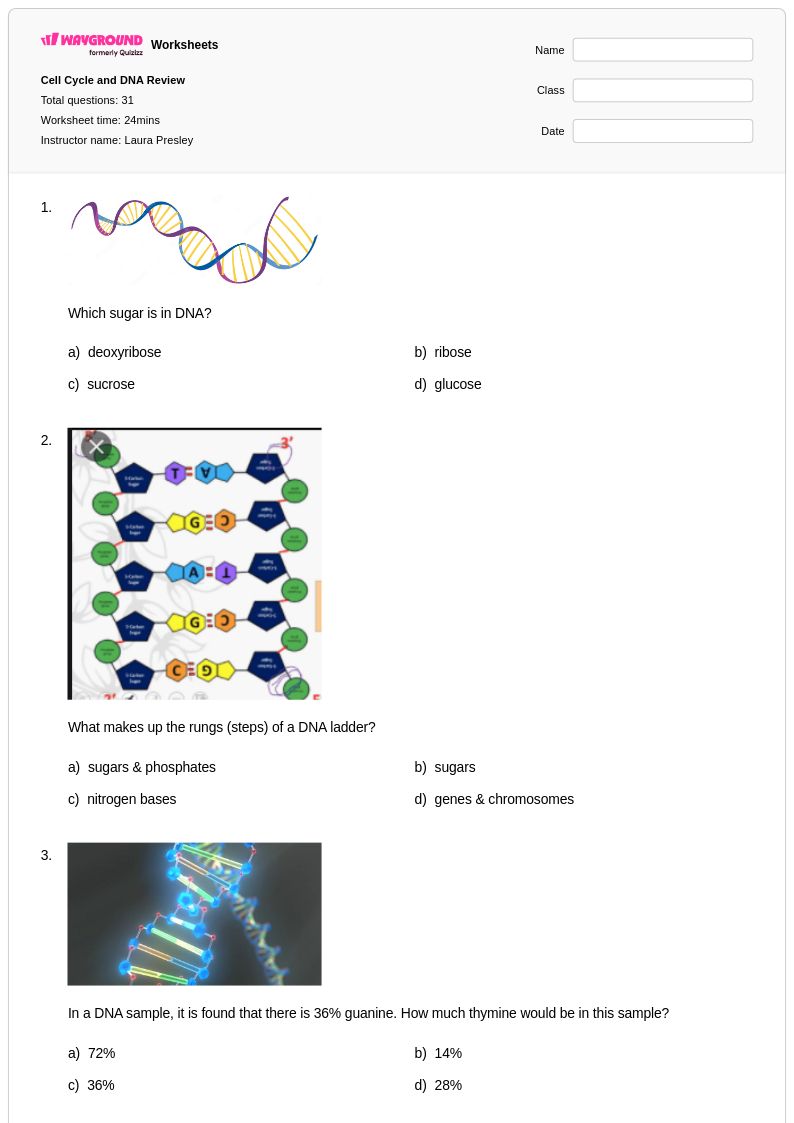
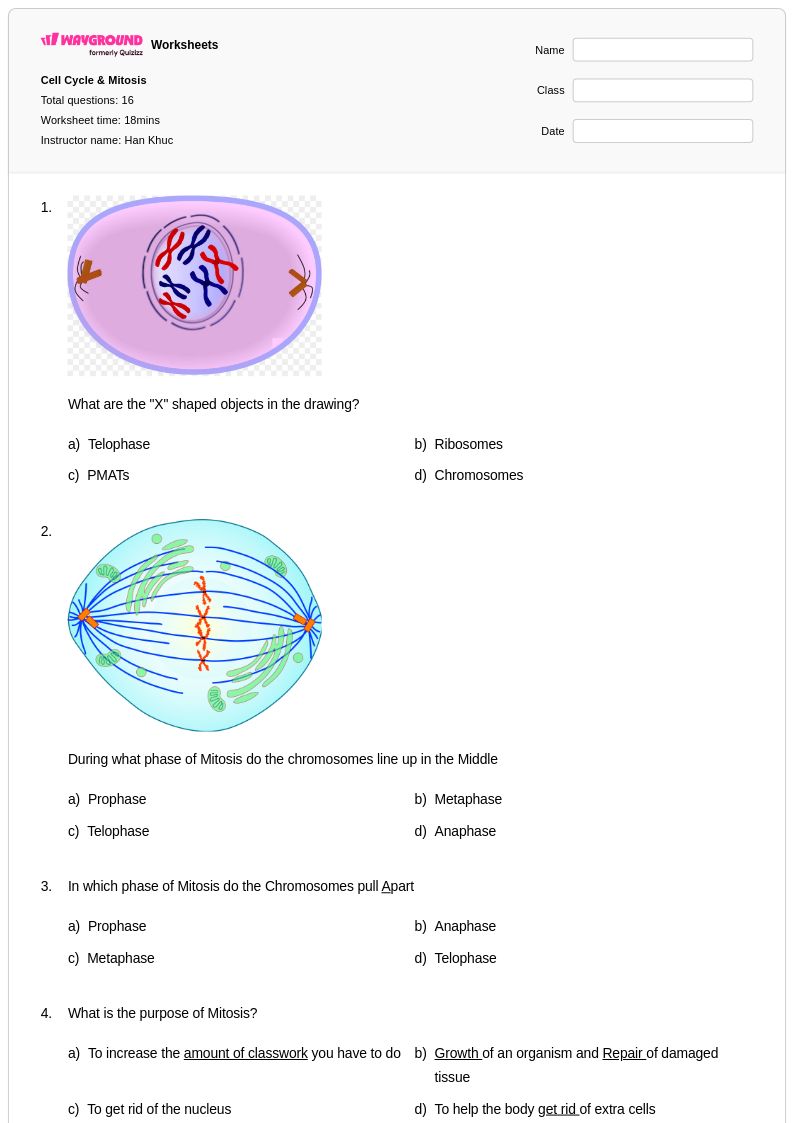
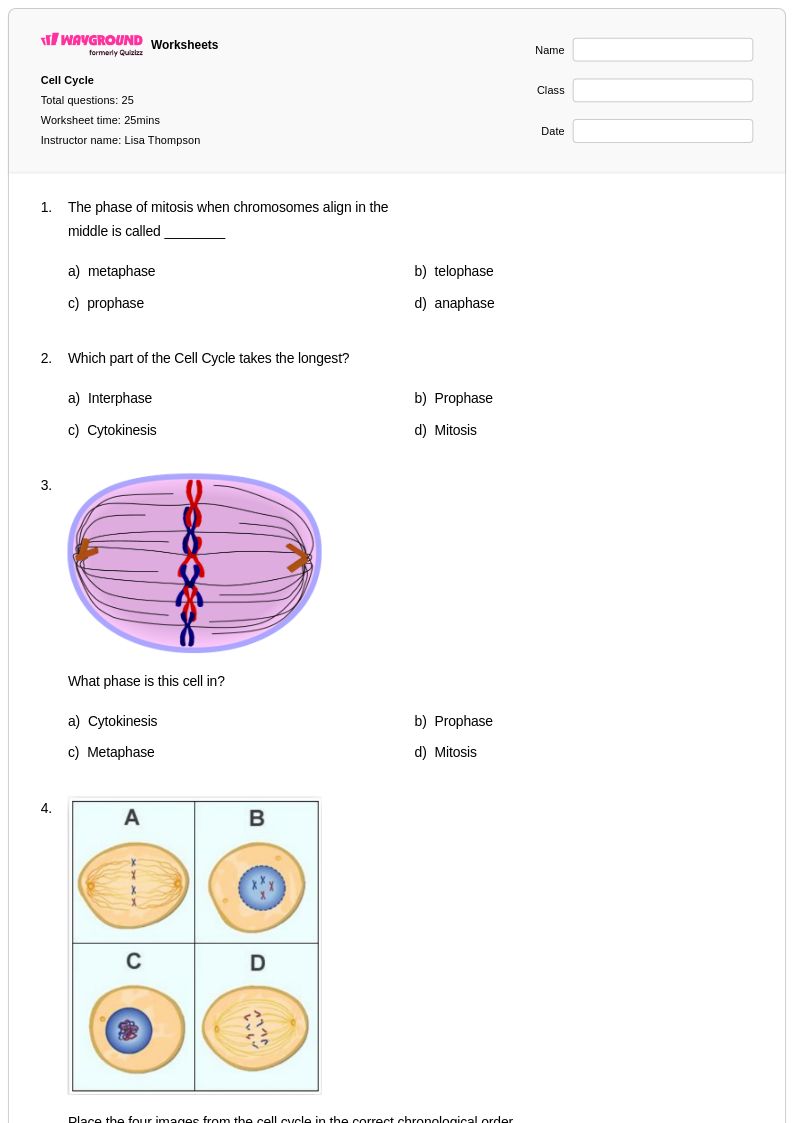
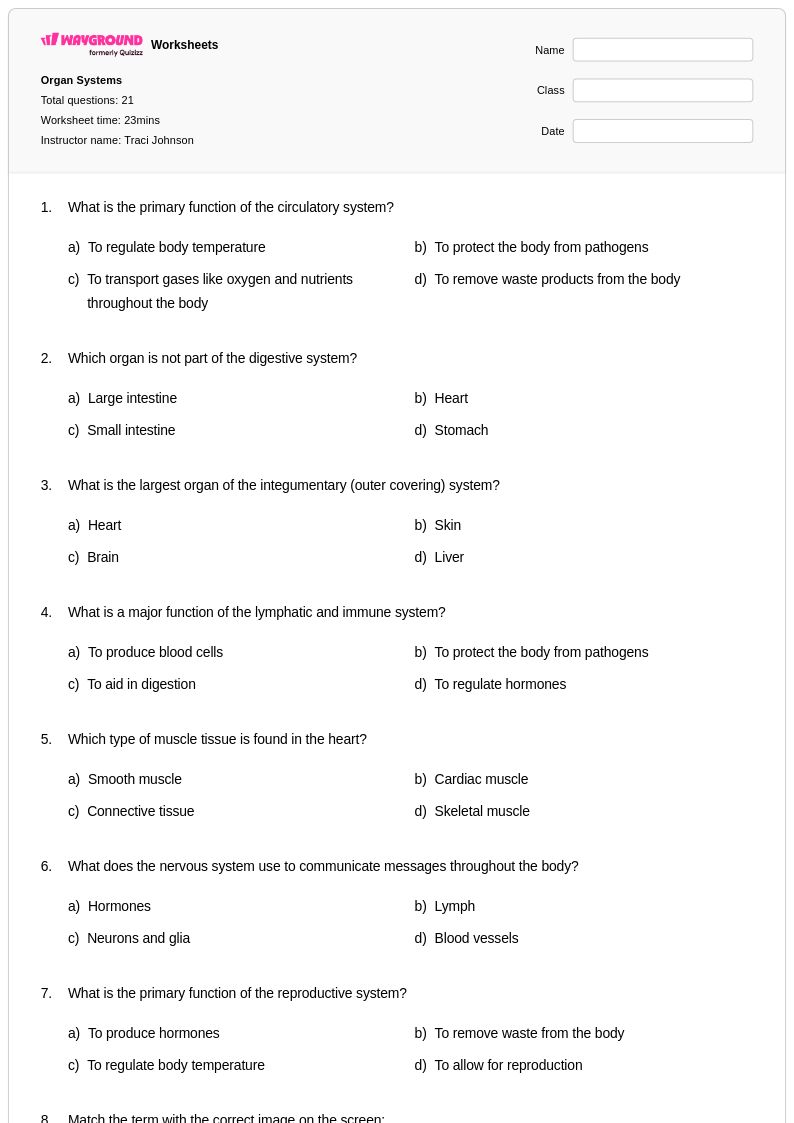
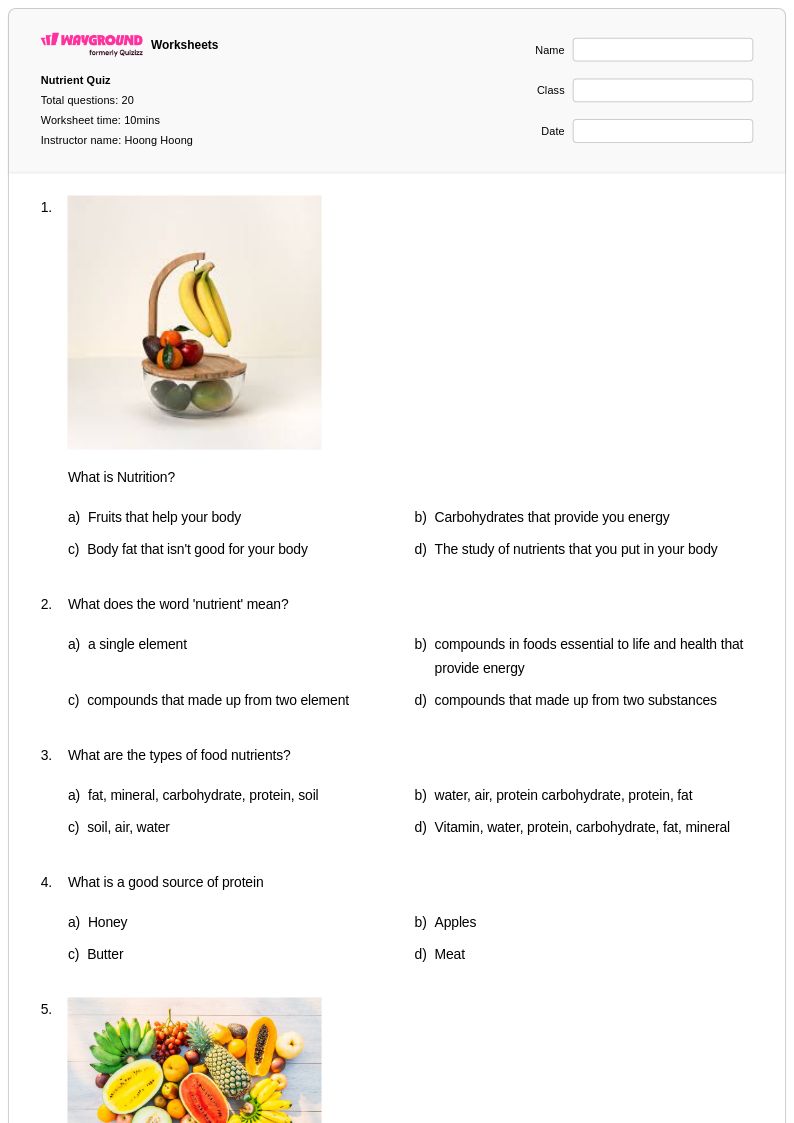
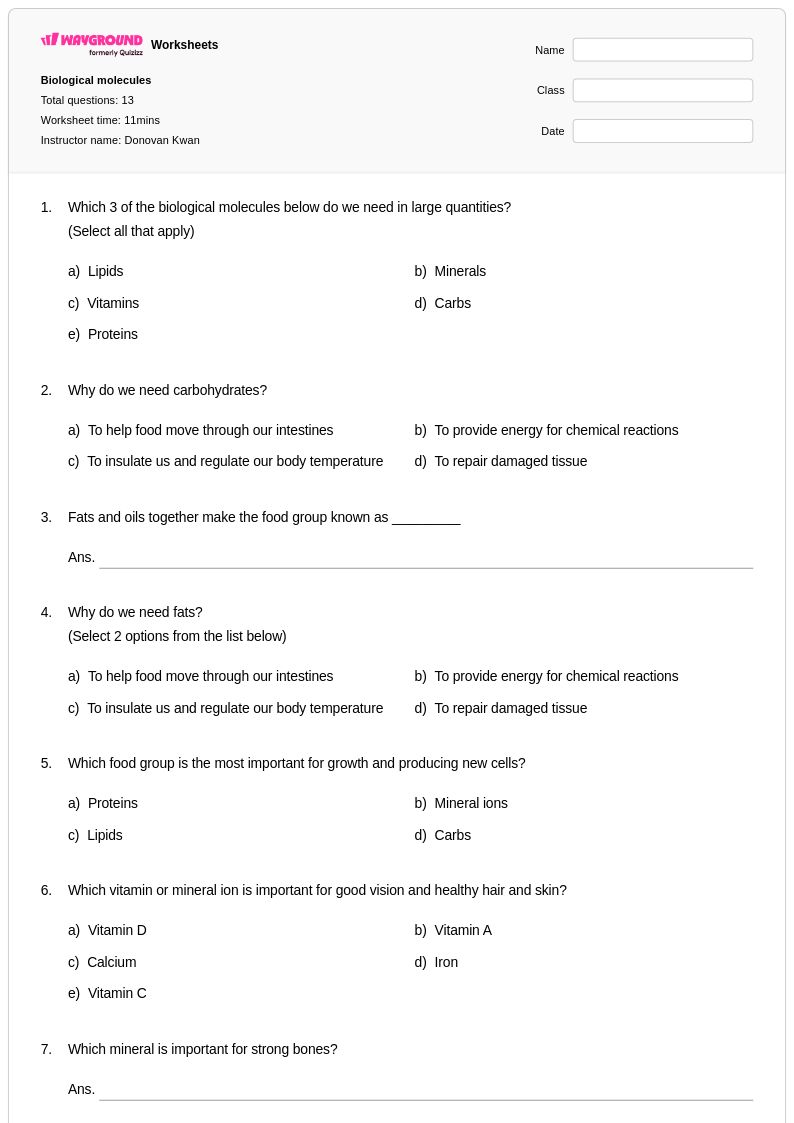
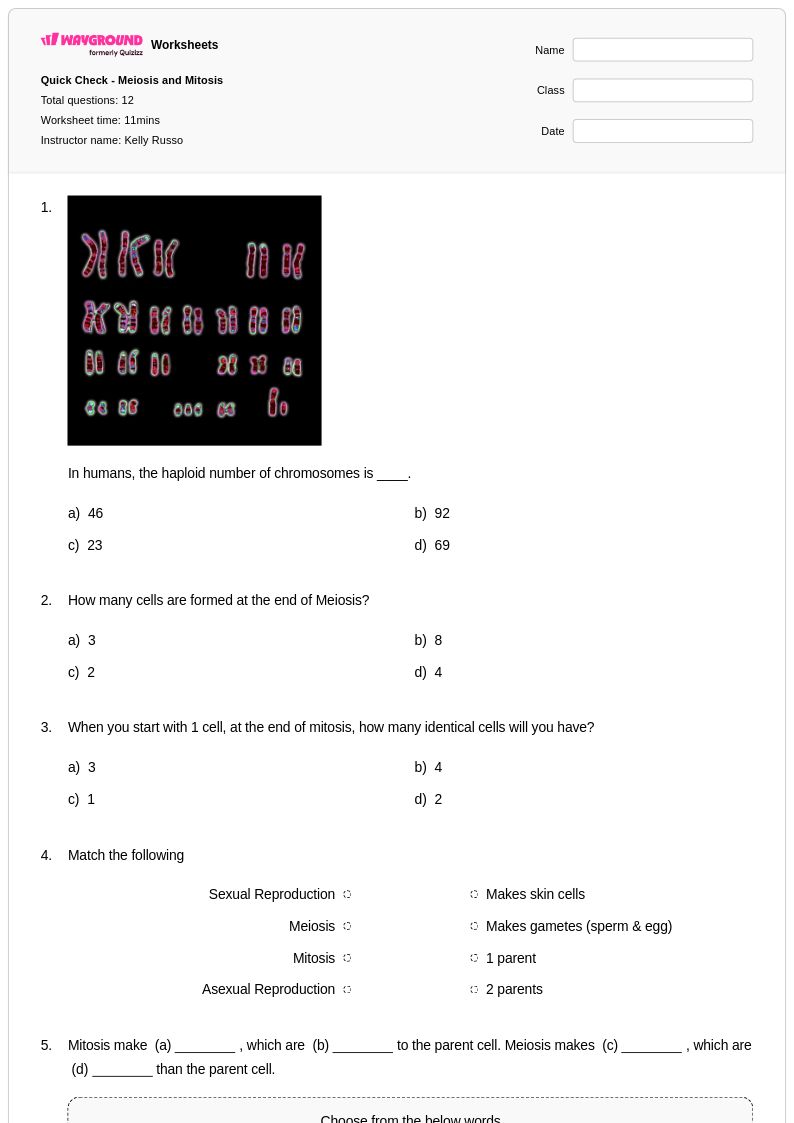
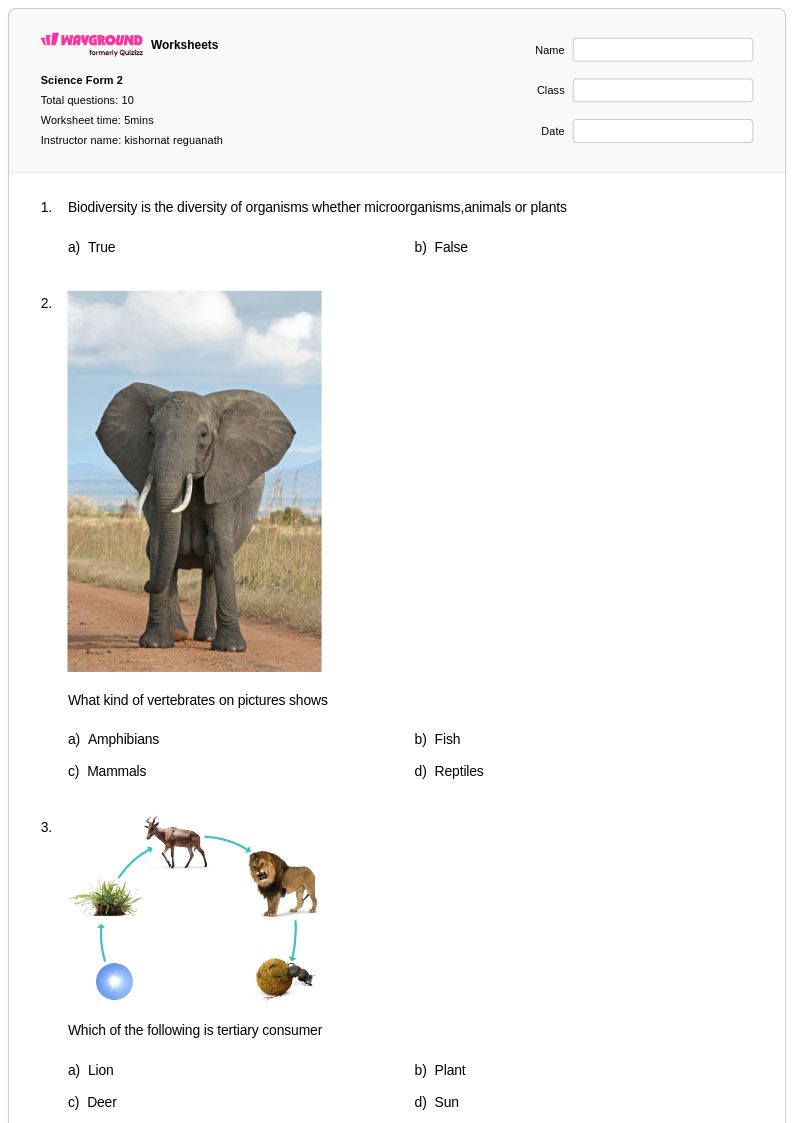
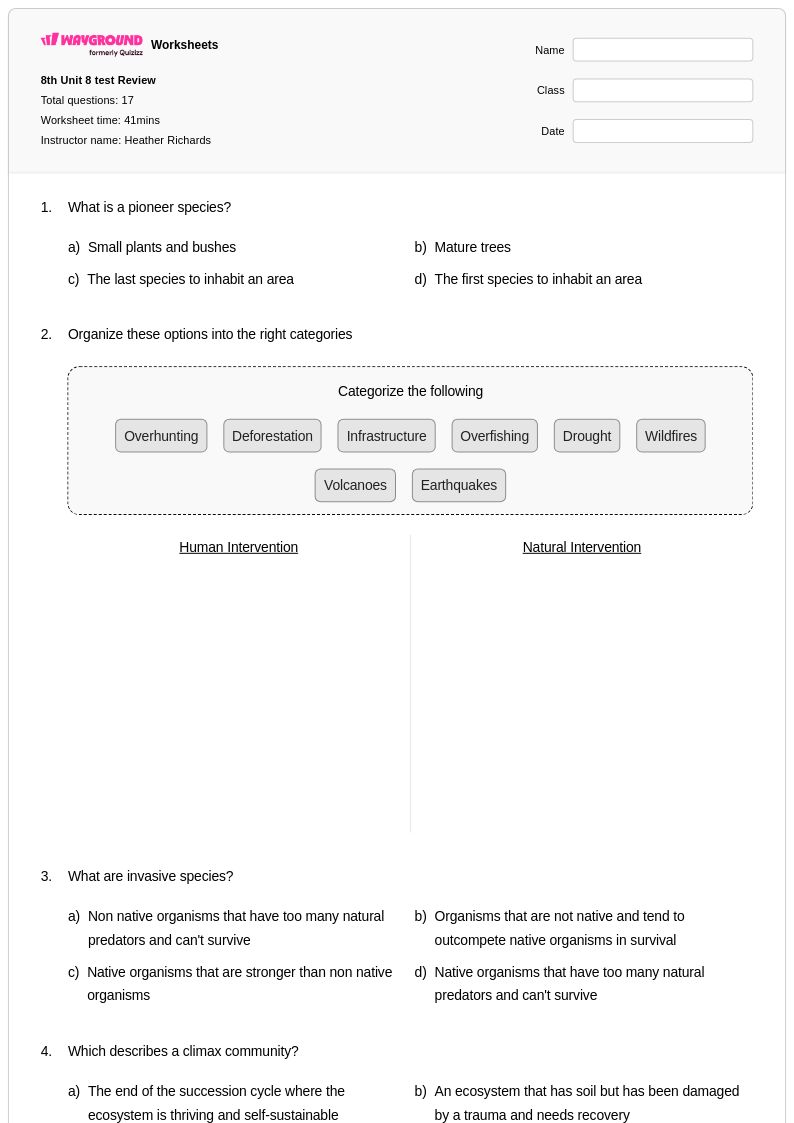
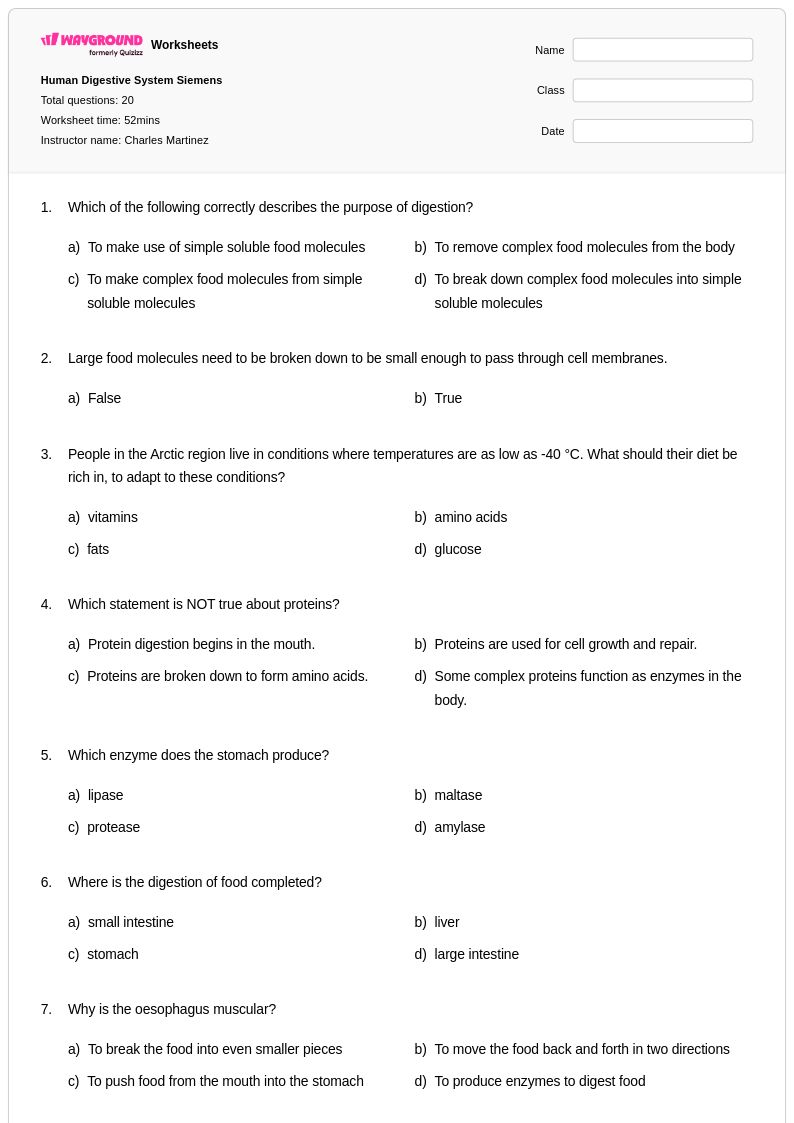
Growth and repair worksheets for Class 8 students available through Wayground (formerly Quizizz) provide comprehensive coverage of how living organisms maintain, restore, and develop their cellular structures throughout their lifecycles. These educational resources strengthen students' understanding of mitosis, tissue regeneration, wound healing processes, and the role of stem cells in organismal development and maintenance. The worksheet collection includes practice problems that challenge students to analyze cell division phases, compare growth patterns across different organism types, and evaluate factors that influence repair mechanisms in various tissues. Each worksheet comes with a detailed answer key to support independent learning and self-assessment, while the free printable format ensures accessibility for diverse classroom environments and home study sessions.
Wayground's extensive library supports science educators with millions of teacher-created resources specifically designed to enhance Class 8 life science instruction on cellular growth and repair processes. The platform's advanced search and filtering capabilities enable teachers to quickly locate worksheets that align with specific curriculum standards and learning objectives, while built-in differentiation tools allow for seamless customization based on individual student needs and skill levels. These digital and printable PDF resources serve multiple instructional purposes, from initial skill-building exercises to targeted remediation for struggling learners and enrichment activities for advanced students. Teachers can efficiently modify content difficulty, incorporate visual aids, and create comprehensive lesson sequences that support both formative assessment and sustained practice in understanding how organisms grow, develop, and heal at the cellular level.
FAQs
How do I teach growth and repair in living organisms?
Teaching growth and repair effectively starts with grounding students in cell division, specifically mitosis, before connecting those processes to real-world outcomes like wound healing and tissue regeneration. Use staged diagrams of the cell cycle to show how regulated division drives growth, then contrast this with what happens during uncontrolled division. Connecting cellular events to visible biological outcomes, such as how skin repairs after a cut, helps students see why these mechanisms matter beyond memorization.
What worksheets or exercises help students practice growth and repair concepts?
Practice worksheets that walk students through the sequential stages of mitosis, DNA replication, and tissue regeneration are most effective for building procedural understanding. Labeling diagrams of cell cycle phases, matching regulatory mechanisms to their functions, and sequencing wound healing steps all reinforce the correct order of events. Problems that ask students to predict outcomes when growth or repair processes are disrupted push higher-order thinking and help consolidate conceptual understanding.
What mistakes do students commonly make when learning about cellular growth and repair?
A frequent misconception is that growth and cell division are the same process, when in reality growth depends on division but also involves cell enlargement and differentiation. Students also often confuse mitosis with meiosis, applying reproductive cell division logic to somatic tissue repair contexts where it does not apply. Another common error is treating wound healing as a single event rather than a coordinated multi-stage process involving inflammation, proliferation, and remodeling.
How can I differentiate growth and repair worksheets for students with different learning needs?
For students who struggle with dense biological vocabulary, simplifying question stems and reducing answer choices can lower cognitive load without removing the core concept. Visual learners benefit from diagram-based tasks over text-heavy questions, while advanced students can be challenged with analysis questions about what happens when regulatory checkpoints fail. On Wayground, teachers can apply individual accommodations such as read aloud, extended time, and reduced answer choices to specific students while the rest of the class works under default settings.
How do I use Wayground's growth and repair worksheets in my classroom?
Wayground's growth and repair worksheets are available as printable PDFs for traditional classroom use and in digital formats for technology-integrated environments, making them flexible across instructional settings. Teachers can also host worksheets directly as a quiz on Wayground, enabling real-time student responses and automated scoring. Each worksheet includes a complete answer key, so teachers can provide immediate feedback without additional preparation time.
At what grade level are growth and repair worksheets most appropriate?
Growth and repair topics span a range of grade levels depending on depth. Introductory concepts like basic cell division and wound healing are appropriate for middle school life science, while more detailed content covering DNA replication, regulatory mechanisms, and embryonic development is better suited to high school biology. The right entry point depends on whether students have prior exposure to cell theory and the cell cycle.