
Recommended Topics for you
- Acids, Bases, and Salts
- Alcohol
- Analyzing Substances
- Anions
- Atom Structure
- Atomic Mass
- Atomic Mass Number
- Atomic Models
- Atoms and Molecules
- Building Atoms
- Cations
- Chemical Bonds
- Chemical Change
- Chemical Elements
- Chemical Formulas
- Chemical Measurements
- Chemical Names and Formulas
- Chemical Naming
- Chemical Property
- Chemistry Calculations
- Chemistry Lab Safety
- Classification and Changes
- Classification of Matter
- Compounds and Mixtures
- Concentrations
- Conservation of Mass
- Conservation of Matter
- Conversion Factors in Chemistry
- Counting Atoms in Compounds
- Diffusion
- Dilutions
- Dissolving
- Double Displacement Reaction
- Electrolytes
- Electron Arrangements
- Electron Dot Diagram
- Electrons
- Element Symbols
- Elements, Compounds, and Mixtures
- Flame Test
- Forming Ions
- Gas Properties
- Heat Transfer and Thermal Equilibrium
- History of Atomic Models
- History of Chemistry
- Homogeneous and Heterogeneous Mixtures
- Hydrocarbons
- Identifying Reactions
- Ion Formation
- Ionic and Covalent Compounds
- Ionic Bonding
- Ionic Charges
- Ionic Compounds
- Ions
- Ions and Atoms
- Ions and Formula Units
- Ions and Isotopes
- Lab Equipment
- Laboratory Equipment
- Law of Conservation of Mass
- Lewis Dot Diagram
- Mass and Moles
- Metalloids
- Metals
- Mixtures and Pure Substances
- Models of Atoms
- Mole Concept
- Molecule
- Naming Binary Ionic Compounds
- Naming Compounds
- Naming Ionic and Covalent Bonds
- Naming Ionic Compounds
- Neutralisation Reaction
- Nonmetals
- Periodic Table
- Periodic Table Organization
- Periodic Table Trends
- PH Scale
- Phase Change
- Physical and Chemical Changes
- Physical and Chemical Properties and Changes
- Physical Properties
- Physical Property
- Properties of Matter
- Properties of Water
- Relative Mass
- Rutherford Gold Foil Experiment
- Salts
- Separation Methods
- Separation Techniques
- Single Displacement Reaction
- Solubility
- Solutions and Mixtures
- States of Matter
- Timeline
- Valence Electrons
- Word Equations
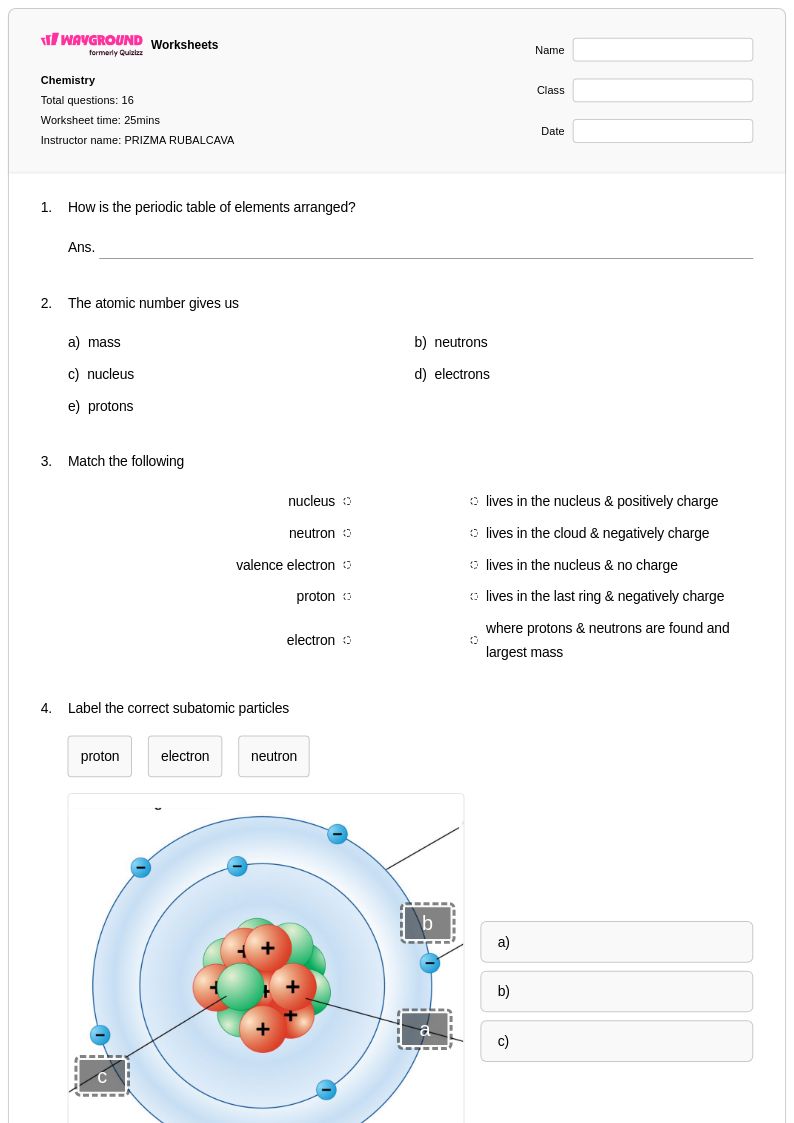
16 Q
6th - 8th
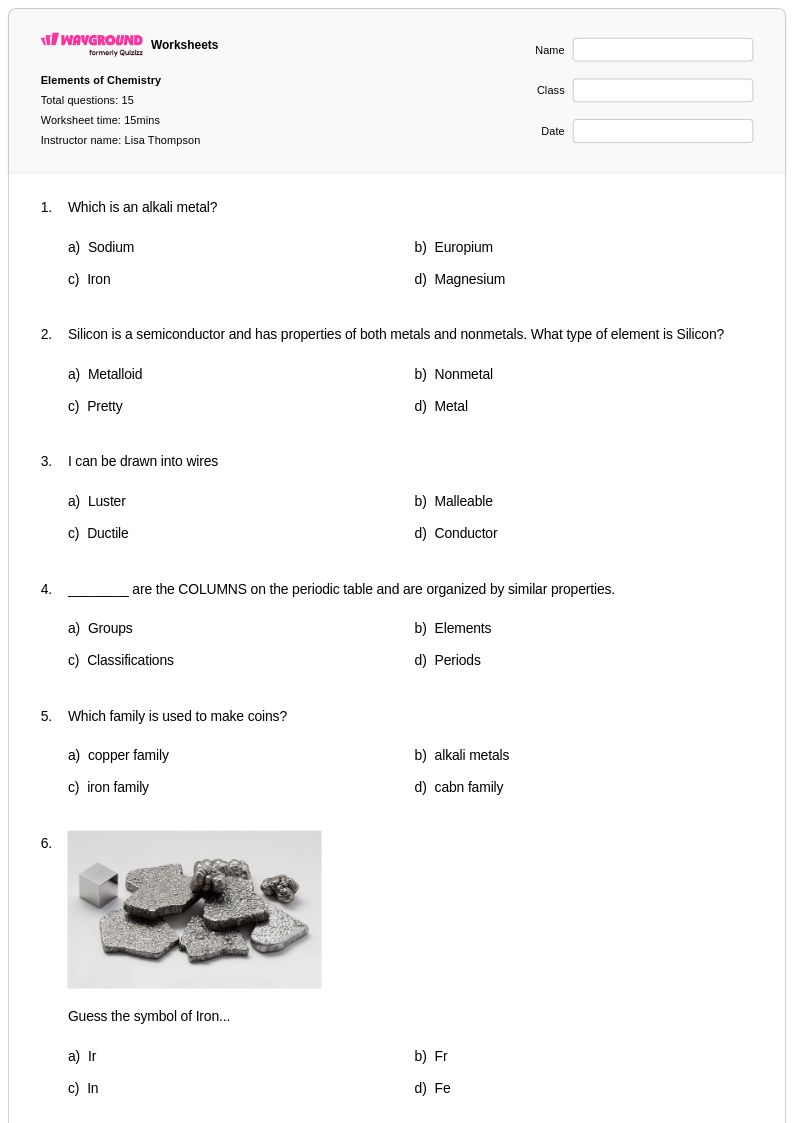
15 Q
8th - Uni
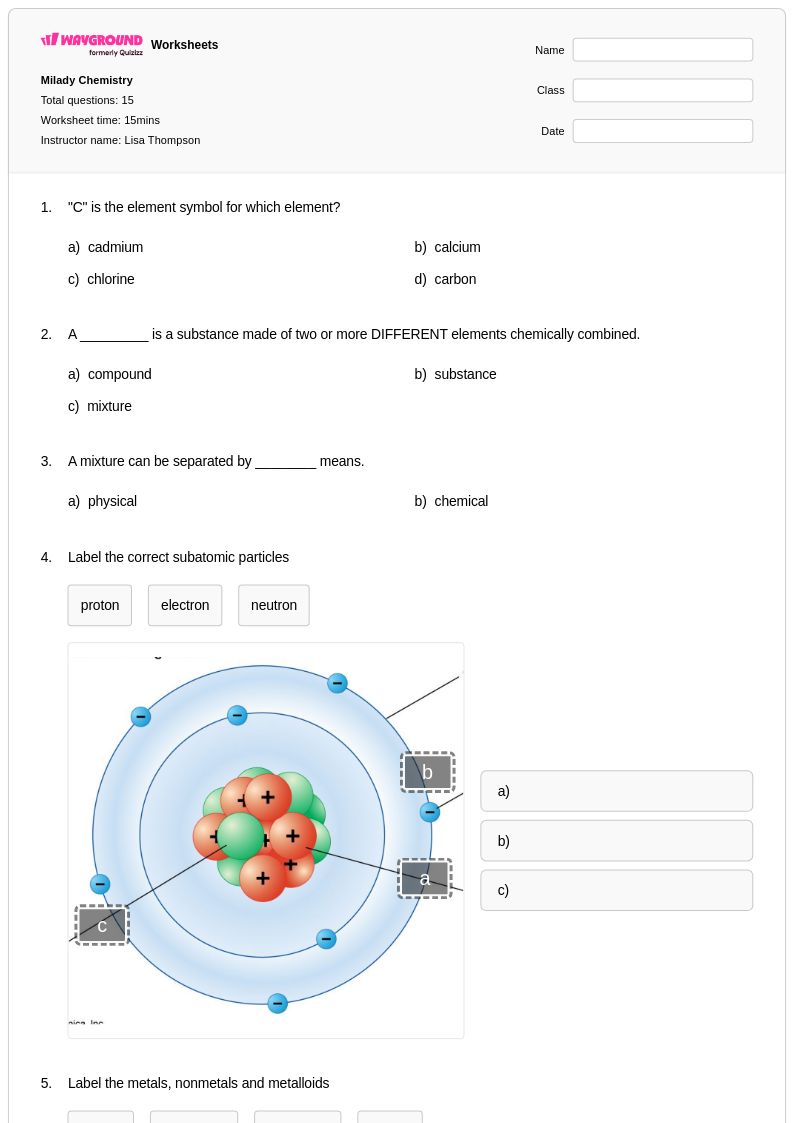
15 Q
8th - Uni
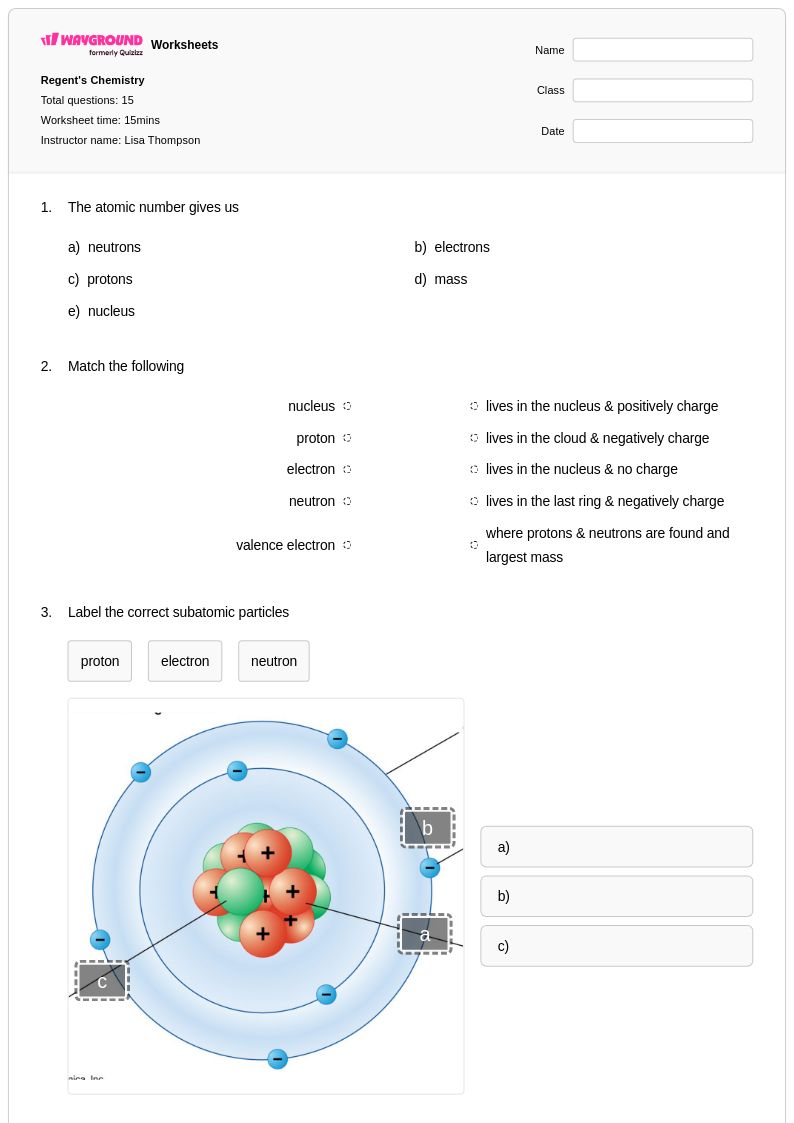
15 Q
8th - Uni
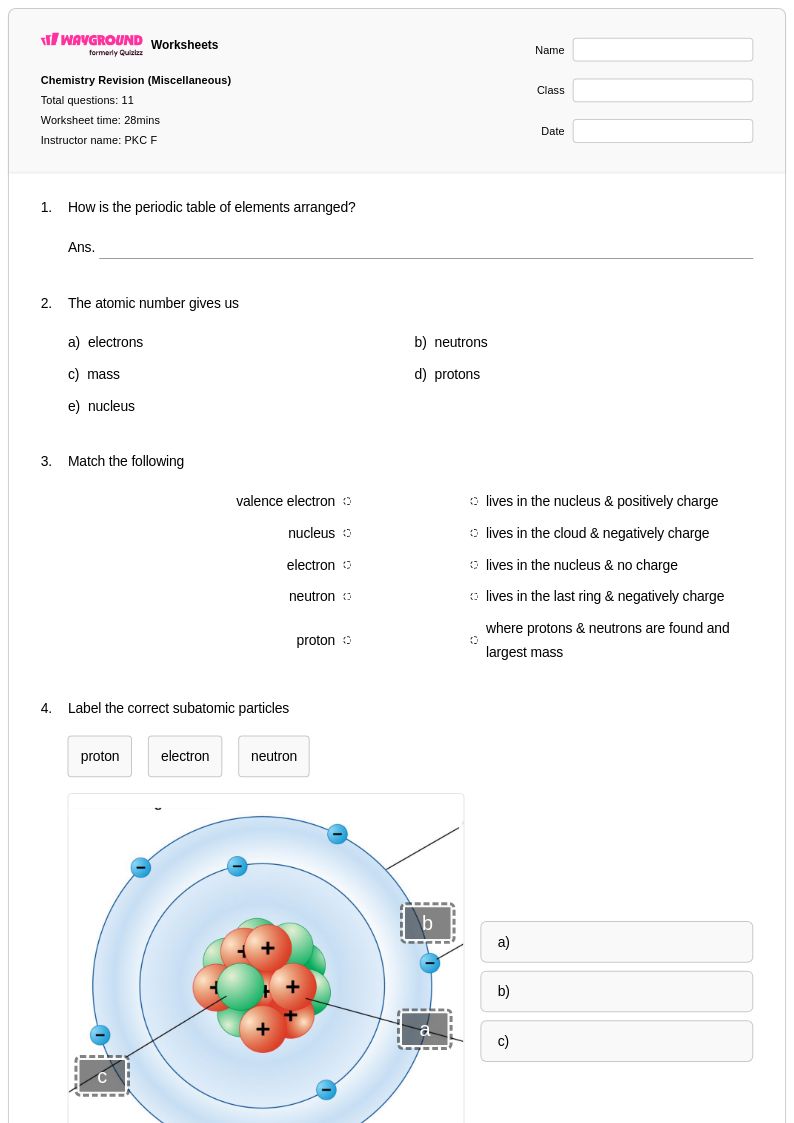
16 Q
8th
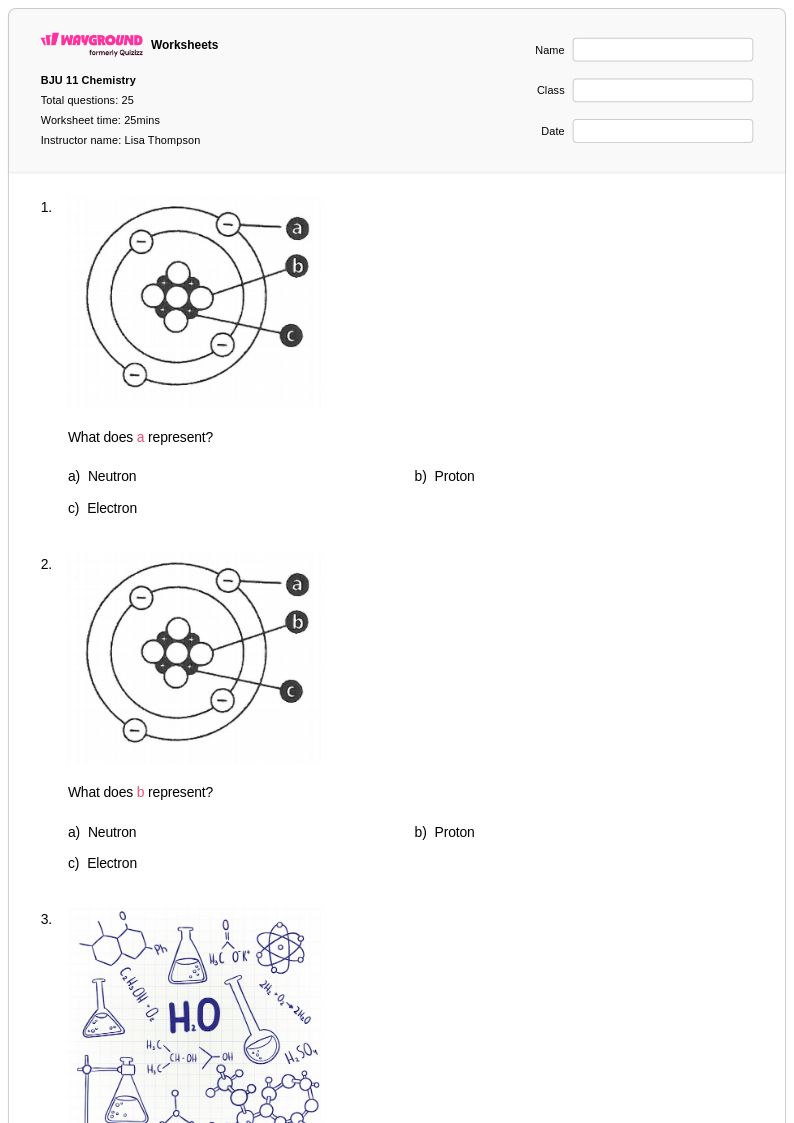
25 Q
6th - Uni
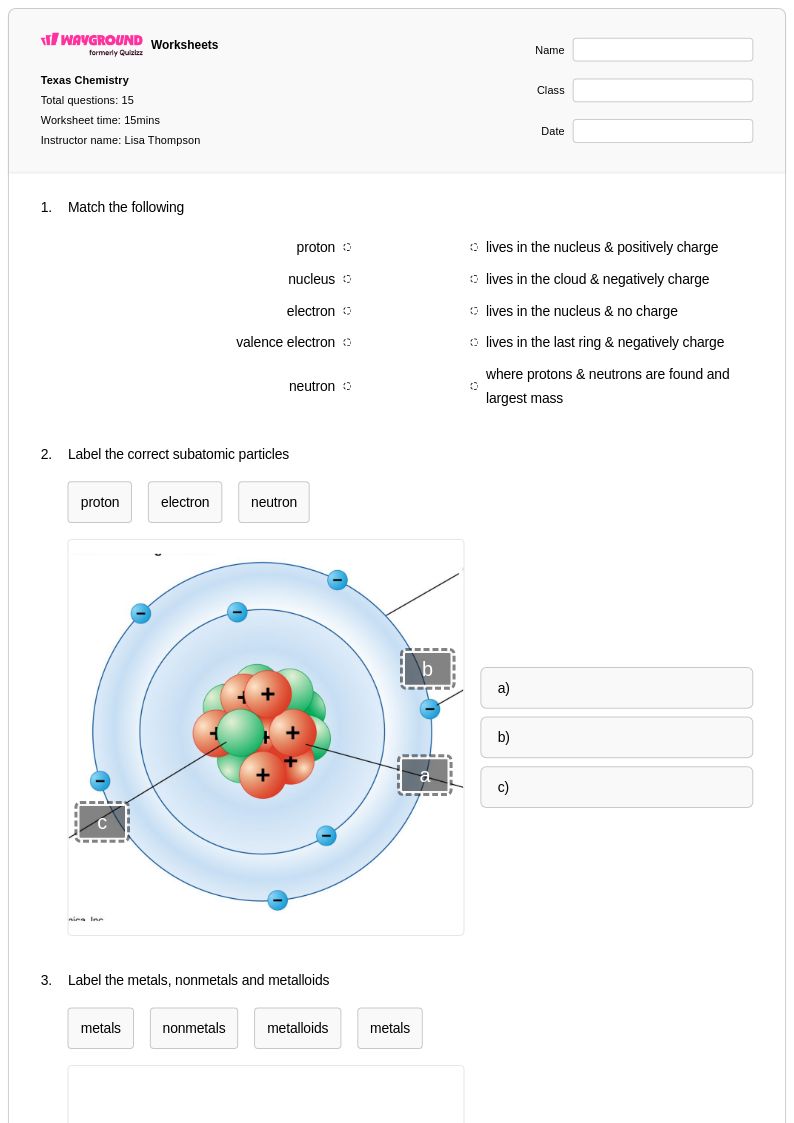
15 Q
8th - Uni
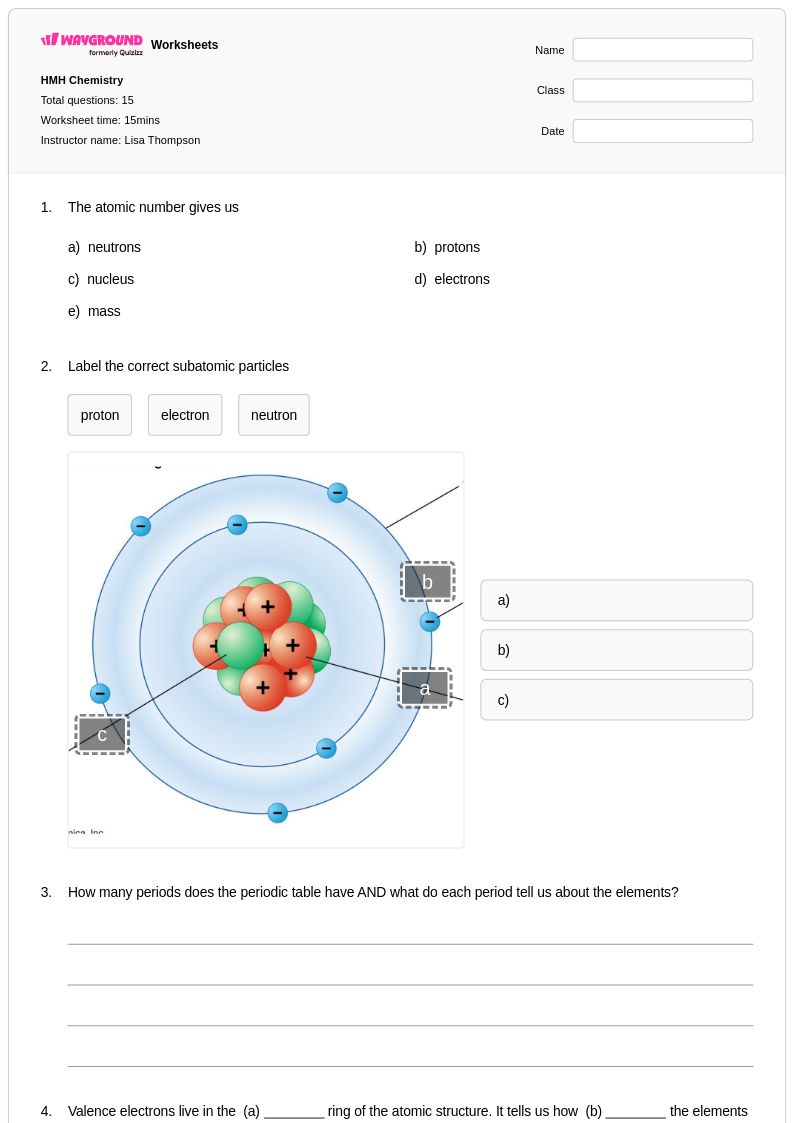
15 Q
8th - Uni
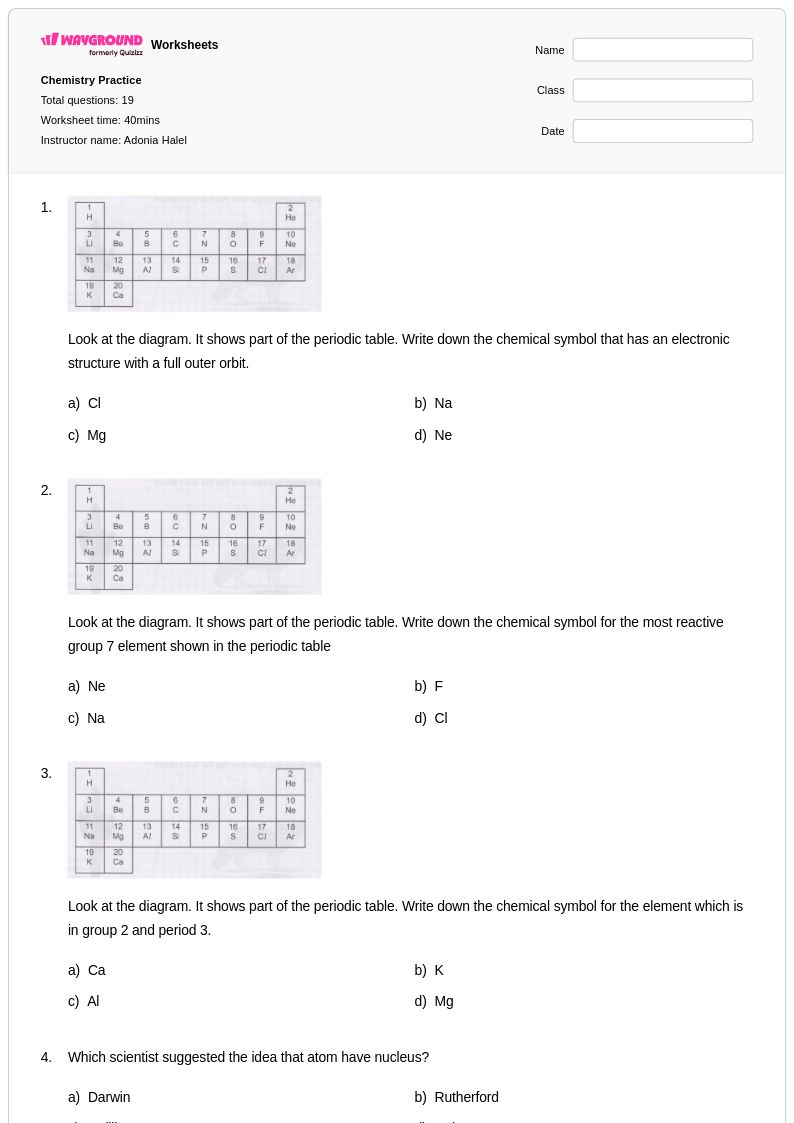
19 Q
8th
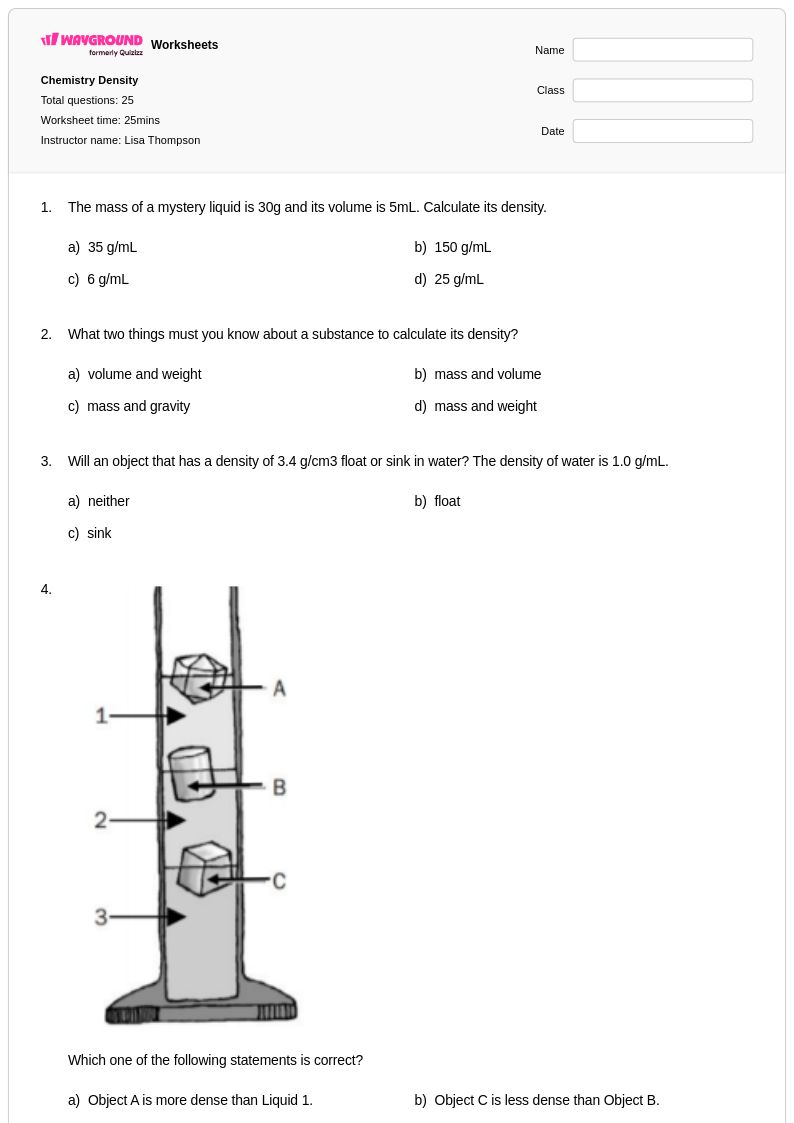
25 Q
6th - Uni
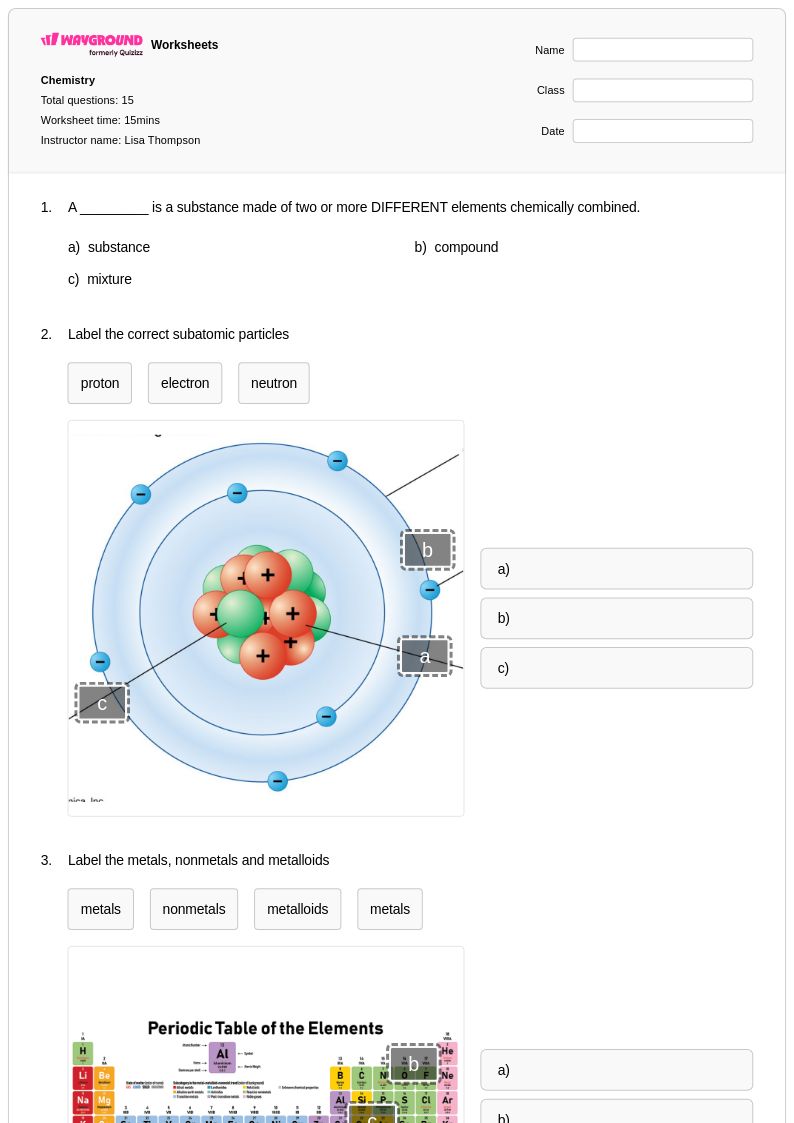
15 Q
8th - Uni
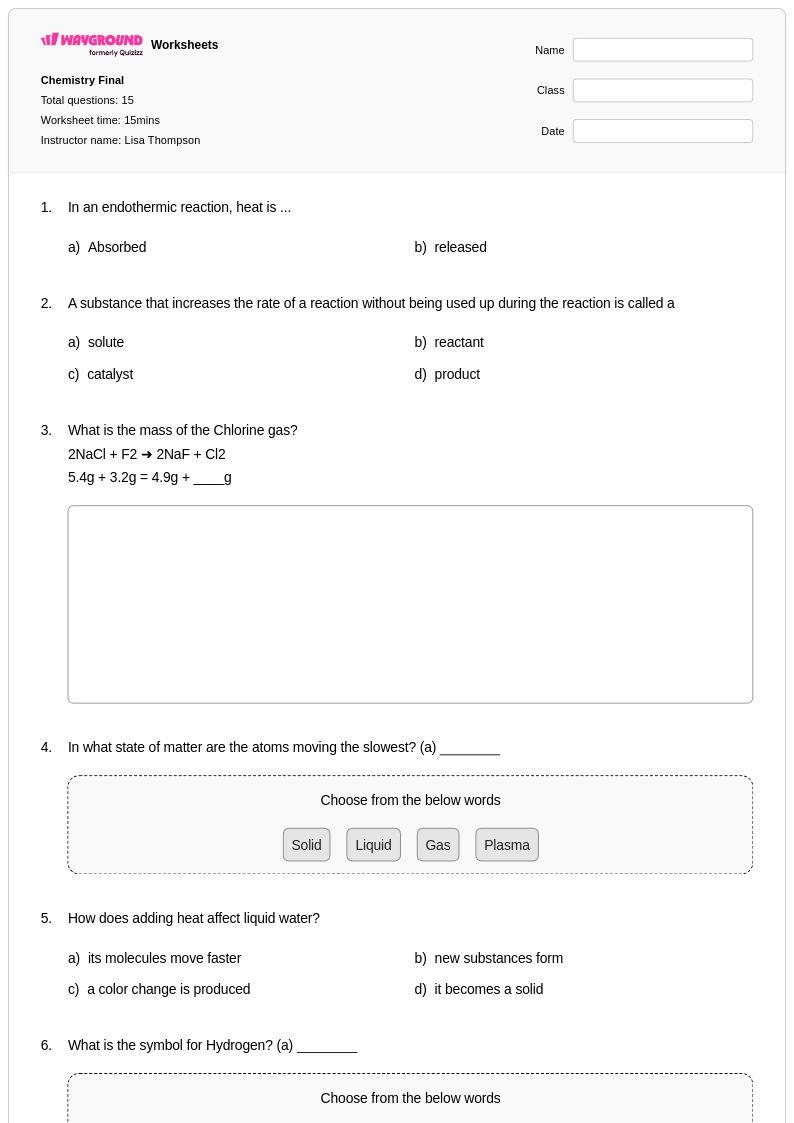
15 Q
8th - Uni
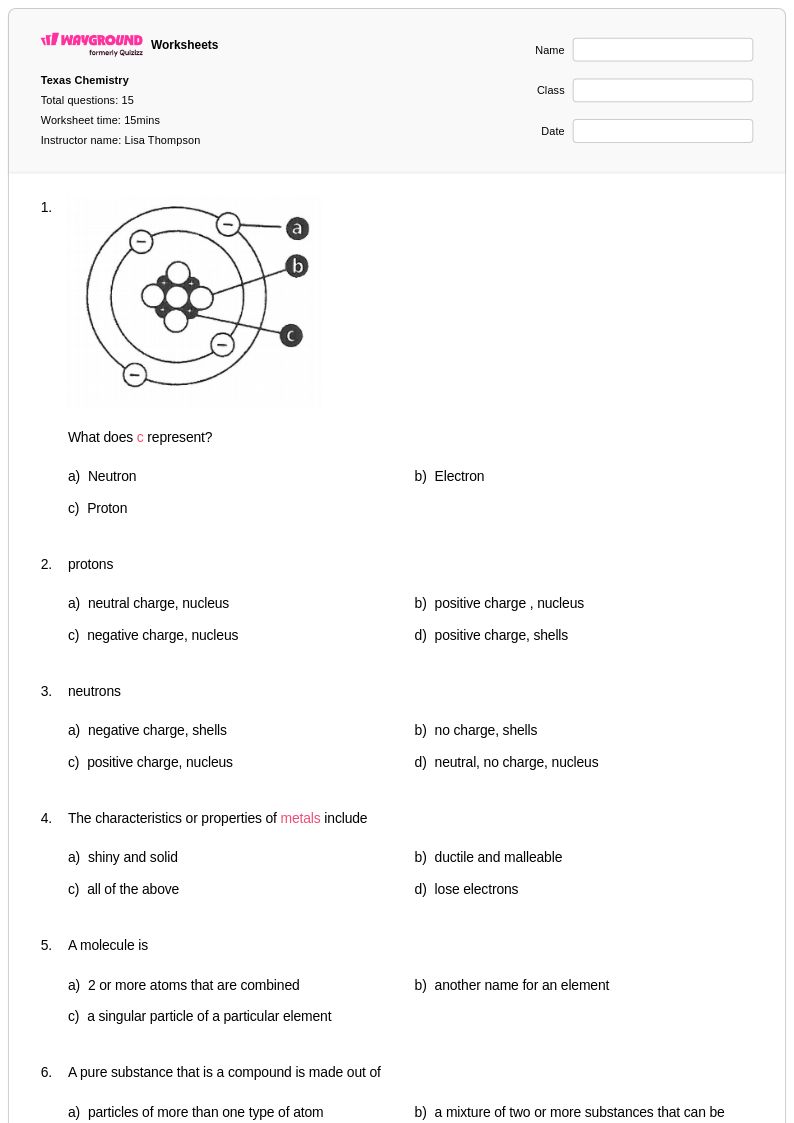
15 Q
8th - Uni
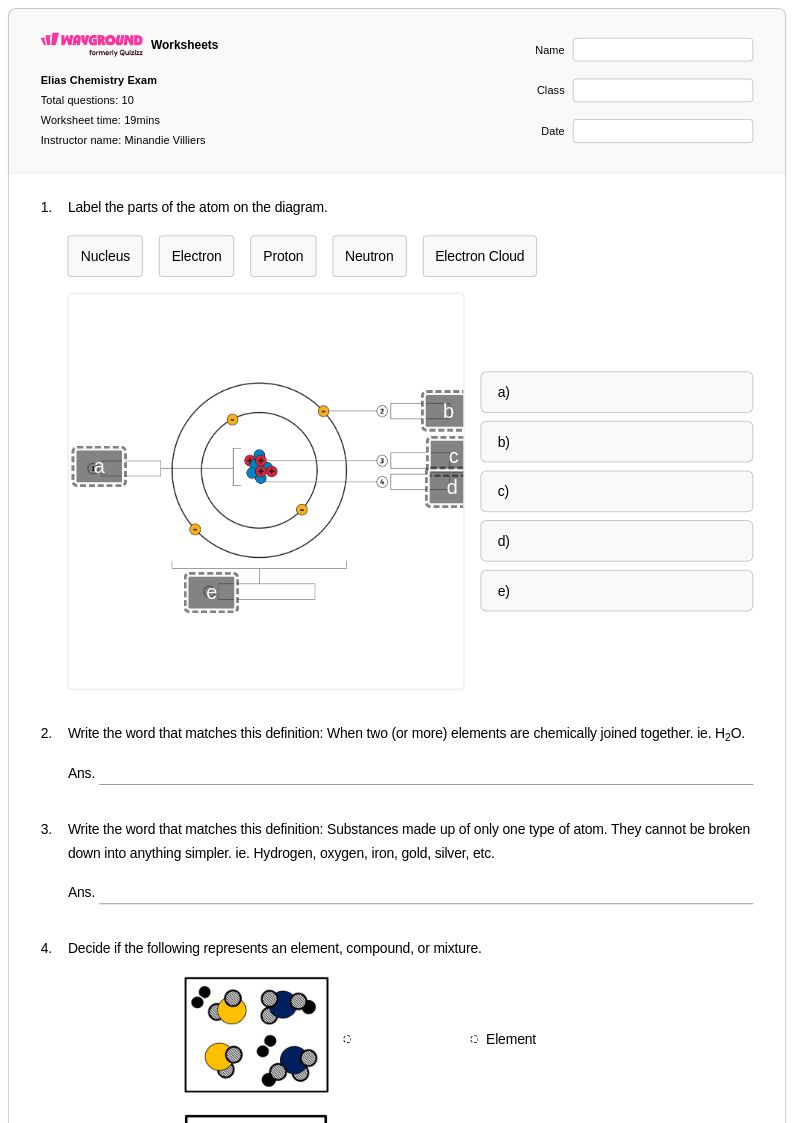
10 Q
7th - 12th
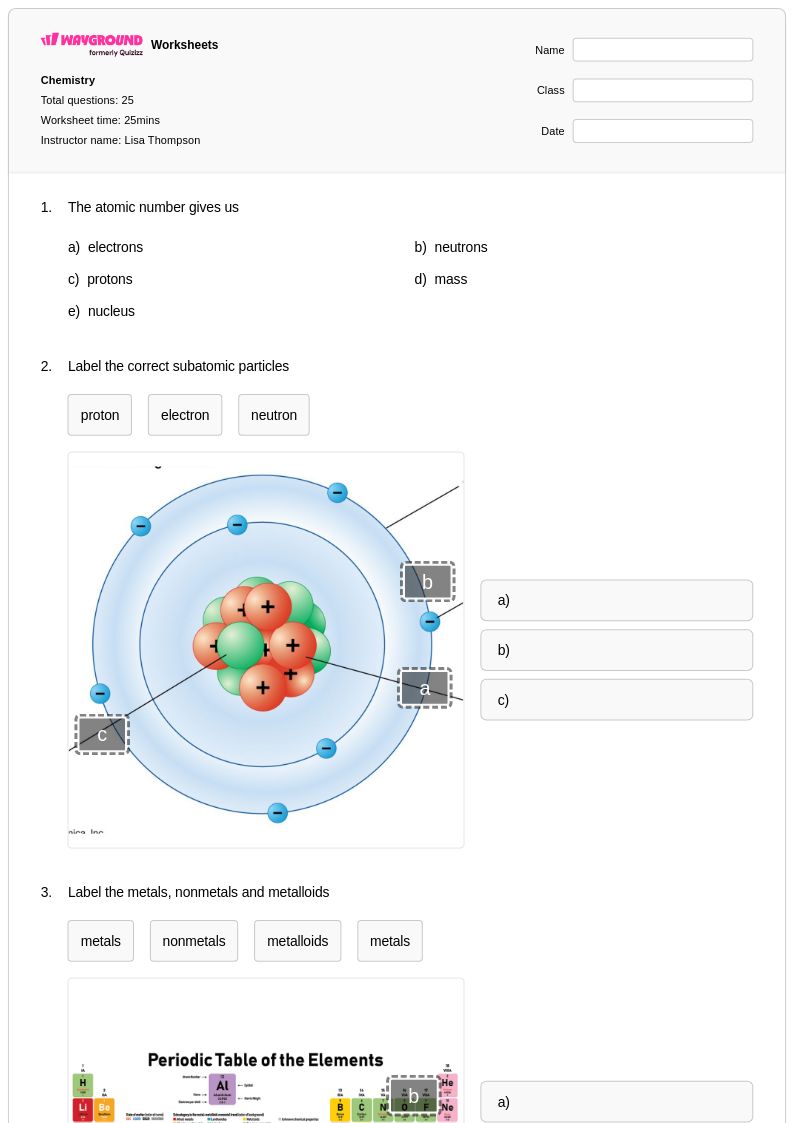
25 Q
7th - Uni
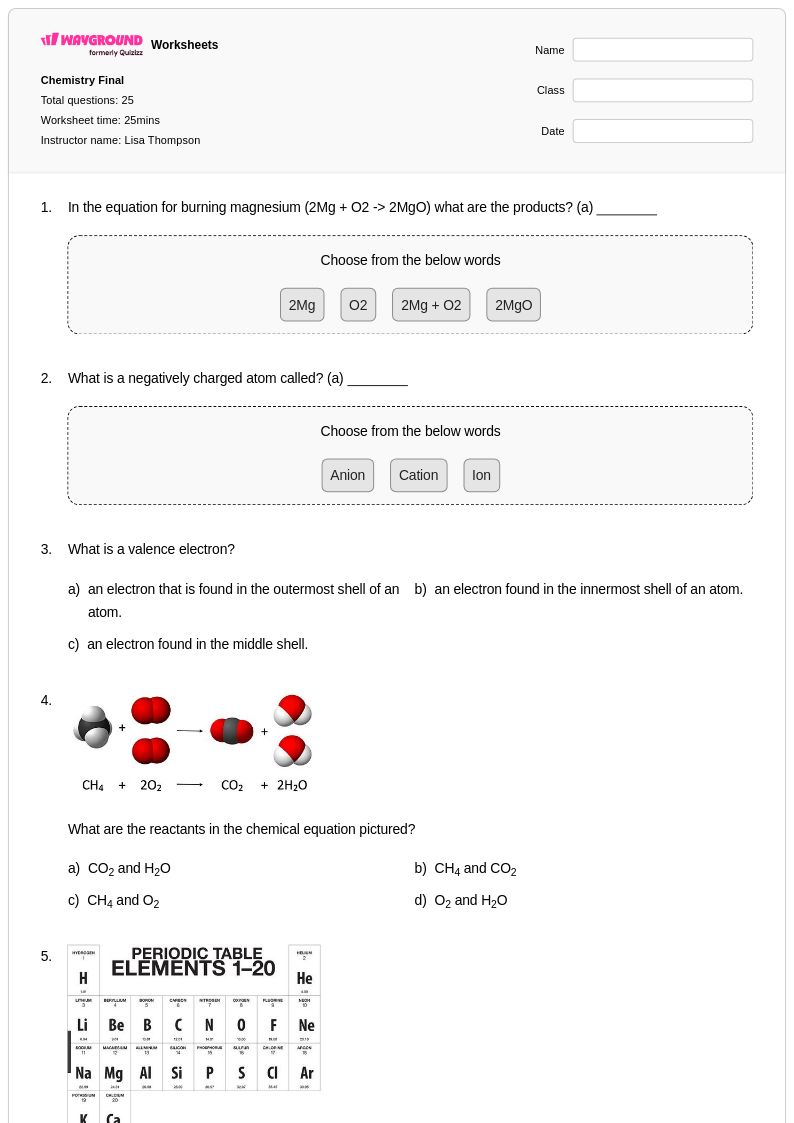
25 Q
8th - Uni
21 Q
6th - 8th
25 Q
8th - Uni
21 Q
6th - 8th
21 Q
6th - 8th
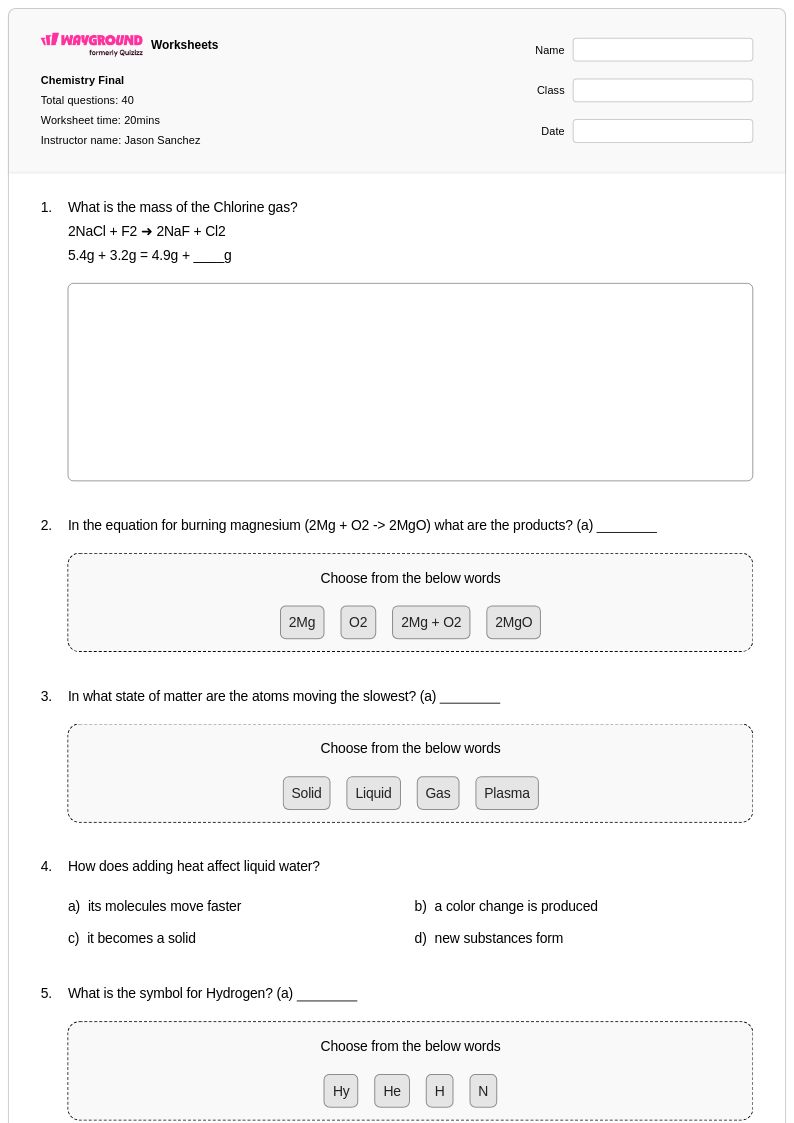
40 Q
7th - 8th
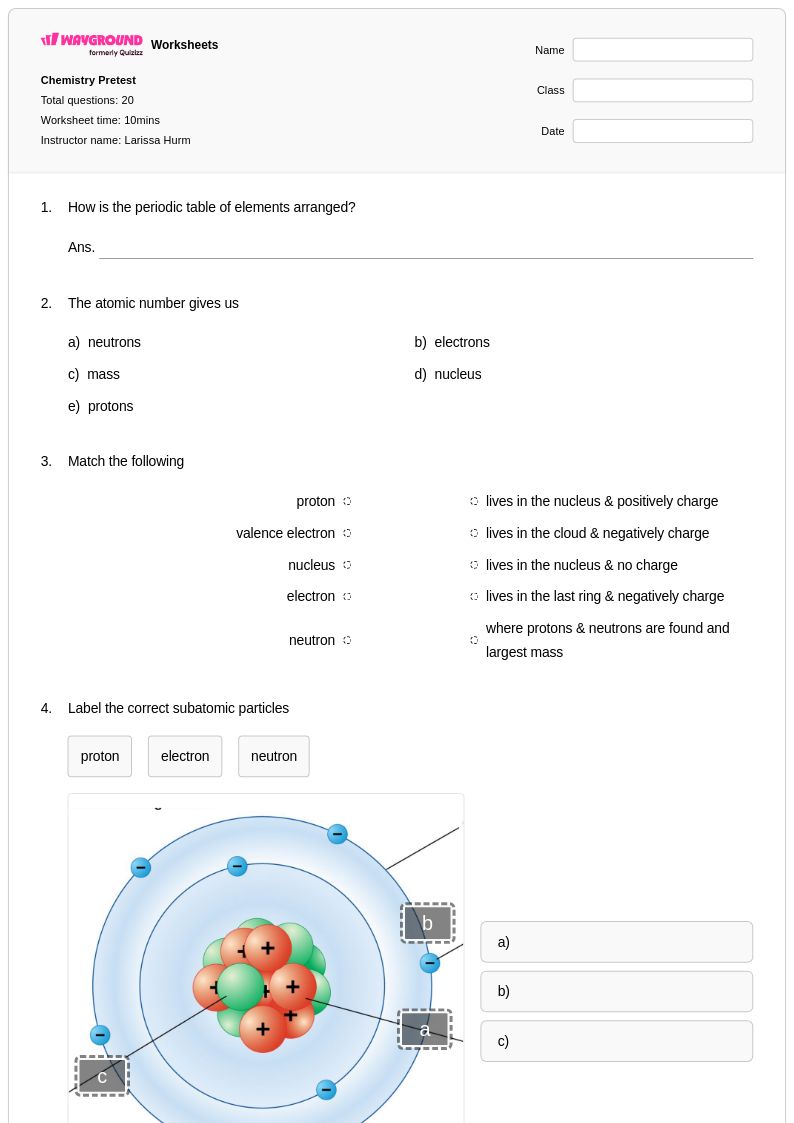
20 Q
8th
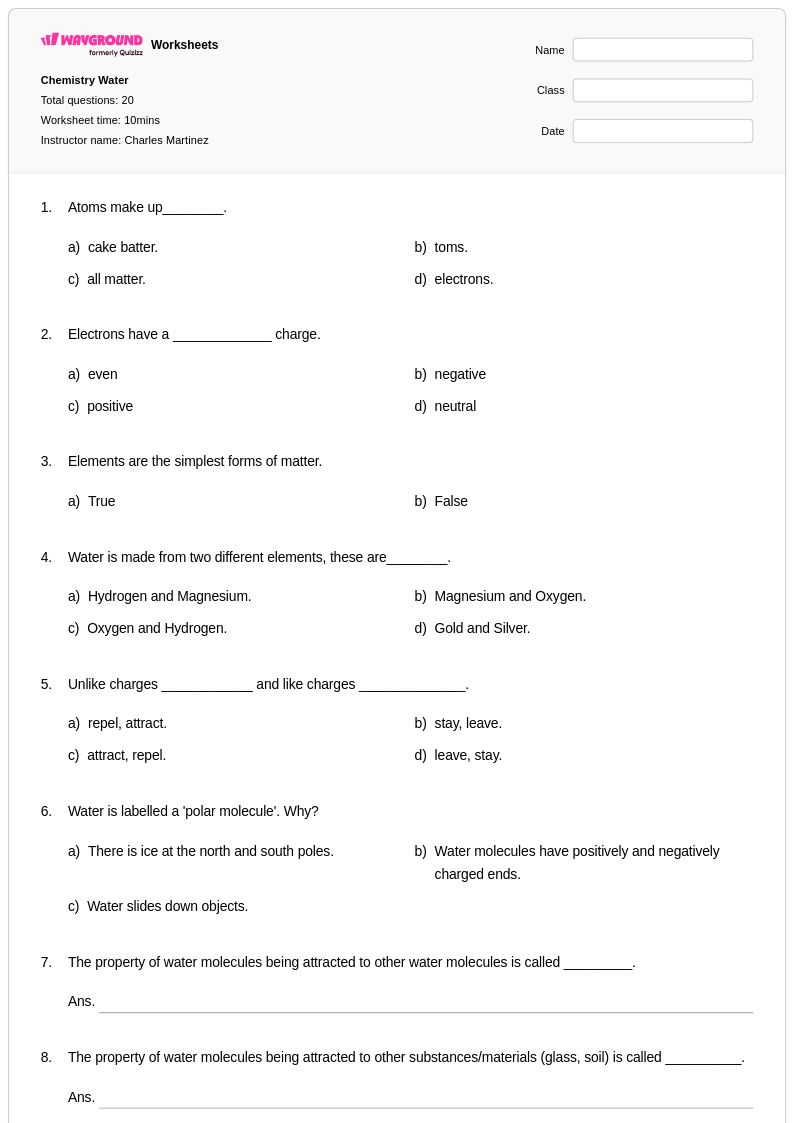
20 Q
6th - 8th
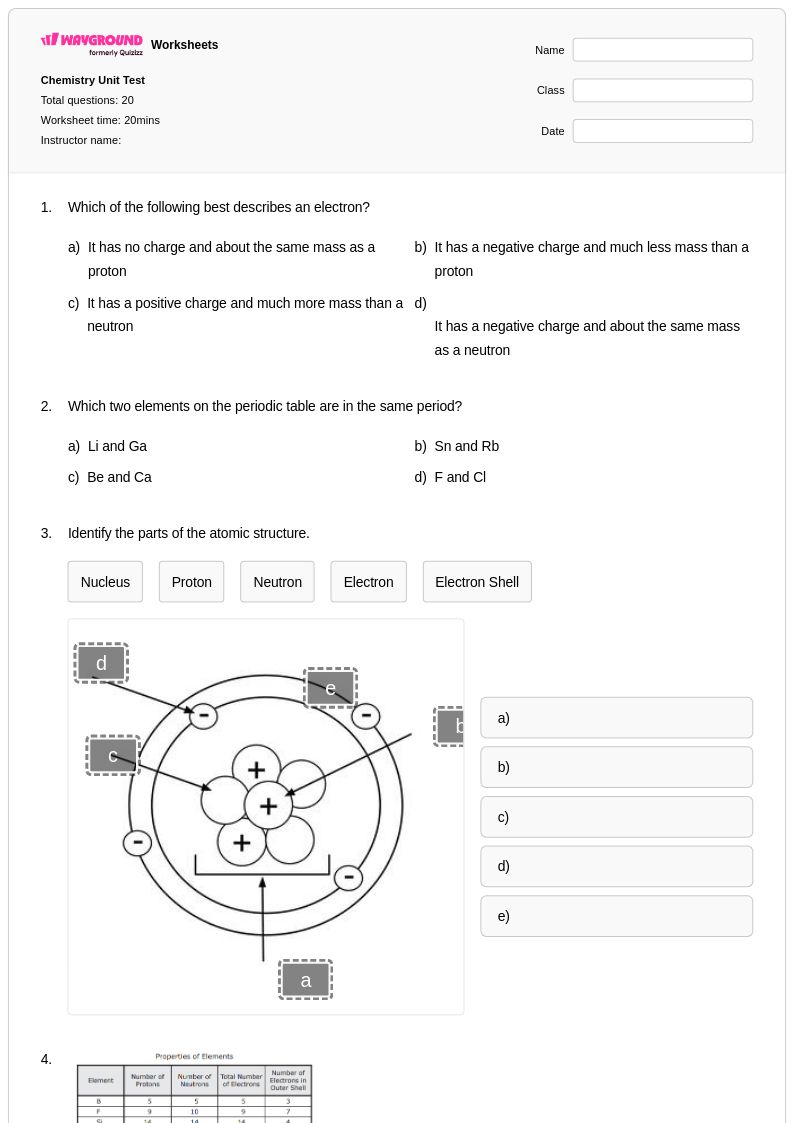
20 Q
7th - Uni
Explore Chemistry Worksheets by Grades
Explore Chemistry Worksheets for class 8 by Topic
- Acids, Bases, and Salts
- Alcohol
- Analyzing Substances
- Anions
- Atom Structure
- Atomic Mass
- Atomic Mass Number
- Atomic Models
- Atoms and Molecules
- Building Atoms
- Cations
- Chemical Bonds
- Chemical Change
- Chemical Elements
- Chemical Formulas
- Chemical Measurements
- Chemical Names and Formulas
- Chemical Naming
- Chemical Property
- Chemistry Calculations
Explore Other Subject Worksheets for class 8
Explore printable Chemistry worksheets for Class 8
Chemistry worksheets for Class 8 students available through Wayground (formerly Quizizz) provide comprehensive coverage of fundamental chemical concepts that form the foundation for advanced scientific learning. These expertly designed resources help students master essential skills including atomic structure, chemical bonding, periodic table organization, and basic chemical reactions. Each worksheet collection includes detailed answer keys that enable both independent study and guided instruction, while the free printables offer flexible classroom implementation options. The practice problems are carefully scaffolded to build conceptual understanding progressively, moving from basic identification tasks to more complex analysis of chemical properties and processes that Class 8 students encounter in their curriculum.
Wayground (formerly Quizizz) supports educators with millions of teacher-created chemistry resources that streamline lesson planning and enhance instructional effectiveness. The platform's robust search and filtering capabilities allow teachers to quickly locate worksheets aligned with specific learning standards and grade-appropriate content expectations. These differentiation tools enable educators to customize materials for diverse learning needs, whether providing remediation for struggling students or enrichment challenges for advanced learners. The flexible format options, including both printable pdf versions and interactive digital worksheets, accommodate various teaching styles and classroom configurations while maintaining consistent quality and academic rigor across all chemistry skill practice materials.
FAQs
How do I teach chemistry concepts effectively in a high school classroom?
What exercises help students practice balancing chemical equations?
What mistakes do students commonly make in stoichiometry?
What are common misconceptions students have about acids and bases?
How do I use Wayground's chemistry worksheets in my classroom?
How can I differentiate chemistry worksheets for students with different learning needs?
How do I help students understand the periodic table and periodic trends?