Free Printable Chemical Formulas Worksheets for Class 8
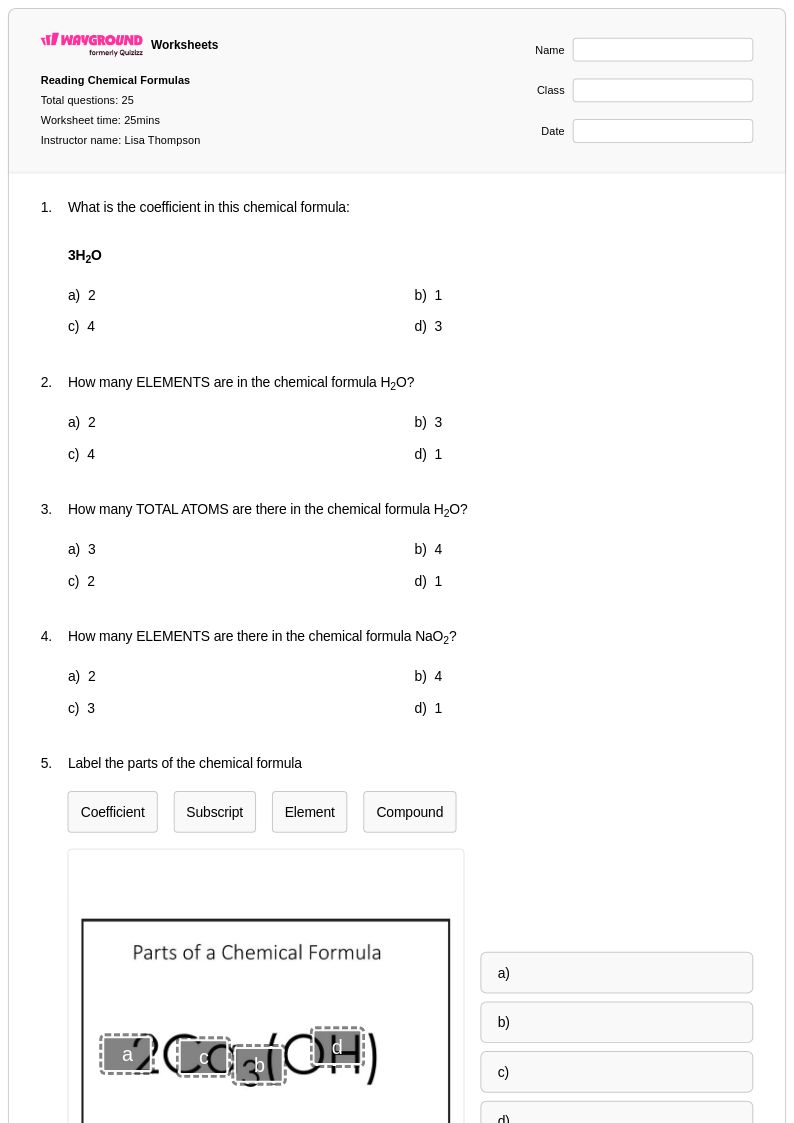
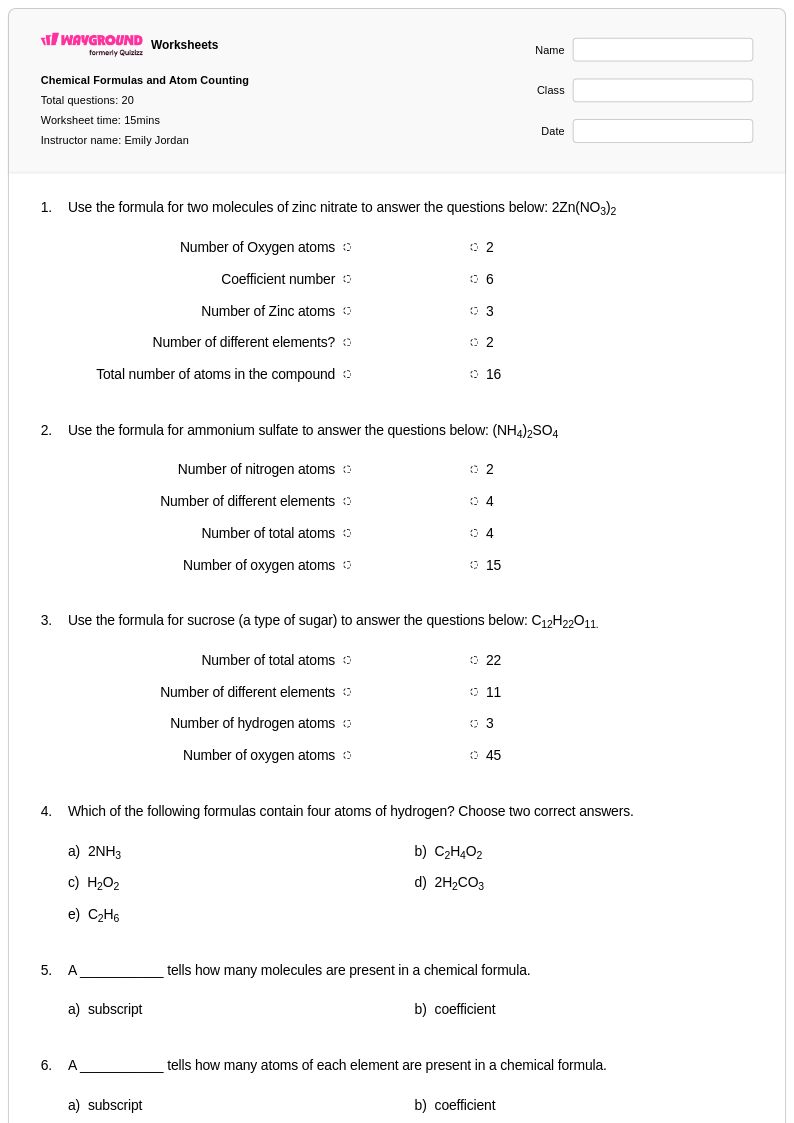
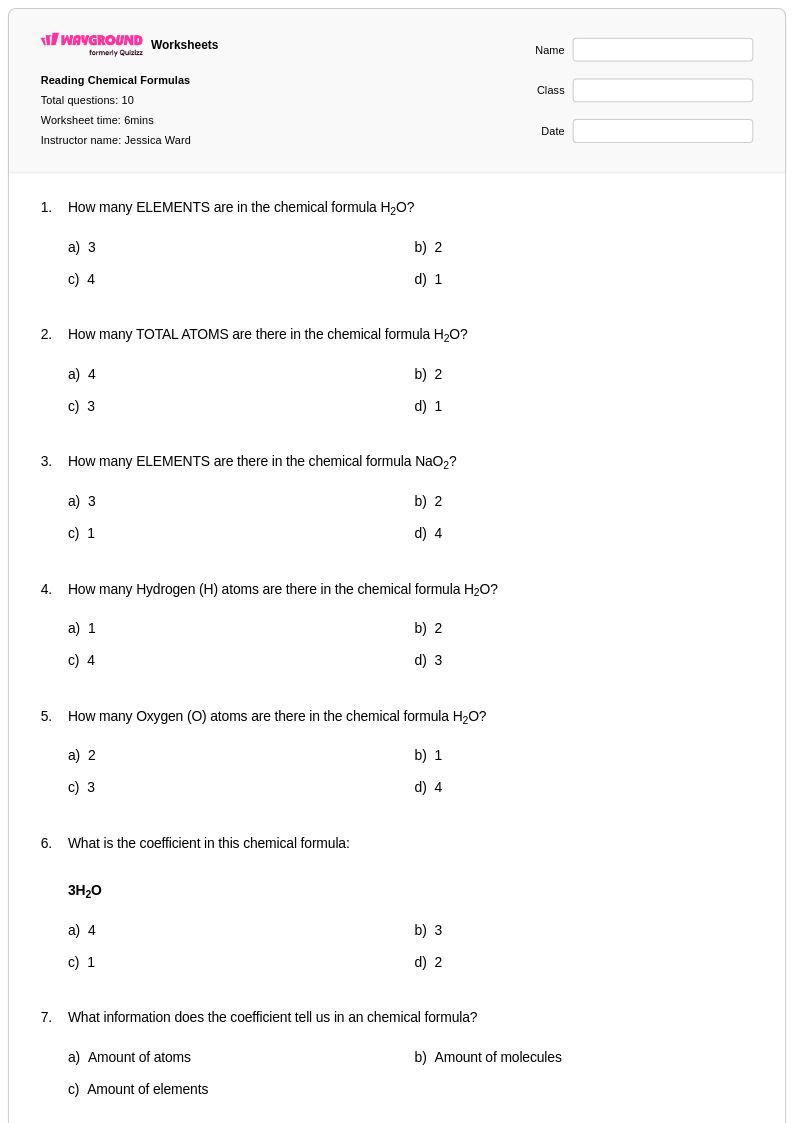
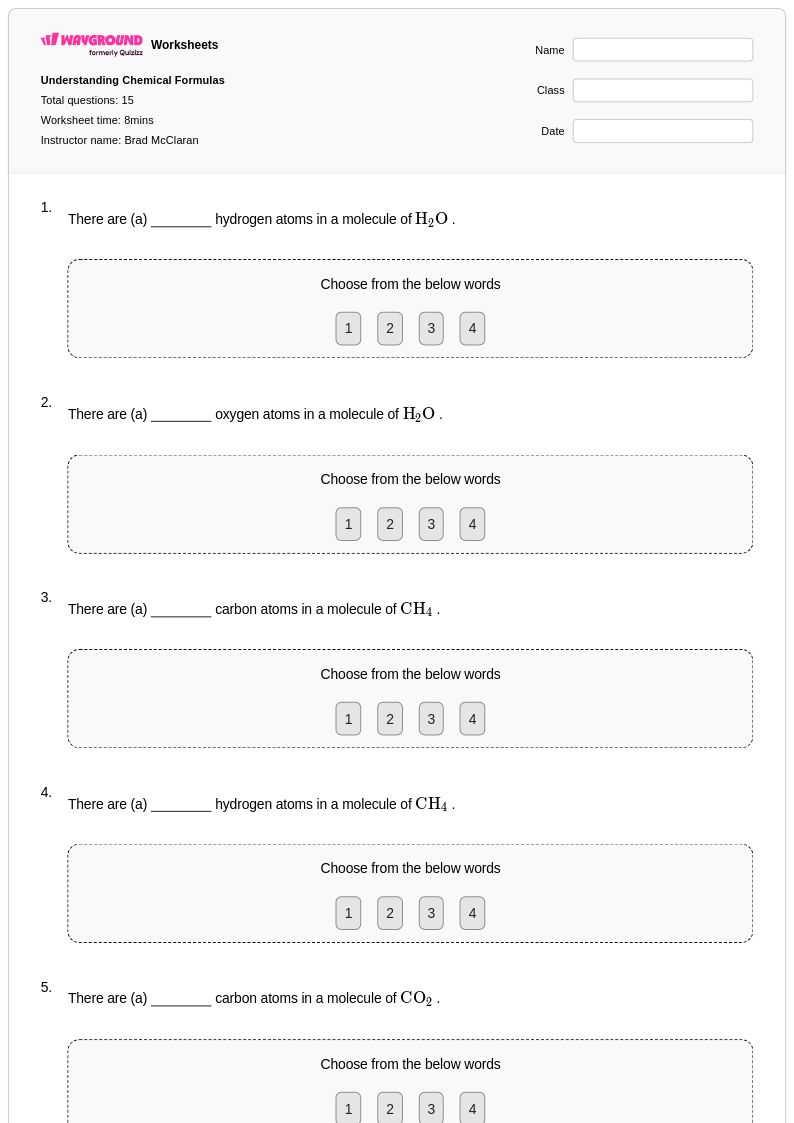
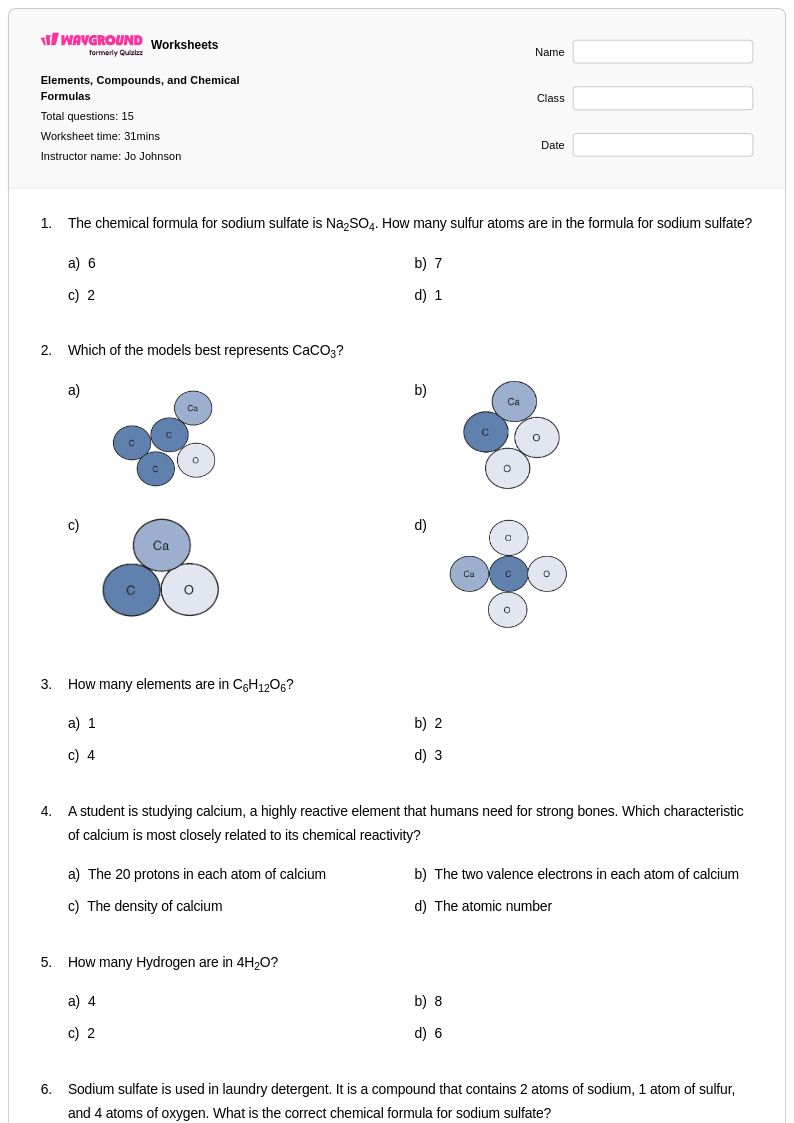
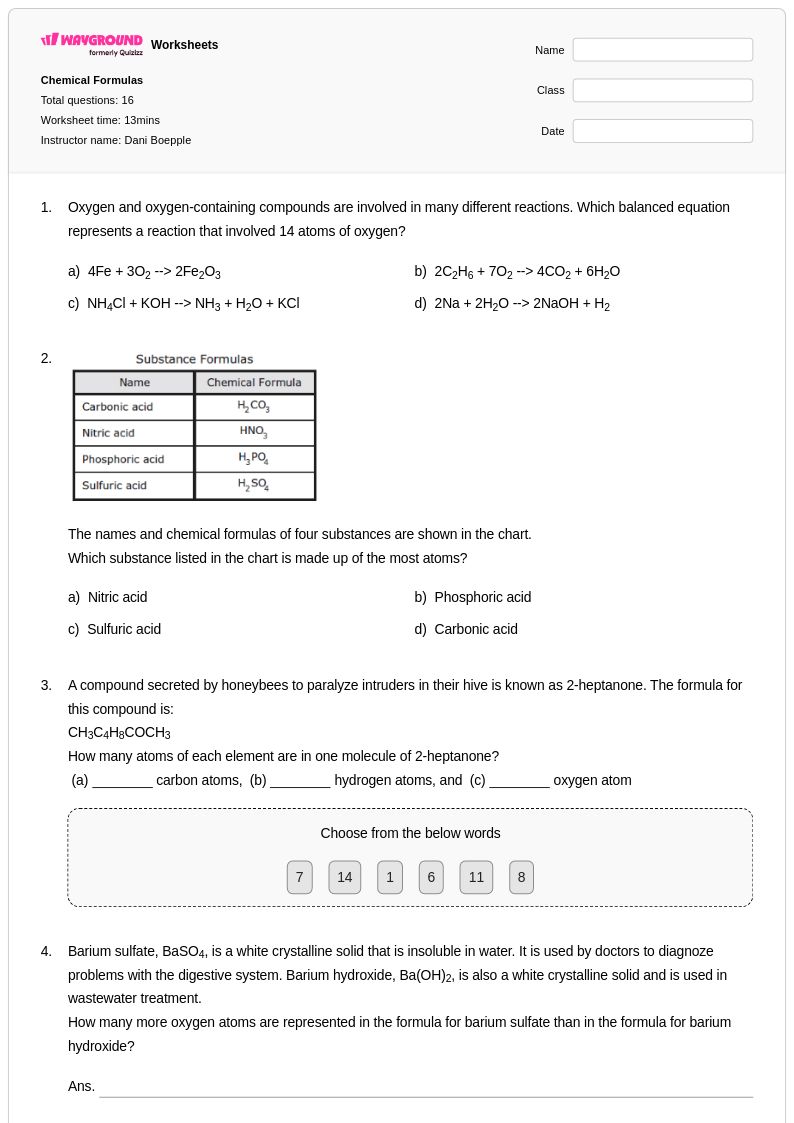
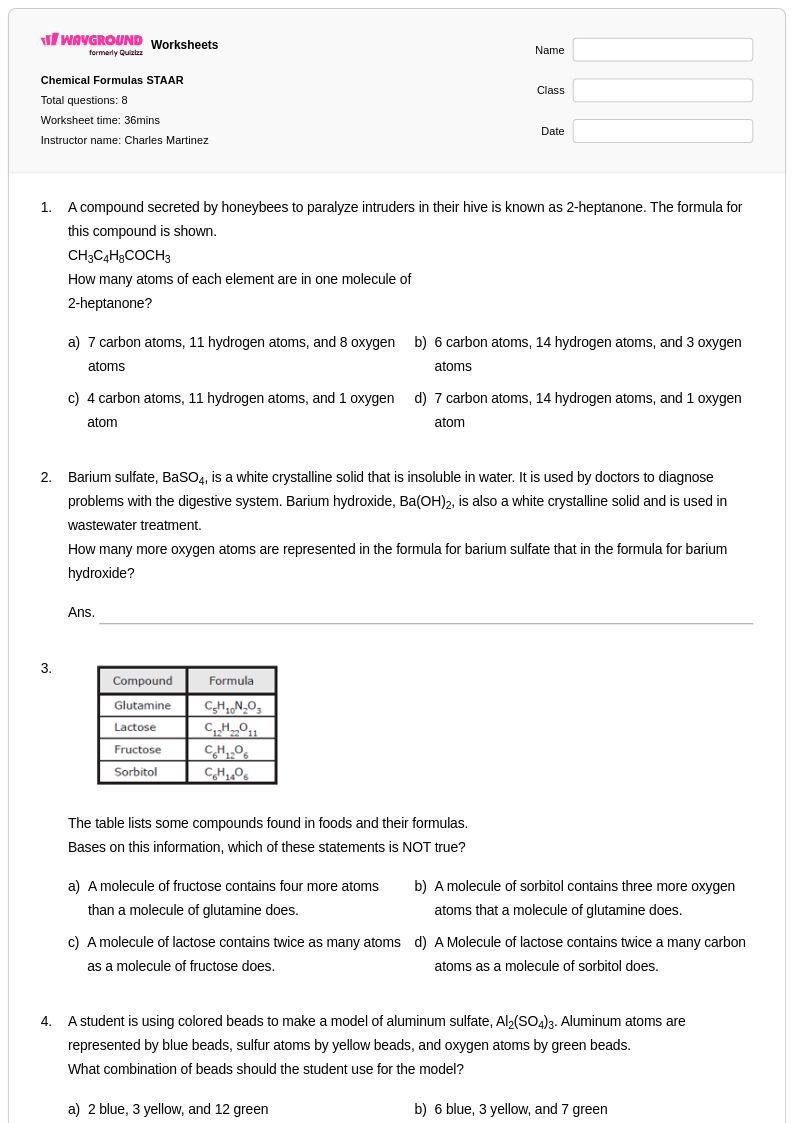
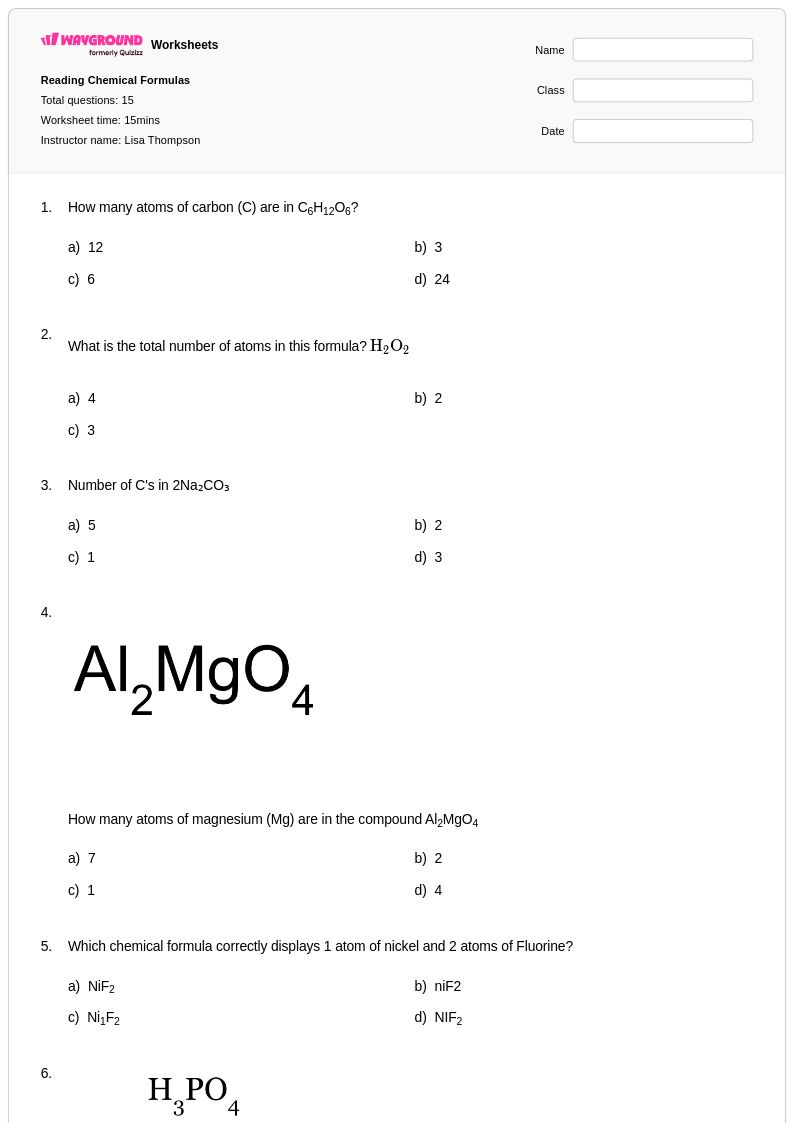
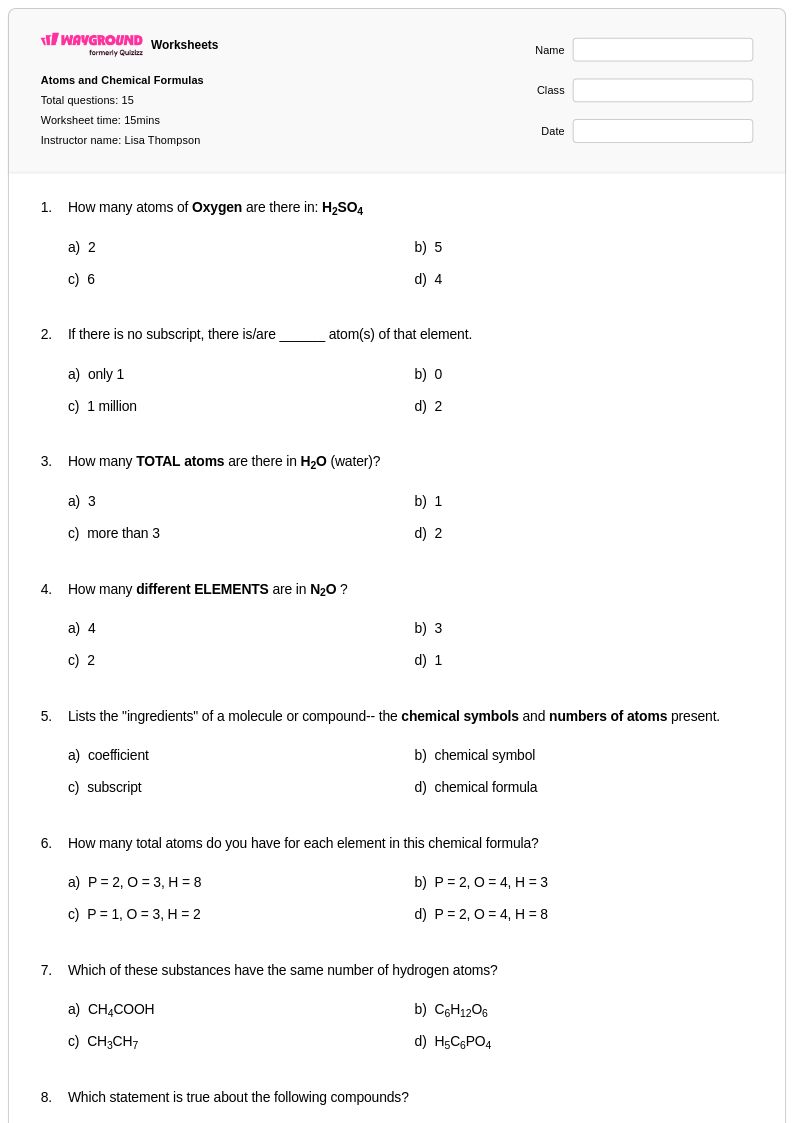
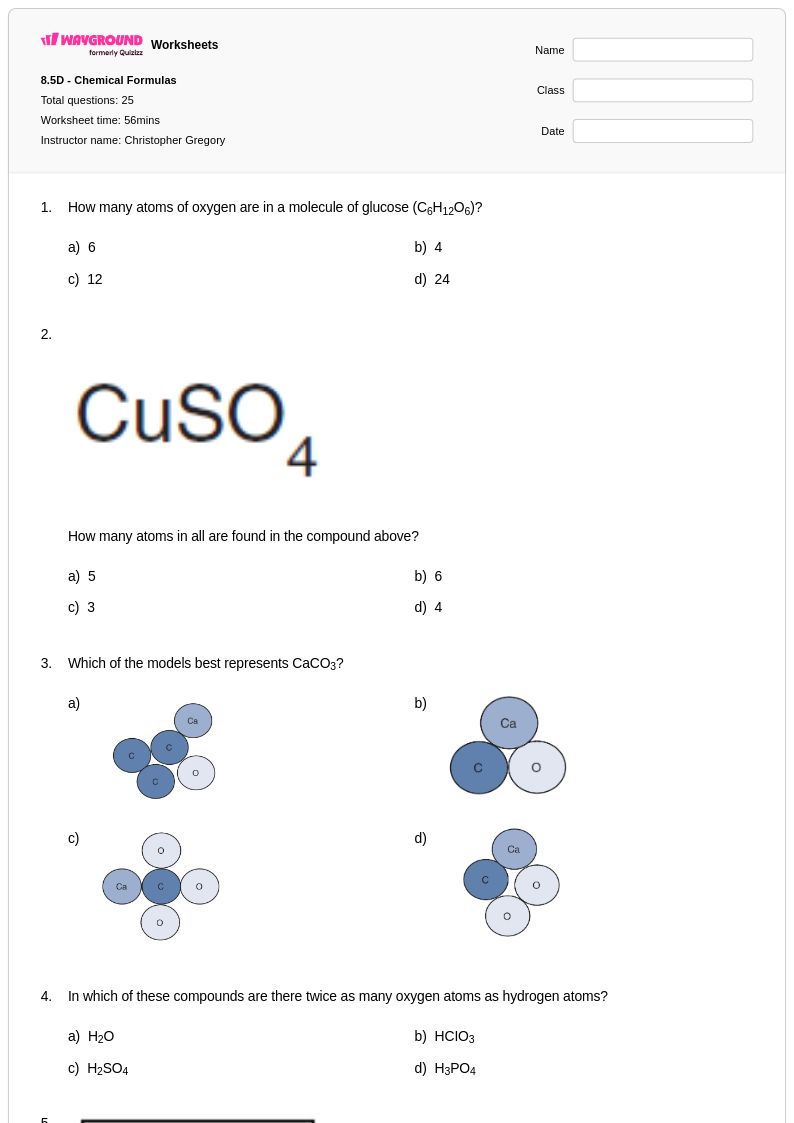
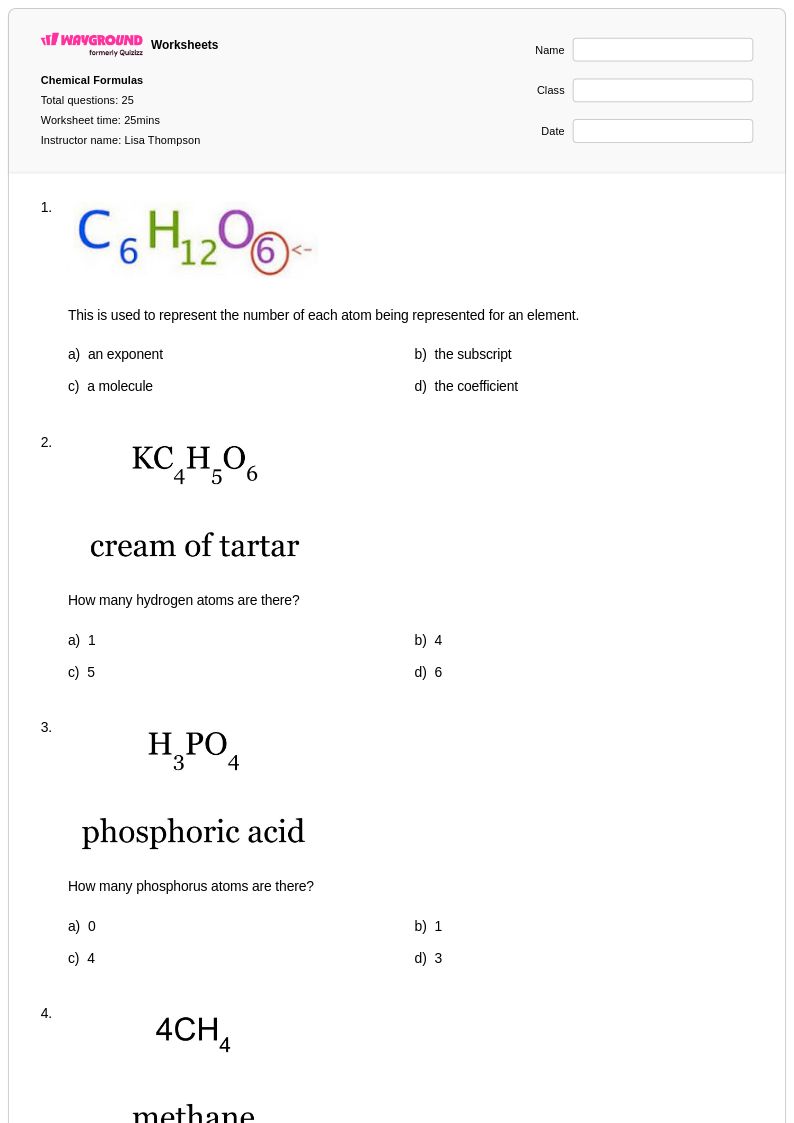
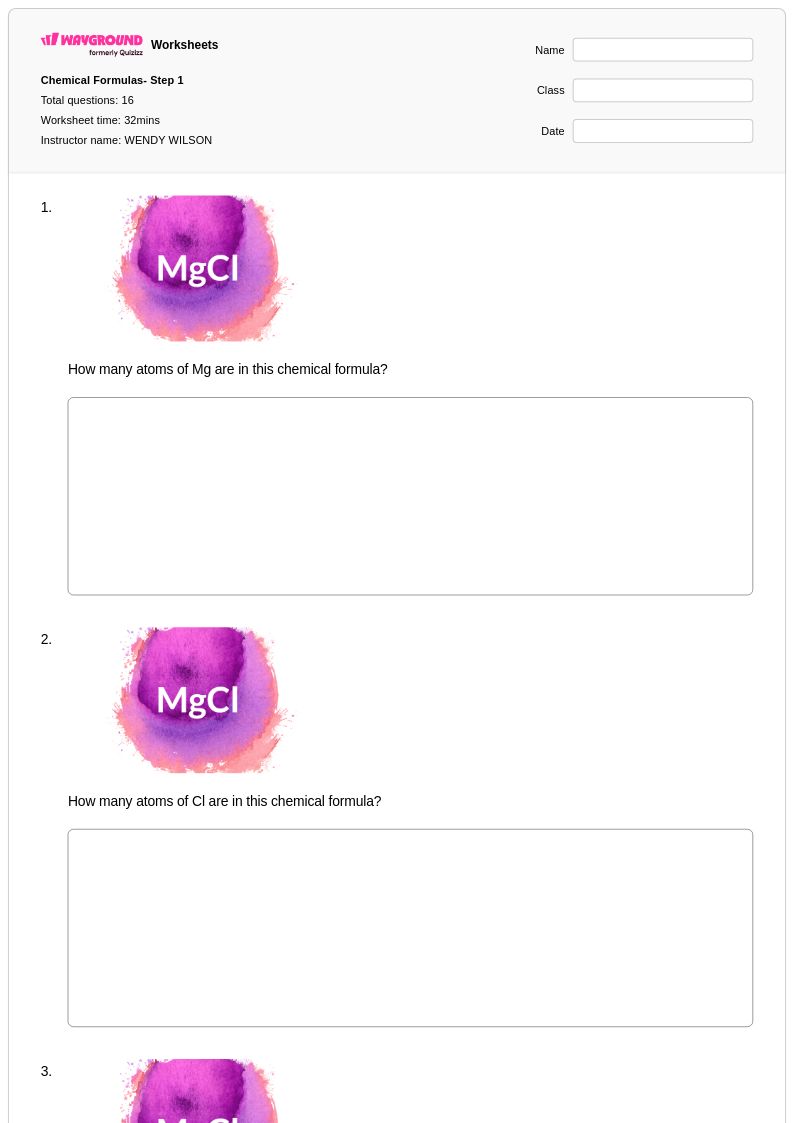
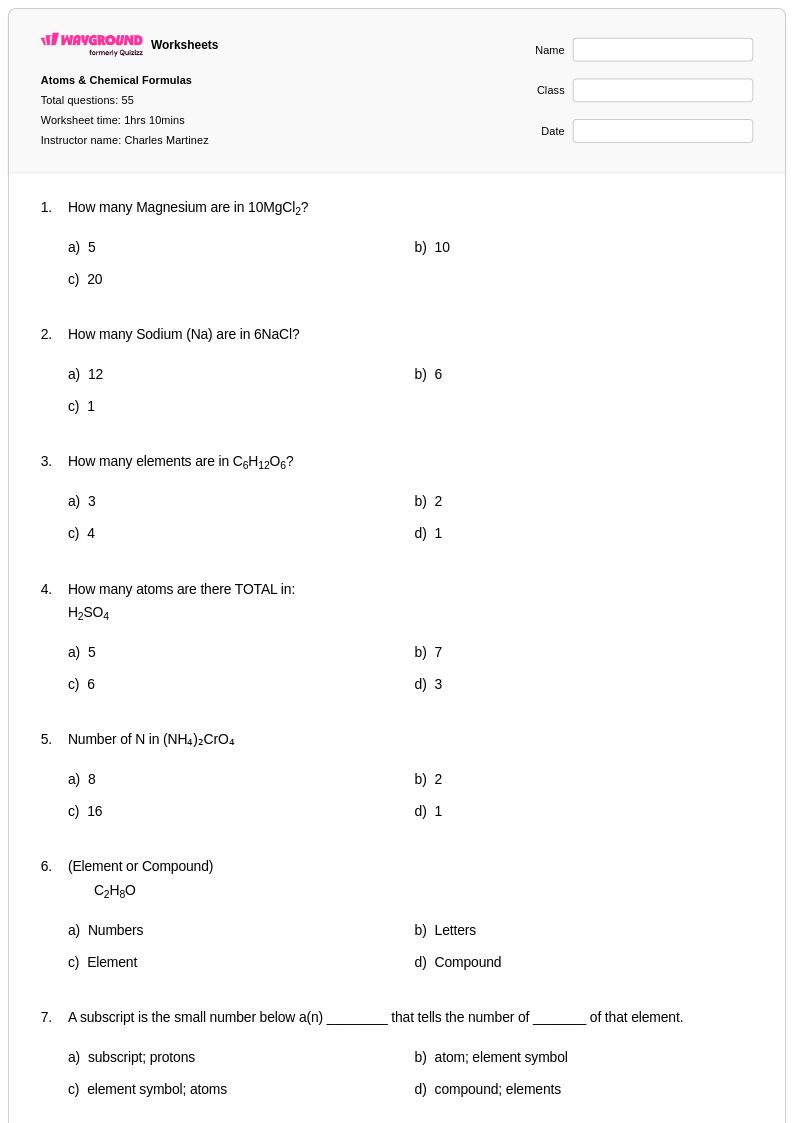
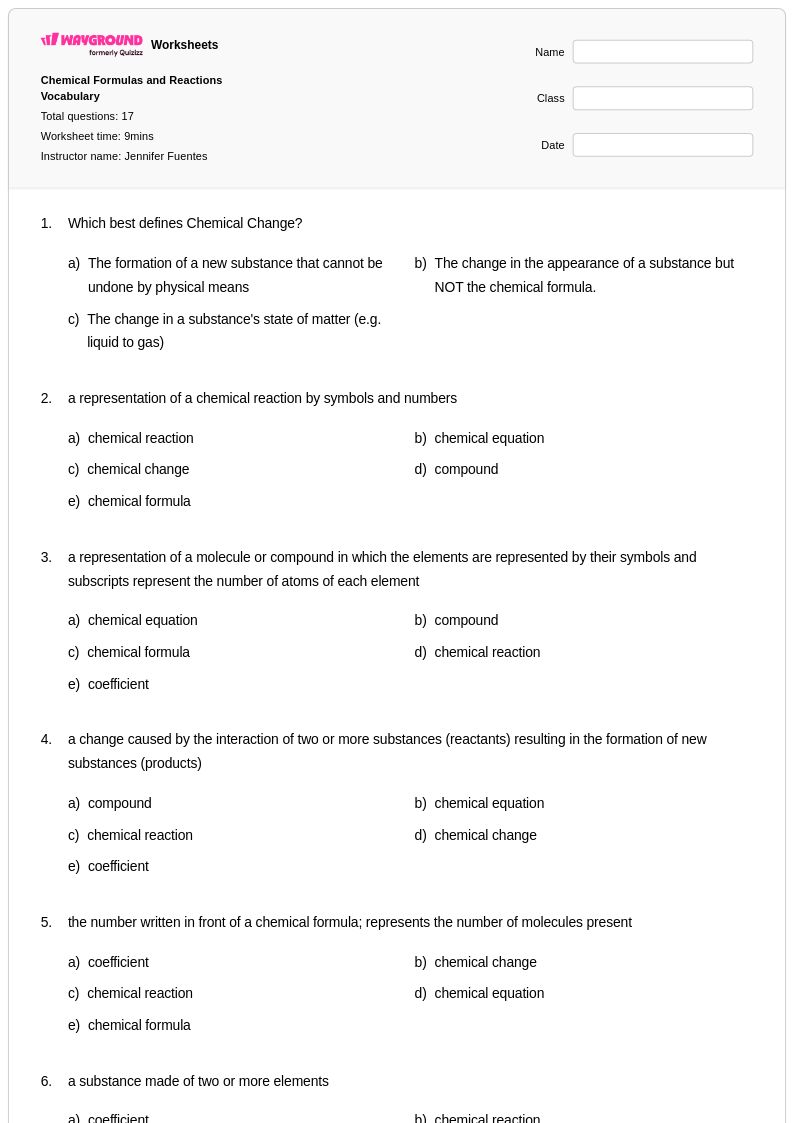
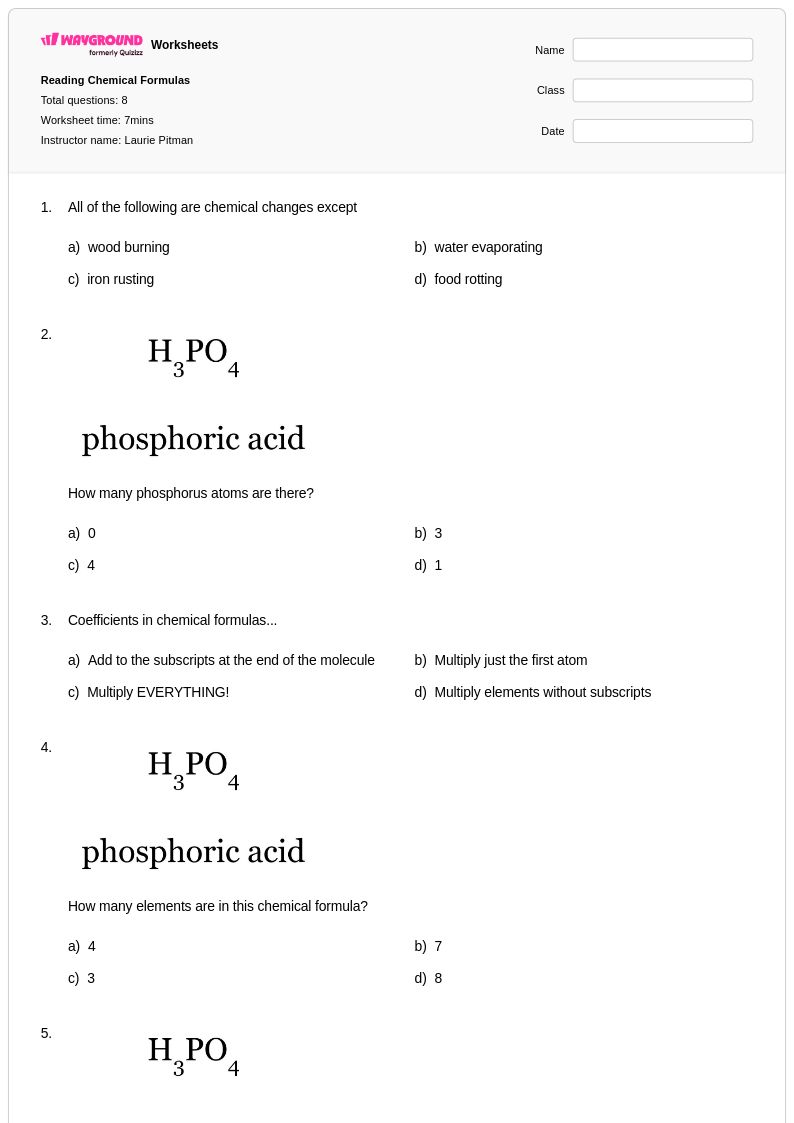
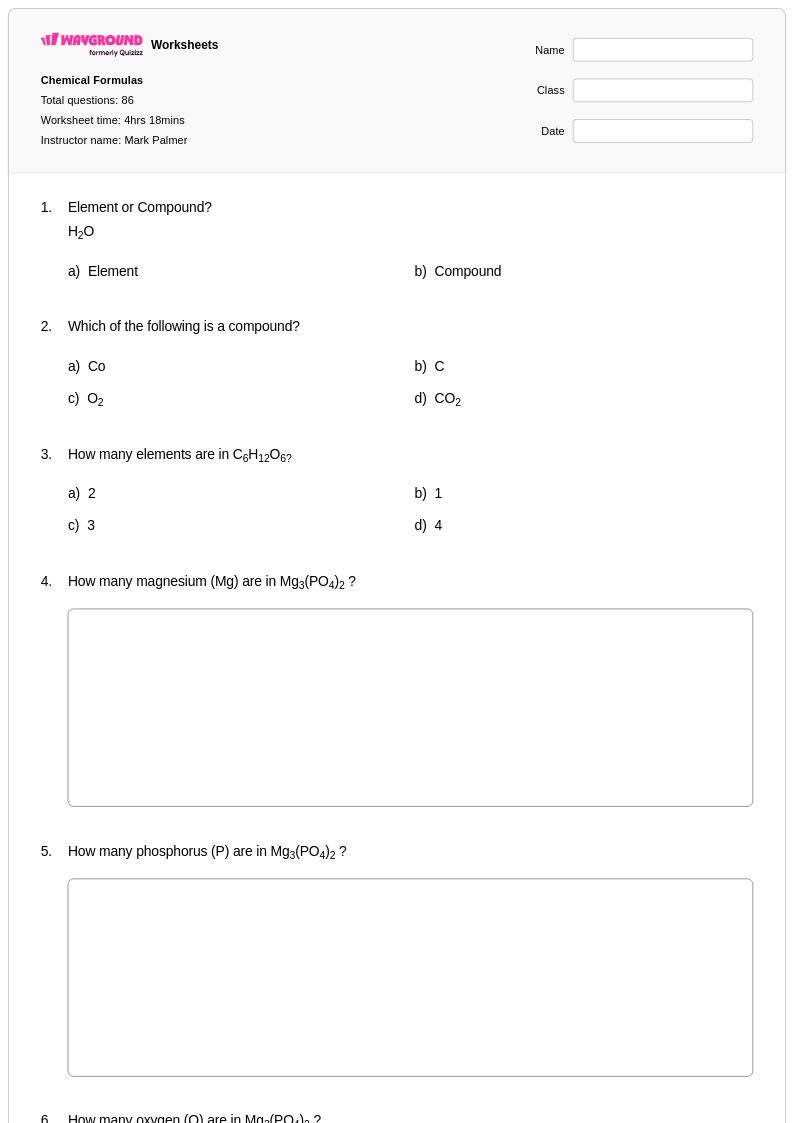
Class 8 chemical formulas worksheets from Wayground provide free printable practice problems and answer keys to help students master writing, balancing, and interpreting chemical compounds and molecular formulas.
Explore printable Chemical Formulas worksheets for Class 8
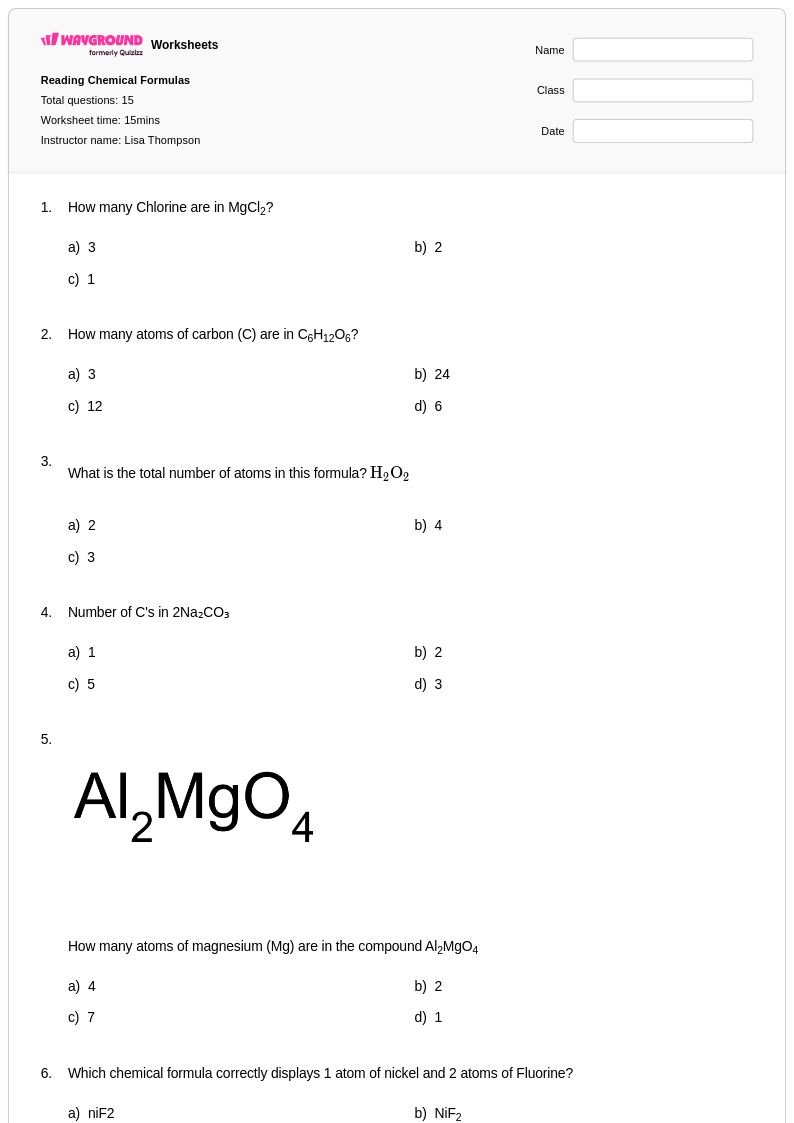
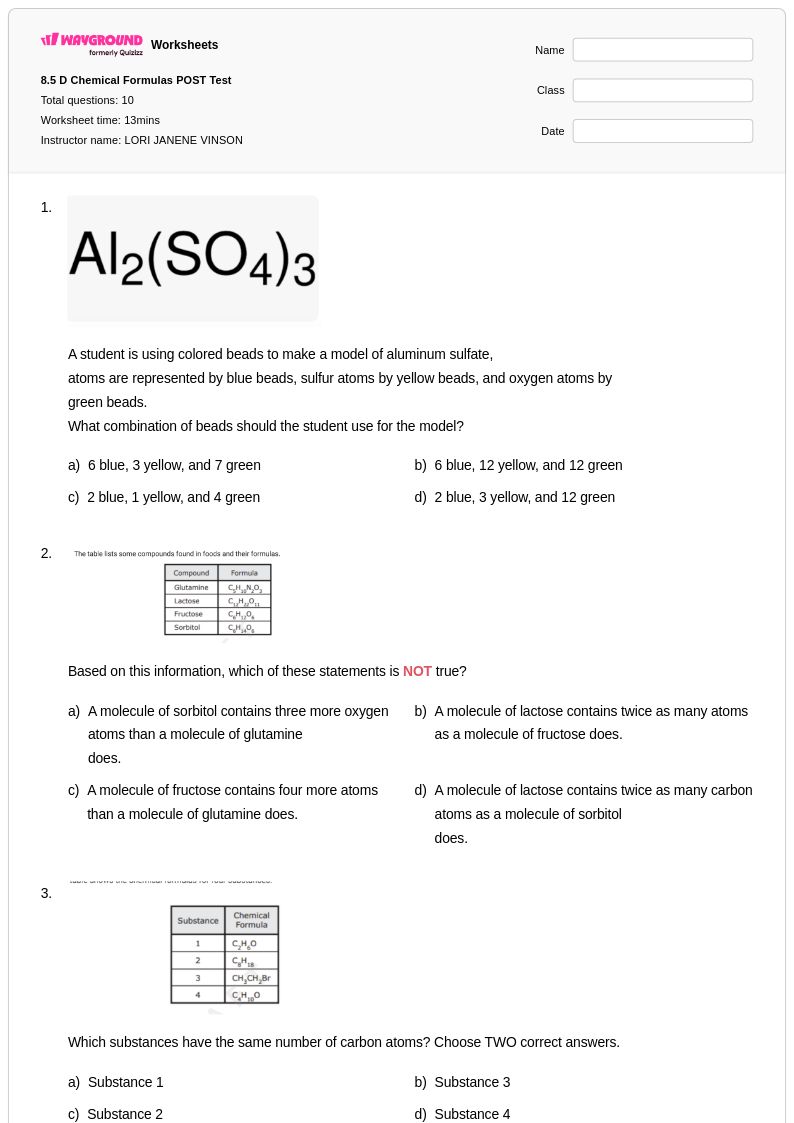
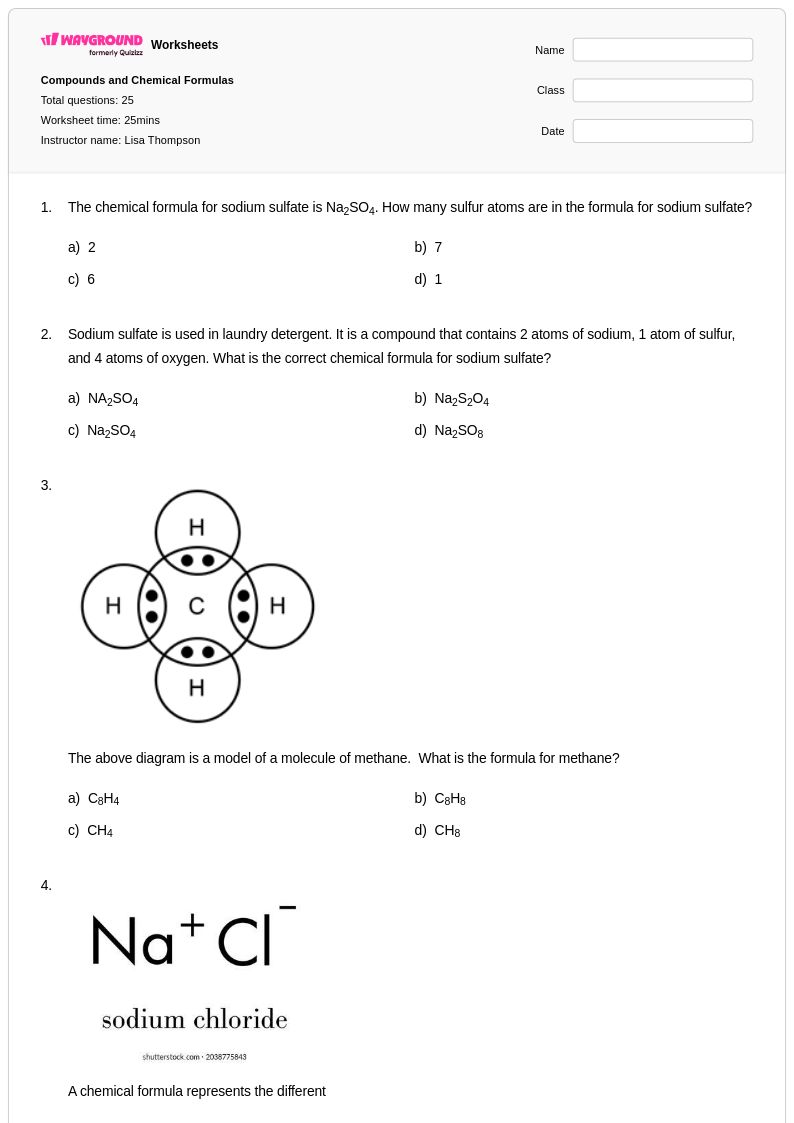
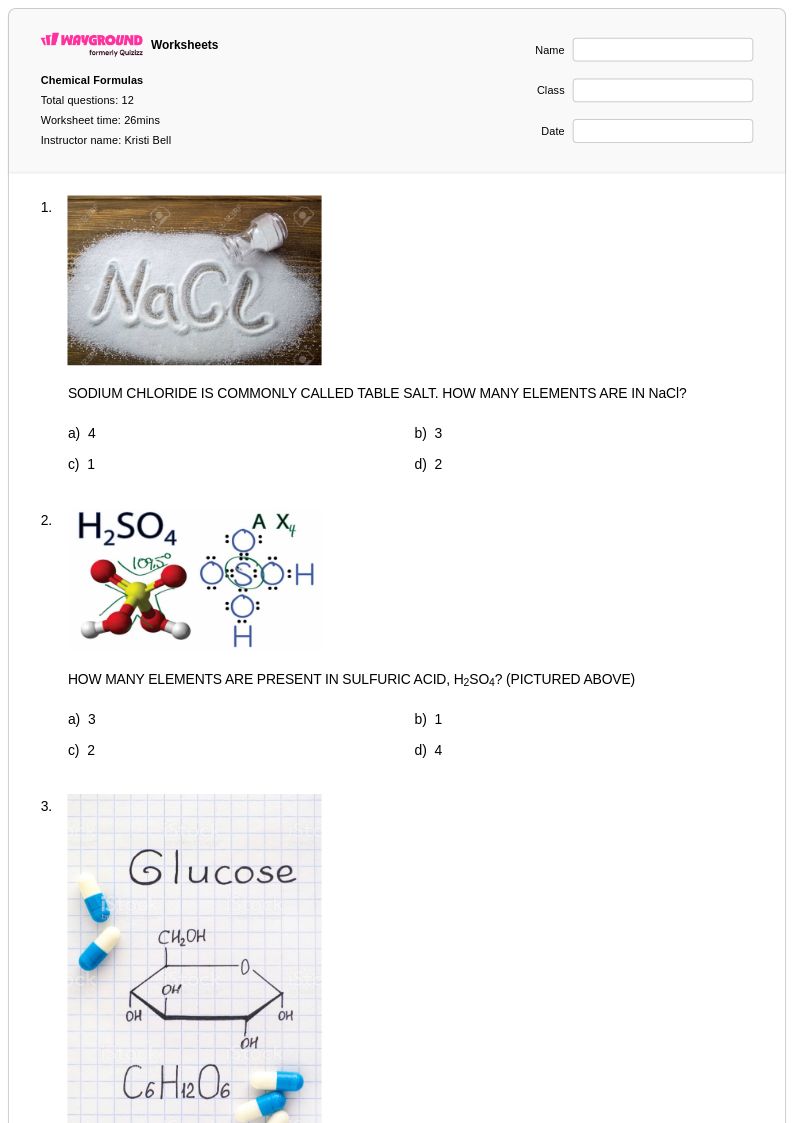
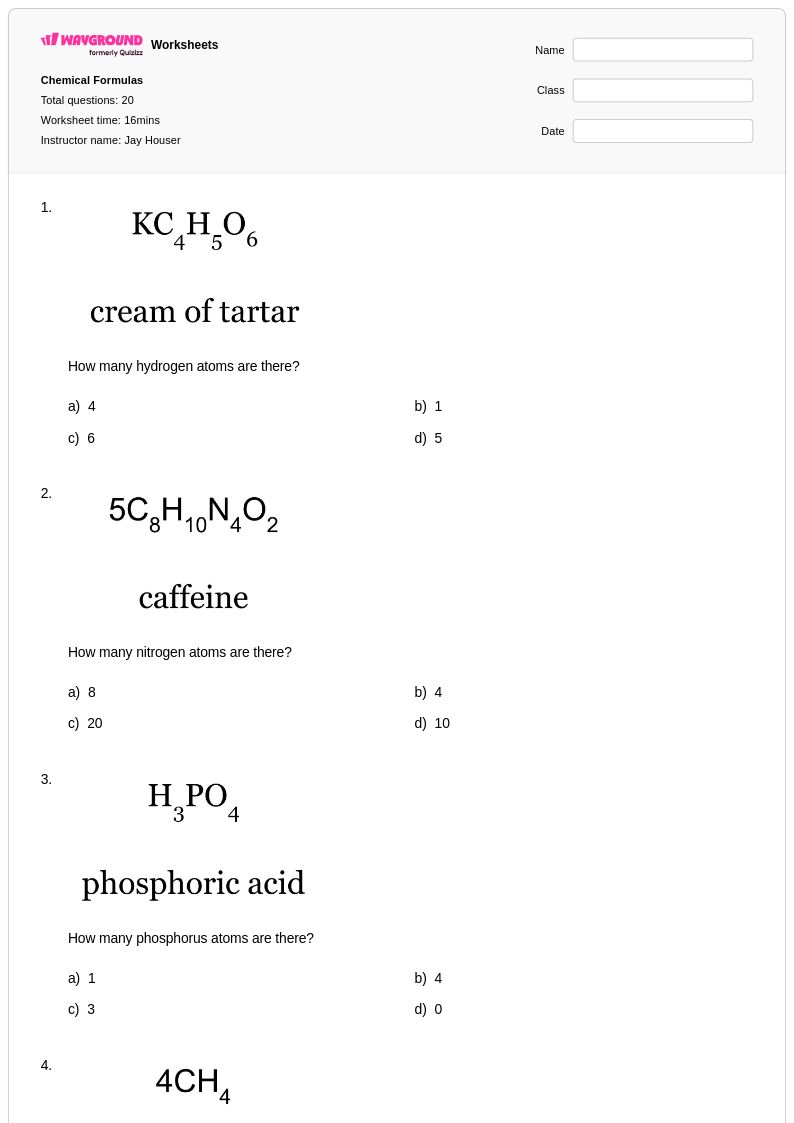
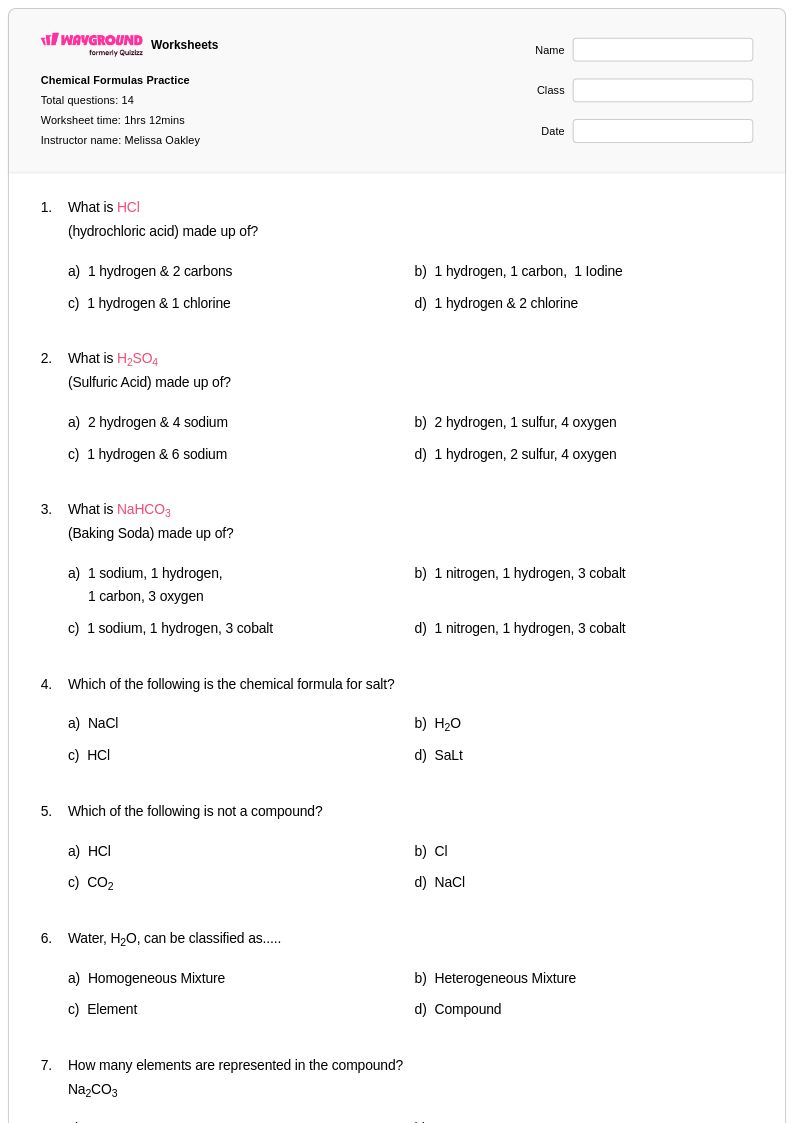
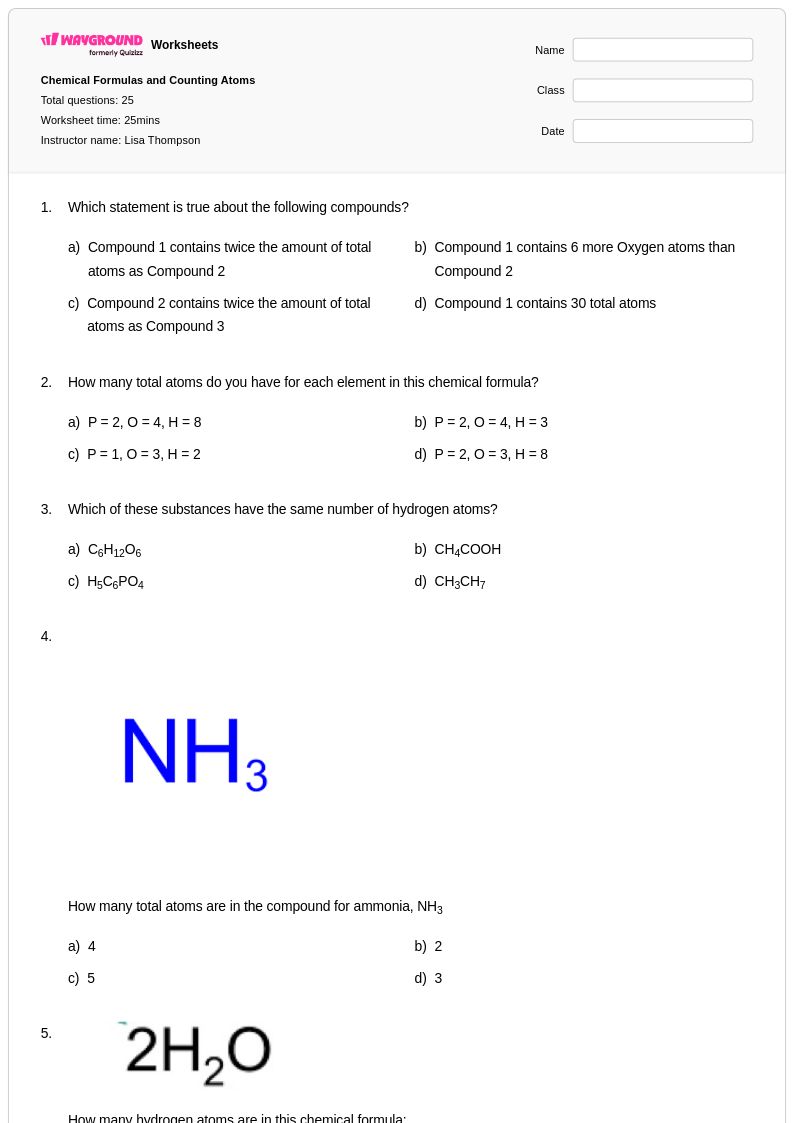
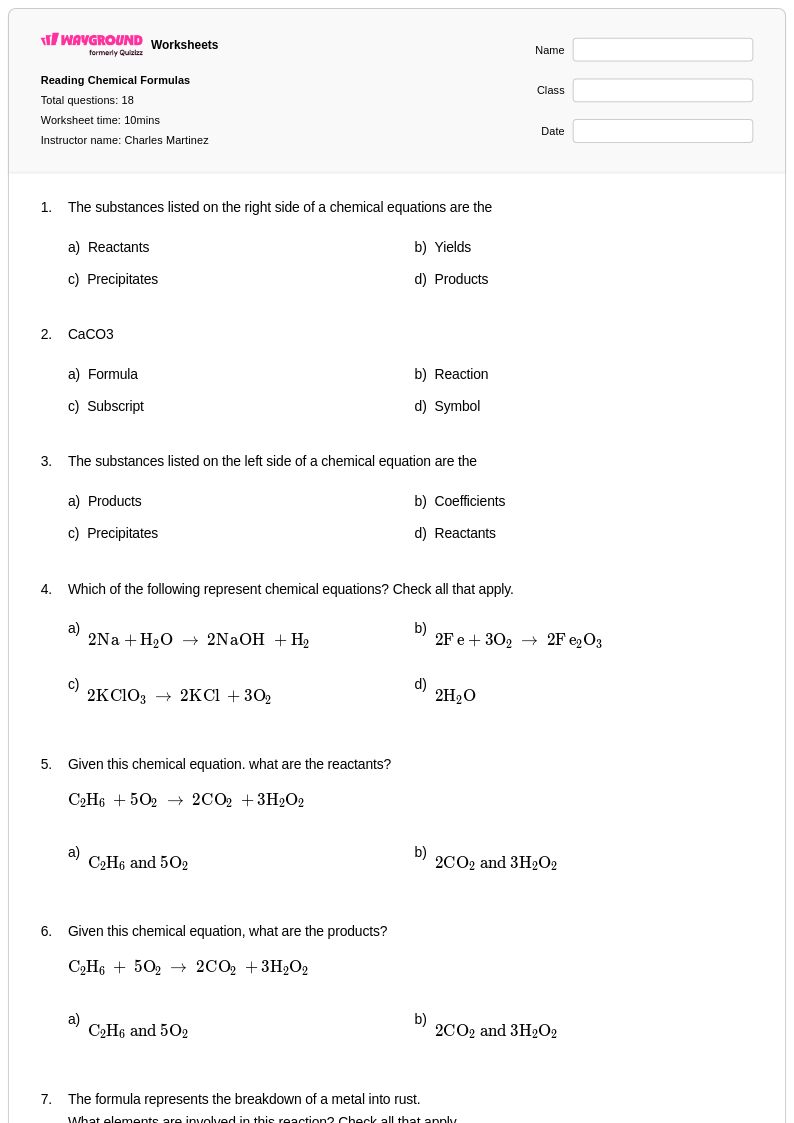
Chemical formulas for Class 8 represent a fundamental cornerstone of chemistry education, and Wayground's extensive worksheet collection provides comprehensive resources to help students master this essential skill. These carefully designed worksheets guide eighth-grade students through the systematic process of writing, interpreting, and balancing chemical formulas, from simple binary compounds to more complex molecular structures. Students develop critical thinking abilities as they work through practice problems that require them to understand the relationship between elements, their valence electrons, and how atoms combine to form compounds. Each worksheet comes with a detailed answer key, enabling both independent study and teacher-guided instruction, while the free printable format ensures accessibility for all learning environments.
Wayground, formerly Quizizz, empowers educators with millions of teacher-created resources specifically focused on chemical formulas and broader chemistry concepts for Class 8 students. The platform's robust search and filtering capabilities allow teachers to quickly locate worksheets that align with specific curriculum standards and learning objectives, whether they need introductory formula writing exercises or advanced stoichiometry problems. These versatile resources are available in both printable PDF format and interactive digital versions, giving educators the flexibility to customize content based on individual student needs and classroom dynamics. Teachers can seamlessly integrate these worksheets into lesson planning, use them for targeted remediation with struggling students, or deploy them as enrichment activities for advanced learners, while the comprehensive scope ensures consistent skill practice across diverse learning scenarios.
FAQs
How do I teach chemical formulas to chemistry students?
Start by teaching students the difference between ionic and covalent compounds, since the naming and formula-writing rules differ significantly between them. Introduce binary compounds first, then progress to polyatomic ions and multi-element molecules as students gain confidence. Using visual aids that show how oxidation states and charge balancing determine subscripts helps students move beyond memorization toward genuine understanding. Consistent practice translating between chemical names and their symbolic formulas is essential for building fluency.
What exercises help students practice writing chemical formulas?
Effective practice exercises include translating chemical names into formulas and formulas back into names, identifying whether a compound is ionic or covalent, and balancing charges using oxidation states to determine correct subscripts. Problems that progress from simple binary compounds to polyatomic ions and complex multi-element molecules build student confidence incrementally. Including self-assessment tools like answer keys allows students to catch and correct errors independently, reinforcing accurate formula writing habits.
What common mistakes do students make when writing chemical formulas?
A frequent error is reversing the order of elements or misapplying the criss-cross method when balancing ionic charges, which produces incorrect subscripts. Students also commonly confuse naming conventions for ionic versus covalent compounds, leading to errors like applying Roman numerals to covalent molecules or omitting prefixes on ionic compounds. Misidentifying polyatomic ions as single-element ions is another persistent misconception that disrupts accurate formula writing.
How do I differentiate chemical formulas instruction for students at different skill levels?
For struggling students, focus first on binary ionic compounds with predictable charges before introducing variable oxidation states or polyatomic ions. Advanced learners can be challenged with complex multi-element molecules and application problems that connect formula writing to stoichiometry or chemical reactions. On Wayground, teachers can apply accommodations such as reduced answer choices to lower cognitive load for students who need additional support, while other students receive standard problem sets, all within the same assignment.
How do I use chemical formulas worksheets from Wayground in my classroom?
Wayground's chemical formulas worksheets are available as printable PDFs for traditional pen-and-paper practice and in digital formats for technology-integrated classrooms. Teachers can also host worksheets as an interactive quiz directly on Wayground, making them suitable for in-class review sessions or independent practice assignments. Each worksheet includes a complete answer key, supporting both teacher-led instruction and student self-assessment.
How do chemical formulas connect to other chemistry topics I need to teach?
Accurate formula writing is a prerequisite for stoichiometry, since balanced chemical equations depend on correctly represented compounds. Students who struggle with chemical formulas will encounter compounding difficulties when they reach chemical reactions, mole calculations, and limiting reagents. Treating chemical formula fluency as a foundational skill early in a chemistry course reduces the need for remediation later in the curriculum.