Free Printable Chemical Naming Worksheets for Class 8
Master Class 8 chemical naming with Wayground's comprehensive collection of free worksheets, printables, and practice problems featuring detailed answer keys to help students confidently learn compound nomenclature and chemical formulas.
Explore printable Chemical Naming worksheets for Class 8
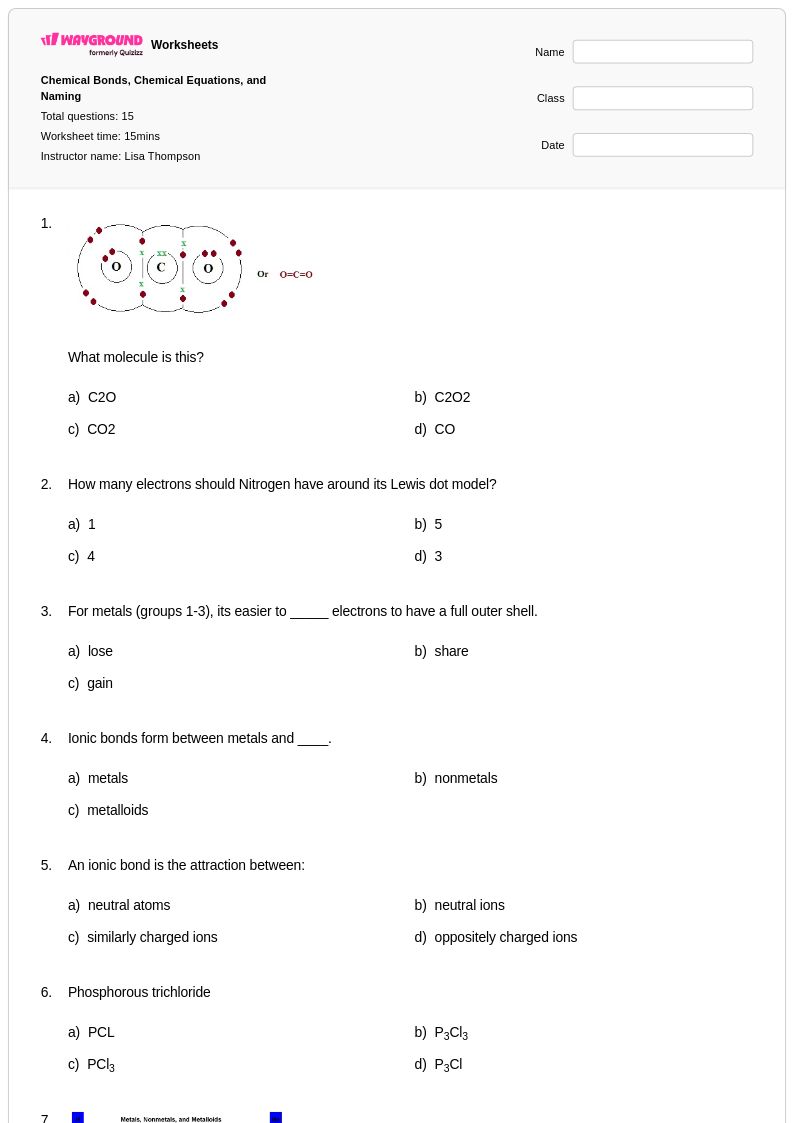
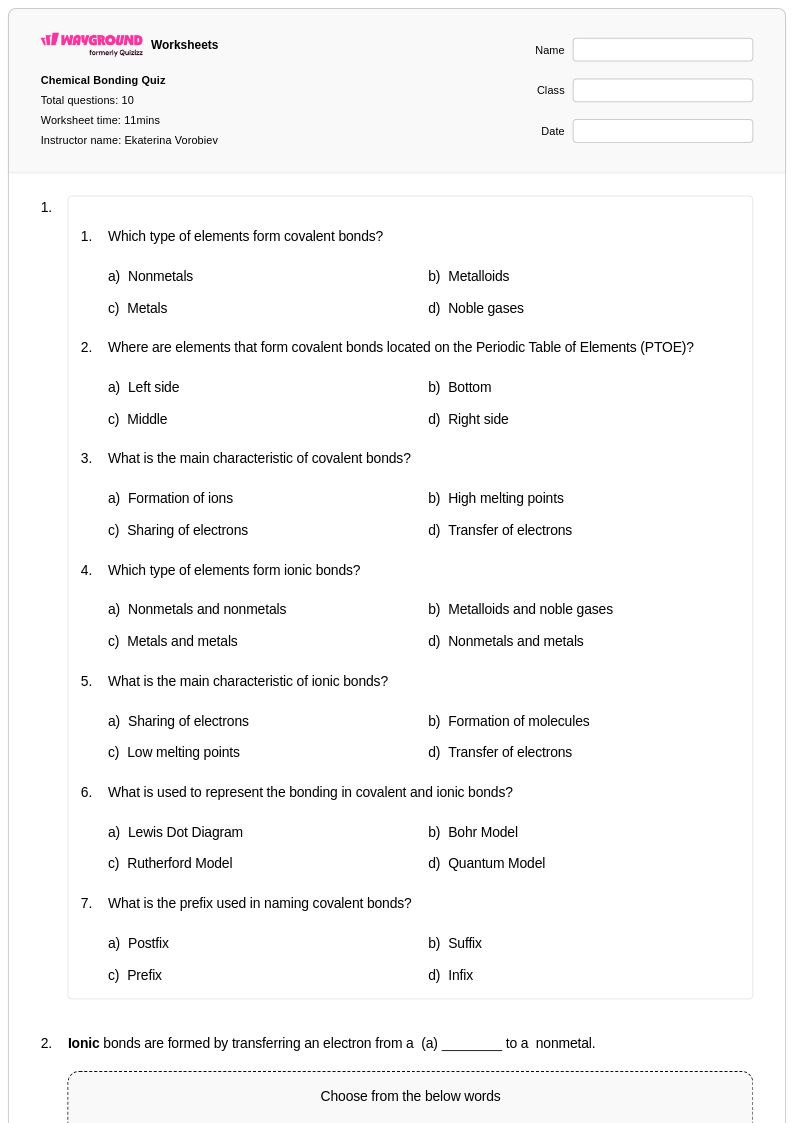
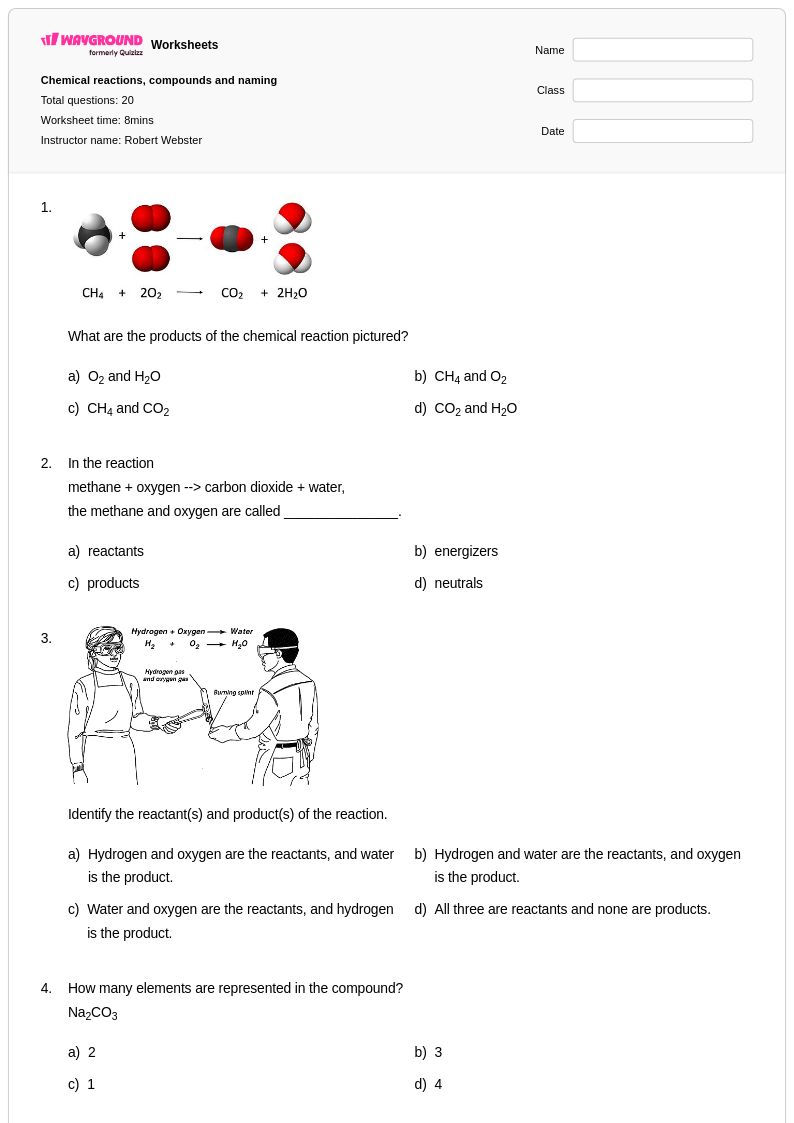
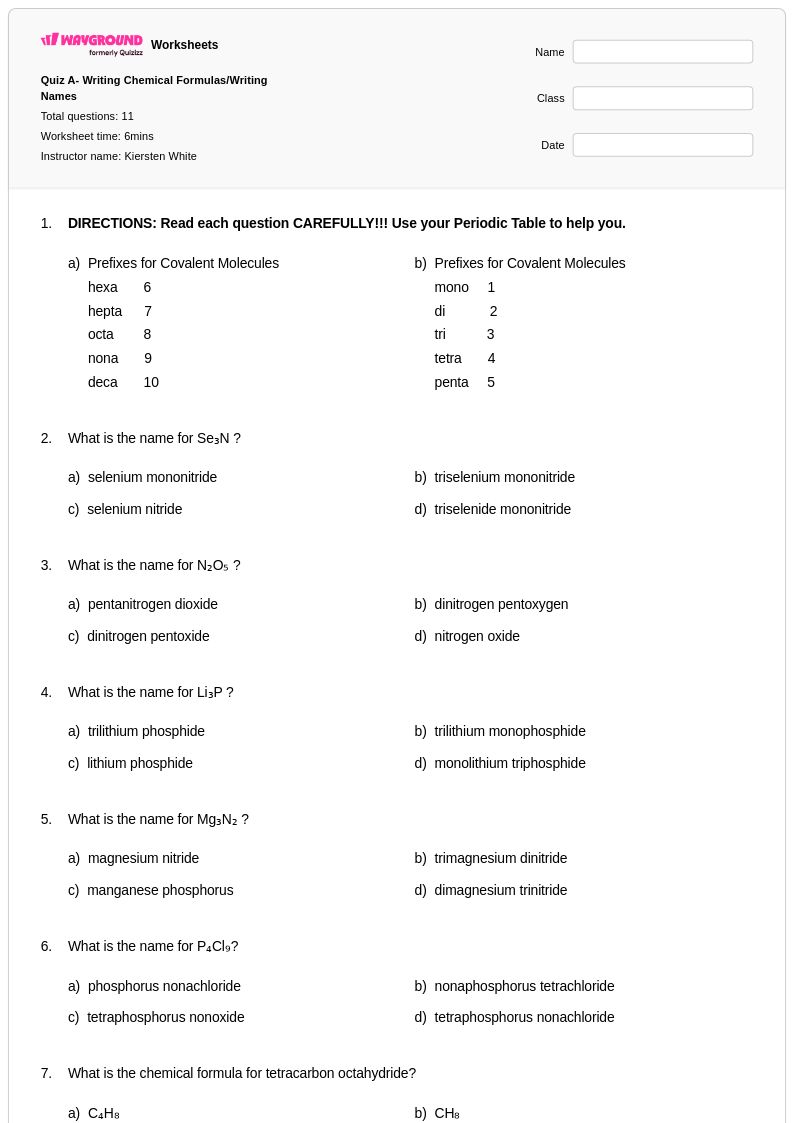
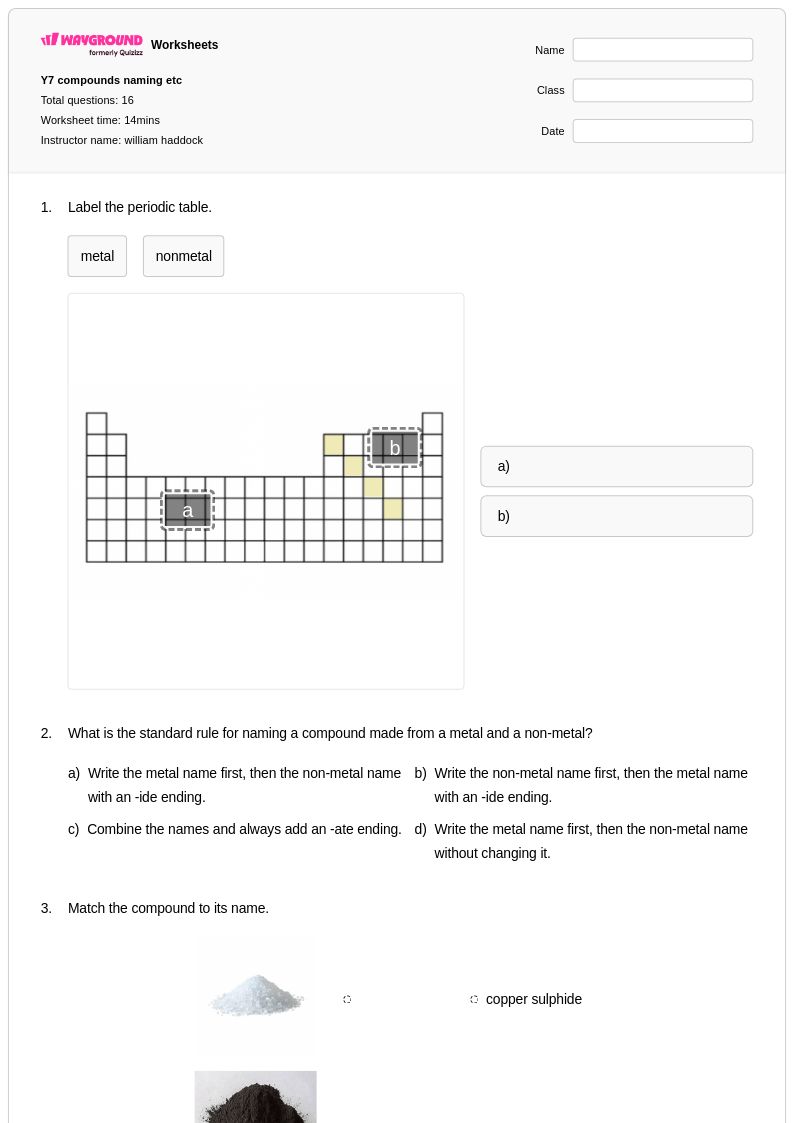
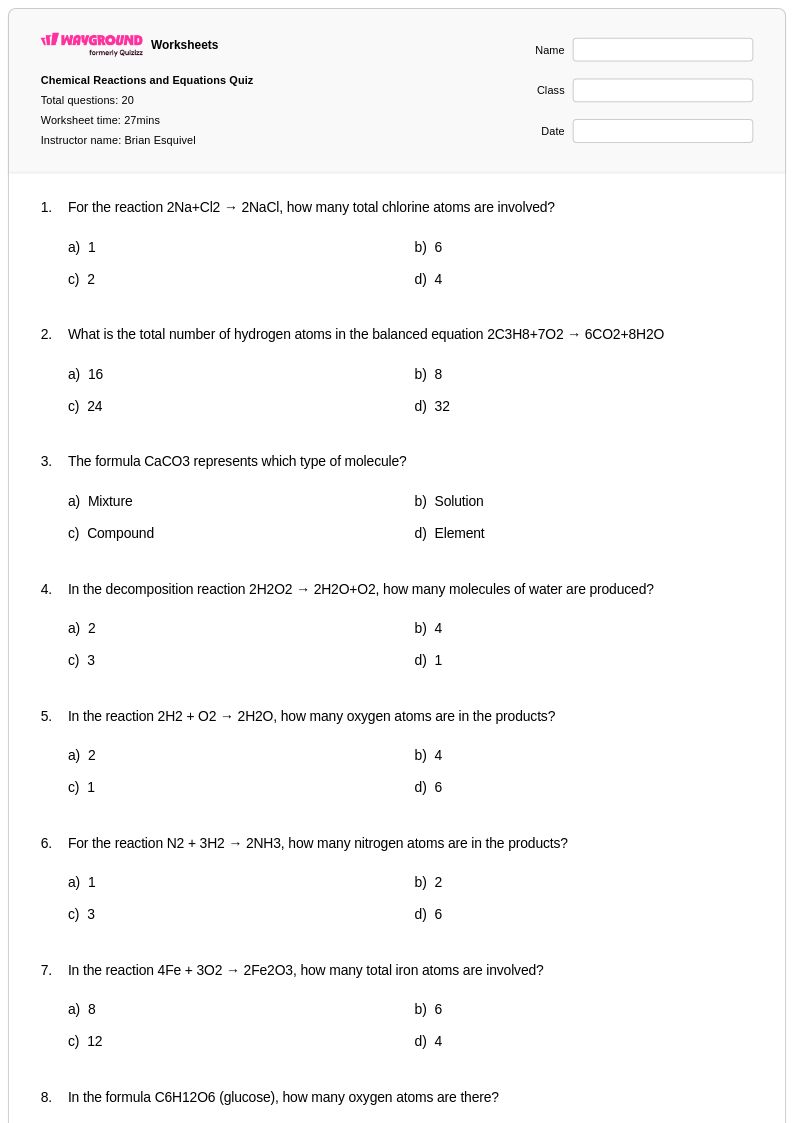
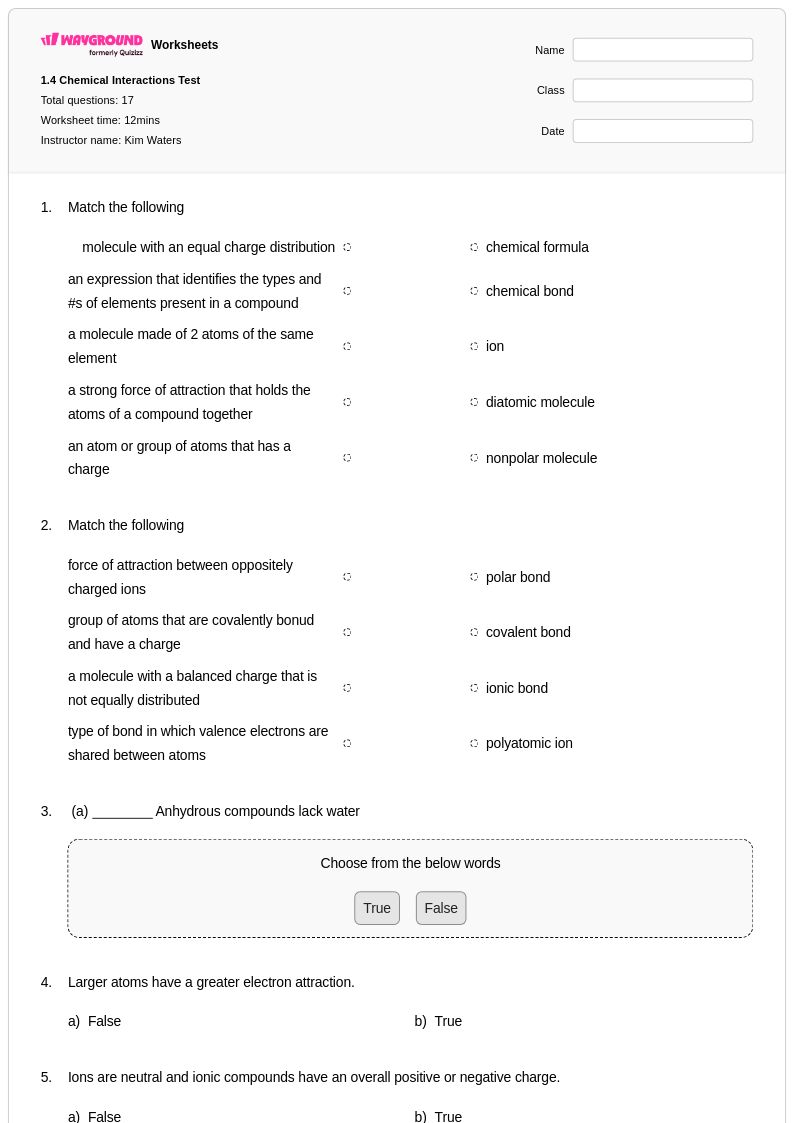
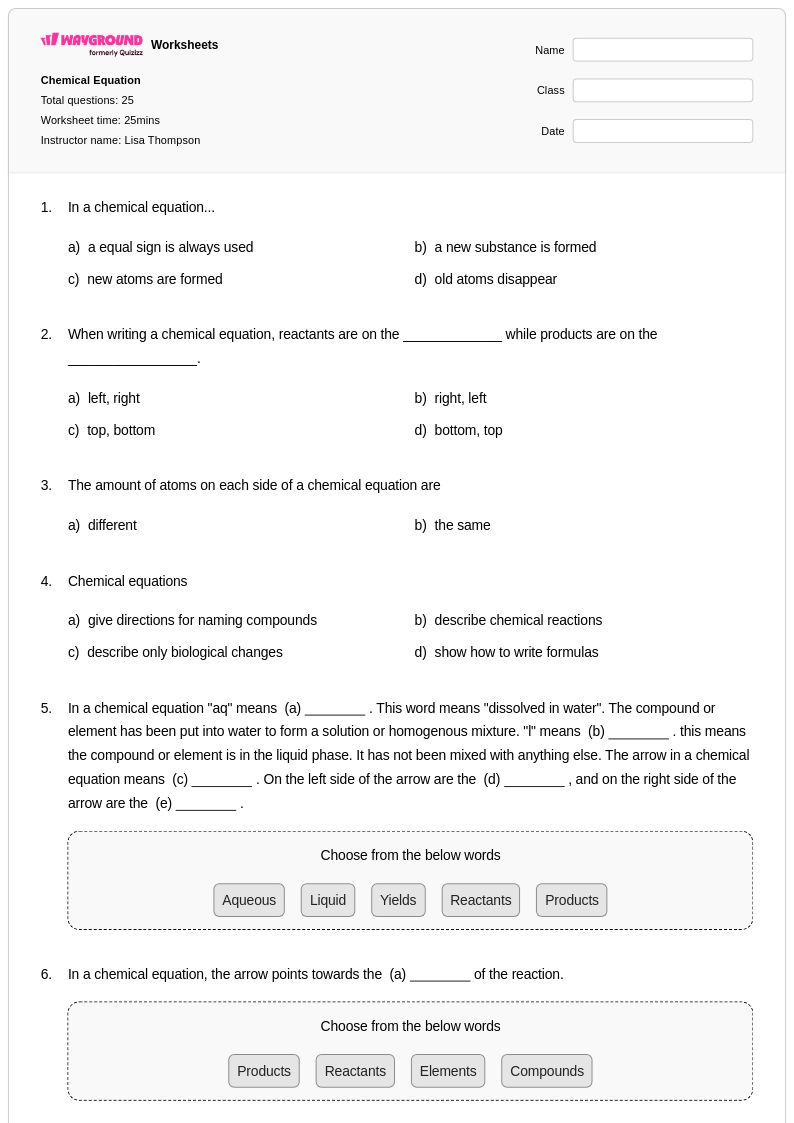
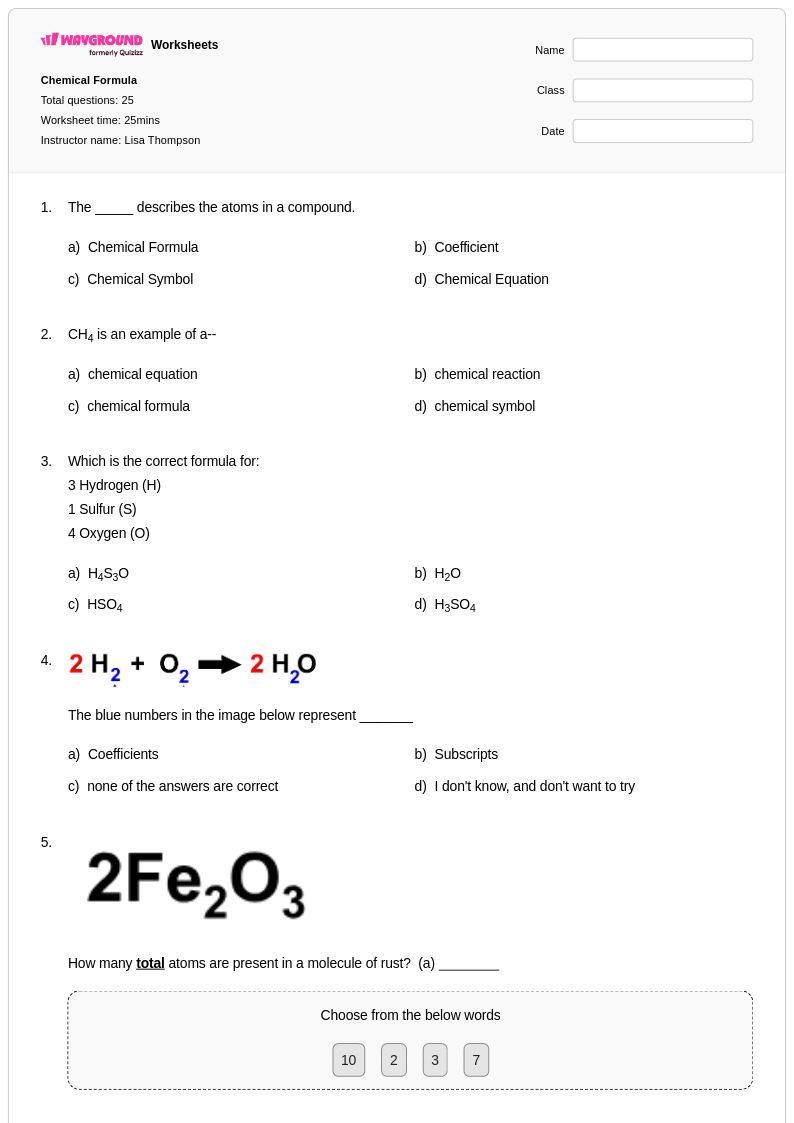
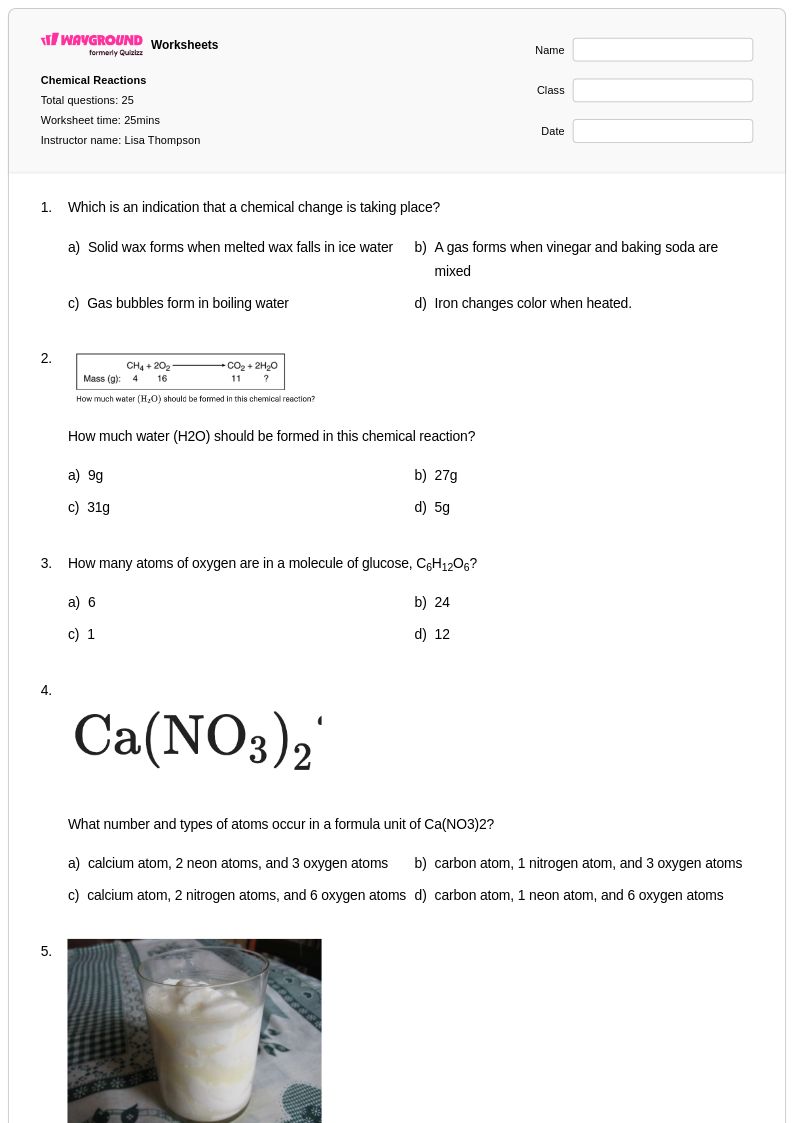
Chemical naming worksheets for Class 8 students available through Wayground (formerly Quizizz) provide comprehensive practice in the systematic nomenclature of ionic and covalent compounds, acids, and polyatomic ions. These expertly designed resources strengthen students' understanding of naming conventions, formula writing, and the relationship between chemical structure and nomenclature. Each worksheet includes varied practice problems that progress from simple binary compounds to more complex polyatomic structures, helping students master the rules and patterns essential for chemical communication. Teachers can access complete answer keys and printable pdf versions that support both classroom instruction and independent study, while free resources ensure that all students receive adequate practice in this fundamental chemistry skill.
Wayground's extensive collection of millions of teacher-created chemical naming worksheets empowers educators to deliver targeted instruction that meets diverse student needs in Class 8 chemistry courses. The platform's robust search and filtering capabilities allow teachers to quickly locate resources aligned with specific standards and learning objectives, while differentiation tools enable customization for varying skill levels within the same classroom. These versatile materials are available in both printable and digital formats, including downloadable pdfs, making them ideal for traditional worksheets, homework assignments, remediation sessions, and enrichment activities. The flexible nature of these resources supports effective lesson planning by providing educators with ready-to-use materials for skill practice, formative assessment, and reinforcement of chemical naming principles that serve as building blocks for advanced chemistry concepts.
FAQs
How do I teach chemical naming conventions to high school chemistry students?
Start by establishing the distinction between ionic and covalent compounds before introducing naming rules, since students who conflate the two will apply the wrong system consistently. Teach IUPAC nomenclature systematically: binary ionic compounds first, then polyatomic ions, then molecular compounds using Greek prefixes. Building fluency in both directions — name to formula and formula to name — is essential, so practice should always include both translation tasks. Using worked examples and then progressively reducing scaffolding helps students internalize the logic rather than memorize isolated rules.
What exercises help students practice chemical nomenclature?
The most effective practice exercises require students to both write formulas from compound names and name compounds from given formulas, since one-directional practice creates gaps. Sorting activities where students classify compounds as ionic or covalent before naming them reinforce the decision-making process that precedes rule application. Worksheet sets that progress from binary compounds to polyatomic ions to organic molecules build fluency incrementally, which is more effective than mixed-difficulty drills too early in instruction.
What mistakes do students commonly make when naming chemical compounds?
The most common error is applying ionic naming rules to covalent compounds or vice versa — for example, naming CO₂ as 'carbon oxide' instead of 'carbon dioxide' by skipping Greek prefixes. Students also frequently confuse polyatomic ion names, particularly between similar ions like nitrate and nitrite or sulfate and sulfite. Another persistent mistake is dropping the final vowel incorrectly when adding the -oxide suffix, such as writing 'monooxide' instead of 'monoxide'. Targeted practice that isolates each compound type before mixing them reduces these cross-category errors significantly.
How do I help students remember polyatomic ion names and charges?
Mnemonics and pattern-based instruction are the most reliable strategies. Teaching students the '-ate has one more oxygen than -ite' pattern reduces the need to memorize each ion pair individually. For charges, grouping ions by their parent element and oxidation state helps students see the logic rather than treat each ion as an isolated fact. Repeated retrieval practice — such as flashcard-style worksheets or timed recall exercises — builds the automaticity students need to apply polyatomic ion names accurately under test conditions.
How do I use Wayground's chemical naming worksheets in my classroom?
Wayground's chemical naming worksheets are available as printable PDFs, making them straightforward to distribute for in-class practice, homework, or assessments in traditional classroom settings. They are also available in digital formats, so teachers working in technology-integrated environments can assign them online. Wayground also allows teachers to host worksheets as a quiz directly on the platform, giving students an interactive experience while automatically tracking responses. Each worksheet includes an answer key, reducing grading time and making self-paced or independent study more practical.
How do I differentiate chemical naming instruction for students at different skill levels?
Differentiation in chemical naming works best when it targets the specific rule set each student is ready for — beginners should work exclusively with binary ionic compounds before encountering polyatomic ions, while advanced students can move into organic nomenclature and complex multi-step naming. On Wayground, teachers can apply student-level accommodations including reduced answer choices to lower cognitive load for struggling learners, and read aloud support for students who need audio access to question content. These settings are assignable per student and persist across future sessions, so teachers do not need to reconfigure them each time.