
12 Q
2nd
20 Q
1st - Uni
10 Q
2nd - Uni
15 Q
2nd - Uni
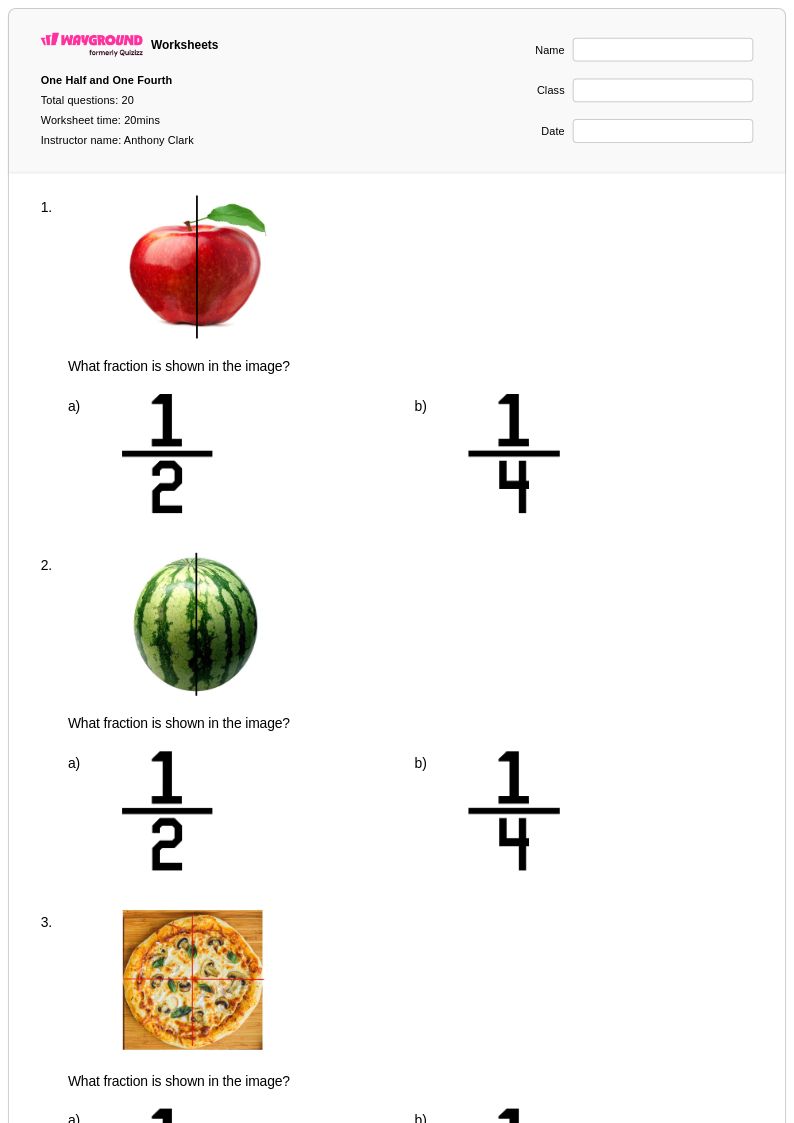
20 Q
2nd - Uni
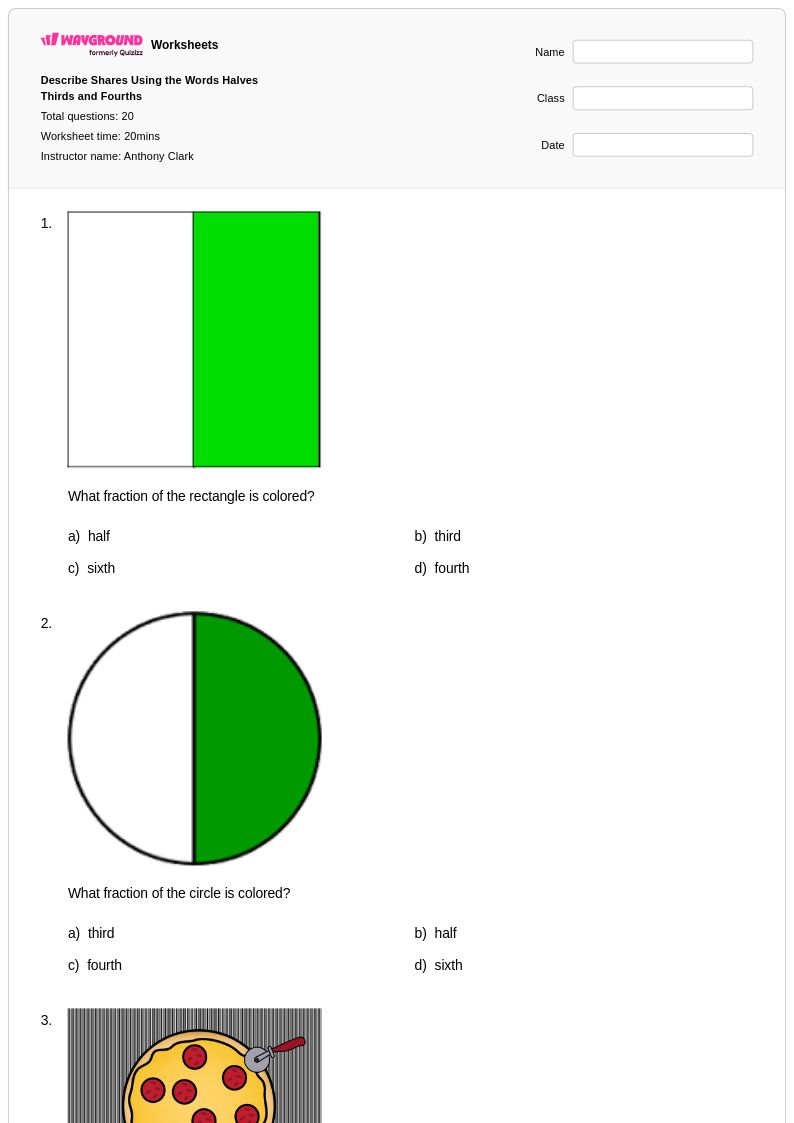
20 Q
2nd - Uni
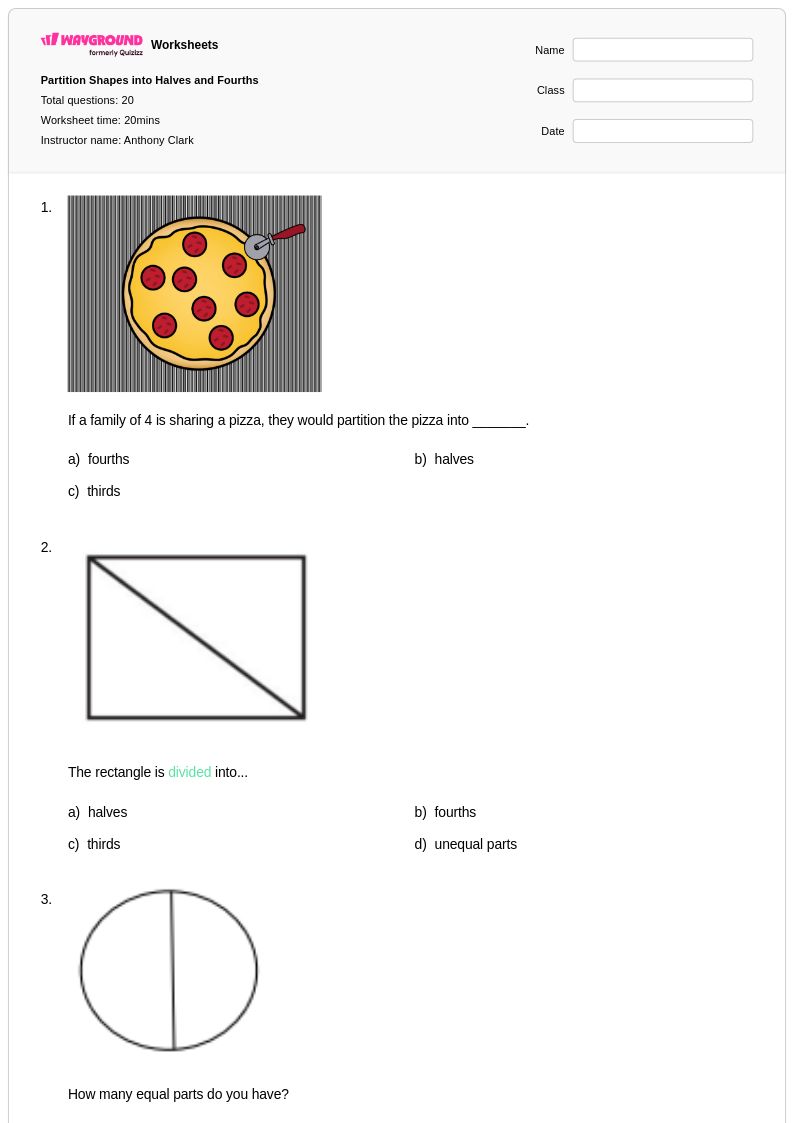
20 Q
2nd - Uni
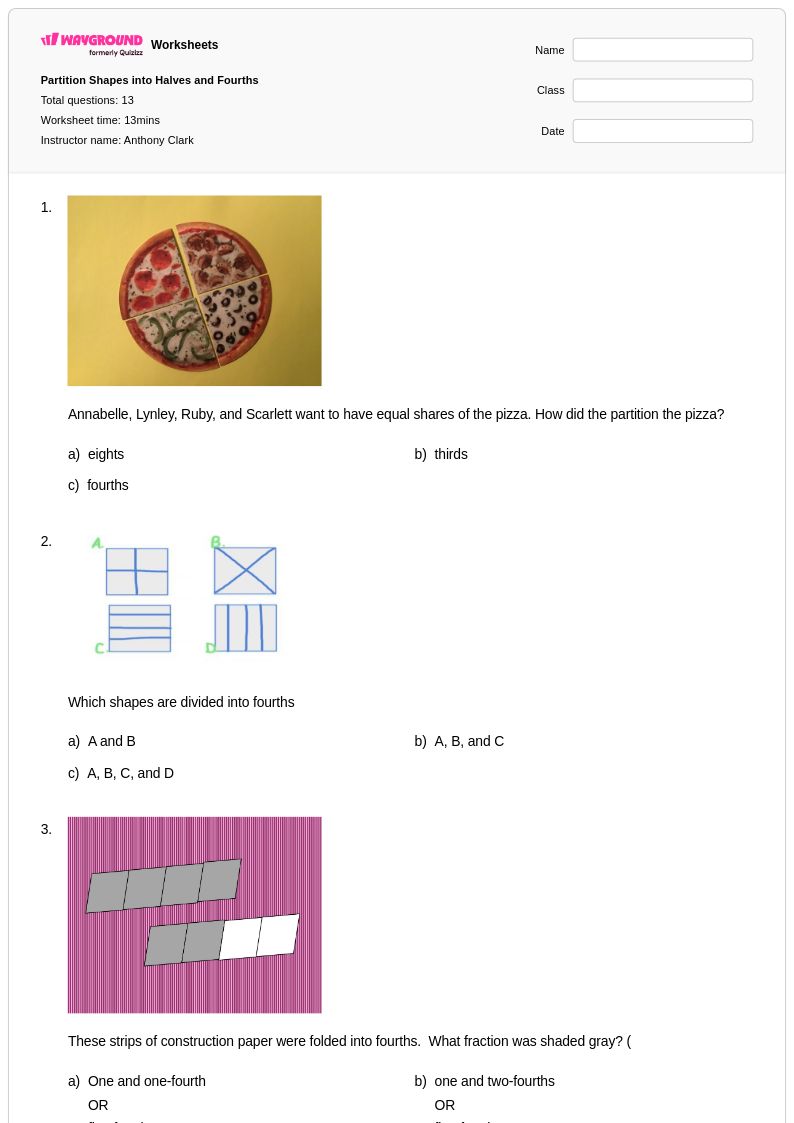
13 Q
2nd - Uni
20 Q
2nd
12 Q
2nd
12 Q
2nd
20 Q
2nd - Uni
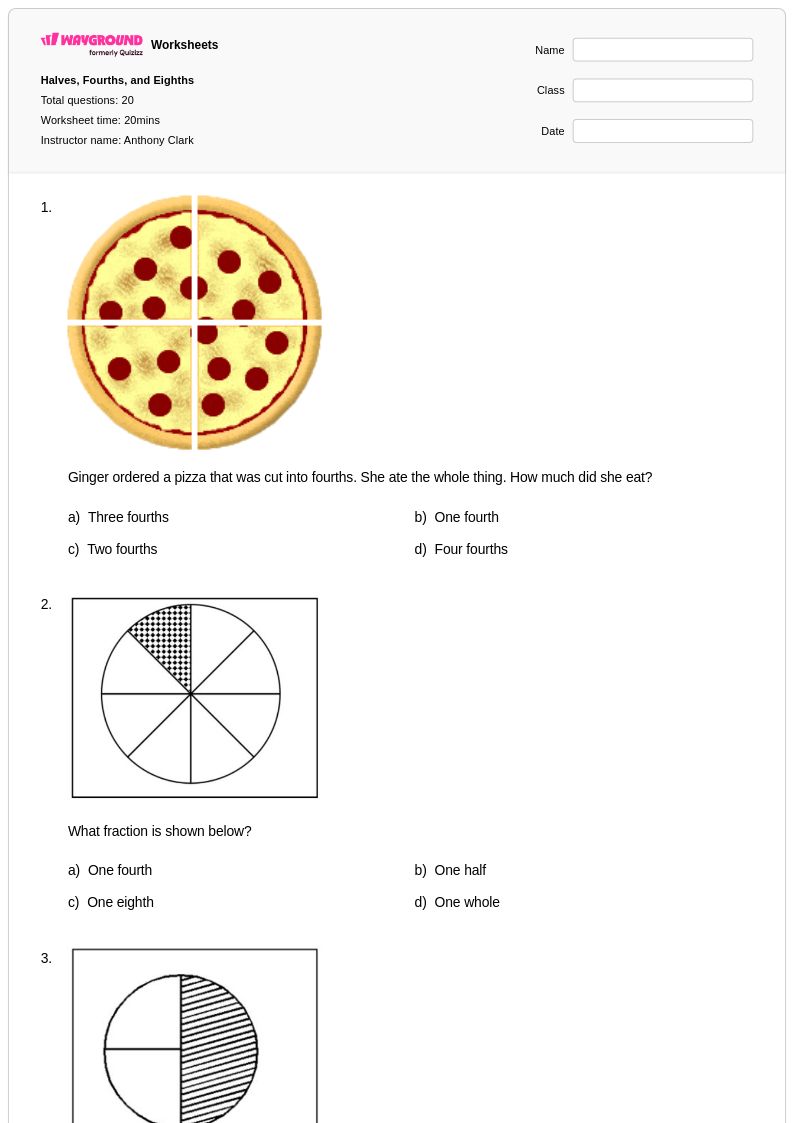
20 Q
2nd - Uni
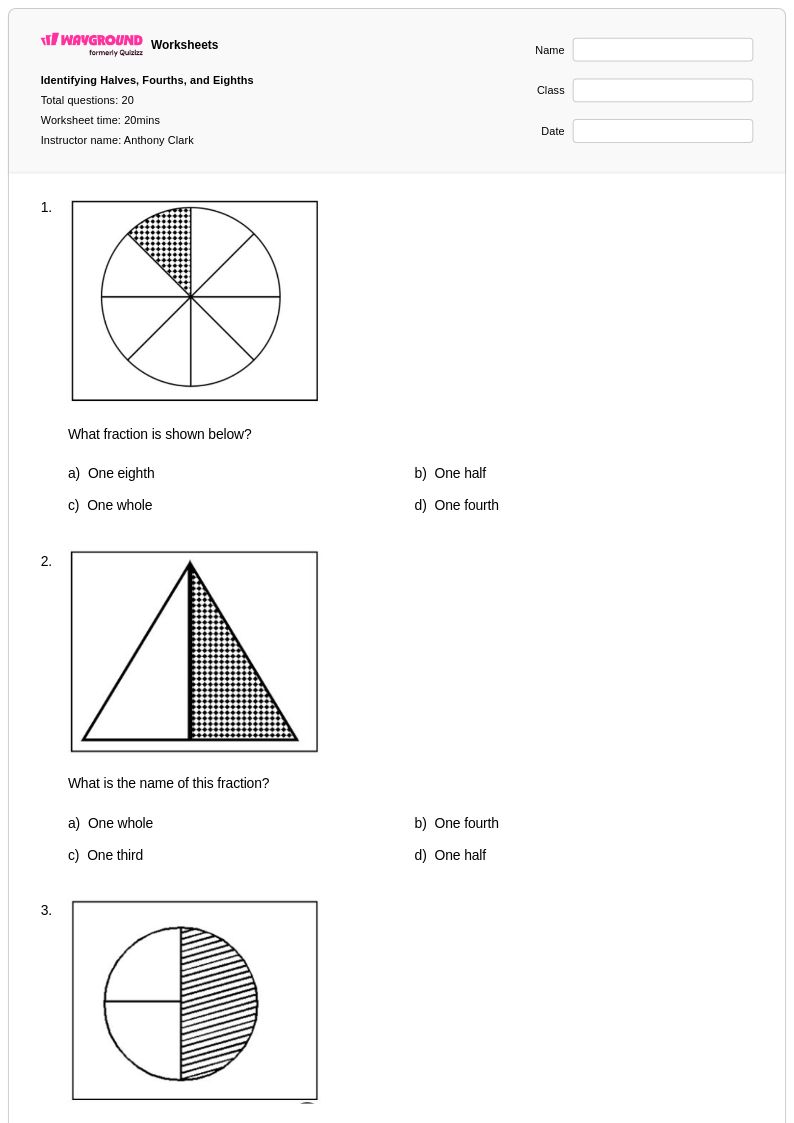
20 Q
2nd - Uni
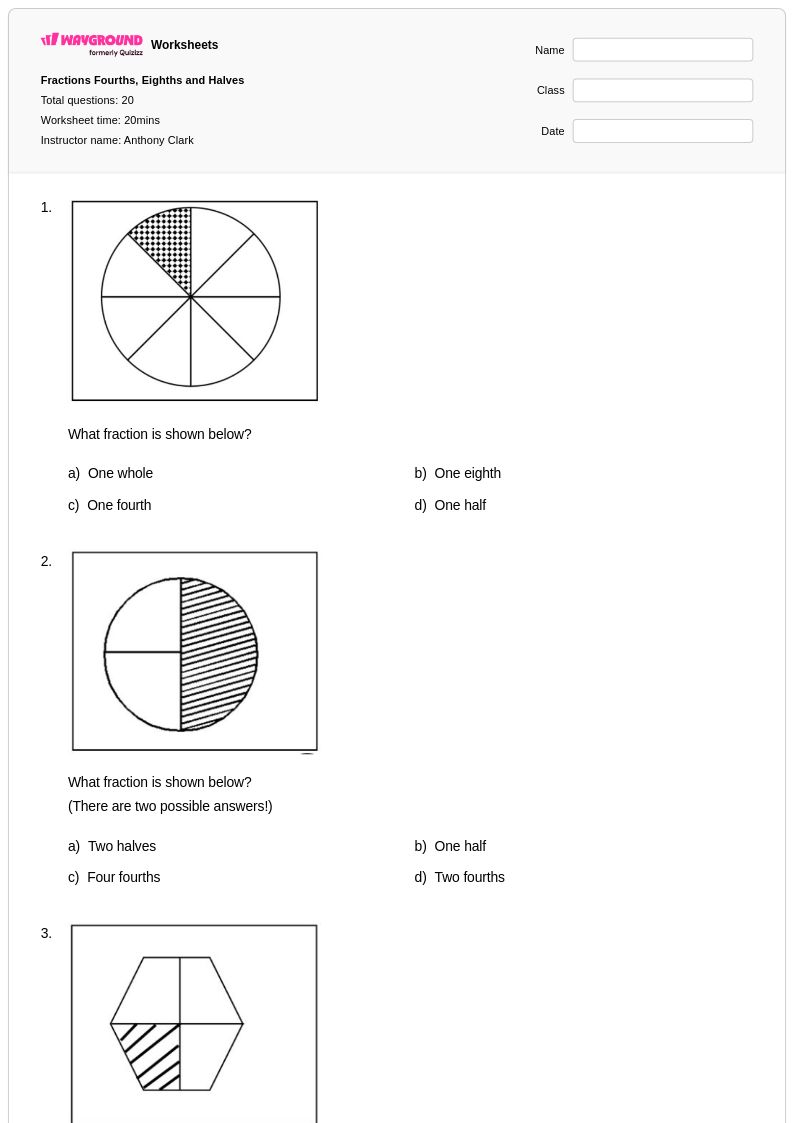
20 Q
2nd - Uni
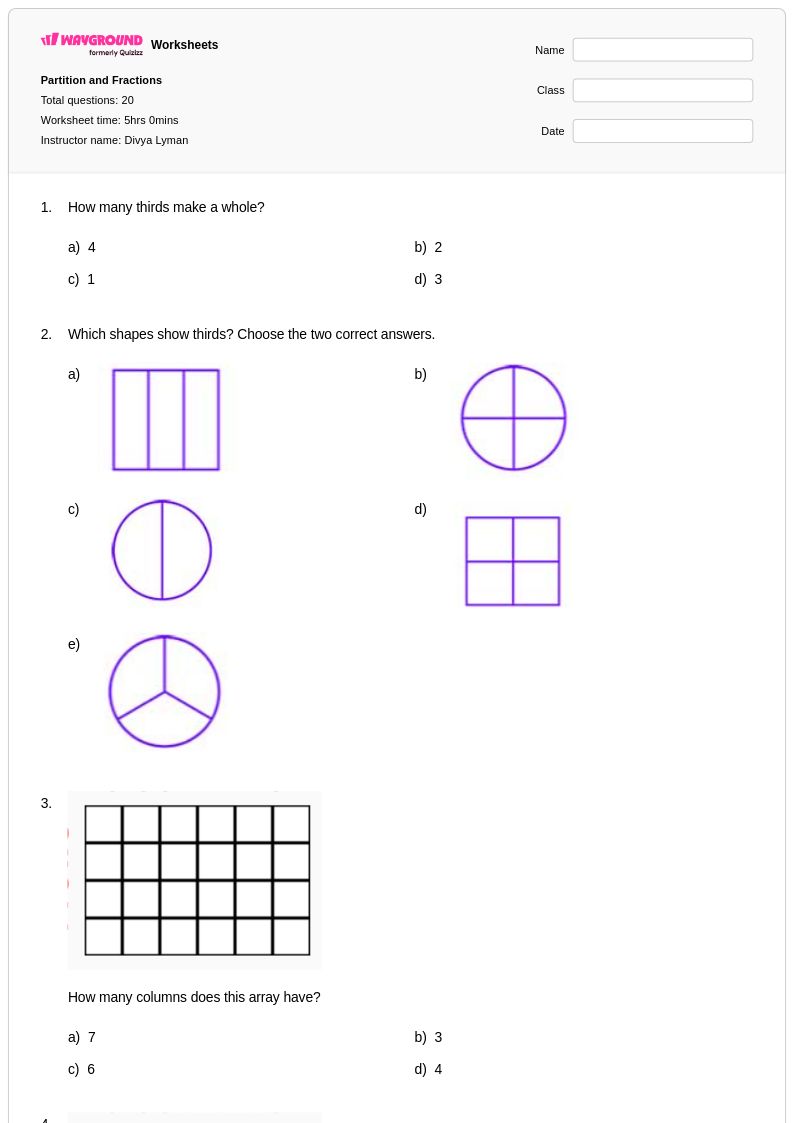
20 Q
2nd
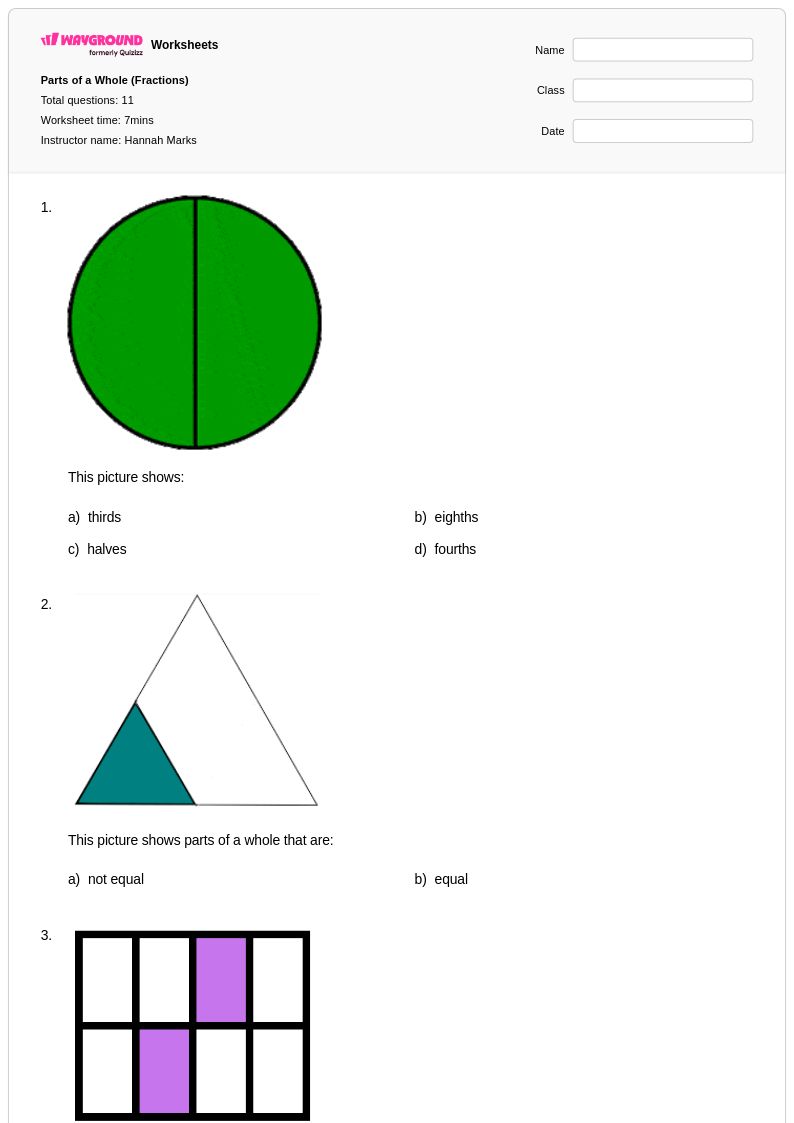
11 Q
2nd
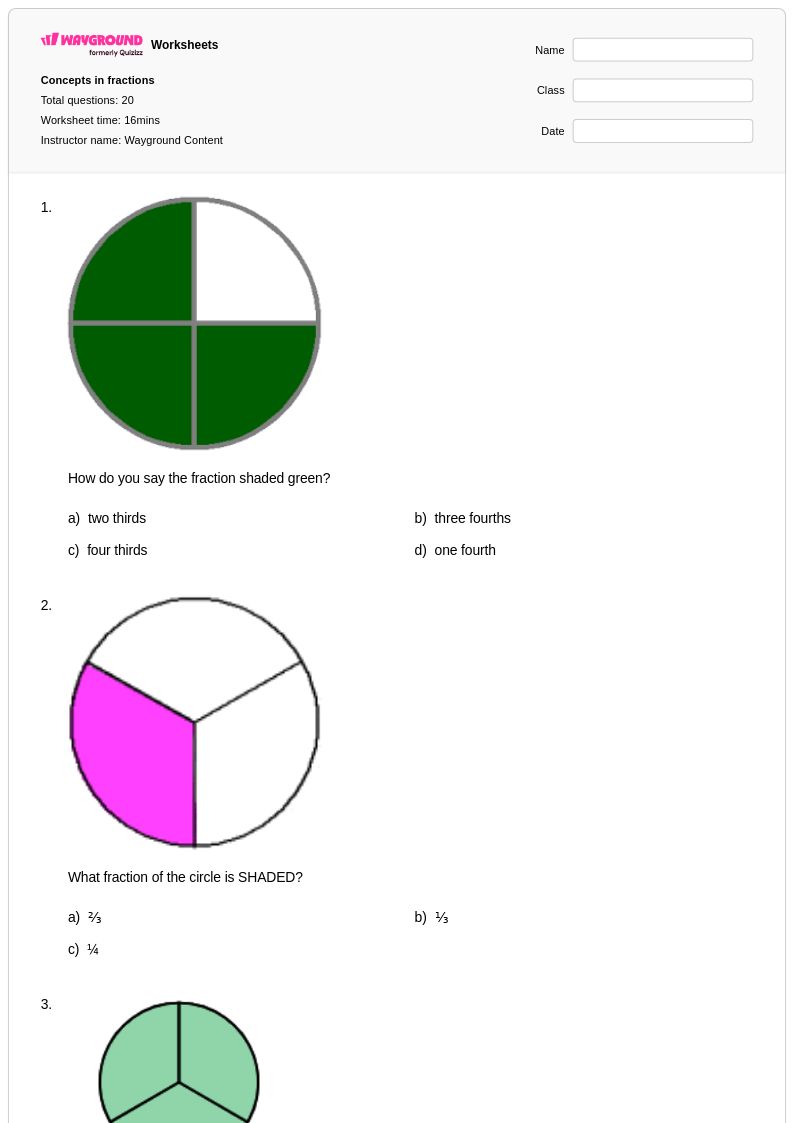
20 Q
2nd
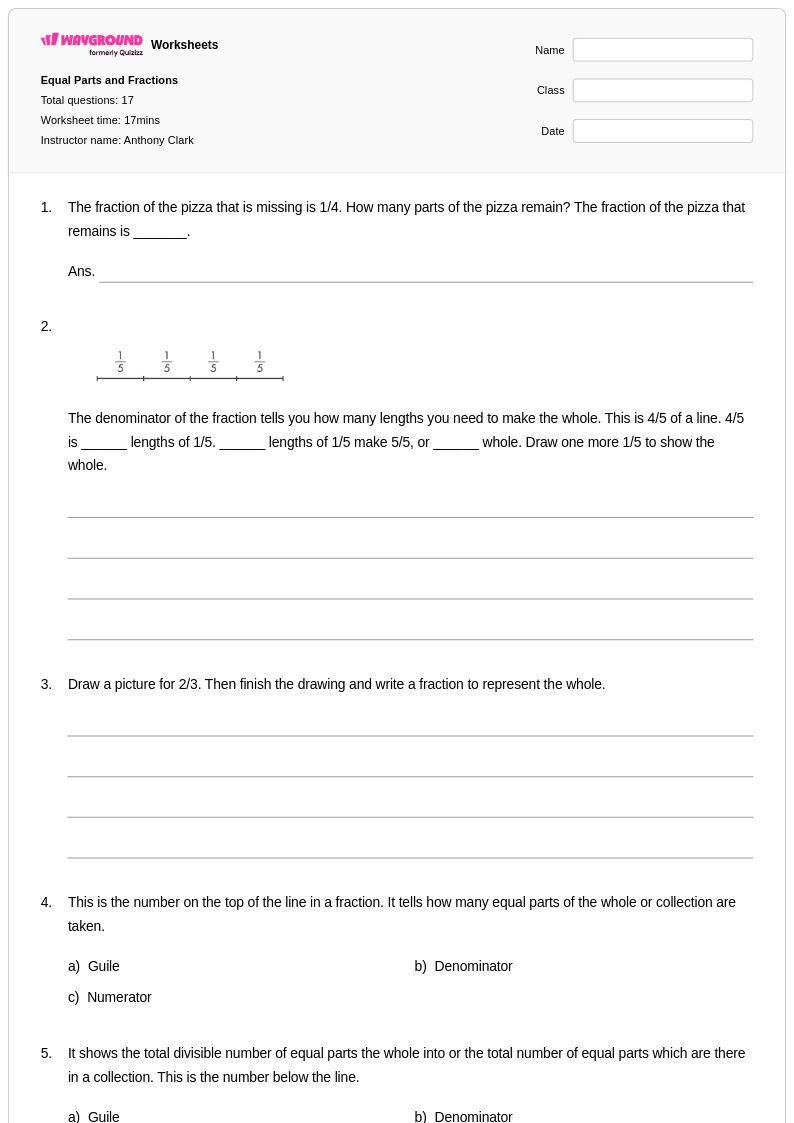
17 Q
2nd - Uni
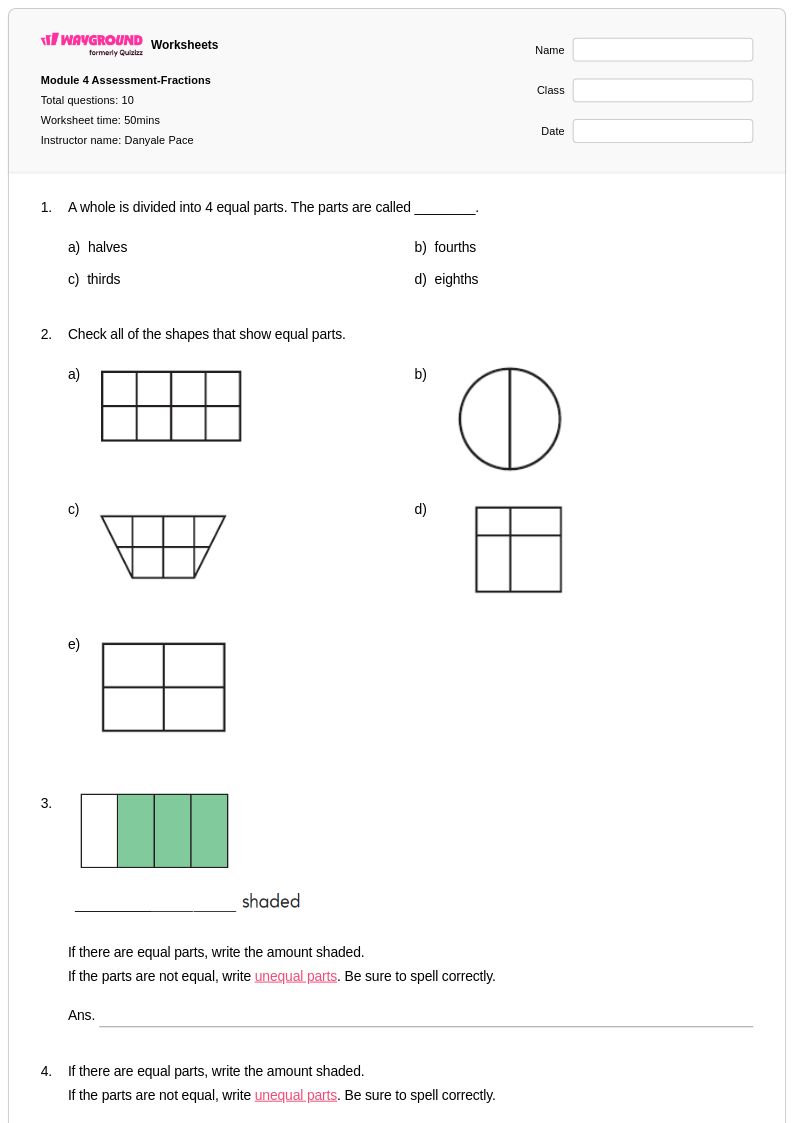
10 Q
2nd
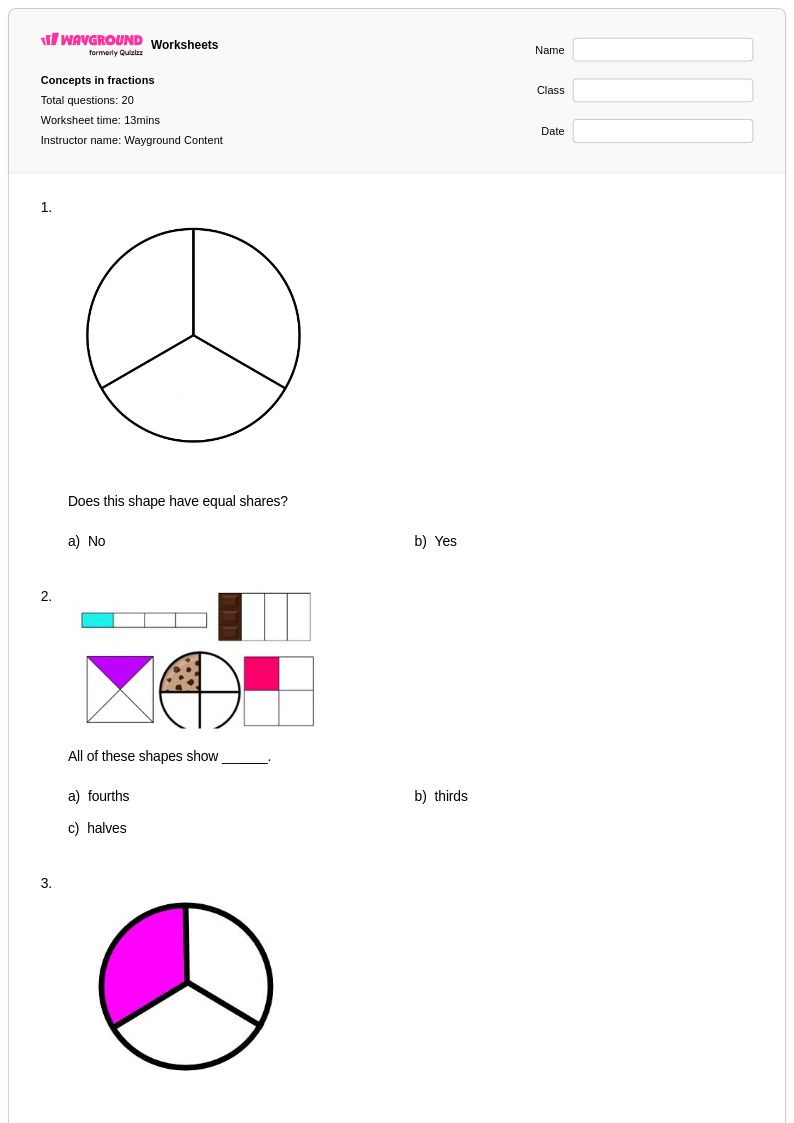
20 Q
2nd
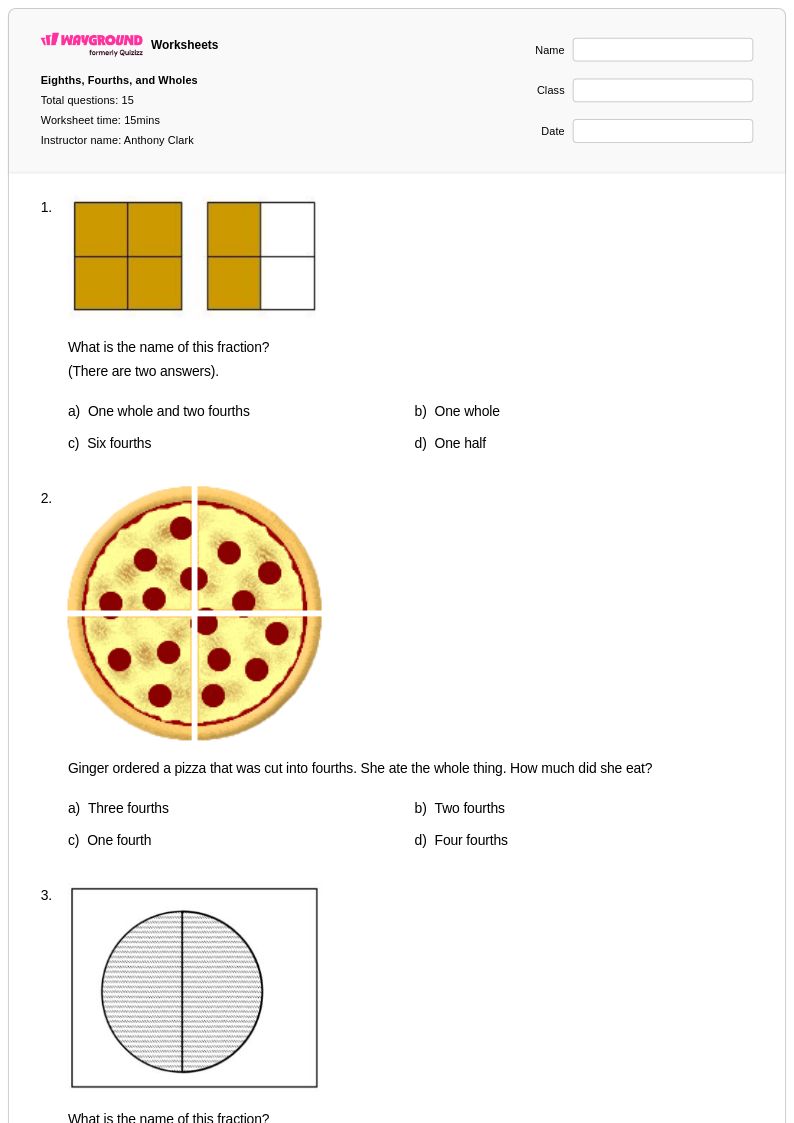
15 Q
2nd - Uni
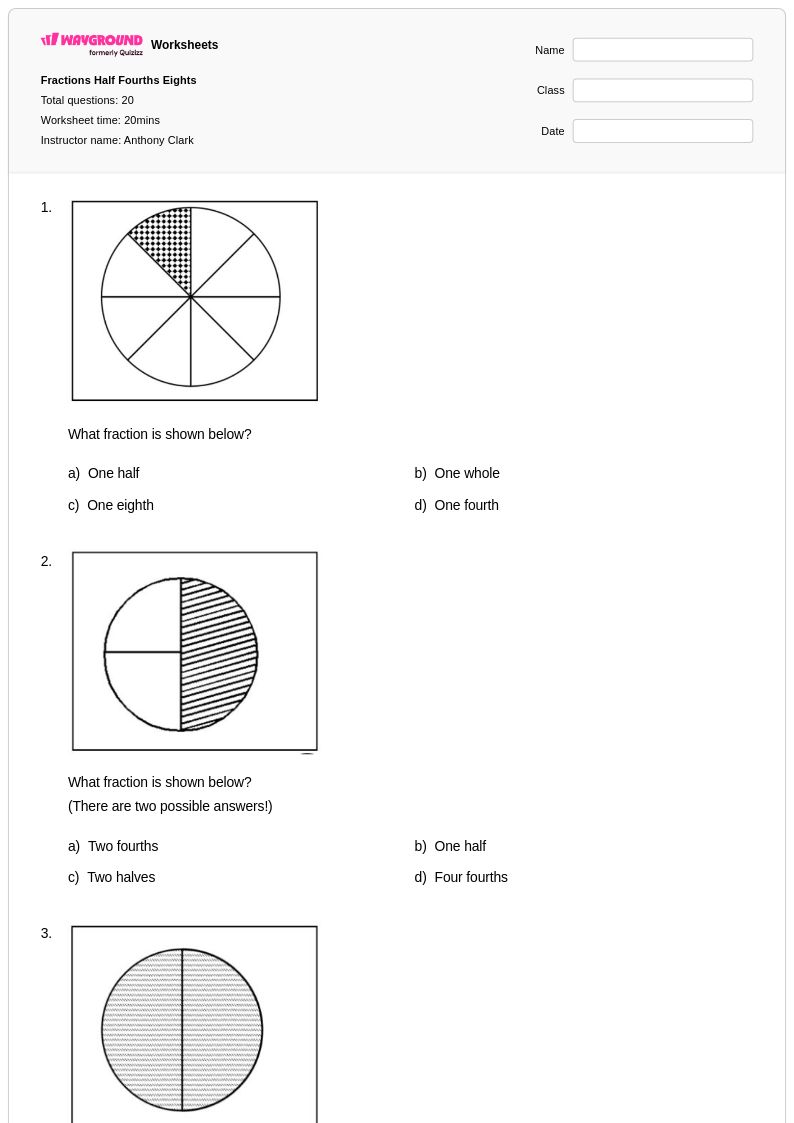
20 Q
2nd - Uni
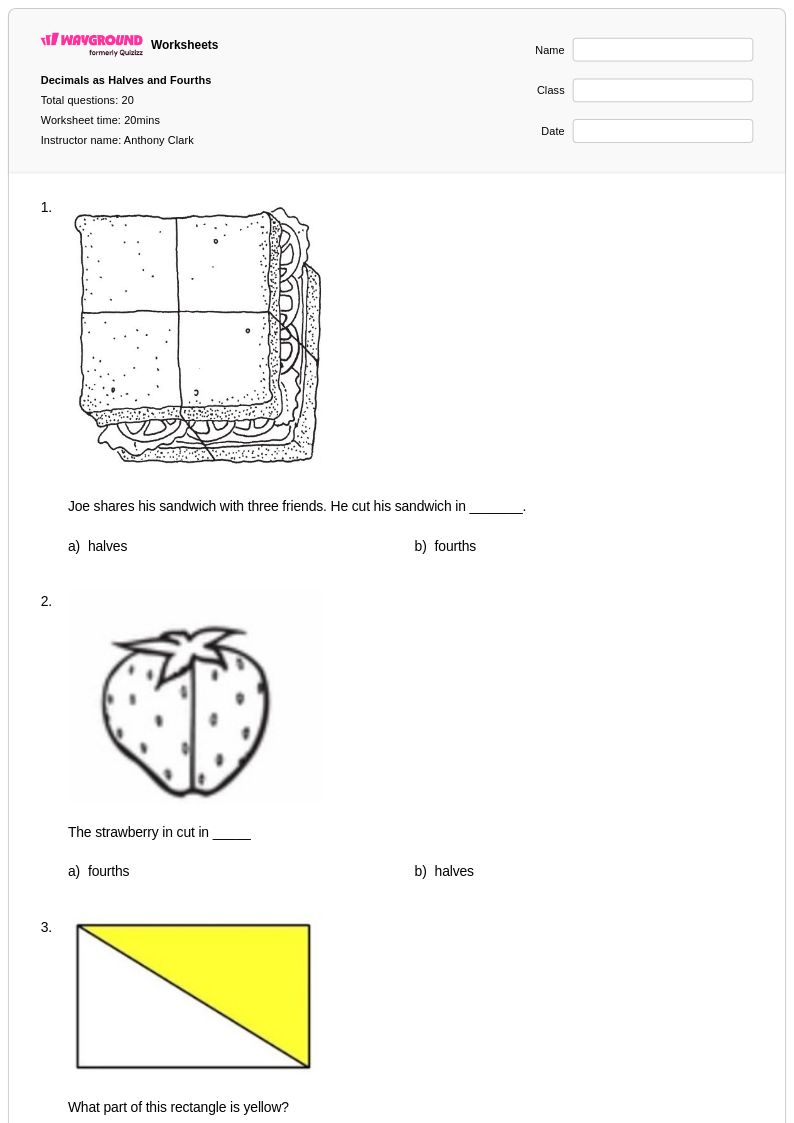
20 Q
1st - Uni
Explore Halves and Fourths Worksheets by Grades
Explore Other Subject Worksheets for class 2
Explore printable Halves and Fourths worksheets for Class 2
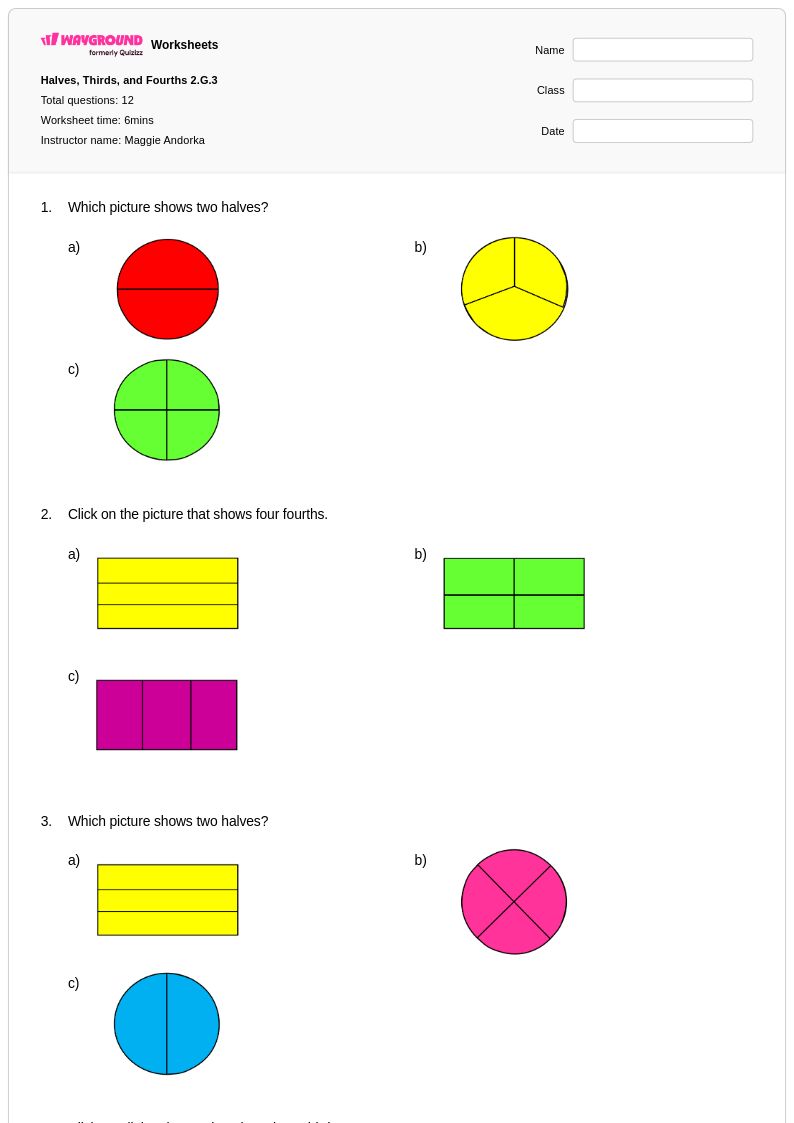
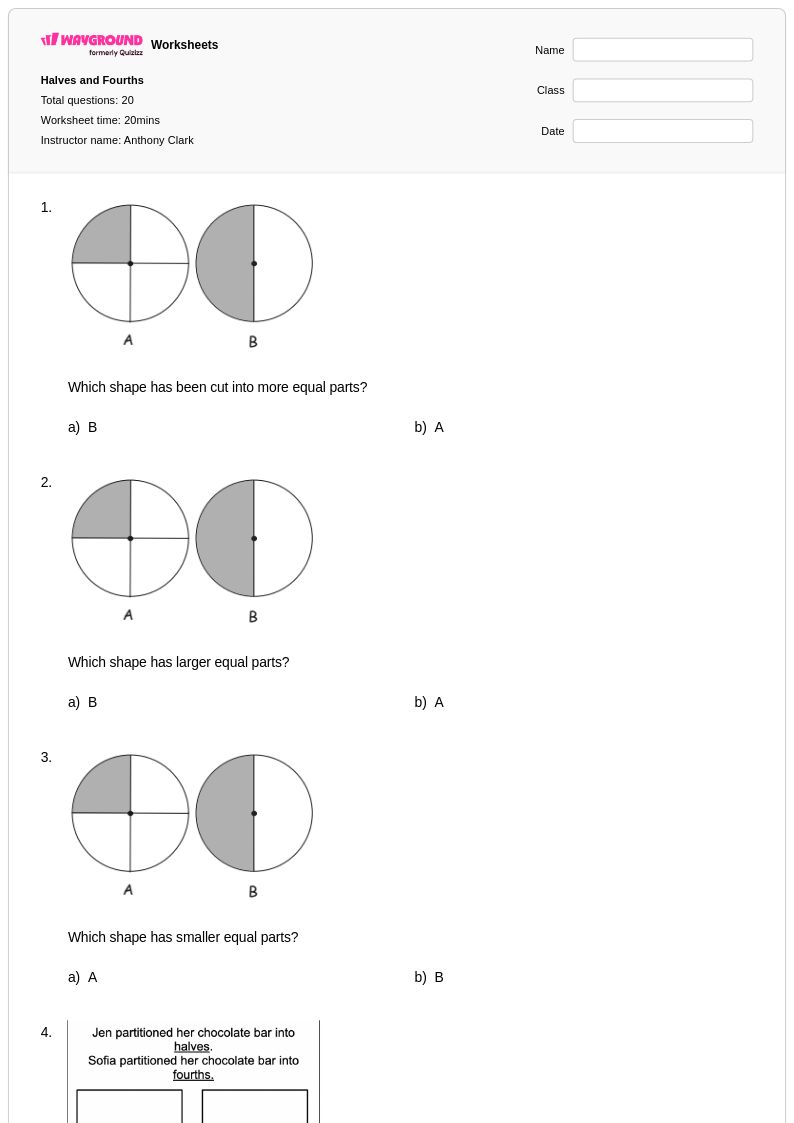
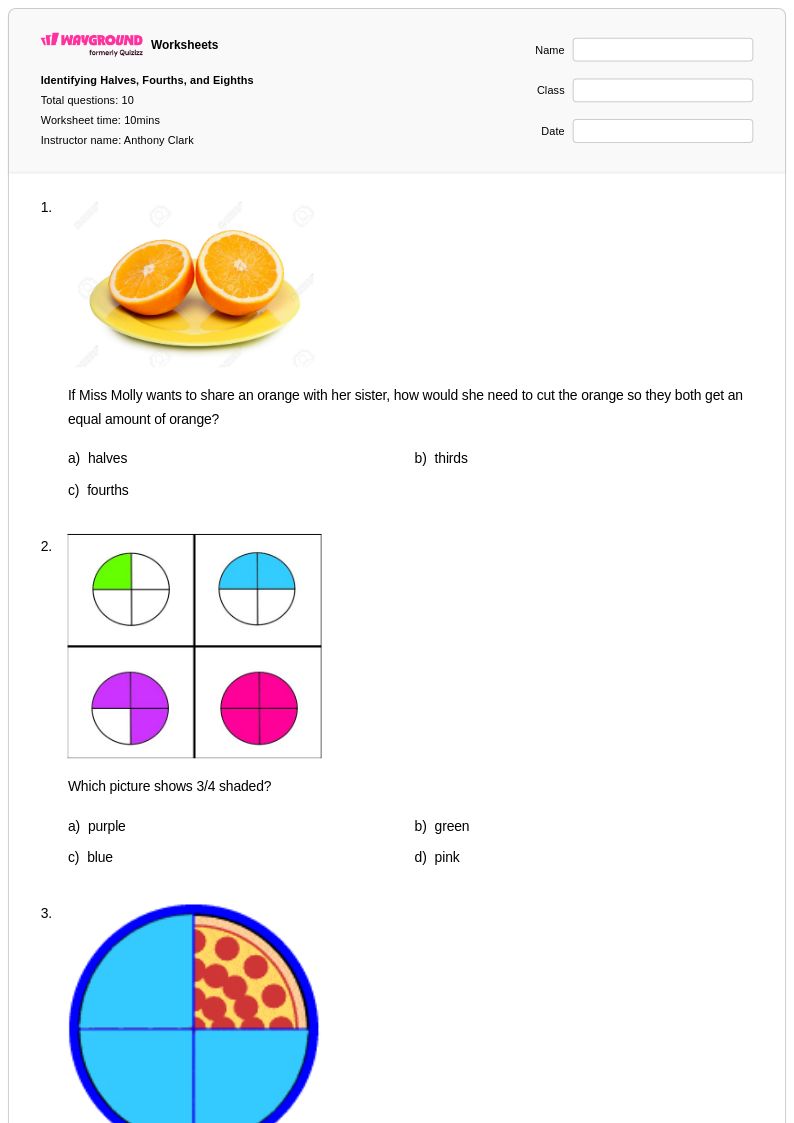
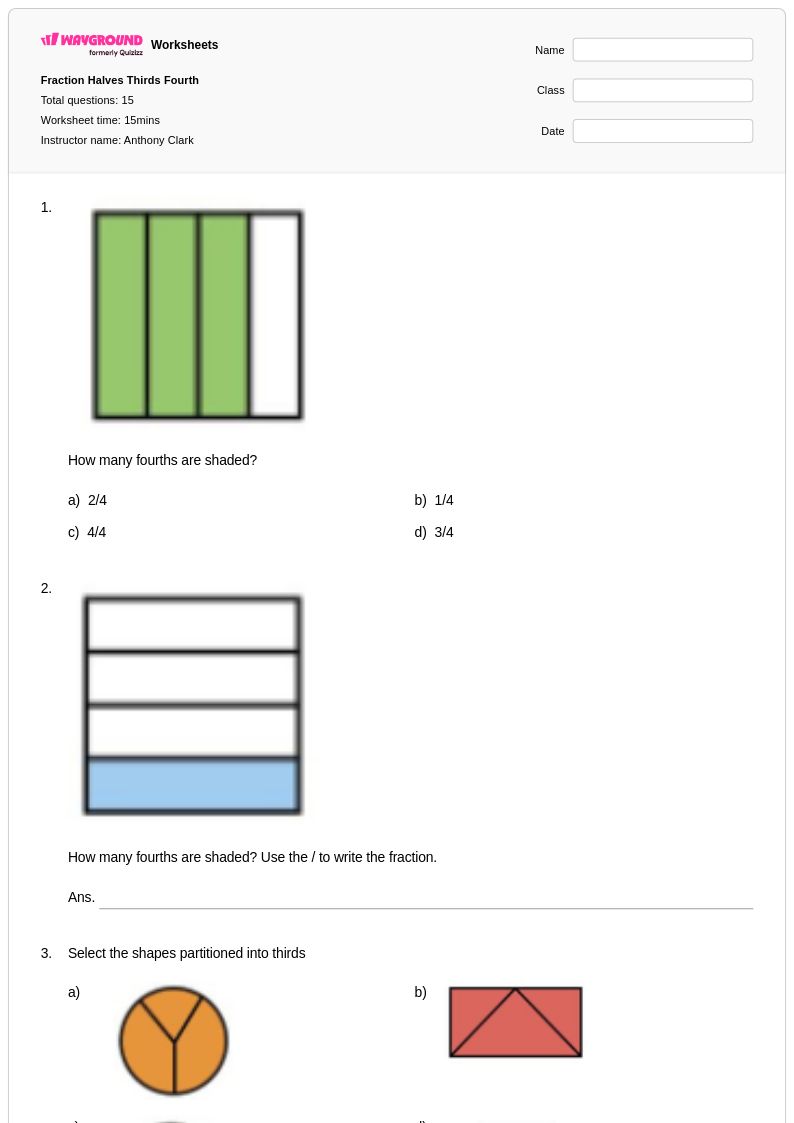
Halves and fourths worksheets for Class 2 students through Wayground (formerly Quizizz) provide essential foundational practice in understanding basic fractions through visual and hands-on learning approaches. These carefully designed worksheets help young learners develop crucial mathematical skills by teaching them to recognize, identify, and work with equal parts of shapes and objects. Students strengthen their ability to divide circles, squares, rectangles, and other geometric figures into two and four equal parts while learning the corresponding fraction vocabulary. Each worksheet collection includes comprehensive answer keys and is available as free printable pdf resources, making it easy for educators to implement meaningful practice problems that build conceptual understanding of fractional parts.
Wayground (formerly Quizizz) empowers teachers with millions of educator-created halves and fourths worksheet resources that streamline lesson planning and support diverse learning needs in Class 2 mathematics instruction. The platform's robust search and filtering capabilities allow teachers to quickly locate standards-aligned materials that match their specific curriculum requirements and student ability levels. Advanced differentiation tools enable educators to customize worksheets for individual learners, while the flexible format options include both printable pdf versions and interactive digital activities. These comprehensive features facilitate targeted skill practice, support remediation for struggling students, provide enrichment opportunities for advanced learners, and help teachers efficiently plan engaging fraction lessons that meet the developmental needs of second-grade students exploring fundamental concepts of equal parts and basic fractions.
FAQs
What do second graders learn about fractions?
How do I teach that equal shares of a whole can look different?
What kind of fraction practice is best for second graders?
What is a key concept to assess for fractions in 2nd grade?
How can I use these Grade 2 halves and fourths worksheets?
How does this topic support 2nd grade math standards?