
Recommended Topics for you
22 Q
1st
10 Q
1st
8 Q
1st
10 Q
1st

10 Q
1st - 12th
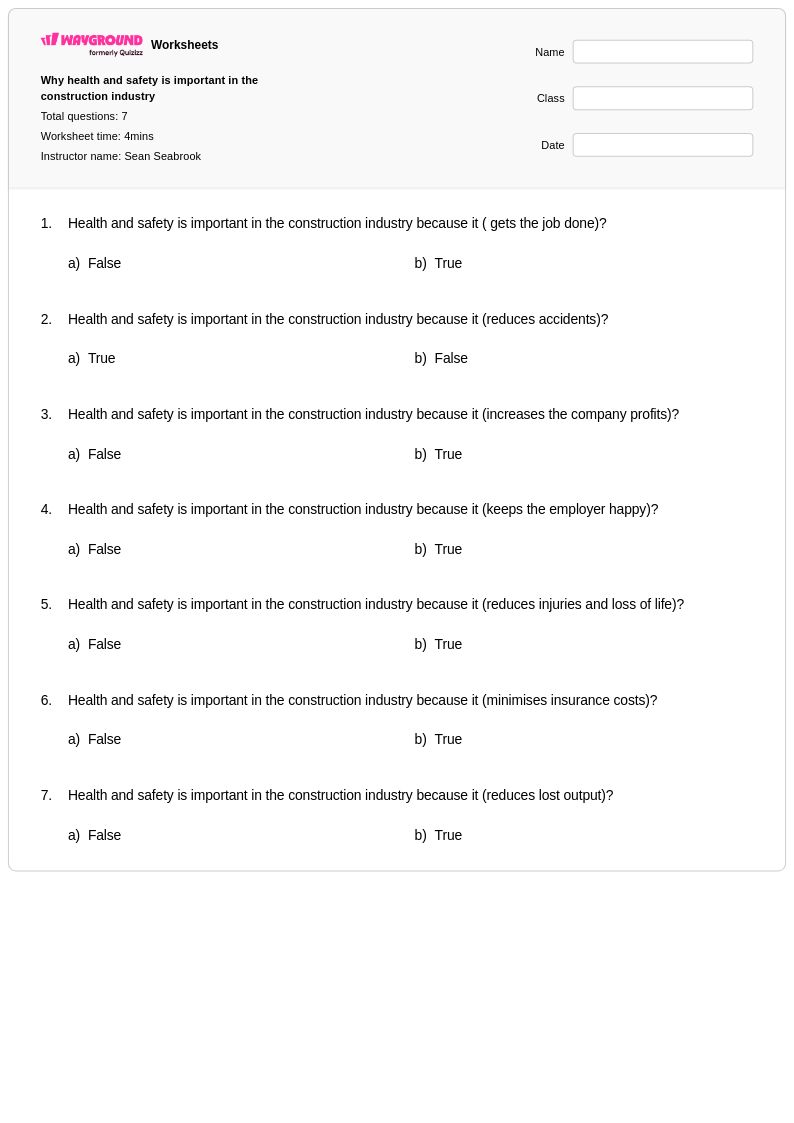
7 Q
1st
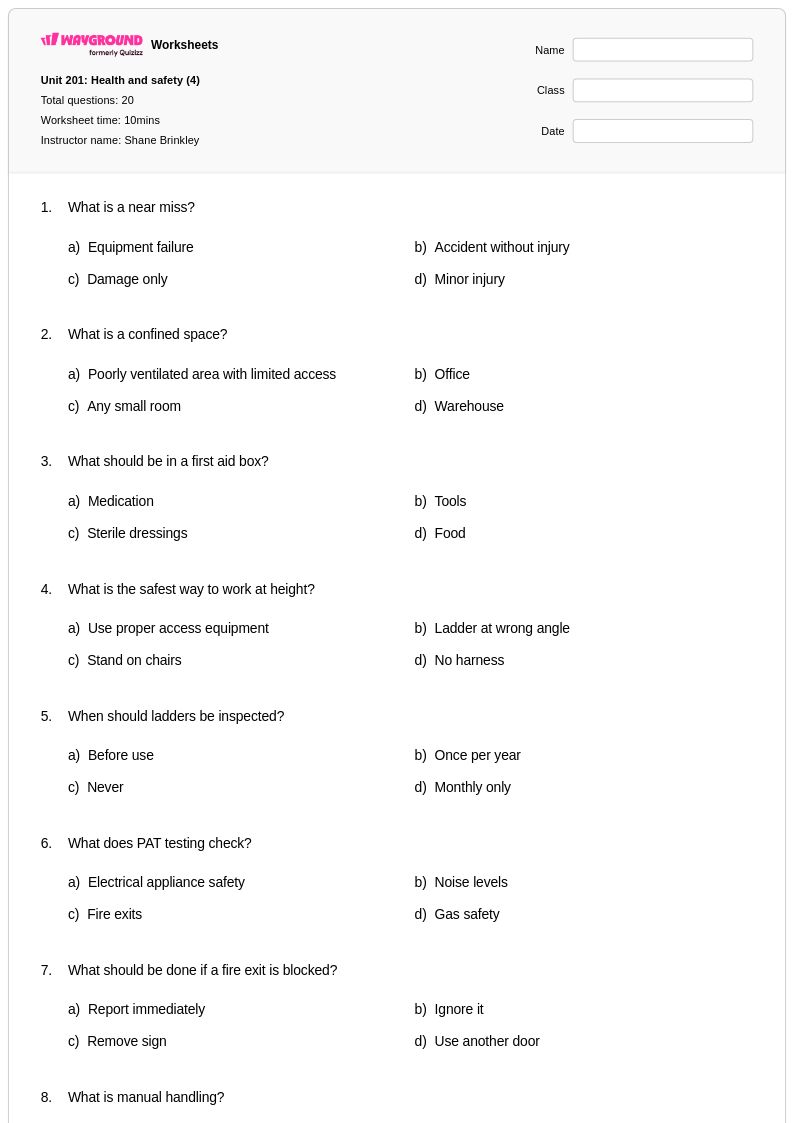
40 Q
1st

11 Q
KG - 12th

15 Q
1st - PD
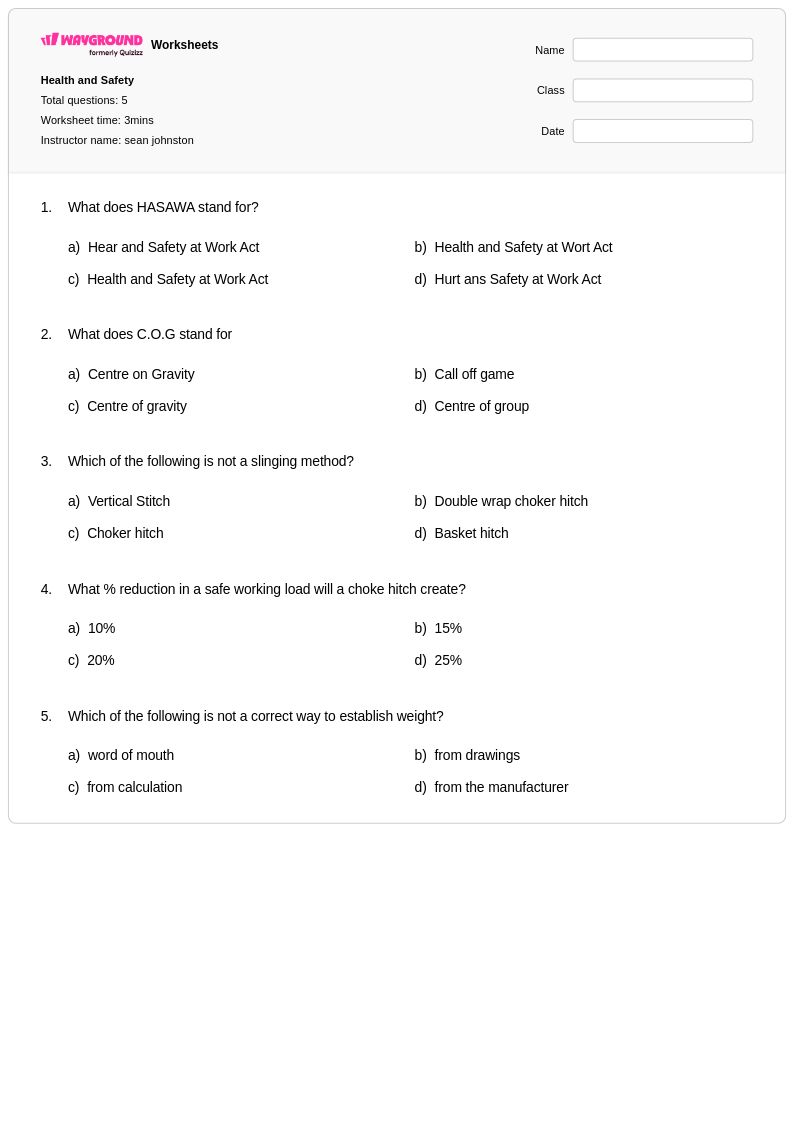
5 Q
1st - 5th
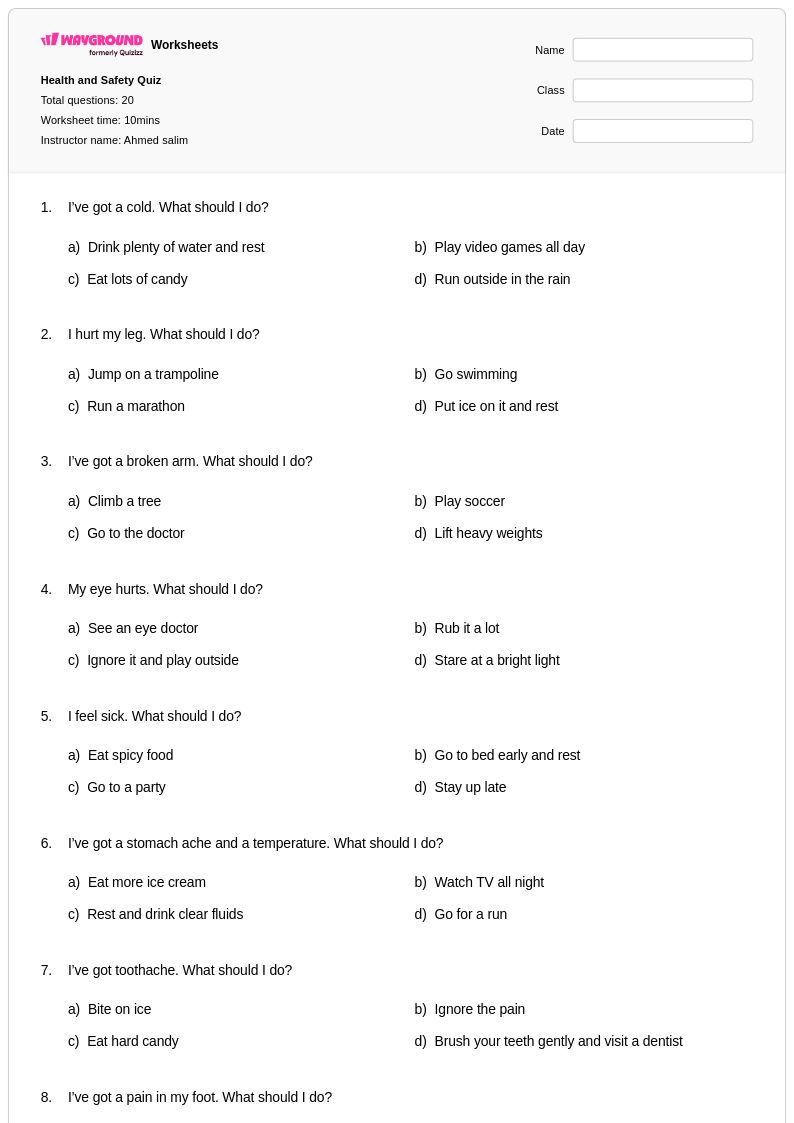
20 Q
1st
25 Q
1st
20 Q
KG - Uni
6 Q
1st - 7th
22 Q
1st
15 Q
1st
10 Q
1st
18 Q
1st
10 Q
1st
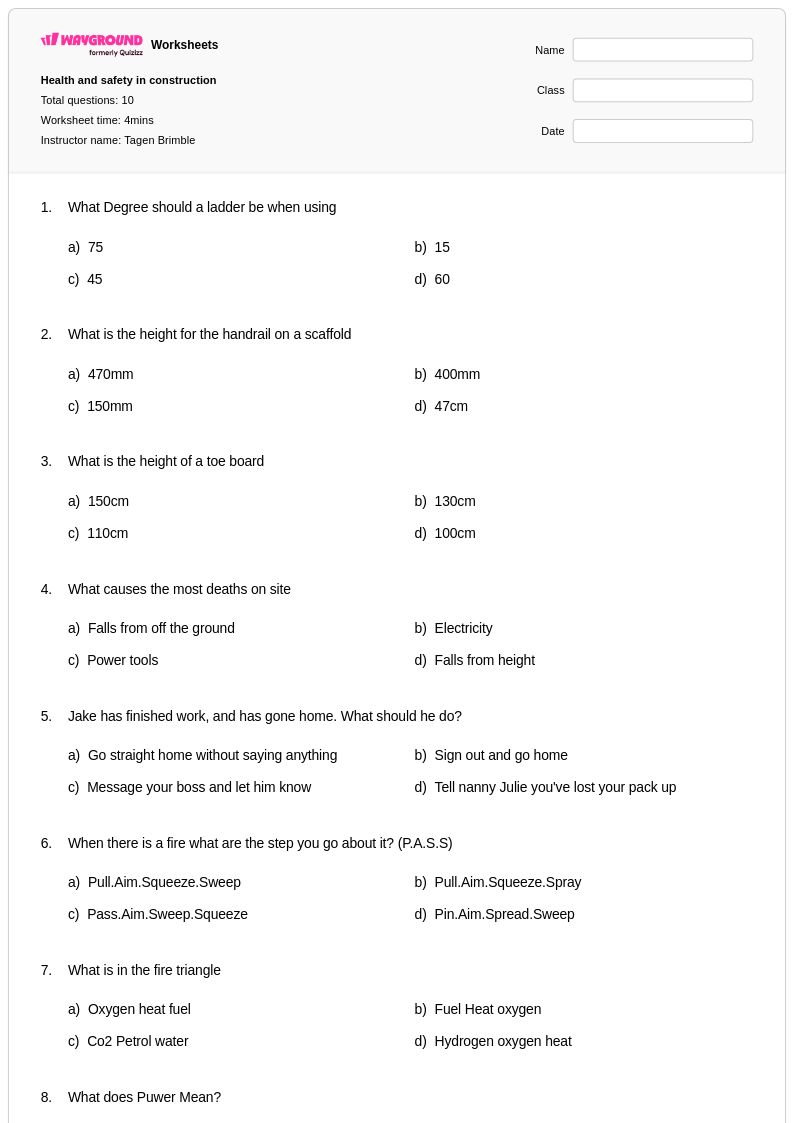
10 Q
1st - 5th
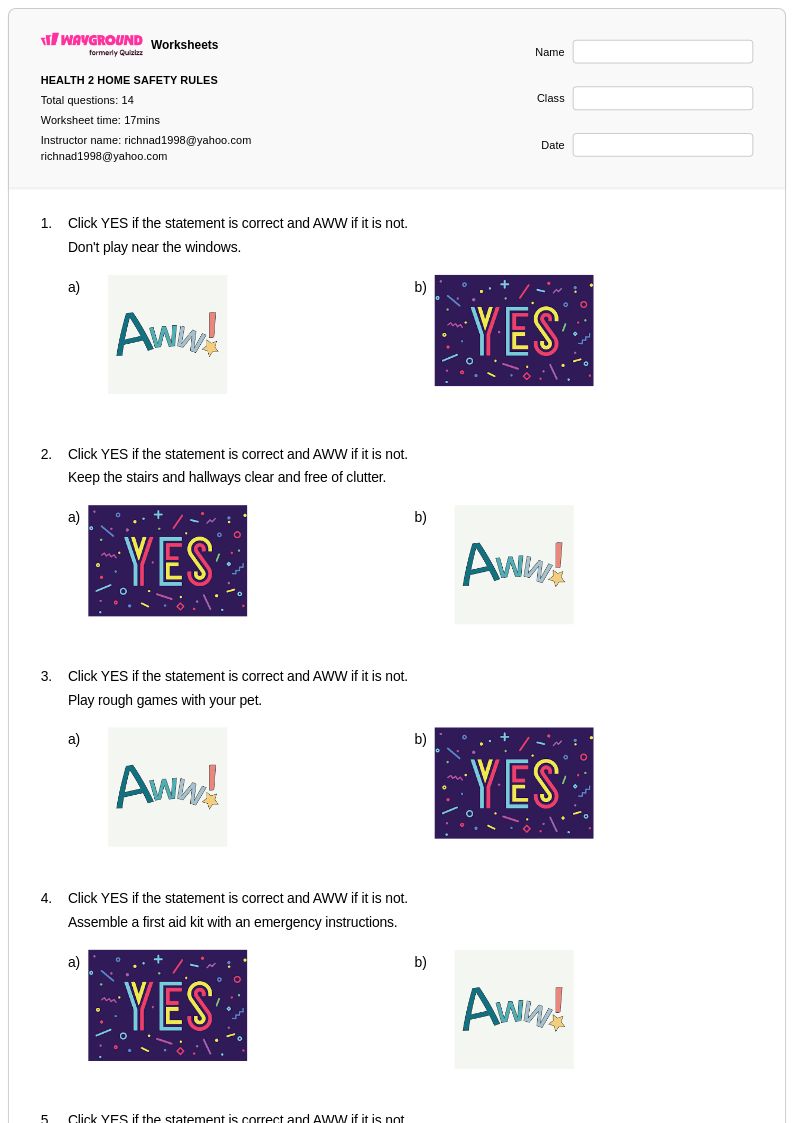
14 Q
1st
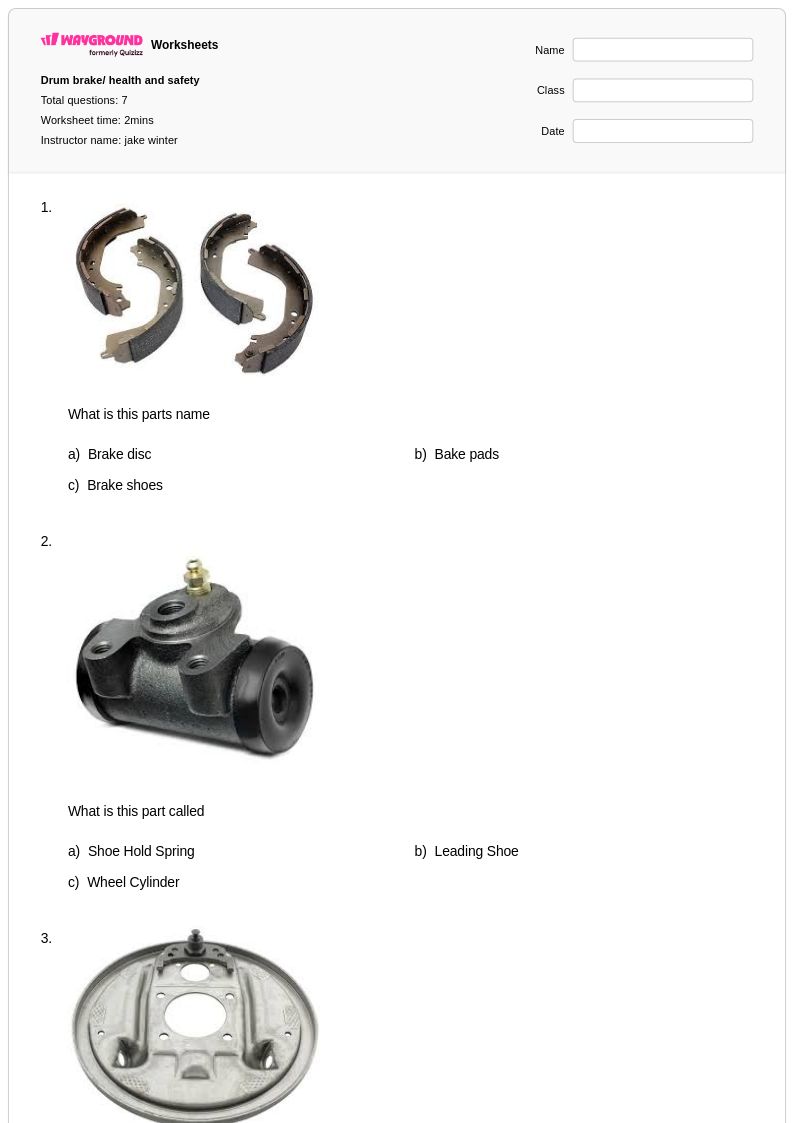
7 Q
KG - PD
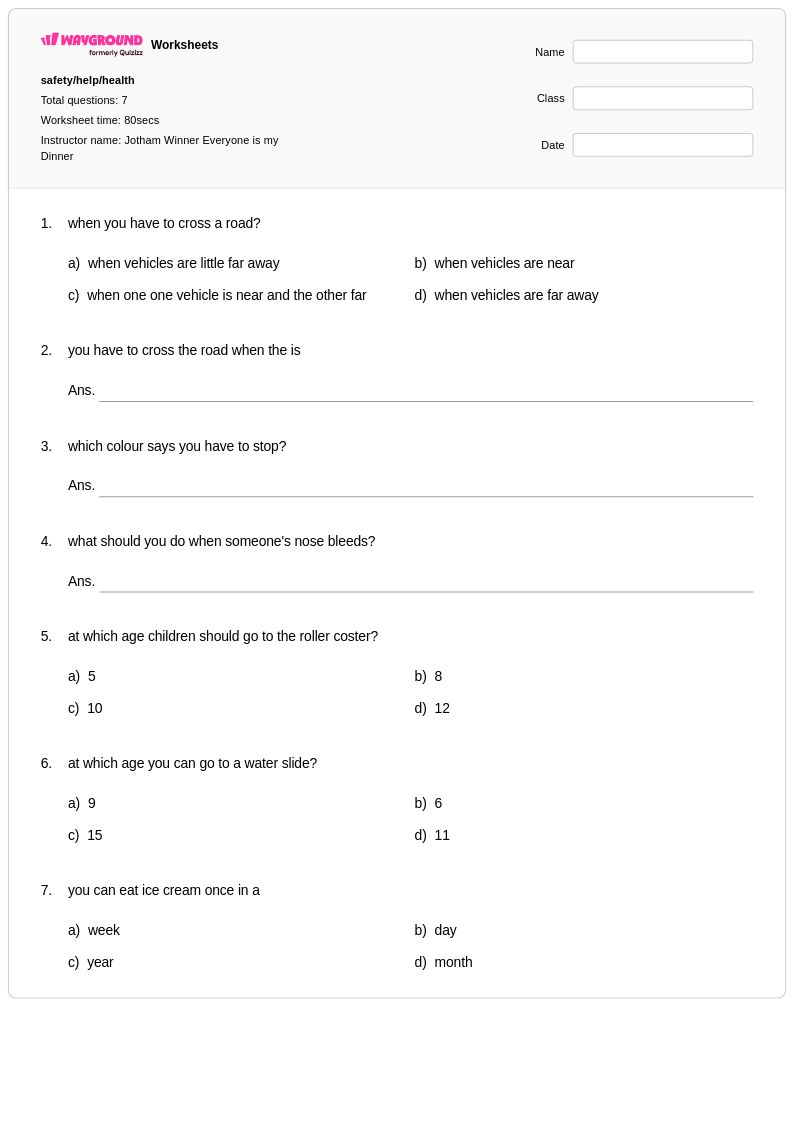
7 Q
1st - 2nd
13 Q
1st - 4th
Explore Health and Safety Worksheets by Grades
Explore Health and Safety Worksheets for class 1 by Topic
Explore Other Subject Worksheets for class 1
Explore printable Health and Safety worksheets for Class 1
Health and Safety worksheets for Class 1 students available through Wayground (formerly Quizizz) provide essential foundational learning experiences that introduce young learners to crucial personal wellness and protective behaviors. These carefully designed educational resources focus on developing fundamental safety awareness, basic hygiene practices, and healthy decision-making skills appropriate for first-grade developmental levels. Students engage with age-appropriate content covering topics such as proper handwashing techniques, recognizing safe versus unsafe situations, understanding the importance of wearing protective gear, and identifying trusted adults who can help in emergencies. Each worksheet includes structured practice problems that reinforce key concepts through interactive activities, visual recognition exercises, and scenario-based learning opportunities, with comprehensive answer keys provided to support effective instruction and assessment. These free printable resources serve as valuable supplements to classroom instruction, offering teachers ready-to-use materials in convenient pdf format that can be easily integrated into daily health education routines.
Wayground (formerly Quizizz) supports educators with an extensive collection of millions of teacher-created Health and Safety resources specifically curated for elementary instruction, featuring robust search and filtering capabilities that allow teachers to quickly locate materials aligned with specific learning objectives and curriculum standards. The platform's differentiation tools enable instructors to modify worksheet difficulty levels and content focus areas to accommodate diverse learning needs within Class 1 classrooms, while flexible customization options allow for adaptation of existing materials to match local health education requirements and school safety protocols. Teachers can access these resources in both printable and digital formats, including downloadable pdf versions that facilitate seamless integration into lesson planning workflows, homework assignments, and assessment strategies. This comprehensive worksheet collection proves invaluable for systematic skill practice, targeted remediation of safety concepts, and enrichment activities that extend learning beyond basic health education requirements, ultimately supporting educators in building strong foundational knowledge that promotes lifelong healthy and safe behaviors.
FAQs
How do I teach health and safety concepts to students effectively?
What topics should a health and safety unit cover?
What exercises help students practice health and safety skills?
What mistakes do students commonly make when learning health and safety content?
How can I differentiate health and safety worksheets for students with different learning needs?
How do I use Wayground's health and safety worksheets in my classroom?