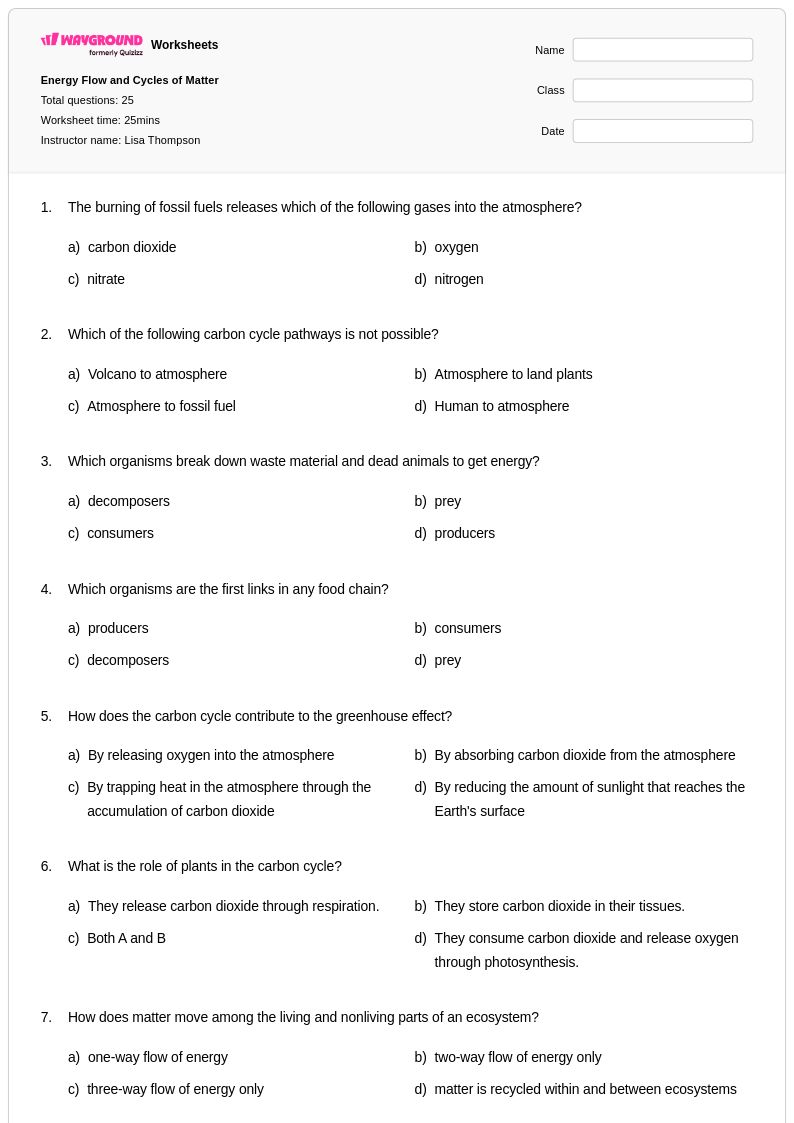
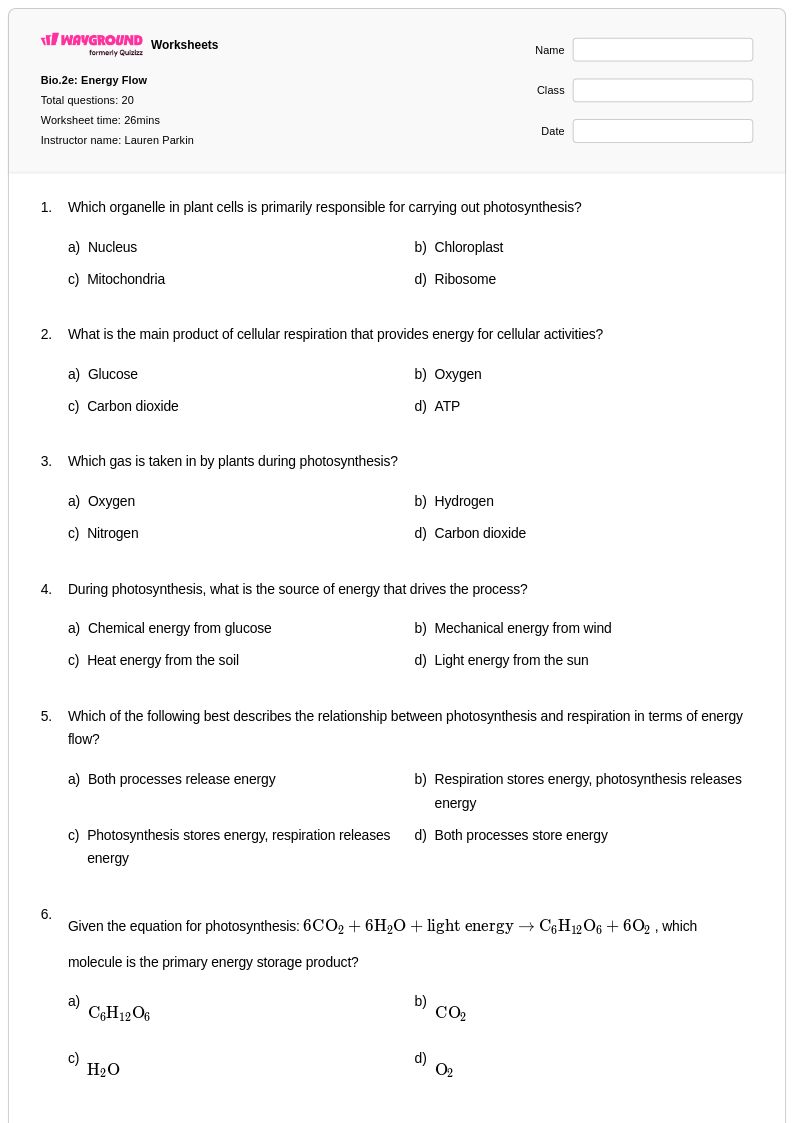
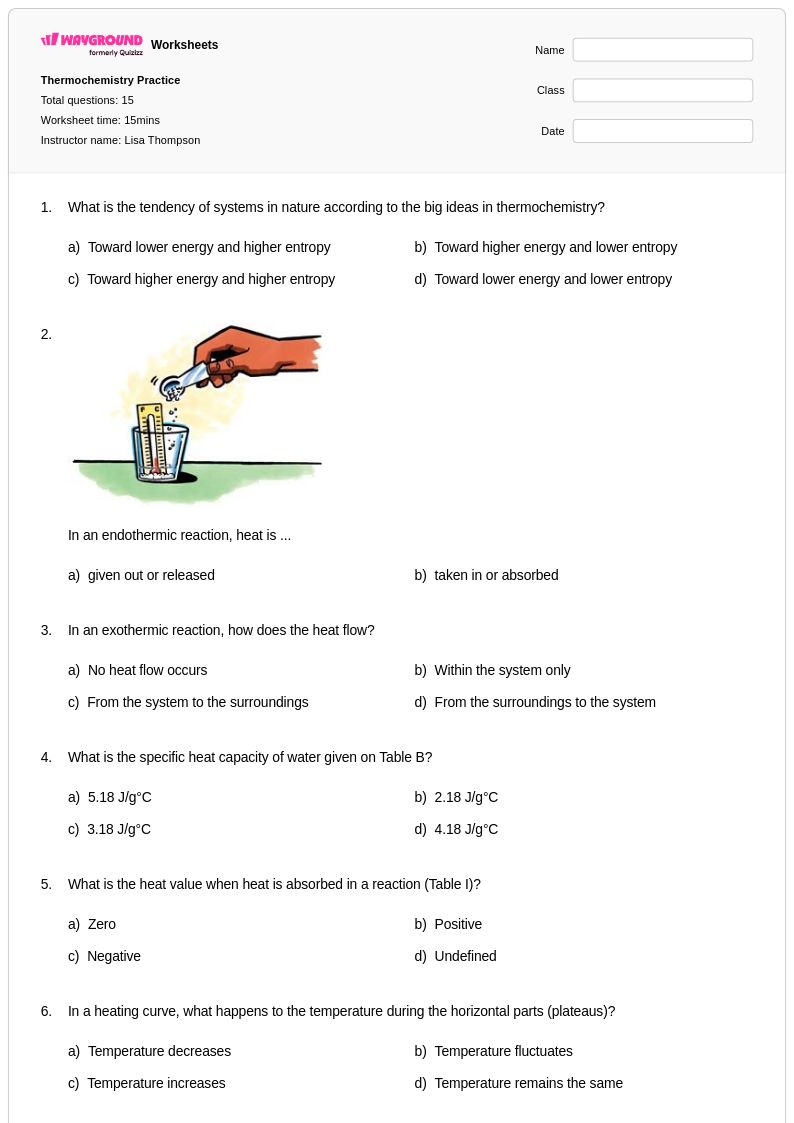
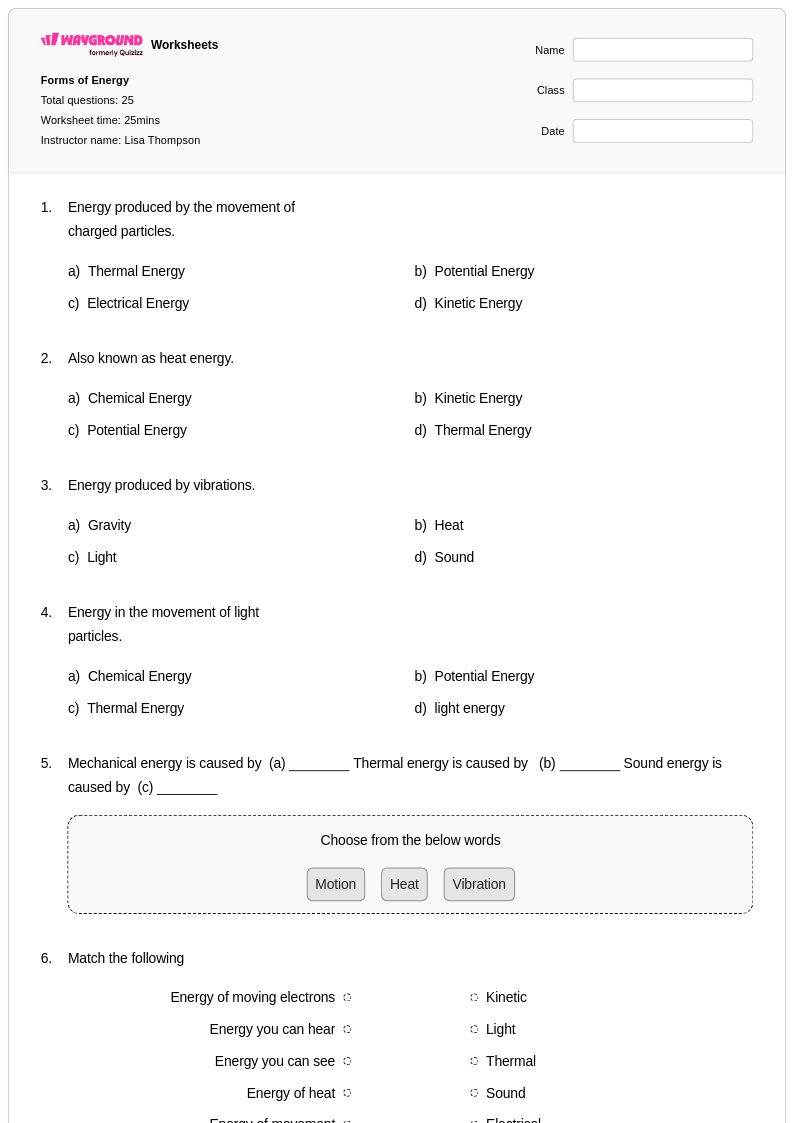
Master Class 10 heat flow concepts with Wayground's comprehensive collection of free worksheets, printables, and practice problems featuring detailed answer keys to help students understand thermal energy transfer principles.
Explore printable Heat Flow worksheets for Class 10
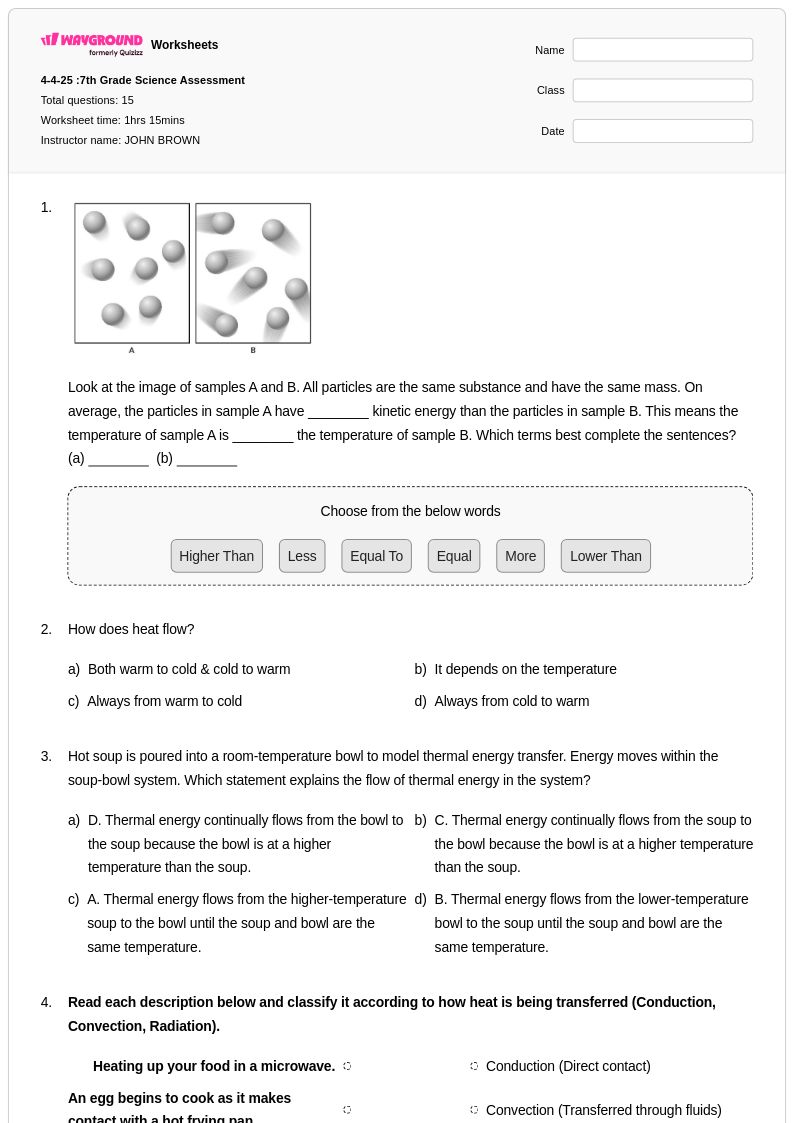
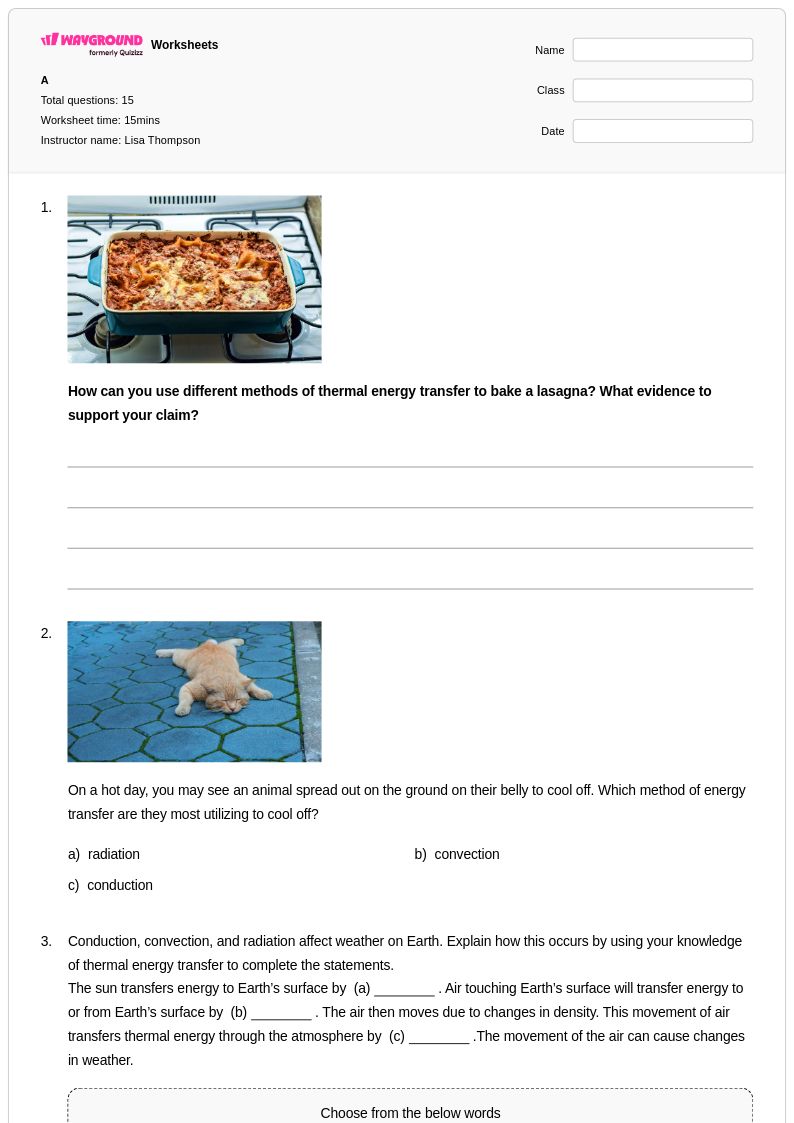
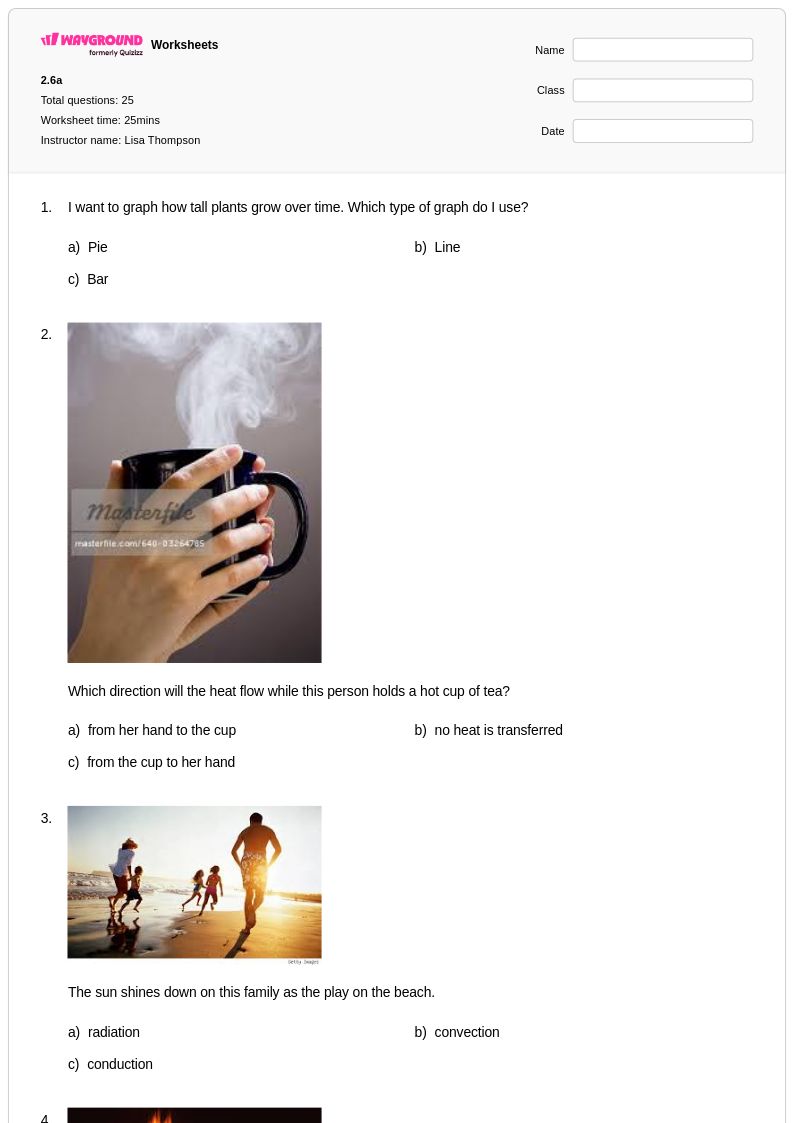
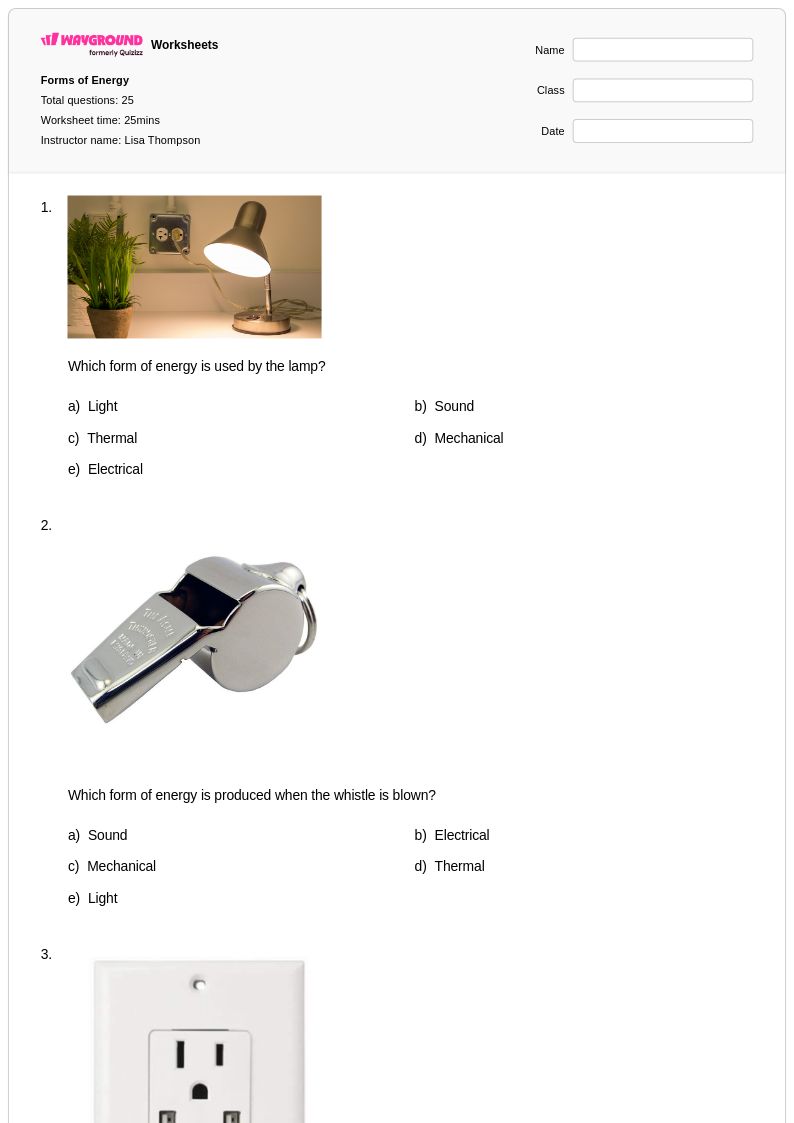
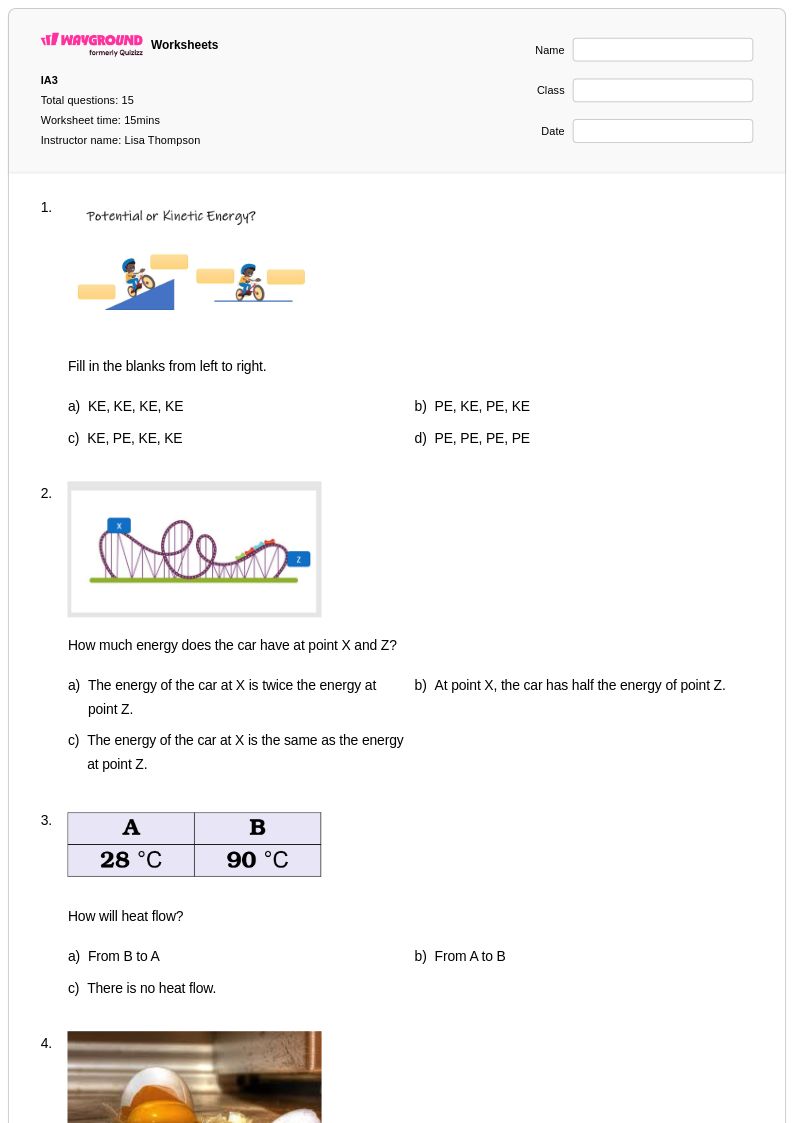
Heat flow worksheets for Class 10 physics students available through Wayground (formerly Quizizz) provide comprehensive practice opportunities for mastering thermal energy transfer concepts. These carefully designed resources help students develop critical skills in analyzing conduction, convection, and radiation processes while strengthening their understanding of heat capacity, specific heat, and thermal equilibrium principles. Students work through practice problems that explore real-world applications of heat transfer, from calculating energy changes in calorimetry experiments to predicting temperature distributions in materials. Each worksheet includes detailed answer keys that guide students through step-by-step solutions, while the free printable format and downloadable pdf options ensure flexible access for both classroom instruction and independent study sessions.
Wayground (formerly Quizizz) empowers educators with an extensive collection of millions of teacher-created heat flow resources that streamline lesson planning and enhance student learning outcomes. The platform's robust search and filtering capabilities allow teachers to quickly locate worksheets aligned with specific physics standards and tailored to Class 10 learning objectives, while built-in differentiation tools enable customization for diverse student needs and ability levels. These versatile materials are available in both printable and digital formats, including convenient pdf downloads, making them ideal for targeted remediation sessions, enrichment activities, and systematic skill practice. Teachers can seamlessly integrate these resources into their thermal physics curriculum to reinforce key concepts, assess student understanding, and provide additional practice opportunities that bridge theoretical knowledge with practical problem-solving applications.
FAQs
How do I teach heat flow and thermal energy transfer in the classroom?
Teaching heat flow effectively means building student understanding around the three mechanisms of thermal energy transfer: conduction, convection, and radiation. Start with concrete, everyday examples, such as a metal spoon heating in hot soup (conduction), boiling water circulating in a pot (convection), and sunlight warming skin (radiation), before moving into quantitative problem-solving. Connecting each mechanism to real-world scenarios helps students internalize the underlying physics before applying formulas.
What types of practice problems help students master heat transfer concepts?
Effective heat flow practice problems ask students to calculate heat capacity, analyze temperature gradients between materials, and predict when thermal equilibrium will be reached. Problems that vary the material type, initial temperature, and boundary conditions force students to apply formulas flexibly rather than by rote. Including scenario-based questions, such as comparing heat loss through different insulating materials, builds the analytical skills needed for more complex thermodynamics topics.
What mistakes do students commonly make when solving heat flow problems?
One of the most frequent errors is confusing heat and temperature, treating them as interchangeable when they are distinct concepts. Students also commonly misapply the heat capacity formula by failing to account for mass or by using incorrect units. Another persistent misconception is assuming that heat always flows from a hotter object to a cooler one instantaneously, rather than understanding that the rate of transfer depends on the temperature gradient, material properties, and surface area.
How can I differentiate heat flow instruction for students at different skill levels?
For students who need additional support, start with single-mechanism problems, such as conduction only, before introducing scenarios that involve multiple transfer types simultaneously. More advanced students benefit from open-ended problems that require them to calculate thermal equilibrium across multiple materials or evaluate real engineering contexts. On Wayground, teachers can apply accommodations such as reduced answer choices or read-aloud support to individual students, allowing differentiated practice within a shared assignment without disrupting the rest of the class.
How do I use Wayground's heat flow worksheets in my classroom?
Wayground's heat flow worksheets are available as printable PDFs for traditional classroom use and in digital formats for technology-integrated environments, giving teachers flexibility for in-class practice, homework, or assessment preparation. Teachers can also host worksheets as a live or asynchronous quiz directly on Wayground. Each resource includes a complete answer key, supporting both teacher-led correction and independent student self-assessment.
How do I assess whether students truly understand thermal equilibrium versus just memorizing the formula?
To assess genuine understanding, present students with novel scenarios, such as predicting the final temperature when two objects of different masses and materials are placed in contact, and ask them to explain their reasoning before calculating. Students who only memorized the formula will struggle to identify which variables change and why, while students with conceptual understanding can justify each step. Including questions that require students to evaluate incorrect worked examples is another reliable diagnostic strategy.