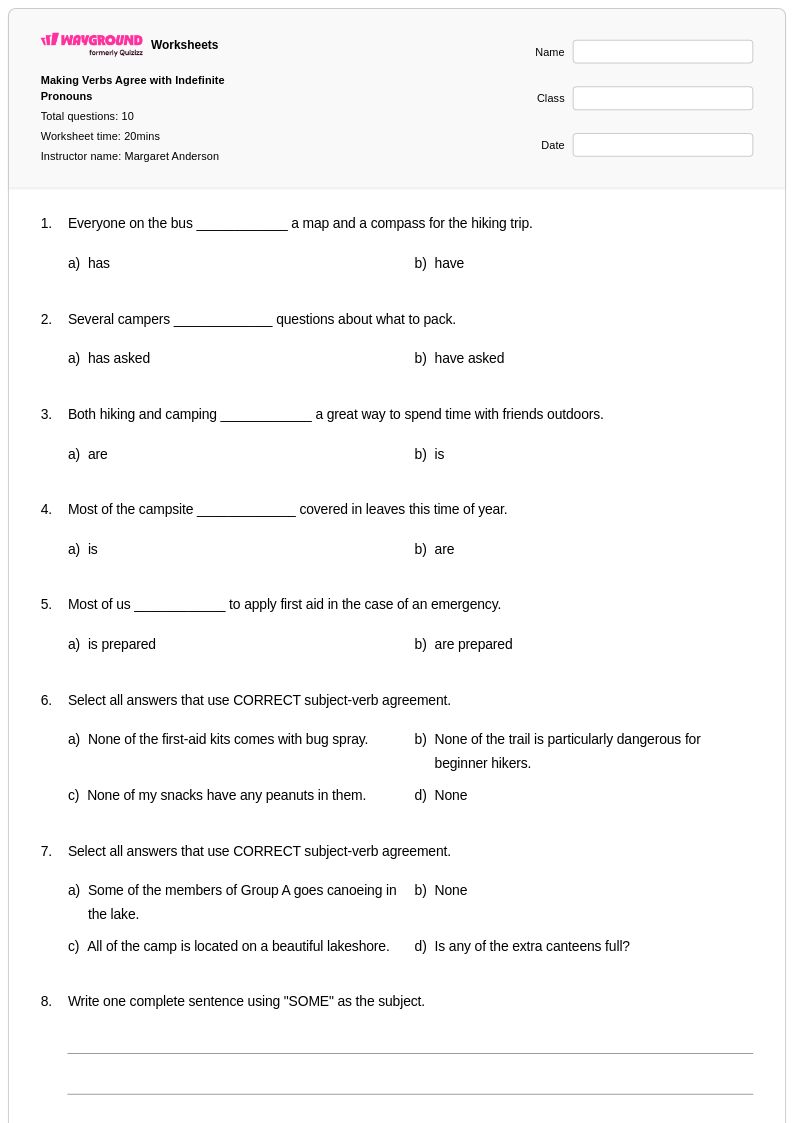
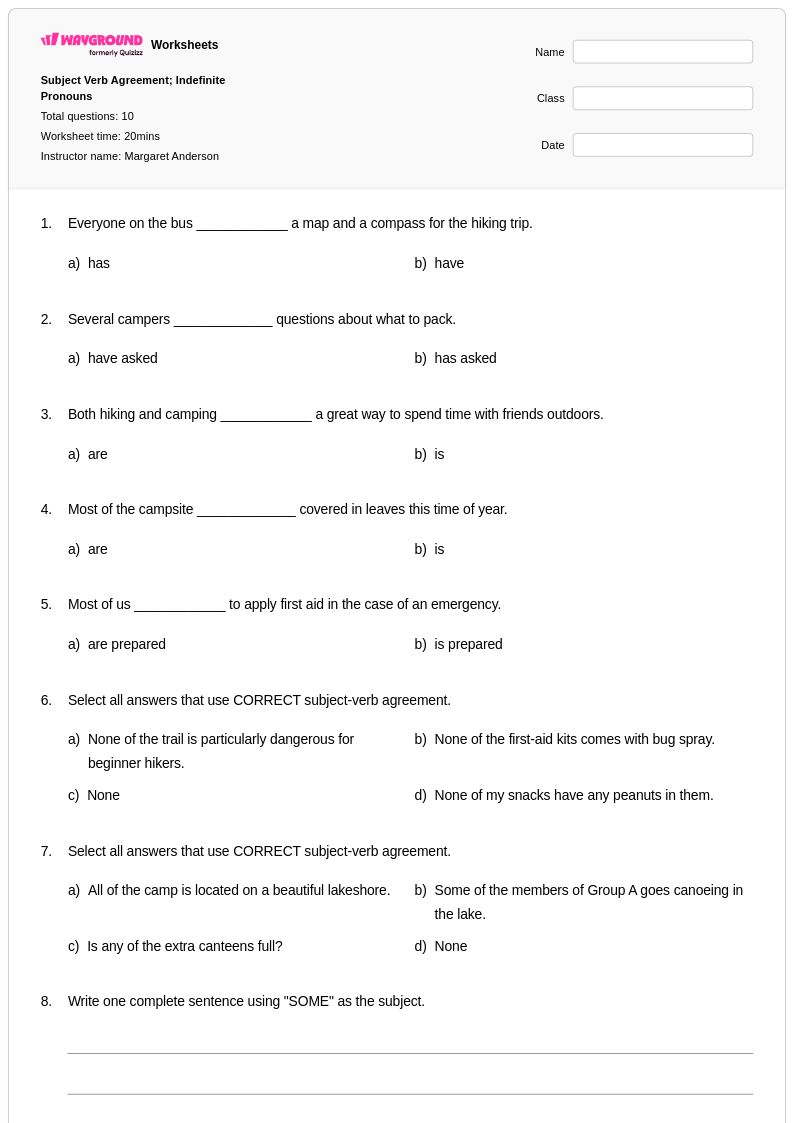
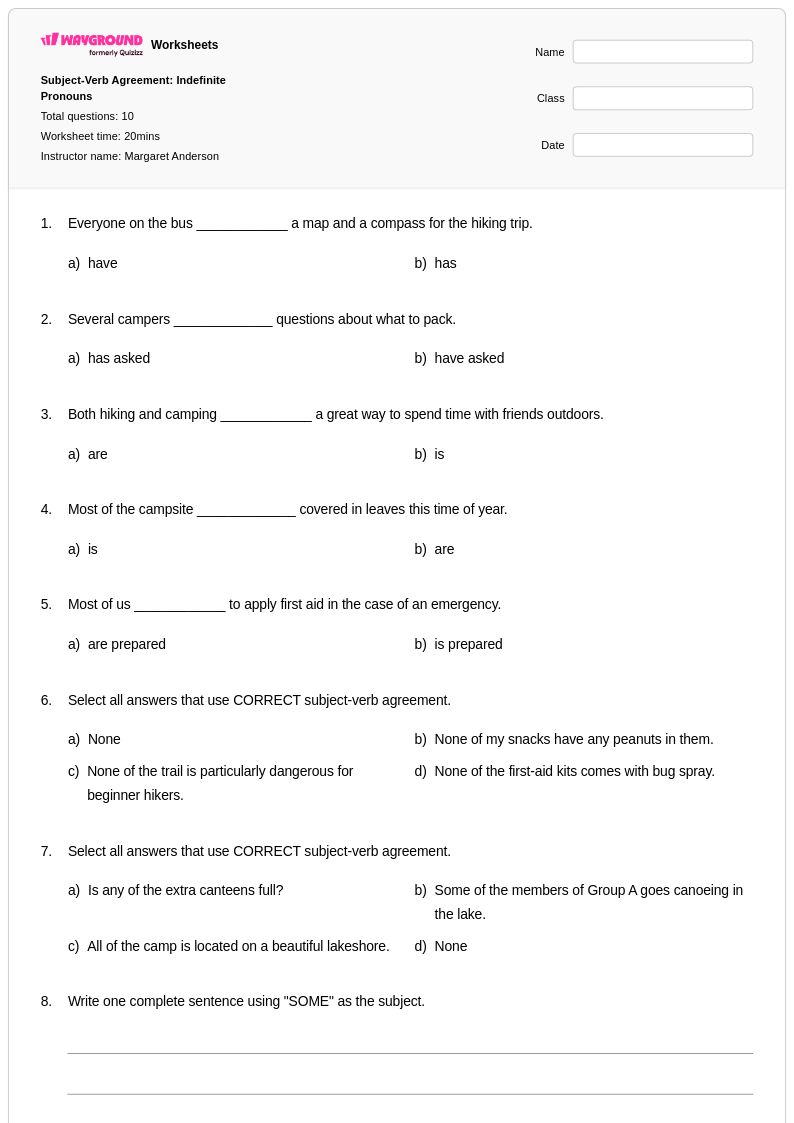
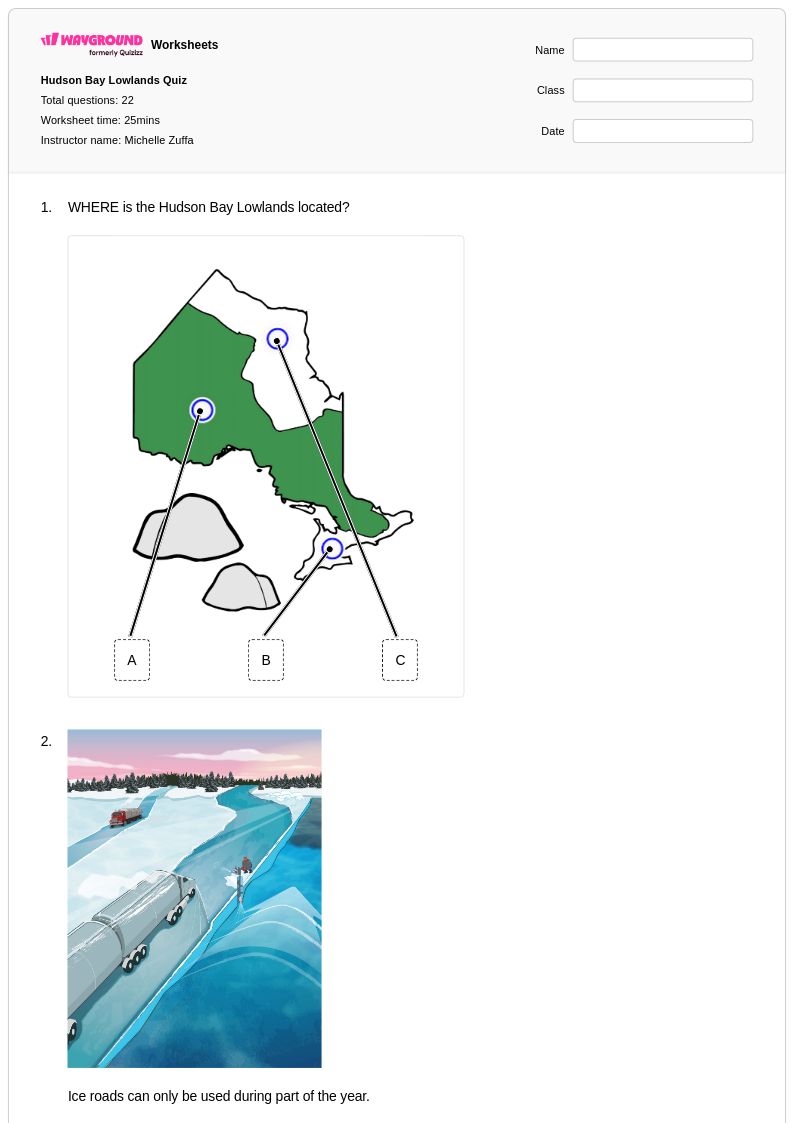
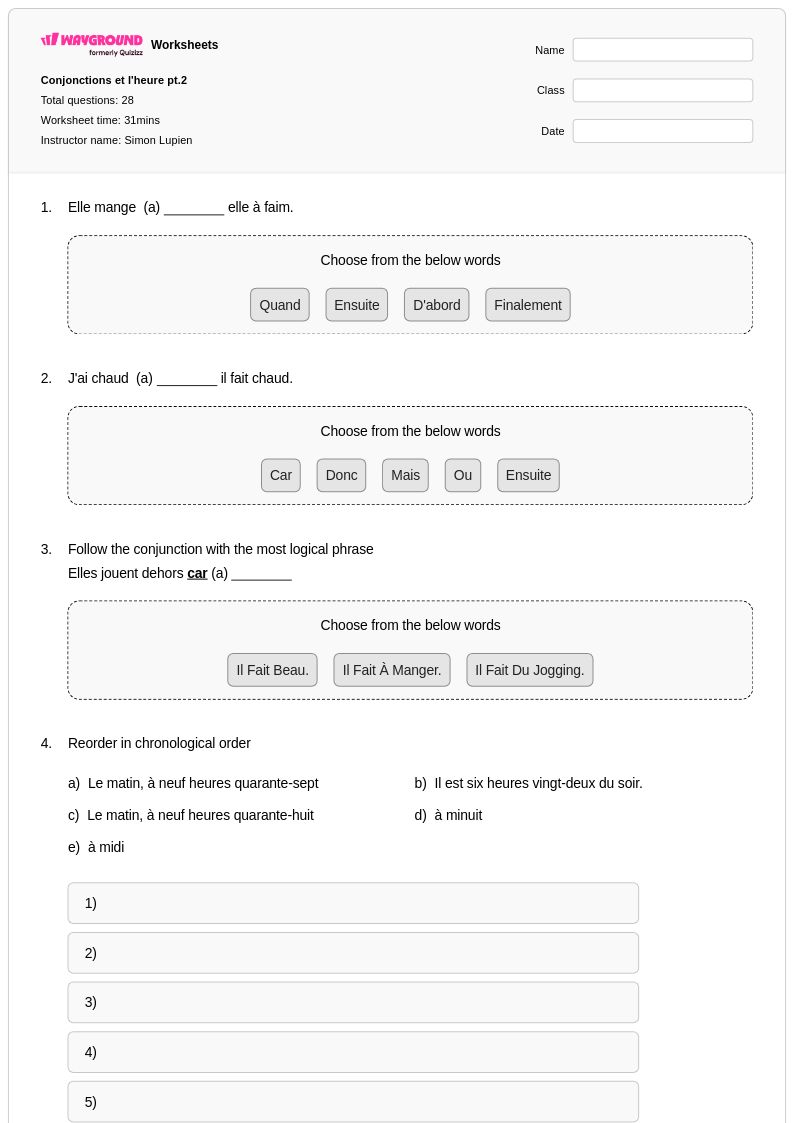
Explore Wayground's free Class 11 hiking worksheets and printables that help students master outdoor safety, trail planning, and wilderness navigation skills through engaging practice problems and comprehensive answer keys.
Hiking worksheets for Class 11 students available through Wayground (formerly Quizizz) provide comprehensive educational resources that transform outdoor adventure experiences into structured learning opportunities. These expertly designed materials focus on essential hiking skills including route planning, safety protocols, equipment selection, navigation techniques, and environmental awareness. Students engage with practice problems that challenge them to analyze topographic maps, calculate hiking distances and elevation gains, assess weather conditions, and develop emergency response strategies. The worksheets incorporate real-world scenarios that strengthen critical thinking abilities while building practical outdoor competencies, with each resource including detailed answer keys that support both independent study and classroom instruction. These free printable materials offer educators flexible pdf formats that can be seamlessly integrated into physical education curricula or outdoor education programs.
Wayground (formerly Quizizz) supports physical education teachers with an extensive collection of millions of teacher-created hiking and outdoor activity worksheets specifically designed for Class 11 instruction. The platform's robust search and filtering capabilities allow educators to quickly locate resources aligned with specific learning standards and differentiate instruction based on individual student needs and skill levels. Teachers can customize existing worksheets or create new materials using the platform's flexible tools, ensuring content matches their specific curriculum requirements and local hiking environments. These digital and printable resources are invaluable for lesson planning, providing targeted skill practice for students who need remediation in outdoor safety concepts, and offering enrichment opportunities for advanced learners ready to tackle complex navigation challenges. The comprehensive nature of these worksheet collections enables educators to build sequential learning experiences that prepare students for safe, confident participation in hiking and other outdoor adventure activities.
FAQs
How do I teach hiking safety and trail skills in the classroom?
Teaching hiking safety in the classroom works best when you connect real-world scenarios to structured skill-building. Start with trail safety protocols and hazard identification, then layer in navigation using maps and compasses, Leave No Trace principles, and basic wilderness survival concepts. Using scenario-based practice problems — such as planning a route, calculating elevation gain, or identifying weather risks — helps students apply concepts before they encounter them outdoors.
What topics should a hiking worksheet cover?
A well-designed hiking worksheet should cover trail safety protocols, map and compass navigation, Leave No Trace principles, weather pattern interpretation, distance and elevation calculations, and hazard identification. These topics together give students a comprehensive foundation for responsible outdoor adventure. Worksheets that include route-planning problems and real-world scenarios are especially effective at building practical decision-making skills.
What exercises help students practice hiking and outdoor navigation skills?
Effective practice exercises for hiking skills include calculating hiking distances and elevation gains from topographic maps, identifying potential trail hazards from described scenarios, planning multi-leg routes under given constraints, and applying Leave No Trace guidelines to realistic situations. These problem types move students beyond recall and require them to use judgment and apply outdoor knowledge in context, which better prepares them for actual trail experiences.
What mistakes do students commonly make when learning trail navigation and hiking safety?
Students frequently underestimate the relationship between elevation change and hiking difficulty, treating a steep mile the same as a flat one when estimating time and energy. They also tend to confuse map scale with real-world distance, leading to miscalculated route plans. Another common error is treating Leave No Trace as a single rule rather than a set of seven distinct principles, each with specific behavioral expectations. Targeted worksheet practice around these areas helps surface and correct these misconceptions early.
How can I differentiate hiking worksheets for students with different skill levels or learning needs?
Differentiation for hiking worksheets can include reducing the number of answer choices for students who need less cognitive load, enabling read-aloud support for students who struggle with text-heavy safety content, or extending time for students who need more processing space. On Wayground, these accommodations can be assigned individually to specific students while the rest of the class receives default settings, making it easy to support diverse learners without singling anyone out.
How do I use Wayground's hiking worksheets in my classroom?
Wayground's hiking worksheets are available as printable PDFs for traditional classroom use and in digital formats for technology-integrated environments, including the option to host them as a quiz directly on Wayground. Both formats include complete answer keys, supporting self-assessment and peer review. The digital format is especially useful for assigning pre-hike preparation work or post-hike reflection activities that can be completed remotely or on a device.