Free Printable Igneous Rocks Worksheets for Class 4
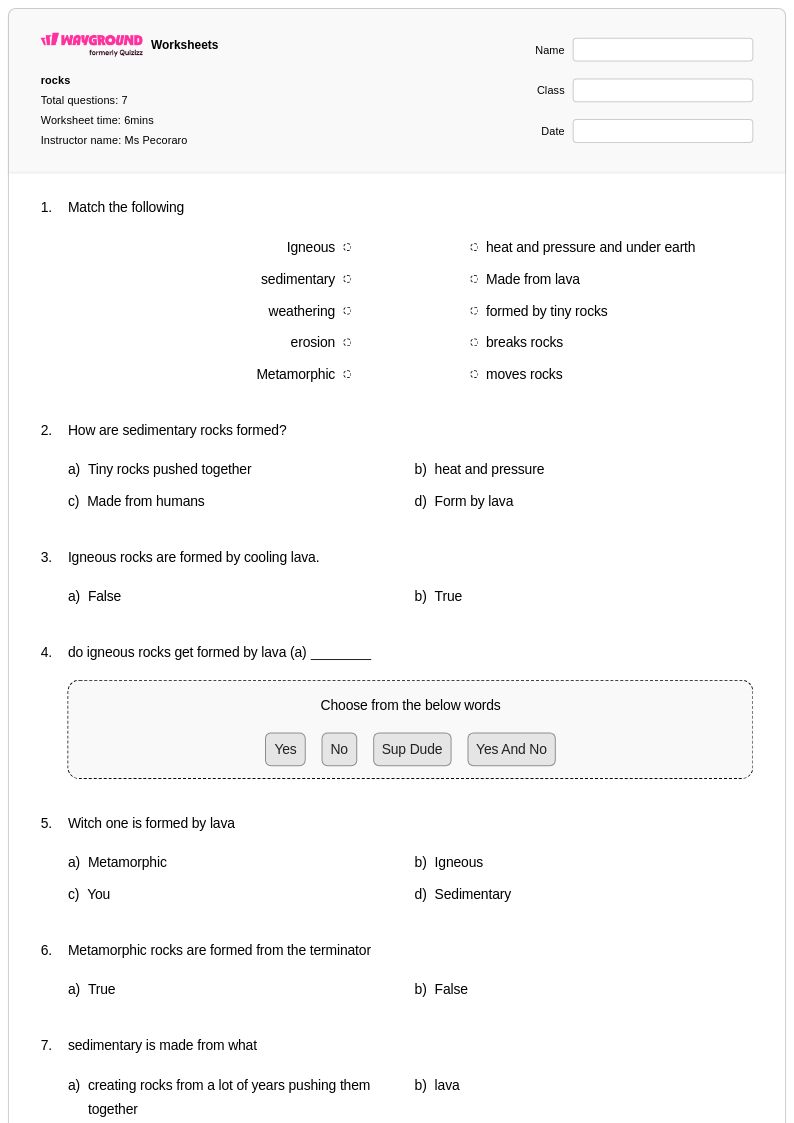
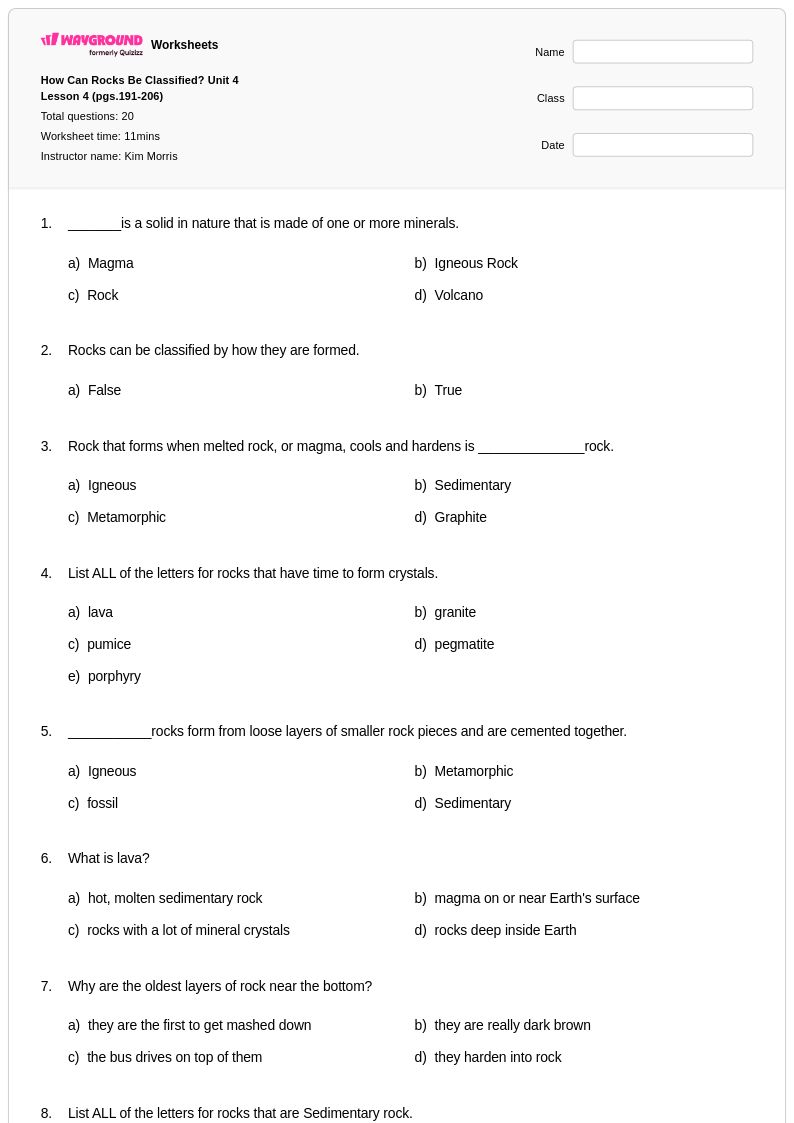
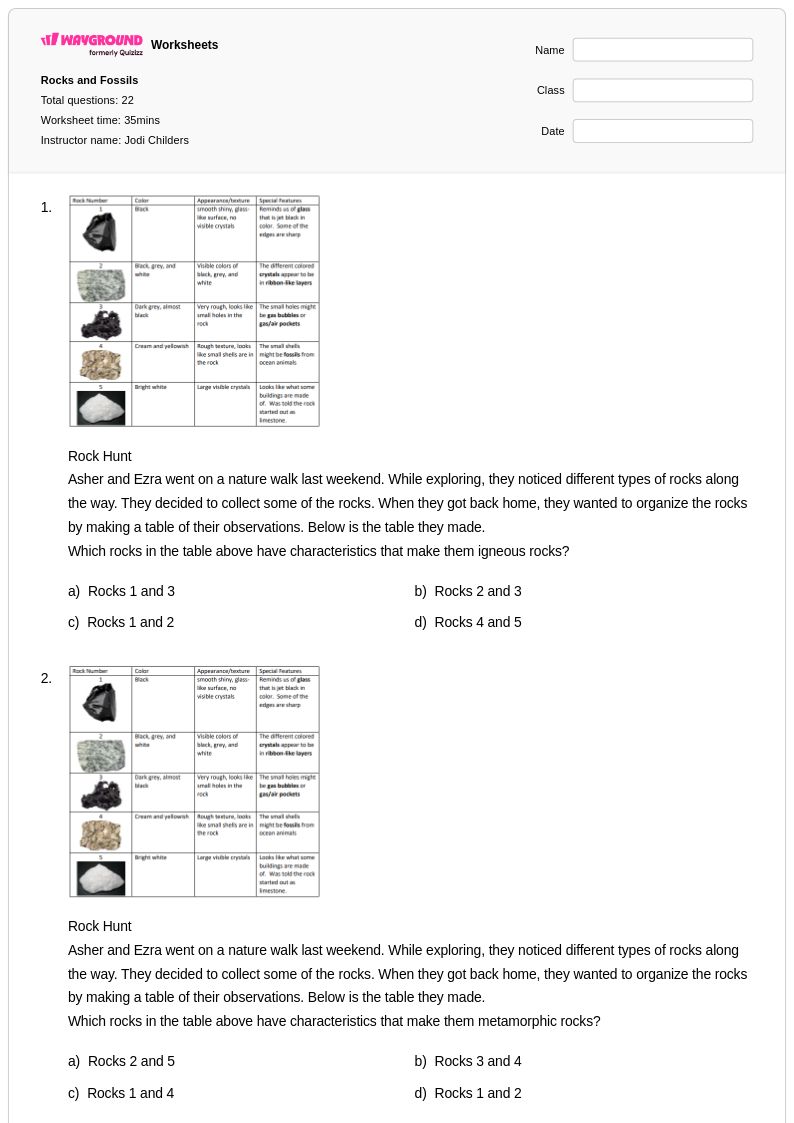
Class 4 igneous rocks worksheets from Wayground help students explore volcanic rock formation through engaging printables, practice problems, and comprehensive answer keys that make learning earth science concepts accessible and fun.
Explore printable Igneous Rocks worksheets for Class 4
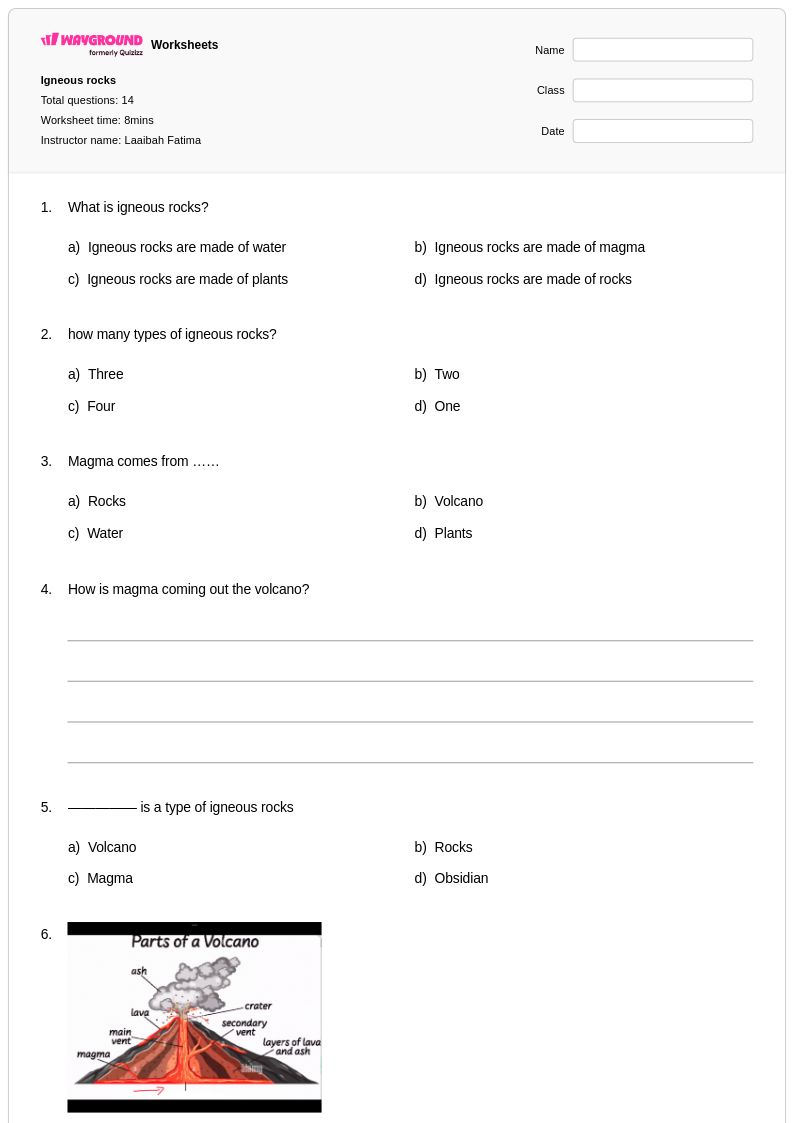
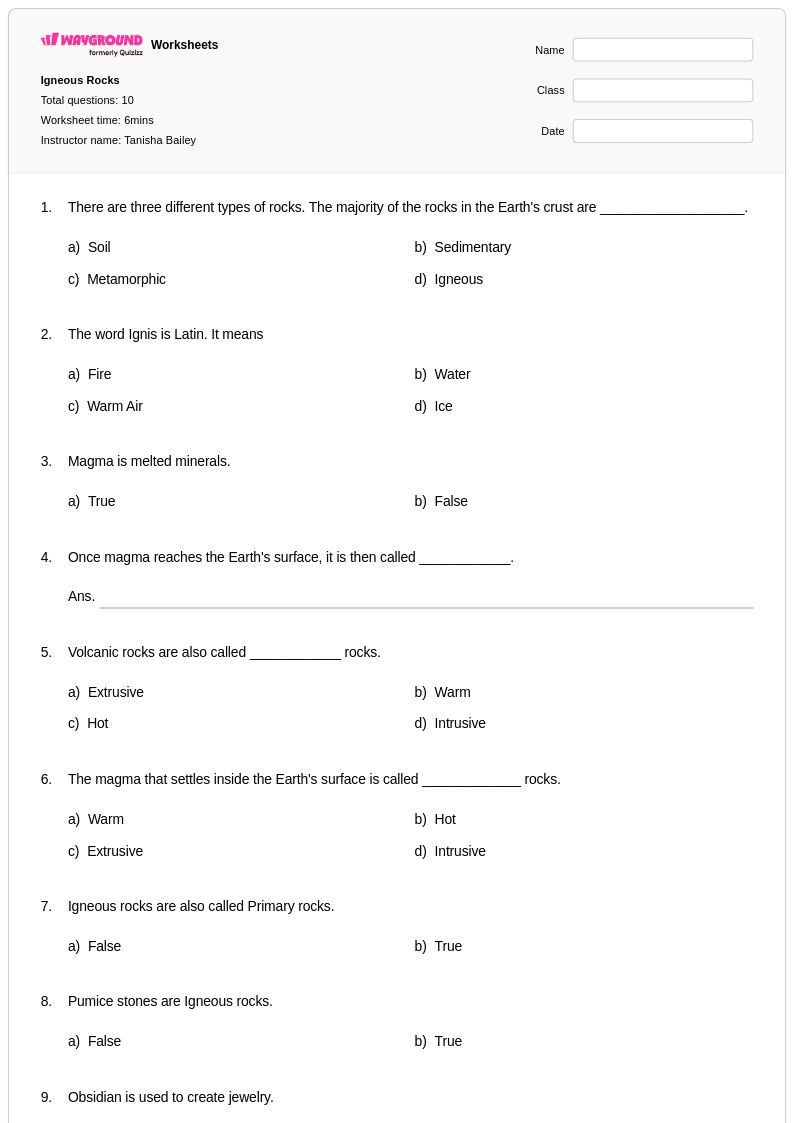
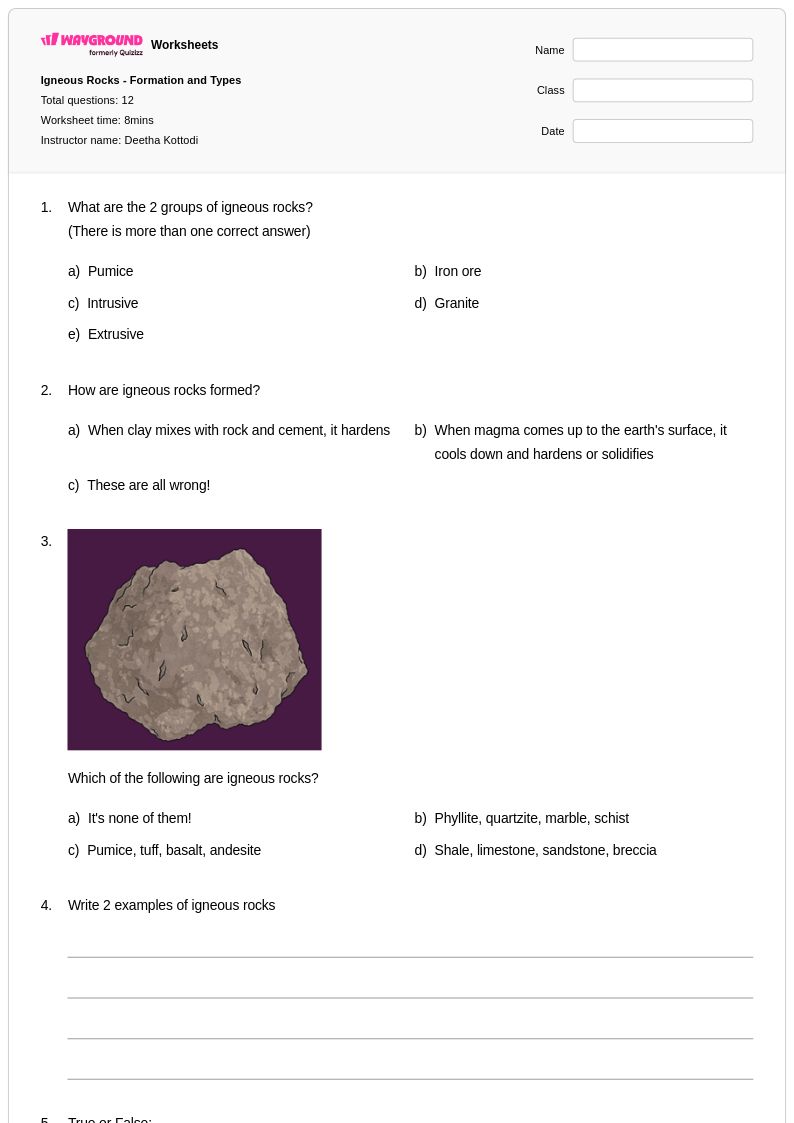
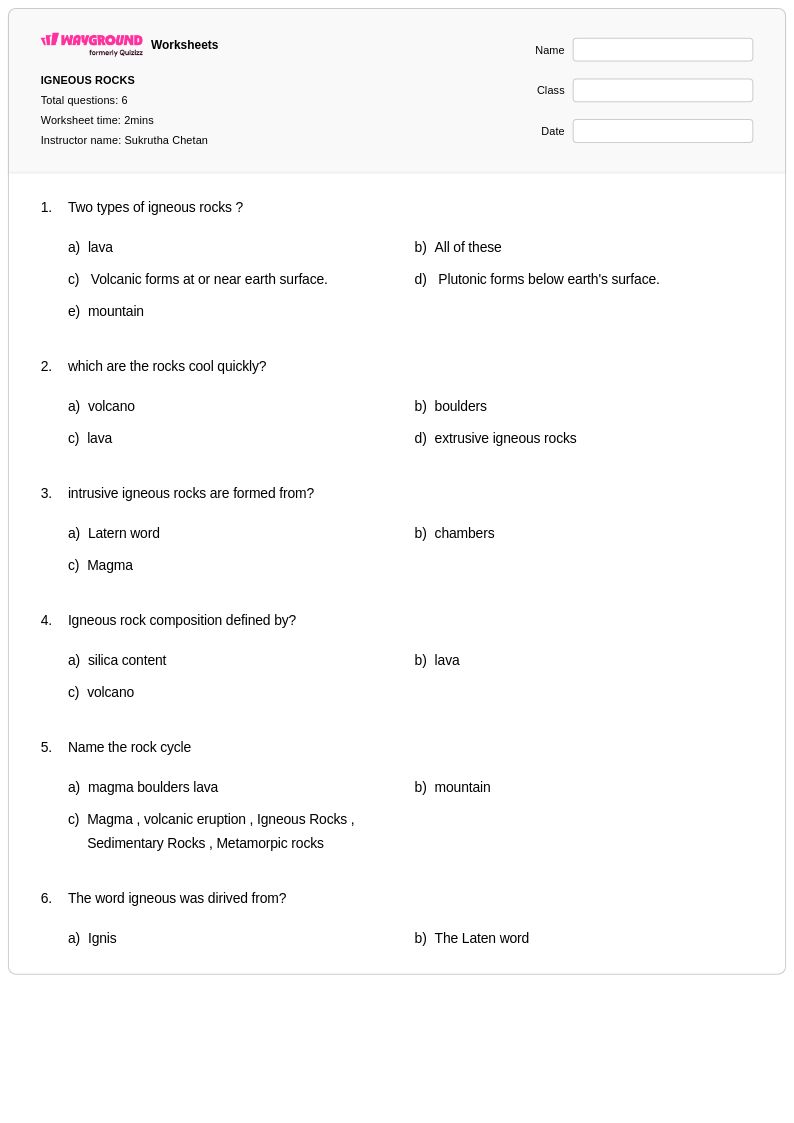
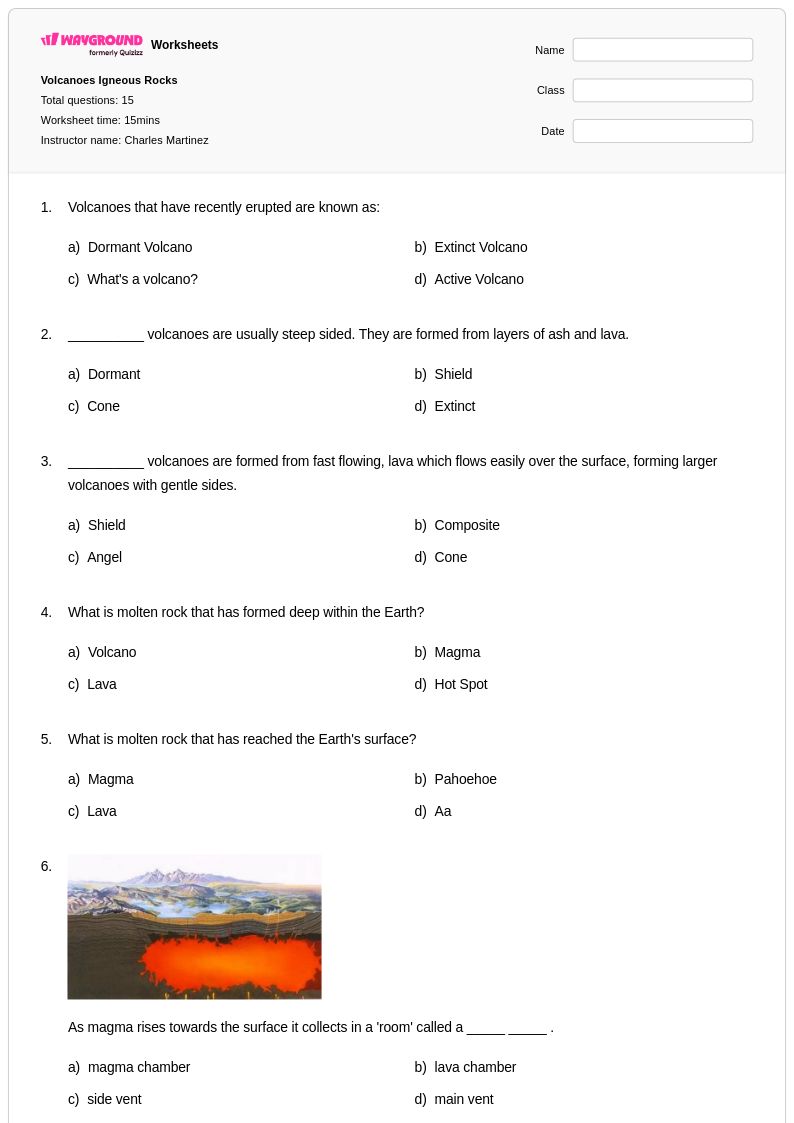
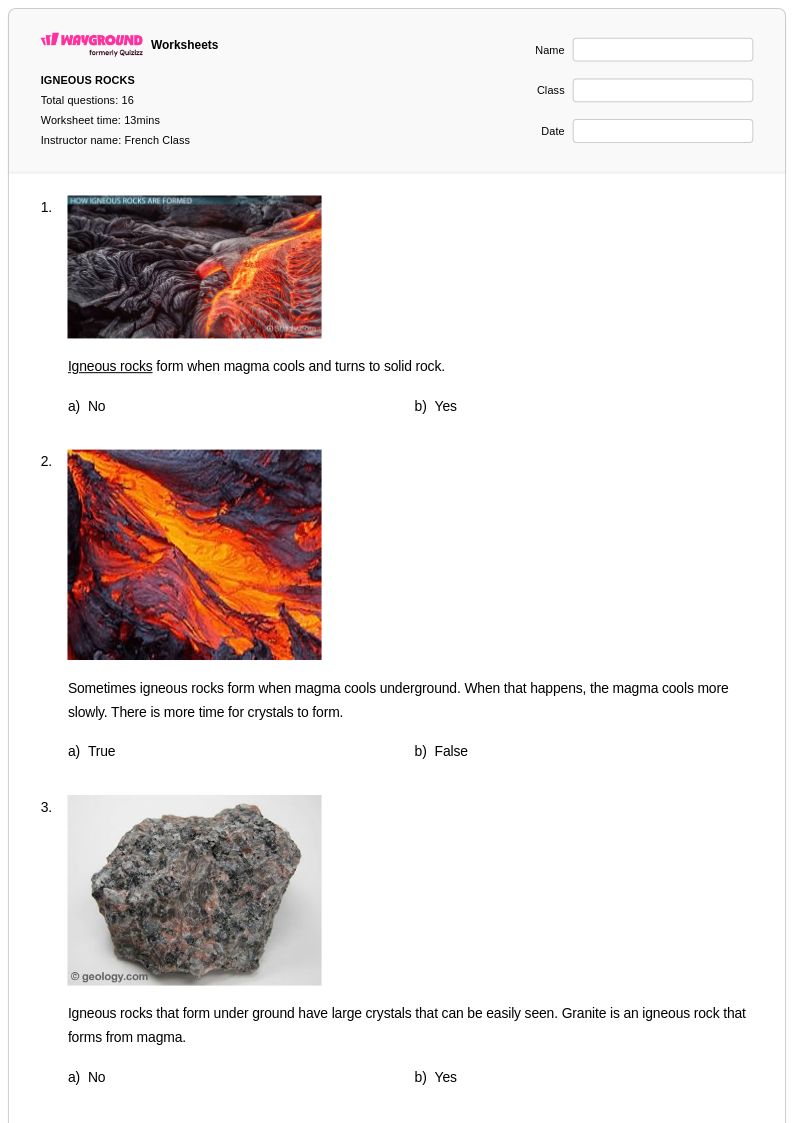
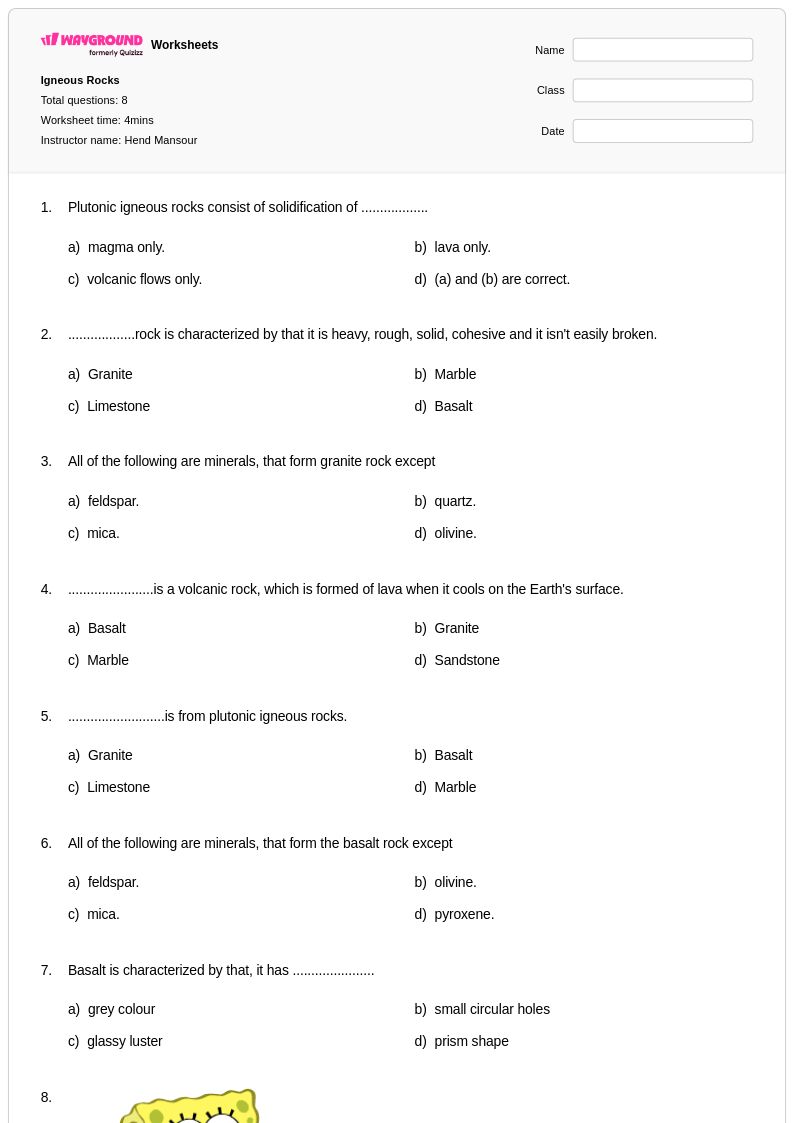
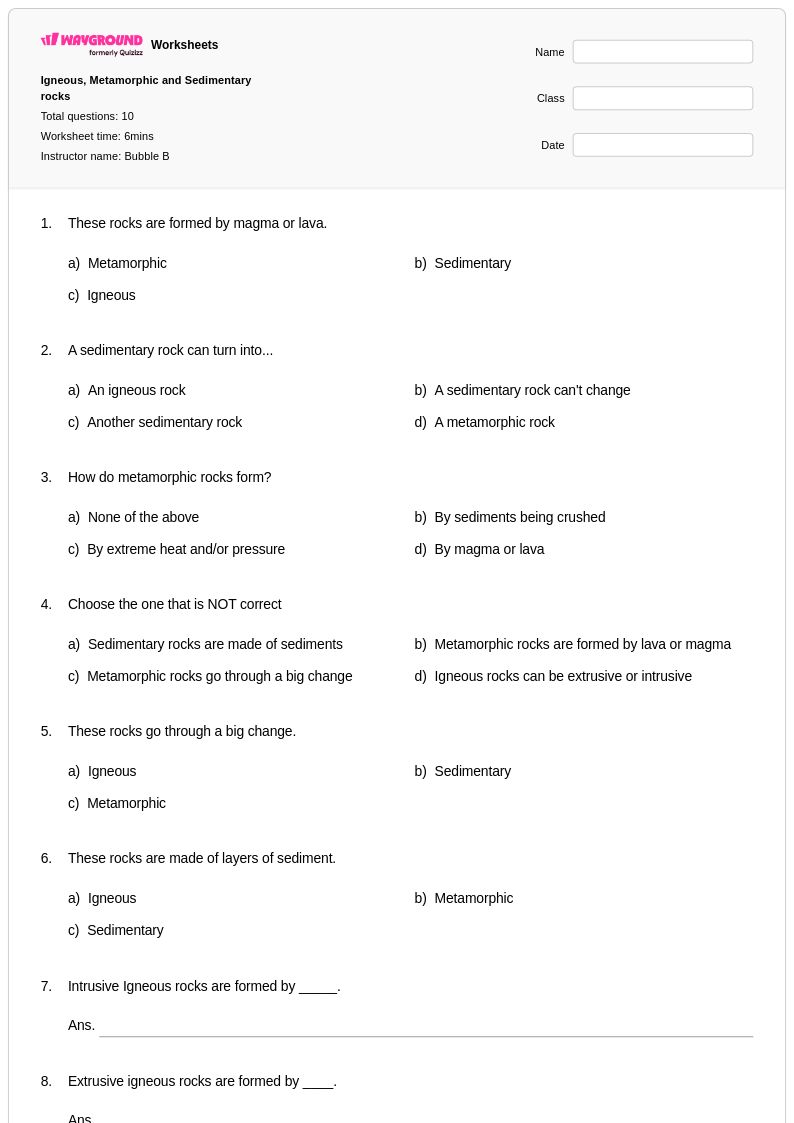
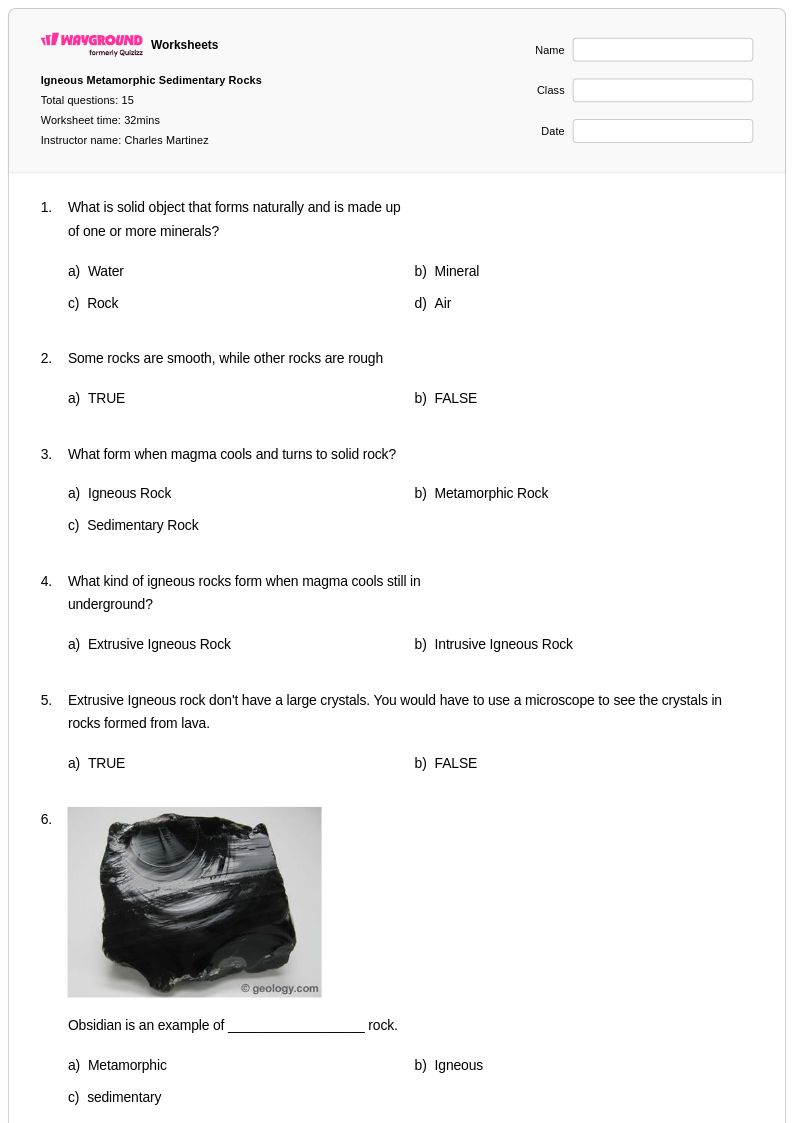
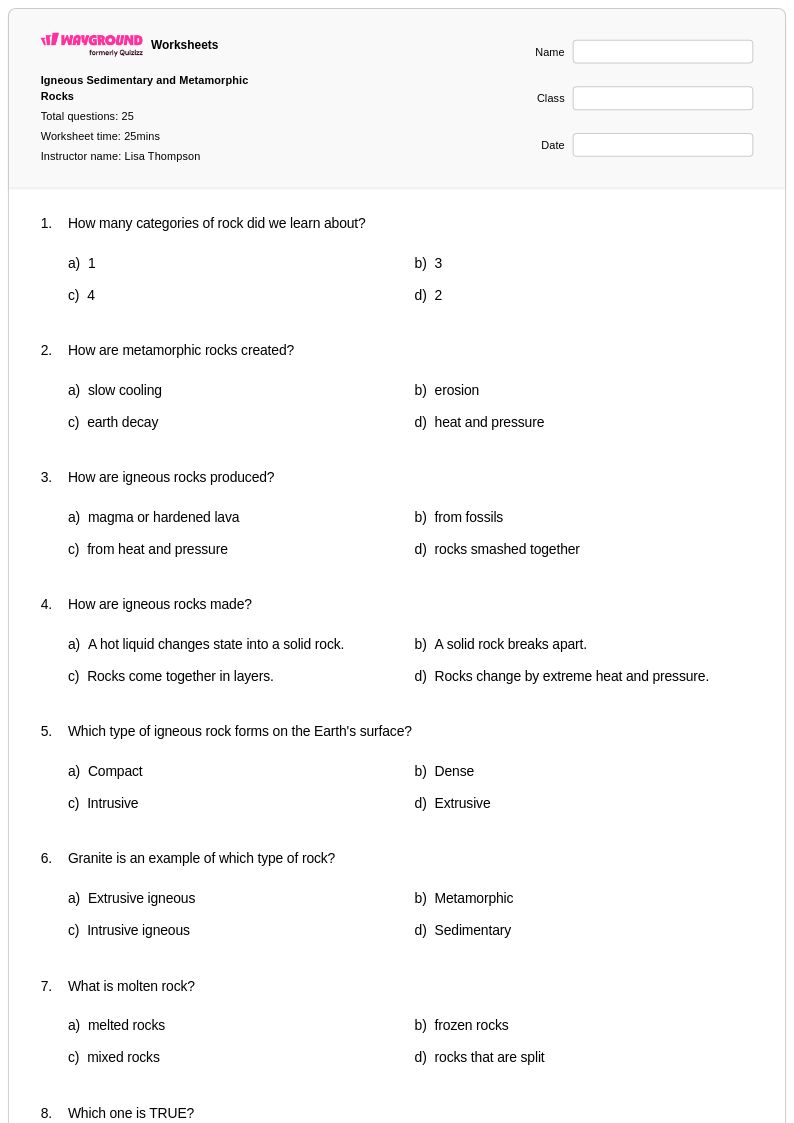
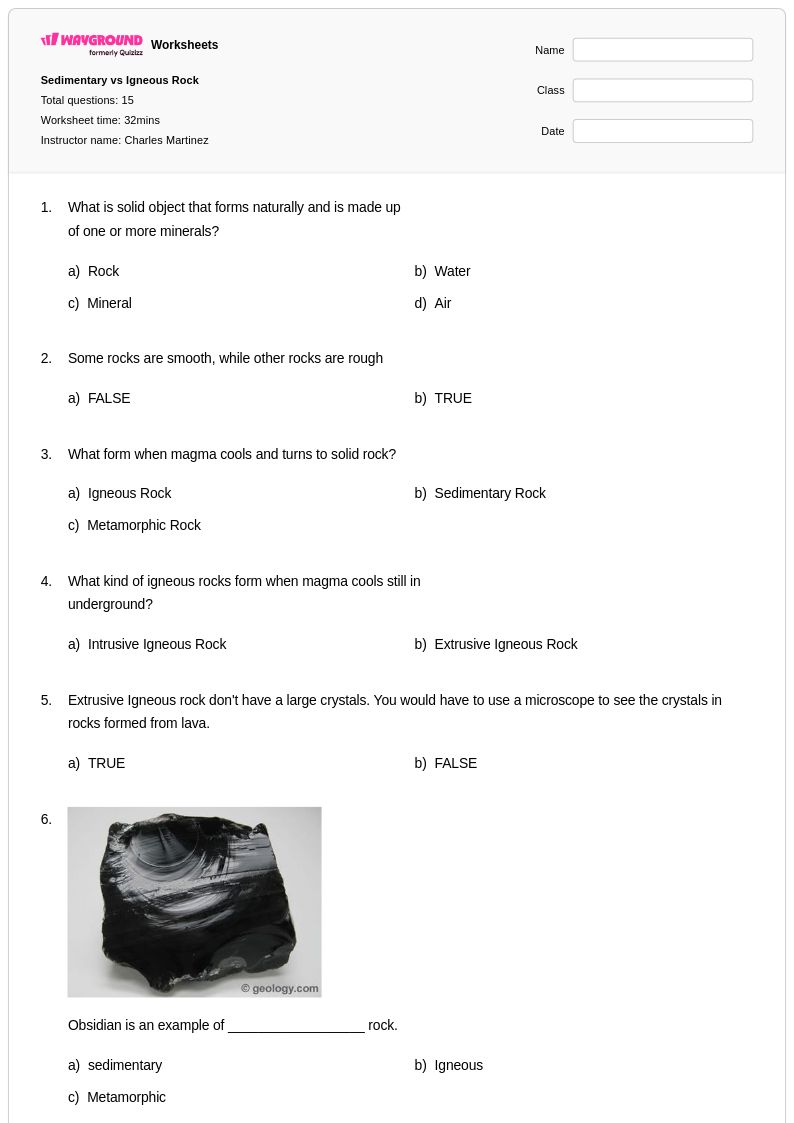
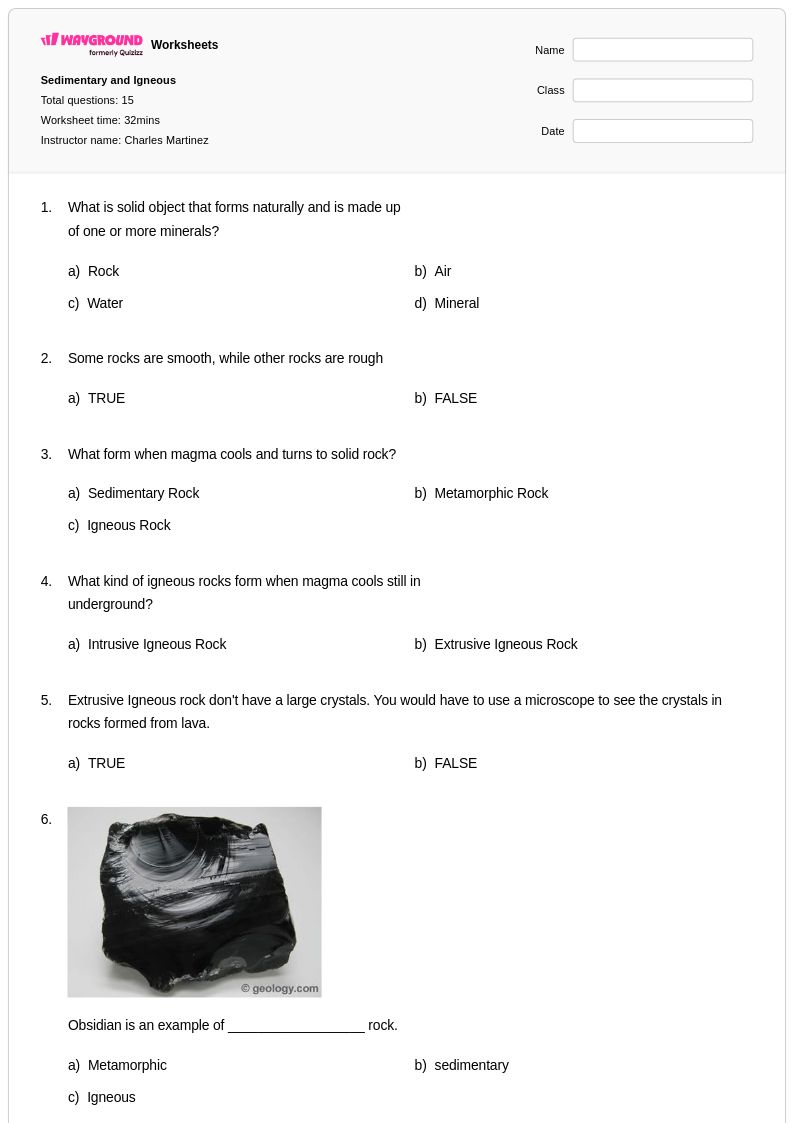
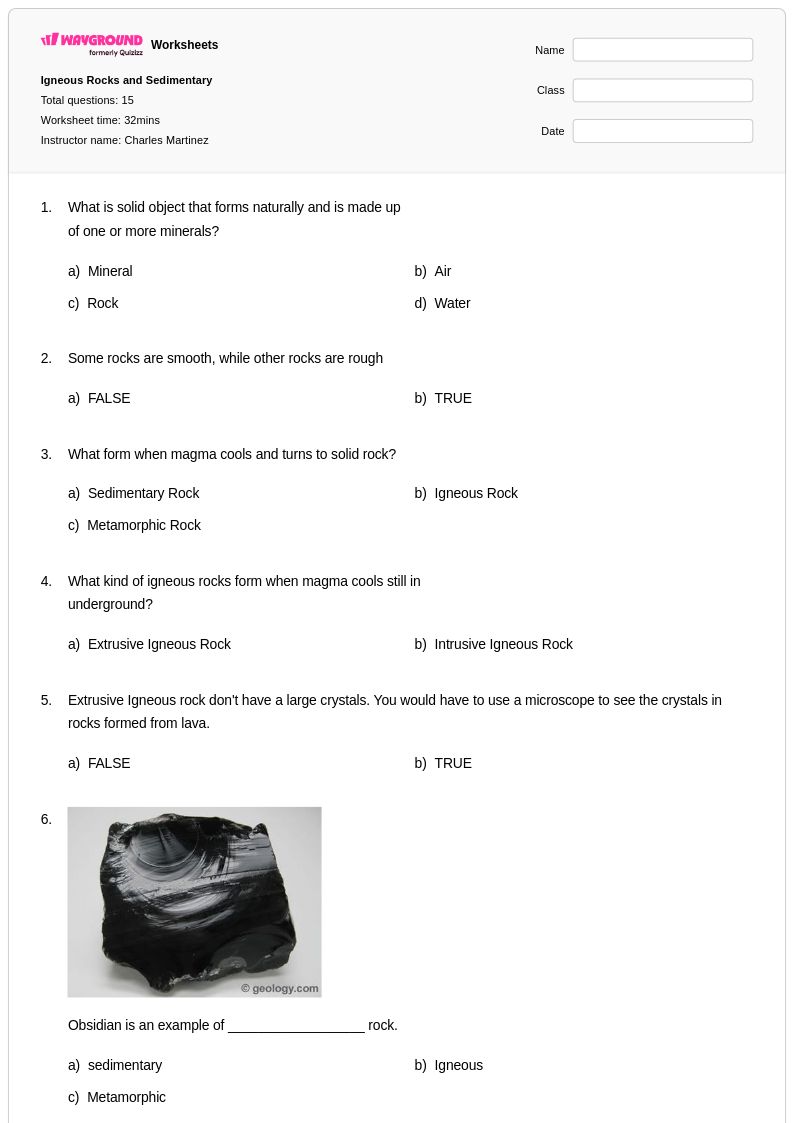
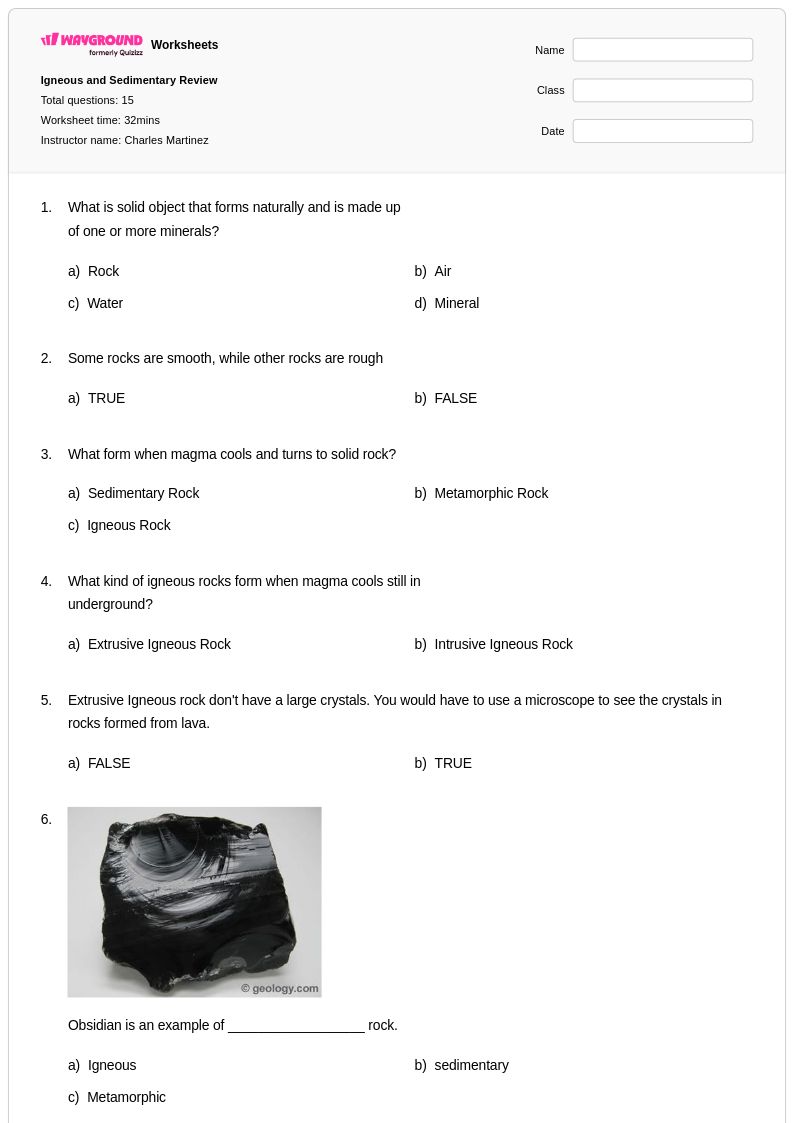
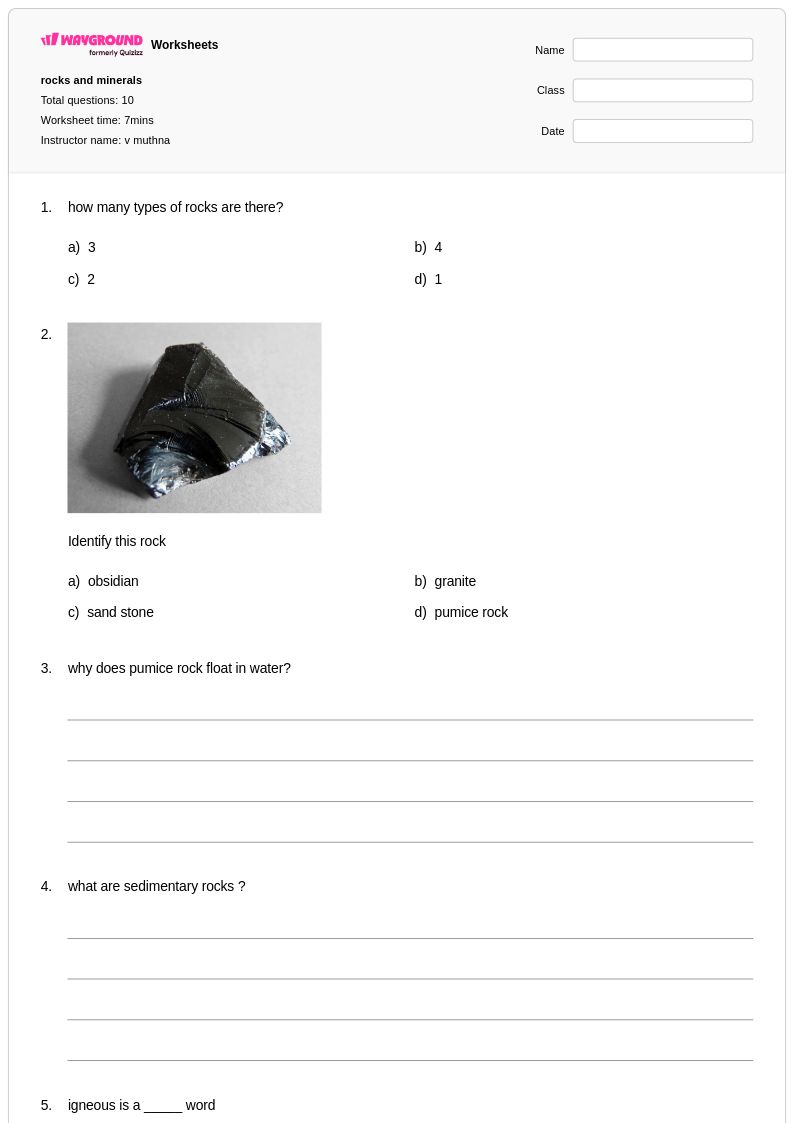
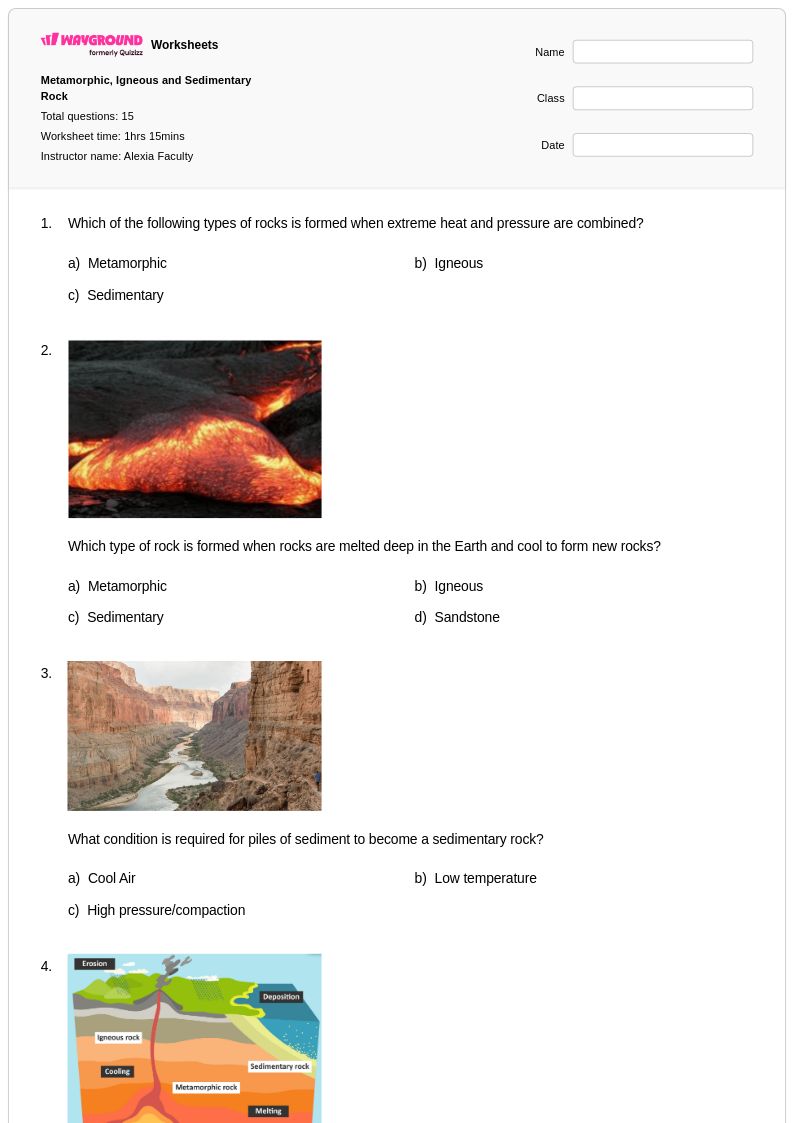
Igneous rocks worksheets for Class 4 students available through Wayground provide comprehensive learning opportunities that help young earth scientists understand how rocks form from cooling magma and lava. These educational resources strengthen fundamental geology skills by guiding students through the identification of common igneous rock types like granite, obsidian, and pumice, while exploring the processes that create these fascinating geological formations. The worksheet collections include engaging activities that teach students to distinguish between intrusive and extrusive igneous rocks, understand crystallization processes, and recognize the role of cooling rates in determining rock texture and appearance. Each printable resource comes with detailed answer keys that support both independent study and classroom instruction, offering free access to practice problems that reinforce key concepts through hands-on observation exercises and critical thinking challenges in convenient pdf format.
Wayground's extensive library supports Class 4 teachers with millions of educator-created igneous rock resources that can be easily discovered through robust search and filtering capabilities aligned with earth science standards. The platform's differentiation tools enable instructors to customize worksheets for varying skill levels within their classrooms, ensuring that all students can engage meaningfully with geological concepts regardless of their current understanding. Teachers benefit from flexible formatting options that include both digital and printable pdf versions, making it simple to integrate these materials into existing lesson plans for effective skill practice, targeted remediation, or enrichment activities. The comprehensive collection streamlines instructional planning by providing ready-to-use resources that address multiple learning objectives, from basic rock identification to more complex understanding of geological processes, all designed to build student confidence in earth and space science concepts.
FAQs
How do I teach igneous rocks to middle or high school students?
Start by grounding students in the rock cycle before isolating igneous rock formation. Emphasize the two key variables that define igneous rocks: the source of the molten material (magma vs. lava) and the rate of cooling, which directly determines crystal size. Use physical rock samples alongside diagrams so students can connect visual texture to formation environment. Distinguishing intrusive formations like granite from extrusive formations like basalt gives students a concrete classification framework to build on.
What exercises help students practice identifying igneous rocks?
Effective practice exercises ask students to match rock texture to cooling rate, classify samples as intrusive or extrusive based on grain size, and connect specific rocks to their formation environments. Worksheets that include labeled diagrams of magma chambers and volcanic eruptions help students visualize what they are classifying. Practice problems that require students to apply Bowen's reaction series to predict mineral composition deepen understanding beyond surface-level identification.
What misconceptions do students commonly have about igneous rocks?
The most persistent misconception is that all igneous rocks come from volcanoes. Students often do not recognize that intrusive igneous rocks like granite form deep underground from slowly cooling magma and never reach the surface during formation. Another common error is confusing magma and lava as interchangeable terms rather than understanding that the distinction is purely about location. Students also frequently assume that larger crystals mean a more violent eruption, rather than understanding that large crystals indicate slow, undisturbed cooling.
How do I explain the difference between intrusive and extrusive igneous rocks to students?
Anchor the distinction in cooling rate: intrusive rocks form beneath Earth's surface where magma cools slowly over thousands to millions of years, producing large, visible crystals as in granite. Extrusive rocks form at or near the surface from lava that cools rapidly, resulting in fine-grained or glassy textures as in basalt or obsidian. A useful classroom analogy is comparing slow-set candy (large crystals) to rapidly chilled candy (smooth or fine-grained texture) to make the abstract concept tangible.
How can I use igneous rocks worksheets in my classroom?
Igneous rocks worksheets on Wayground are available as printable PDFs for traditional lab and classroom use, as well as in digital formats for technology-integrated environments, including the option to host them as a graded quiz directly on Wayground. Printable versions work well for hands-on rock identification labs and field study preparation, while digital formats support remote learning and blended instruction. Each worksheet includes a complete answer key, making them practical for independent practice, guided review, or remediation sessions.
How do I differentiate igneous rock instruction for students with different learning needs?
Wayground supports individualized accommodations that can be assigned per student, including extended time on questions, read-aloud functionality for students who need audio support, and reduced answer choices to lower cognitive load for struggling learners. Adjustable font sizes and reading mode themes further support accessibility without singling out individual students. These settings are reusable across future sessions, so once configured for a student, they carry forward automatically.