Free Printable Inclined Plane Worksheets for Class 8
Wayground's free Class 8 inclined plane worksheets and printables help students master physics concepts through engaging practice problems, with comprehensive PDF resources and answer keys included.
Explore printable Inclined Plane worksheets for Class 8
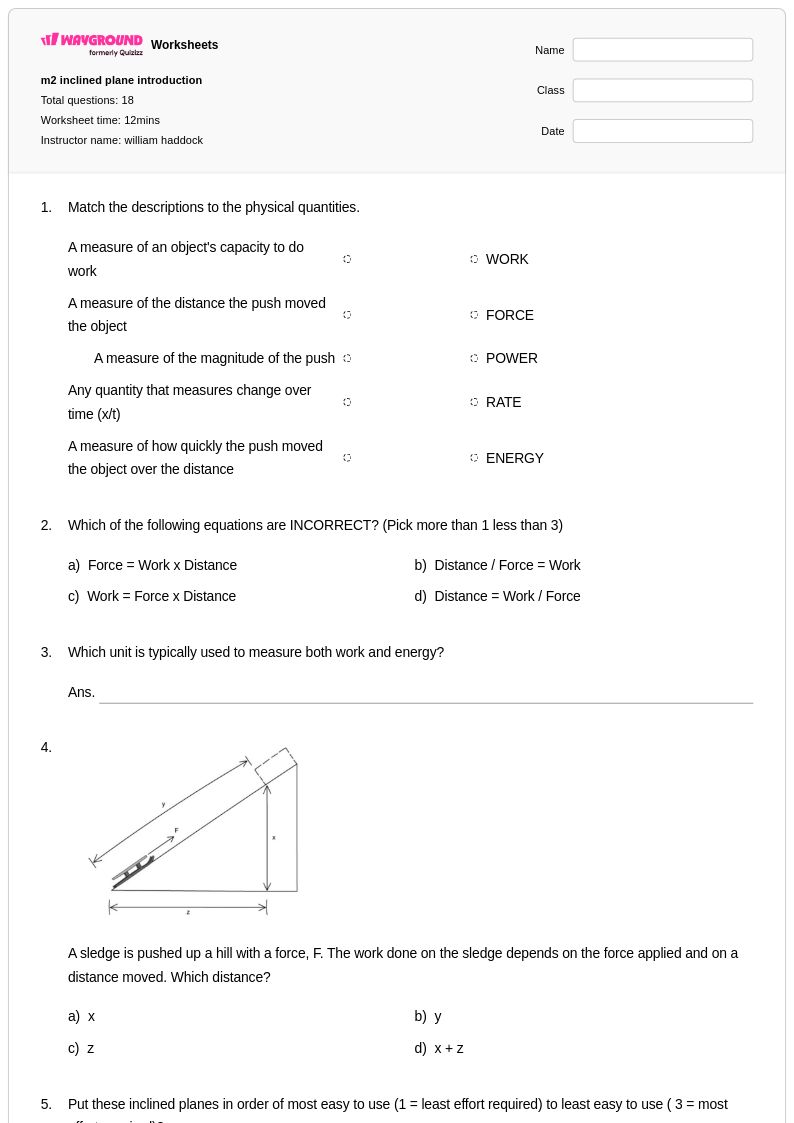
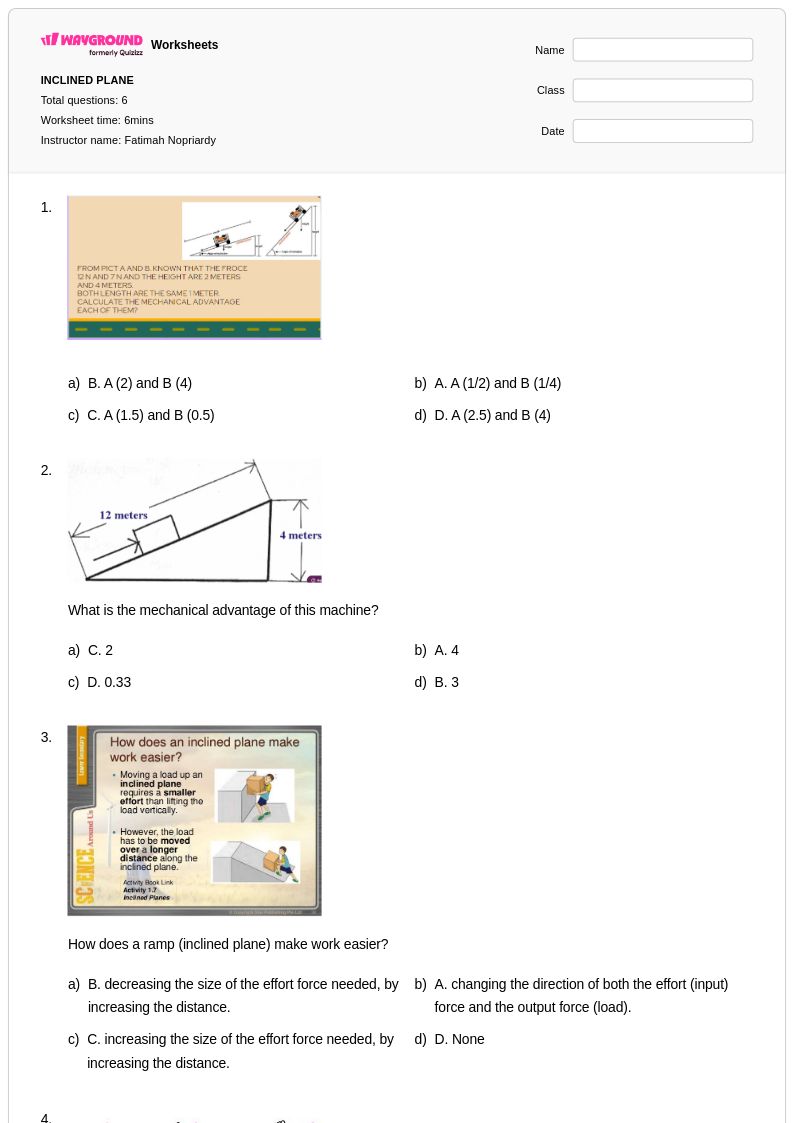
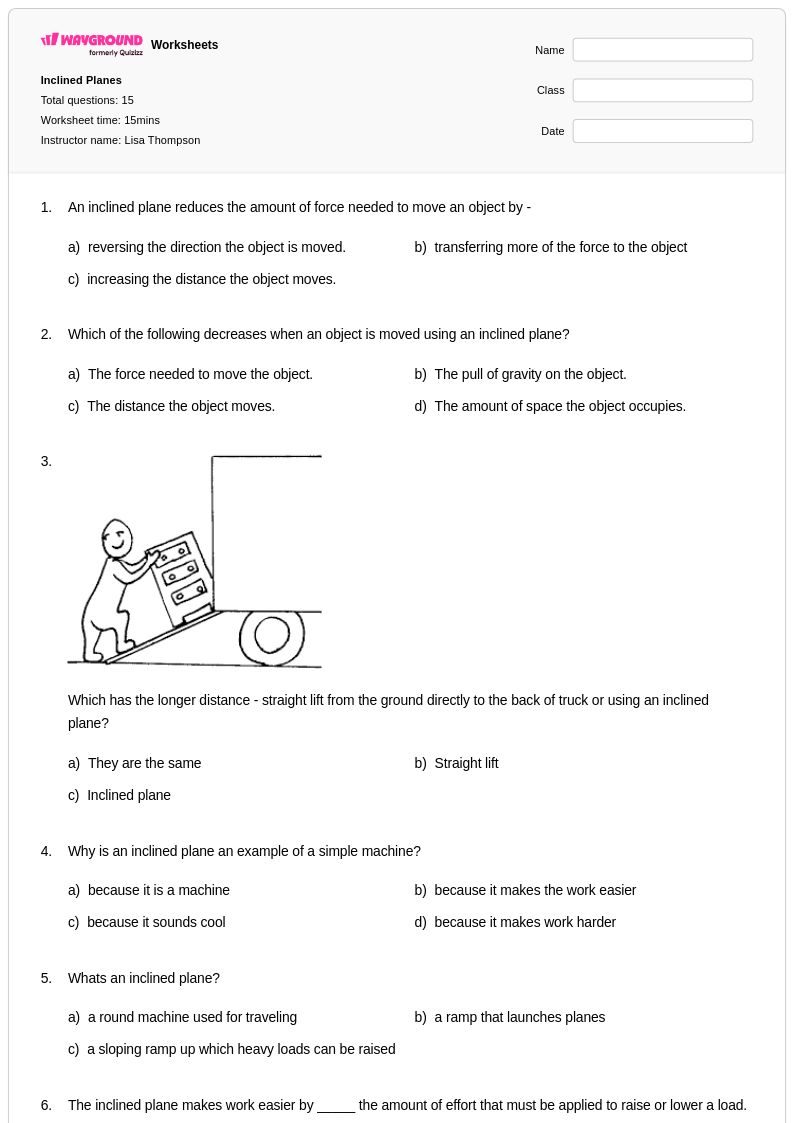
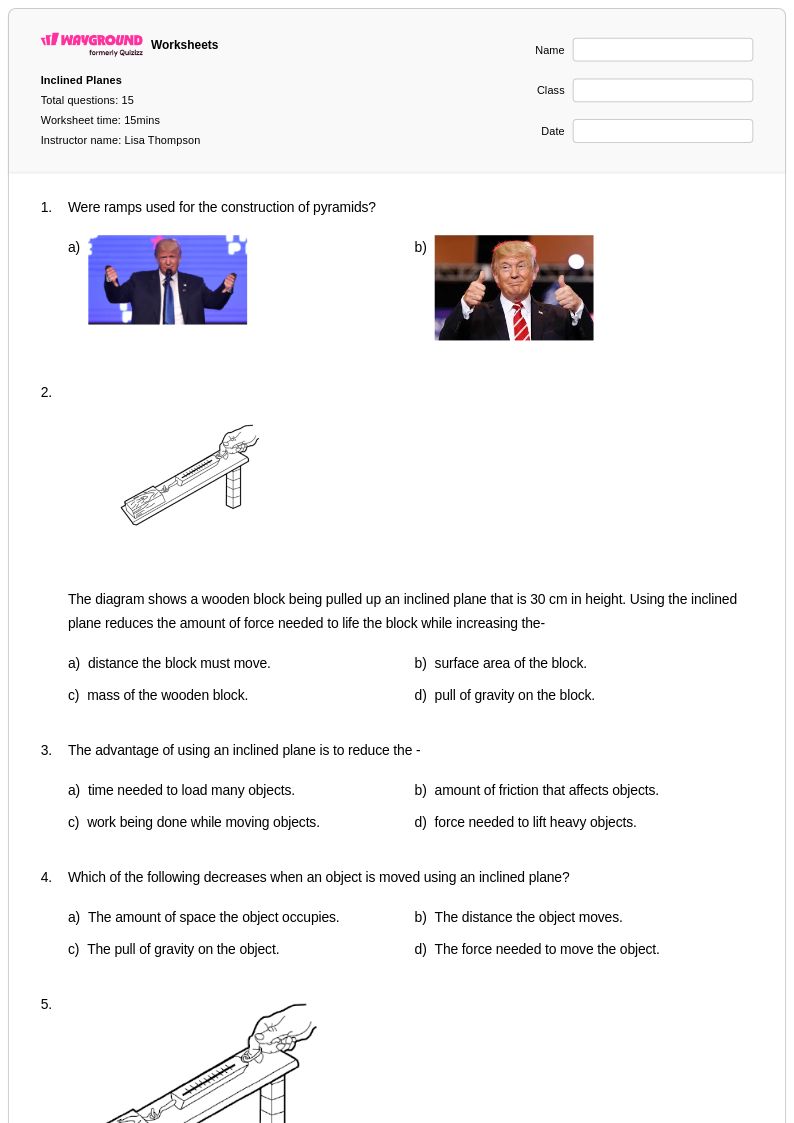
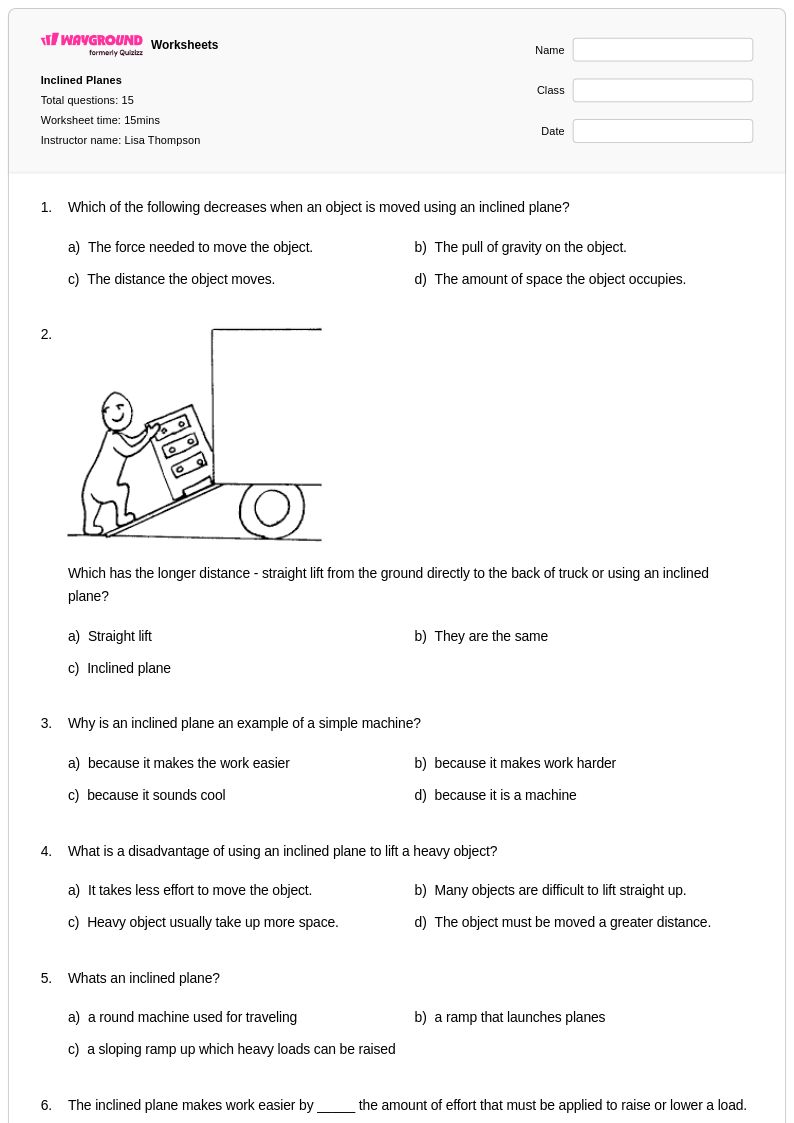
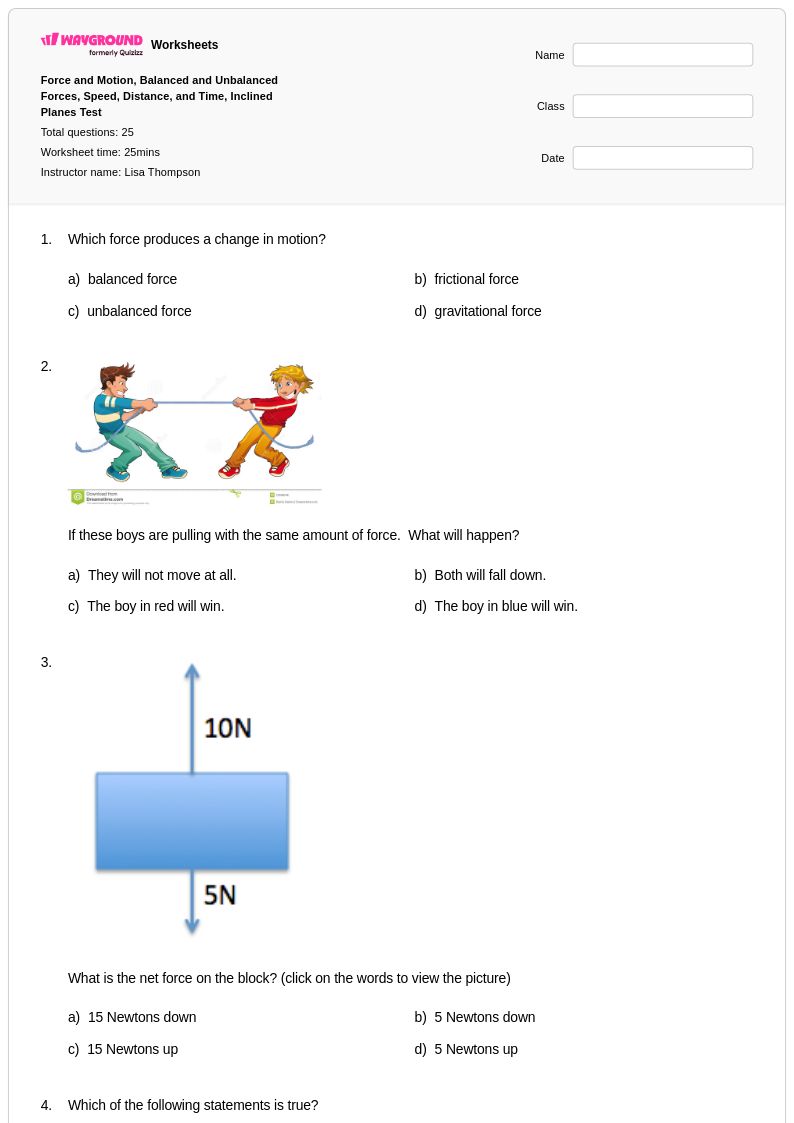
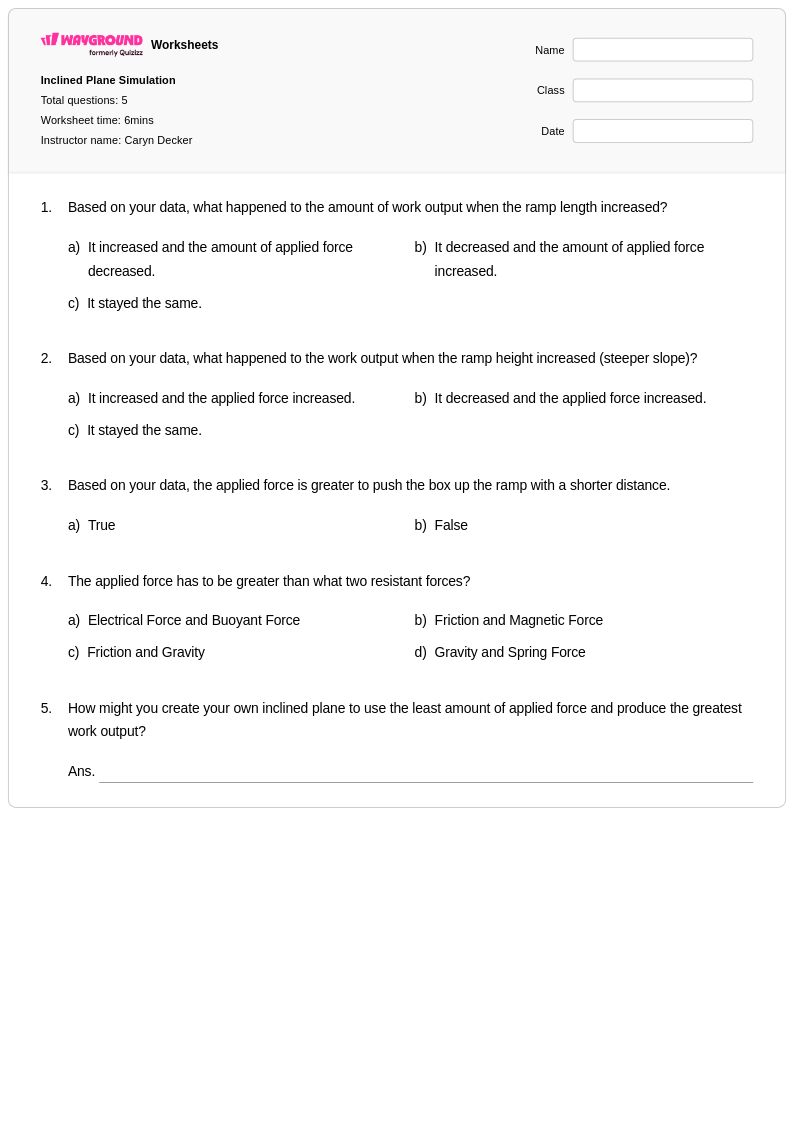
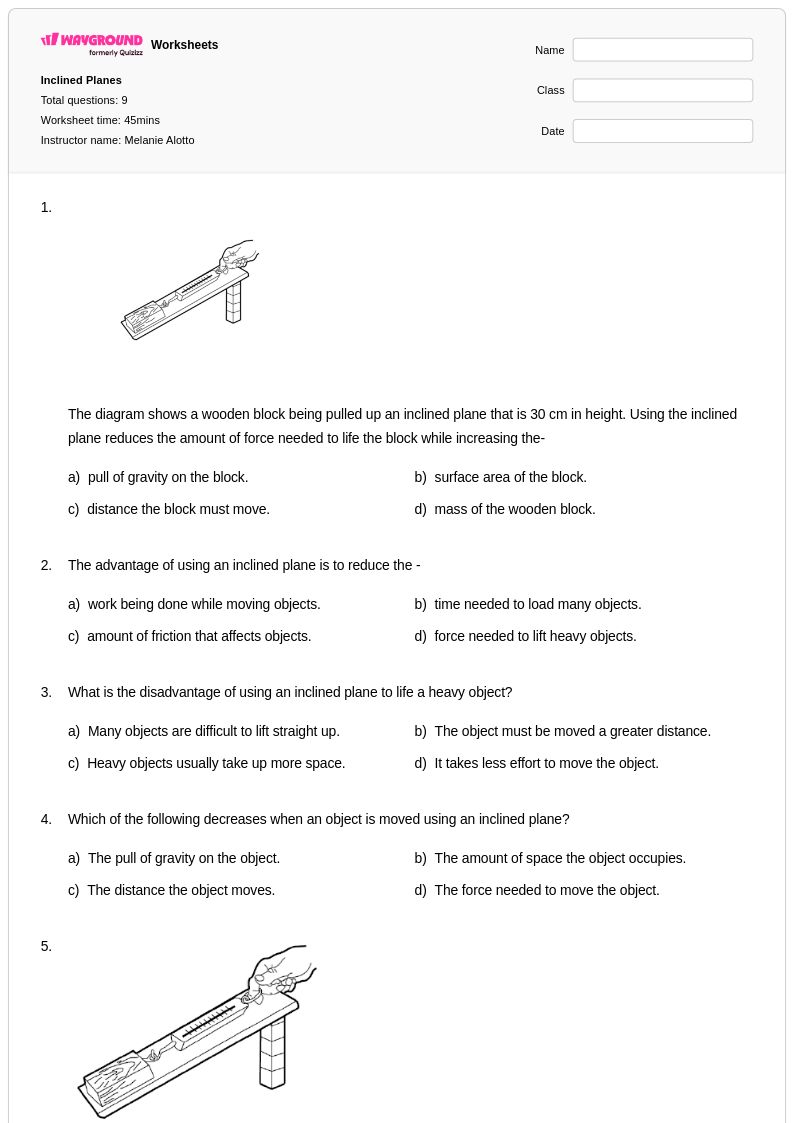
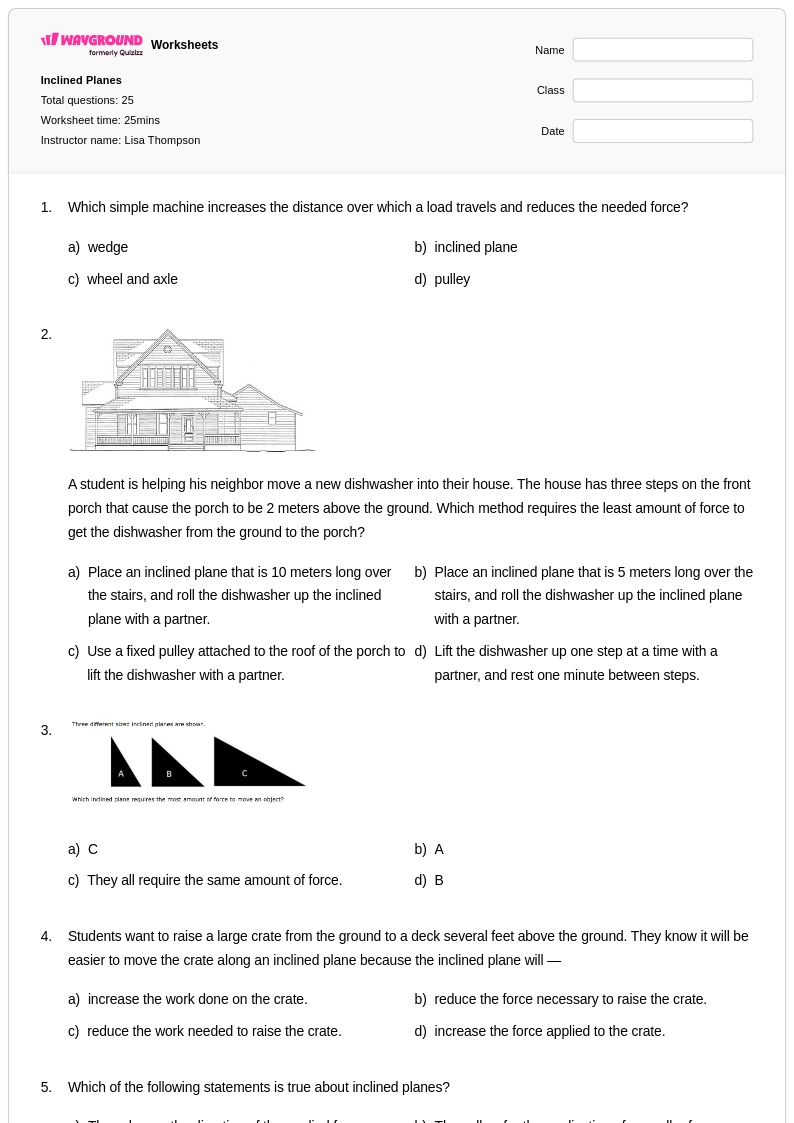
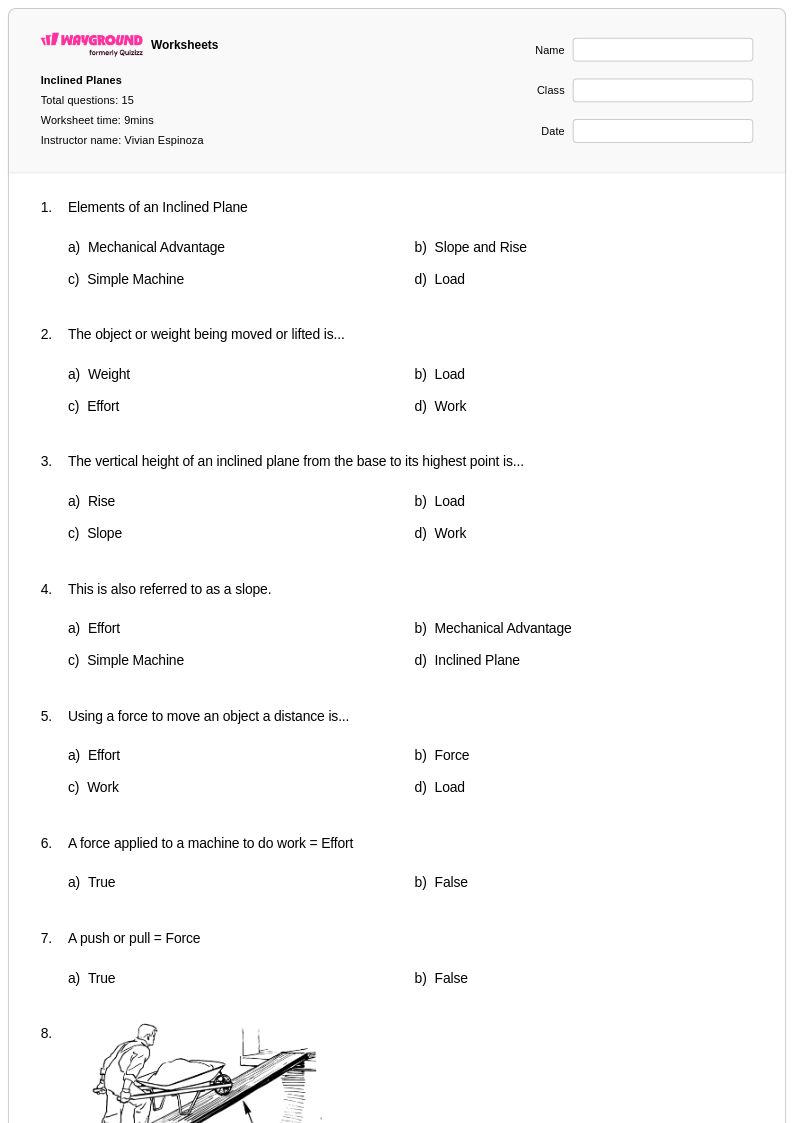
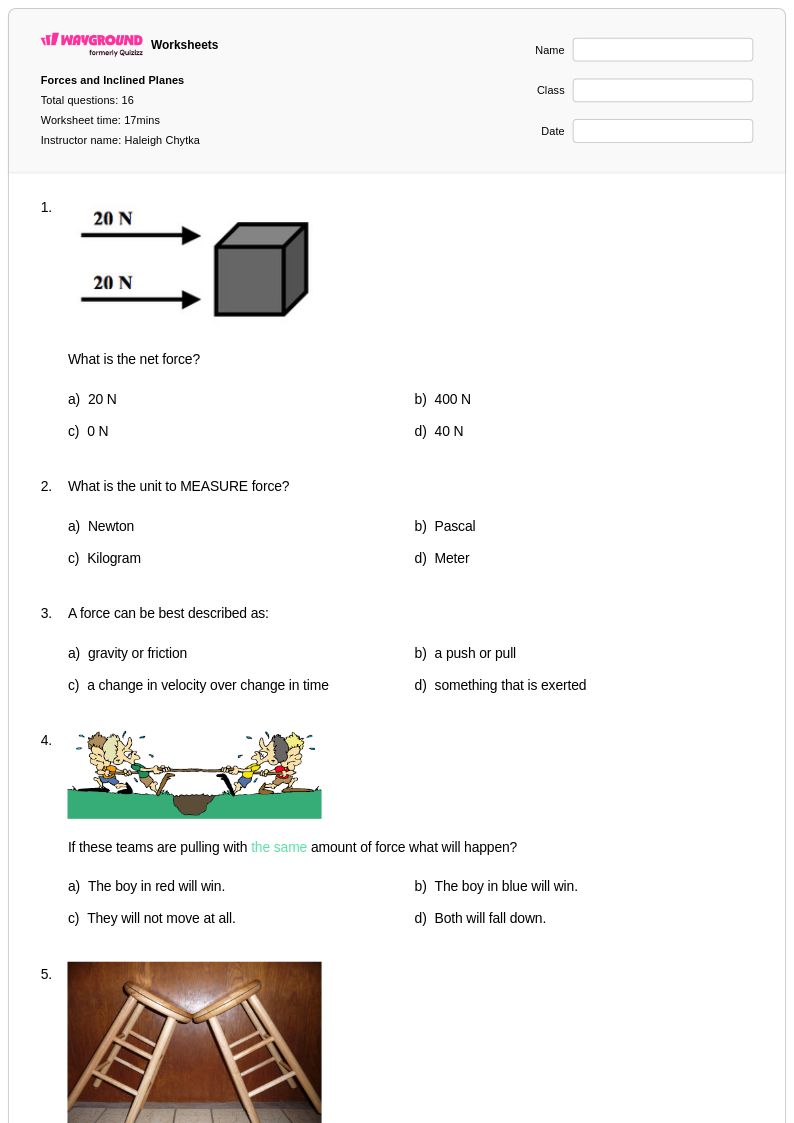
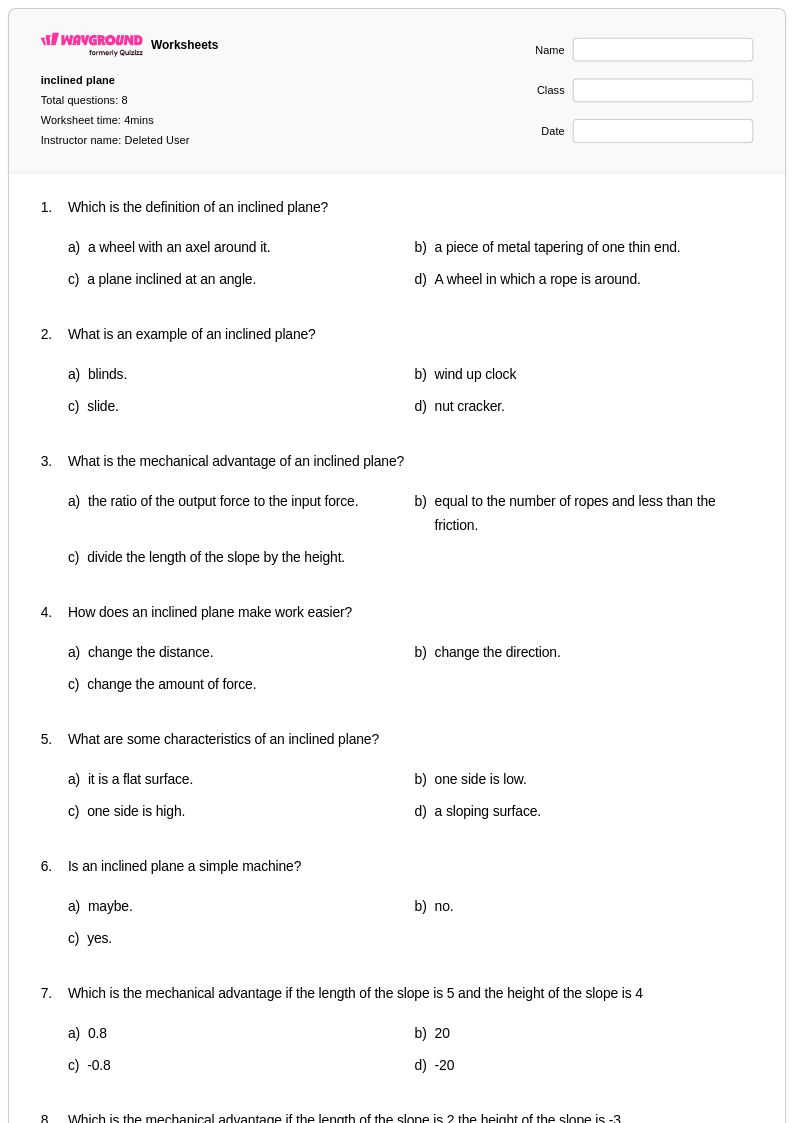
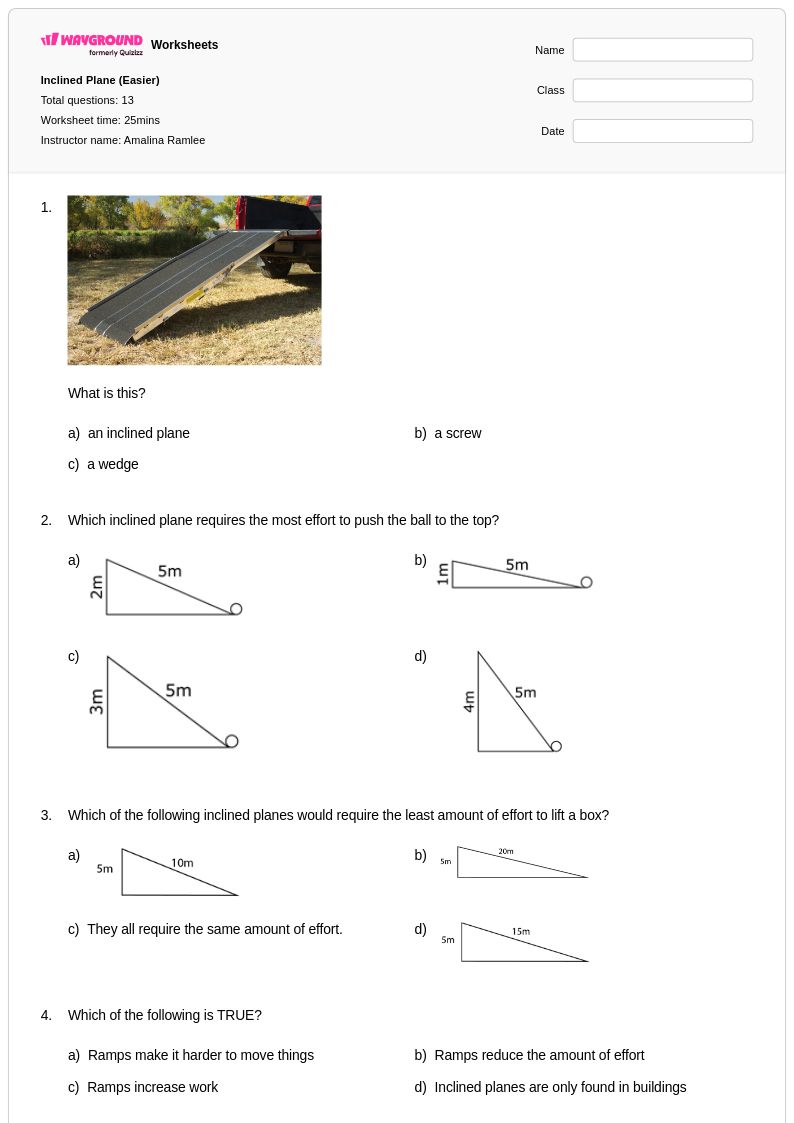
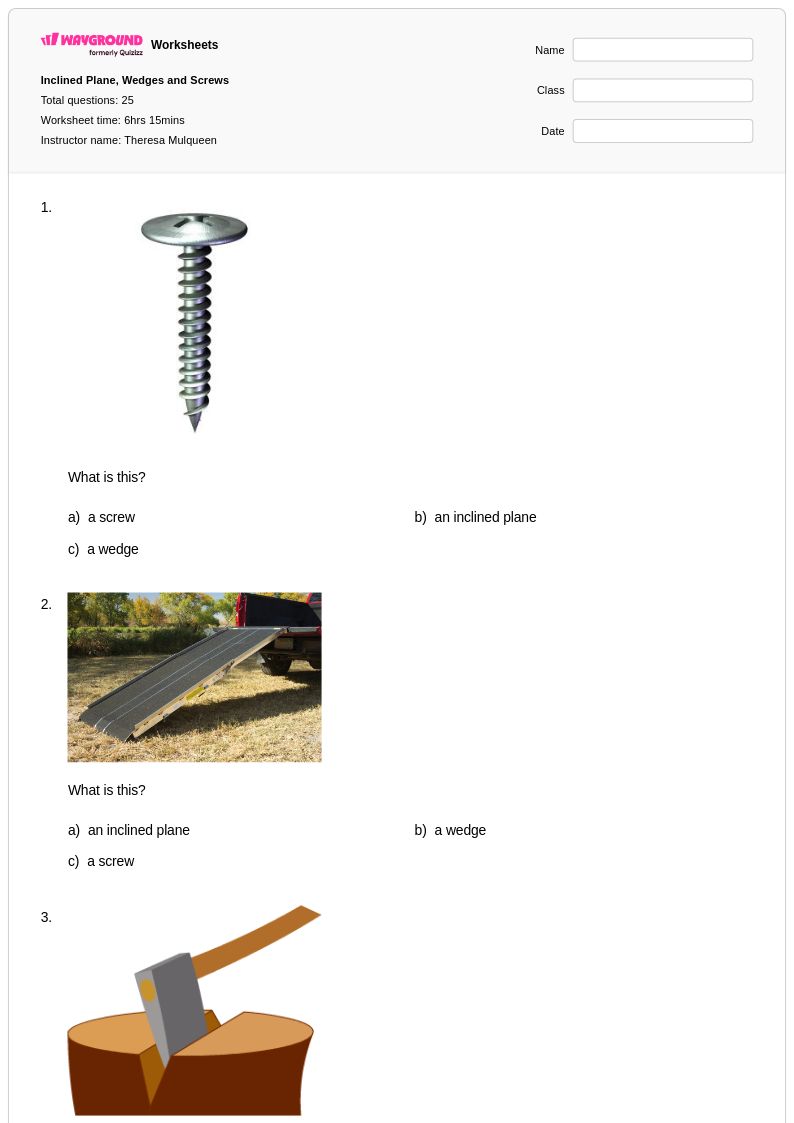
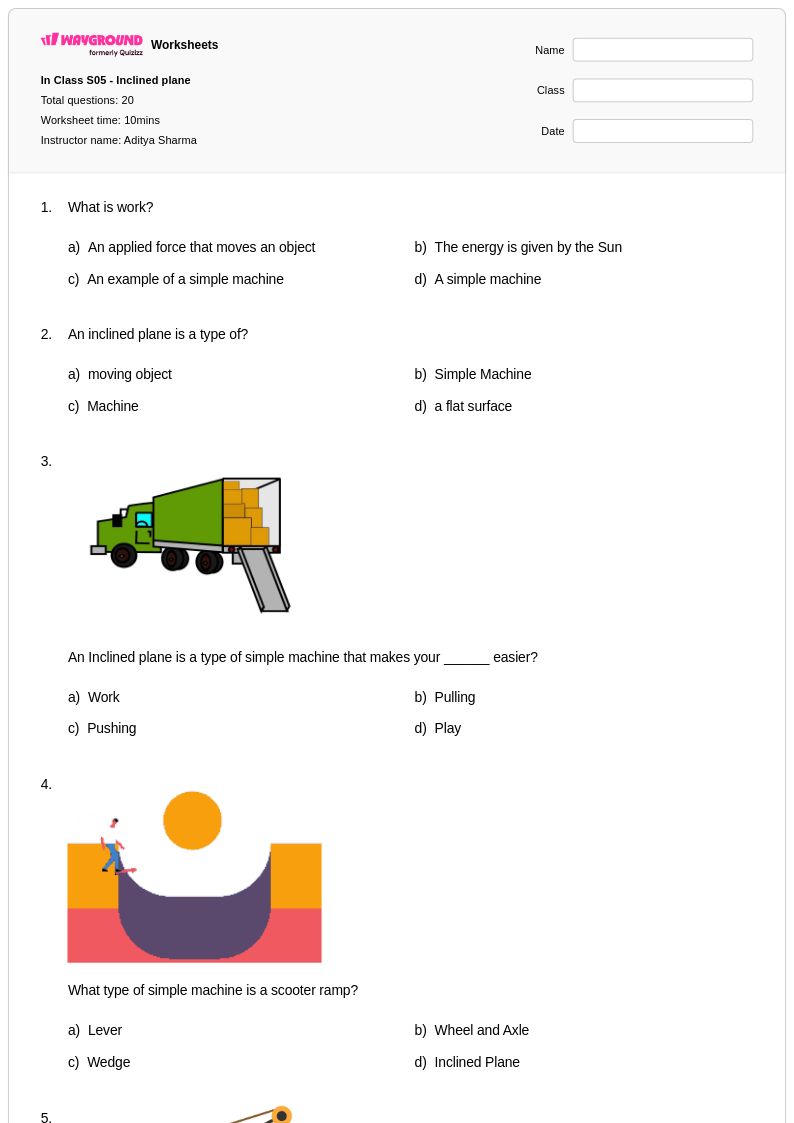
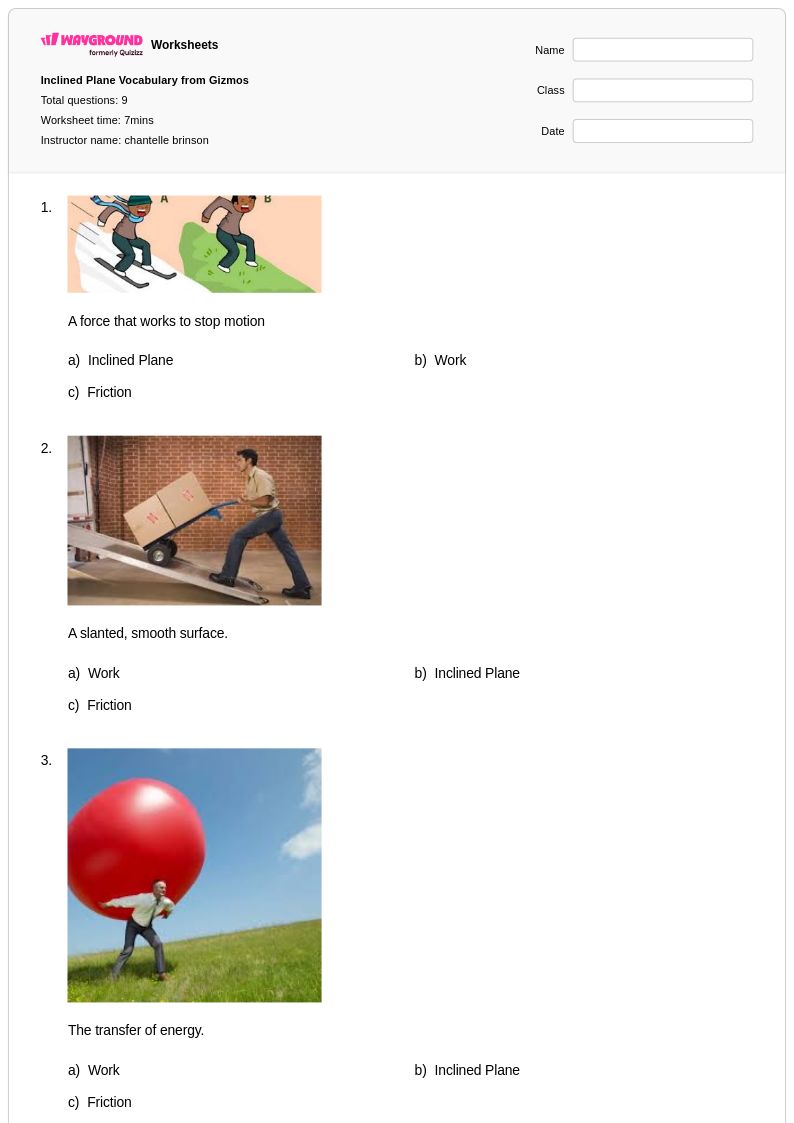
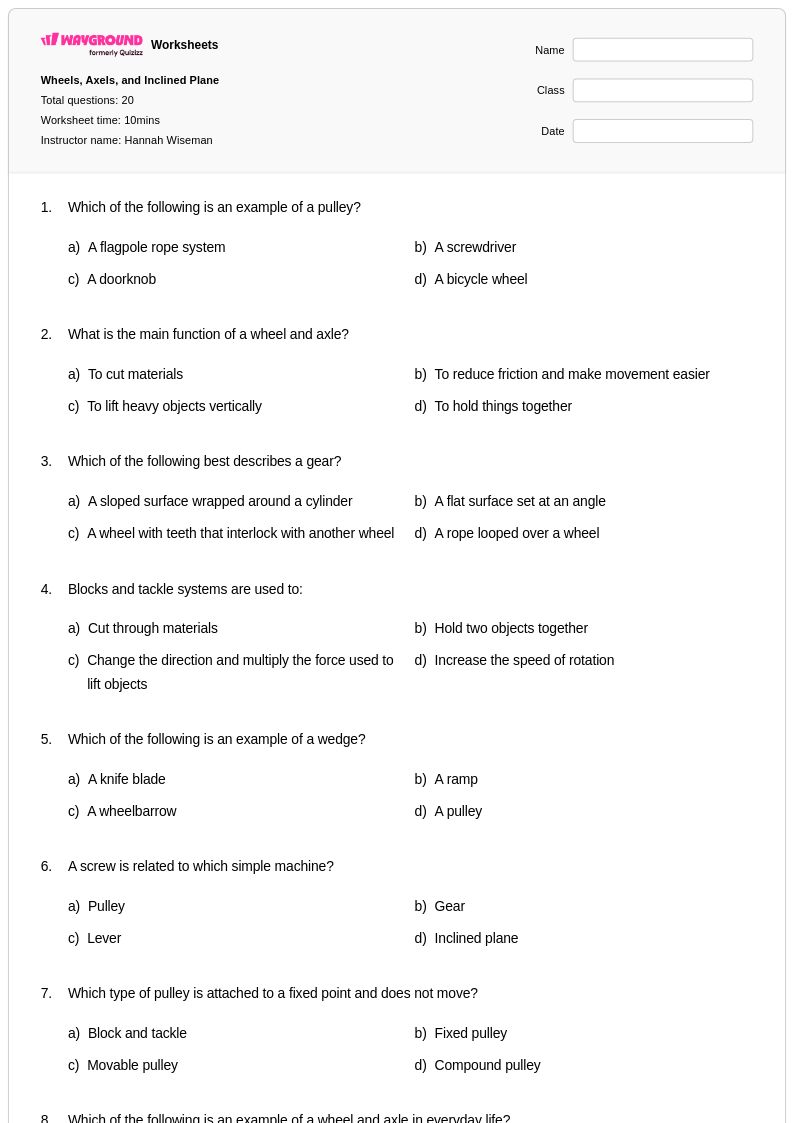
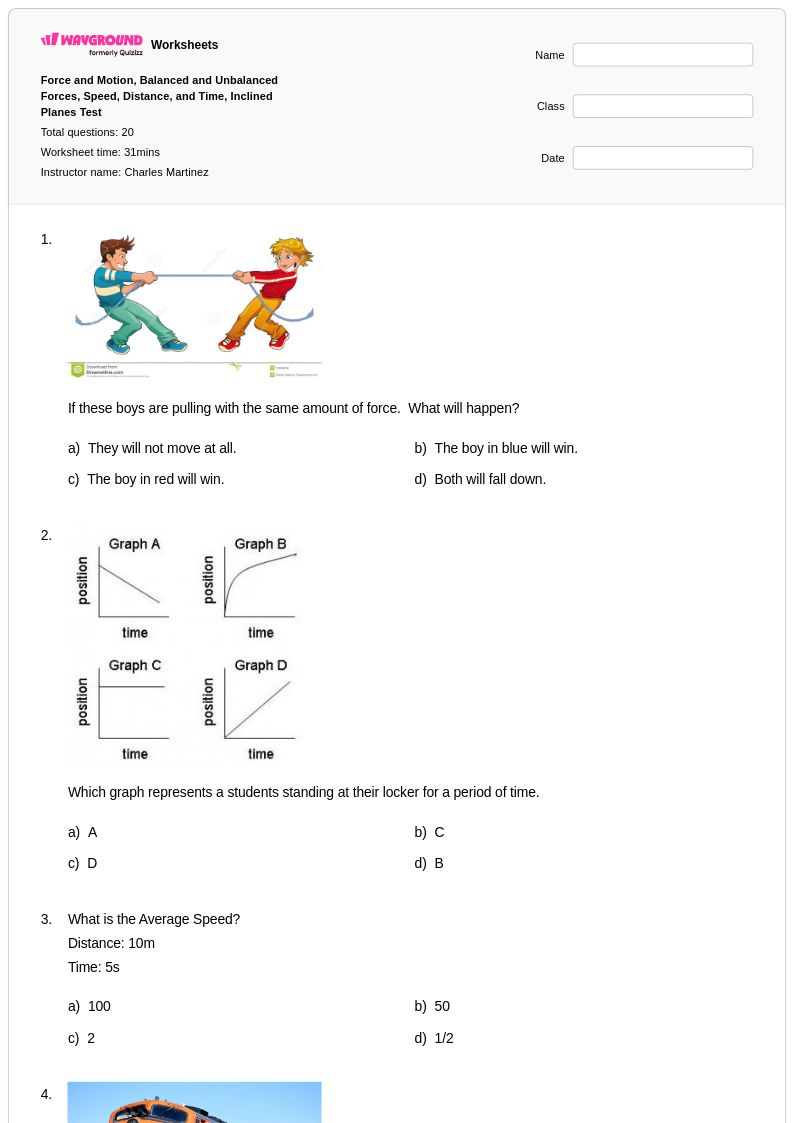
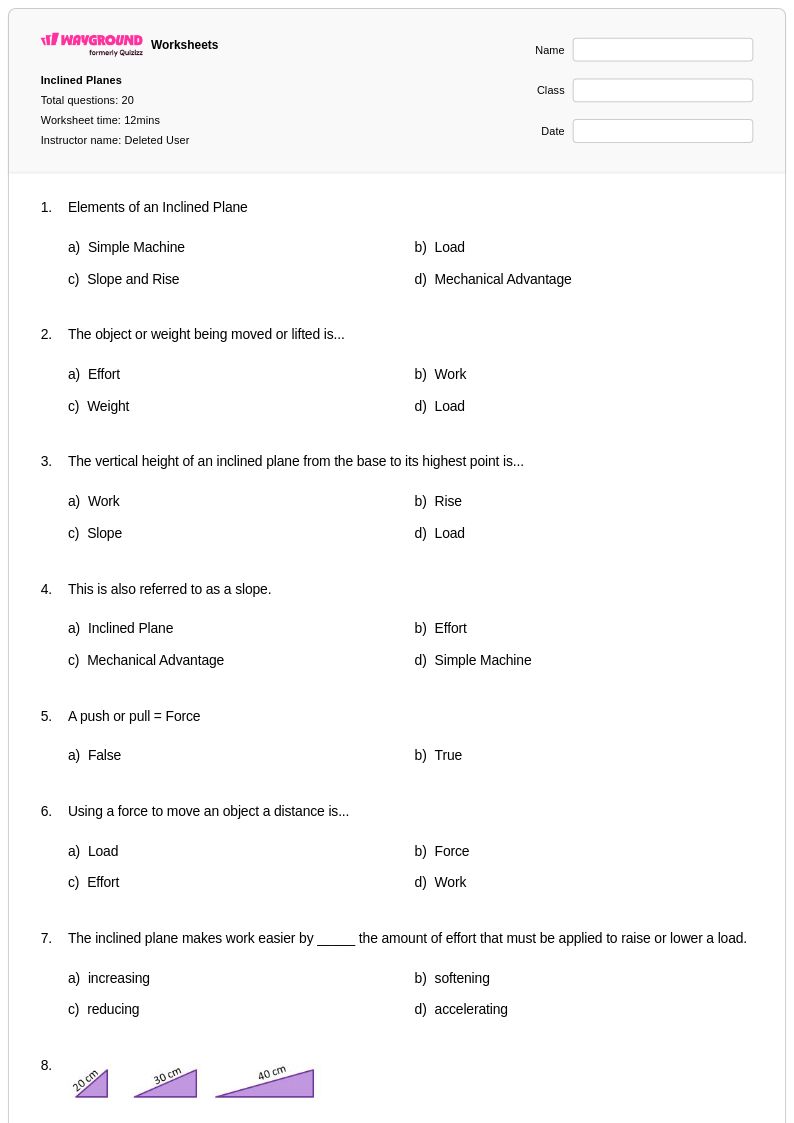
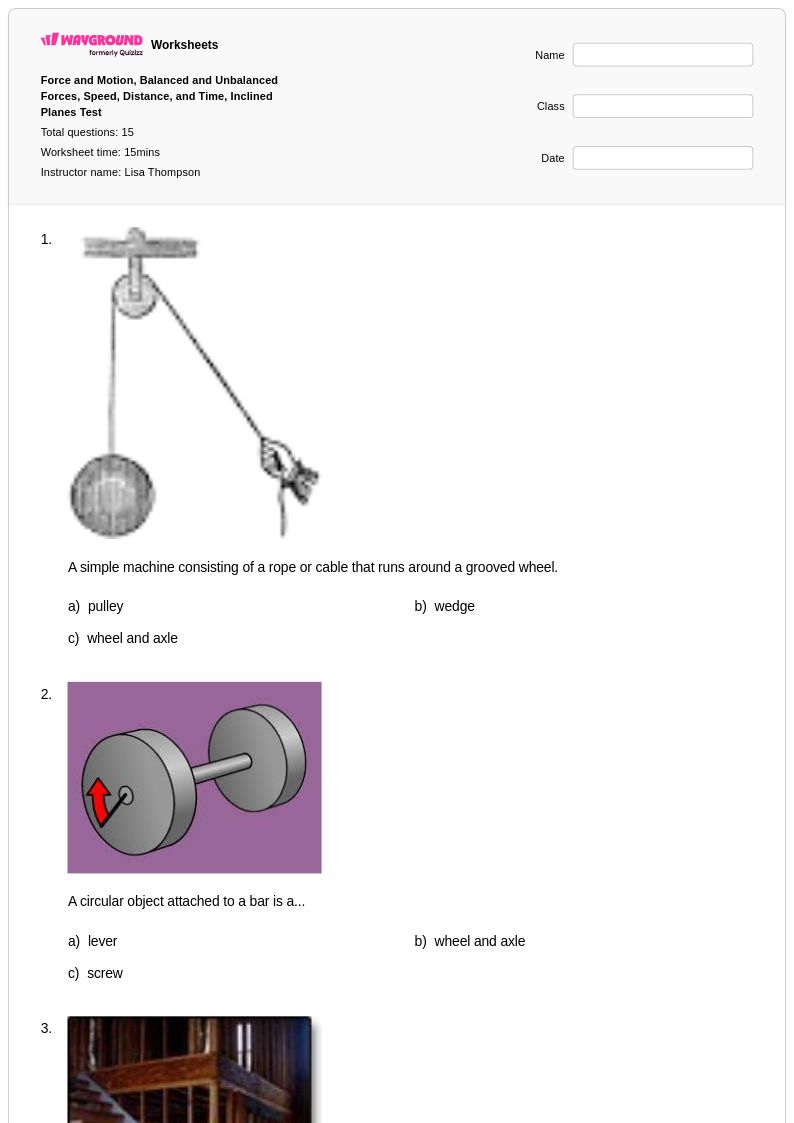
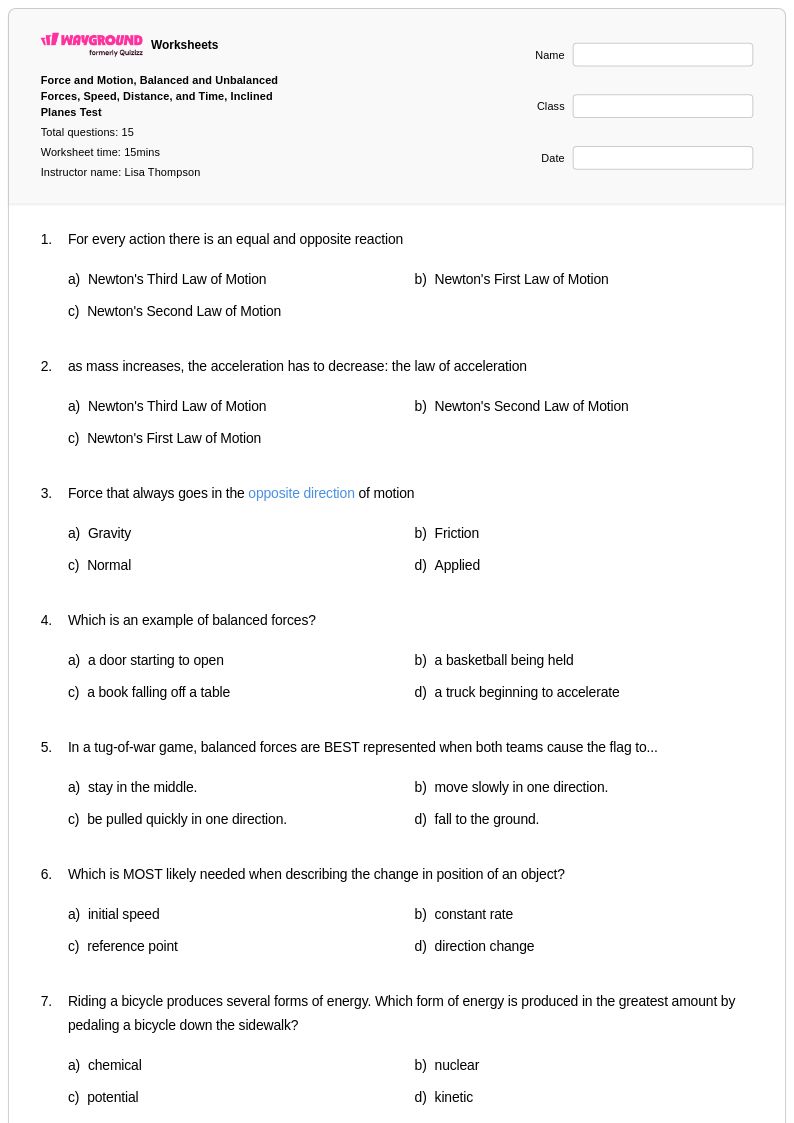
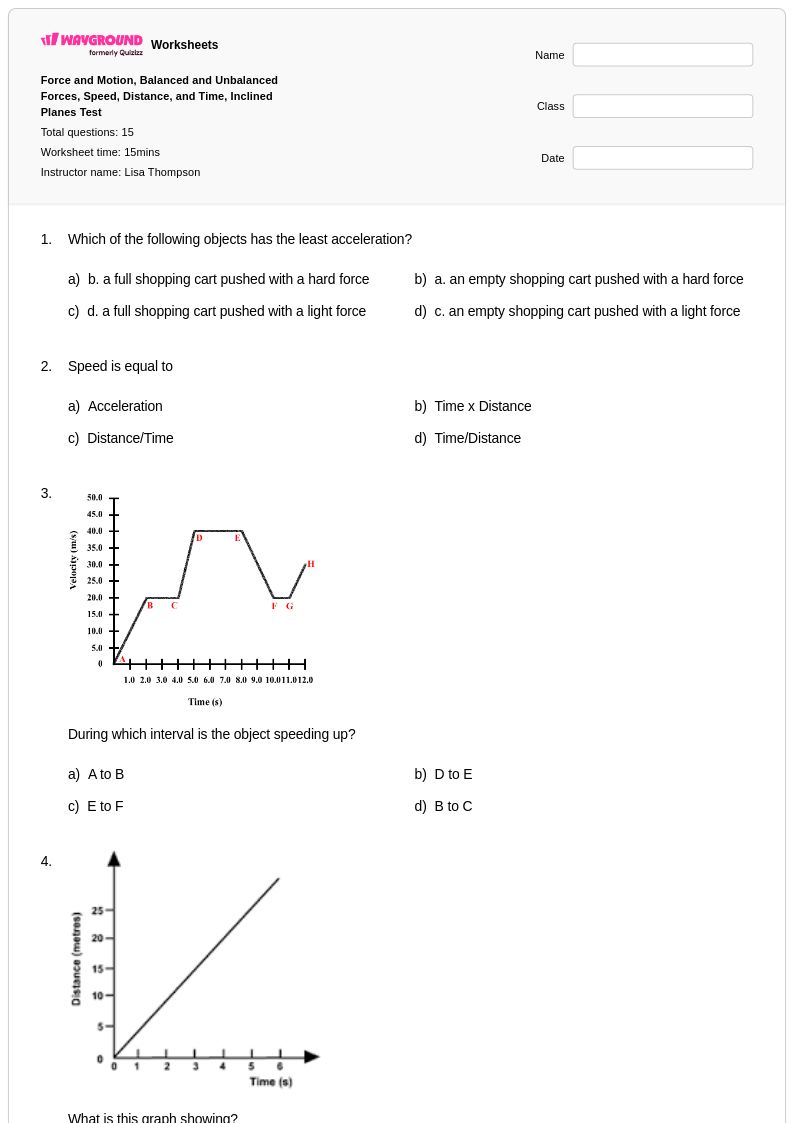
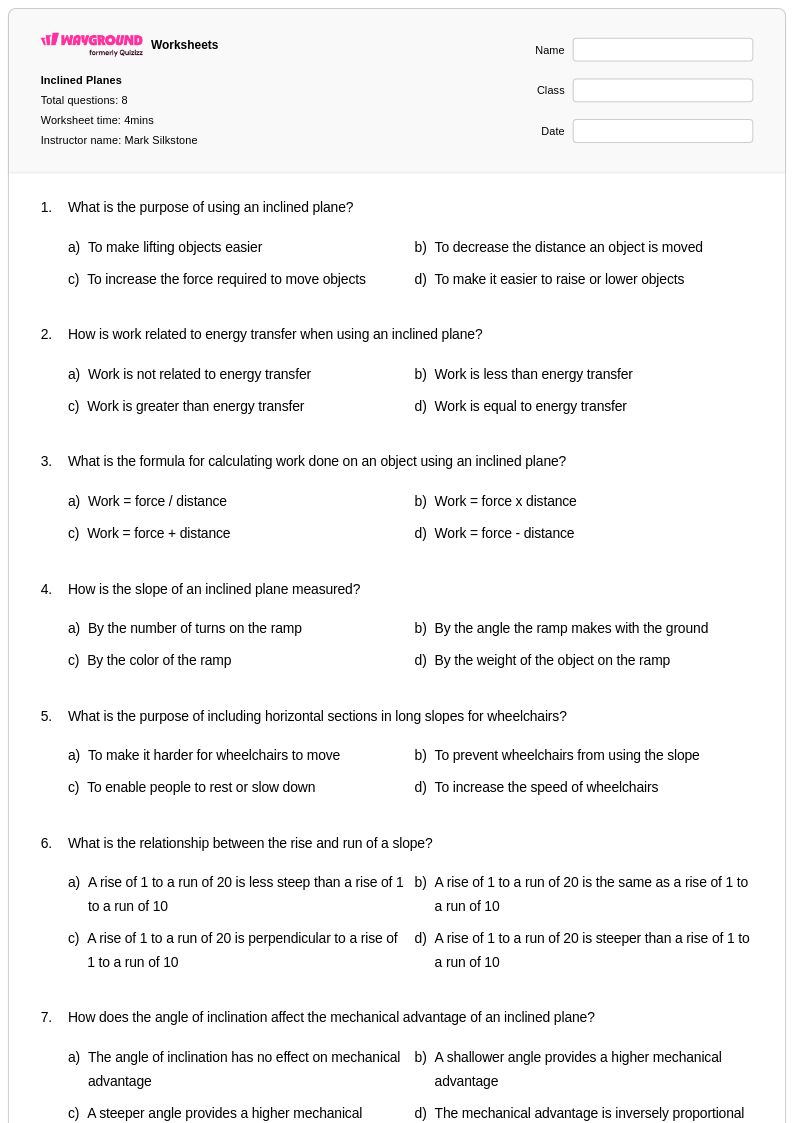
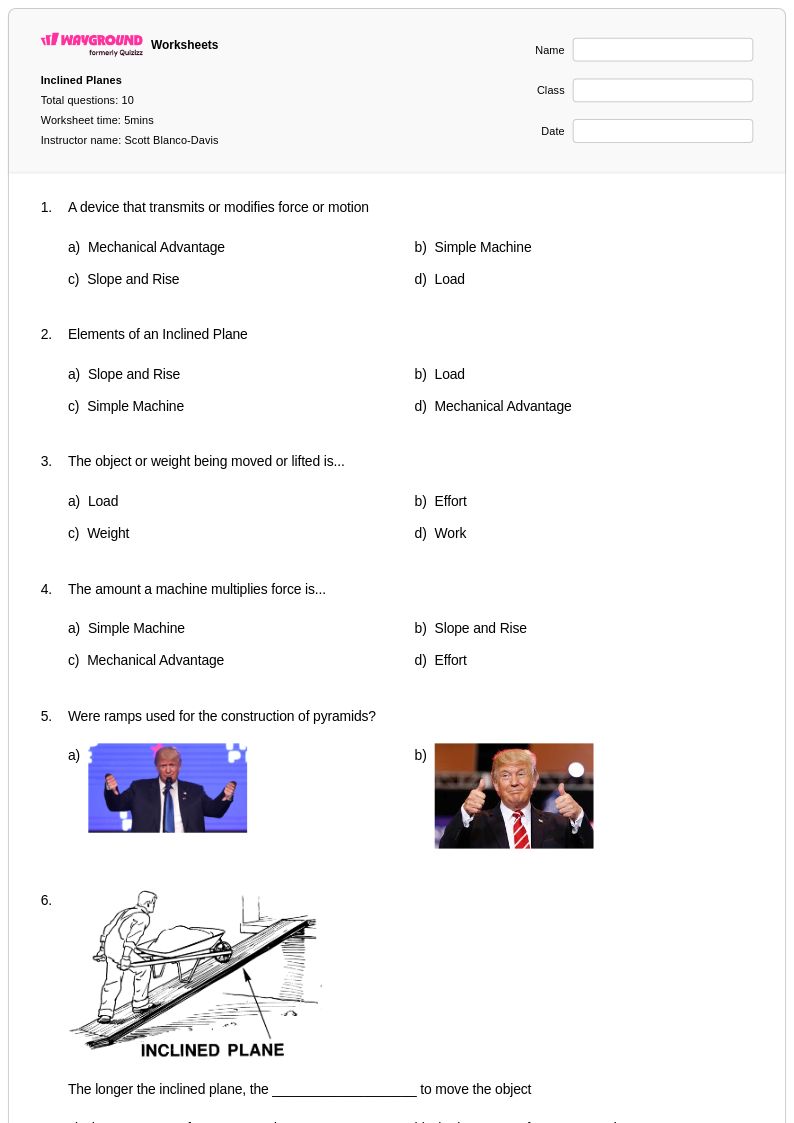
Inclined plane worksheets for Class 8 students available through Wayground (formerly Quizizz) provide comprehensive practice with one of the fundamental simple machines in physics. These carefully designed educational resources help students master the essential concepts of mechanical advantage, force components, work, and energy relationships when objects move along slanted surfaces. Students develop critical problem-solving skills as they work through practice problems involving friction calculations, determining the ideal mechanical advantage of ramps, and analyzing how inclined planes reduce the effort force needed to move heavy objects. The worksheet collections include detailed answer keys that support independent learning and self-assessment, while the free printables and pdf formats ensure easy classroom implementation and home study reinforcement.
Wayground's extensive library supports physics educators with millions of teacher-created inclined plane resources that can be seamlessly integrated into Class 8 curriculum planning. The platform's robust search and filtering capabilities allow teachers to quickly locate worksheets aligned with specific learning standards and differentiate instruction based on individual student needs. These versatile worksheet collections are available in both printable pdf format for traditional classroom use and interactive digital versions for technology-enhanced learning environments. Teachers can customize existing materials or combine multiple resources to create targeted practice sessions for remediation, skill reinforcement, or enrichment activities, ensuring that every student develops a solid foundation in understanding how inclined planes function as force multipliers in real-world applications.
FAQs
How do I teach inclined plane problems in physics class?
Teaching inclined plane problems effectively starts with establishing a strong foundation in vector decomposition before introducing force components along and perpendicular to the slope. Use a tilted coordinate system aligned with the incline so students can resolve gravity into parallel and perpendicular components, which simplifies applying Newton's second law. Begin with frictionless ramps before layering in kinetic and static friction, and use real-world scenarios like loading docks and car ramps to ground abstract calculations in tangible contexts.
What practice problems help students get better at inclined plane calculations?
Students benefit most from a sequenced progression that starts with basic vector decomposition on frictionless surfaces, then advances to problems involving friction coefficients, and finally to multi-force scenarios combining tension, applied forces, and energy transformations. Problems involving objects sliding down ramps, blocks being pushed up slopes, and connected mass systems on inclines cover the range of skills most commonly assessed. Mixing conceptual questions with quantitative calculations ensures students develop both procedural fluency and physical intuition.
What mistakes do students commonly make when solving inclined plane problems?
The most frequent error is resolving gravity components incorrectly, specifically confusing which trigonometric function applies to the parallel versus perpendicular component relative to the slope angle. Students also commonly forget to adjust the normal force when additional vertical or angled forces are present, which leads to incorrect friction force calculations. A third persistent mistake is applying the standard horizontal-vertical coordinate system instead of rotating axes to align with the incline, unnecessarily complicating the algebra.
How do inclined plane worksheets help students connect physics concepts to real-world applications?
Well-designed inclined plane worksheets place calculations within realistic scenarios such as vehicles navigating hills, boxes sliding down warehouse ramps, and objects being pulled up slopes with ropes, which helps students see the direct relevance of Newton's laws and trigonometry. These applied contexts reinforce that the same governing equations describe both classroom problems and engineering situations, deepening conceptual understanding beyond formula memorization. Exposure to varied scenarios also prepares students to transfer their problem-solving skills to novel situations on assessments.
How do I use Wayground's inclined plane worksheets in my classroom?
Wayground's inclined plane worksheets are available as printable PDFs for traditional classroom use and in digital formats for technology-integrated environments, giving teachers flexibility regardless of their setup. You can assign them as independent practice, guided group work, or homework, and the included answer keys support self-assessment and independent learning. Wayground also allows you to host worksheets as a quiz directly on the platform, and built-in accommodation tools let you assign extended time, read-aloud support, or reduced answer choices to individual students without disrupting the rest of the class.
How do I differentiate inclined plane instruction for students at different skill levels?
Differentiation on inclined plane topics works best when scaffolded by complexity: introductory students work on frictionless single-force problems with guided formula setup, while advanced students tackle multi-force systems involving friction, tension, and energy conservation simultaneously. On Wayground, teachers can filter resources by skill level and customize existing worksheets to match the needs of specific learner groups. For students who need additional support during digital assignments, Wayground's accommodation settings allow teachers to enable read-aloud, extended time, or reduced answer choices for individual students, with all other students receiving the standard experience.