
18 Q
1st - 5th
13 Q
1st - 9th
10 Q
1st - 4th
30 Q
1st - 5th
5 Q
1st - 5th
12 Q
KG - Uni
10 Q
1st - 6th
11 Q
1st - 5th
11 Q
1st - 5th
25 Q
1st - 3rd
20 Q
1st - 5th
10 Q
1st - 5th
10 Q
1st - 3rd
15 Q
1st - 10th
10 Q
1st - 7th
18 Q
1st - 5th
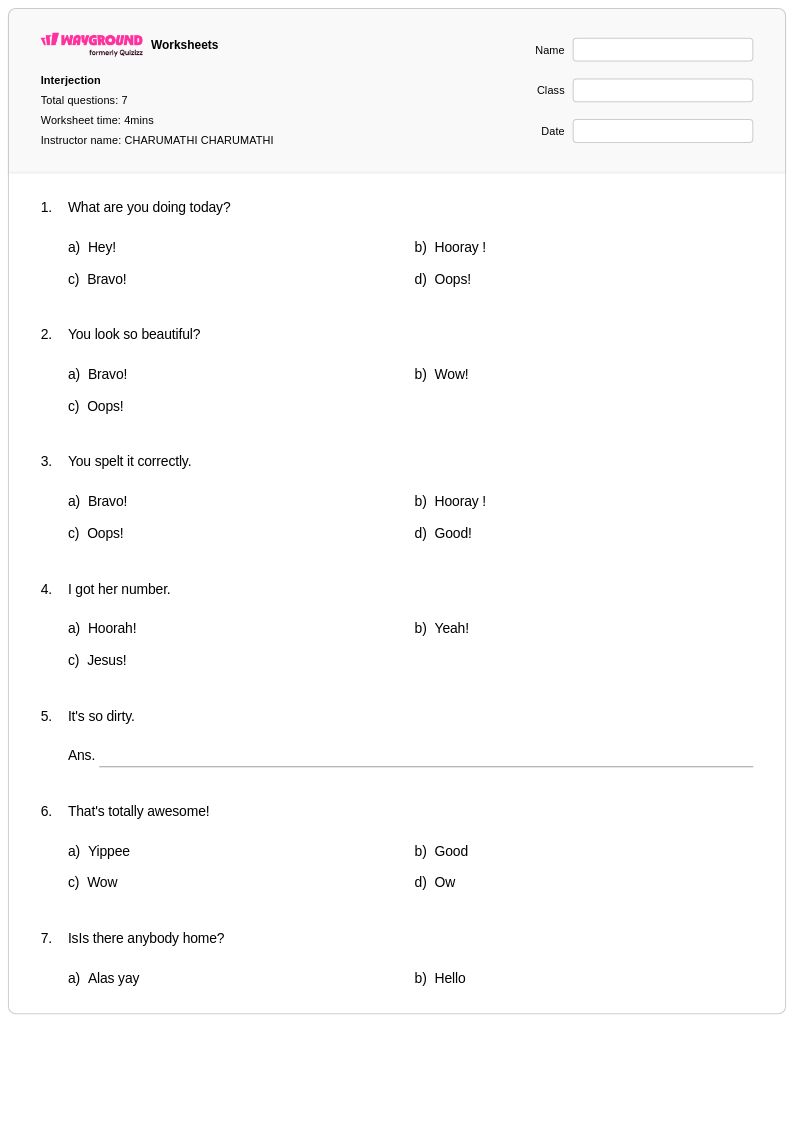
7 Q
1st - 6th
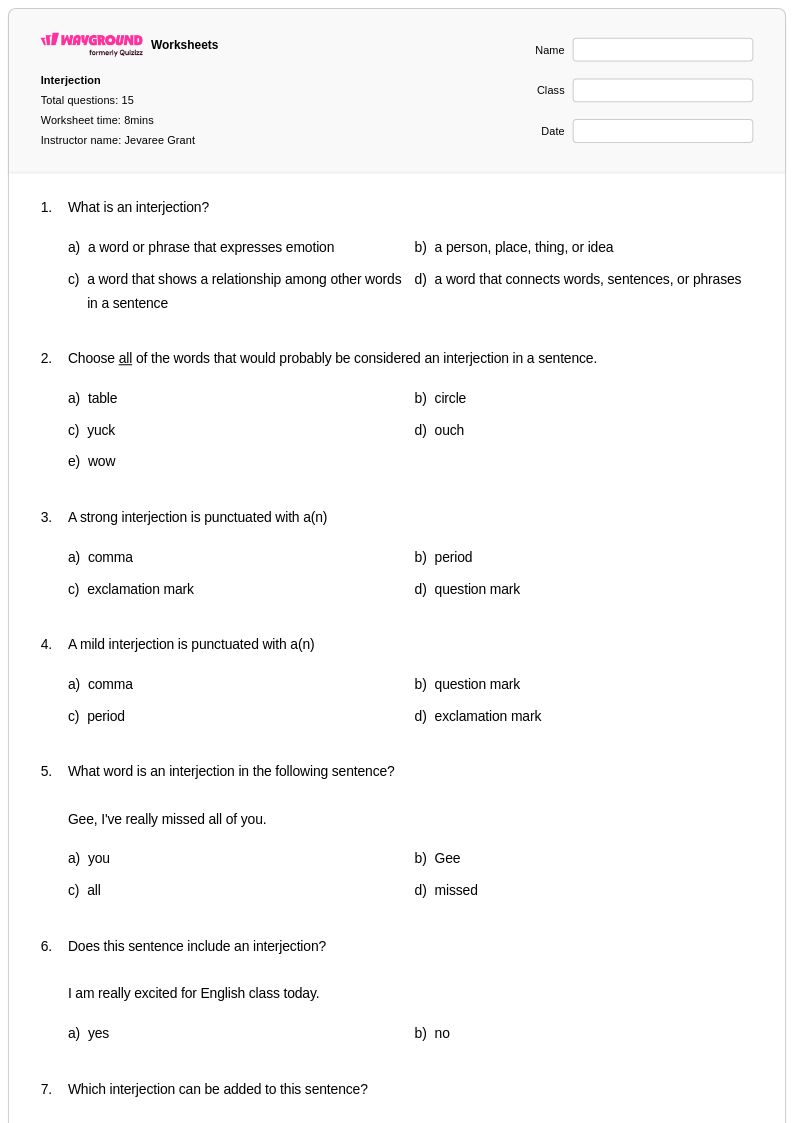
15 Q
1st - Uni
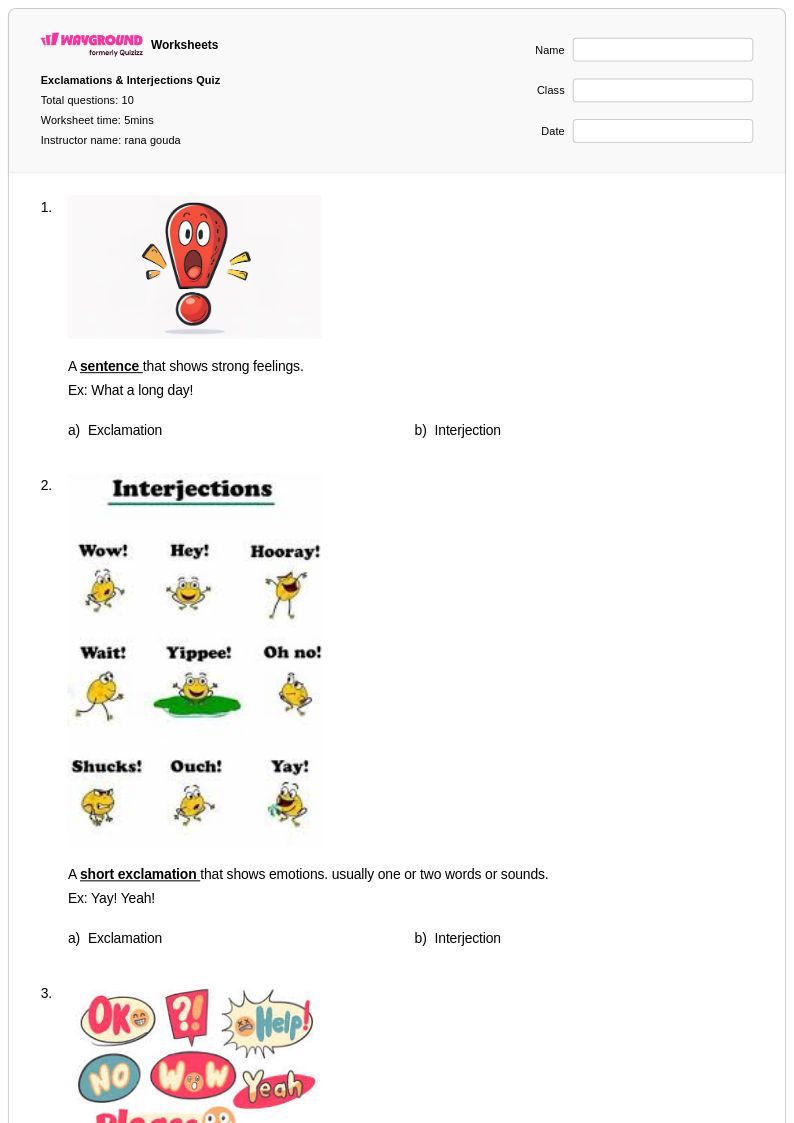
5 Q
2nd
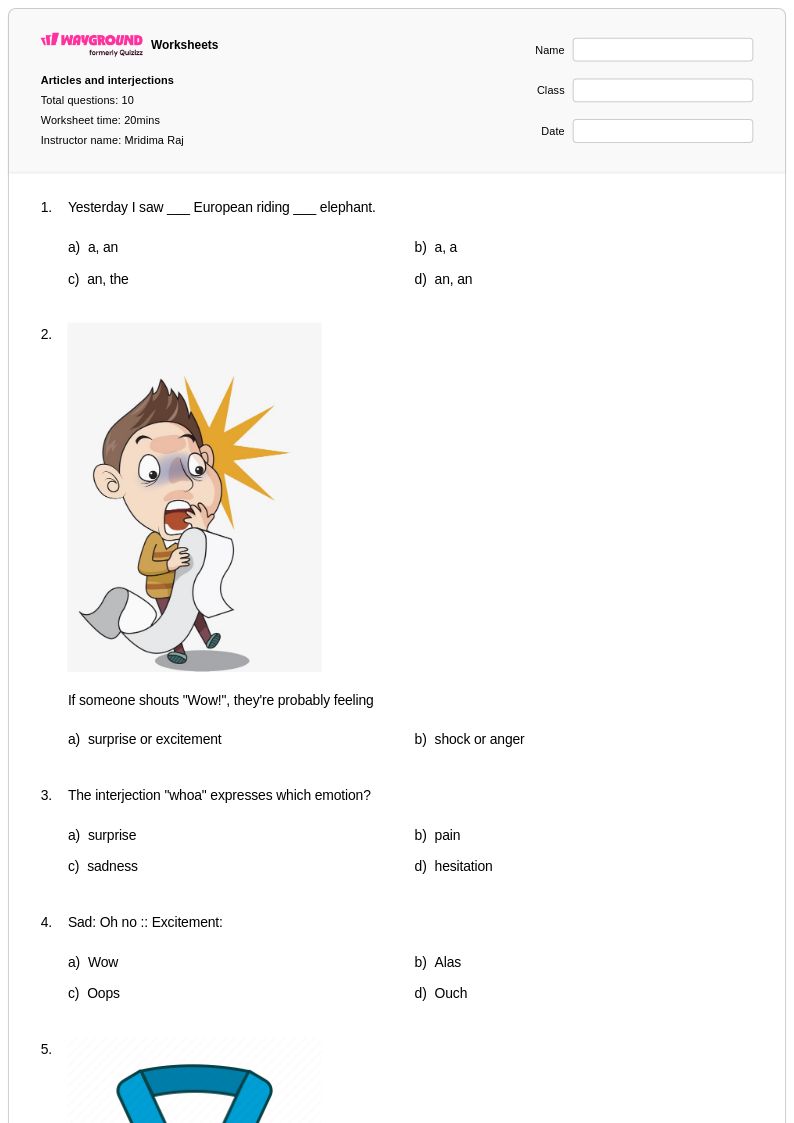
10 Q
1st - 3rd
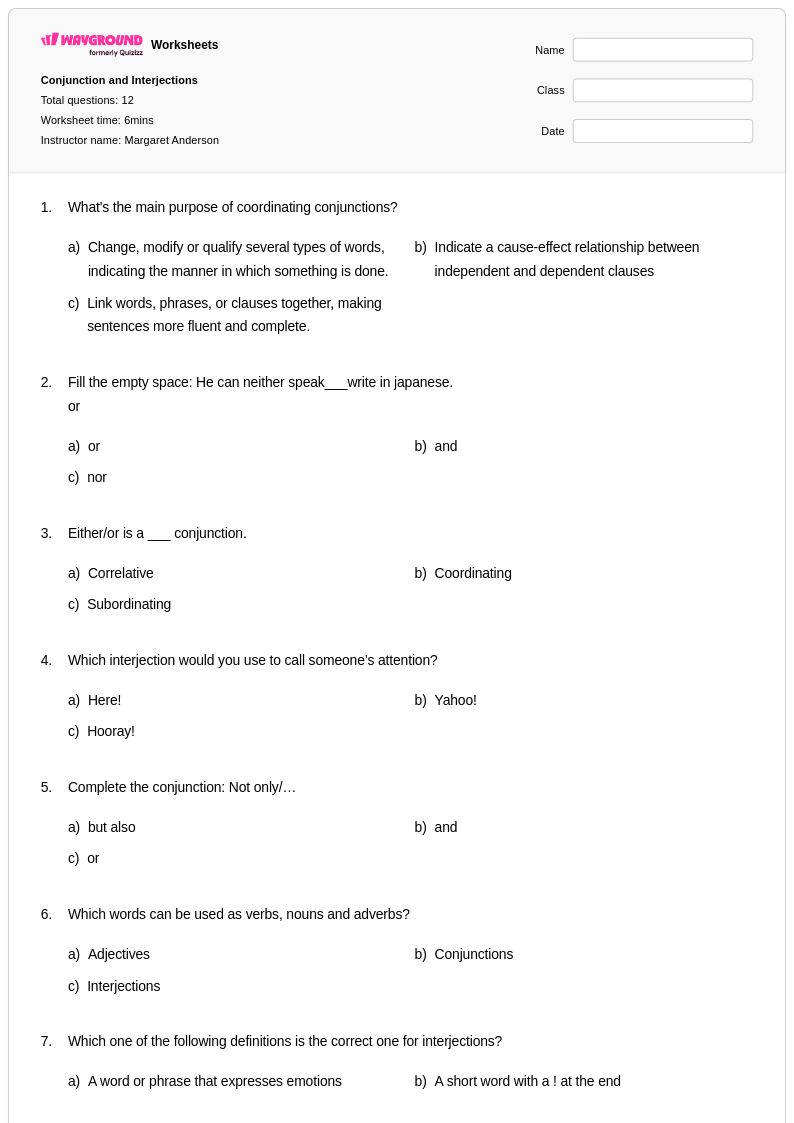
12 Q
1st - 5th
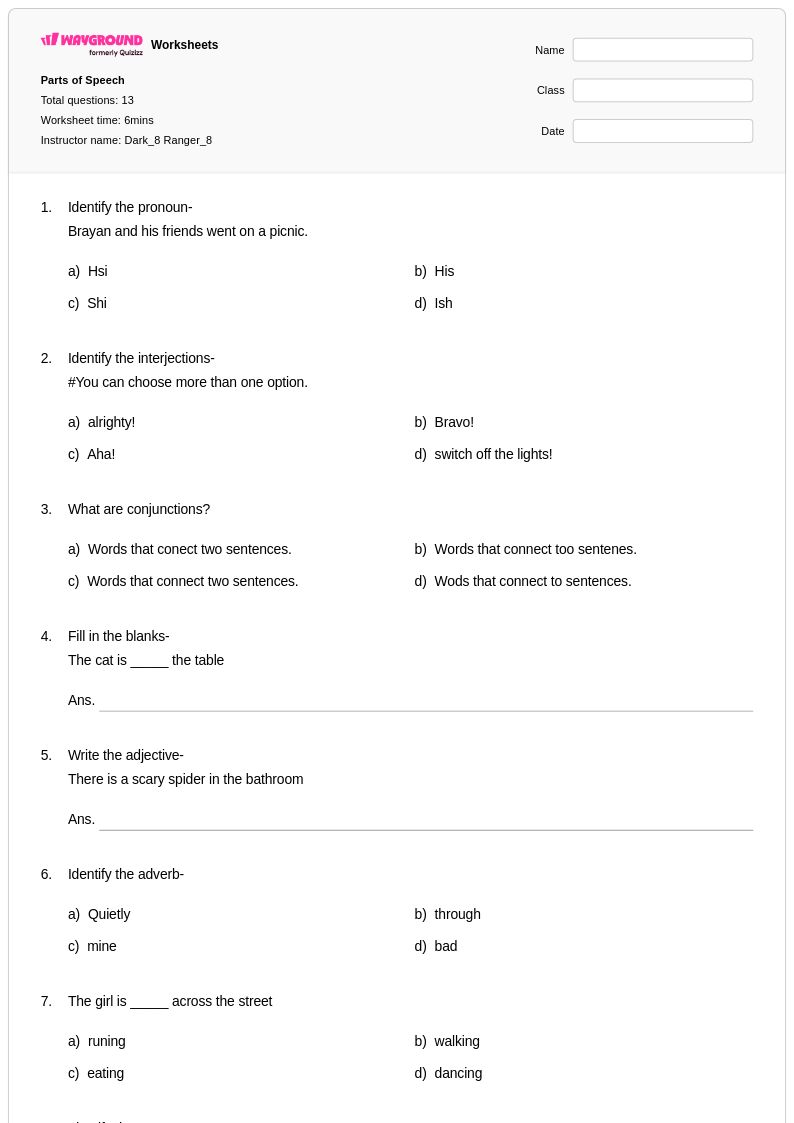
13 Q
KG - PD
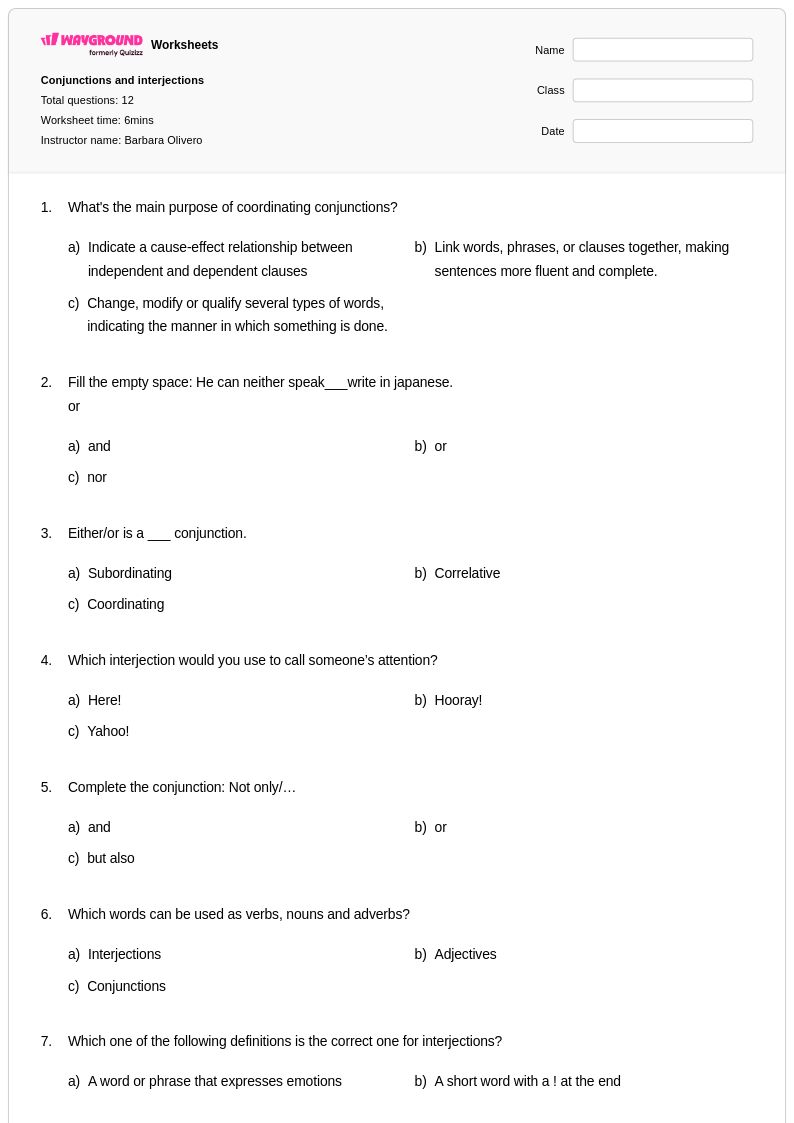
12 Q
1st - 5th
Explore Other Subject Worksheets for class 1
Explore printable Interjections worksheets for Class 1
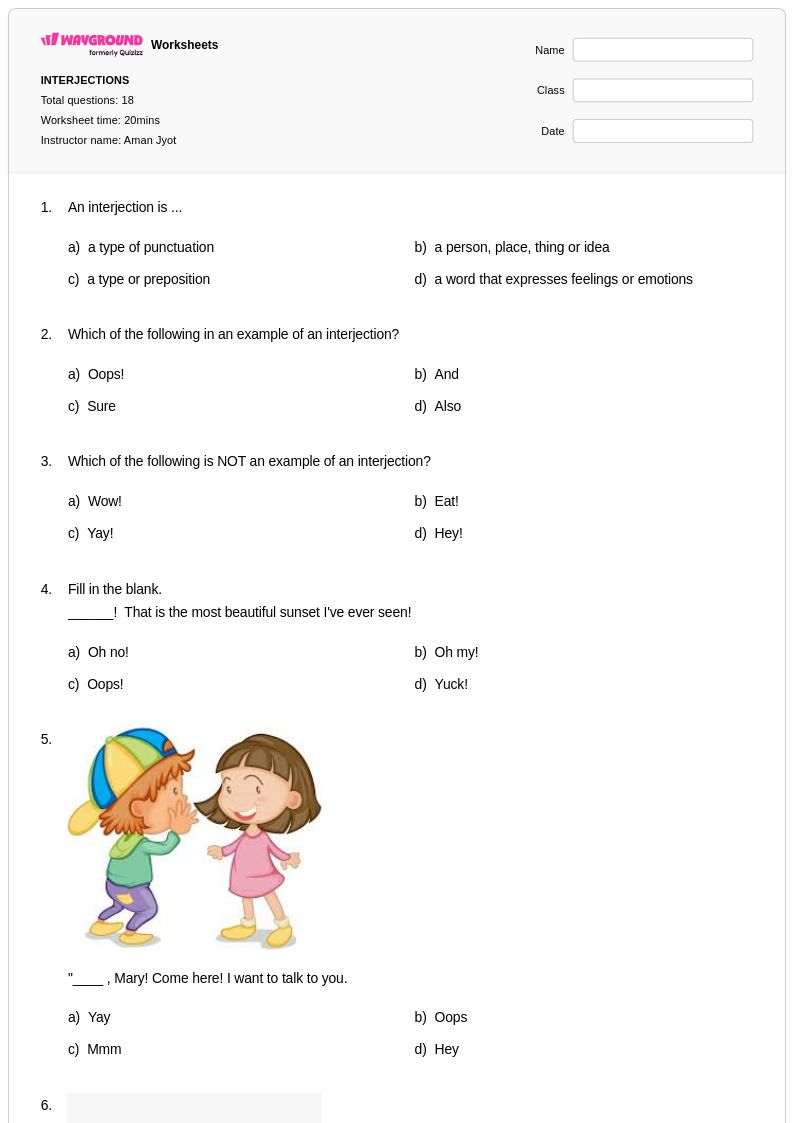
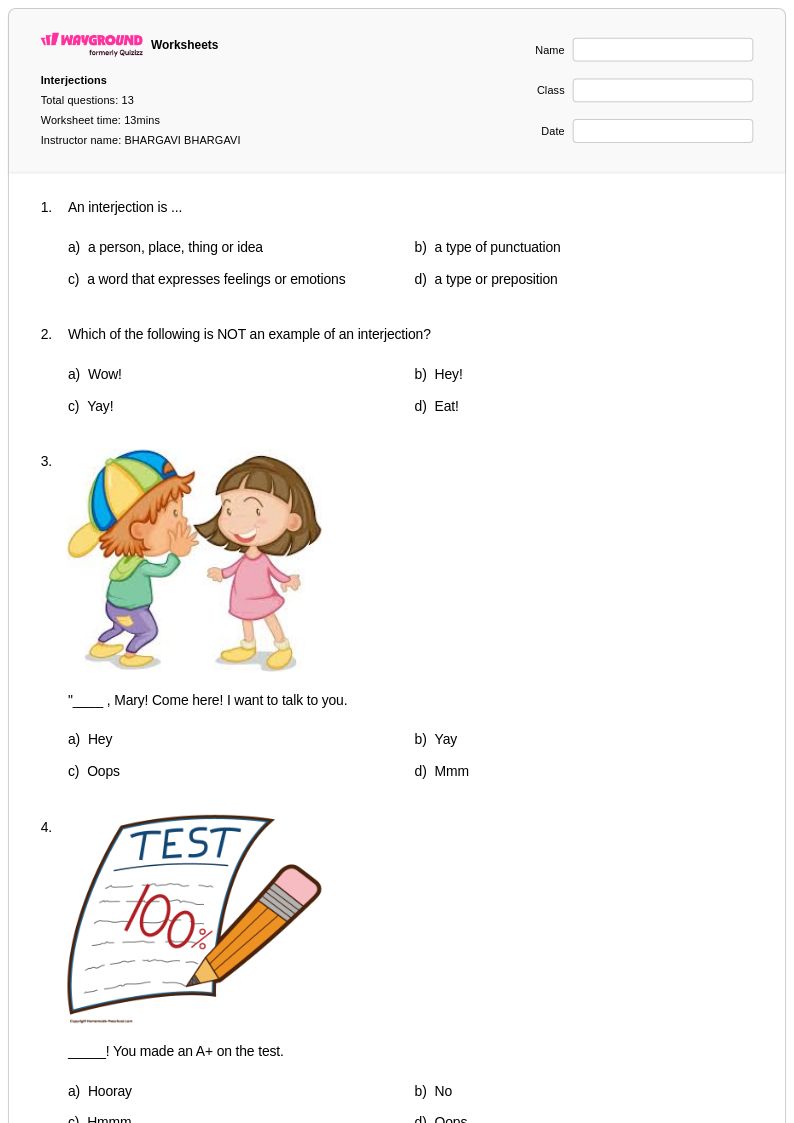
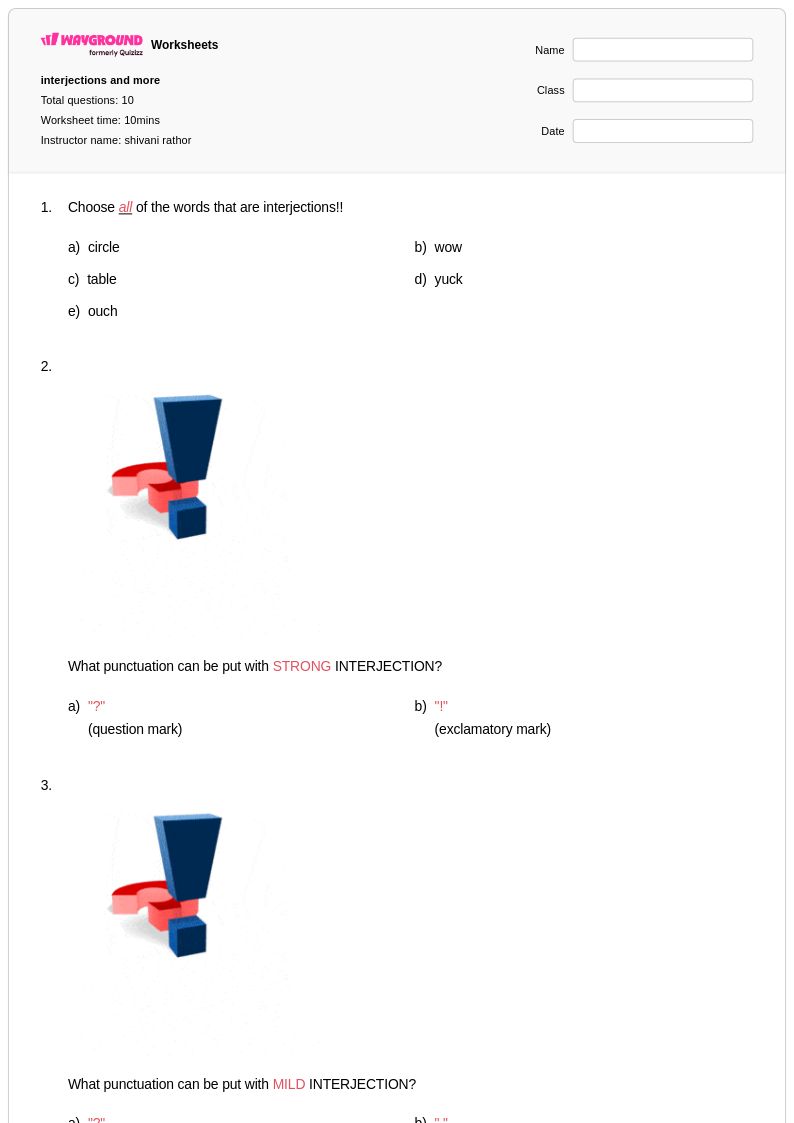
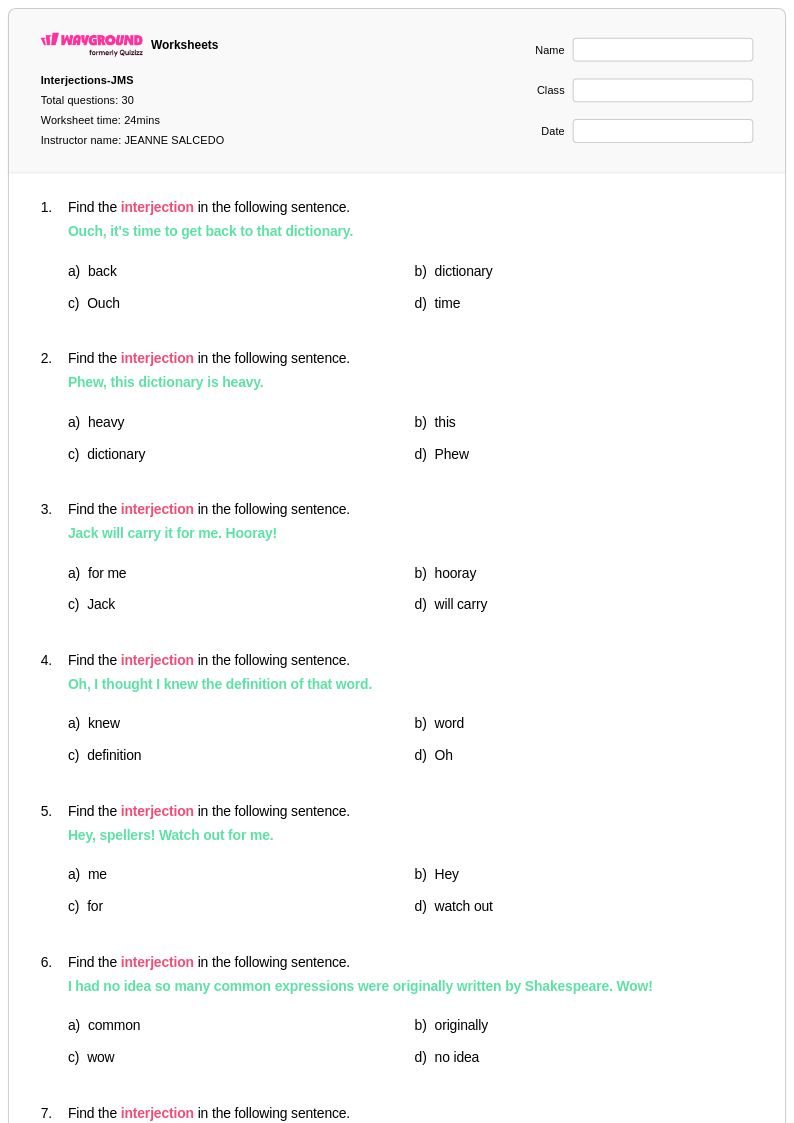
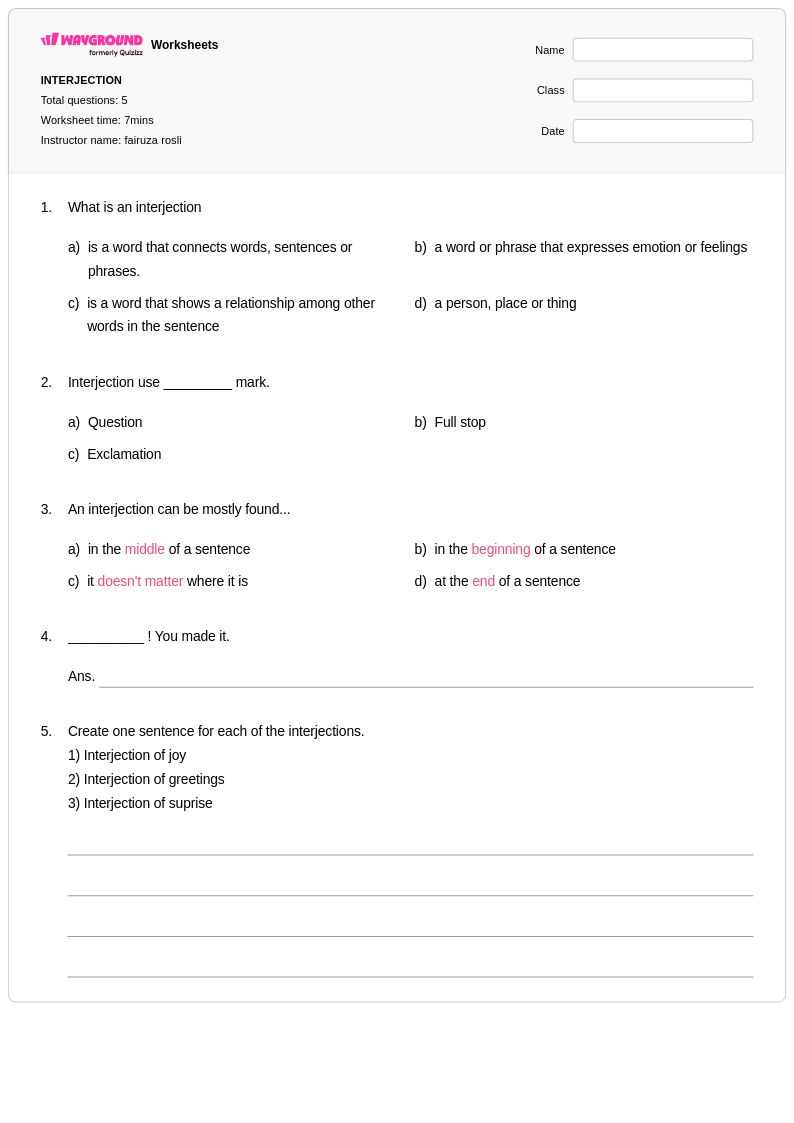
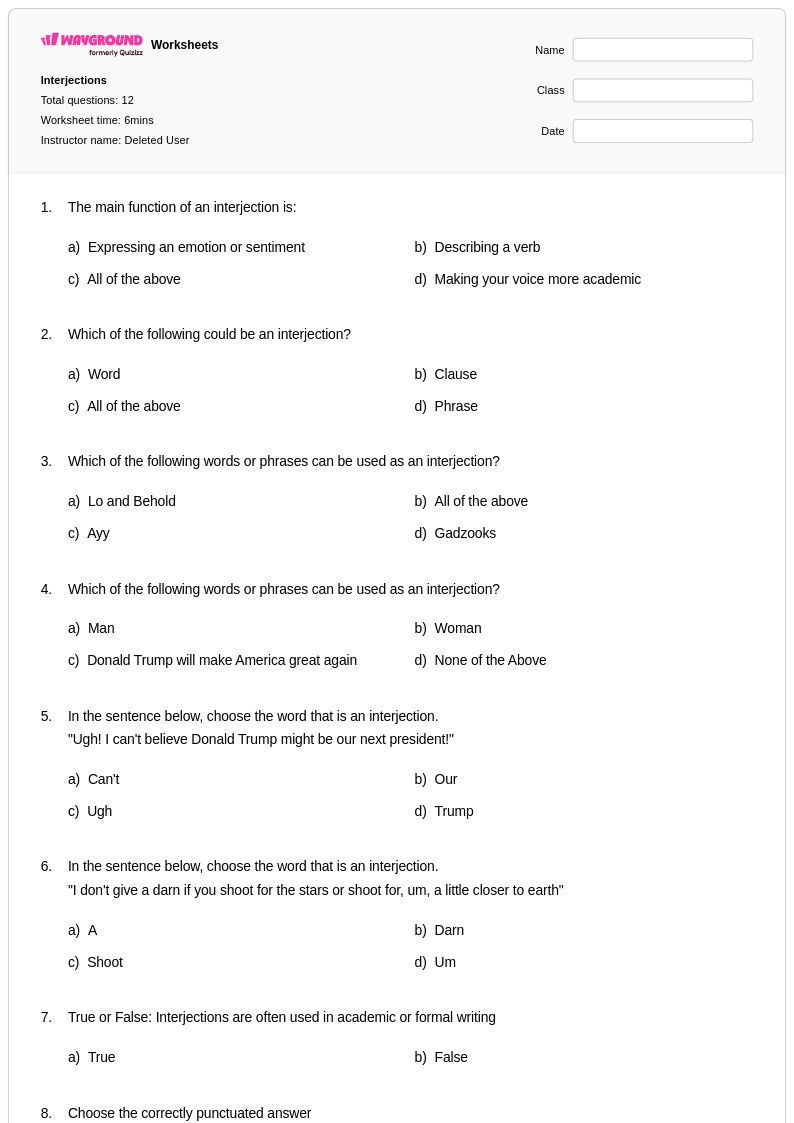
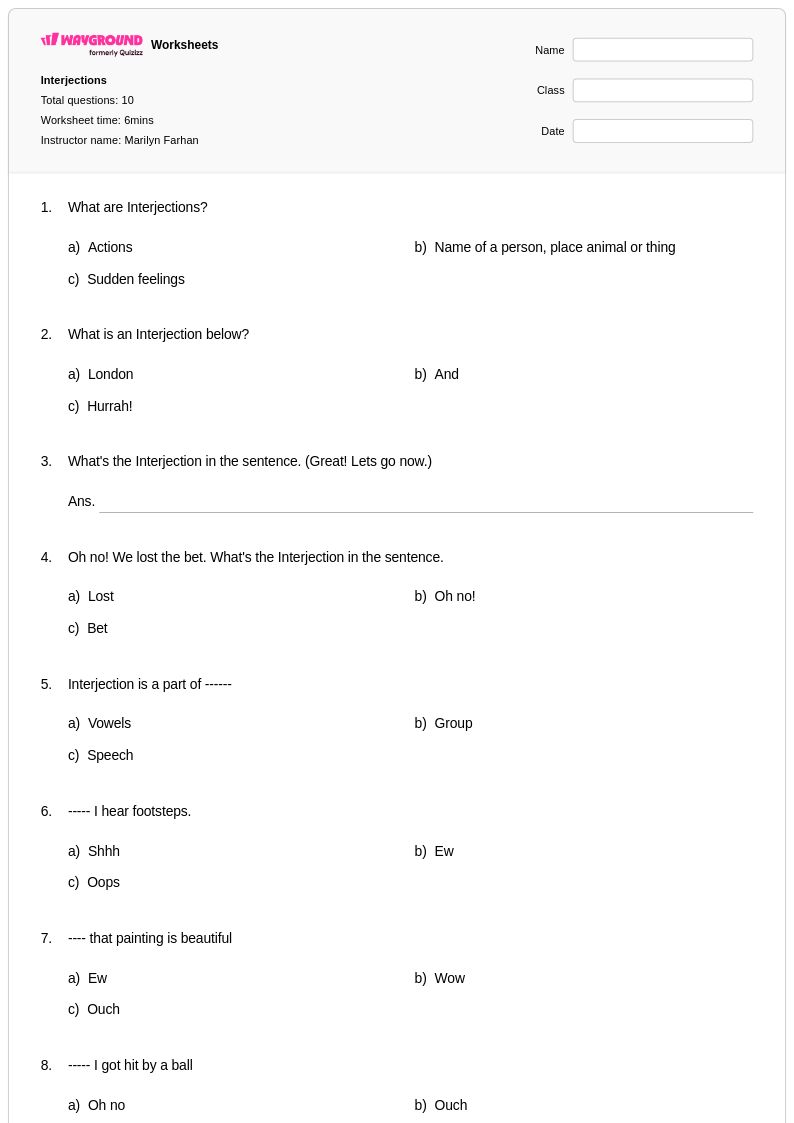
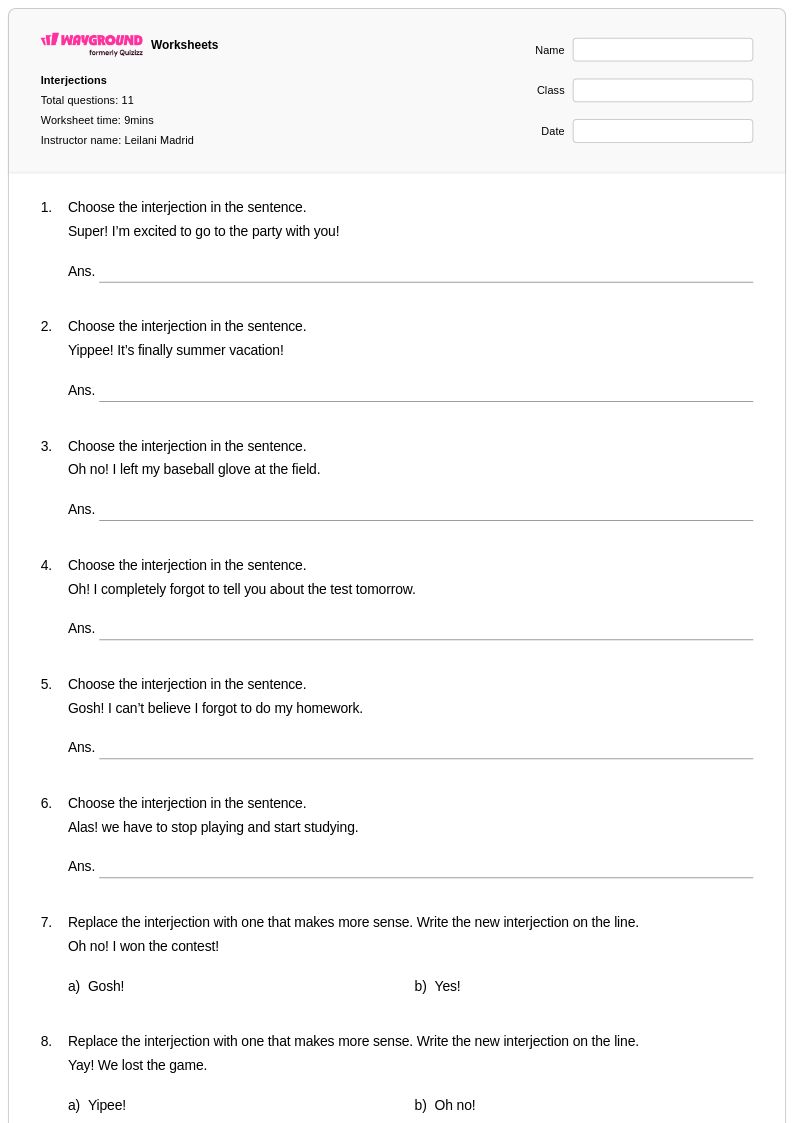
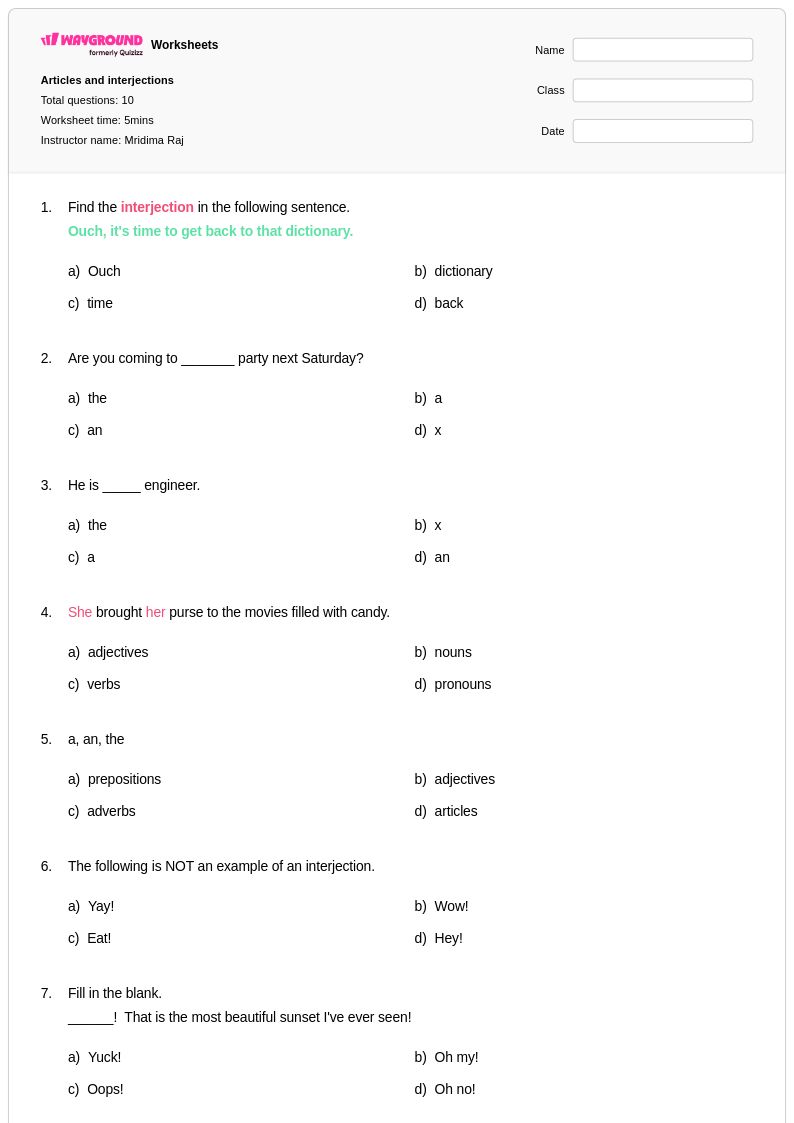
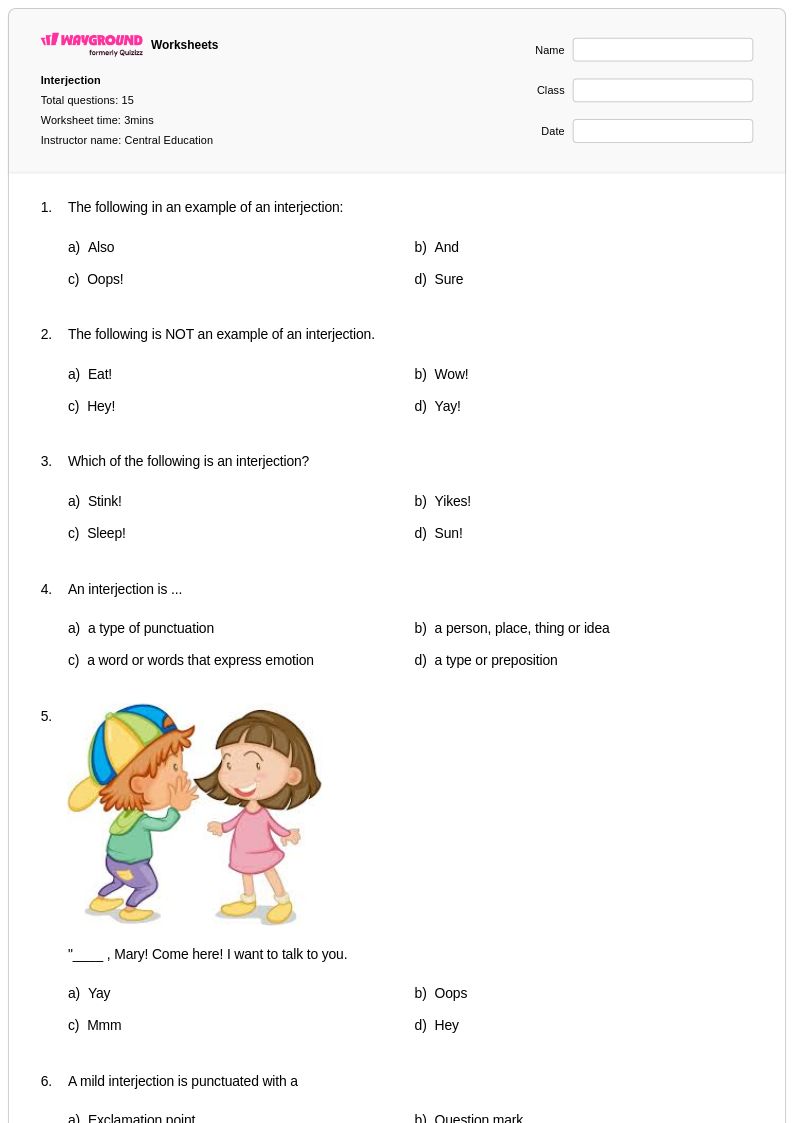
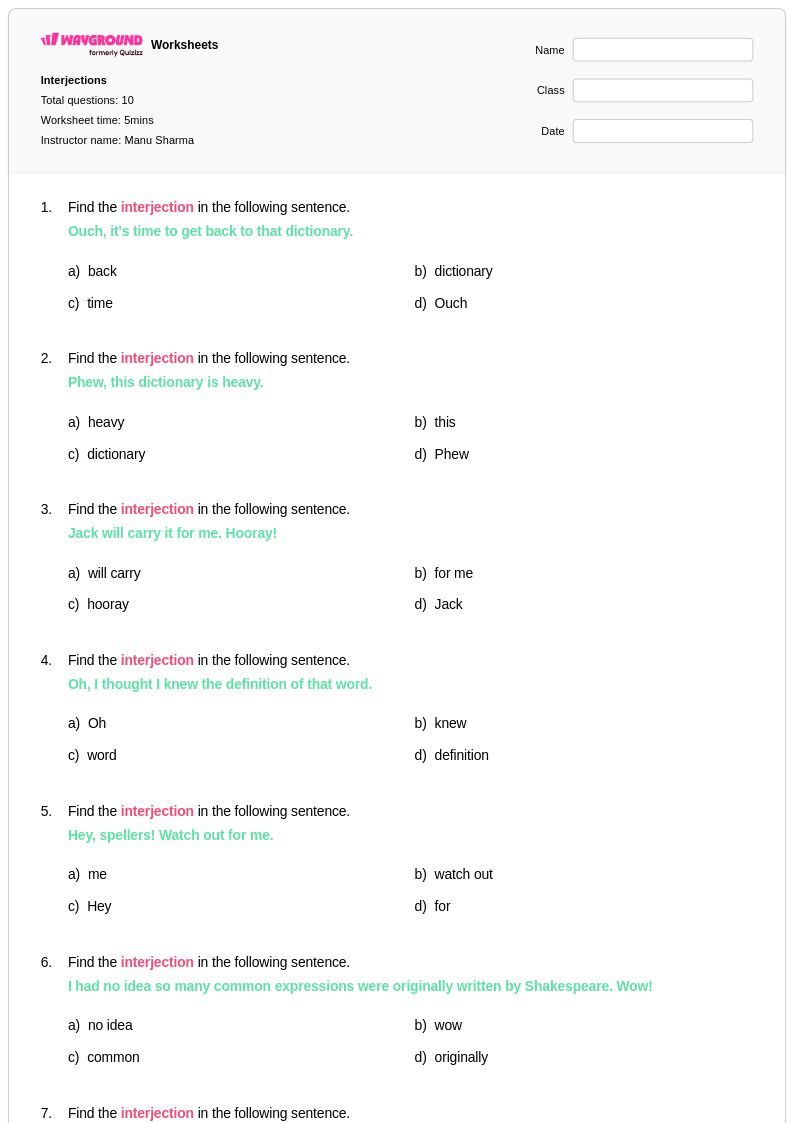
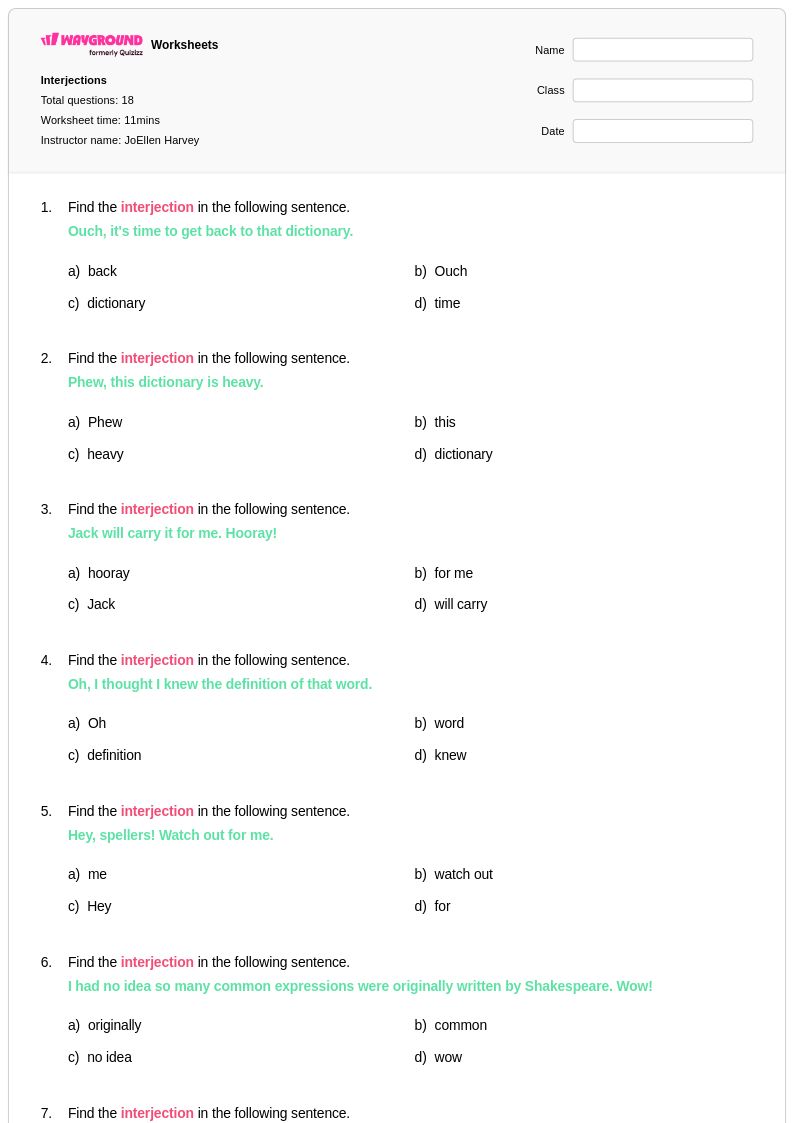
Interjections worksheets for Class 1 students available through Wayground provide young learners with engaging activities to identify and understand these expressive words that convey emotions and reactions. These carefully designed printables introduce first graders to common interjections like "wow," "oh," "yay," and "oops" through age-appropriate exercises that connect emotional expressions to written language. The worksheets strengthen students' ability to recognize interjections in sentences, understand their purpose in communication, and begin using them appropriately in their own writing. Each practice problem is crafted to build foundational grammar skills while maintaining student interest through relatable scenarios and clear visual cues. Teachers can access comprehensive answer keys and free pdf downloads to support classroom instruction and independent practice, making these resources invaluable for introducing this fundamental part of speech concept.
Wayground's extensive collection of teacher-created interjections worksheets offers educators millions of resources with robust search and filtering capabilities to locate materials perfectly suited for Class 1 instruction. The platform's alignment with educational standards ensures that worksheet content supports curriculum objectives while providing differentiation tools that accommodate diverse learning needs within the classroom. Teachers can customize these digital and printable resources to match specific lesson plans, creating targeted practice opportunities for skill development, remediation, or enrichment activities. The flexibility of pdf formats combined with interactive digital options allows educators to seamlessly integrate interjections practice into various instructional settings, from whole-group lessons to individual student work. This comprehensive approach to worksheet organization and accessibility empowers teachers to efficiently plan engaging grammar instruction that builds students' understanding of how interjections enhance written and spoken communication.
FAQs
How do I teach interjections to students who are new to parts of speech?
What exercises help students practice identifying and using interjections correctly?
What mistakes do students commonly make when learning about interjections?
How do I differentiate interjections practice for students at different skill levels?
How do I use Wayground's interjections worksheets in my classroom?