Free Printable Irregularly Spelled Words Worksheets for Class 4
Class 4 irregularly spelled words worksheets from Wayground provide free printables and practice problems to help students master challenging spelling patterns, complete with answer keys for effective learning.
Explore printable Irregularly Spelled Words worksheets for Class 4
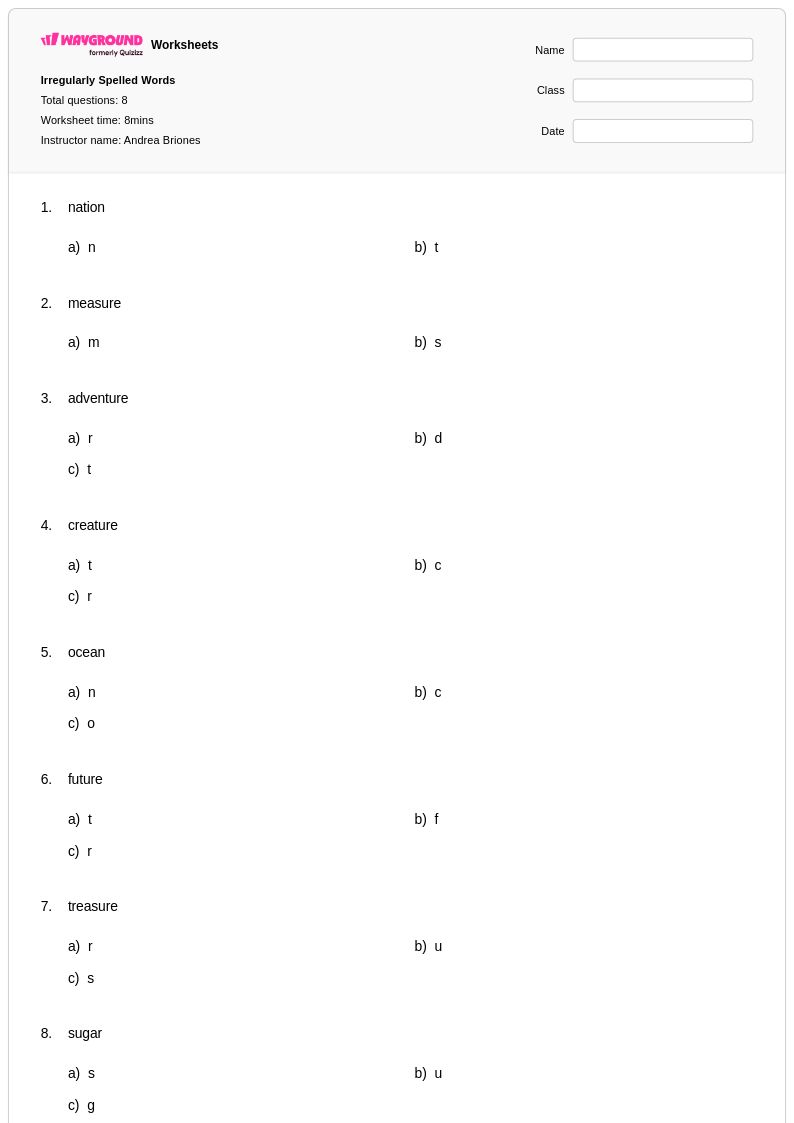
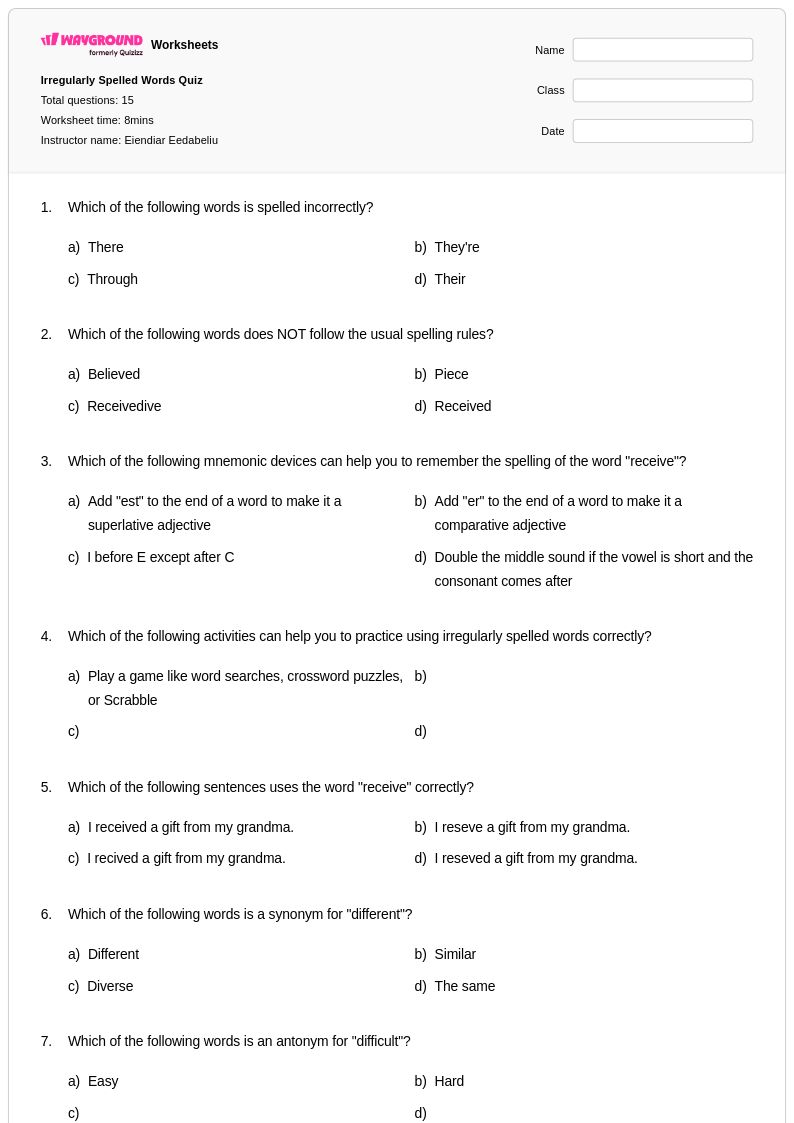
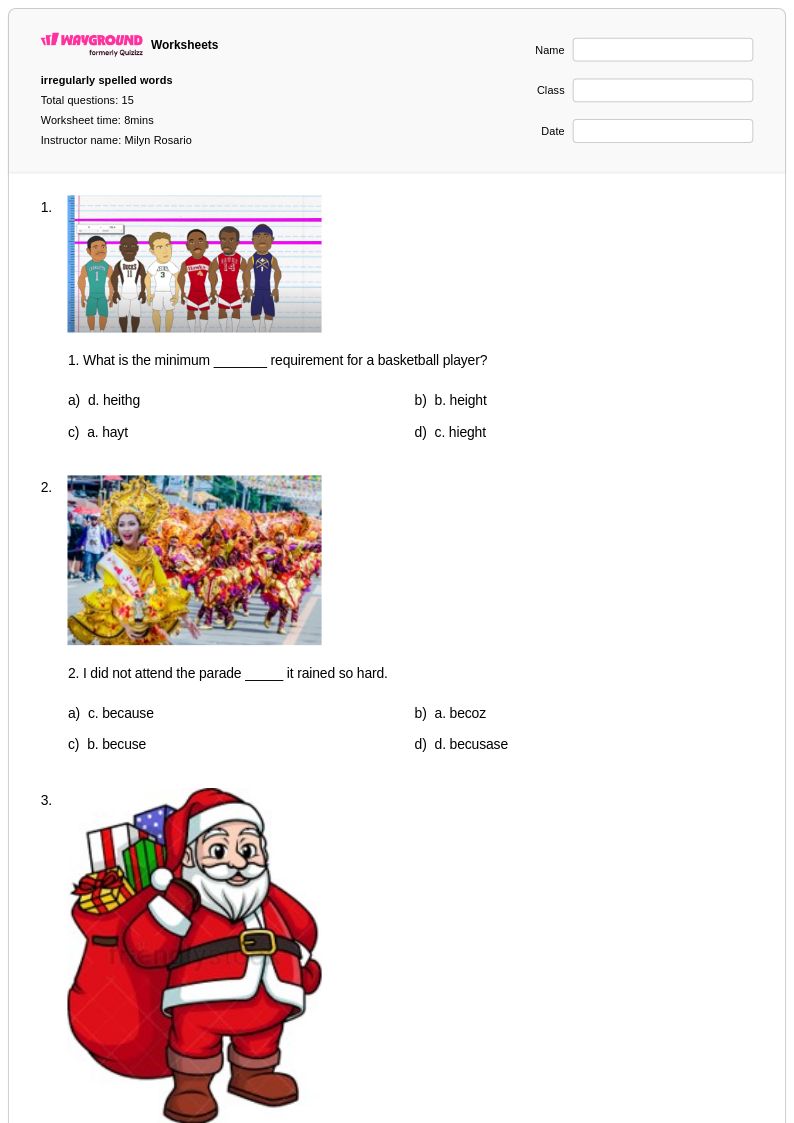
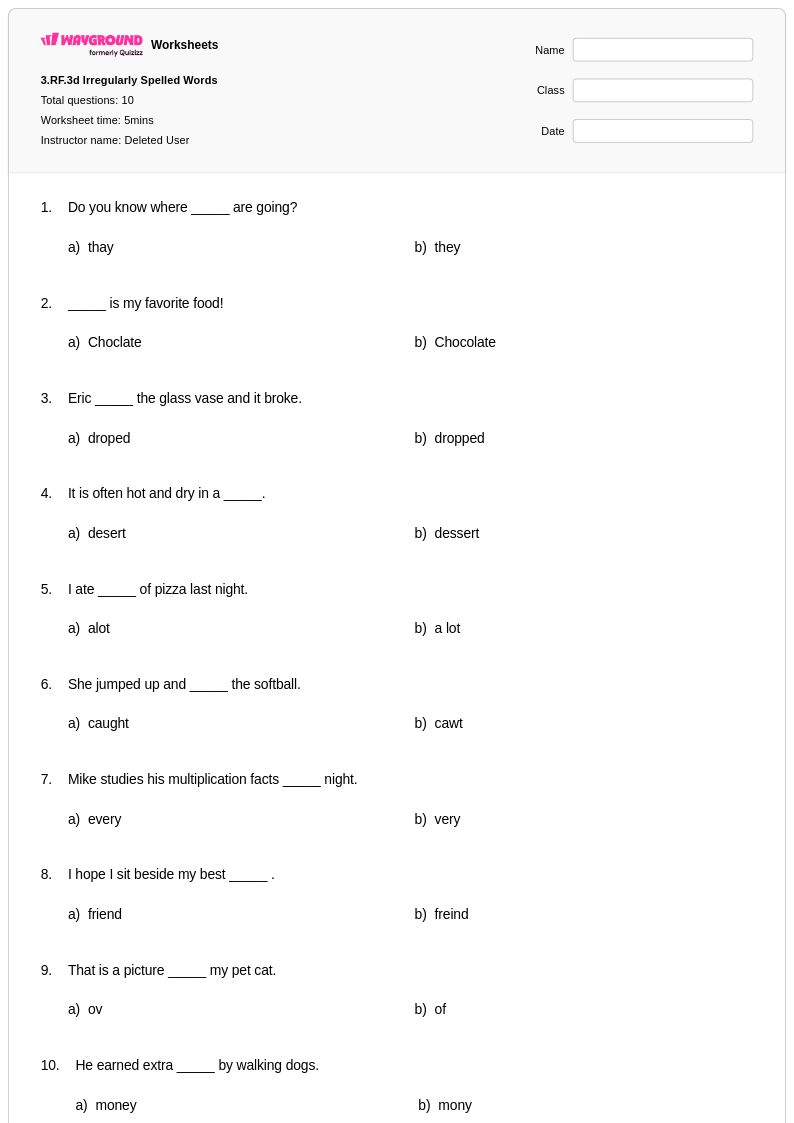
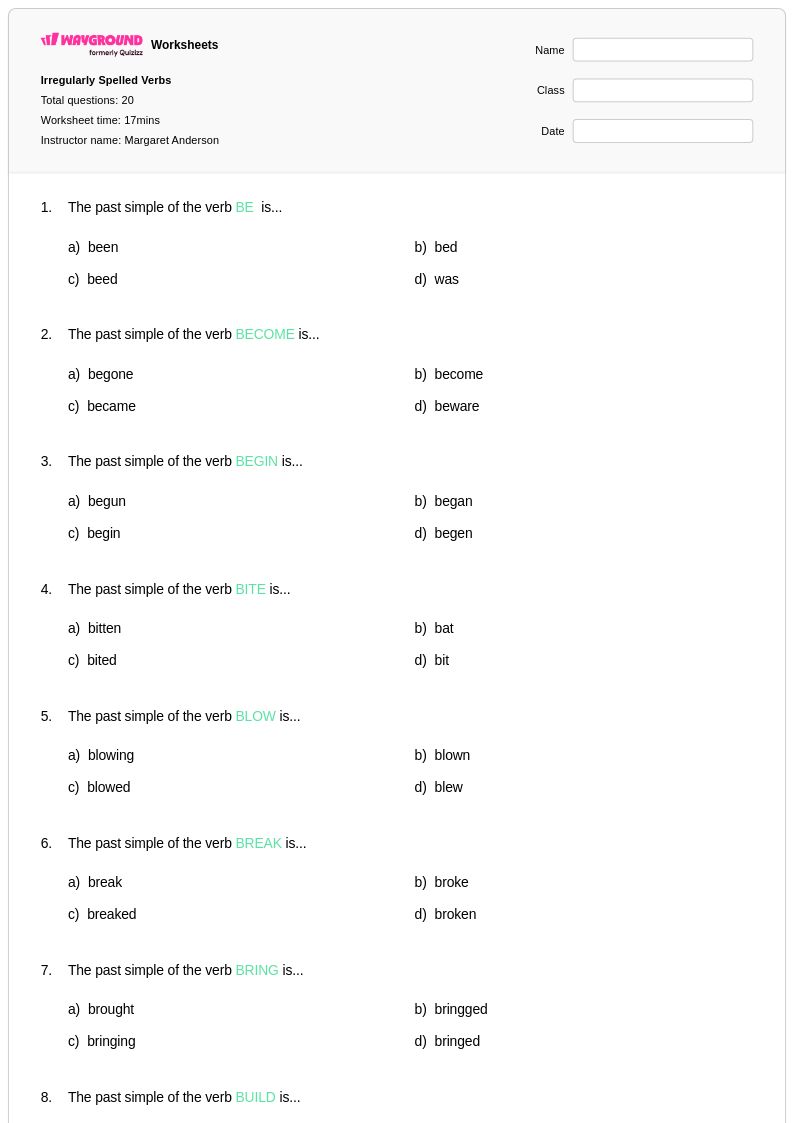
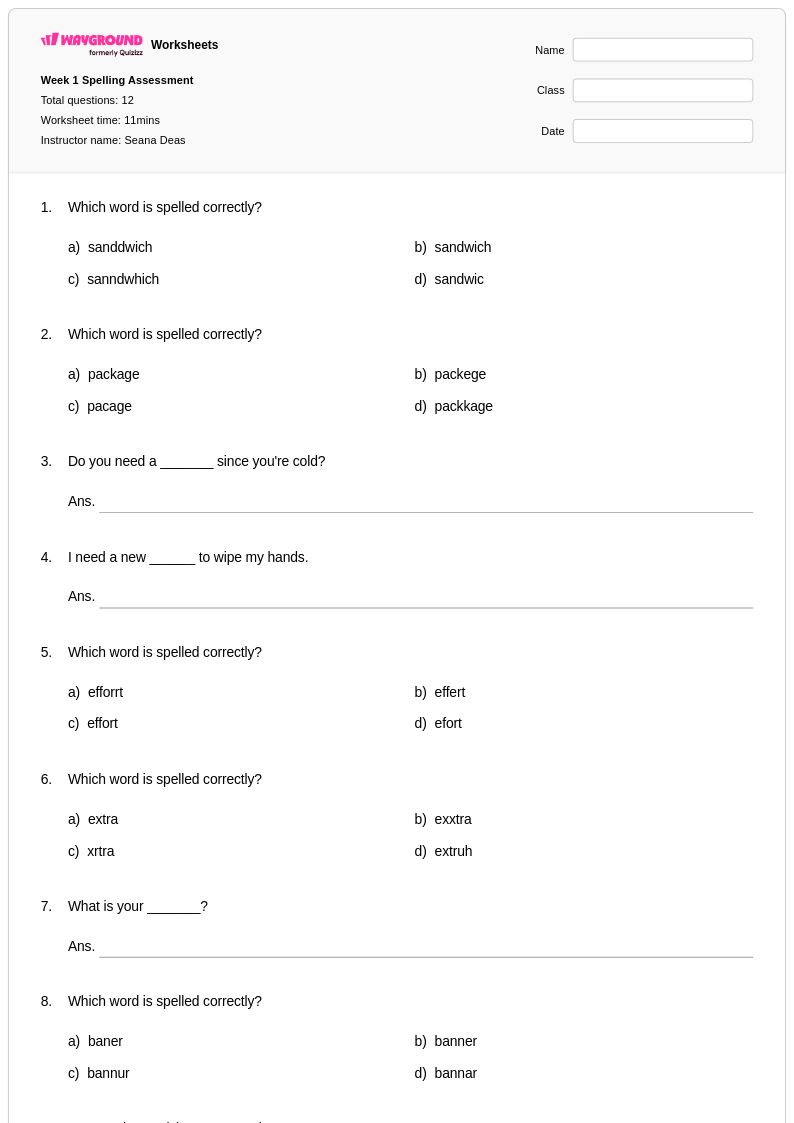
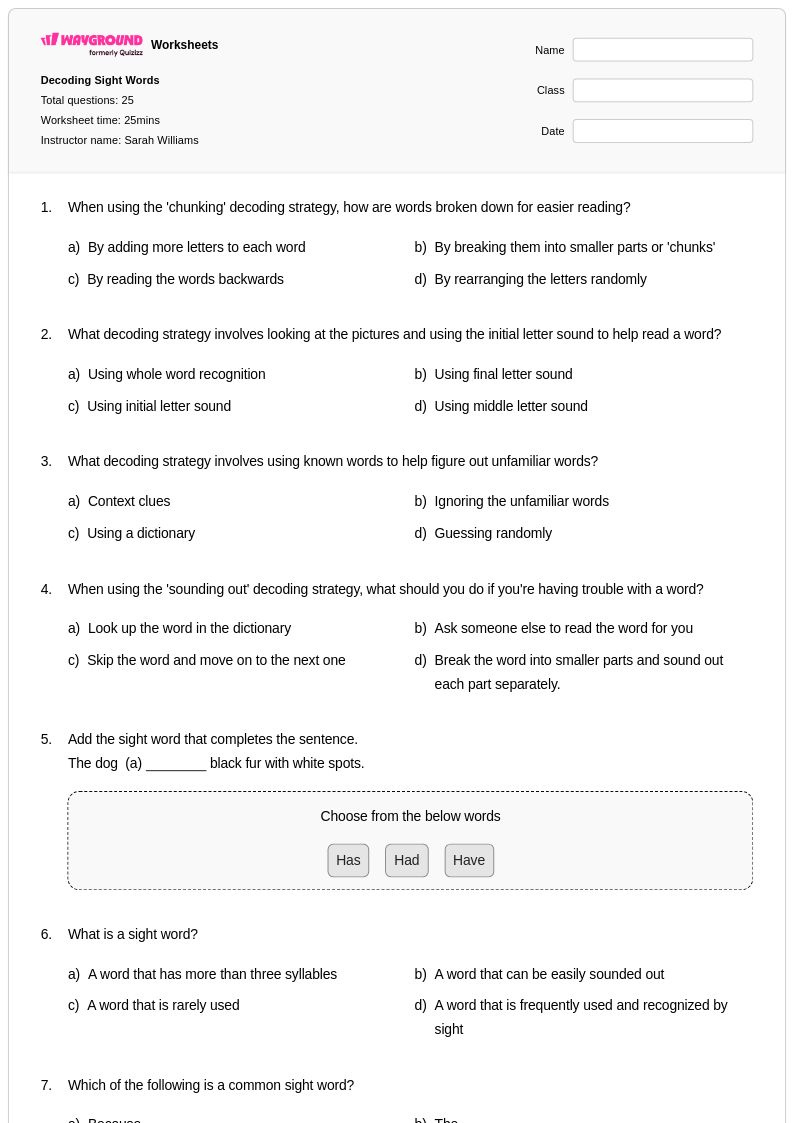
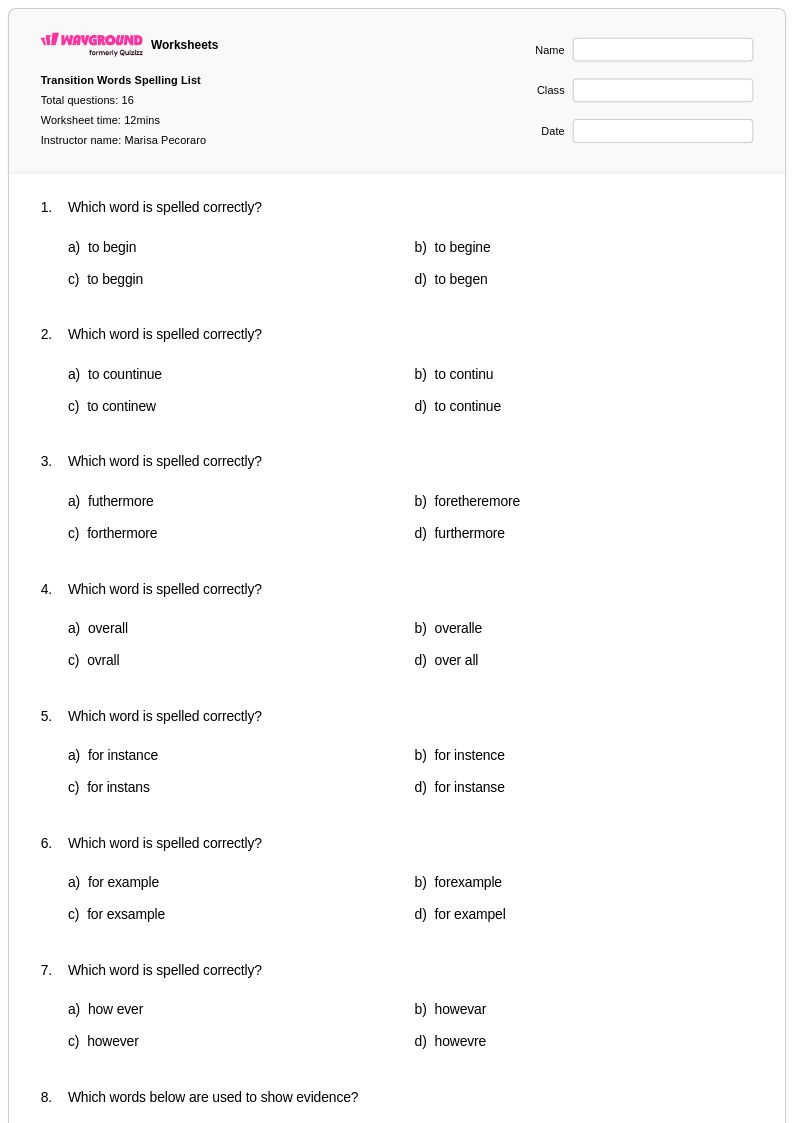
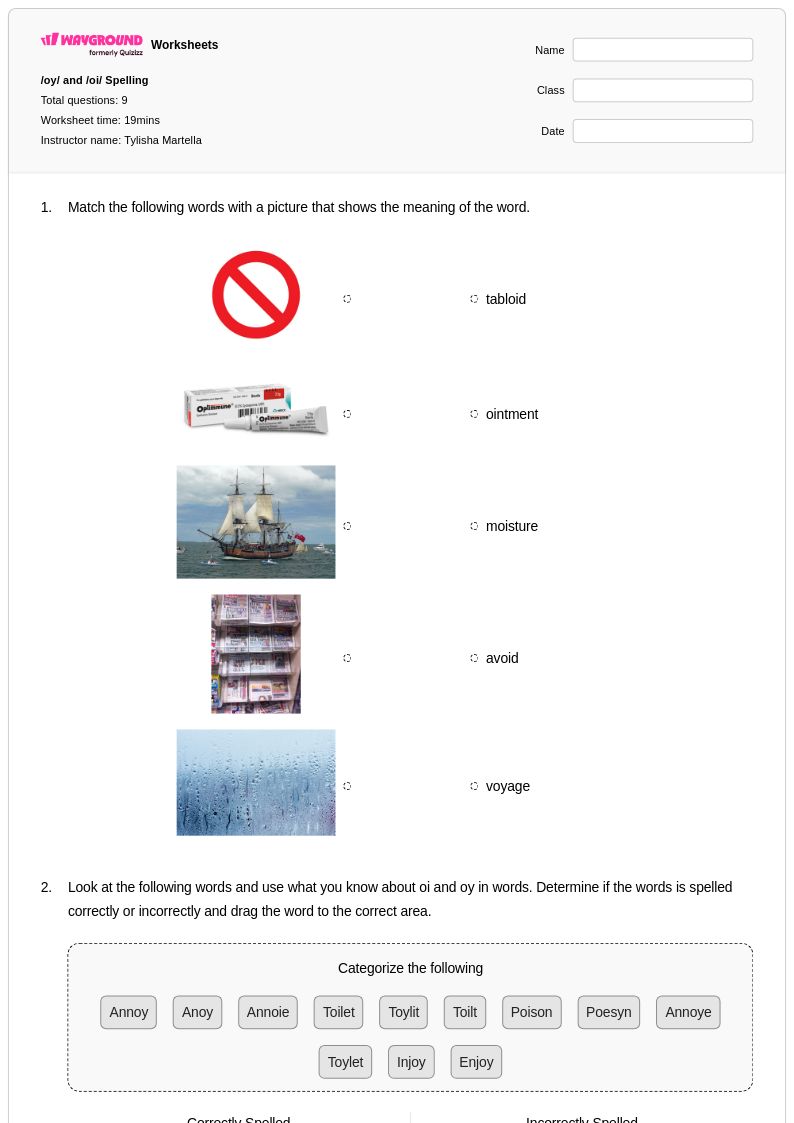
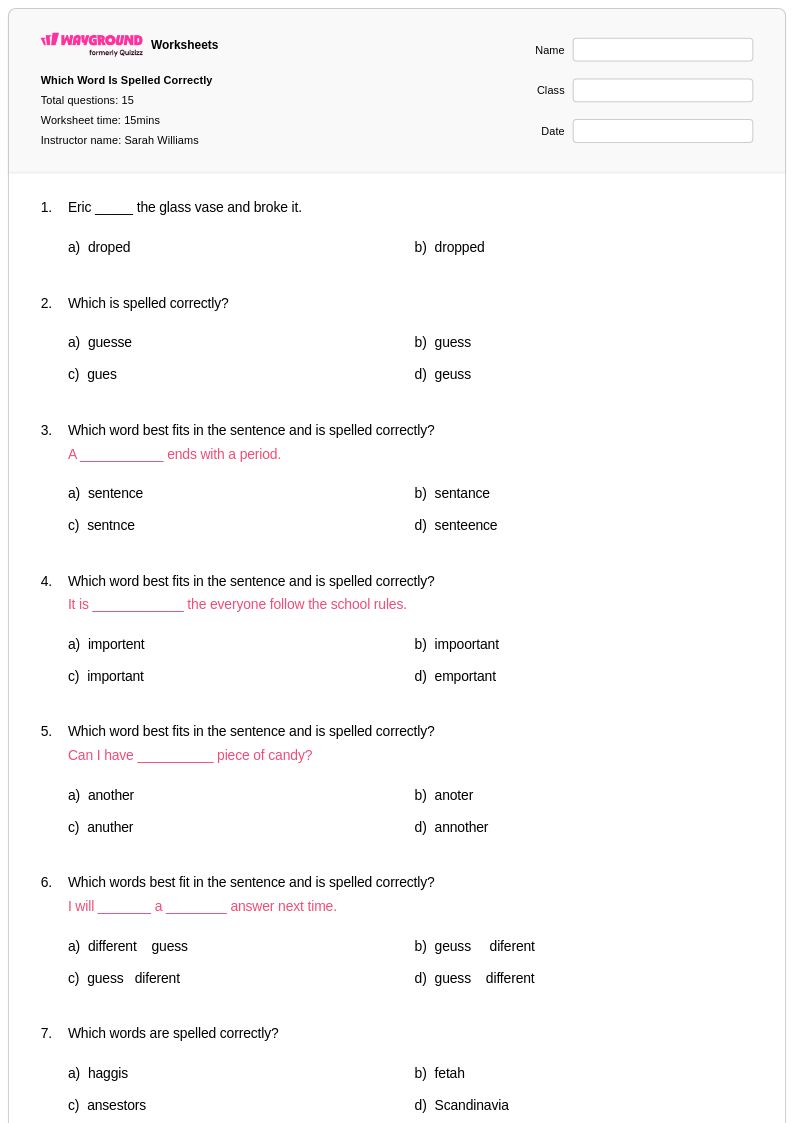
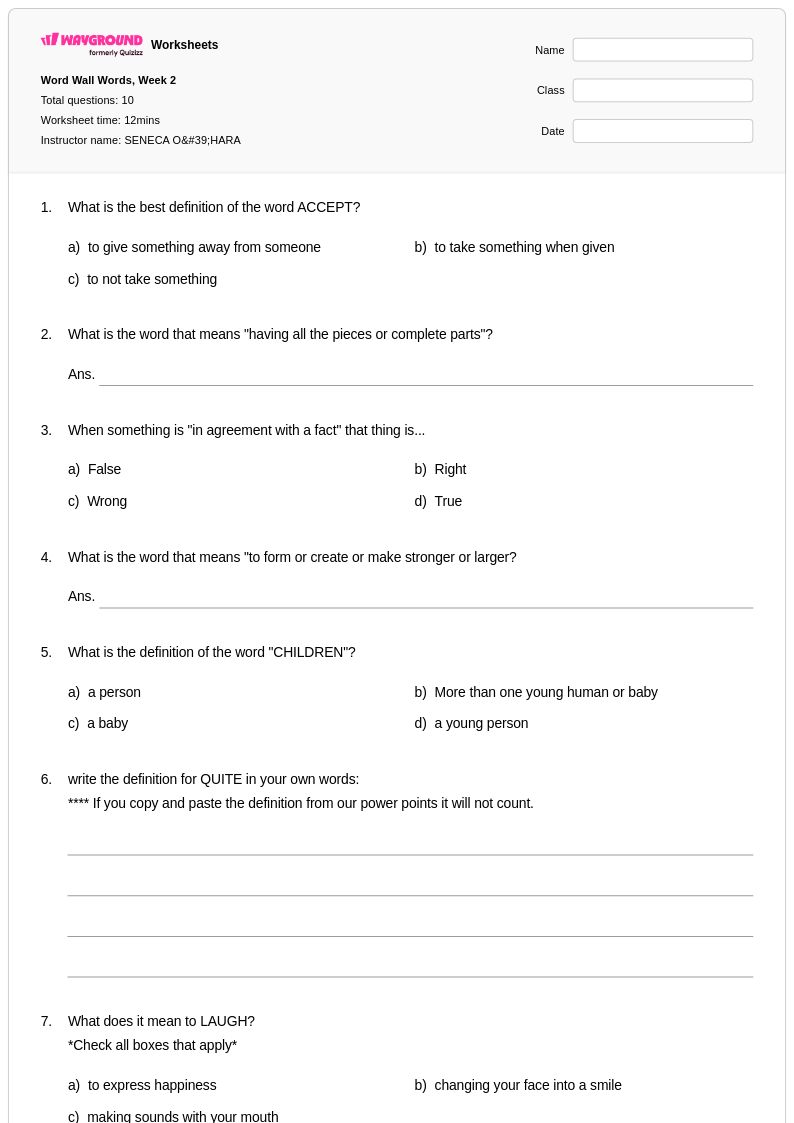
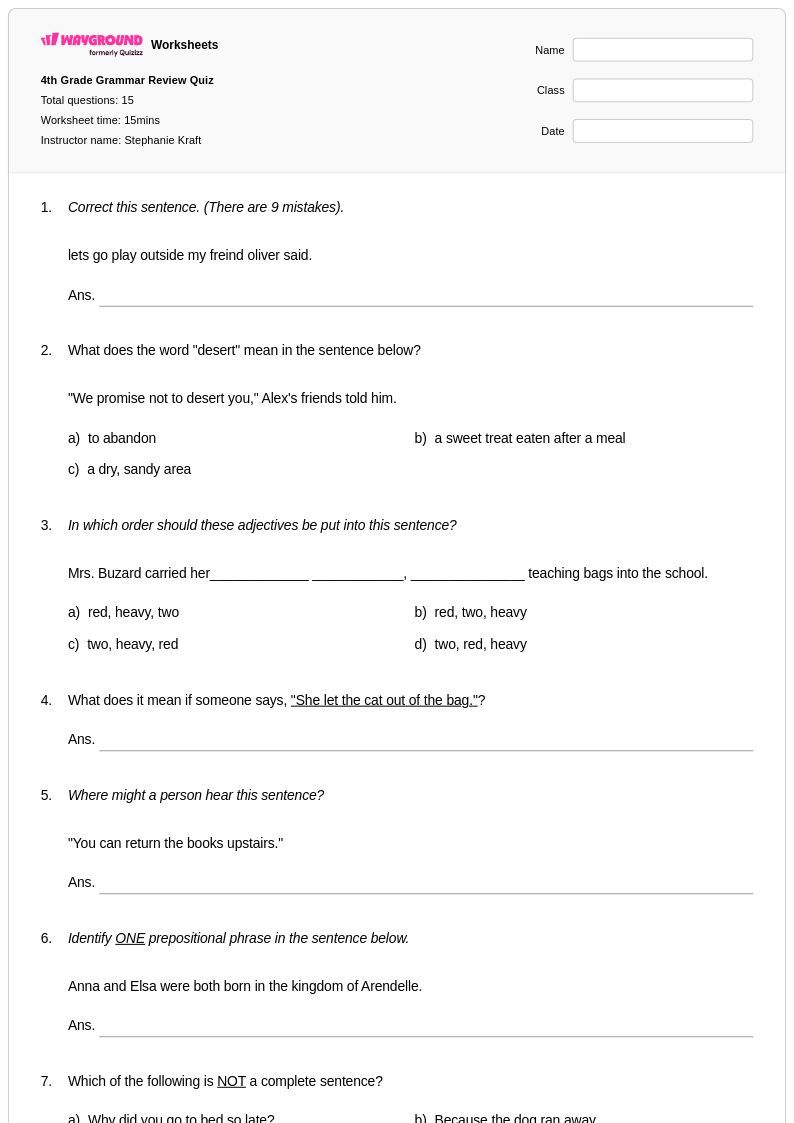
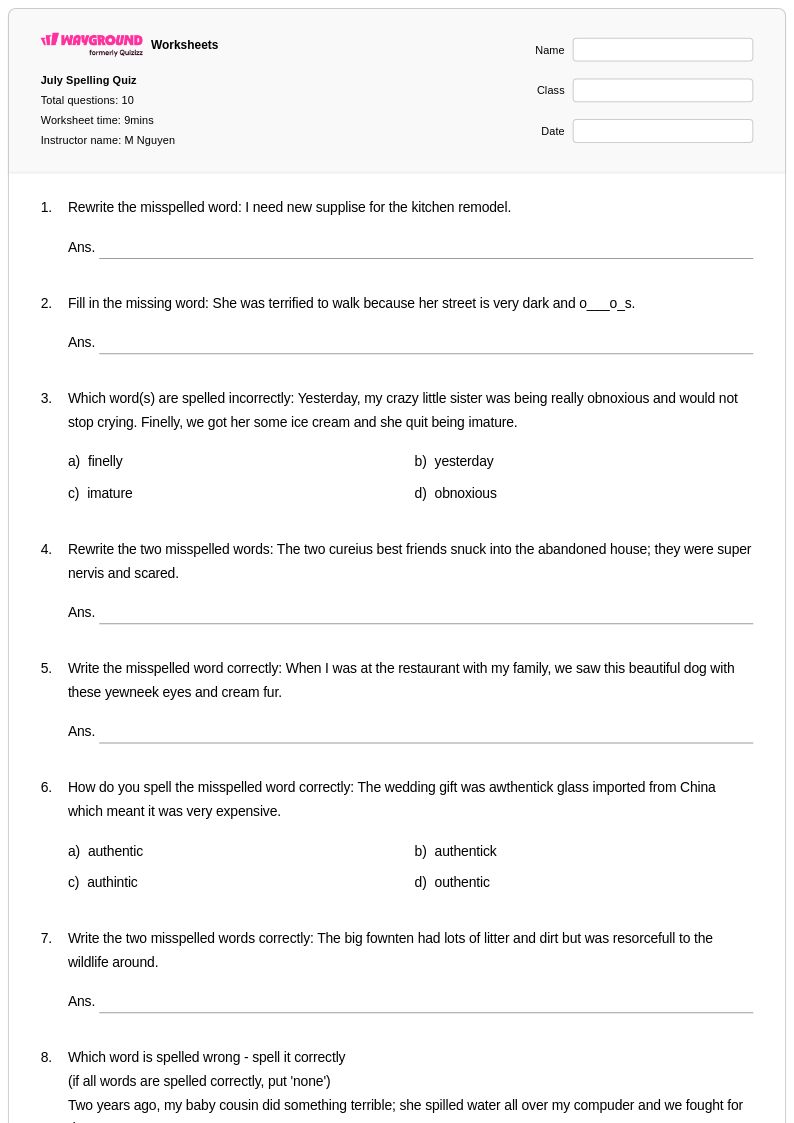
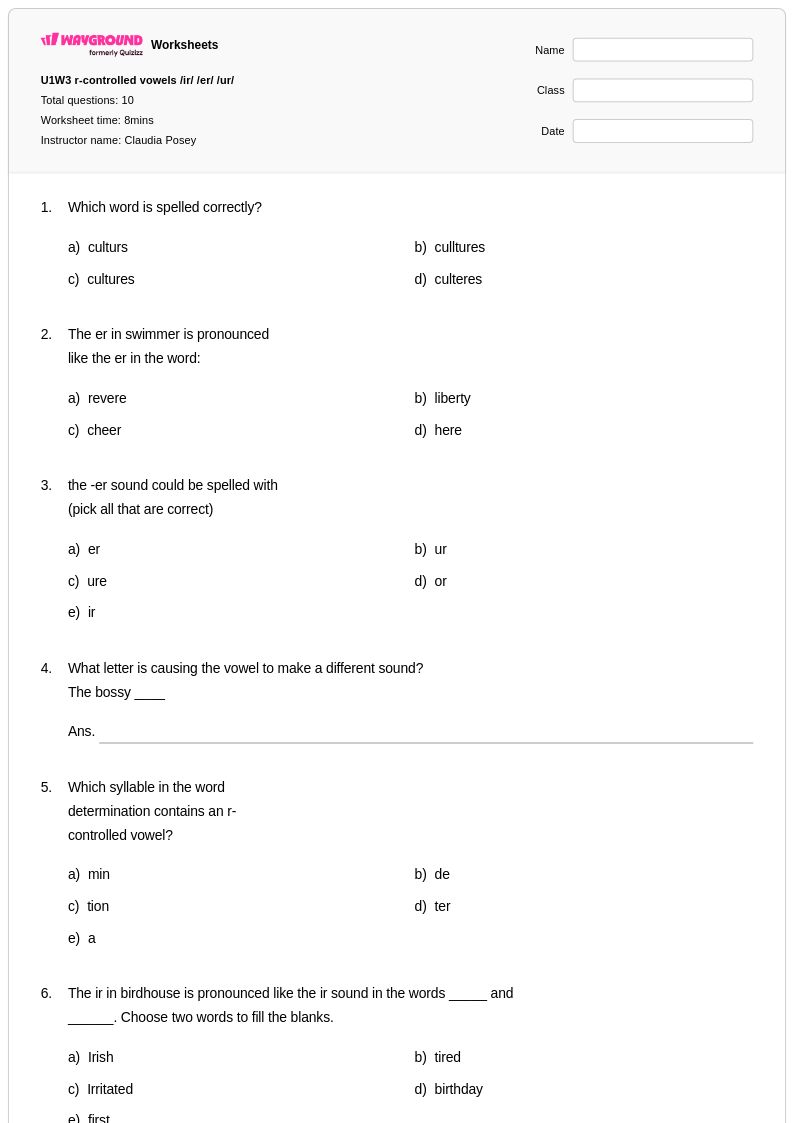
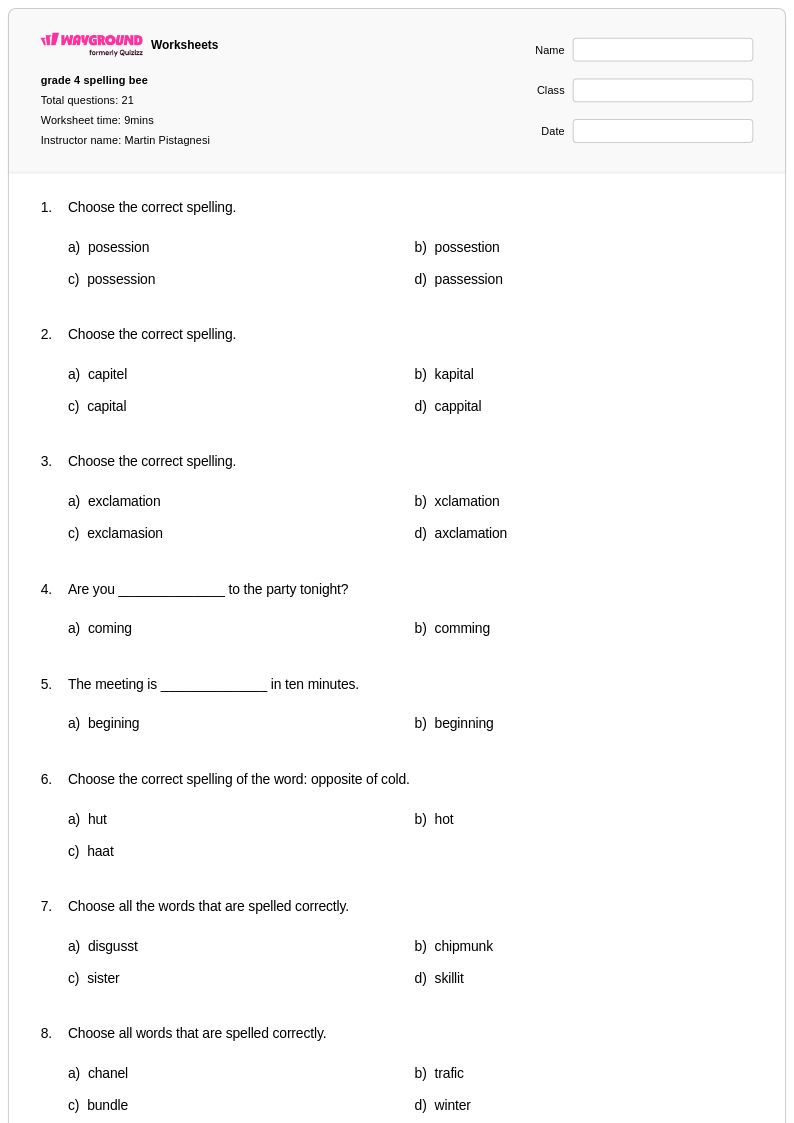
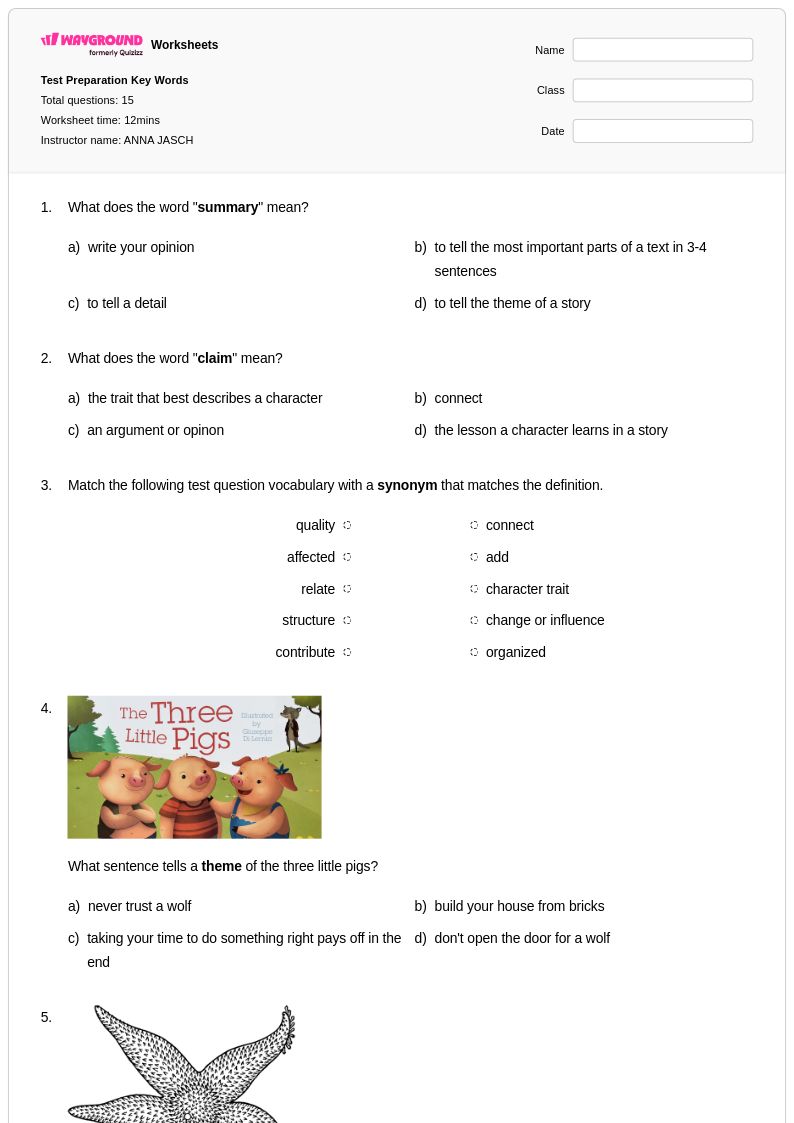
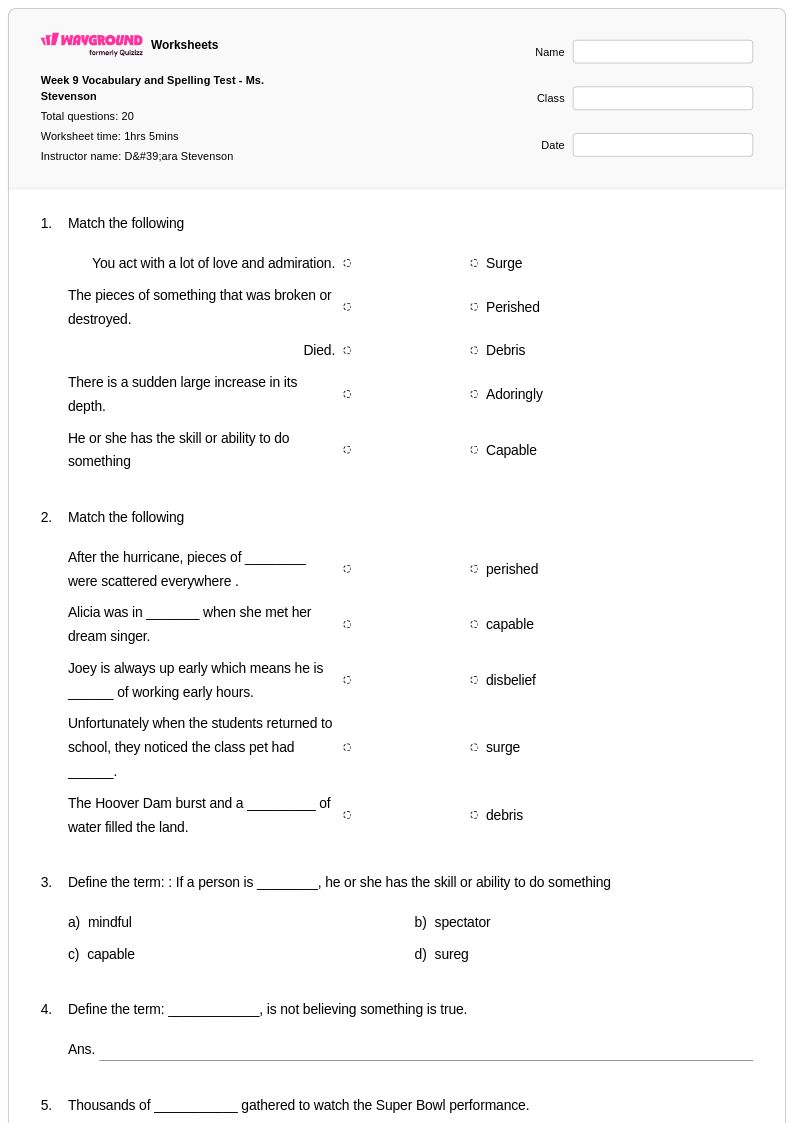
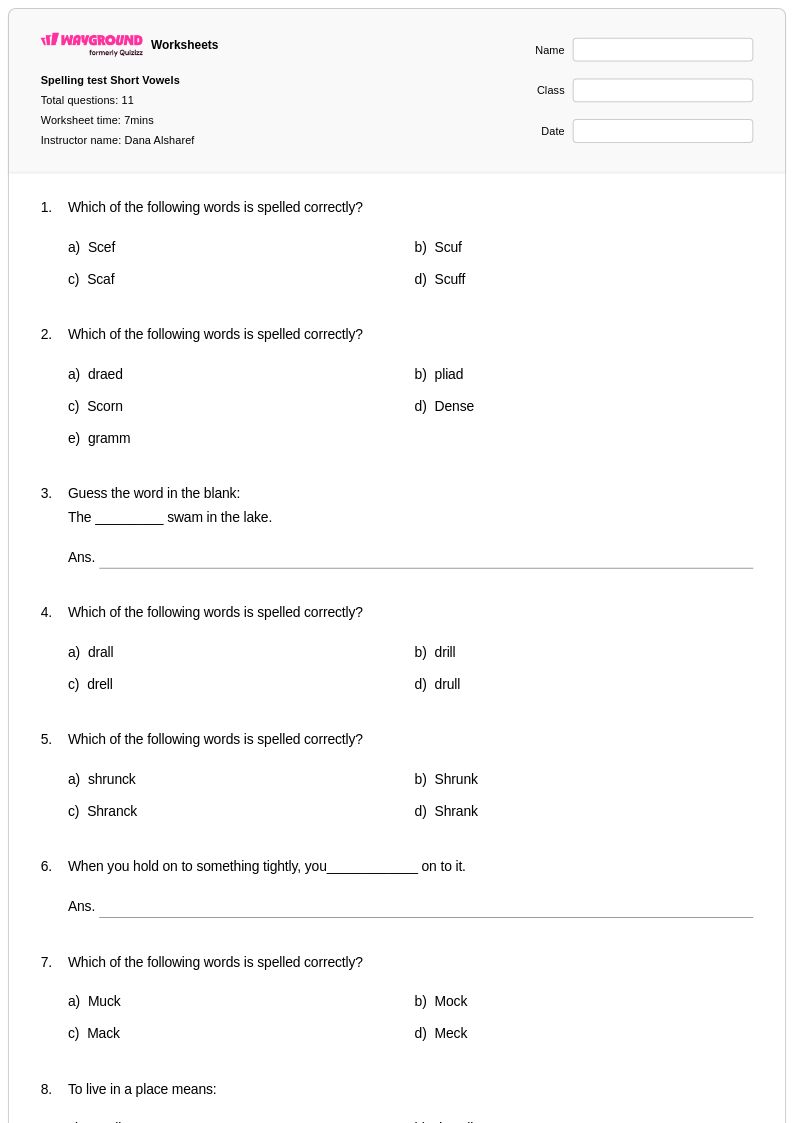
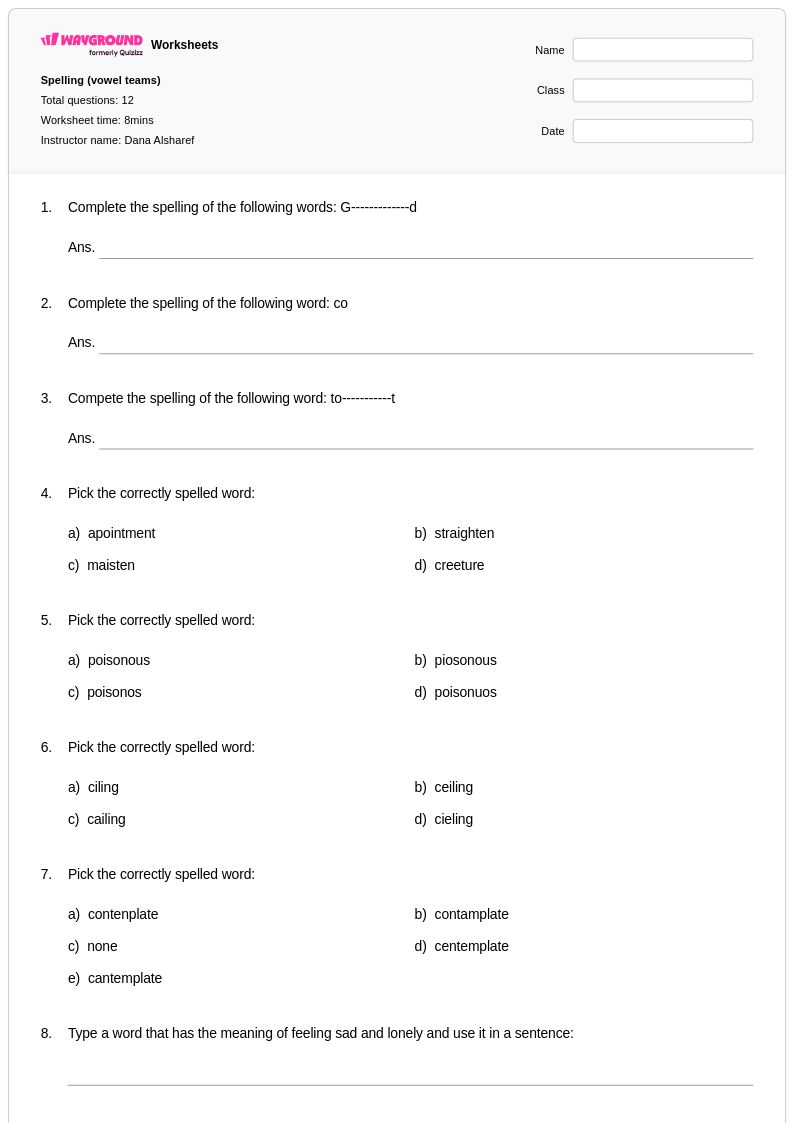
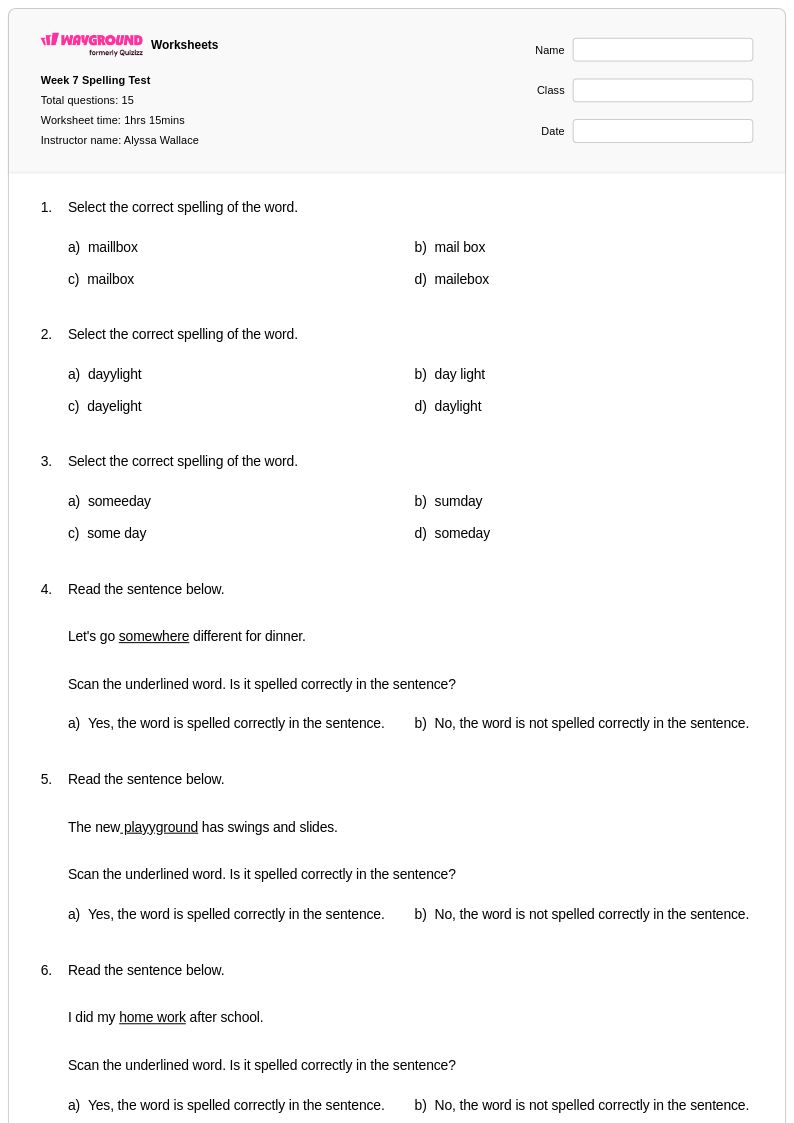
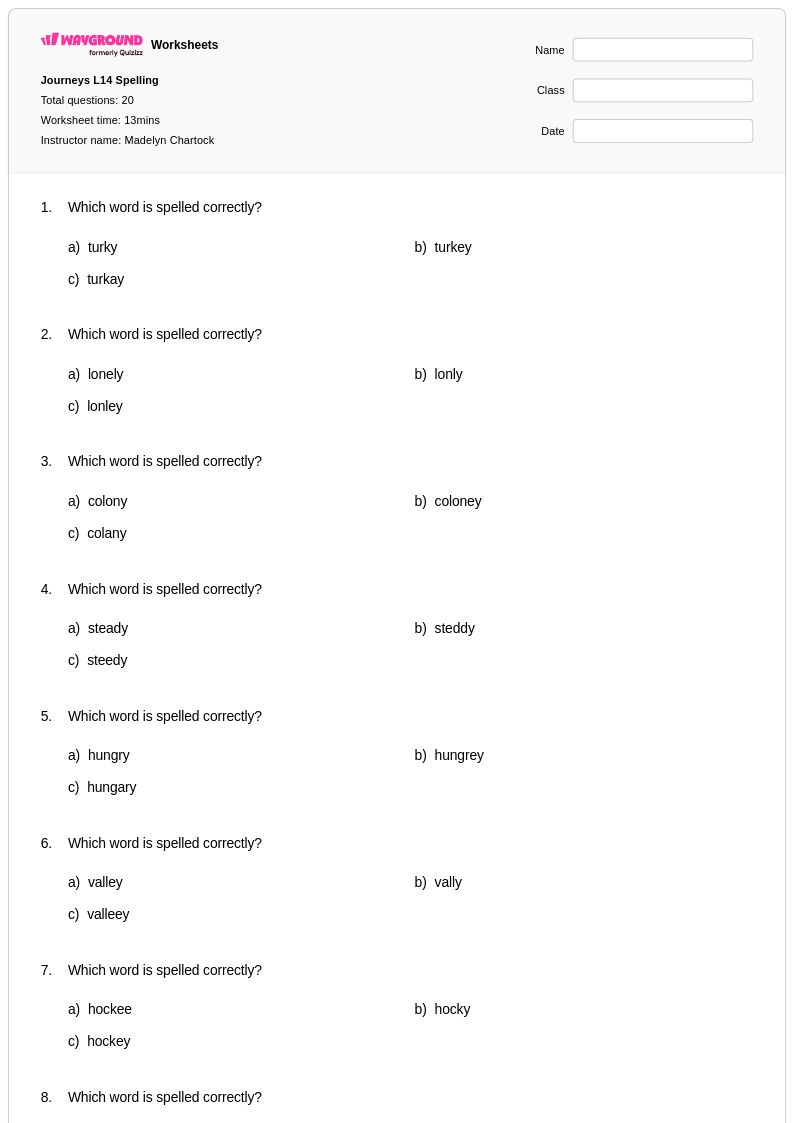
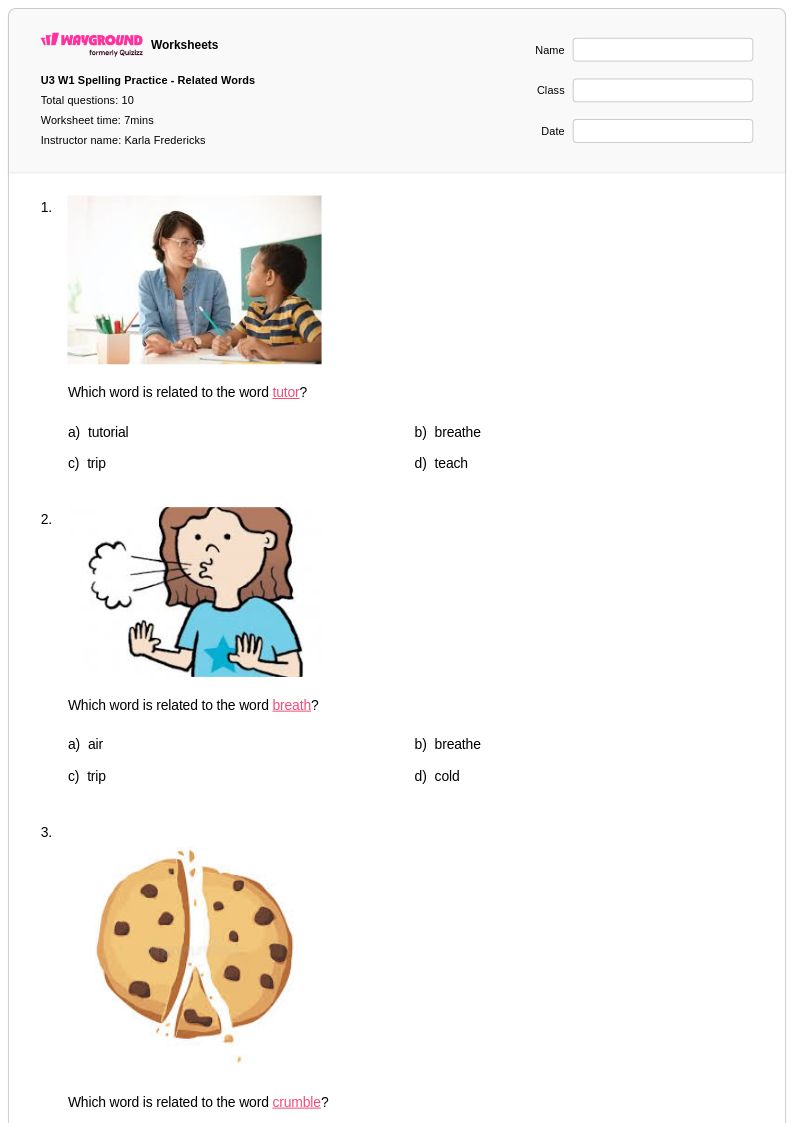
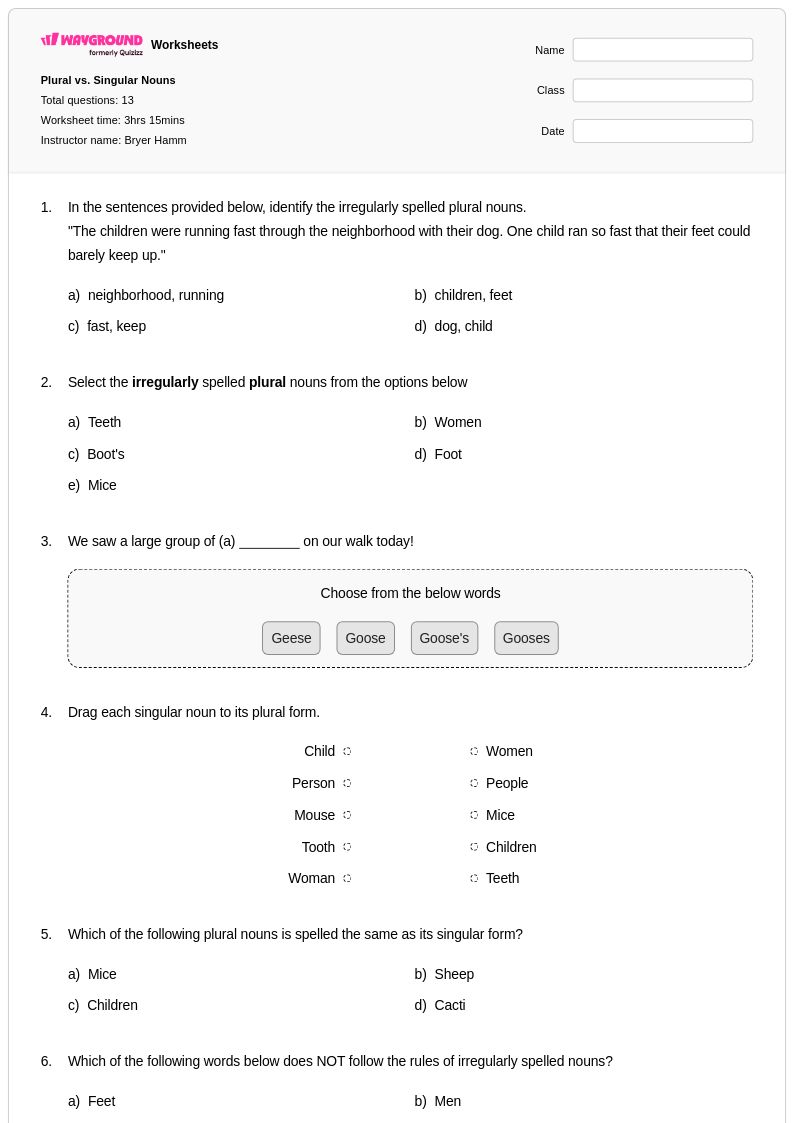
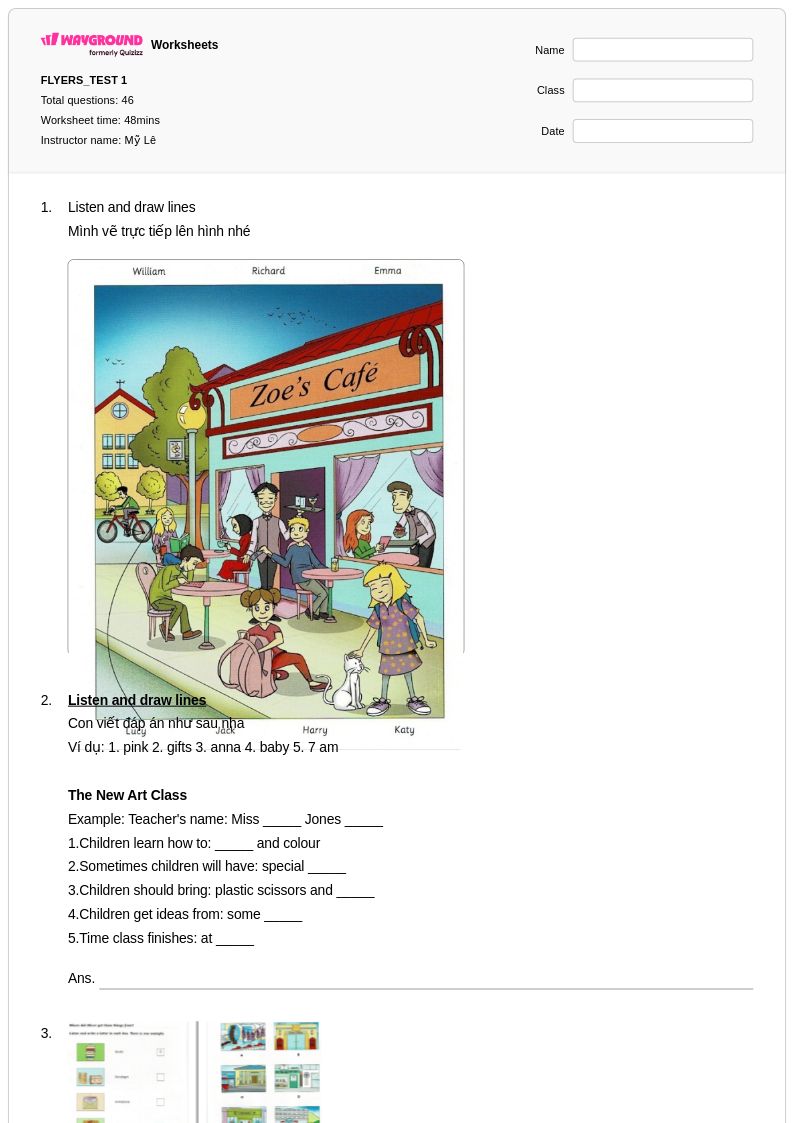
Class 4 irregularly spelled words worksheets available through Wayground (formerly Quizizz) provide targeted practice with English words that don't follow standard phonetic patterns, helping students master challenging vocabulary essential for reading and writing proficiency. These comprehensive worksheets focus on high-frequency irregular words such as "said," "does," "laugh," and "island," strengthening students' visual memory and spelling recognition skills through systematic practice problems. Each worksheet includes carefully selected word lists that align with fourth-grade curriculum expectations, offering structured exercises that build confidence with these tricky spellings. Teachers can access complete answer keys for efficient grading, and the materials are available as free printables in convenient PDF format, making it easy to incorporate irregular word practice into daily instruction or homework assignments.
Wayground (formerly Quizizz) supports educators with an extensive collection of teacher-created resources specifically designed for irregular spelling instruction, featuring millions of worksheets that can be easily searched and filtered by specific word patterns, difficulty levels, and learning objectives. The platform's robust differentiation tools allow teachers to customize worksheets for varying ability levels within their Class 4 classrooms, ensuring that struggling learners receive appropriate support while advanced students face suitable challenges. These materials are available in both printable and digital formats, including downloadable PDFs, giving teachers flexibility to deliver instruction through traditional paper-based activities or interactive digital exercises. The comprehensive filtering system helps educators quickly locate resources for targeted remediation, skill reinforcement, or enrichment activities, streamlining lesson planning while providing students with consistent, high-quality practice opportunities that build mastery of these essential irregular spelling patterns.
FAQs
How do I teach irregularly spelled words to students who struggle with phonics?
Irregularly spelled words cannot be decoded through standard phonetic rules, so instruction must focus on repeated visual exposure and memory-based strategies rather than sound-symbol correspondence. Effective approaches include multi-sensory techniques such as tracing, color-coding irregular letter patterns, and using word walls for daily reference. Pairing irregular word practice with high-frequency reading contexts helps students encounter these words often enough to build automaticity.
What exercises help students practice irregularly spelled words?
The most effective practice activities for irregular spellings include word sorts, fill-in-the-blank sentences, and contextual writing tasks that require students to use the words in meaningful contexts. Repeated low-stakes retrieval practice, such as timed recalls or partner quizzes, reinforces the visual memory students need since these words cannot be sounded out. Mixing recognition tasks with production tasks, where students both identify and independently write the words, builds the dual-channel memory that supports both reading and spelling accuracy.
What mistakes do students commonly make with irregularly spelled words?
The most common error is phonetic over-reliance, where students spell words as they sound rather than as they are written, producing spellings like 'thru' for 'through' or 'enuf' for 'enough.' Students also frequently confuse visually similar irregular words, such as 'their,' 'there,' and 'they're,' particularly under timed or high-cognitive-load conditions. These errors signal that the word has not yet been fully committed to visual memory and requires additional structured exposure rather than simply more phonics instruction.
How can I differentiate irregularly spelled words practice for students at different skill levels?
For struggling spellers, reducing the number of target words per session and focusing on the highest-frequency irregulars first lowers cognitive load and builds early success. Advanced learners benefit from contextual and compositional challenges, such as writing original sentences or identifying irregular words within longer passages. On Wayground, teachers can apply accommodations such as reduced answer choices and read-aloud support to individual students, allowing the same worksheet to serve diverse learners without requiring separate materials.
How do I use Wayground's irregularly spelled words worksheets in my classroom?
Wayground's irregularly spelled words worksheets are available as free printable PDFs for traditional classroom use and in digital formats for technology-integrated or remote learning environments, and can also be hosted as a quiz directly on the Wayground platform. Each worksheet includes a complete answer key, making it straightforward to use for independent practice, small group instruction, or formative assessment. Teachers can use Wayground's search and filtering tools to quickly locate worksheets that target specific irregular word sets or difficulty levels aligned to their current unit.
How do irregularly spelled words affect reading fluency, and why does it matter to practice them explicitly?
Irregularly spelled words, including high-frequency words like 'beautiful,' 'through,' and 'enough,' appear so often in academic and everyday texts that hesitation on these words measurably disrupts reading fluency and comprehension. Because they cannot be decoded phonetically, readers must recognize them instantly as whole visual units, which requires explicit and repeated practice to achieve. Without automaticity on these words, students expend cognitive effort on word-level decoding that should be available for meaning-making.