
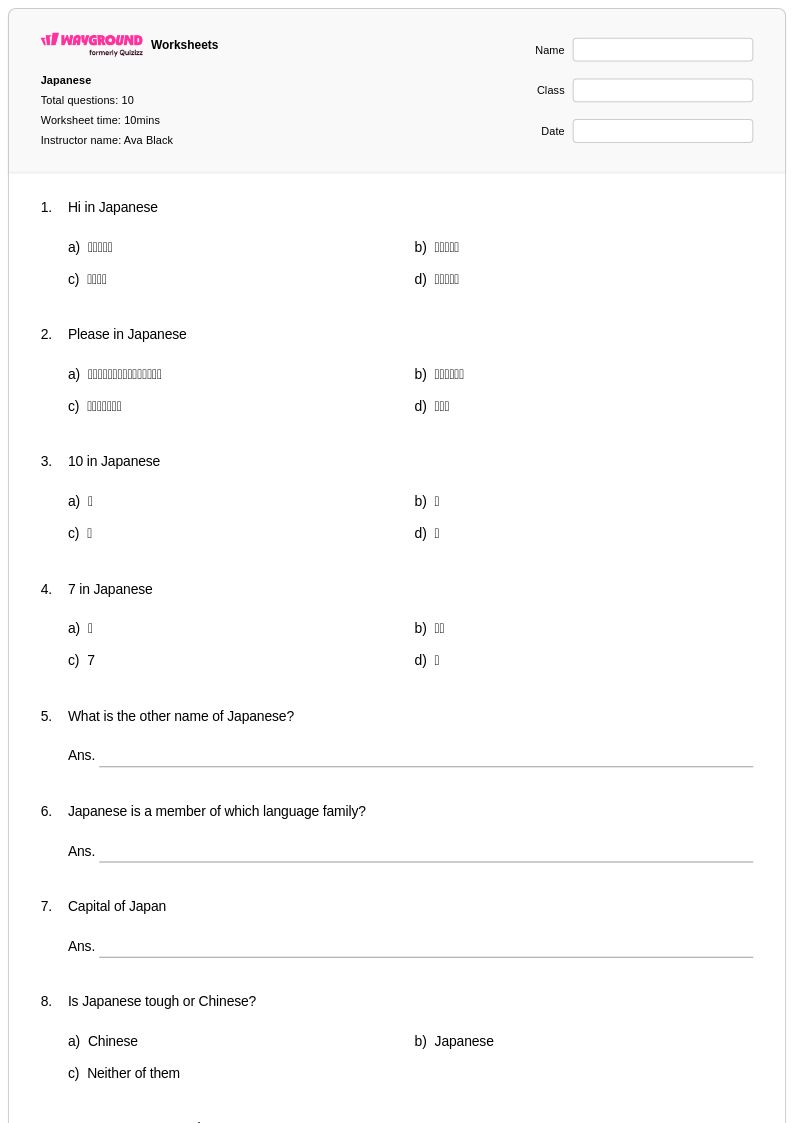
10 Q
1st - PD
18 Q
3rd
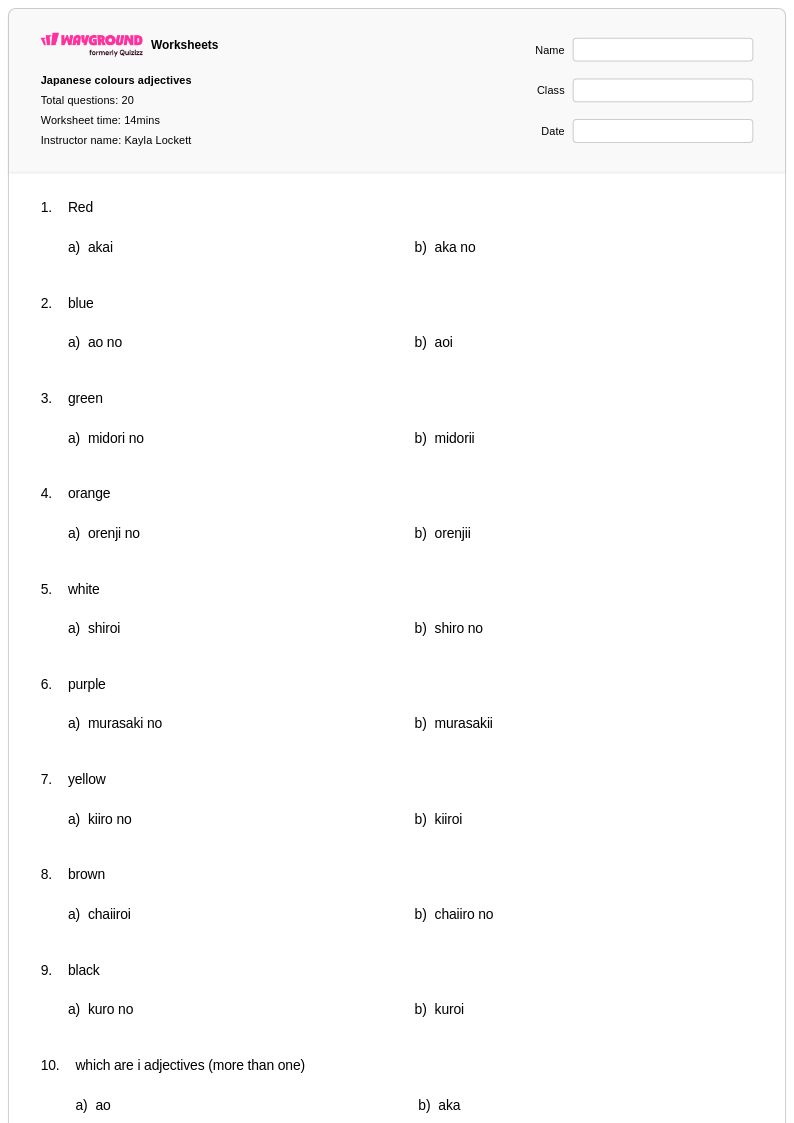
20 Q
3rd - 4th
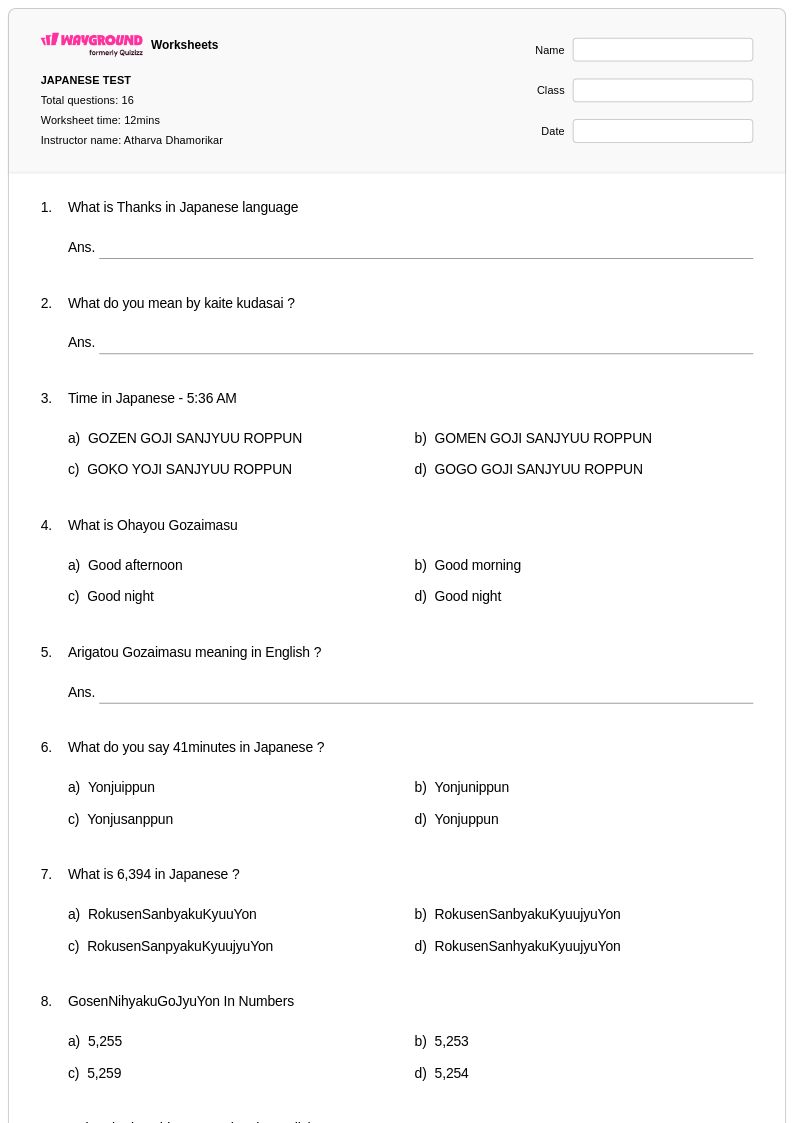
16 Q
KG - PD
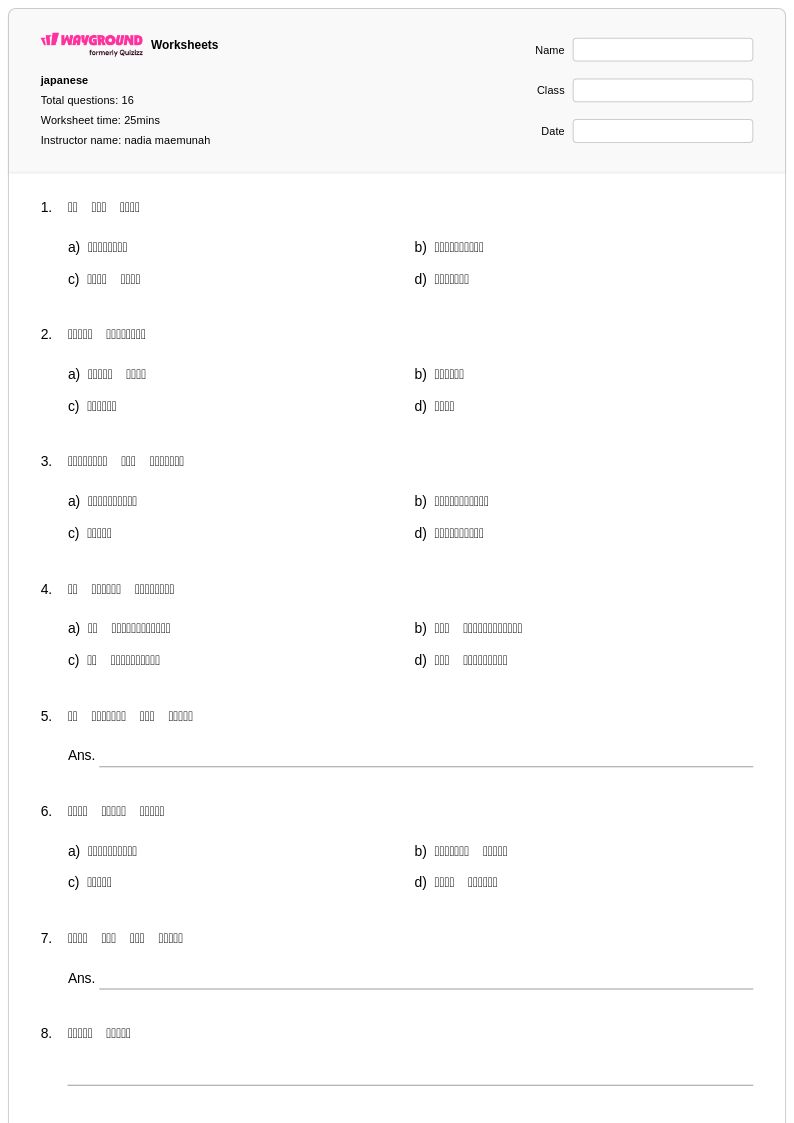
16 Q
1st - 12th
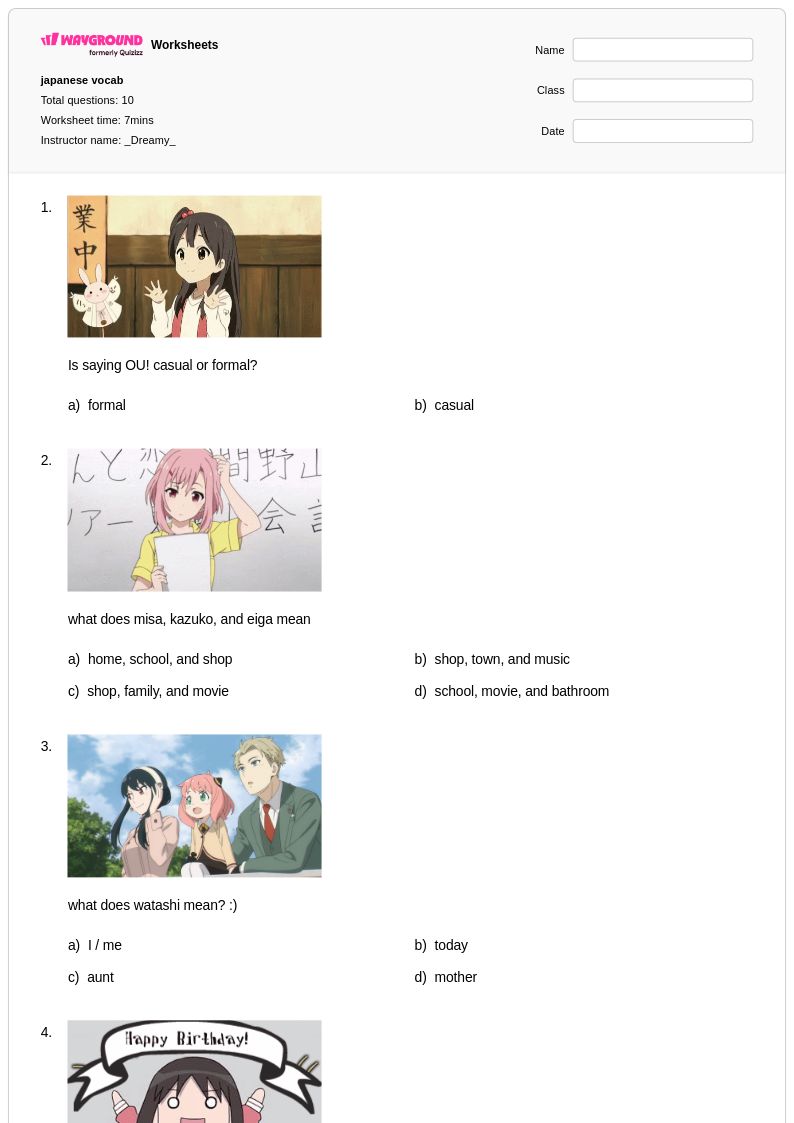
10 Q
KG - PD
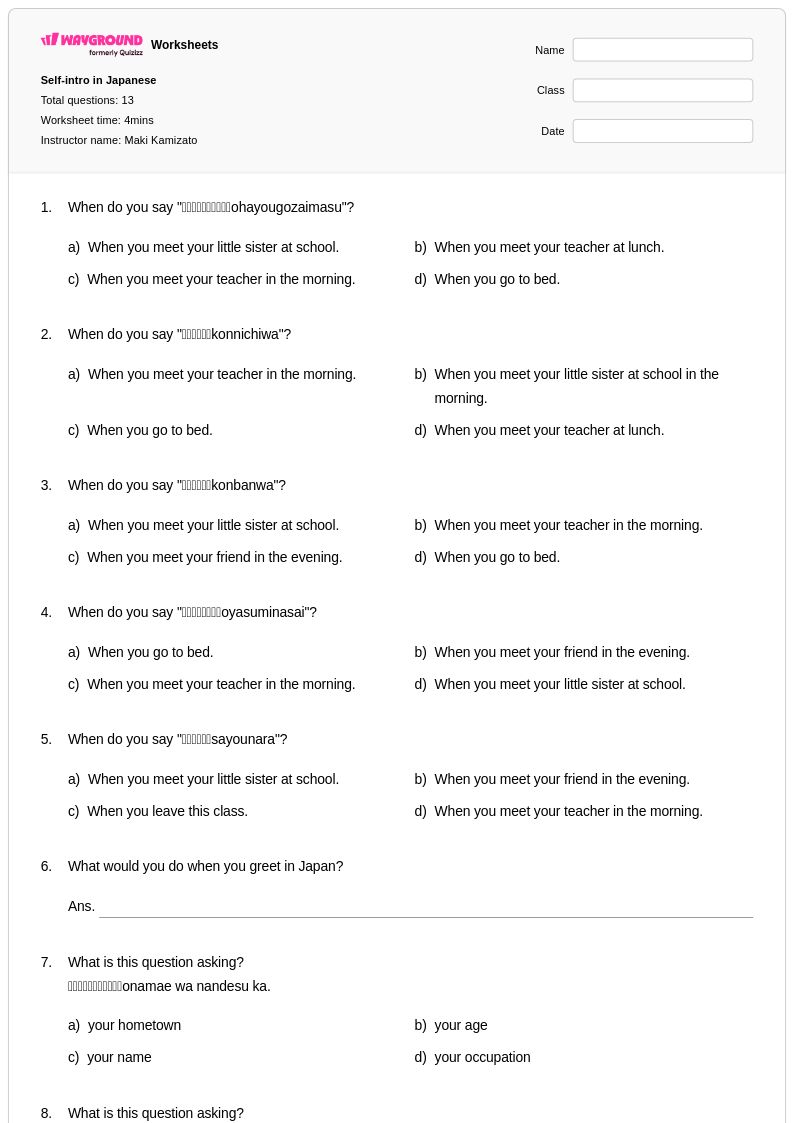
13 Q
1st - 12th
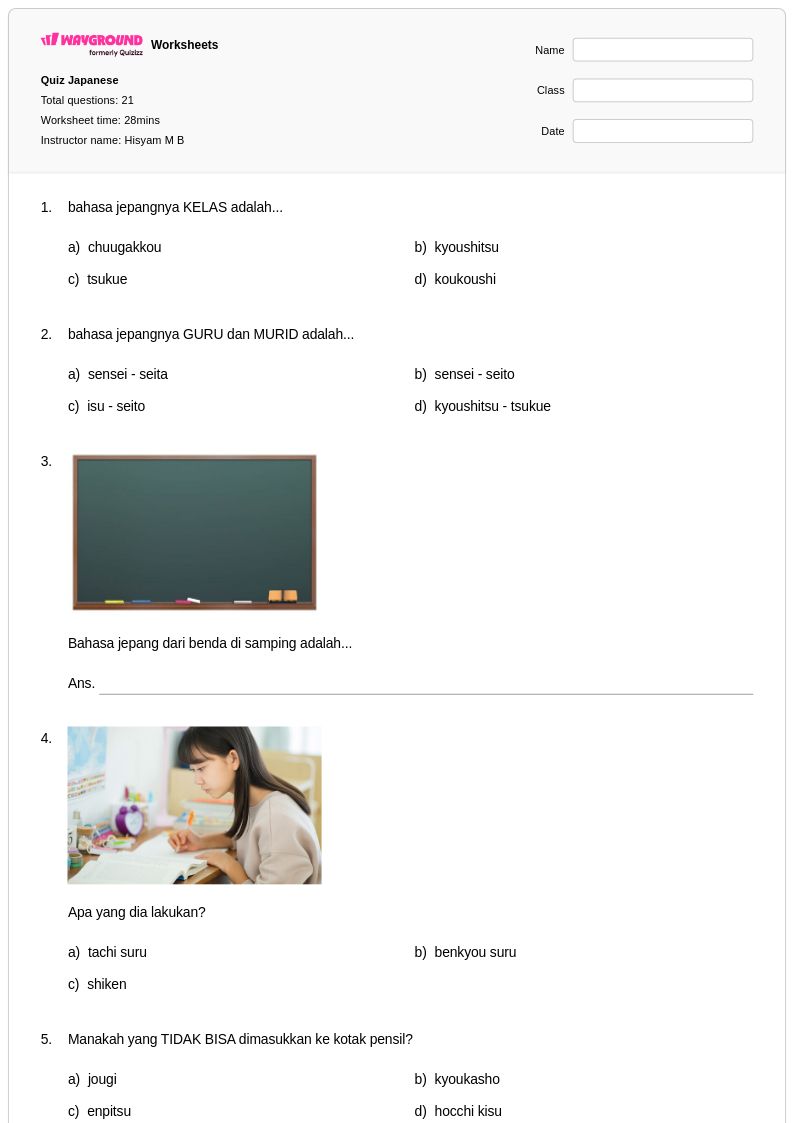
21 Q
KG - Uni
10 Q
1st - 5th
8 Q
1st - Uni
13 Q
1st - 5th
16 Q
3rd - 6th
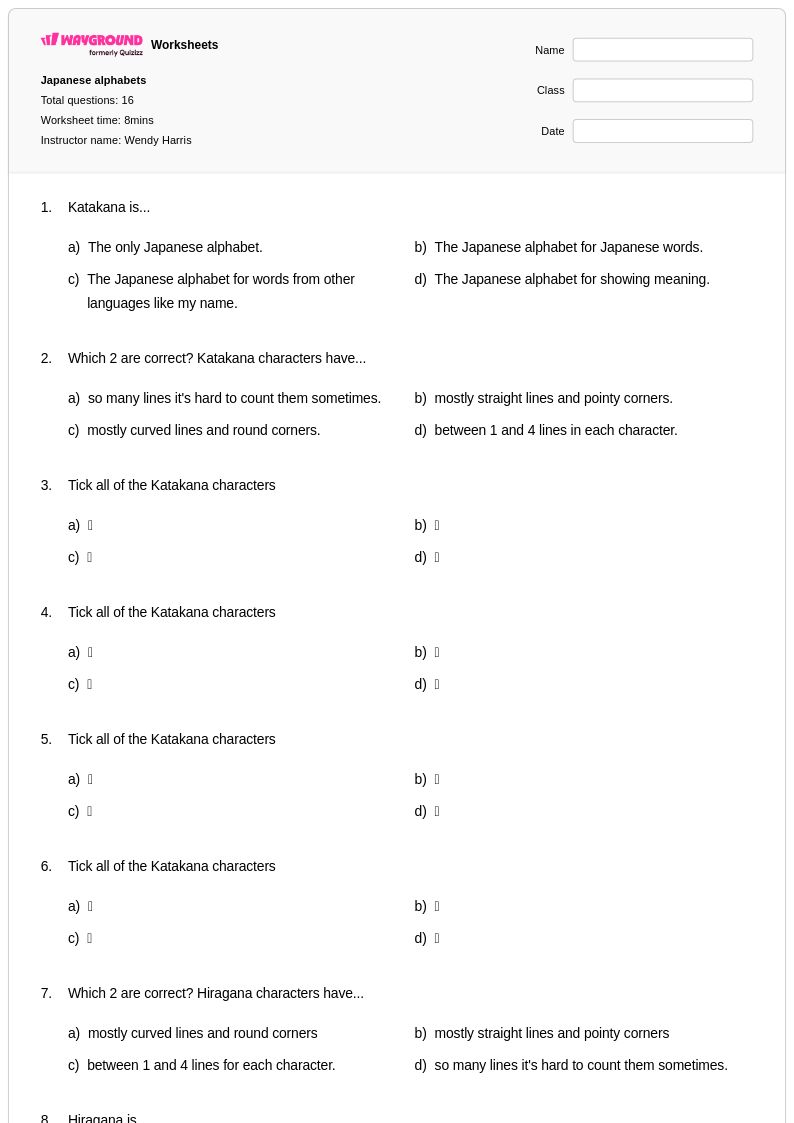
16 Q
3rd - 8th
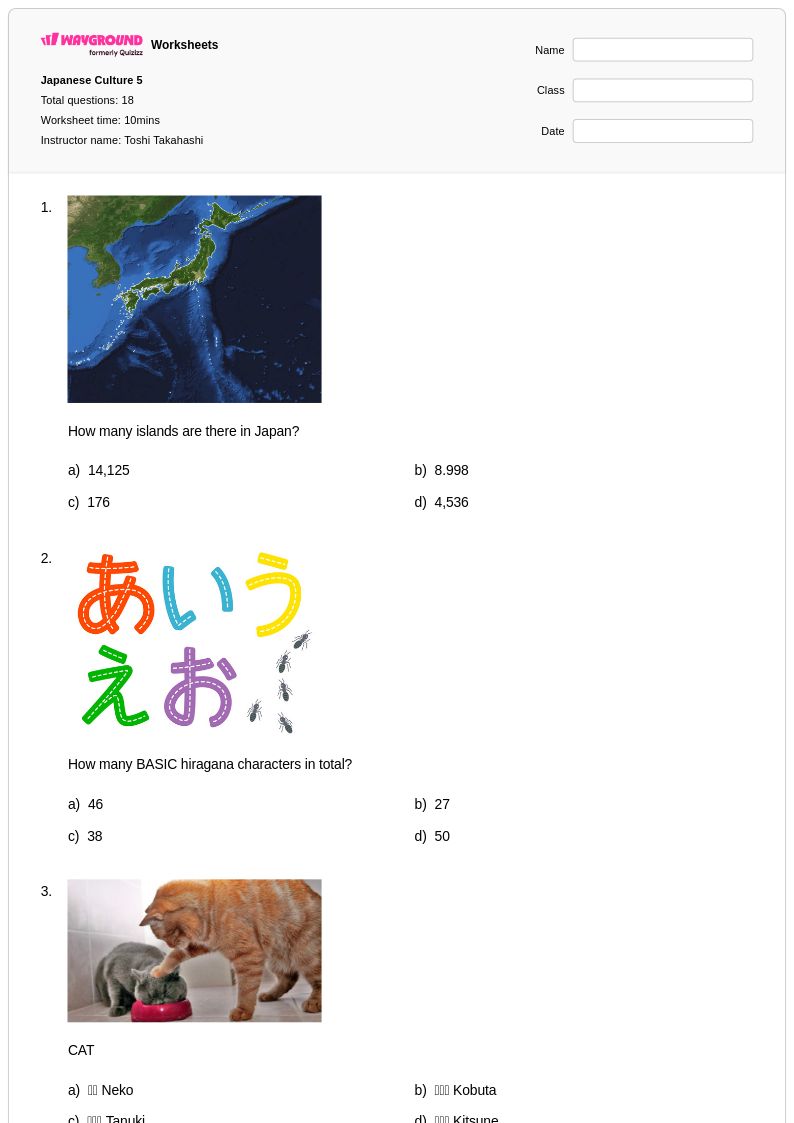
18 Q
1st - 9th
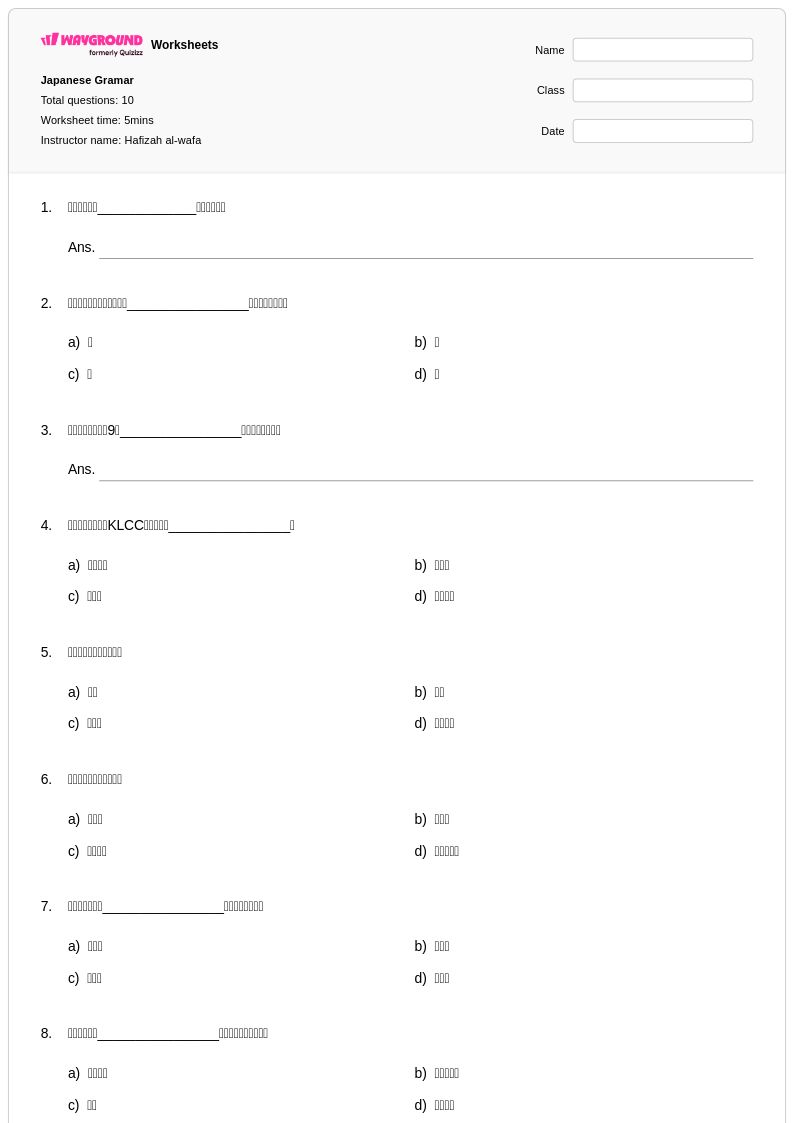
10 Q
1st - 12th
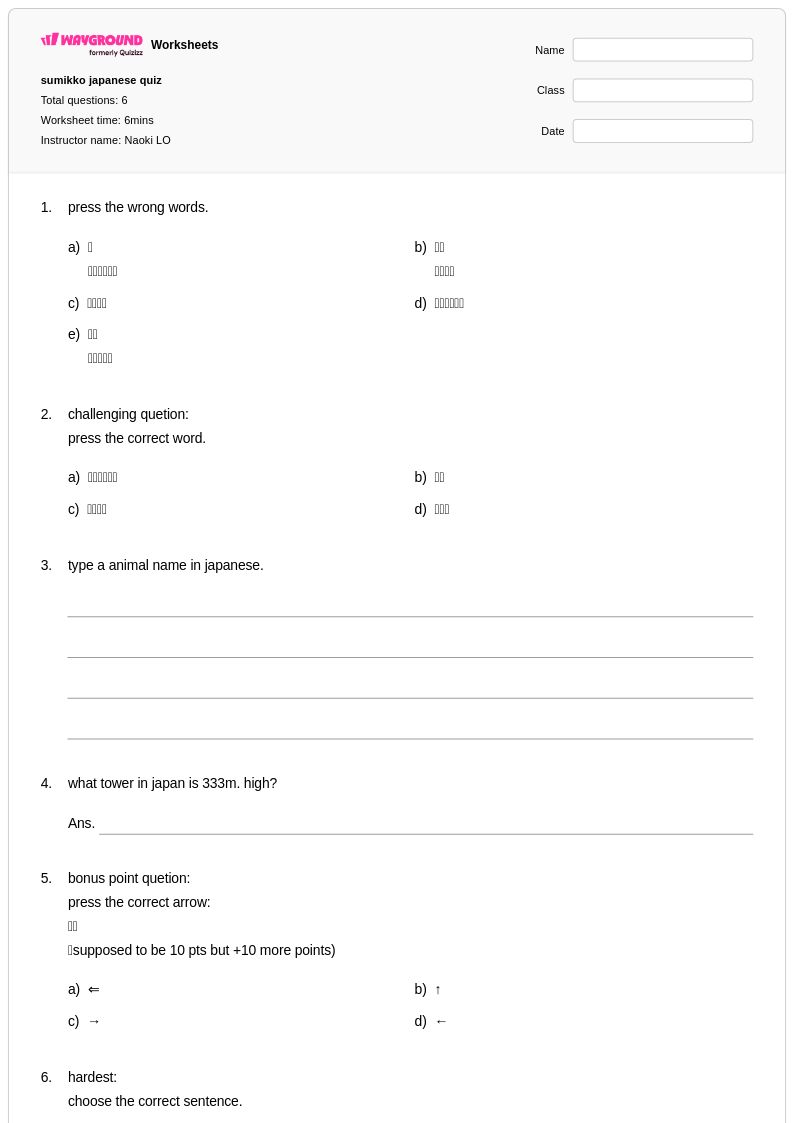
6 Q
KG - PD
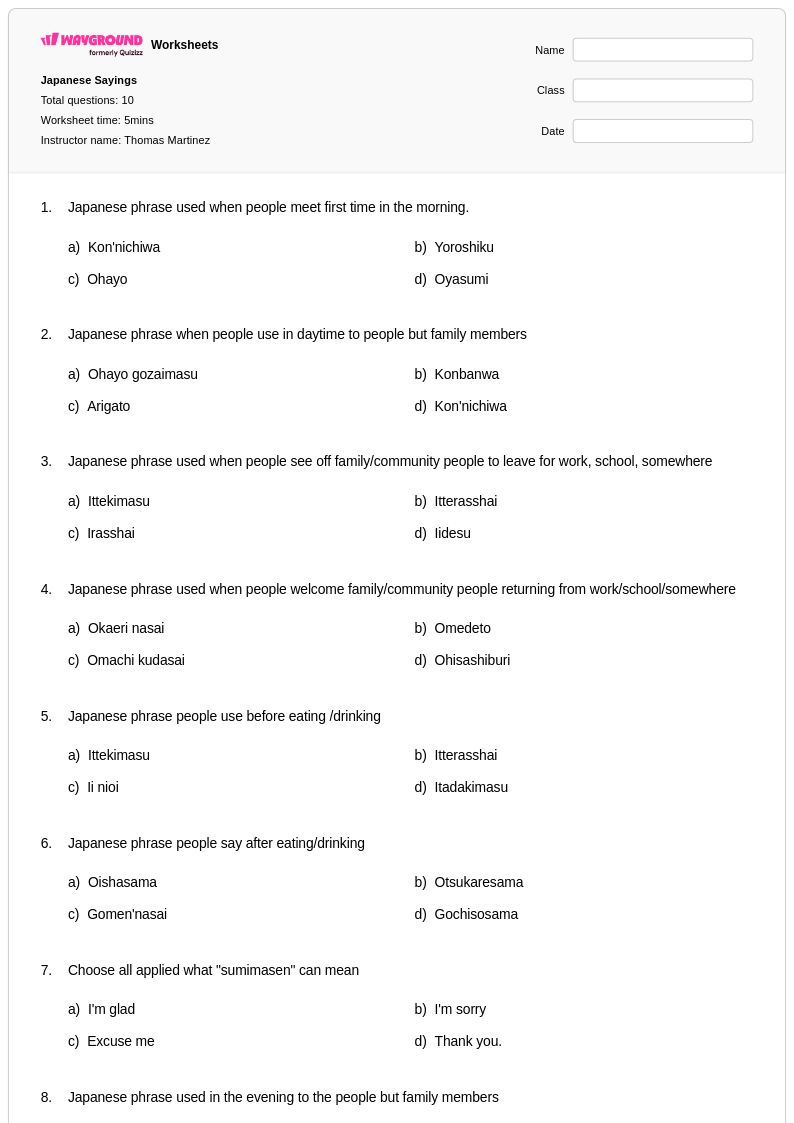
10 Q
3rd - PD
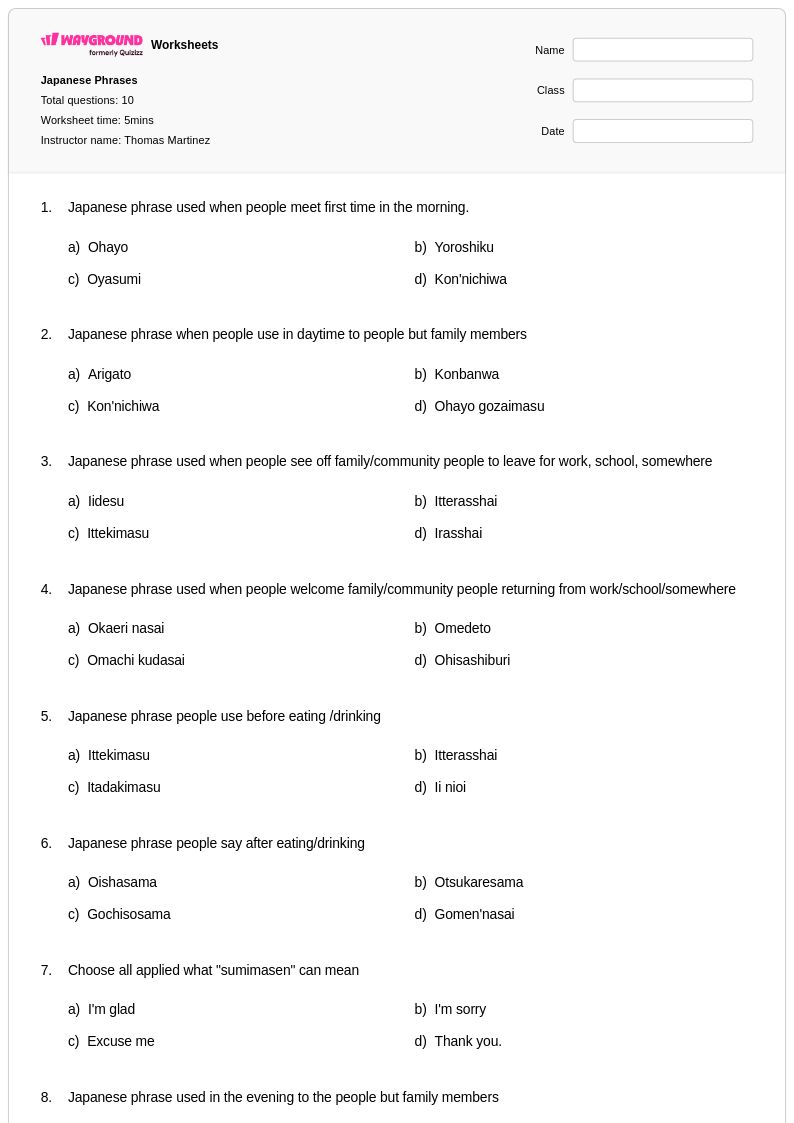
10 Q
3rd - PD
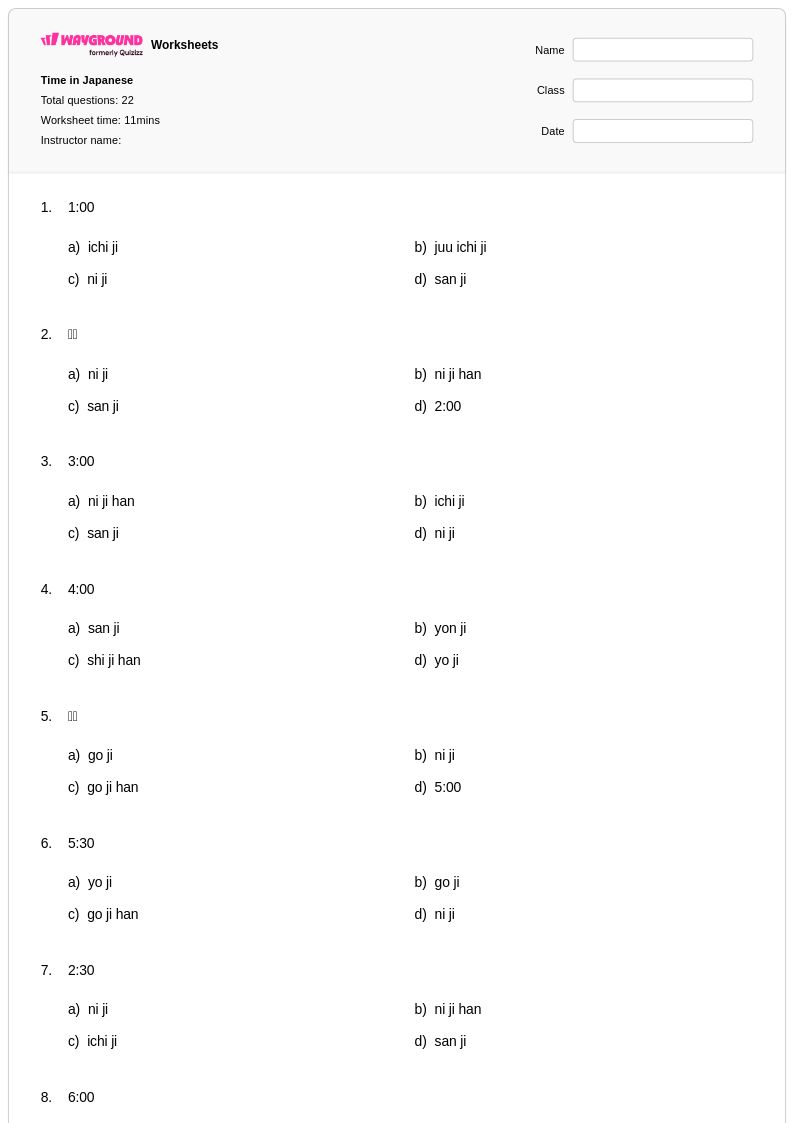
22 Q
3rd - 6th
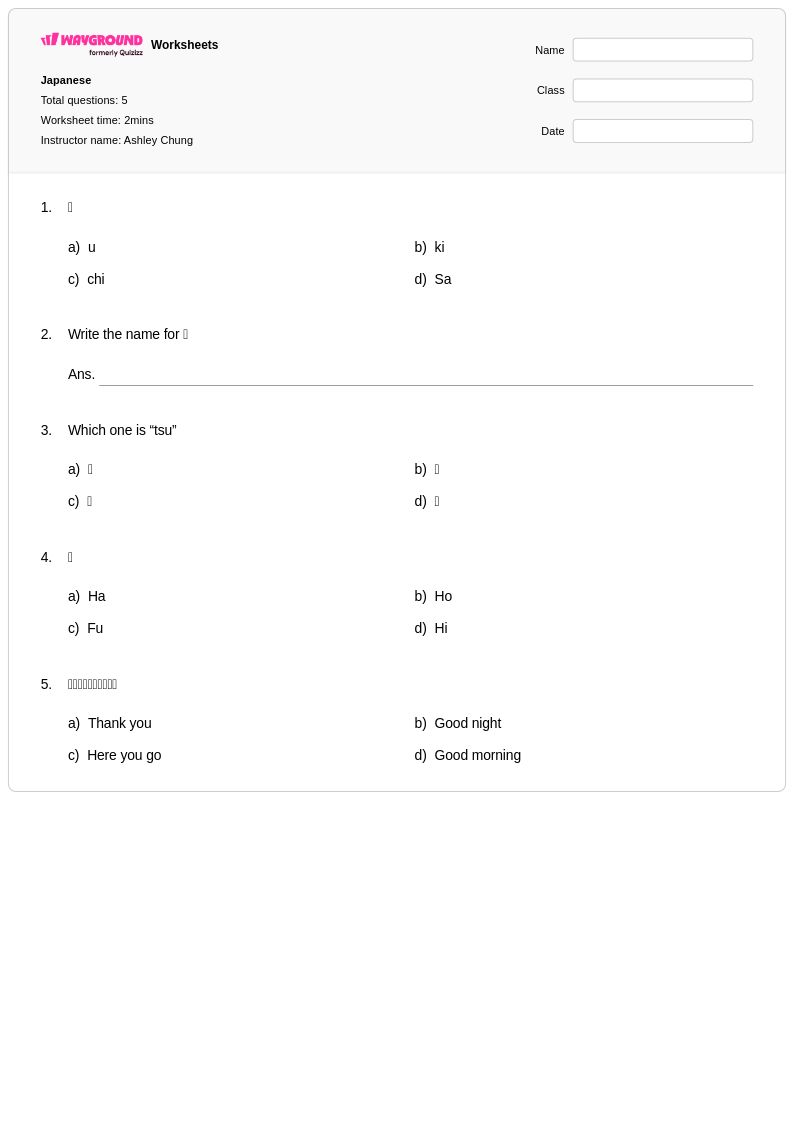
5 Q
3rd - 6th
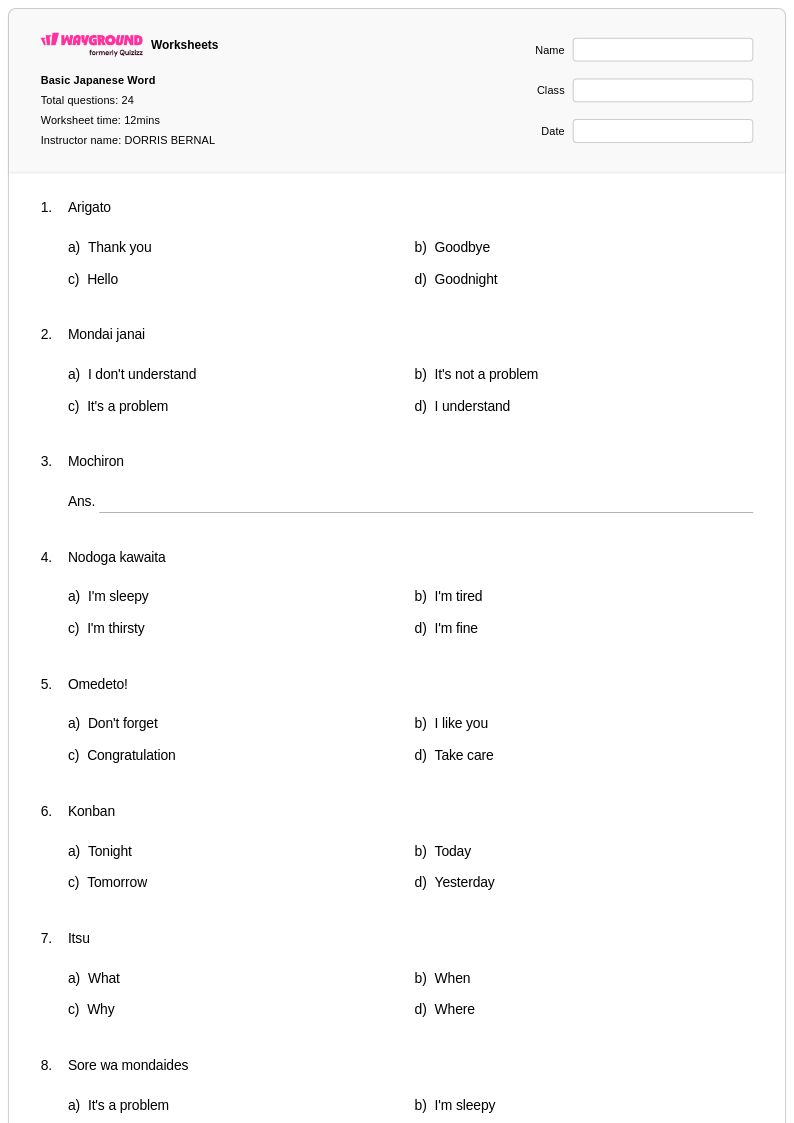
24 Q
1st - 5th
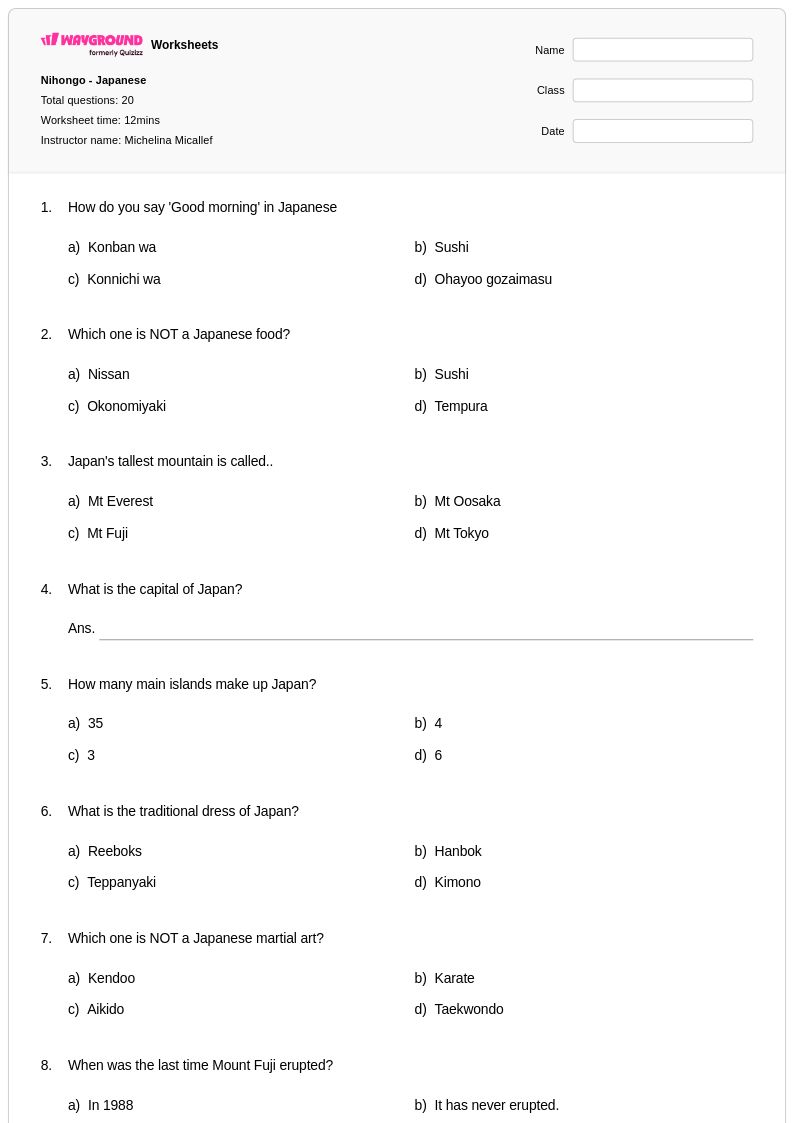
20 Q
3rd - 6th
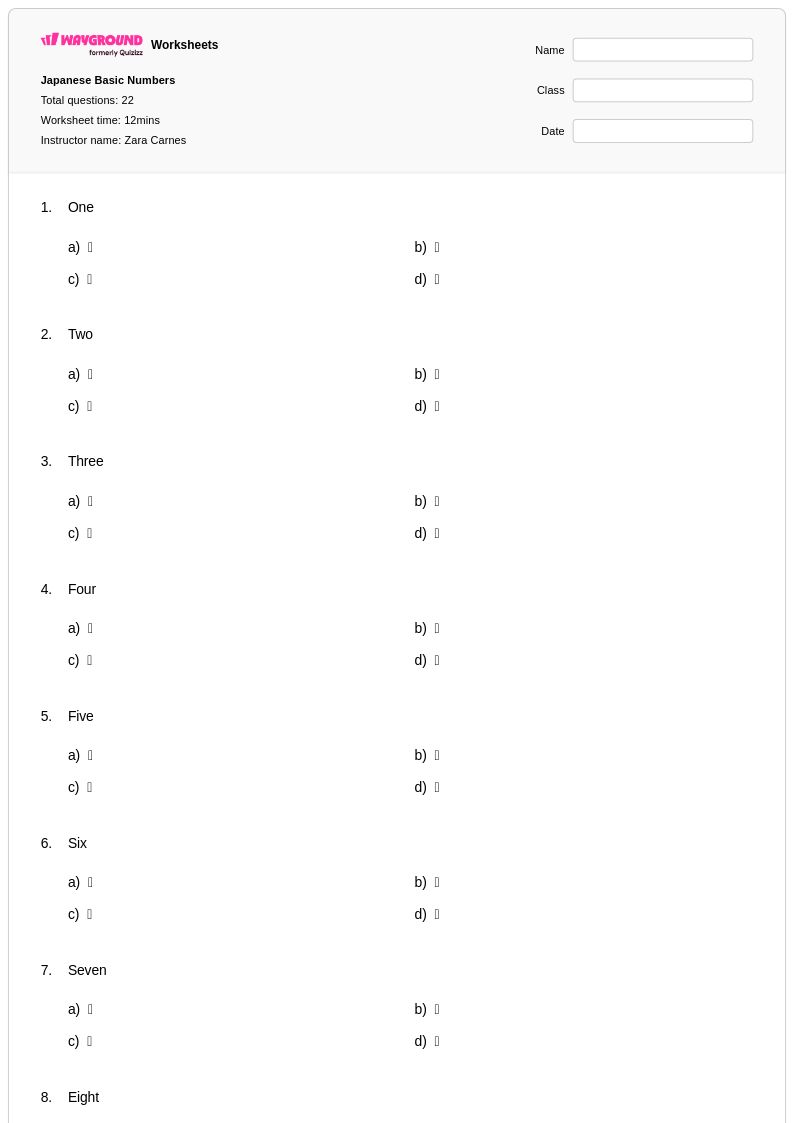
22 Q
1st - 5th
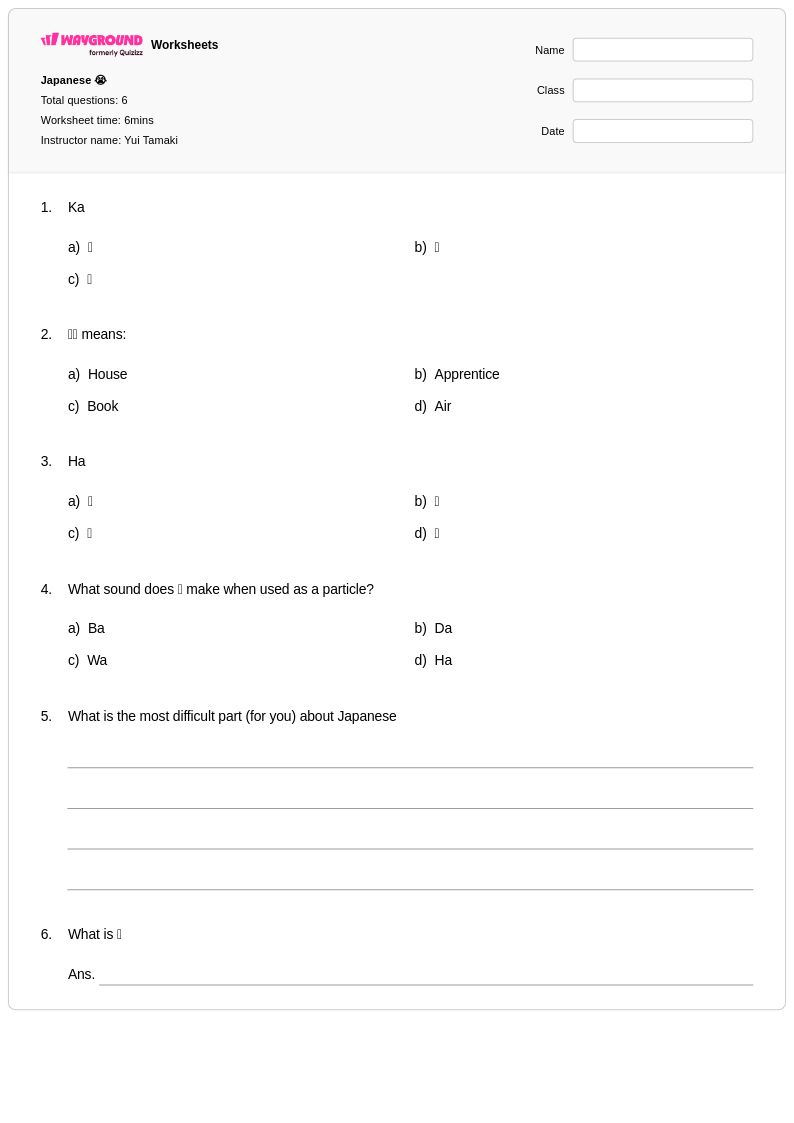
6 Q
KG - PD
Explore Japanese Worksheets by Grades
Explore Other Subject Worksheets for class 3
Explore printable Japanese worksheets for Class 3
Japanese worksheets for Class 3 students available through Wayground (formerly Quizizz) introduce young learners to the fundamentals of this fascinating East Asian language through age-appropriate activities and engaging practice problems. These carefully designed educational resources focus on building essential foundational skills including hiragana character recognition, basic vocabulary acquisition, simple sentence structure, and cultural awareness that helps students understand Japanese customs and traditions. The comprehensive worksheet collection strengthens students' ability to identify and write basic Japanese characters, recognize common words for family members, colors, numbers, and everyday objects, while developing an appreciation for Japanese culture through interactive exercises. Each printable resource includes a detailed answer key to support independent learning and self-assessment, and these free educational materials are available in convenient pdf format for easy classroom distribution and home practice.
Wayground (formerly Quizizz) empowers educators with access to millions of teacher-created Japanese language resources specifically curated for elementary-level instruction, featuring robust search and filtering capabilities that allow teachers to quickly locate materials aligned with their curriculum standards and learning objectives. The platform's differentiation tools enable educators to customize worksheets based on individual student needs, whether for remediation of struggling learners or enrichment activities for advanced students ready to explore more complex Japanese language concepts. Teachers can access these resources in both printable and digital formats, including downloadable pdf files, making lesson planning more efficient and flexible while providing multiple options for skill practice and assessment. The extensive collection supports comprehensive instructional planning by offering varied approaches to Japanese language instruction, from traditional character tracing exercises to interactive cultural exploration activities that help Class 3 students develop both linguistic competency and cross-cultural understanding.
FAQs
How do I teach hiragana and katakana to beginners?
What are the most common mistakes students make when learning Japanese characters?
What exercises help students practice Japanese vocabulary effectively?
How do I differentiate Japanese language instruction for mixed-ability classrooms?
How can I use Japanese worksheets from Wayground in my classroom?
How do I introduce basic Japanese grammar structures to students with no prior experience?