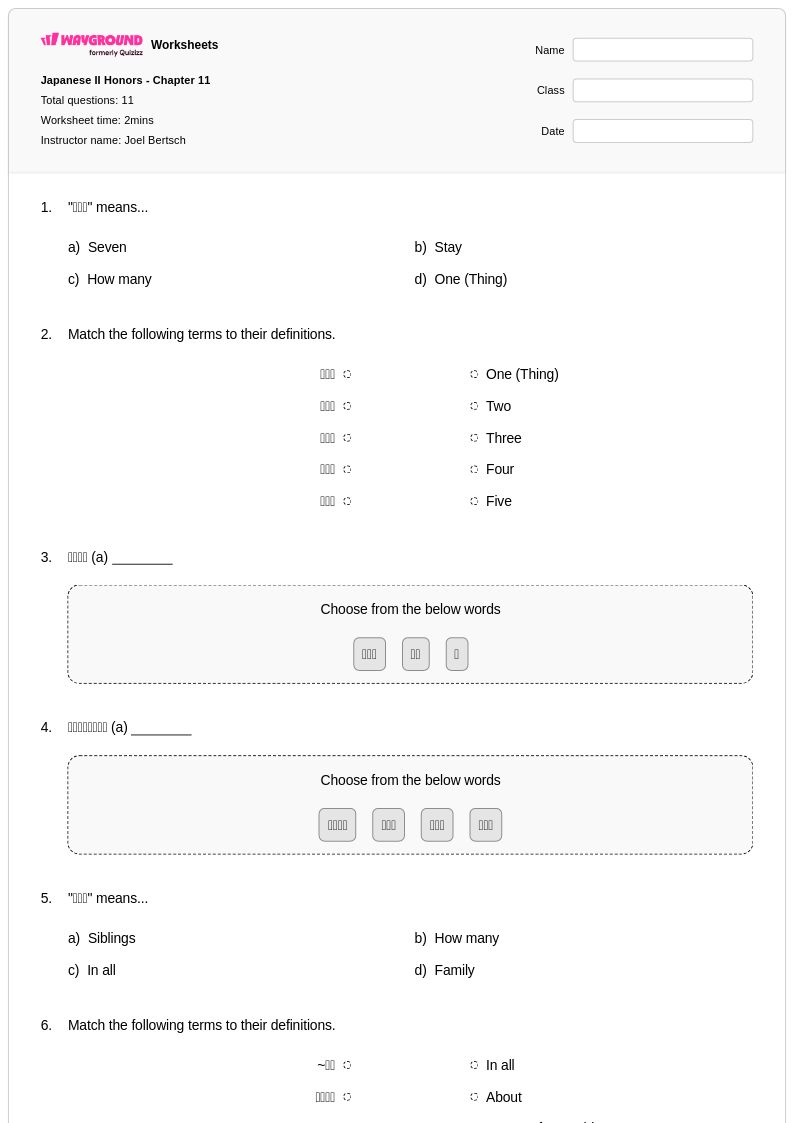
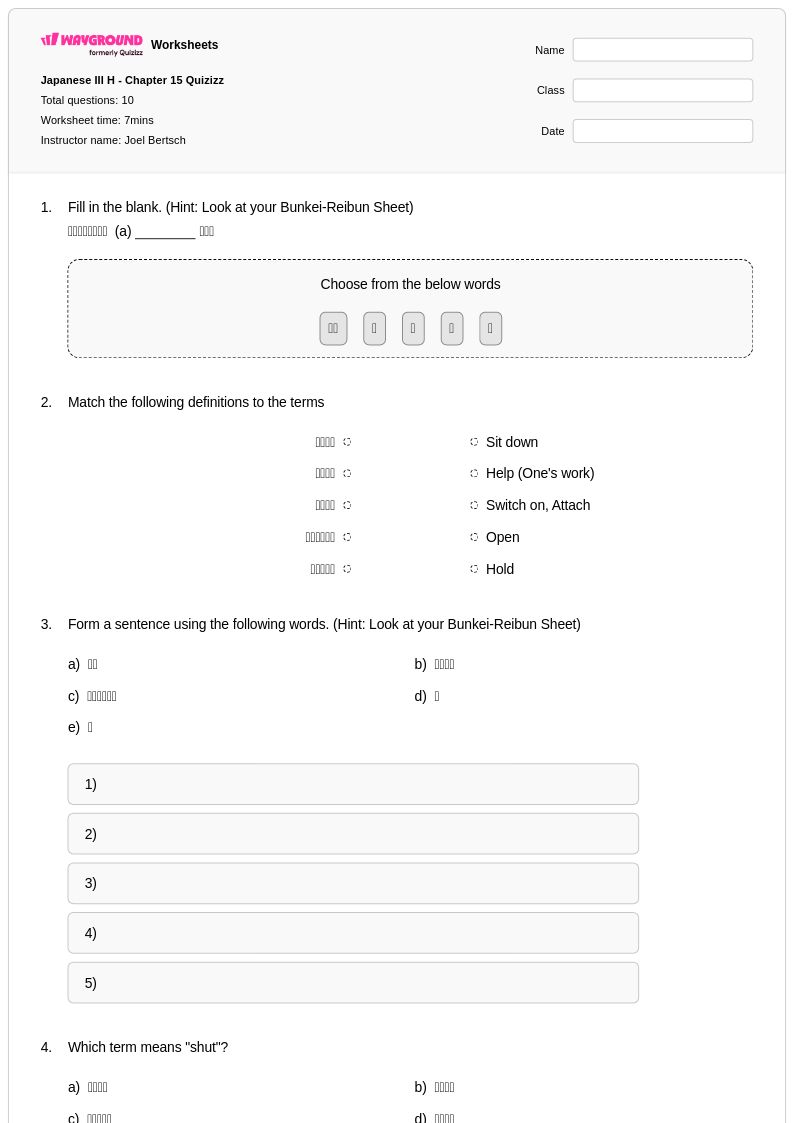
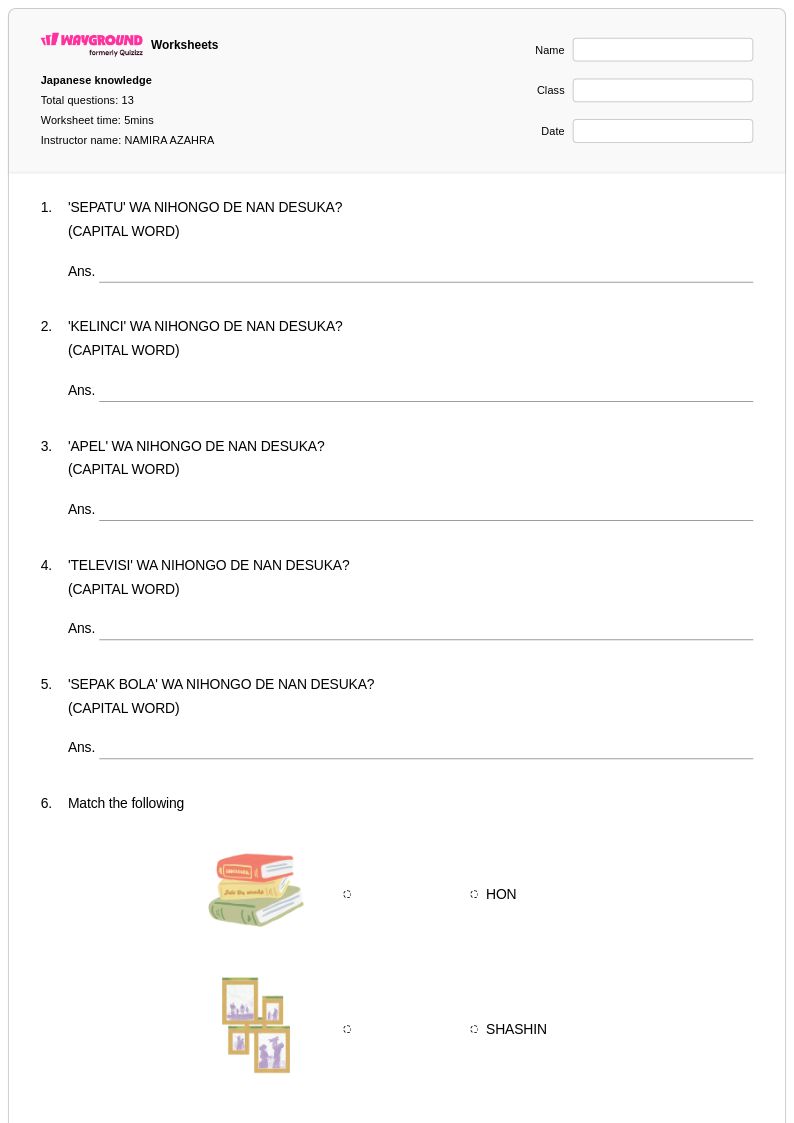
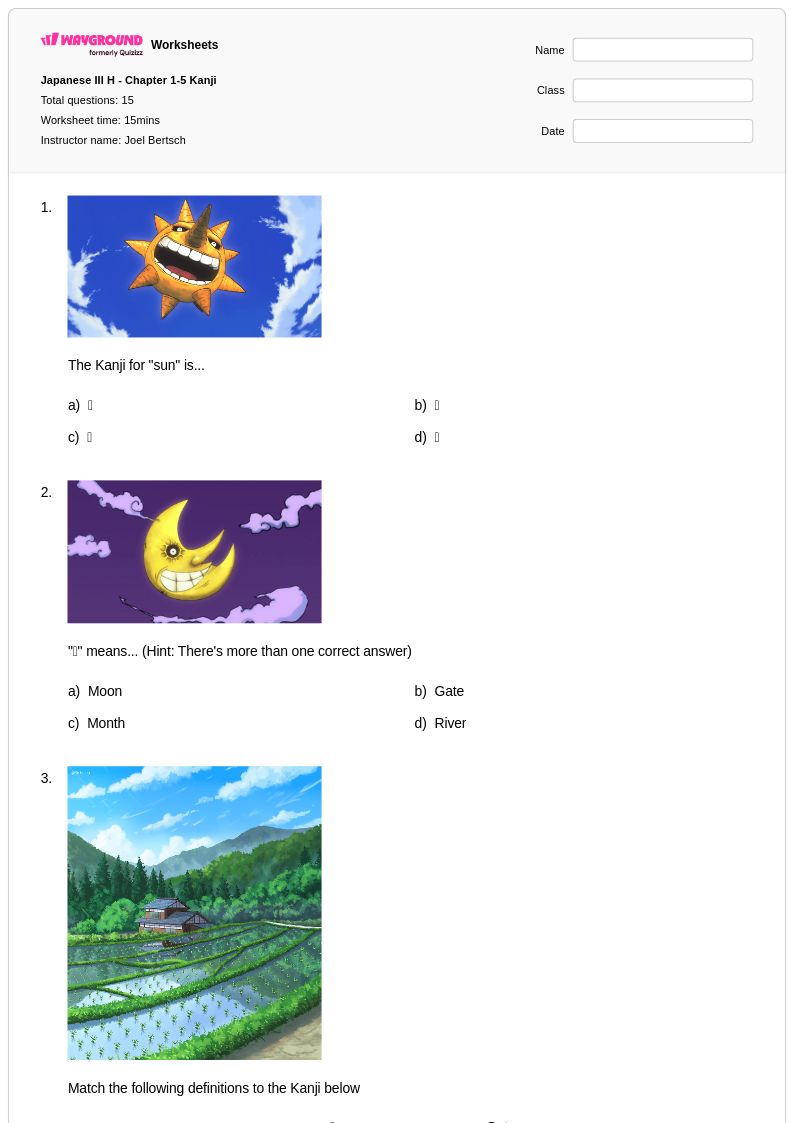
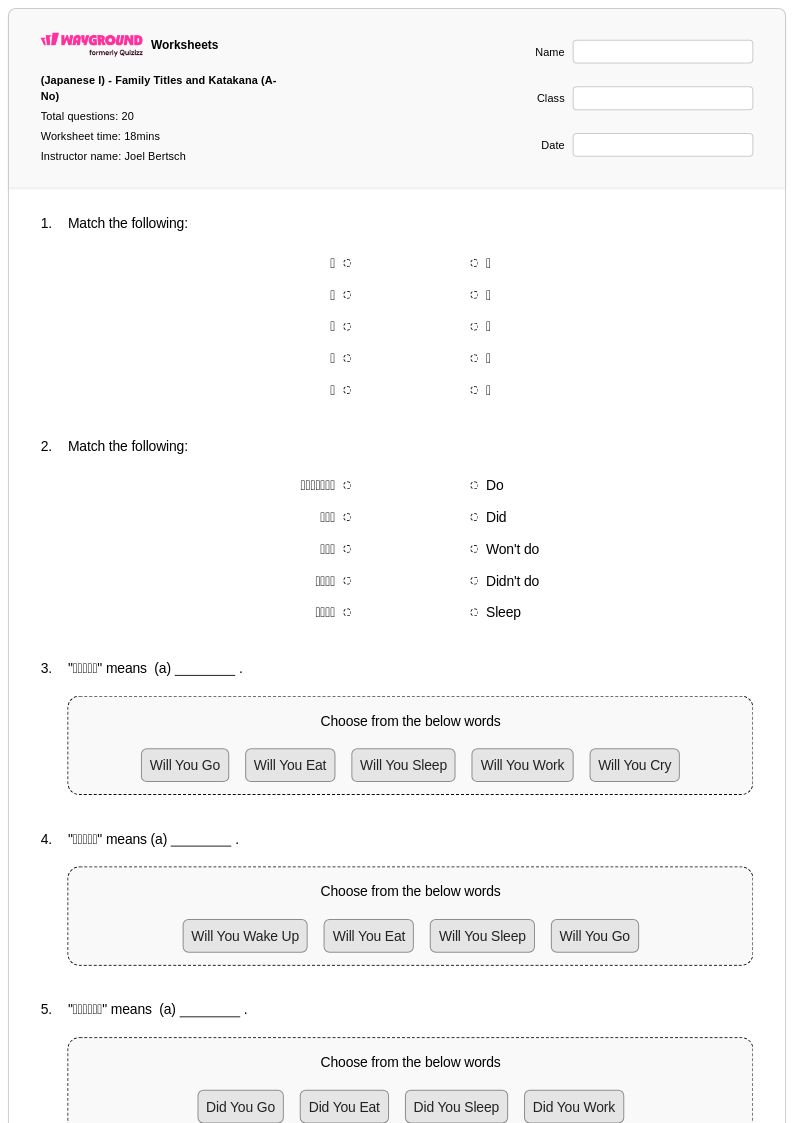
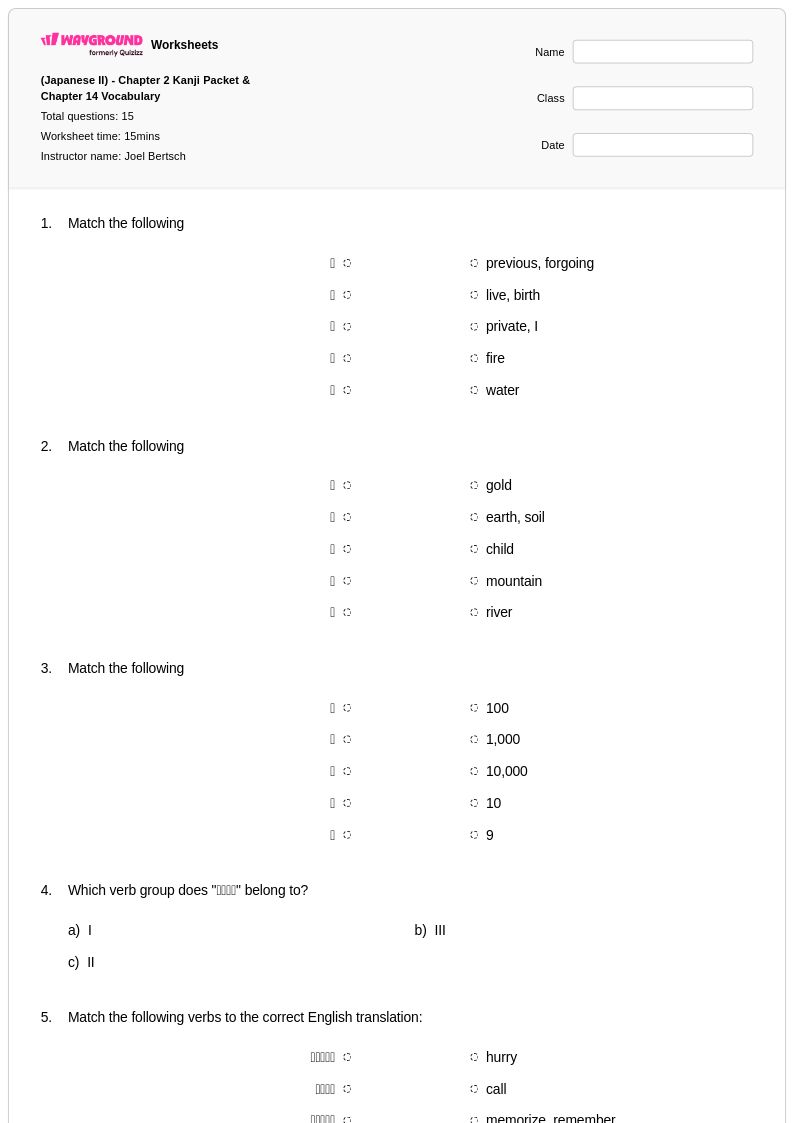
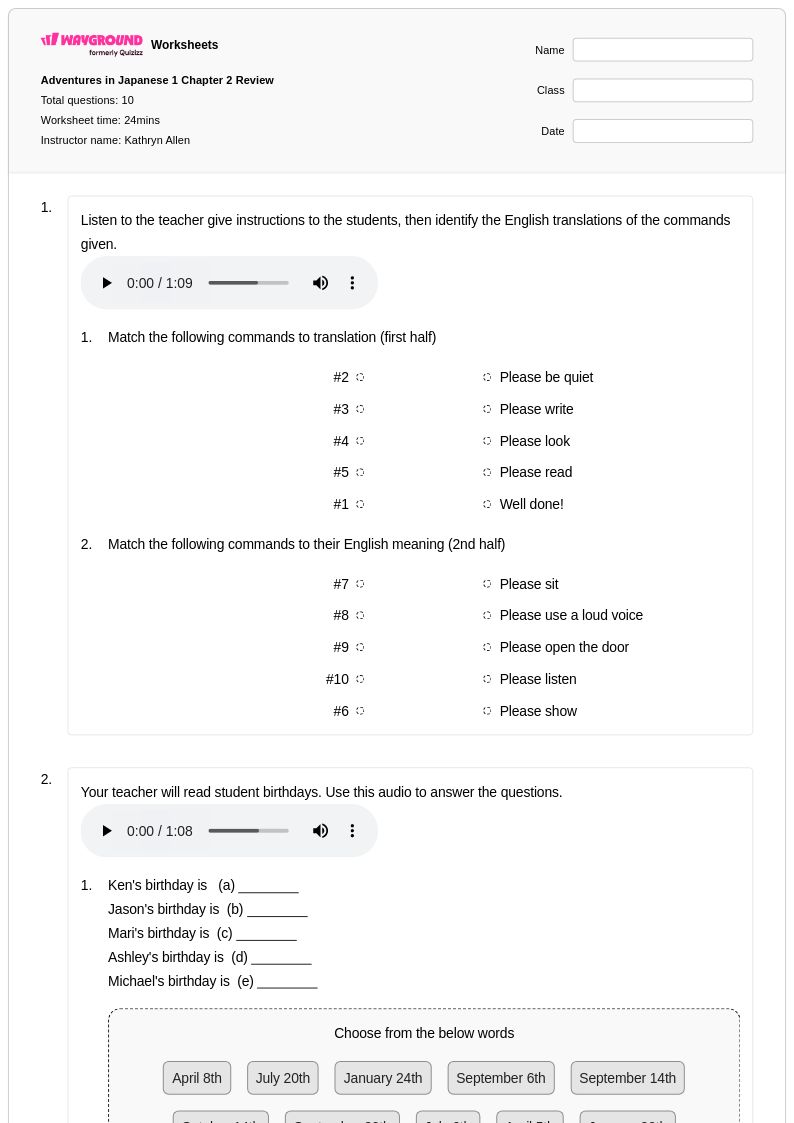
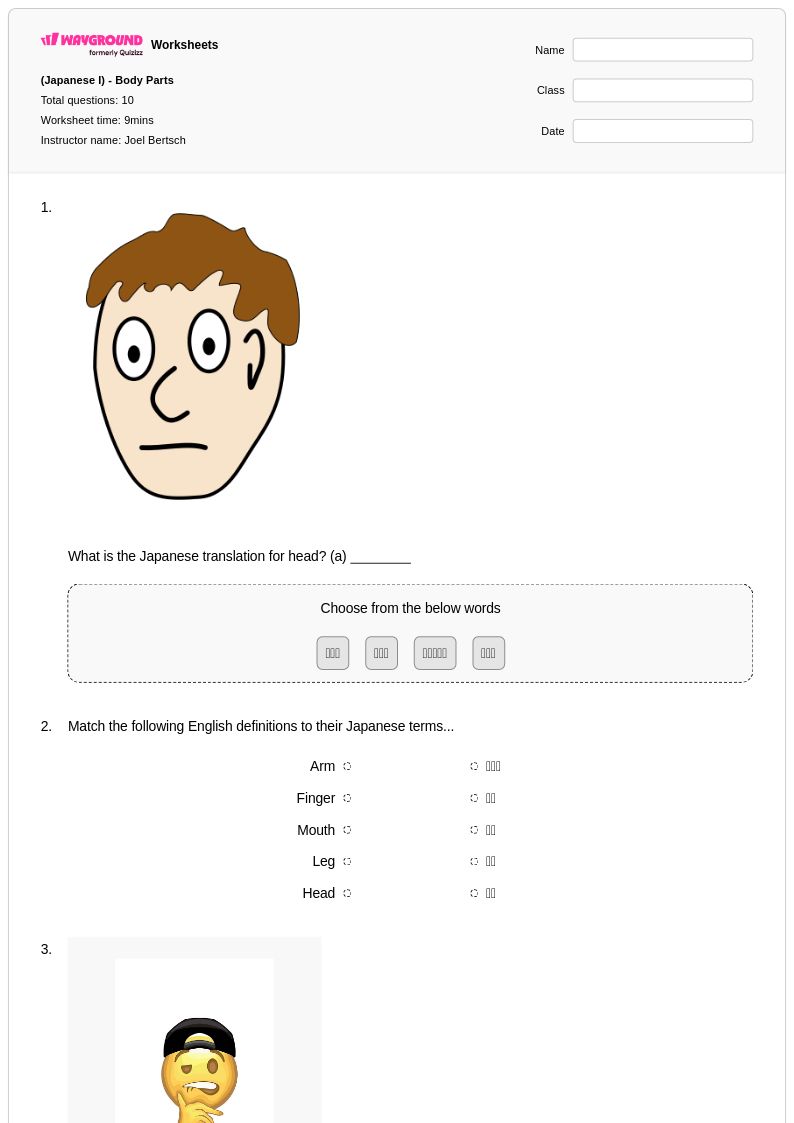
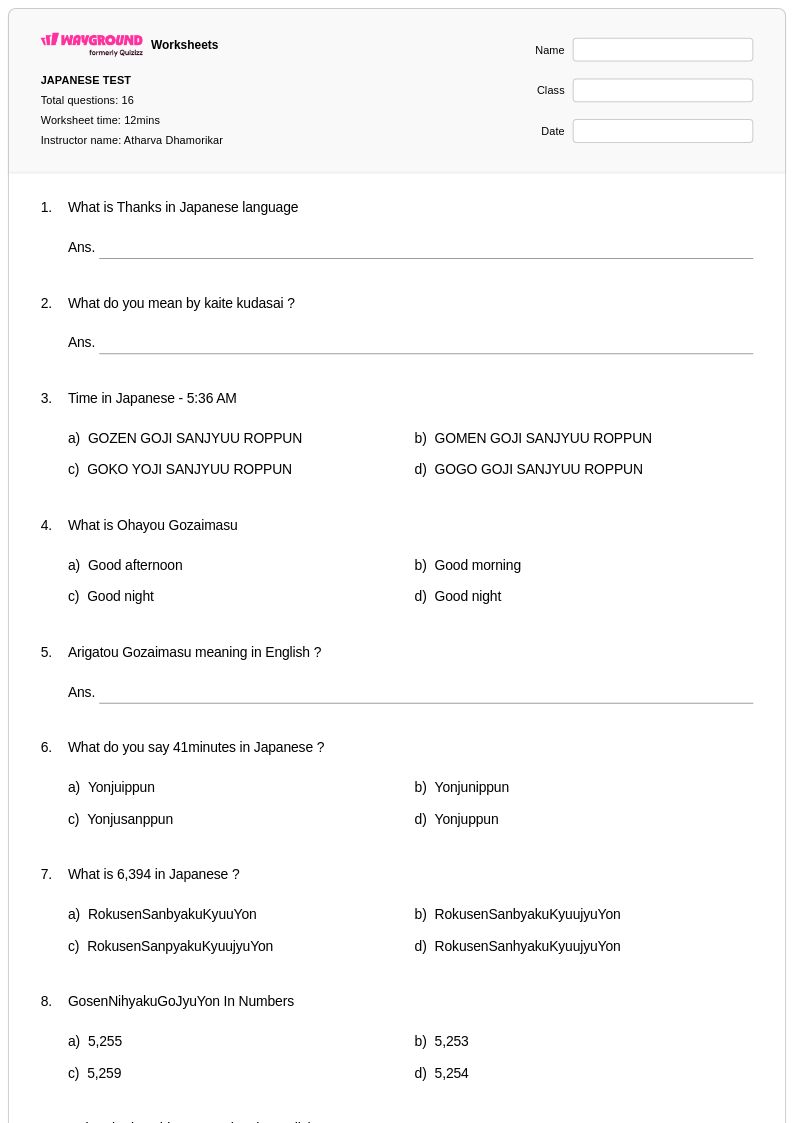
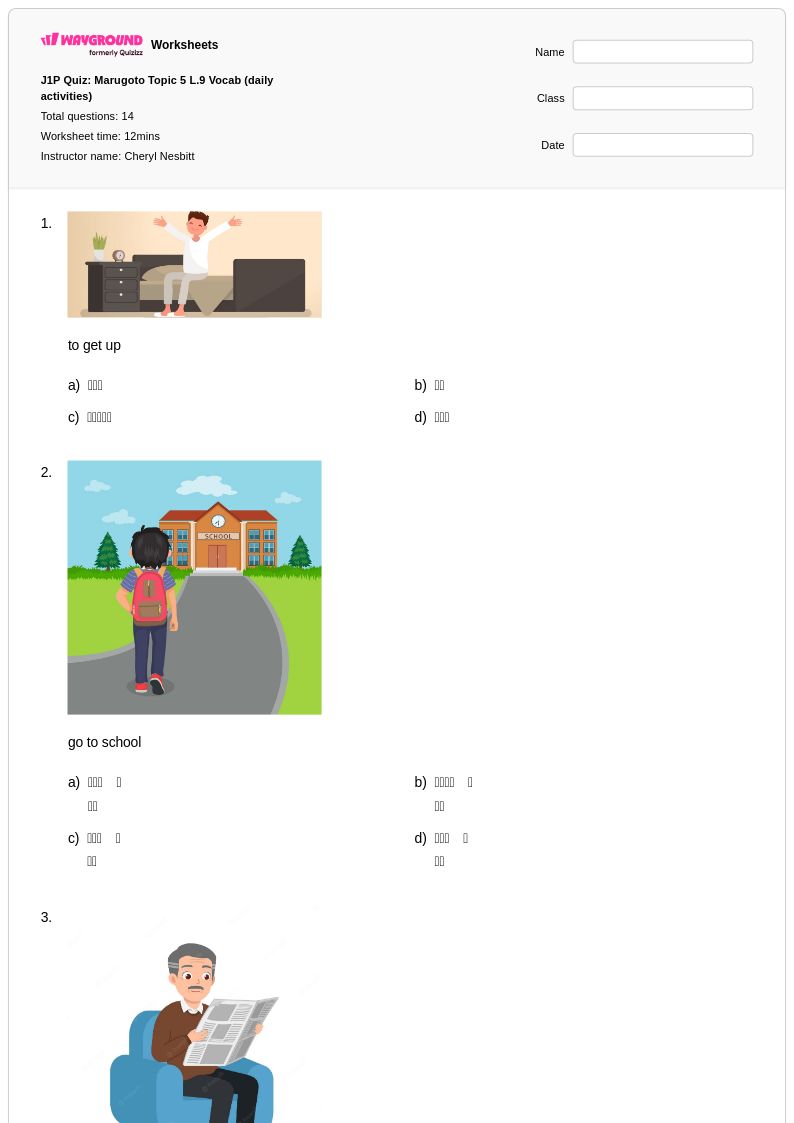
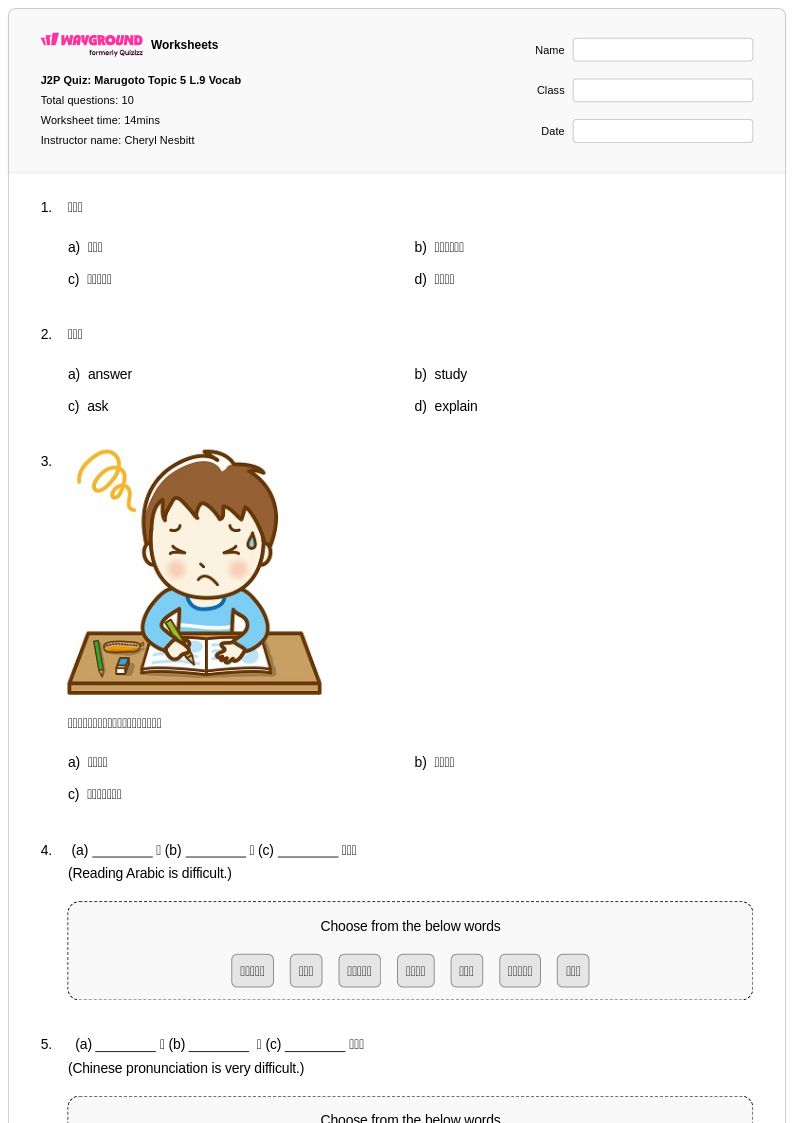
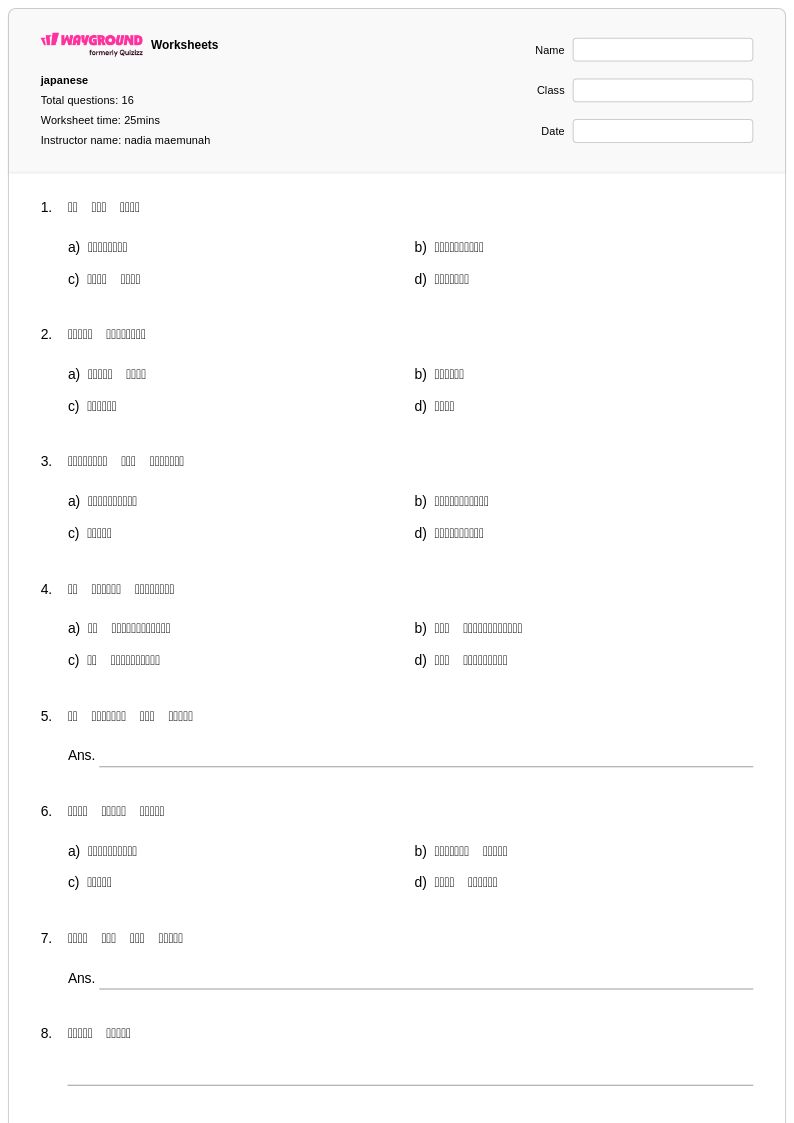
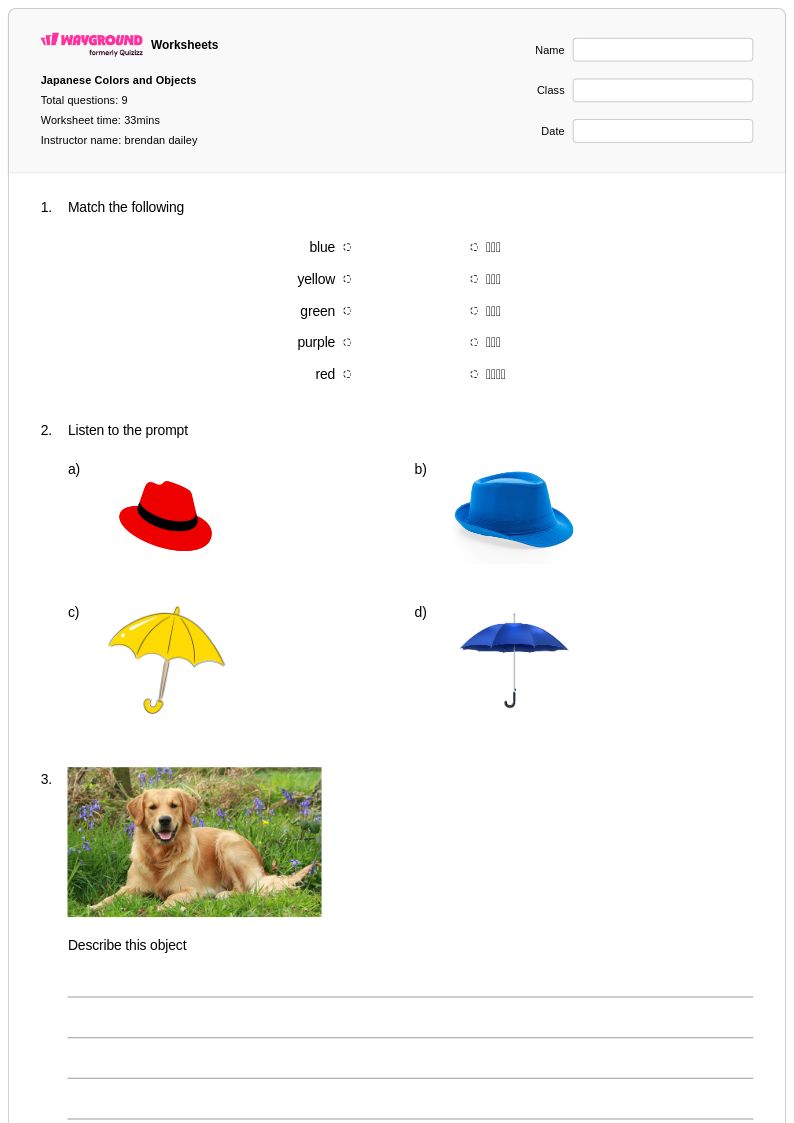
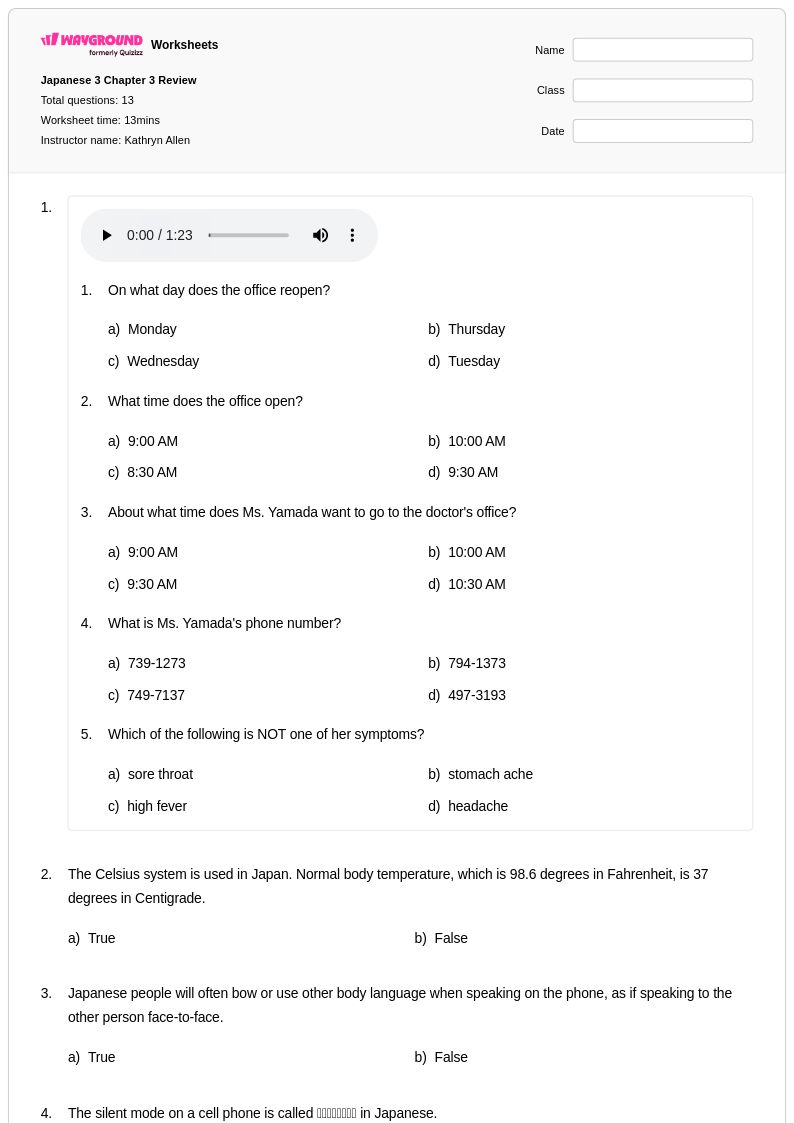
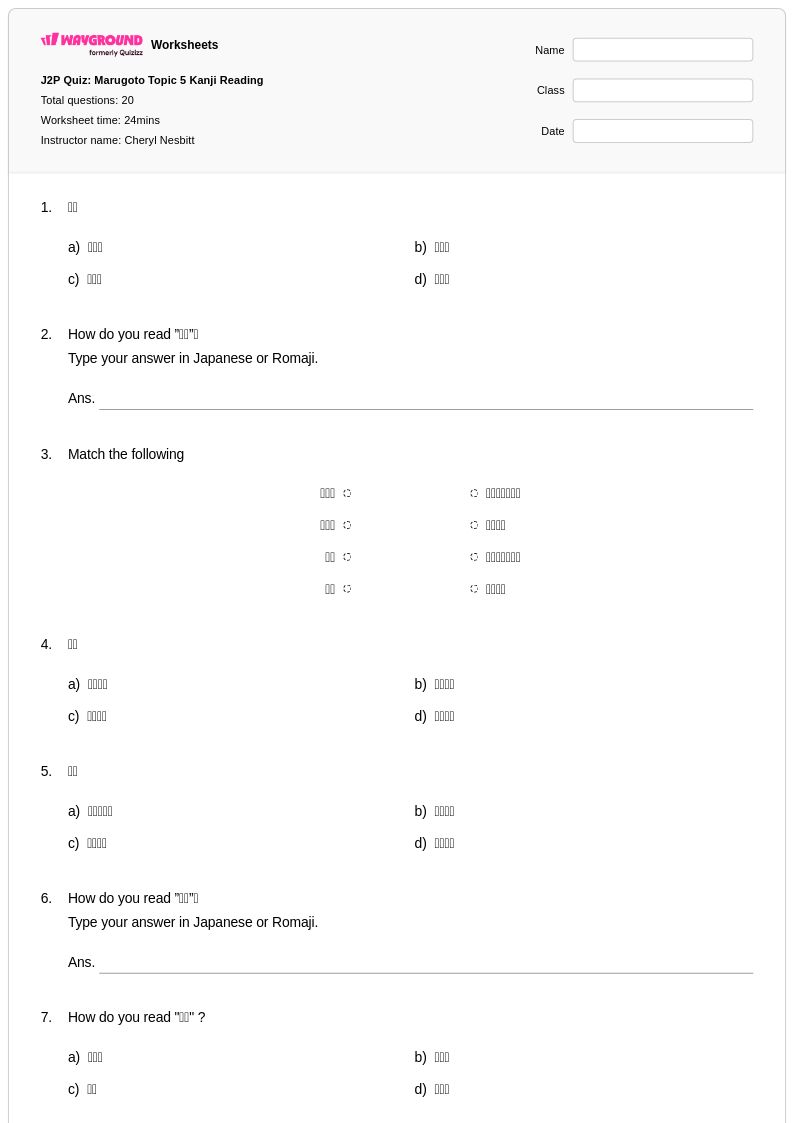
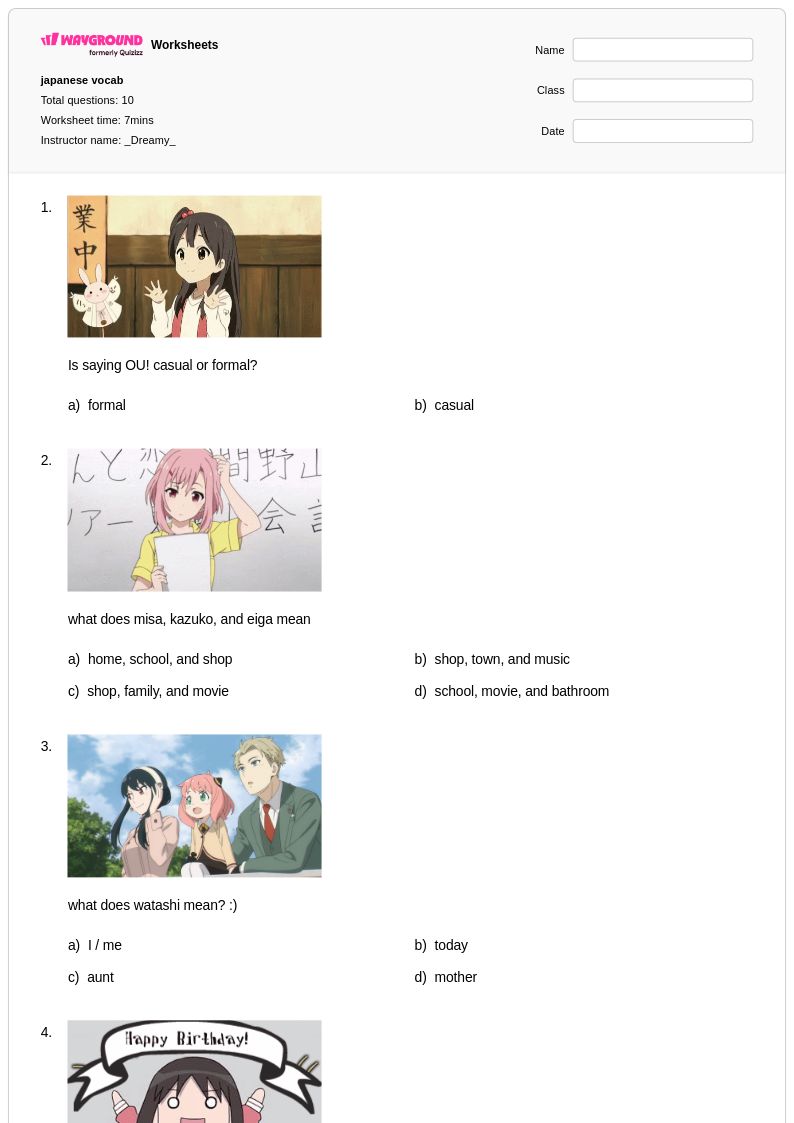
Class 11 Japanese worksheets from Wayground offer comprehensive printables and practice problems to help students master hiragana, katakana, vocabulary, grammar structures, and conversational skills with detailed answer keys and free PDF resources.
Explore printable Japanese worksheets for Class 11
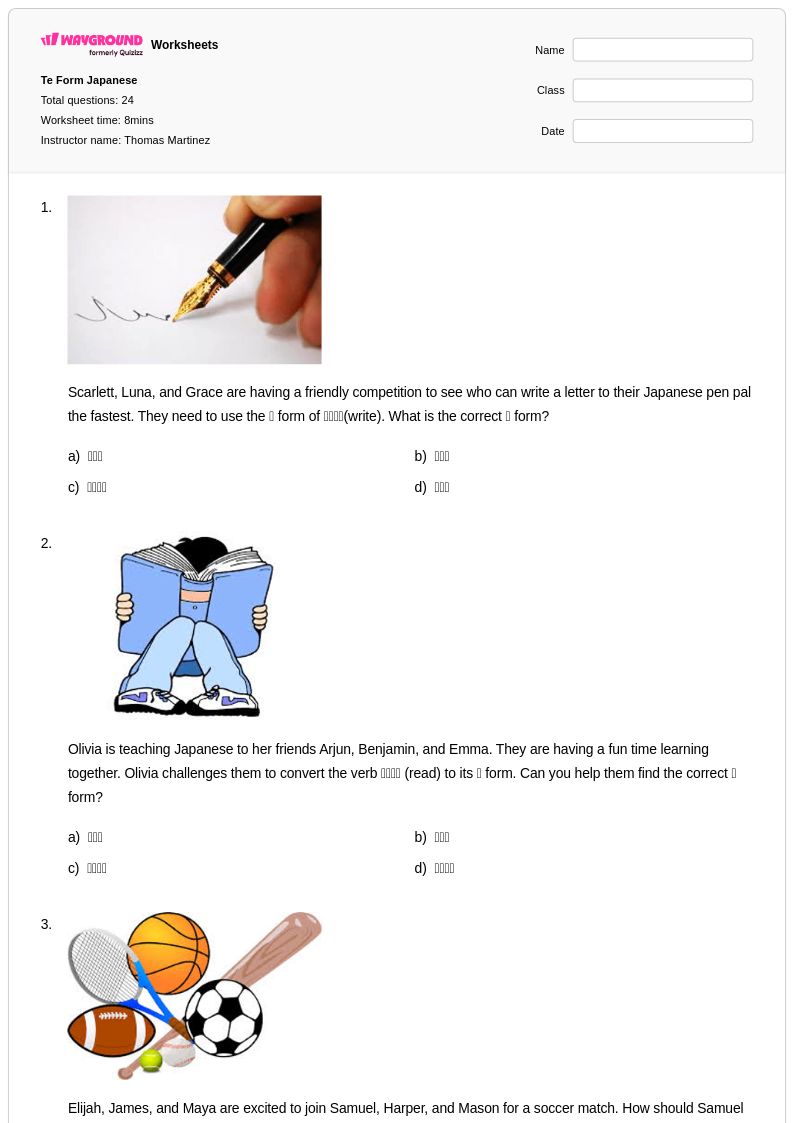
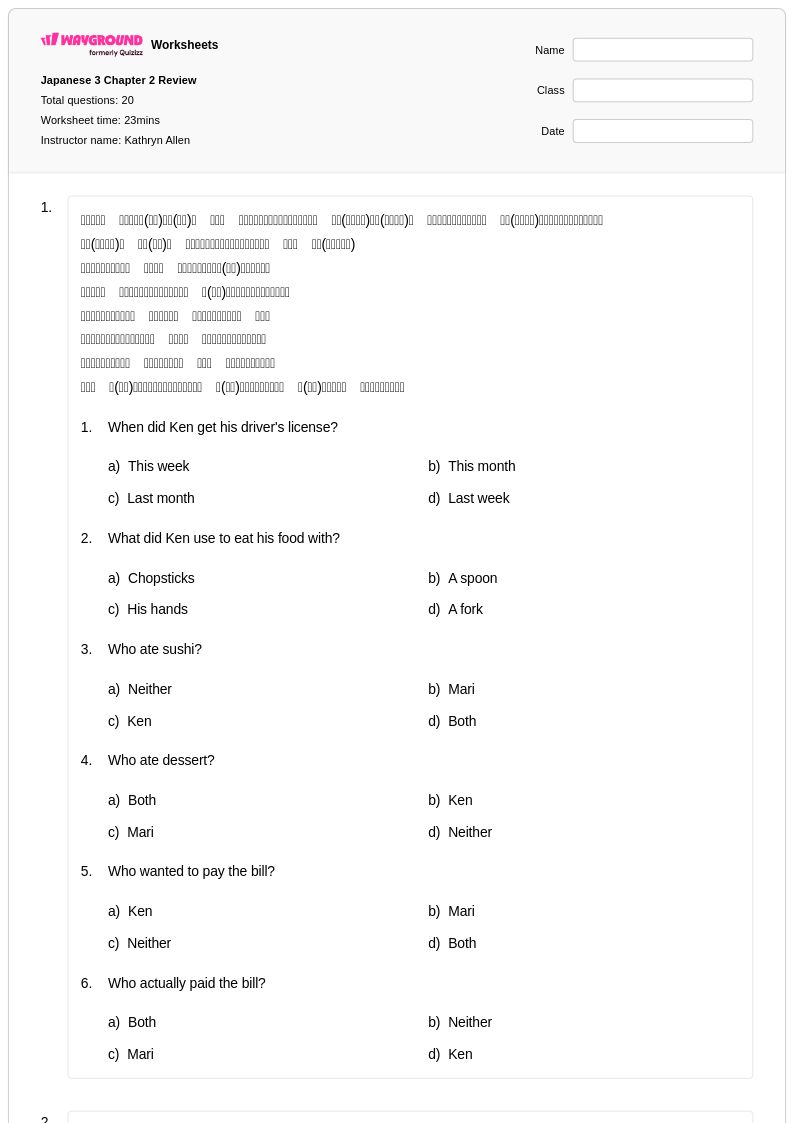
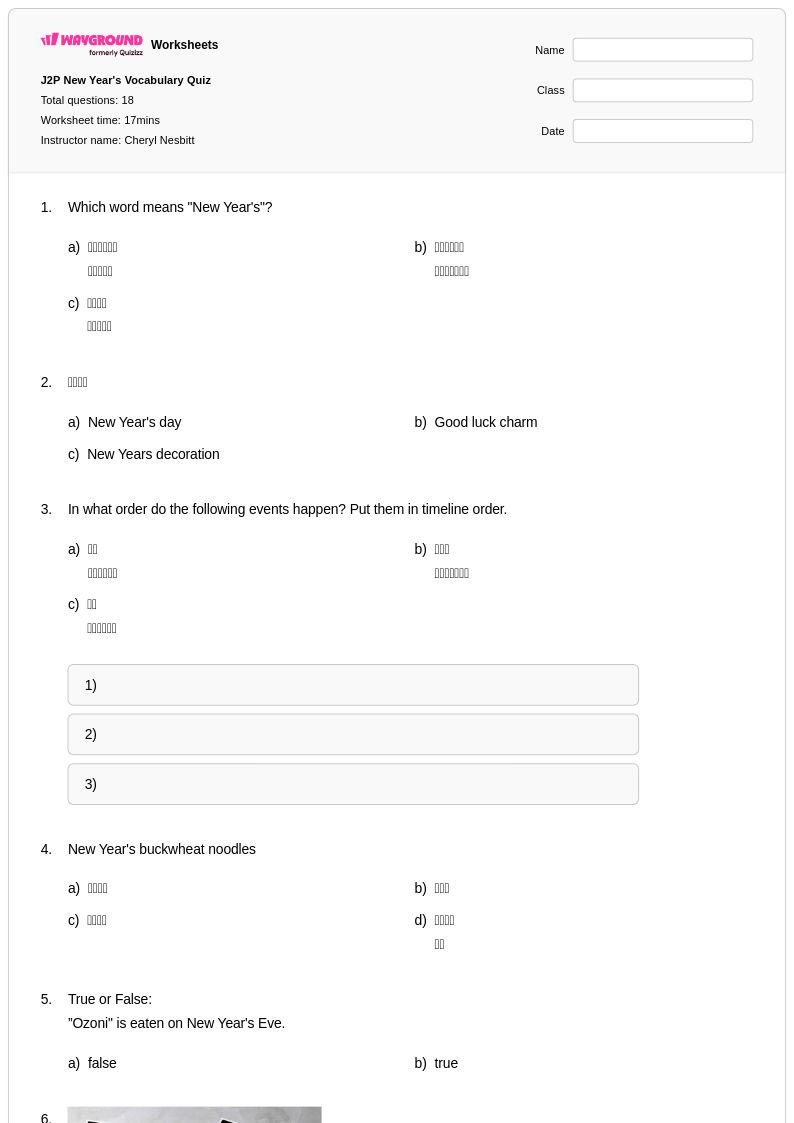
Japanese language worksheets for Class 11 students available through Wayground (formerly Quizizz) provide comprehensive practice materials that target advanced proficiency skills essential for upper-level high school learners. These carefully designed worksheets strengthen critical competencies including complex kanji recognition and usage, sophisticated grammar structures such as keigo (honorific language), advanced particle applications, and nuanced reading comprehension of authentic Japanese texts. Students engage with practice problems that challenge their understanding of cultural contexts, formal and informal speech registers, and intricate sentence patterns that characterize fluent Japanese communication. Each worksheet comes with a detailed answer key to support independent learning and self-assessment, while the free printable format ensures accessibility for both classroom instruction and home study sessions.
Wayground (formerly Quizizz) empowers educators with millions of teacher-created Japanese language resources that streamline lesson planning and enhance instructional effectiveness for Class 11 classrooms. The platform's robust search and filtering capabilities allow teachers to quickly locate worksheets aligned with specific learning standards and curriculum objectives, while differentiation tools enable seamless customization to meet diverse student needs and proficiency levels. These comprehensive collections are available in both printable pdf formats and interactive digital versions, providing flexibility for various teaching environments and learning preferences. Teachers utilize these resources for targeted skill practice, remediation of challenging grammar concepts, enrichment activities for advanced learners, and comprehensive assessment preparation that builds student confidence in Japanese language mastery.
FAQs
How do I teach hiragana and katakana to beginners?
Start by introducing hiragana in small clusters, typically five characters at a time, grouped by vowel row. Use repetitive tracing, recognition drills, and reading practice before moving to katakana, since students who internalize hiragana first tend to acquire katakana faster. Pairing character recognition with real vocabulary words helps students build meaning alongside form rather than memorizing symbols in isolation.
What are the most common mistakes students make when learning Japanese characters?
Students frequently confuse visually similar characters, such as hiragana さ (sa) and き (ki), or katakana ソ (so) and ン (n), because they rely on global shape rather than stroke detail. Another common error is incorrect stroke order, which matters both for legibility and for building accurate visual memory of each character. Regular timed recognition drills and stroke-order tracing practice help correct both issues before they become entrenched habits.
What exercises help students practice Japanese vocabulary effectively?
Vocabulary practice is most effective when students encounter words in multiple formats: reading them in context, writing them from memory, and matching them to images or English equivalents. Exercises that require students to use new words in simple sentence frames are especially valuable because they connect vocabulary acquisition to grammar structures simultaneously. Spaced repetition practice, where words reappear across multiple sessions, significantly improves long-term retention.
How do I differentiate Japanese language instruction for mixed-ability classrooms?
Differentiation in Japanese language classes often means offering the same core task at varying complexity levels, for example, a vocabulary activity using hiragana only for beginners while intermediate students work with kanji-integrated versions. On Wayground, teachers can apply student-level accommodations such as Read Aloud for students who need audio support, reduced answer choices to lower cognitive load for struggling learners, and extended time settings configurable per student. These accommodations are saved and reusable across sessions, so setup is a one-time investment rather than a recurring task.
How can I use Japanese worksheets from Wayground in my classroom?
Wayground's Japanese worksheets are available as printable PDFs for traditional classroom use and in digital formats for technology-integrated environments, including the option to host any worksheet as a live quiz on Wayground. Printable versions work well for handwriting and stroke-order practice, while digital formats are effective for vocabulary and grammar review with immediate feedback. Both formats include complete answer keys, reducing grading time and allowing teachers to return targeted feedback quickly.
How do I introduce basic Japanese grammar structures to students with no prior experience?
Begin with the subject-object-verb sentence pattern, which is the foundation of Japanese syntax and differs significantly from English word order. Use simple, high-frequency vocabulary so students can focus on structure rather than decoding new words simultaneously. Short translation and sentence-building exercises that ask students to rearrange word cards or fill in sentence frames are more effective at this stage than open-ended writing tasks.