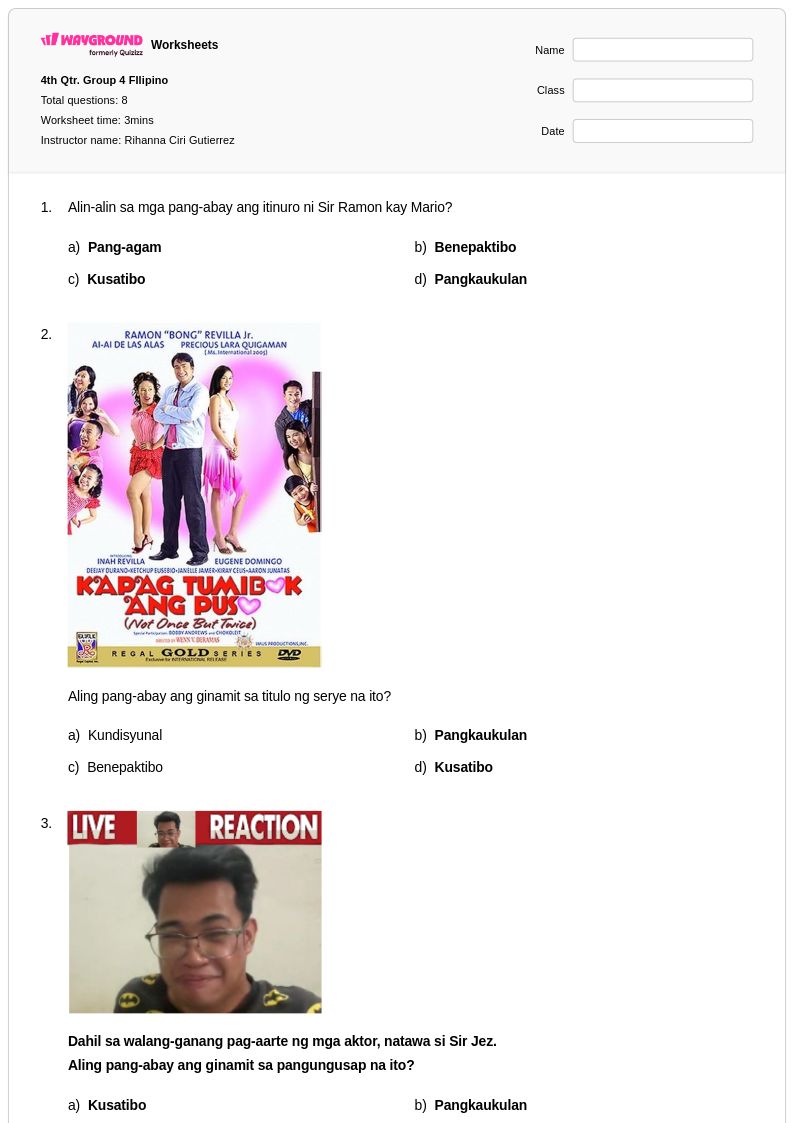
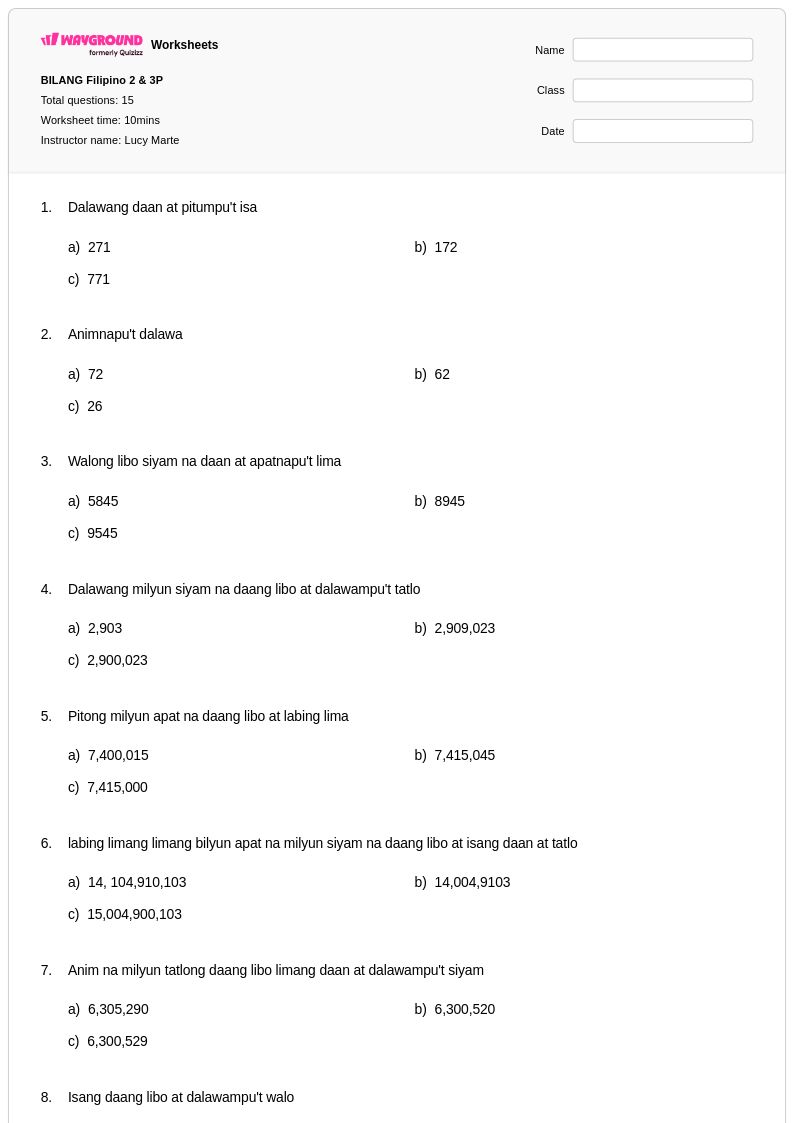
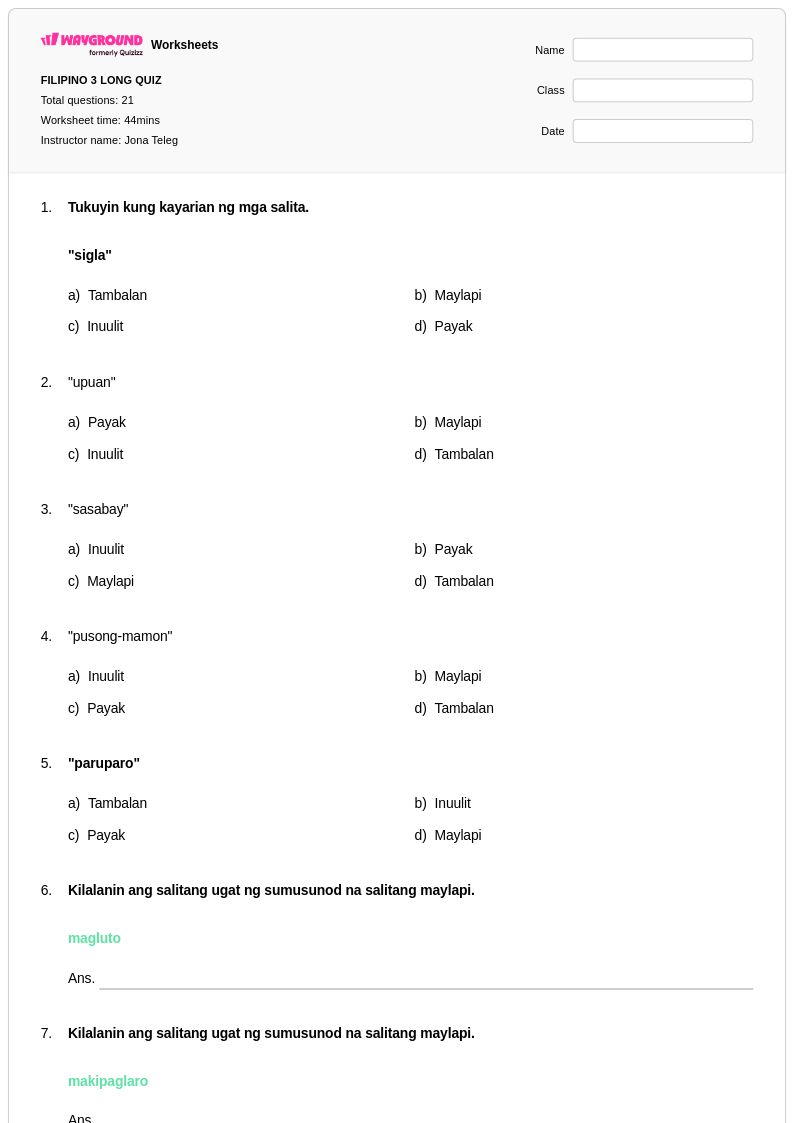
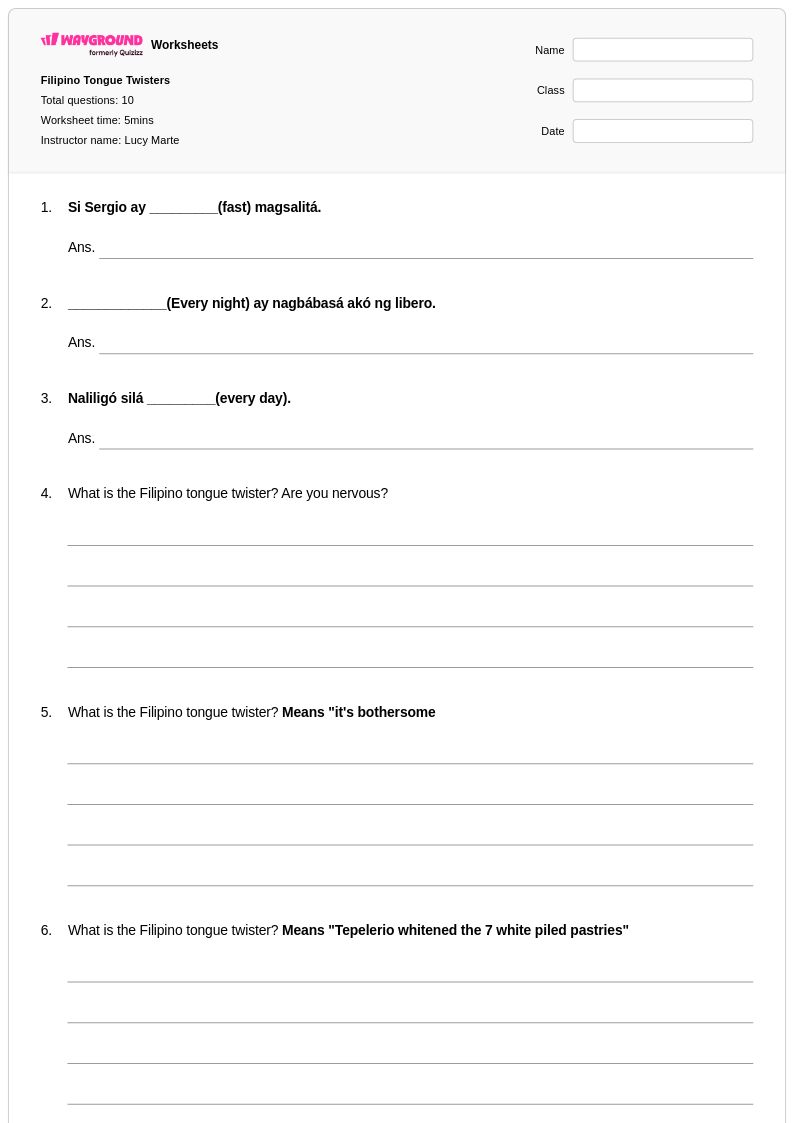
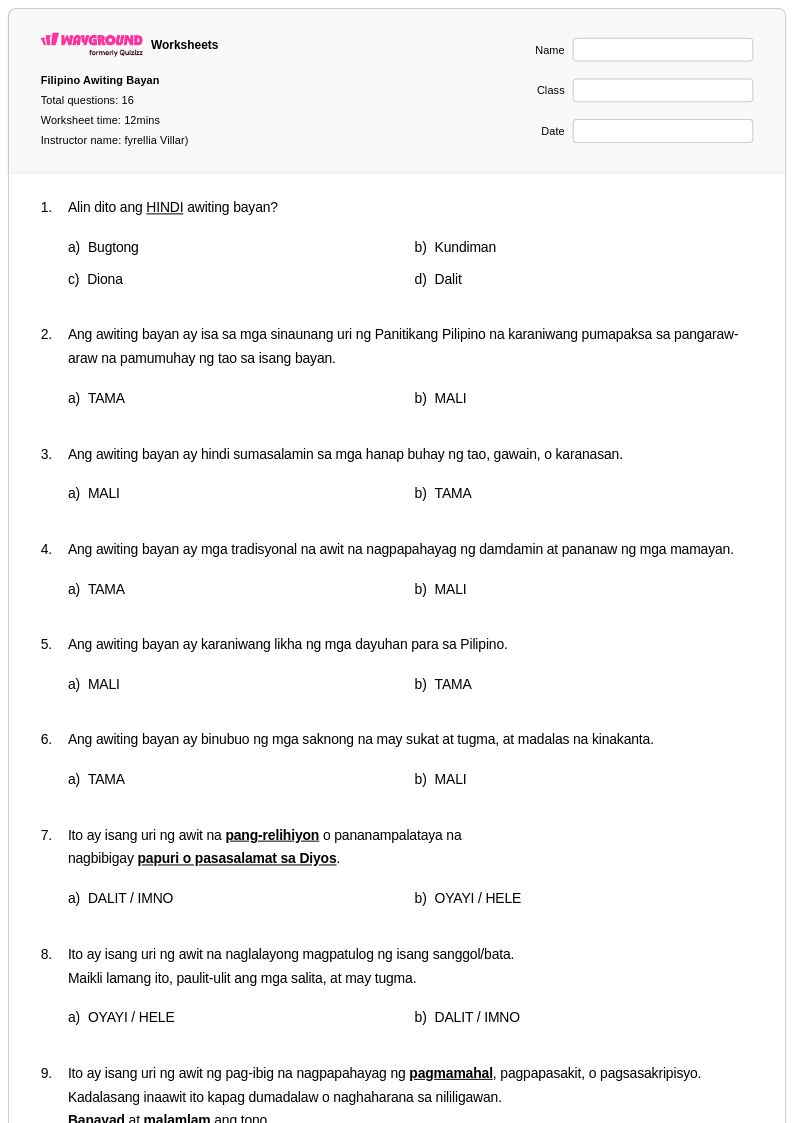
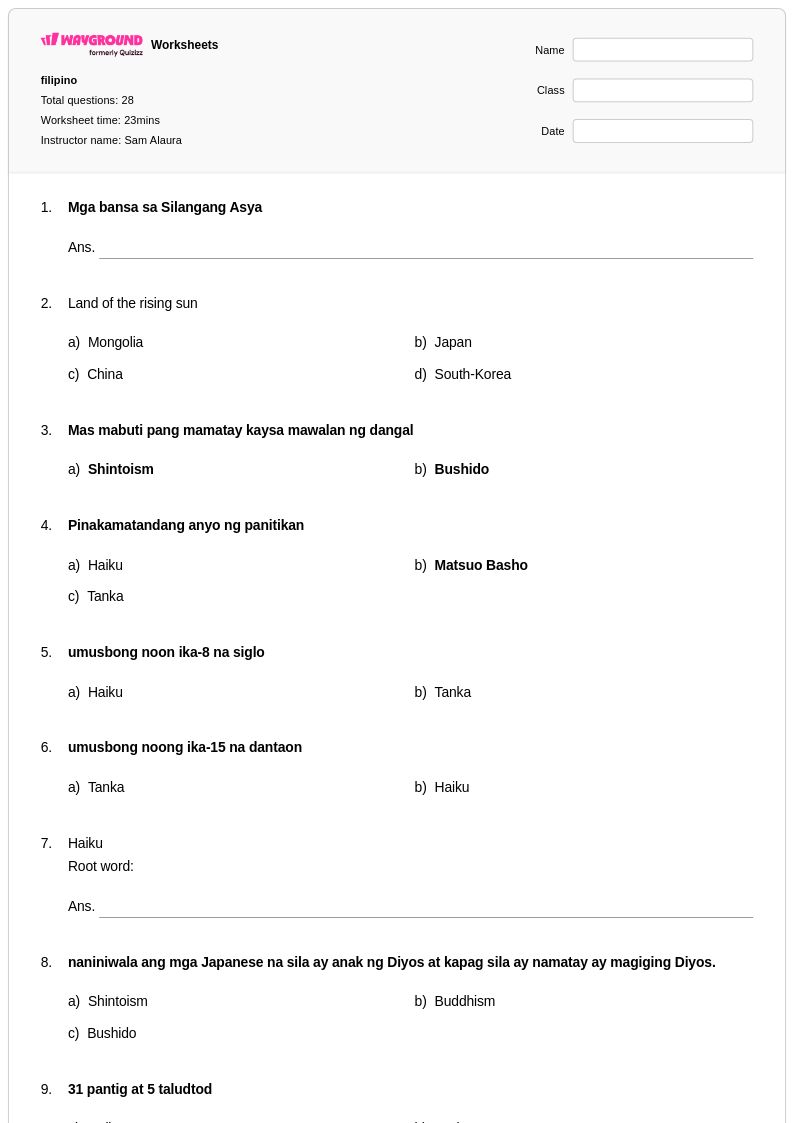
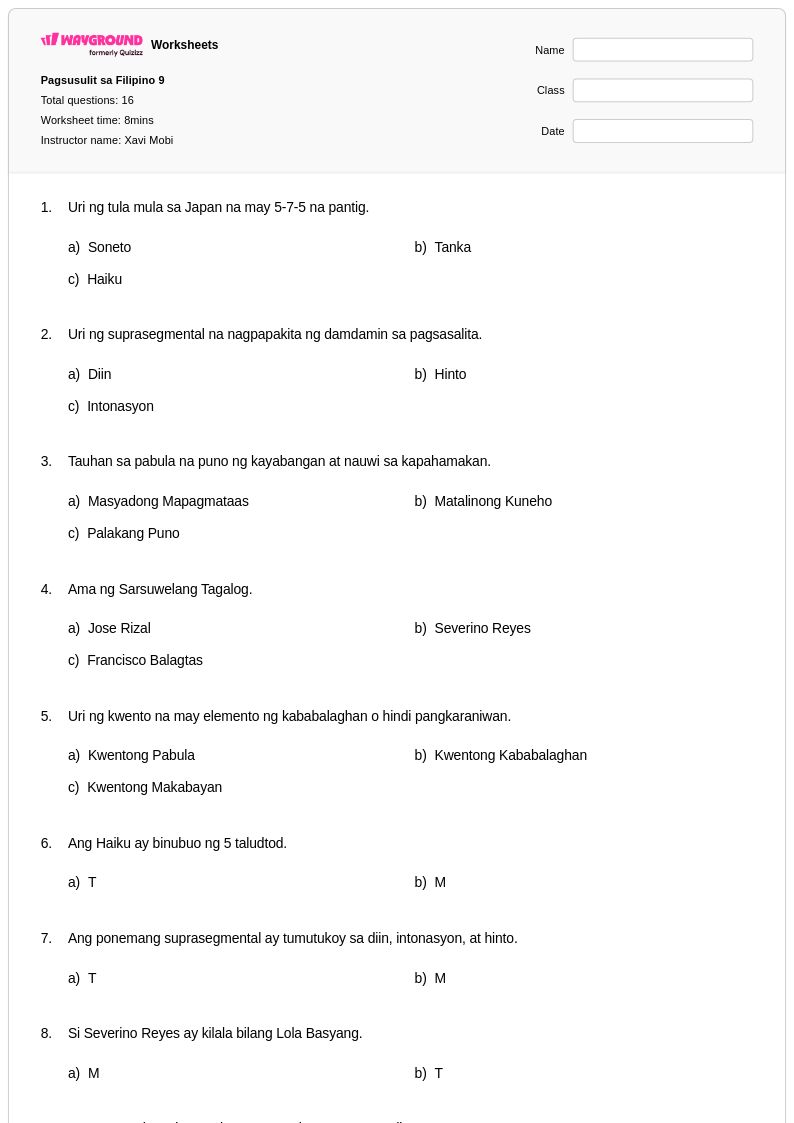
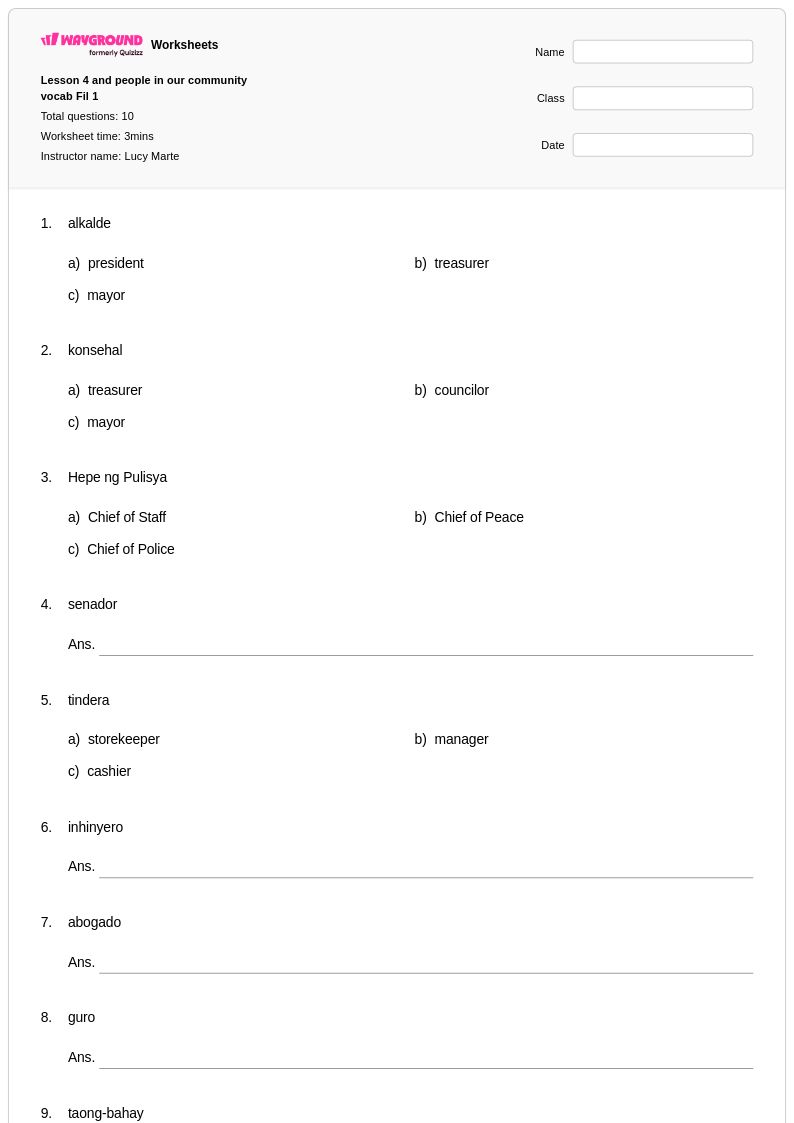
Explore comprehensive Class 11 Filipino printables and free worksheets through Wayground that help students master language fundamentals with engaging practice problems, downloadable PDFs, and complete answer keys.
Explore printable Filipino worksheets for Class 11
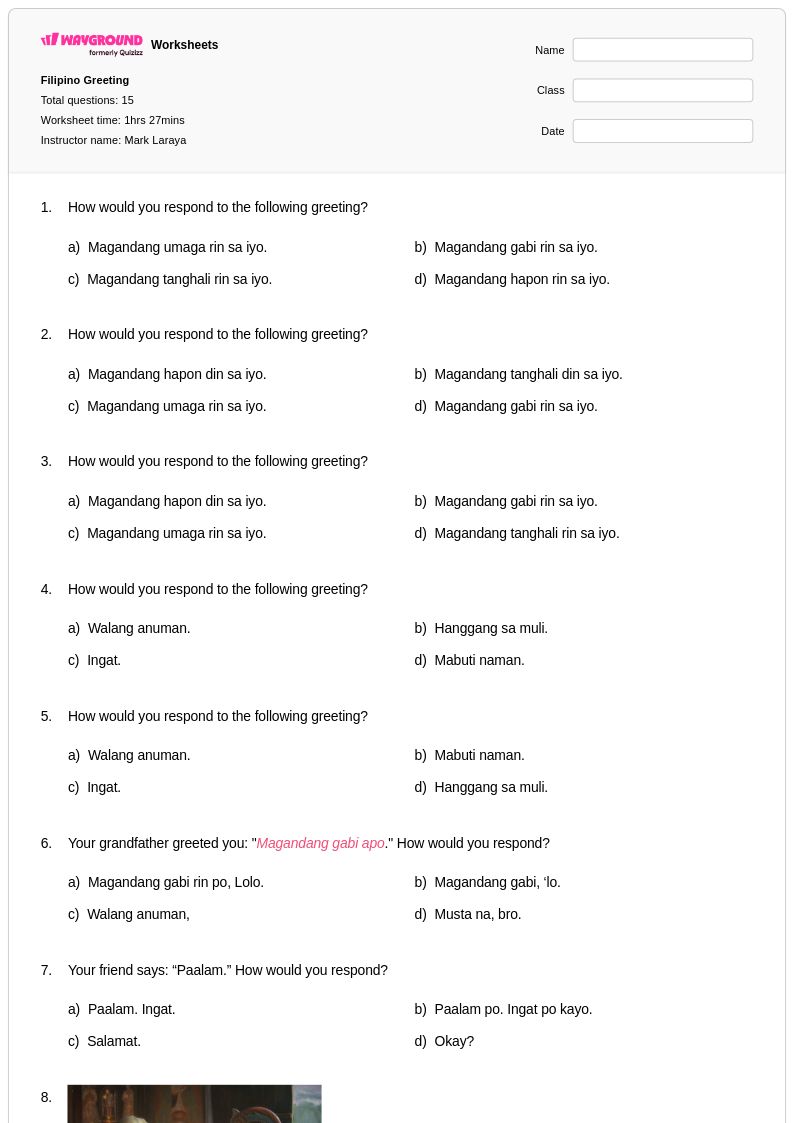
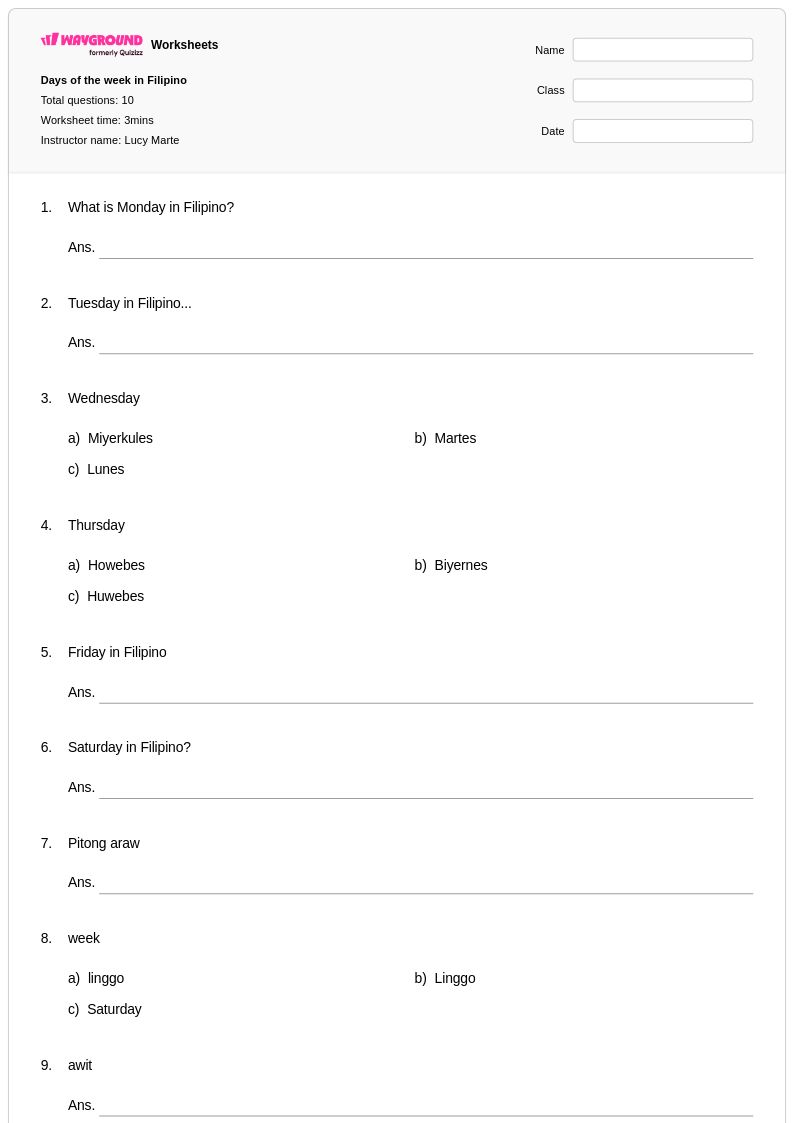
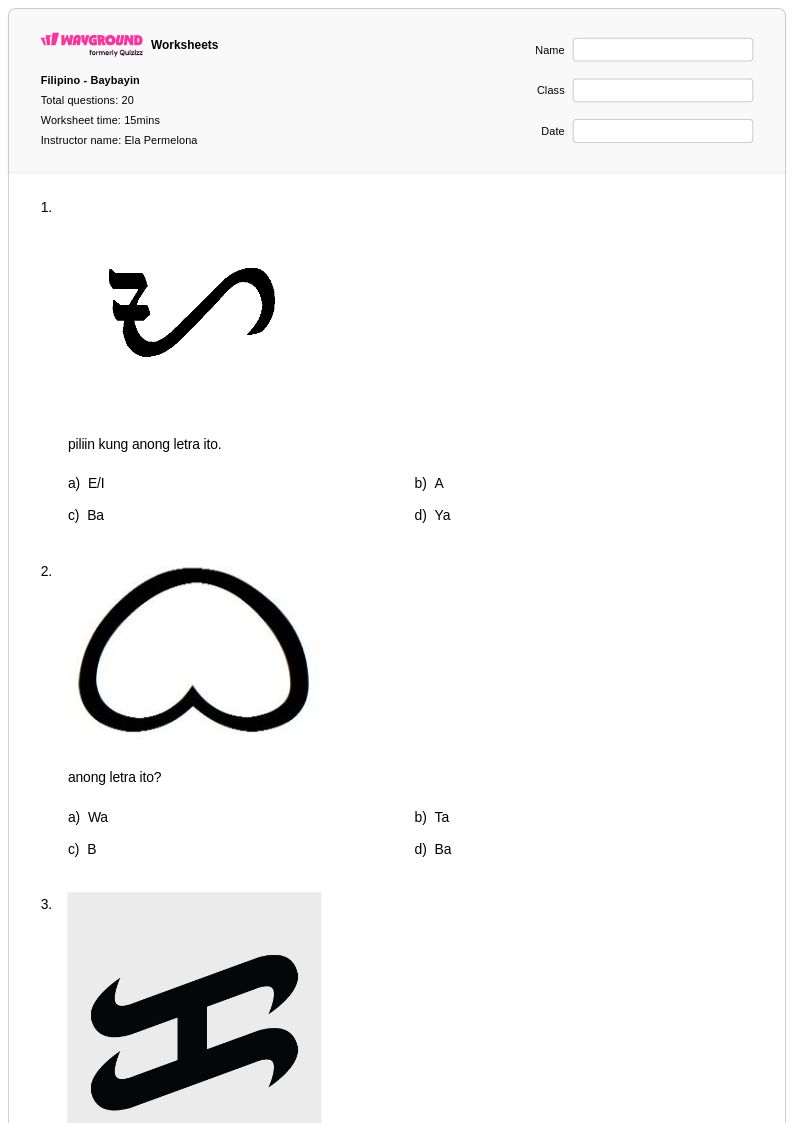
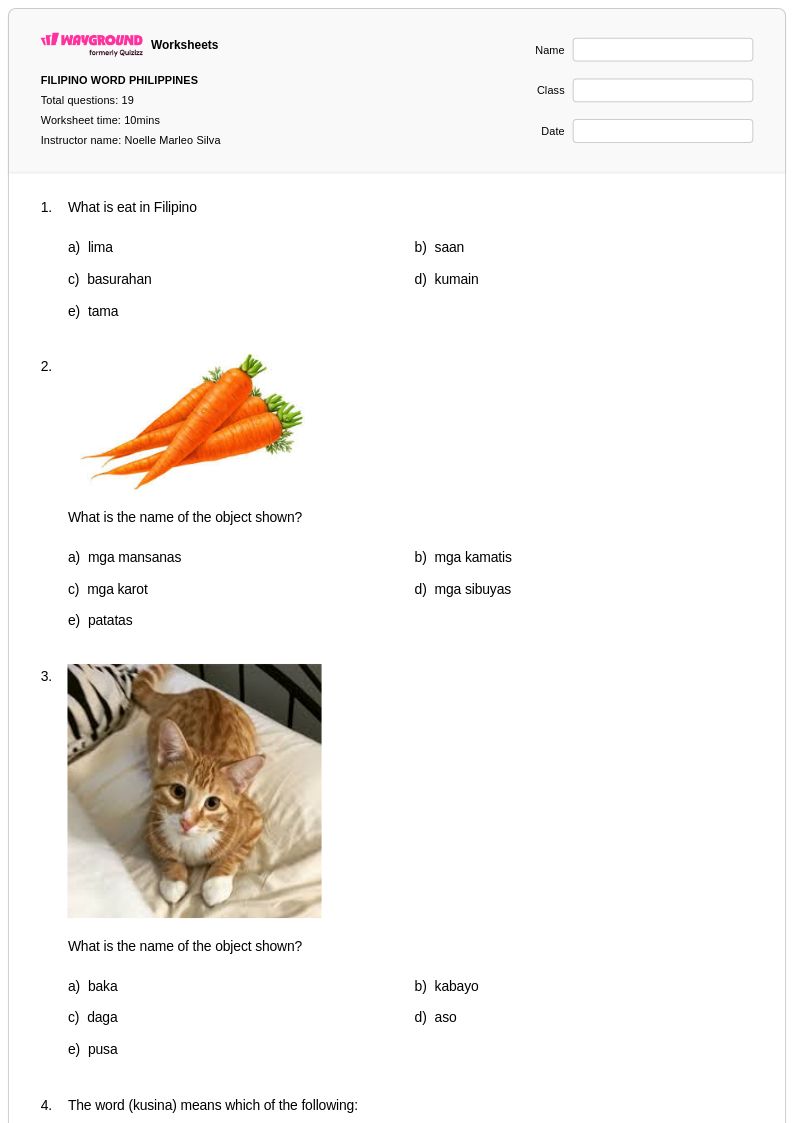
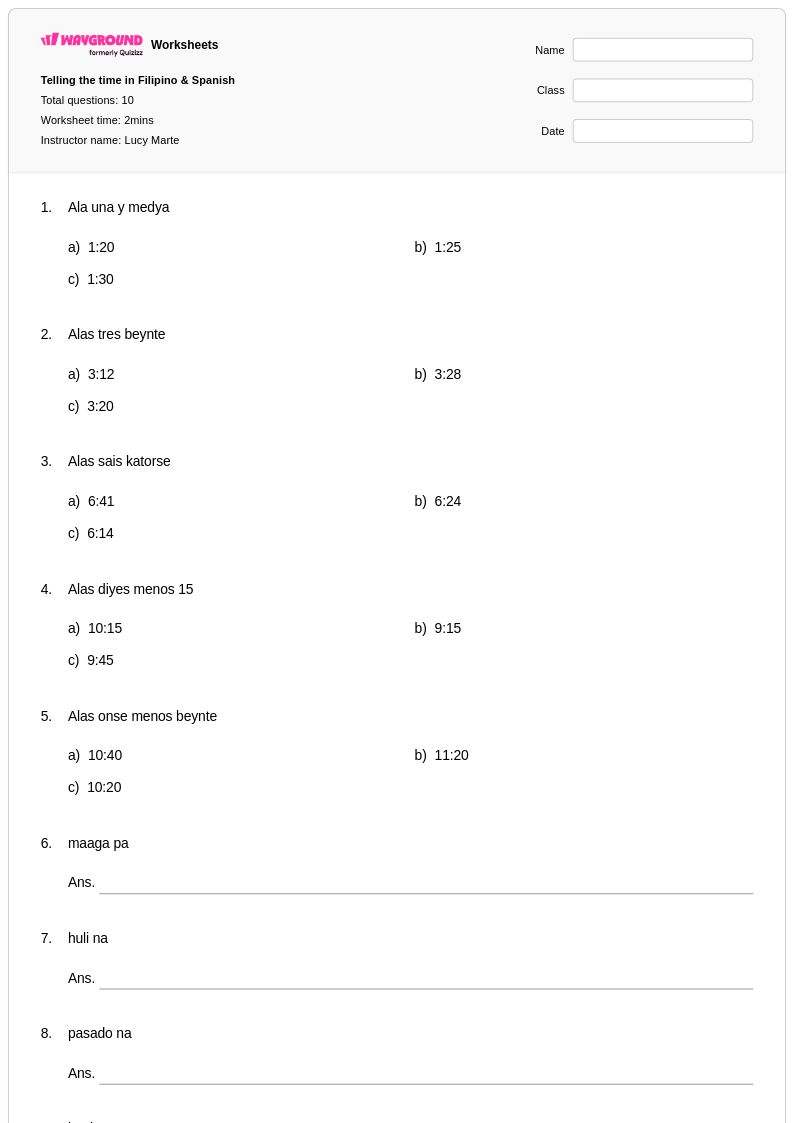
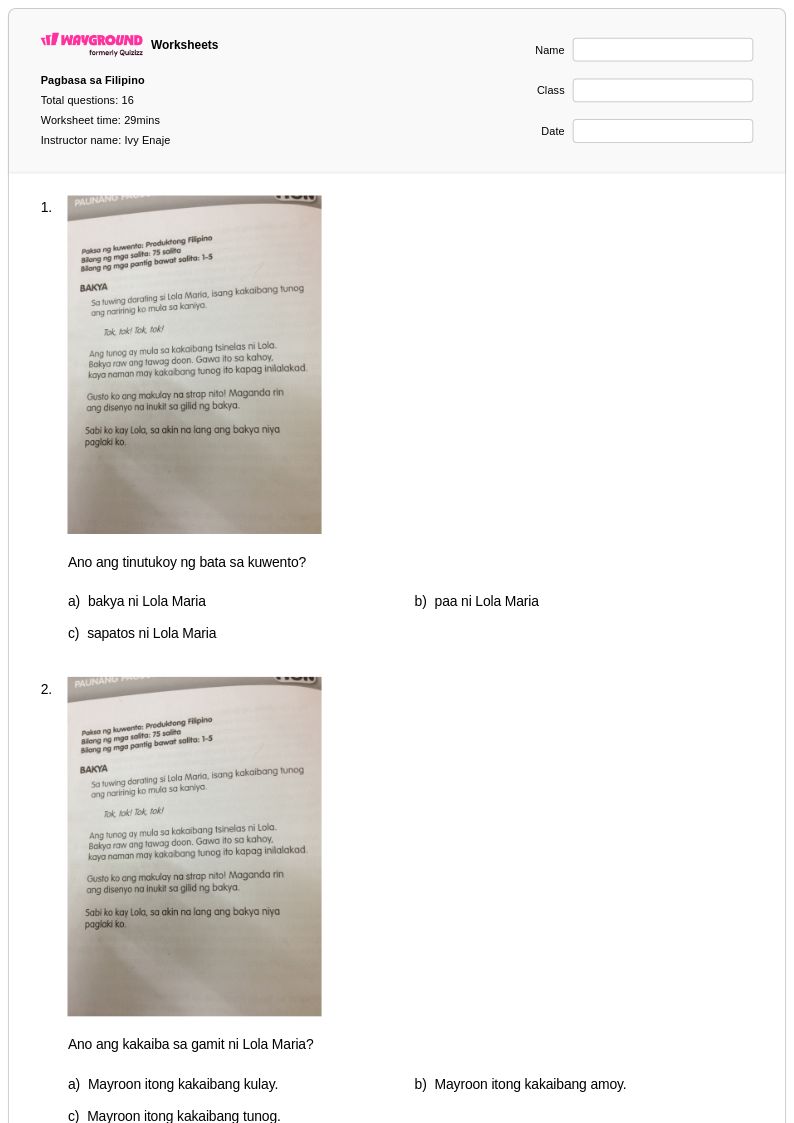
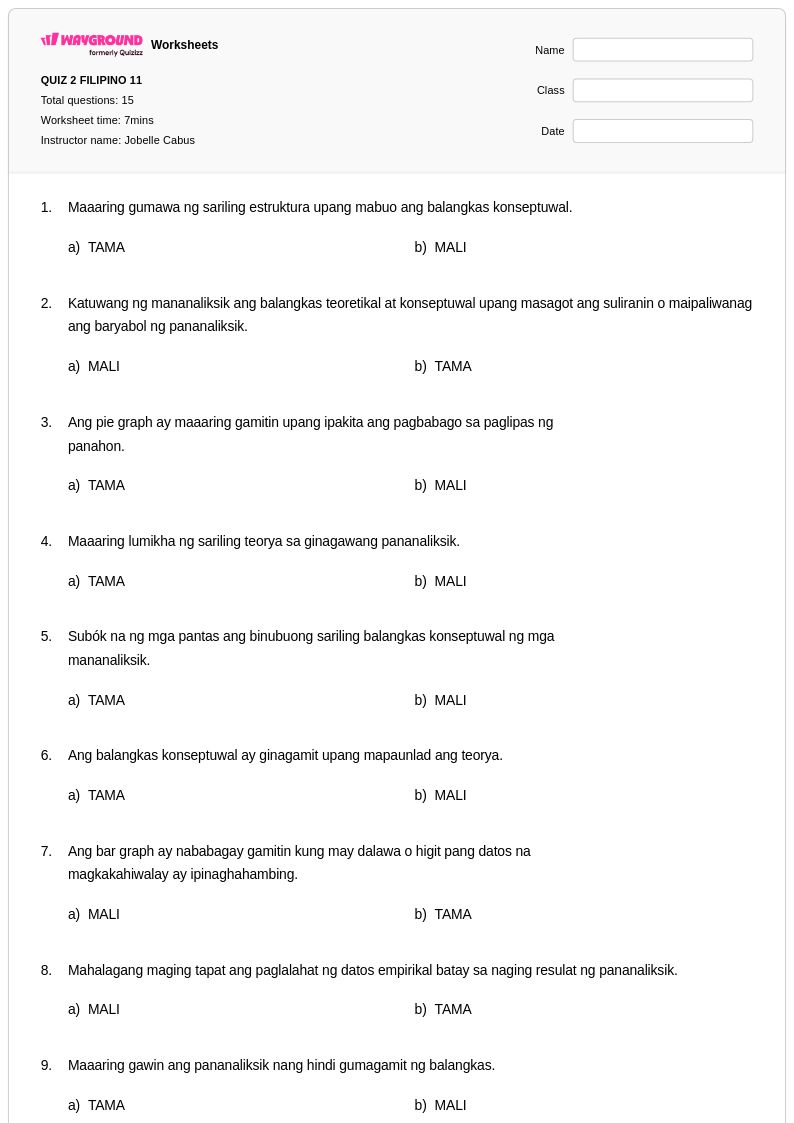
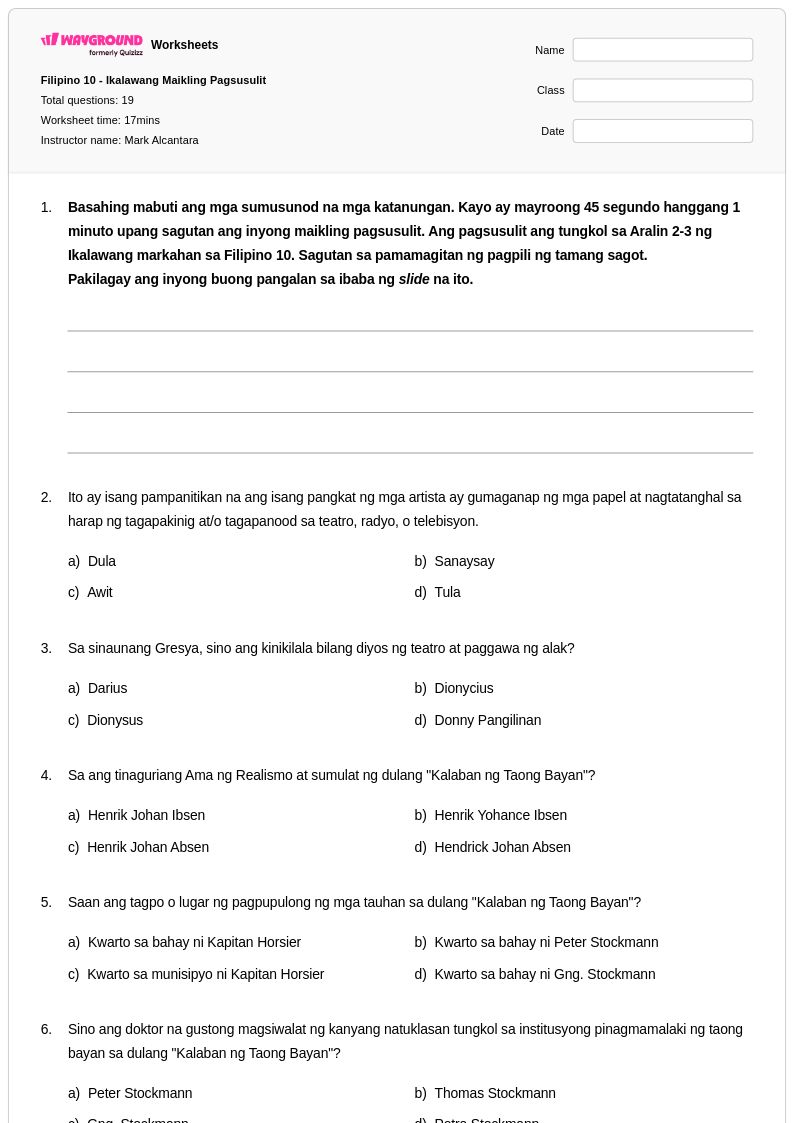
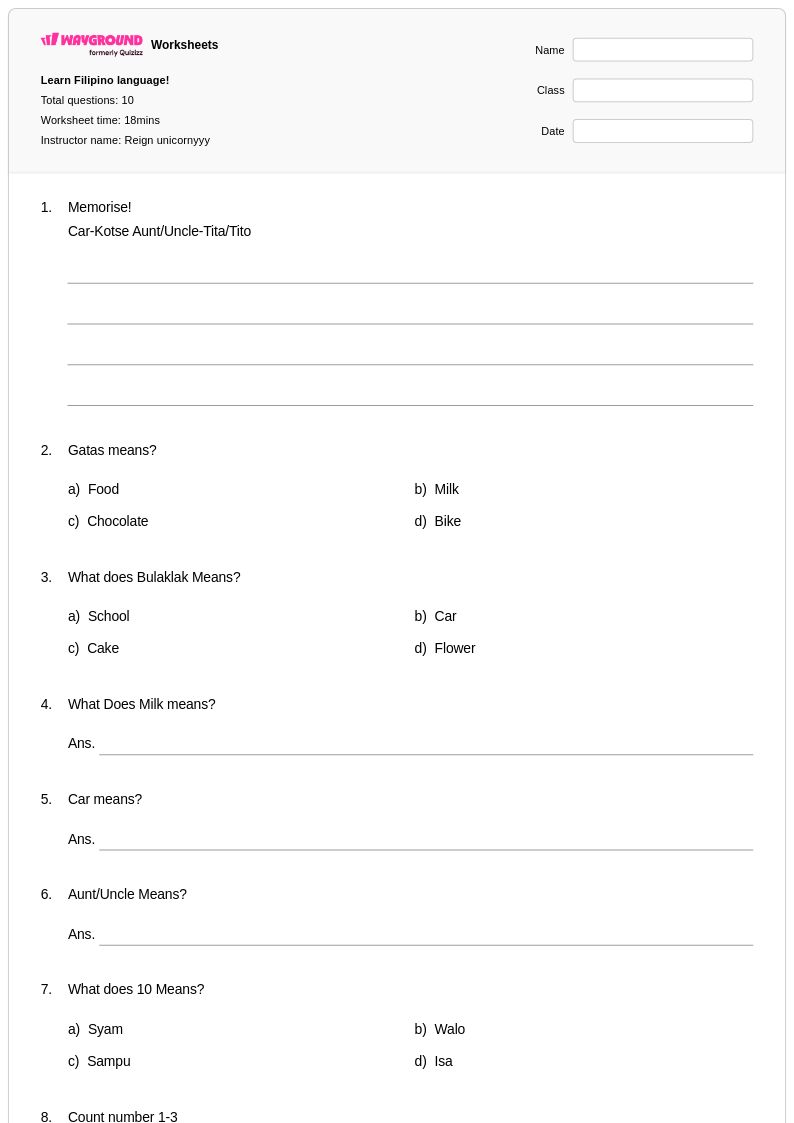
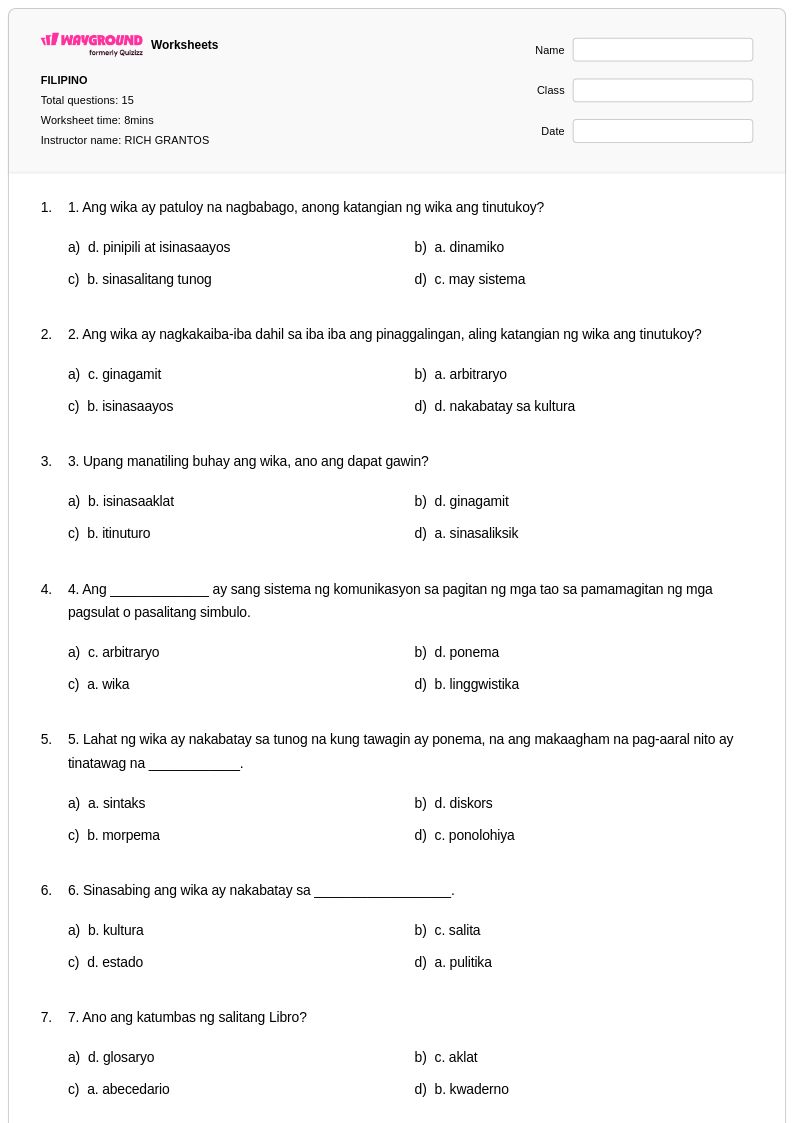
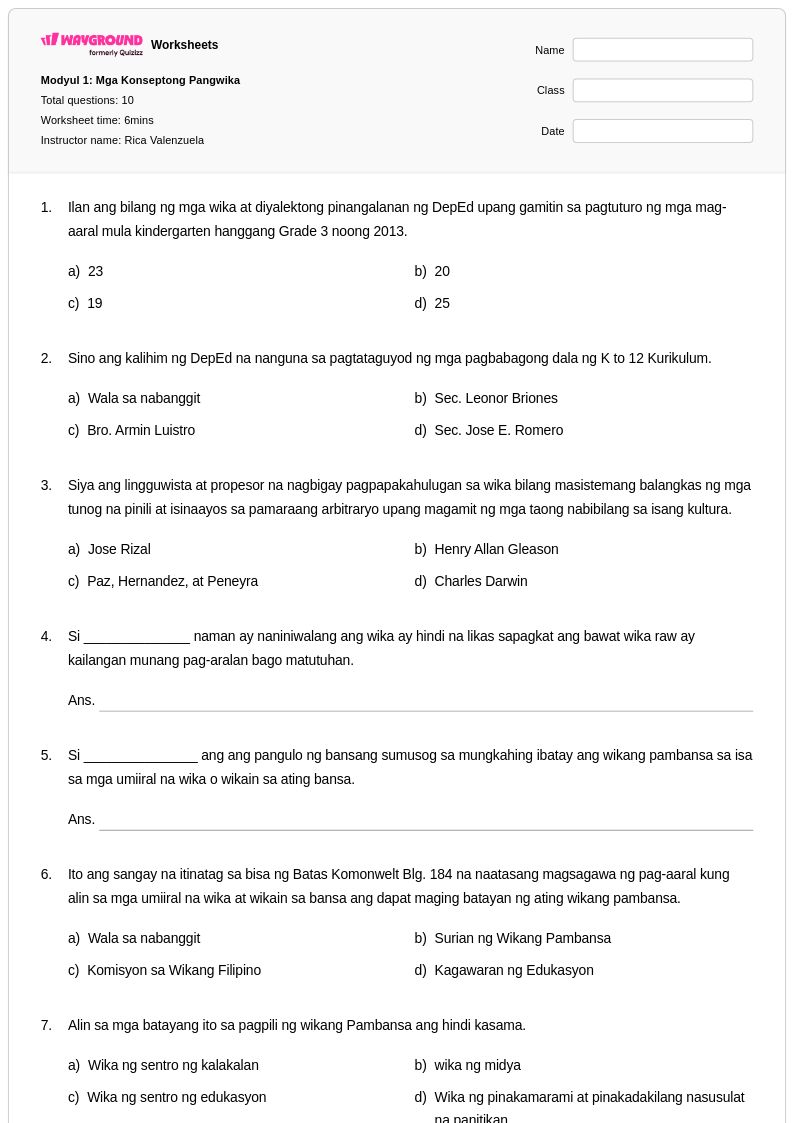
Filipino worksheets for Class 11 students available through Wayground (formerly Quizizz) provide comprehensive language learning resources that strengthen essential communication skills in this rich Southeast Asian language. These expertly designed worksheets focus on advanced Filipino grammar structures, vocabulary expansion, reading comprehension of literary texts, and composition writing that aligns with Class 11 academic expectations. Students engage with practice problems that cover complex grammatical concepts such as advanced verb conjugations, idiomatic expressions, and formal writing techniques while developing cultural understanding through authentic Filipino texts. The collection includes printable materials with corresponding answer keys, making it easy for educators to assess student progress and provide targeted feedback. Free resources are readily available in pdf format, ensuring accessibility for diverse classroom environments and supporting independent study outside the traditional classroom setting.
Wayground (formerly Quizizz) empowers educators with millions of teacher-created Filipino language resources specifically curated for Class 11 instruction, featuring robust search and filtering capabilities that allow teachers to quickly locate materials aligned with specific learning standards and curriculum objectives. The platform's differentiation tools enable instructors to customize worksheets based on individual student needs, supporting both remediation for struggling learners and enrichment opportunities for advanced students. Teachers benefit from flexible customization options that allow them to modify existing materials or create new assessments, while the availability of both printable and digital formats, including downloadable pdf versions, accommodates various teaching styles and classroom technologies. These comprehensive features streamline lesson planning by providing ready-to-use materials for skill practice, formative assessment, and targeted intervention, ultimately helping educators create more effective and engaging Filipino language learning experiences for their Class 11 students.
FAQs
How do I teach Filipino vocabulary to beginners?
Start with high-frequency words grouped by category, such as family members, common objects, and everyday actions, so students build meaningful connections between words and context. Pair new vocabulary with visual cues and repetition-based exercises like matching, fill-in-the-blank, and sentence completion to reinforce retention. Consistently connecting new words to cultural context helps students understand not just meaning, but usage within Filipino-speaking communities.
What are the most effective exercises for practicing Filipino grammar?
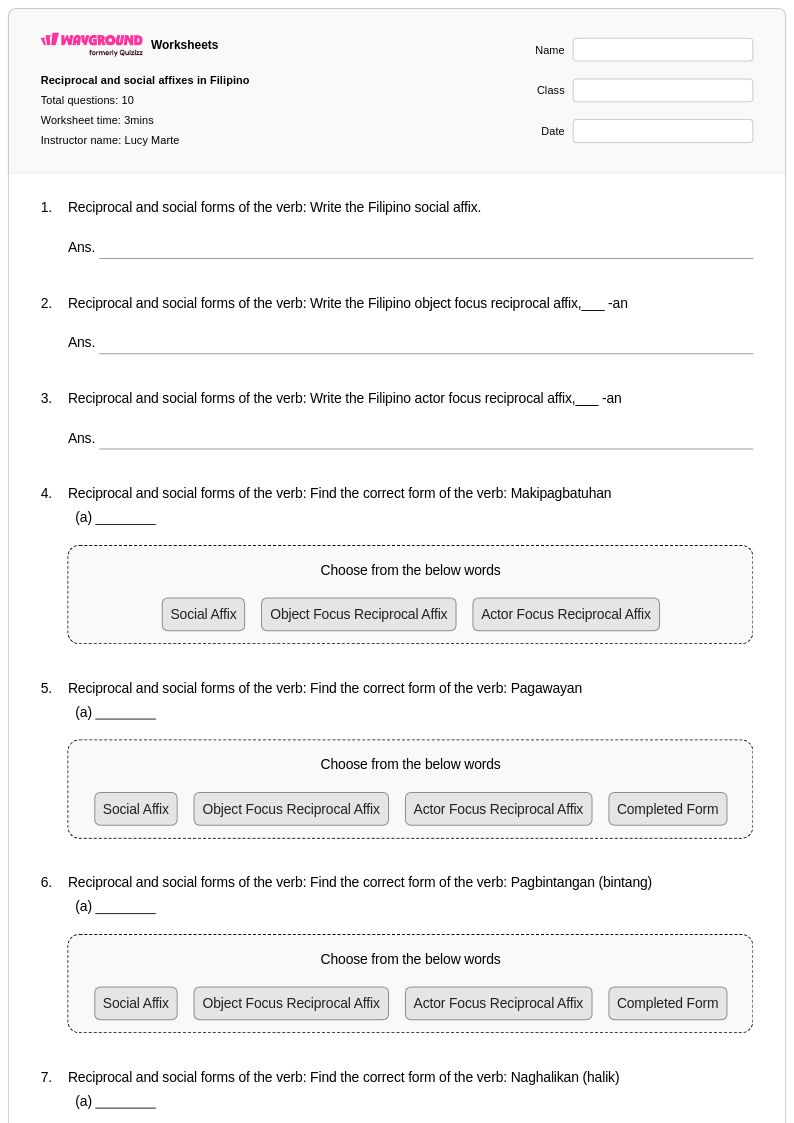
Filipino grammar practice is most effective when it targets specific structures in isolation before integrating them into full sentences. Exercises focused on verb conjugations using the focus system (actor, object, locative, benefactive focus) help students grasp how Filipino marks grammatical relationships differently from English. Sentence transformation drills, error correction tasks, and guided writing prompts are all high-value formats for reinforcing these structures.
What mistakes do students commonly make when learning Filipino?
One of the most common errors is applying English sentence structure to Filipino, particularly defaulting to subject-verb-object order when Filipino typically follows a verb-initial pattern. Students also frequently confuse the focus affixes on verbs, such as using actor focus when object focus is required. Targeted practice with these specific structures, including exercises that explicitly contrast correct and incorrect forms, helps students identify and self-correct these patterns over time.
How can I differentiate Filipino language instruction for students at different proficiency levels?
For mixed-proficiency classrooms, differentiate by adjusting task complexity rather than topic, so all students engage with the same theme but at appropriate challenge levels. Beginning learners benefit from word-level tasks and sentence starters, while more advanced students can work on paragraph writing or reading comprehension. On Wayground, teachers can apply individual accommodations such as read aloud support, reduced answer choices, and extended time to specific students, ensuring each learner has equitable access to the material.
How do I use Filipino worksheets from Wayground in my classroom?
Filipino worksheets on Wayground are available as printable PDFs for traditional classroom use and in digital formats for technology-integrated learning environments. Teachers can also host worksheets as an interactive quiz directly on Wayground, making them suitable for in-class practice, homework assignments, or formative assessment. All worksheets include complete answer keys, so teachers can distribute materials and review results without additional preparation.
How do I incorporate Filipino cultural concepts into language lessons?
Cultural content is most effective when embedded directly into language exercises rather than taught as a separate unit. Use readings, vocabulary sets, and writing prompts that reference Filipino customs, traditions, and social values so students learn language and culture simultaneously. This approach builds cultural competency alongside linguistic proficiency, which is especially important for heritage learners and students preparing for real-world communication in Filipino-speaking contexts.