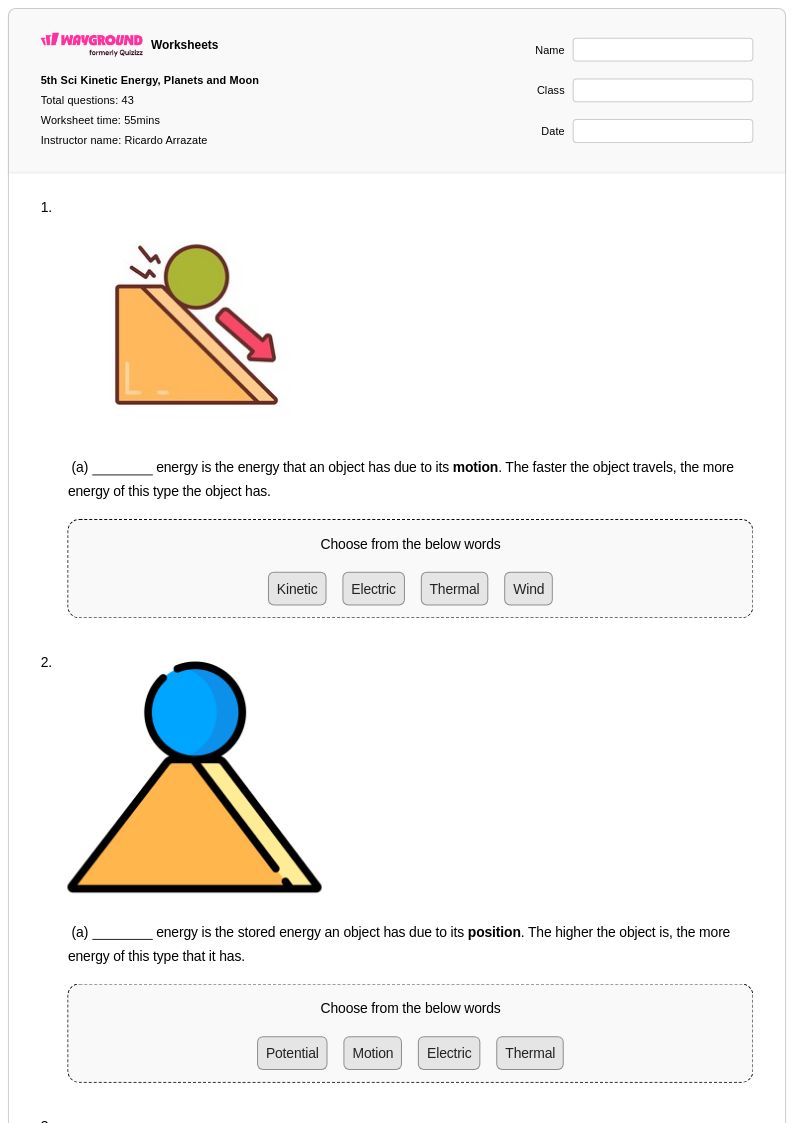
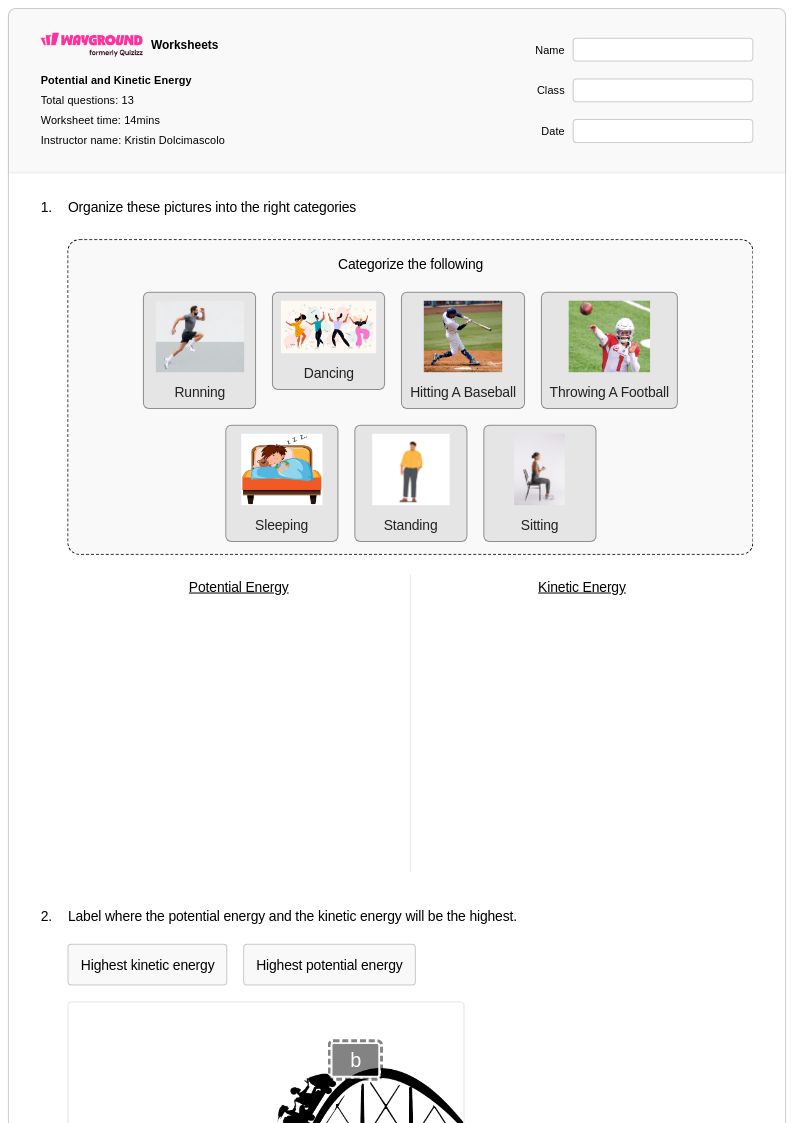
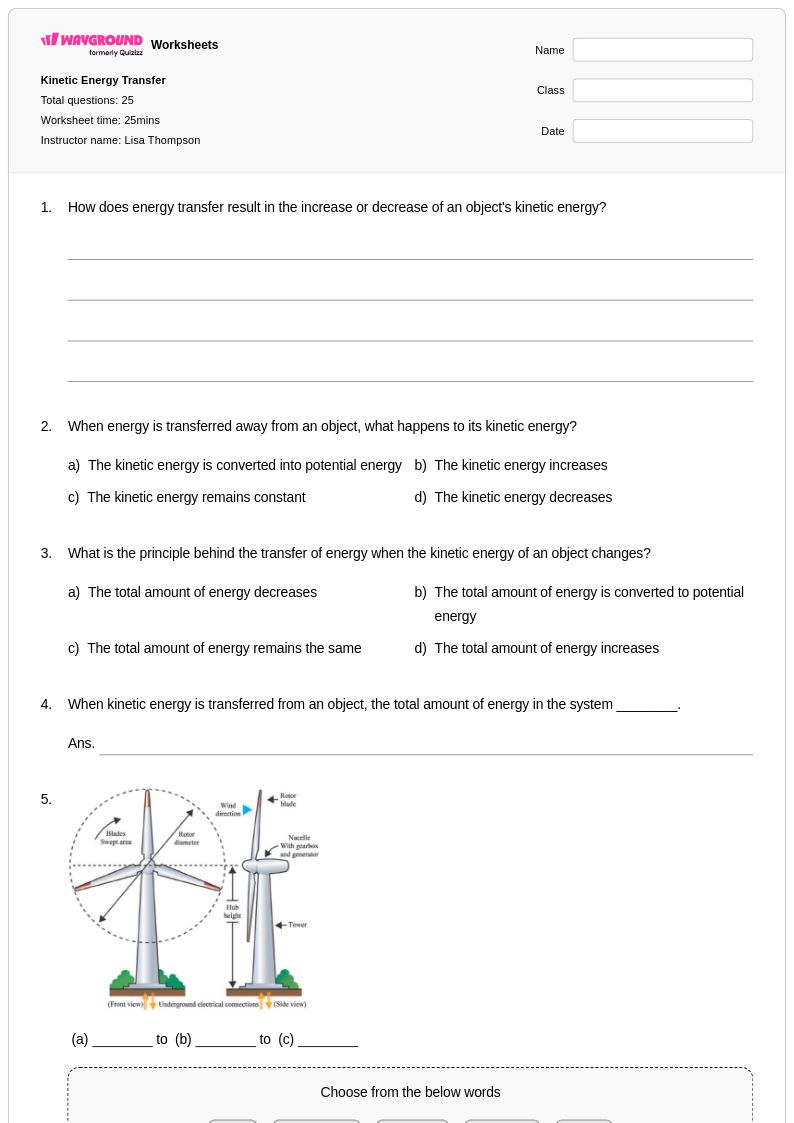
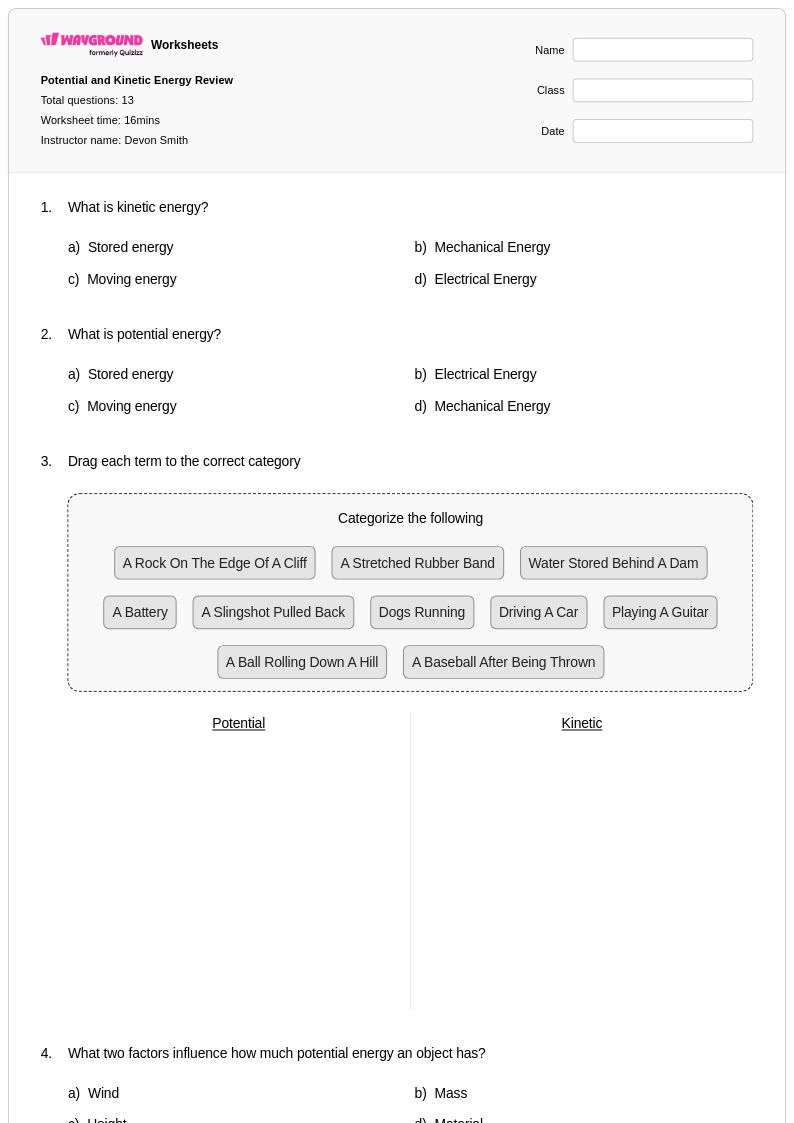
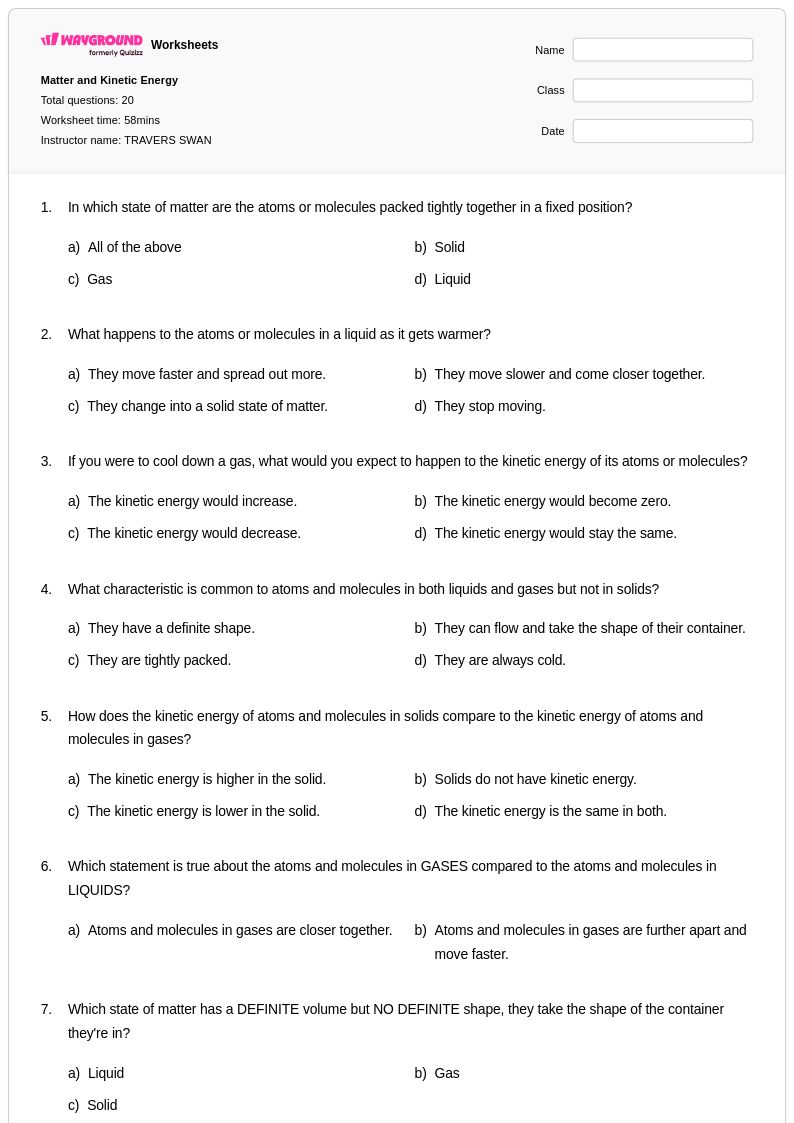
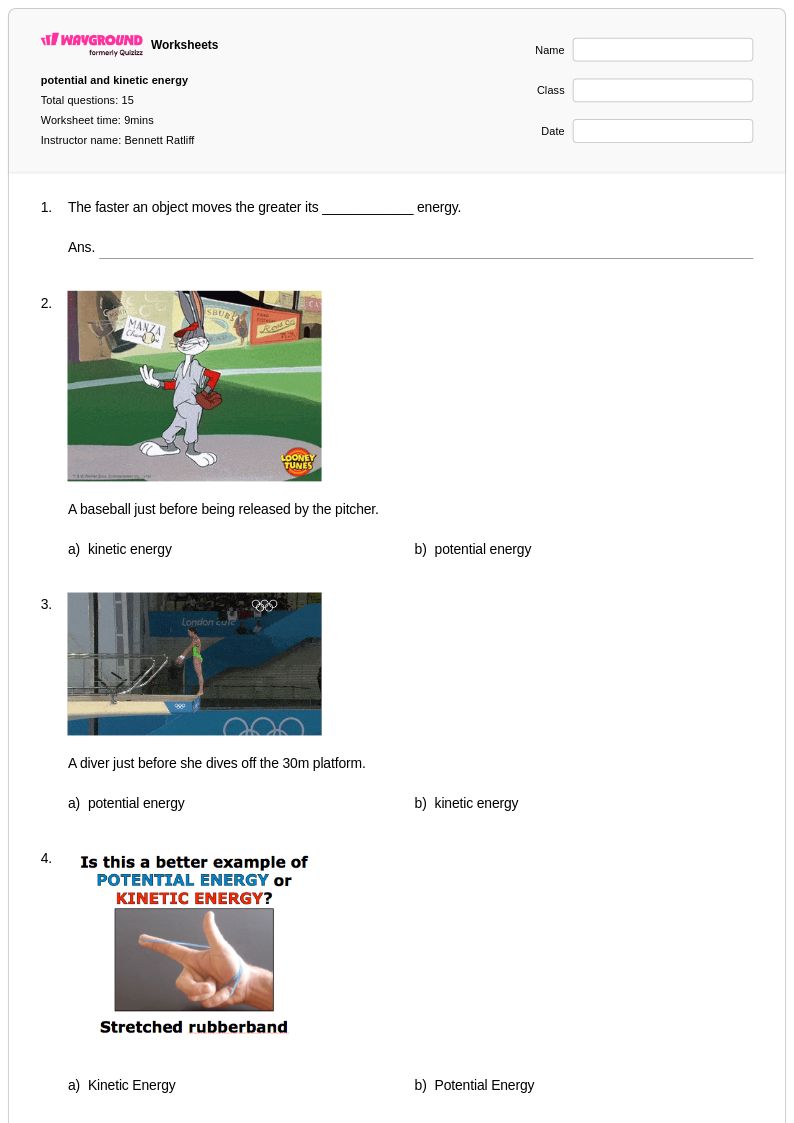
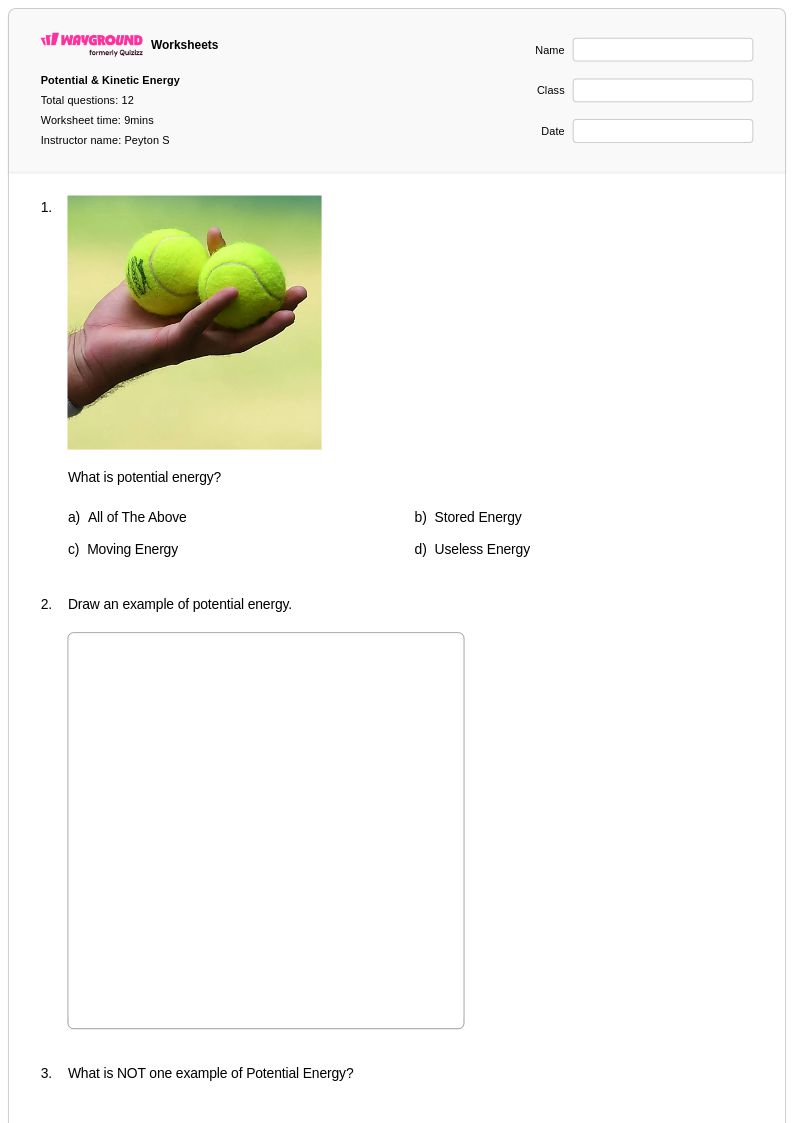
Explore Wayground's comprehensive collection of kinetic energy worksheets featuring free printables, practice problems, and answer keys to help students master the fundamentals of motion and energy in physics.
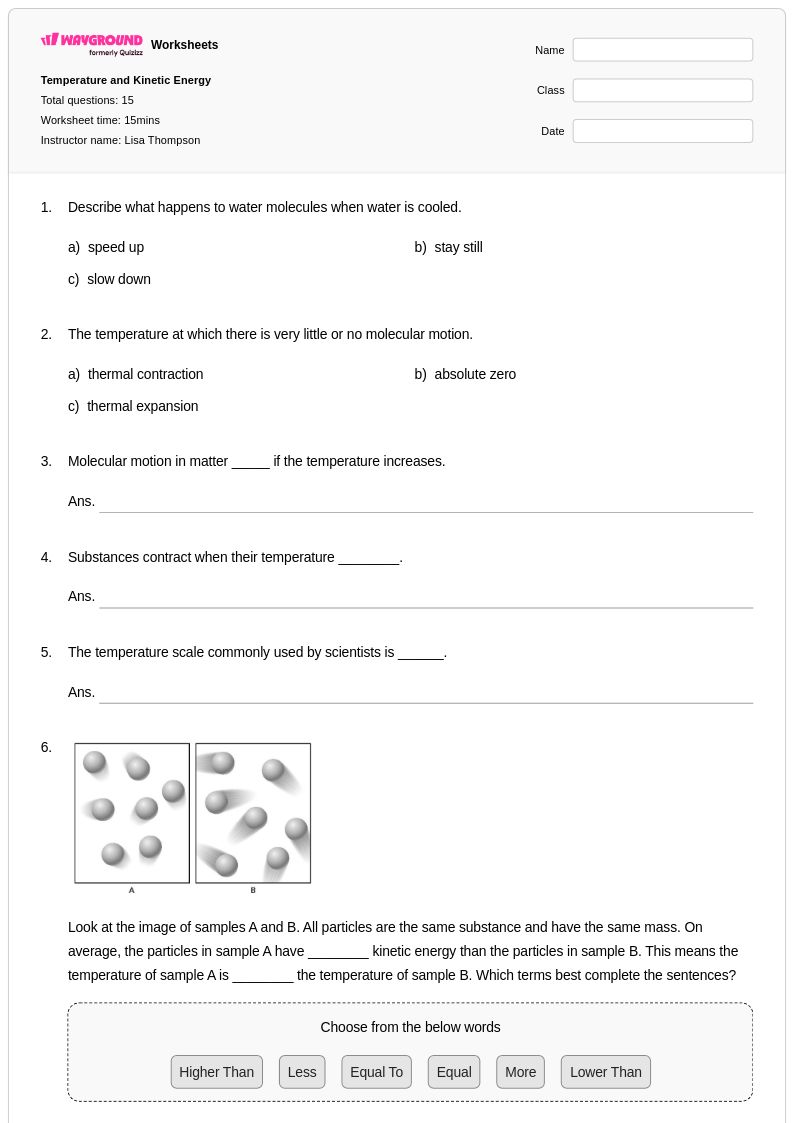
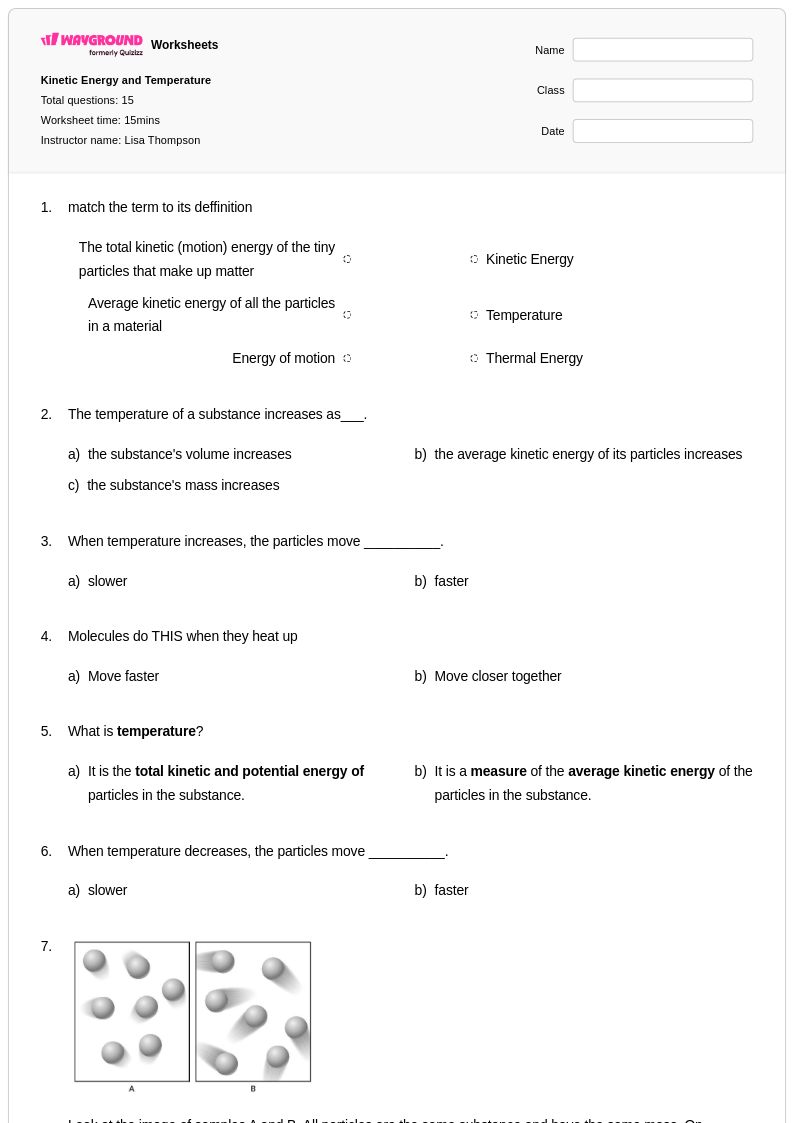
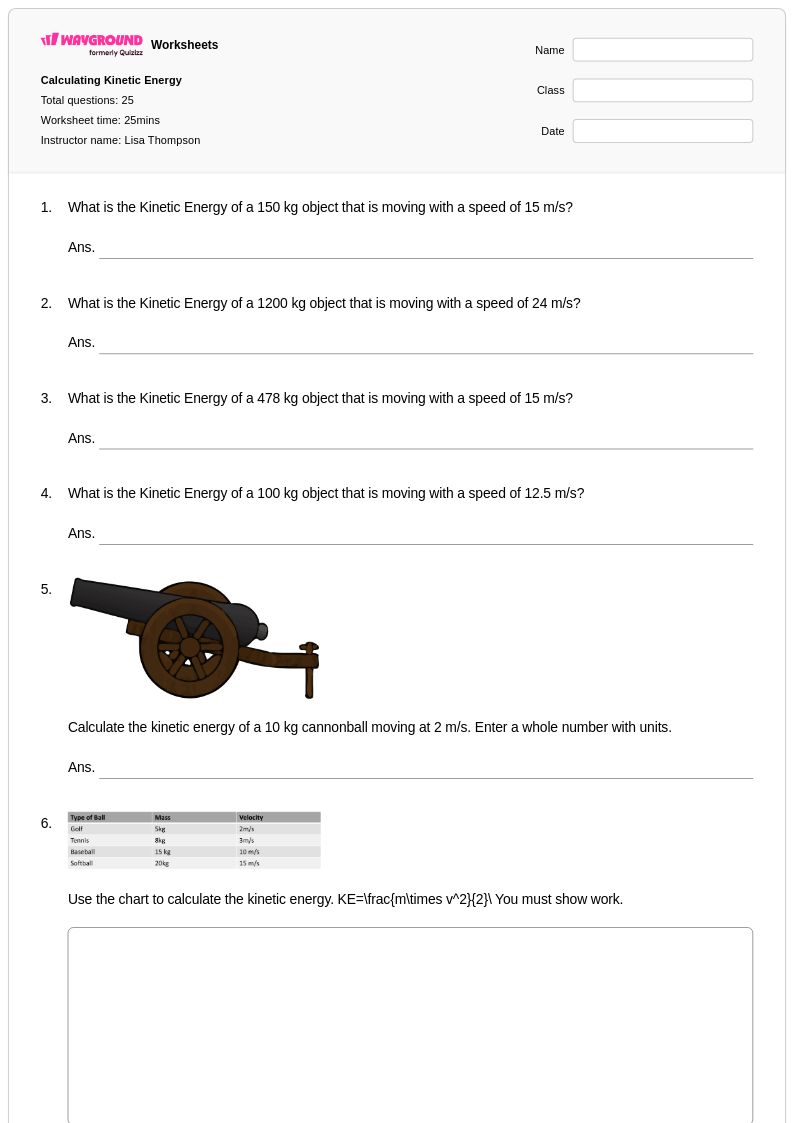
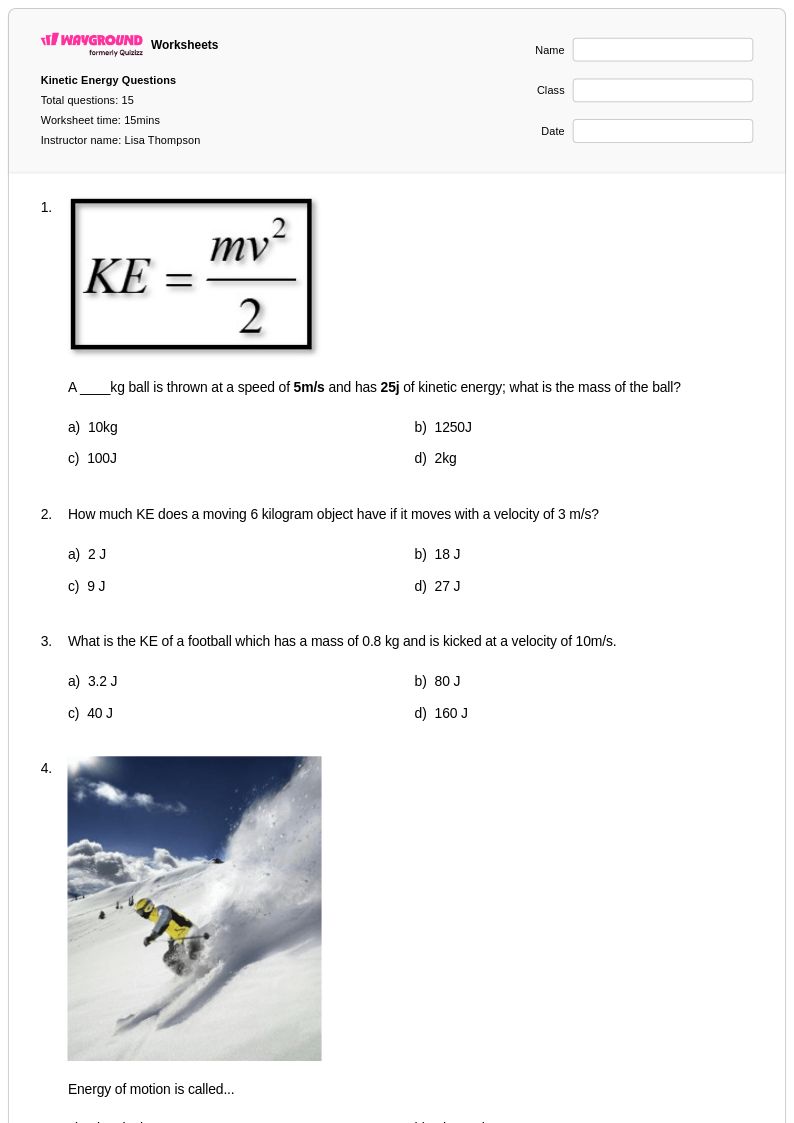
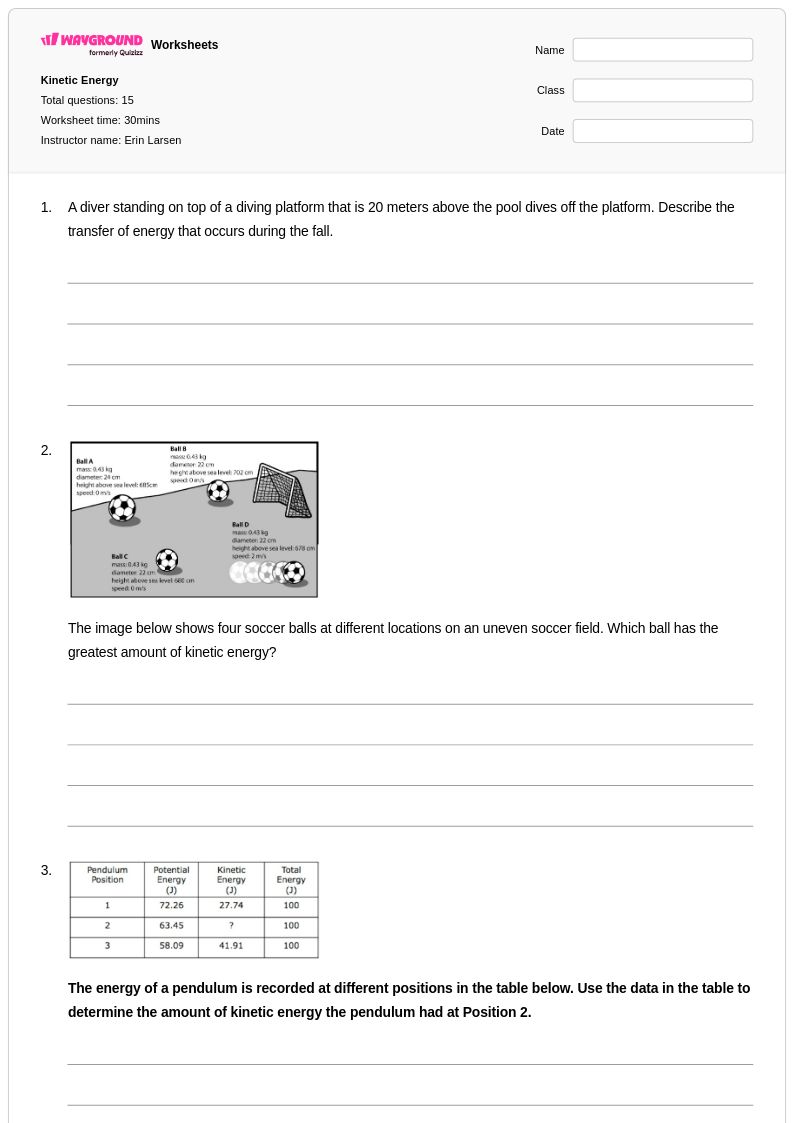
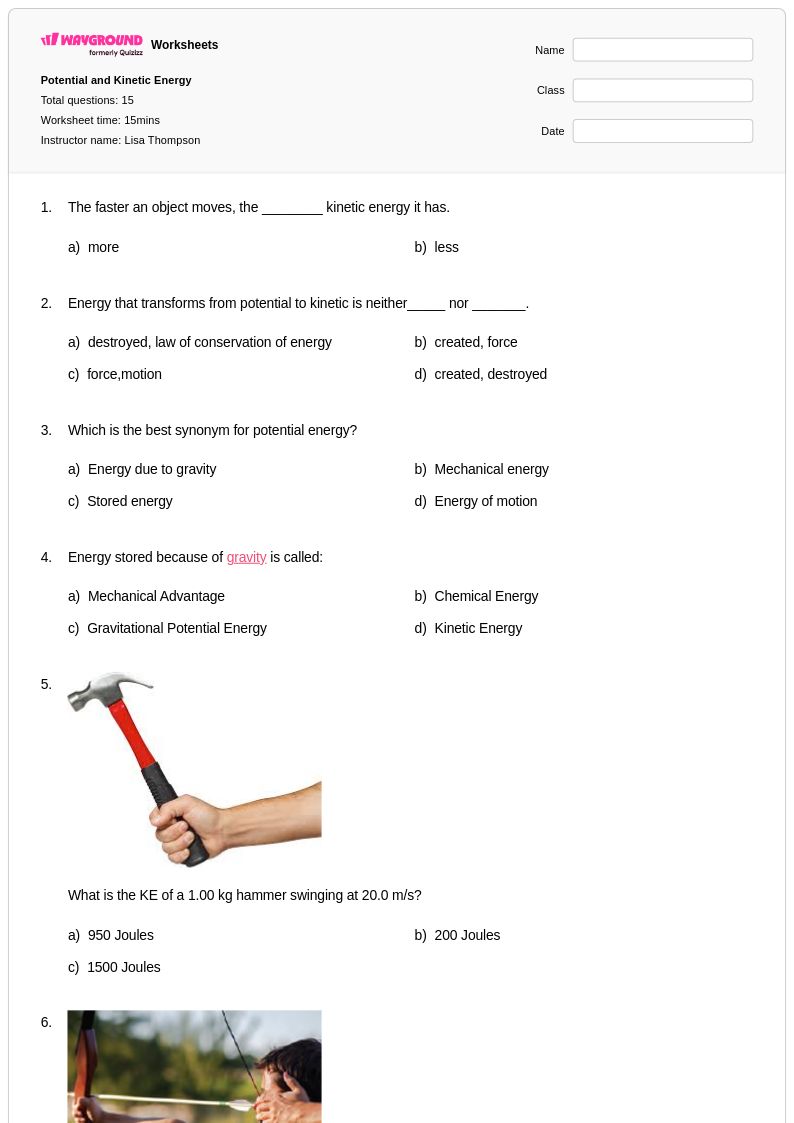
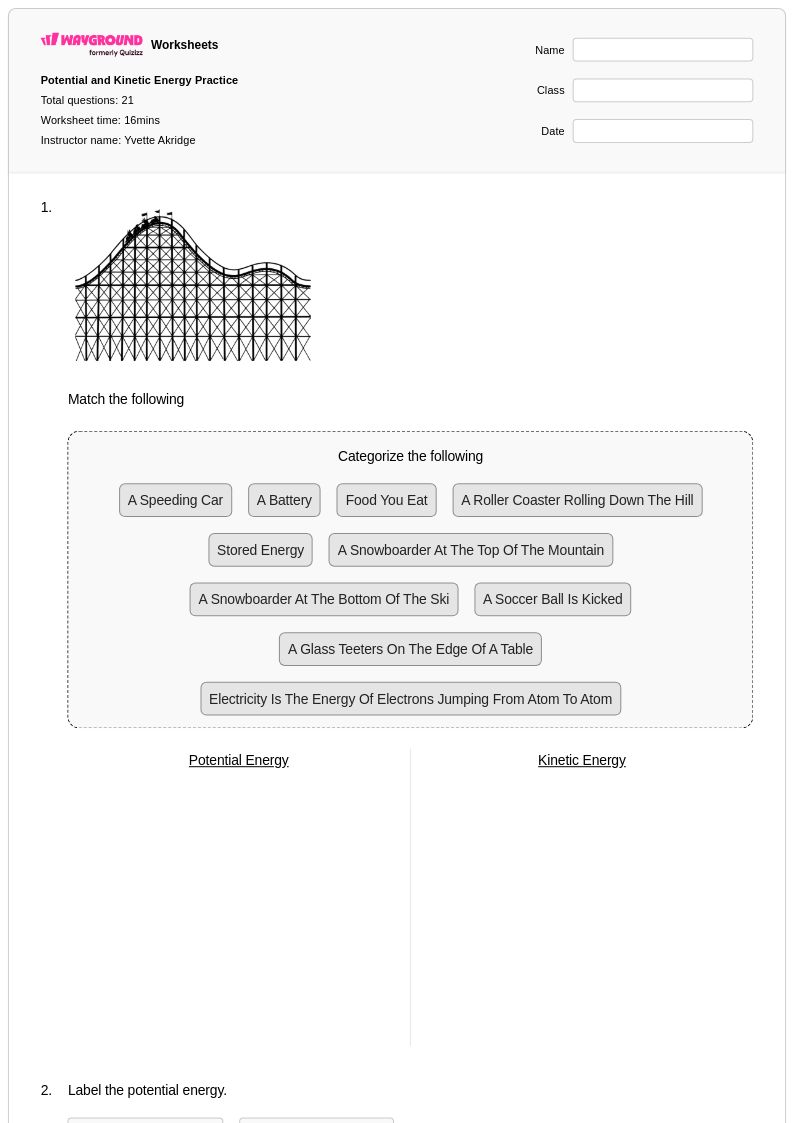
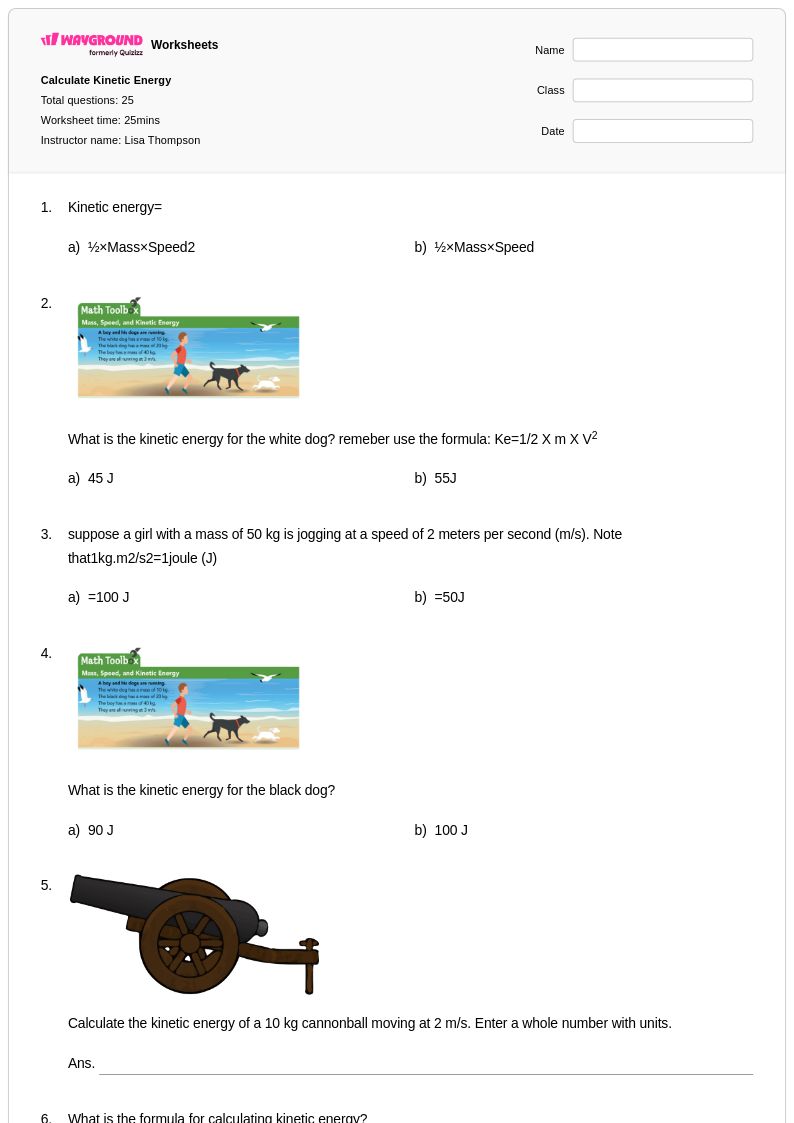
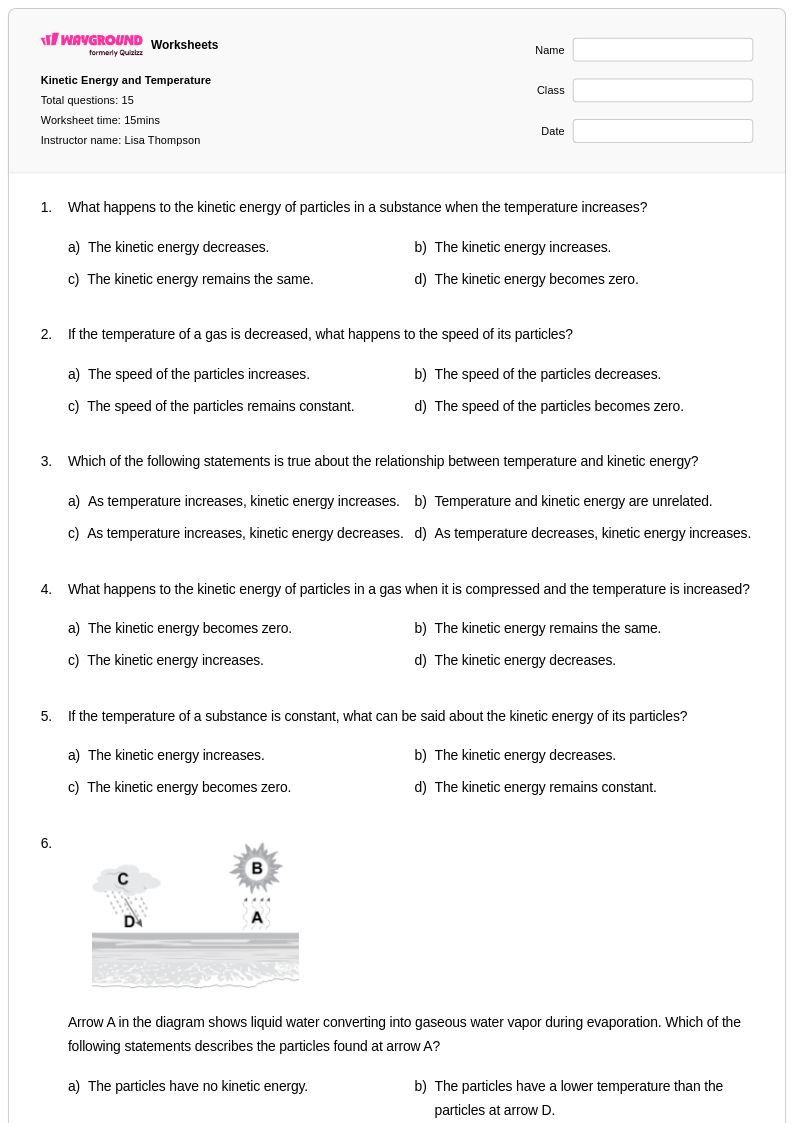
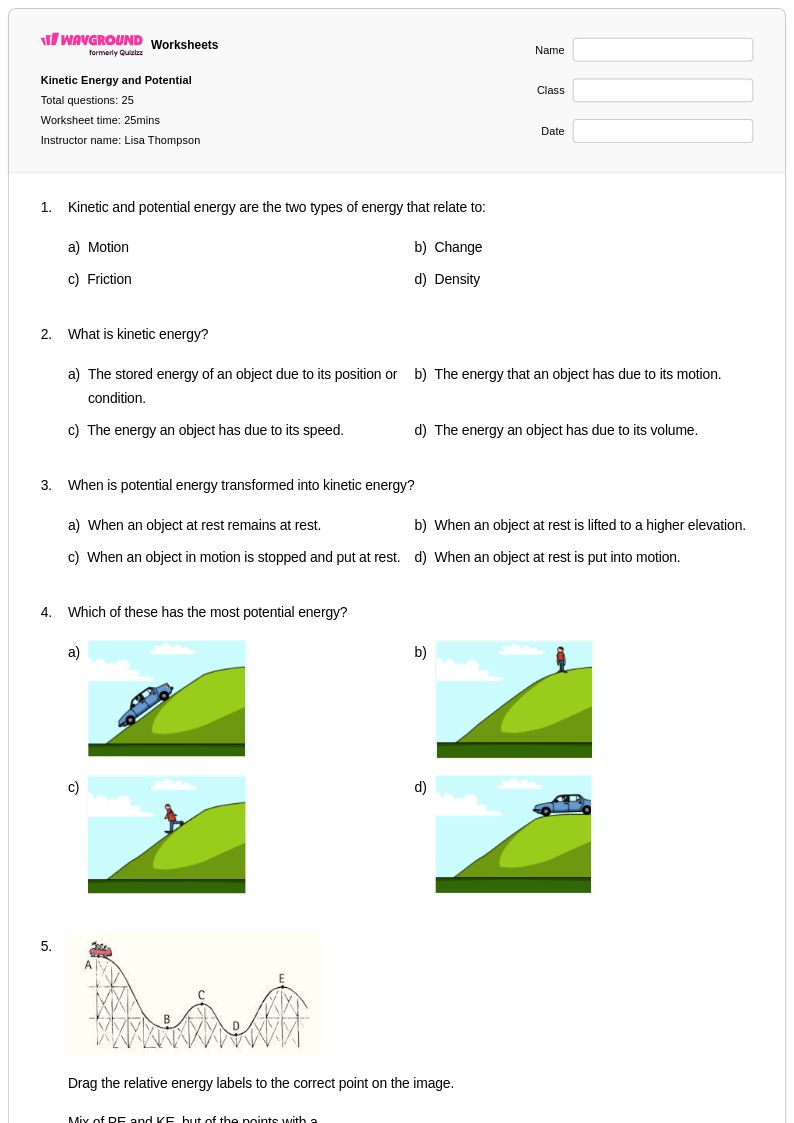
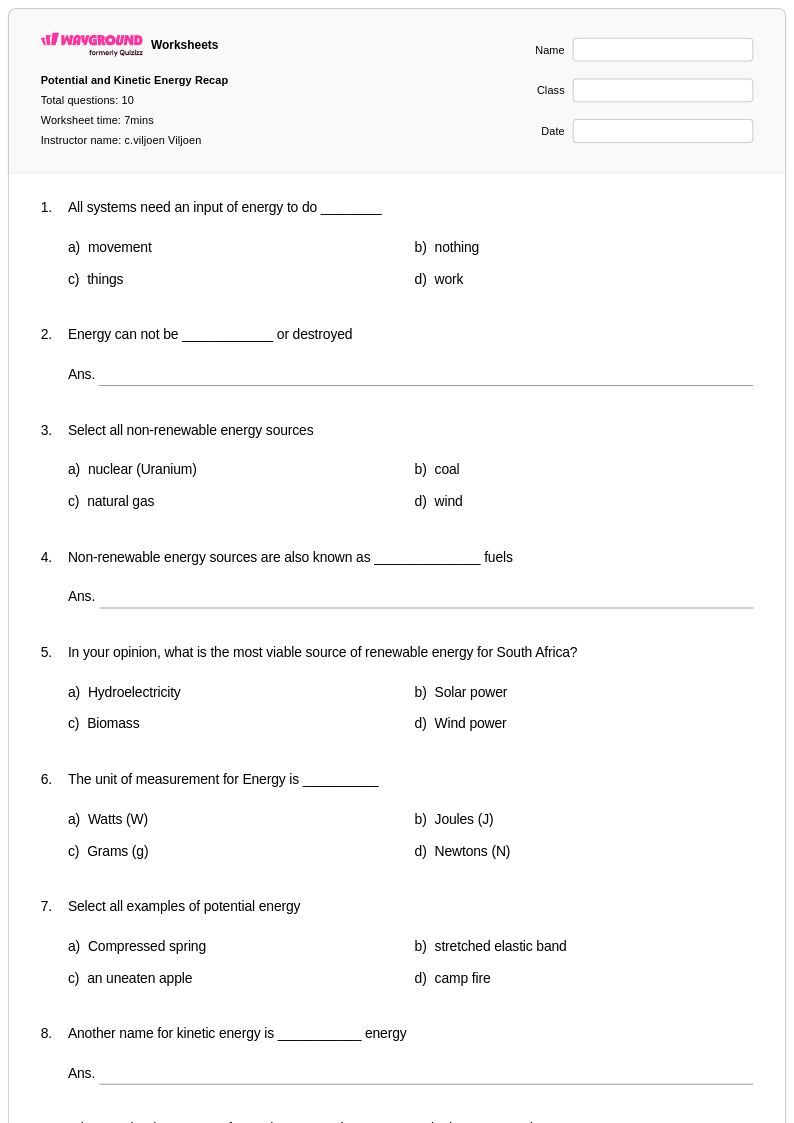
Kinetic energy worksheets available through Wayground (formerly Quizizz) provide comprehensive practice opportunities for students to master this fundamental physics concept. These educational resources focus on developing students' understanding of the energy possessed by objects in motion, covering essential calculations using the kinetic energy formula KE = ½mv², velocity and mass relationships, and real-world applications ranging from moving vehicles to molecular motion. The worksheets strengthen critical problem-solving skills through structured practice problems that progress from basic conceptual questions to complex multi-step calculations, with accompanying answer keys that support both independent study and classroom instruction. These free printables and pdf resources enable students to explore energy transformations, compare kinetic energy values across different scenarios, and analyze how changes in mass and velocity affect an object's kinetic energy.
Wayground (formerly Quizizz) supports educators with an extensive collection of teacher-created kinetic energy worksheets drawn from millions of educational resources developed by physics instructors worldwide. The platform's robust search and filtering capabilities allow teachers to quickly locate materials that align with specific curriculum standards and match their students' skill levels, while differentiation tools enable customization for diverse learning needs within the same classroom. These kinetic energy worksheet collections are available in both printable pdf formats for traditional paper-and-pencil practice and digital formats for interactive learning experiences, providing flexibility for various instructional approaches. Teachers can utilize these resources for initial concept introduction, targeted remediation for struggling students, enrichment activities for advanced learners, and ongoing skill practice, making lesson planning more efficient while ensuring students receive adequate practice with this essential physics principle.
FAQs
How do I teach kinetic energy to my physics students?
Start by grounding kinetic energy in observable, real-world examples — a rolling ball, a moving car, or a thrown baseball — before introducing the formula KE = ½mv². Once students have an intuitive sense of the concept, move into structured practice that builds from conceptual questions (which object has more kinetic energy?) to calculation-based problems. Connecting velocity and mass changes to their effect on kinetic energy helps students develop a proportional understanding of the relationship rather than just memorizing the formula.
What practice problems are most effective for helping students master the kinetic energy formula?
The most effective practice sequences start with single-variable problems — holding mass constant while changing velocity, or vice versa — so students can isolate how each variable affects kinetic energy. From there, multi-step problems that require unit conversion or involve comparing two objects' kinetic energy values deepen fluency with KE = ½mv². Including real-world contexts like vehicles, projectiles, and molecular motion keeps practice purposeful and helps students connect the formula to physical meaning.
What mistakes do students commonly make when calculating kinetic energy?
The most frequent error is failing to square the velocity before multiplying — students often apply the ½mv² formula as ½ × m × v instead of ½ × m × v². A second common mistake is neglecting unit consistency, particularly when mass is given in grams instead of kilograms or velocity in km/h instead of m/s. Students also frequently underestimate the impact of velocity relative to mass, which becomes apparent when they incorrectly predict which of two objects has greater kinetic energy.
How can I differentiate kinetic energy instruction for students at different skill levels?
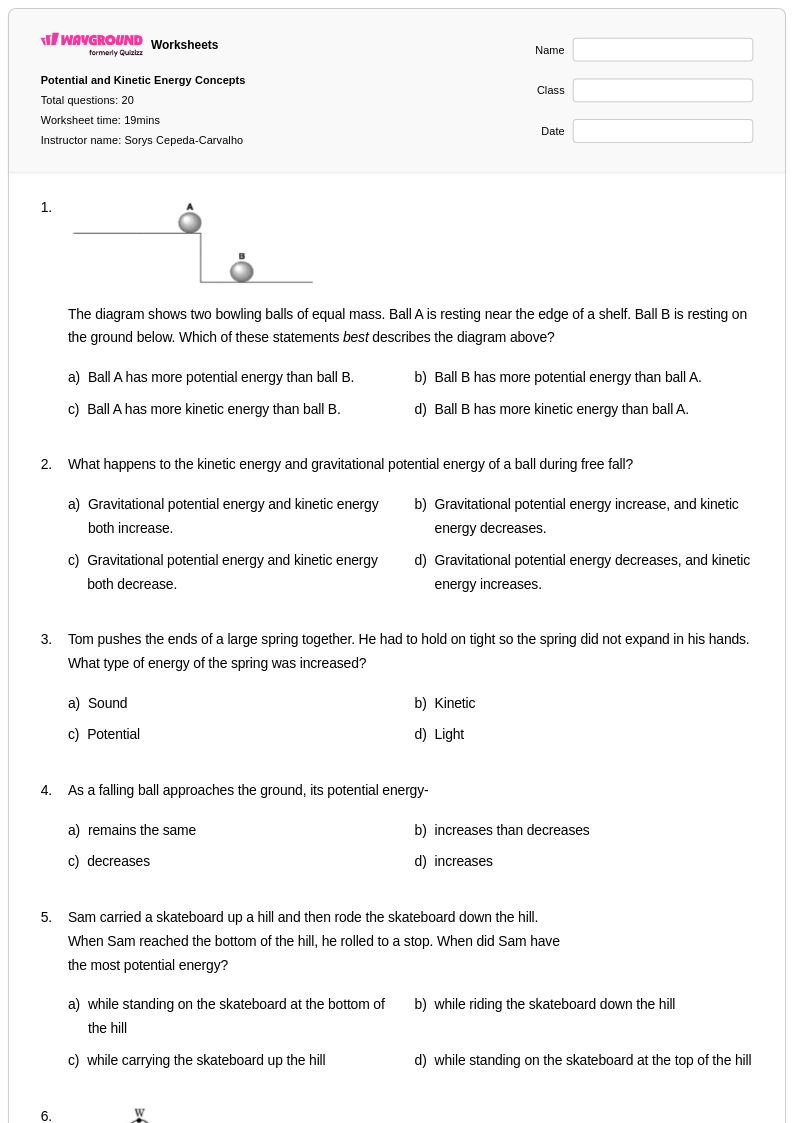
For students who need additional support, reduce cognitive load by scaffolding problems step-by-step and providing formula reference sheets alongside practice problems. Advanced learners benefit from open-ended problems that require them to reason about energy transformations or compare kinetic and potential energy in multi-step scenarios. On Wayground, teachers can apply individual accommodations such as reduced answer choices and read-aloud support for struggling students, while other students work through standard problems simultaneously — all within the same assignment.
How do I use Wayground's kinetic energy worksheets in my classroom?
Wayground's kinetic energy worksheets are available as printable PDFs for traditional paper-and-pencil practice and in digital formats for technology-integrated classrooms, making them adaptable to different instructional setups. Teachers can also host worksheets as a quiz directly on Wayground, which supports real-time tracking of student responses. The included answer keys make these resources suitable for independent practice, small-group work, or whole-class review without additional preparation from the teacher.
How do velocity and mass each affect an object's kinetic energy?
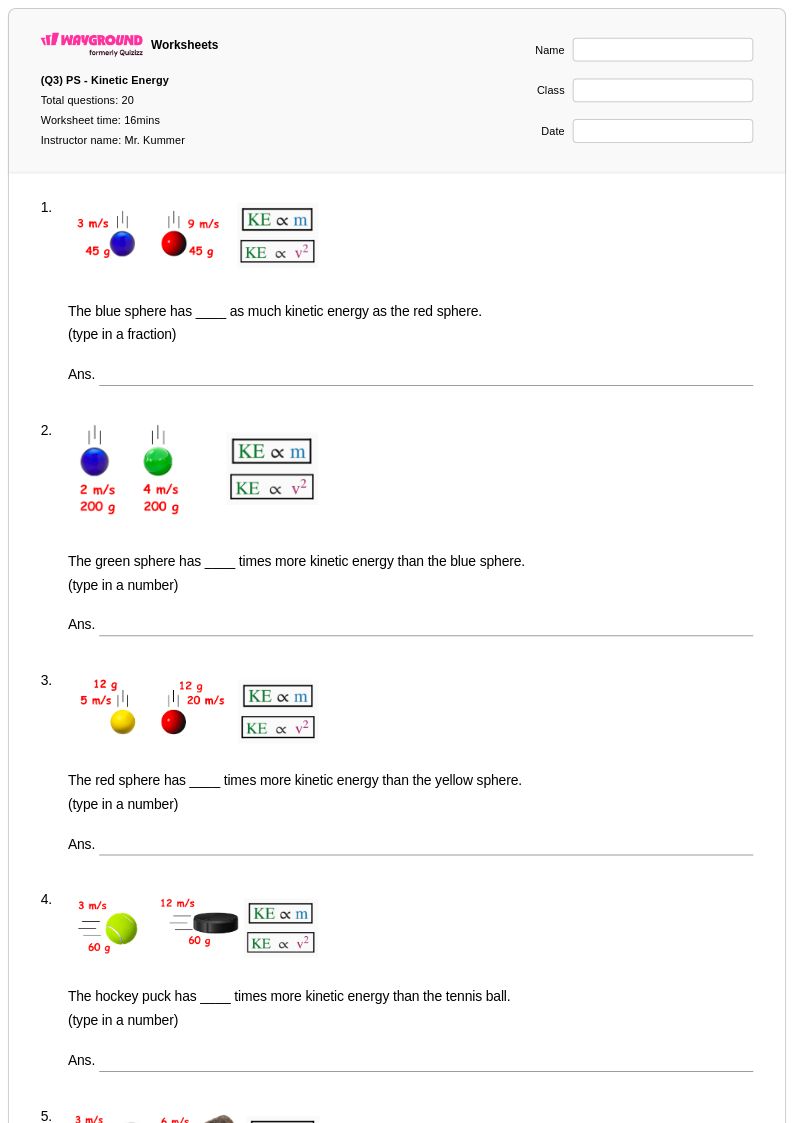
Kinetic energy increases proportionally with mass — doubling the mass of an object doubles its kinetic energy, assuming velocity stays constant. Velocity has a squared relationship with kinetic energy, meaning doubling an object's speed quadruples its kinetic energy. This distinction is critical for students to internalize, as it explains why high-speed collisions are disproportionately more dangerous than low-speed ones and why velocity is the dominant variable in most kinetic energy comparisons.