Free Printable Layers of Atmosphere Worksheets for Class 10
Explore Class 10 layers of atmosphere worksheets and printables through Wayground that help students master atmospheric structure with comprehensive practice problems, free PDF resources, and complete answer keys.
Explore printable Layers of Atmosphere worksheets for Class 10
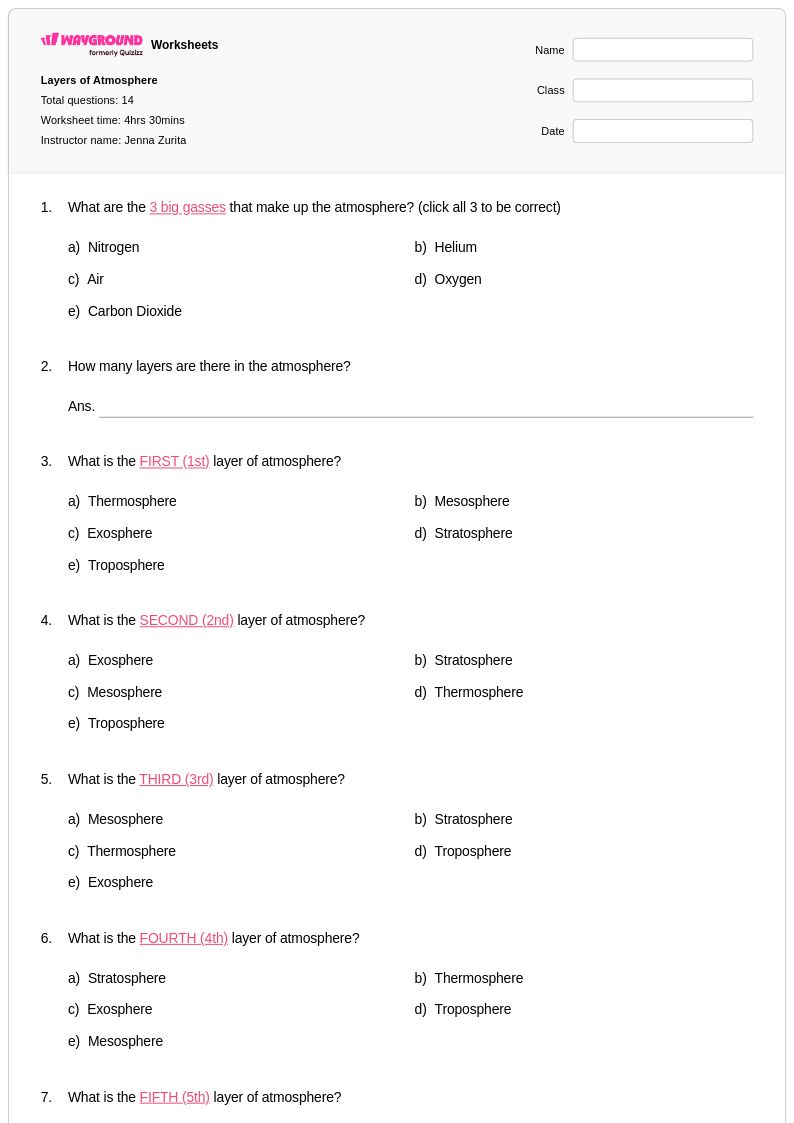
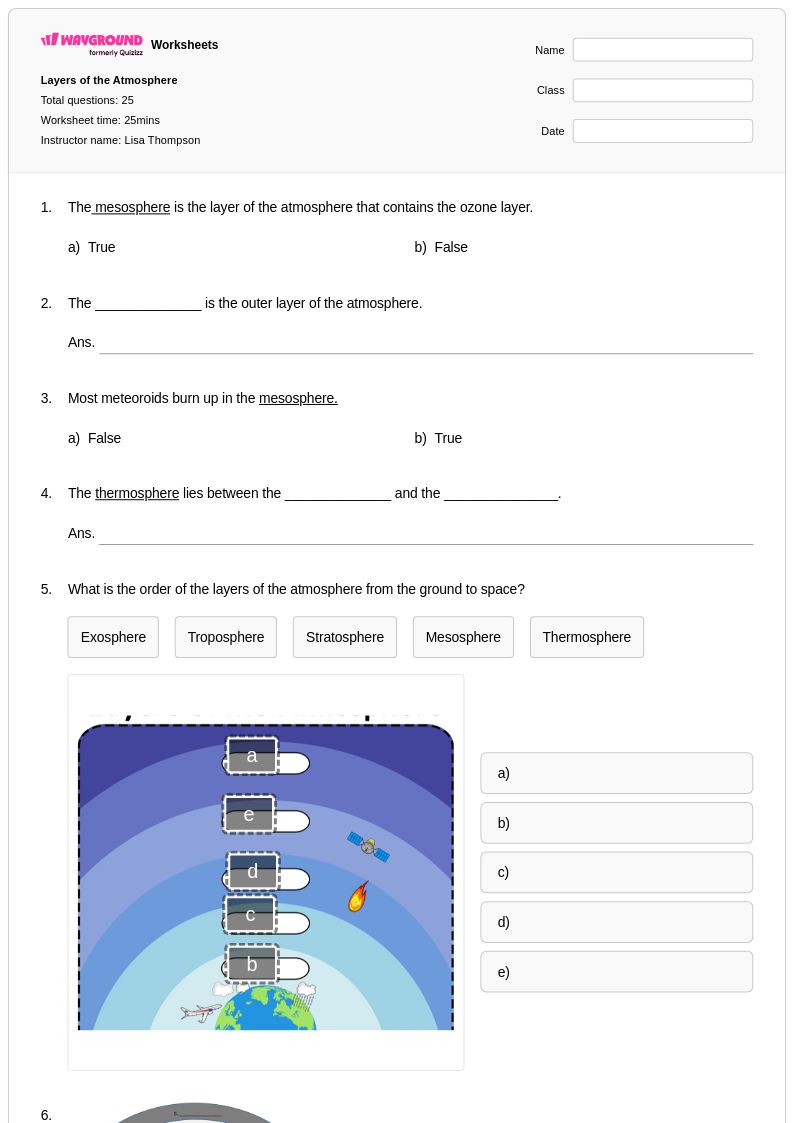
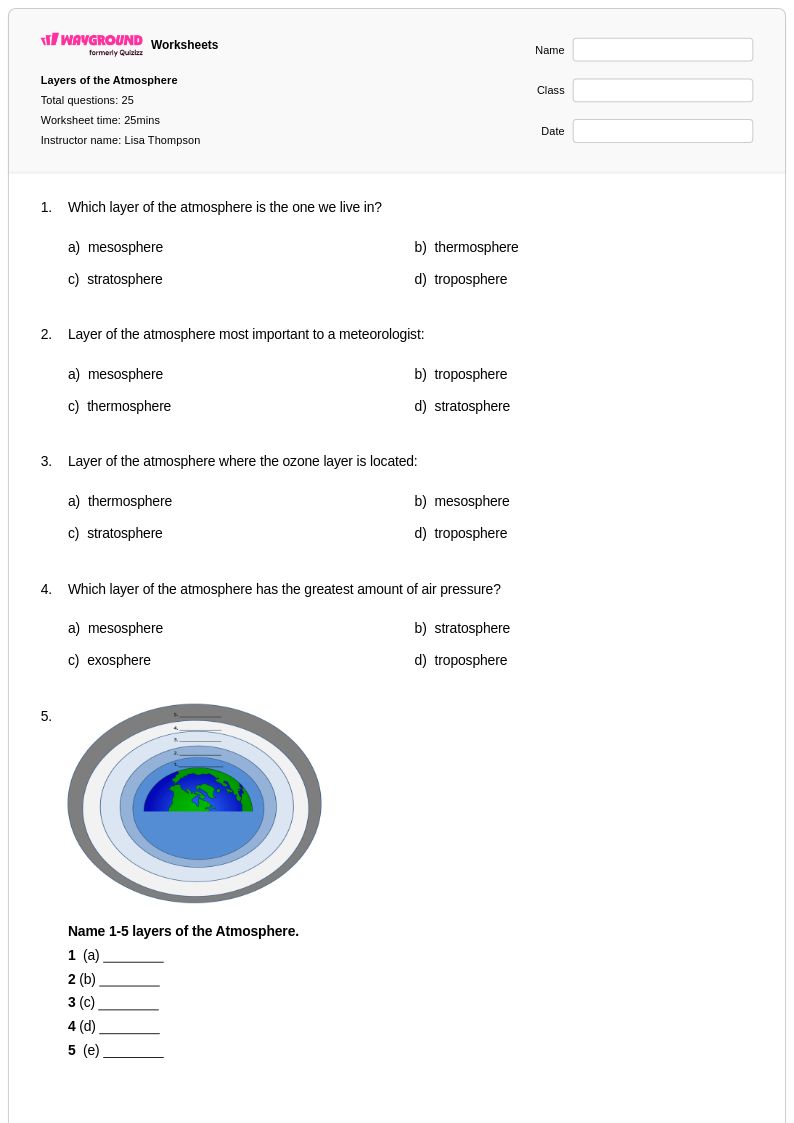
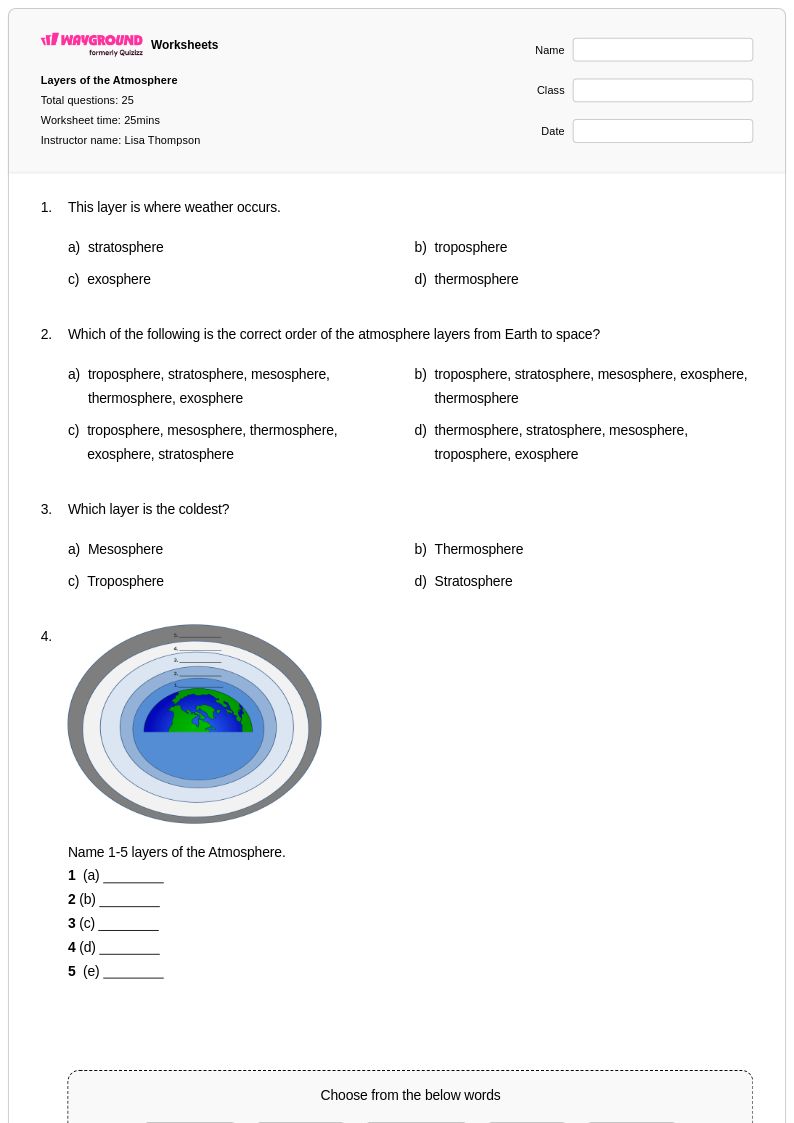
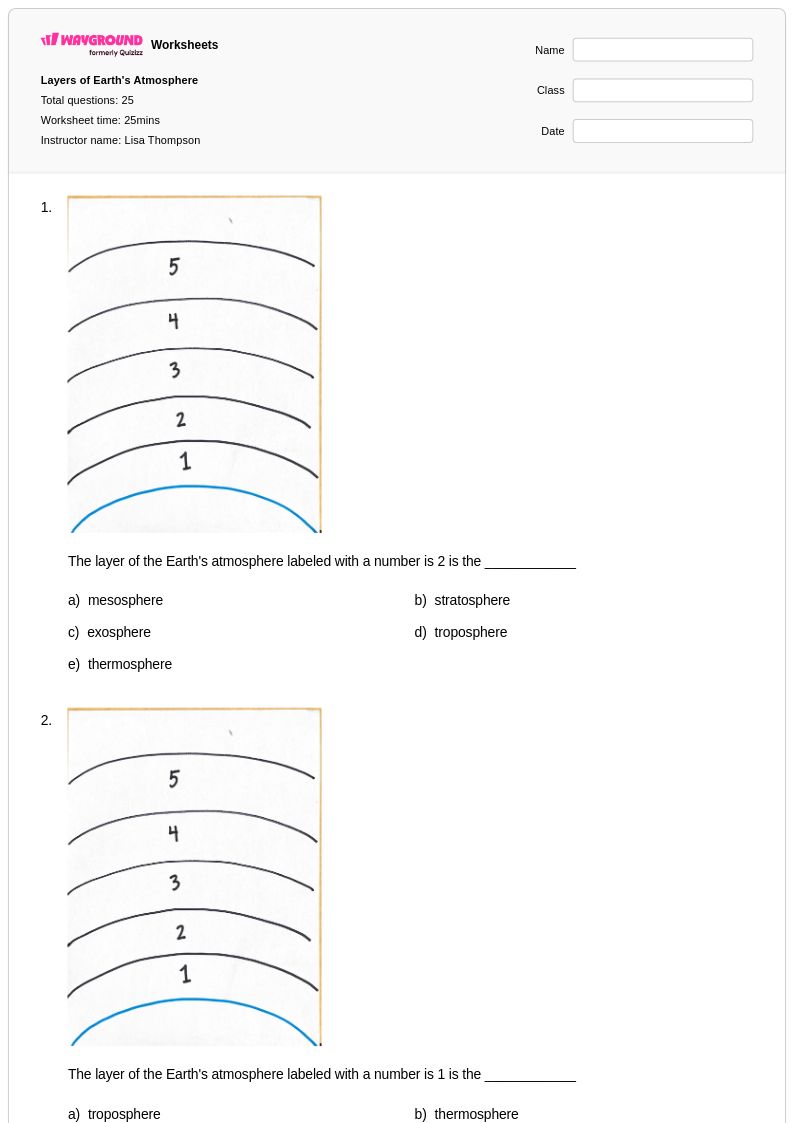
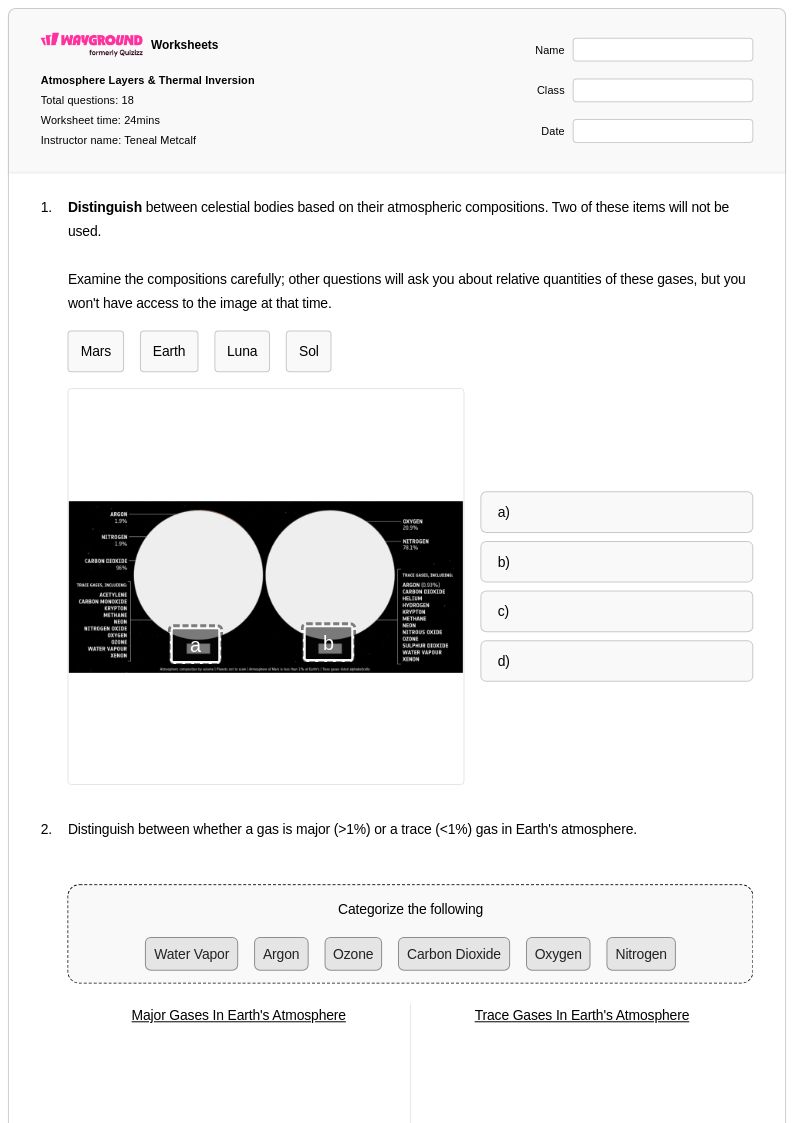
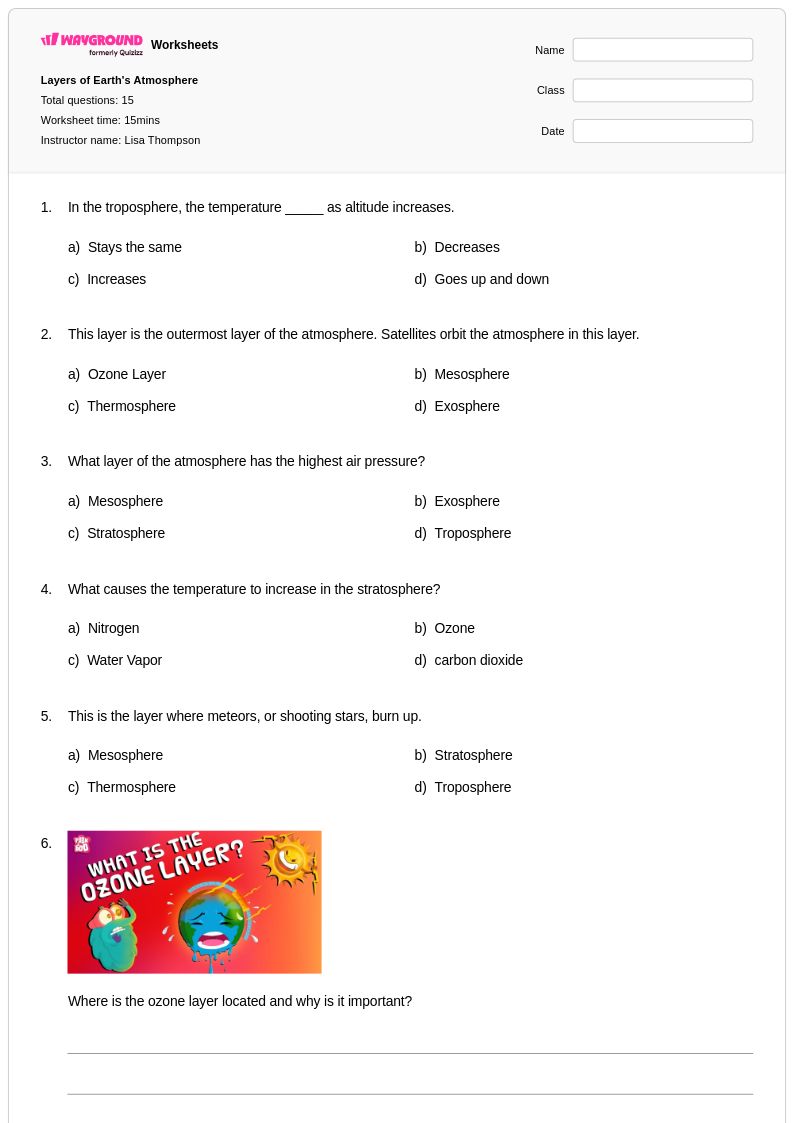
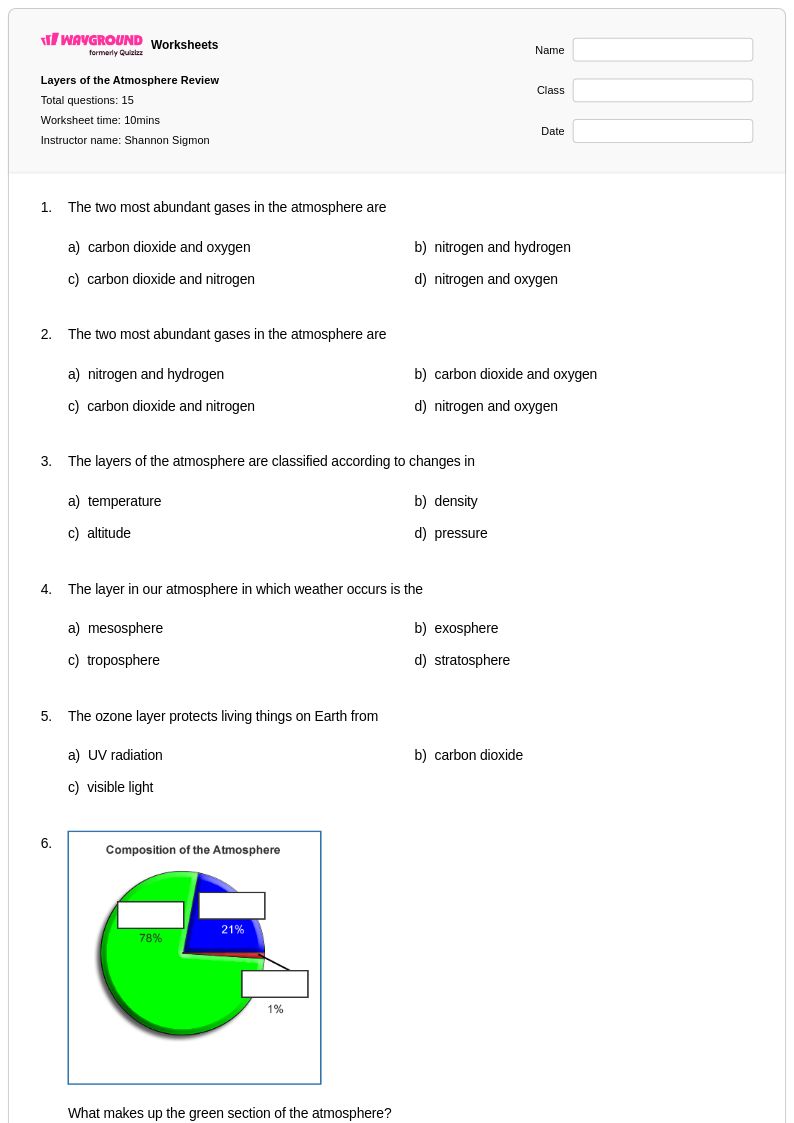
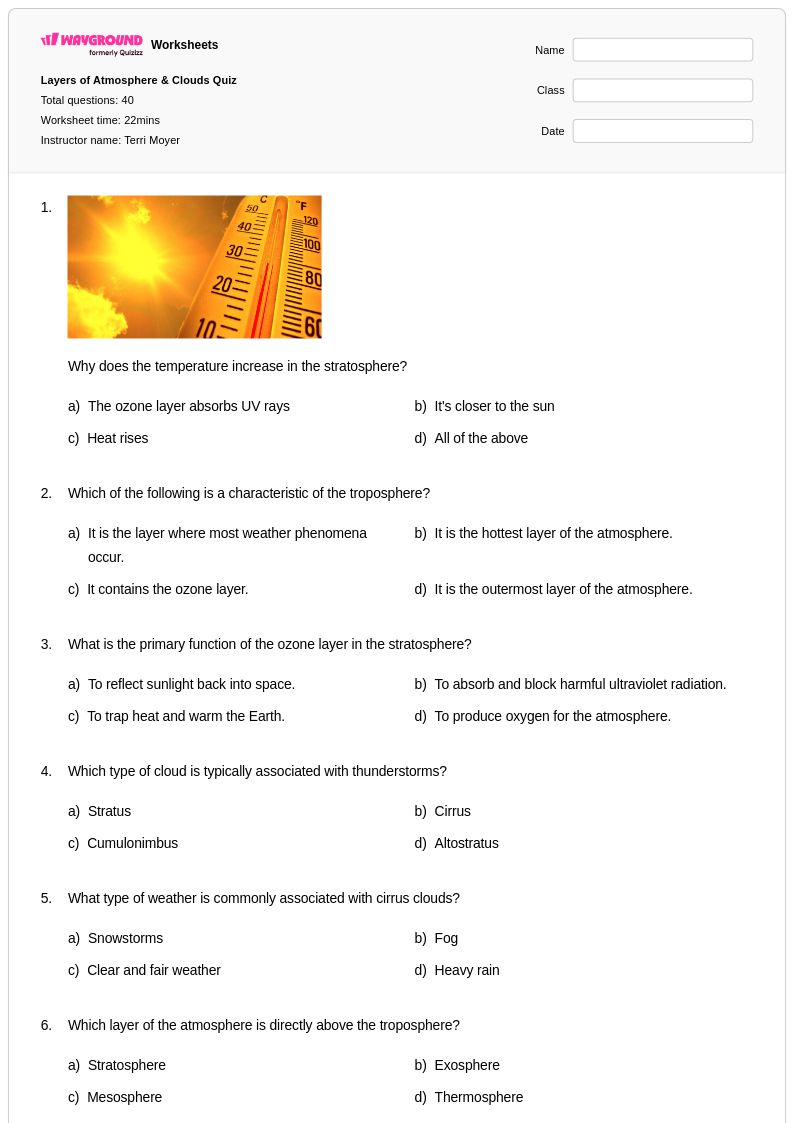
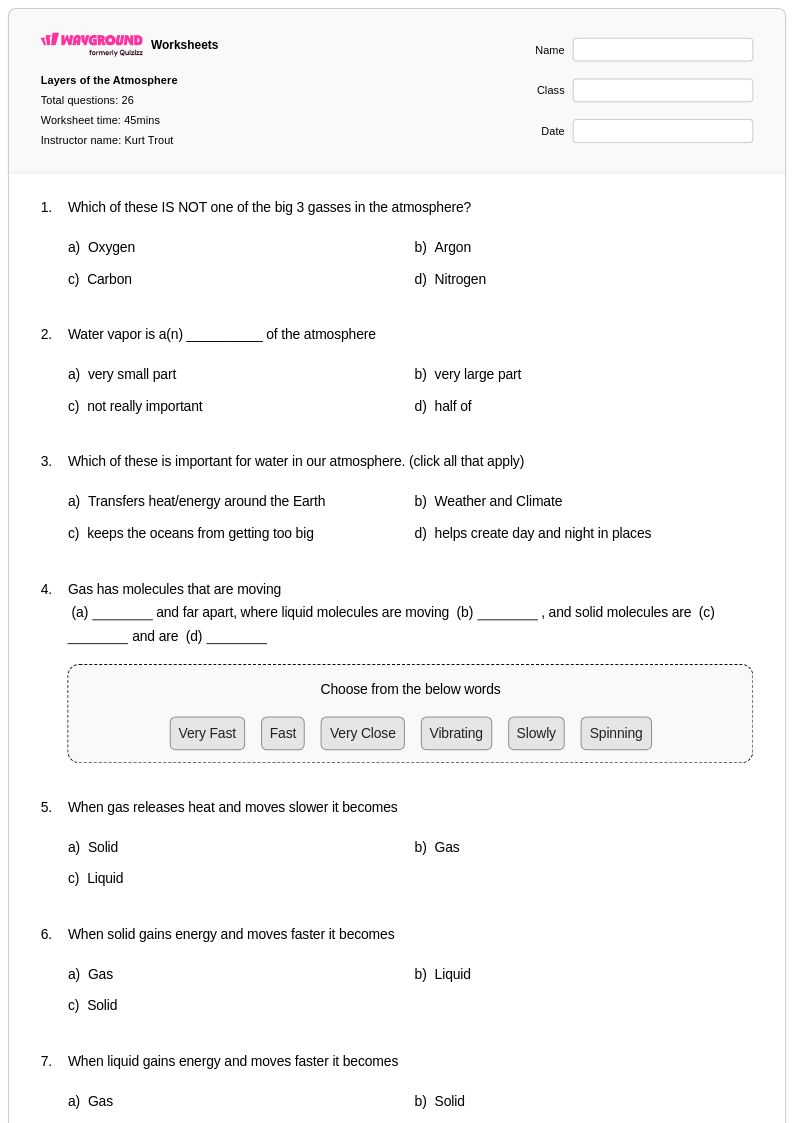
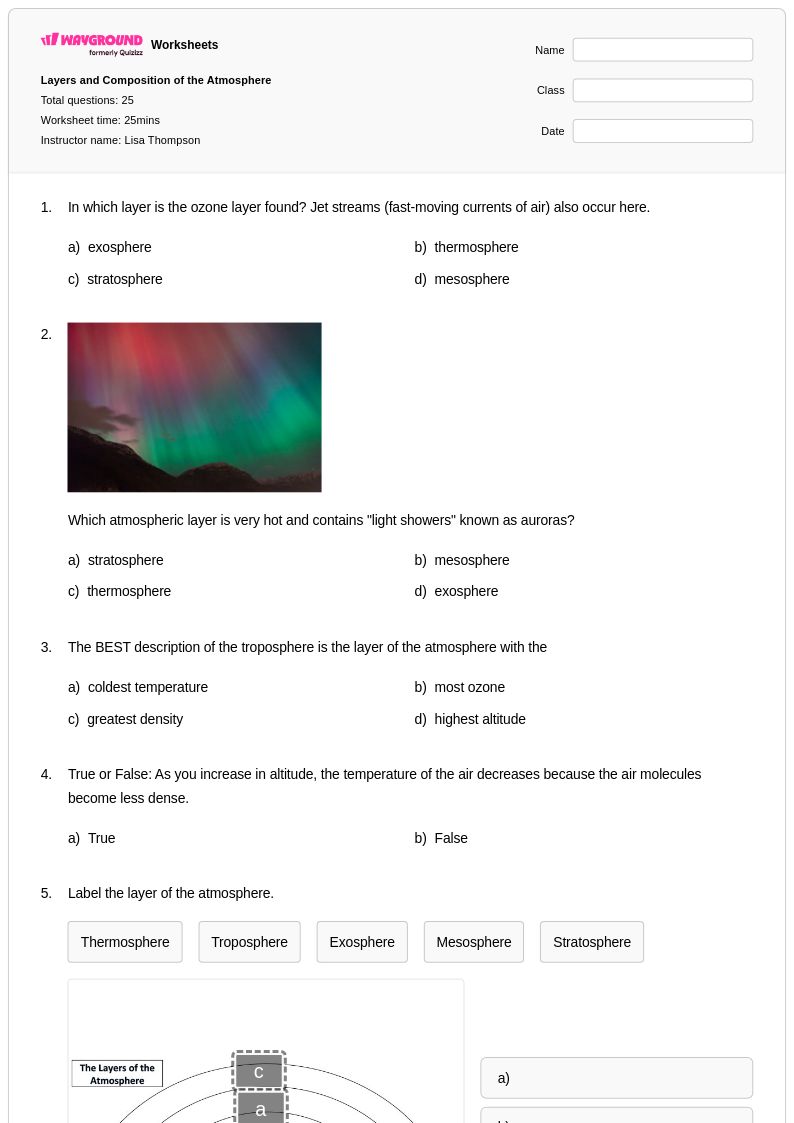
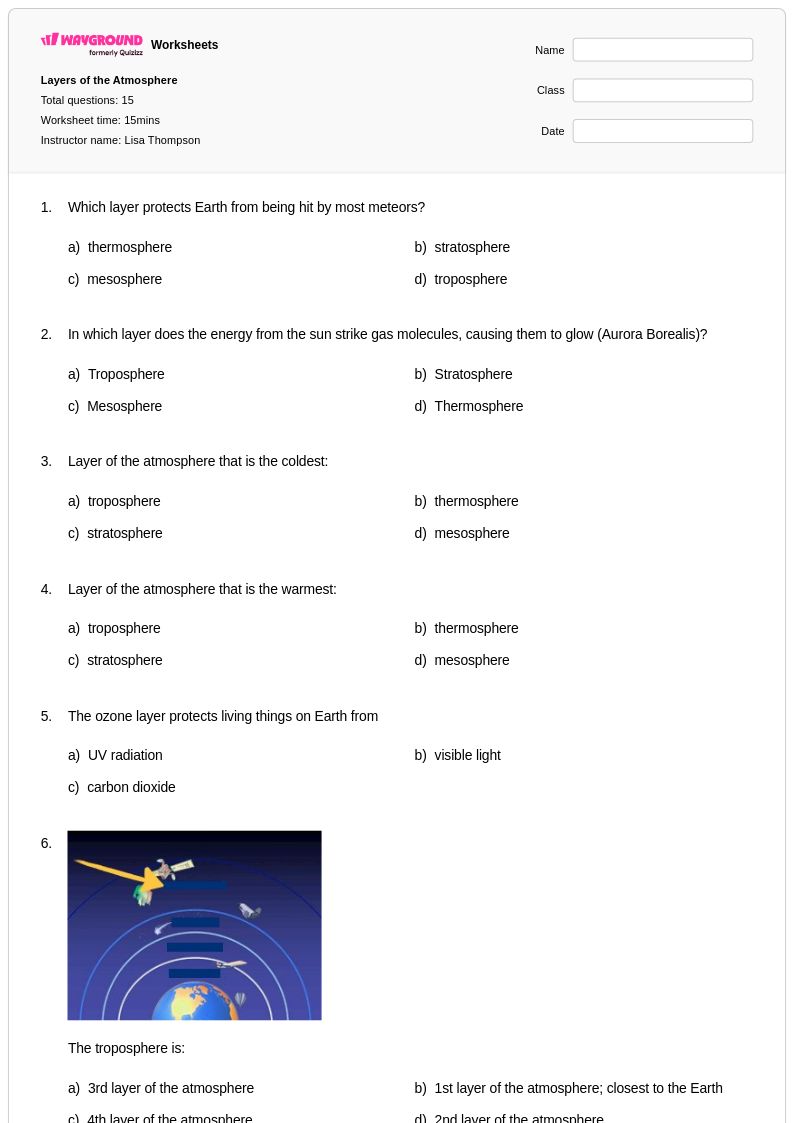
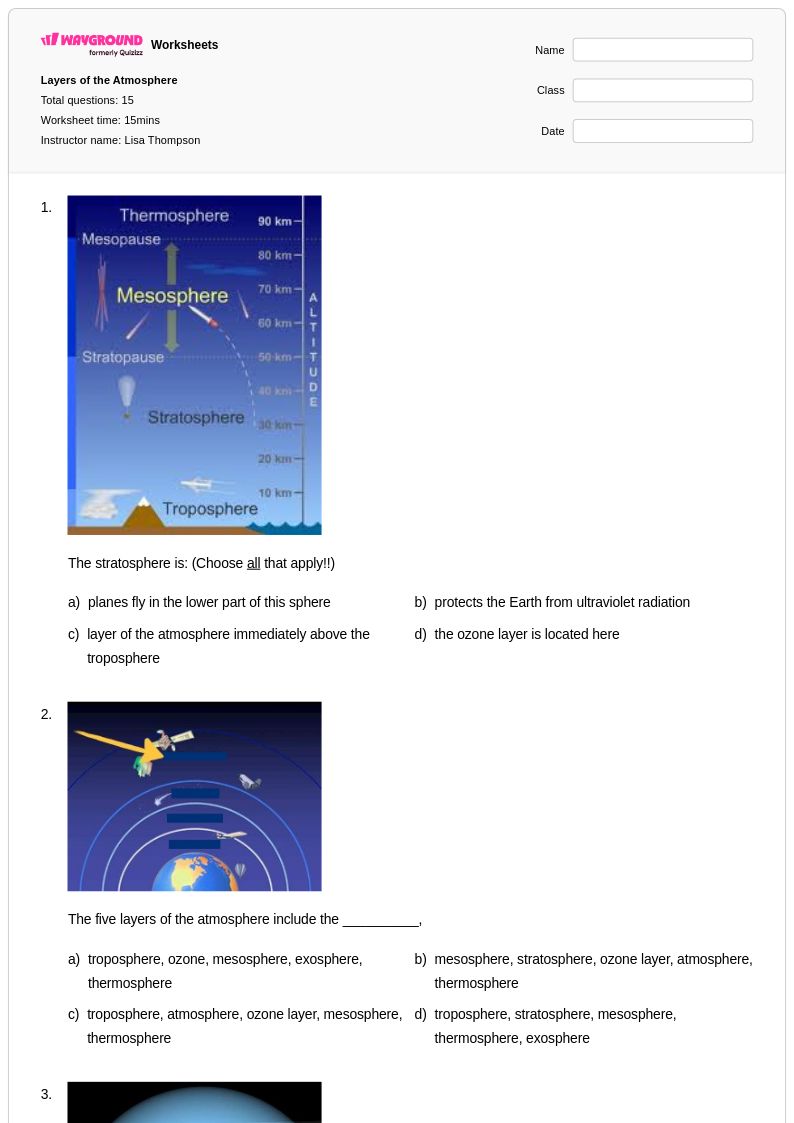
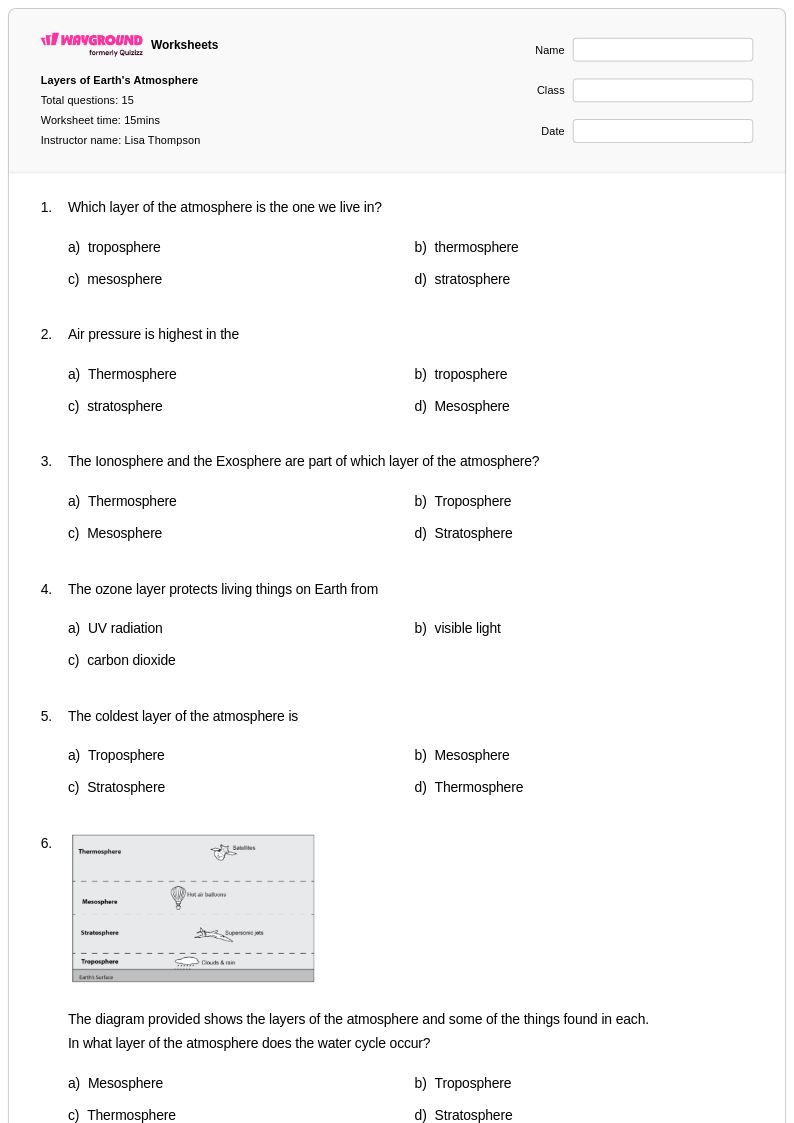
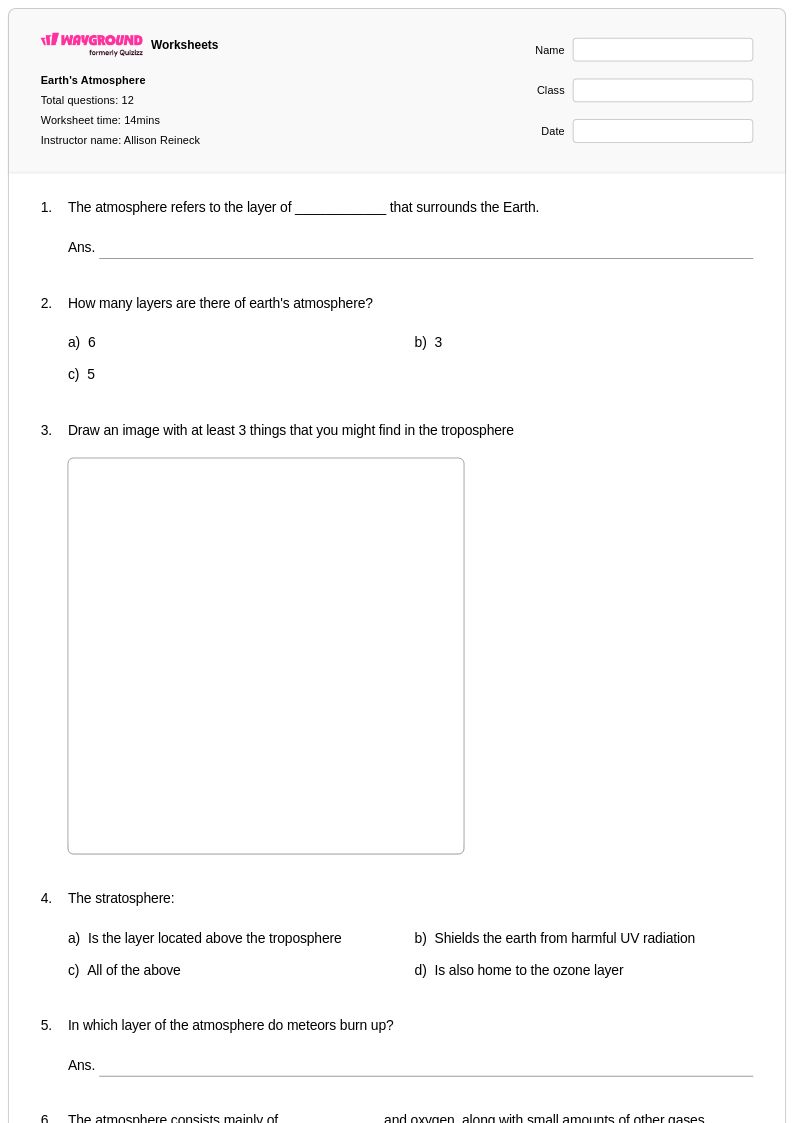
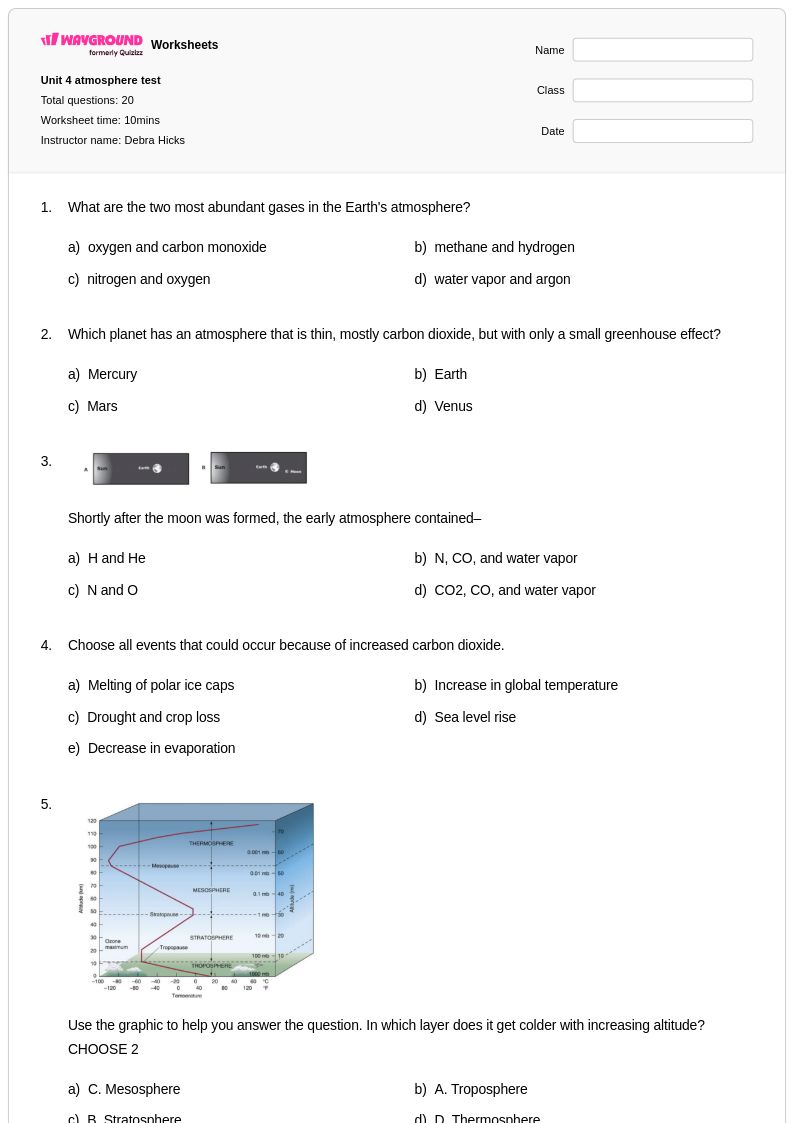
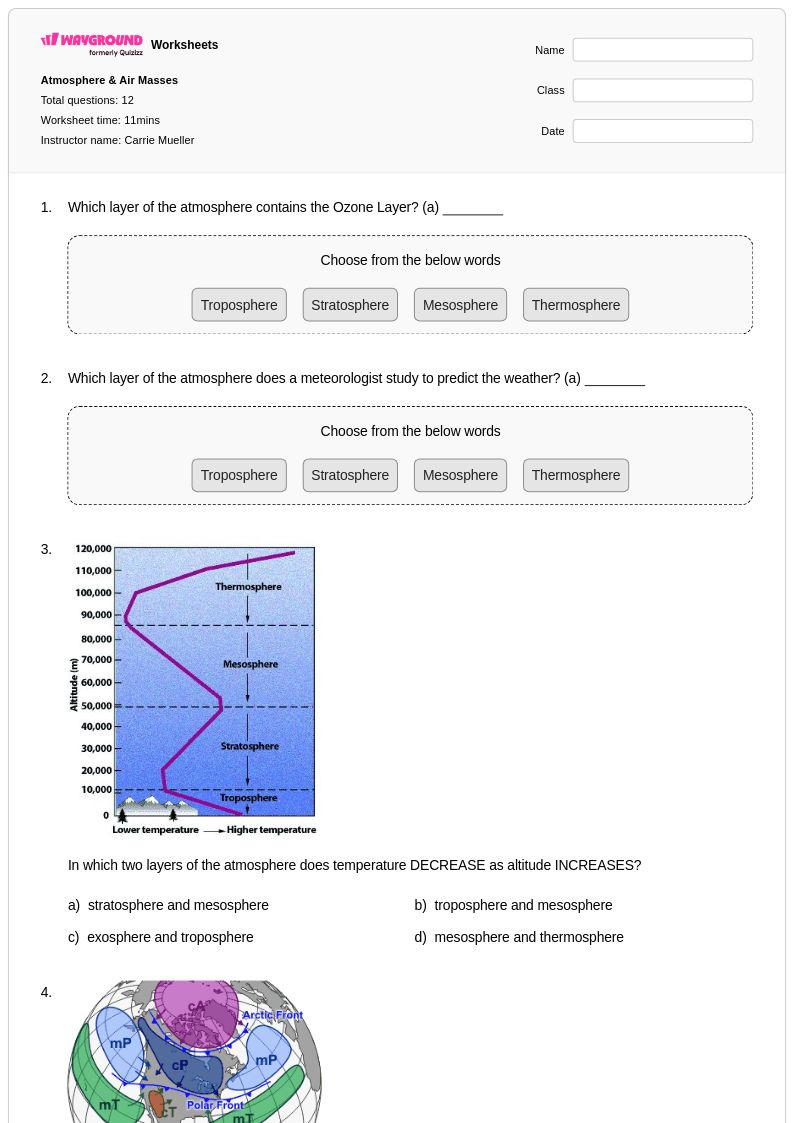
Layers of atmosphere worksheets for grade 10 students provide comprehensive exploration of Earth's atmospheric structure, including the troposphere, stratosphere, mesosphere, thermosphere, and exosphere. These educational resources help students master fundamental concepts such as temperature variations, pressure changes, and the unique characteristics of each atmospheric layer. Through detailed practice problems, students develop critical thinking skills while analyzing how altitude affects atmospheric conditions and understanding the role each layer plays in protecting life on Earth. The worksheets feature structured exercises with answer keys, making them valuable tools for both independent study and classroom instruction. Available as free printables in pdf format, these resources enable students to visualize atmospheric data, interpret scientific diagrams, and strengthen their understanding of how Earth's atmosphere functions as an integrated system.
Wayground, formerly Quizizz, empowers educators with access to millions of teacher-created atmospheric science worksheets specifically designed for grade 10 Earth and space science curricula. The platform's robust search and filtering capabilities allow teachers to quickly locate materials that align with their specific standards and learning objectives for atmospheric layers instruction. Advanced differentiation tools enable educators to customize worksheet difficulty levels, ensuring appropriate challenges for students with varying abilities while maintaining focus on essential atmospheric science concepts. Teachers can seamlessly switch between printable pdf formats for traditional classroom use and digital versions for interactive learning environments. This flexibility supports diverse instructional approaches, from targeted remediation for students struggling with atmospheric pressure concepts to enrichment activities for advanced learners exploring atmospheric phenomena, ultimately enhancing skill practice and conceptual mastery across all learning levels.
FAQs
How do I teach the layers of the atmosphere to middle school students?
Start by anchoring instruction around altitude and temperature change, since these two variables define each layer's boundaries and characteristics. Use labeled diagrams to walk students through the troposphere, stratosphere, mesosphere, thermosphere, and exosphere in sequence, connecting each layer to phenomena students already know, such as weather in the troposphere or the ozone layer in the stratosphere. Diagram analysis and data interpretation activities are particularly effective because they require students to apply conceptual understanding rather than simply recall names.
What types of practice activities help students learn the layers of the atmosphere?
Effective practice for this topic includes diagram labeling, altitude-temperature graph interpretation, and fill-in-the-blank activities that target gas composition and atmospheric phenomena by layer. Students also benefit from sequencing tasks where they order layers by altitude or temperature range, which reinforces structural understanding. Practice problems that connect each layer to real-world applications, such as weather formation, satellite orbits, or the aurora borealis, deepen comprehension beyond memorization.
What mistakes do students commonly make when learning about the layers of the atmosphere?
The most common error is assuming temperature decreases uniformly with altitude, when in fact the pattern reverses in the stratosphere and thermosphere. Students also frequently confuse the mesosphere and thermosphere, particularly their temperature trends and associated phenomena. Another common misconception is treating the exosphere as a hard boundary rather than a gradual transition into space, which can cause errors when students interpret atmospheric diagrams or answer questions about where Earth's atmosphere ends.
How can I use layers of the atmosphere worksheets to support students with different learning needs?
Wayground's layers of the atmosphere worksheets are available in both printable PDF and digital formats, making them accessible across traditional and technology-integrated classrooms. When hosting a worksheet as a digital quiz on Wayground, teachers can apply individual accommodations such as extended time, read-aloud support for students who need text read to them, and reduced answer choices to lower cognitive load for students who need it. These settings can be assigned per student without notifying the rest of the class, so differentiation happens quietly and efficiently.
How do the layers of the atmosphere connect to broader Earth science topics?
The atmospheric layers are foundational to understanding weather systems, climate regulation, and space exploration. The troposphere drives all weather phenomena, the stratosphere's ozone layer governs UV radiation reaching Earth's surface, and the thermosphere is where the International Space Station orbits and auroras occur. Teaching these connections helps students see atmospheric science not as isolated facts but as a system that directly influences life on Earth and human activity beyond it.
How do I assess whether students understand the layers of the atmosphere?
Reliable assessment for this topic should go beyond recalling layer names and instead probe whether students can explain temperature variation patterns, identify which layer hosts specific phenomena, and interpret altitude-temperature graphs. Common assessment formats include diagram labeling without prompts, short-answer questions asking students to explain why a specific event occurs in a particular layer, and data interpretation tasks using atmospheric profiles. These formats reveal whether students have conceptual understanding or surface-level memorization.