Free Printable Legal System and Laws Worksheets for Class 10
Class 10 Legal System and Laws worksheets from Wayground help students explore court procedures, constitutional rights, and judicial processes through engaging printables and practice problems with complete answer keys.
Explore printable Legal System and Laws worksheets for Class 10
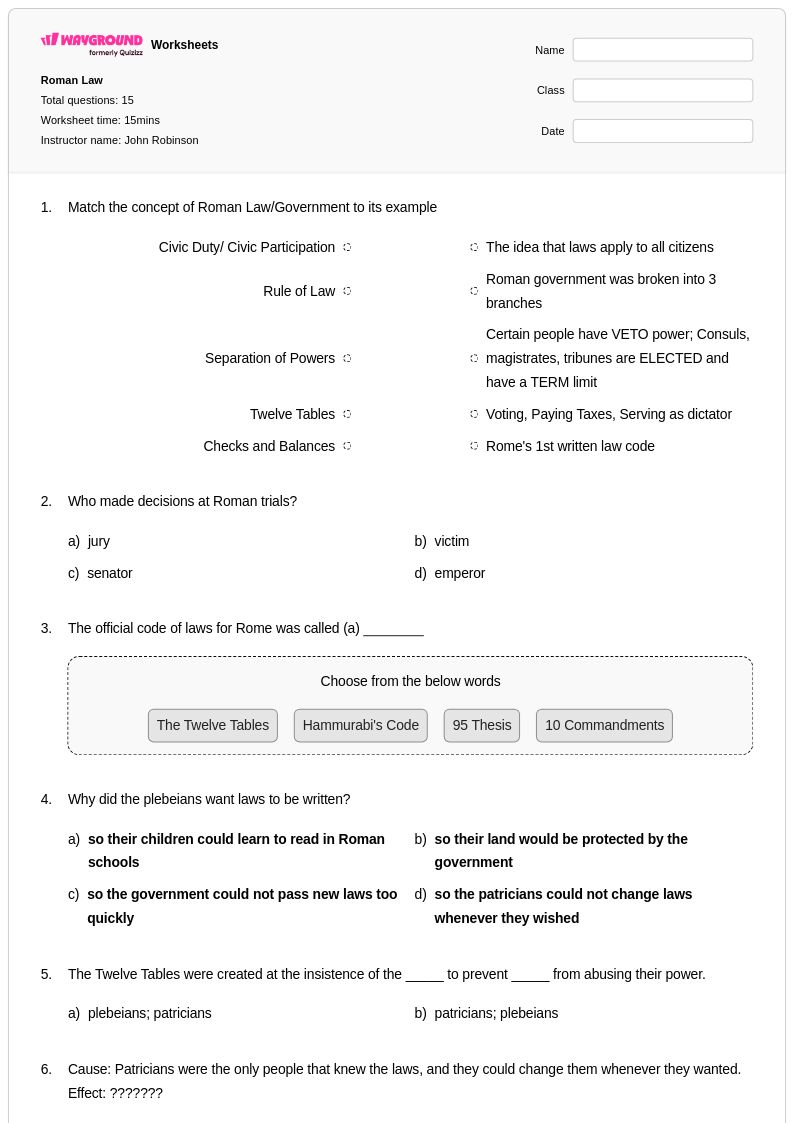
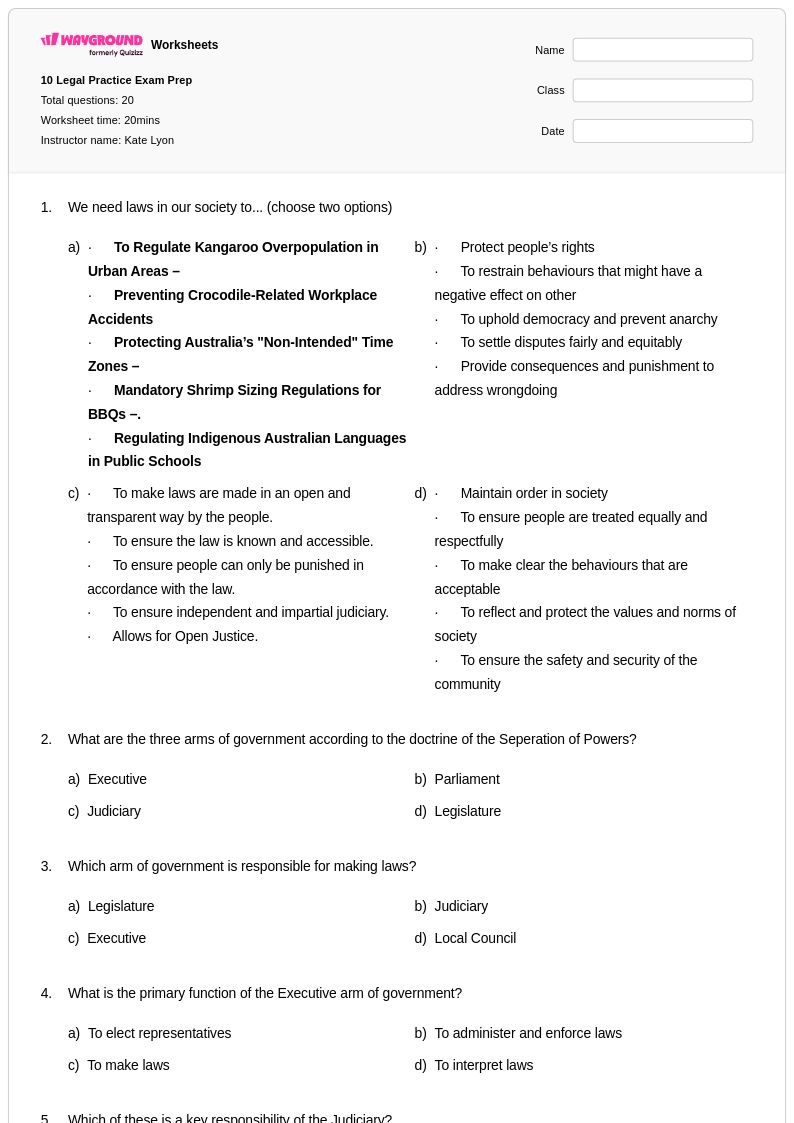
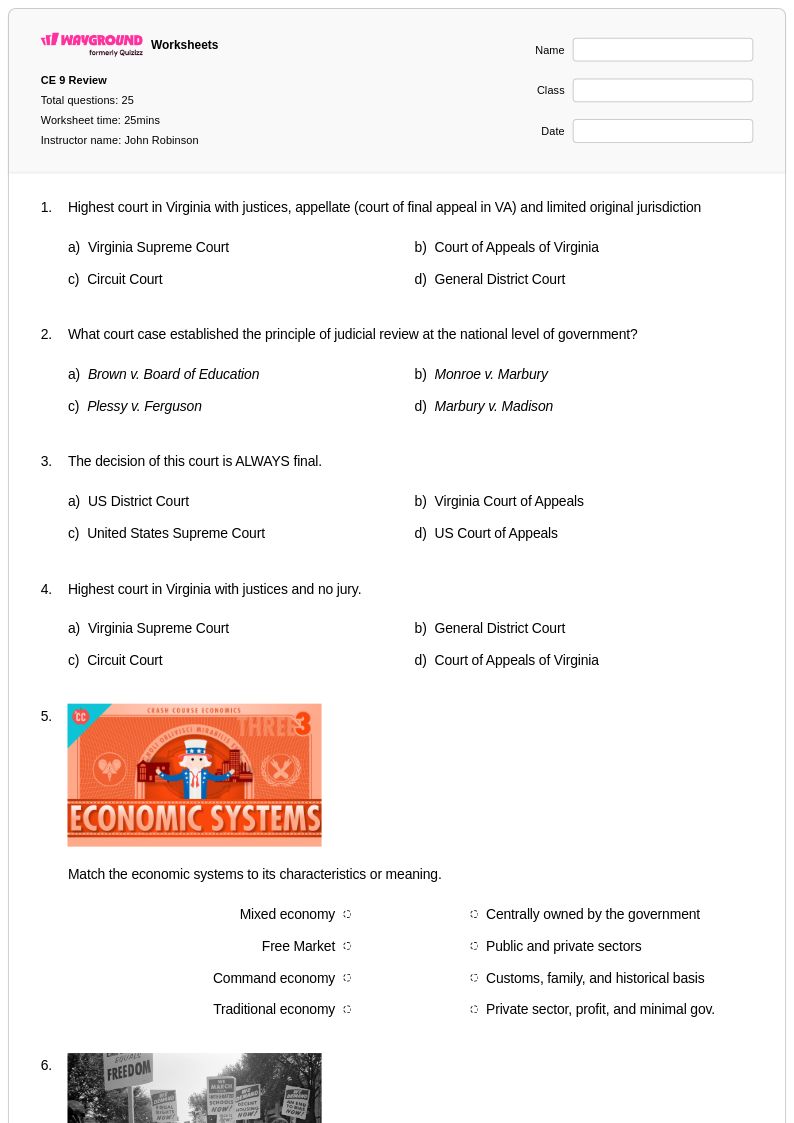
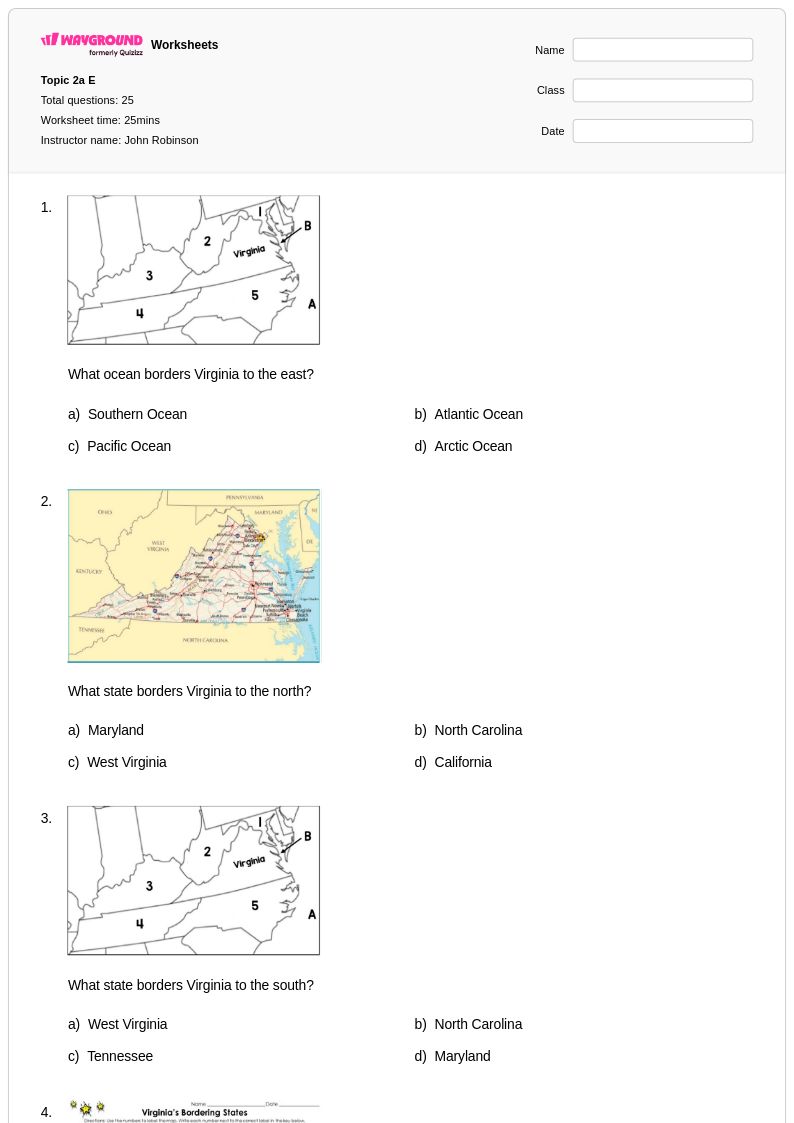
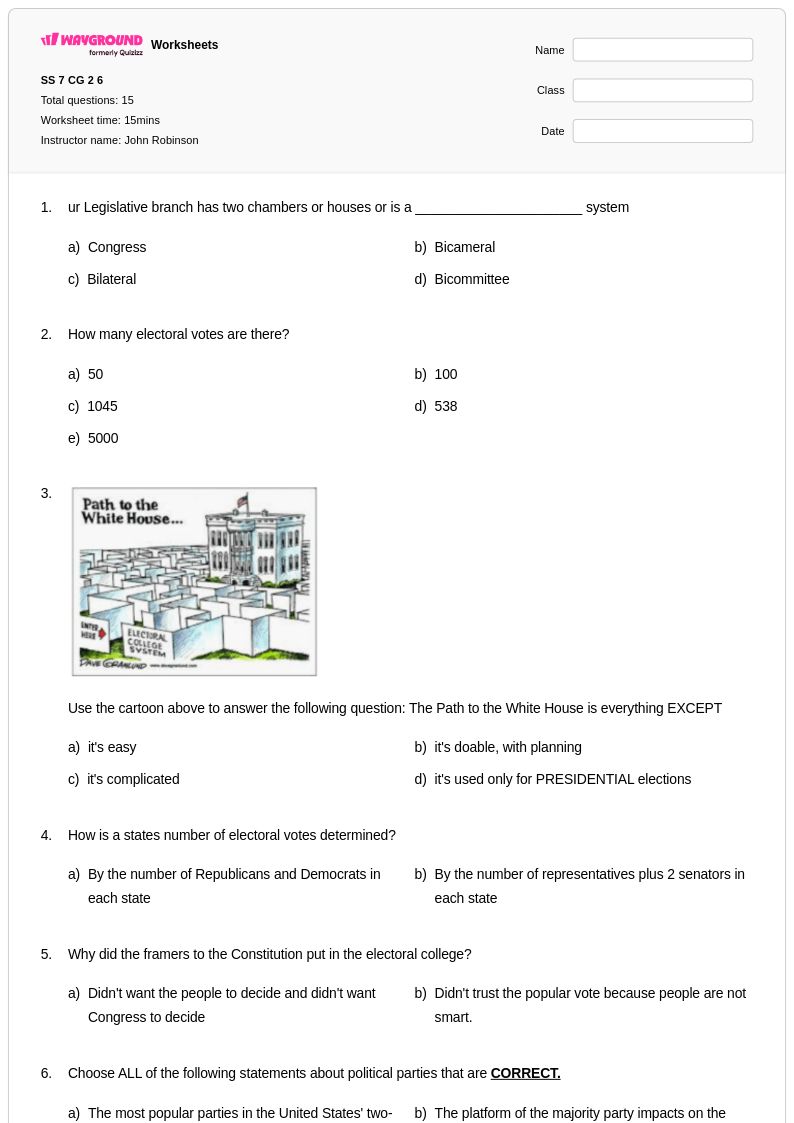
Legal System and Laws worksheets for Class 10 students available through Wayground (formerly Quizizz) provide comprehensive coverage of fundamental legal concepts that form the backbone of democratic society. These expertly crafted resources strengthen students' understanding of how laws are created, interpreted, and enforced within the American judicial system, covering essential topics such as constitutional law, statutory law, case law precedents, and the hierarchical structure of federal and state court systems. The worksheets include detailed practice problems that challenge students to analyze real-world legal scenarios, examine landmark Supreme Court cases, and evaluate the balance between individual rights and societal needs. Each resource comes with a complete answer key and is available as a free printable pdf, allowing educators to seamlessly integrate these materials into their civics curriculum while providing students with meaningful opportunities to explore complex legal principles through engaging, age-appropriate activities.
Wayground (formerly Quizizz) empowers educators with access to millions of teacher-created Legal System and Laws resources specifically designed for Class 10 Social Studies instruction, featuring robust search and filtering capabilities that enable quick discovery of materials aligned to state civics standards and learning objectives. The platform's differentiation tools allow teachers to customize worksheets based on individual student needs, whether providing additional scaffolding for struggling learners or offering enrichment opportunities for advanced students ready to tackle more sophisticated legal concepts. These versatile resources are available in both printable and digital formats, including downloadable pdfs, making them ideal for traditional classroom instruction, remote learning environments, or blended educational approaches. Teachers can efficiently plan comprehensive units on legal systems while having ready access to targeted materials for remediation and skill practice, ensuring all students develop the critical thinking abilities necessary to understand their rights and responsibilities as informed citizens in a constitutional democracy.
FAQs
How do I teach students the difference between criminal and civil law?
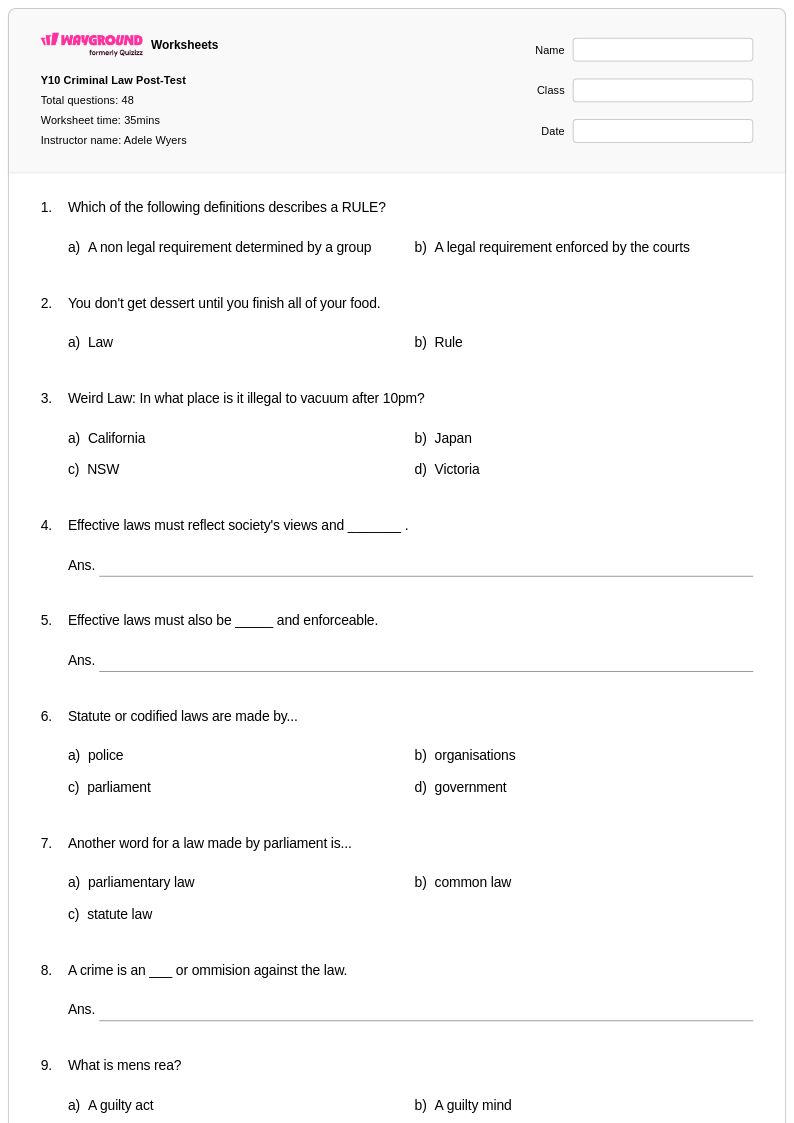
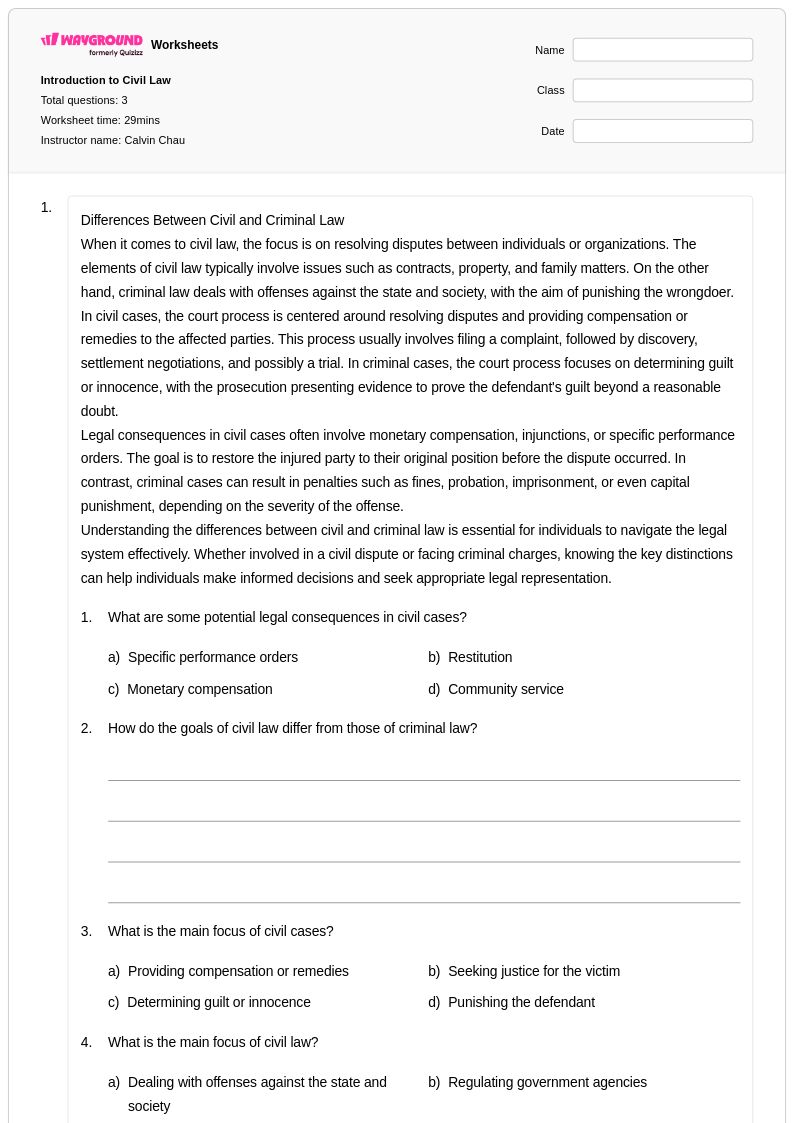
Start by grounding students in the purpose of each: criminal law addresses offenses against the state and society, while civil law resolves disputes between private parties. Use real-world case examples to illustrate how the same event — such as a car accident — can trigger both a criminal prosecution and a civil lawsuit. Structured comparison activities, where students categorize scenarios and identify the relevant legal process, help solidify the distinction before moving into procedural detail.
What exercises help students understand how the court hierarchy works?
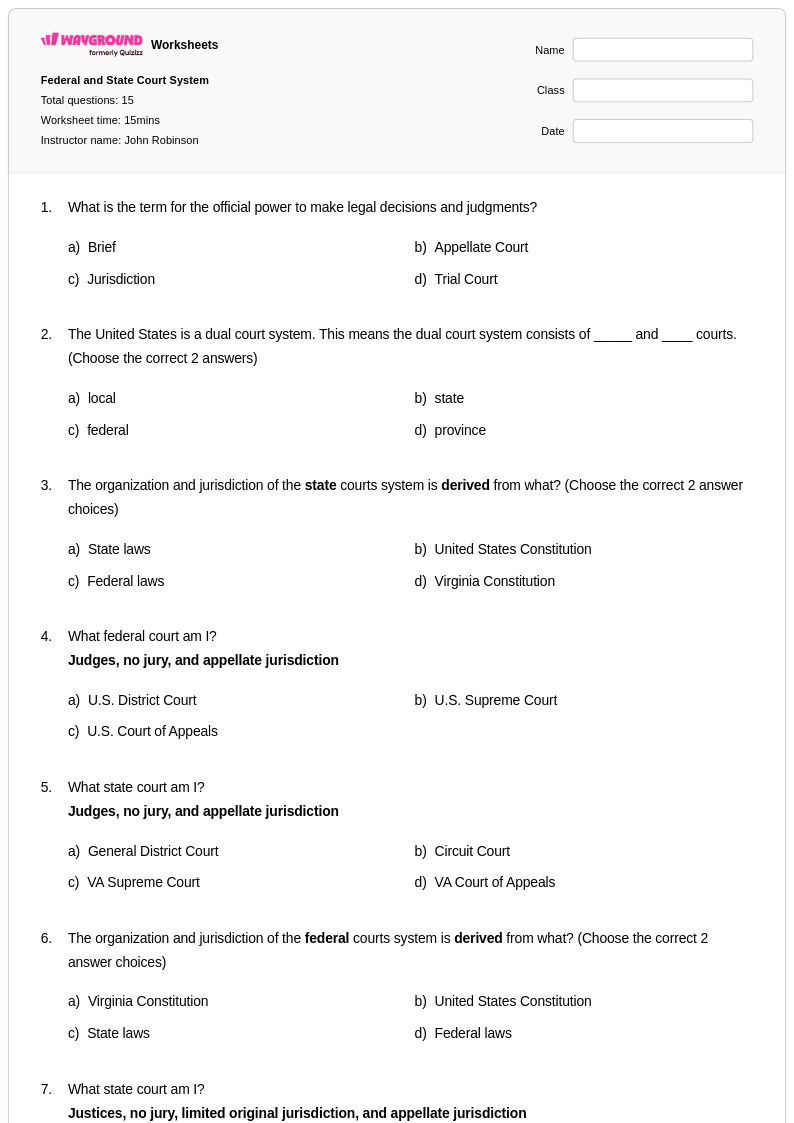
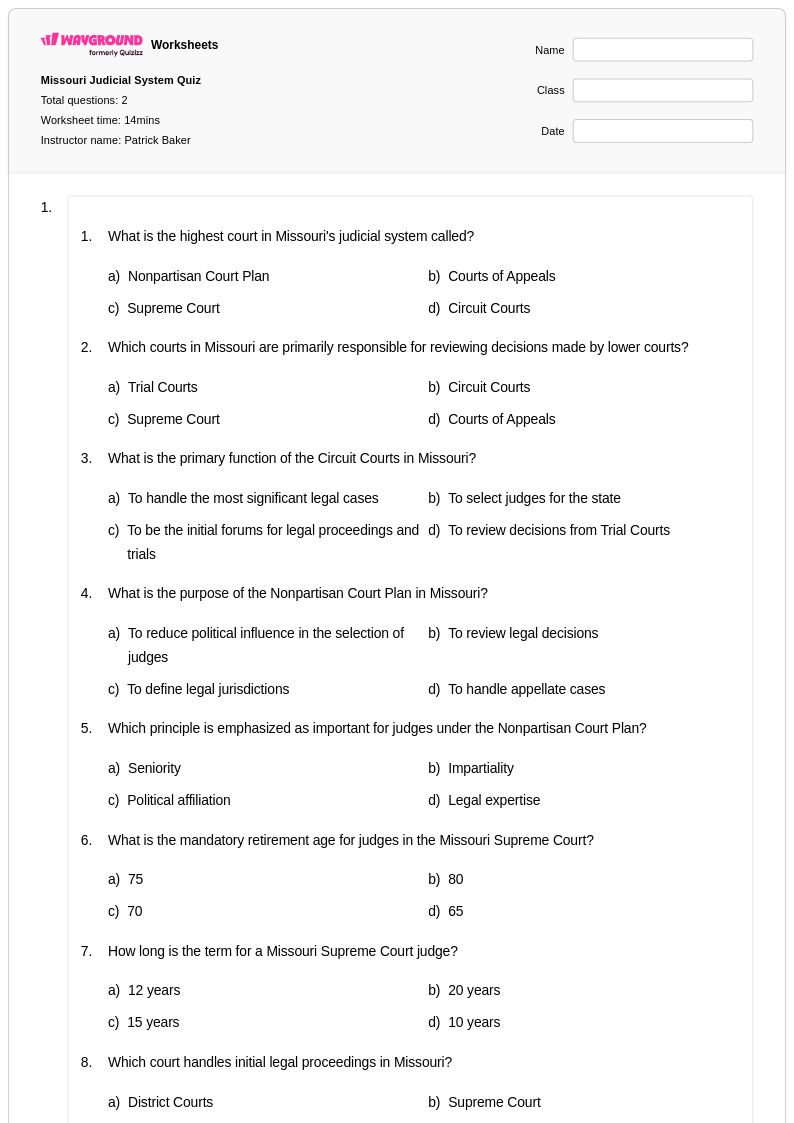
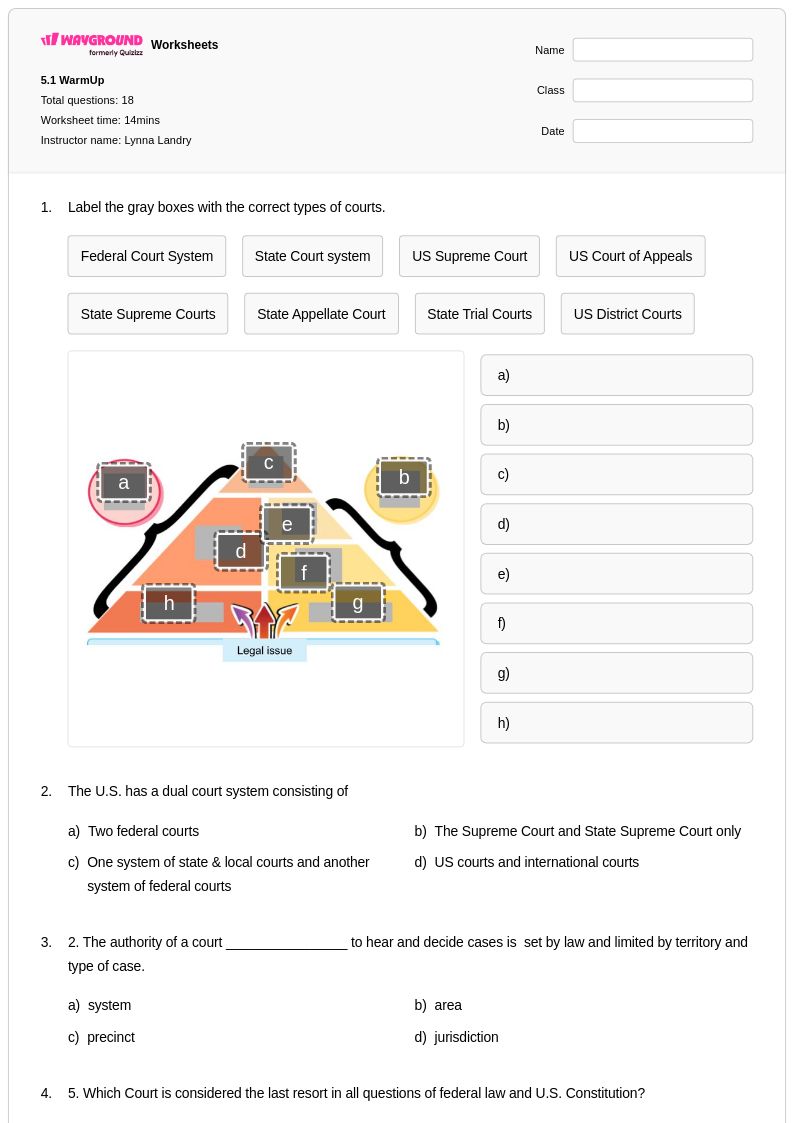
Diagram-based worksheets that ask students to trace a case from trial court through appellate courts to the Supreme Court are especially effective for visualizing jurisdiction and the appeals process. Practice problems that present case scenarios and ask students to identify which court has original jurisdiction reinforce the structural logic of the hierarchy. Having students explain in writing why appellate courts do not retry facts — only review legal errors — deepens conceptual understanding beyond memorization.
What common mistakes do students make when learning about due process and legal rights?
Students frequently conflate procedural due process with substantive due process, treating them as the same concept when they address fundamentally different legal protections. Another common error is assuming that constitutional rights are absolute rather than subject to legal limitations and balancing tests. Students also tend to misattribute rights — for example, believing the Miranda warning is required for all police questioning rather than only custodial interrogation — so case-based correction activities are valuable.
How can I help students understand the relationship between federal and state law?
The Supremacy Clause is the critical anchor here — teach students that federal law preempts conflicting state law, but that states retain broad authority in areas not delegated to the federal government. Scenario-based worksheets that present a conflict between a state statute and a federal law, and ask students to predict the legal outcome and explain their reasoning, make the abstract hierarchy concrete. Connecting this to the Tenth Amendment helps students see the constitutional design behind dual sovereignty.
How do I use Legal System and Laws worksheets in my classroom?
Legal System and Laws worksheets on Wayground are available as printable PDFs for traditional classroom use and in digital formats for technology-integrated or hybrid learning environments, and teachers can also host them as a quiz directly on the Wayground platform. Each worksheet includes a complete answer key, making them practical for independent practice, small-group analysis of legal scenarios, or guided instruction on court procedures and legal principles. The flexible format means the same resource can be assigned as in-class work, homework, or an assessment depending on your instructional goals.
How do I differentiate legal system instruction for students at different readiness levels?
For struggling learners, scaffolded worksheets that break the legislative or court process into sequential steps with sentence starters can reduce cognitive overload and build procedural fluency before conceptual application. Advanced students benefit from extended case study analysis, where they evaluate judicial reasoning, identify constitutional issues, and construct arguments for both sides. On Wayground, teachers can apply individual accommodations — such as read aloud support, reduced answer choices, or extended time — to specific students without disrupting the experience for the rest of the class.