Free Printable Supreme Court Nominations Worksheets for Class 10
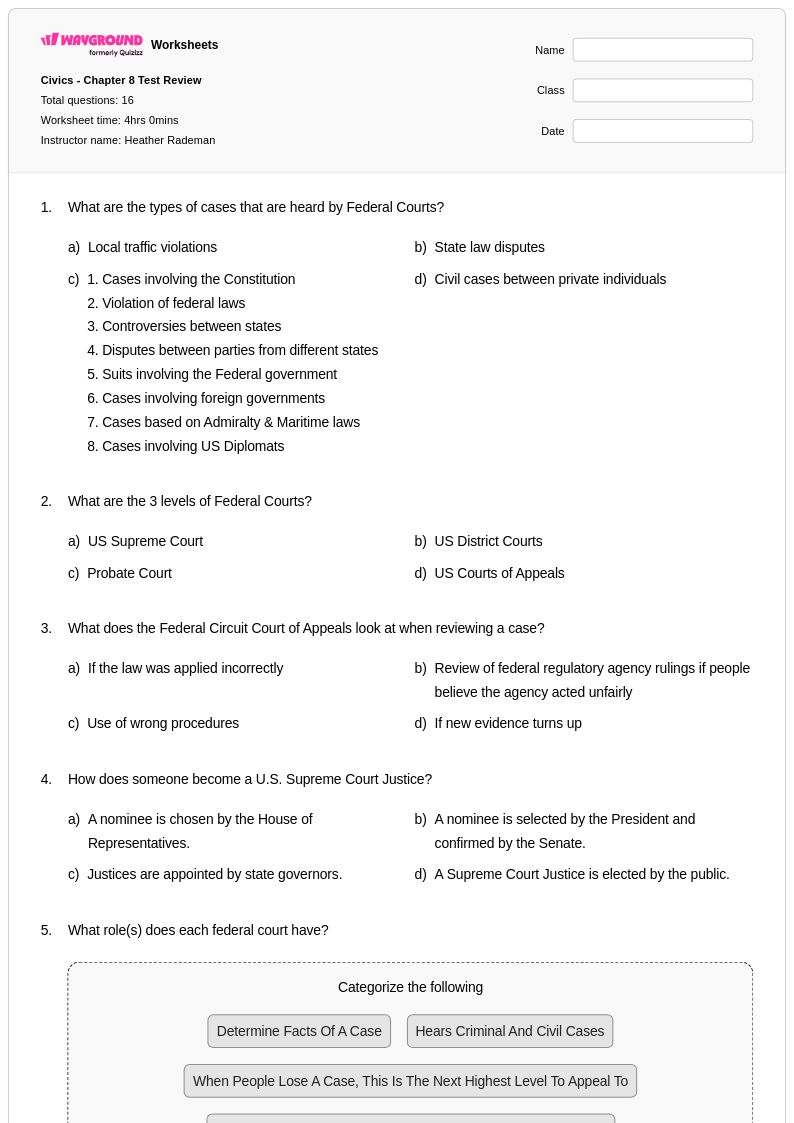
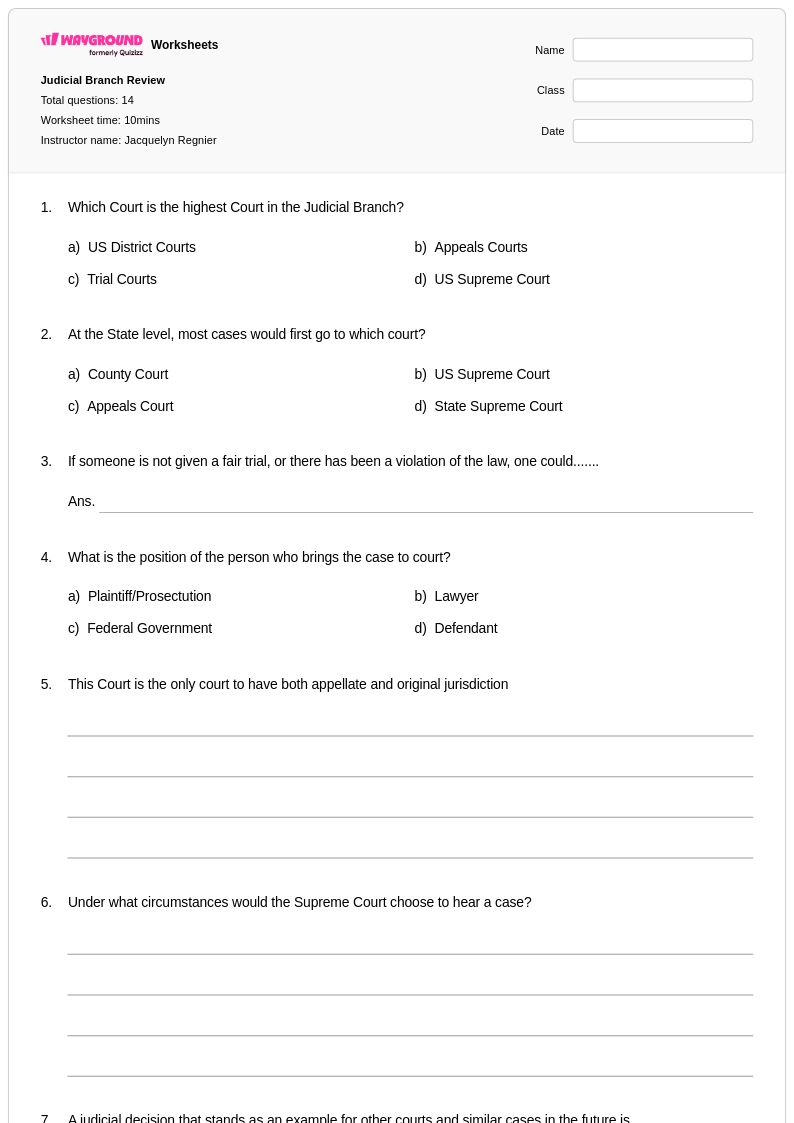
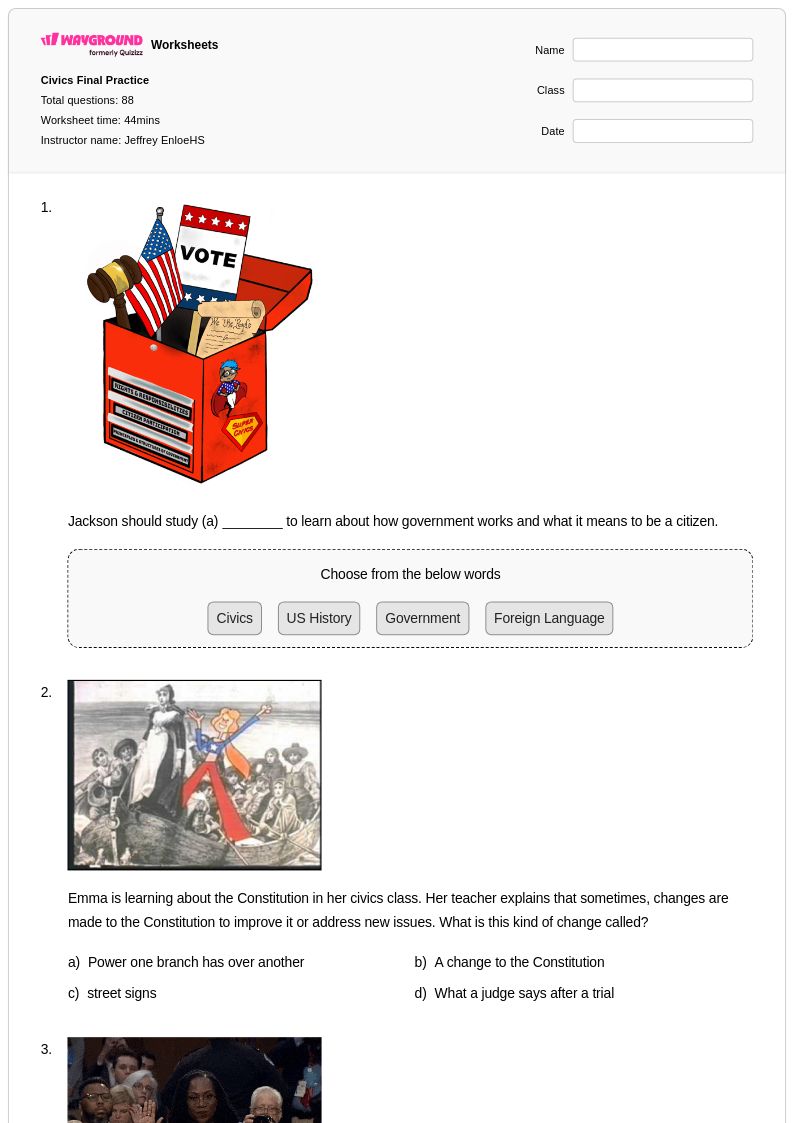
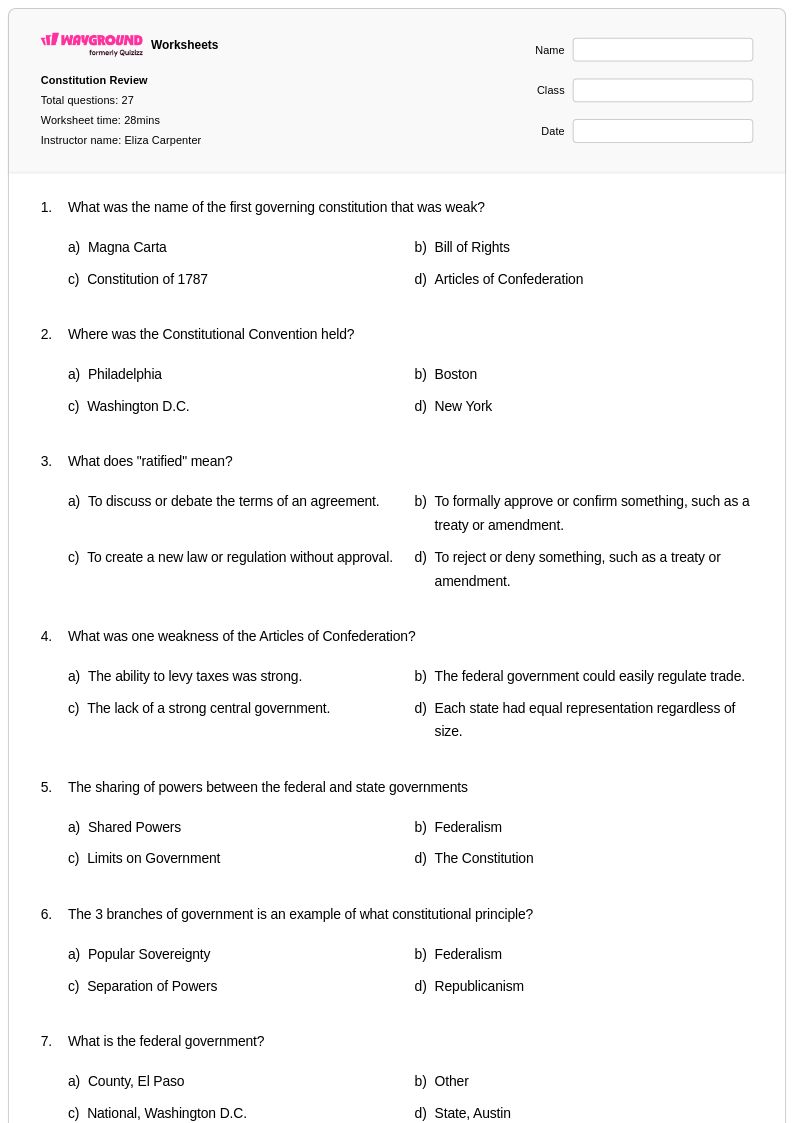
Explore free Class 10 Supreme Court Nominations worksheets and printables that help students understand the judicial appointment process, confirmation procedures, and constitutional requirements through engaging practice problems with comprehensive answer keys.
Explore printable Supreme Court Nominations worksheets for Class 10
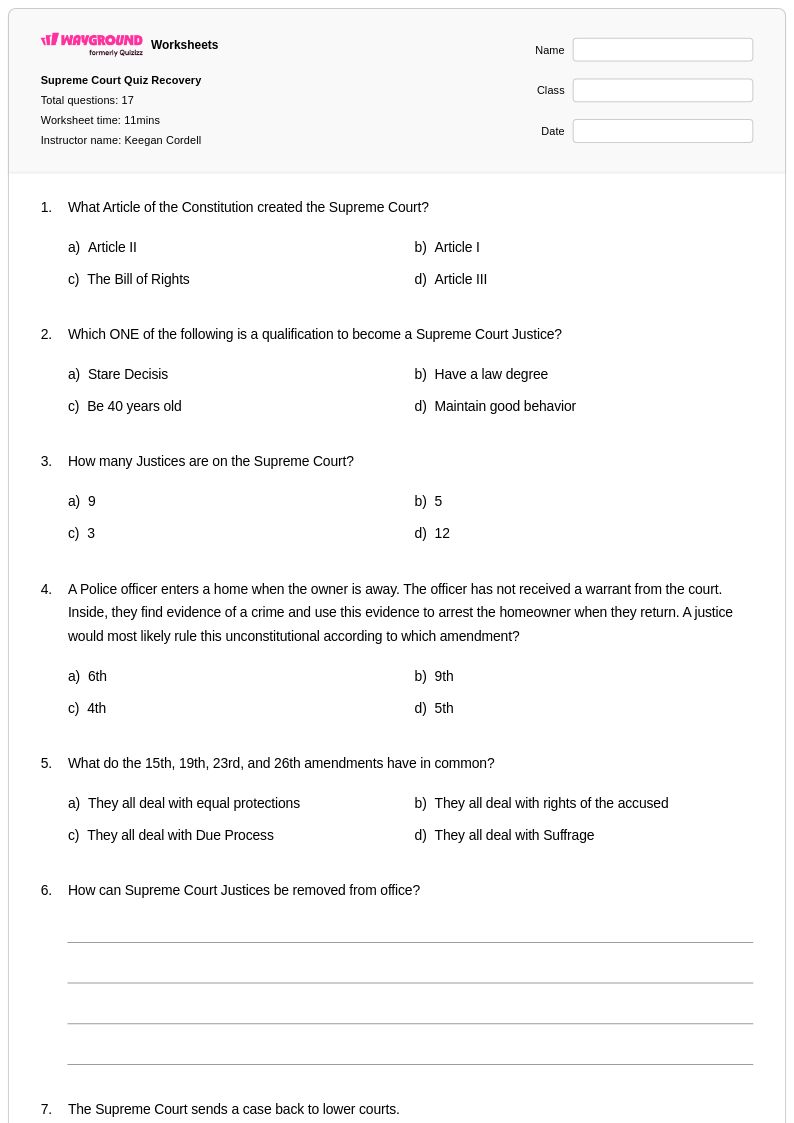
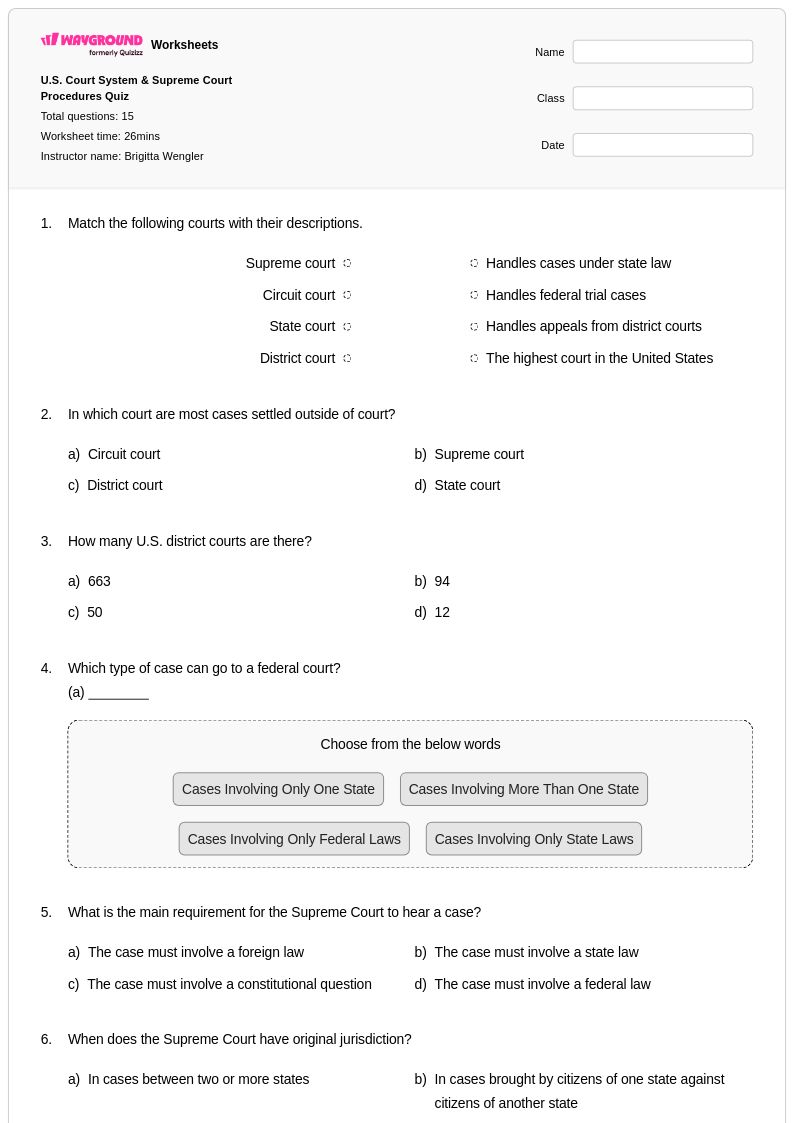
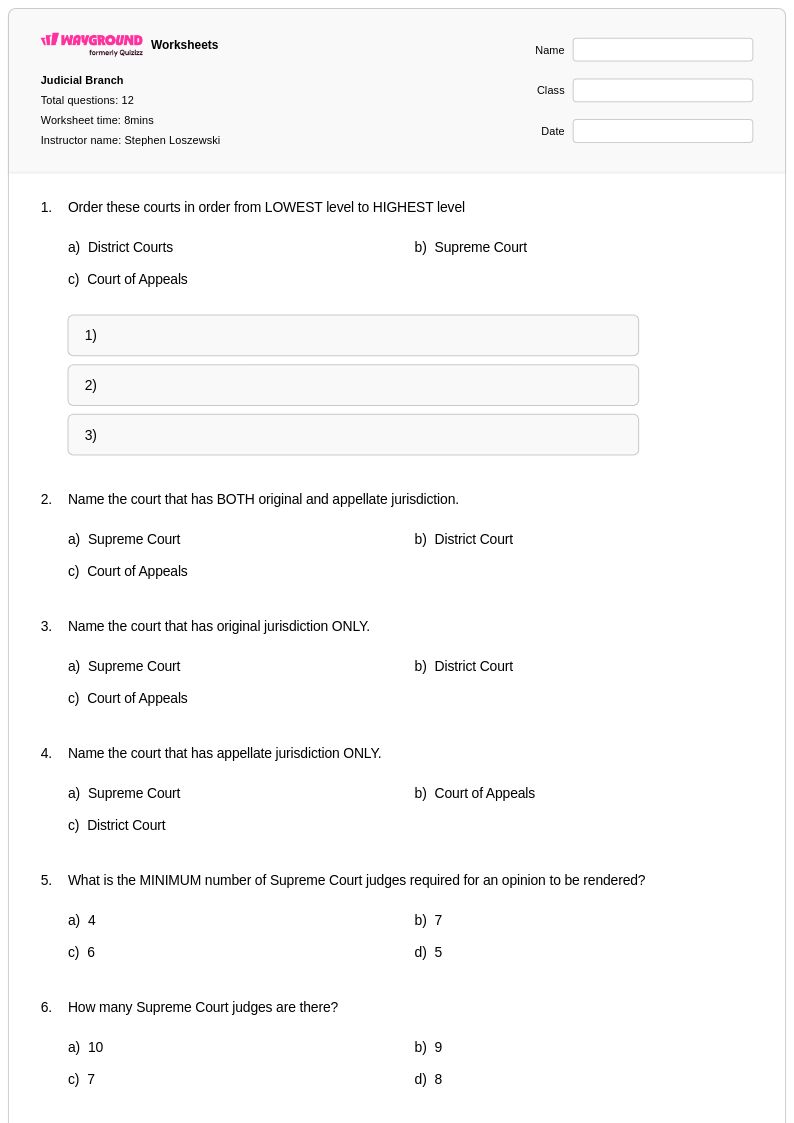
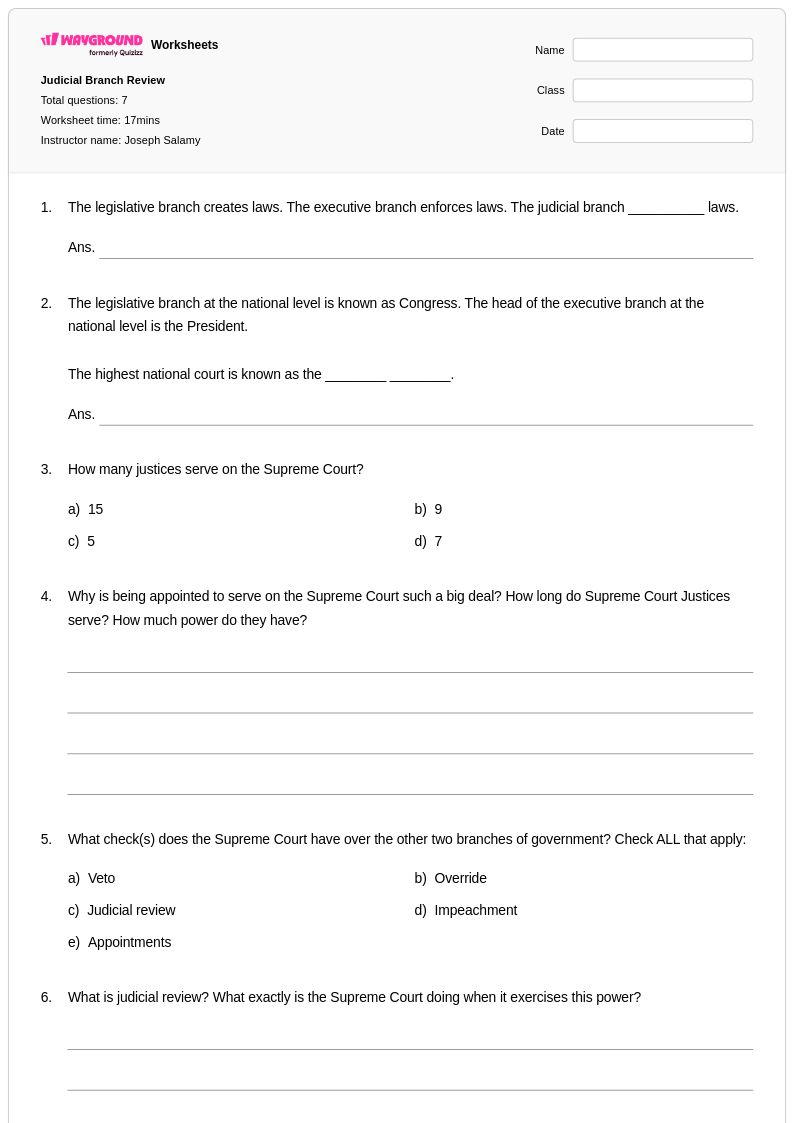
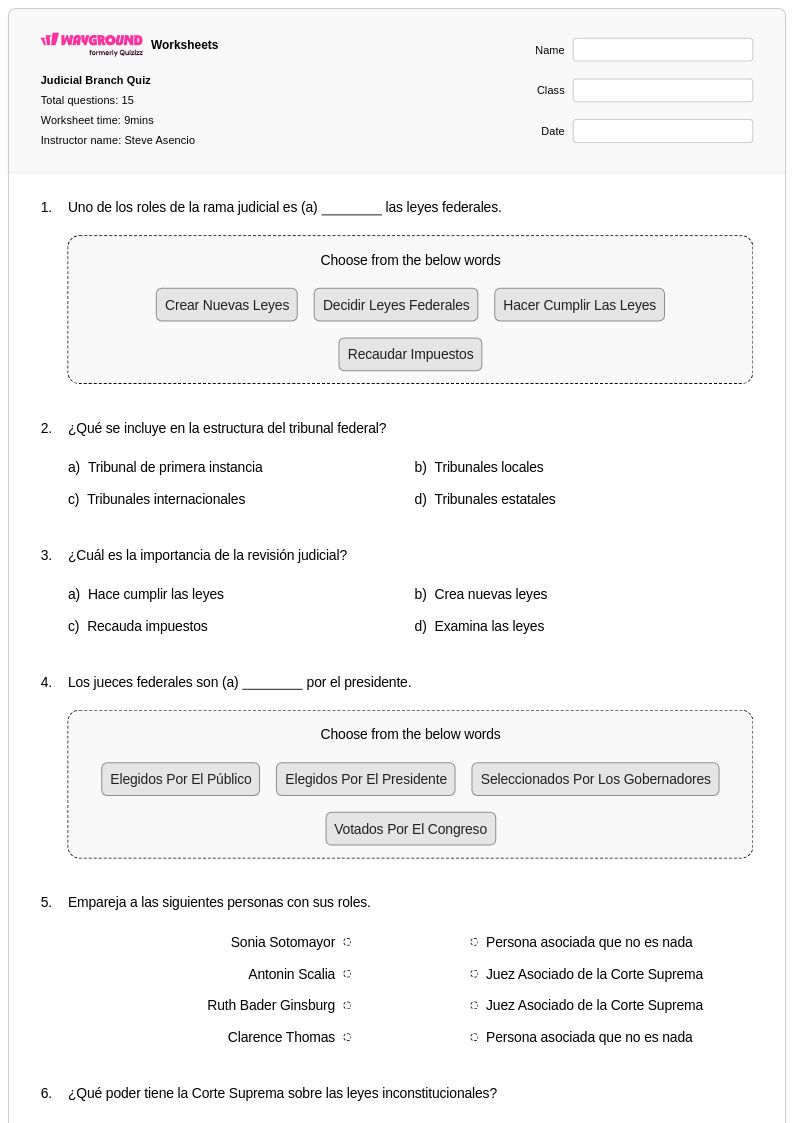
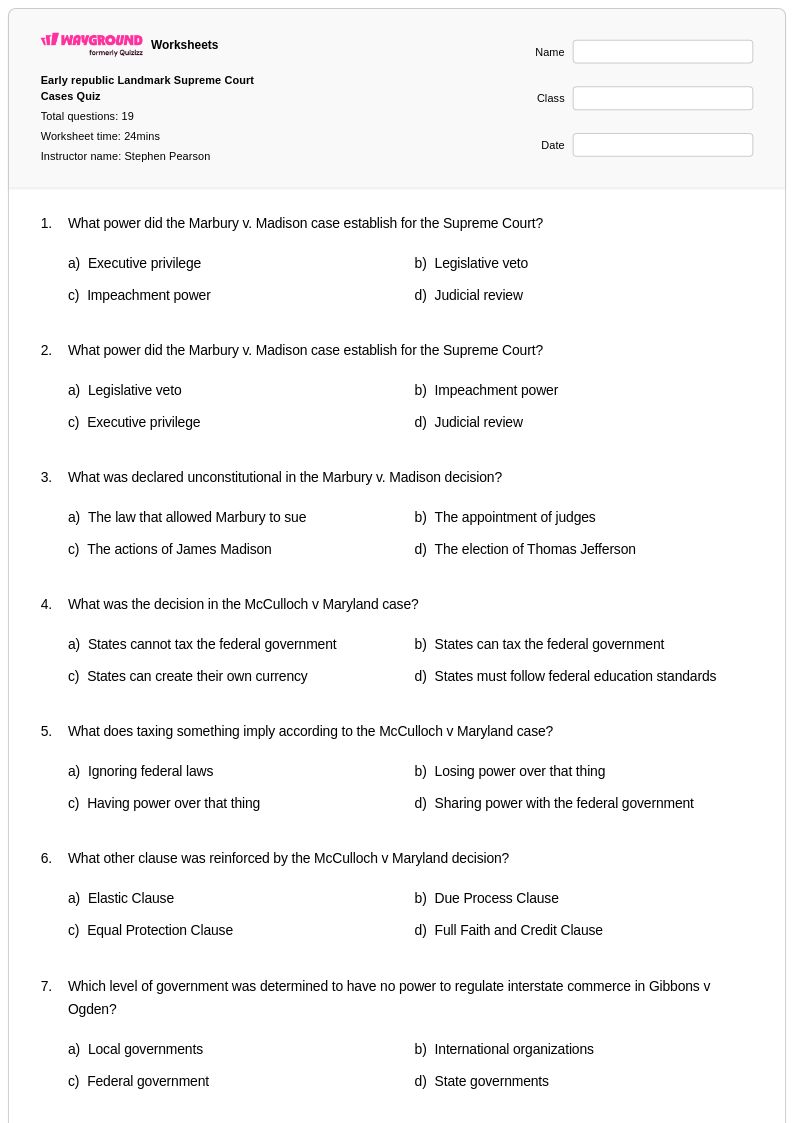
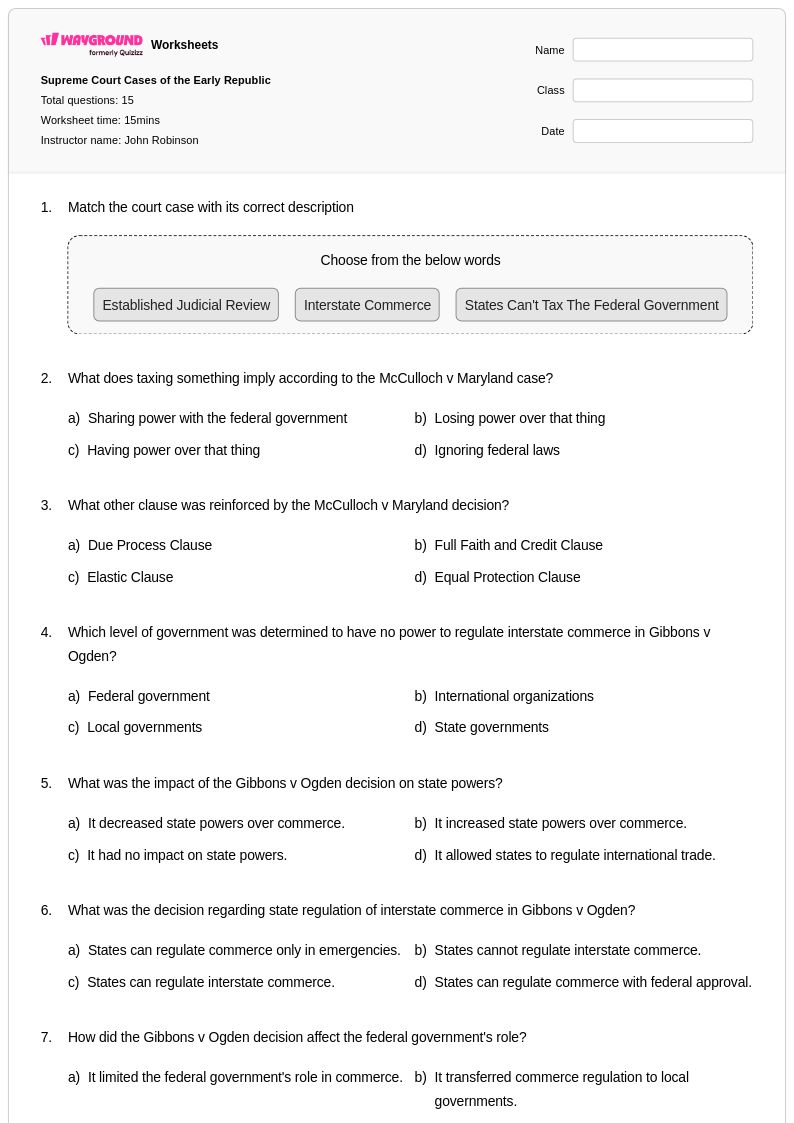
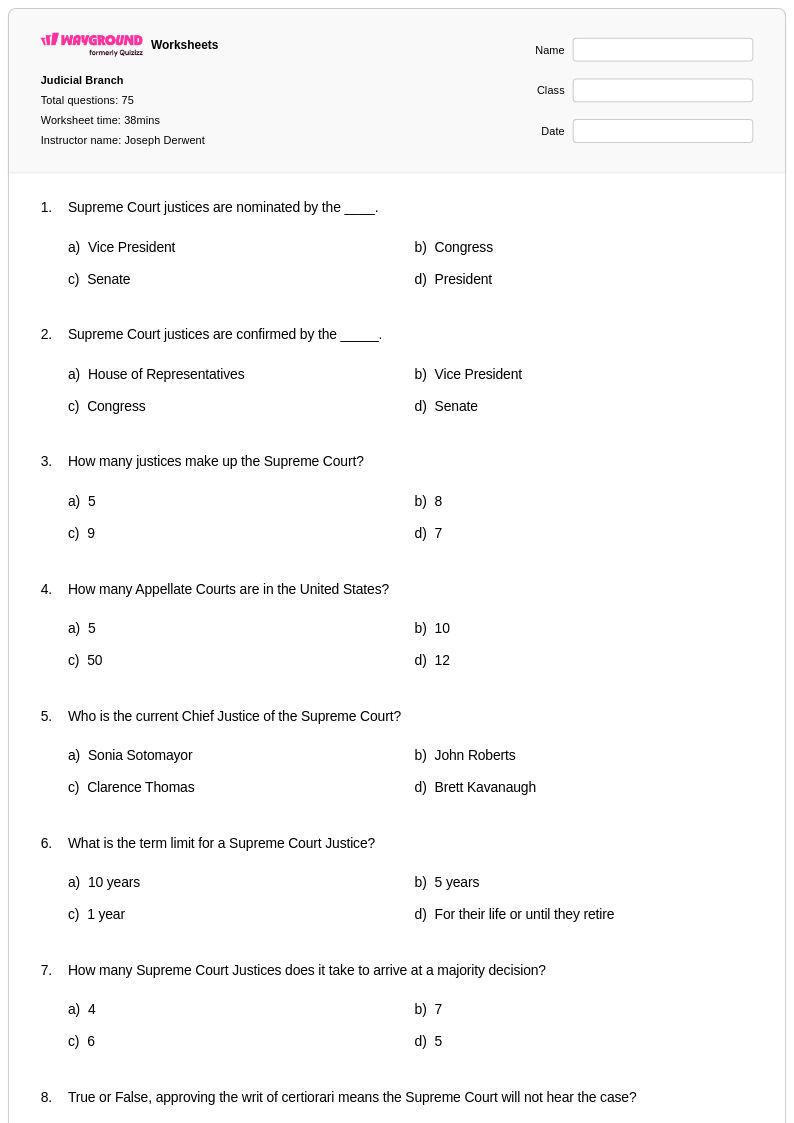
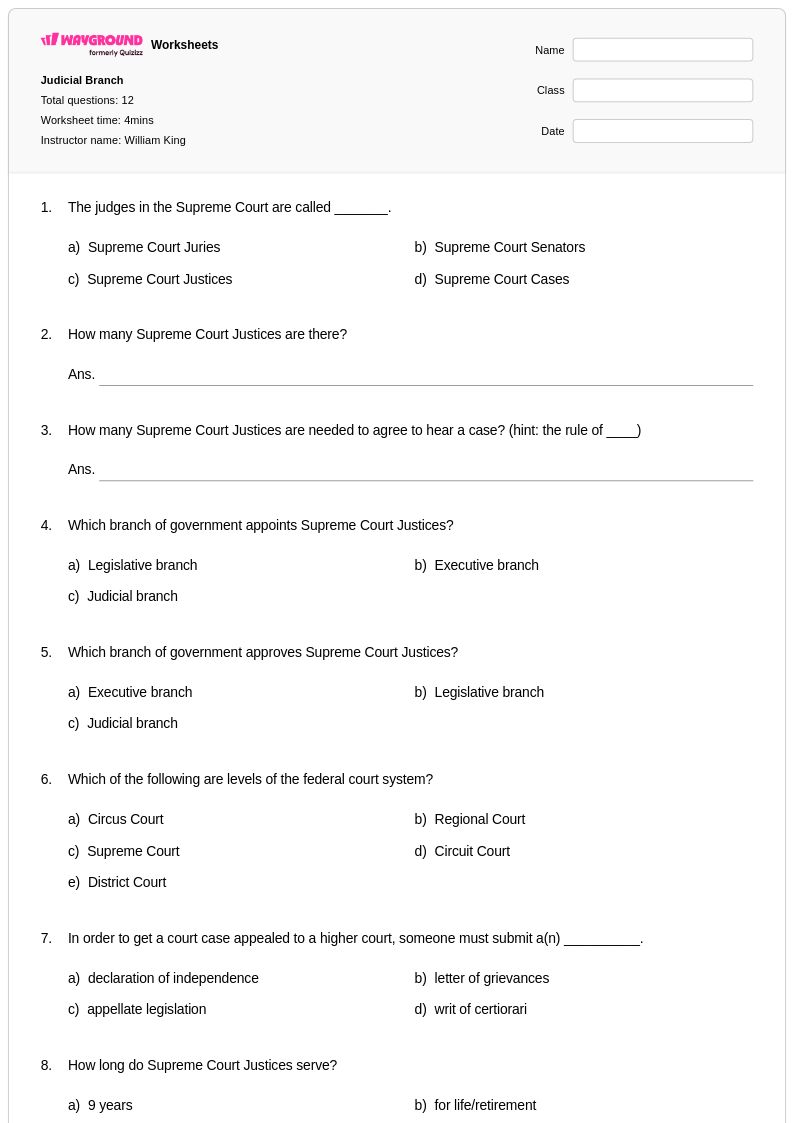
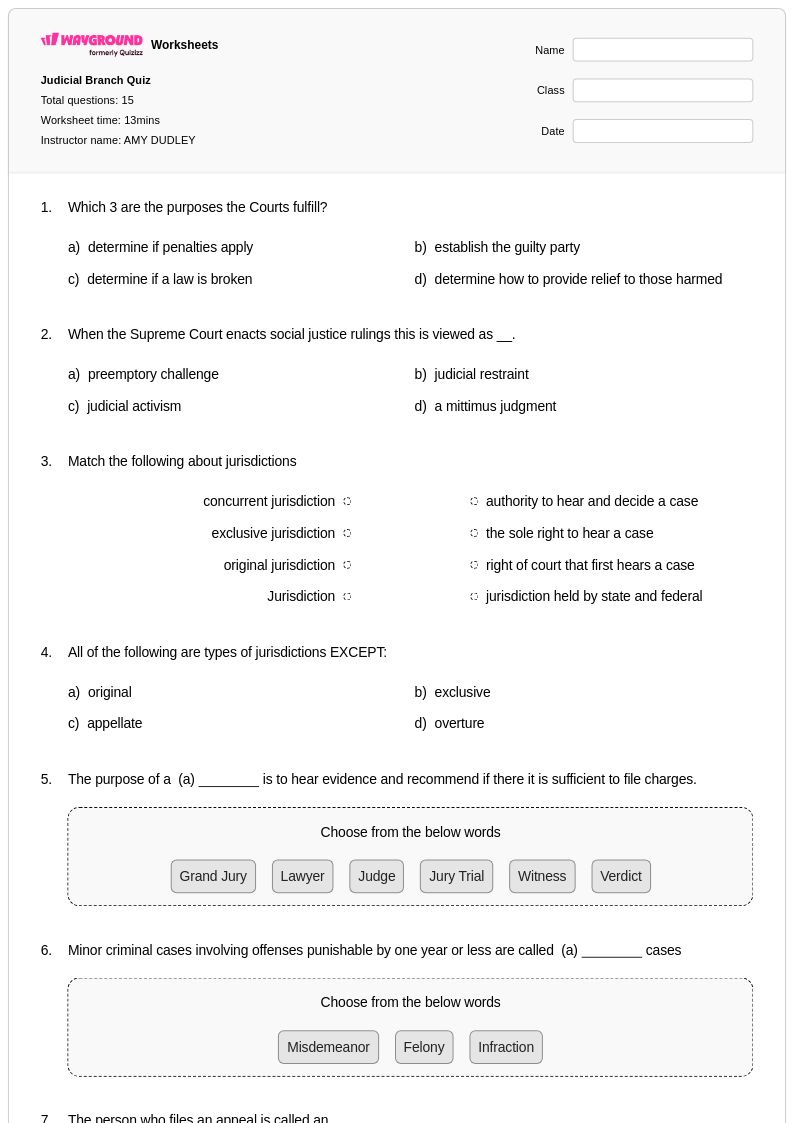
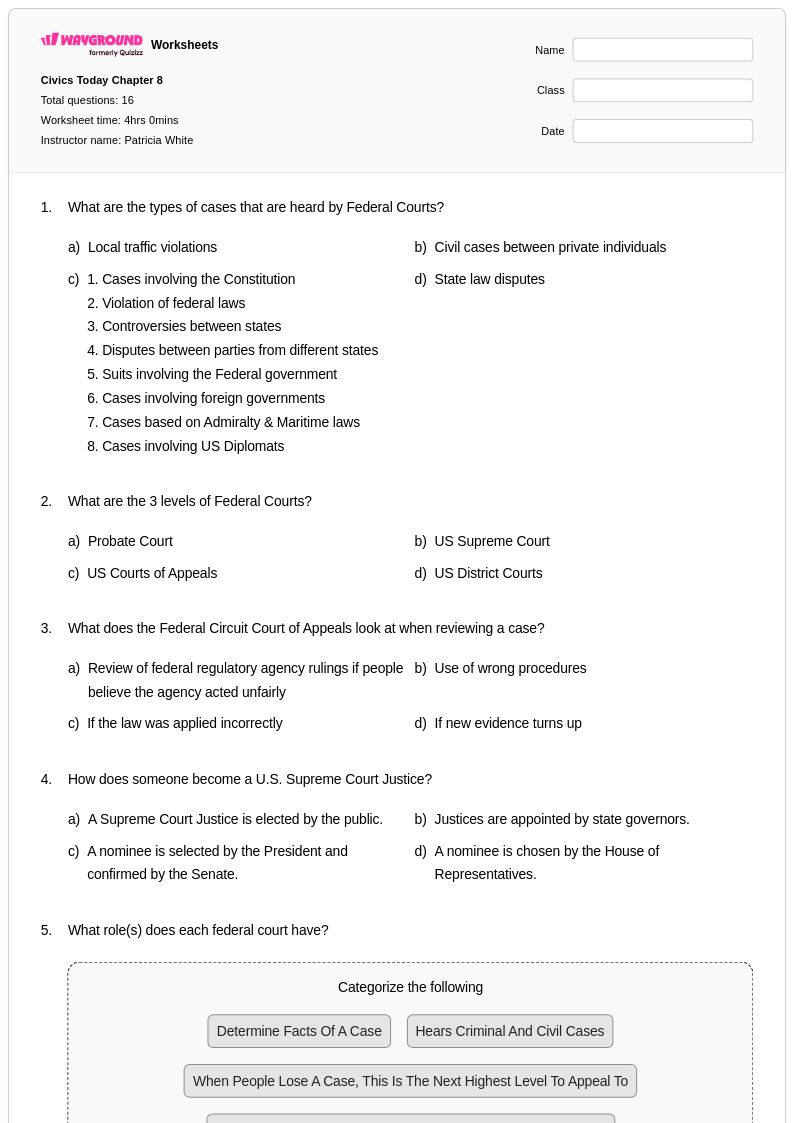
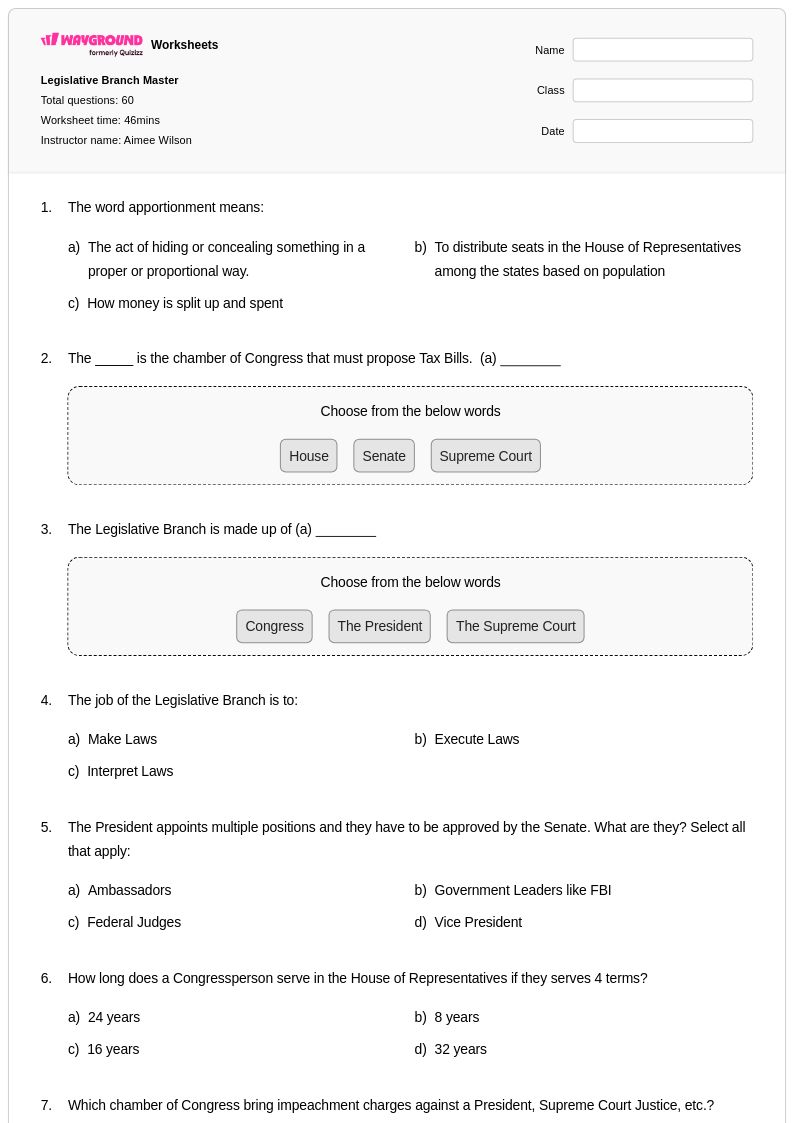
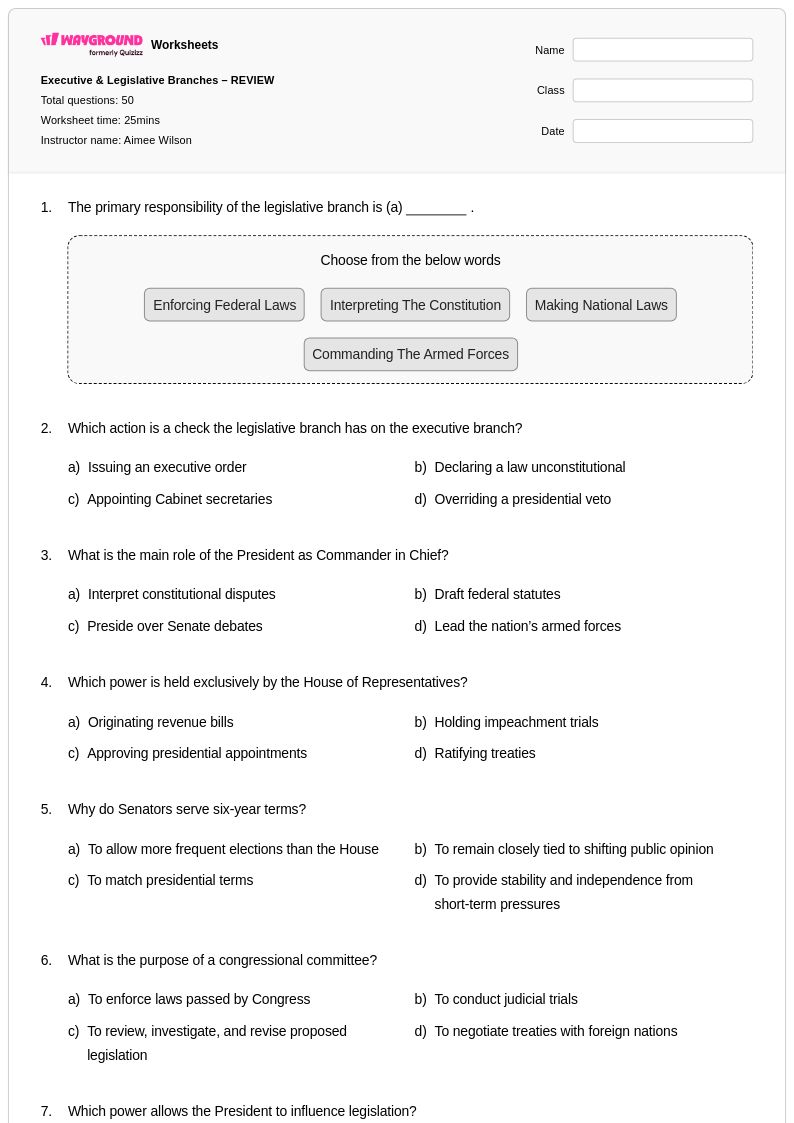
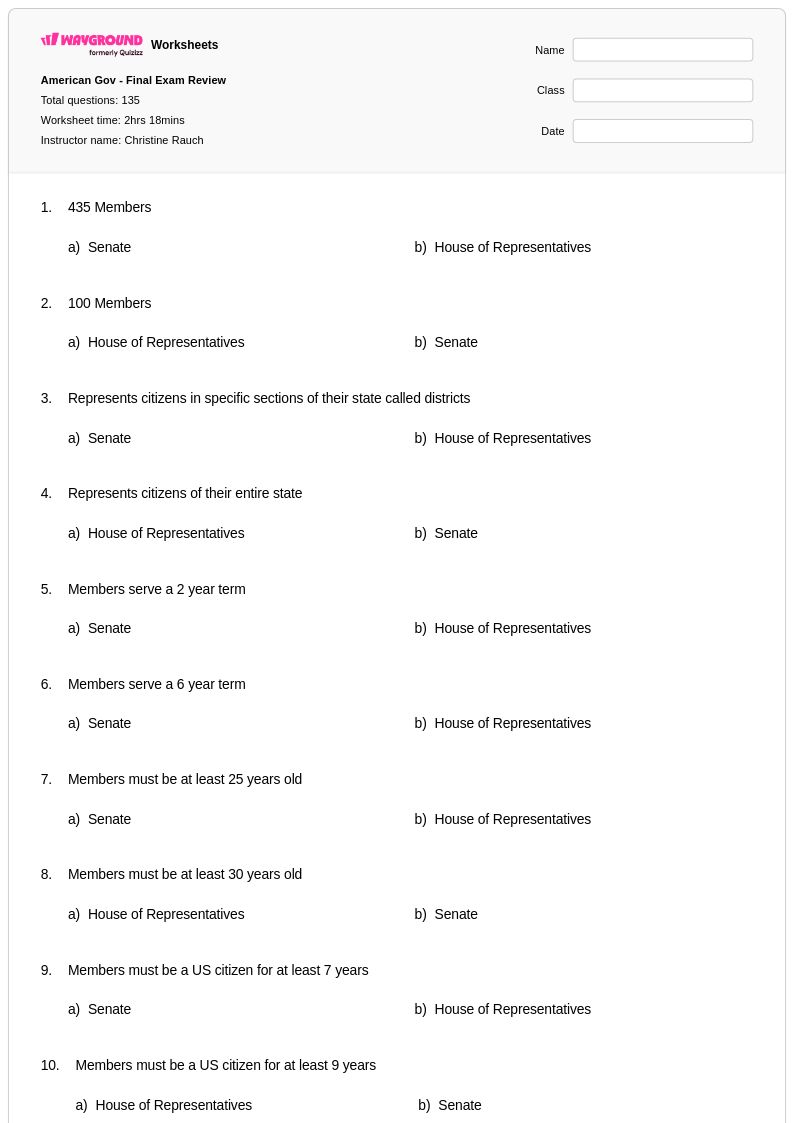
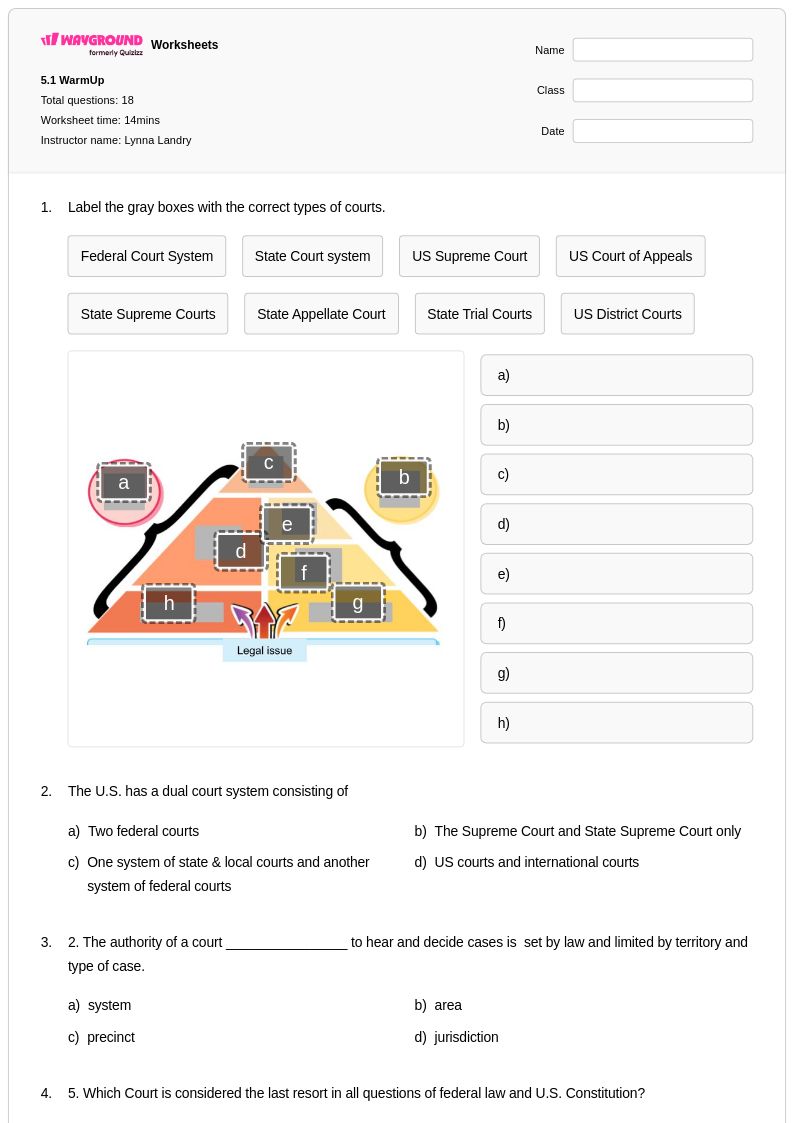
Supreme Court nominations represent a critical intersection of constitutional law, political process, and judicial independence that Class 10 students must understand to grasp how our highest court functions within the American system of government. Wayground's comprehensive collection of Supreme Court nominations worksheets provides educators with expertly designed materials that guide students through the complex nomination process, from presidential selection through Senate confirmation hearings. These educational resources strengthen students' analytical skills as they examine historical nomination battles, evaluate the qualifications and judicial philosophies of nominees, and assess the political dynamics that influence confirmation outcomes. The worksheets include detailed answer keys that support both independent study and classroom instruction, while the free printable format ensures accessibility for all learning environments. Practice problems within these materials challenge students to apply their understanding of constitutional principles, separation of powers, and the role of precedent in judicial decision-making.
Wayground's platform, formerly known as Quizizz, empowers educators with millions of teacher-created resources specifically designed to enhance civics and government instruction at the Class 10 level. The robust search and filtering capabilities allow teachers to quickly locate Supreme Court nominations materials that align with state and national social studies standards, ensuring curriculum coherence and academic rigor. These differentiation tools enable instructors to customize worksheets for diverse learning needs, providing both remediation support for struggling students and enrichment opportunities for advanced learners. Available in both printable pdf format and interactive digital versions, these resources offer maximum flexibility for classroom implementation, homework assignments, and skill practice sessions. Teachers can seamlessly integrate these materials into their lesson planning to address varying student readiness levels while maintaining focus on essential constitutional concepts and the evolving role of the Supreme Court in American democracy.
FAQs
How do I teach the Supreme Court nomination process to my students?
Start by grounding students in the constitutional basis for judicial appointments — Article II, Section 2 — before walking through the modern confirmation process: presidential nomination, Senate Judiciary Committee hearings, committee vote, and full Senate confirmation vote. Using case studies of historic nominations, such as those of Thurgood Marshall, Robert Bork, or Ketanji Brown Jackson, gives students concrete examples to analyze how politics, ideology, and constitutional interpretation intersect. Pairing this with primary source documents like Senate hearing transcripts or confirmation speeches deepens comprehension of the process.
What exercises help students practice understanding Supreme Court nominations?
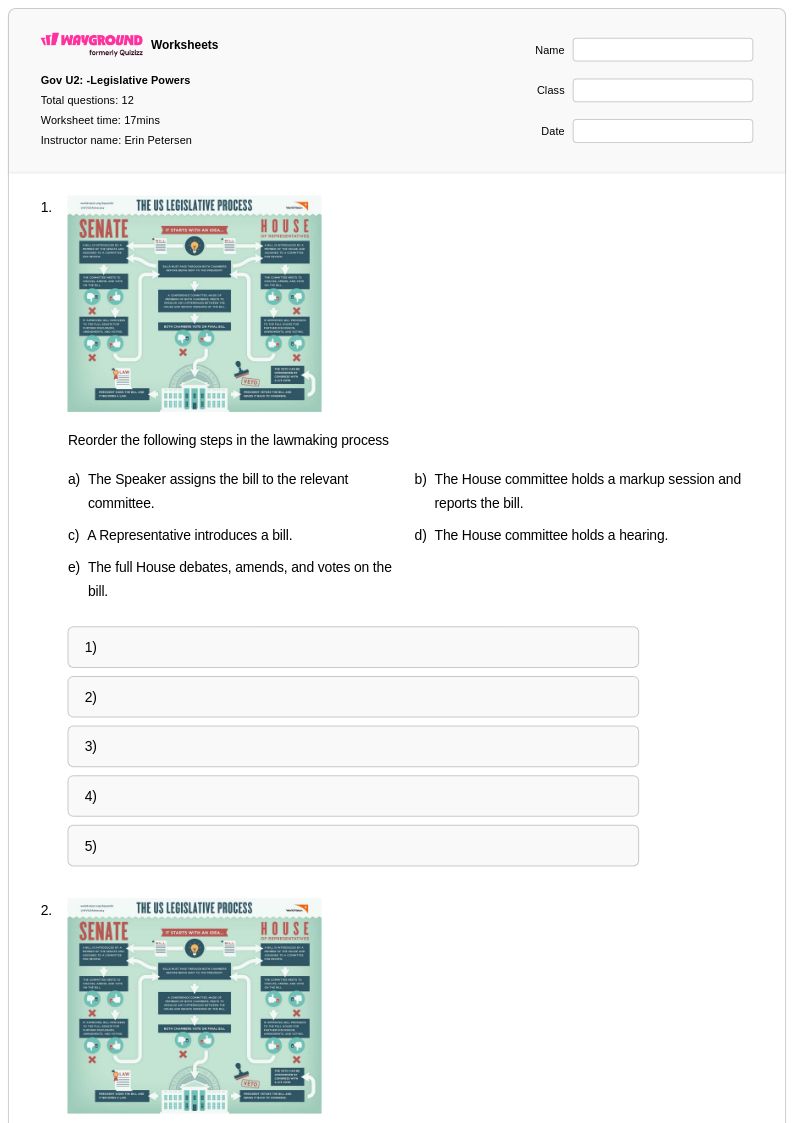
Effective practice activities include sequencing exercises that ask students to order the steps of the confirmation process, document analysis tasks using real Senate Judiciary Committee testimony, and compare-and-contrast exercises between confirmed and rejected nominees. Role-play simulations — where students take on the roles of senators, nominees, or interest groups during a mock confirmation hearing — are especially effective at making the process tangible. Worksheet-based practice that connects nominations to broader civics concepts like checks and balances and separation of powers reinforces how judicial appointments fit within the constitutional system.
What common mistakes do students make when learning about Supreme Court nominations?
A frequent misconception is that the President has unchecked authority to appoint justices — students often overlook the Senate's advise-and-consent role as a deliberate constitutional check. Students also commonly confuse nomination with confirmation, treating them as the same event rather than distinct stages. Another persistent error is assuming that justices vote in predictable partisan alignment with the president who nominated them, which historical examples routinely contradict. Addressing these misconceptions early, with specific counterexamples, prevents them from taking root.
How does the Supreme Court nomination process connect to checks and balances?
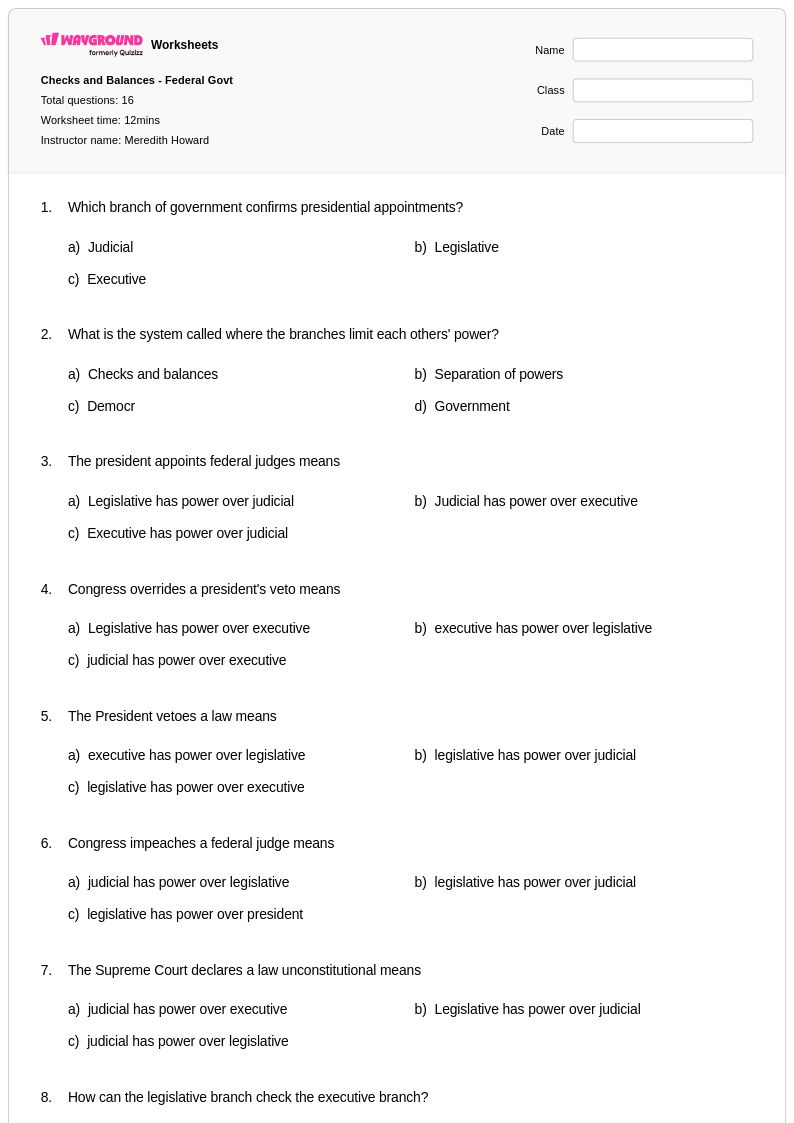
The nomination process is one of the clearest illustrations of checks and balances in action: the executive branch nominates, the legislative branch confirms, and the resulting judicial appointments then check both branches through constitutional review. Teaching students to trace this interdependence — rather than studying each branch in isolation — builds a more accurate picture of how American government actually functions. Worksheets that ask students to map the roles of each branch during a nomination reinforce this systemic thinking directly.
How can I use Supreme Court Nominations worksheets in my classroom?
Supreme Court Nominations worksheets on Wayground are available as printable PDFs for traditional classroom use and in digital formats for technology-integrated instruction, giving teachers flexibility across in-person, hybrid, and remote settings. Teachers can assign them as guided practice during a civics or government unit, use them for homework reinforcement, or host them as a quiz directly on Wayground for immediate formative assessment. The included answer keys make grading straightforward and support self-assessment for students reviewing their own work.
How can I differentiate Supreme Court nomination instruction for students with different learning needs?
For students who need additional support, scaffolding strategies include providing a visual flowchart of the confirmation process, pre-teaching key vocabulary such as 'filibuster,' 'recess appointment,' and 'judicial ideology,' and reducing the complexity of document excerpts used for analysis. On Wayground, teachers can apply individual accommodations such as read aloud, extended time, and reduced answer choices to specific students without alerting their peers, allowing differentiated support to run seamlessly within a single class session. Advanced learners can be challenged with tasks that require them to evaluate the long-term constitutional impact of specific appointments or compare the confirmation processes of different historical eras.