Free Printable Life Science Worksheets for Class 11
Explore our comprehensive collection of Class 11 Life Science worksheets and printables that help students master biological concepts through engaging practice problems, complete with answer keys and free PDF downloads.
Explore printable Life Science worksheets for Class 11
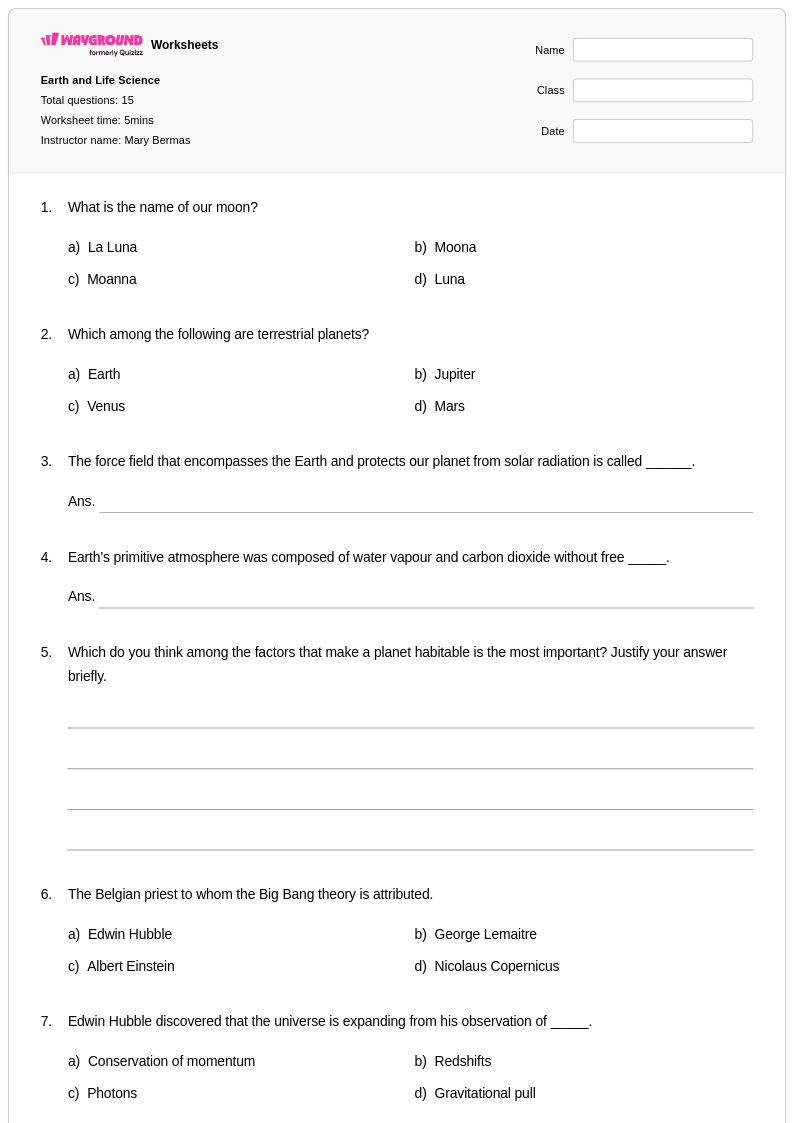
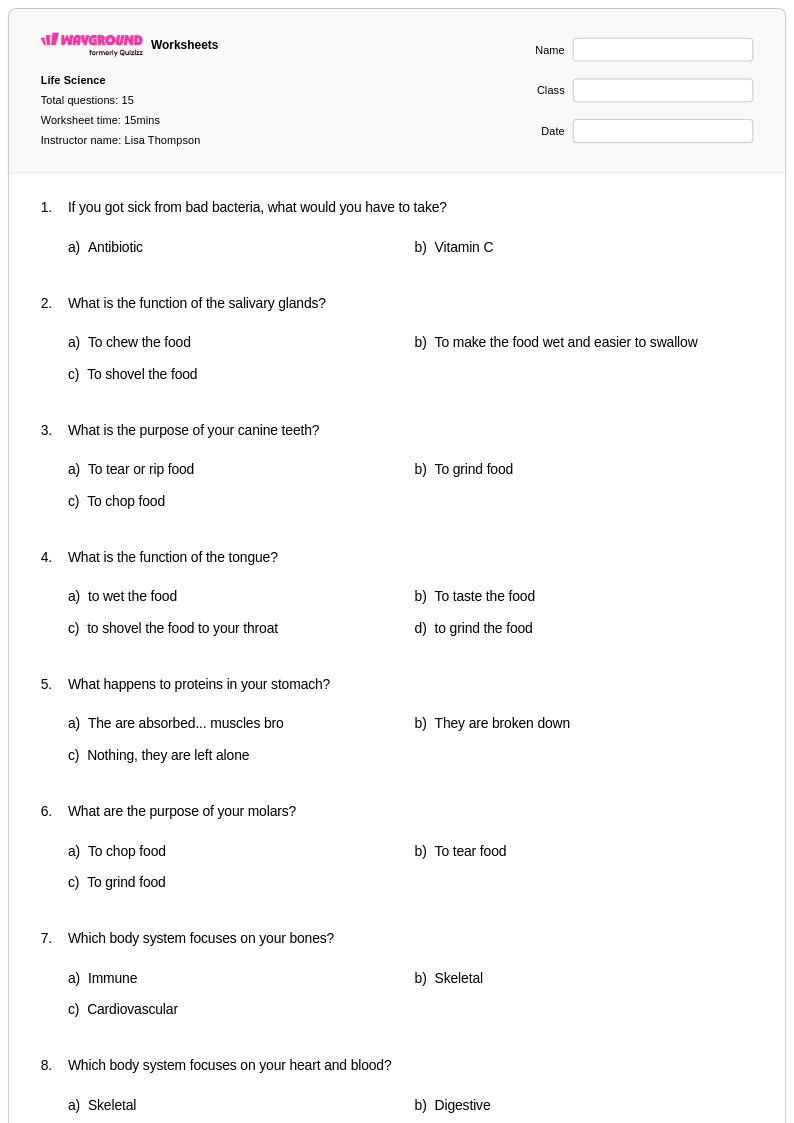
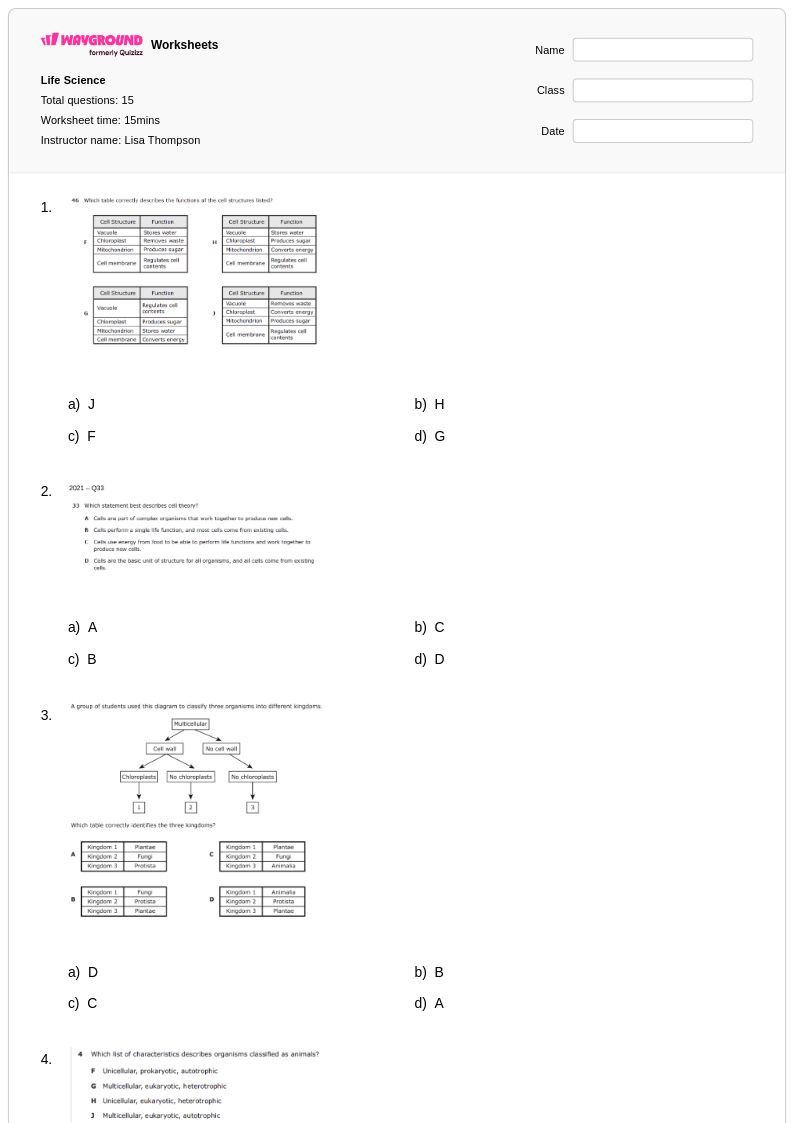
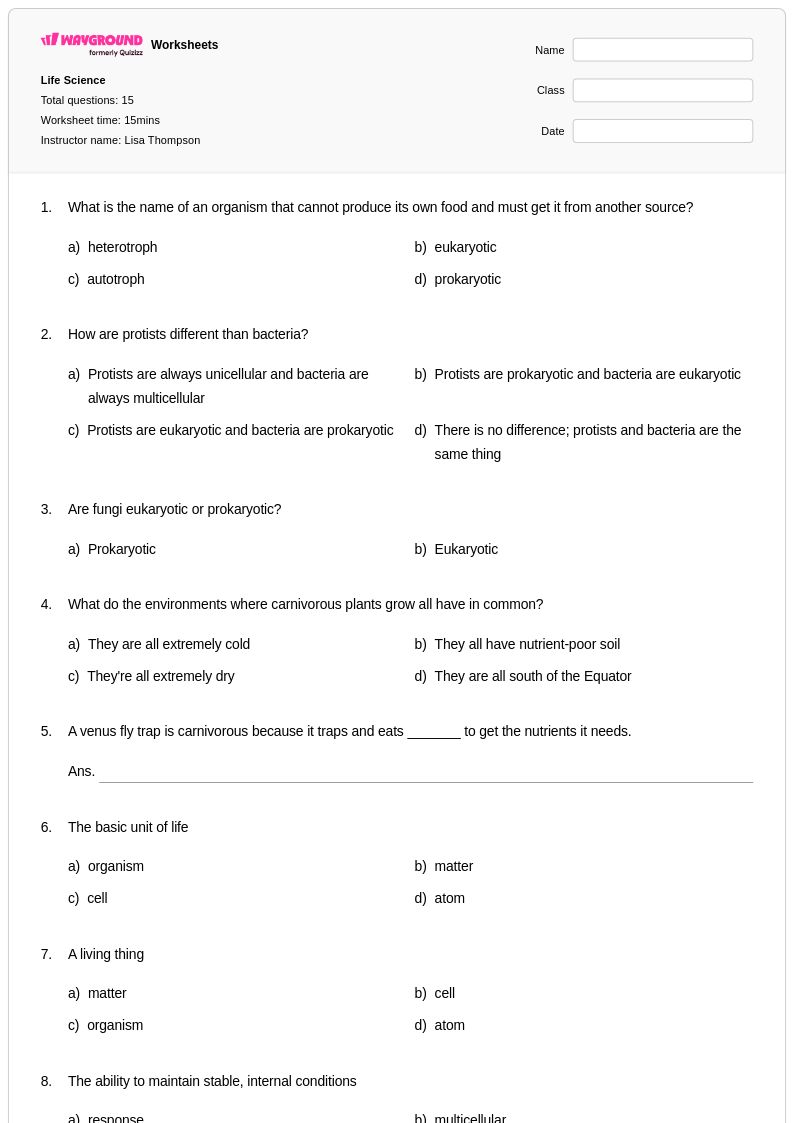
Class 11 Life Science worksheets available through Wayground (formerly Quizizz) provide comprehensive coverage of advanced biological concepts essential for upper-level high school students. These expertly crafted resources strengthen critical thinking skills through detailed exploration of cellular processes, genetics, evolution, ecology, and human biology systems. Students engage with complex practice problems that challenge their understanding of molecular biology, DNA replication, protein synthesis, and metabolic pathways while developing scientific reasoning abilities. The worksheet collections include detailed answer keys that support independent learning and self-assessment, with many resources available as free printables in convenient pdf format for both classroom and home study applications.
Wayground (formerly Quizizz) empowers educators with an extensive library of millions of teacher-created Life Science resources specifically designed for Class 11 curriculum requirements. The platform's sophisticated search and filtering capabilities allow teachers to quickly locate worksheets aligned with state and national science standards, ensuring comprehensive coverage of essential biological concepts. Advanced differentiation tools enable educators to customize content complexity for diverse learning needs, while flexible formatting options provide both printable pdf versions and interactive digital alternatives. These versatile resources facilitate strategic lesson planning, targeted skill remediation, and enrichment opportunities, allowing teachers to address individual student needs while maintaining rigorous academic standards throughout their advanced biology instruction.
FAQs
How do I teach life science concepts to elementary and middle school students?
Effective life science instruction builds from the concrete to the abstract — start with observable phenomena like plant growth, animal behavior, or the five senses before introducing cellular or systemic concepts. Hands-on activities such as owl pellet dissection, life cycle observations, and garden planning help students connect biological processes to real-world experience. Structured worksheets that walk students through labeled diagrams, sequencing tasks, and classification exercises reinforce vocabulary and conceptual understanding between direct instruction sessions.
What types of exercises help students practice life science topics like life cycles, classification, and ecosystems?
Practice exercises most effective for life science include sequencing diagrams for life cycles (such as butterfly metamorphosis, frog life cycles, and bee life cycles), sorting and classification tasks for animal groups like carnivores, herbivores, and omnivores, and labeling activities for anatomy topics such as insect anatomy, earthworm anatomy, and horse body parts. Matching and fill-in-the-blank formats work well for vocabulary-heavy topics like nutrients, natural selection, and adaptations. Variety across these formats builds both recall and deeper conceptual understanding.
What misconceptions do students commonly have about life science topics like food chains, adaptation, and life cycles?
A common misconception is that animals choose to adapt — students often think individual animals change on purpose rather than understanding that adaptation occurs across generations through natural selection. With life cycles, students frequently confuse metamorphosis stages or assume all animals undergo the same type of development. For food and nutrition topics, students often conflate 'healthy food' with 'any natural food,' missing the concept of balanced nutrient intake. Targeted worksheet practice that prompts students to explain their reasoning helps surface and correct these errors.
How can I differentiate life science instruction for students at different ability levels?
For life science topics that span a wide range of complexity — from animal needs and habitats to genetics and ecosystems — differentiation can include tiered worksheets that vary the level of scaffolding, such as partially completed diagrams for developing learners versus open-ended analysis prompts for advanced students. On Wayground, teachers can apply individual accommodations including read aloud for students who need audio support, reduced answer choices to lower cognitive load, and extended time for students who need it, all configurable per student without notifying the rest of the class.
How do I use Wayground's life science worksheets in my classroom?
Wayground's life science worksheets are available as printable PDFs for traditional classroom use and in digital formats for technology-integrated environments, giving teachers flexibility across in-person, hybrid, and remote settings. Teachers can also host worksheets as a live or assigned quiz directly on Wayground, enabling real-time student response tracking and immediate feedback. Each worksheet includes a complete answer key, reducing grading time and allowing teachers to focus on targeted follow-up instruction.
What life science topics are covered in Wayground's worksheet collection?
Wayground's life science worksheet collection spans a wide range of biological topics including animal biology, classification, habitats, and offspring; life cycles for butterflies, frogs, bees, chickens, and pumpkins; plant growth and plant life cycles; insect and earthworm anatomy; human life stages; health and nutrition; the five senses; natural selection and adaptations; and ecosystems concepts such as nocturnal animals, polar animals, and food types like carnivores, herbivores, and omnivores. This breadth makes it a practical resource for teachers covering life science across multiple grade bands.