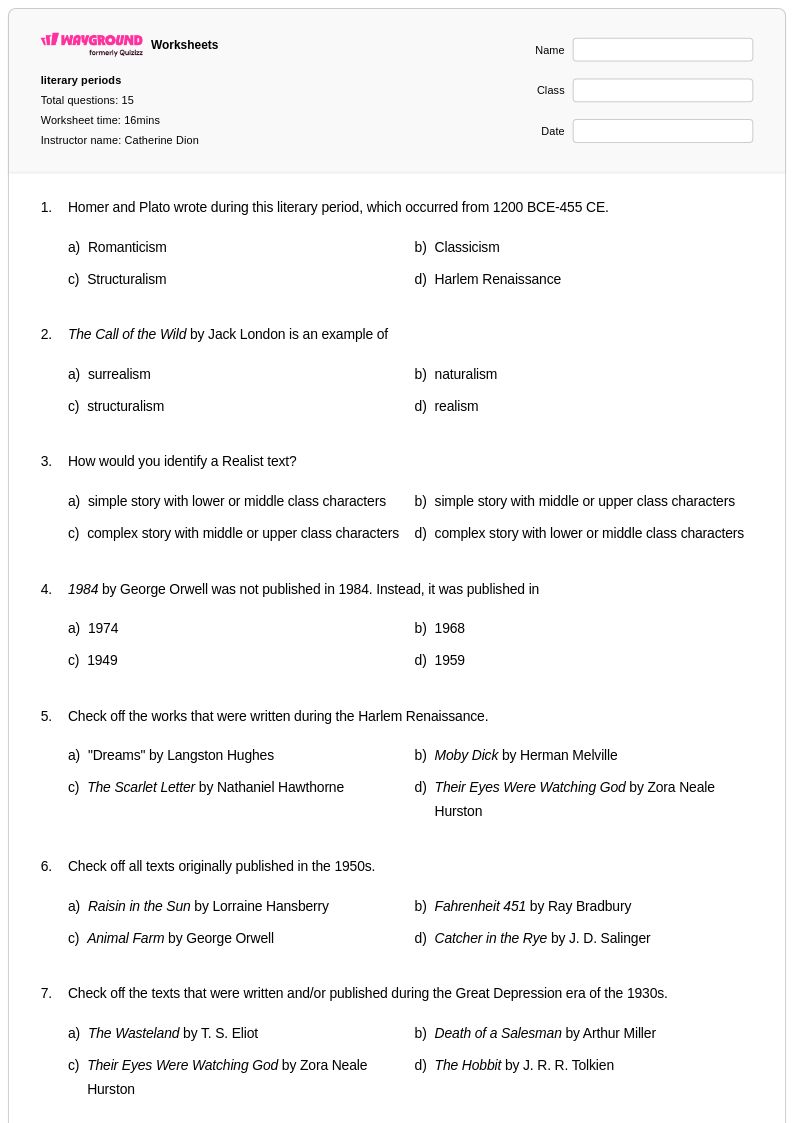
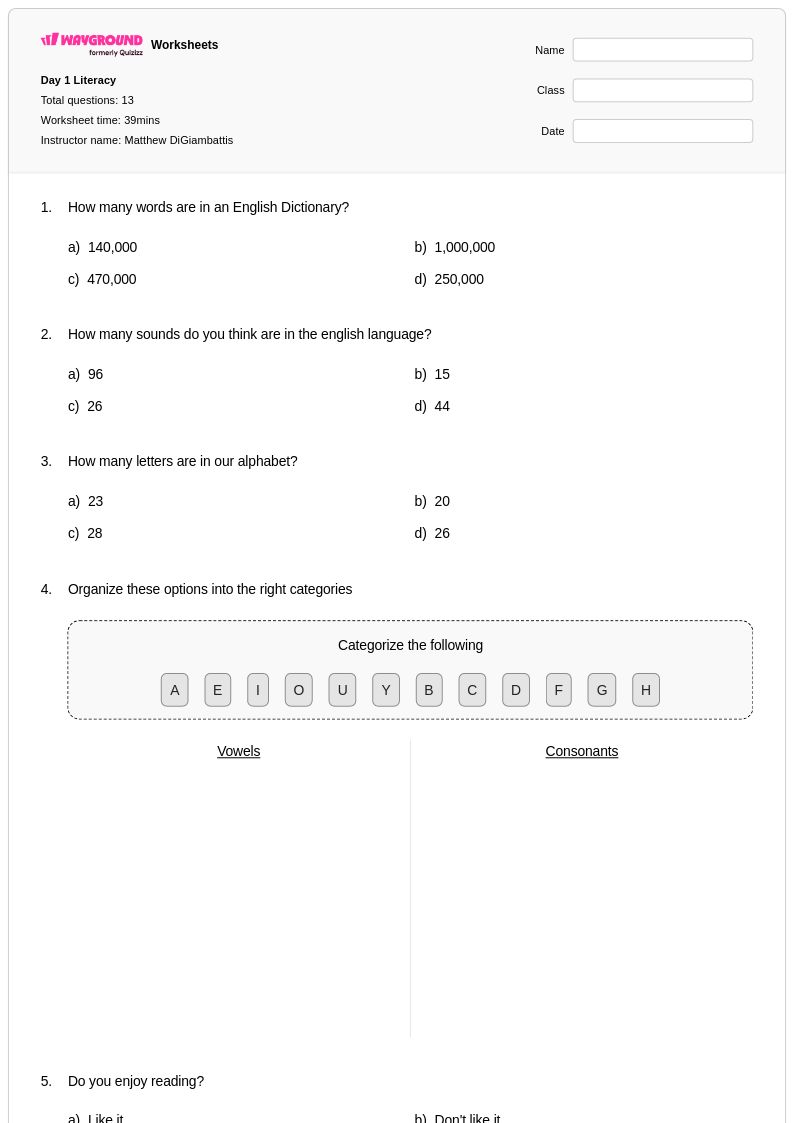
Free Printable Literacy Concepts Worksheets for Class 11
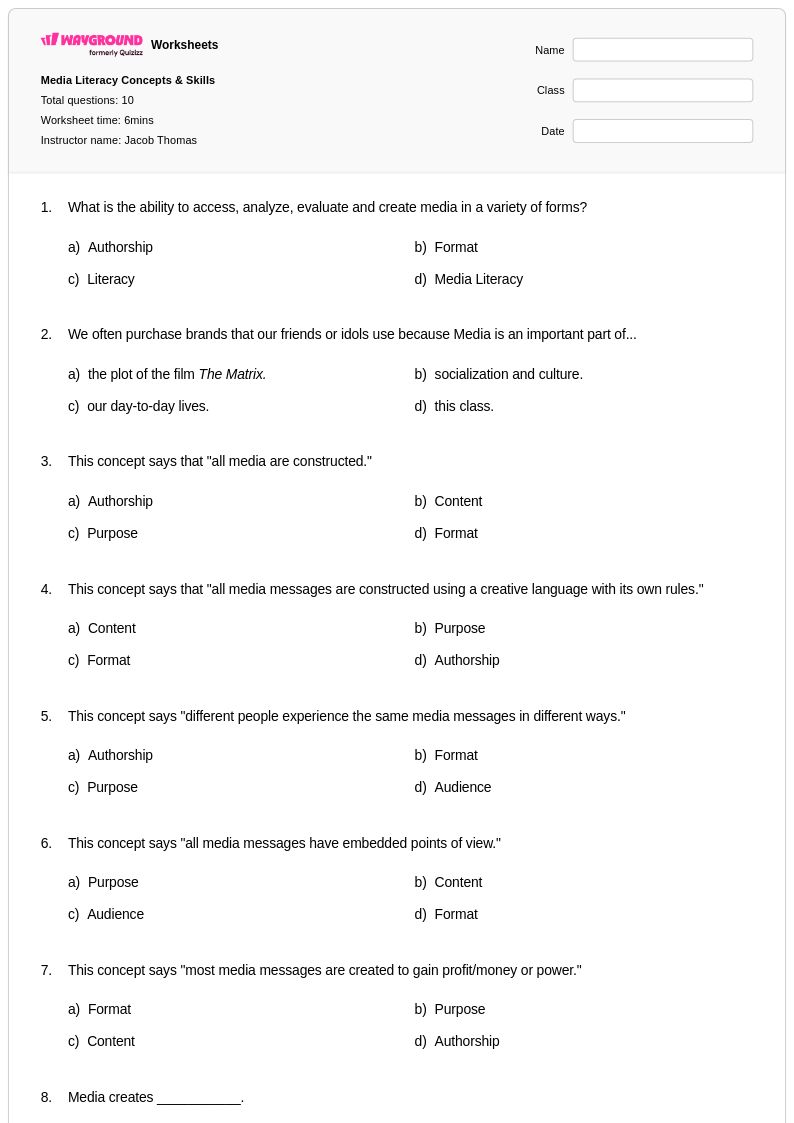
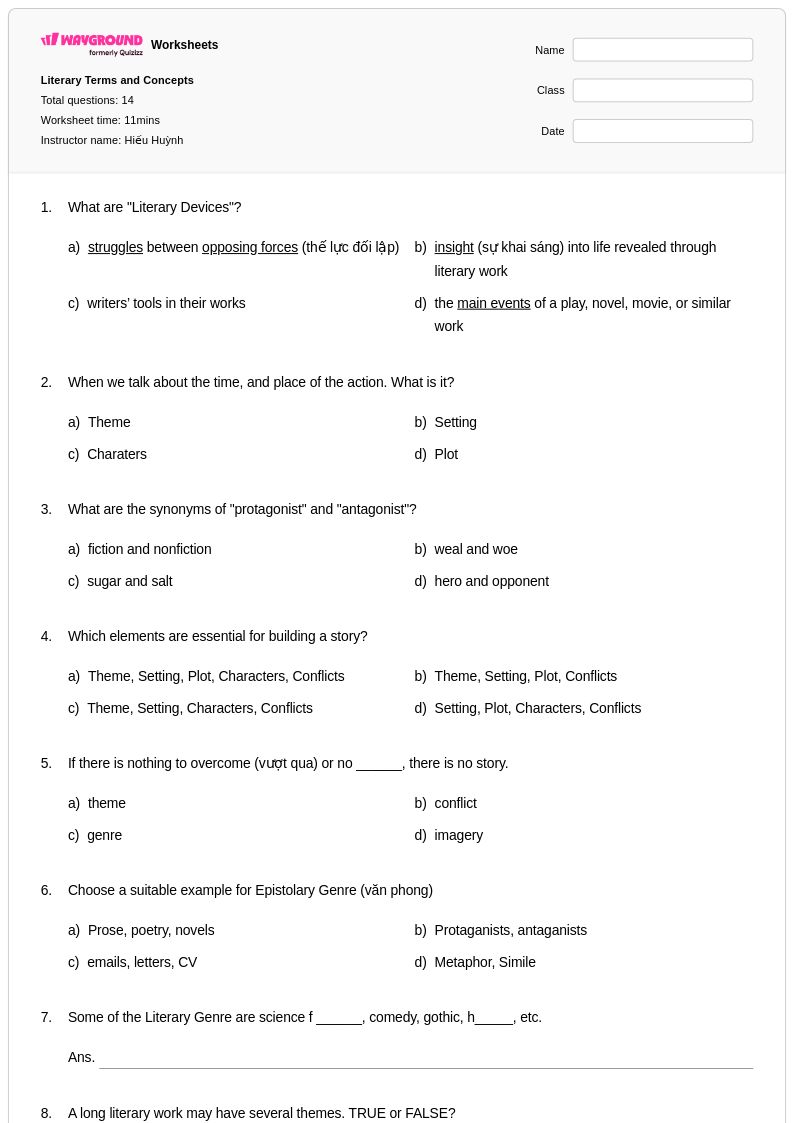
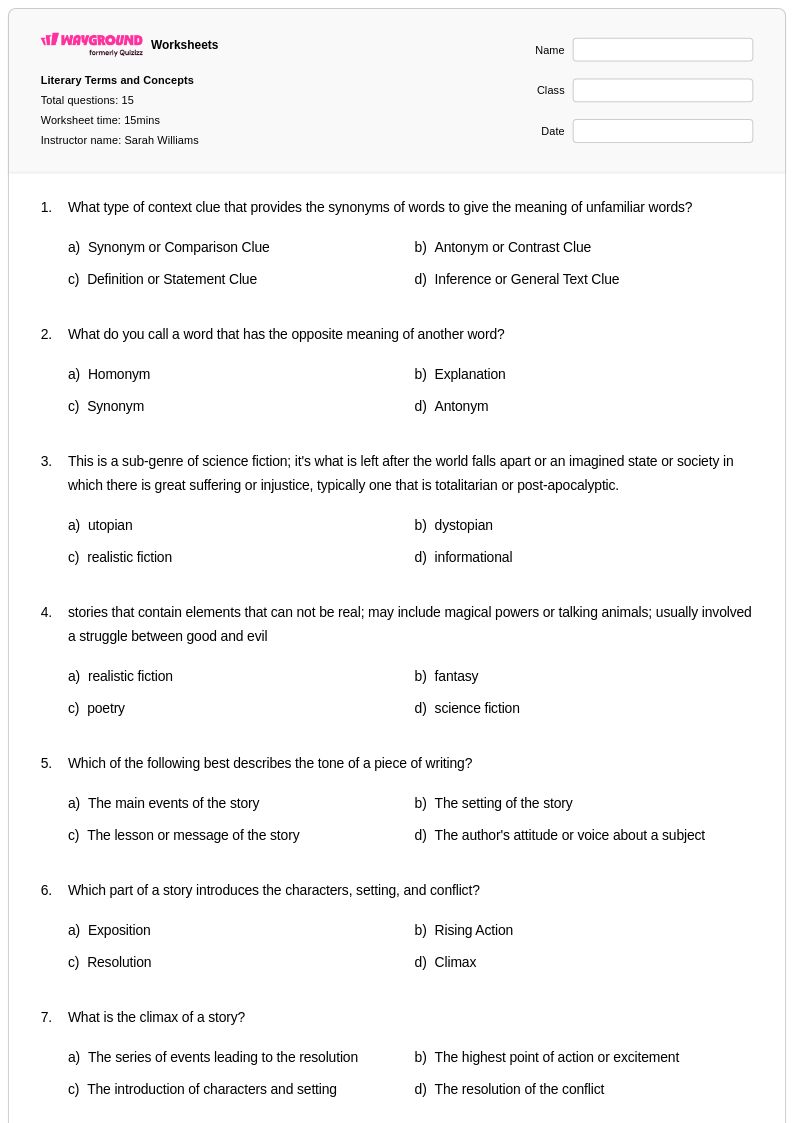
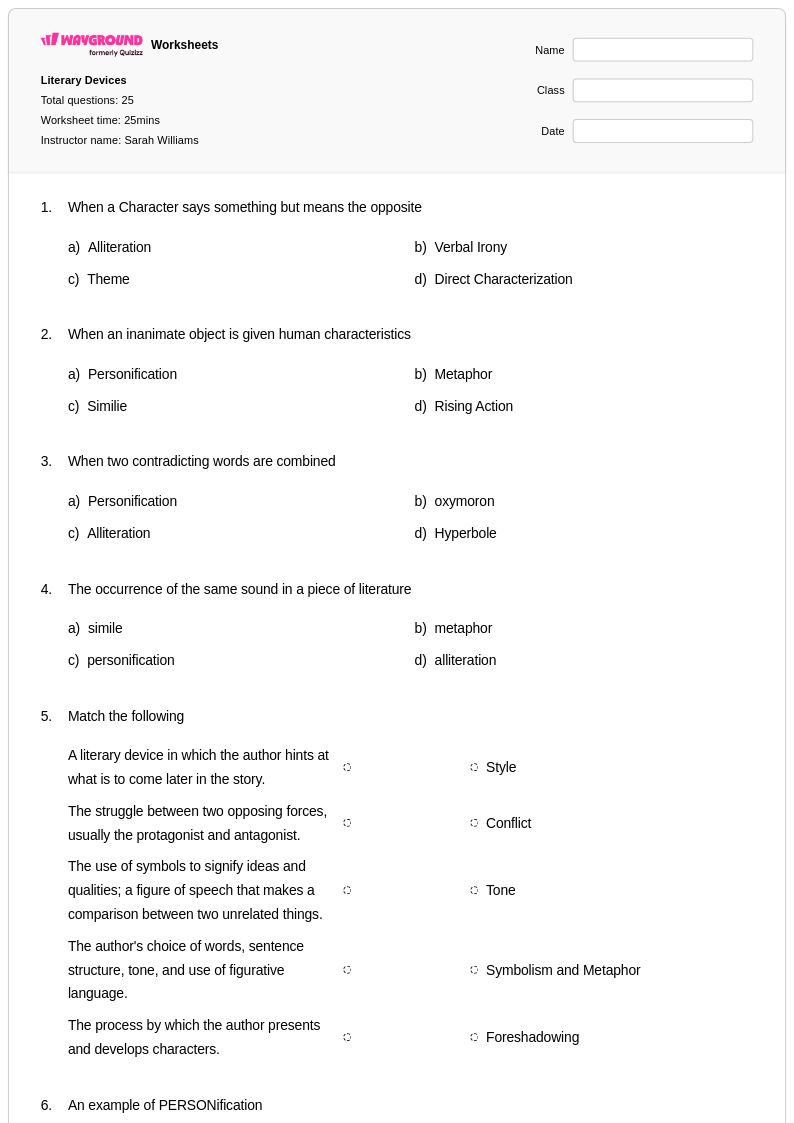
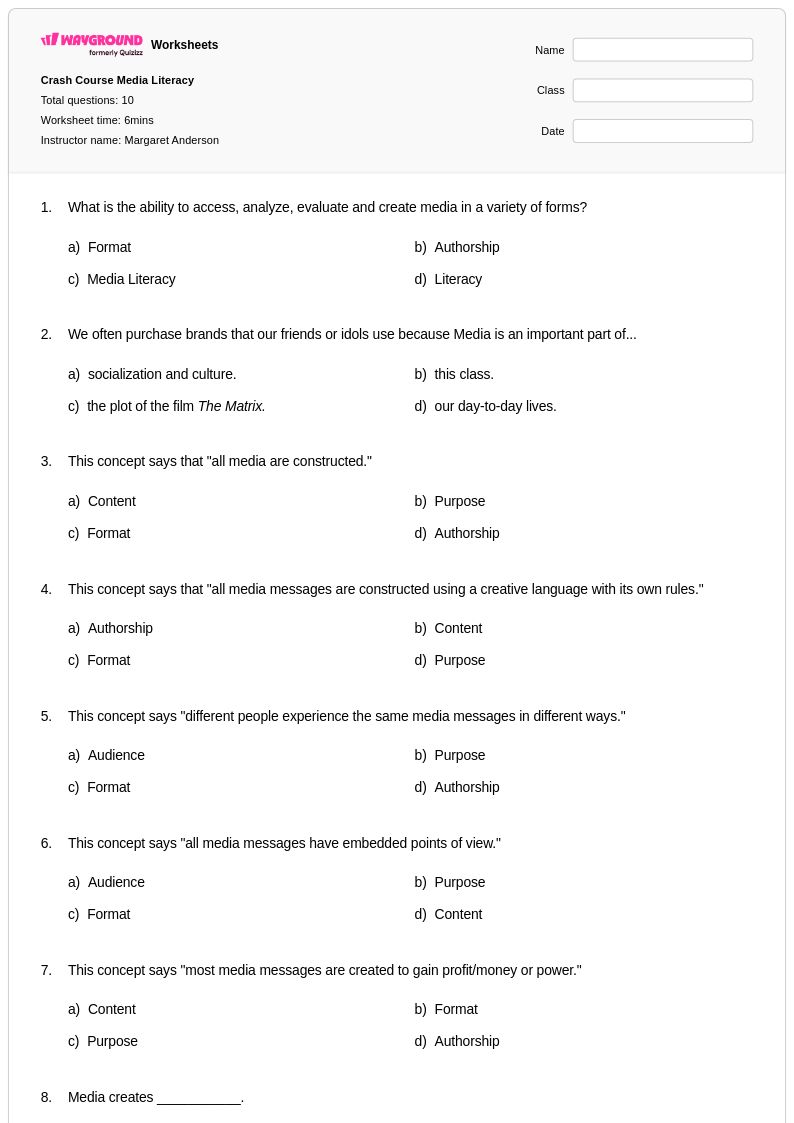
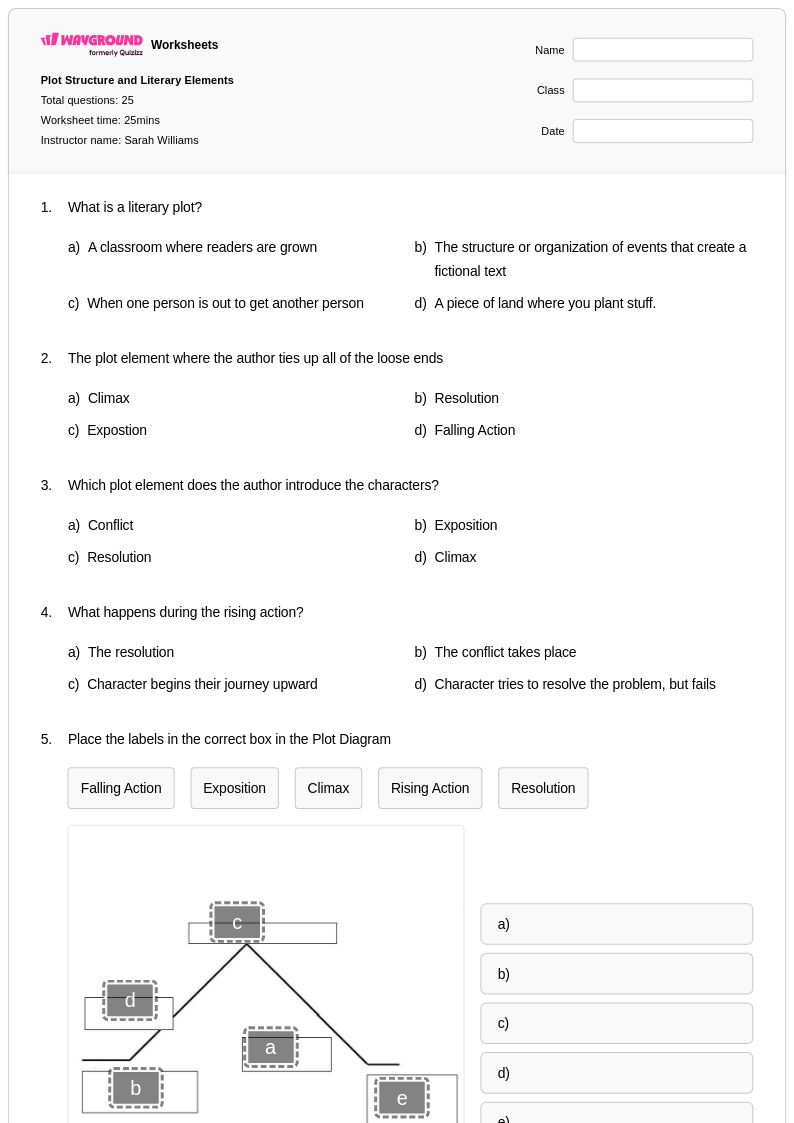
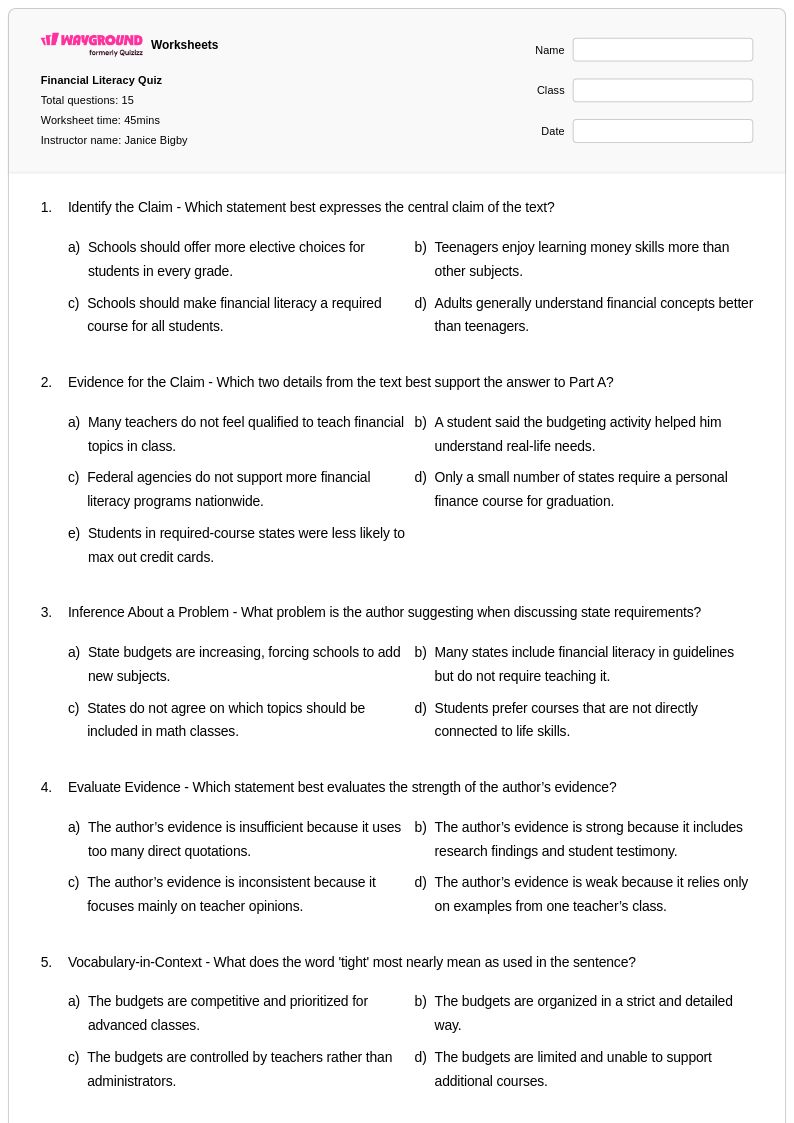
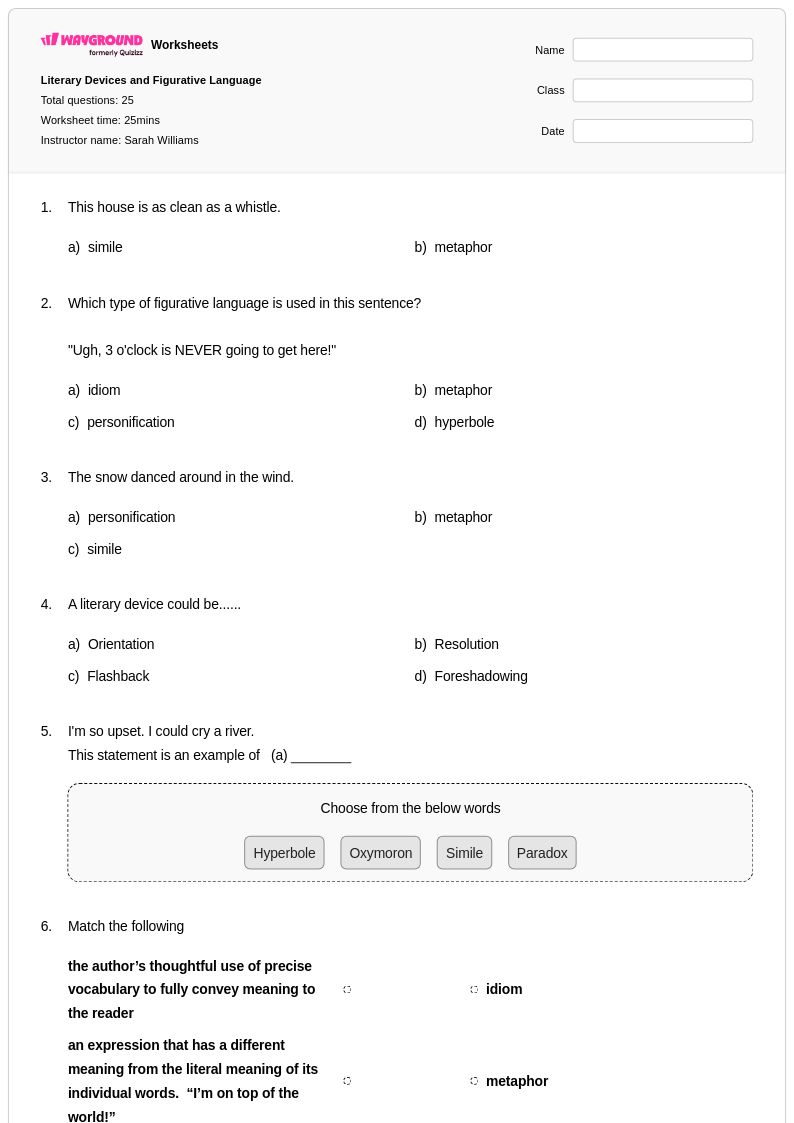
Class 11 literacy concepts worksheets from Wayground provide comprehensive printables and practice problems to strengthen students' foundational reading skills, complete with answer keys and free PDF downloads for effective classroom learning.
Explore printable Literacy Concepts worksheets for Class 11
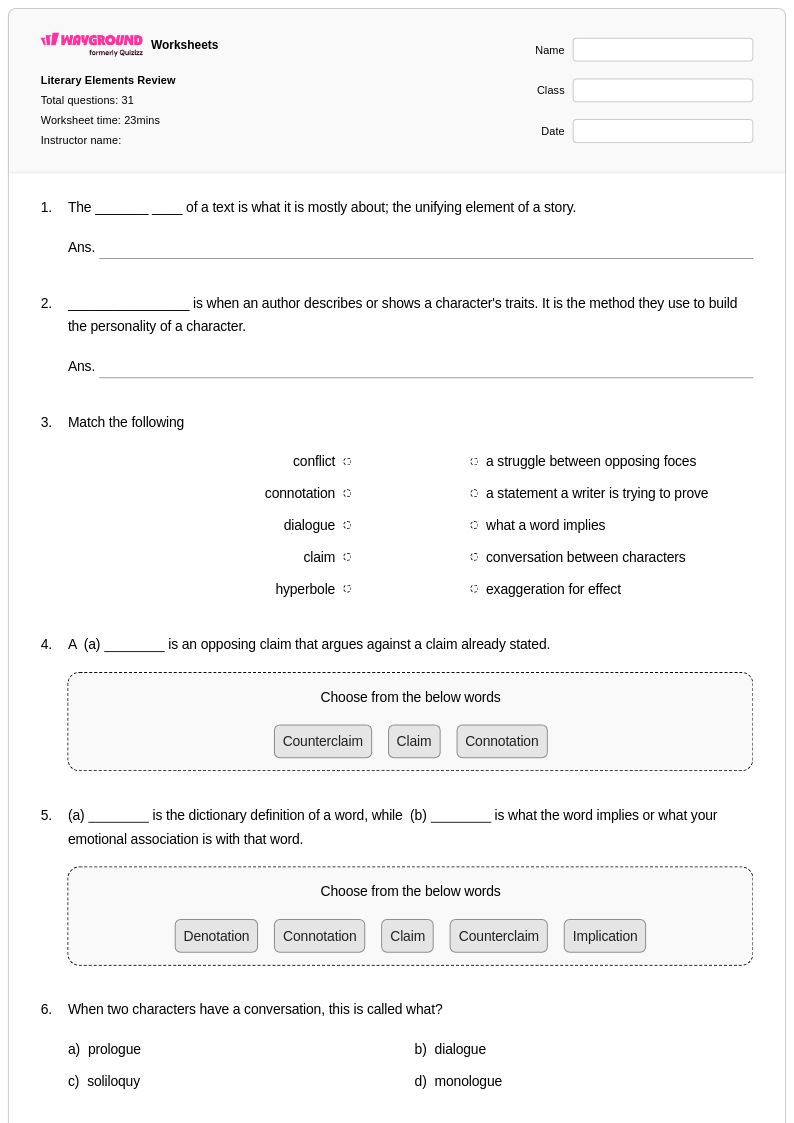
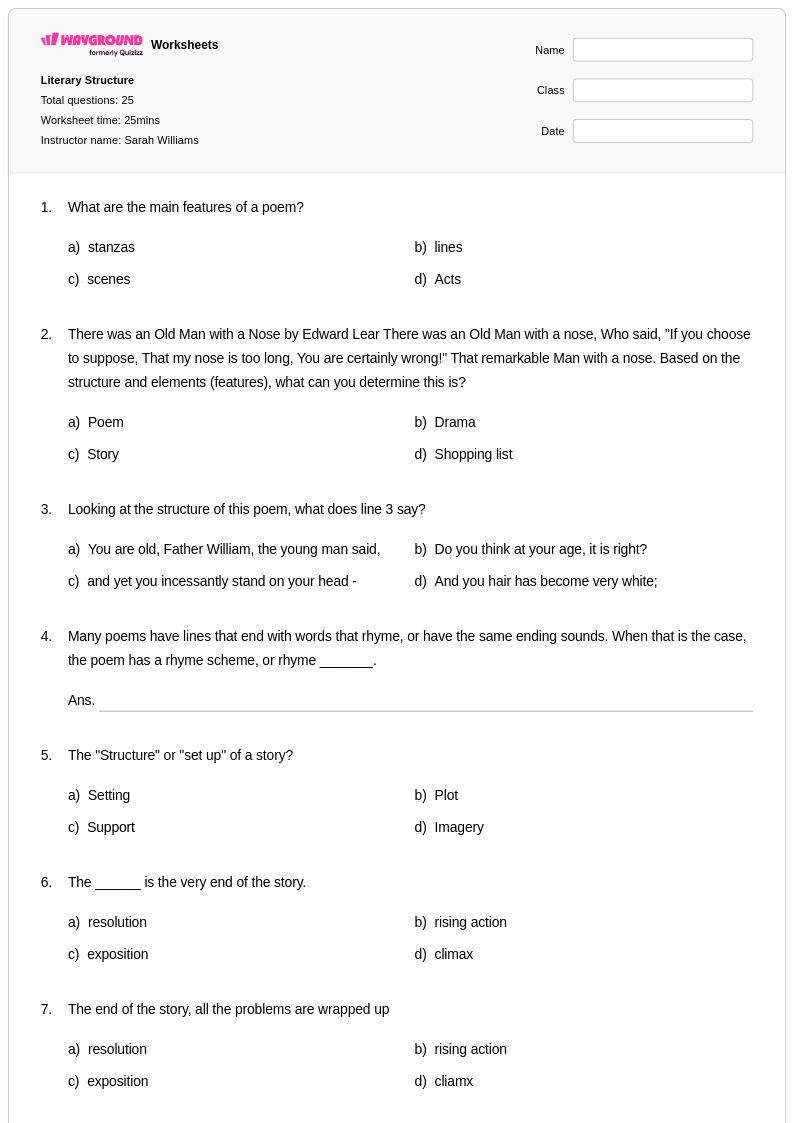
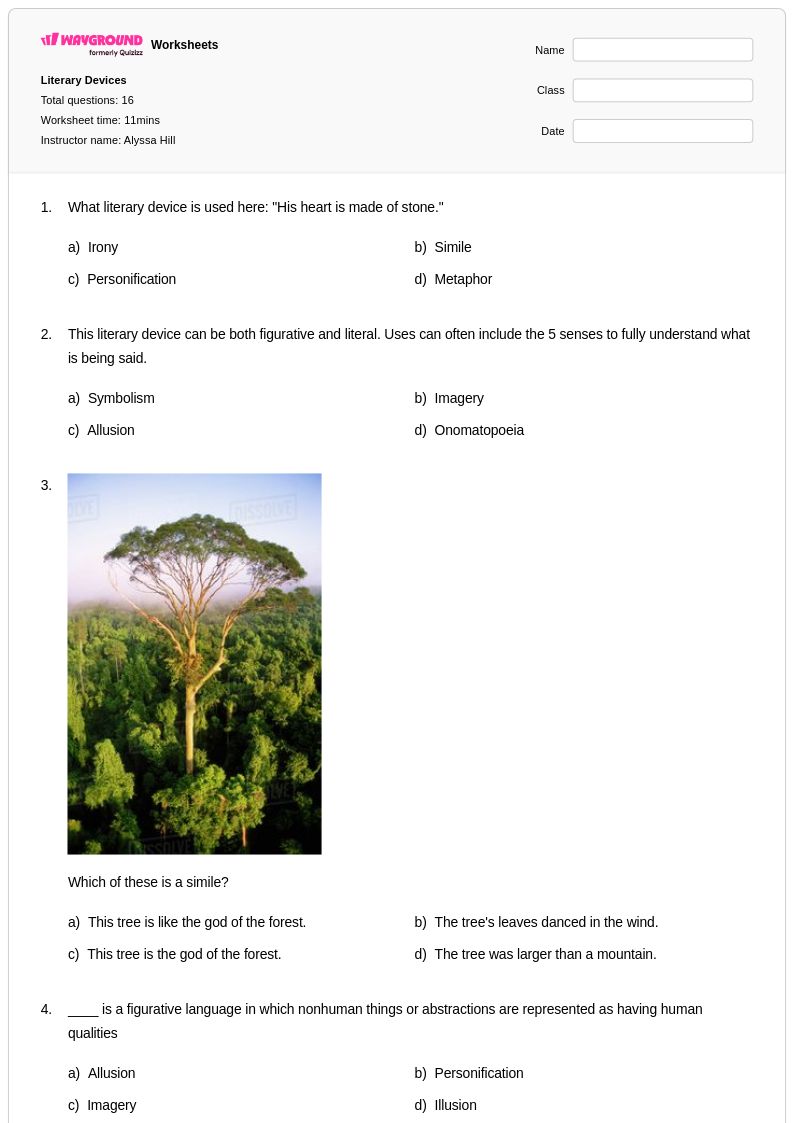
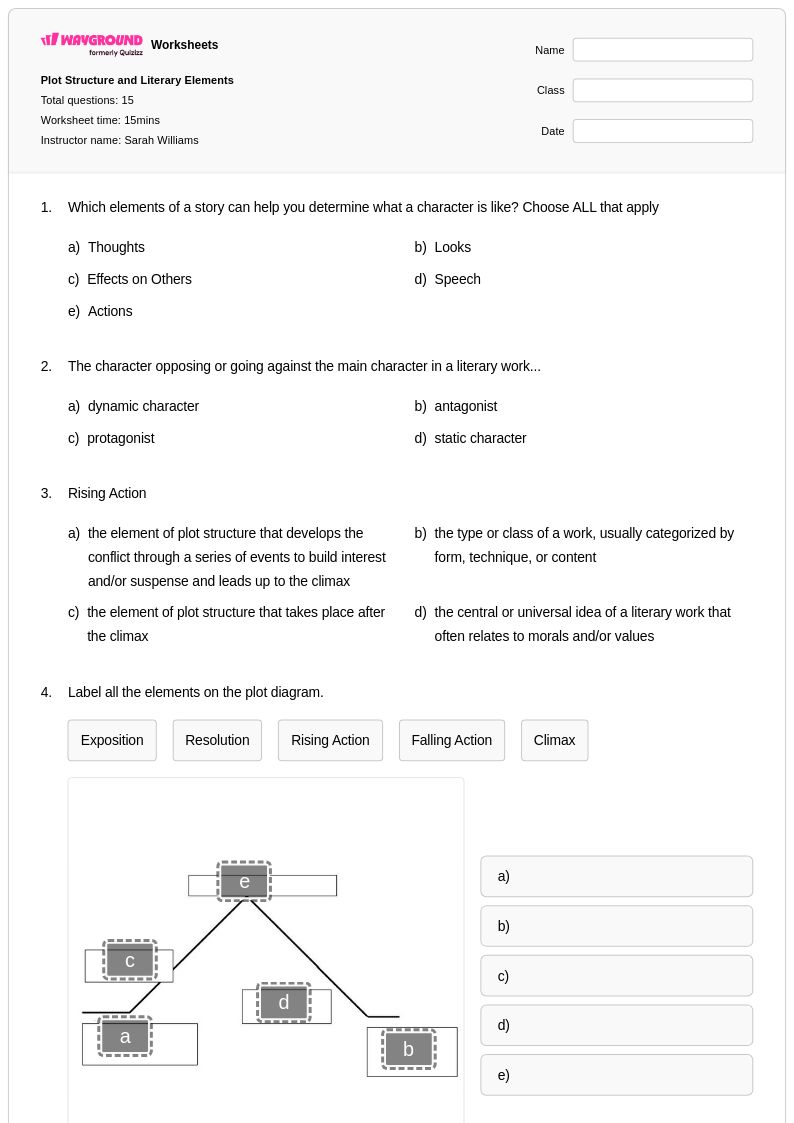
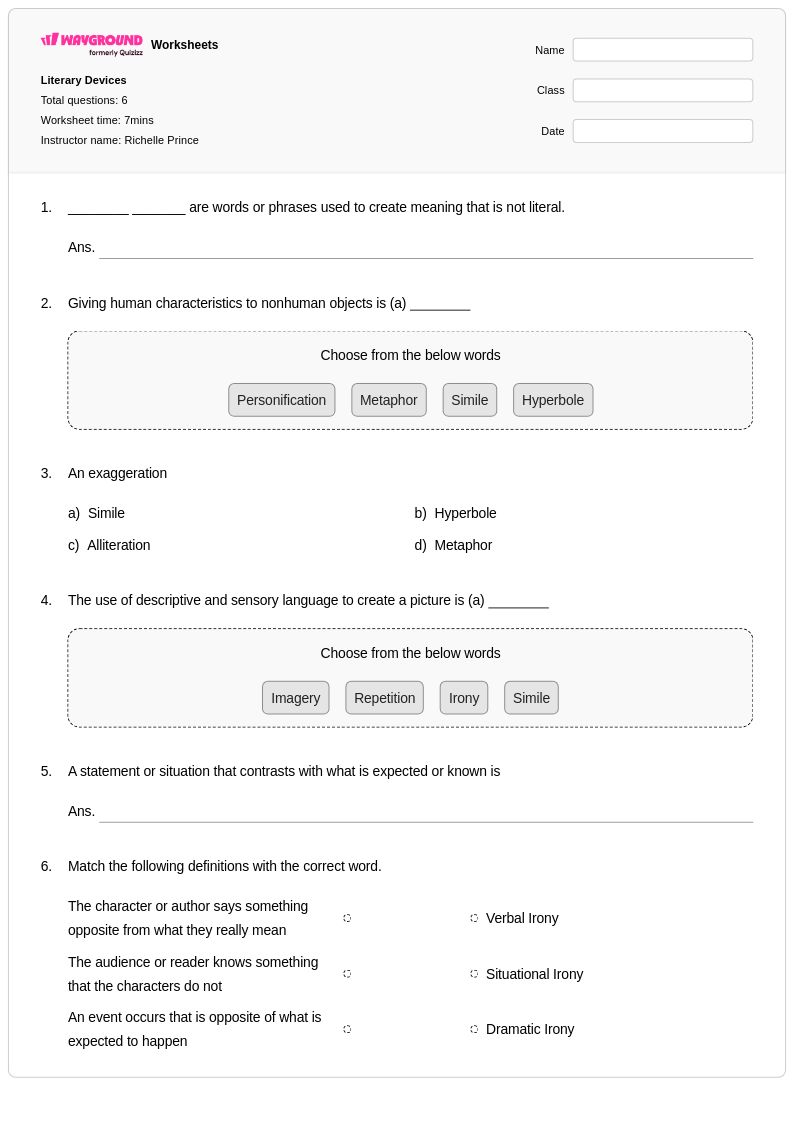
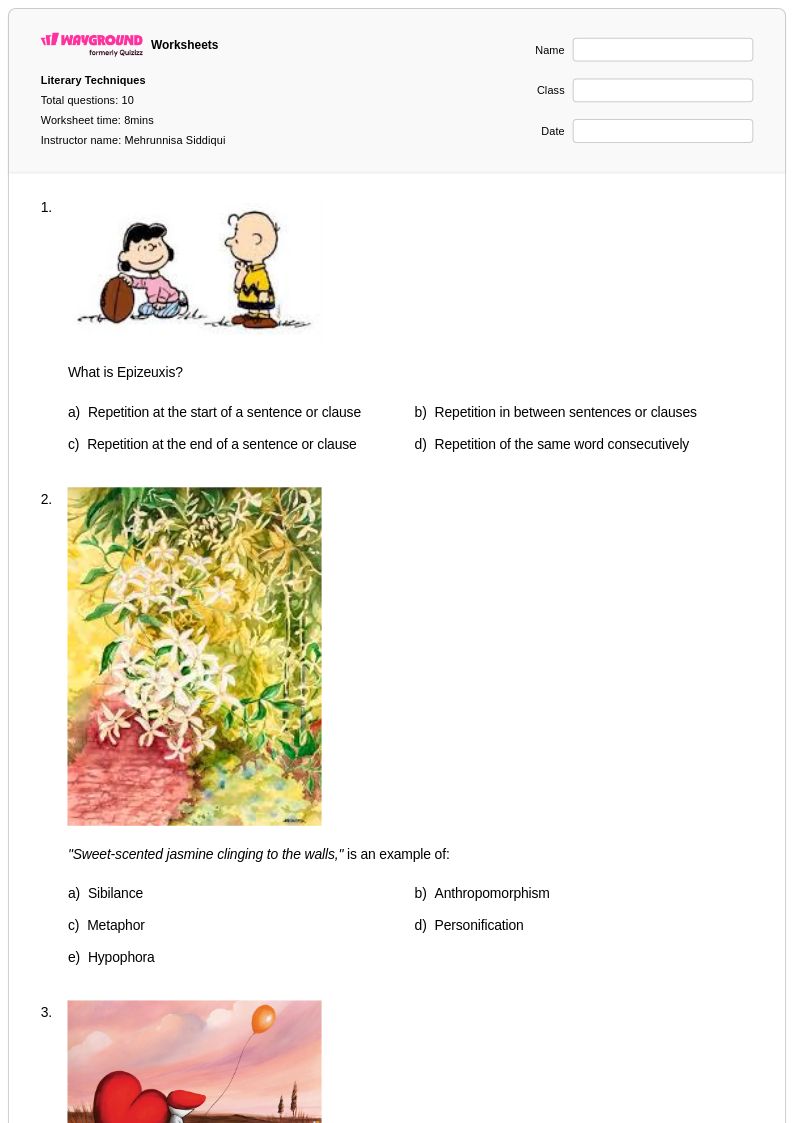
Class 11 literacy concepts worksheets through Wayground (formerly Quizizz) provide comprehensive resources that strengthen students' understanding of fundamental reading principles and analytical skills essential for advanced English studies. These carefully designed practice problems focus on critical literacy elements including textual analysis, inference development, rhetorical device identification, and comprehension strategies that prepare students for college-level coursework. Each worksheet collection includes detailed answer keys and free printables that allow educators to assess student progress while reinforcing key concepts such as author's purpose, theme development, literary symbolism, and critical thinking applications across various text types and genres.
Wayground (formerly Quizizz) empowers teachers with millions of educator-created literacy concept resources that feature robust search and filtering capabilities aligned to state and national reading standards. The platform's differentiation tools enable instructors to customize worksheets for diverse learning needs, offering both printable pdf formats and interactive digital versions that support flexible classroom implementation. These comprehensive collections facilitate effective lesson planning by providing targeted remediation materials for struggling readers, enrichment activities for advanced students, and systematic skill practice opportunities that help educators address varying literacy proficiency levels within their Class 11 classrooms while maintaining rigorous academic expectations.
FAQs
How do I teach literacy concepts to early elementary students?
Literacy concepts are best taught through explicit, systematic instruction that connects spoken language to print. Teachers should model concepts like directionality, letter-sound correspondence, word boundaries, and sentence structure using shared reading and think-alouds. Anchoring each concept to real texts helps students see how it functions in context rather than in isolation.
What exercises help students practice foundational literacy concepts?
Effective practice activities for literacy concepts include matching letters to sounds, identifying word boundaries in sentences, sequencing sentences to form a paragraph, and recognizing parts of a book such as title, author, and illustrator. Worksheets that ask students to apply a single concept repeatedly across varied examples help build automaticity before moving to more complex tasks.
What mistakes do students commonly make when learning literacy concepts?
One of the most common errors is confusing letters with words, or words with sentences, particularly in the early stages of reading development. Students also frequently reverse letters such as b and d or p and q, and struggle with the concept that spaces between words carry meaning. Misconceptions about print directionality, such as reading right to left or bottom to top, are also common in pre-K and kindergarten learners.
How can I use literacy concepts worksheets to support struggling readers?
Literacy concept worksheets work well for struggling readers when they isolate one skill at a time and use clear, uncluttered layouts that reduce cognitive load. For students who need additional support, Wayground allows teachers to enable Read Aloud so question text is read to the student, and Reduced Answer Choices to lower the number of options displayed. These accommodations can be applied to individual students without alerting the rest of the class.
How do I use literacy concepts worksheets on Wayground in my classroom?
Literacy concepts worksheets on Wayground are available as printable PDFs for traditional classroom use and in digital formats for technology-integrated or remote learning environments. Teachers can also host the worksheets as a quiz directly on Wayground, making it easy to assign, track, and review student responses. Both formats include complete answer keys, so scoring and feedback require minimal preparation time.
At what grade level should students have mastered basic literacy concepts?
Most foundational literacy concepts, including print awareness, letter recognition, and basic phonemic awareness, are targeted in pre-K through Grade 1. By the end of first grade, students are generally expected to demonstrate understanding of how print works, including directionality, spacing, and sentence structure. Students who have not solidified these concepts by Grade 2 may benefit from targeted intervention using structured, scaffolded materials.