Free Printable Livestock Industry Worksheets for Class 8
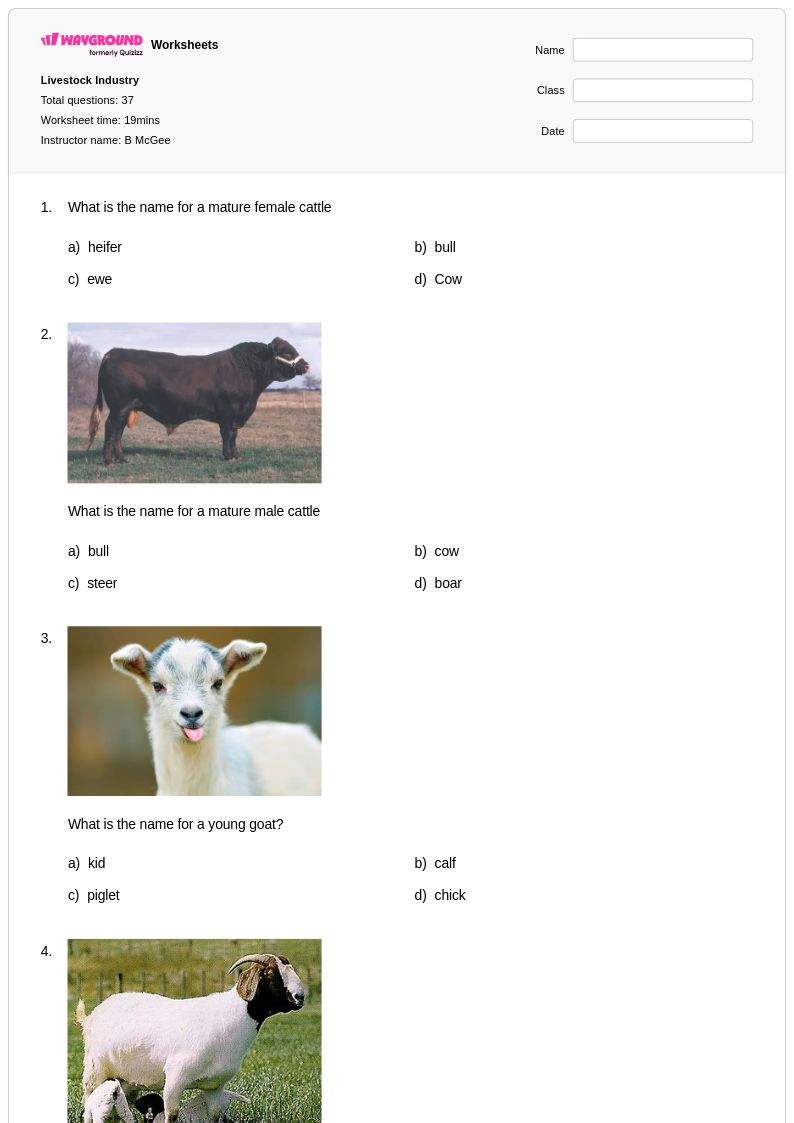
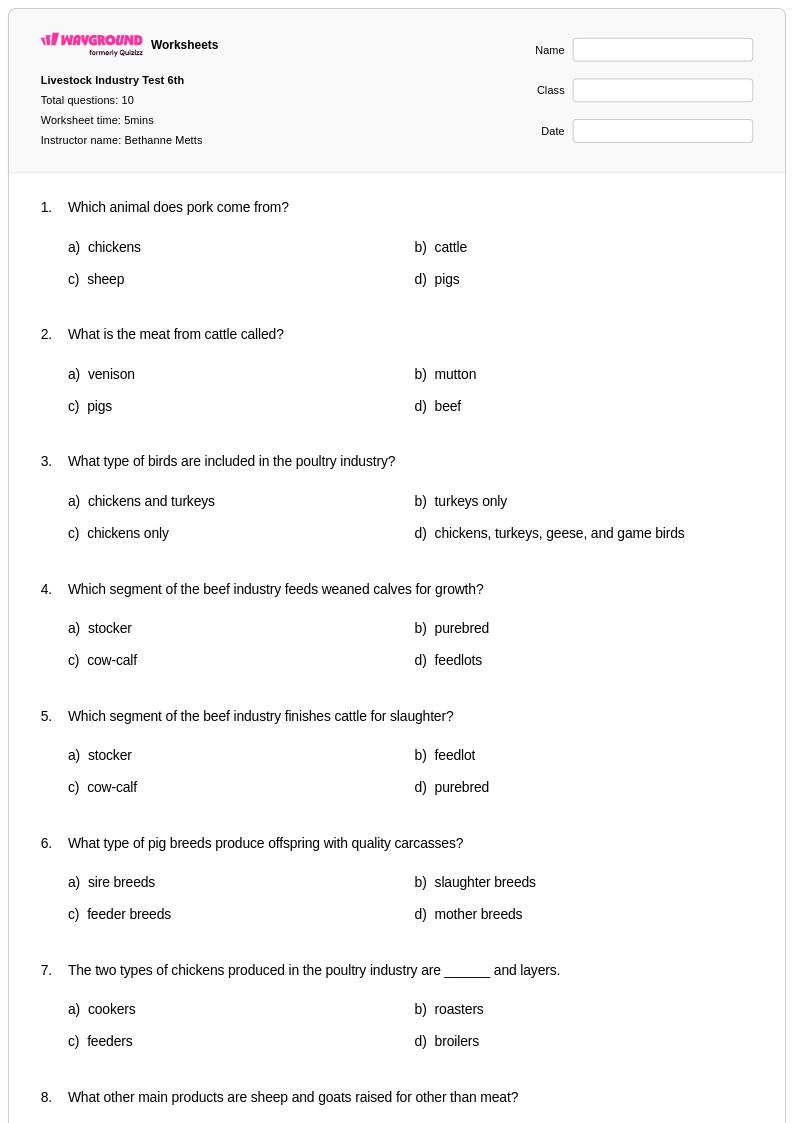
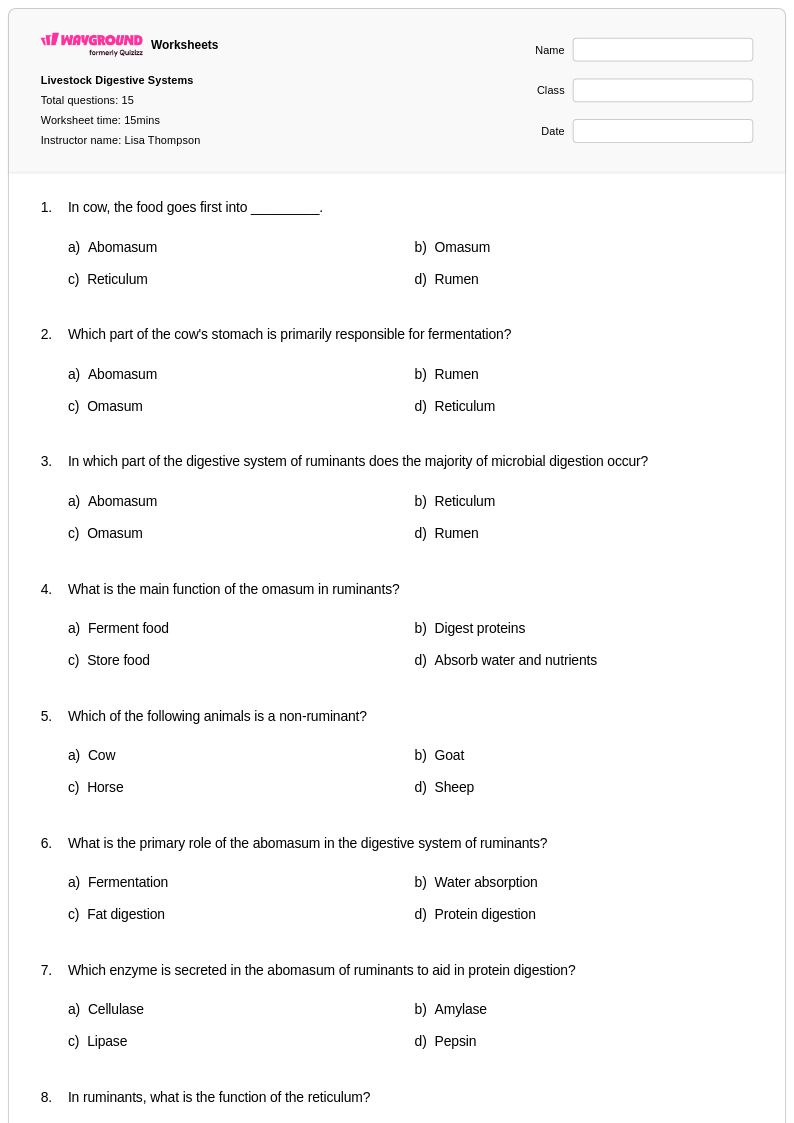
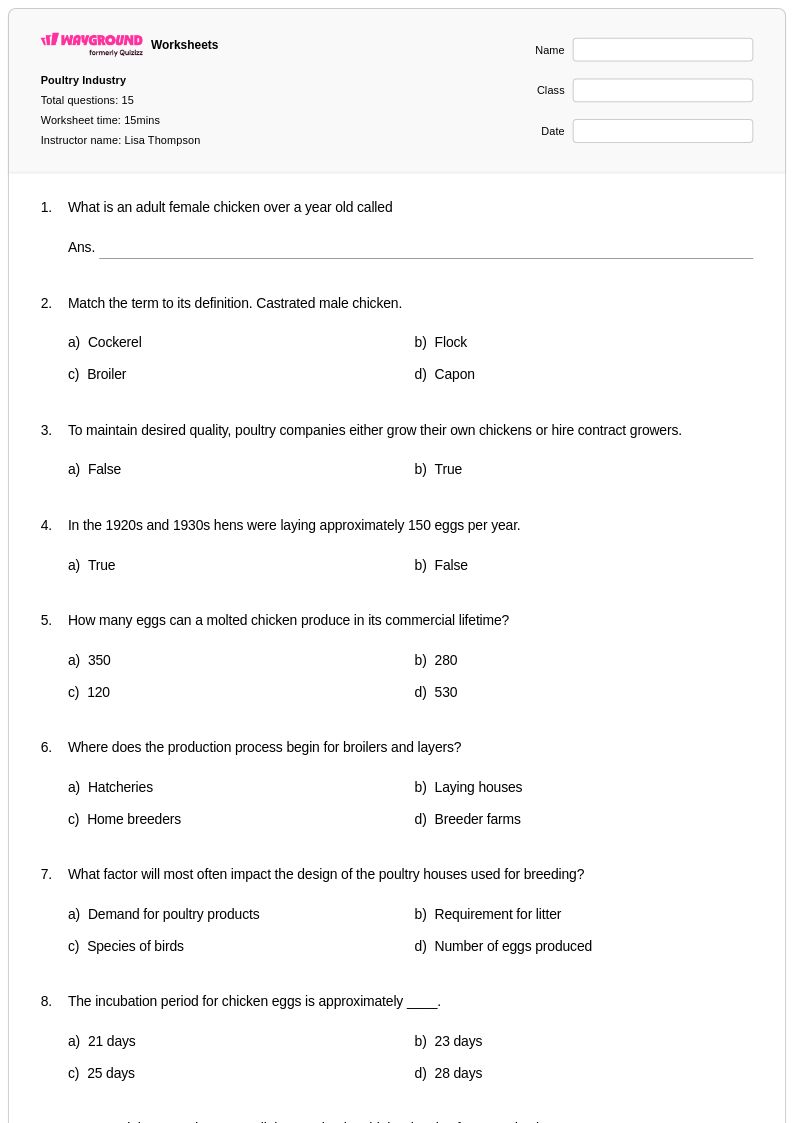
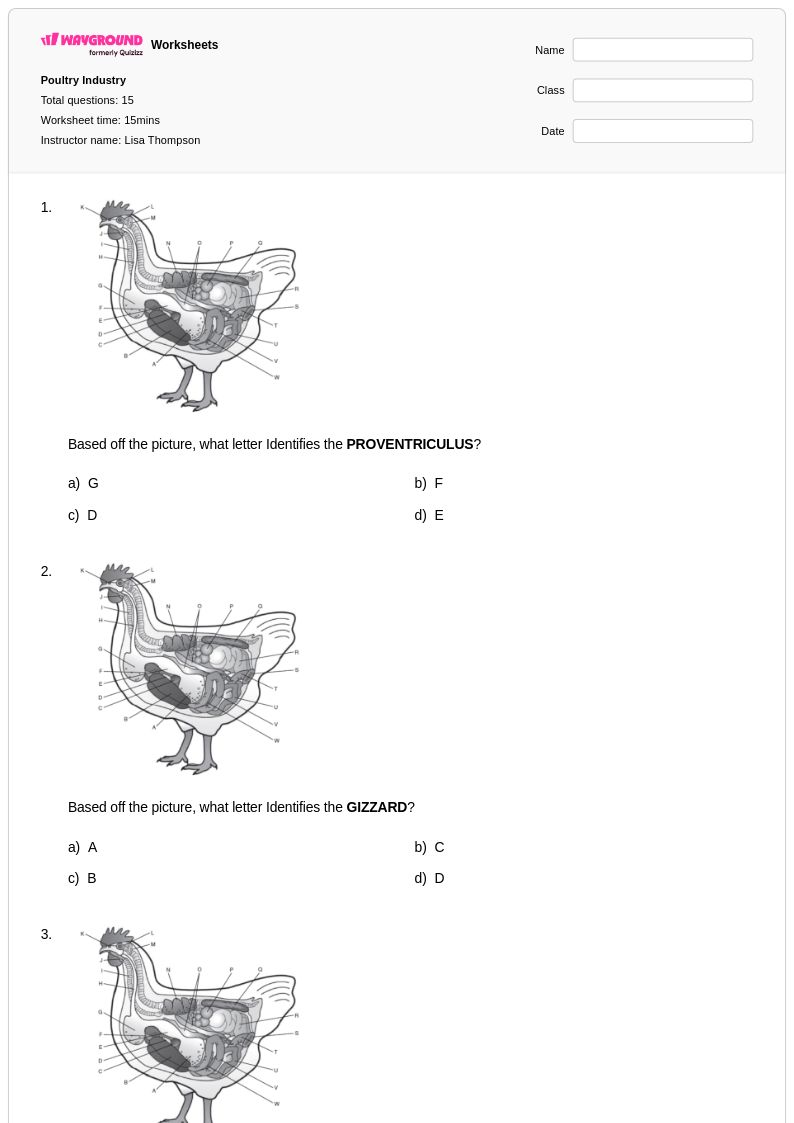
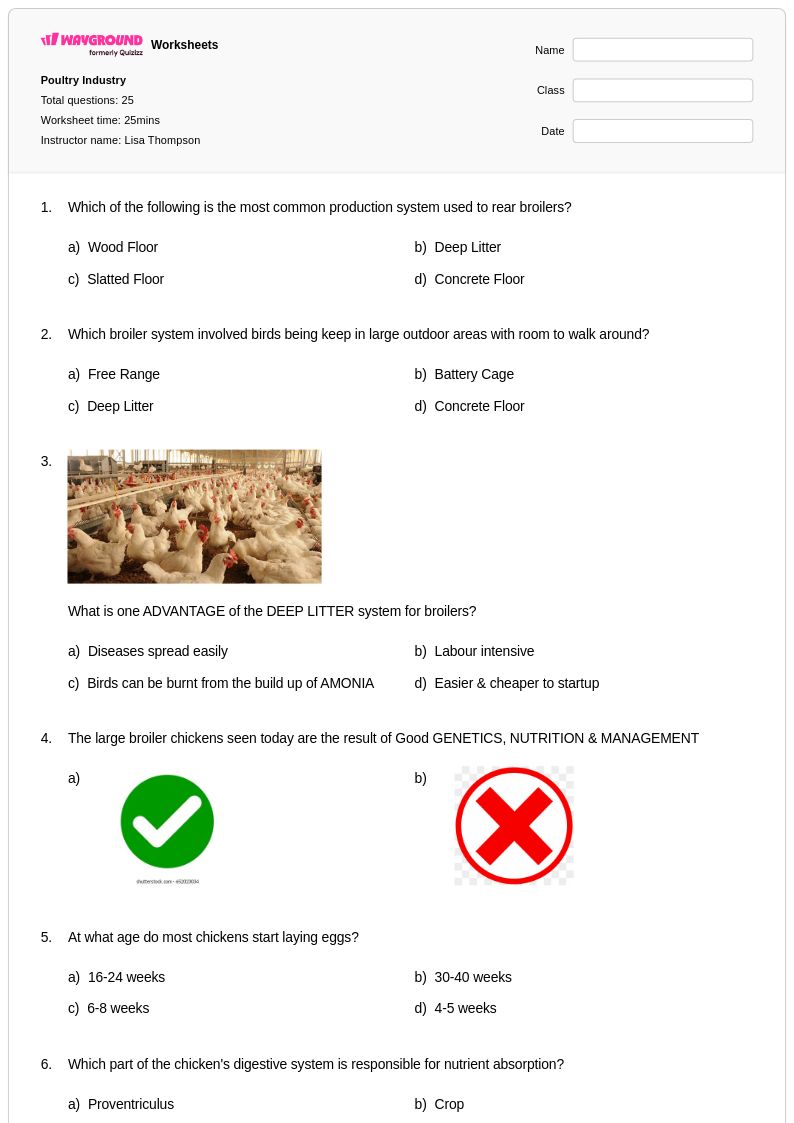
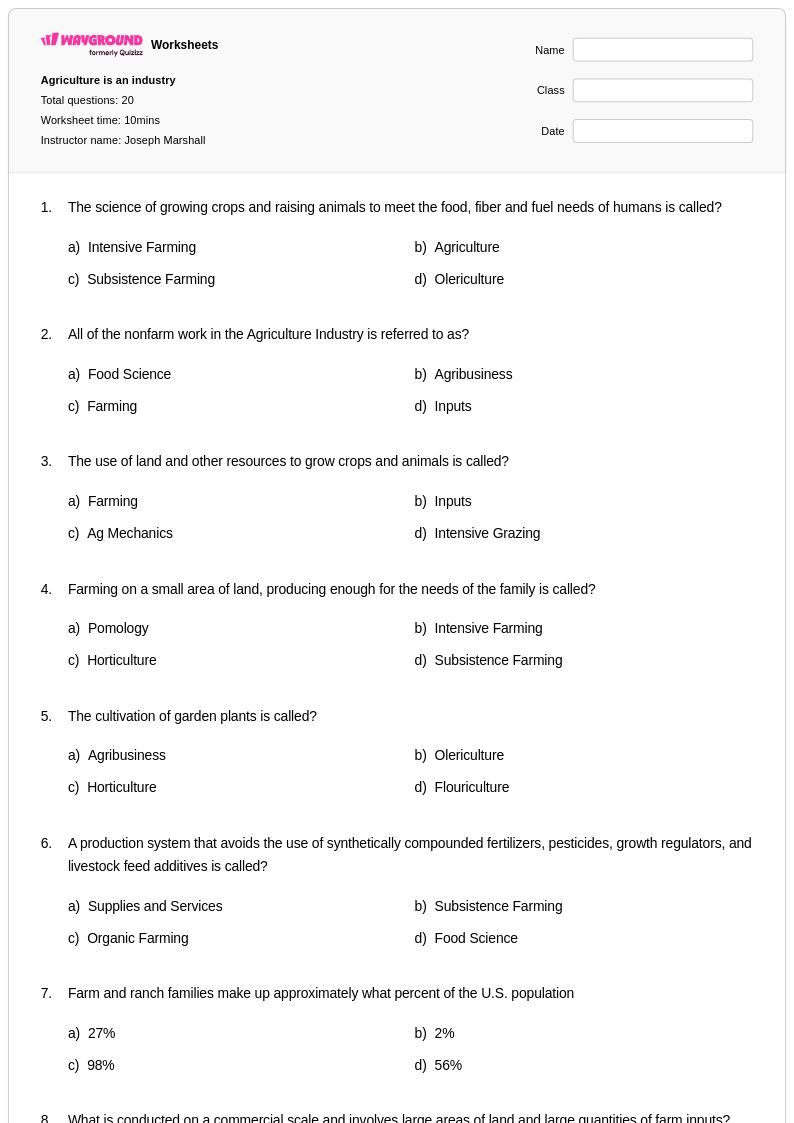
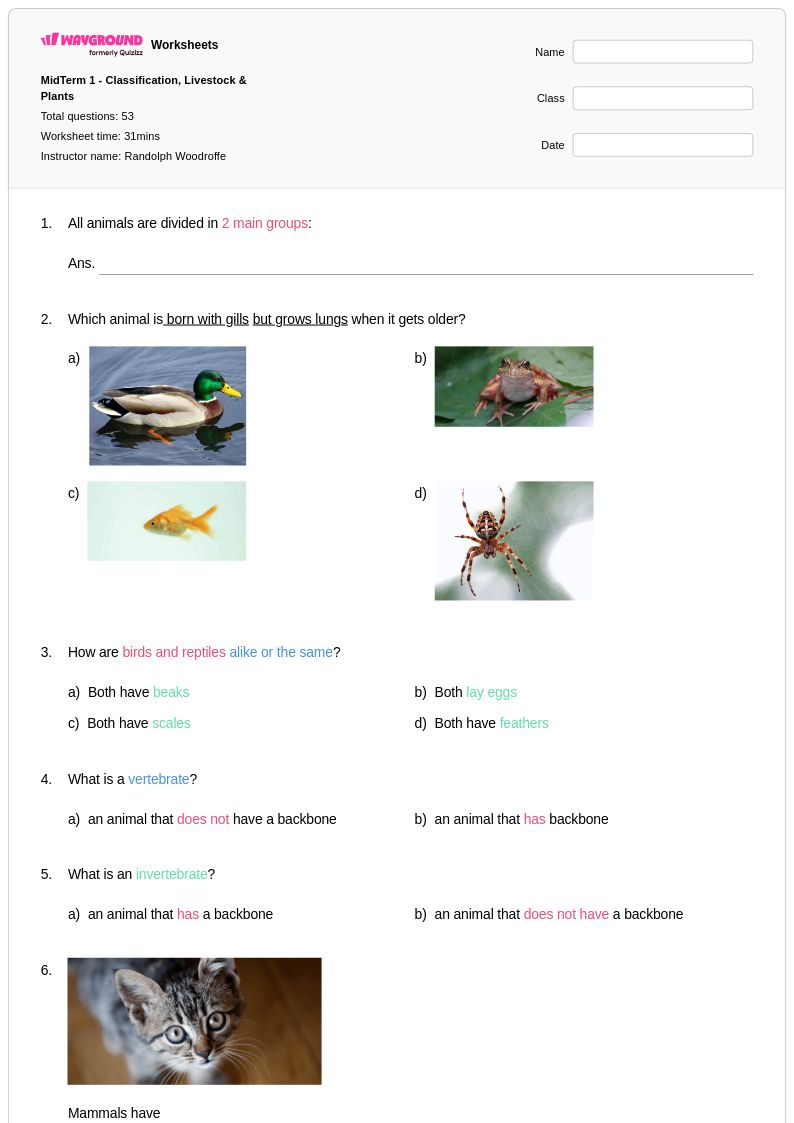
Class 8 livestock industry worksheets from Wayground help students explore animal farming practices through engaging printables, practice problems, and comprehensive answer keys in convenient PDF format.
Explore printable Livestock Industry worksheets for Class 8
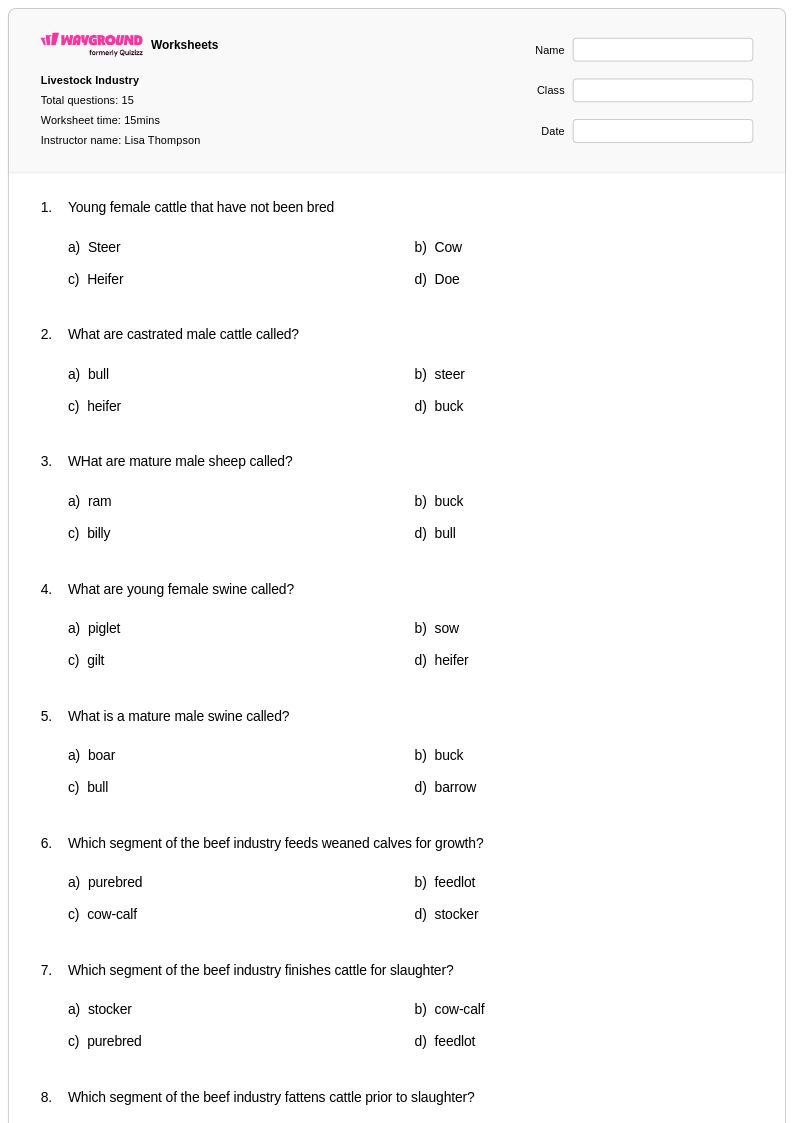
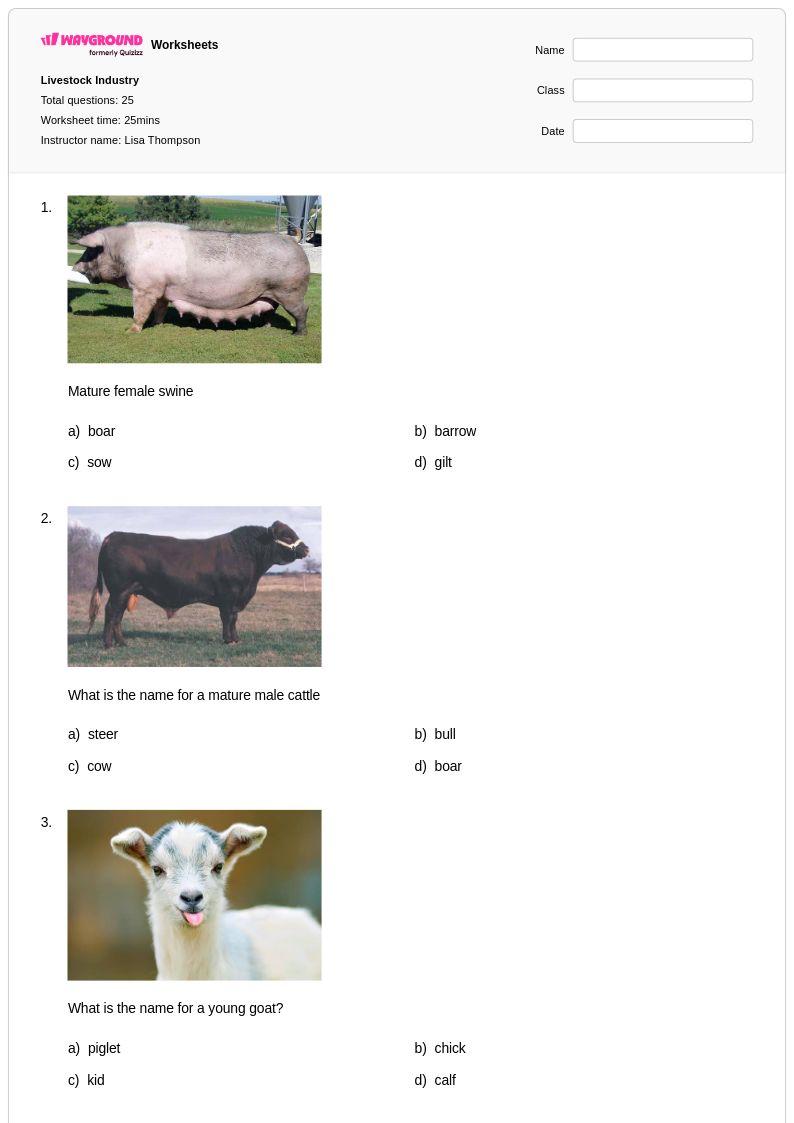
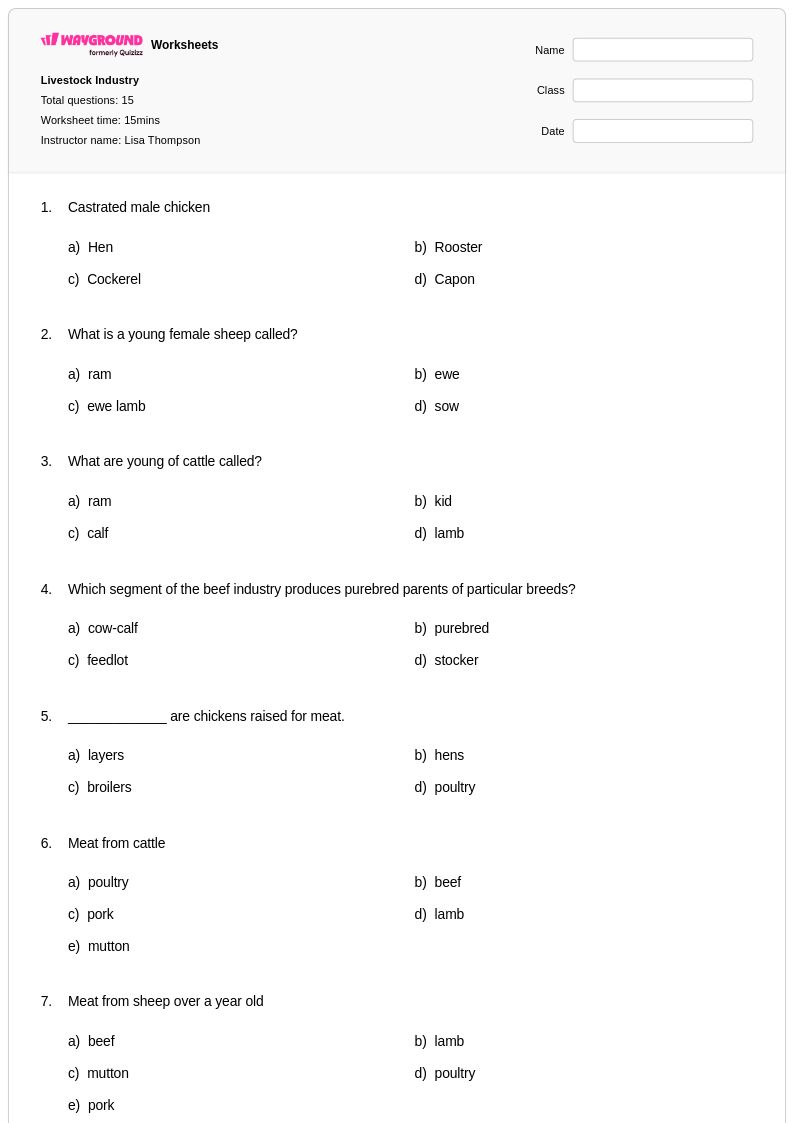
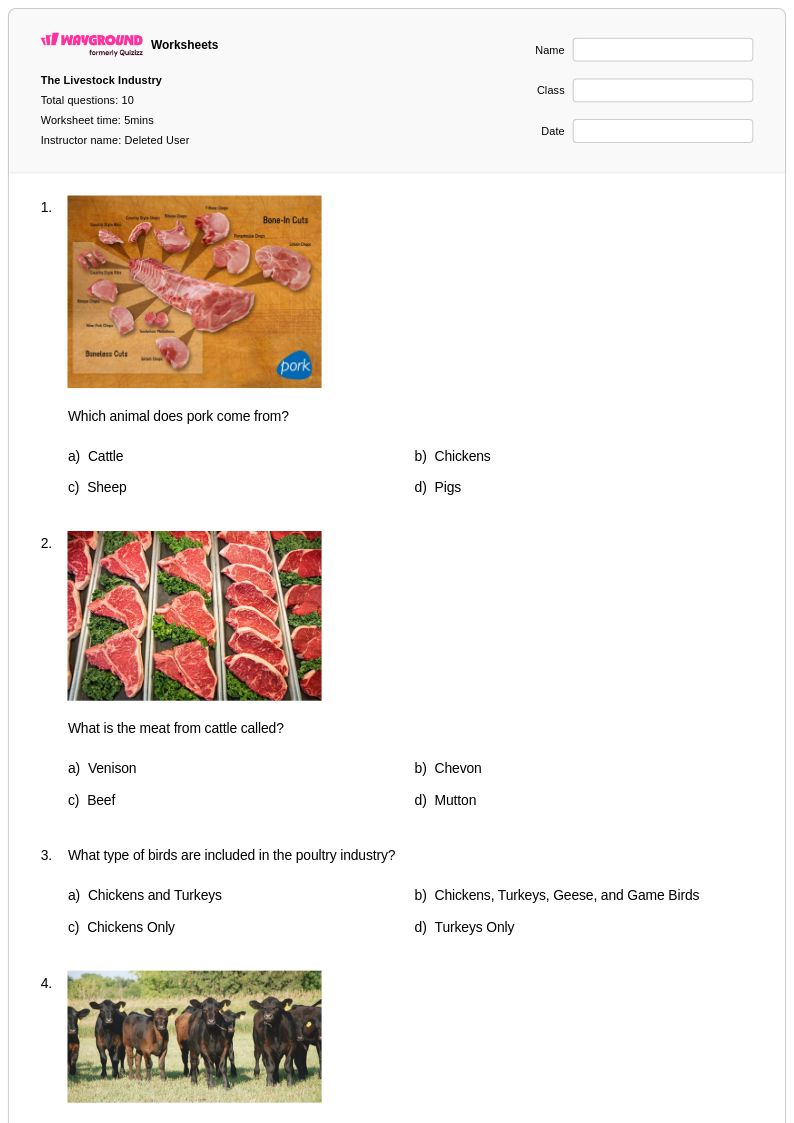
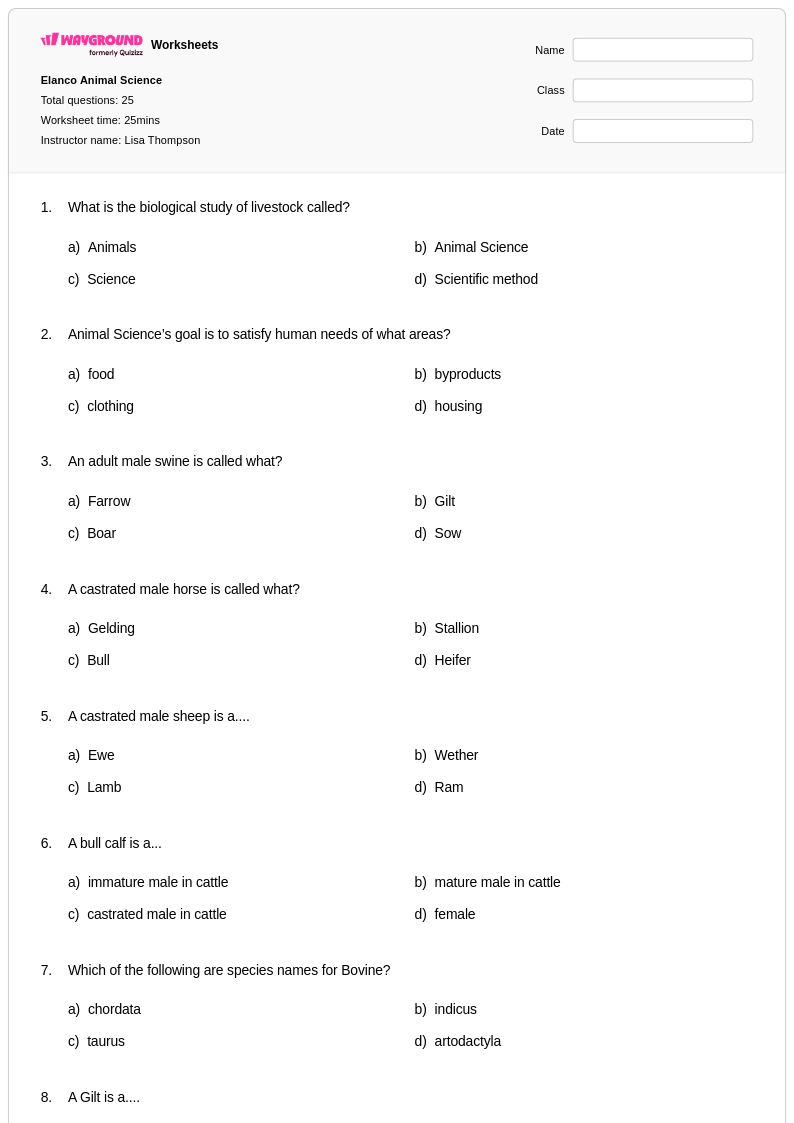
Class 8 livestock industry worksheets available through Wayground (formerly Quizizz) provide comprehensive coverage of animal agriculture fundamentals that middle school students need to master. These educational resources strengthen critical thinking skills about animal husbandry, breeding practices, feed management, and the economic impact of livestock production on global food systems. Students engage with practice problems that explore cattle, swine, poultry, and sheep operations while developing analytical abilities to evaluate livestock management decisions. The collection includes detailed answer keys that support independent learning and free printable materials that make complex agricultural concepts accessible through hands-on problem solving activities.
Wayground (formerly Quizizz) empowers educators with millions of teacher-created livestock industry resources that streamline lesson planning and enhance agricultural science instruction. The platform's robust search and filtering capabilities allow teachers to quickly locate materials aligned with curriculum standards while accessing differentiation tools that accommodate diverse learning needs within Class 8 classrooms. Flexible customization options enable educators to modify existing worksheets or create targeted practice sessions for remediation and enrichment purposes. Available in both printable pdf format and interactive digital versions, these livestock industry materials support varied instructional approaches and help teachers address individual student skill gaps while reinforcing essential agricultural concepts through systematic practice opportunities.
FAQs
How do I teach the livestock industry to students with no farming background?
Start by grounding students in the economic and social relevance of animal agriculture before introducing technical vocabulary. Use real-world examples like feed conversion ratios, production cost comparisons, and supply chain diagrams to make abstract concepts tangible. Connecting livestock systems to food security and rural economies helps students without farming experience find personal entry points into the material.
What topics should a livestock industry worksheet cover?
A comprehensive livestock industry worksheet should cover animal husbandry practices, breeding techniques, nutrition management, disease prevention, and the economic impacts of livestock production. Strong worksheets also integrate sustainability content, including the environmental footprint of different livestock systems and the role of technology in modern farming operations. This breadth ensures students understand both the biological and economic dimensions of animal agriculture.
What practice problems are most effective for helping students understand livestock economics?
Problems that require students to calculate feed conversion ratios, estimate production costs, and compare the profitability of different livestock systems are particularly effective. These exercises build quantitative reasoning alongside content knowledge, helping students see how management decisions translate directly into economic outcomes. Adding scenarios that involve market price fluctuations or input cost changes adds realistic complexity.
What misconceptions do students commonly have about the livestock industry?
Students often assume that all livestock farming operates at the same scale, conflating small family operations with large industrial systems. They also tend to underestimate the role of nutrition science and disease management in productivity, viewing animal agriculture as low-skill work. A common error is treating environmental impact as uniform across species, when in fact cattle, poultry, and swine systems have significantly different resource demands and waste profiles.
How can I use livestock industry worksheets to support students with different learning needs?
Wayground allows teachers to apply student-level accommodations directly within the platform, including read aloud support for students who struggle with dense agricultural terminology, reduced answer choices to lower cognitive load on complex economic problems, and extended time settings configurable per student. These accommodations can be assigned to individual students while the rest of the class receives default settings, and they carry over automatically to future sessions without additional setup.
How do I use Wayground's livestock industry worksheets in my classroom?
Wayground's livestock industry worksheets are available as printable PDFs for traditional classroom use and in digital formats for technology-integrated or remote learning environments. Teachers can also host the worksheets as an interactive quiz directly on Wayground, making them suitable for formative assessment, independent practice, or whole-class review. Answer keys are included with every worksheet, reducing prep time and enabling faster feedback cycles.