
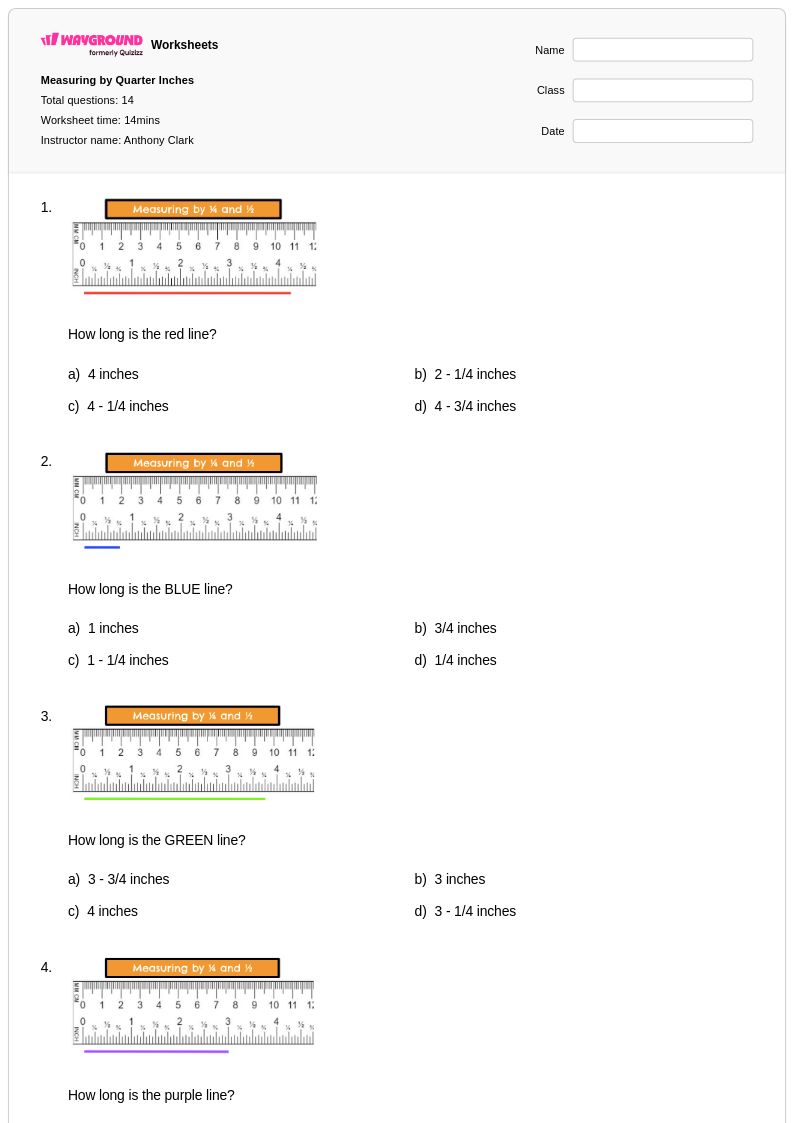
14 Q
2nd - Uni
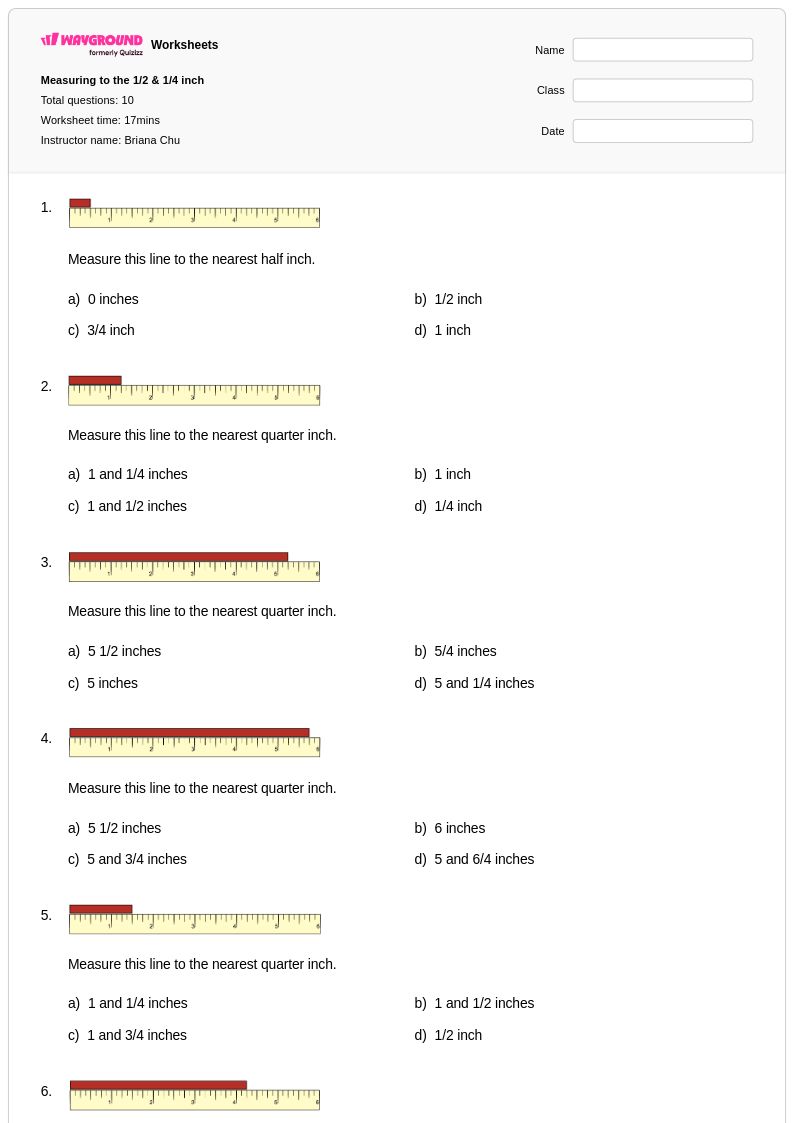
10 Q
2nd - 5th
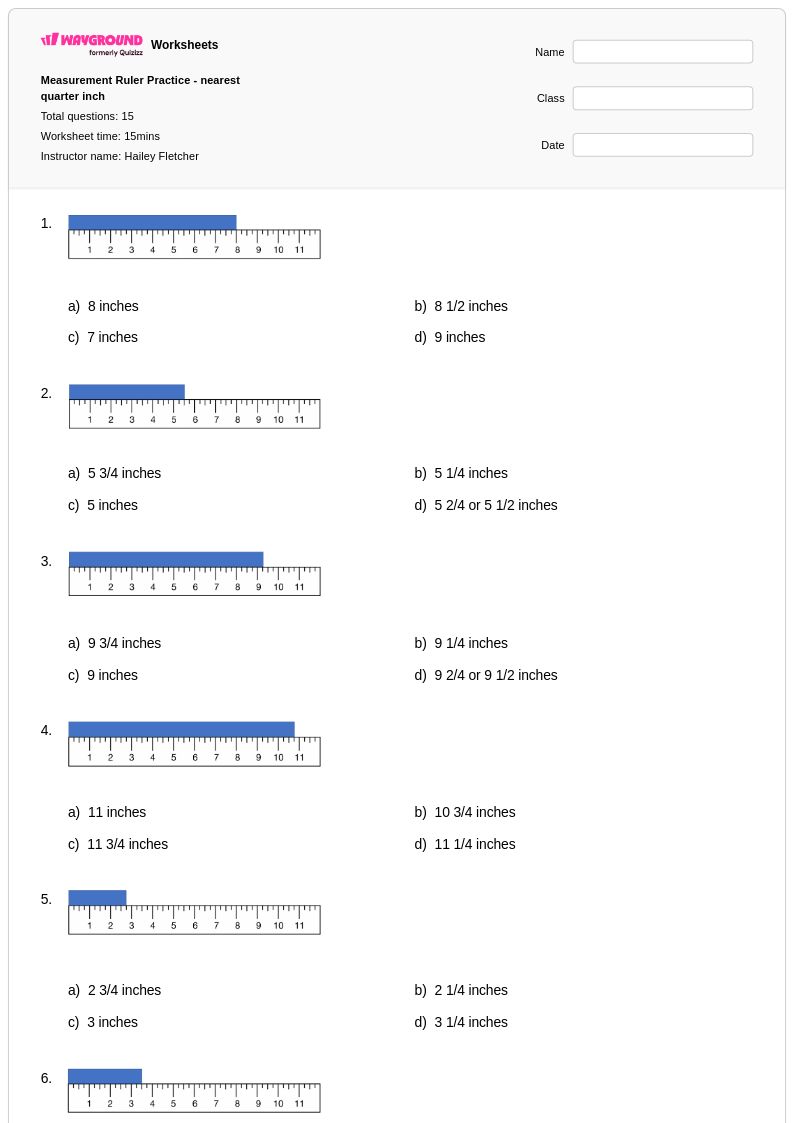
15 Q
2nd - 4th
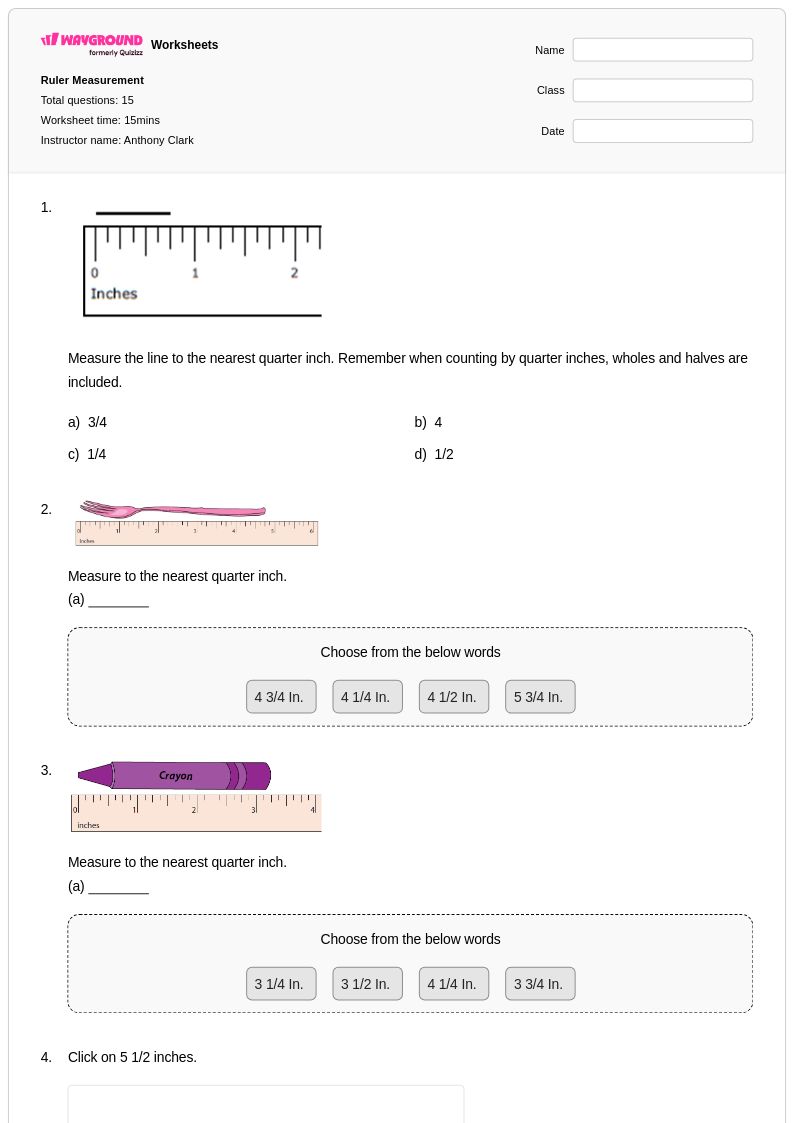
15 Q
2nd - Uni
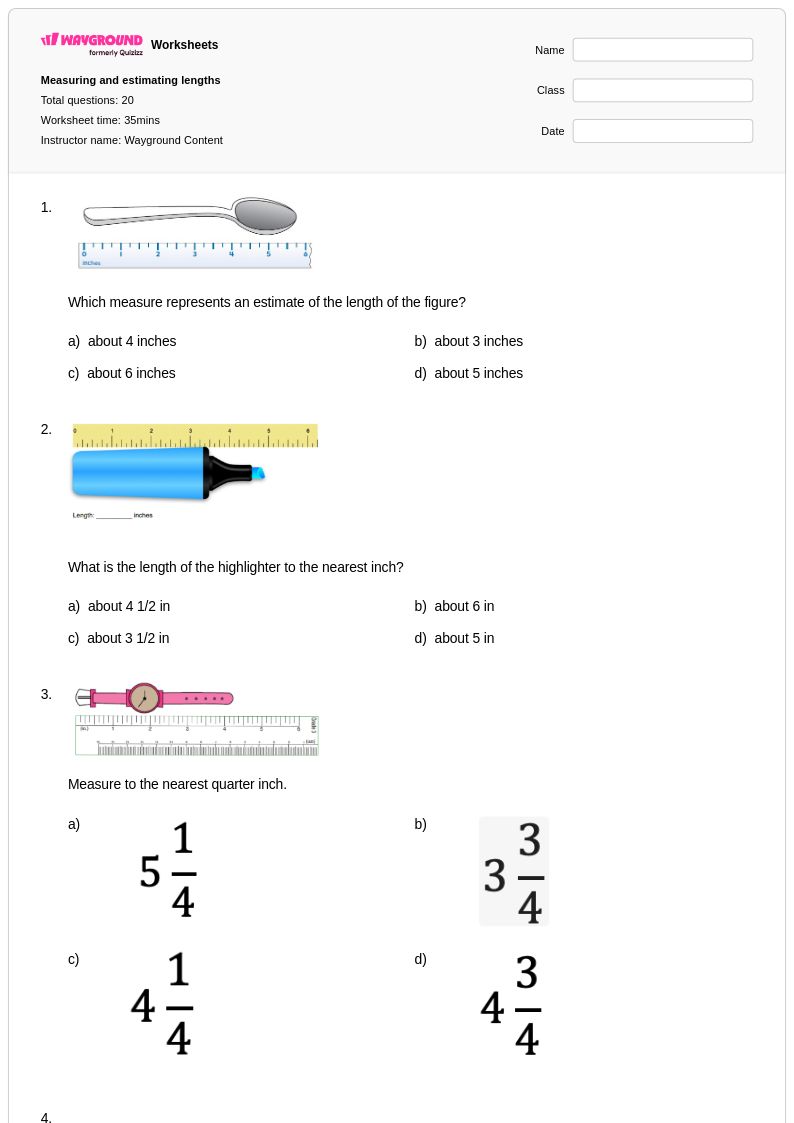
20 Q
2nd
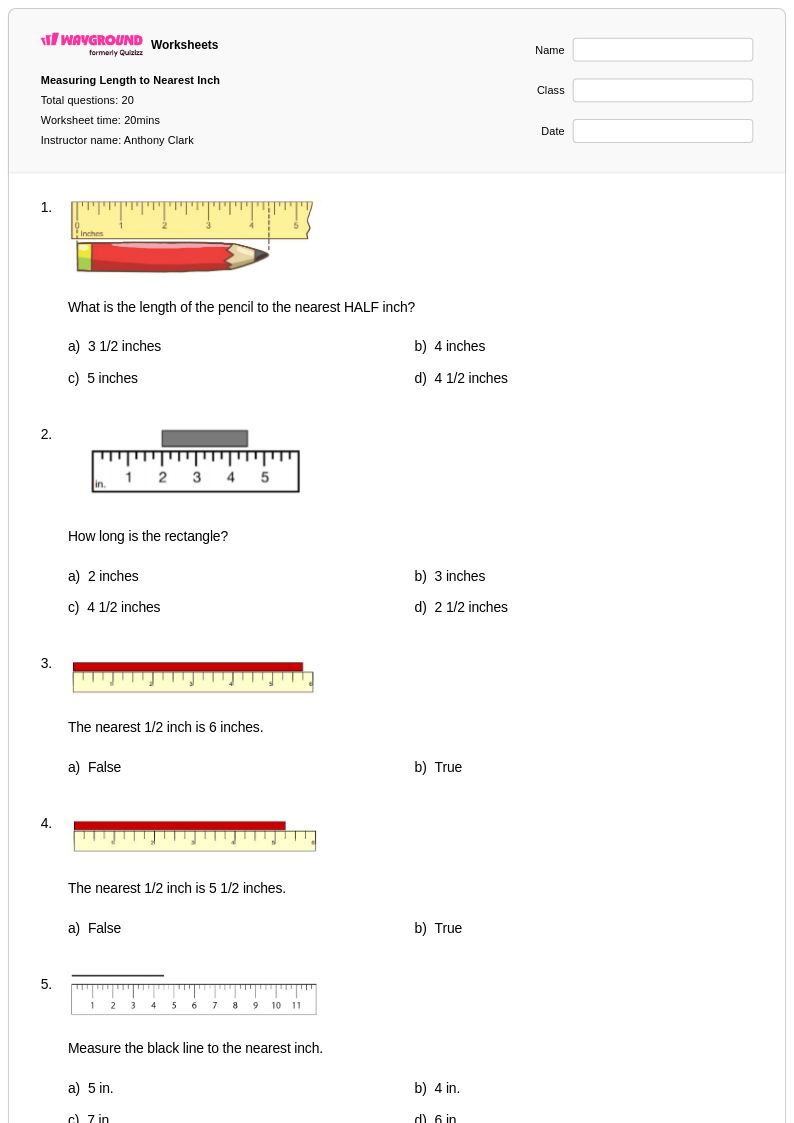
20 Q
2nd - Uni
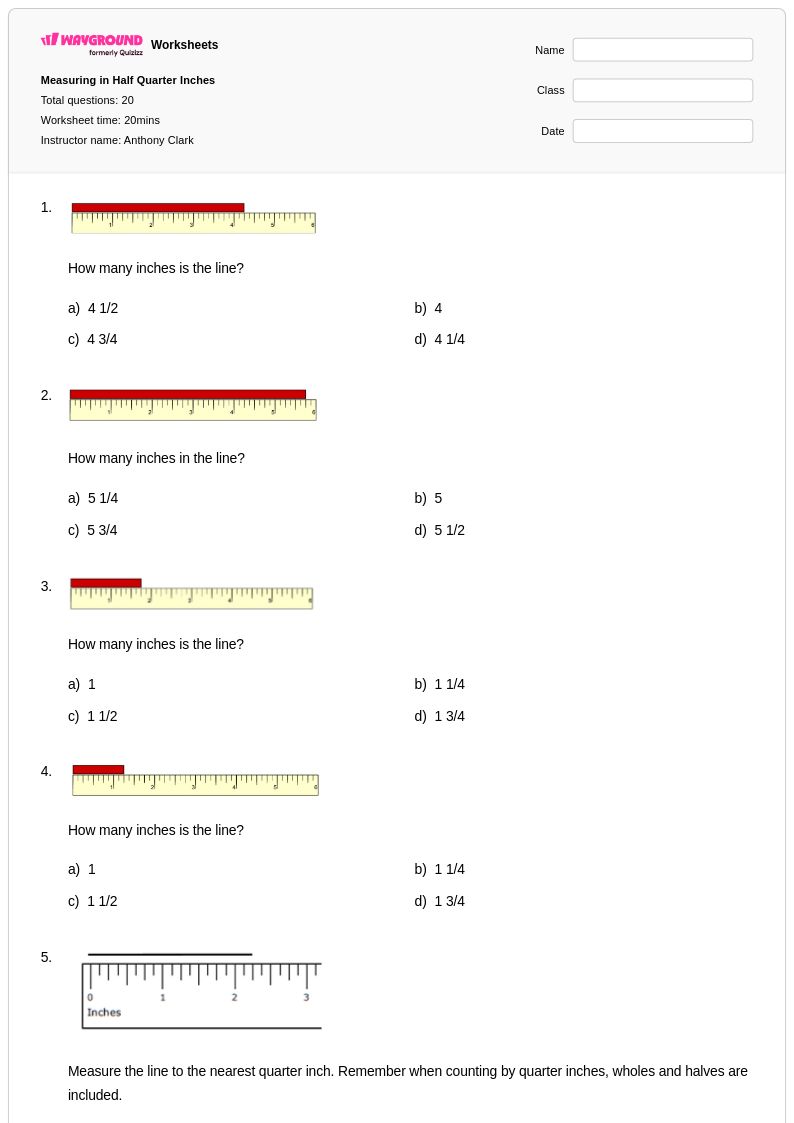
20 Q
2nd - Uni
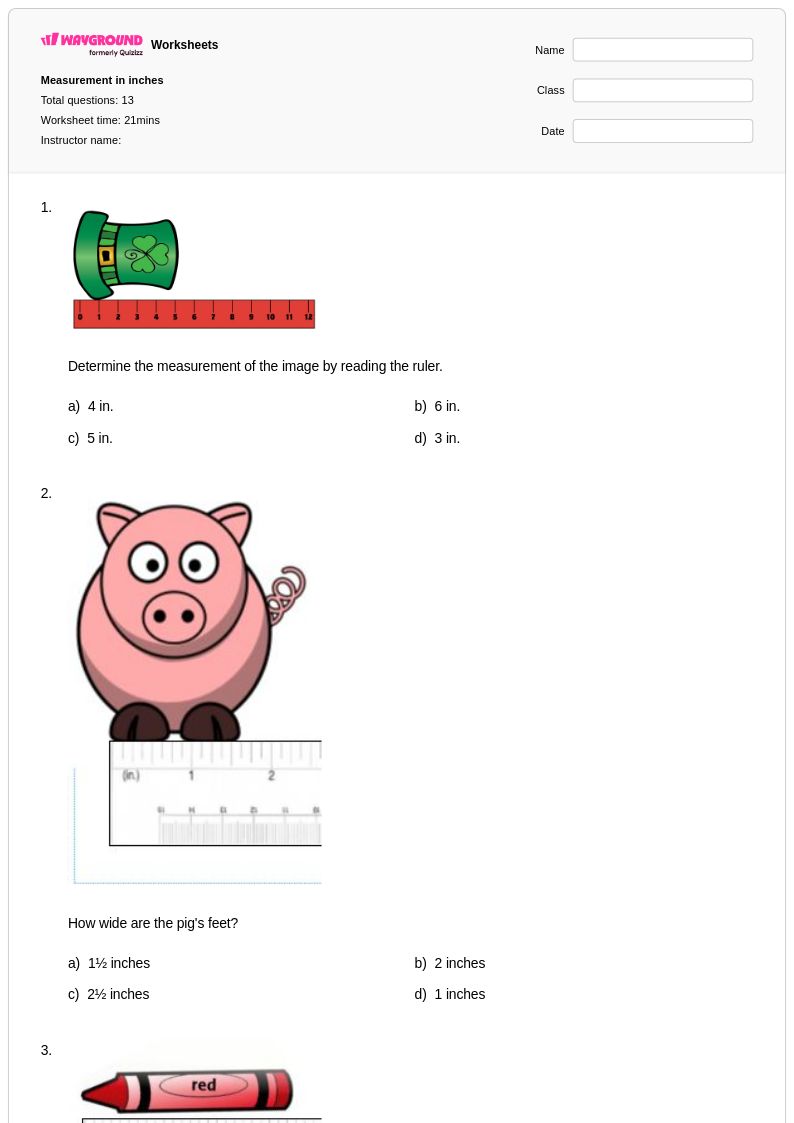
13 Q
2nd - 4th
20 Q
2nd - Uni
15 Q
2nd - Uni
16 Q
2nd
19 Q
2nd - Uni
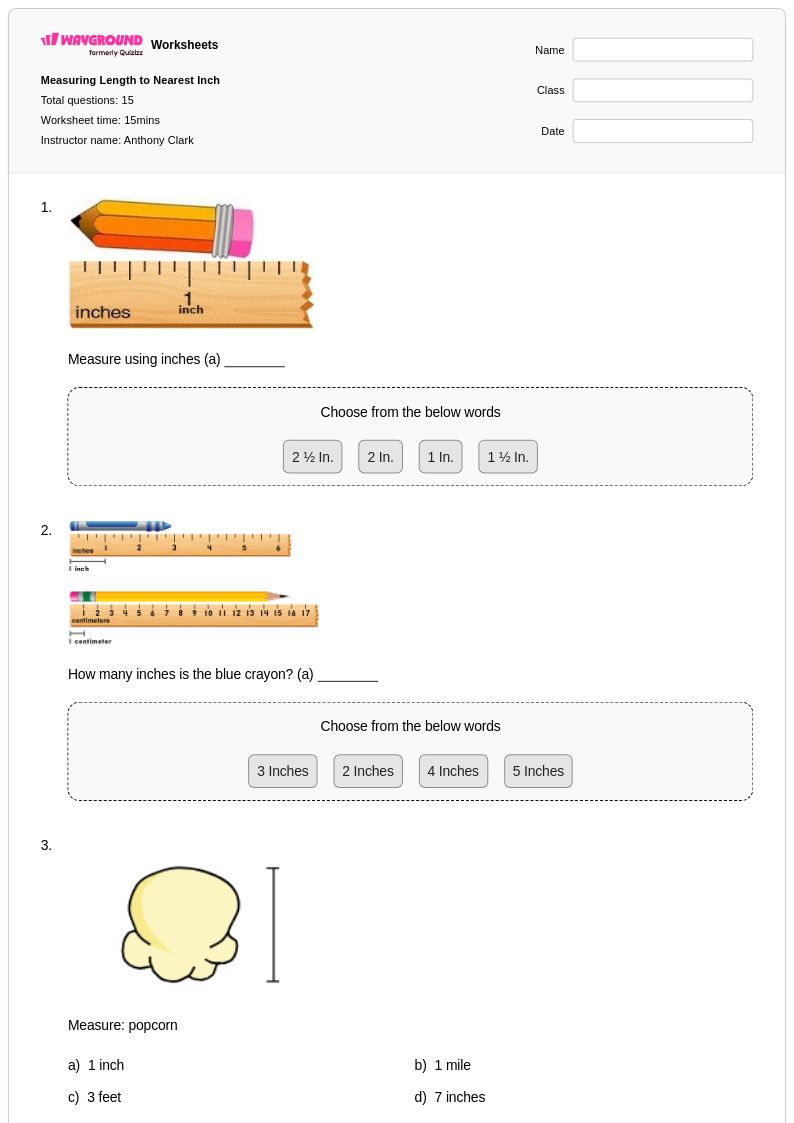
15 Q
2nd - Uni
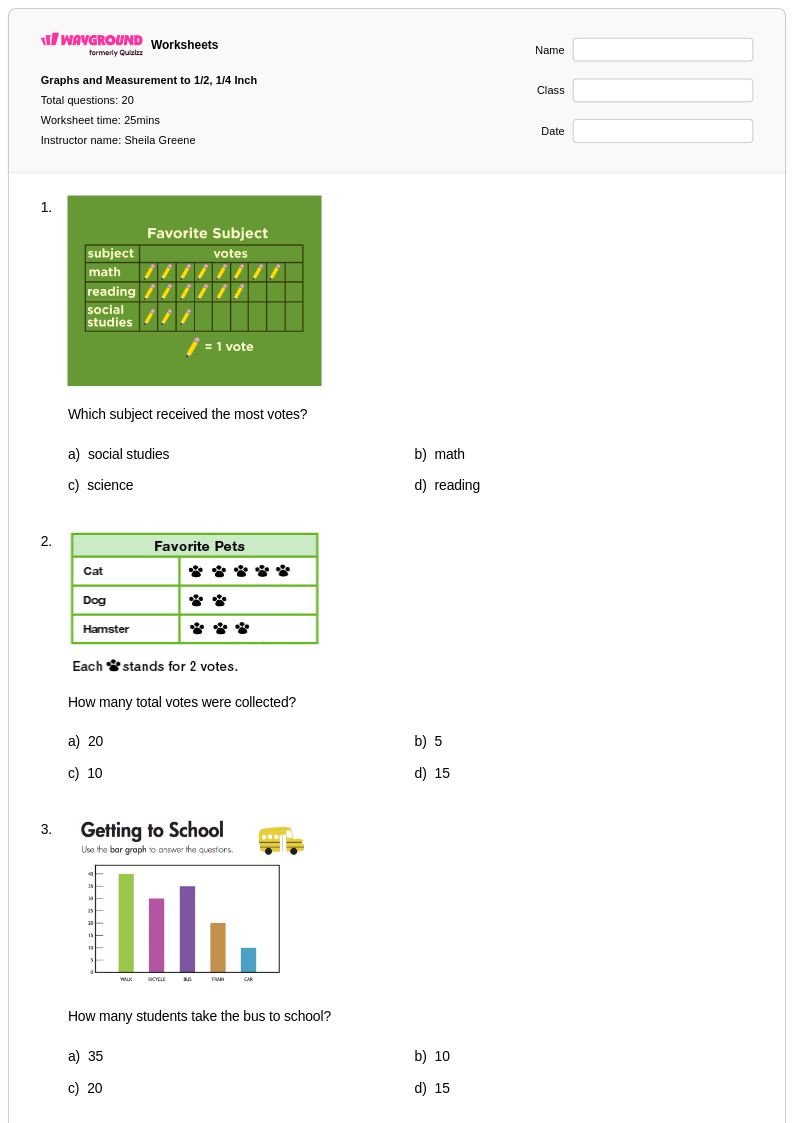
20 Q
2nd - 4th
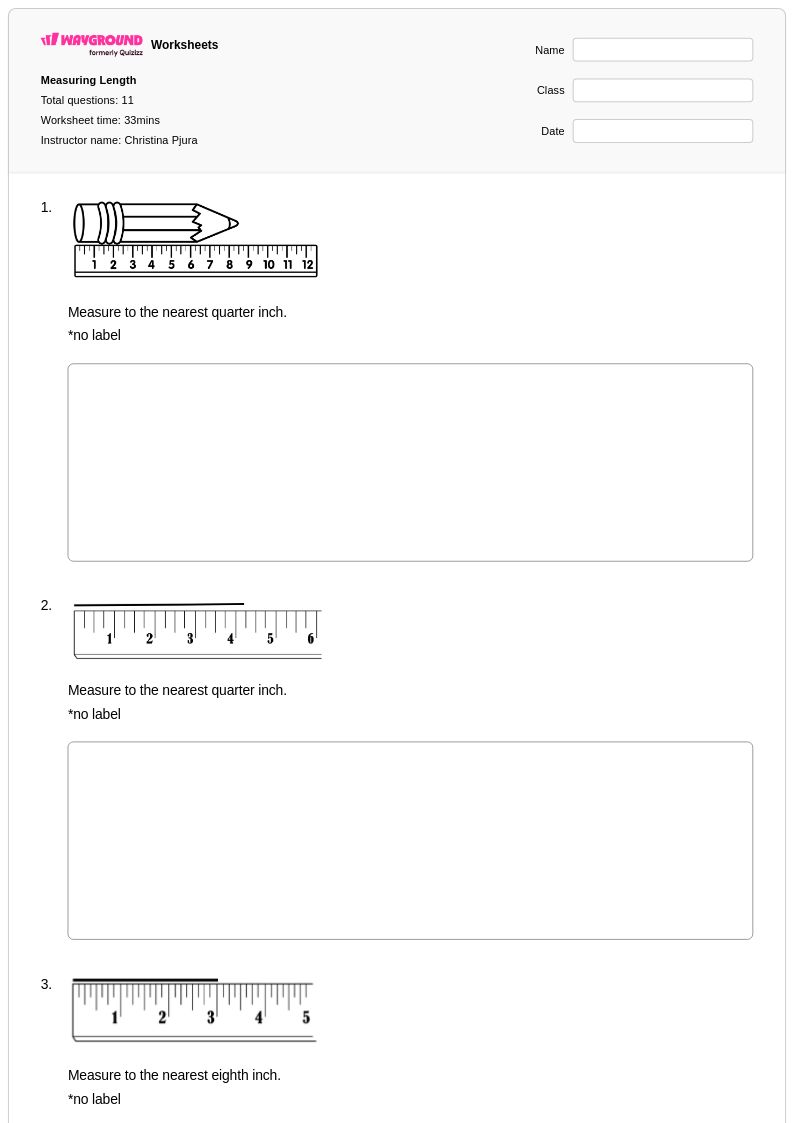
11 Q
2nd
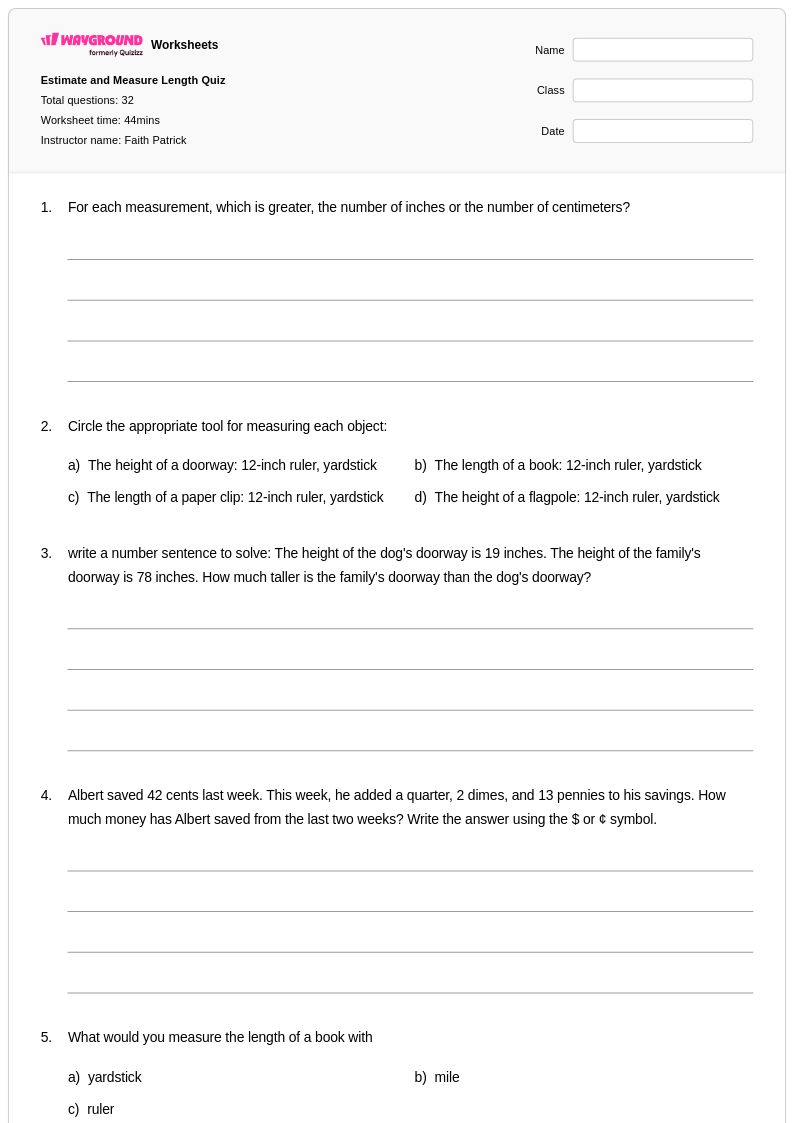
32 Q
2nd
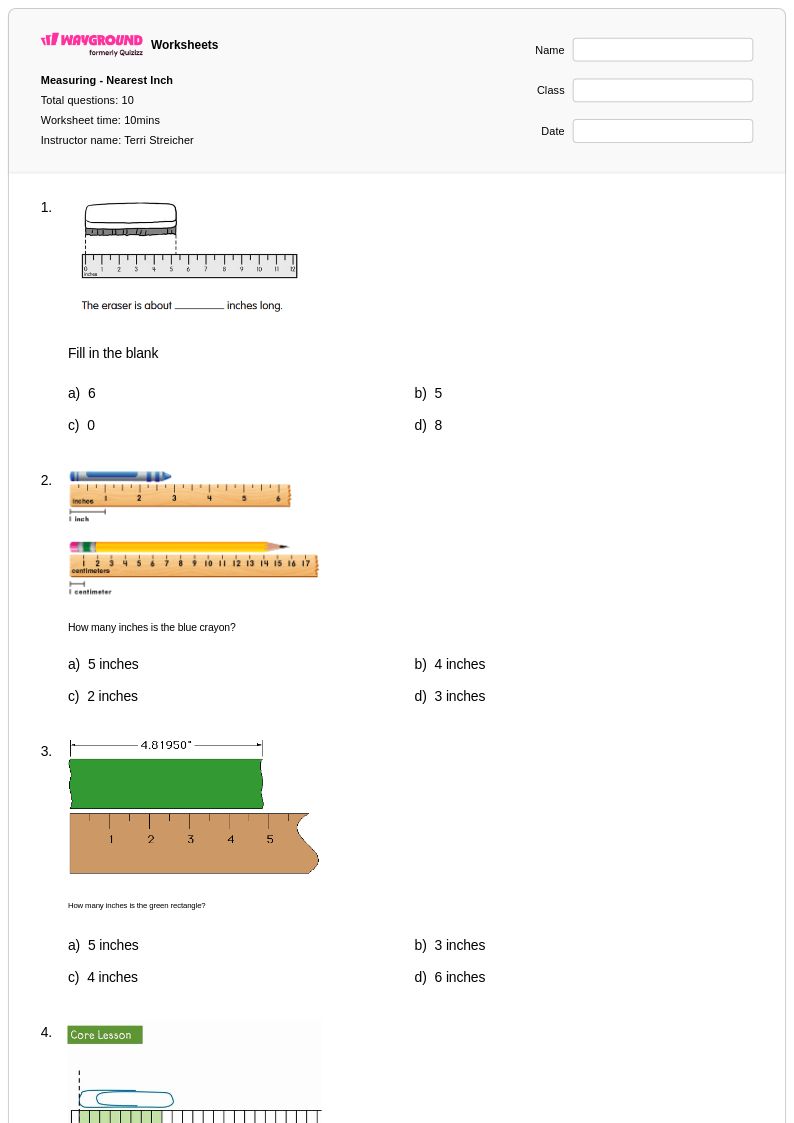
10 Q
2nd - 3rd
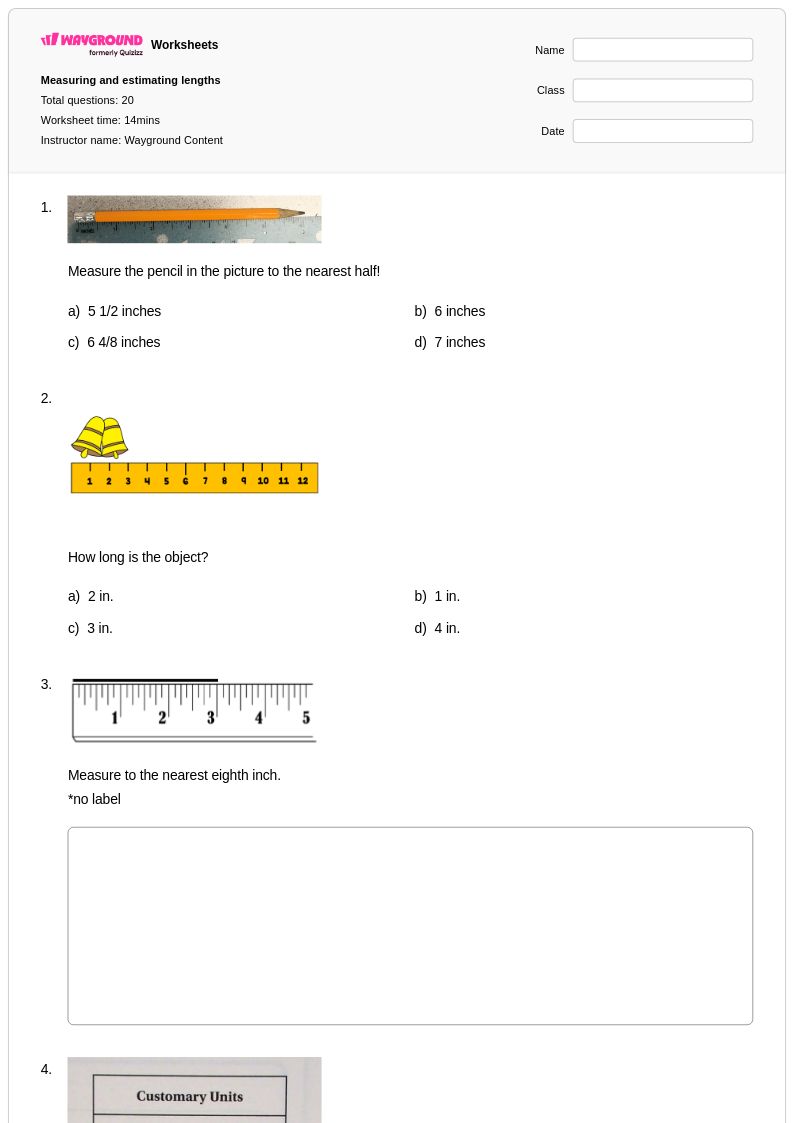
20 Q
2nd
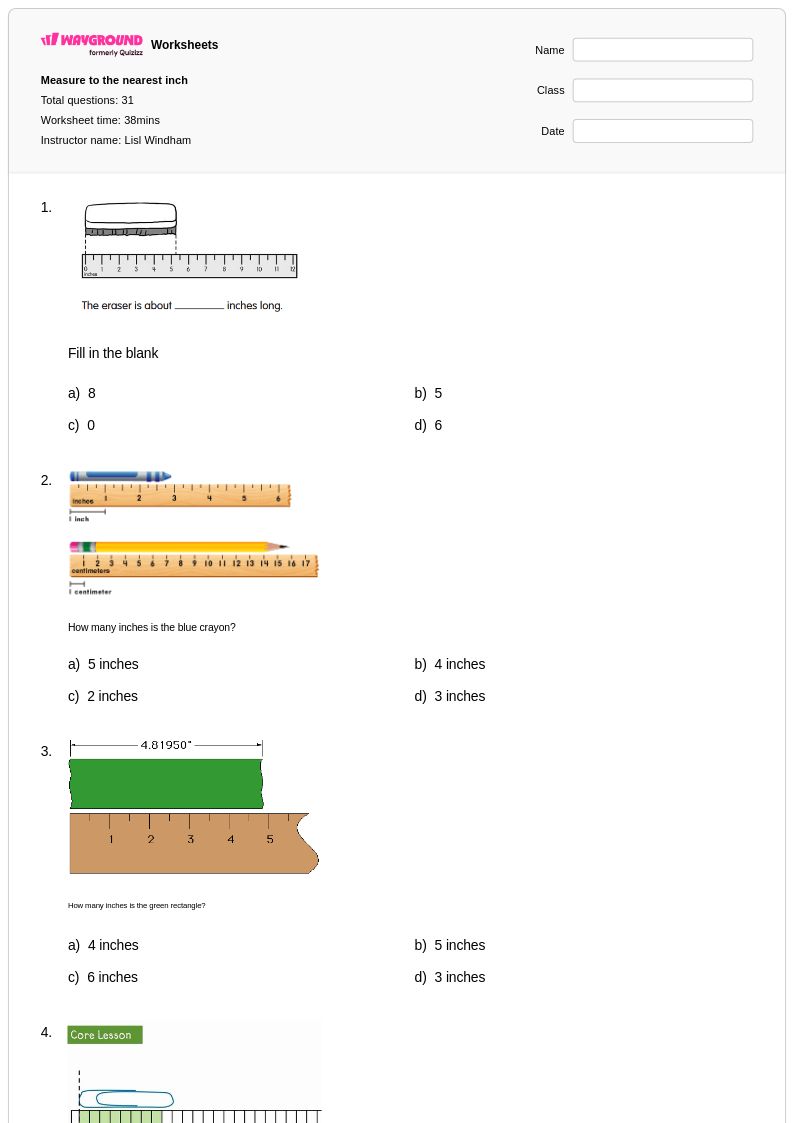
31 Q
2nd
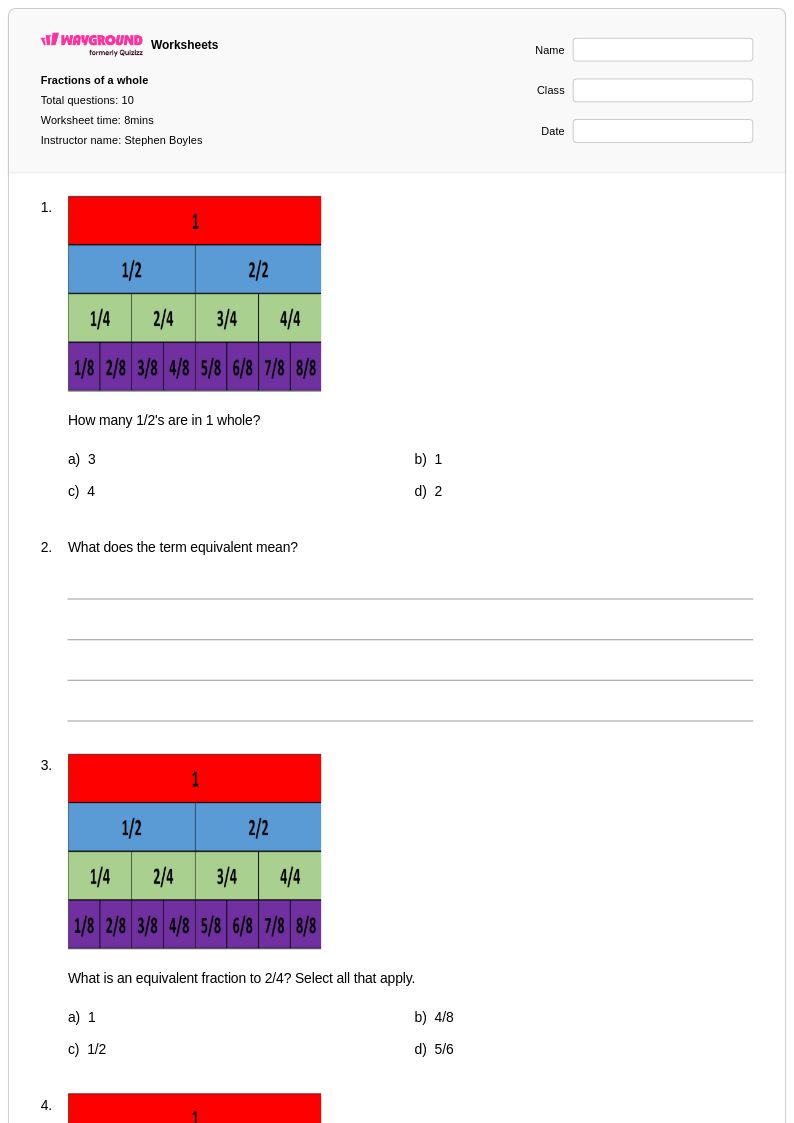
10 Q
2nd - 5th
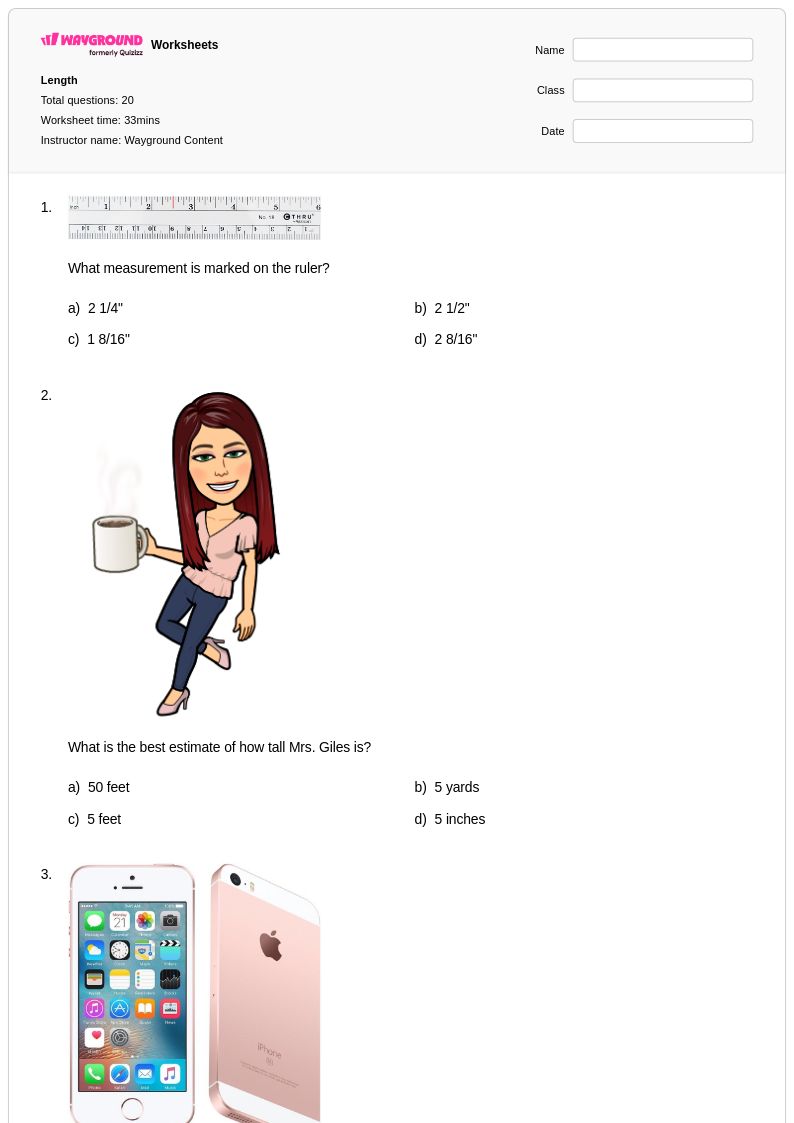
20 Q
2nd
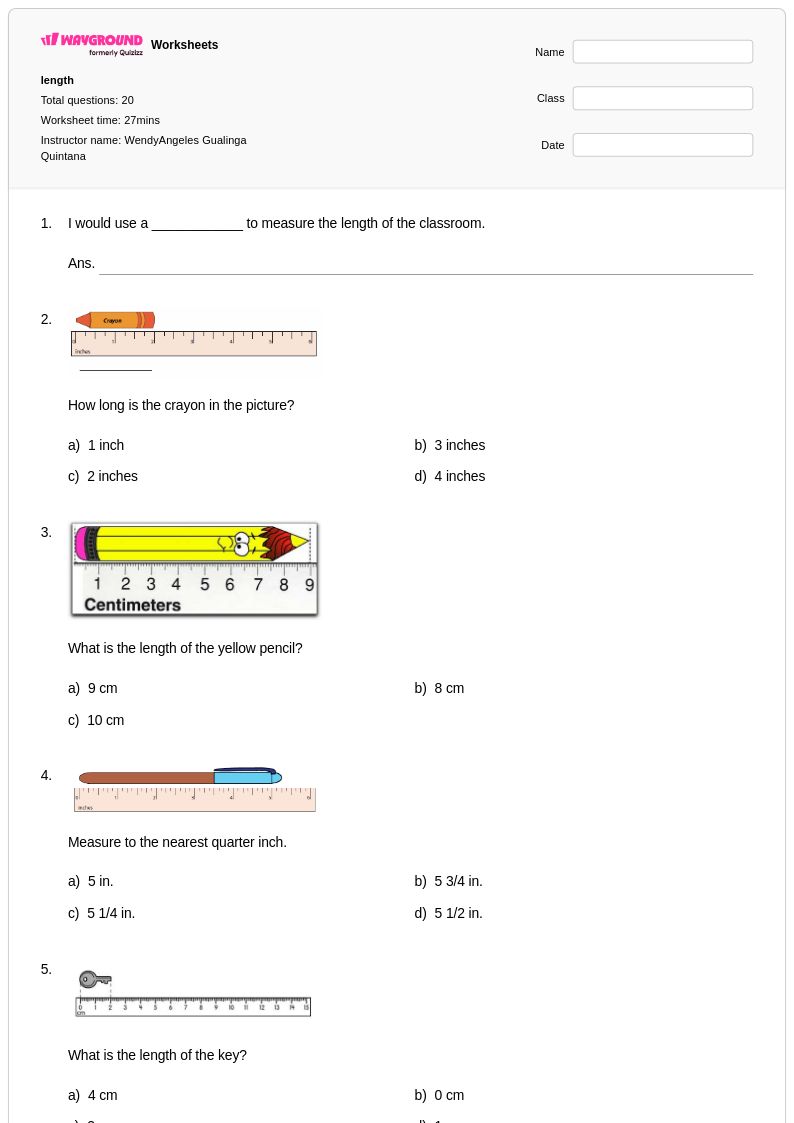
20 Q
2nd
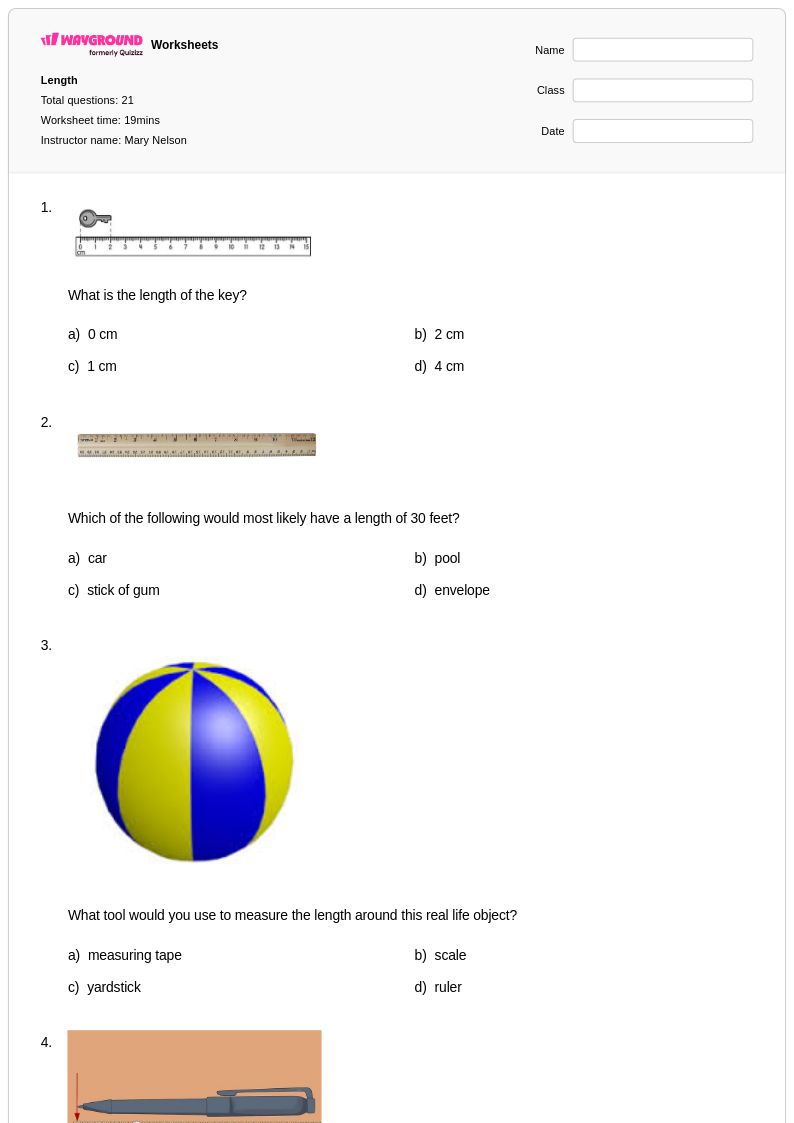
21 Q
2nd
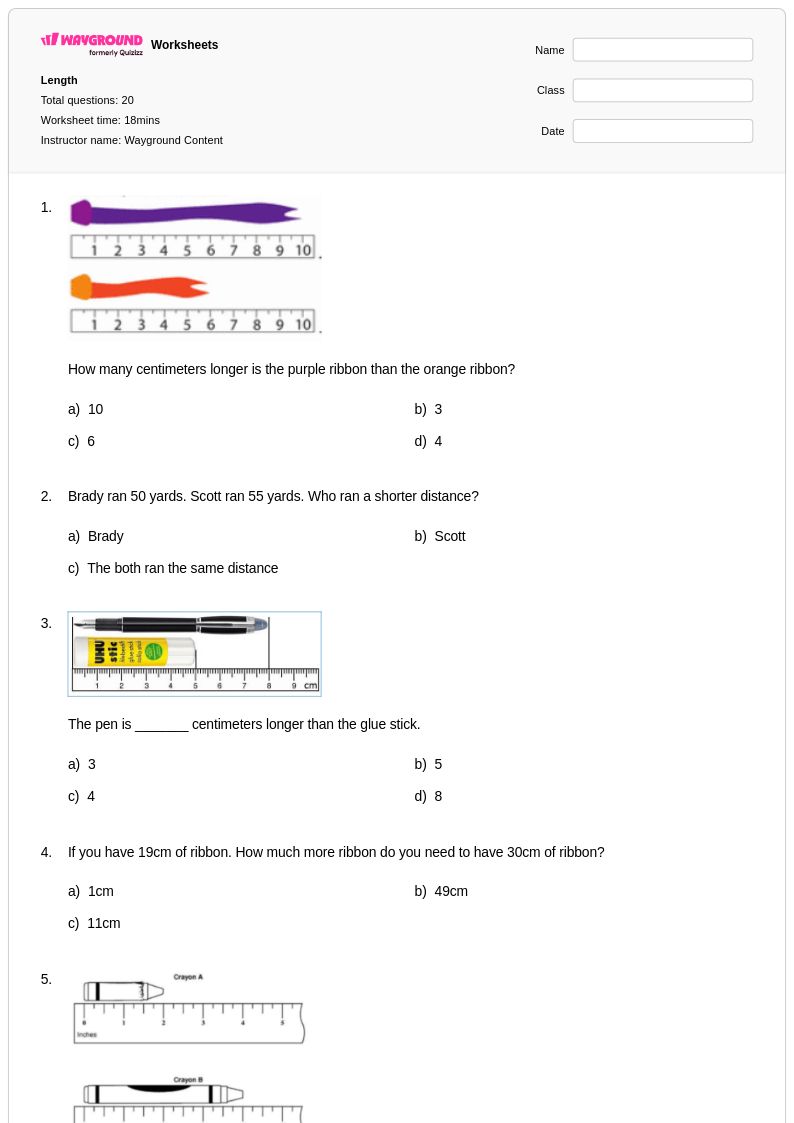
20 Q
2nd
Explore Measuring to the Nearest Quarter Inch Worksheets by Grades
Explore Other Subject Worksheets for class 2
Explore printable Measuring to the Nearest Quarter Inch worksheets for Class 2
Measuring to the nearest quarter inch worksheets for Class 2 students available through Wayground (formerly Quizizz) provide essential foundational practice in precision measurement skills that young learners need to develop spatial awareness and mathematical reasoning. These comprehensive worksheets guide second-grade students through the process of using rulers marked in quarter-inch increments, helping them understand fractional measurements and develop accuracy in reading measurement tools. Each worksheet collection includes varied practice problems that challenge students to measure common objects, line segments, and shapes while building confidence with fractional concepts like 1/4, 1/2, and 3/4 inches. Teachers can access complete answer keys alongside these free printables, ensuring efficient grading and enabling immediate feedback to support student learning progress.
Wayground (formerly Quizizz) empowers educators with millions of teacher-created measurement worksheet resources that can be easily searched, filtered, and customized to meet diverse classroom needs. The platform's robust collection of measuring to the nearest quarter inch materials supports standards alignment while offering flexible differentiation tools that help teachers address varying skill levels within Class 2 classrooms. Teachers can seamlessly integrate these resources into their lesson planning for initial instruction, targeted remediation, or enrichment activities, with materials available in both printable pdf formats for traditional paper-based learning and digital formats for technology-enhanced instruction. This comprehensive approach ensures that educators have the necessary tools to provide consistent skill practice opportunities that build measurement proficiency and mathematical confidence in young learners.
FAQs
How can I connect measuring to the quarter inch with other Grade 2 math concepts?
How does measuring to the quarter inch fit with Grade 2 Common Core standards?
What common errors do second graders make when measuring with quarter inches?
What are effective practice activities for measuring to the nearest quarter inch in Grade 2?
How can I use these Grade 2 worksheets for measurement practice?