
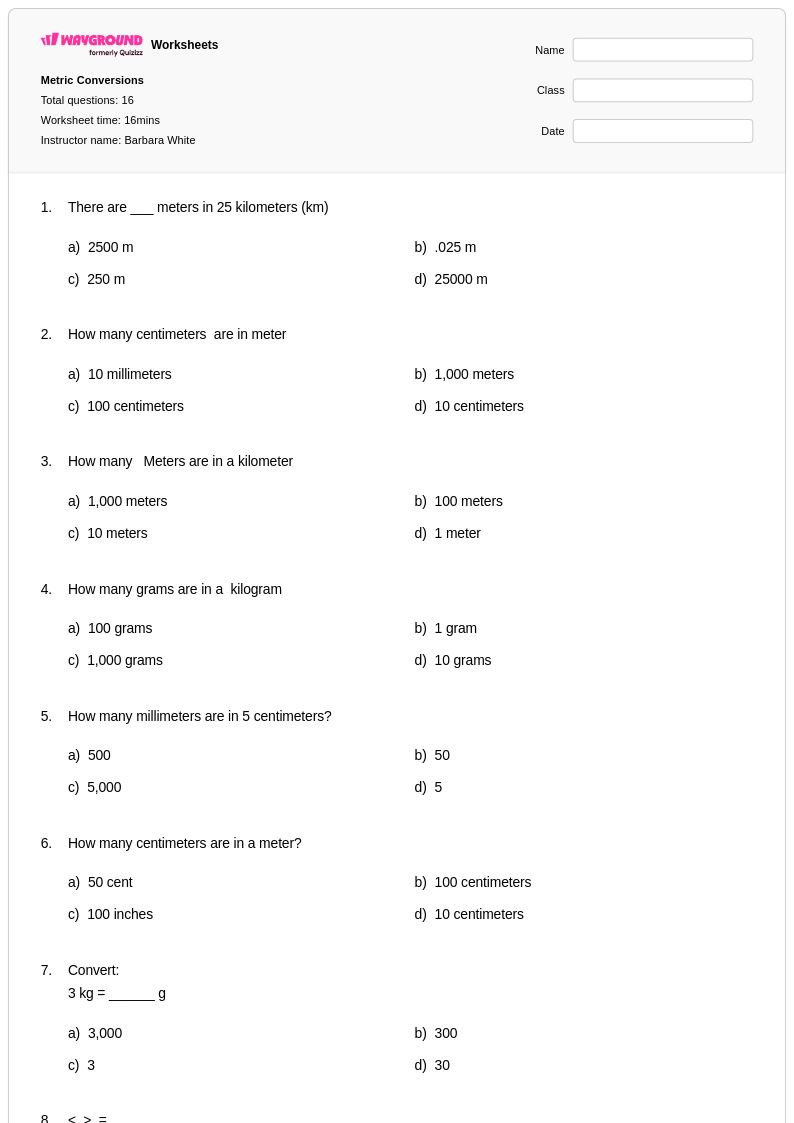
16 Q
3rd - 5th
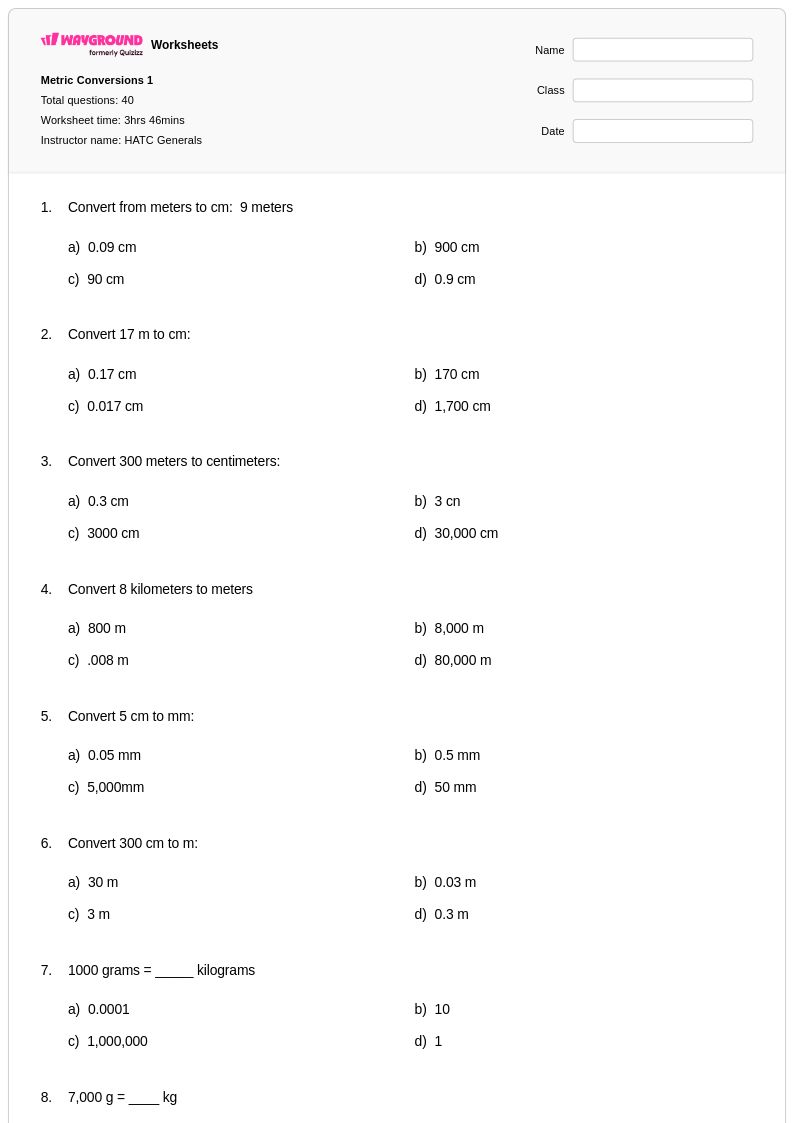
40 Q
3rd
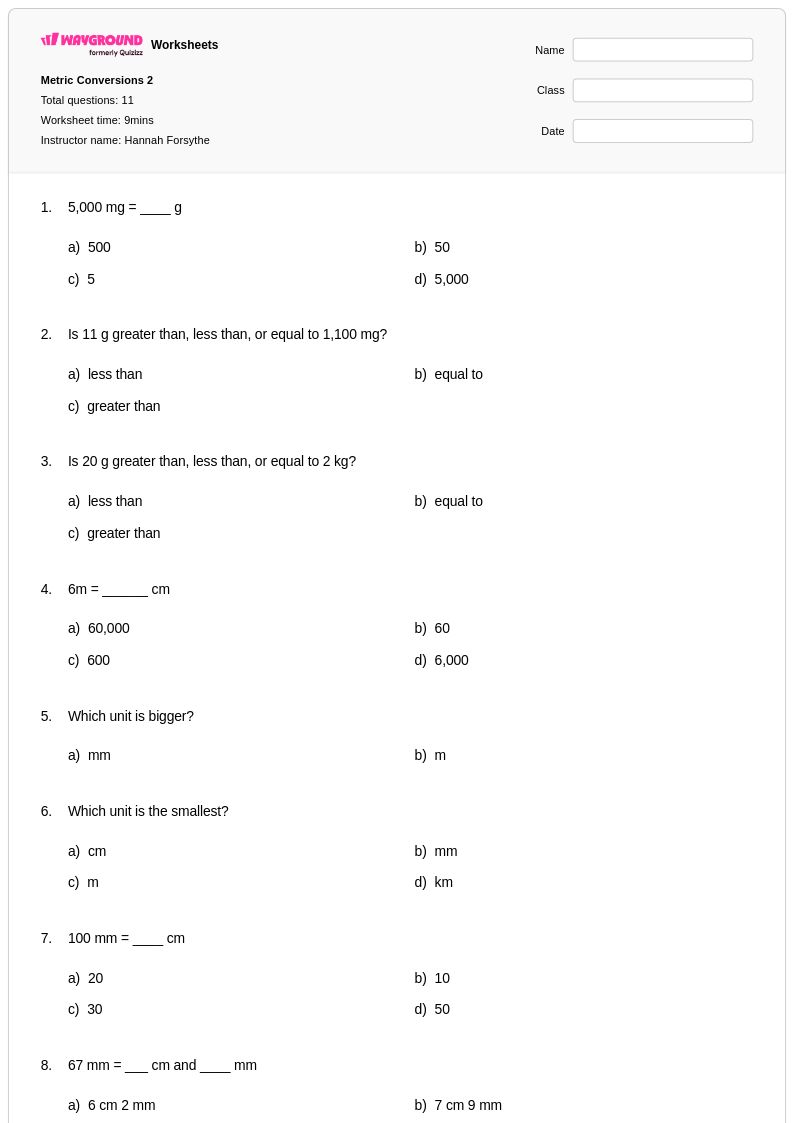
11 Q
3rd - 4th
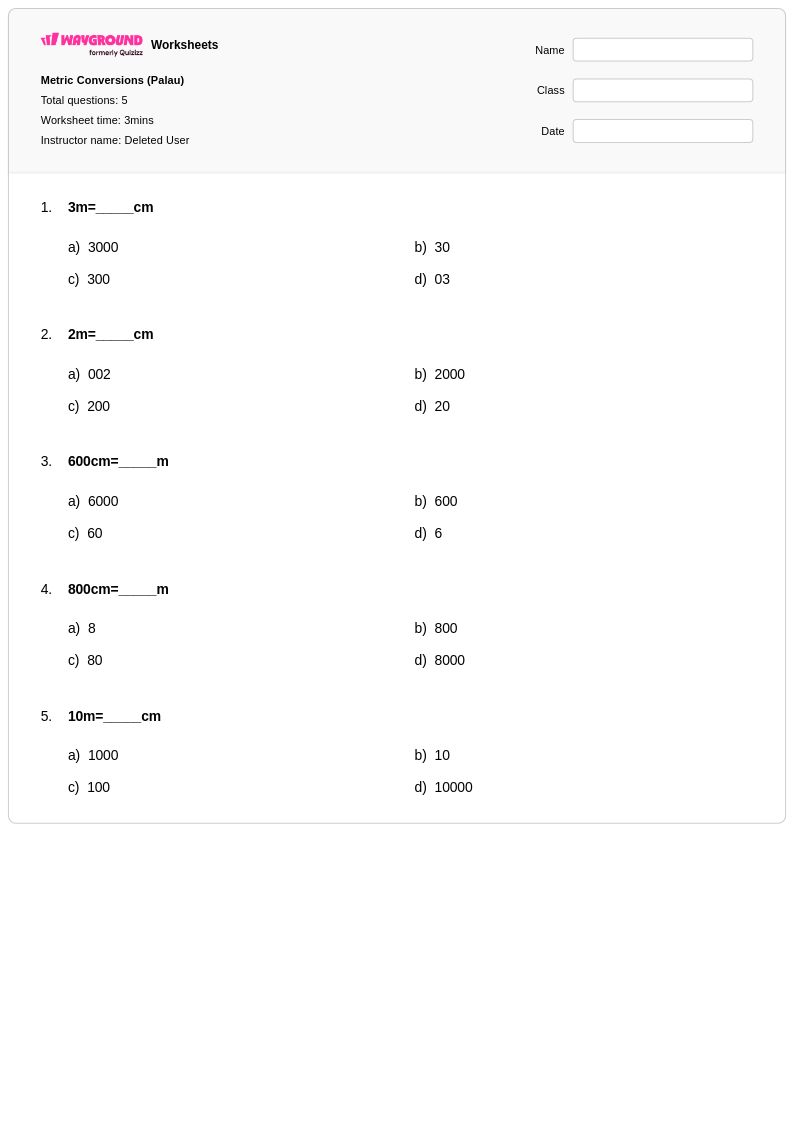
5 Q
3rd
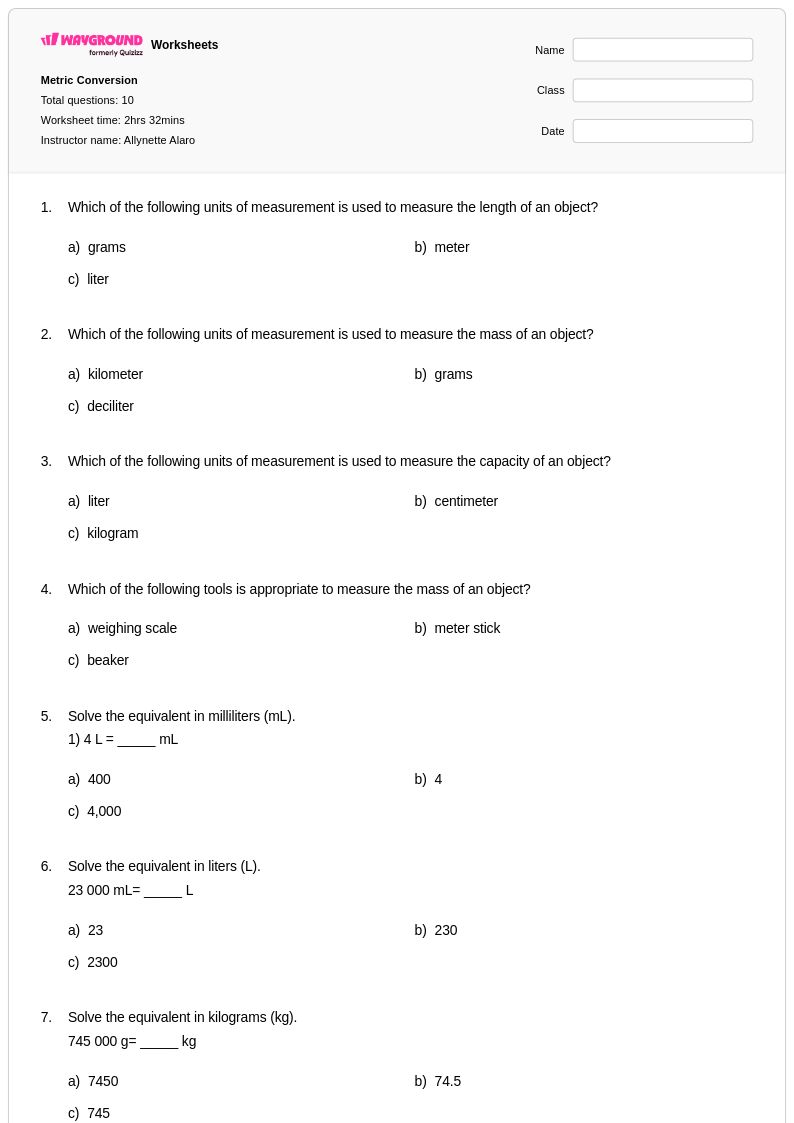
10 Q
3rd
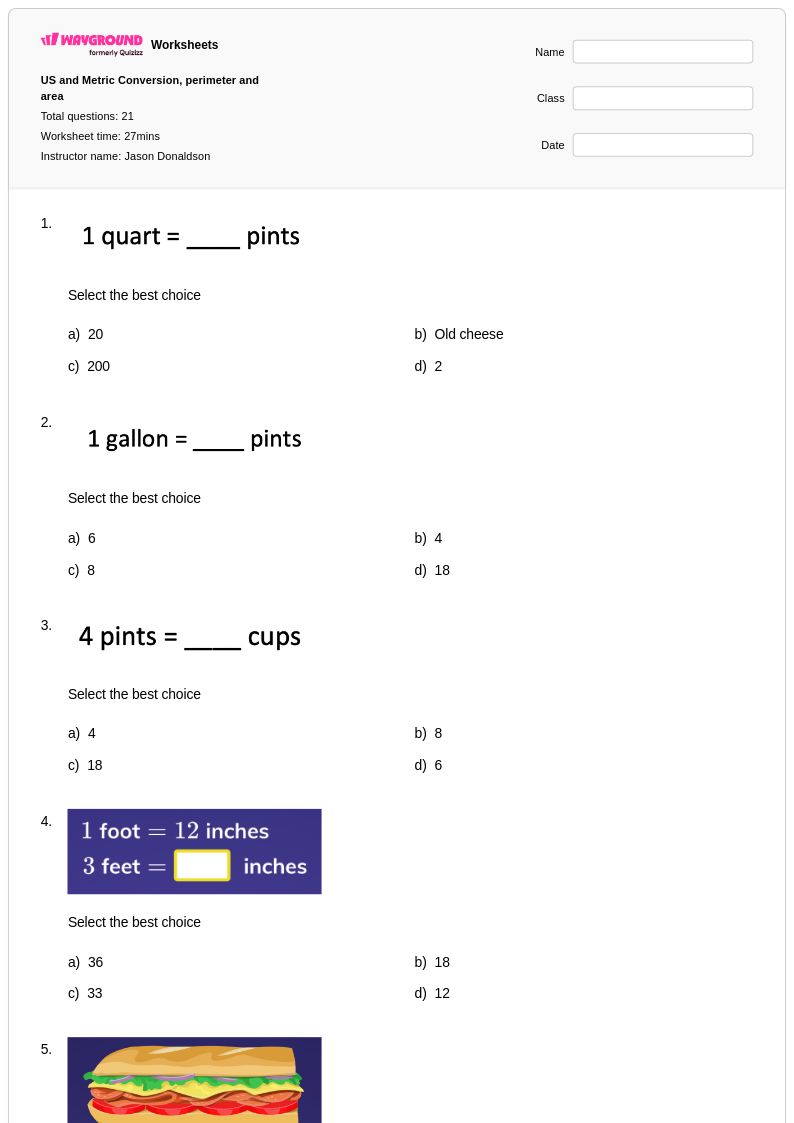
21 Q
3rd - 4th
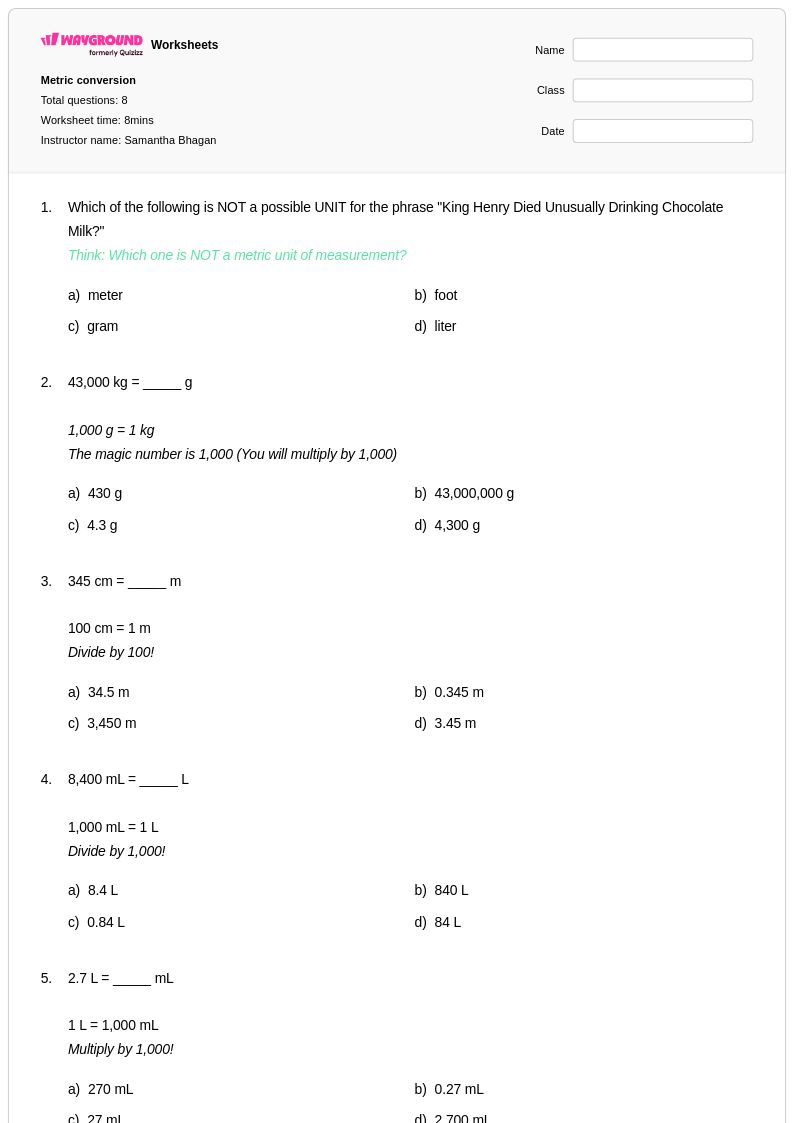
8 Q
3rd
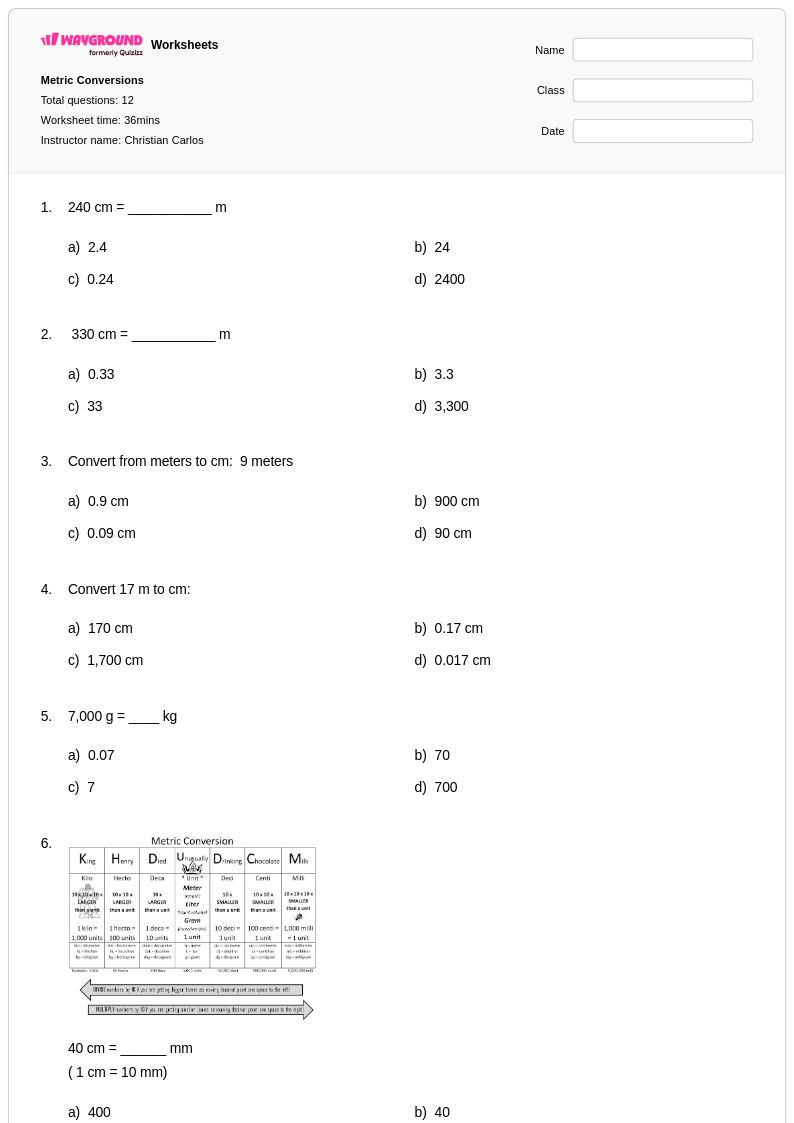
12 Q
3rd
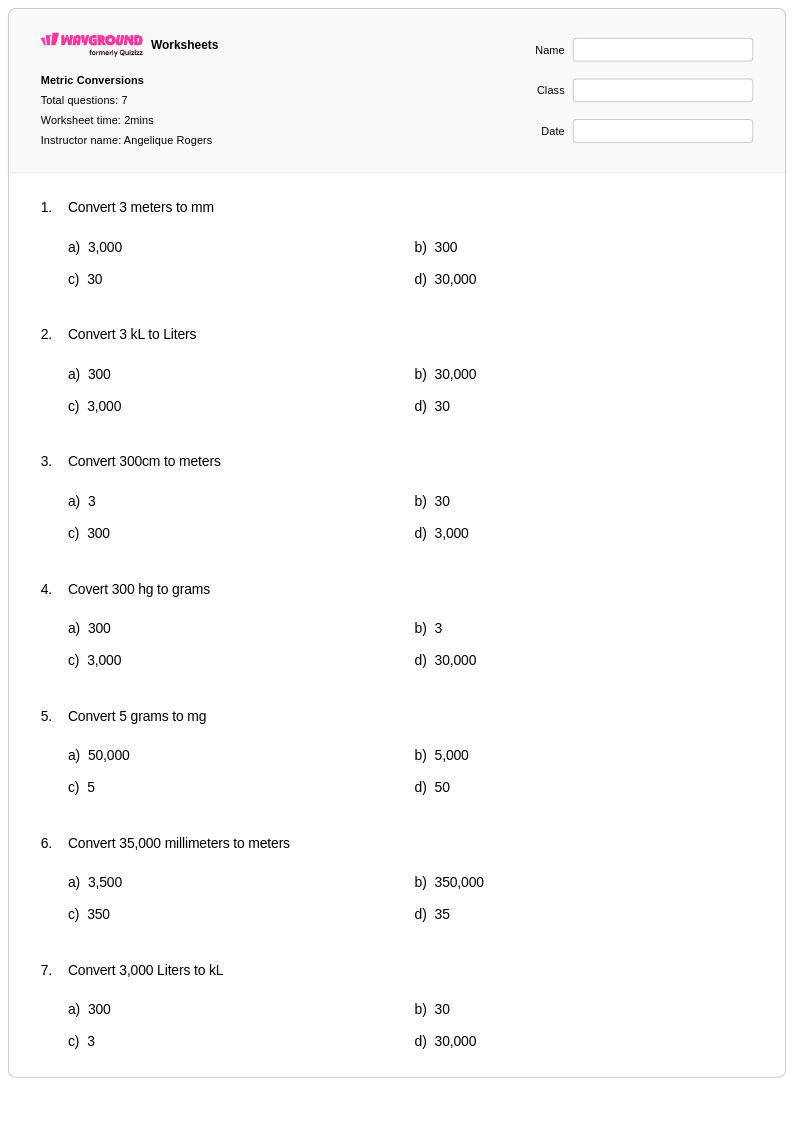
7 Q
3rd - 5th
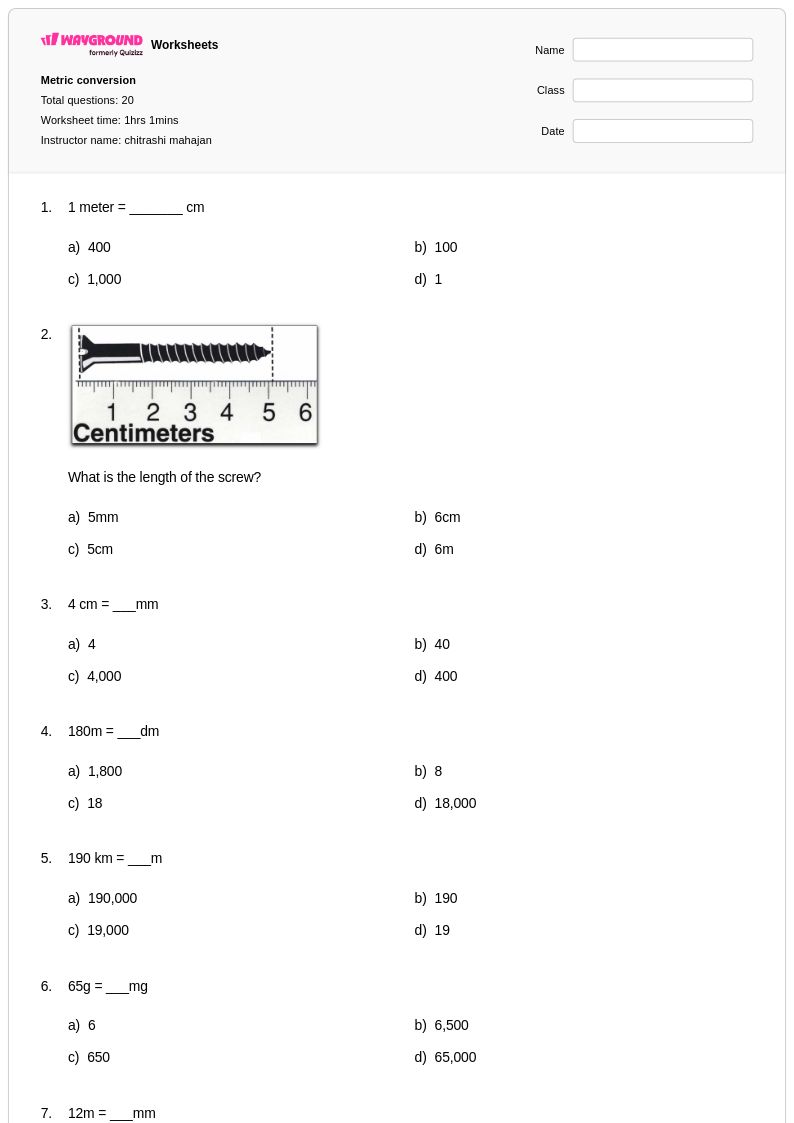
20 Q
1st - 5th
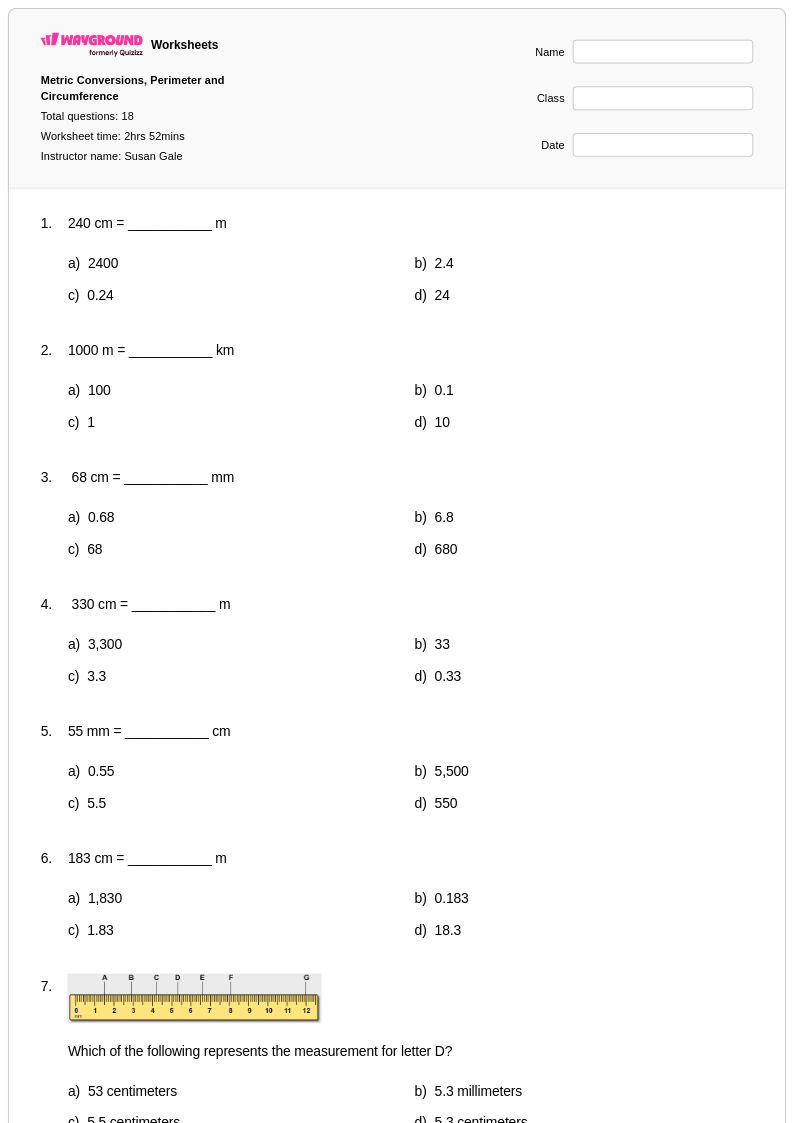
18 Q
3rd - 7th
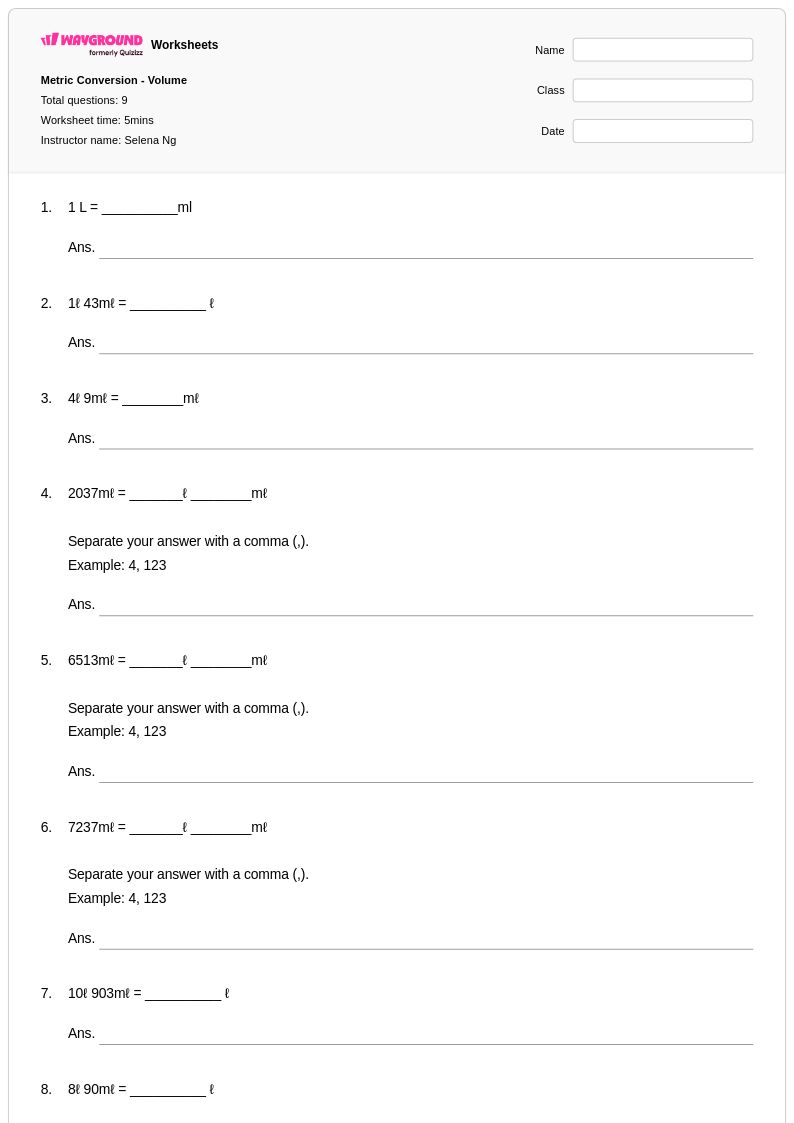
9 Q
3rd
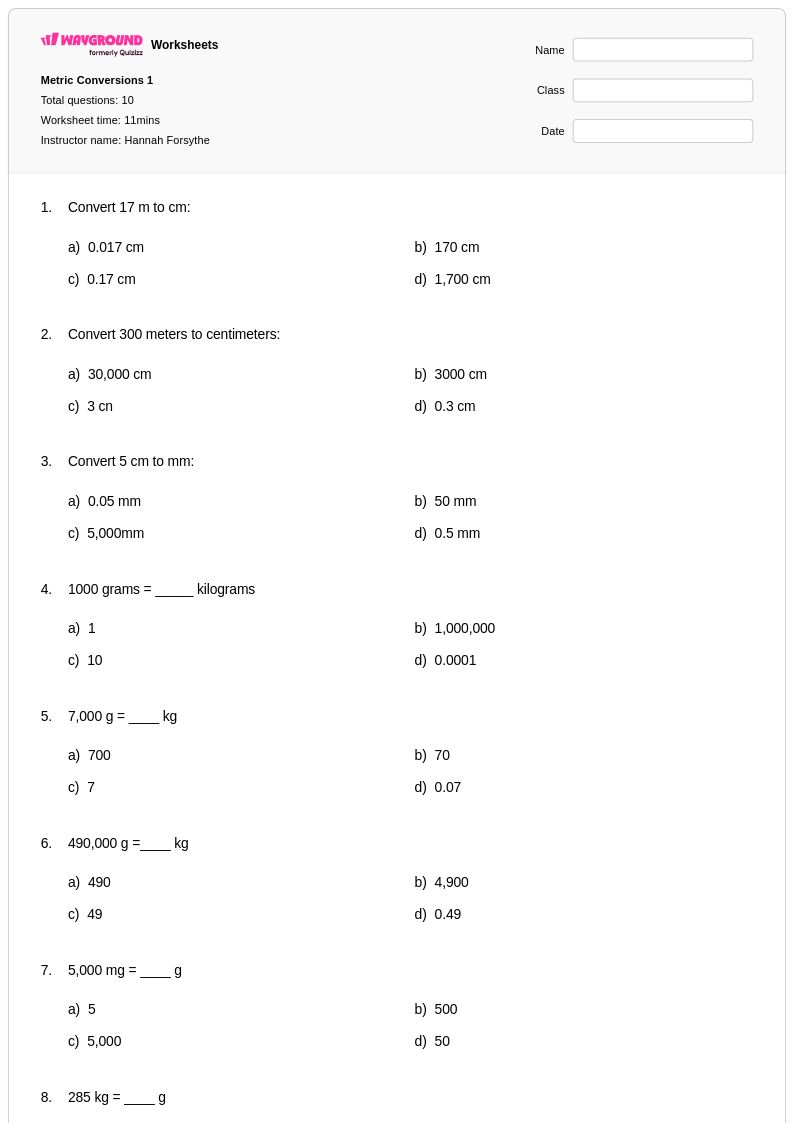
10 Q
3rd - 4th
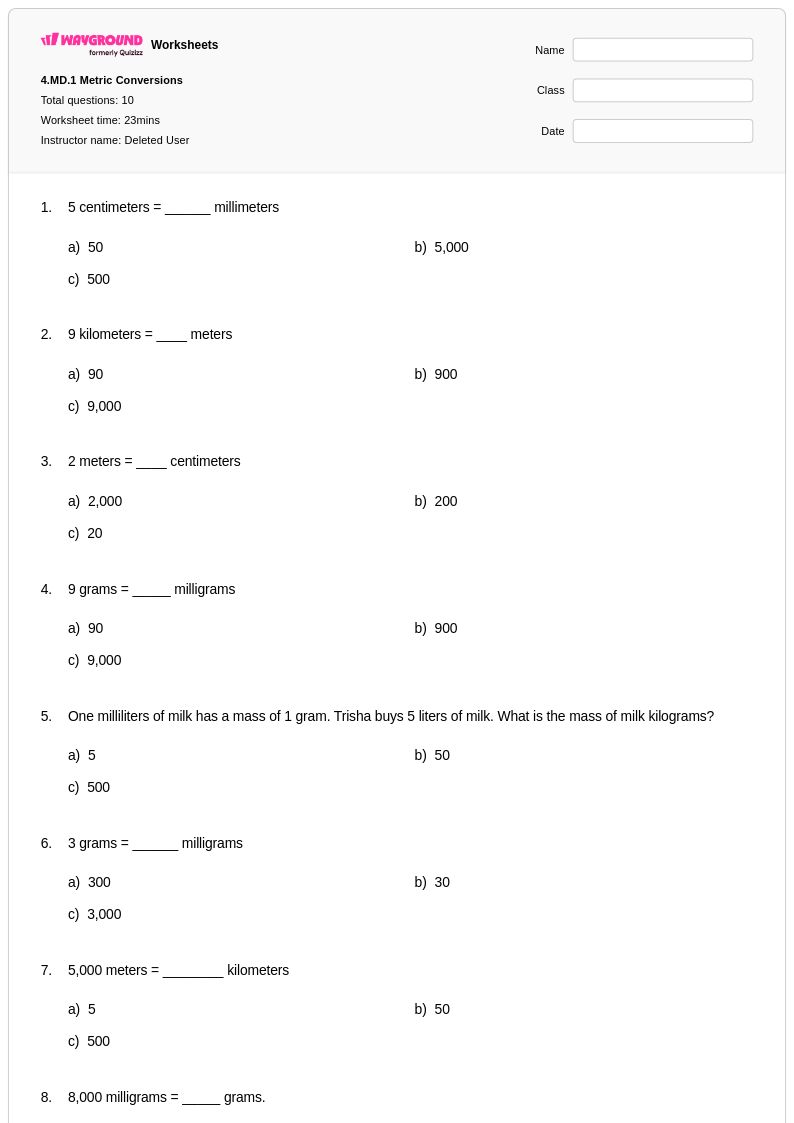
10 Q
3rd - 5th
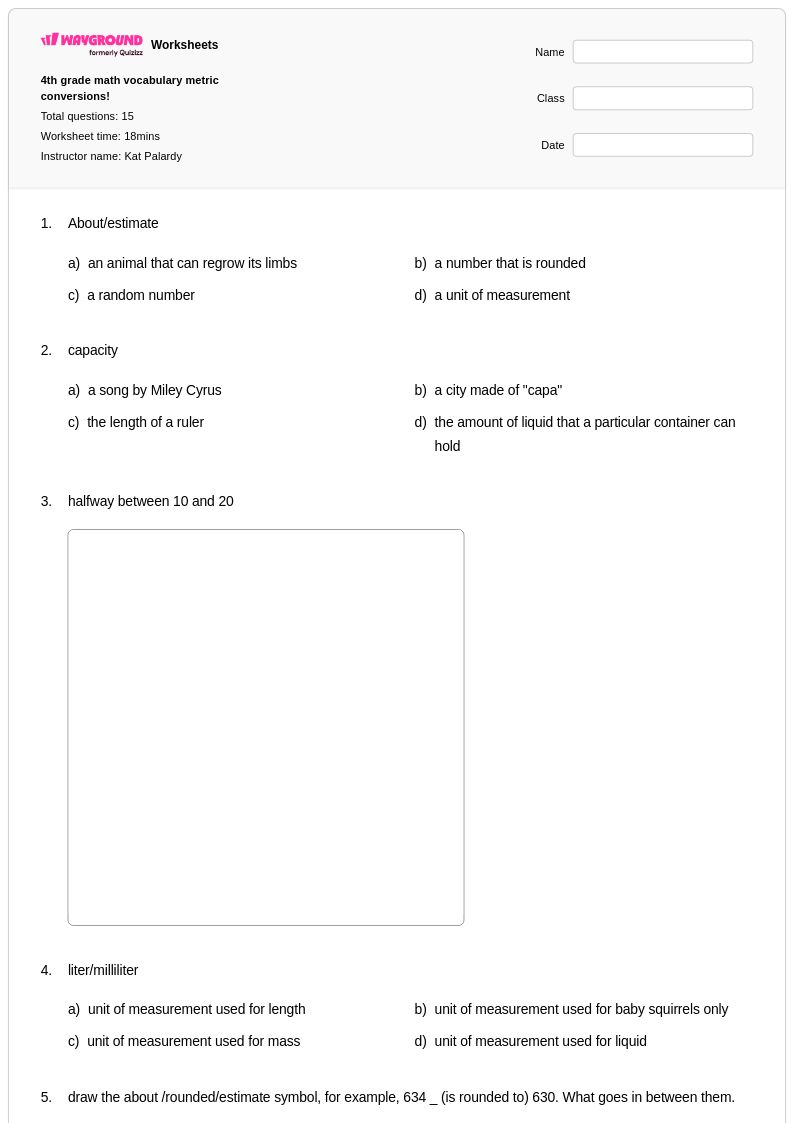
15 Q
3rd - 5th
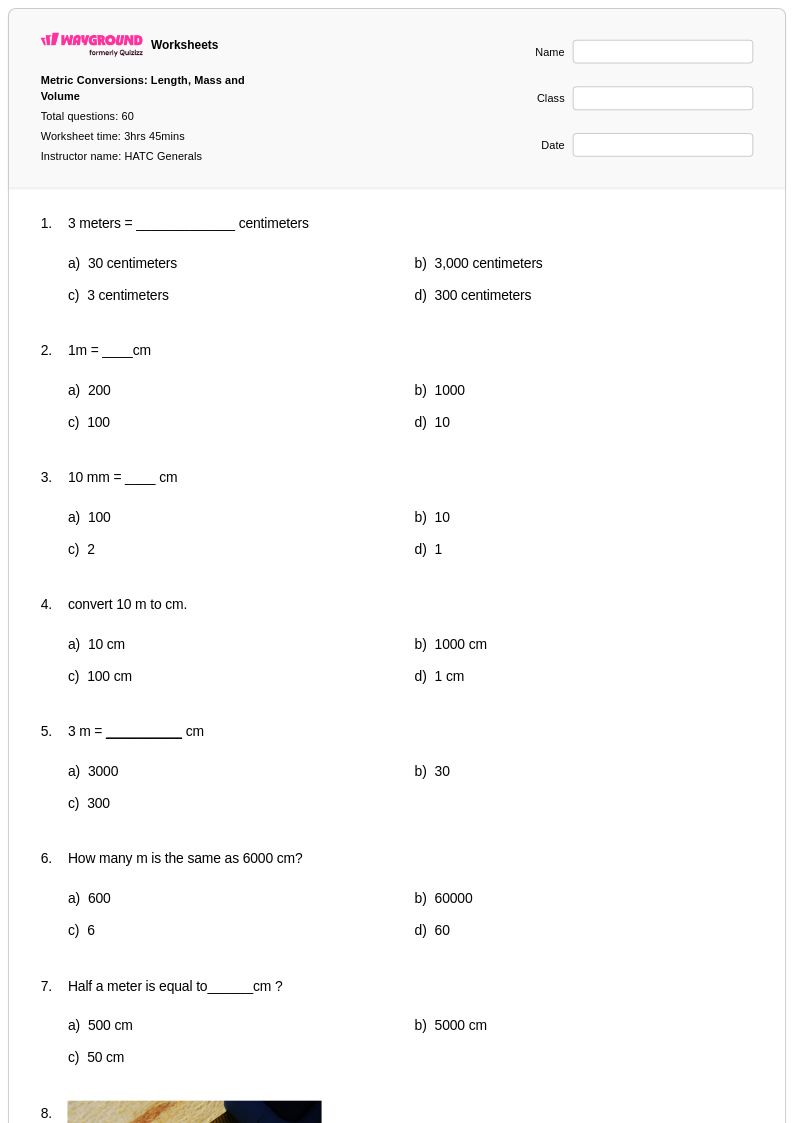
60 Q
3rd
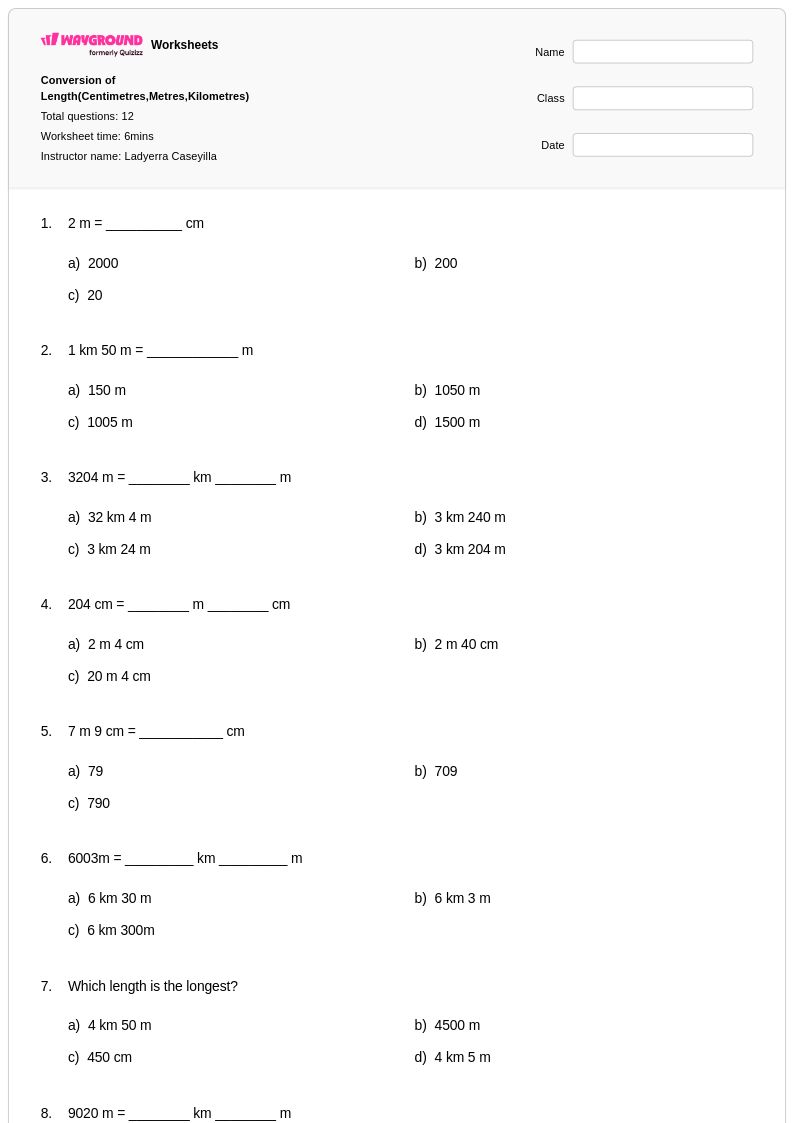
12 Q
3rd
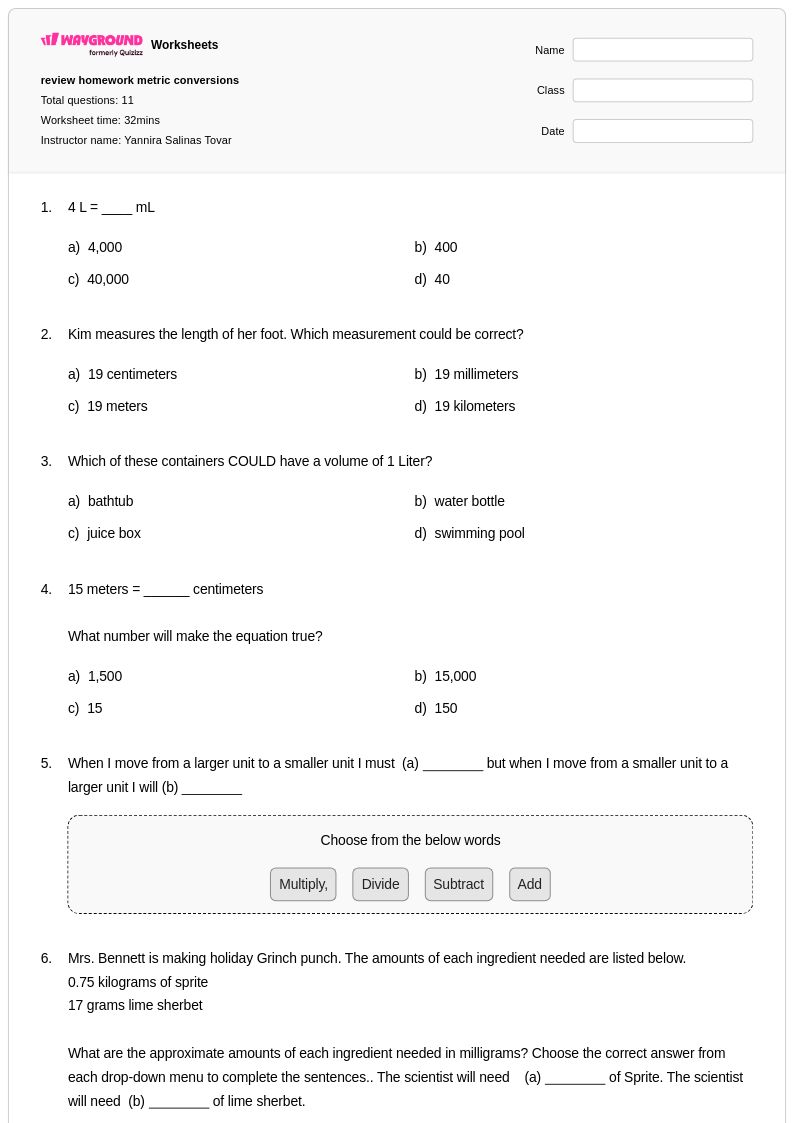
11 Q
1st - 5th
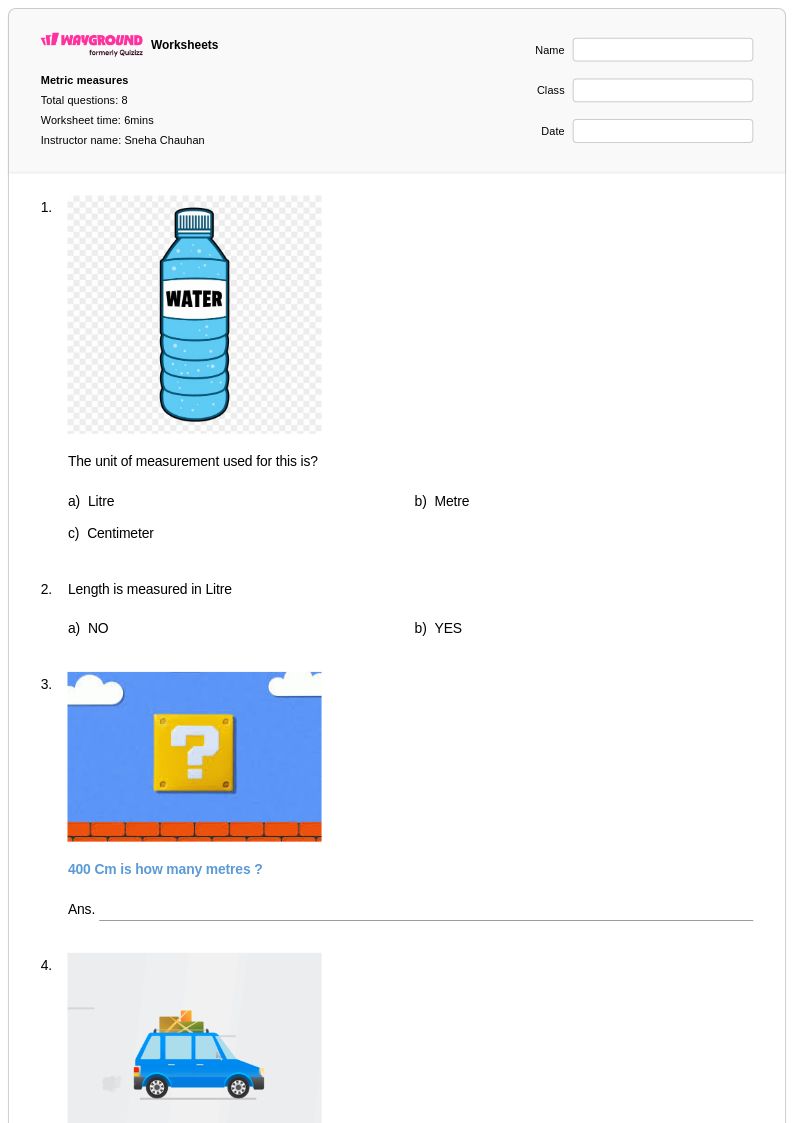
8 Q
3rd

10 Q
3rd - 4th
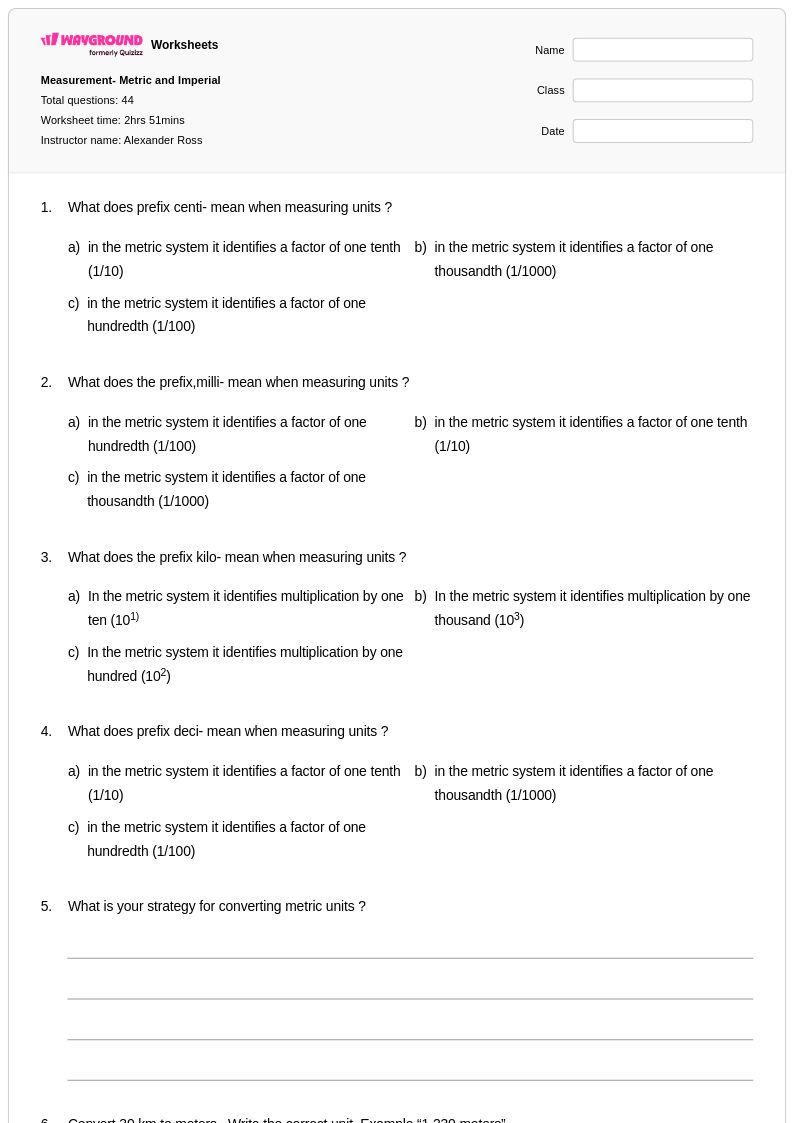
44 Q
3rd - 6th
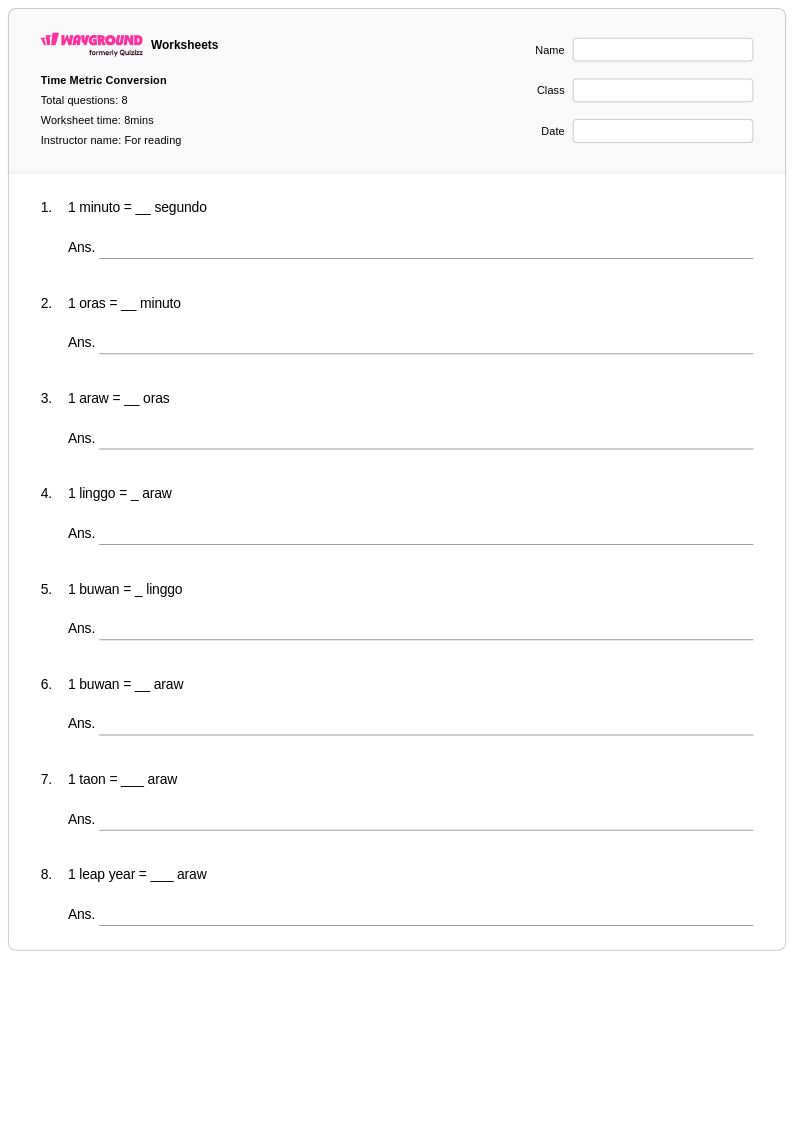
8 Q
3rd

15 Q
3rd
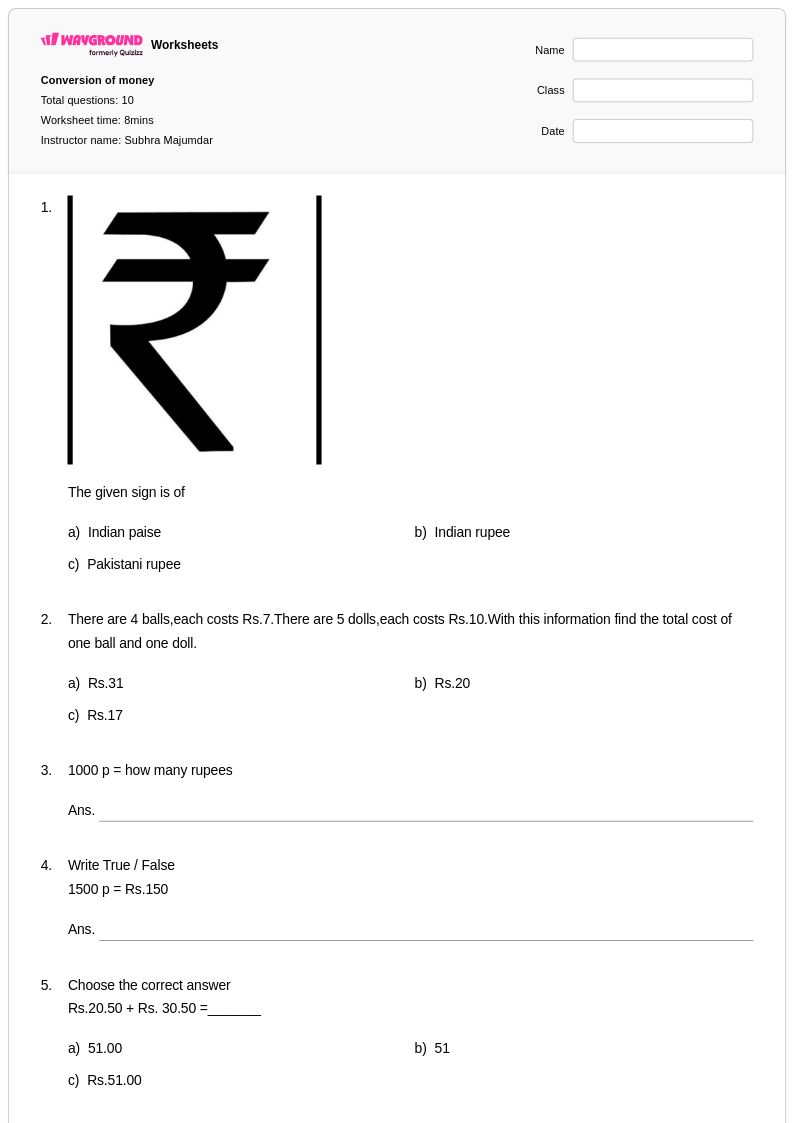
10 Q
3rd
Explore Other Subject Worksheets for class 3
Explore printable Metric Conversion worksheets for Class 3
Class 3 metric conversion worksheets available through Wayground (formerly Quizizz) provide essential foundational practice for young mathematicians learning to navigate the metric system of measurement. These carefully structured worksheets focus on building core skills in converting between basic metric units including meters and centimeters, liters and milliliters, and grams and kilograms. Students develop number sense and proportional reasoning as they work through practice problems that emphasize the base-ten structure of metric measurements. Each worksheet collection includes comprehensive answer keys and is available as free printables in pdf format, making it easy for educators to incorporate systematic metric conversion practice into their mathematics instruction while supporting students' growing understanding of measurement relationships.
Wayground (formerly Quizizz) empowers teachers with access to millions of teacher-created metric conversion resources specifically designed for Class 3 learners. The platform's robust search and filtering capabilities allow educators to quickly locate worksheets aligned with specific mathematics standards and differentiate instruction based on individual student needs. Teachers can customize existing worksheets or create new ones using flexible tools that support both remediation for struggling learners and enrichment for advanced students. Available in both printable and digital formats including downloadable pdf files, these metric conversion worksheet collections streamline lesson planning while providing the targeted skill practice necessary for students to master fundamental measurement concepts and develop confidence in mathematical problem-solving.
FAQs
What aspects of metric conversion are taught in Grade 3?
How can I connect metric conversion to multiplication for third graders?
What skills do these Grade 3 metric conversion worksheets cover?
What's a key indicator of understanding for Grade 3 metric concepts?
How do I get and use these Grade 3 worksheets?
How does this topic align with Grade 3 curriculum standards?