
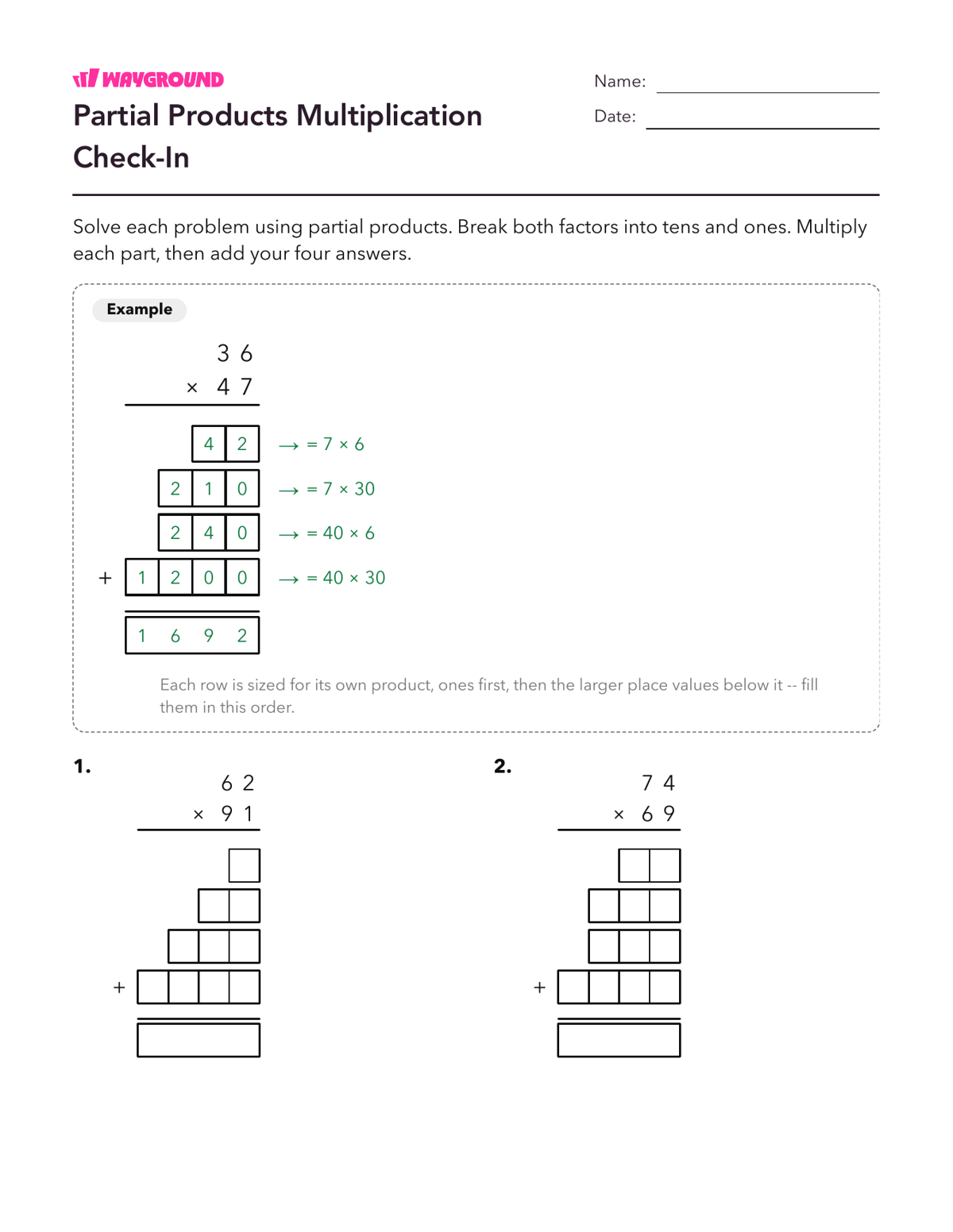
20 Q
3rd
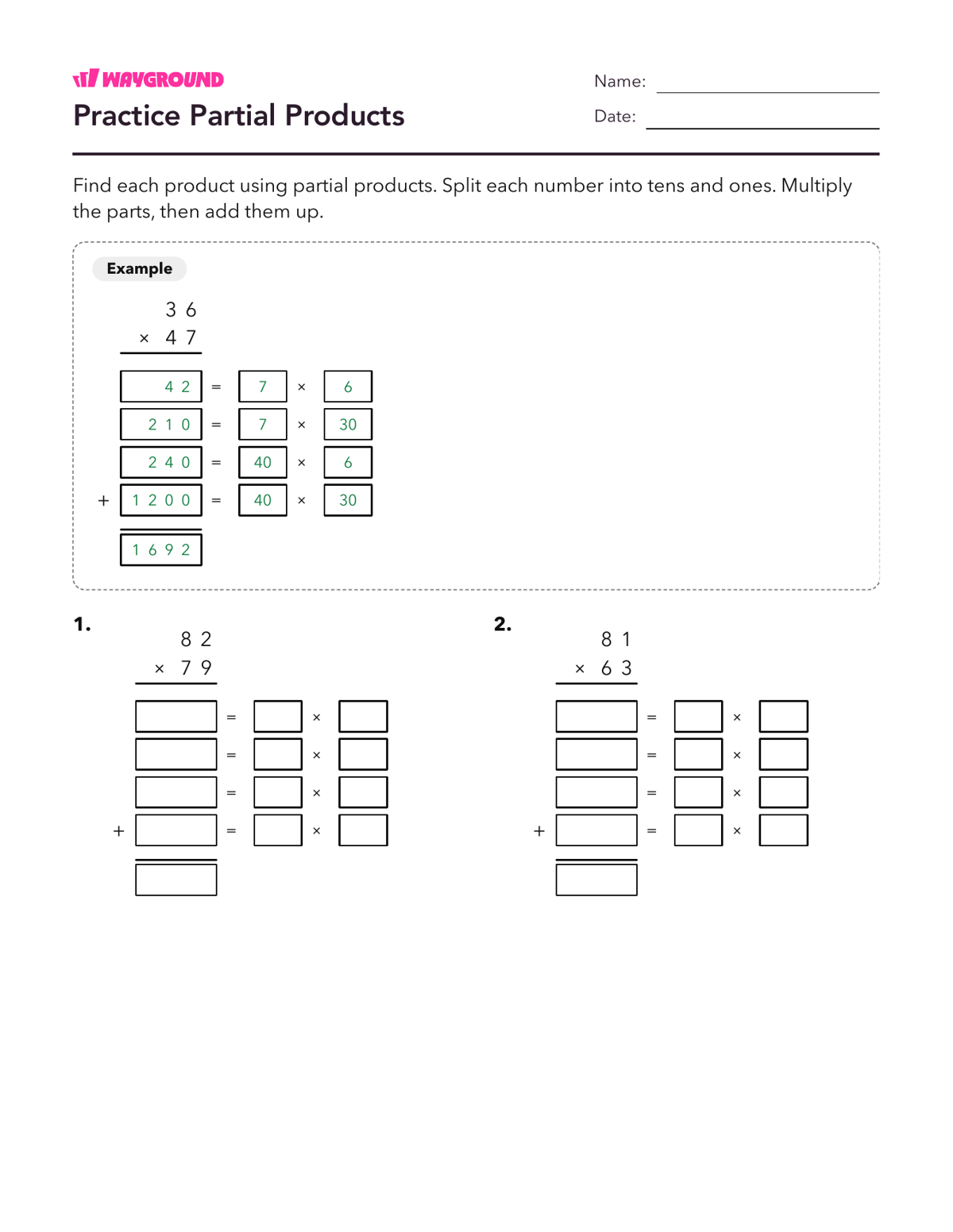
9 Q
3rd
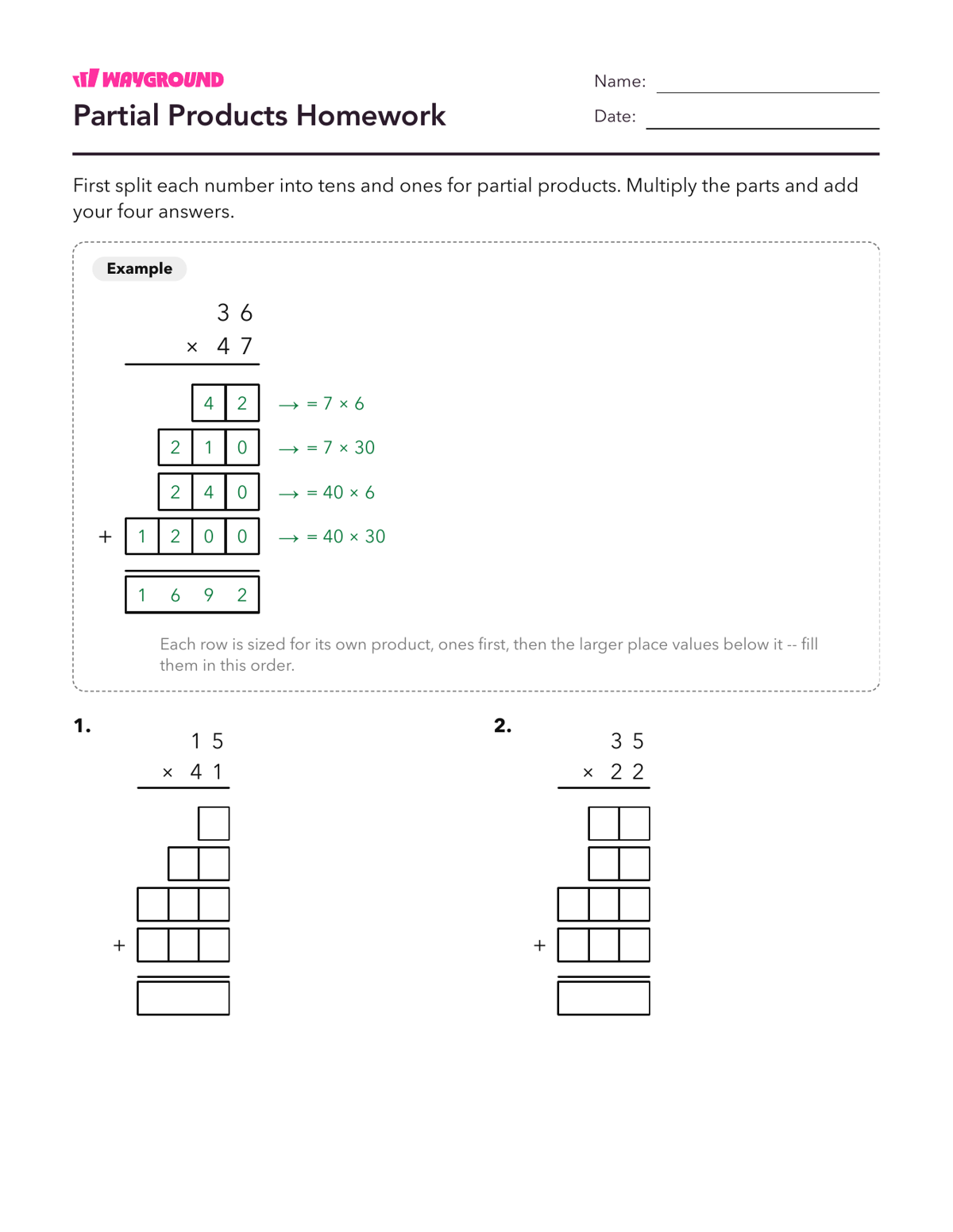
18 Q
3rd
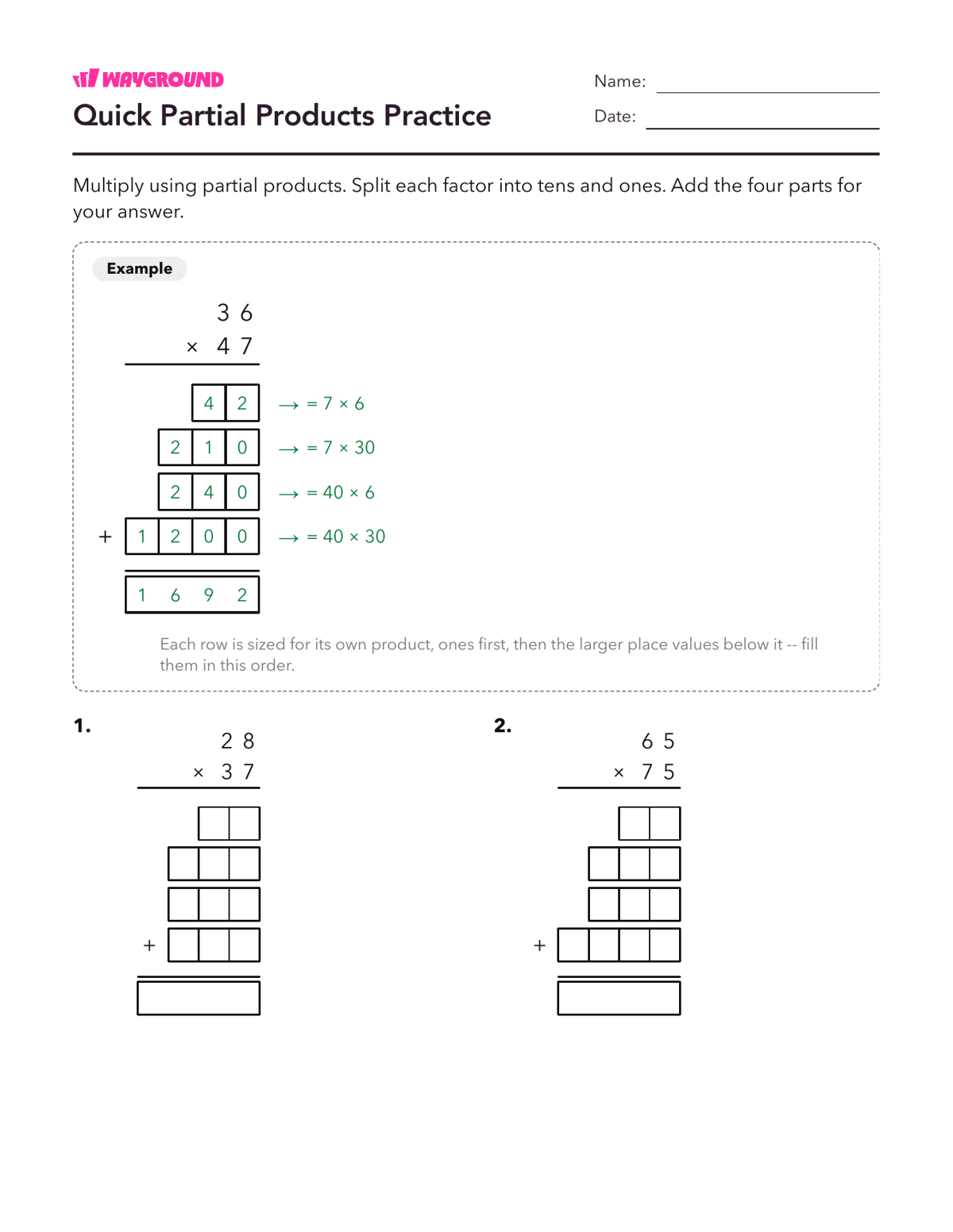
6 Q
3rd
10 Q
3rd
9 Q
3rd
12 Q
3rd
9 Q
3rd
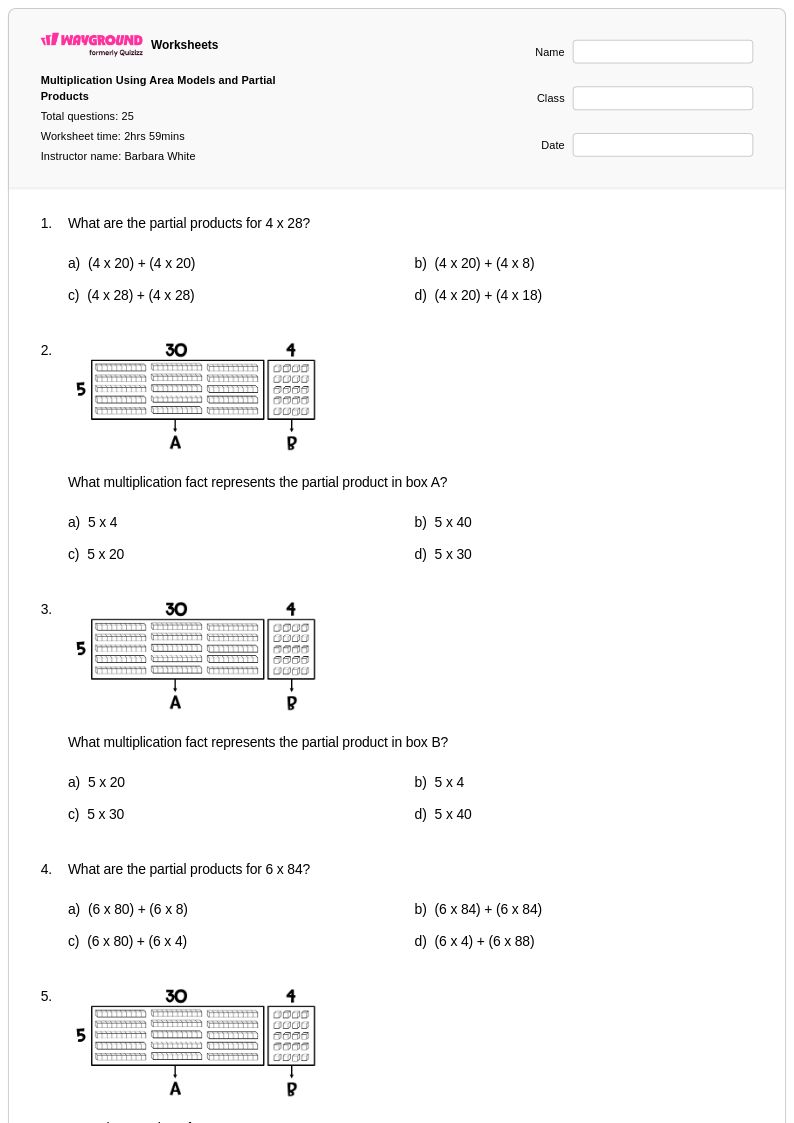
25 Q
3rd
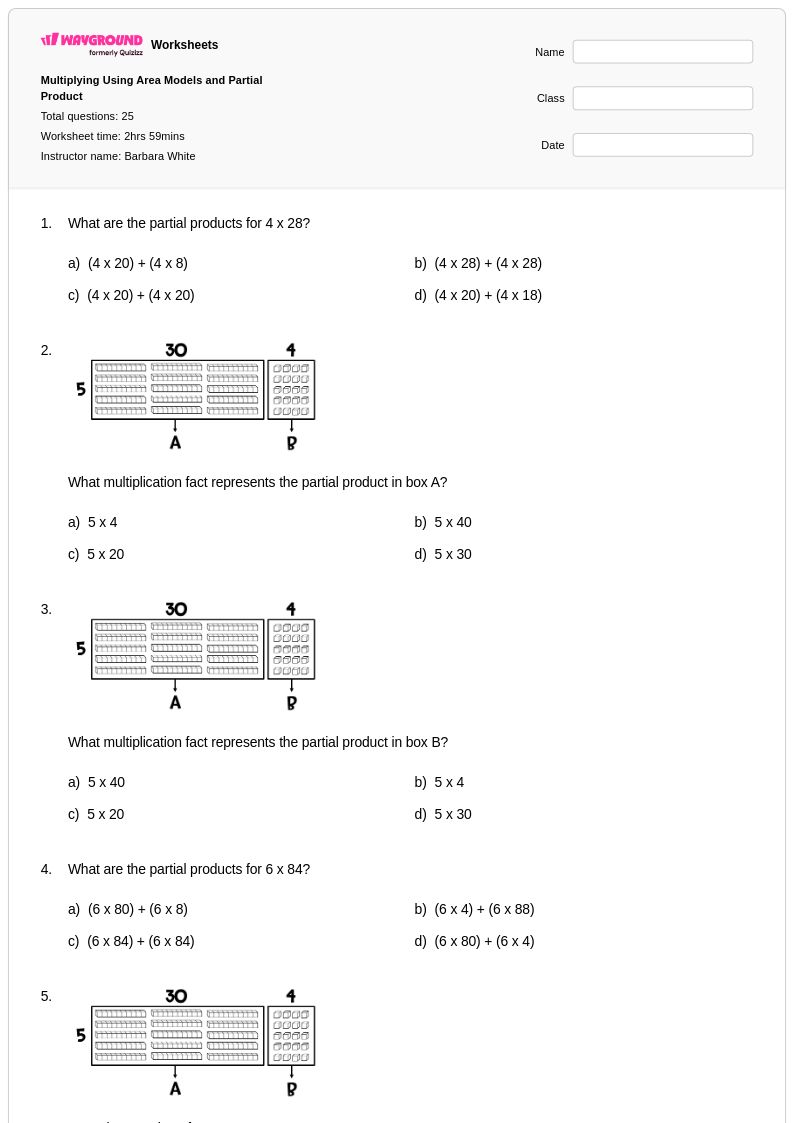
25 Q
3rd
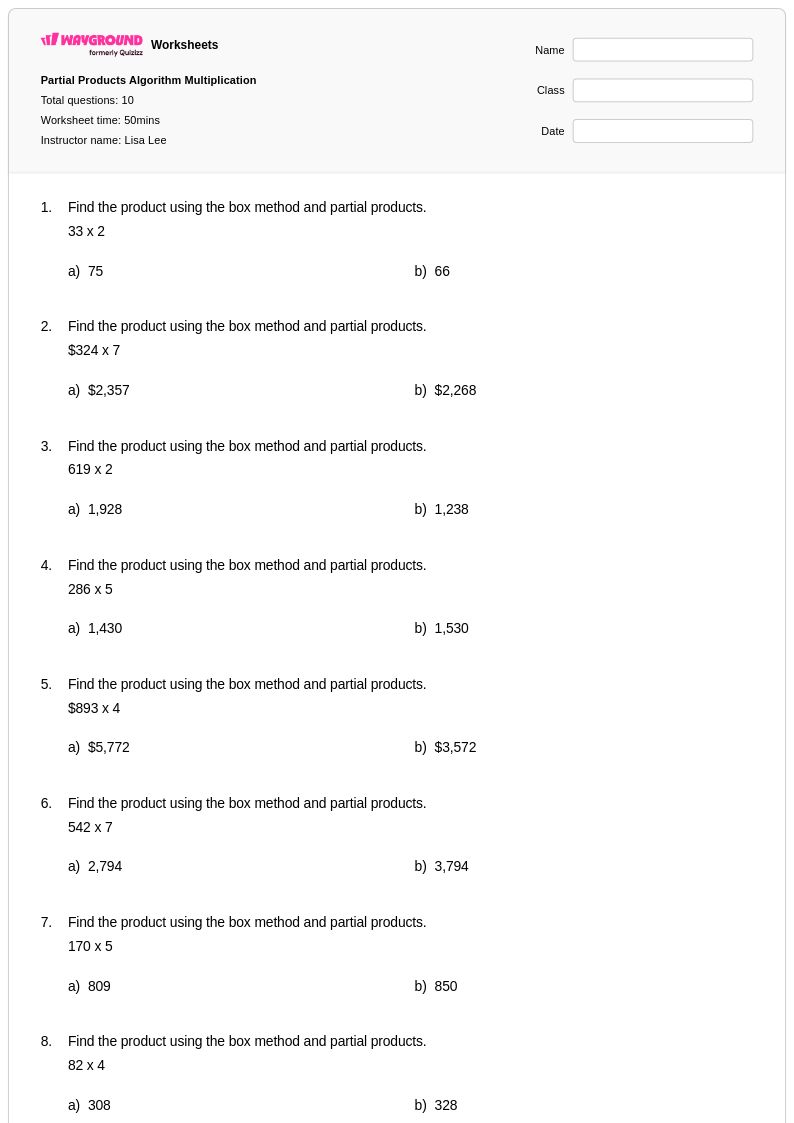
10 Q
3rd - 4th
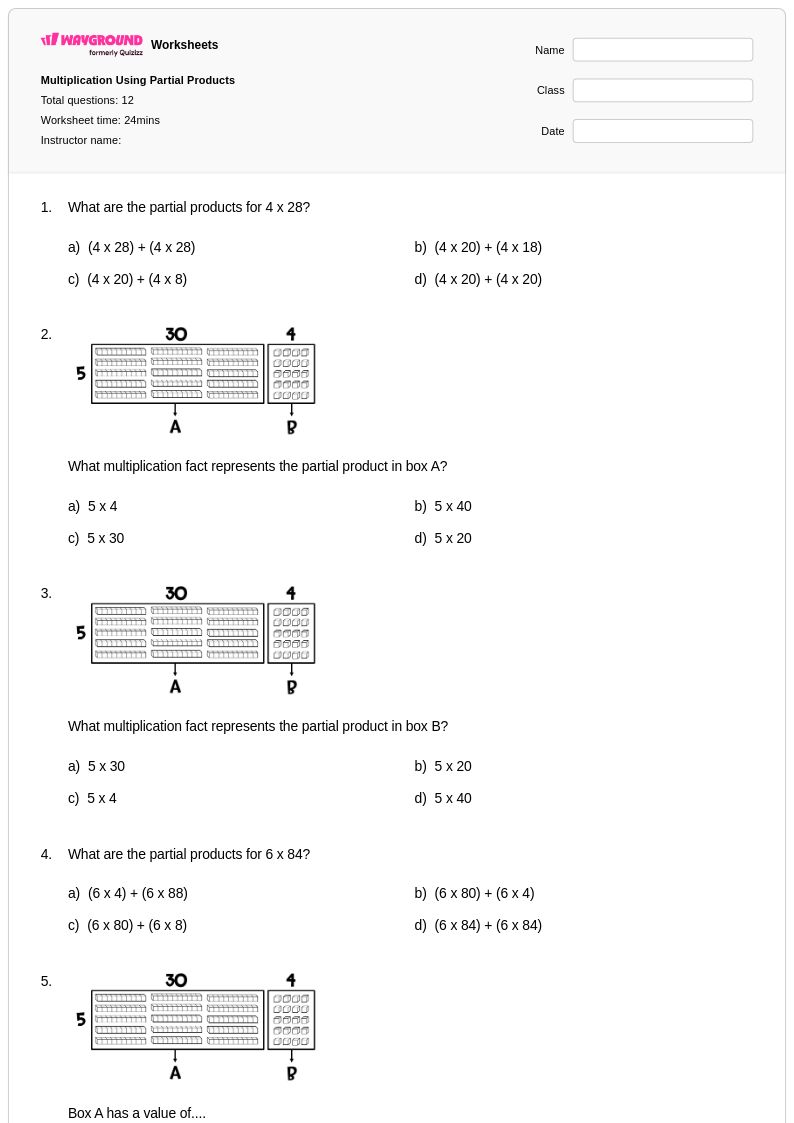
12 Q
3rd
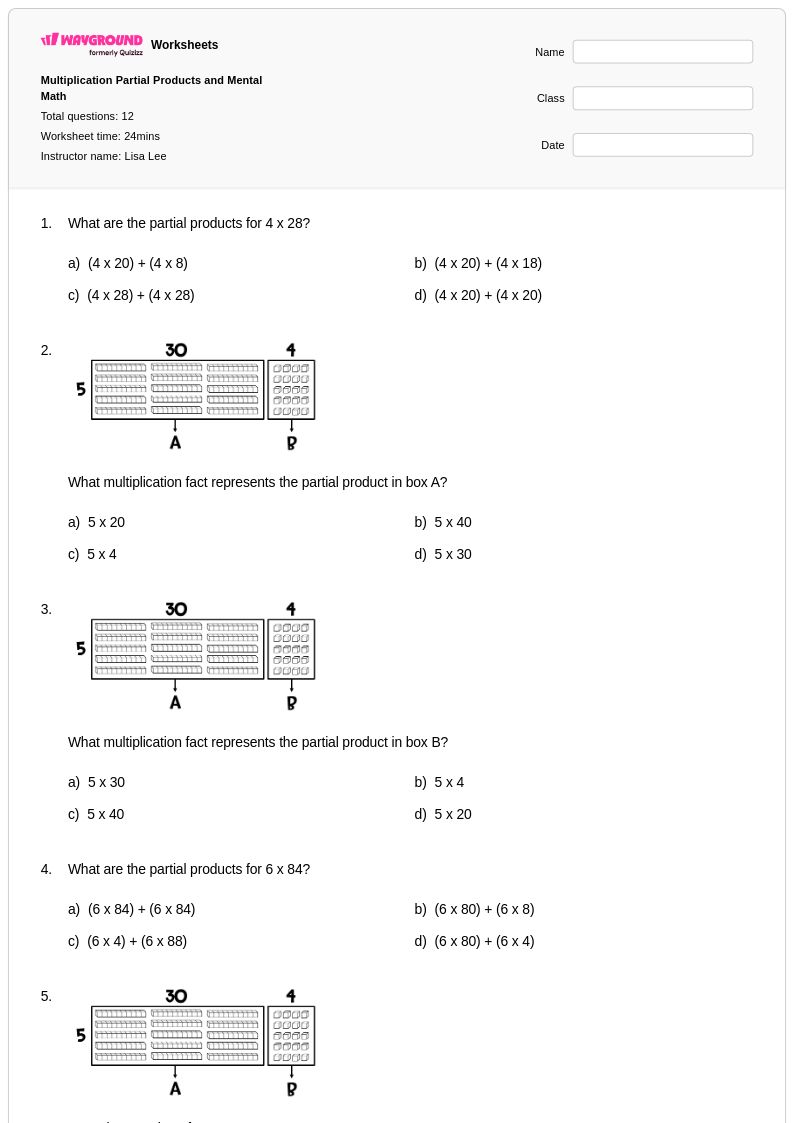
12 Q
3rd
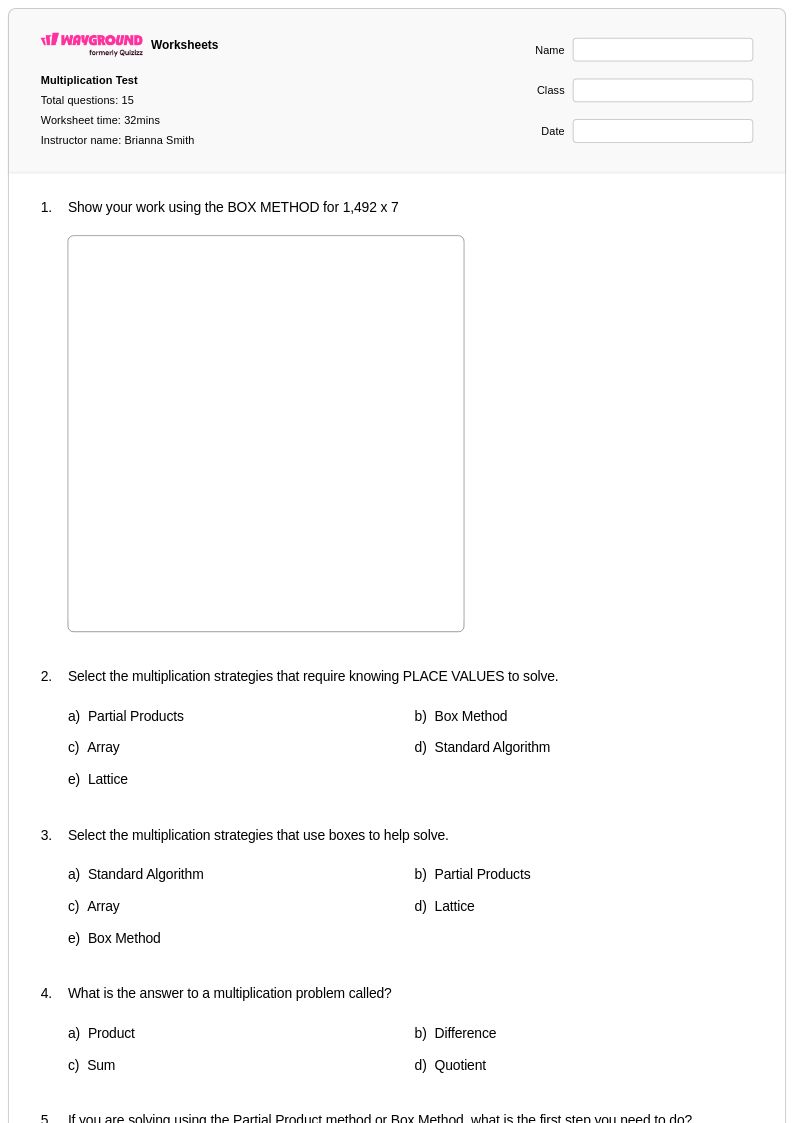
15 Q
3rd - 8th
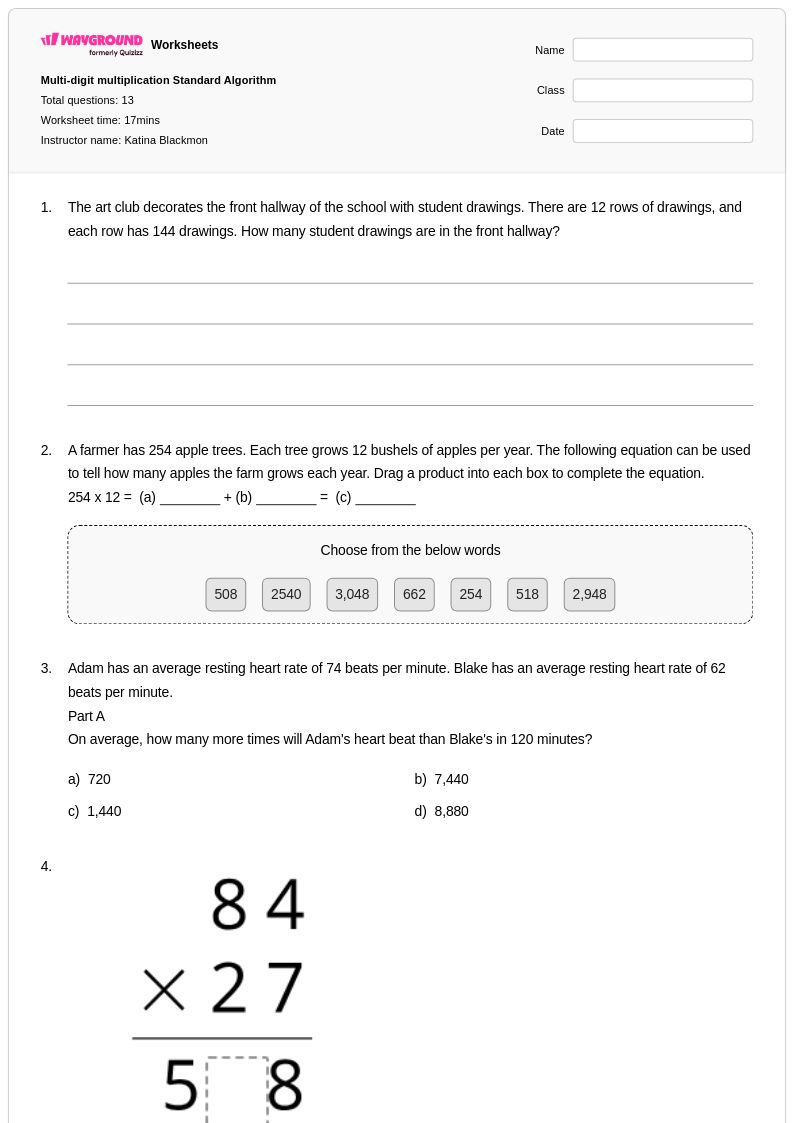
13 Q
1st - 5th
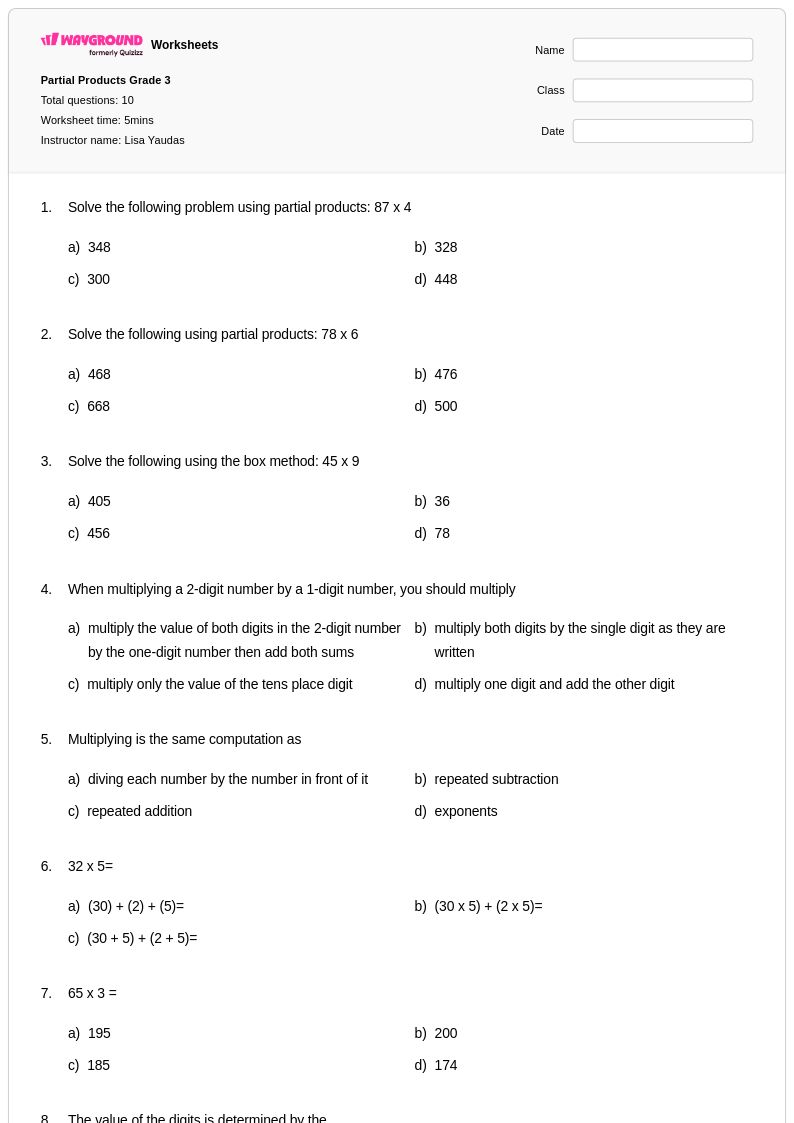
10 Q
3rd
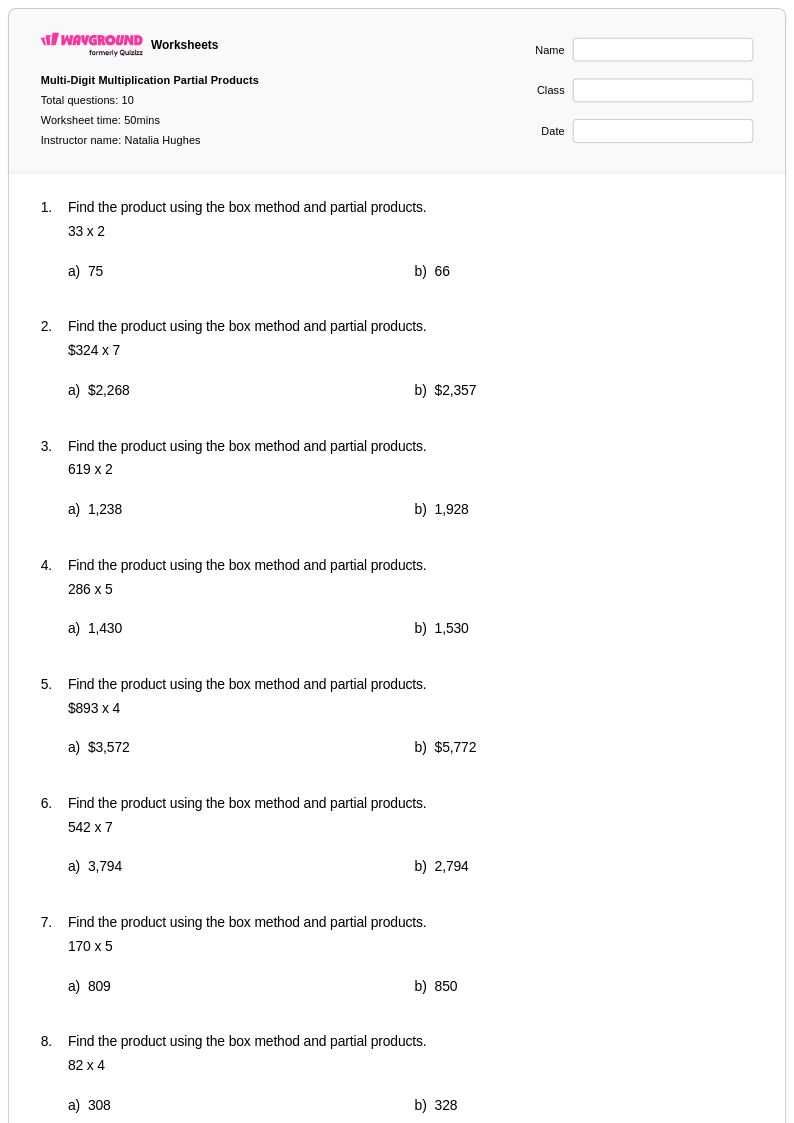
10 Q
3rd - 4th
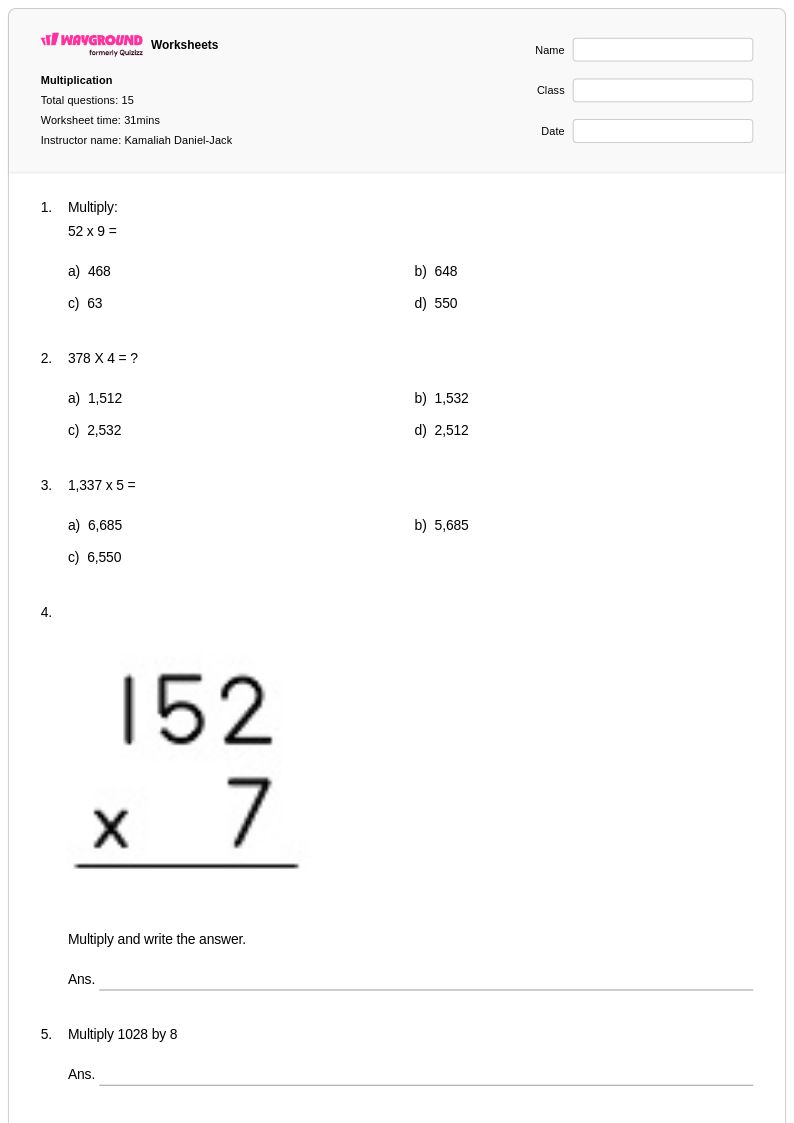
15 Q
3rd
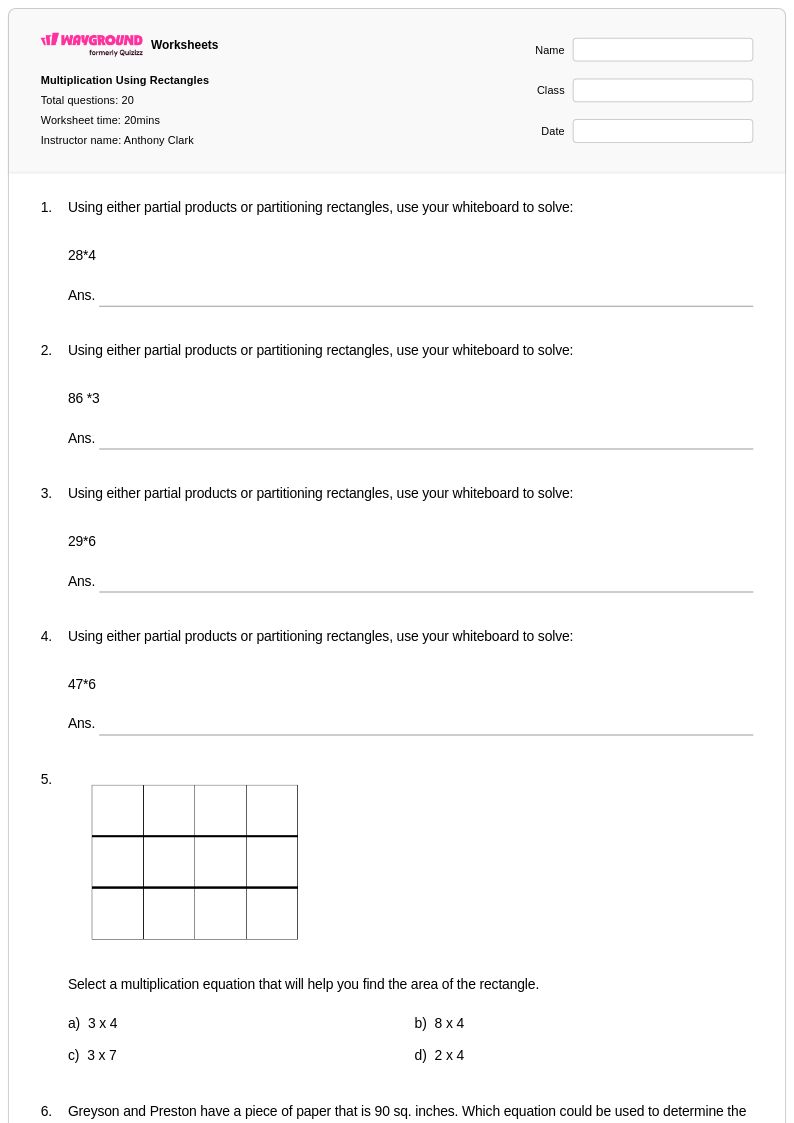
20 Q
3rd - Uni
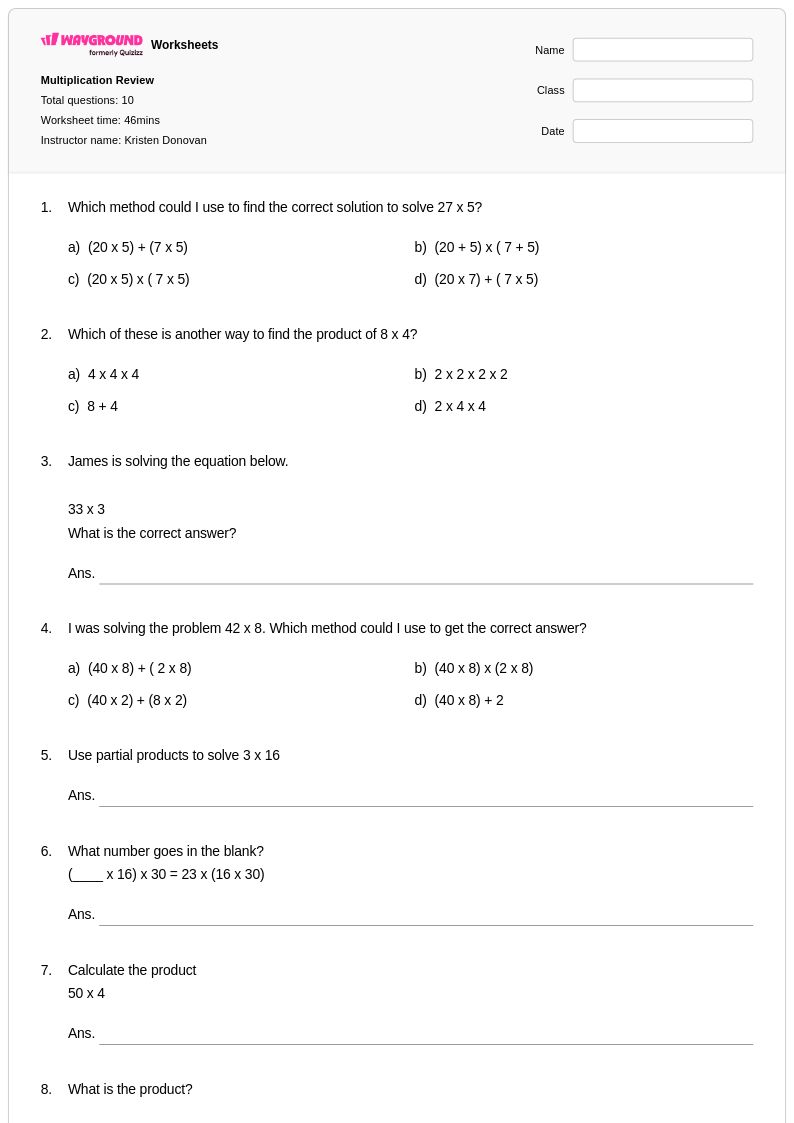
10 Q
3rd
36 Q
3rd - 5th
18 Q
3rd - Uni
14 Q
3rd - Uni

15 Q
3rd
25 Q
3rd
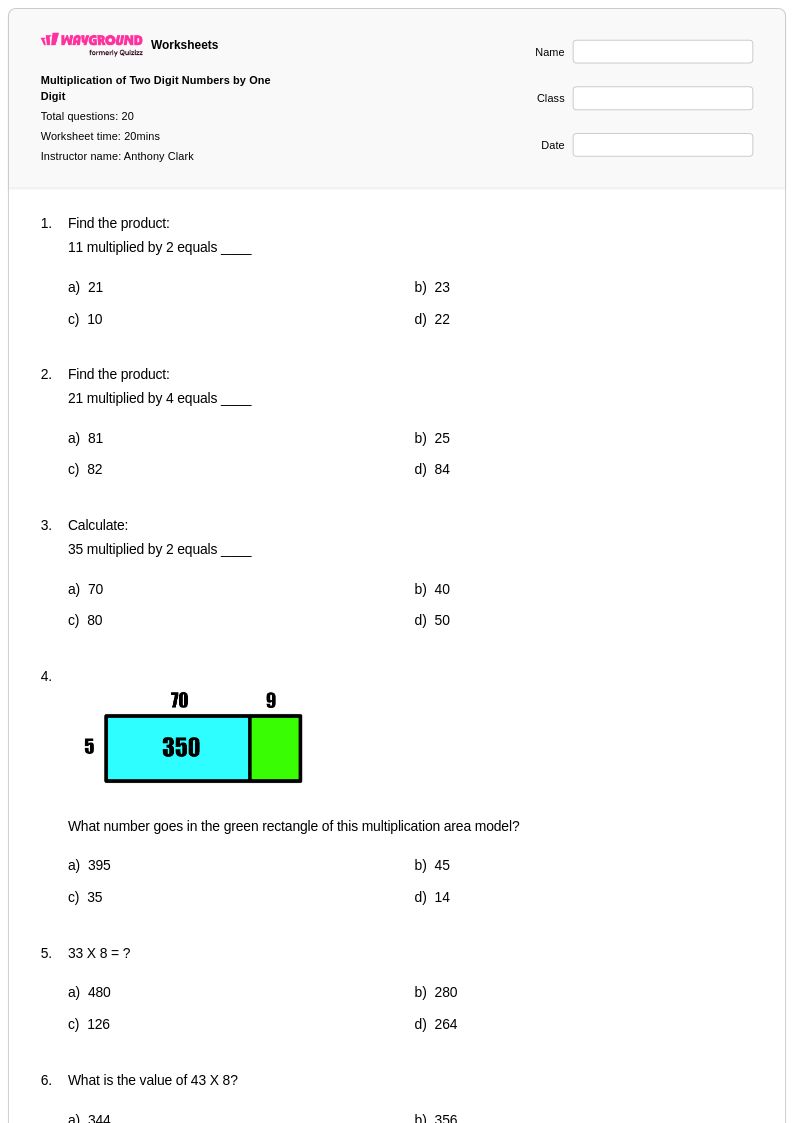
20 Q
3rd - Uni
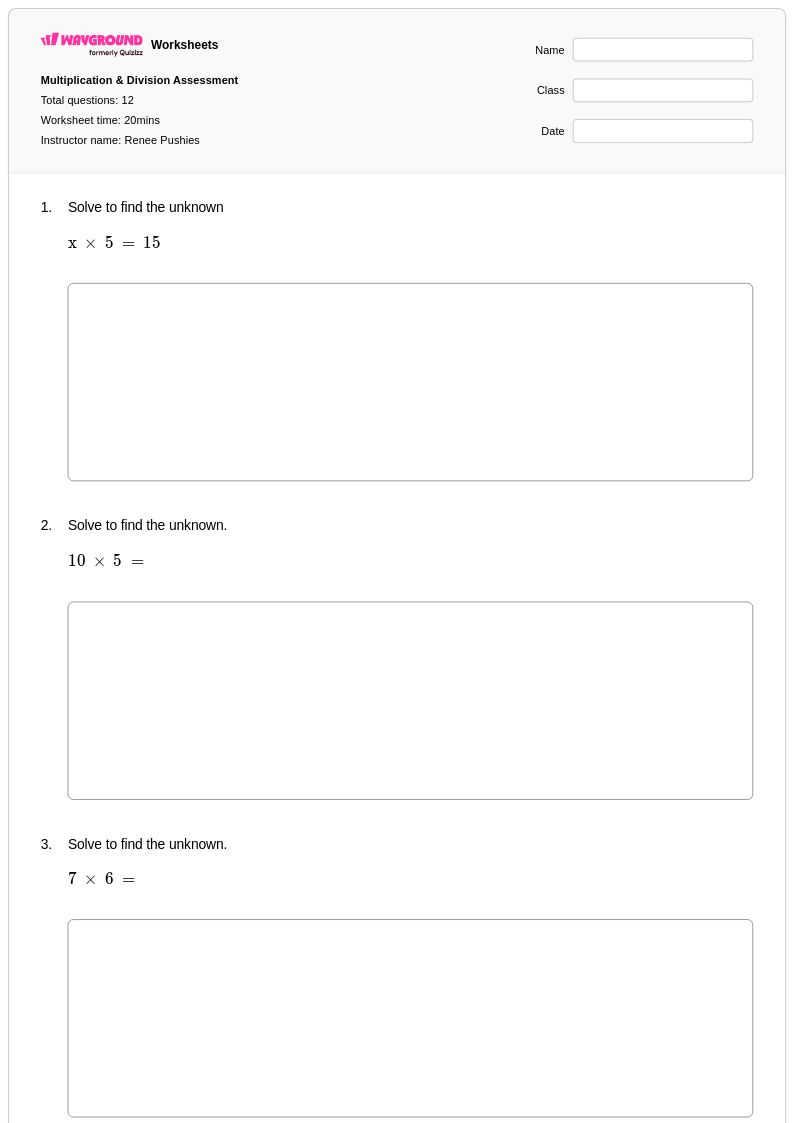
12 Q
3rd
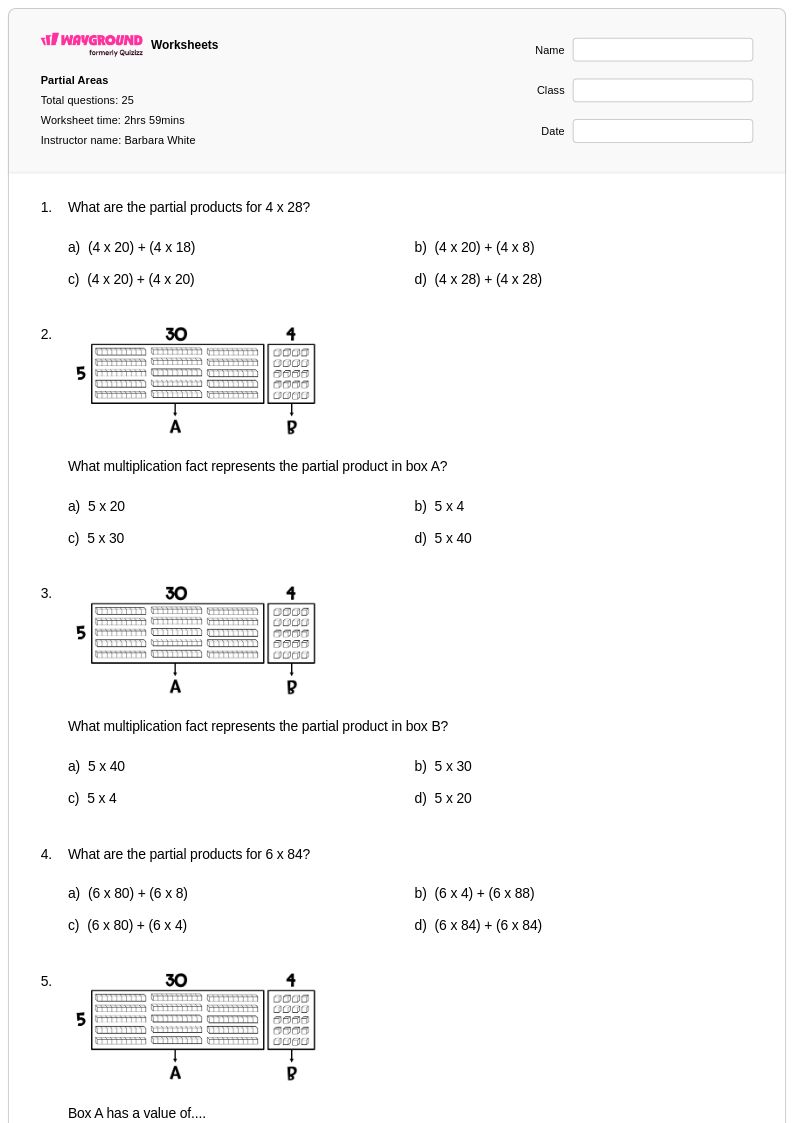
25 Q
3rd
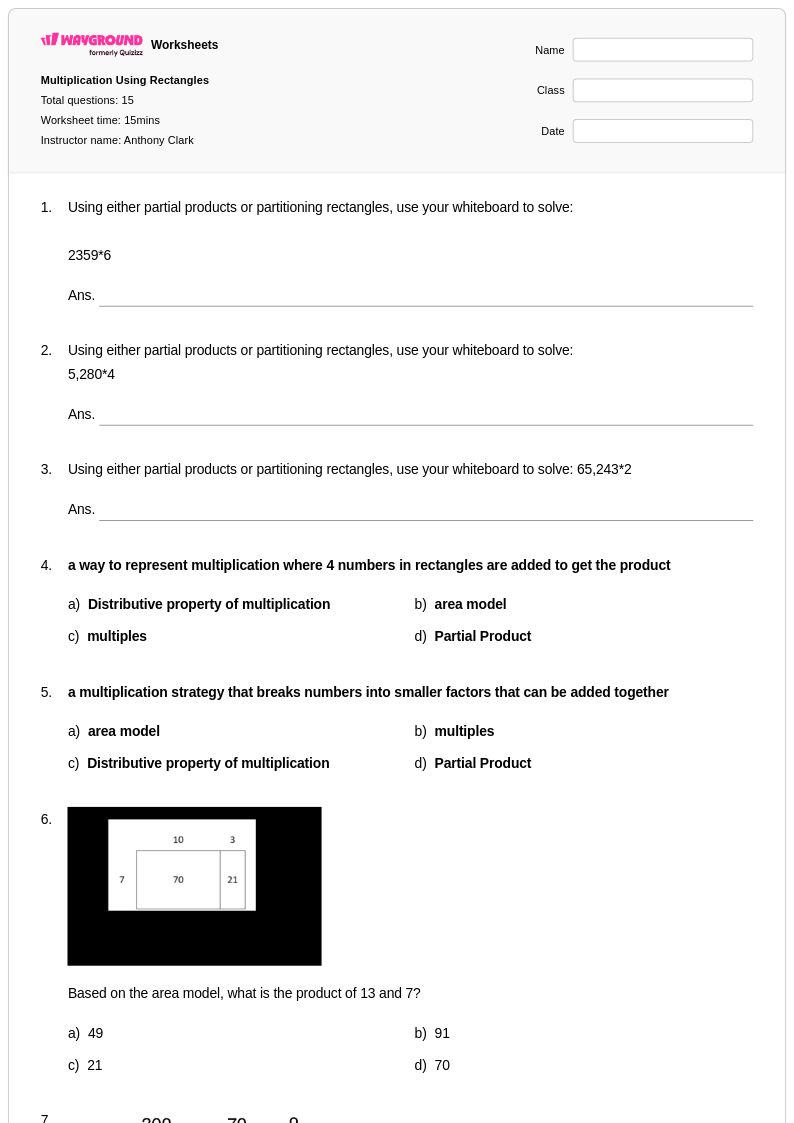
15 Q
3rd - Uni
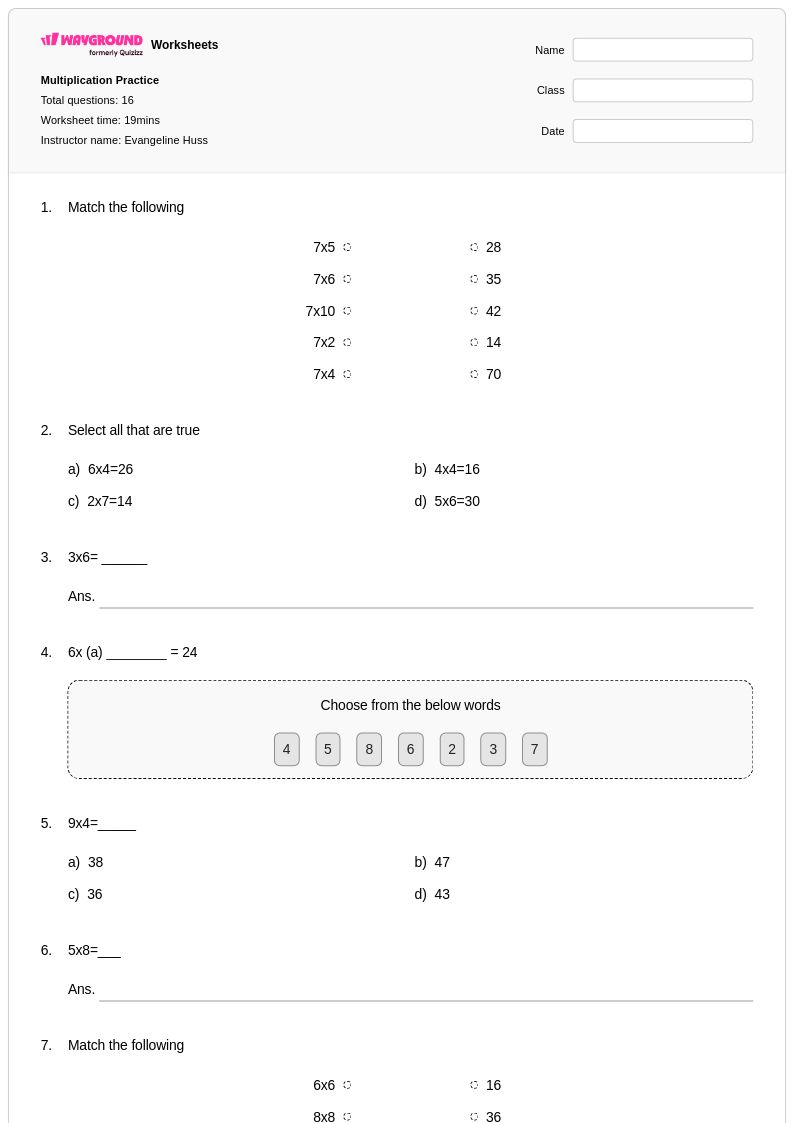
16 Q
3rd
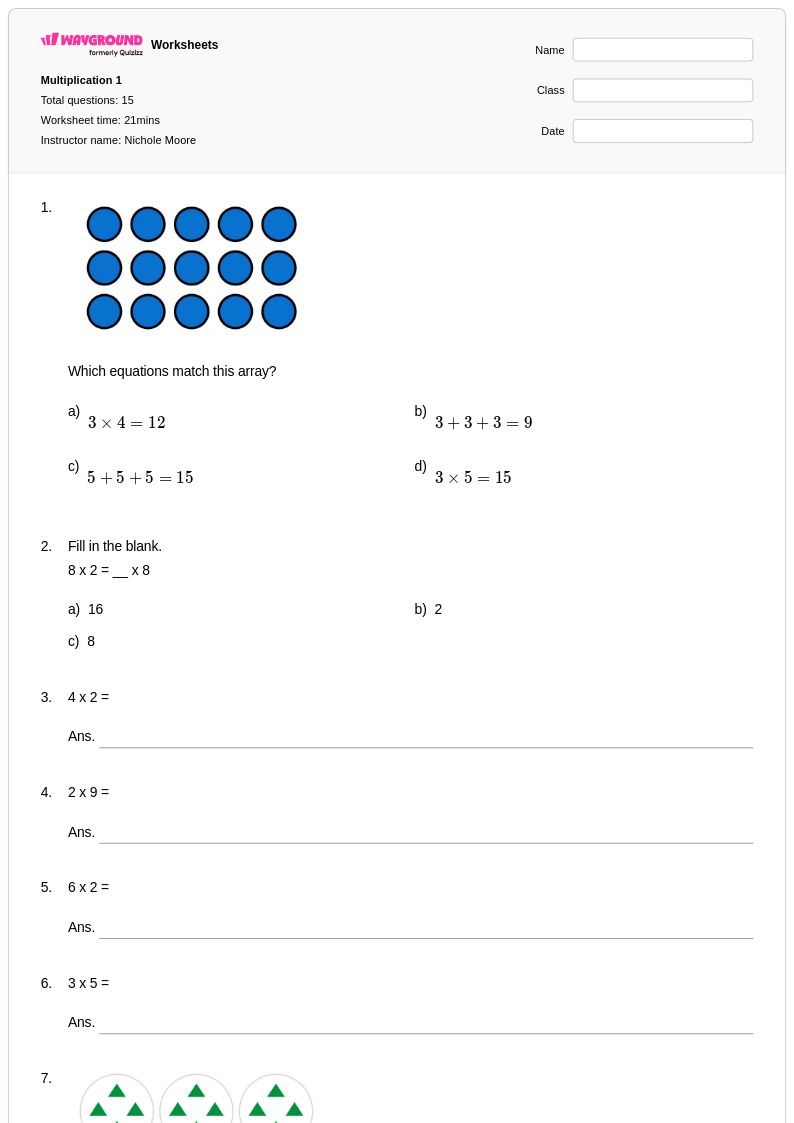
15 Q
3rd
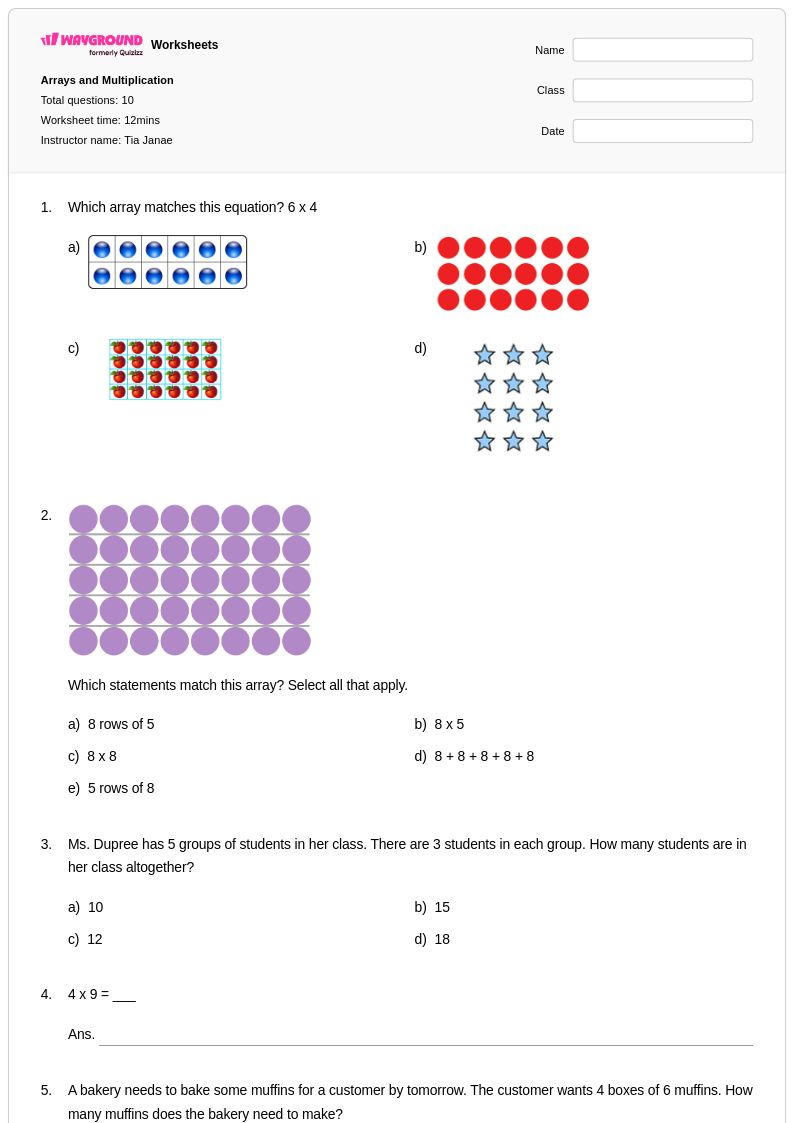
10 Q
3rd
Explore Other Subject Worksheets for class 3
Explore printable Multiplication and Partial Products worksheets for Class 3
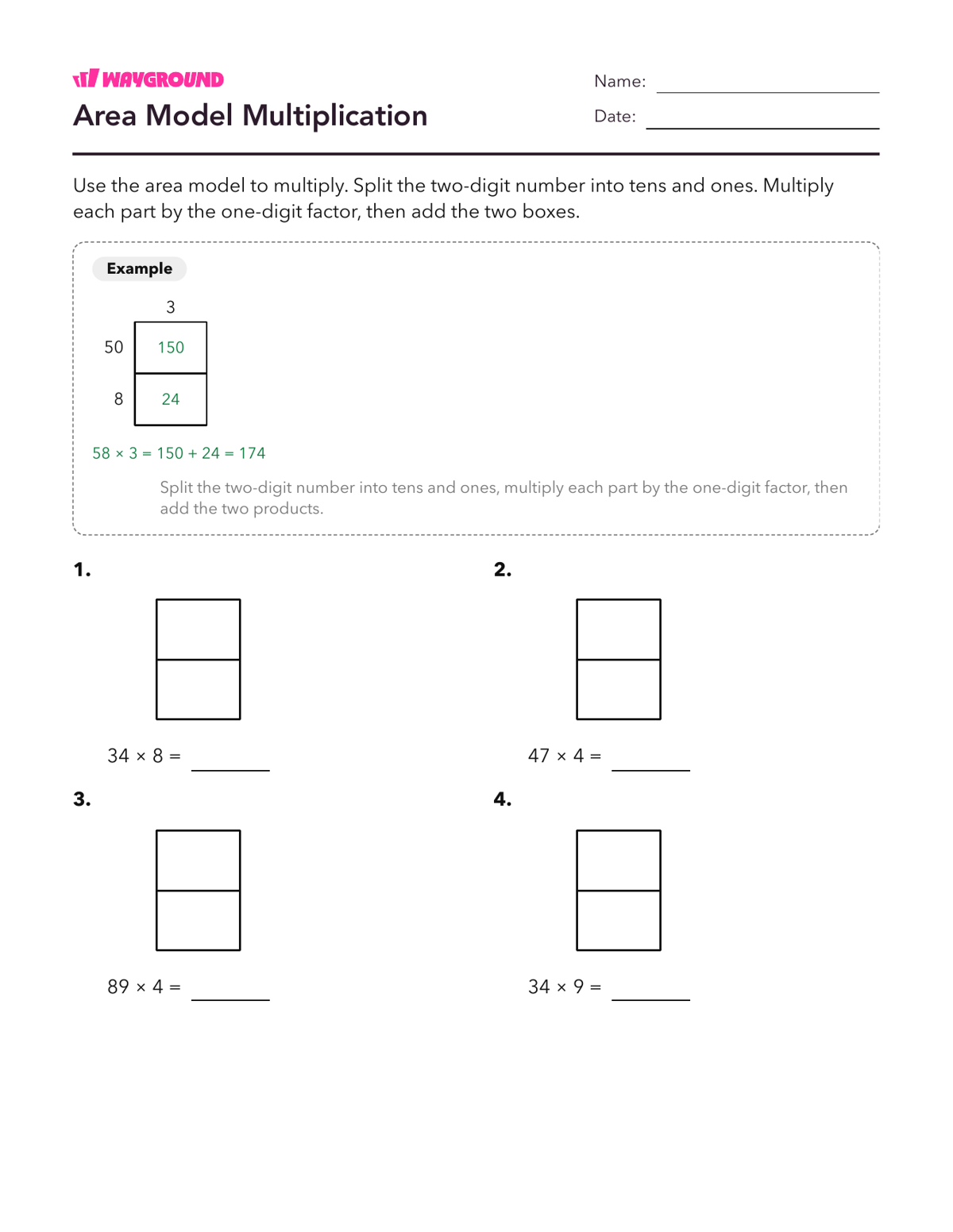
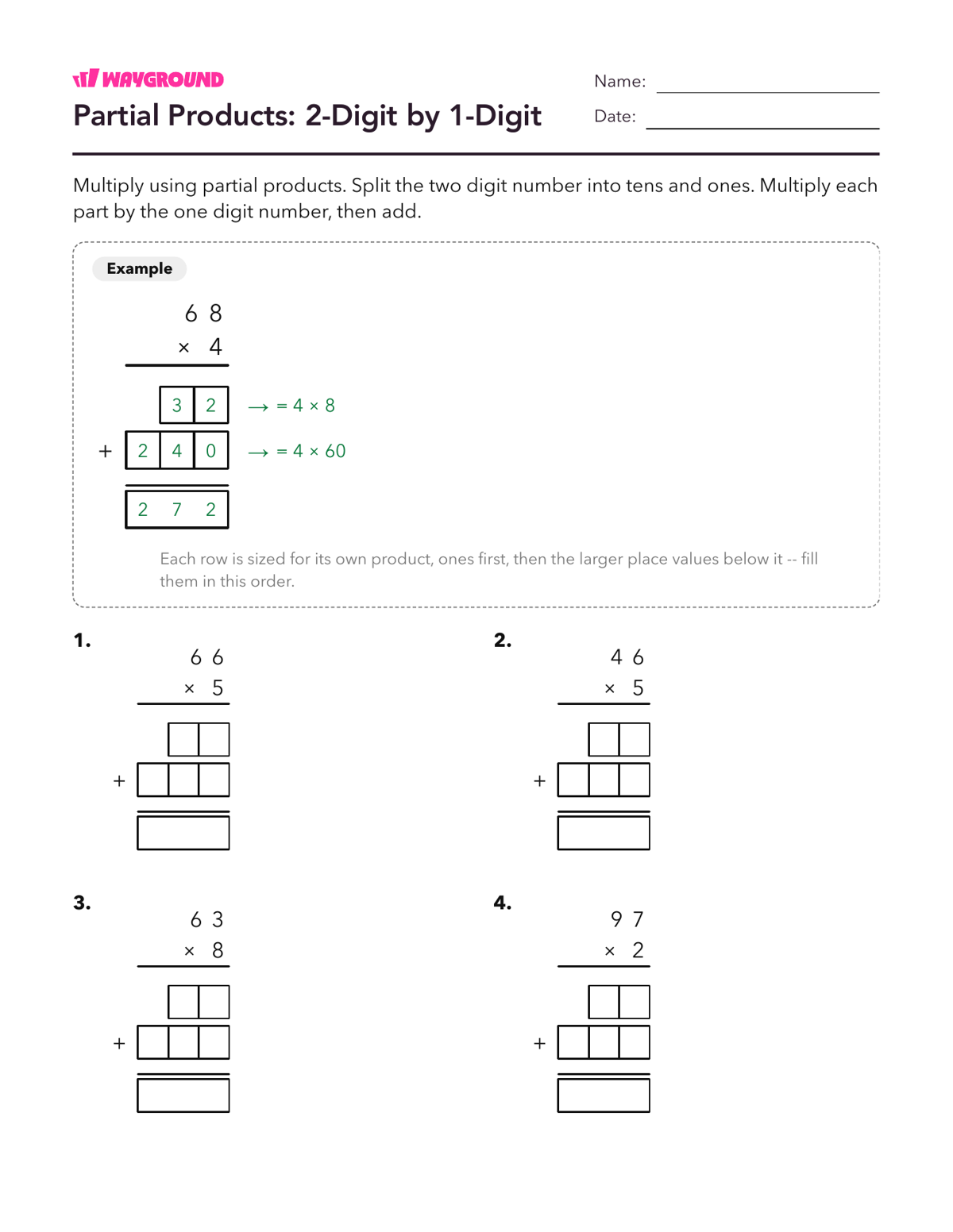
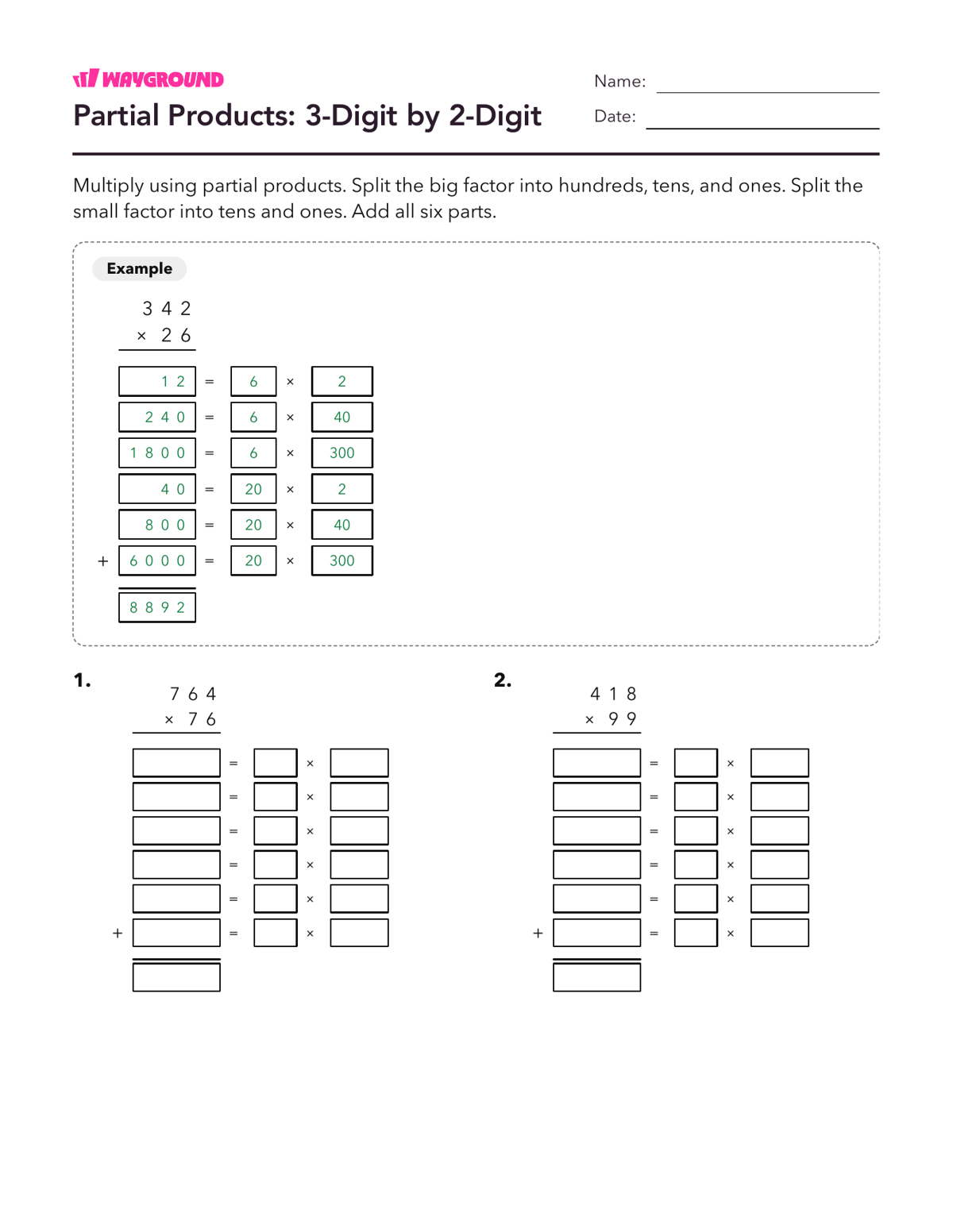
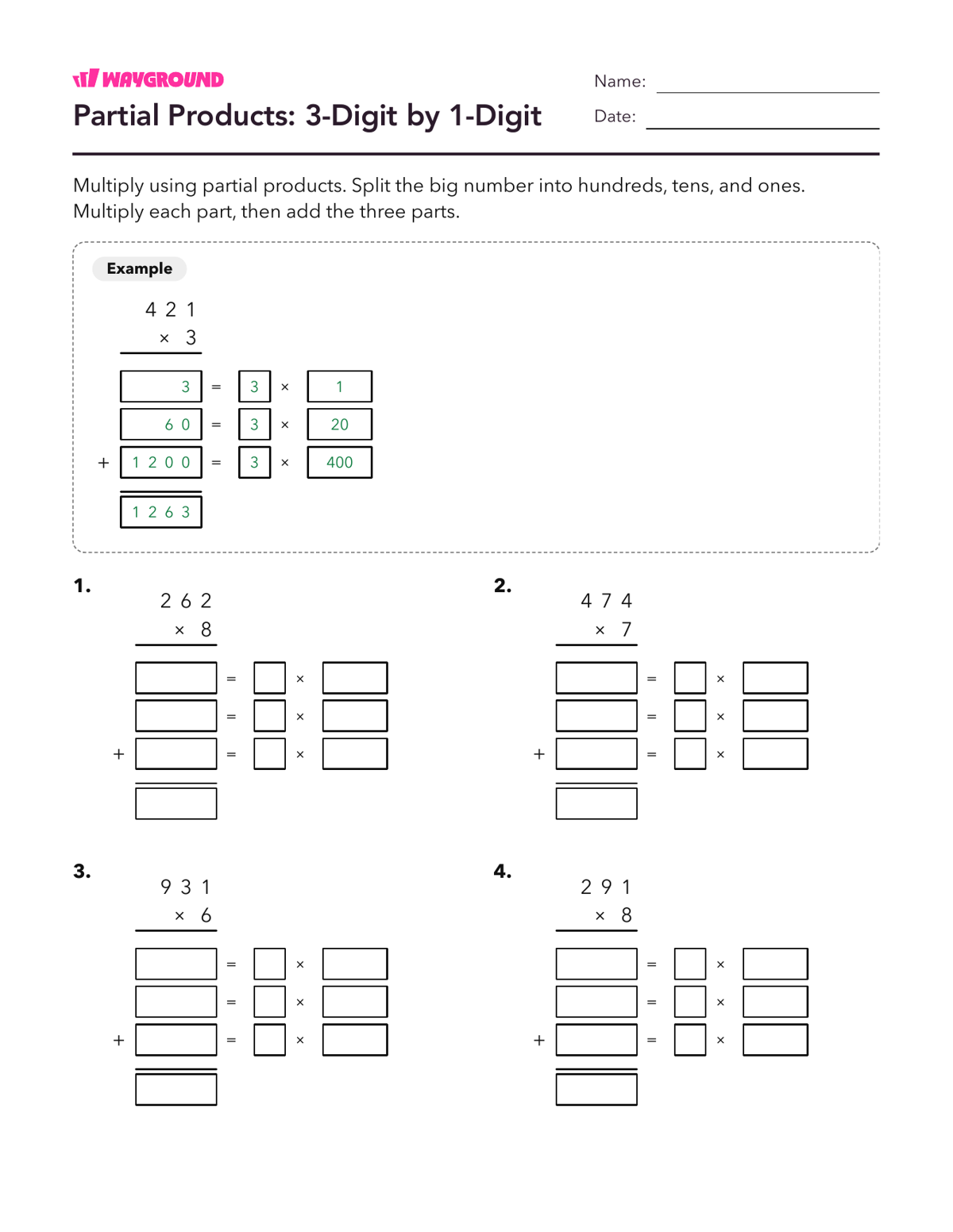
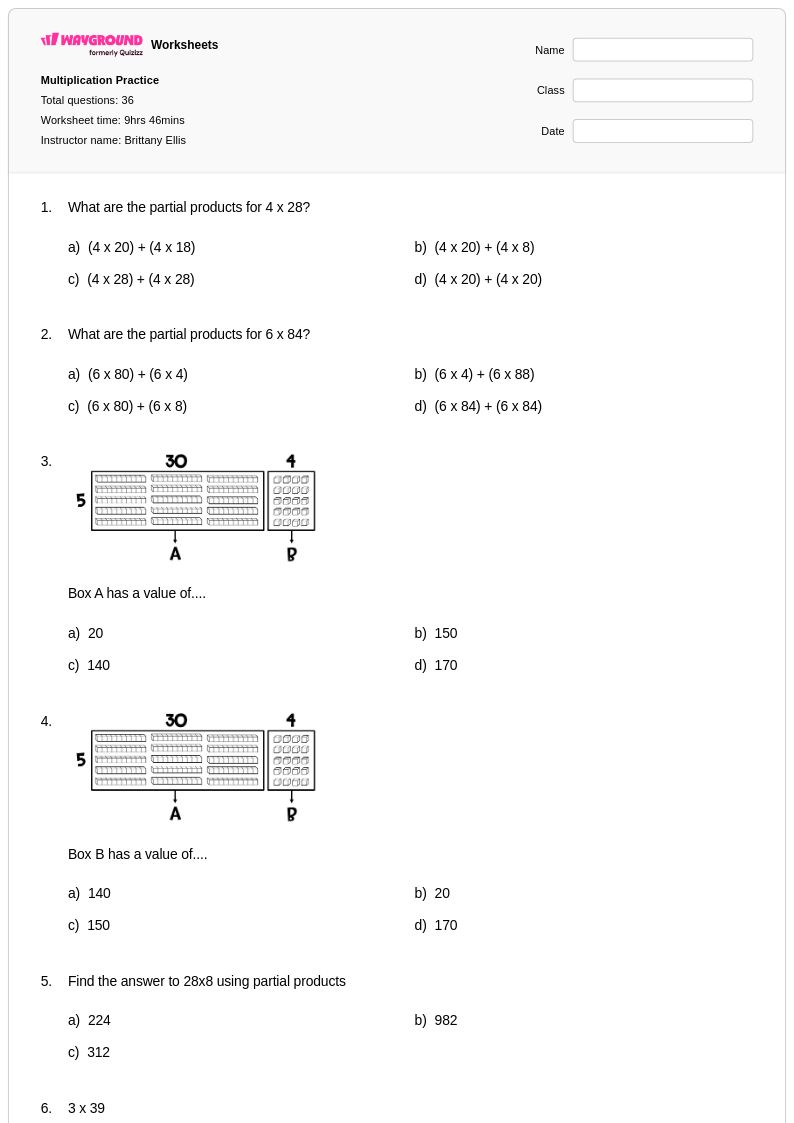
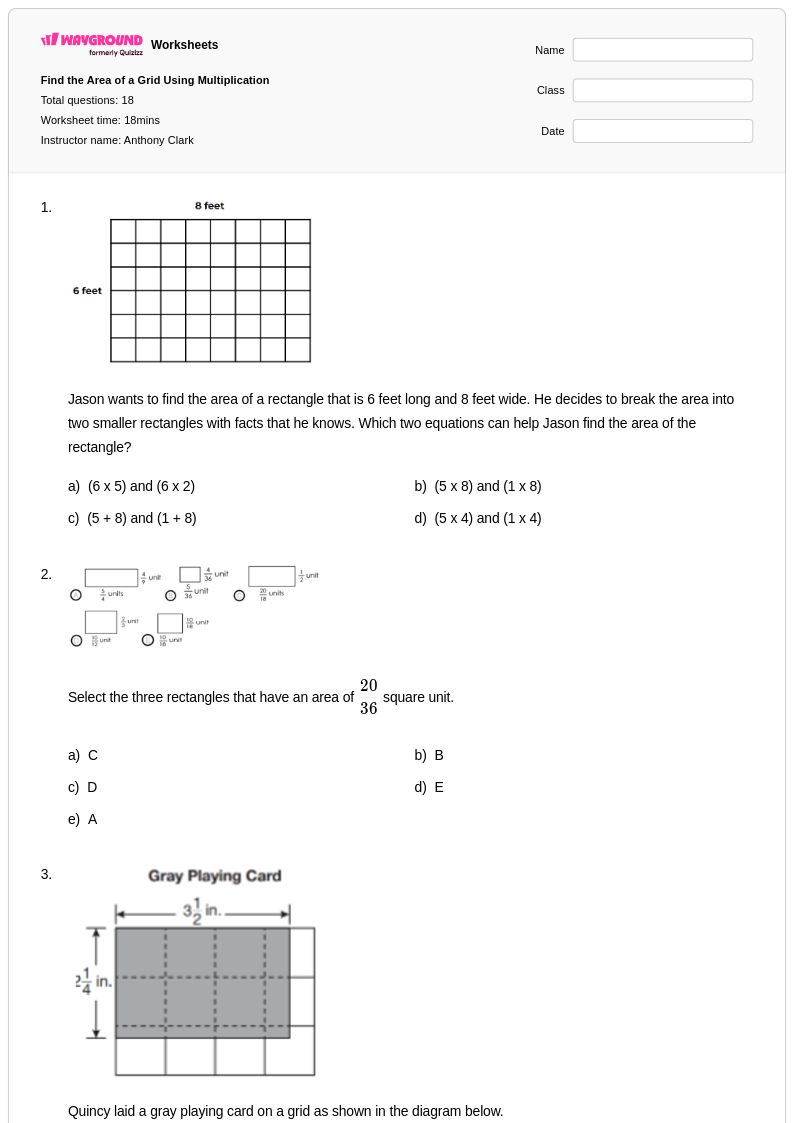
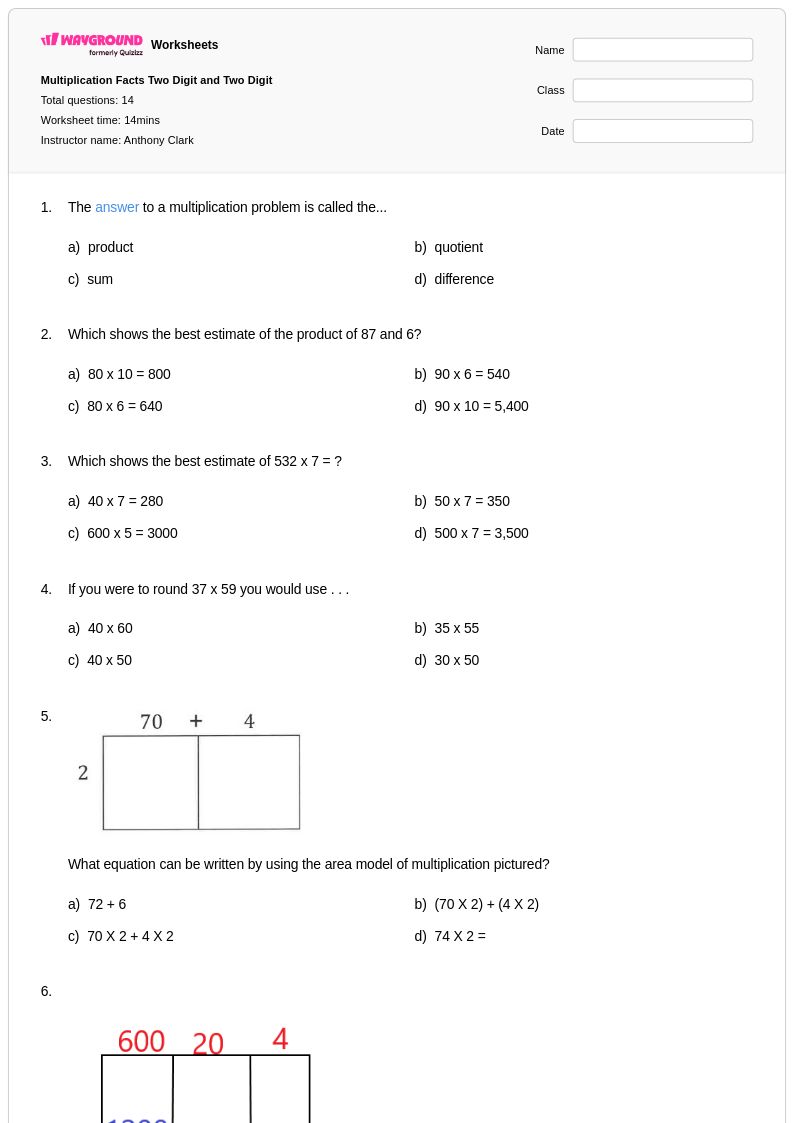
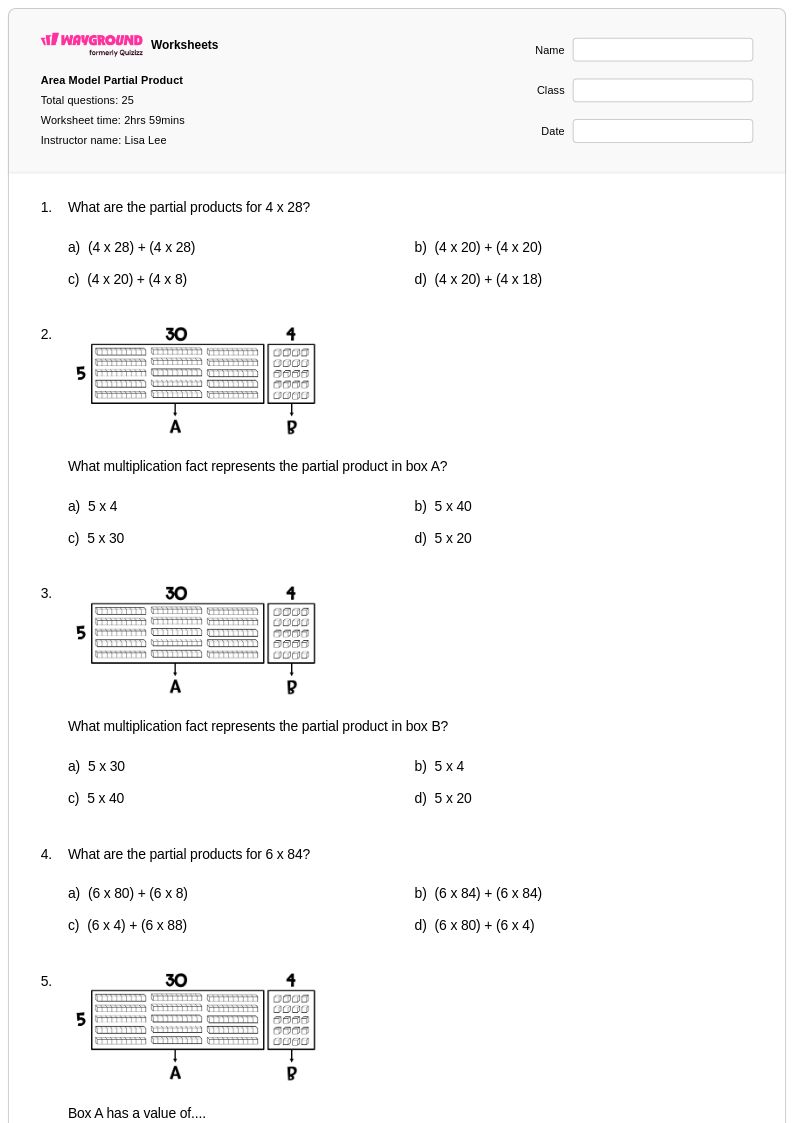
Multiplication and partial products worksheets for Class 3 students through Wayground (formerly Quizizz) provide comprehensive practice with this fundamental decomposition strategy that bridges basic multiplication facts and multi-digit computation. These carefully designed printables help students understand how to break apart factors into friendlier numbers, such as decomposing 6 × 14 into (6 × 10) + (6 × 4), making complex multiplication problems more manageable and conceptually clear. The worksheet collections strengthen essential mathematical reasoning skills by encouraging students to visualize multiplication through area models, arrays, and number line representations while building fluency with partial product algorithms. Each practice problem set includes detailed answer keys and step-by-step solution guides, available as free pdf downloads that support both independent student work and guided instruction in developing this critical Class 3 multiplication strategy.
Wayground's extensive collection of multiplication and partial products resources empowers teachers with millions of educator-created materials that align with state mathematics standards and support differentiated instruction across diverse learning needs. The platform's robust search and filtering capabilities allow teachers to quickly locate worksheets targeting specific partial product methods, from basic two-digit by one-digit problems to more advanced decomposition strategies that prepare students for multi-digit multiplication algorithms. Teachers can seamlessly customize these resources for remediation with struggling learners or enrichment for advanced students, accessing materials in both printable pdf format for traditional classroom use and digital formats for technology-integrated lessons. This flexibility streamlines lesson planning while providing targeted skill practice that helps students master the conceptual understanding and procedural fluency necessary for success with multiplication and partial products strategies.
FAQs
What grade do students learn partial products?
How can I introduce partial products to my 3rd-grade class?
What kind of practice is best for 3rd graders learning partial products?
What are common errors for 3rd graders using partial products?
How can I use these Grade 3 partial products worksheets?
How does learning partial products in 3rd grade support curriculum standards?