Free Printable Onomatopoeia Worksheets for Class 4
Class 4 onomatopoeia worksheets from Wayground help students master sound words through engaging printables and practice problems, complete with answer keys and free PDF downloads.
Explore printable Onomatopoeia worksheets for Class 4
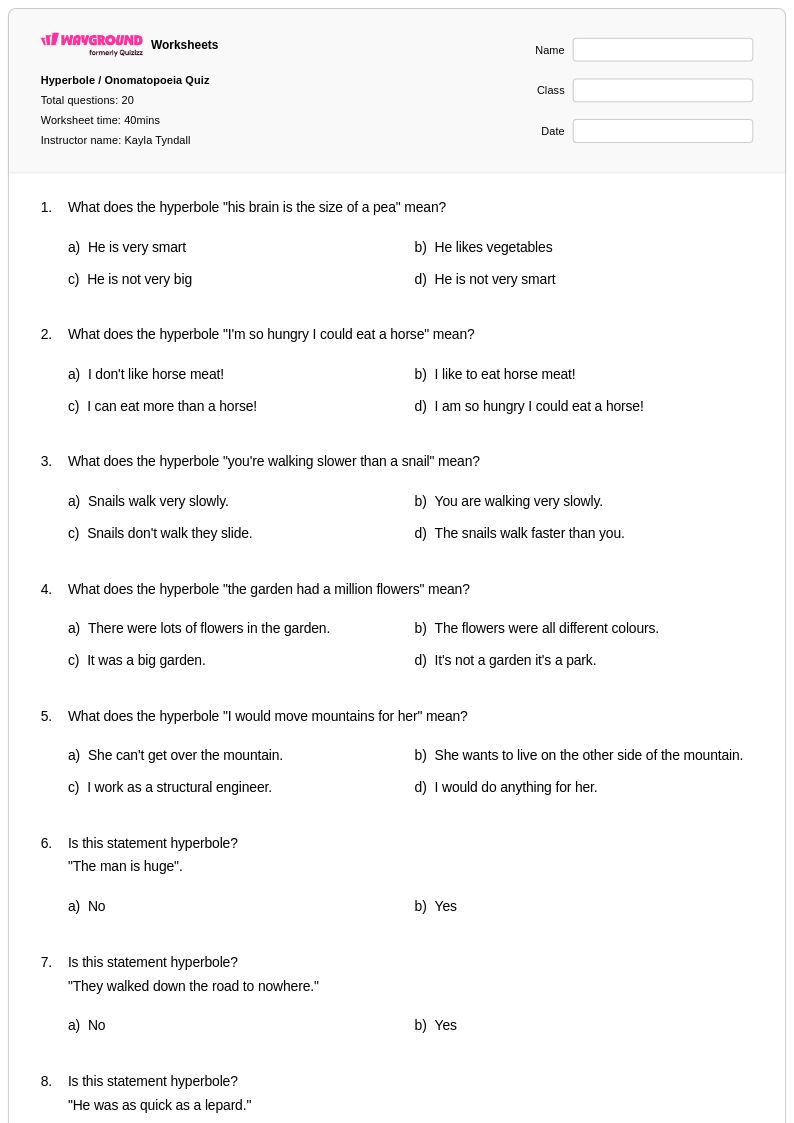
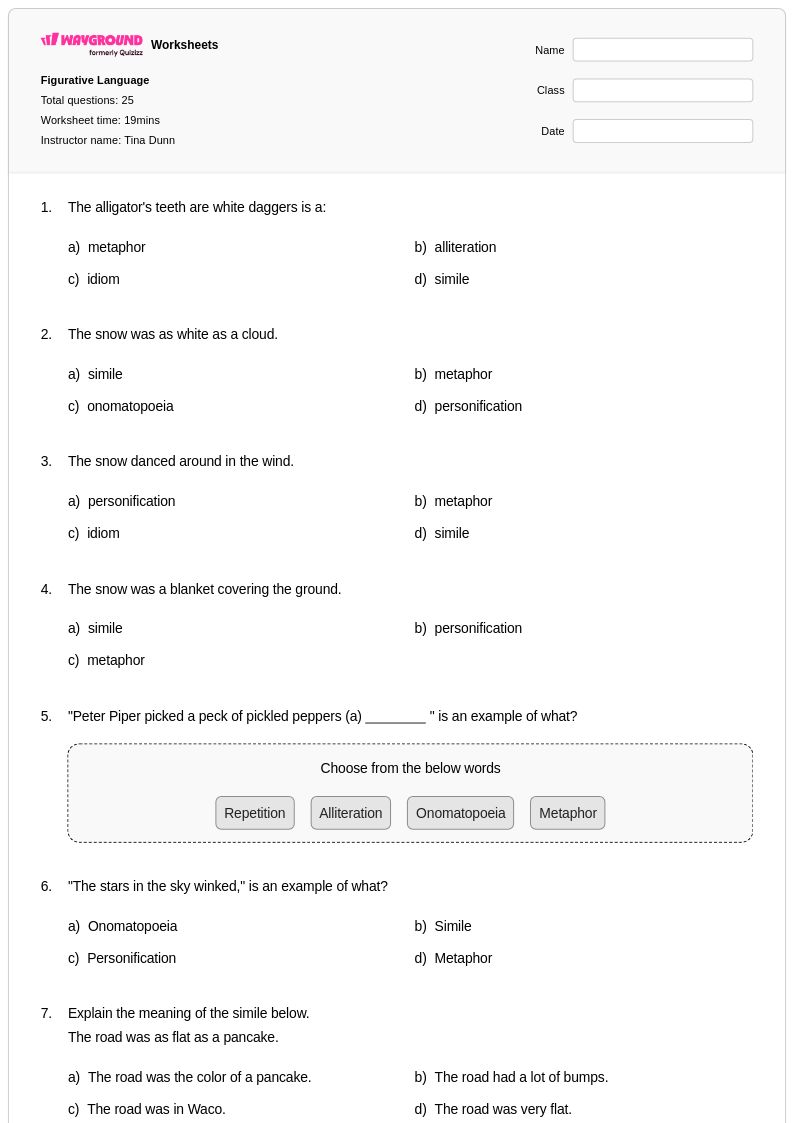
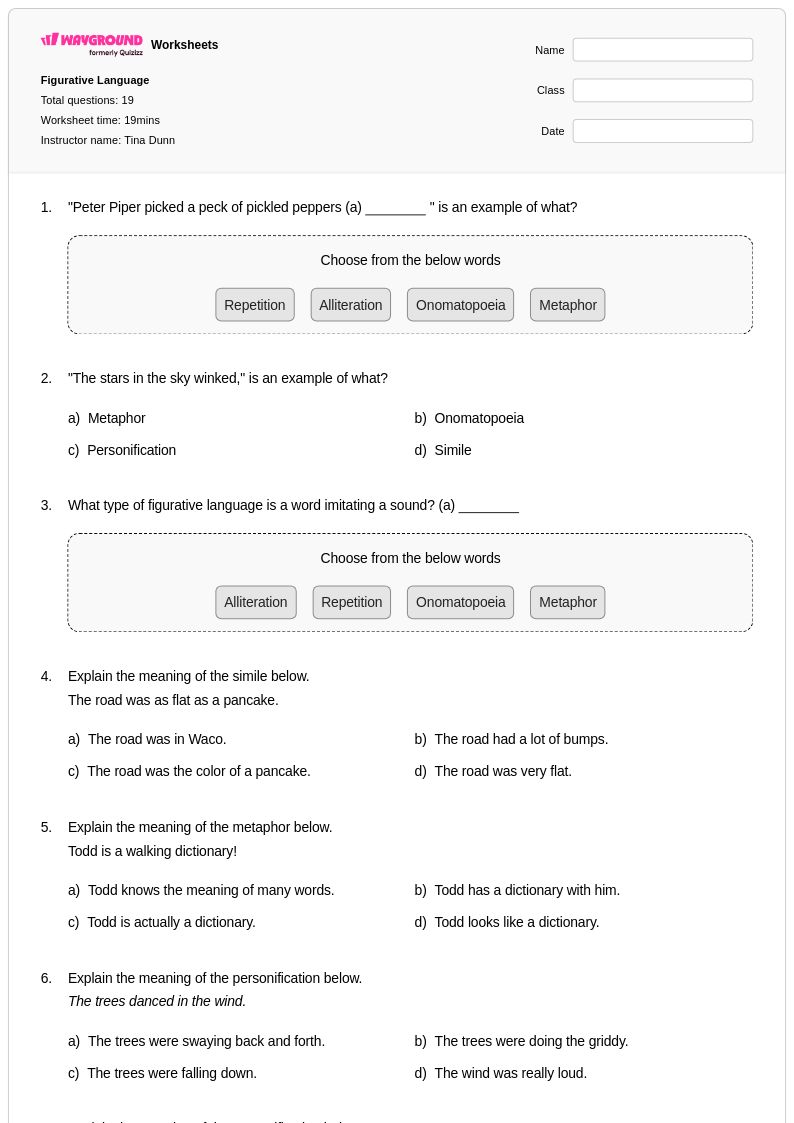
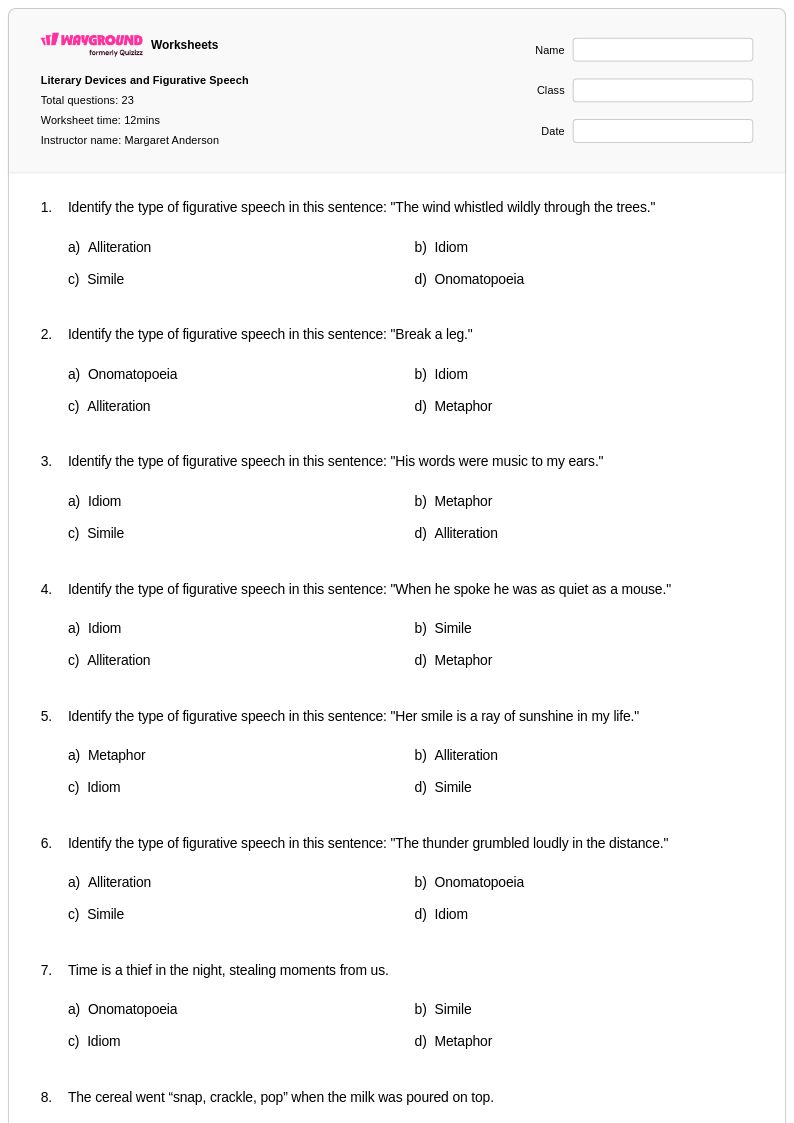
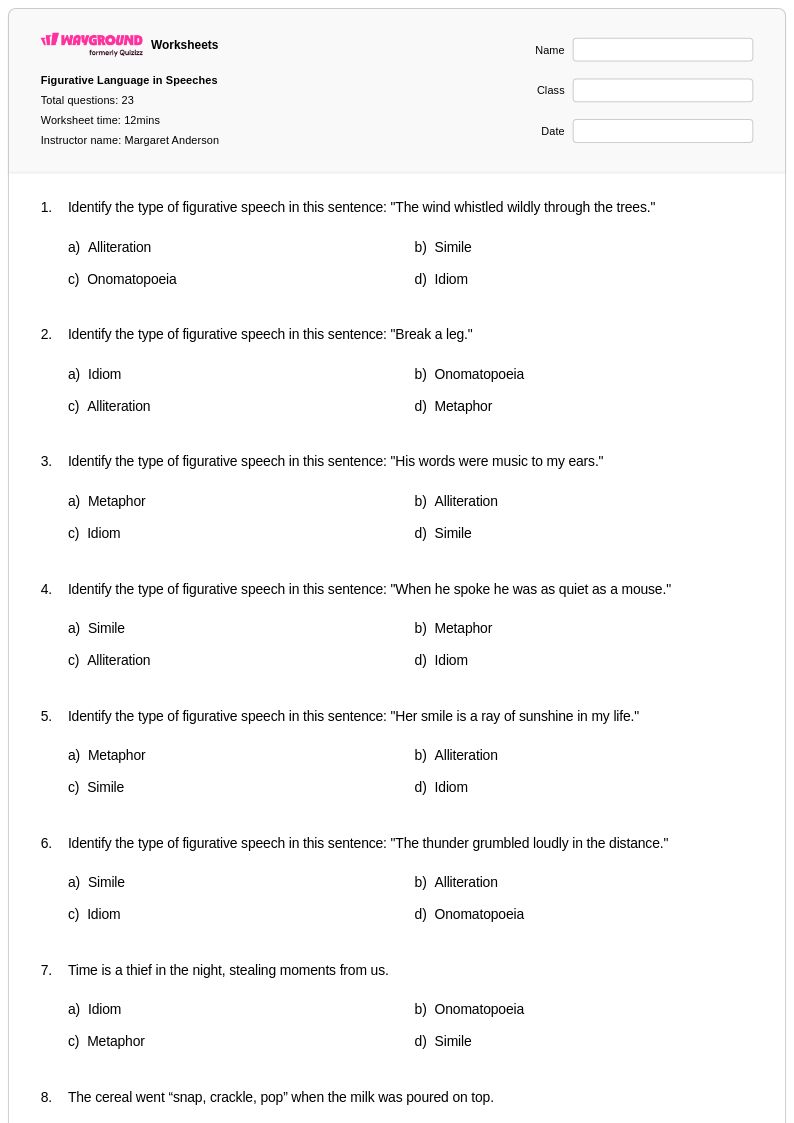
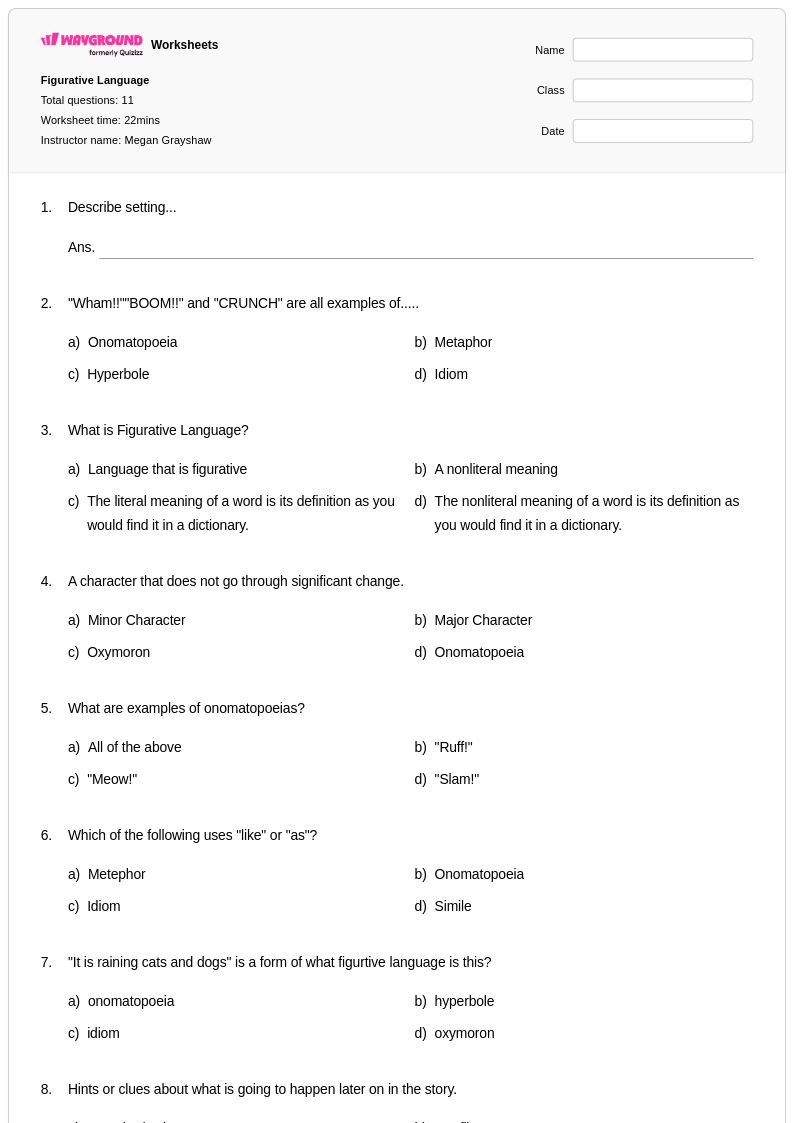
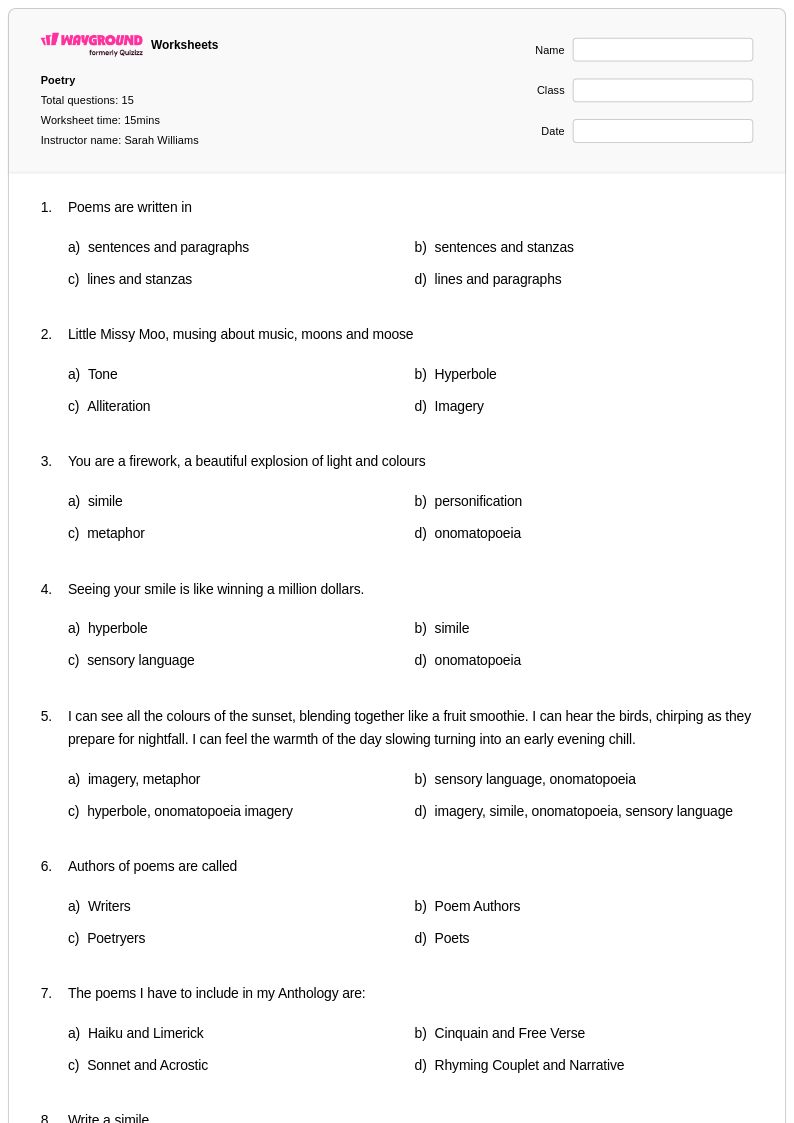
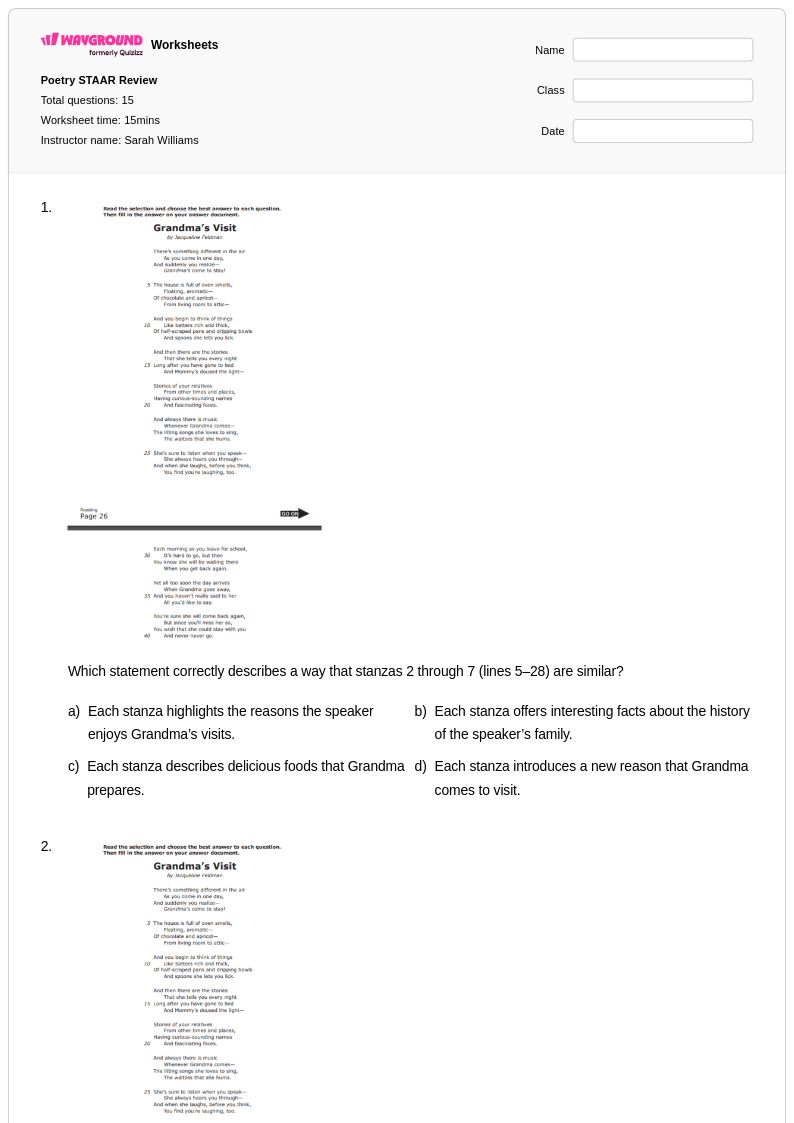
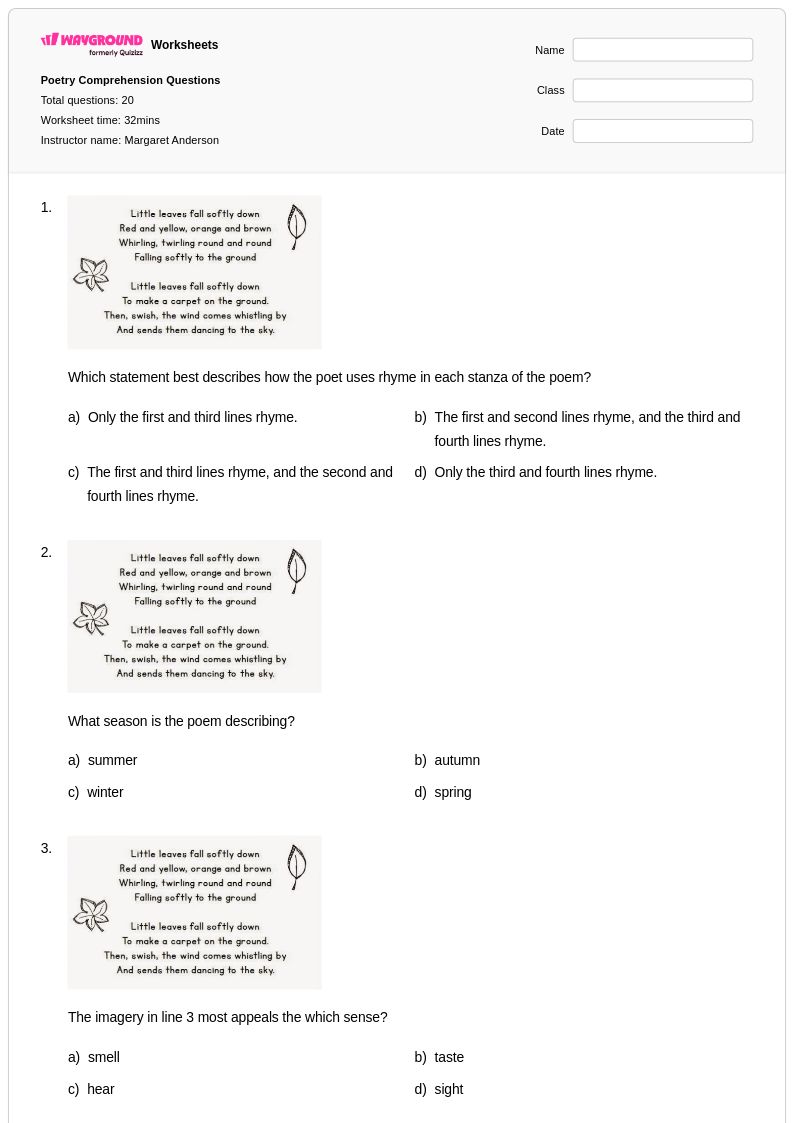
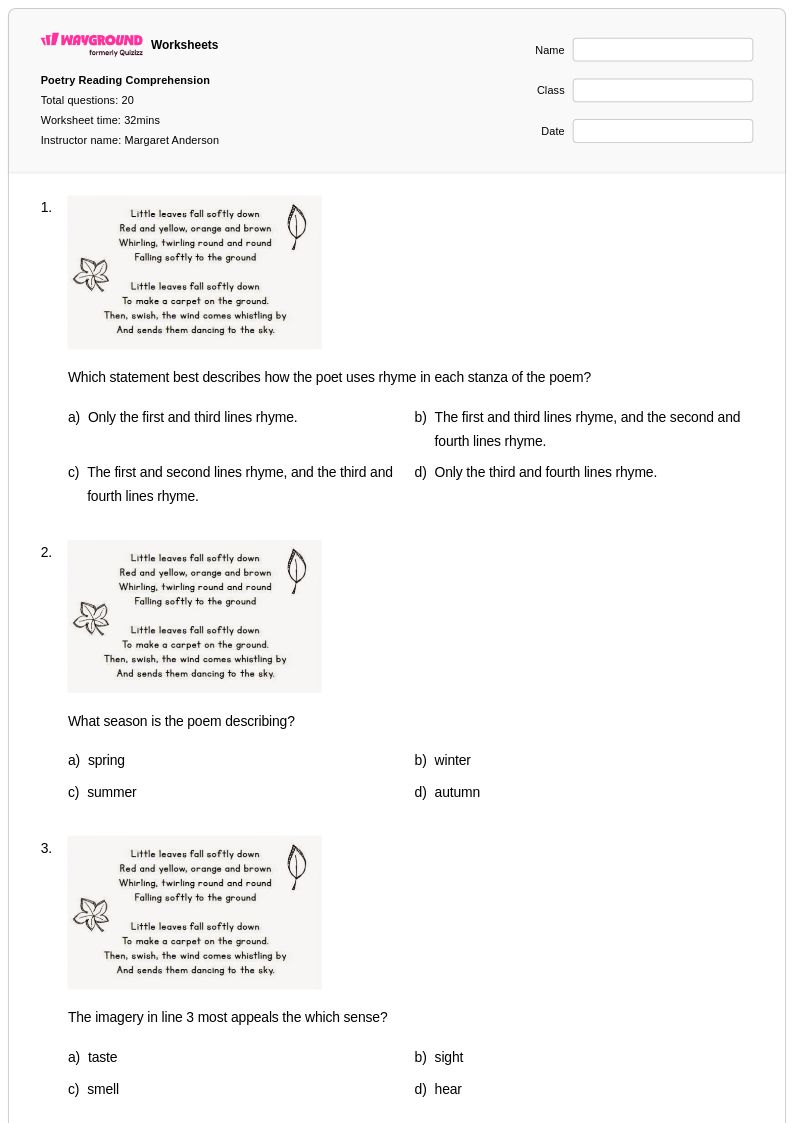
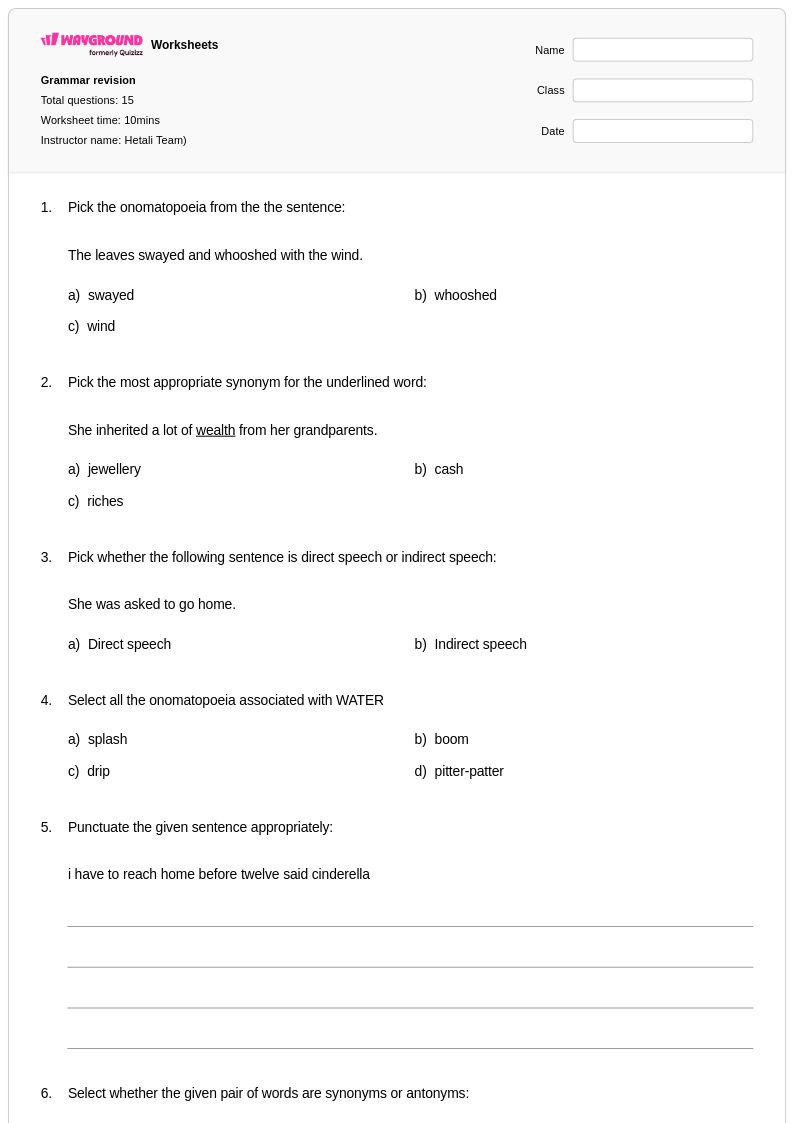
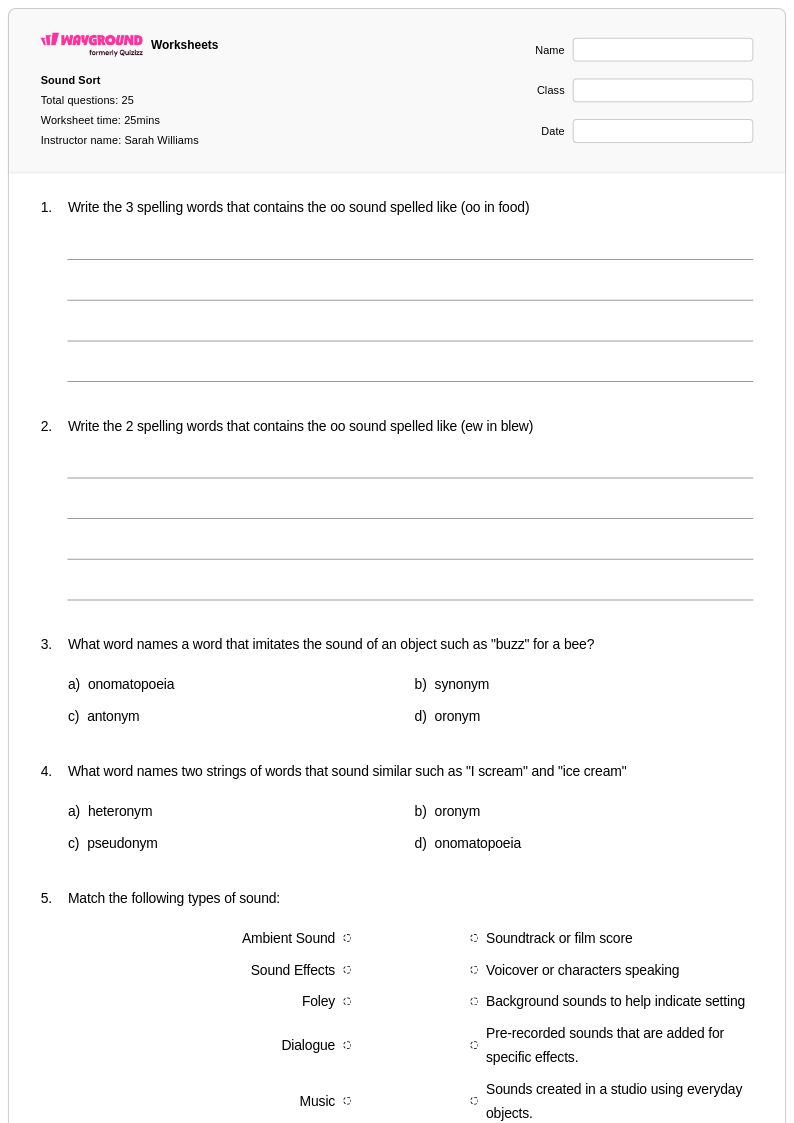
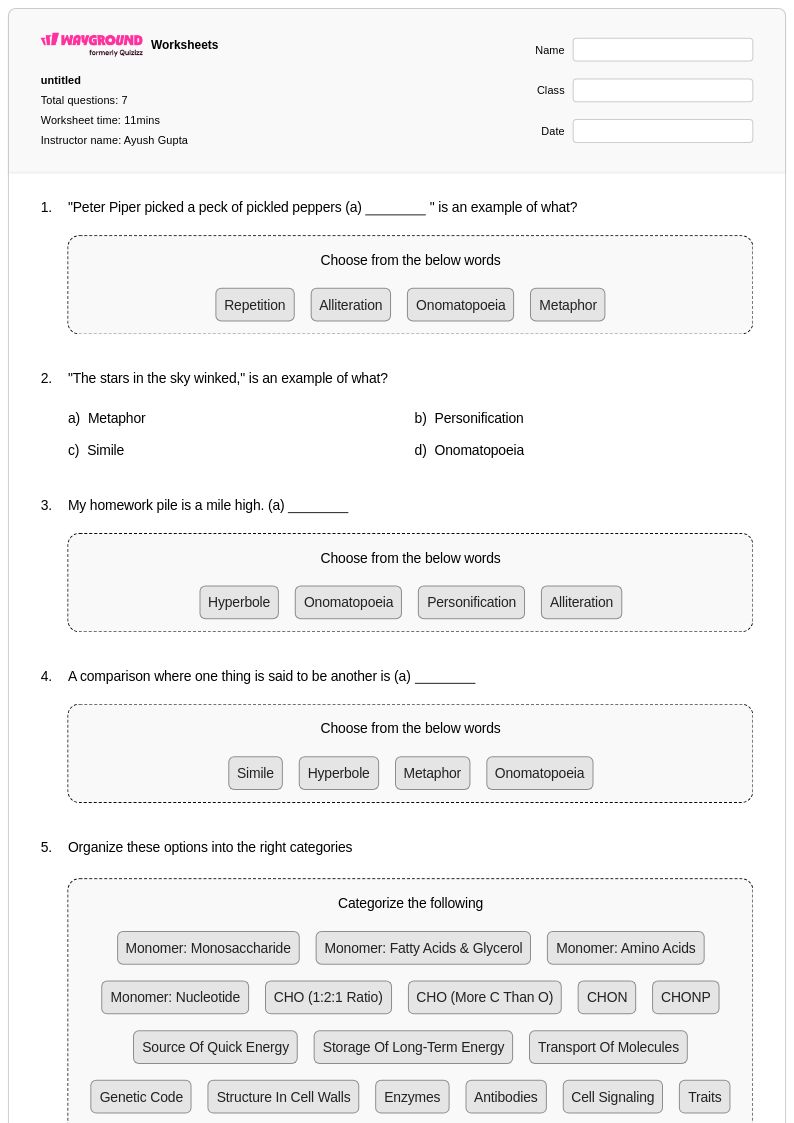
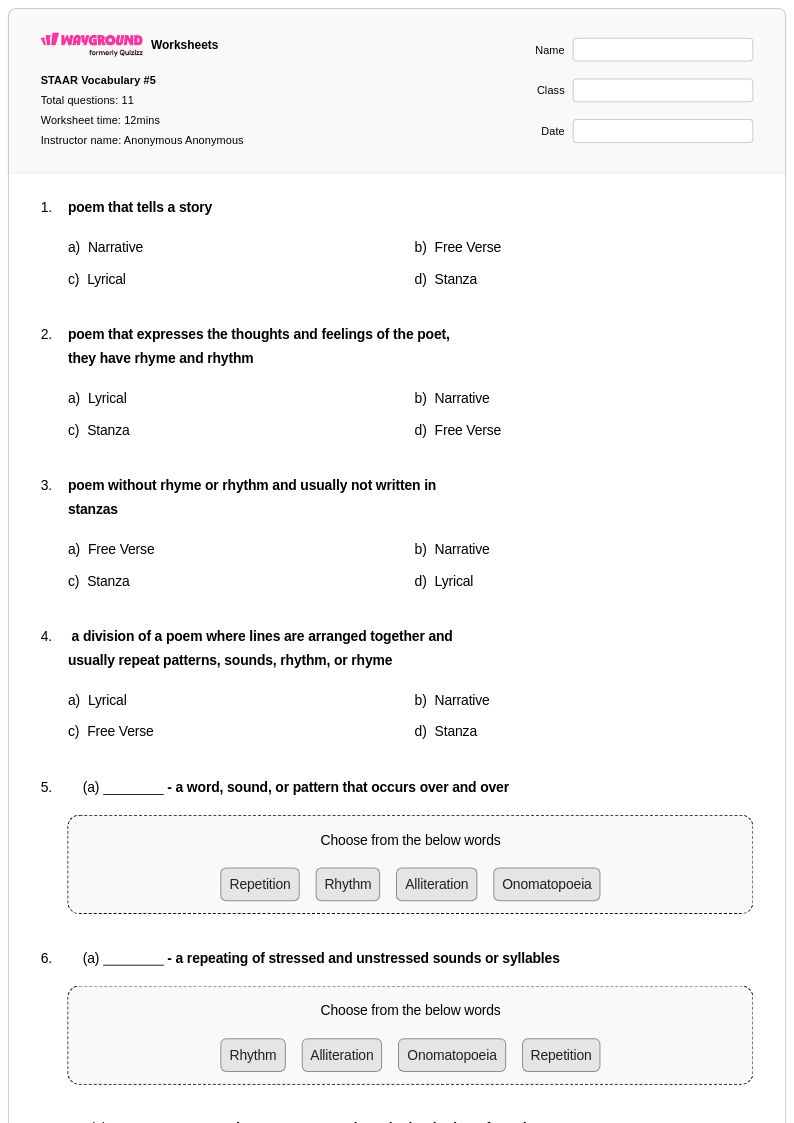
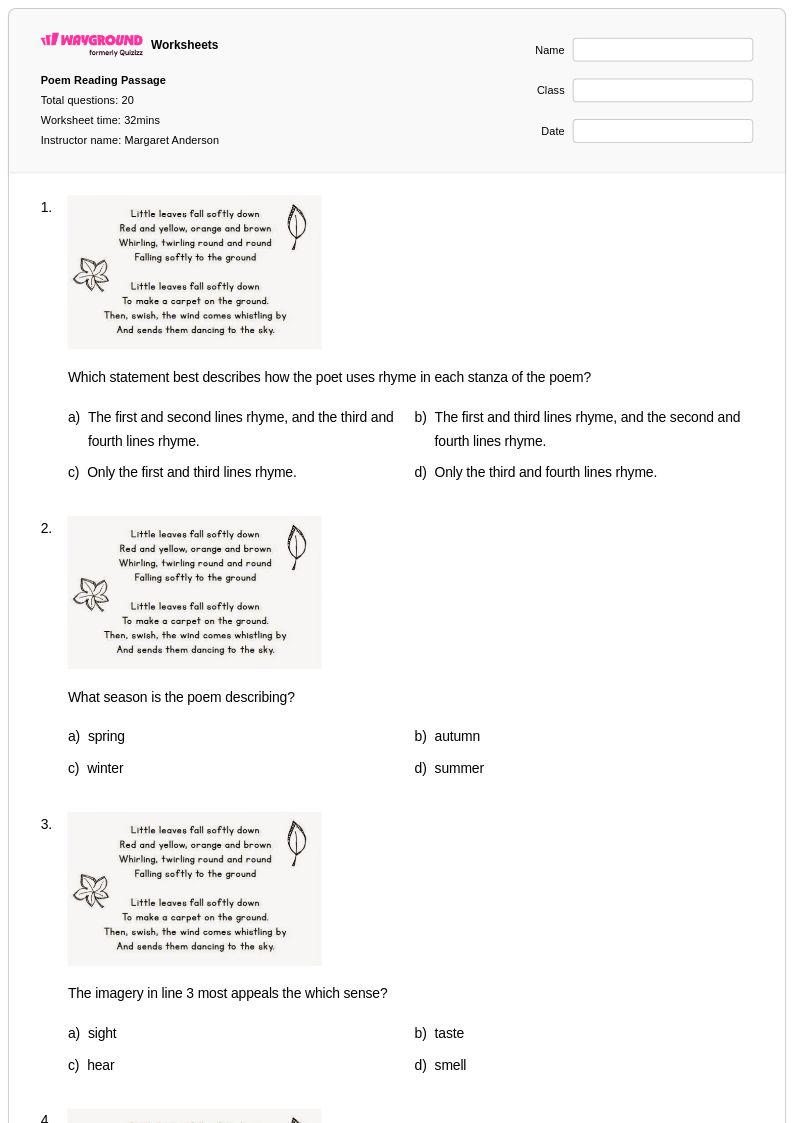
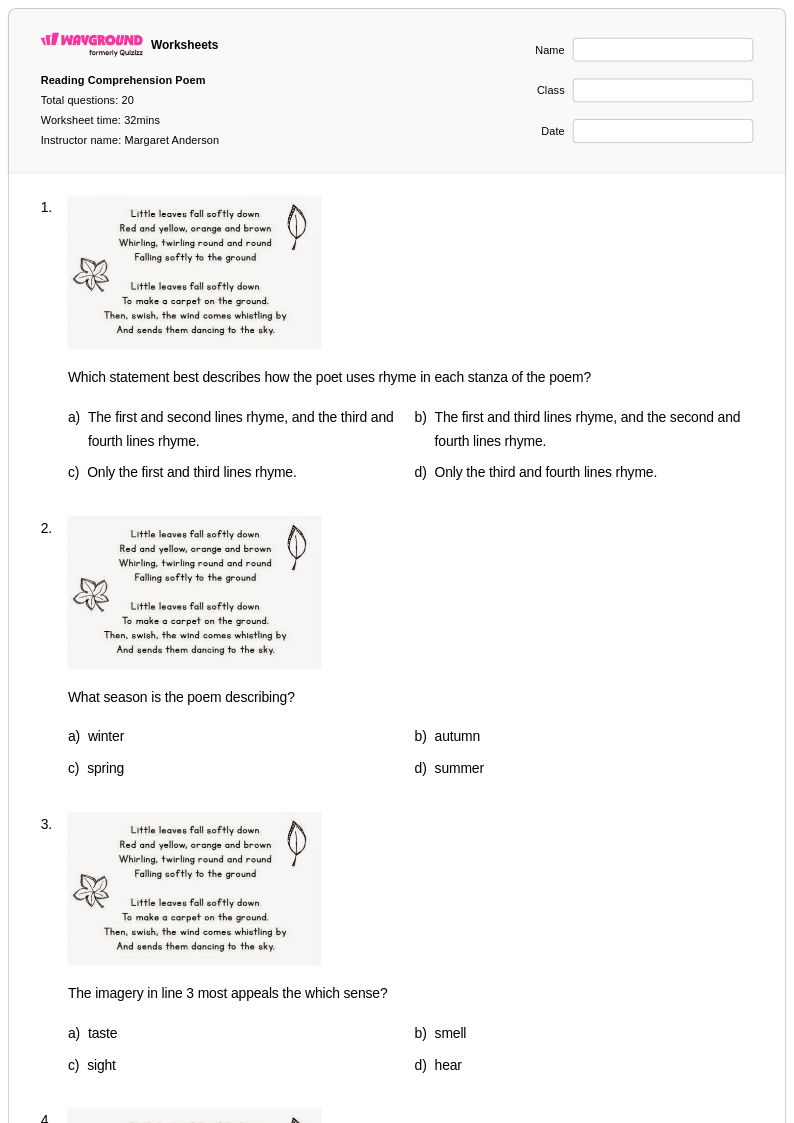
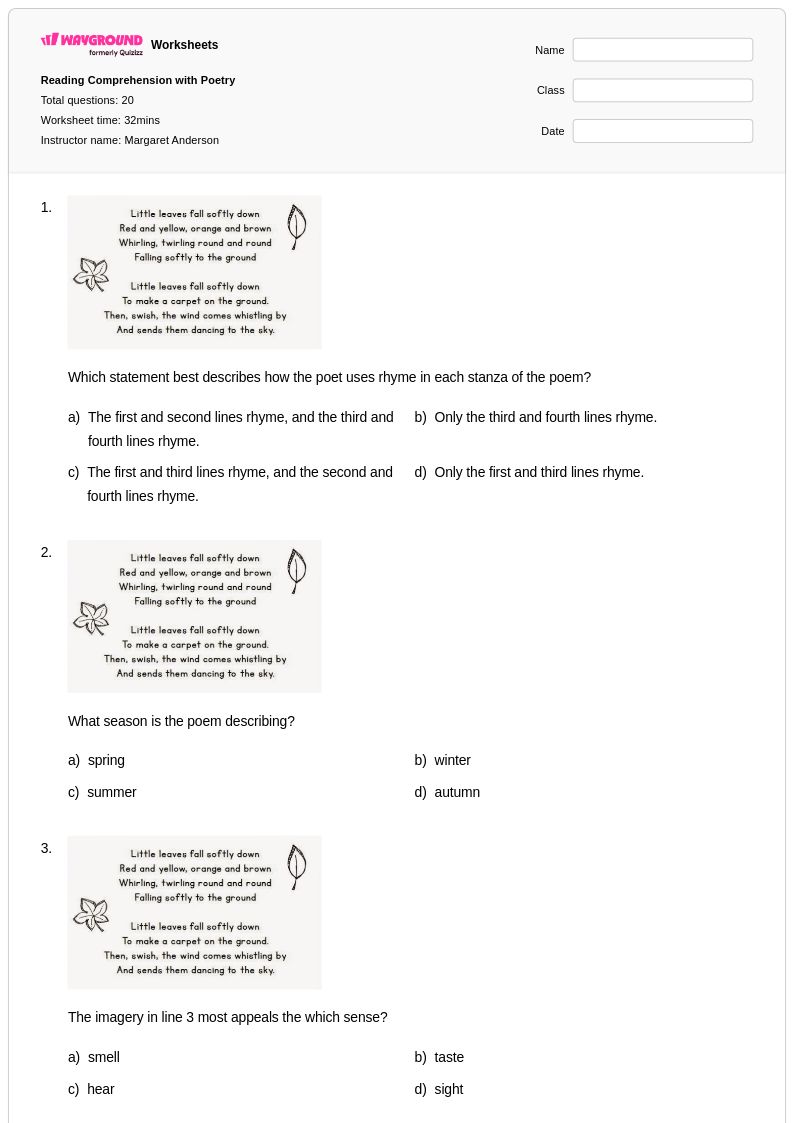
Class 4 onomatopoeia worksheets available through Wayground (formerly Quizizz) provide students with engaging practice opportunities to identify, understand, and create words that imitate sounds in written language. These comprehensive resources strengthen essential reading comprehension and writing skills by helping fourth graders recognize how authors use sound words like "buzz," "crash," and "whisper" to create vivid imagery and enhance storytelling. The worksheet collections include varied practice problems that challenge students to match onomatopoeia to their corresponding sounds, complete sentences with appropriate sound words, and generate their own examples from literature and real-life experiences. Each printable resource comes with a complete answer key, making it simple for educators to assess student understanding and provide immediate feedback on this important figurative language concept.
Wayground (formerly Quizizz) empowers teachers with millions of educator-created onomatopoeia worksheets specifically designed for Class 4 students, featuring robust search and filtering capabilities that allow quick access to standards-aligned materials. The platform's differentiation tools enable instructors to customize worksheet difficulty levels and content focus areas, ensuring appropriate challenge levels for diverse learners while supporting both remediation for struggling students and enrichment opportunities for advanced learners. These flexible resources are available in both printable pdf formats for traditional classroom use and digital formats for interactive learning experiences, streamlining lesson planning and providing versatile options for skill practice. Teachers can efficiently locate materials that align with their curriculum requirements and seamlessly integrate onomatopoeia instruction into broader figurative language units or creative writing lessons.
FAQs
How do I teach onomatopoeia to elementary and middle school students?
Start by having students listen to and categorize real-world sounds before connecting them to written words like 'buzz,' 'crash,' or 'sizzle.' Anchor instruction in familiar texts — comic books, poetry, and picture books are especially rich sources of onomatopoeia. Once students can identify examples, move them toward creating their own sound words to describe actions or environments, which reinforces both recognition and creative application.
What exercises help students practice identifying onomatopoeia in reading passages?
Effective practice exercises ask students to locate onomatopoeia within poetry and prose, explain the sensory effect each word creates, and distinguish sound words from other types of figurative language. Worksheets that present sentences or short passages and prompt students to underline, label, and justify their answers build both recognition accuracy and analytical thinking. Adding a creation component — where students substitute or invent sound words — deepens understanding beyond simple identification.
What mistakes do students commonly make when learning onomatopoeia?
The most frequent error is confusing onomatopoeia with other figurative language devices, particularly alliteration, since both involve sound. Students also tend to limit their examples to obvious animal sounds like 'moo' or 'woof' and miss subtler sound words like 'murmur,' 'crinkle,' or 'thud.' Another common misconception is assuming onomatopoeia only appears in poetry, when in fact it is widely used in prose and everyday writing to create vividness.
How does onomatopoeia connect to creative writing instruction?
Teaching onomatopoeia directly supports descriptive writing by giving students a concrete tool for creating sensory imagery without relying on lengthy explanations. When students learn to use sound words intentionally, their writing becomes more immediate and engaging for readers. Connecting onomatopoeia lessons to drafting or revision exercises encourages students to evaluate word choice not just for meaning but for auditory effect.
How do I use Wayground's onomatopoeia worksheets in my classroom?
Wayground's onomatopoeia worksheets are available as printable PDFs for traditional classroom use and in digital formats for technology-integrated environments, giving teachers flexibility based on their setup. You can also host them as a quiz directly on Wayground, making it straightforward to assign practice, collect responses, and review results in one place. All worksheets include complete answer keys, so they work equally well for guided instruction, independent practice, or homework assignments.
How can I differentiate onomatopoeia instruction for students at different skill levels?
For students who need additional support, focus on high-frequency, easily recognizable sound words and provide sentence-level practice before moving to full passages. Advanced learners can explore sound symbolism — the broader concept of how word sounds carry meaning — and analyze how authors deliberately choose onomatopoeia to shape tone and mood. On Wayground, teachers can apply accommodations such as read aloud support or reduced answer choices for individual students, while the rest of the class works through standard settings.