
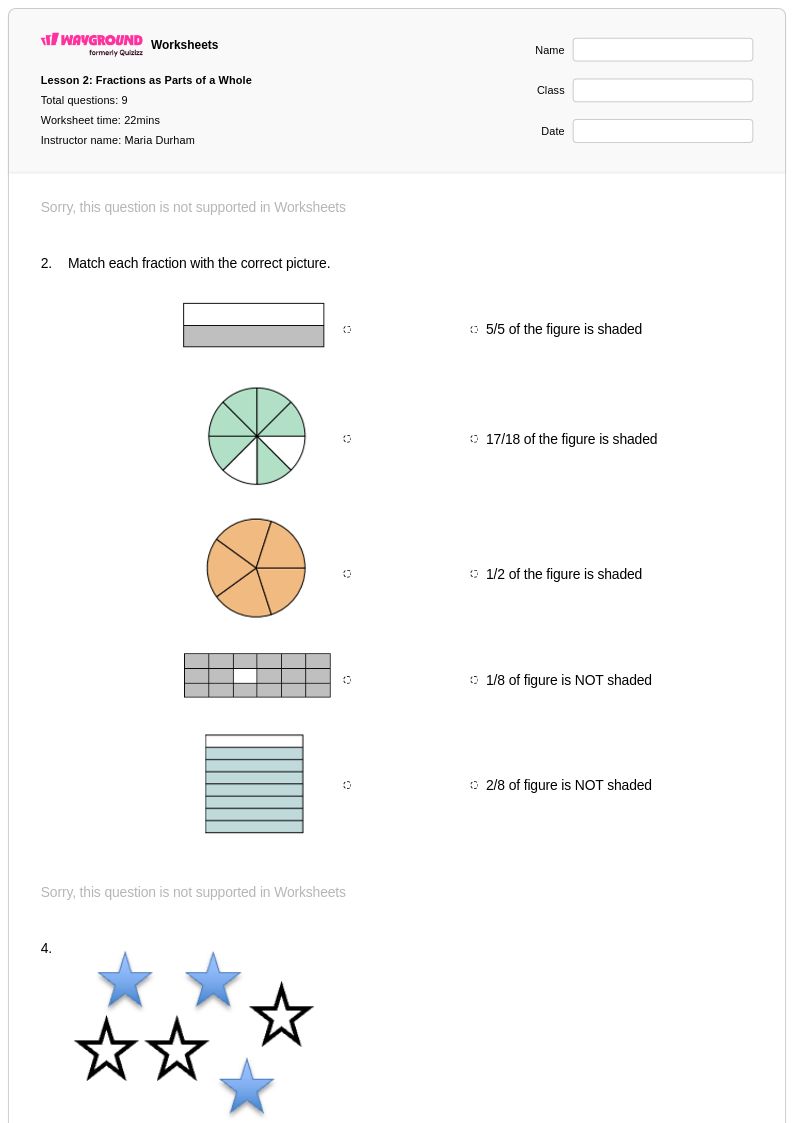
13 Q
1st - 5th
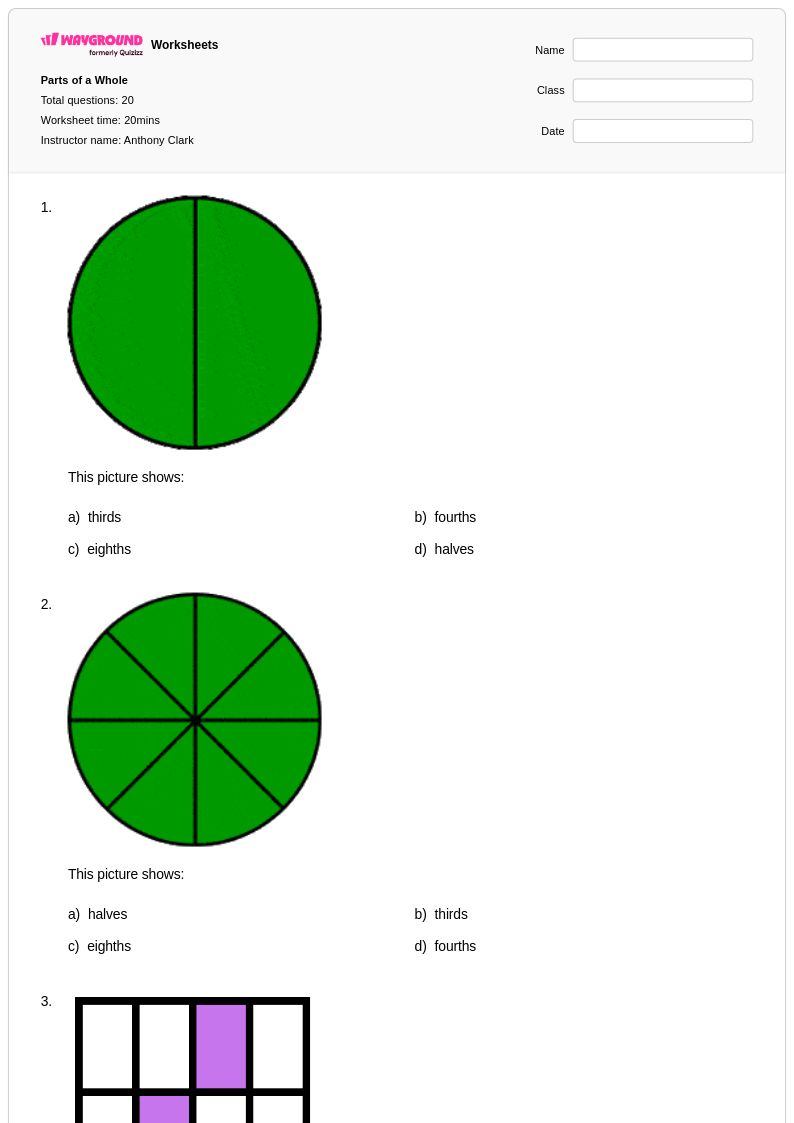
20 Q
3rd - Uni
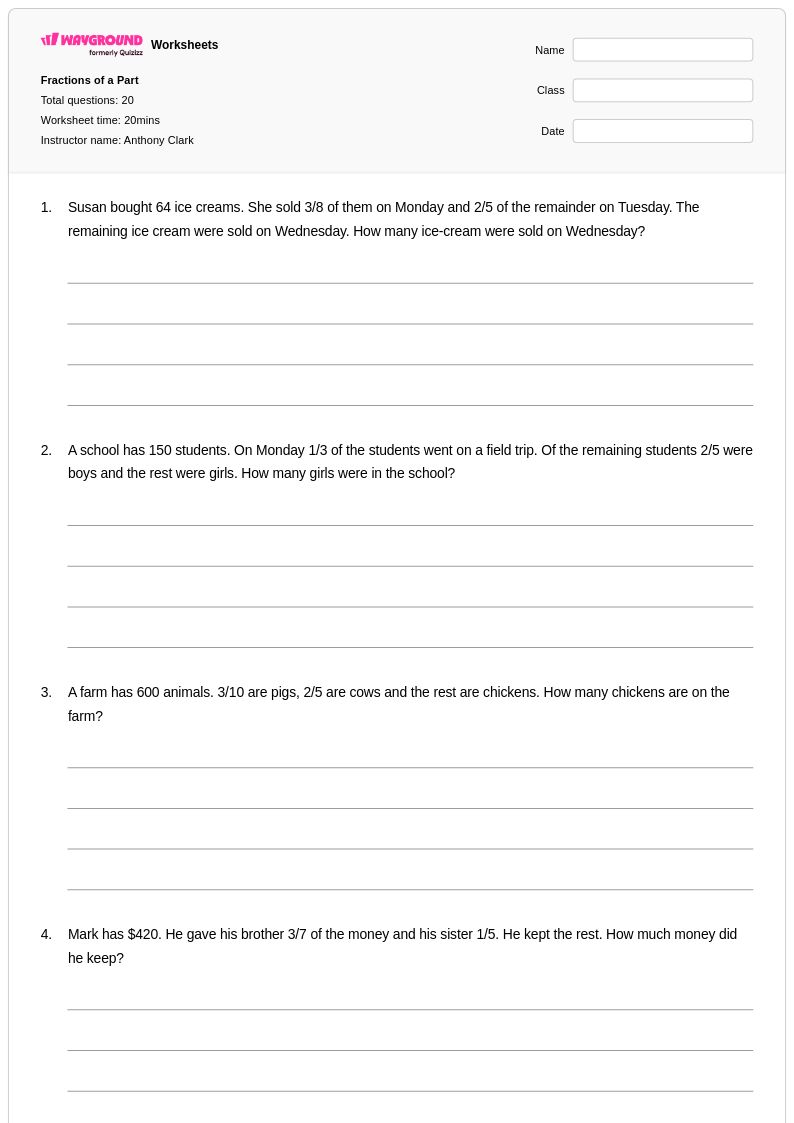
20 Q
3rd - Uni
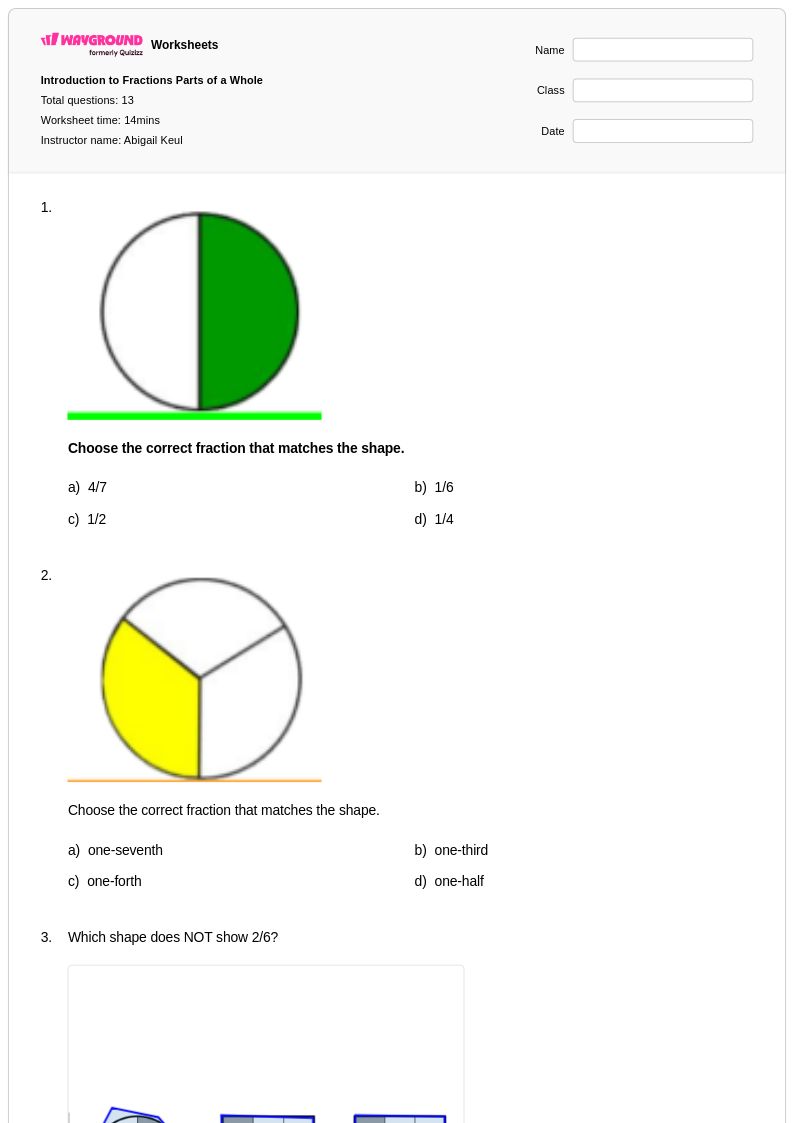
13 Q
3rd
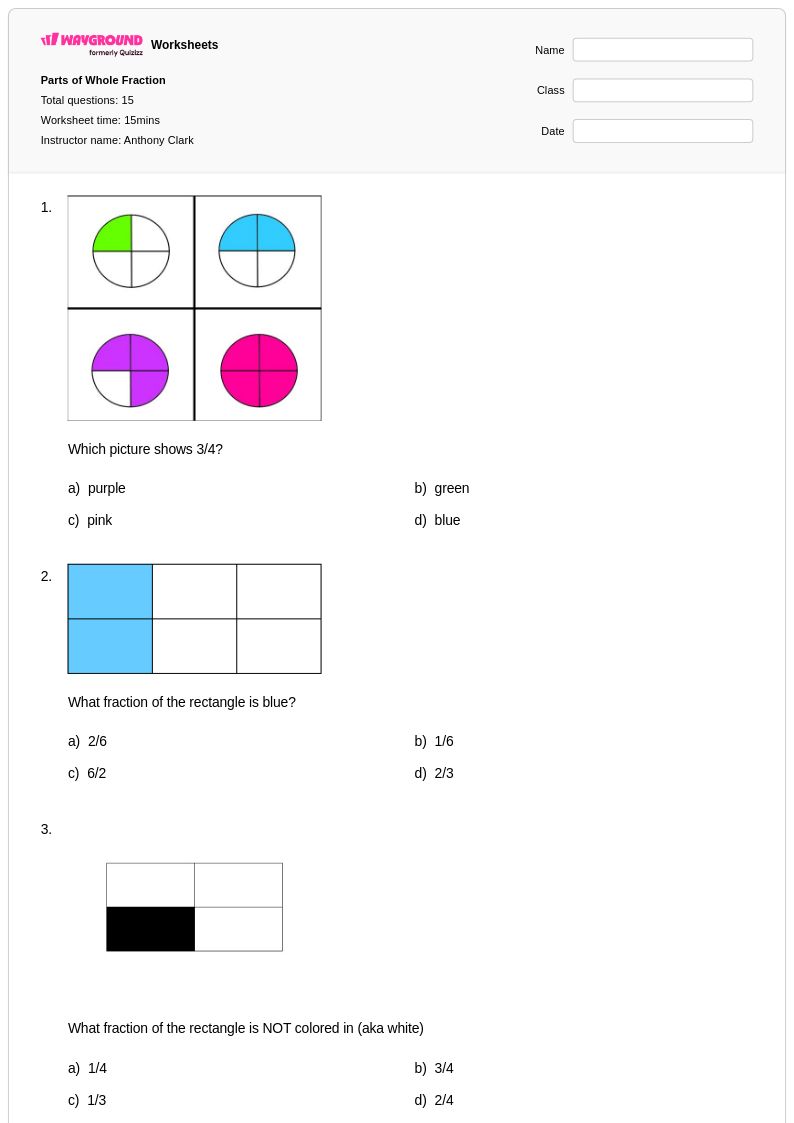
15 Q
3rd - Uni
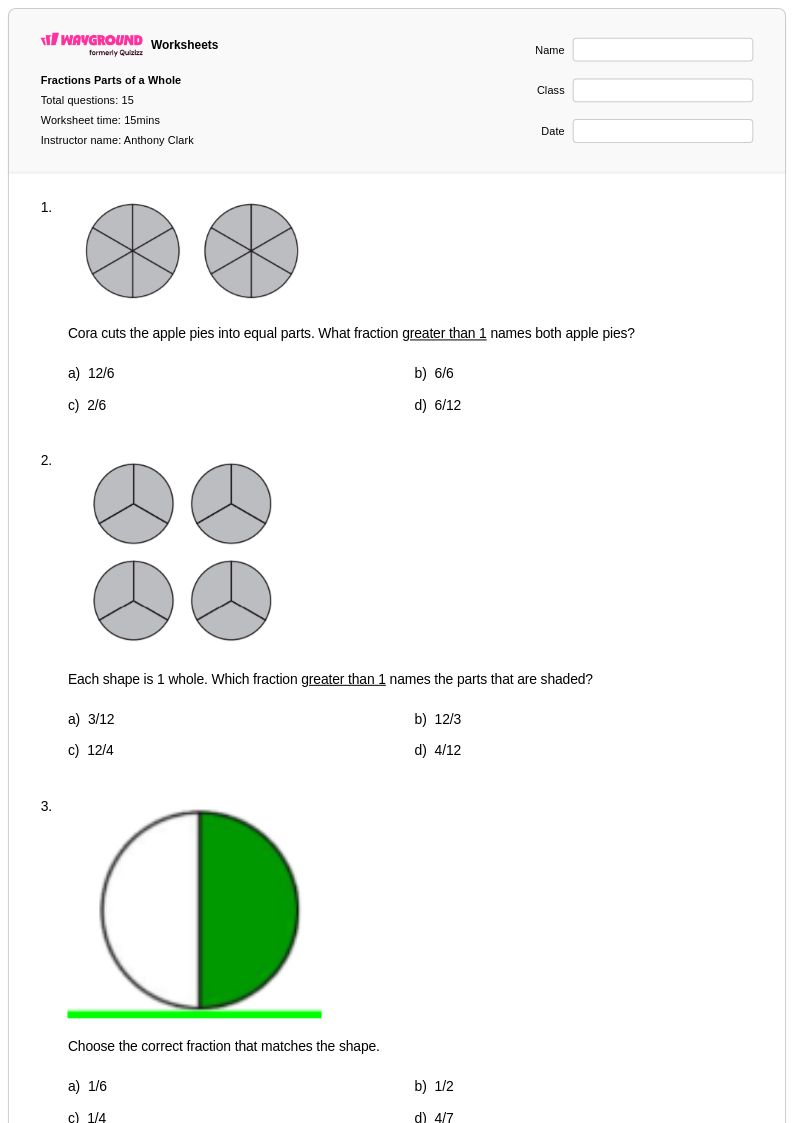
15 Q
3rd - Uni
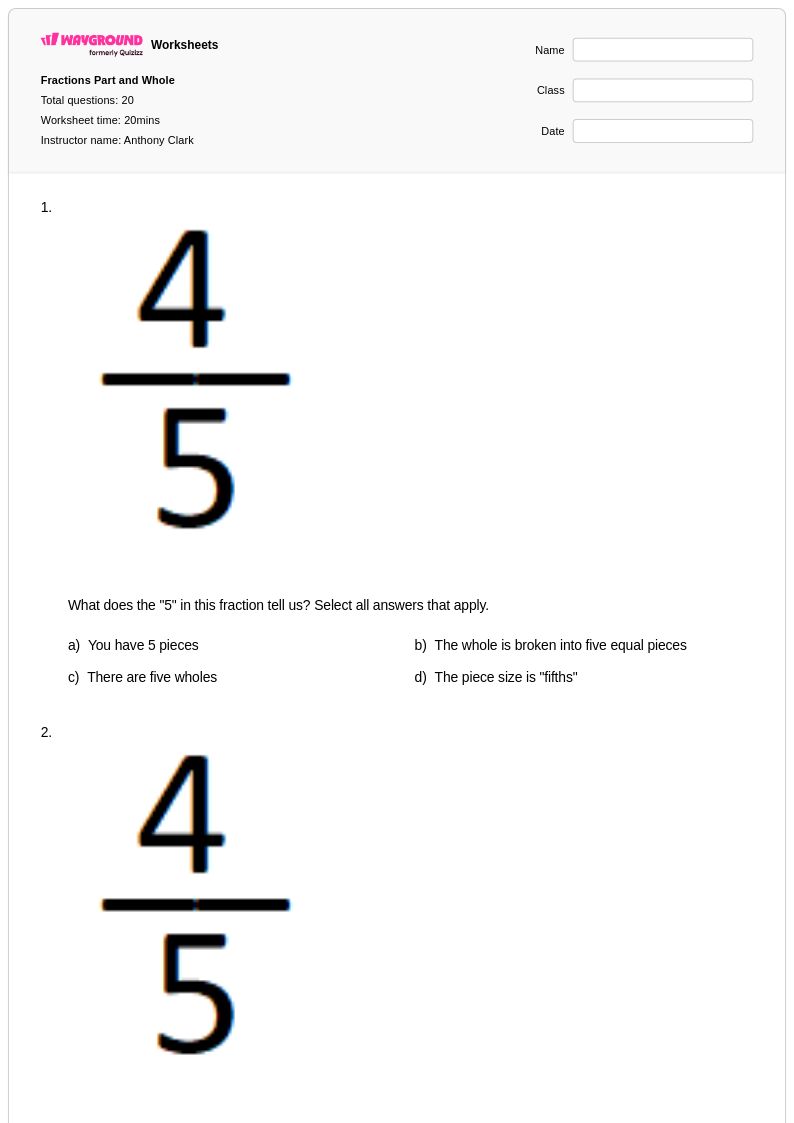
20 Q
3rd - Uni
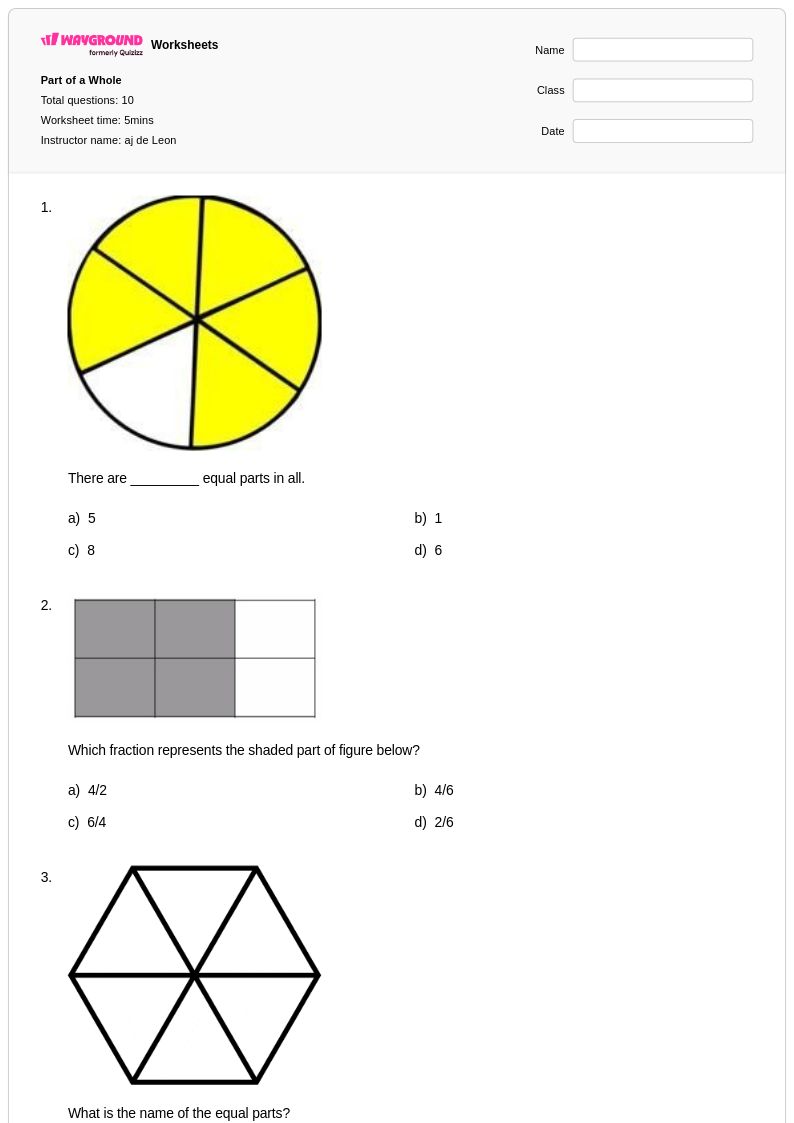
10 Q
1st - 3rd
10 Q
1st - 3rd
30 Q
3rd
10 Q
1st - 3rd
10 Q
3rd - Uni
13 Q
3rd - Uni
20 Q
2nd - Uni
20 Q
3rd - Uni
20 Q
3rd - Uni
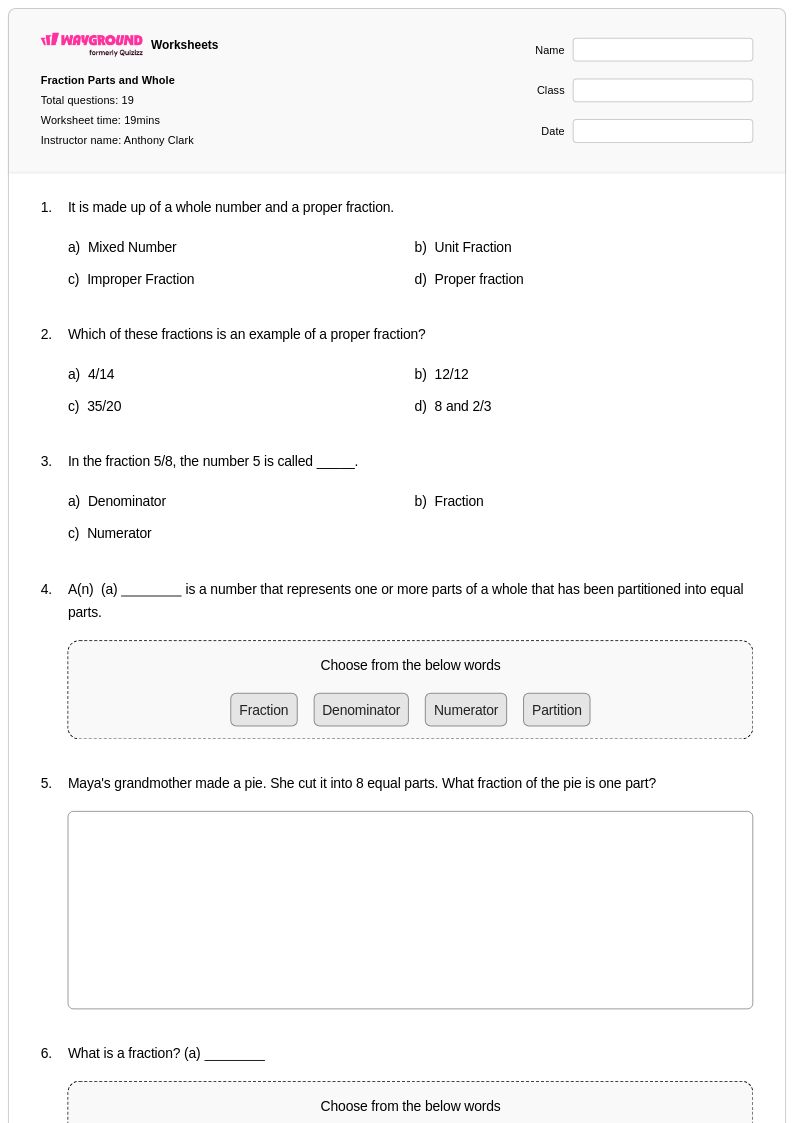
19 Q
3rd - Uni
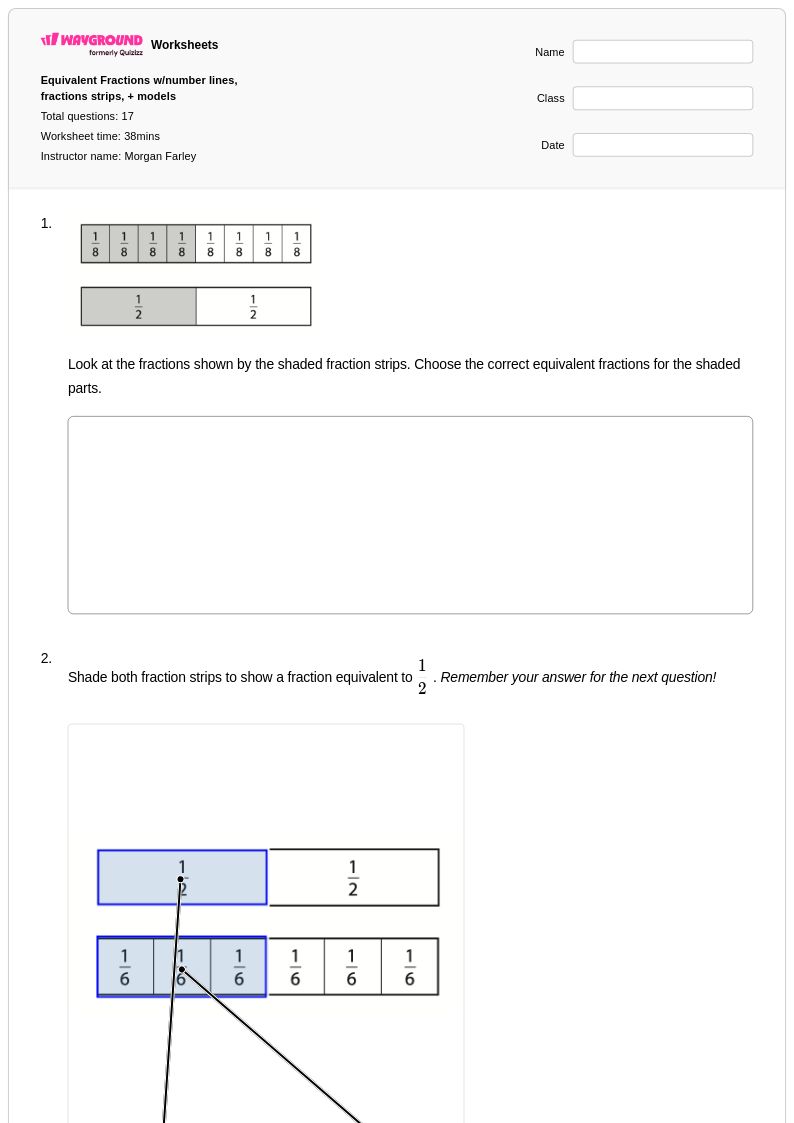
17 Q
3rd
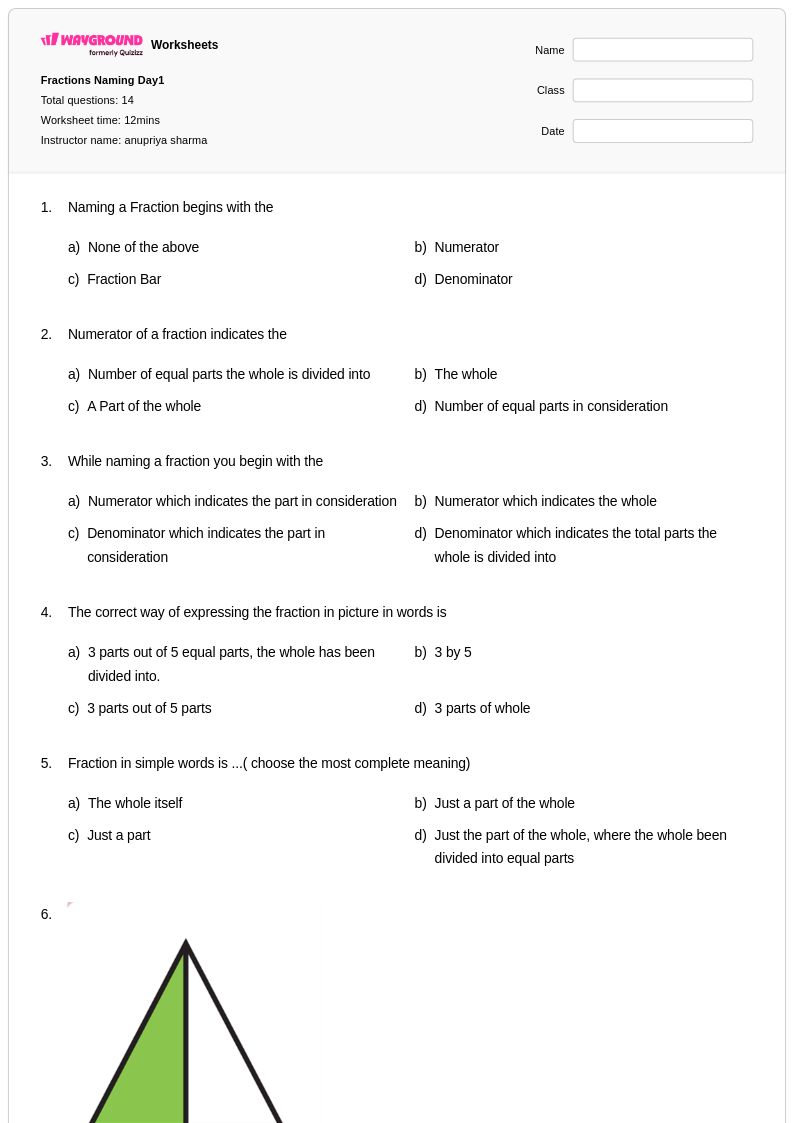
14 Q
3rd
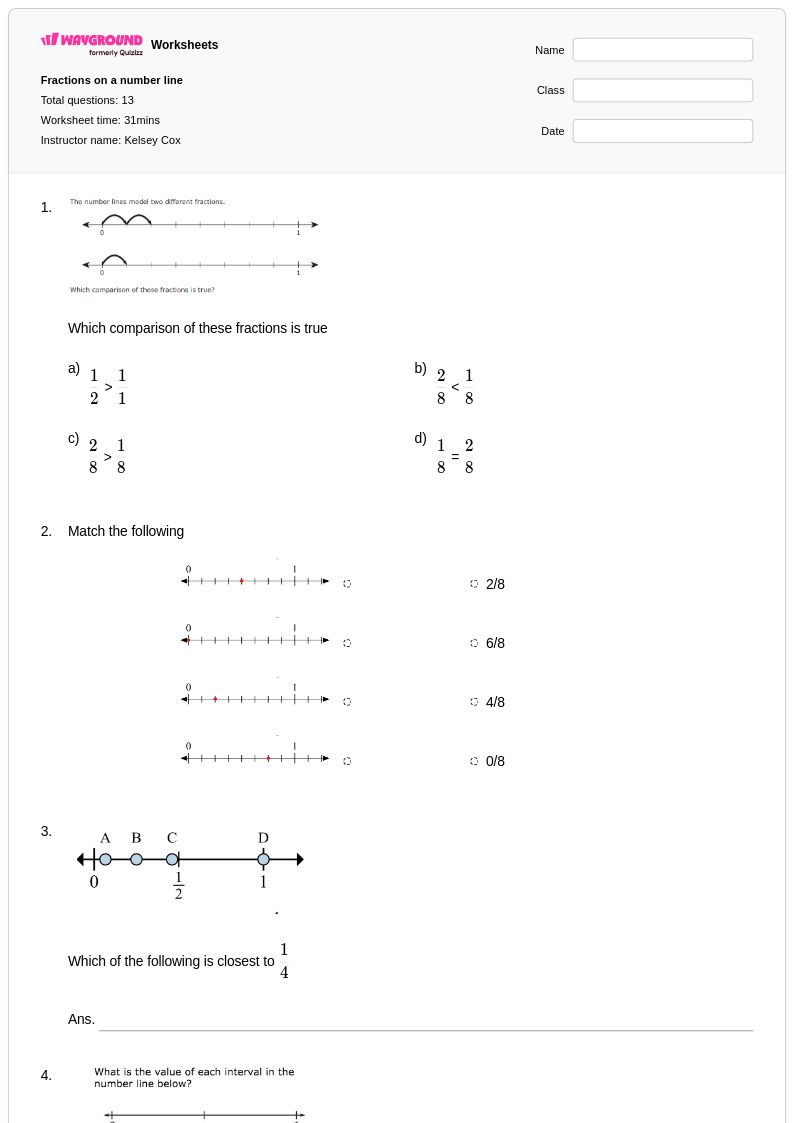
13 Q
3rd
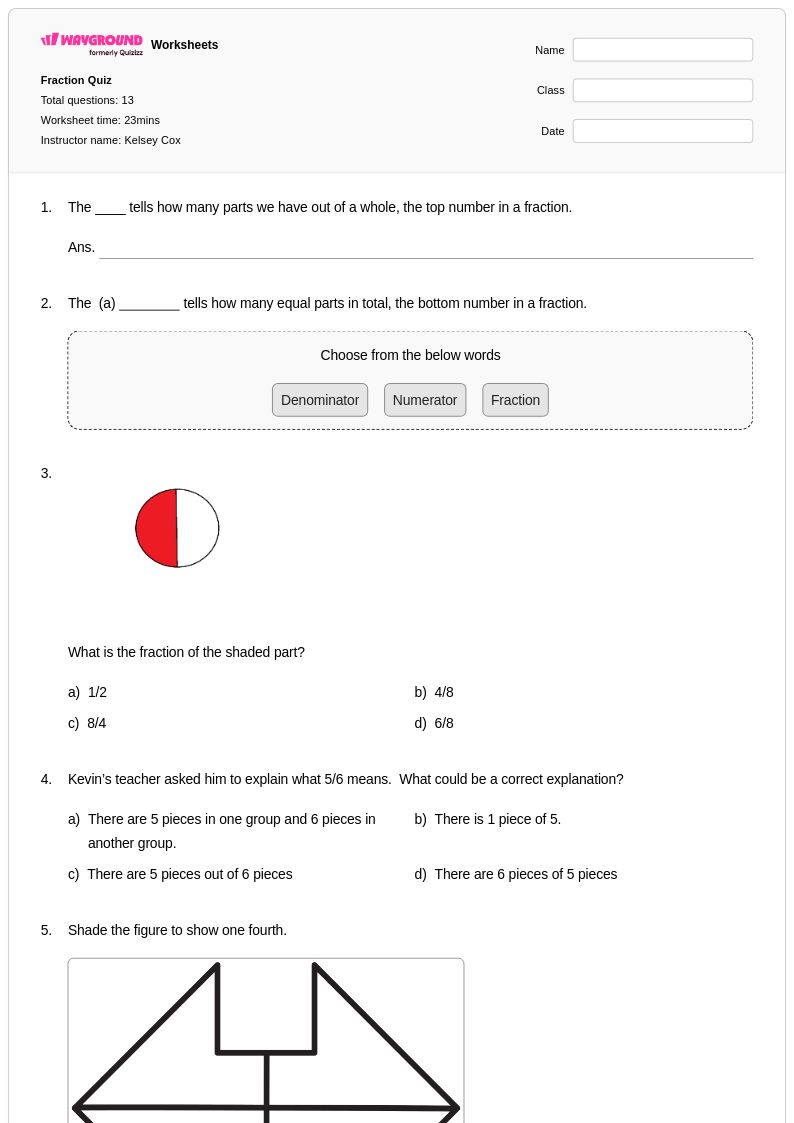
13 Q
3rd
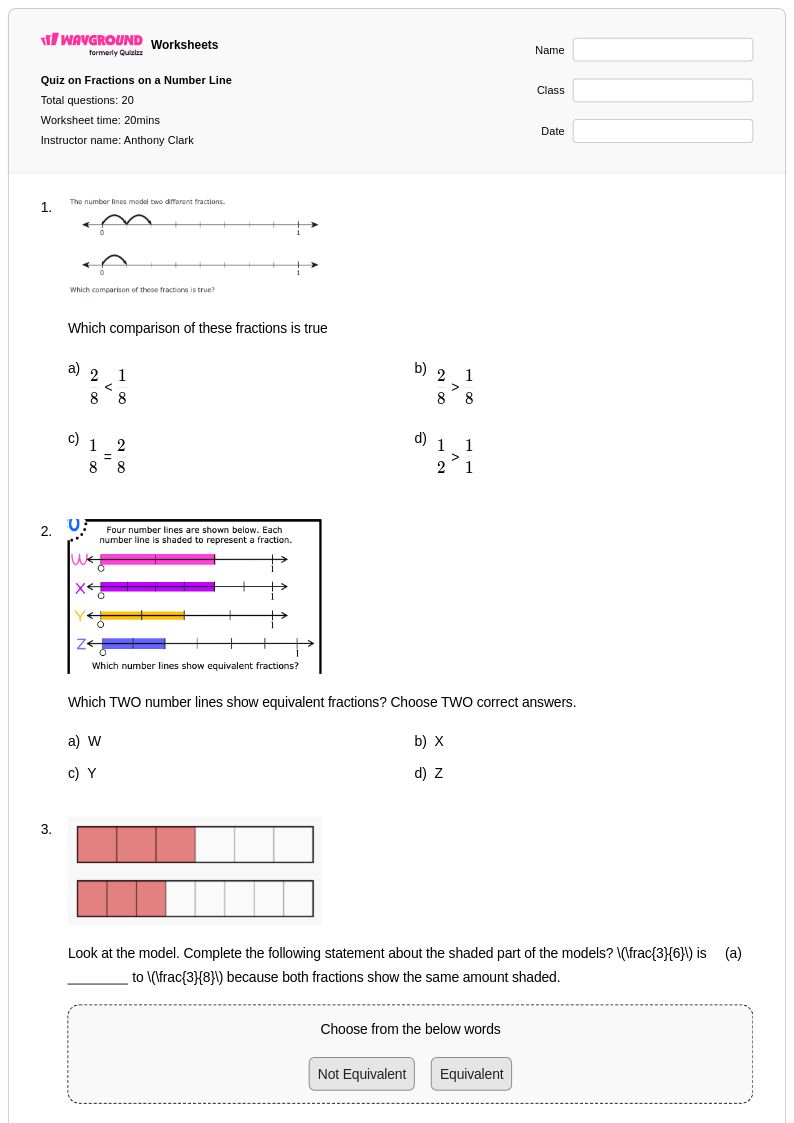
20 Q
3rd - Uni
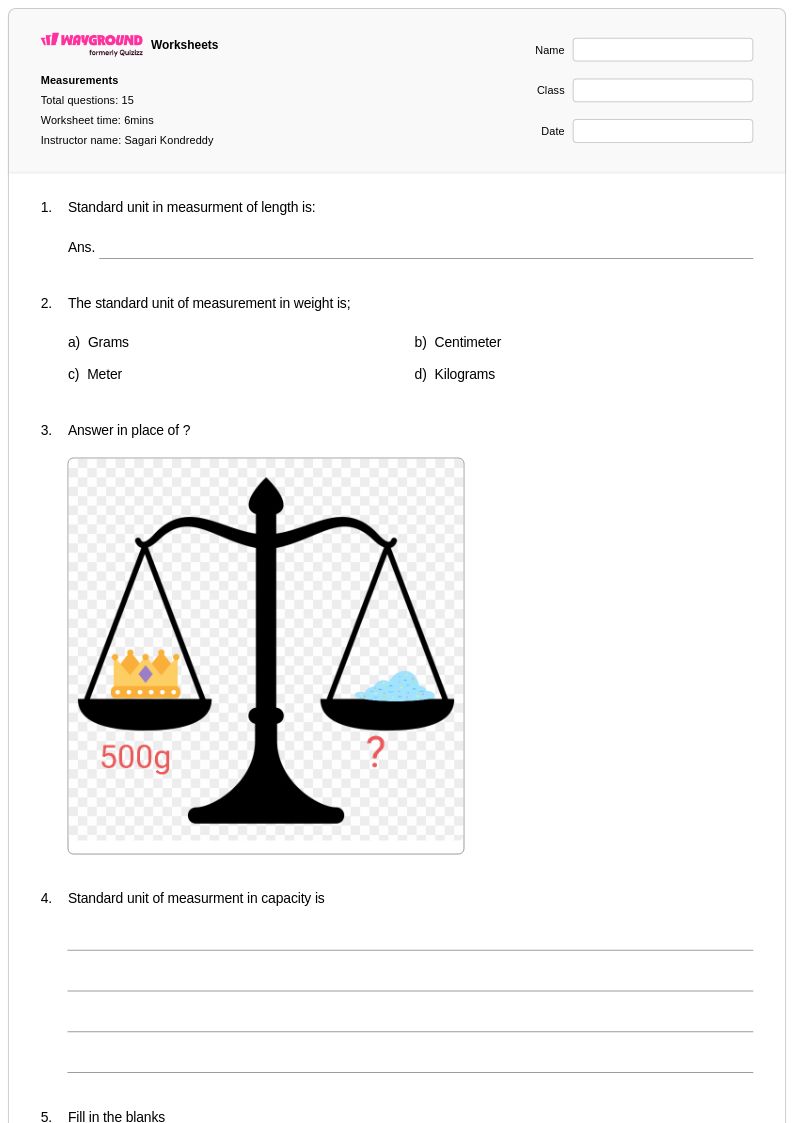
15 Q
3rd - 6th
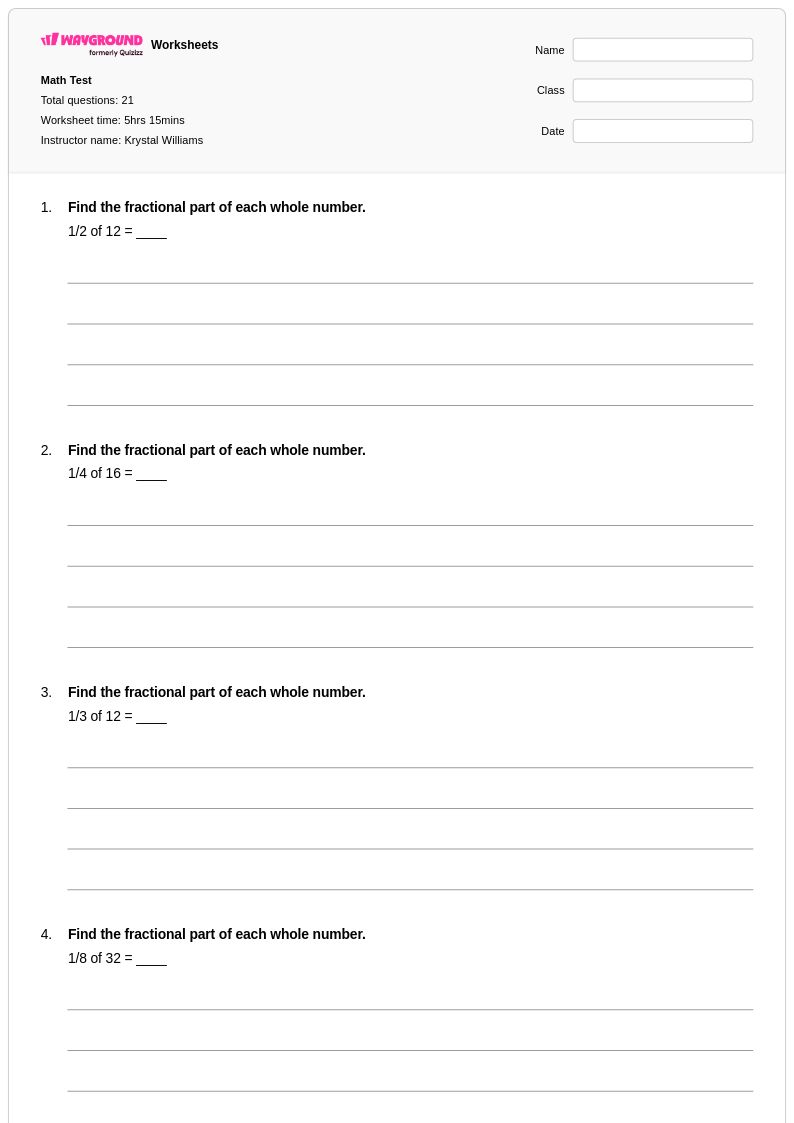
21 Q
3rd
Explore Part-part-whole Relationships Worksheets by Grades
Explore Other Subject Worksheets for class 3
Explore printable Part-part-whole Relationships worksheets for Class 3
Part-part-whole relationships form the foundation of mathematical thinking for Class 3 students, and Wayground's comprehensive worksheet collection helps young learners master this essential concept through structured practice and visual representation. These carefully designed worksheets guide students to understand how numbers can be decomposed and recomposed, strengthening their number sense and preparing them for more complex mathematical operations. Each worksheet includes varied practice problems that challenge students to identify missing parts when given the whole, determine the whole when provided with parts, and recognize the flexible relationships between numbers. Teachers can access complete answer keys alongside each printable worksheet, ensuring efficient grading and immediate feedback opportunities. The free pdf format makes these resources easily accessible for both classroom instruction and home practice, supporting consistent skill development across multiple learning environments.
Wayground's extensive library contains millions of teacher-created resources specifically focused on part-part-whole relationships, with robust search and filtering capabilities that allow educators to locate materials perfectly suited to their Class 3 mathematics curriculum requirements. The platform's alignment with educational standards ensures these worksheets meet rigorous academic expectations while providing differentiation tools that accommodate diverse learning needs within the classroom. Teachers can customize worksheets to target specific skill gaps, adjust difficulty levels for remediation or enrichment purposes, and seamlessly integrate both printable and digital formats into their lesson planning. This flexibility empowers educators to create targeted practice sessions, assess student understanding effectively, and provide additional support where needed, ultimately building stronger foundational skills in mathematical reasoning and number relationships that will serve students throughout their academic journey.
FAQs
How is the part-part-whole model used in third grade?
How do I teach the connection between part-whole and multiplication?
What kind of problems help third graders apply this concept?
What common misconception appears when applying part-whole to multiplication and division?
How can I use these third-grade worksheets for practice?
How does this fit into third-grade math standards?