
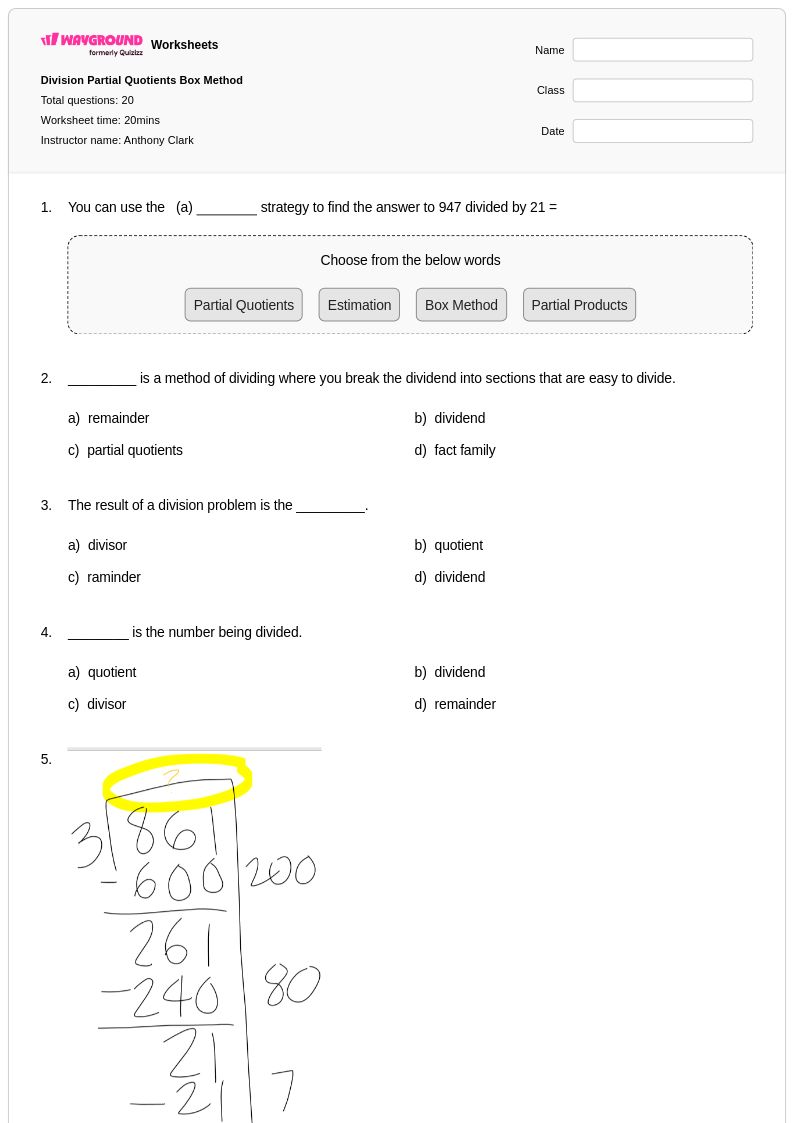
20 Q
5th - Uni
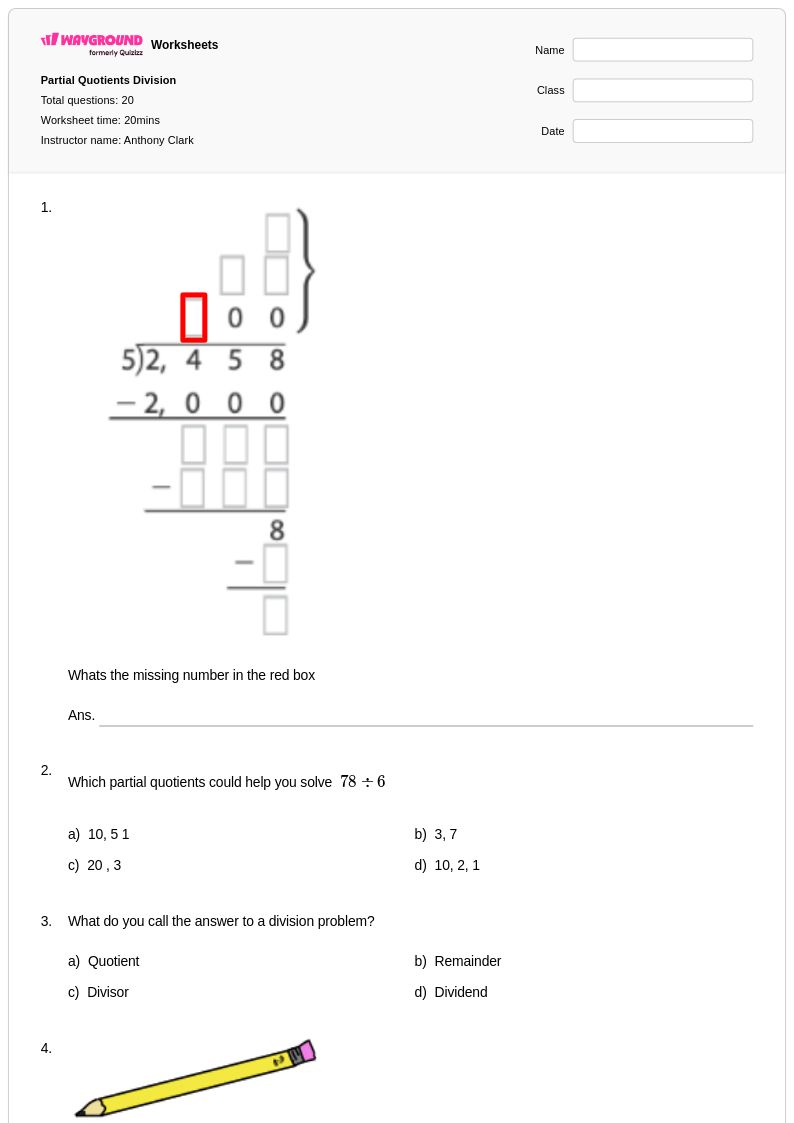
20 Q
4th - Uni
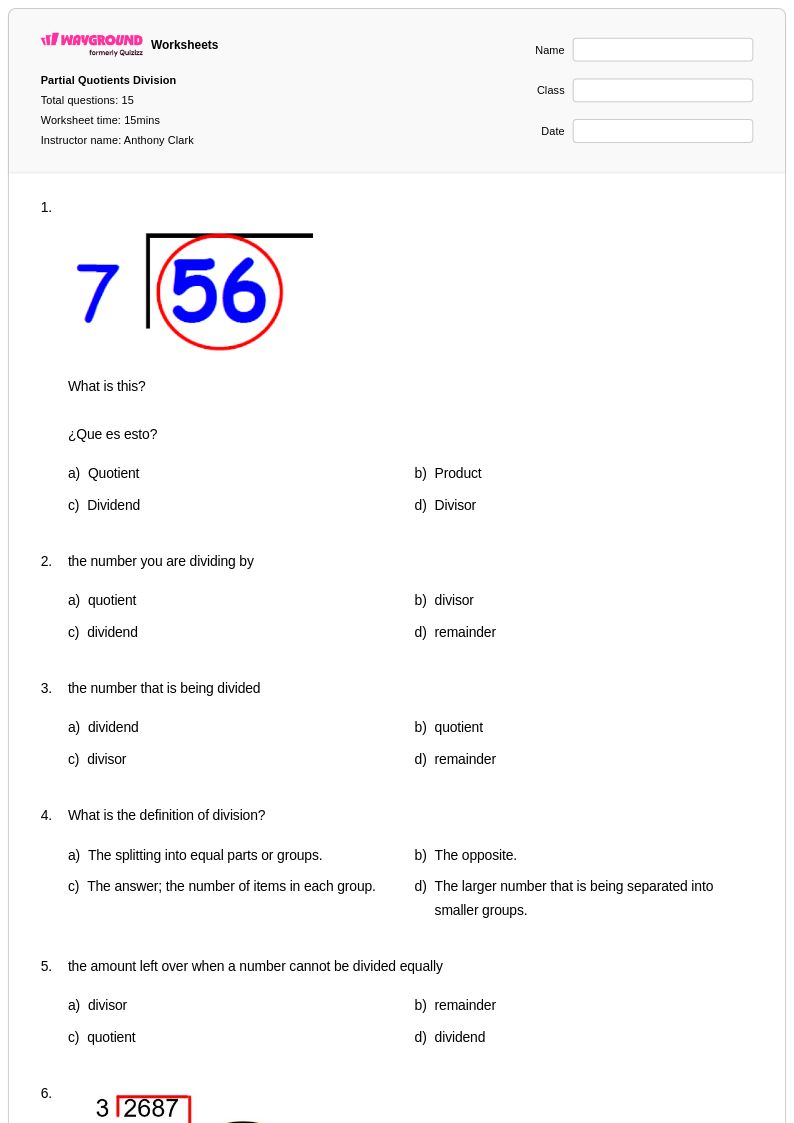
15 Q
4th - Uni
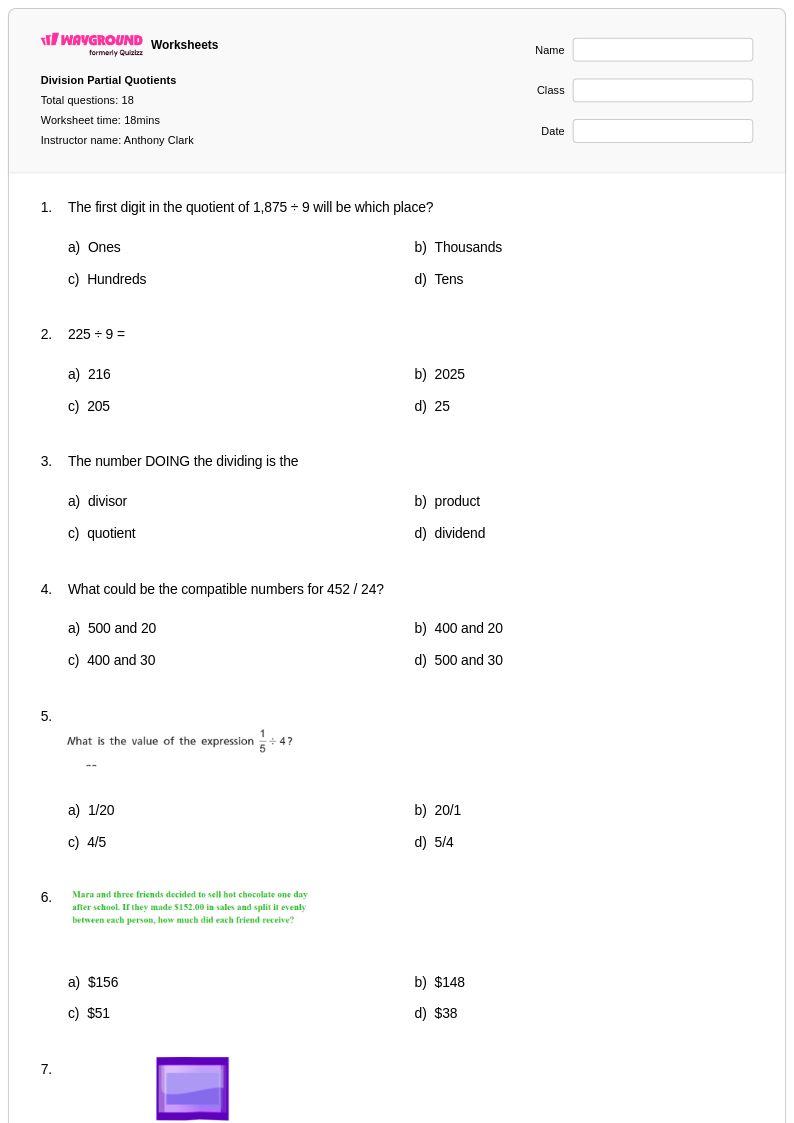
18 Q
5th - Uni
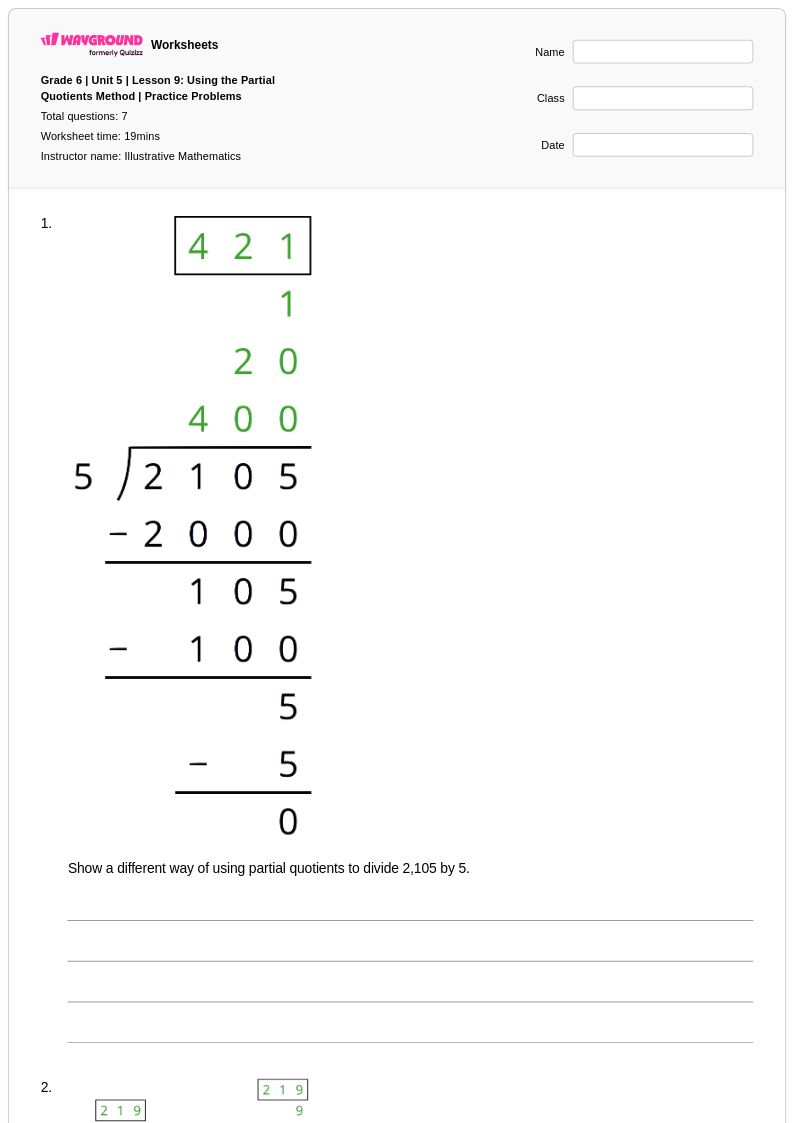
7 Q
6th - Uni
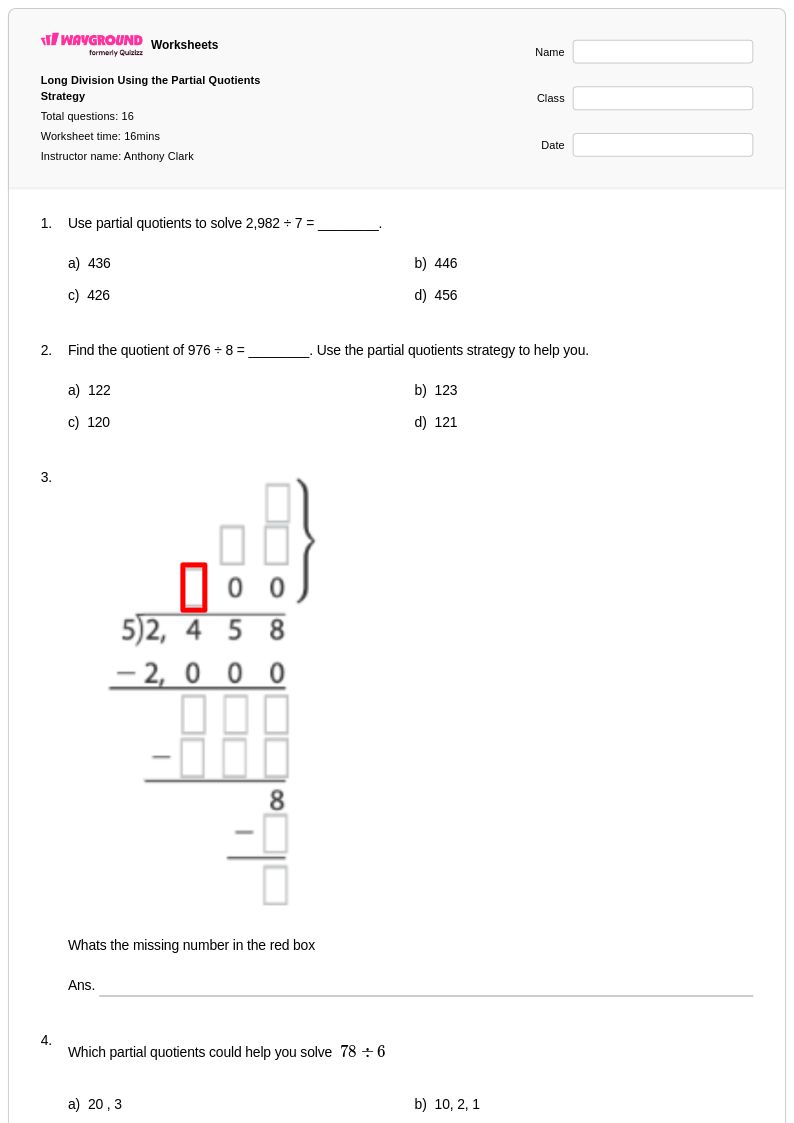
16 Q
5th - Uni
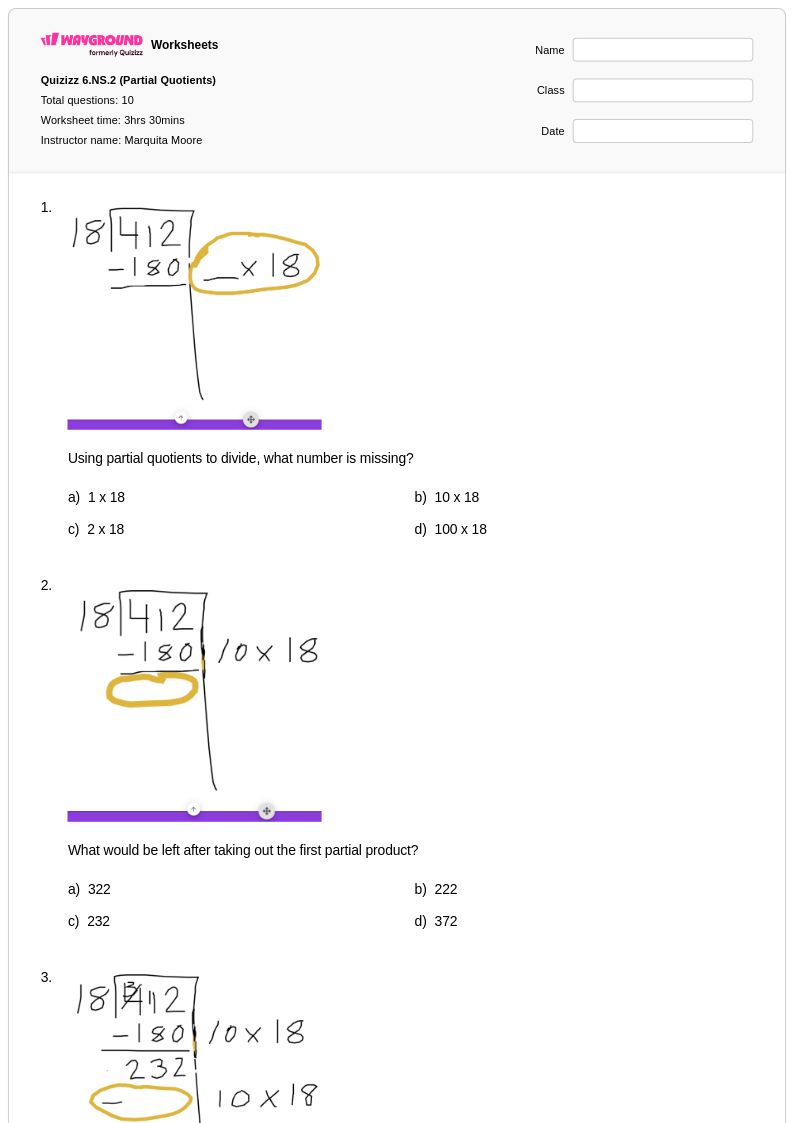
10 Q
6th
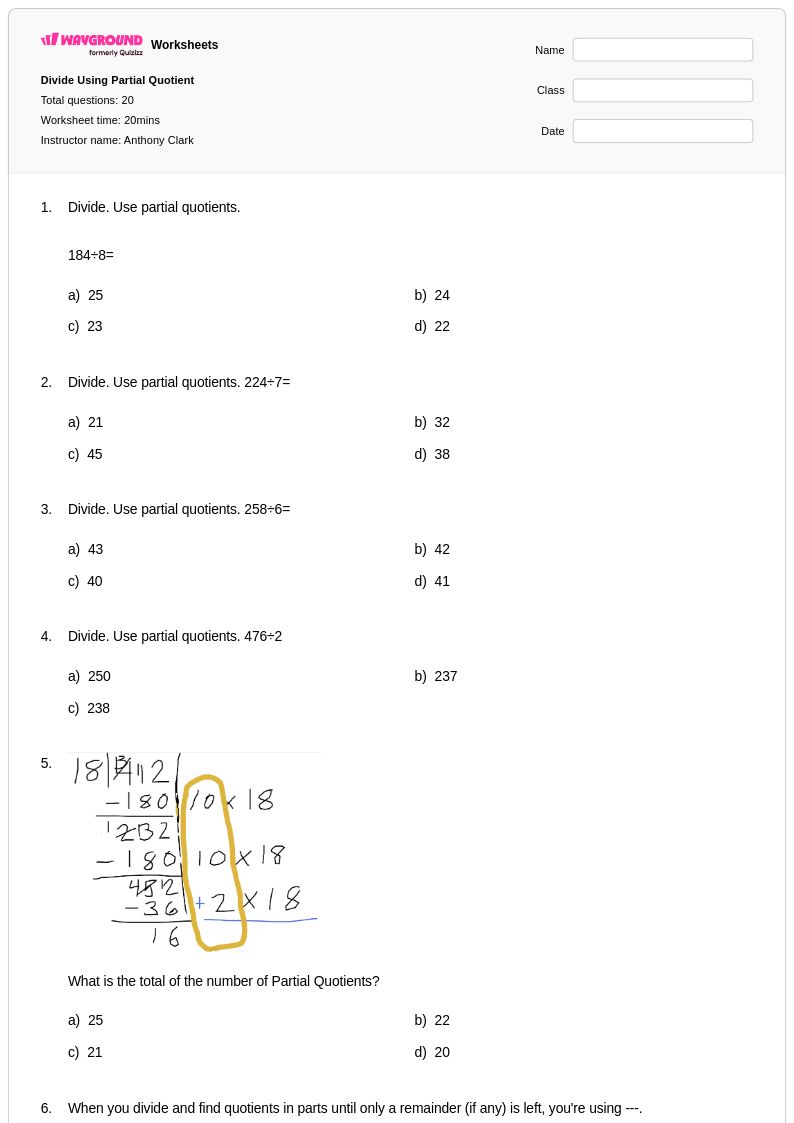
20 Q
5th - Uni
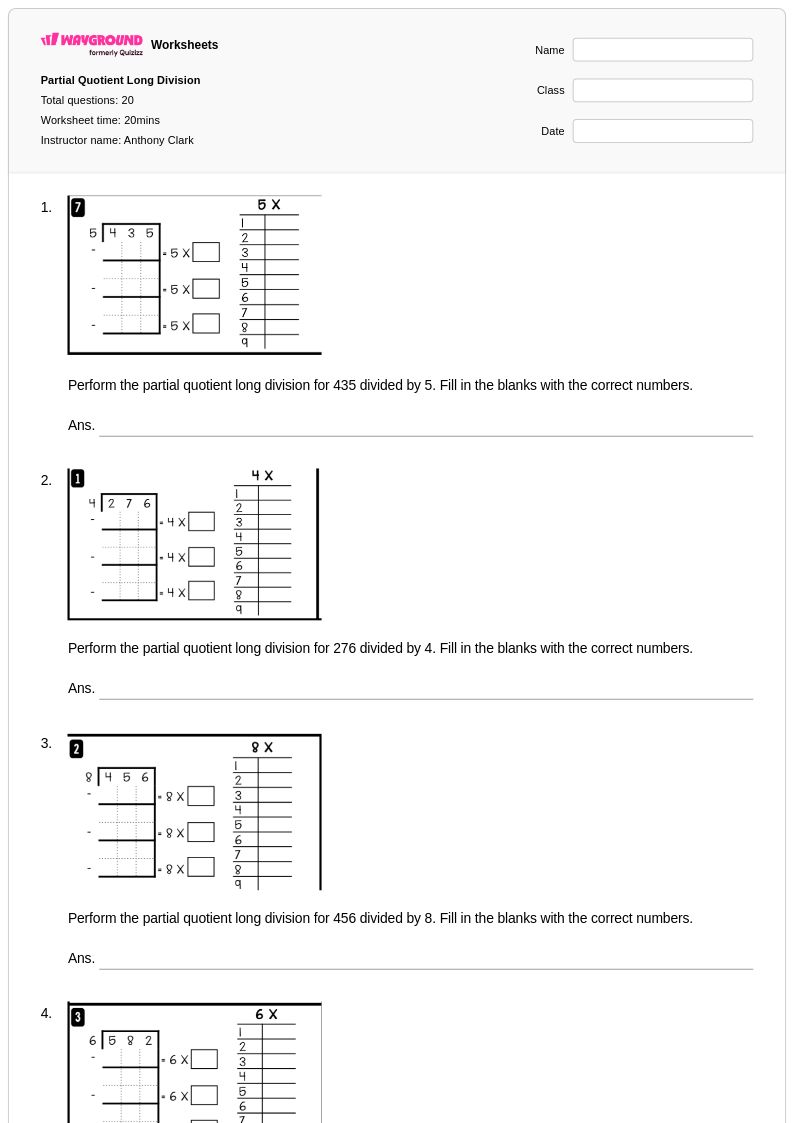
20 Q
5th - Uni
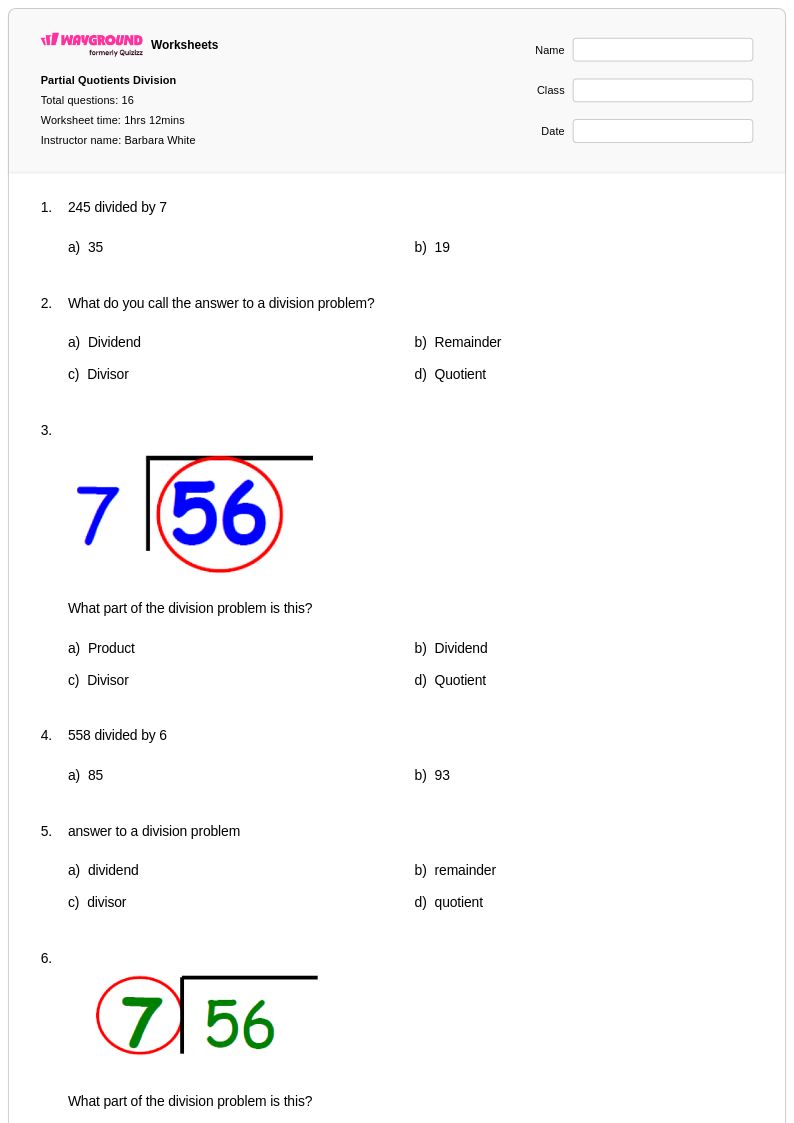
16 Q
6th
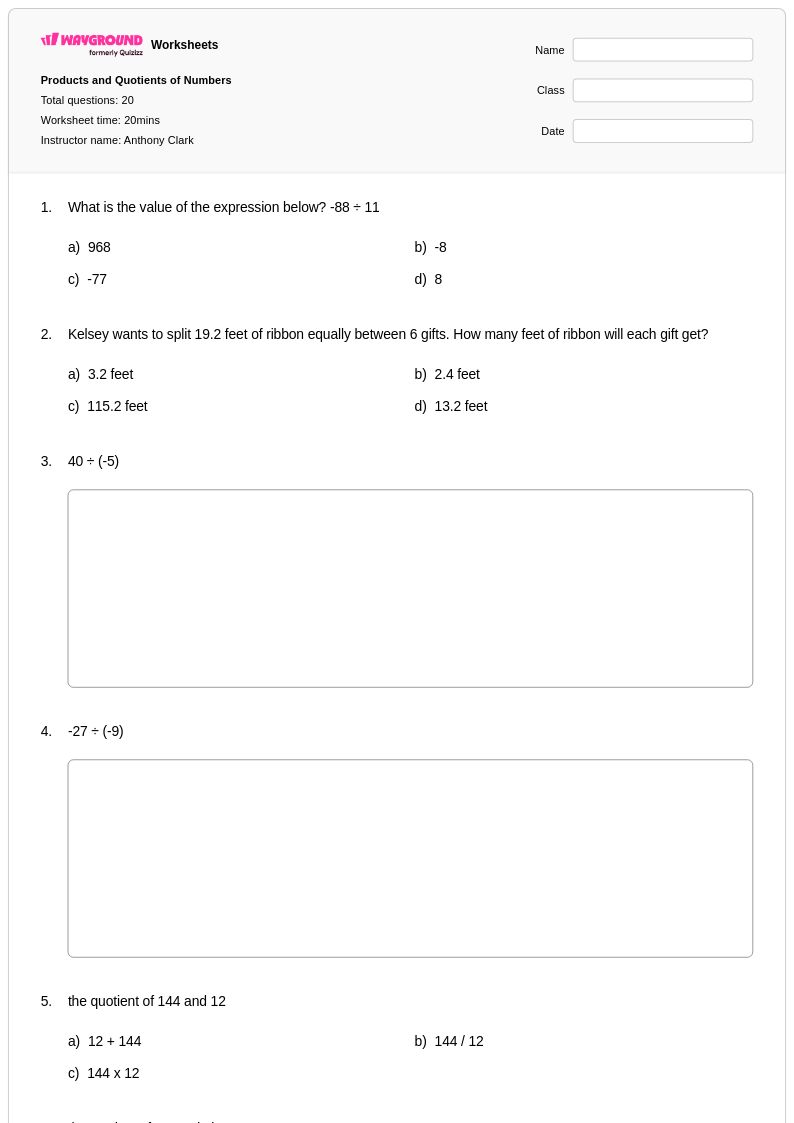
20 Q
5th - Uni
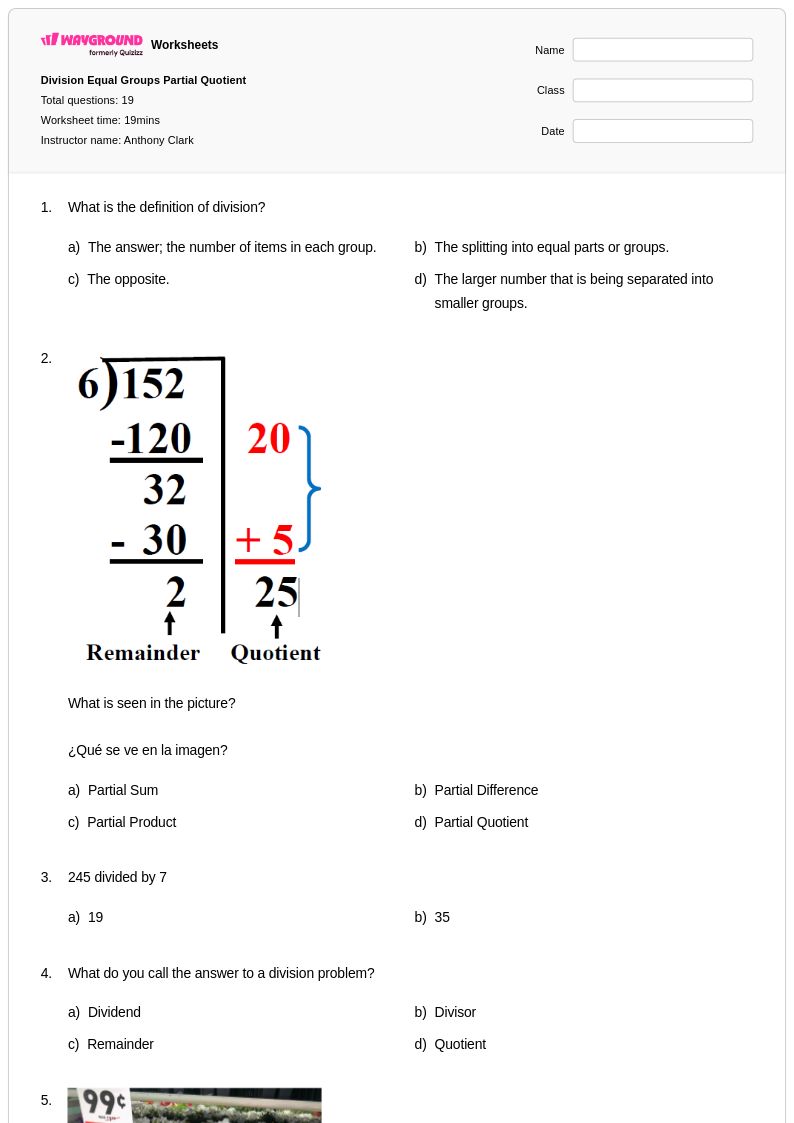
19 Q
4th - Uni
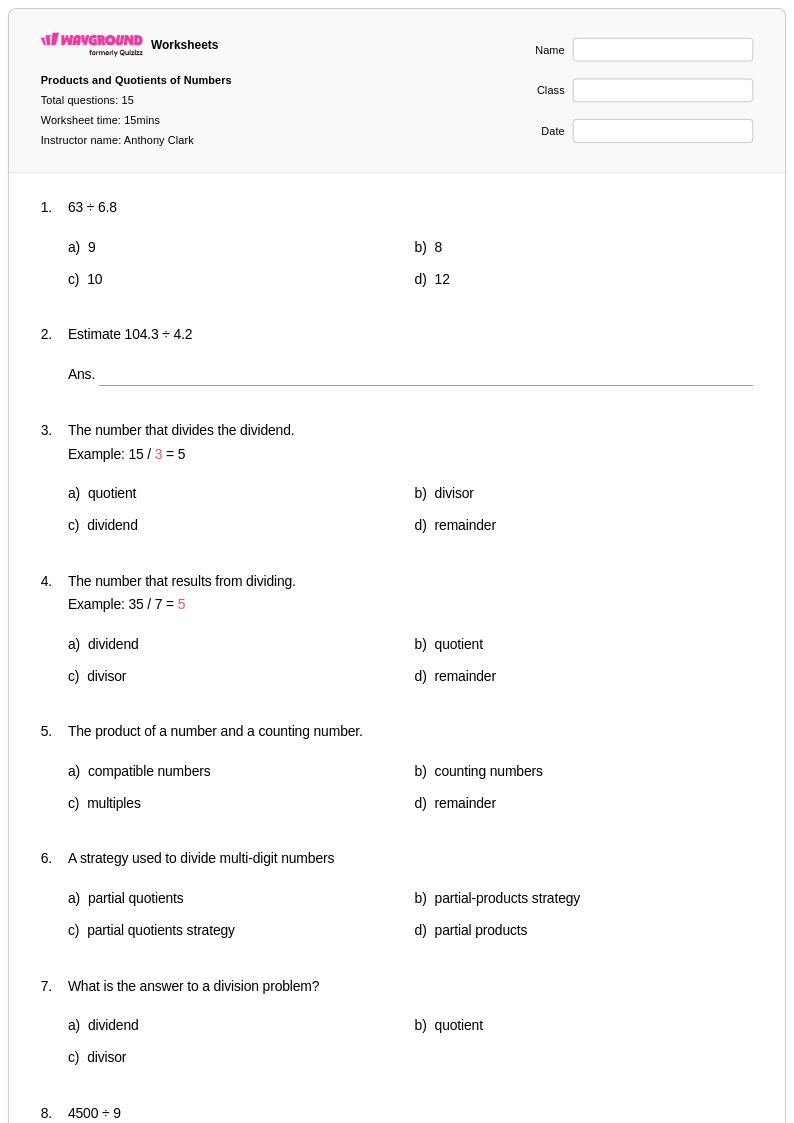
15 Q
5th - Uni
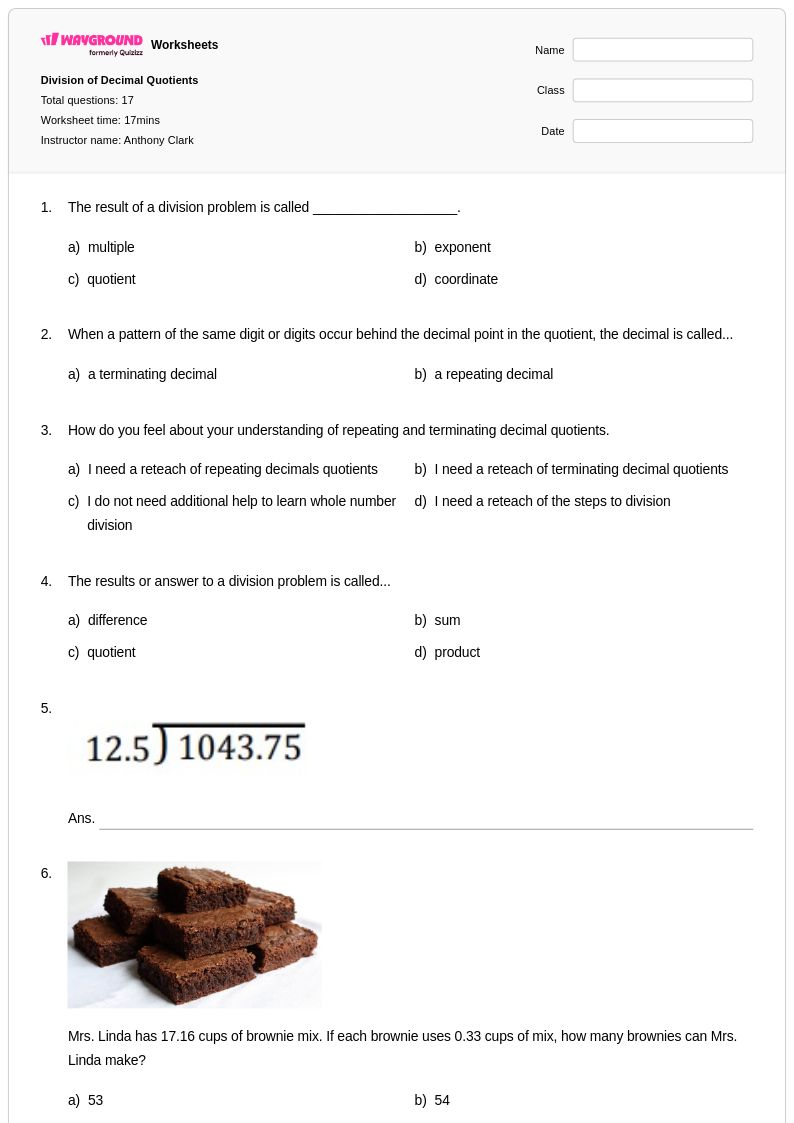
17 Q
6th - Uni
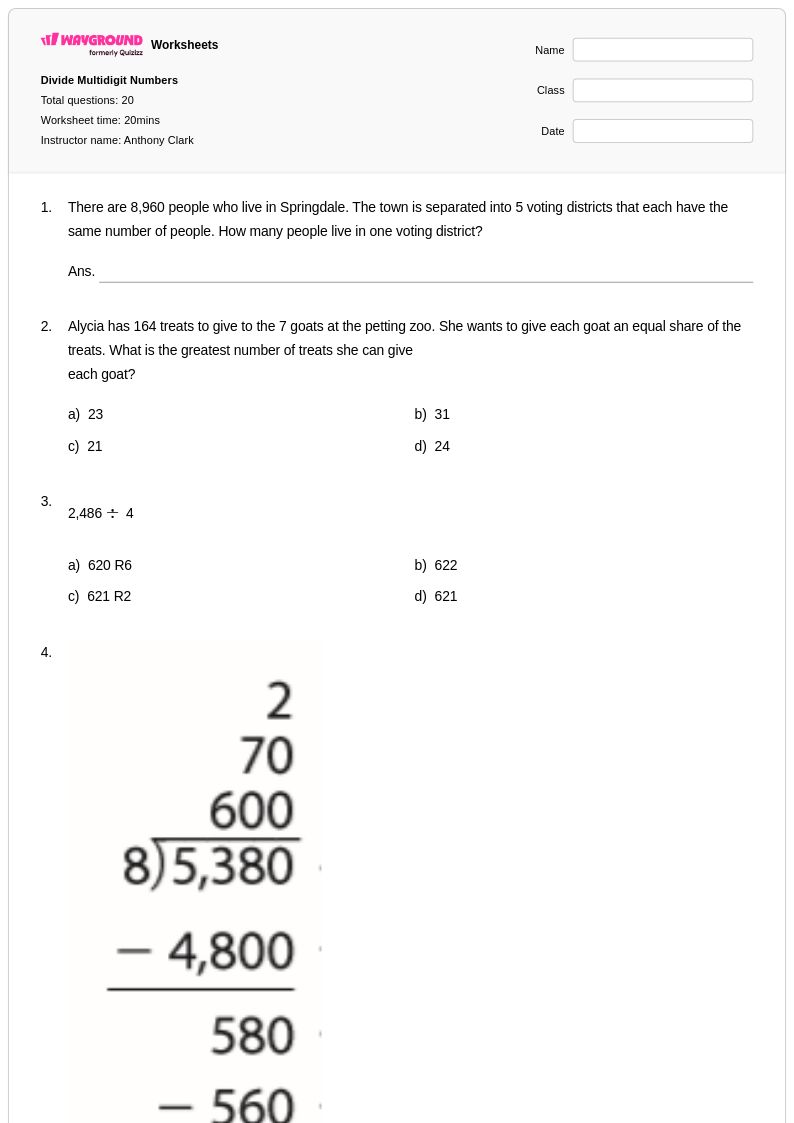
20 Q
4th - Uni
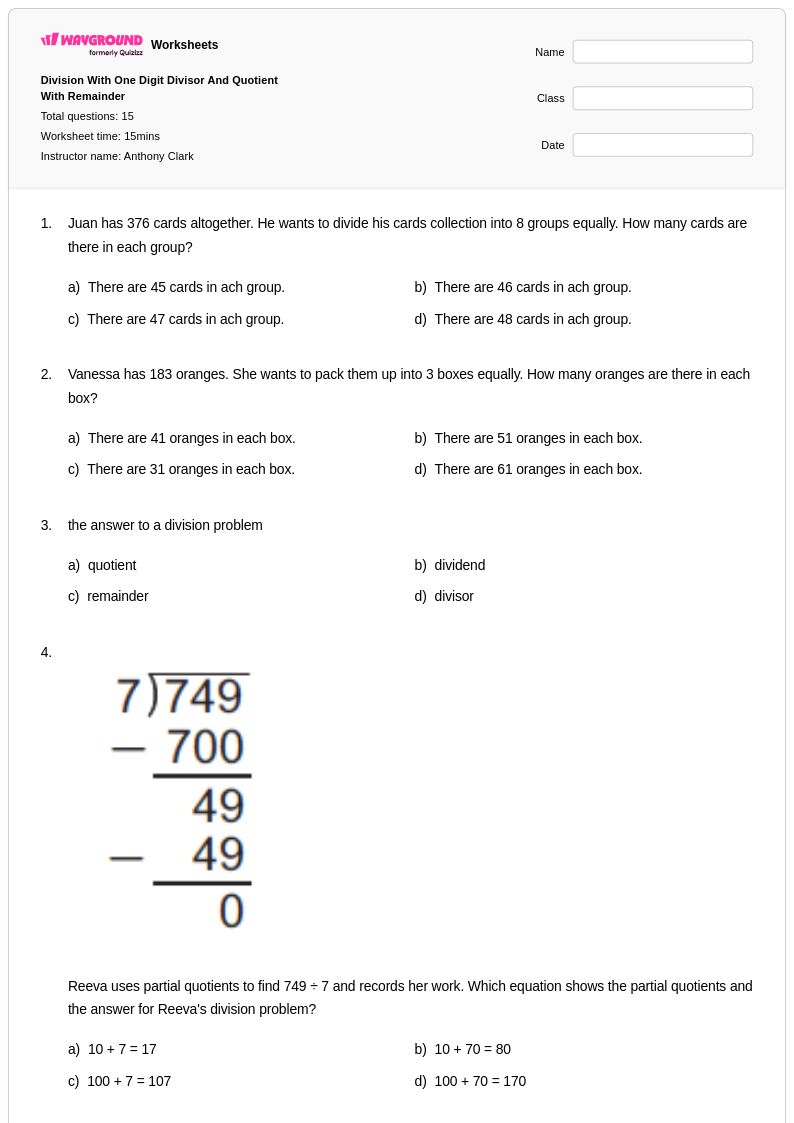
15 Q
4th - Uni
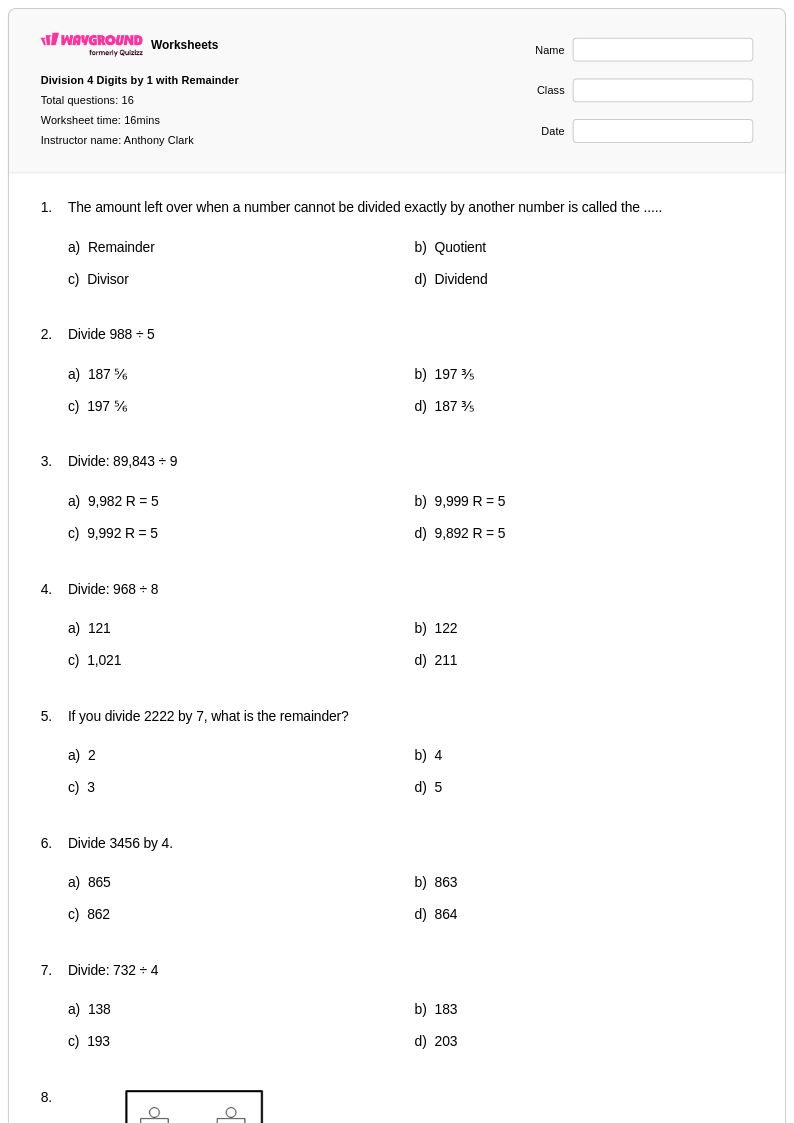
16 Q
5th - Uni
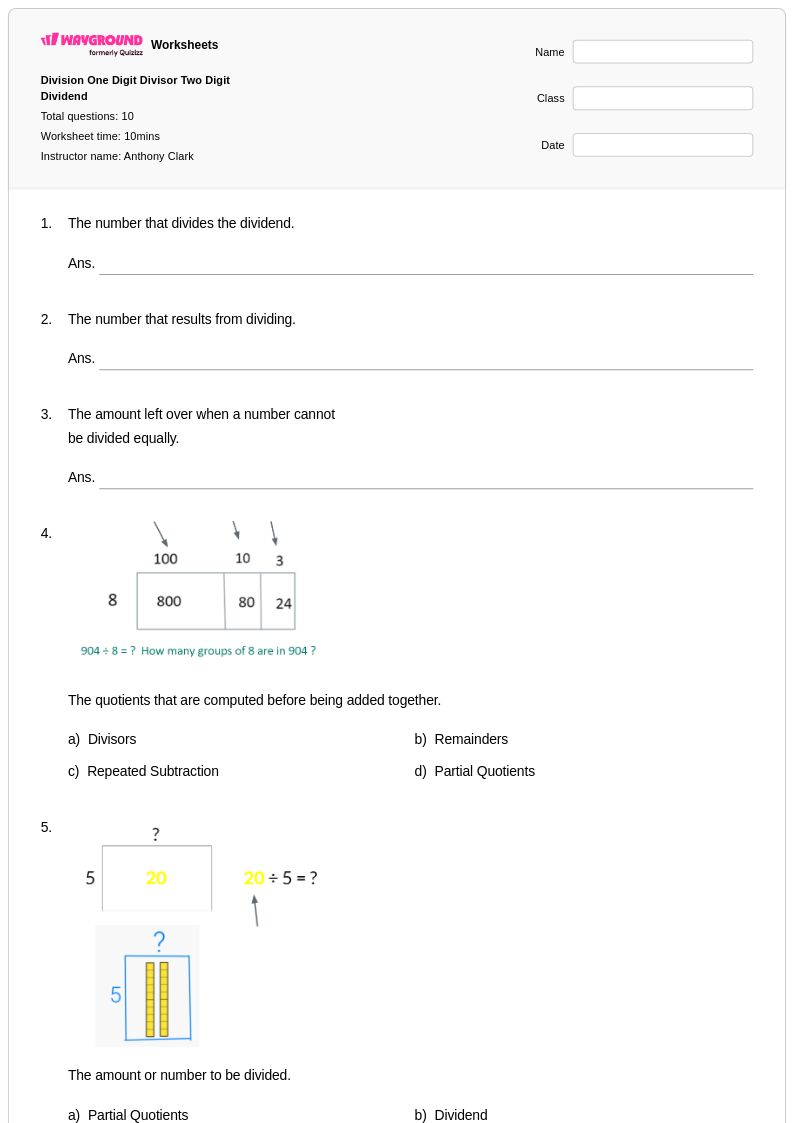
10 Q
5th - Uni
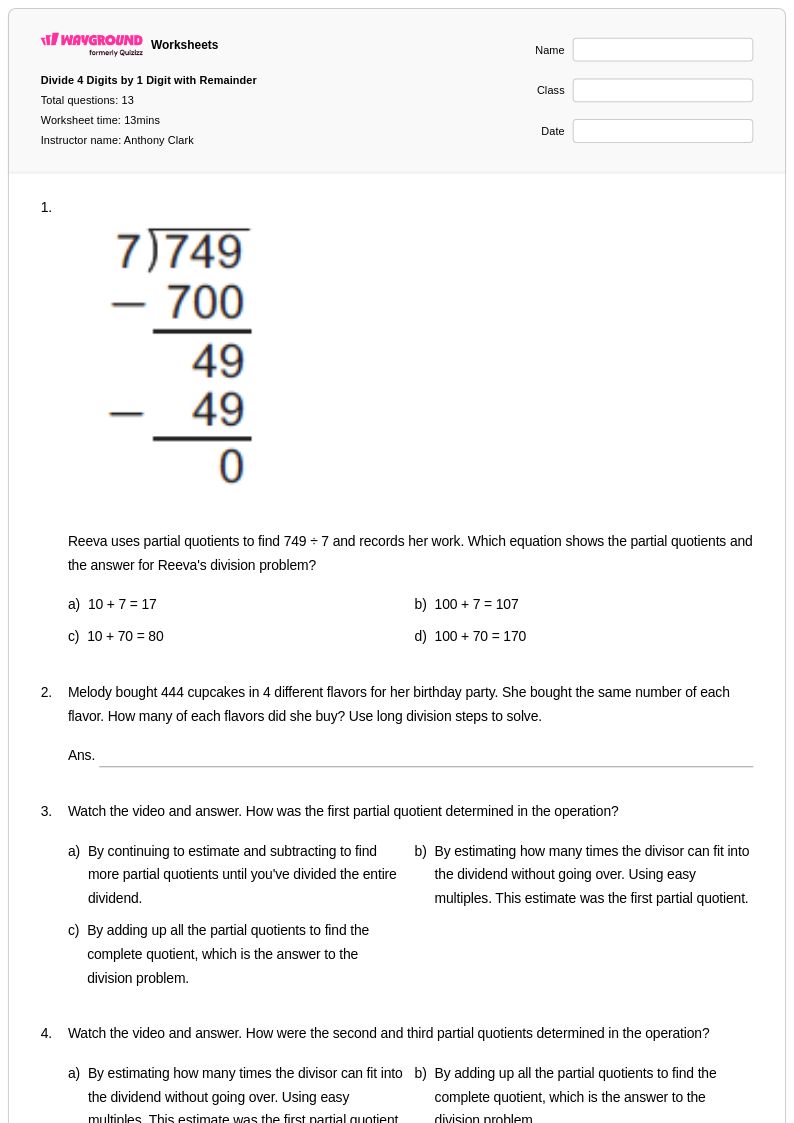
13 Q
5th - Uni
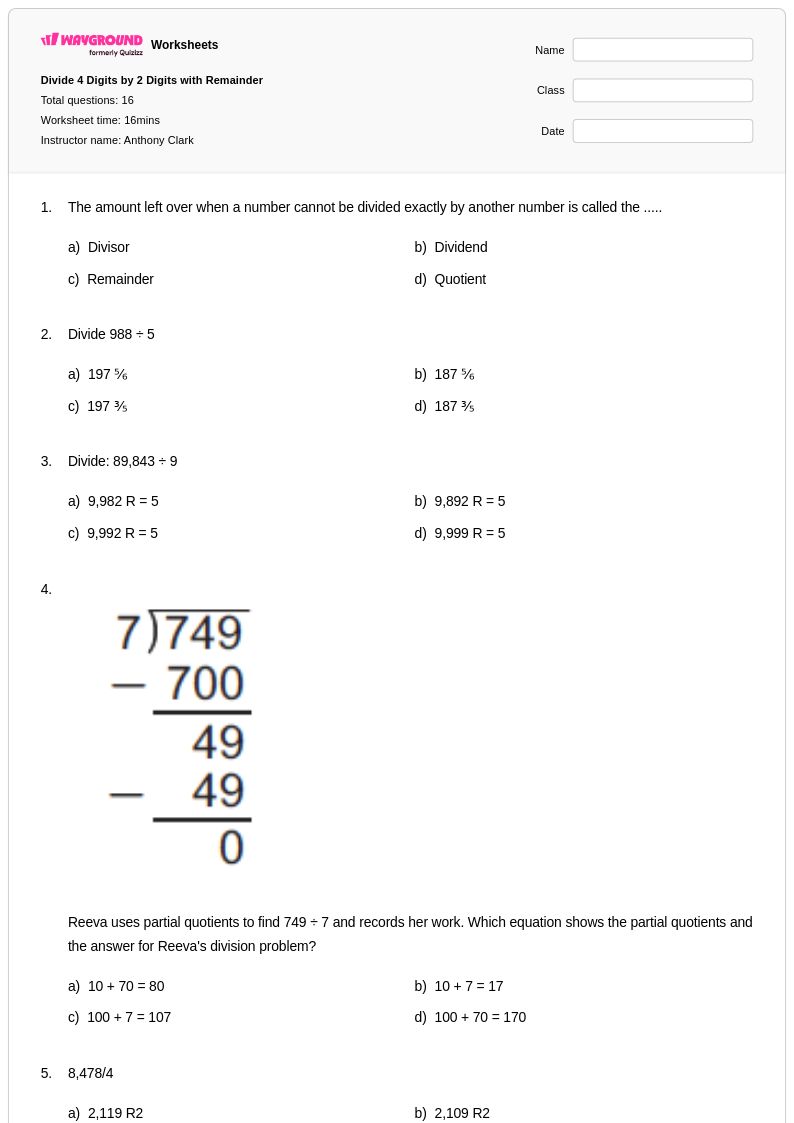
16 Q
5th - Uni
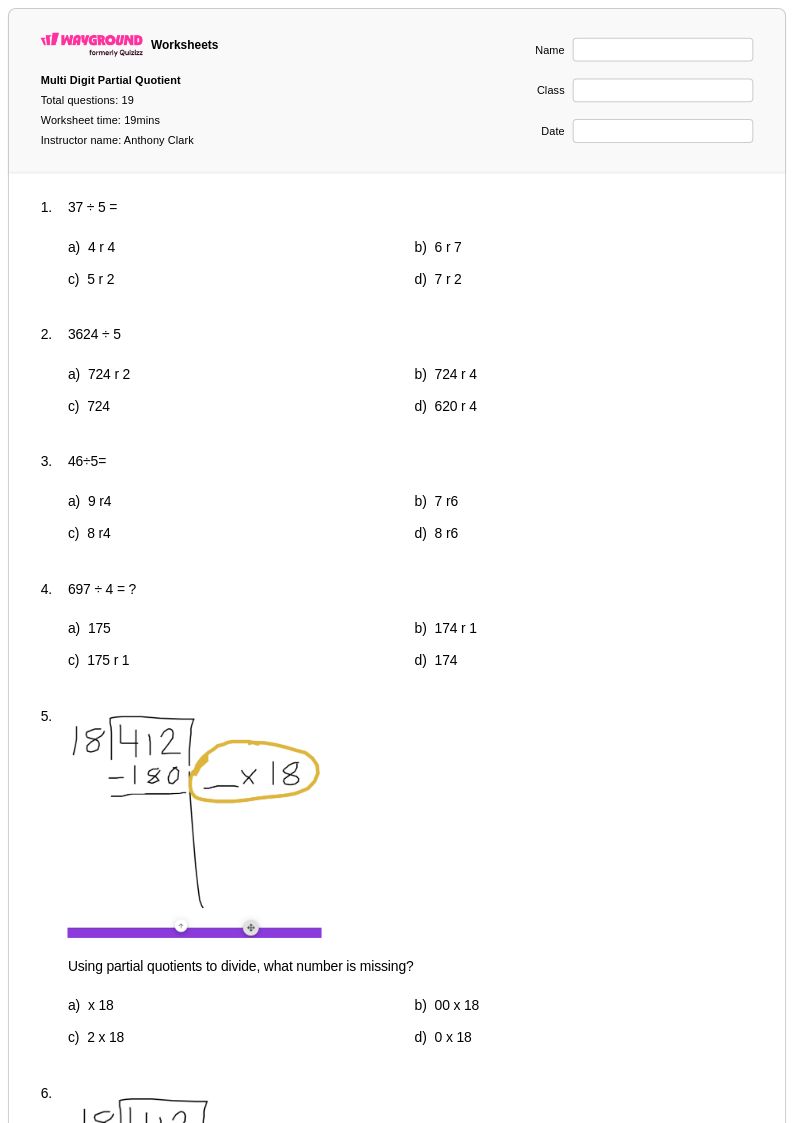
19 Q
5th - Uni
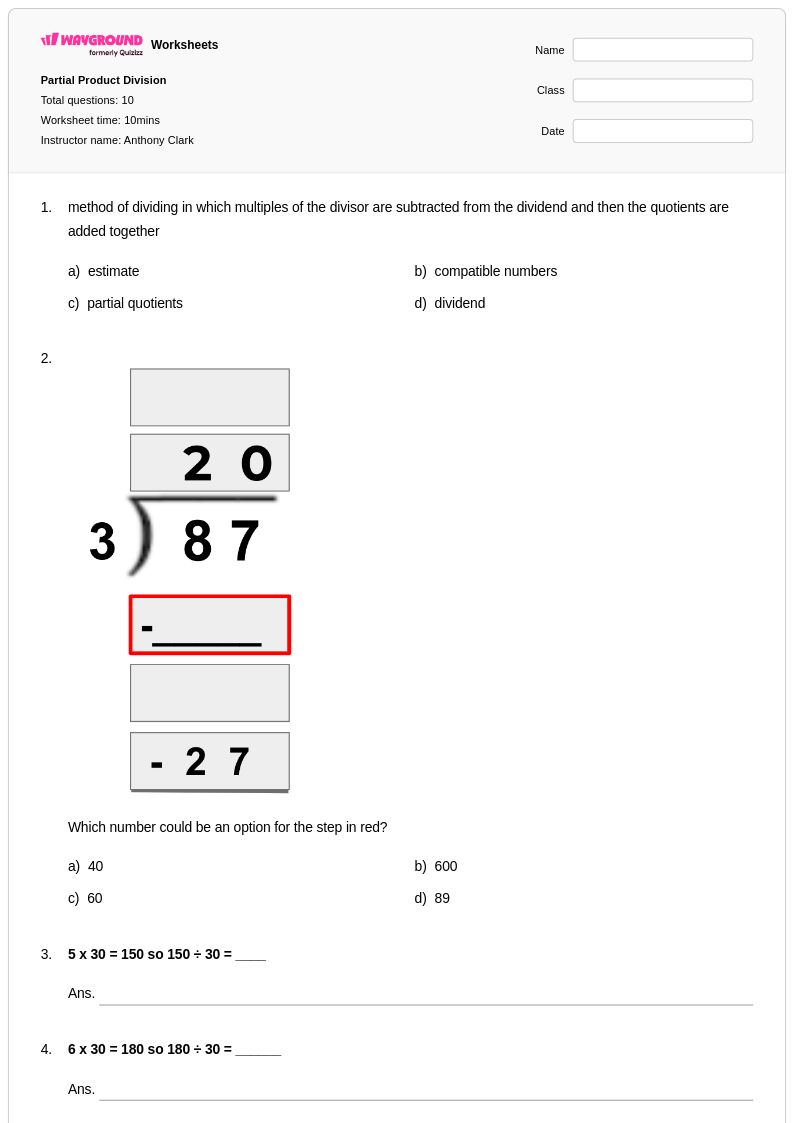
10 Q
4th - Uni
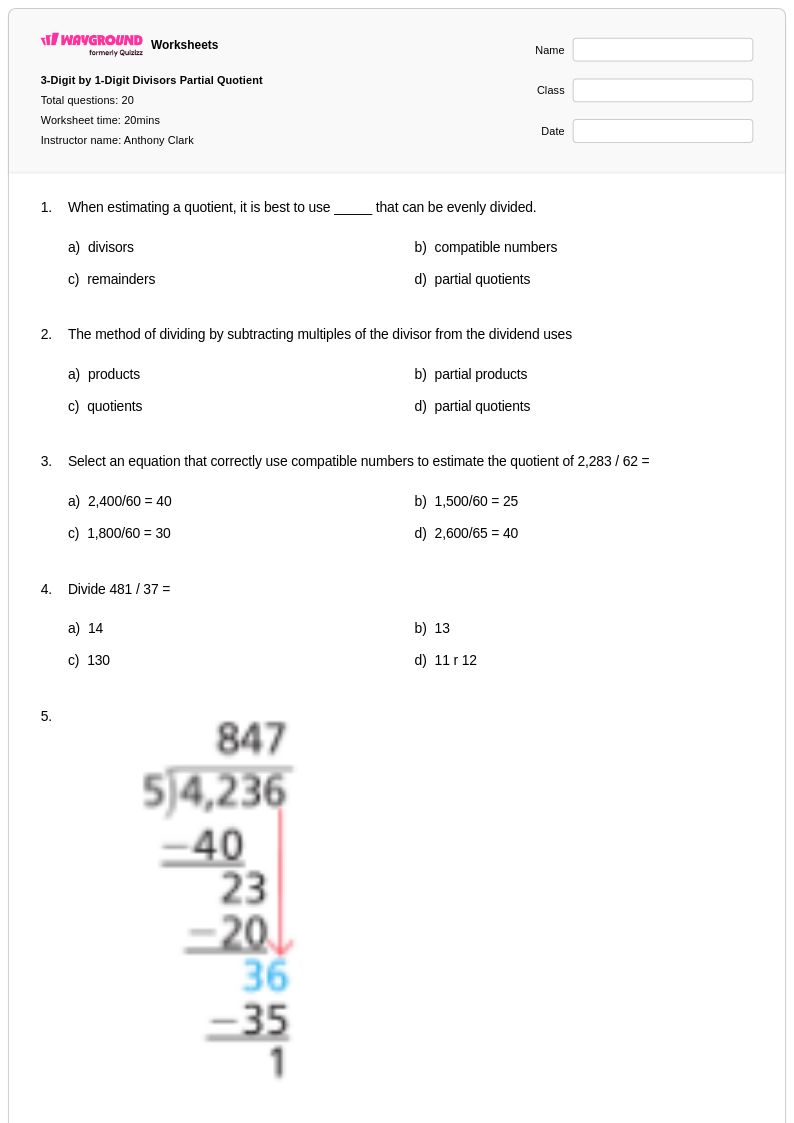
20 Q
5th - Uni
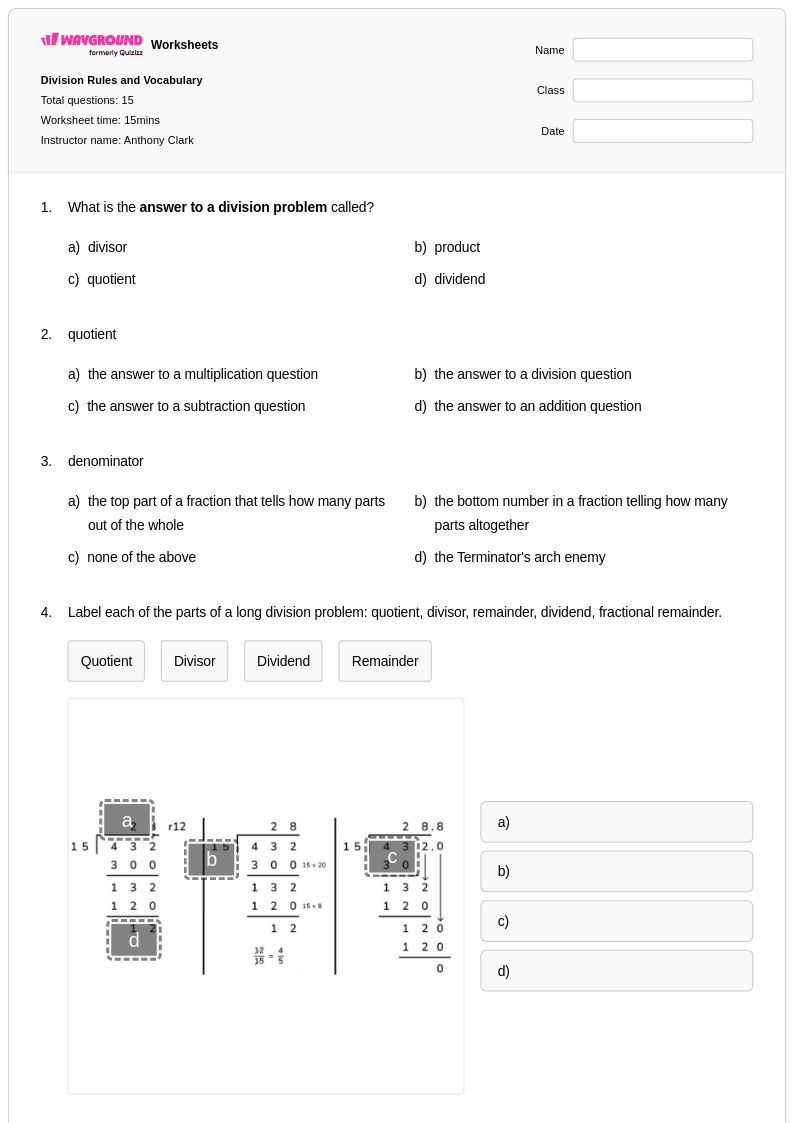
15 Q
6th - Uni
Explore Other Subject Worksheets for class 6
Explore printable Partial Quotients worksheets for Class 6
Partial quotients worksheets for Class 6 mathematics provide students with a strategic approach to division that breaks down complex problems into manageable steps. These comprehensive practice materials available through Wayground help sixth-grade learners master the partial quotients method by using friendly numbers and multiples to estimate quotients systematically. The worksheets strengthen essential division skills including number sense, estimation strategies, and multi-digit computation while building confidence in mathematical reasoning. Students work through carefully scaffolded practice problems that demonstrate how to decompose dividends using known multiplication facts, with each printable resource including detailed answer keys to support independent learning and self-assessment. These free educational materials offer systematic skill practice that reinforces the conceptual understanding behind division algorithms while preparing students for more advanced mathematical concepts.
Wayground's extensive collection of teacher-created partial quotients resources empowers educators with millions of expertly designed worksheets that support diverse learning needs in Class 6 mathematics classrooms. The platform's robust search and filtering capabilities allow teachers to quickly locate materials aligned with specific curriculum standards and learning objectives, while built-in differentiation tools enable seamless customization for varying skill levels within the same classroom. These flexible resources are available in both printable PDF format and interactive digital versions, making them ideal for traditional instruction, homework assignments, remediation sessions, and enrichment activities. Teachers can efficiently plan comprehensive division units using these research-based materials, which provide multiple entry points for student learning and support both conceptual development and procedural fluency in mathematical problem-solving strategies.
FAQs
Why is partial quotients still relevant in 6th grade?
How can I use partial quotients to teach division with decimals?
What skills does this 6th grade partial quotients worksheet reinforce?
What's a sign that a 6th grader has mastered the partial quotients concept?
How can I use this worksheet for review or practice?
How does this worksheet align with 6th grade math standards?