
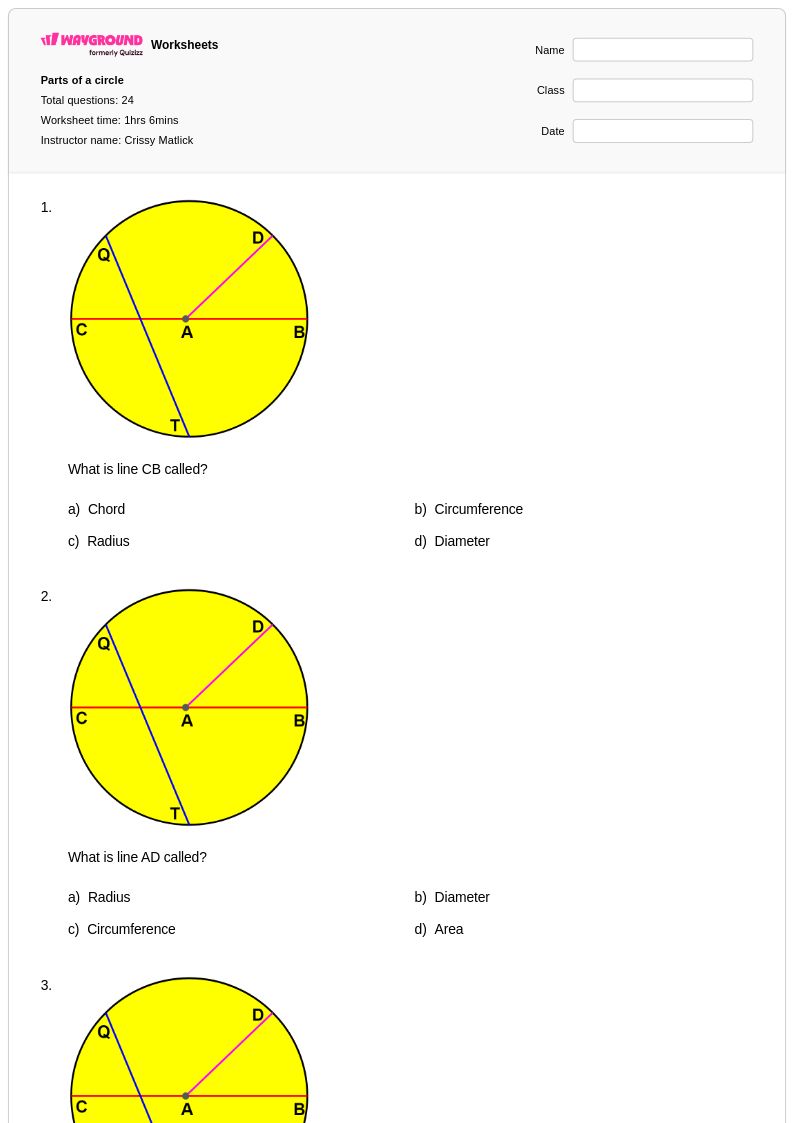
24 Q
10th
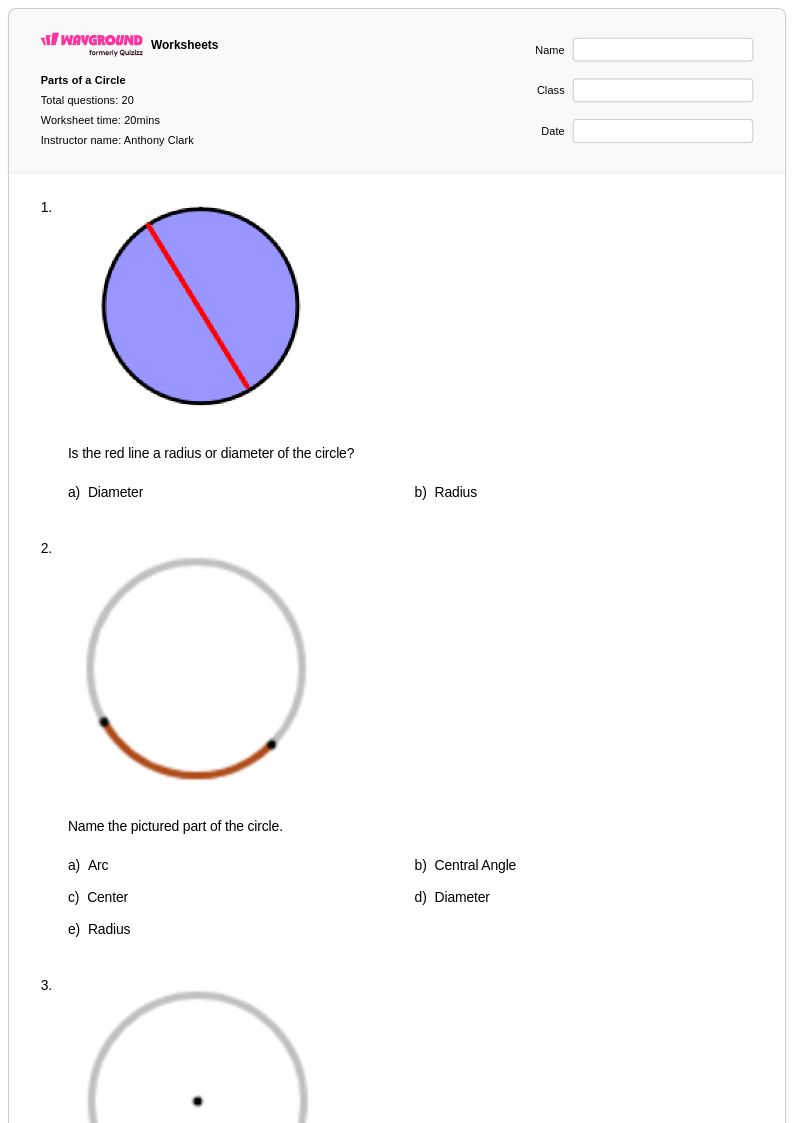
20 Q
7th - Uni
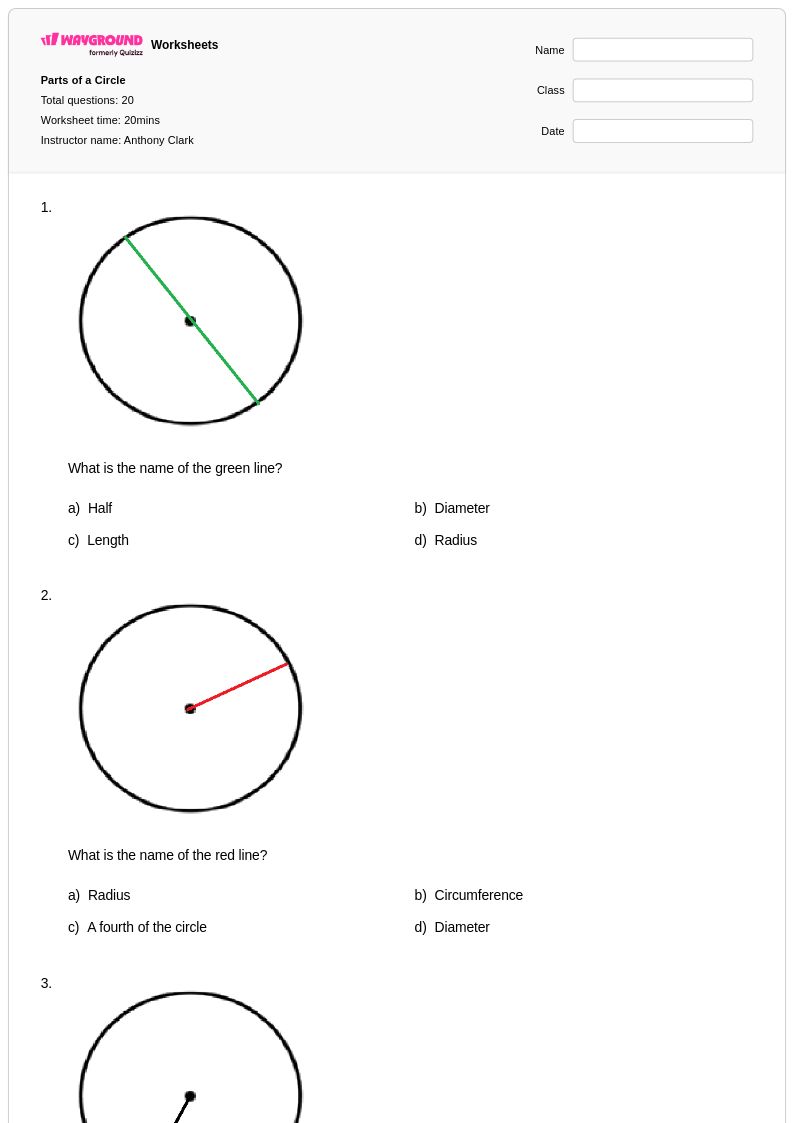
20 Q
7th - Uni
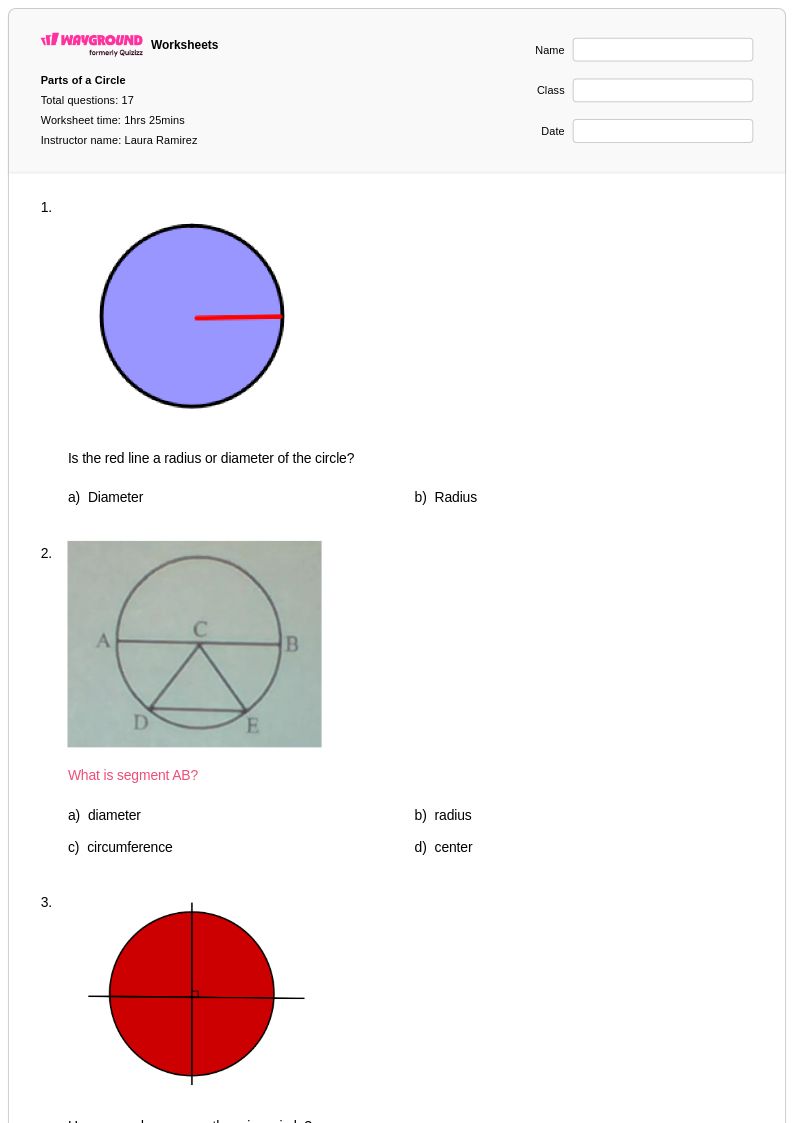
17 Q
10th
20 Q
7th - Uni
20 Q
7th - Uni
20 Q
7th - Uni
20 Q
7th - Uni
20 Q
7th - Uni
20 Q
7th - Uni
20 Q
7th - Uni
20 Q
7th - Uni
20 Q
9th - 12th
12 Q
7th - Uni
20 Q
9th - Uni
17 Q
9th - 12th
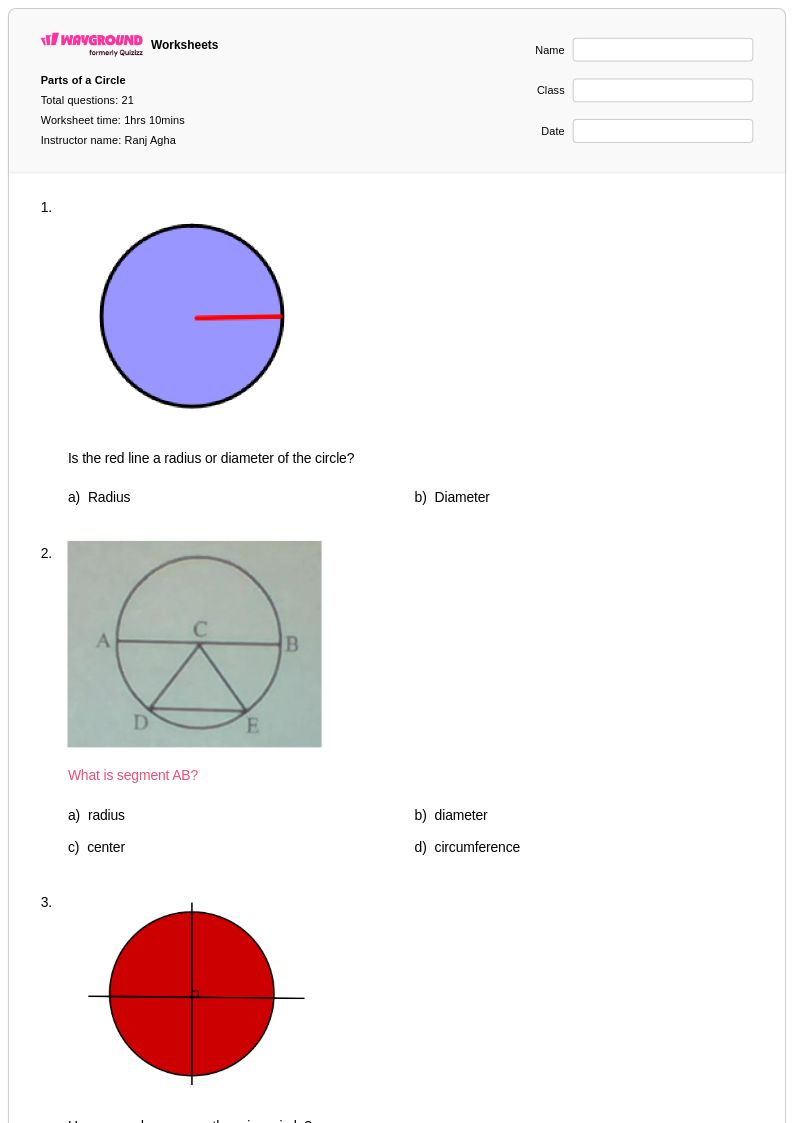
21 Q
10th
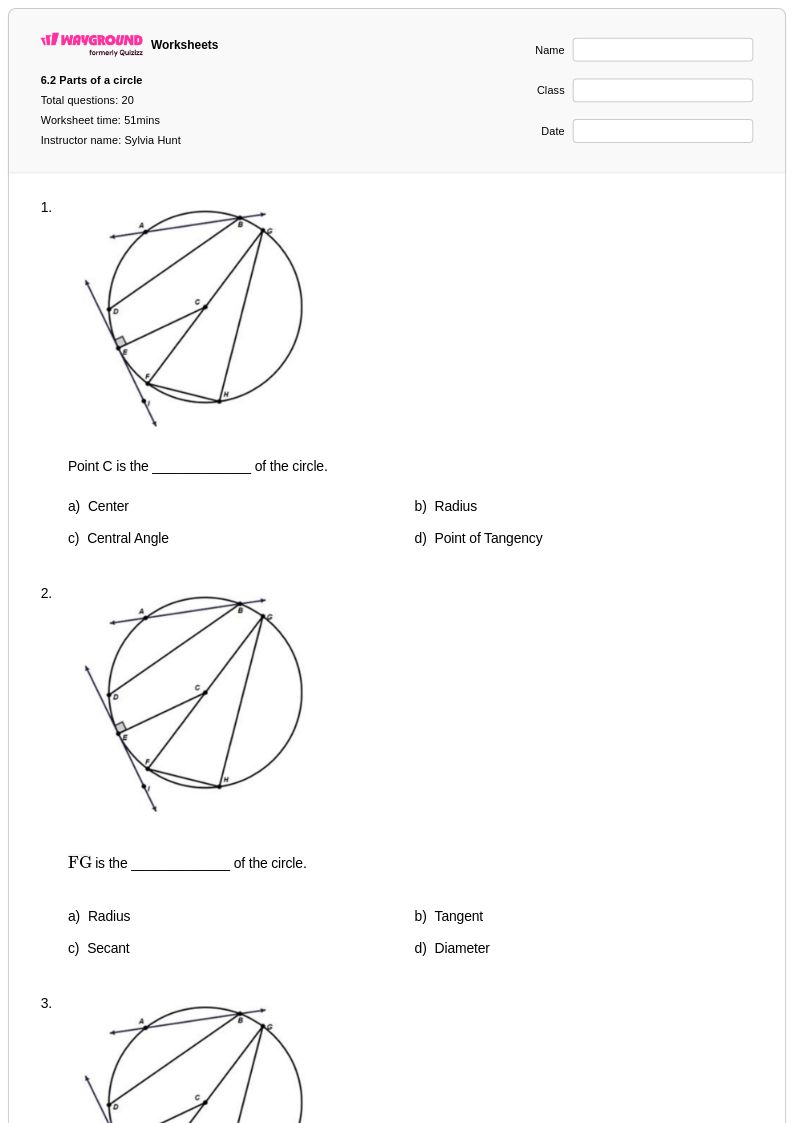
20 Q
9th - 12th
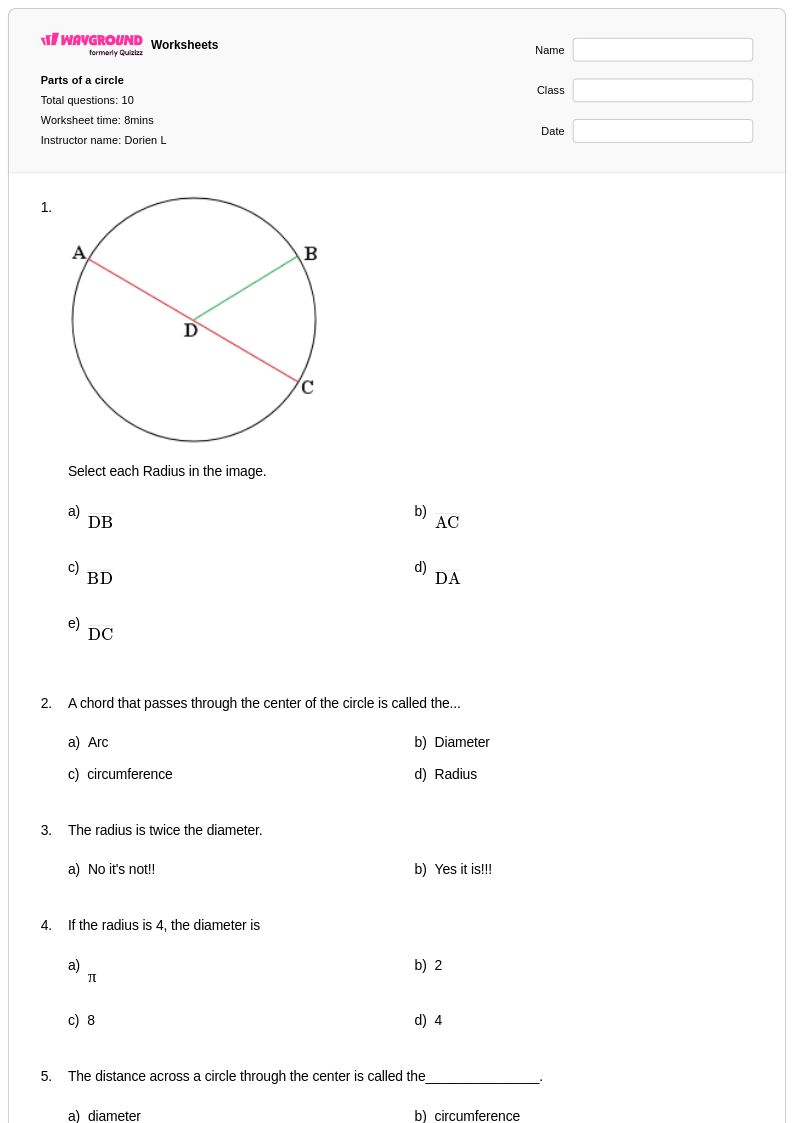
10 Q
10th
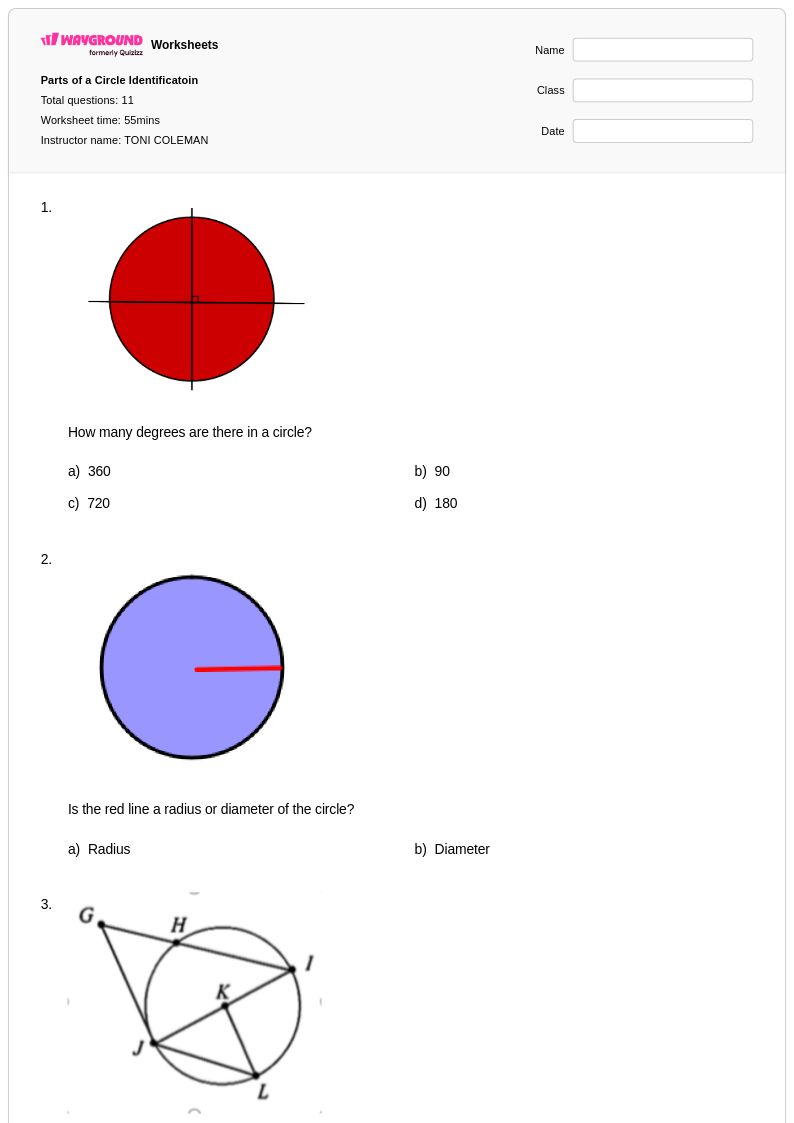
11 Q
9th - 12th
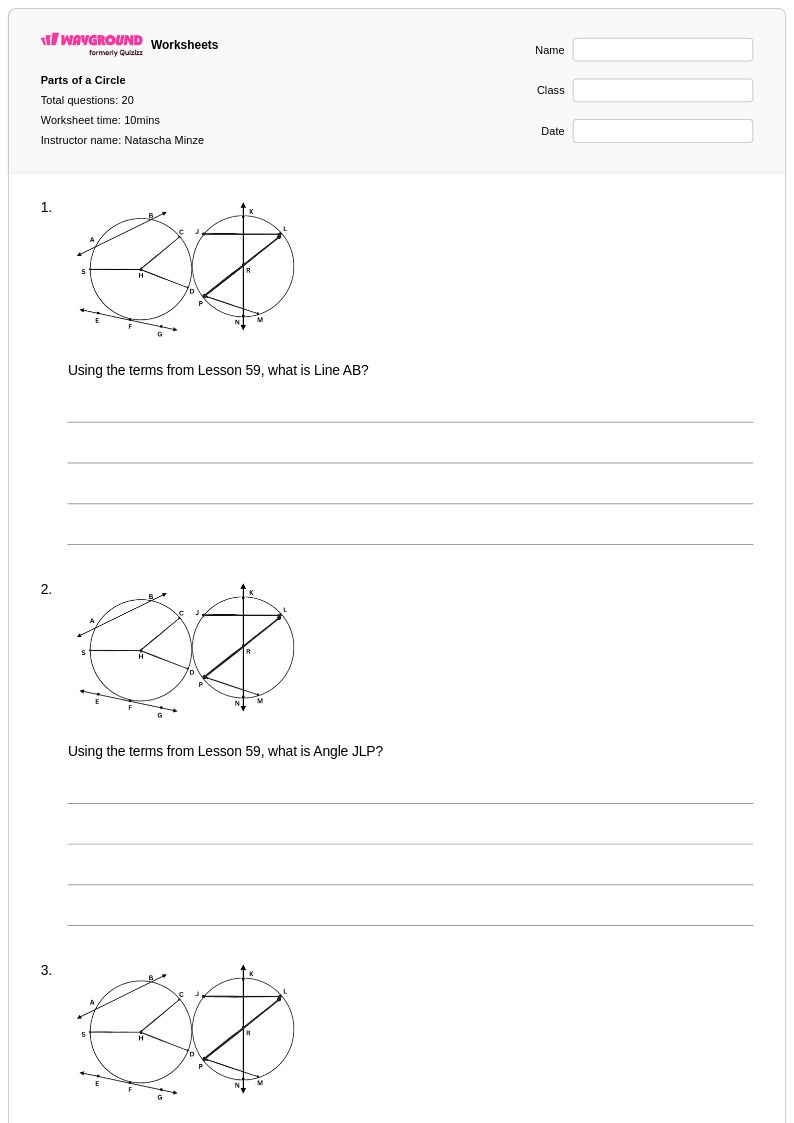
20 Q
9th - Uni
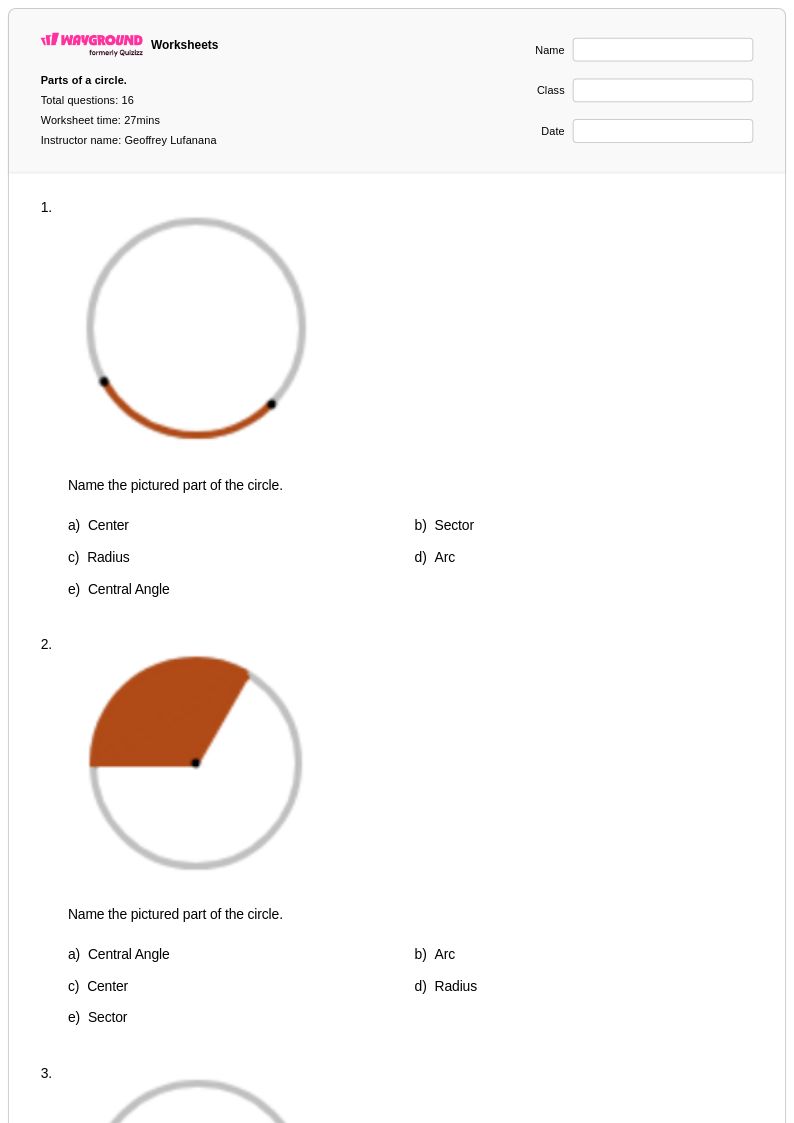
16 Q
10th
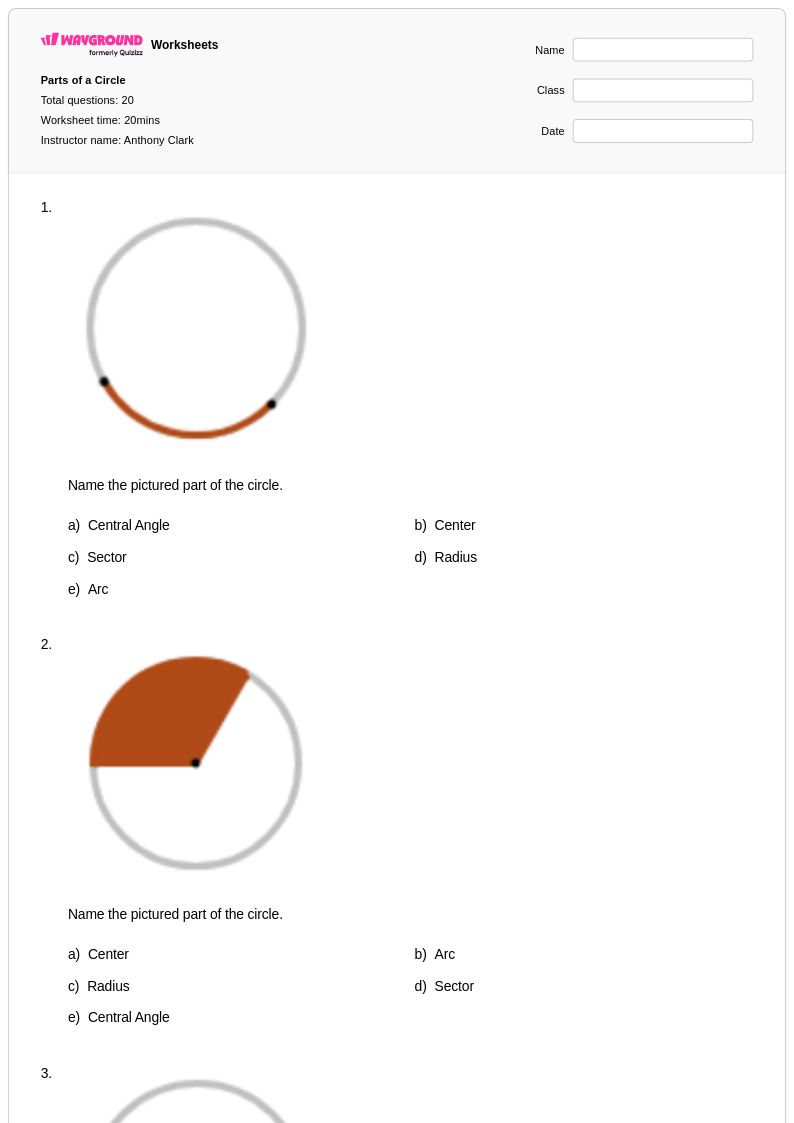
20 Q
7th - Uni
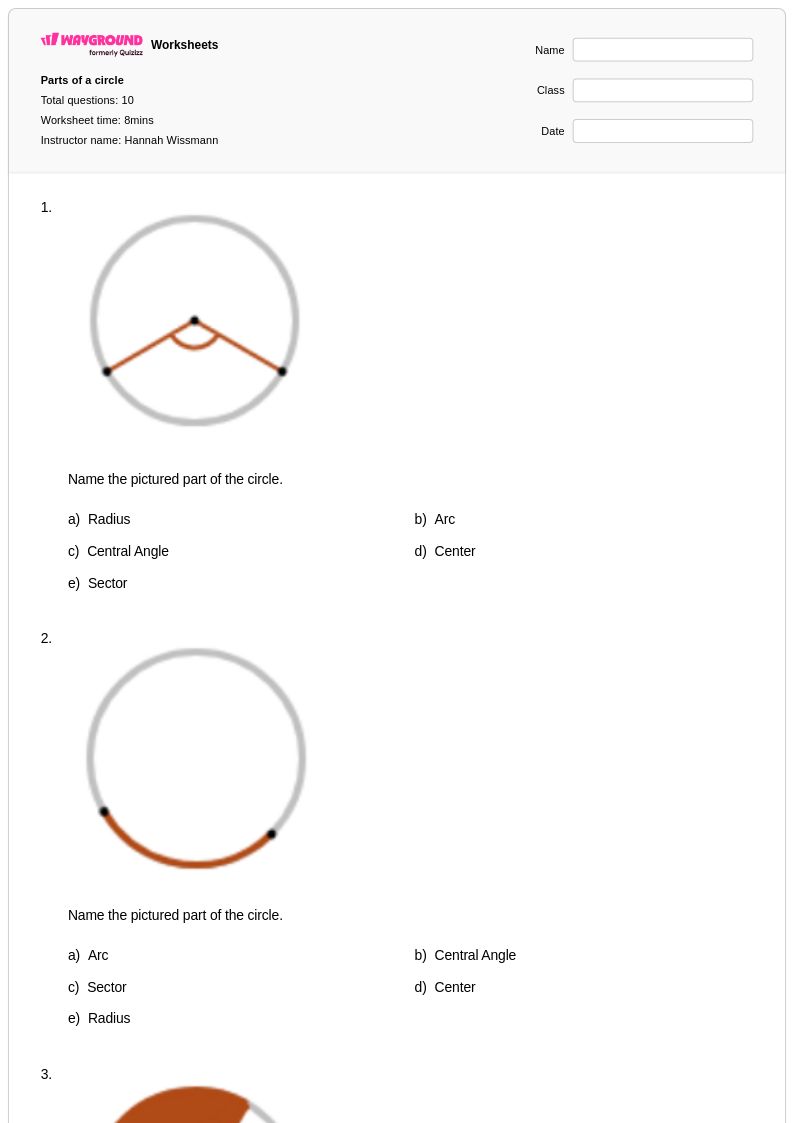
10 Q
9th - 12th
Explore Parts of a Circle Worksheets by Grades
Explore Other Subject Worksheets for class 10
Explore printable Parts of a Circle worksheets for Class 10
Parts of a Circle worksheets for Class 10 students available through Wayground (formerly Quizizz) provide comprehensive practice with essential geometric concepts including radius, diameter, chord, secant, tangent, arc, sector, and central angles. These expertly designed resources strengthen students' understanding of circular geometry fundamentals while developing their ability to identify, measure, and calculate various circle components. The practice problems systematically guide learners through recognizing parts of a circle in different contexts, from basic identification exercises to complex applications involving angle relationships and arc measurements. Each worksheet includes a detailed answer key to support independent learning and self-assessment, with free printables available in convenient pdf format for classroom distribution and homework assignments.
Wayground (formerly Quizizz) empowers mathematics educators with millions of teacher-created resources specifically focused on Class 10 geometry concepts, featuring robust search and filtering capabilities that allow quick access to parts of a circle materials aligned with curriculum standards. The platform's differentiation tools enable teachers to customize worksheets based on individual student needs, whether for remediation of foundational circle concepts or enrichment activities involving advanced geometric proofs and theorems. These resources are available in both printable and digital formats, including downloadable pdf versions, making lesson planning seamless while providing flexibility for in-class instruction, homework assignments, and assessment preparation. Teachers can efficiently identify gaps in student understanding of circle properties and provide targeted skill practice through carefully scaffolded problems that build mathematical confidence and geometric reasoning abilities.