Free Printable Parts of a Story Worksheets for Class 2
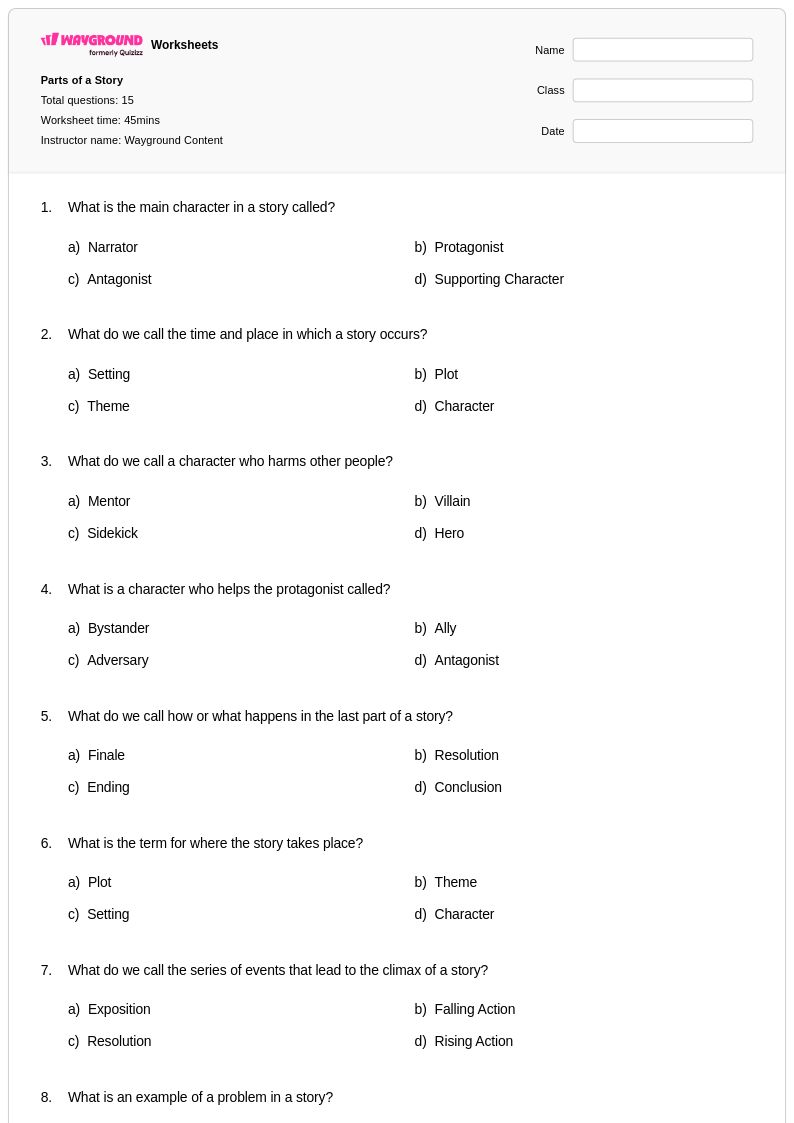
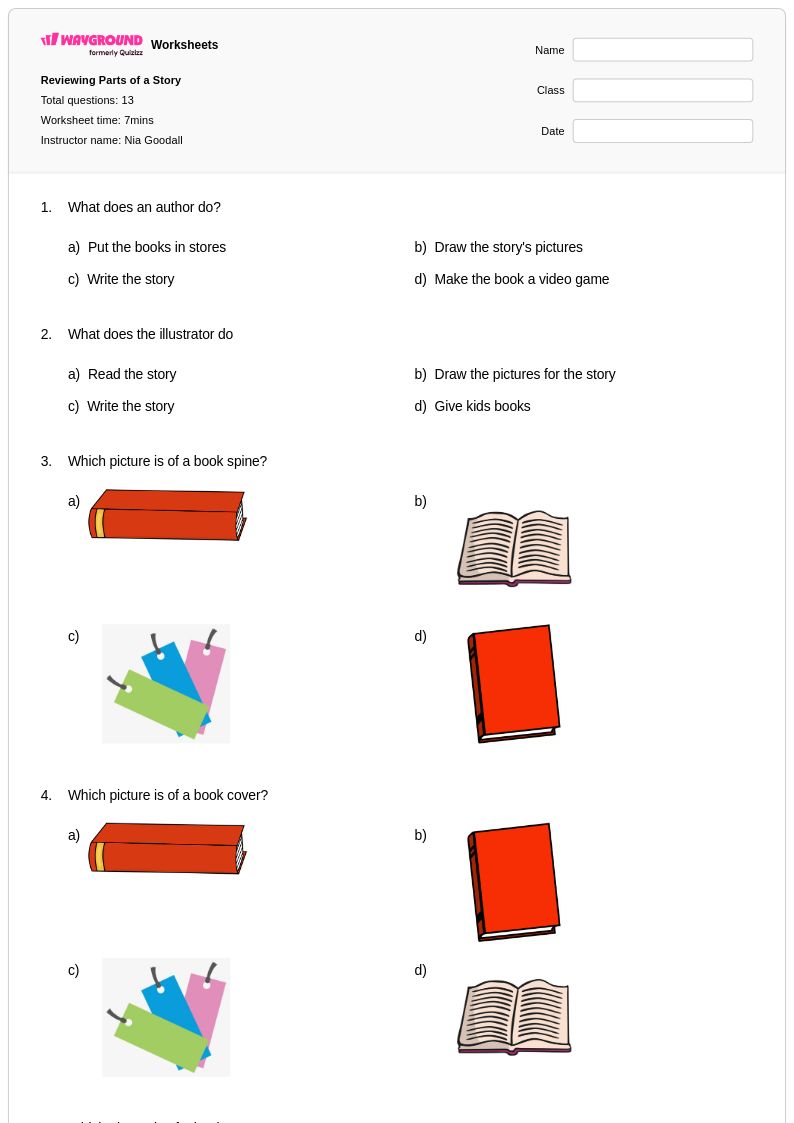
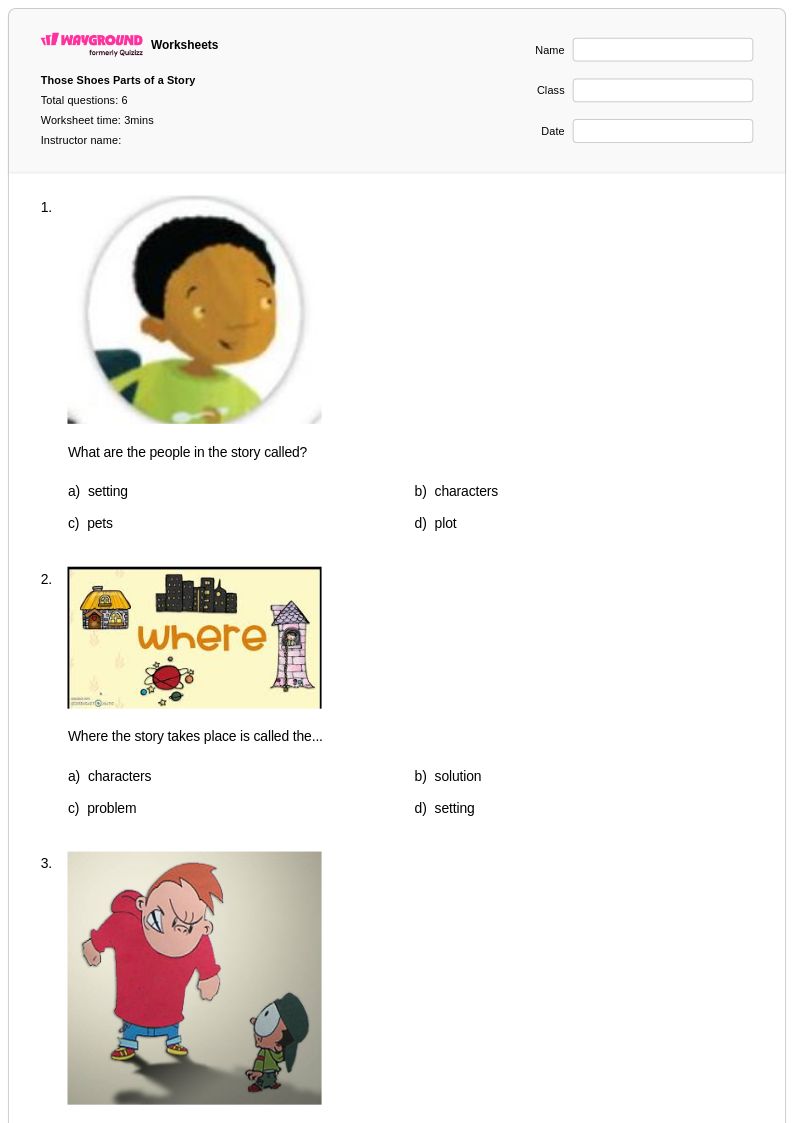
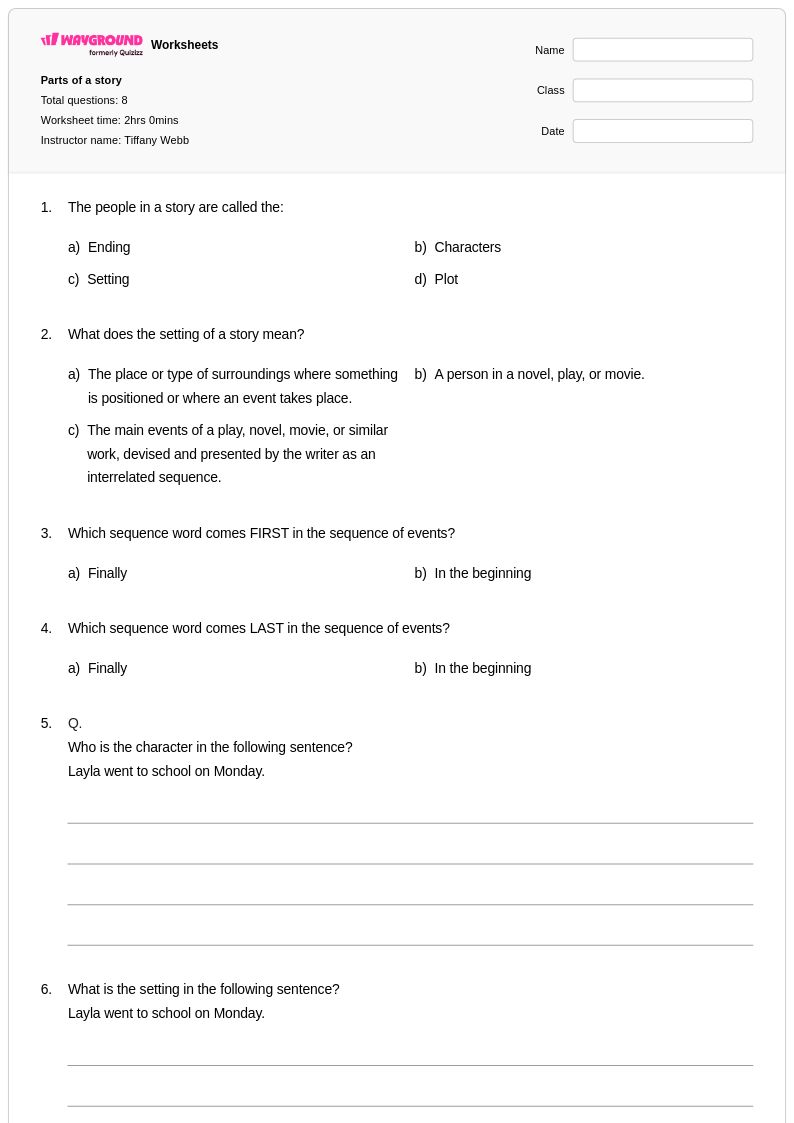
Class 2 parts of a story worksheets provide free printables and practice problems to help students identify key story elements like characters, setting, and plot through engaging reading comprehension activities with answer keys.
Explore printable Parts of a Story worksheets for Class 2
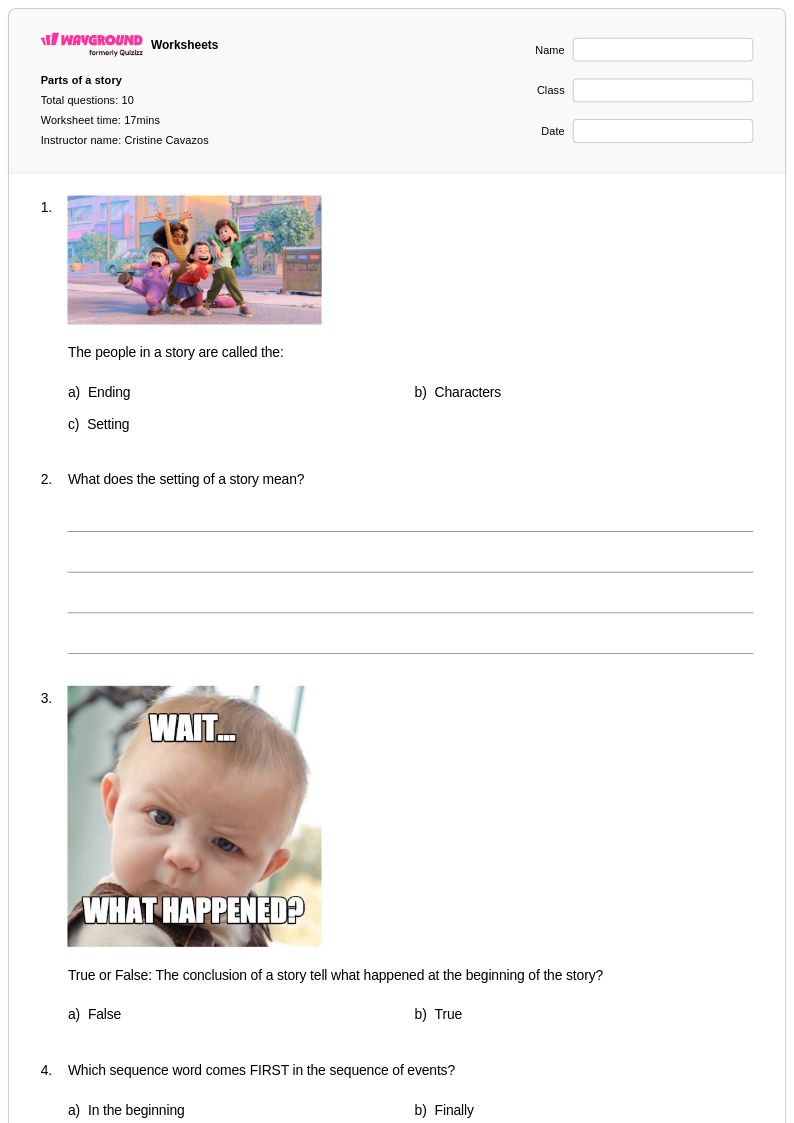
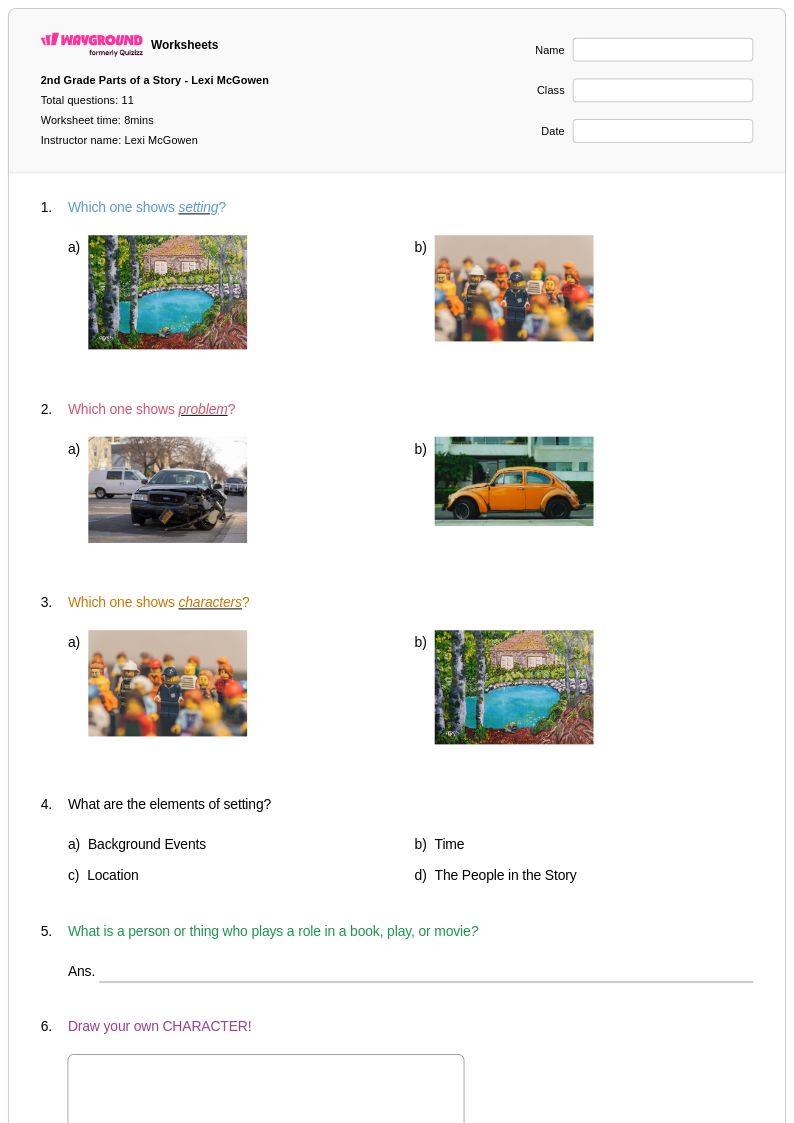
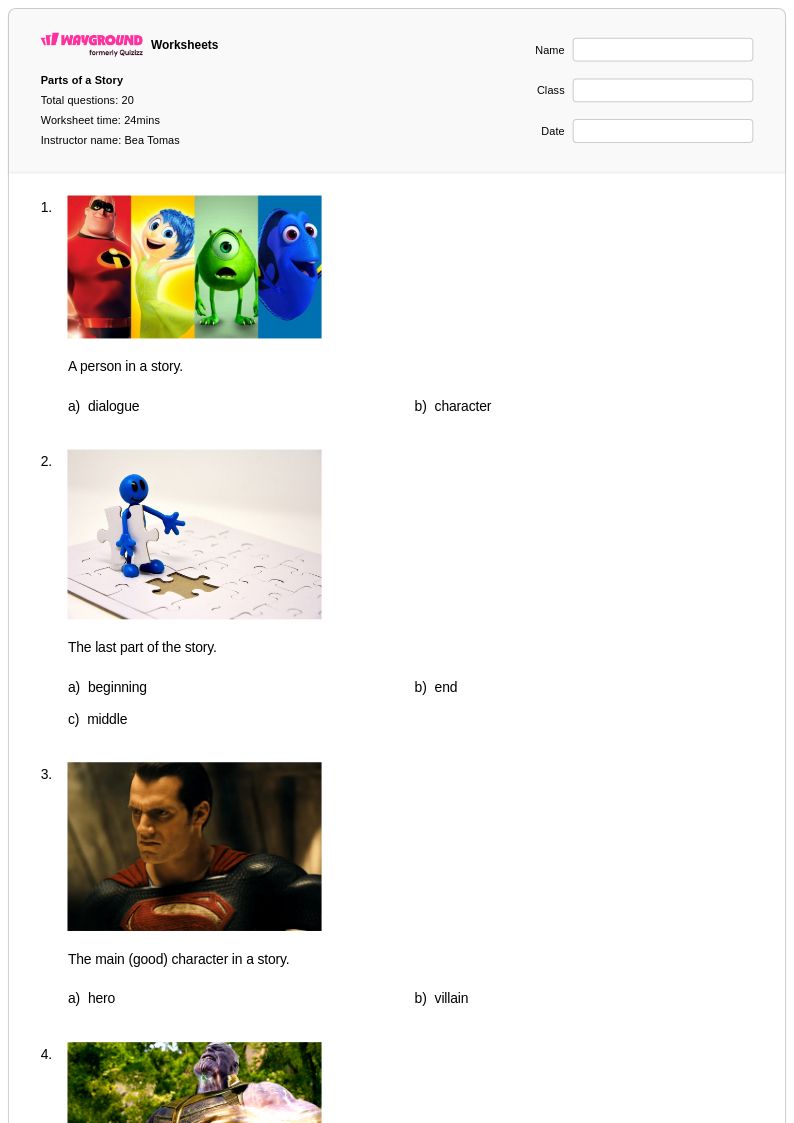
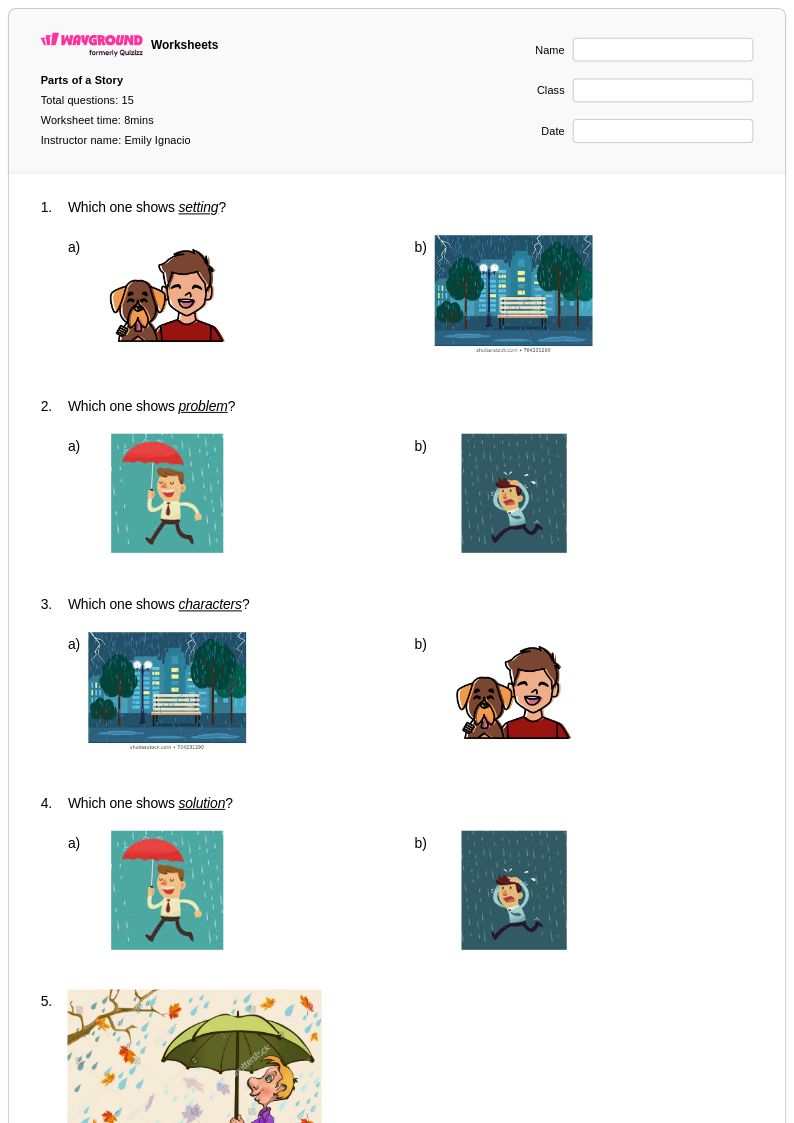
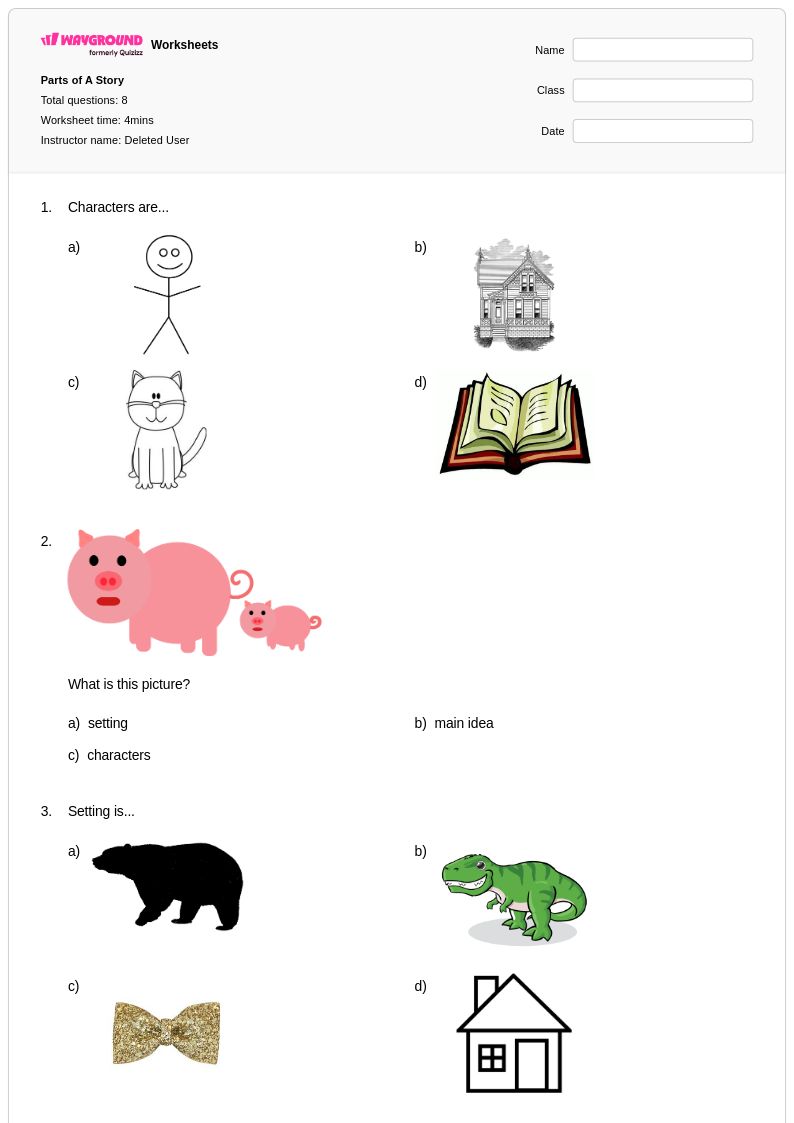
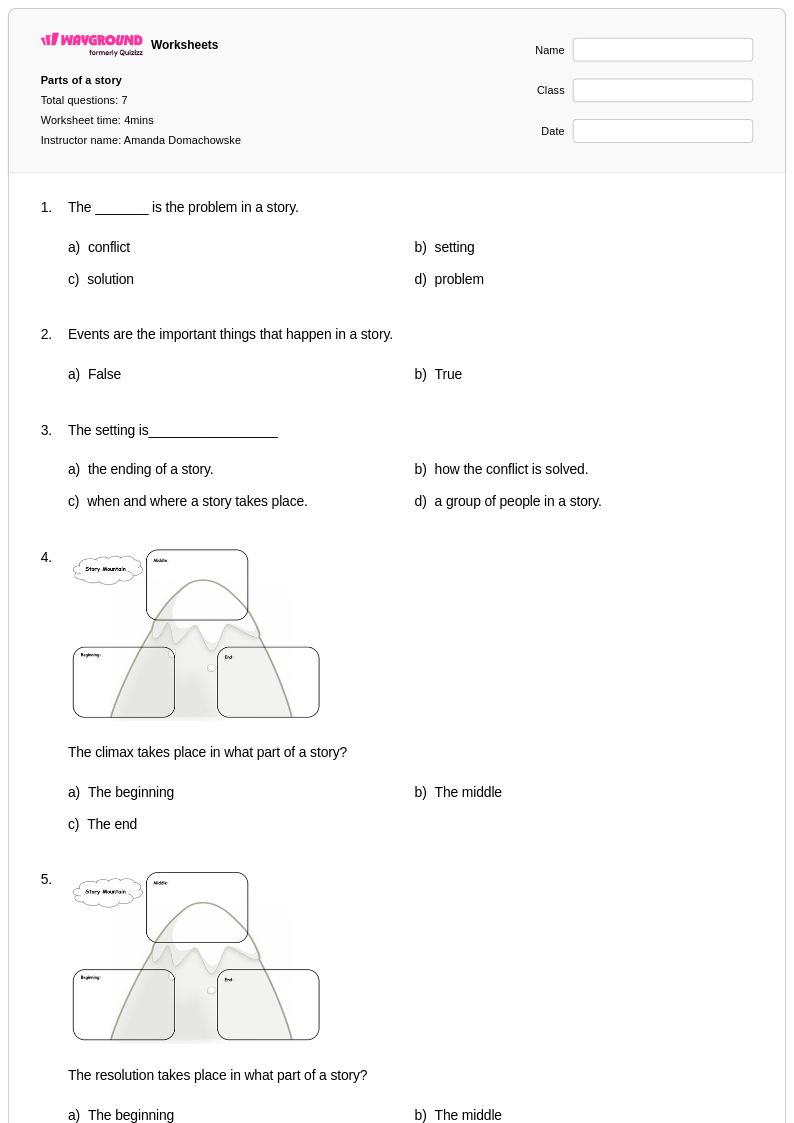
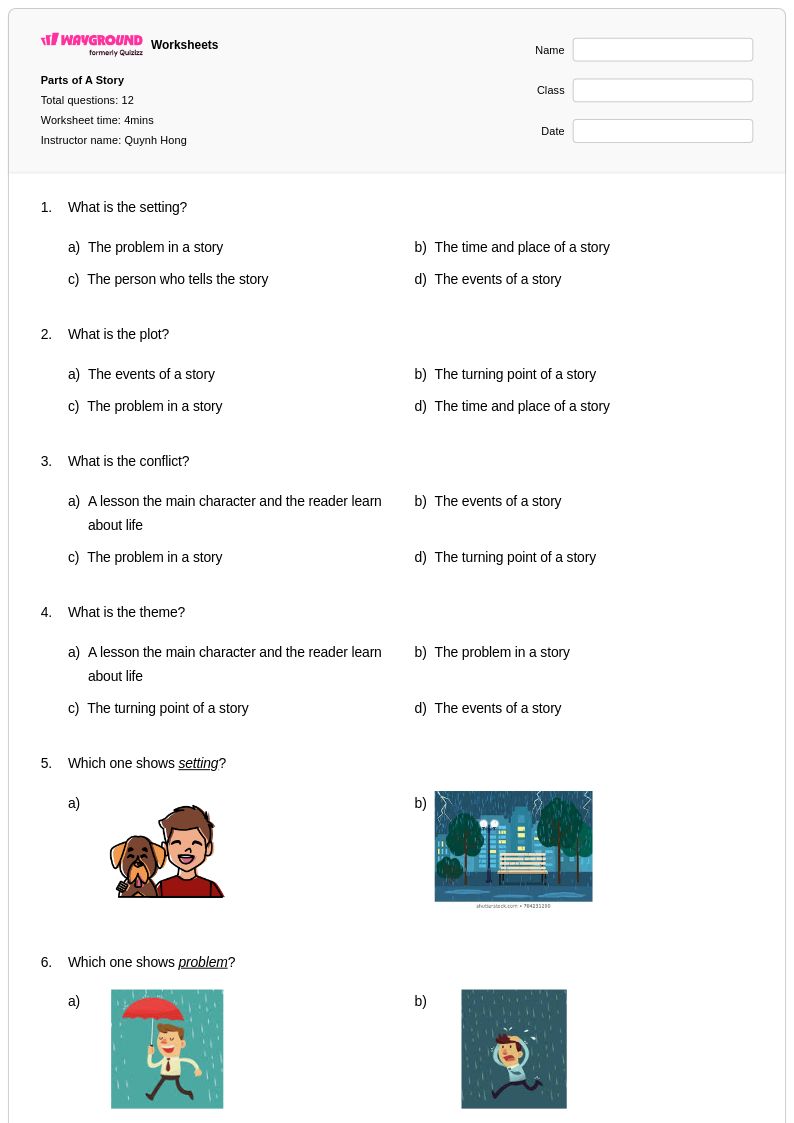
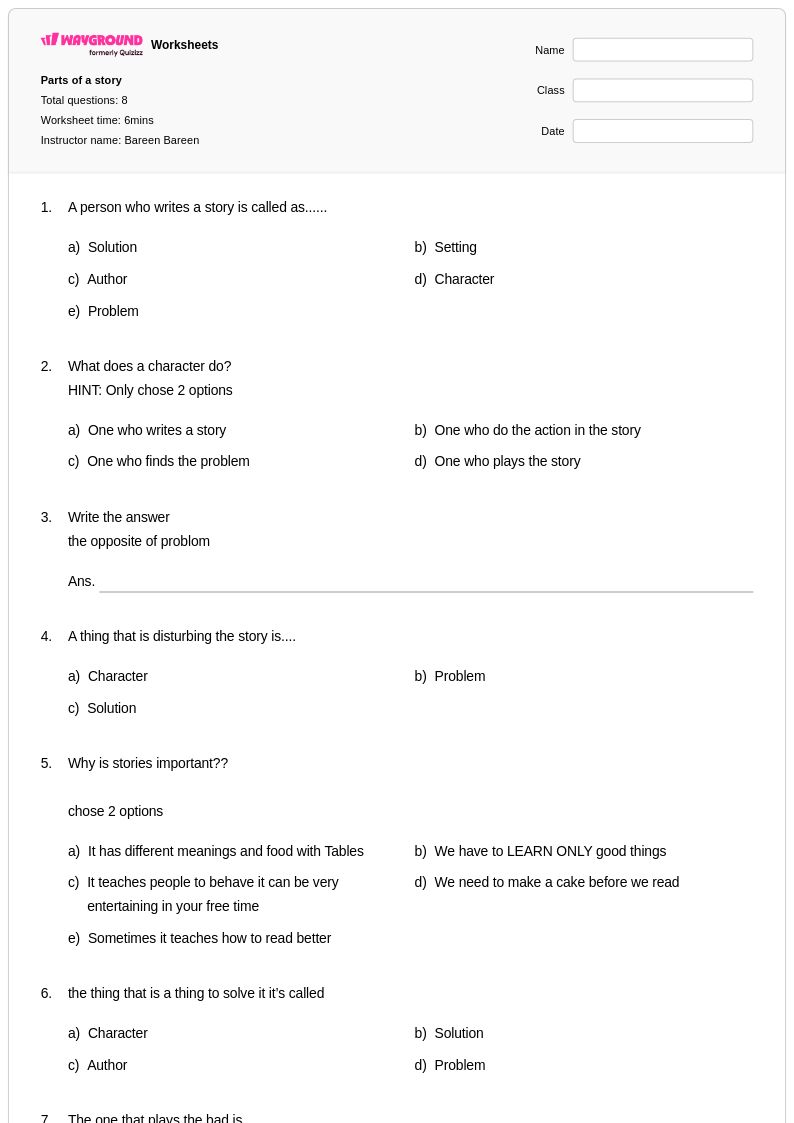
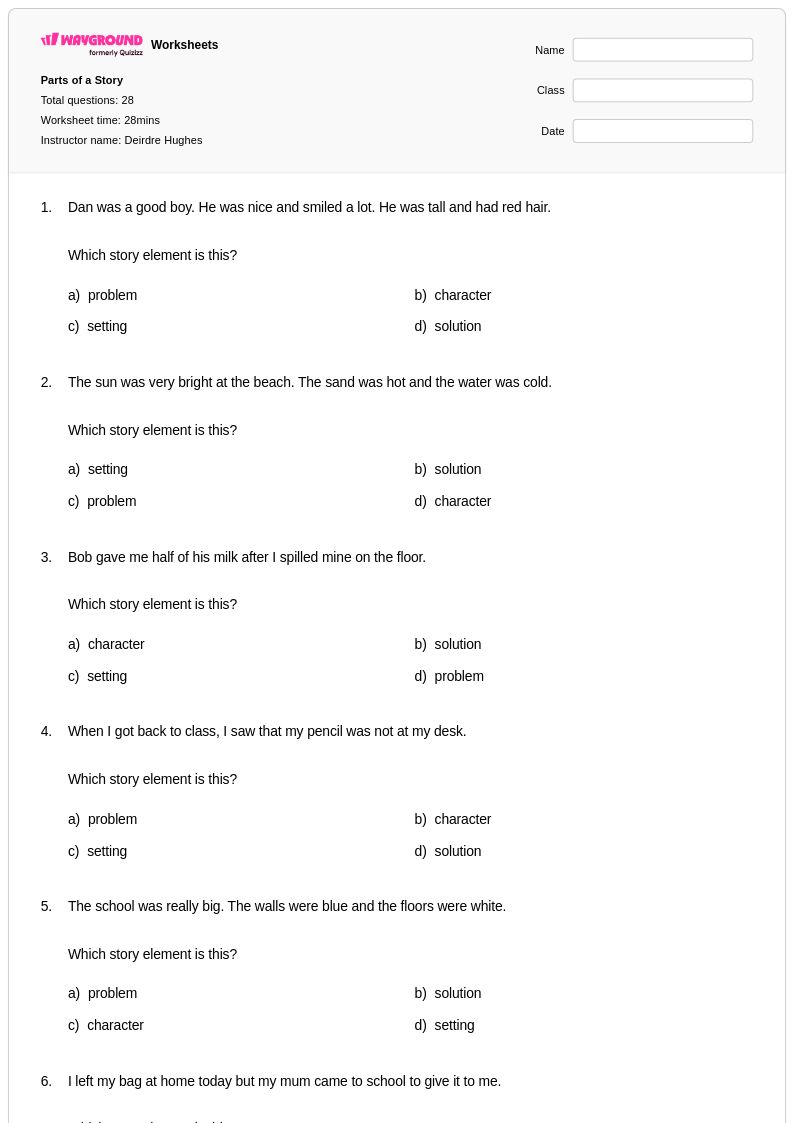
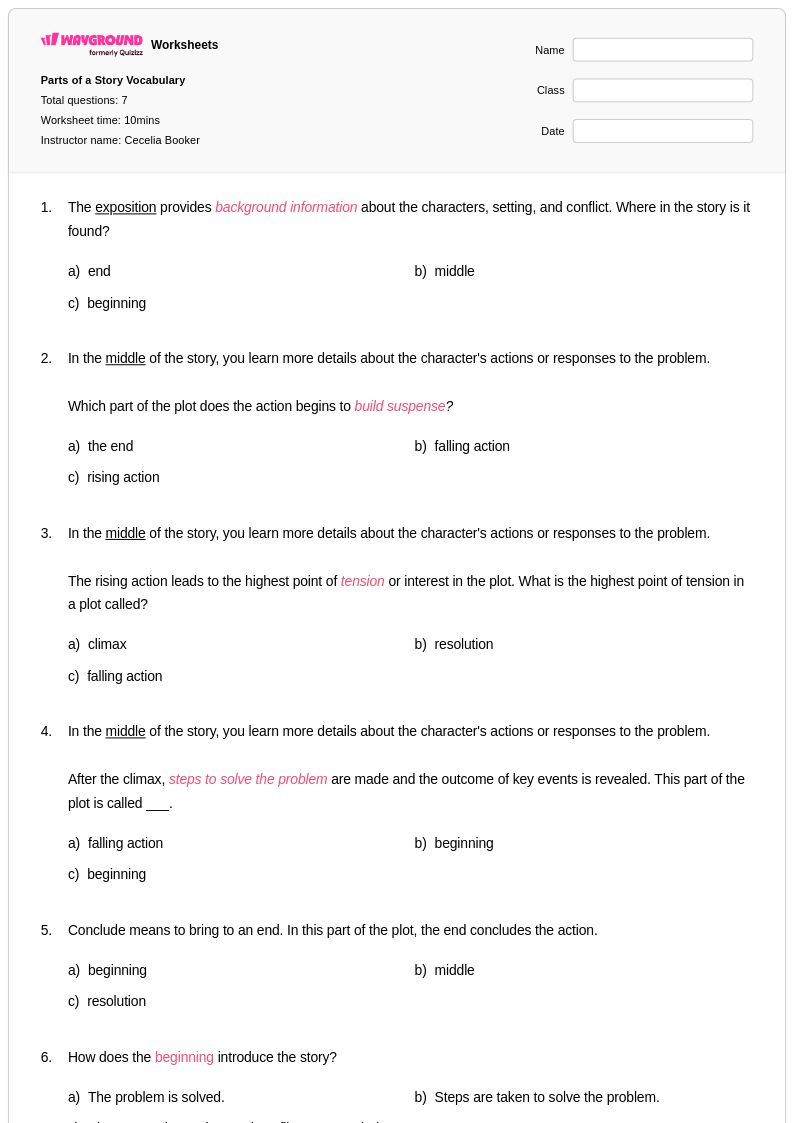
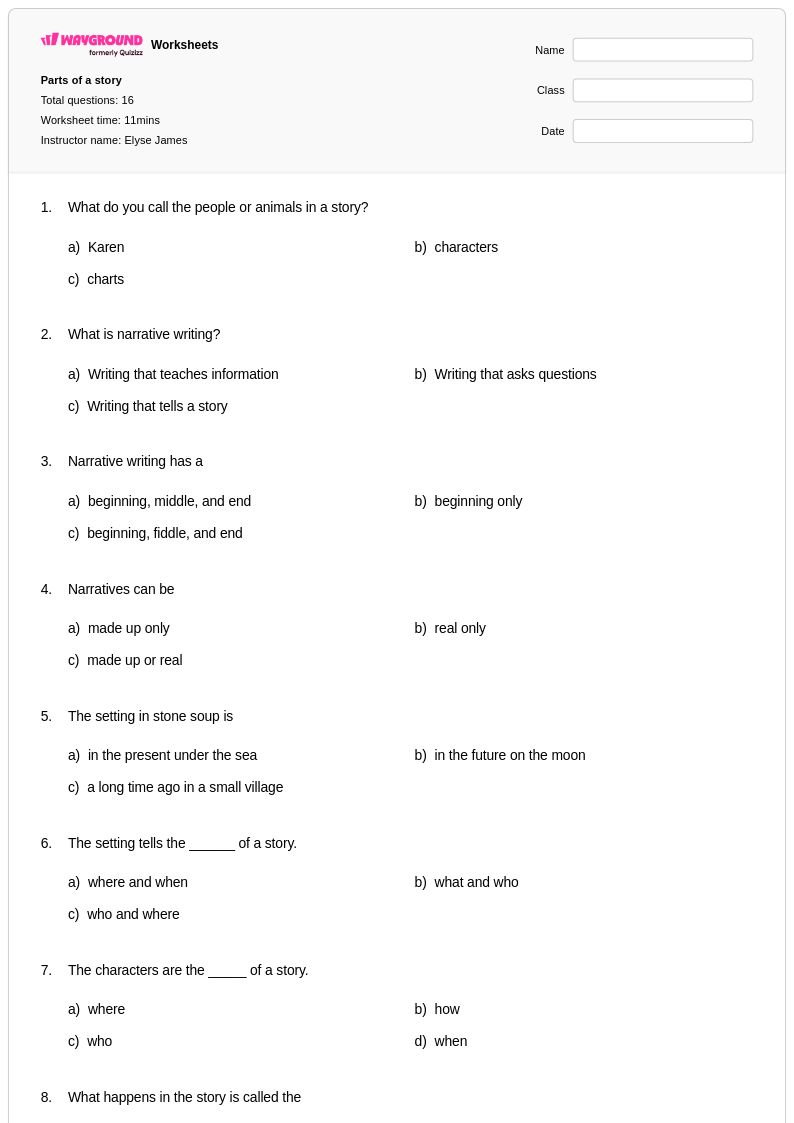
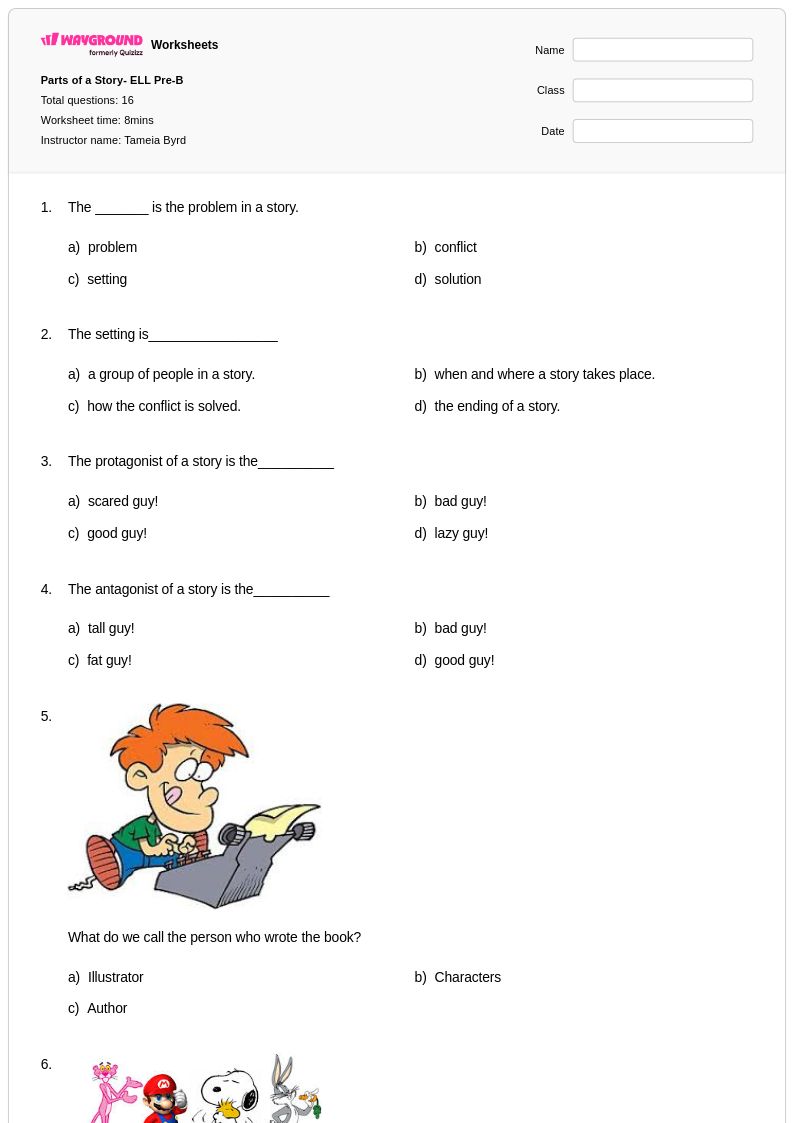
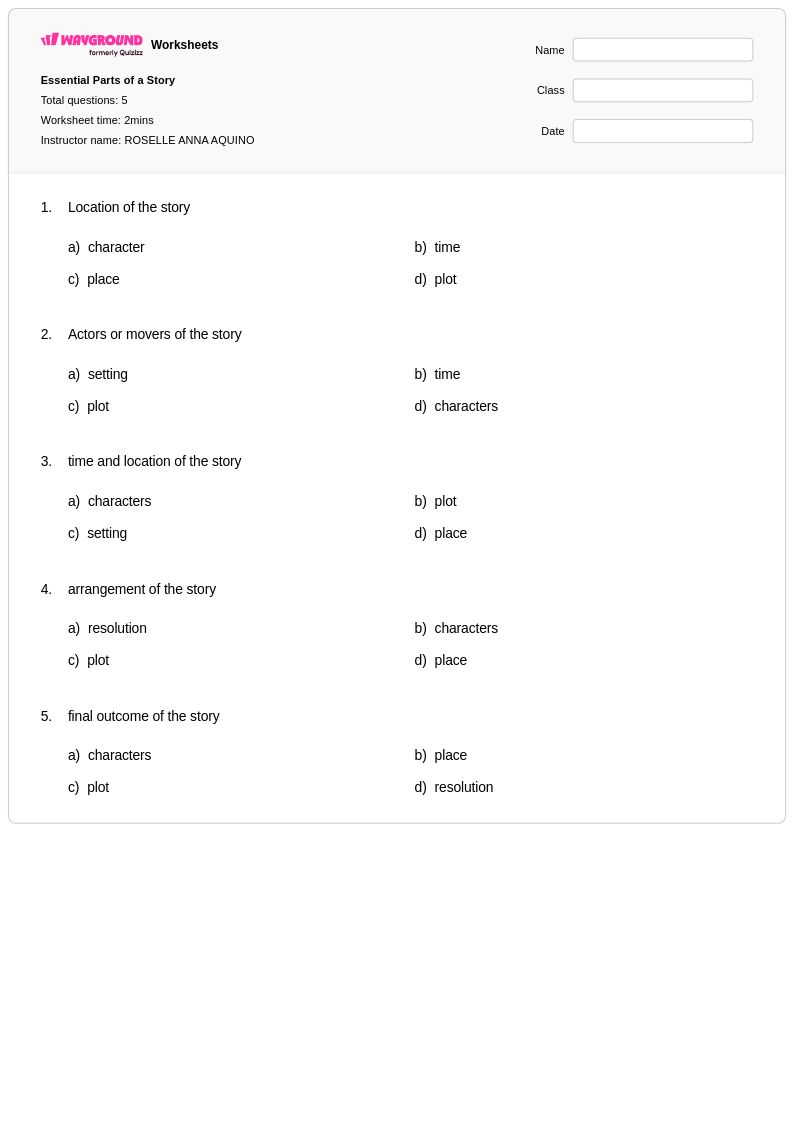
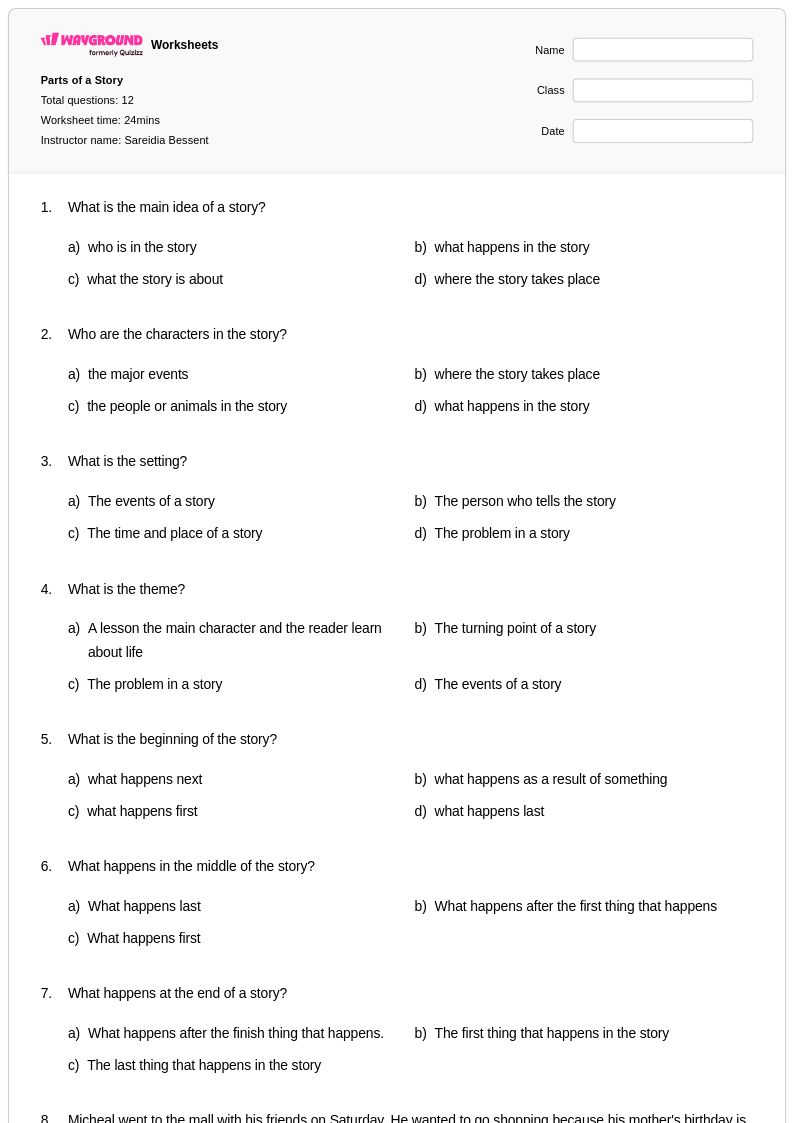
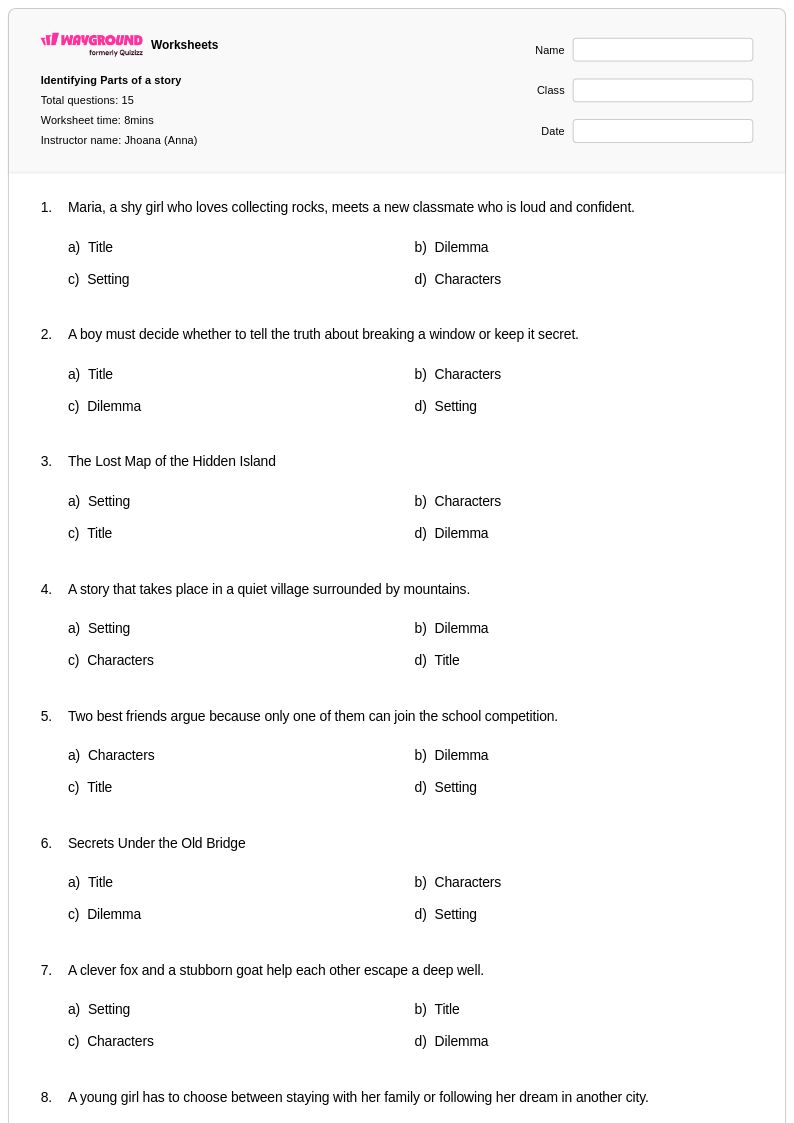
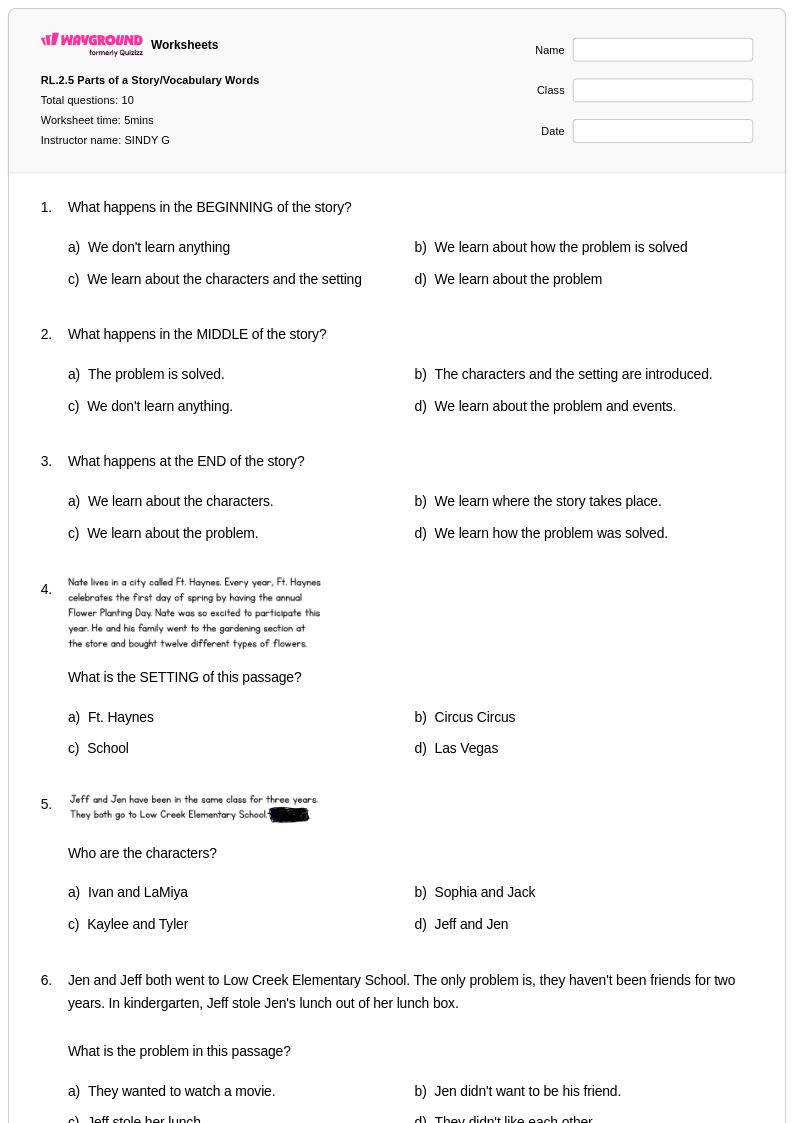
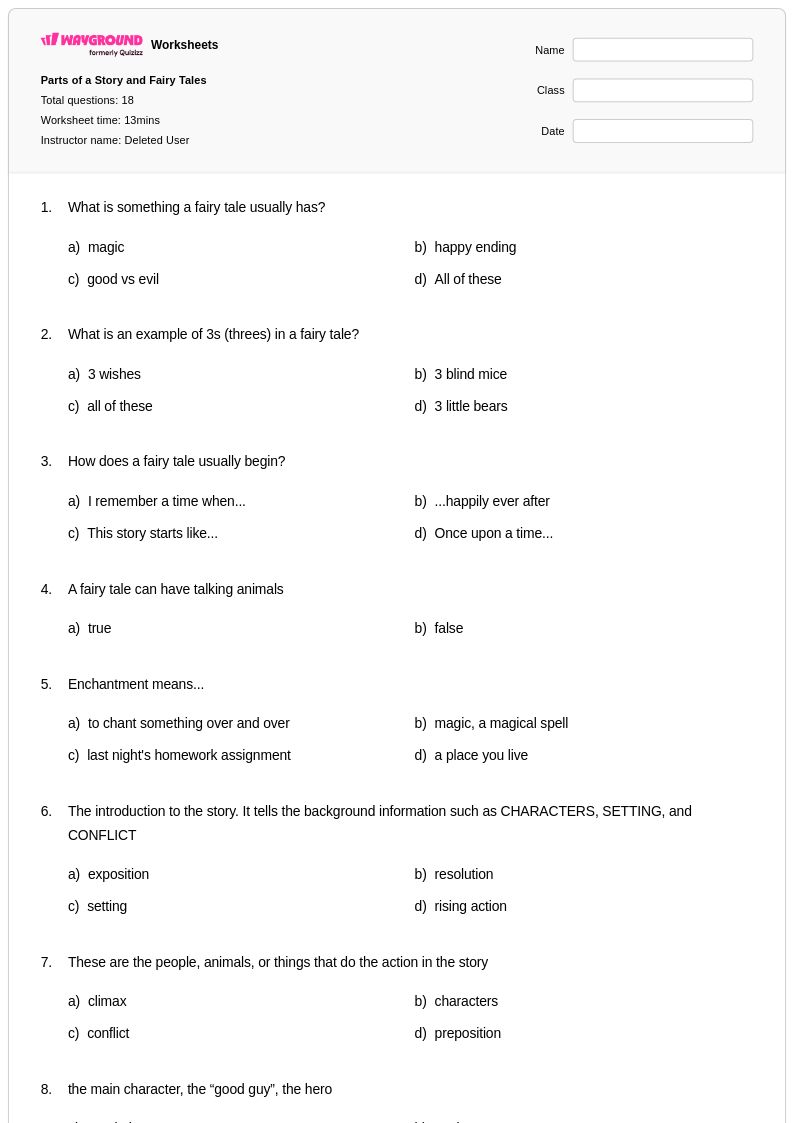
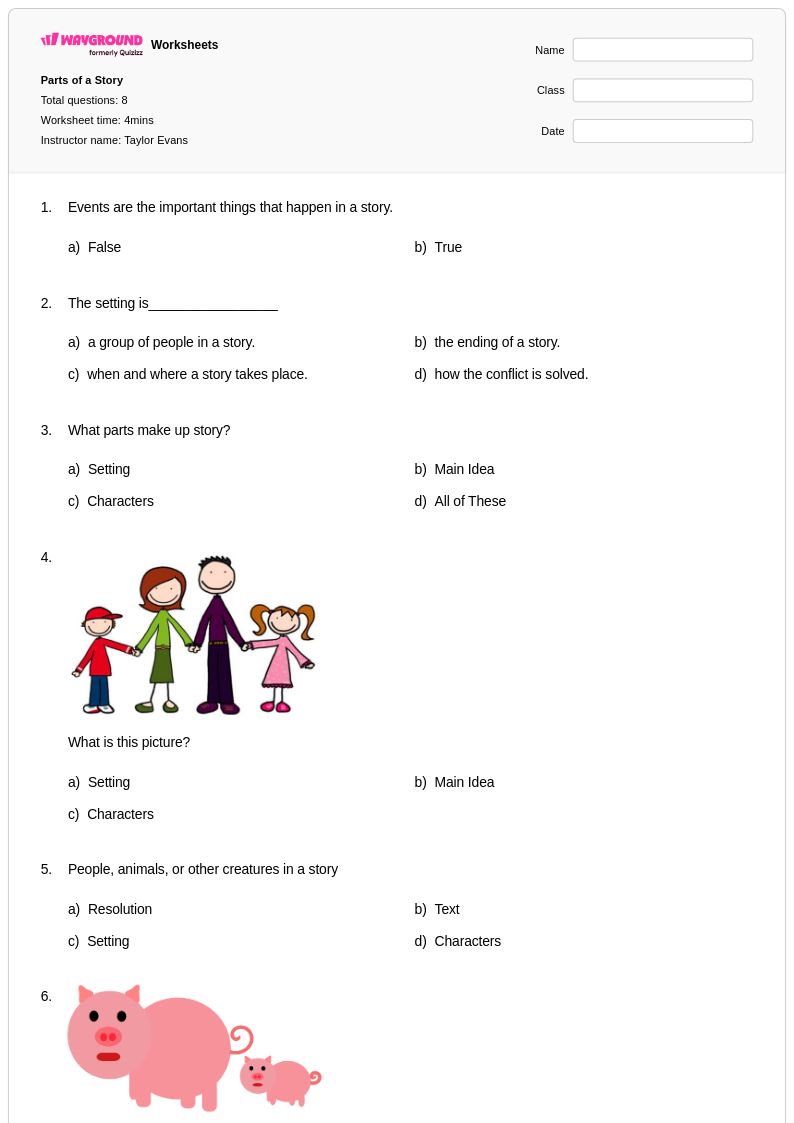
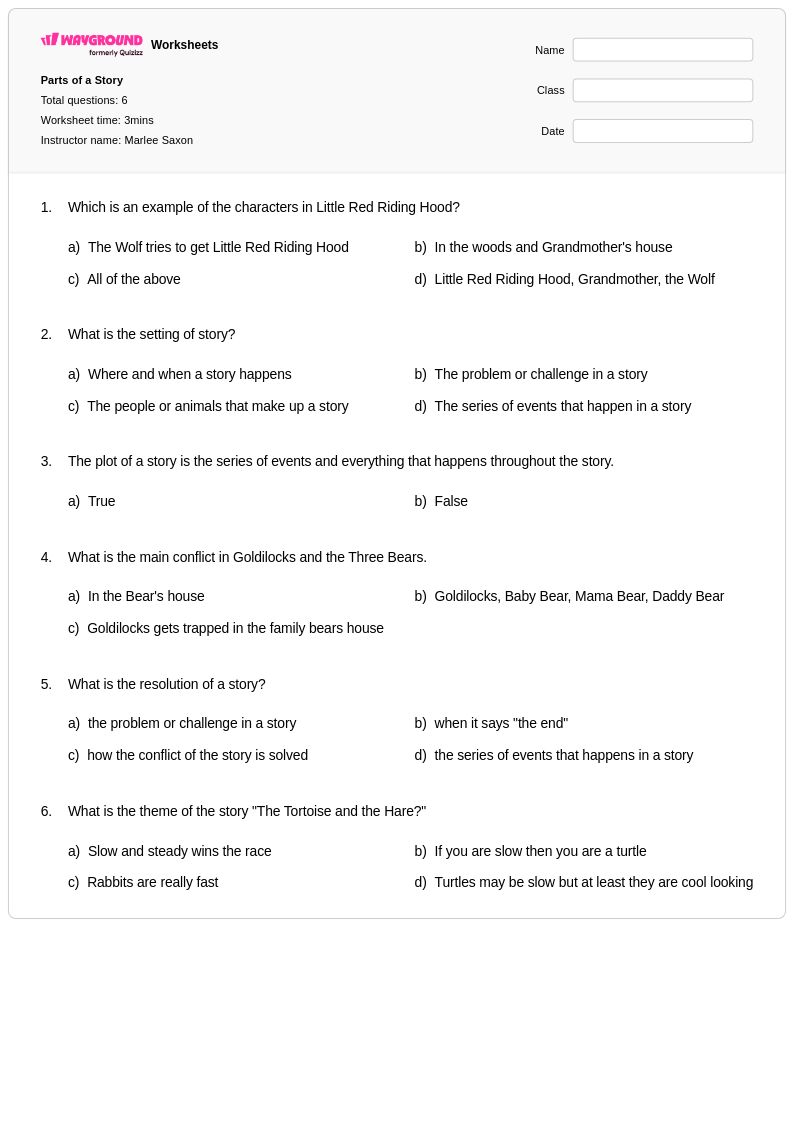
Parts of a story worksheets for Class 2 students available through Wayground help young readers develop essential narrative comprehension skills by identifying and understanding the fundamental elements that make up every story. These carefully designed printables guide students through recognizing characters, setting, problem, and solution while building their ability to sequence events and understand plot structure. Each worksheet provides engaging practice problems that encourage students to analyze age-appropriate texts, with clear answer keys that support both independent learning and guided instruction. The free pdf format makes these resources easily accessible for classroom use, homework assignments, or supplemental practice at home, ensuring that second-grade students can strengthen their reading comprehension foundations through structured, repeated exposure to story elements.
Wayground's extensive collection of millions of teacher-created resources ensures educators have access to high-quality parts of a story worksheets that align with Class 2 reading standards and diverse classroom needs. The platform's robust search and filtering capabilities allow teachers to quickly locate materials that match their specific curriculum requirements, student reading levels, and instructional goals. These differentiation tools enable seamless customization for remediation support, enrichment activities, and targeted skill practice, while the flexible availability in both printable and digital pdf formats accommodates various teaching environments and learning preferences. Teachers can efficiently plan comprehensive reading comprehension lessons, assess student understanding of narrative structure, and provide meaningful practice opportunities that build confident, analytical readers who can successfully navigate increasingly complex texts throughout their academic journey.
FAQs
How do I teach parts of a story to elementary students?
Start by anchoring instruction around the five core story elements: character, setting, plot, conflict, and resolution. Use a familiar read-aloud to model how each element functions within a narrative before asking students to identify them independently. Graphic organizers that map these elements visually are especially effective for early readers because they reduce the cognitive load of open-ended writing while still requiring analytical thinking. Gradually release responsibility so students apply the same framework to new texts on their own.
What exercises help students practice identifying story elements?
Structured practice problems that ask students to label, describe, or sort story elements from a given passage are among the most effective exercises for building this skill. Sequencing activities focused on plot events reinforce the difference between rising action, climax, and resolution, which students often conflate. Short-answer questions tied to a reading passage give students repeated exposure to applying story element vocabulary in context, which builds automaticity over time.
What mistakes do students commonly make when identifying parts of a story?
One of the most frequent errors is confusing setting with background detail — students often list only the physical location without accounting for time period or atmosphere. Another common misconception is treating every event in a story as part of the climax, rather than recognizing the climax as the single turning point of highest tension. Students also tend to describe characters by physical appearance rather than by their traits, motivations, or role in the conflict. Targeted practice that asks students to justify their answers with textual evidence helps correct these patterns.
How can I differentiate parts of a story instruction for struggling readers?
For struggling readers, reducing the complexity of the source text while keeping the analytical task intact is an effective differentiation strategy — students practice the same story element skills without being blocked by decoding difficulty. On Wayground, teachers can enable the Read Aloud accommodation so questions and passage content are read to students who need it, and Reduced Answer Choices can be applied individually to lower cognitive load without alerting the rest of the class. These accommodations are saved per student and carry over to future sessions, making differentiation efficient to manage across a whole class.
How do I use parts of a story worksheets effectively in my classroom?
Parts of a story worksheets on Wayground are available as printable PDFs for traditional classroom use and in digital formats for technology-integrated environments, including the option to host them as a quiz directly on Wayground. For print use, they work well as guided practice during a shared reading lesson or as independent work following a whole-class discussion. In digital format, they allow teachers to assign practice as homework or use real-time response data to guide small-group follow-up instruction. All worksheets include complete answer keys, which streamlines grading and supports self-assessment.
How do parts of a story skills connect to broader reading comprehension?
Understanding story elements is foundational to reading comprehension because it gives students a consistent analytical framework they can apply across any work of fiction. When students can reliably identify how character motivation drives conflict or how setting influences mood, they are better equipped to make inferences, draw conclusions, and interpret theme — all higher-order comprehension skills assessed on standardized tests. Teaching story elements explicitly also builds literary vocabulary that students carry into middle and high school analysis tasks.